Harpy eagle
Talons like a bear's claws, above the rainforest canopy
Harpia harpyja
Also called American harpy eagle, Aguila harpia
Living individuals or members of this group exist today. This does not mean they are safe from extinction.
Meet the harpy eagle
The harpy eagle is the most powerful bird of prey in the American rainforest, with rear talons the length of a grizzly bear's claws. It hunts sloths and monkeys in the canopy, raises one chick every two or three years, and is losing ground with the forest.
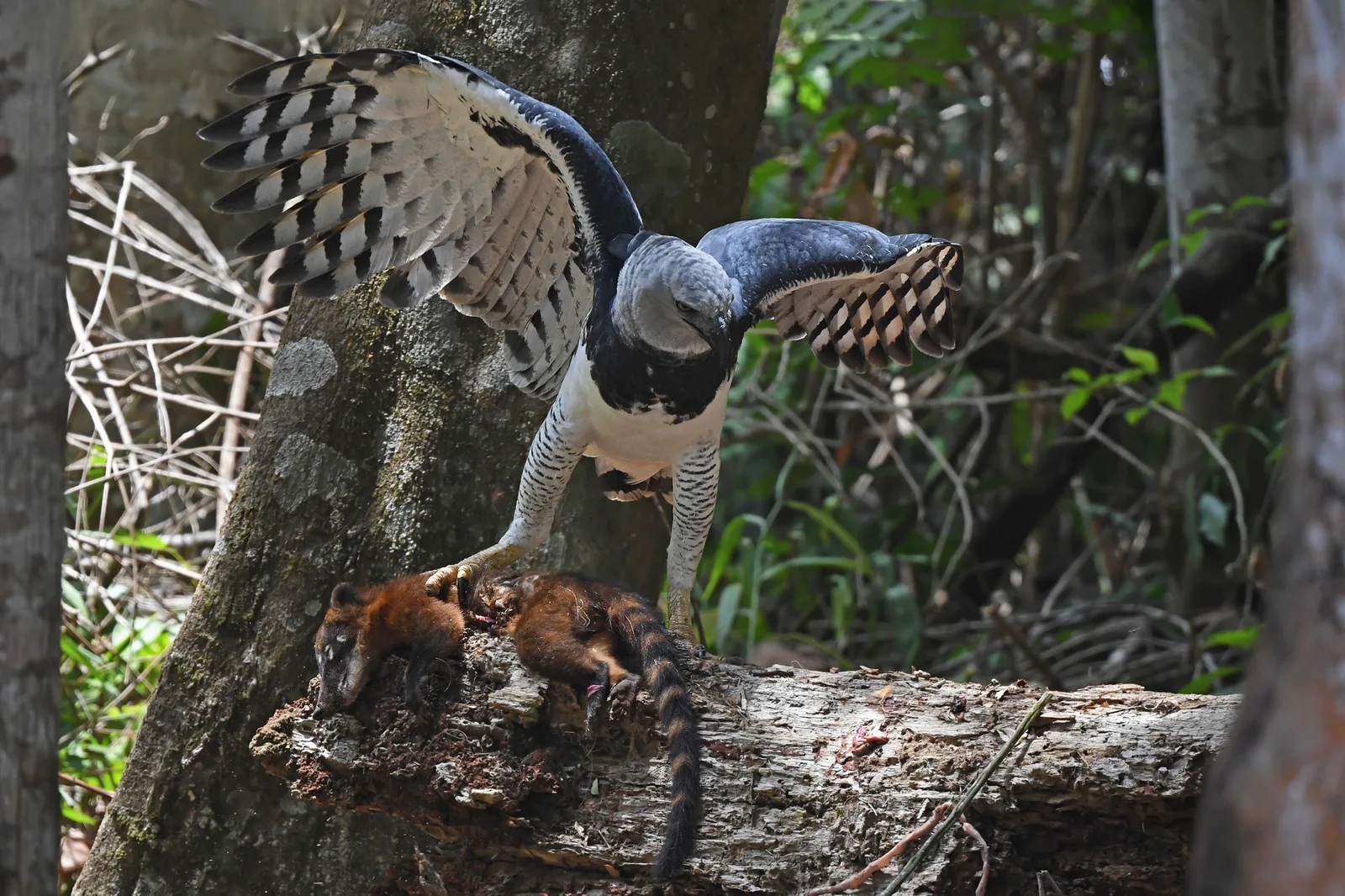
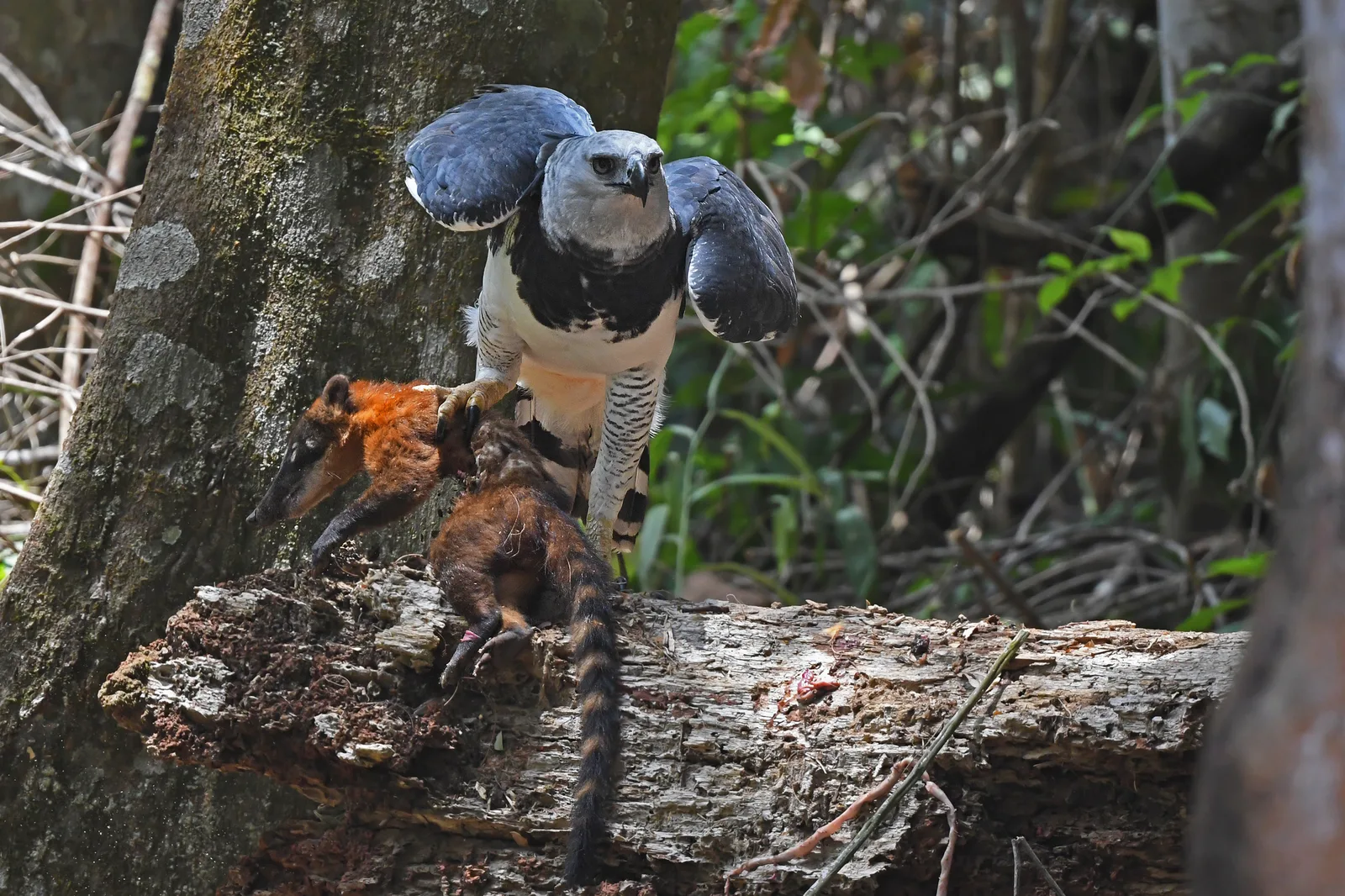
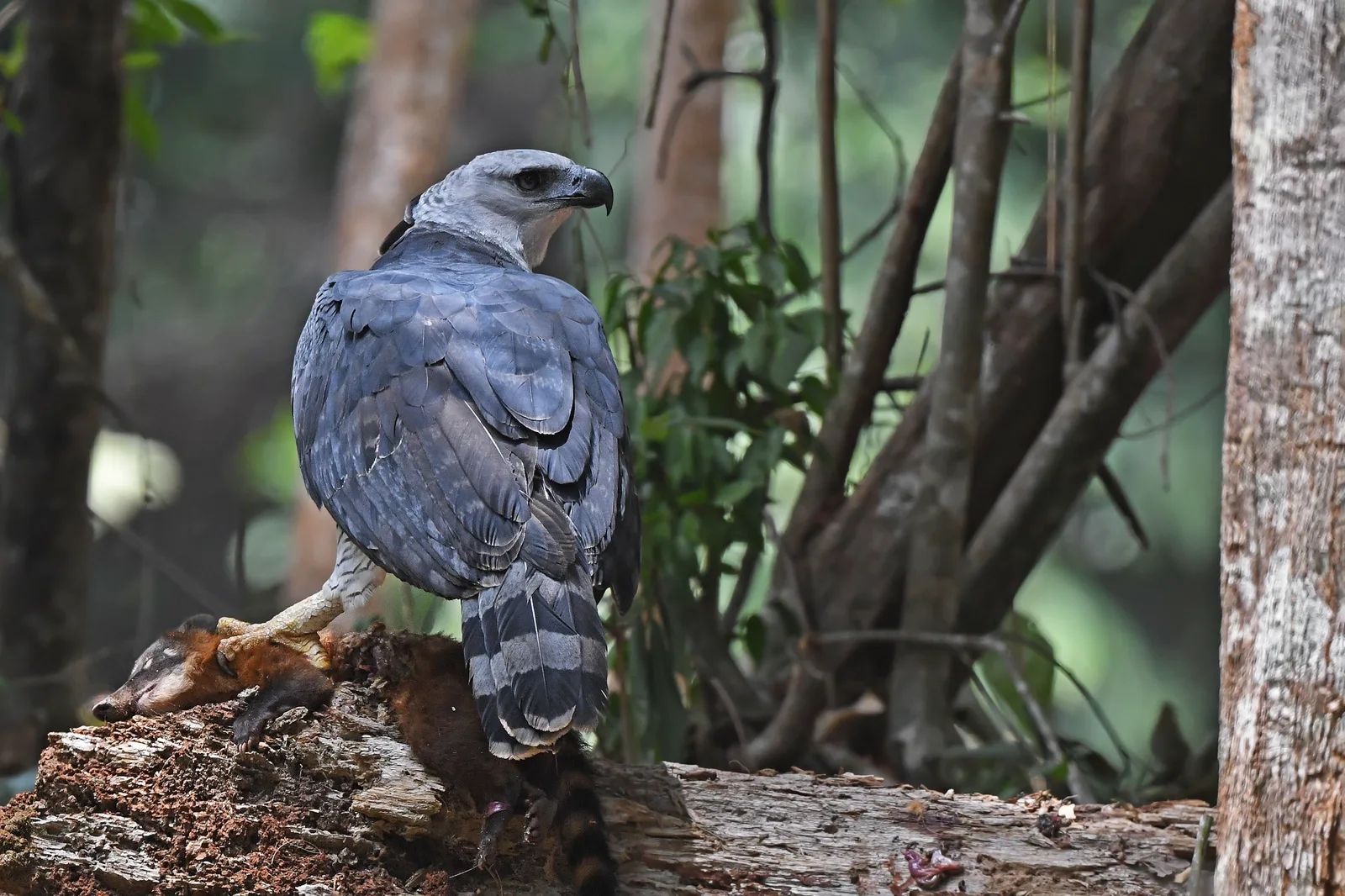
Images of the harpy eagle
Lifespan in the wild
25 to 35 years
Weight
4 to 9 kg
Length
0.87 to 1.07 m
Wingspan
1.76 to 2.24 m
Fact file
Harpy eagle
- Location
- Southern Mexico through Central America to northern Argentina
- Habitat
- Rainforest, Temperate forest
- Diet
- Carnivore
- Prey / food
- Sloths, howler monkeys, capuchins, spider monkeys, porcupines, iguanas, macaws
- Predators
- None as adults; a nestling is rarely taken by another harpy eagle
- Lifestyle
- Hunts alone by day from a perch in the canopy
- Group name
- Pair
- Name of young
- Eaglet
- Incubation
- Incubation about 56 days
- Clutch size
- Two eggs, one chick reared
- Population
- Falling; Vulnerable on the IUCN Red List
- Biggest threat
- Logging, ranching and farming that clear the rainforest
- Distinctive feature
- A double crest of black feathers, raised when alarmed
- Colour
- Slate black above, white below, pale grey head
- Skin type
- Feathers
Size
Next to a person
Measurements
Size and speed
- Length
- 0.87 to 1.07 m
- Wingspan
- 1.76 to 2.24 m
- Tail
- 37 to 42 cm
- Weight
- 4 to 9 kg, up to 12.3 kg males 4 to 6 kg and females 6 to 9 kg; the max is a captive female
- Weight, male
- 4 to 6 kg
- Weight, female
- 6 to 9 kg
Typical adult ranges. Source: Wikipedia.
Life cycle
Lifespan
- In the wild25 to 35 years
- 035 years
Source: Animal Diversity Web.
Appearance
Colour and coat
- Primary colours
- blackwhitegrey
- Secondary colours
- yellow
- Skin type
- feathers
- Male and female
- Large in size, absent in colour. A female weighs about half as much again as a male and carries much longer talons, but the two sexes wear identical plumage.
Life cycle
Mating and family
- Mating system
- monogamous pairs, believed to be for life
- Social structure
- a territorial pair, often with one dependent young bird
- Breeding
- one chick every 2 to 3 years
A pair builds a huge stick platform in the fork of an emergent tree and uses it for years. The female lays two white eggs and rears only the first chick to hatch. Incubation runs about 56 days, and the male brings most of the food. The eaglet flies at about six months and is still fed for another 6 to 10 months. Birds first breed at 4 to 6 years old and may live 25 to 35 years.
Classification
Taxonomy
- Kingdom
- Animalia
- Phylum
- Chordata
- Class
- Aves
- Order
- Accipitriformes
- Family
- Accipitridae
- Genus
- Harpia
- Species
- Harpia harpyja
Conservation
Red List status
- LC
- NT
- VU
- EN
- CR
- EW
- EX
Vulnerable on the IUCN Red List
Range
Recorded in 10 countries
Habitat layer: tropical moist broadleaf forest, temperate broadleaf and mixed forest, temperate conifer forest, boreal forest and taiga.
Countries from 535 wild records on GBIF (iNaturalist research grade), filtered and checked by hand. Country shapes: Natural Earth. Habitat: RESOLVE Ecoregions 2017, CC BY 4.0. Basemap: Natural Earth.
Habitats
Three things to know
- 1
A female harpy eagle can lift a sloth of her own body weight straight out of a tree.
- 2
The rear talons reach about 12.3 centimetres, longer than those of any other living eagle.
- 3
A pair raises a single chick every two or three years, and feeds it for months after it flies.
Did you know
Seven more facts
- 1
The bird is named after the harpies of Greek myth, who were part woman and part bird.
- 2
A harpy eagle can go a week without eating.
- 3
One bird sat watching from a single perch for up to 23 hours.
- 4
The wings are short for the bird's weight, which helps it turn between trees.
- 5
Sloths made up 79% of the prey at one studied nest in Brazil.
- 6
Panama chose the species as its national bird back in 2002.
- 7
Only 1,630 sightings of the species appear on iNaturalist.
Field notes
How it looks and acts
Field notes
Distinguishing features
- A double crest of long black feathers rises from the crown.
- The chest carries a broad black band under a pale grey head.
- The legs are feathered and striped, and the feet are bright yellow.
- The rear talon is longer than that of any other living eagle.
- The wings span 176 to 224 cm, short and broad for the weight.
- Males and females share the same plumage, but she is far heavier.
Field notes
Unique adaptations
- Short broad wings turn tightly inside dense forest.
- A long tail steers the bird between trunks and branches.
- Legs as thick as a wrist probably carry prey of the bird's own weight.
- Slow breeding likely suits a predator that rarely faces any enemy.
- The ability to fast for a week probably covers a run of failed hunts.
Field notes
Interesting behaviours
- The eagle moves from perch to perch, scanning the canopy between flights.
- It waits above rivers and salt licks where mammals gather.
- It chases birds through the branches, dodging as it goes.
- A pair rebuilds and reuses the same nest for many years.
- Adults attack anything that climbs towards the nest, including people.
Field notes
Temperament
- The bird is shy of settlement and hard to find in the wild.
- It shows almost no fear of a person who comes close, which makes it easy to shoot.
- Nesting adults are aggressive and will strike an intruder.
- Away from the nest it is silent and inconspicuous.
Field notes
Communication
- The nest call is a thin wailing scream from both parents.
- A male carrying food chirps rapidly as he arrives.
- Nestlings repeat a sharp chi-chi-chi when disturbed.
- A perched adult gives a long wail that is probably a territorial signal.
- A pair rubs bills, which appears to keep the bond in place.
Ecology
Ecological role
The harpy eagle is the apex predator of the American rainforest canopy, and it holds down the middle-sized hunters that would otherwise strip bird nests.
- It keeps sloth and monkey numbers in check across a very large area.
- It preys on capuchins, which raid the nests of smaller birds.
- Without that control, sensitive bird species may disappear locally.
- Protecting one pair protects the tall forest that many other species need.
Stories
Myths and legends
- In Greek tradition, harpies snatched food and carried wrongdoers towards Tartarus.
- In Aztec tradition, the harpy eagle was sacred to the god Quetzalcoatl.
- In many South American traditions, cutting a kapok tree brings bad luck.
- In Panamanian tradition, the eagle stands on the national coat of arms.
People
Relationship with humans
People
Living alongside us
The harpy eagle avoids people and is seldom seen even where it survives. It takes livestock very rarely, but farmers still shoot it as a supposed threat. Logging and ranching remove the tall forest it needs, which is the main reason for its decline. The Peregrine Fund and partners have bred and released almost 50 birds in Panama and Belize since 1998. Panama adopted the eagle as its national bird in 2002.
- Nesting adults attack people who climb towards the nest tree.
- One scientifically documented attack on an adult woman has been reported.
- The talons are probably long enough to cause serious injury, so climbers keep clear.
People
Status, uses and products
- Domestication
- Wild
- As a pet
- Not suitable. The harpy eagle is listed on CITES Appendix I, so trade in it is banned. It is a huge, powerful predator that needs a territory of tens of square kilometres.
- Uses
- ecotourismceremonial feathers
- Products
- feathers
The full account
About the harpy eagle
The harpy eagle is the largest bird of prey in the American tropics. Adults measure 86.5 to 107 centimetres from bill to tail. The wings span 176 to 224 cm, short for an eagle of this weight. A female weighs 6 to 9 kilograms, and a male only 4 to 6 kg. The back is slate black, the underside white and the head pale grey.
The bird hunts in the tallest layer of lowland rainforest. Sloths and monkeys make up most of what it eats. Its rear talons are longer than those of any other living eagle. A female can carry prey as heavy as she is.
The range runs from southern Mexico to northern Argentina. Logging and ranching have emptied much of it. The IUCN lists the species as Vulnerable, and the trend is downward.
Name and taxonomy
Carl Linnaeus described the bird in 1758 and placed it among the vultures. He borrowed the name from the harpies of Greek myth. Louis Pierre Vieillot set up the genus Harpia in 1816. The harpy eagle is still the only species in that genus. English writers add American to the name to separate it from the Papuan eagle.
Four birds make up the subfamily Harpiinae. They are the harpy eagle, the crested eagle, the Papuan eagle and the bat hawk. The Philippine eagle was once thought to be a close relative. DNA has since moved it to a different branch of the raptor family. The two birds probably look alike because they hunt in the same way.
Evolution and relatives
The harpy eagle sits within the hawk and eagle family Accipitridae. Its nearest living relative is the crested eagle of the same forests. The crested eagle is far lighter and probably takes much smaller prey. The Papuan eagle appears to fill a similar role on the other side of the world.
The wings are short and very broad for a bird of this size. That shape turns tightly between trunks and branches. Eagles of open country, such as the sea eagles, span far more. The extinct Haast's eagle of New Zealand was larger than any eagle alive. A live harpy eagle stood in for that extinct bird in a television series.
Appearance
Total length runs 86.5 to 107 cm and the wings span 176 to 224 cm. The tail measures 37 to 42 cm and works as a rudder in flight. Females weigh 6 to 9 kg and males 4 to 6 kg. A captive female named Jezebel reached 12.3 kg. Wild birds probably never grow that heavy, because food is harder to get.
The upper parts are slate black and the belly is white. A broad black band crosses the chest below the pale grey head. The feathered legs are striped black and white. A double crest of long black feathers rises when the bird is alarmed. Some researchers suggest the raised crest also gathers sound towards the ears. Males and females wear exactly the same pattern.
The feet are arguably the most striking part of the bird, as with other eagles. The lower leg reaches up to 13 cm long and is as thick as a human wrist. A female's rear talon averages 12.3 cm, and a male's 8.6 cm. Those claws match a grizzly bear's in length. The toes are yellow and the bill and claws are black.
Habitat and range
The range starts in southern Mexico and reaches northern Argentina. Brazil holds the most birds, spread across the whole country. In Central America only parts of Panama and Costa Rica still hold a real population. The species has gone from El Salvador altogether. GBIF holds records from 25 countries.
The bird wants tropical lowland rainforest with very tall trees. It hunts and nests in the emergent layer above the main canopy. Most records fall below 900 metres, but a few reach 2,000 m. Harpy eagles avoid disturbed ground and keep away from people. They will cross forest edge, pasture and even farmland on a hunting trip. Loss of tall trees is likely to shrink the range further.
Diet and hunting
A review of the literature and camera traps lists 116 prey species. Tree mammals make up almost all of it. At one Brazilian nest, sloths of two species accounted for 79% of the prey. Monkeys came to about 37% of the remains at nests in Guyana. Capuchins, sakis, howlers, woolly monkeys and spider monkeys are all taken. Tamarins and marmosets appear to be too small to bother with.
Porcupines, anteaters, armadillos, coatis, kinkajous and opossums fill out the list. Macaws, curassows and other large birds are taken now and then. One young male learned to kill black vultures and did so repeatedly. Iguanas and snakes appear in the diet in some regions. Chickens, lambs and young pigs are taken very rarely.
Perch hunting is the usual method. The eagle moves between trees, watching, then drops onto prey it has spotted. It will also wait for hours above a river or a salt lick. Sometimes it chases a bird through the branches, twisting between trunks. Prey averages about 2.6 kg, and a female can lift 6 to 9 kg without landing. A harpy eagle need not feed daily, and it can last a week between meals.
Behaviour and social life
Harpy eagles live in pairs and hunt alone. A pair holds a territory of roughly 30 square kilometres. They drive out any other harpy eagle that enters it. In good forest, active nests can sit only 3 km apart. In broken forest, territories stretch to about 25 km across.
The birds hunt by day and rest at night. One bird has been recorded sitting on a perch for up to 23 hours while watching. That patience seems to suit a forest where prey is scattered. A pair is often seen with a third bird, their young from the last brood. During nest building the pair rarely goes more than 180 metres from the tree. Adults will attack a person who climbs towards the nest.
Communication and senses
Away from the nest the harpy eagle is almost silent. At the nest the adults give a thin, drawn-out wailing scream. The female's version of that call is lower in pitch than the male's. A male arriving with food adds fast chirps and goose-like notes.
The parents call less as the chick grows, and the chick calls more. A nestling gives a repeated chi-chi-chi when rain or sun reaches it. Nestlings croak, quack and whistle when a person approaches. Perched adults produce a long wailing note that is probably territorial. A pair rubs bills together, which appears to maintain the bond. Sight leads the senses, with hearing close behind in dense cover.
Reproduction and life cycle
Pairs are thought to stay together for life, over 25 to 30 years. No courtship display has been described for the species. The nest is a platform of woven sticks lined with soft plants and fur. It measures about 1.2 metres deep and 1.5 m across. The pair sets it 16 to 43 m above the ground, in the main fork of a tall tree. Kapok and Brazil nut trees are favourites, and a nest serves for years.
The female lays two white eggs at the start of the rains. Only the first chick is raised, and the second egg is left to fail. Incubation runs about 56 days, mostly by the female. The male brings in most of the food during that time. The chick stands and walks awkwardly at 36 days old.
It leaves the nest at about six months. The parents keep feeding it for another 6 to 10 months after that. A young bird often stays inside its parents' territory for a year. Breeding maturity comes at 4 to 6 years old. A pair raises one chick every 2 to 3 years, which is a very slow rate. A healthy adult may live 25 to 35 years.
Predators and threats
No animal hunts a healthy adult harpy eagle. The species sits at the top of the rainforest food chain. A nestling is very occasionally taken by another harpy eagle. The parents guard the nest tree and usually prevent that. Disease and injury matter more, because a hurt bird cannot catch prey.
The real threat is people. Logging, cattle ranching, farming and prospecting all remove the tall forest. Farmers shoot the bird as a supposed danger to stock and to children. One scientifically documented attack on an adult woman exists. Its size and its lack of fear make it an easy target for a hunter. A warming climate is expected to shrink the remaining habitat further.
Population and conservation
The IUCN rates the harpy eagle as Vulnerable, and the population is falling. CITES places the bird on Appendix I, its strictest list. In Mexico and Central America the species counts as critically endangered. Mexican birds once reached Veracruz and now hold on only in Chiapas. Naturalists have logged just 1,630 sightings on iNaturalist.
Brazil holds the core of what remains. Even there the bird has almost gone from the Atlantic forest. State assessments call it critically endangered in Sao Paulo and Parana. Researchers now monitor 62 known nest sites in Brazil, nearly all in Amazonia. Local volunteers do much of that watching, alongside satellite tracking.
Captive breeding has put birds back into empty forest. The Peregrine Fund started a breeding programme in 1989. It opened a raptor centre in Panama in 2001. Since 1998, close to 50 birds have gone back into the forest in Panama and Belize. Belize began its own restoration project in 2003 with the Belize Zoo. A bird named Hope, the 15th released there, went out in December 2009.
Relationship with humans
Most people inside the range probably never see a harpy eagle. The bird avoids settlement and keeps to unbroken forest. It takes livestock so rarely that the loss is trivial. Even so, farmers shoot birds they believe are a danger. Education programmes now target that belief directly.
Indigenous hunters have used harpy eagle feathers in ceremonies. Trade in the birds is illegal, and confiscated eagles are released again. Costa Rica and Panama both draw visitors who hope to see one. Protecting a pair protects a very large block of forest around them. Conservationists therefore treat the eagle as an umbrella species.
In culture and myth
The name comes from Greek myth. The harpies were half woman and half bird, and Thaumas and Electra were their parents. Their names carried meanings such as storm swift and the dark. They acted as the hounds of Zeus and carried off wrongdoers. Their best known task was stealing food from King Phineus of Thrace. Hesiod drew them as winged maidens, while Ovid called them human-vultures.
The bird is the national bird of Panama and appears on the national arms. Panama gave it that status in 2002, after a public education campaign. It also served as the state bird of Parana in Brazil. Venezuela printed the eagle on the back of one of its banknotes.
Aztec worship treated the harpy eagle as a bird of Quetzalcoatl. Many South American cultures treat felling a kapok tree as bad luck. That belief may protect the very trees the eagle nests in. Film designers used the bird as the model for a phoenix in a fantasy series. Few living birds, probably, have lent their shape to so many invented ones.
A sentence with a dotted underline is inferred: it describes the group the animal belongs to, or is a reading of the sources, rather than a measured or reported fact about this species.
Questions
Harpy eagle questions, answered
How big is a harpy eagle?
Adults are 86.5 to 107 cm long with a wingspan of 176 to 224 cm. A female weighs 6 to 9 kg, and a male 4 to 6 kg.
How big are a harpy eagle's talons?
A female's rear talon averages about 12.3 cm and a male's about 8.6 cm. That is the same length as a grizzly bear's claws.
What do harpy eagles eat?
Mostly sloths and monkeys taken from the canopy. Porcupines, anteaters, coatis, iguanas and large birds also appear in the diet.
Is the harpy eagle the largest eagle?
It is the heaviest and most powerful, and the largest in the American tropics. The Philippine eagle is slightly longer and the Steller's sea eagle may average a little heavier.
Are harpy eagles endangered?
The IUCN lists them as Vulnerable and falling. They count as critically endangered in Mexico and Central America.
Where do harpy eagles live?
In lowland tropical rainforest from southern Mexico to northern Argentina. Brazil holds the largest remaining population.
How long do harpy eagles live?
A healthy wild bird may reach 25 to 35 years. Disease or injury cuts that short, because a hurt eagle cannot hunt.
How many eggs does a harpy eagle lay?
Two, but only the first chick is raised. The second egg is ignored unless the first one fails.
How often do harpy eagles breed?
Once every two or three years. That slow rate makes the species very hard to recover once numbers fall.
Can a harpy eagle carry a monkey?
Yes. A female can lift a howler monkey or a sloth of 6 to 9 kg from a branch and fly off without landing.
Do harpy eagles attack humans?
Almost never. Nesting adults will strike someone climbing to the nest, and one attack on an adult woman is documented.
Why is the harpy eagle called that?
Linnaeus named it after the harpies of Greek myth, who were part woman and part bird. They snatched food and carried people away.
Which country has the harpy eagle as its national bird?
Panama, which adopted it in 2002. The bird also appears on the Panamanian coat of arms.
How high do harpy eagles nest?
Between 16 and 43 metres above the ground, in the main fork of an emergent tree. Kapok and Brazil nut trees are favourites.
What is being done to save the harpy eagle?
Captive breeding and release in Panama and Belize, nest monitoring in Brazil, and education work with farmers. Protecting large blocks of forest matters most.
Food web
Prey and food
- sloths
- howler monkeys
- capuchins
- spider monkeys
- porcupines
- iguanas
 Scarlet macaw
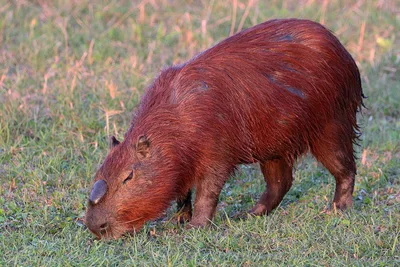 Capybara
 Ocelot
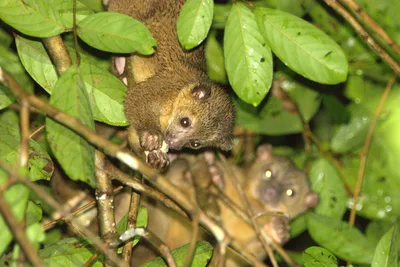 Kinkajou
Food web
Predators
- a nestling is rarely taken by another harpy eagle
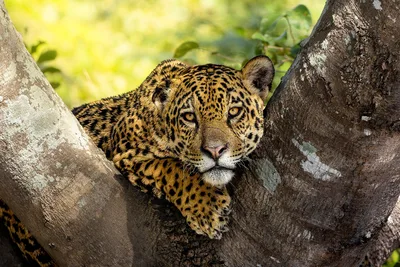
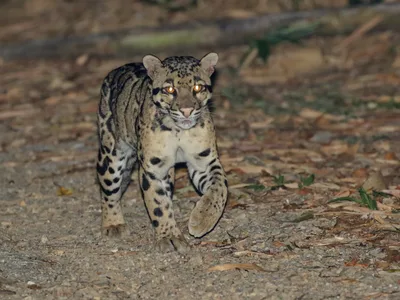
Ecological equivalents
Related species on this site
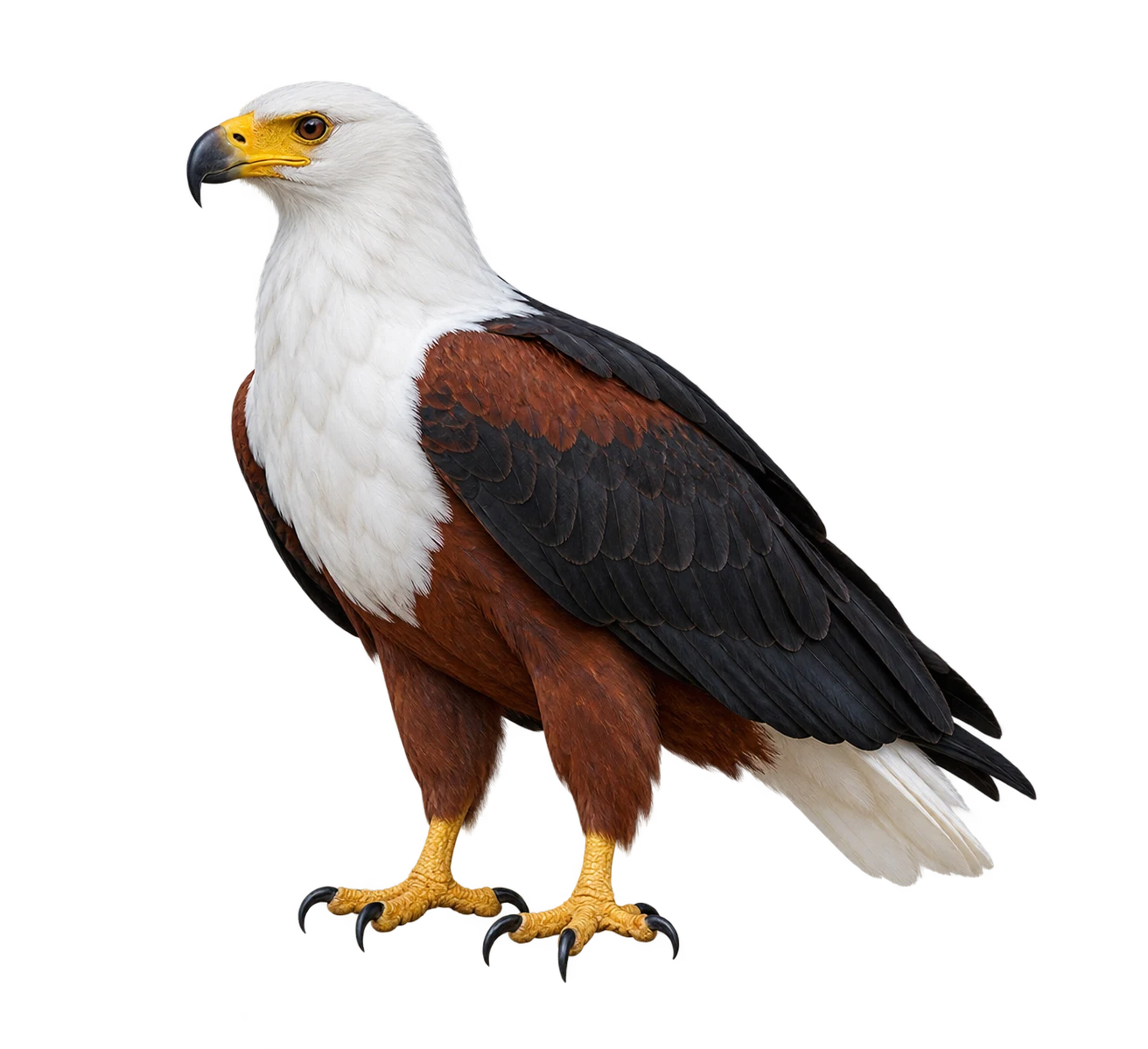
African Fish Eagle (same family), Australian Firehawk (same family), Bald eagle (same family), Bearded vulture (same family), Black kite (same family), Cinereous Vulture (same family), and more.
Birds
African Fish Eagle
Haliaeetus vocifer
Classification and source reference
LivingAI illustration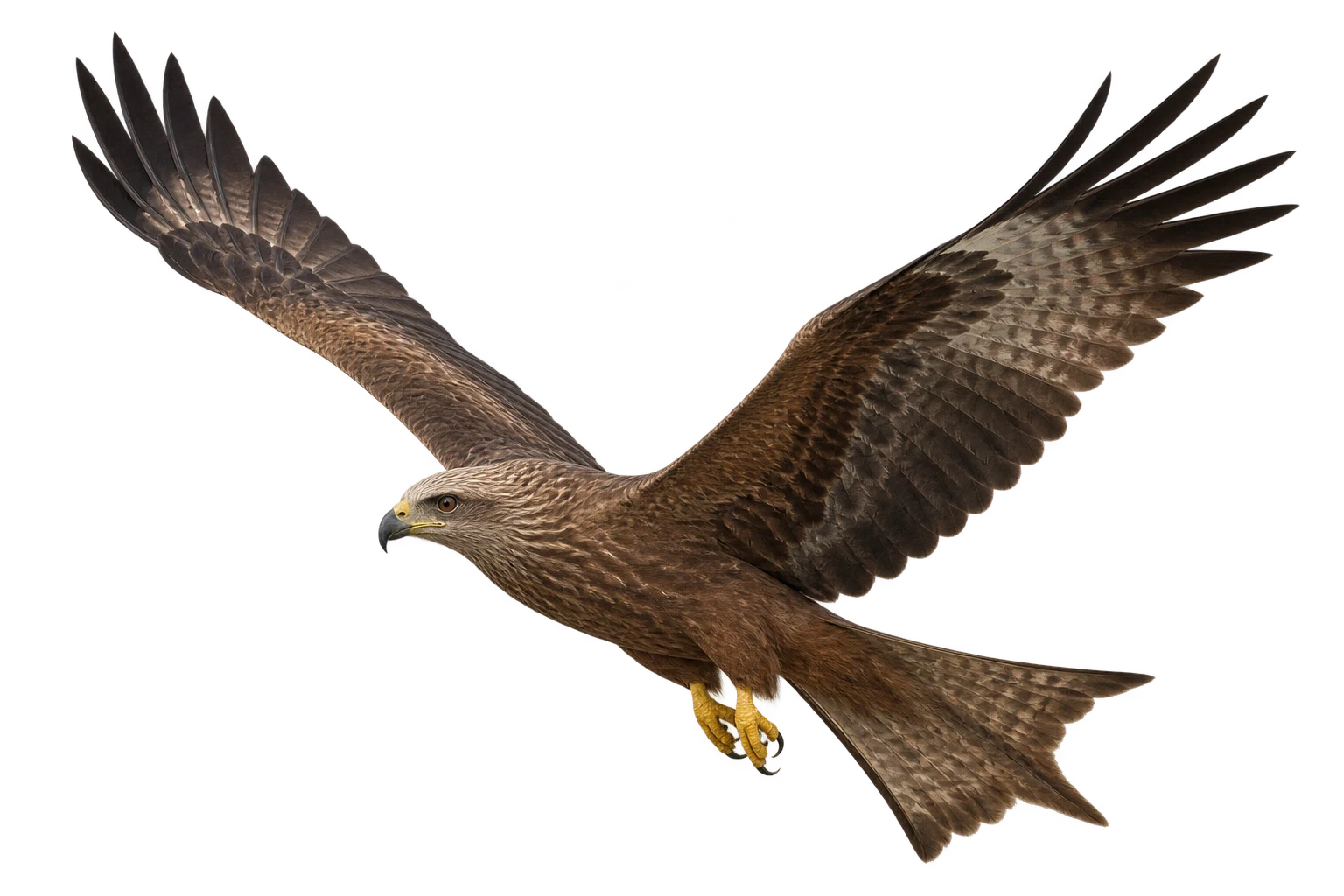
Birds
Australian Firehawk
Milvus migrans
Classification and source reference
LivingAI illustration LC
Birds
Bald eagle
Haliaeetus leucocephalus
The bald eagle is the national bird of the United States.
Living NT
Birds
Bearded vulture
Gypaetus barbatus
The bearded vulture is a huge mountain raptor that lives almost entirely on bone.
Living LC
Birds
Black kite
Milvus migrans
The black kite is a medium-sized raptor with angled wings and a forked tail.
Living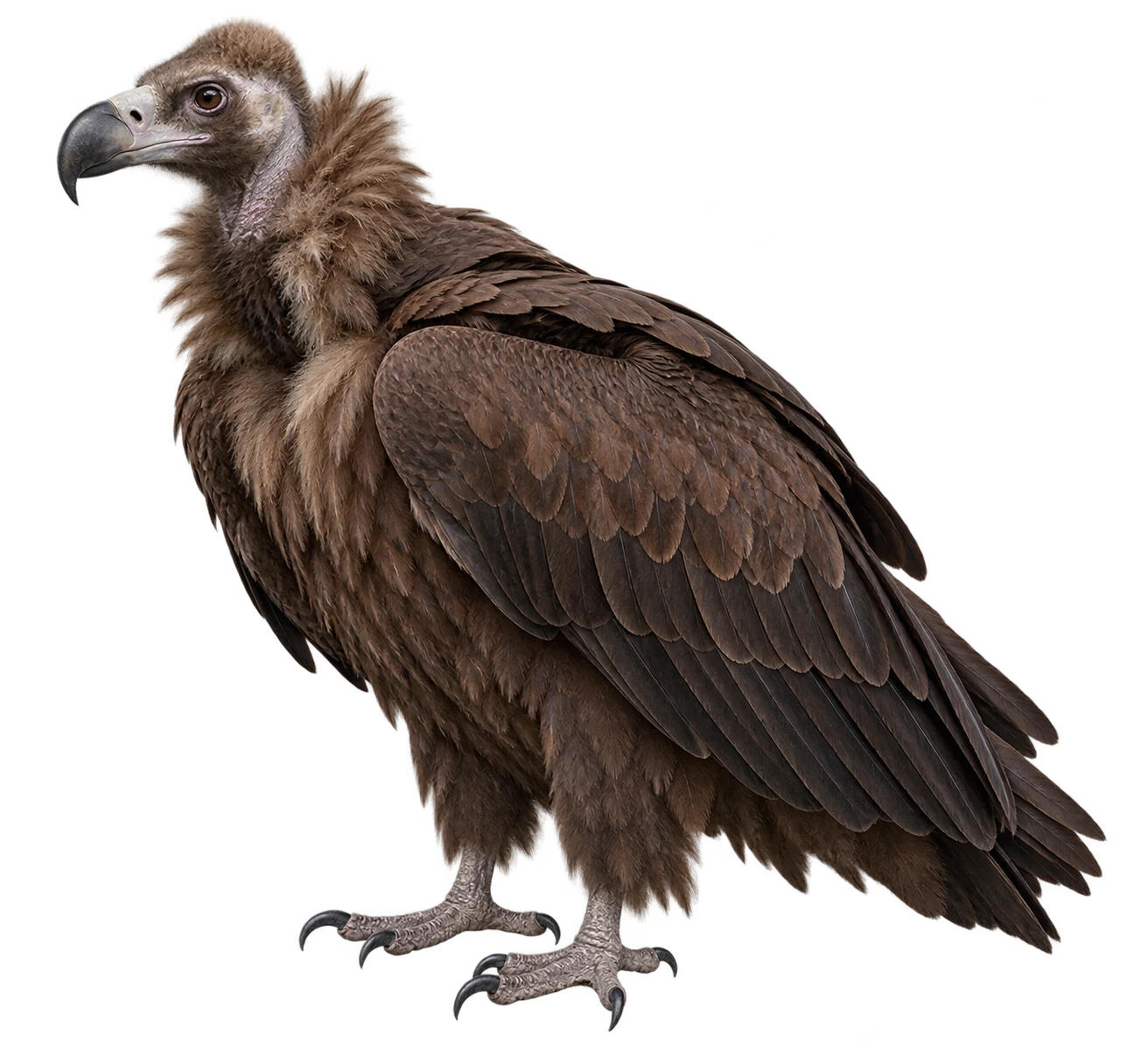
Birds
Cinereous Vulture
Aegypius monachus
Classification and source reference
LivingAI illustration