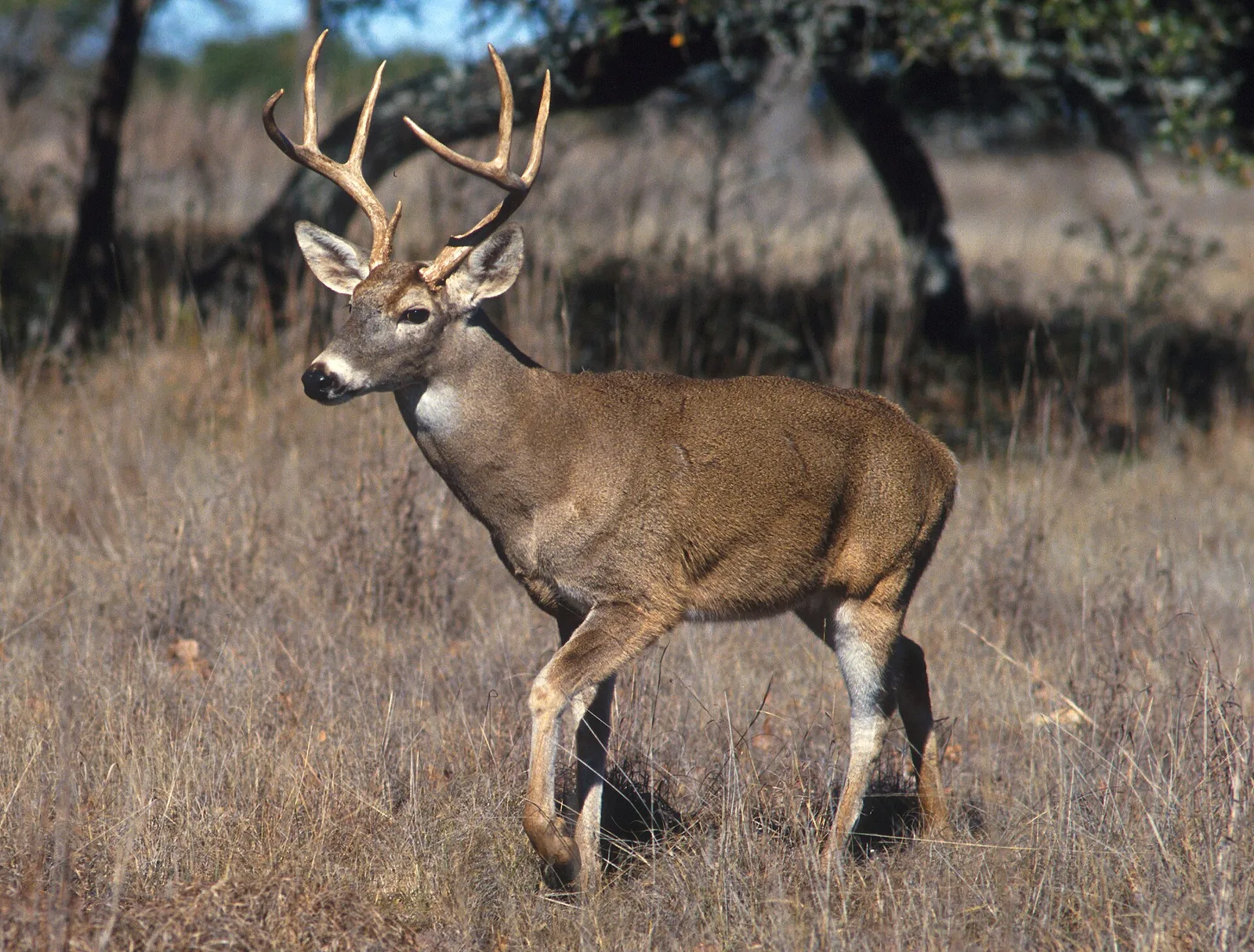
White-tailed deer
The deer that raises a white flag as it runs
Odocoileus virginianus
Also called Whitetail, Virginia deer, Venado cola blanca
Living individuals or members of this group exist today. This does not mean they are safe from extinction.
Meet the white-tailed deer
The white-tailed deer is the most widespread wild hoofed animal of the Americas, from Canada to Peru. It flashes the white underside of its tail as it flees, and it thrives on farmland and in suburbs.
Images of the white-tailed deer
Lifespan in the wild
2 to 3 years most live 2 to 3 years, few pass 10
Weight
40 to 136 kg
Length
0.95 to 2.2 m
Top speed
About 50 km/h
Fact file
White-tailed deer
- Location
- Southern Canada to Peru, most common in the eastern United States
- Habitat
- Temperate forest, Grassland, Savanna, Towns and cities
- Diet
- Herbivore
- Prey / food
- Twigs, leaves, acorns, grasses, legumes, fruit, corn
- Predators
- Gray wolf, cougar, jaguar, coyote, American black bear, bobcat, alligator
- Lifestyle
- Active at dawn and dusk; does with fawns, bucks mostly alone
- Group name
- Herd
- Name of young
- Fawn
- Gestation
- About 6.5 months
- Litter size
- 1 to 3 fawns
- Population
- About 30 million in the United States in 2005
- Biggest threat
- Hunting, vehicles and chronic wasting disease
- Distinctive feature
- A tail with a white underside, raised as a flag when it runs
- Colour
- Reddish brown in summer, grey-brown in winter, with white markings
- Skin type
- Fur
Size
Next to a person
Measurements
Size and speed
- Height
- 0.53 to 1.2 m at the shoulder
- Length
- 0.95 to 2.2 m including the tail
- Tail
- 10 to 37 cm
- Weight
- 40 to 136 kg, up to 232 kg North American does 40 to 90, bucks 68 to 136; tropical deer average 35 to 50
- Weight, male
- 68 to 136 kg, up to 232 kg
- Weight, female
- 40 to 90 kg
- Top speed
- About 50 km/h, up to 60 km/h 50 sustained over 5 to 6 km, 60 in a sprint
Typical adult ranges. Source: Wikipedia.
Life cycle
Lifespan
- In the wild2 to 3, up to 20 years most live 2 to 3 years, few pass 10
- In captivityUp to 23 years
- 023 years
The pale bar is the record. Sources: Animal Diversity Web, AnAge.
Appearance
Colour and coat
- Primary colours
- reddish browngrey-brown
- Secondary colours
- white
- Skin type
- fur
- Male and female
- Bucks are larger and grow antlers each year. Northern bucks weigh 68 to 136 kilograms against 40 to 90 kg for does.
Life cycle
Mating and family
- Mating system
- polygynous; a buck tends one doe at a time and mates with several
- Social structure
- a doe with her fawns; bucks alone or in small summer groups
- Breeding
- one litter of one to three fawns a year, born in May or June
The rut runs from October to December. A doe is in heat for about 24 hours and returns to heat about 28 days later if she is not mated. After about 6.5 months she gives birth to one to three spotted fawns, usually twins after her first year. She hides them in cover for four weeks and weans them at eight to ten weeks. Young bucks leave at a year old, and most wild deer live only two to three years.
Classification
Taxonomy
- Kingdom
- Animalia
- Phylum
- Chordata
- Class
- Mammalia
- Order
- Artiodactyla
- Family
- Cervidae
- Genus
- Odocoileus
- Species
- Odocoileus virginianus
Conservation
Red List status
- LC
- NT
- VU
- EN
- CR
- EW
- EX
Least Concern on the IUCN Red List
Range
Recorded in 3 countries
Habitat layer: temperate broadleaf and mixed forest, temperate conifer forest, boreal forest and taiga, tropical grassland, savanna and shrubland, temperate grassland, savanna and shrubland.
Countries from 299,014 wild records on GBIF (iNaturalist research grade), filtered and checked by hand. Country shapes: Natural Earth. Habitat: RESOLVE Ecoregions 2017, CC BY 4.0. Basemap: Natural Earth.
Habitats
Three things to know
- 1
At 60 kilometres per hour in a sprint, the whitetail ranks among the fastest deer alive.
- 2
Game laws took the United States herd from about 300,000 deer in 1930 to about 30 million in 2005.
- 3
A doe swallows her hidden fawn's droppings so that no smell betrays it to a predator.
Did you know
Seven more facts
- 1
The deer sees only blue and yellow, so hunter orange looks dull to it.
- 2
A herd of pure white deer, not albinos, lives on the former Seneca Army Depot in New York.
- 3
About one doe in 10,000 grows antlers.
- 4
A grown deer eats about 900 kilograms of plants a year.
- 5
Texas alone holds about 5.3 million white-tailed deer.
- 6
The heaviest buck on record, shot in Minnesota in 1926, was estimated at 232 kilograms alive.
- 7
The deer can eat poison ivy and mushrooms that would poison a person.
Field notes
How it looks and acts
Field notes
Distinguishing features
- A tail with a white underside, raised like a flag when the deer runs.
- A reddish-brown summer coat that turns grey-brown in winter.
- White rings around the eyes and a white band behind the nose.
- Antlers on the bucks with points that rise from a single main beam.
- A shoulder height of 53 to 120 centimetres.
- Spotted fawns that lose the spots by their first winter.
Field notes
Unique adaptations
- A four-chambered stomach that ferments twigs, acorns and even toxic plants.
- Long legs that carry it at 60 kilometres per hour and over 3-metre obstacles.
- A horizontal pupil and fast image processing that catch movement at dusk.
- Scent glands on the head, hooves and hind legs that mark trails and warn other deer.
- A coat that shifts from red-brown in summer to grey-brown in winter, matching the woods.
Field notes
Interesting behaviours
- Feeds at dawn and dusk and rests in cover through the middle of the day.
- Blows through the nose and lifts the tail to warn other deer of danger.
- Bucks scrape the ground, urinate on their hocks and rub trees to leave scent.
- Does hide their fawns in vegetation and return to nurse them a few times a day.
- Herds trample trails in deep snow and stay in the same yard all winter.
Field notes
Temperament
- Shy and nervous, quick to flee at a strange sound or scent.
- Bold near people where nobody hunts, to the point of raiding gardens.
- Bucks turn aggressive in the rut and fight rivals antler to antler.
- A cornered deer will charge and strike with antlers or hooves.
Field notes
Communication
- A fawn bleats for its mother, and the call deepens into a grunt as it grows.
- A snort or a hard blow through the nose signals a threat.
- A mature buck's grunt-snort-wheeze asserts dominance.
- Scent from forehead, tarsal and interdigital glands marks scrapes, rubs and trails.
- A stamped hoof leaves a burst of scent that warns deer that come later.
Ecology
Ecological role
The white-tailed deer is the main large plant eater across much of the Americas, and its browsing shapes the forest.
- Dense herds strip wildflowers, tree seedlings and shrubs from the forest floor.
- At moderate density its browsing can raise plant diversity by holding back dominant species.
- It is the main prey of wolves, cougars and jaguars and feeds many scavengers.
- It hosts the ticks that carry Lyme disease and the brainworm that kills moose.
Stories
Myths and legends
- In Cherokee tradition, the spirit Awi Usdi cripples a hunter who kills a deer without asking pardon.
- In Huichol tradition, the deer is one with maize and peyote, and ceremonies honour it as both.
- In Tlingit tradition, the deer is a symbol of peace and of the ambassador.
- In Tupi-Guarani tradition, the white deer Anhanga protects forest animals and can turn into a person.
- In Ojibwe tradition, the deer clan bears the animal's name, waawaashkeshi.
People
Relationship with humans
People
Living alongside us
People have hunted the white-tailed deer for meat and hides since the first Americans arrived. Market hunting nearly wiped it out by 1930, and game laws brought it back to about 30 million in the United States by 2005. It is now the most popular big game animal on the continent and the basis of a farming sector for venison and velvet antler. It also eats crops, collides with cars and carries the ticks that spread Lyme disease.
- Collisions with deer killed about 300 people in the United States over two years to 2009.
- A buck in the rut or a doe with fawns can charge a person and strike with antlers or hooves.
- The deer carries the black-legged tick, and Lyme disease cases rise where deer are dense.
People
Status, uses and products
- Domestication
- Wild
- As a pet
- Not suitable. A wild deer is nervous, strong and hard to fence, and a tame buck becomes dangerous in the rut. Most states forbid keeping one. Farmed deer are livestock, not pets.
- Uses
- huntingvenisondeer farmingwildlife watching
- Products
- venisonbuckskinvelvet antlertrophy antlers
The full account
About the white-tailed deer
The white-tailed deer is a medium-sized deer of the Americas. It ranges from southern Canada through the United States and Mexico to Peru and possibly Bolivia. No other wild hoofed plant eater on the mainland of the Americas has a wider range. Its name comes from the white underside of its tail, which it lifts as it flees.
An adult stands 53 to 120 centimetres at the shoulder. Northern bucks usually weigh 68 to 136 kilograms, and does weigh 40 to 90 kg. Deer in the tropics and the Florida Keys are much smaller. The species eats leaves, twigs, acorns, fruit and crops, and it does well on farmland and in suburbs.
Hunters almost wiped it out in the late 1800s. Protection and regulated hunting brought it back, and the United States alone held about 30 million deer in 2005. Today it is so common in parts of the eastern United States that it damages forests, crops and cars.
Name and taxonomy
The scientific name is Odocoileus virginianus. Zimmermann described the species in 1780 from Virginia, and the state gave the deer one of its older names, the Virginia deer. Hunters in North America simply call it the whitetail. Spanish speakers call it venado cola blanca, and French Canadians call it cerf de Virginie.
It belongs to the deer family, Cervidae, within the even-toed hoofed mammals, Artiodactyla. The genus Odocoileus also holds the mule deer and the black-tailed deer of western North America. Scientists have described 38 subspecies, 17 of them in North America. Genetic work suggests the real number is smaller than the 30 to 40 forms named in the last century. The Key deer of Florida and the Columbian white-tailed deer of Oregon are both listed as endangered in the United States.
Evolution and relatives
Like other New World deer, the white-tailed deer belongs to the subfamily Capreolinae, which also holds moose, reindeer and roe deer. Its closest relatives are the mule deer and the black-tailed deer. The two species meet in the west, and in the Trans-Pecos region of Texas they sometimes produce hybrids. The mule deer and black-tailed deer have lost more than half their numbers since 1960, while the whitetail has recovered.
The species follows Bergmann's rule: deer grow larger with distance from the equator. The northern subspecies of the north-eastern United States and eastern Canada is the largest and darkest. The smallest deer live in the Florida Keys and in the wooded lowlands of the tropics. Andean deer are larger than other tropical forms and carry a thick, slightly woolly coat.
Appearance
The coat is reddish brown in spring and summer and turns grey-brown in autumn and winter. White fur marks a band behind the nose, rings around the eyes and the inside of the ears. The chin, throat and underside of the tail are white too. Older deer tend to have longer snouts and greyer coats. One herd at the former Seneca Army Depot in New York is white all over except for the nose and hooves. The animals are not albinos.
Adults measure 95 to 220 centimetres long, including a tail of 10 to 37 cm. Shoulder height is 53 to 120 cm. Bucks in North America usually weigh 68 to 136 kilograms, and does weigh 40 to 90 kg. A Minnesota buck shot in 1926 was estimated at 232 kg alive, the heaviest on record. Tropical deer average only 35 to 50 kg, and some adult does weigh just 25 kg.
Only the bucks grow antlers, and they regrow them every year. About one doe in 10,000 also grows a set. The antlers start in late spring under a soft skin called velvet and are shed between late December and February. A buck's inside spread runs from 8 to 60 cm. Size and branching depend on food, age and genes, so antlers are a poor guide to a buck's age.
Habitat and range
The white-tailed deer lives from southern Canada across almost all of the United States, apart from the far west. It continues through Mexico and Central America and into the north of South America, reaching Peru and possibly Bolivia. Texas holds more deer than any other state, province or country, with about 5.3 million. Farming beside the Canadian Rockies has let the species spread north-west as far as the Yukon.
The species is a generalist. It prefers the edges between woodland and open ground, where thickets give cover and clearings give food. It also lives on prairie, in oak savanna, in the cactus and thorn scrub of Texas and Mexico, and in the swamps of Florida. In Central and South America it favours dry forest, savanna and riverside woodland and avoids dense wet rainforest. Andean deer live in mountain grassland up to about 13,000 feet.
People have introduced it to New Zealand, the Caribbean and several European countries. Finland received four deer from Minnesota in 1935, and by 2020 the country held about 109,000. GBIF holds records from 44 countries, though that count includes zoos and escapes.
Diet and feeding
The white-tailed deer is a browser first and a grazer second. It eats the shoots, twigs and leaves of woody plants, plus grasses, legumes, acorns, nuts, berries and wildflowers. In eastern forests it takes buds of maple, poplar, aspen and birch, and it turns to conifers in winter. In deserts it eats yucca, prickly pear and tough shrubs. It raids corn, hay, clover, orchards and garden plants wherever it lives near people.
A grown deer eats about 900 kilograms of plant matter a year. It is a ruminant with a four-chambered stomach, so it can digest mushrooms and poison ivy that would harm a person. It swallows food quickly in the open, then chews the cud later in cover. It chews old bones when it needs calcium and has been seen eating nesting songbirds and mice. The deer feeds mainly from before dawn until mid-morning and again from late afternoon to dusk.
Behaviour and social life
The white-tailed deer is active mainly at dawn and dusk and rests in short spells through the day and night. It is the shyest and most nervous of the North American deer. Home ranges are small, often a square kilometre or less. The deer does not migrate, but in deep snow a herd tramples a network of trails called a yard and stays there.
For most of the year the basic group is a doe with her fawns. Does sometimes feed together in larger groups, and herds of hundreds have been seen. Bucks form loose groups of two to four in summer and split up before the rut. During the rut a buck follows one doe at a time and fights rival bucks antler to antler, but he keeps no harem.
A startled deer blows hard through its nose, raises its tail and bounds away with the white underside showing. It has been clocked at 60 kilometres per hour in a sprint and can hold 50 km/h over 5 to 6 km. It can jump 3 metres high and 9 metres forward. It swims well and often crosses lakes and rivers to escape predators or biting insects. A cornered deer may charge and strike with its antlers or hooves.
Communication and senses
Sight, hearing and smell are all sharp, but the deer relies most on its nose to detect danger. Its horizontal pupil gives good night vision, and it notices movement in dim light better than a person does. It sees only two colours, blue and yellow, so it barely notices the bright orange that hunters wear.
Fawns bleat to call their mothers. Adults grunt, snort and, when hurt, give a loud bawl. A mature buck makes a grunt-snort-wheeze that warns rivals off. The alarm blow and the raised white tail alert every deer nearby.
Scent does most of the talking. Glands sit in front of the eyes, on the forehead, between the hooves and on the hind legs. A buck scrapes bare earth with his front hooves, urinates over the tarsal glands on his hocks, and rubs his forehead on the twig above. He also strips bark from small trees with his antlers to make a rub. These sign-posts tell does that he passes this way and tell other bucks who is in the area.
Reproduction and life cycle
The rut runs from October to December, and in the north most does come into heat in November. A doe is receptive for about 24 hours, and if she is not mated she returns to heat about 28 days later. A buck mates with as many does as he can and eats little, so he loses condition through the rut. Most does first breed at about 18 months, though a well-fed fawn can breed at six or seven months.
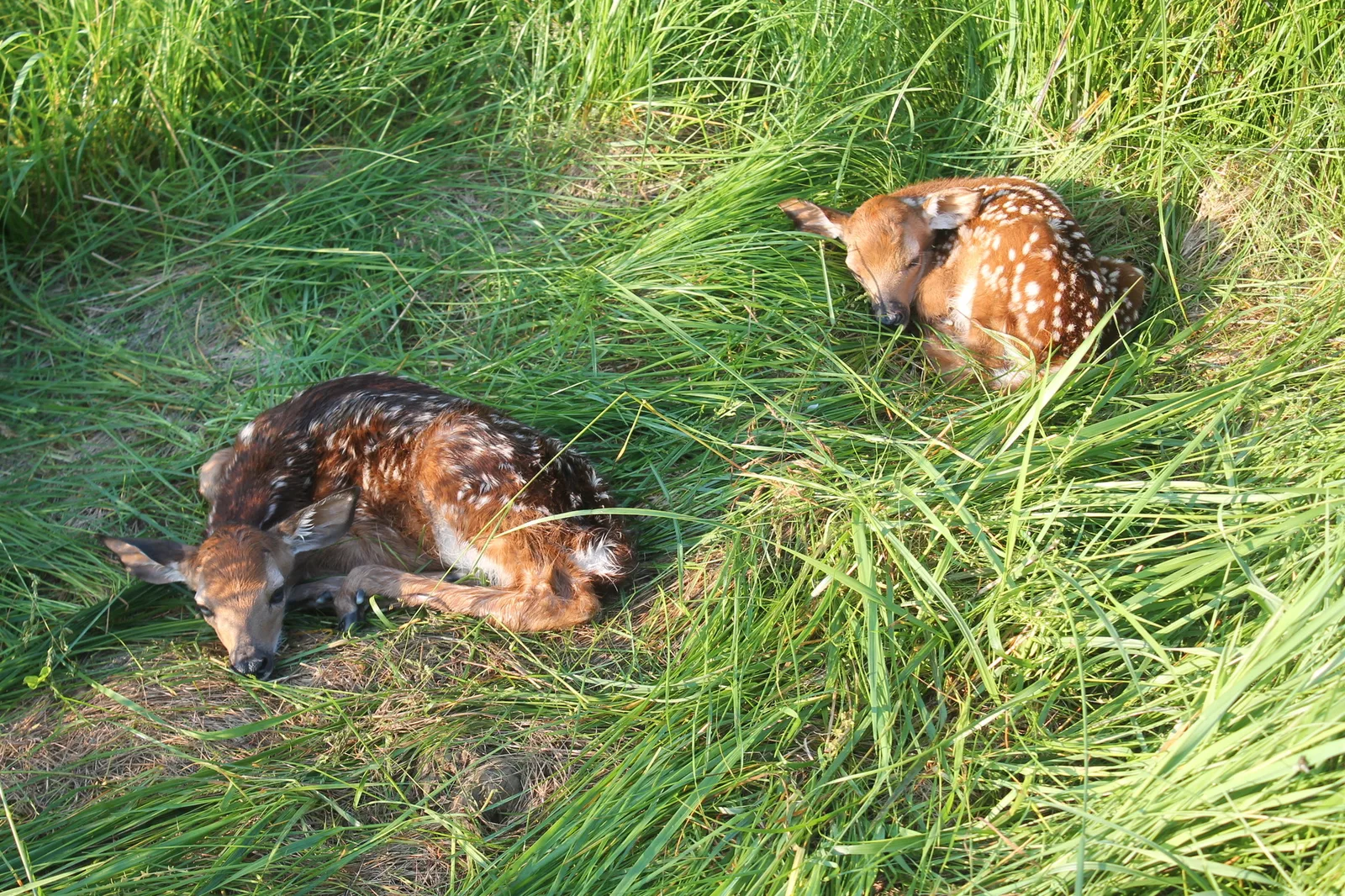
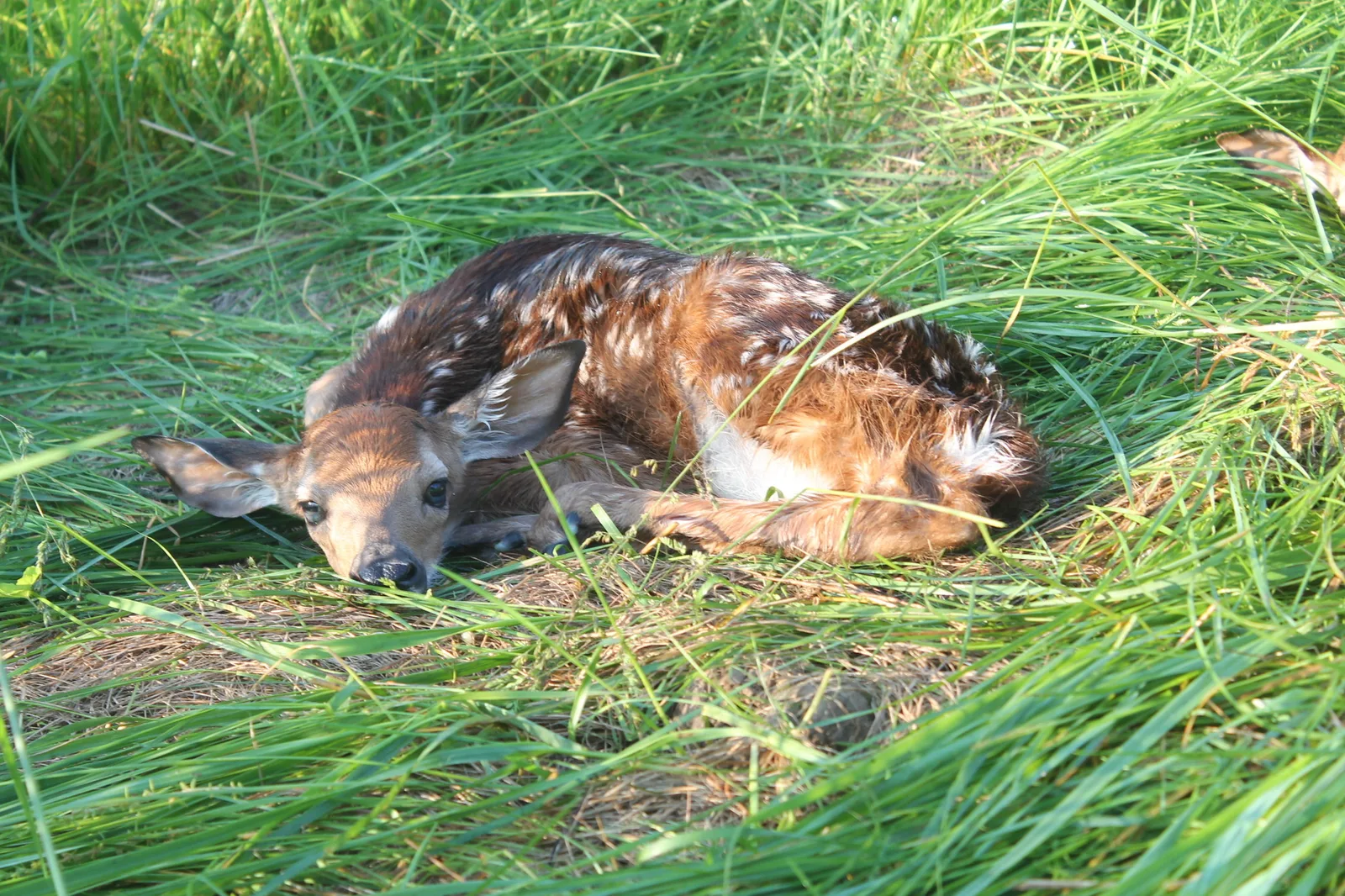
Pregnancy lasts about 6.5 months, or 198 days. The doe drops one to three spotted fawns in May or June, and a fawn weighs 1.5 to 2.5 kilograms at birth. A first-time mother usually has one fawn, and twins are the rule in later years. For the first four weeks she hides the fawns in cover and returns to nurse them four or five times a day. She eats the fawn's droppings so that no scent gives it away.
Fawns follow their mother at about a month, are weaned at eight to ten weeks and lose their spots by their first winter. Young bucks leave at one year, and young does often stay for two. Most wild deer live only about two to three years, and few pass ten, though the wild record is 20. A captive deer has reached 23 years.
Predators and threats
Wolves, cougars, jaguars and alligators kill adult deer, and people kill more than any of them. Coyotes, bobcats, lynx, black bears and wolverines take mostly fawns, though a bear or a coyote pack can pull down a weak adult in winter. Golden and bald eagles sometimes snatch a fawn. Vultures, foxes, ravens and crows clean up the carcasses.
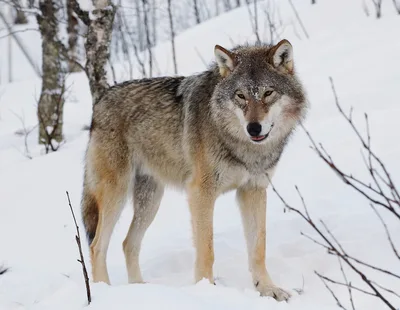
In the eastern United States most of the large predators are gone, and the coyote is often the only wild hunter left. Grey wolves remain the main cause of death where the two species overlap, in Minnesota, Wisconsin, Michigan and most of Canada. The rich deer population helped the wolves of the Great Lakes recover.
Cars are a major killer. The insurance industry estimated 2.4 million deer collisions in the United States over two years to 2009. Disease matters too. Chronic wasting disease spreads through farmed and wild herds. Biting midges carry haemorrhagic disease in hot summers, and 18 species of tick feed on the deer in the United States alone.
Population and conservation
The IUCN lists the white-tailed deer as Least Concern. It is the most numerous large mammal in North America. By about 1930 unregulated hunting had cut the United States population to about 300,000. Bans on commercial hunting, game laws and the clearing of old forest reversed the decline. By 2005 the United States held about 30 million deer, close to the number before European settlement.
Numbers have fallen by several million since 2000 but were judged healthy in 2017. Two subspecies remain in trouble: the Key deer of Florida and the Columbian white-tailed deer, which the IUCN rates as Near Threatened. In Central and South America many populations are hard to study, overhunted and poorly protected, and some areas have lost their deer.
In much of the east the problem is now too many deer. At about 8 deer per square kilometre browsing starts to strip the forest understorey. Managers use longer hunting seasons, professional sharpshooters, contraception and sterilisation to hold numbers down. Moving deer elsewhere is costly, stresses the animals and can spread chronic wasting disease.
Relationship with humans
The white-tailed deer is probably the most hunted big game animal in the Americas. Native peoples hunted it for meat and turned its hide into buckskin. Today it supports a large hunting industry, and Pennsylvania, New York, Wisconsin and Ohio have the densest concentrations of hunters. Deer farms sell venison, velvet antler, hides and breeding stock, and hunting ranches sell guided hunts.
The costs are large. Deer ate about 765 million dollars of crops, nuts, fruit and vegetables in 2001. Collisions with vehicles caused about 300 human deaths over two years to 2009 and more than 7 billion dollars of damage. The deer is the main host of the adult black-legged tick, which carries Lyme disease. Where deer are dense, Lyme disease cases rise, though the deer itself does not catch the bacterium.
In 2021 researchers found antibodies to SARS-CoV-2 in 40 percent of sampled deer. People passed the virus to deer at least six times, and one Ontario deer may have passed a new variant back to a person. Deer also carry the brainworm parasite, which does them little harm but kills moose.
In culture and myth
The white-tailed deer is the state animal of ten American states, from Arkansas to South Carolina. Honduras and Costa Rica both name it their national animal, and it appears on the Costa Rican 1,000 colón note. A buck's head tops the coat of arms and the flag of Vermont. The Milwaukee Bucks basketball team took its name from the animal. Disney's 1942 film Bambi turned the roe deer of the novel into a white-tailed deer.
In Cherokee tradition, Awi Usdi, the Little Deer, punishes a hunter who kills without asking pardon. In Huichol tradition, the deer stands for maize that feeds the body and peyote that feeds the spirit. Huichol ceremonies still honour a maize deer and a peyote deer. The Cherokee, Creek, Ojibwe, Navajo, Zuni and several Pueblo peoples have deer clans. The Ojibwe name for the animal, waawaashkeshi, is also the name of the clan.
In Tlingit tradition, the deer stands for peace and for the ambassador. Among the Tupi-Guarani of Brazil, Anhanga is a red-eyed white deer that protects the animals of the forest. Mesoamerican hunters still ask their gods for permission before a deer hunt, and some rites take place in caves. Across the continent the deer is thought to stand for fertility and for the people themselves.
A sentence with a dotted underline is inferred: it describes the group the animal belongs to, or is a reading of the sources, rather than a measured or reported fact about this species.
Questions
White-tailed deer questions, answered
How big is a white-tailed deer?
An adult stands 53 to 120 centimetres at the shoulder and measures 95 to 220 cm long, including the tail. Northern bucks weigh 68 to 136 kilograms, and does weigh 40 to 90 kg.
How fast can a white-tailed deer run?
It sprints at up to 60 kilometres per hour and can hold 50 km/h for 5 to 6 km. It also jumps 3 metres high and 9 metres forward.
What do white-tailed deer eat?
Twigs, leaves, buds, grasses, legumes, acorns, nuts, berries and wildflowers. Near people they eat corn, hay, clover, fruit trees and garden plants.
Are white-tailed deer endangered?
No. The IUCN lists the species as Least Concern, and it is the most numerous large mammal in North America. Two subspecies, the Key deer and the Columbian white-tailed deer, are endangered in the United States.
Why is it called a white-tailed deer?
The underside of its tail is white. When the deer is alarmed it lifts the tail and shows the white patch as it runs.
How long do white-tailed deer live?
Most wild deer live only two to three years, and few pass ten. The wild record is 20 years, and a captive deer has reached 23.
Where do white-tailed deer live?
From southern Canada through the United States, Mexico and Central America to Peru. They favour the edges between woodland and open ground and also live in savanna, desert scrub, swamps and suburbs.
When do white-tailed deer mate?
The rut runs from October to December, with a peak in November in the north. Fawns arrive in May or June after a pregnancy of about 6.5 months.
How many fawns does a doe have?
One to three. A first-time mother usually has a single fawn, and twins are typical in later years.
Do female white-tailed deer have antlers?
Almost never. Only about one doe in 10,000 grows antlers, and those cases are usually linked to a hormonal disorder.
When do bucks shed their antlers?
From late December to February, once the does have been bred. New antlers start to grow in late spring under a skin called velvet.
Are white-tailed deer dangerous?
Rarely to a person on foot, but a buck in the rut or a doe guarding fawns can charge. The real danger is on the road, where collisions with deer killed about 300 people over two years to 2009.
What eats white-tailed deer?
Wolves, cougars, jaguars, alligators and people take adults. Coyotes, bobcats, bears, lynx and eagles take mostly fawns.
Do white-tailed deer spread Lyme disease?
Indirectly. The deer is the main host of the adult black-legged tick, which passes the Lyme bacterium to people. The deer itself does not catch the disease, and mice are the main reservoir.
Can white-tailed deer swim?
Yes. They swim well and often cross lakes and rivers to escape predators or insects, or to reach islands.
Is Bambi a white-tailed deer?
In the 1942 Disney film, yes. The original novel by Felix Salten made Bambi a European roe deer.
Food web
Prey and food
- twigs
- leaves
- acorns
- grasses
- legumes
- fruit
- corn
Food web
Predators
 Gray wolf
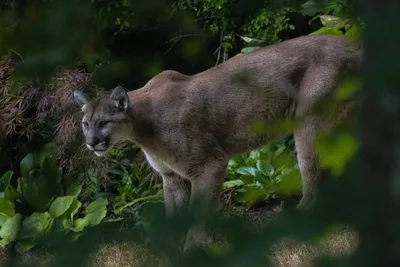 Cougar
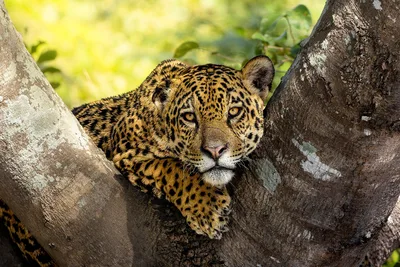 Jaguar
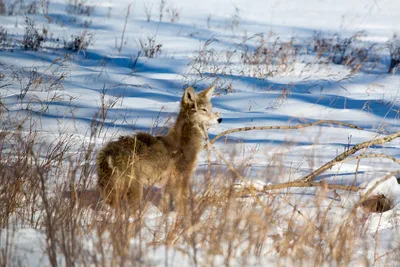 Coyote
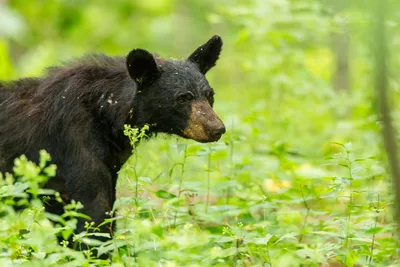 American black bear
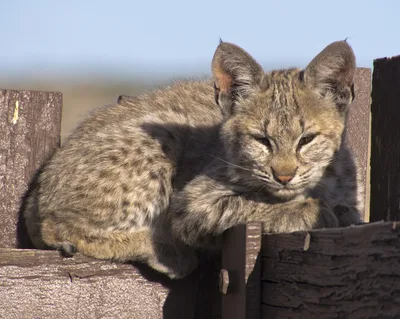 Bobcat
Ecological equivalents
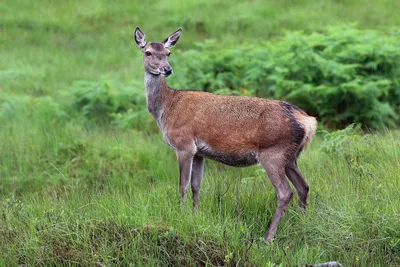
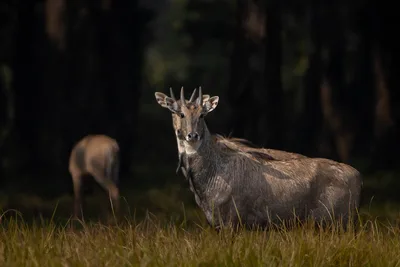
Related species on this site
Coues Deer (same genus), Key Deer (same genus), Mule Deer (same genus), White-tail deer (same genus), Cervalces latifrons (Broad-Fronted Moose) (same family), Chinese Water Deer (same family), and more.
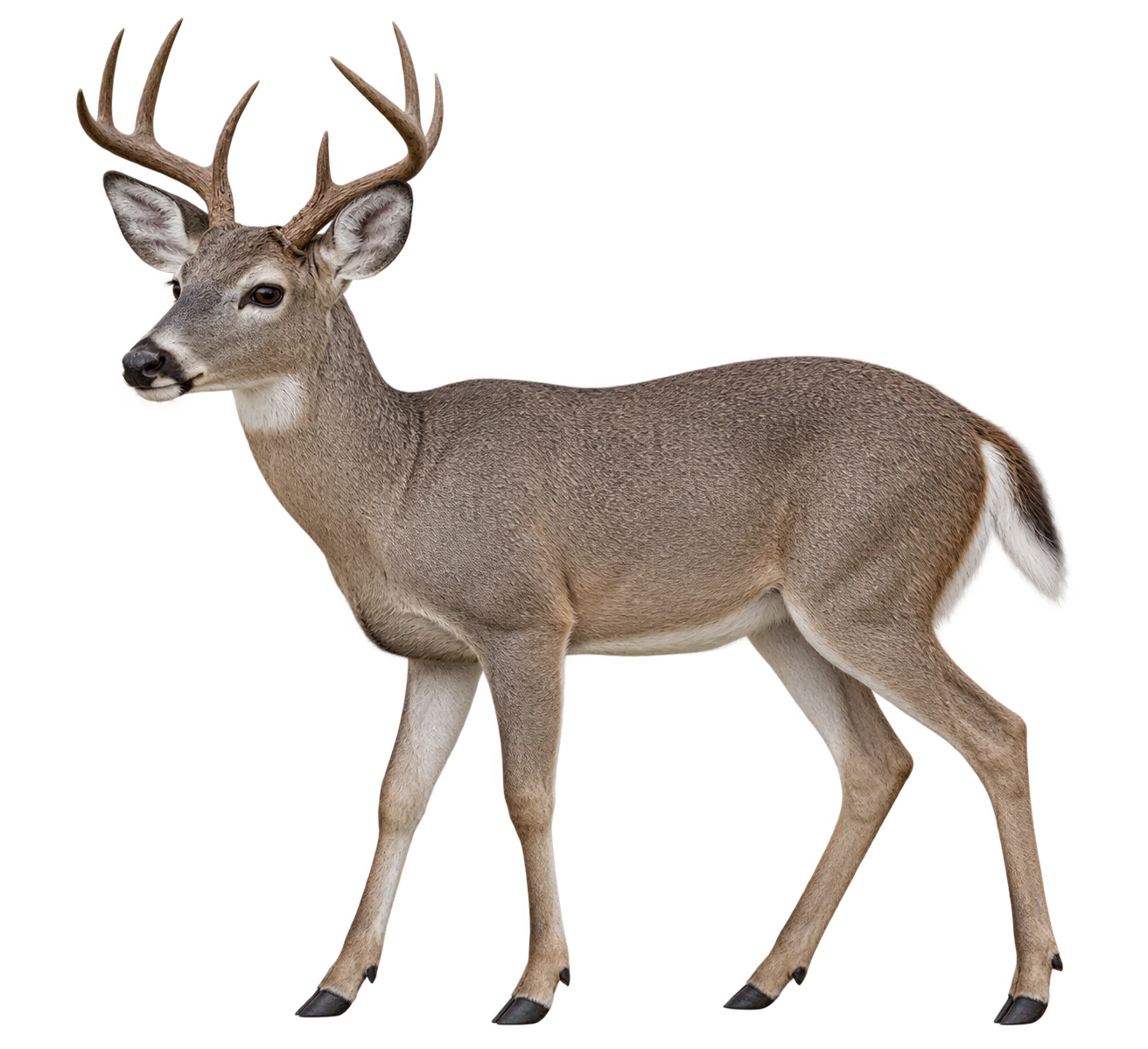
Mammals
Coues Deer
Odocoileus virginianus couesi
Classification and source reference
LivingAI illustration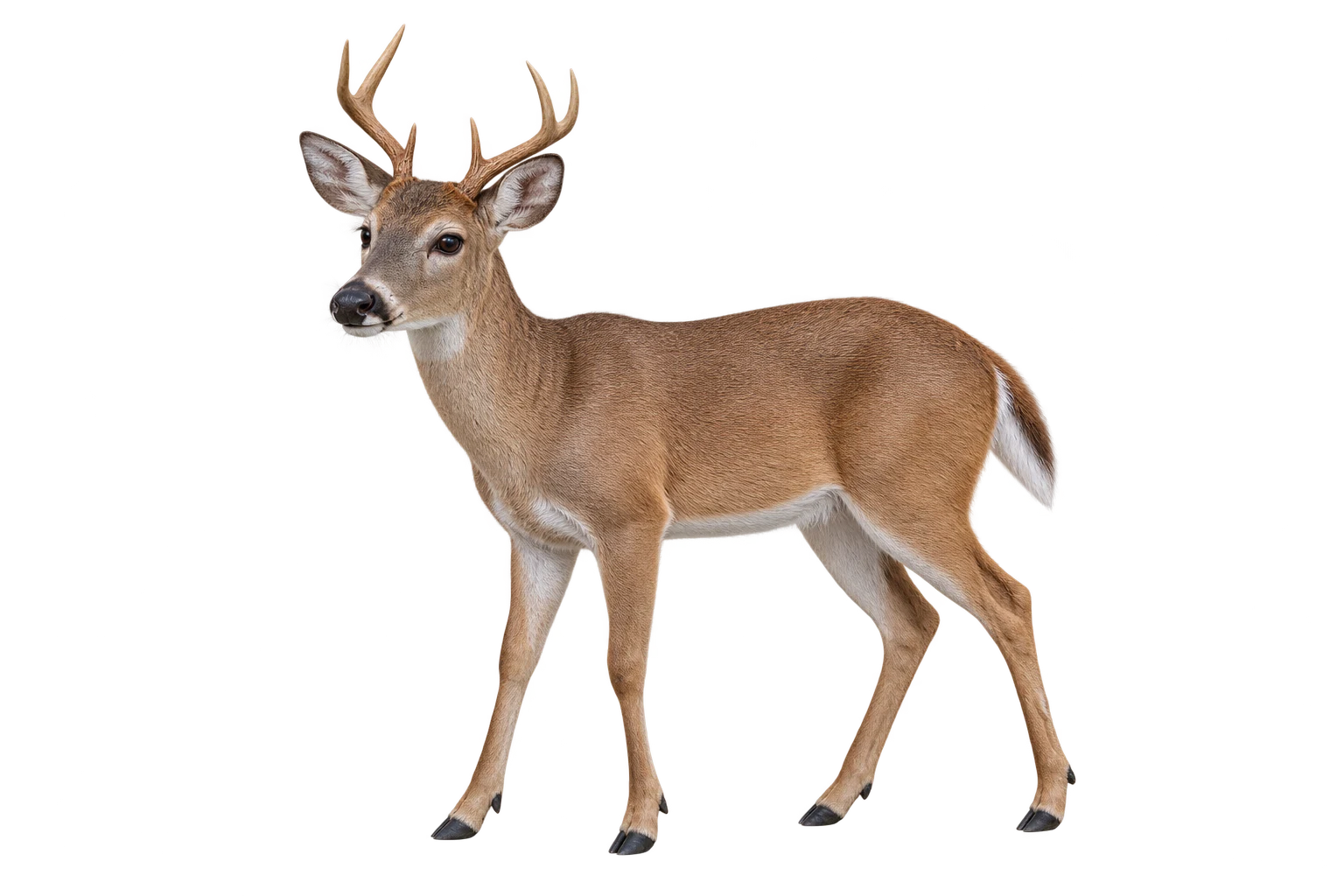
Mammals
Key Deer
Odocoileus virginianus clavium
Classification and source reference
LivingAI illustration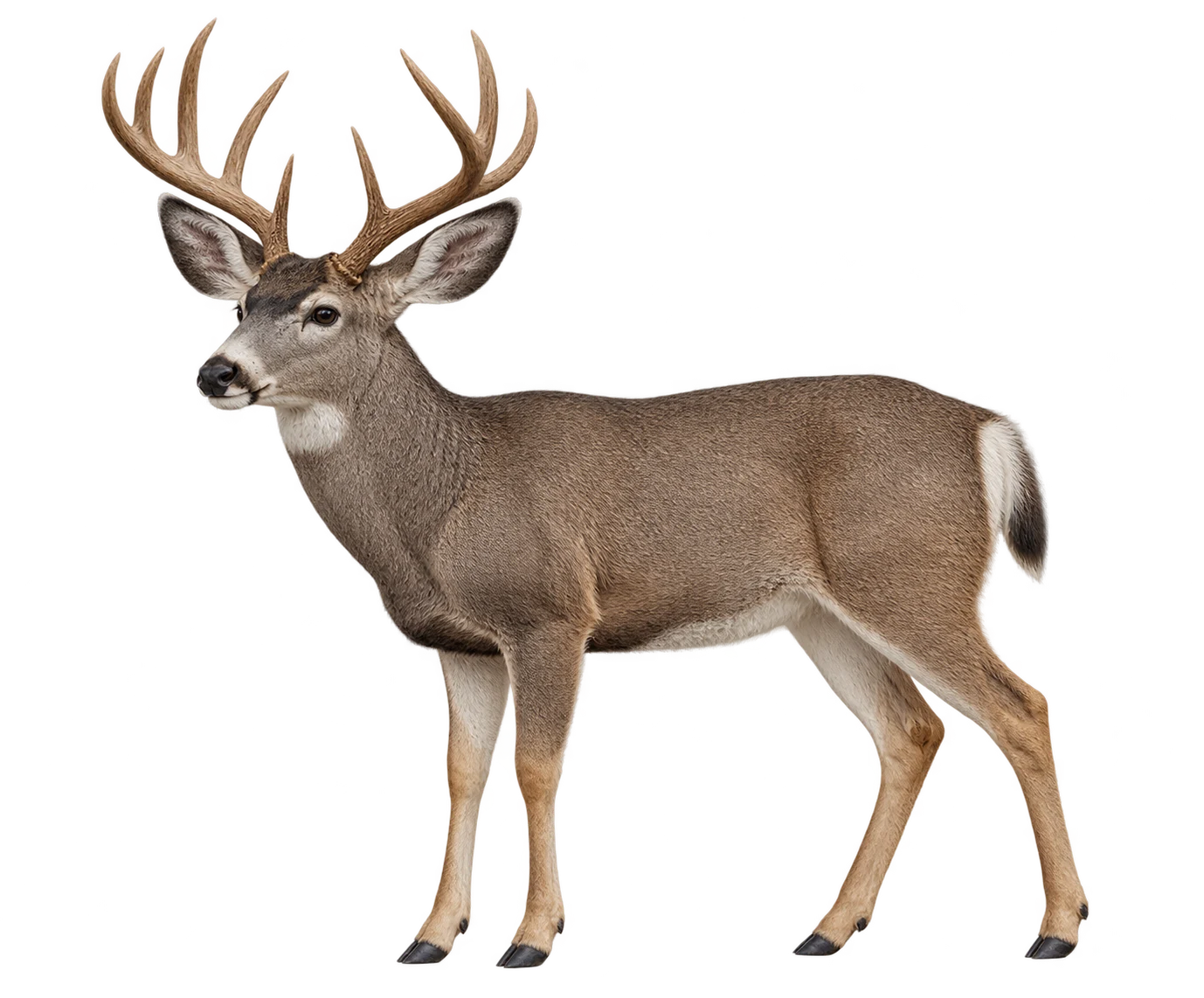
Mammals
Mule Deer
Odocoileus hemionus
Classification and source reference
LivingAI illustration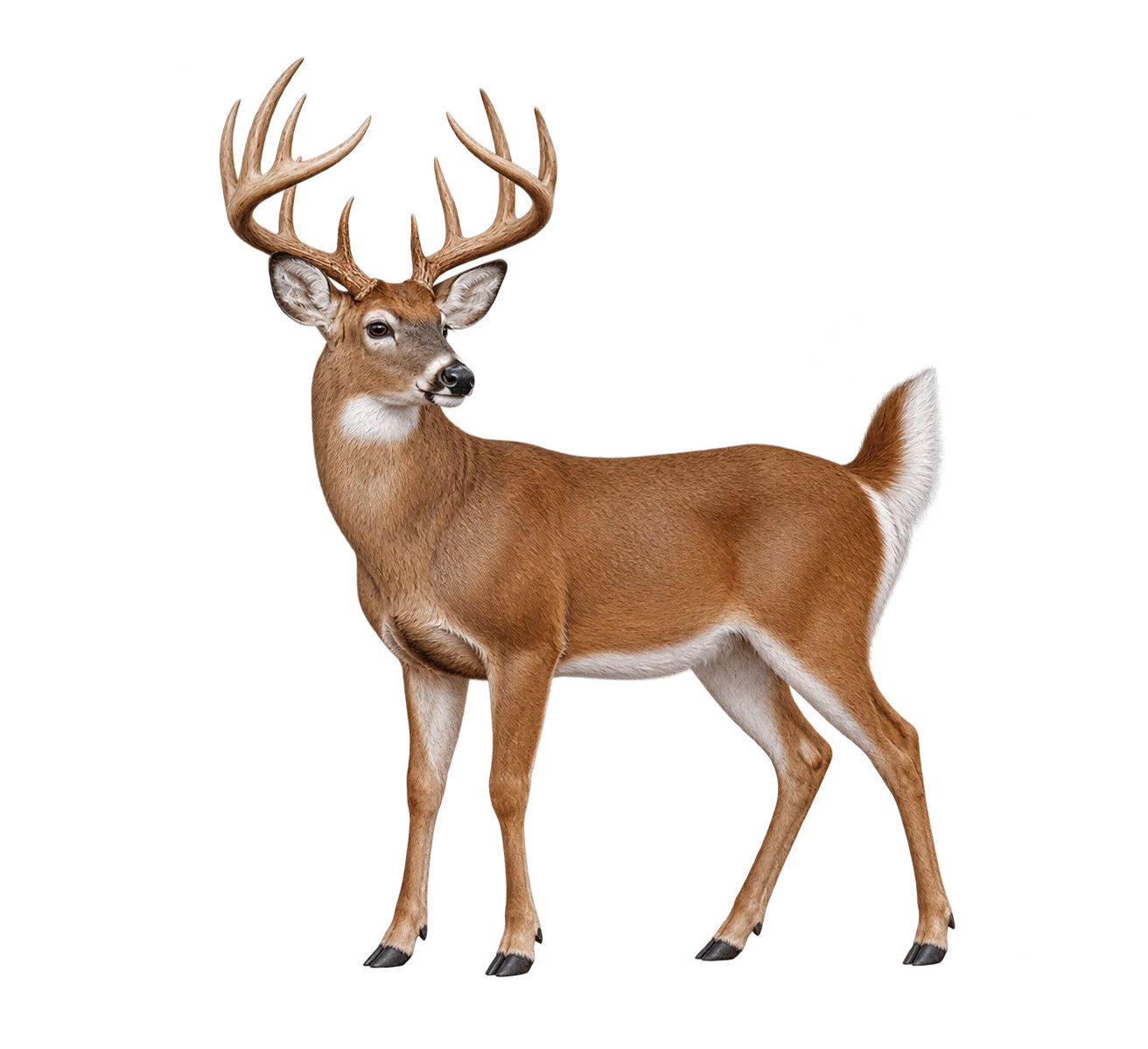
Mammals
White-tail deer
Odocoileus virginianus
Classification and source reference
LivingAI illustration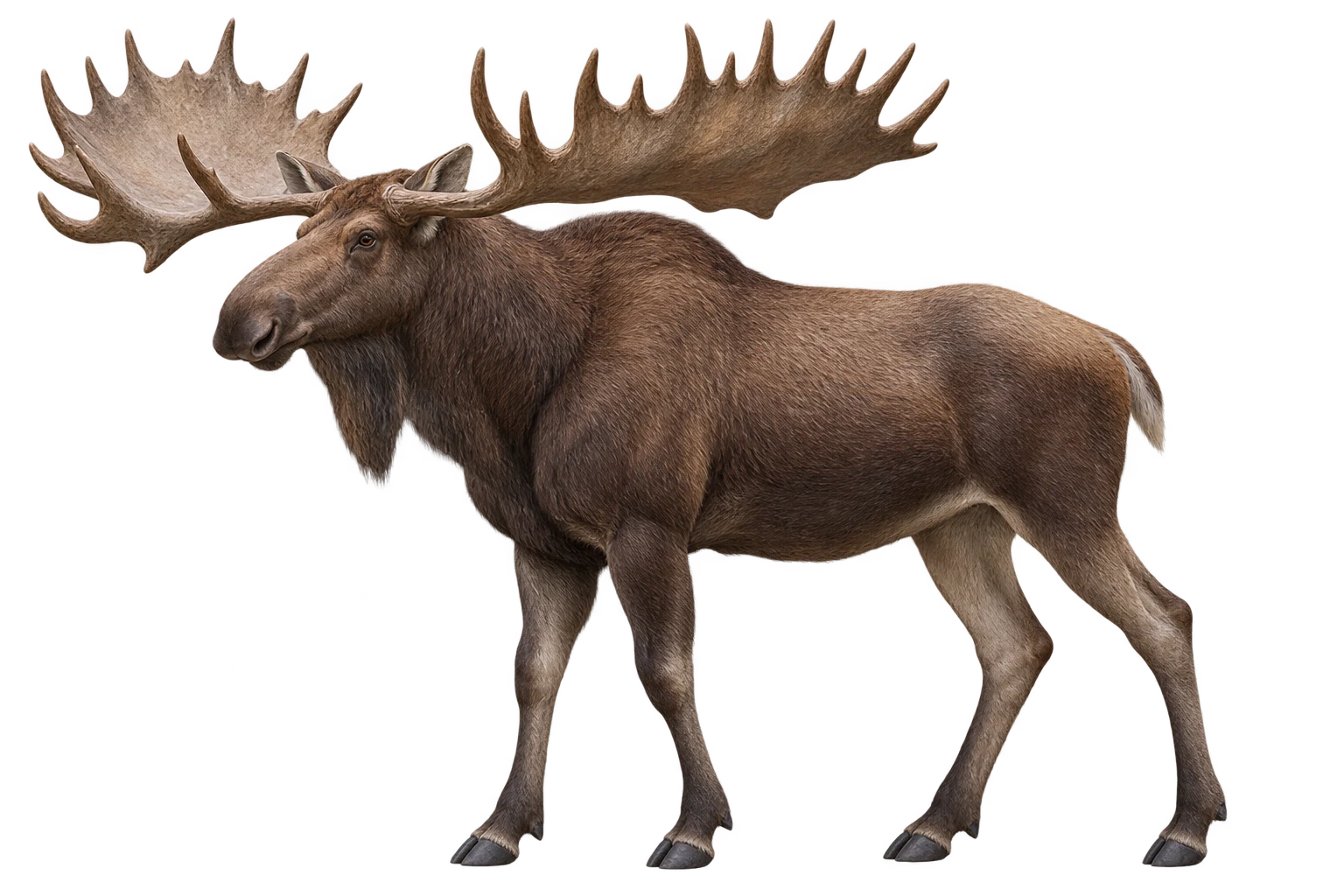
Mammals
Cervalces latifrons (Broad-Fronted Moose)
Cervalces latifrons
Classification and source reference
ExtinctAI reconstruction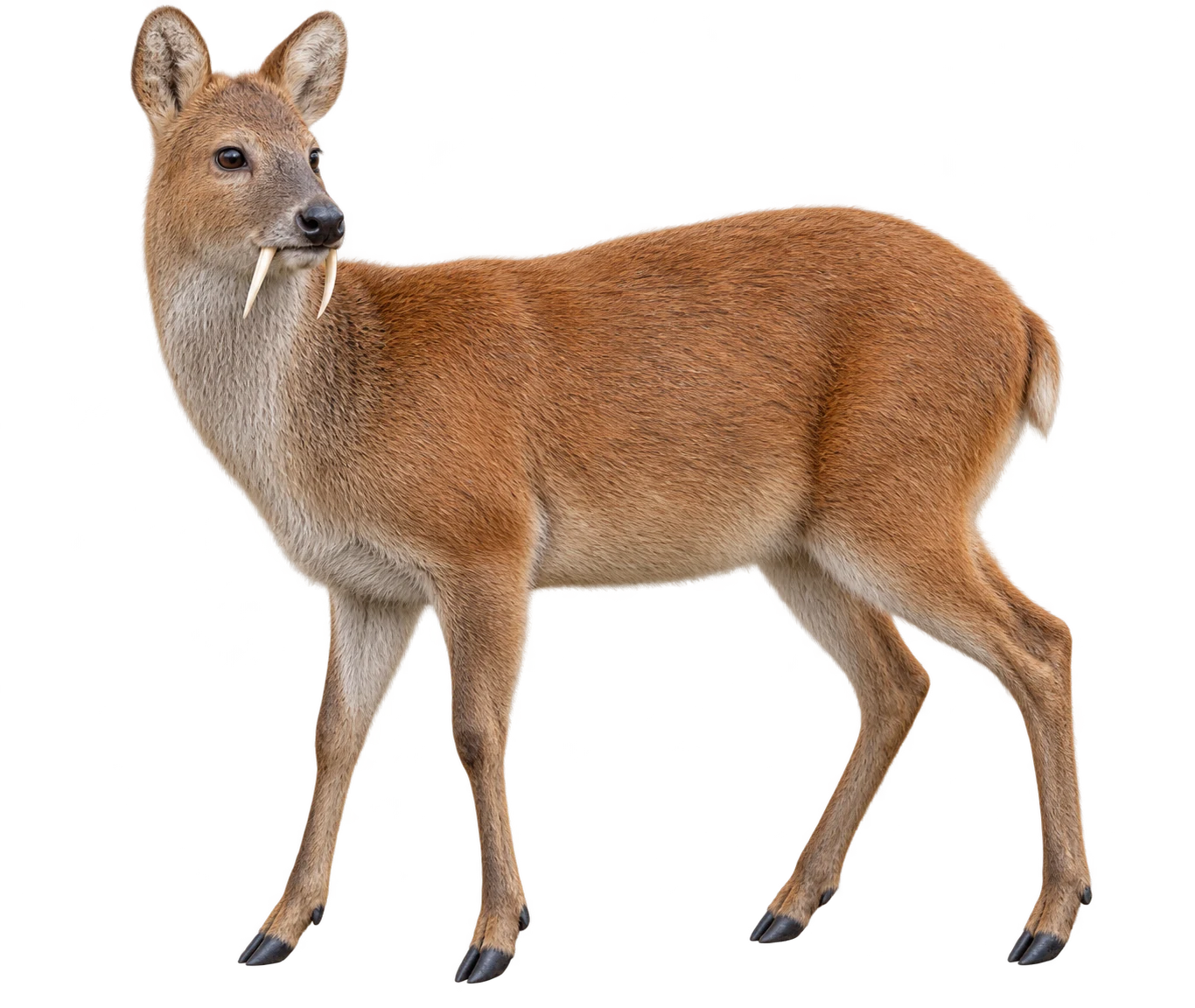
Mammals
Chinese Water Deer
Hydropotes inermis
Classification and source reference
LivingAI illustration