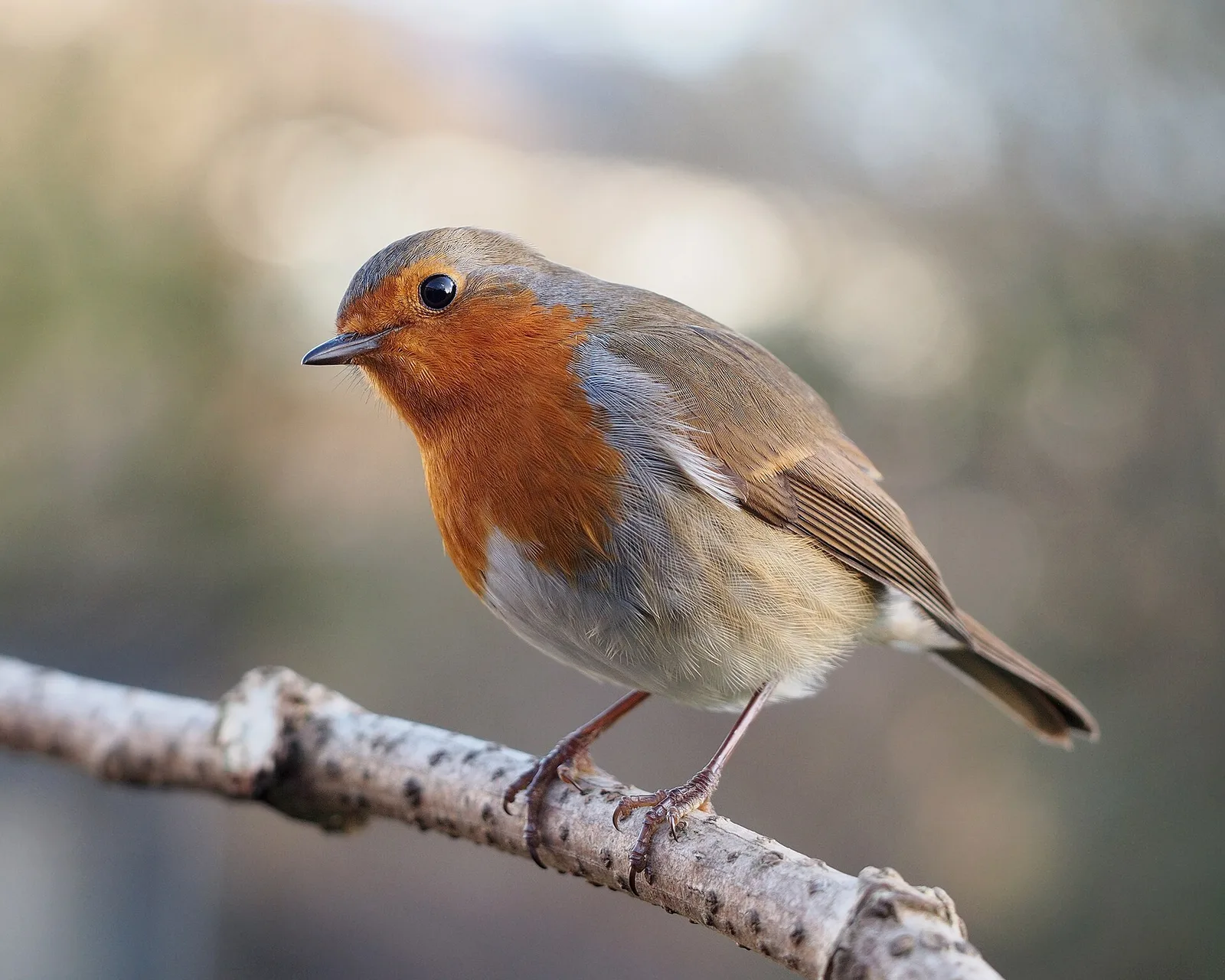
European robin
A small bird that holds its ground all year
Erithacus rubecula
Also called Robin, Robin redbreast, Redbreast, Ruddock
Living individuals or members of this group exist today. This does not mean they are safe from extinction.
Meet the european robin
The European robin is a small orange breasted songbird of European woods, parks and gardens. It holds a territory all year, sings through the winter and fights hard with its own kind.
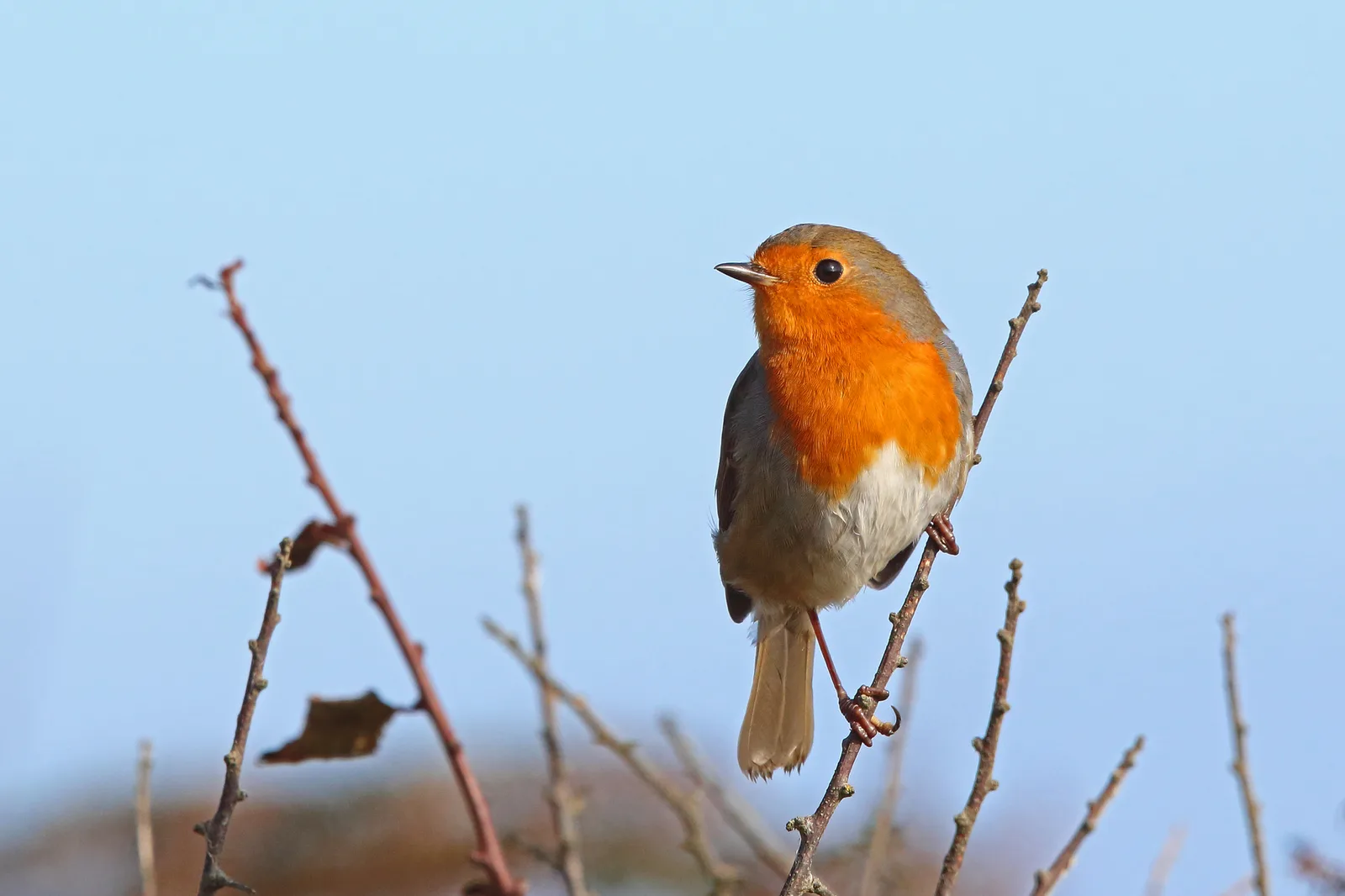
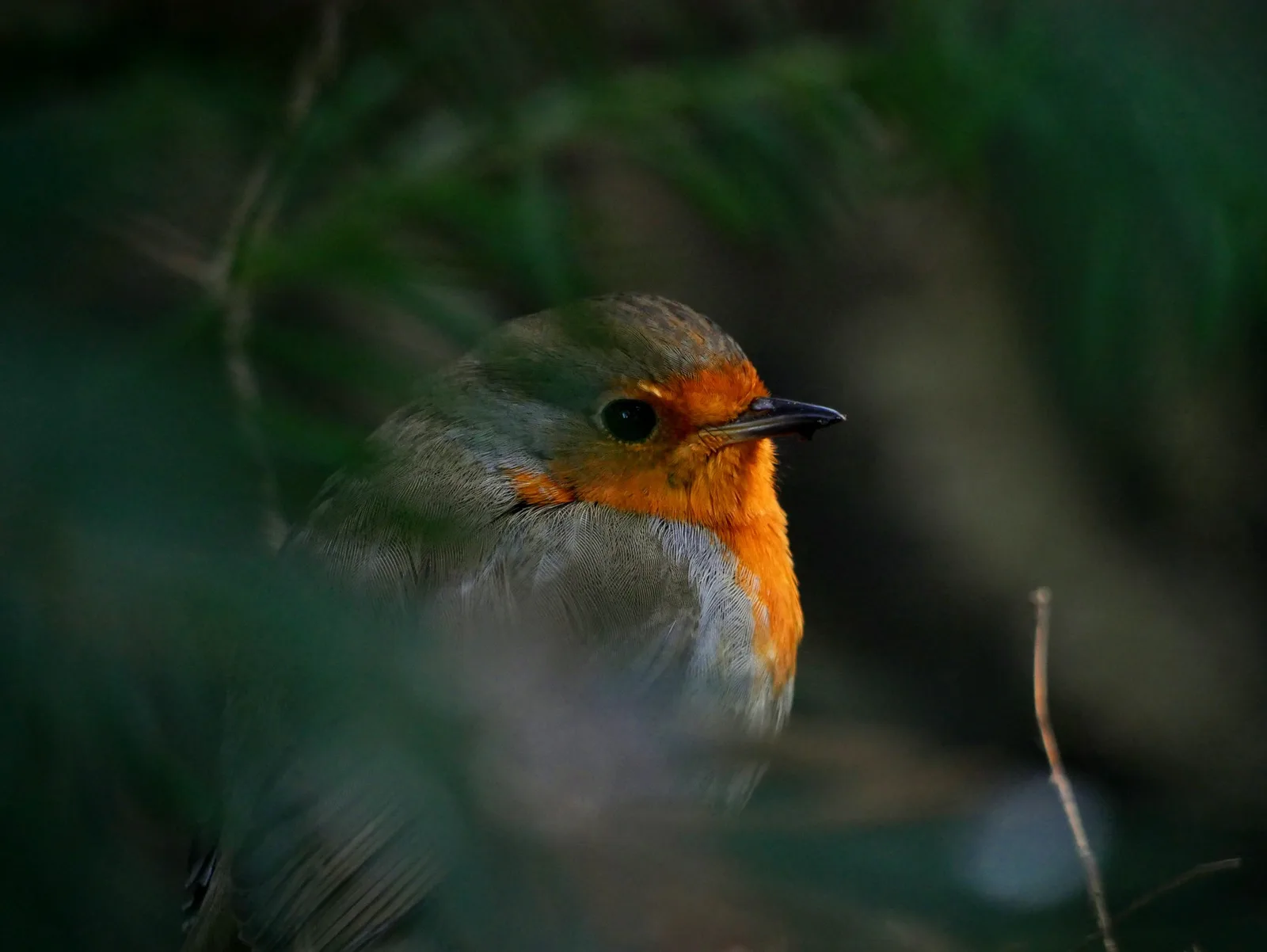
Images of the european robin
Lifespan in the wild
About 1.1 years the typical figure is an average life expectancy, held down by first year deaths
Weight
16 to 22 g
Length
12.5 to 14 cm
Wingspan
20 to 22 cm
Fact file
European robin
- Location
- Europe, western Siberia, North Africa and the Atlantic islands
- Habitat
- Temperate forest, Towns and cities
- Diet
- Omnivore
- Prey / food
- Earthworms, spiders, insects, berries, seeds
- Predators
- Cats, small hawks and nest raiders
- Lifestyle
- Active by day, territorial all year
- Name of young
- Chick
- Clutch size
- Five or six eggs, two or three clutches a year
- Population
- Hundreds of millions, and rising
- Biggest threat
- Cold winters
- Distinctive feature
- Orange breast and face on both sexes
- Colour
- Orange, brown, grey and white
- Skin type
- Feathers
Size
Next to a person
Measurements
Size and speed
- Length
- 12.5 to 14 cm
- Wingspan
- 20 to 22 cm
- Weight
- 16 to 22 g
Typical adult ranges. Source: Wikipedia.
Life cycle
Lifespan
- In the wildAbout 1.1, up to 19 years the typical figure is an average life expectancy, held down by first year deaths
- 019 years
The pale bar is the record. Source: Wikipedia.
Appearance
Colour and coat
- Primary colours
- orangebrown
- Secondary colours
- greywhite
- Skin type
- feathers
- Male and female
- None known in plumage. The male and the female carry the same orange breast, and a watcher cannot separate them by sight.
Life cycle
Mating and family
- Mating system
- monogamous pairs
- Social structure
- solitary, with each bird holding its own territory
- Breeding
- two or three clutches a year
Robins pair for a breeding season. The season opens in March in Britain and Ireland. A female lays five or six eggs in a sheltered hollow. Pairs raise two or three broods before the summer ends. Most young die within a year, which pulls the average life expectancy down to 1.1 years.
Classification
Taxonomy
- Kingdom
- Animalia
- Phylum
- Chordata
- Class
- Aves
- Order
- Passeriformes
- Family
- Muscicapidae
- Genus
- Erithacus
- Species
- Erithacus rubecula
Conservation
Red List status
- LC
- NT
- VU
- EN
- CR
- EW
- EX
Least Concern on the IUCN Red List
Range
Recorded in 20 countries
- Austria
- Belgium
- Switzerland
- Czech Republic
- Germany
- Denmark
- Spain
- Finland
- France
- United Kingdom
- Ireland
- Italy
- Luxembourg
- Netherlands
- Norway
- Poland
- Portugal
- Russia
- Sweden
- Ukraine
Habitat layer: temperate broadleaf and mixed forest, temperate conifer forest, boreal forest and taiga.
Countries from 129,677 wild records on GBIF (iNaturalist research grade), filtered and checked by hand. Country shapes: Natural Earth. Habitat: RESOLVE Ecoregions 2017, CC BY 4.0. Basemap: Natural Earth.
Habitats
Three things to know
- 1
Both sexes sing in winter, and each one holds a separate feeding territory.
- 2
The robin navigates with a magnetic compass that depends on light in its eyes.
- 3
Robins nest in odd places, including post boxes, kettles and old barbecues.
Did you know
Seven more facts
- 1
The word orange was not an English colour name when people first named this bird.
- 2
Robin began as a nickname, a short form of the name Robert.
- 3
The American robin is a thrush and is not a close relative of this bird.
- 4
Robins attack stuffed models of themselves, because the red patch triggers the response.
- 5
A robin can lose a tenth of its body weight in one freezing night.
- 6
Robins on Tenerife look different enough that some treat them as a separate species.
- 7
The robin took 34 per cent of the vote in a British national bird poll.
Field notes
How it looks and acts
Field notes
Distinguishing features
- An orange breast and face on both the male and the female.
- A band of blue grey between the orange patch and the brown neck.
- Brown upperparts, with an olive tinge in British birds.
- A whitish belly with brown legs and feet.
- A black bill and black eyes.
- Mottled brown juveniles that show no orange at all.
Field notes
Unique adaptations
- A light based magnetic compass that guides migration.
- A year round territory that probably secures a winter food supply.
- A broad diet that shifts to berries and seeds when insects vanish.
- A habit of following diggers, which brings buried prey to the surface.
- A loose choice of nest site, from a bank hollow to a flower pot.
Field notes
Interesting behaviours
- Males sing from a perch about an hour before civil sunrise.
- Robins hop close to a gardener and wait for turned soil.
- The bird sings at night in towns with street lighting.
- Males chase and strike rivals that cross the territory line.
- Females shift a short distance to hold a separate winter territory.
Field notes
Temperament
- Tame towards people in Britain and Ireland.
- Wary of people in continental Europe.
- Aggressive towards other robins in every season.
- Drawn to any digging, including the work of a large animal.
Field notes
Communication
- A fluting warble in short phrases with abrupt gaps.
- A thinner and more plaintive song in the winter months.
- The orange breast as a visual claim on a territory.
- Night singing where street lights and traffic noise are strong.
Ecology
Ecological role
The robin is a common insect eater in the woods, parks and gardens of Europe.
- It removes large numbers of worms, spiders and insects from the soil surface.
- It probably spreads seeds from the berries it eats in autumn.
- Like other small birds, it feeds cats, hawks and nest raiders.
- It carries parasites such as the moorhen flea.
Stories
Myths and legends
- In Welsh tradition the robin scorched its breast carrying water to hell.
- In English Christian legend the blood of Christ marked the breast of the robin.
- In German tradition, recorded by Jacob Grimm, robbing a robin nest brings lightning.
- In Welsh mining tradition a robin seen underground foretold an accident.
- In British popular custom the robin stands for Christmas.
People
Relationship with humans
People
Living alongside us
The robin is the garden bird British people know best. It works alongside a digging gardener and takes the worms that come up. Britain and Ireland treat it kindly, while people on the continent once hunted it. A public vote named it the national bird of Britain, though the title carries no official weight.
- A robin weighs 16 to 22 grams, so it cannot injure a person.
- The bird attacks other robins, not people.
- Like other wild birds, robins can carry parasites, so nobody should handle one.
People
Status, uses and products
- Domestication
- Wild
- As a pet
- Not suitable. The robin is a wild bird and the law protects it in Britain. Feed it in the garden and put up an open fronted nest box instead.
- Uses
- garden birdwatchingChristmas imagery
- Products
- None recorded
The full account
About the european robin
The European robin is a small songbird with an orange breast and a bold manner. It sits in the Old World flycatcher family rather than among the thrushes. Adults measure 12.5 to 14 centimetres long and weigh 16 to 22 grams. The male and the female wear the same plumage. The bird lives across Europe, east into western Siberia and south into North Africa.
Robins hold territories all year, and both sexes sing through the winter. A male will fight another male that crosses the boundary. In Britain and Ireland the robin follows gardeners and takes worms from turned soil. Young robins carry no orange at all, and they grow the patch in their first months. The species is common, and the IUCN lists it as Least Concern. British voters chose the robin as their national bird in a public poll.
Name and taxonomy
Carl Linnaeus described the robin in 1758 and called it Motacilla rubecula. Georges Cuvier set up the genus Erithacus in 1800, and the bird now carries the name Erithacus rubecula. The species name rubecula comes from the Latin word for red. English speakers first called the bird the redbreast, because orange was not yet a colour word. In the 15th century people gave familiar birds human names, and robin redbreast stuck. Older English names for it include ruddock and robinet.
Island and mountain populations differ enough that several subspecies are recognised. Birds in Britain and much of western Europe belong to the form melophilus. Robins on Tenerife and Gran Canaria carry a white eye ring and a stronger breast colour. Some researchers treat those two island forms as separate species. Wikidata lists names such as Rotkehlchen in German and Roodborst in Dutch. Birds of the north east are large and washed out in colour. Forms from Crimea, the Caucasus and Iran are widely accepted as distinct.
Evolution and relatives
Genetic work places the genus Erithacus in a group of otherwise African birds. A study published in 2023 confirmed the robin as the only European member of that group. The genus once held the Japanese robin and the Ryukyu robin. Those two birds moved to the genus Larvivora, and the European robin now stands alone. Sequence data suggest the Canary Islands birds split from mainland robins about 2 million years ago. The genus was once placed in the thrush family, and that view is now dropped. Robins on Gran Canaria appear to have arrived before those on Tenerife.
Many unrelated birds carry the name robin. The American robin is a thrush, and it is a much larger bird. Australasian robins sit in the family Petroicidae and are closer to crows than to this species. The shared name probably comes from the orange breast alone. The magpie-robins of Africa and Asia are Old World flycatchers as well.
Appearance
The adult robin is 12.5 to 14 centimetres long. It weighs 16 to 22 grams. The wingspan is 20 to 22 centimetres. The breast and face are orange, and a band of blue grey separates that patch from the brown back. The belly is whitish, and the legs and feet are brown. The bill and the eyes are black.
Male and female robins look alike, so plumage does not tell them apart. Juveniles are mottled brown and white, with no orange. Orange feathers appear on the chin two to three months after a young bird leaves the nest. The patch then spreads until the bird looks like an adult. Birds in their first winter keep pale tips on the wing covert feathers. British birds show an olive tinge on the upperparts.
Habitat and range
Robins live from western Siberia west to the Atlantic islands. The range reaches Algeria in the south, and Iran and the Caucasus in the south east. Birds occur on the Azores and Madeira, and they turn up in Iceland as vagrants. GBIF records the species in 96 countries, and that count includes captive and escaped birds.
Western and southern robins stay on their ground through the year. Northern and eastern robins move south to escape hard winters. Scandinavian and Russian birds winter in Britain and western Europe. A small number of British robins, mostly females, winter in southern Europe and reach Spain. Migrant birds look greyer above and duller on the breast.
In Britain the robin is a bird of parks and gardens. In northern Europe wintering robins prefer spruce woodland. In southern Iberia the resident and migrant birds keep to different woods. People released robins in Australia, New Zealand and North America in the 19th century. None of those releases produced a lasting population. The robin uses hedges, scrub and woodland edge across its range.
Diet and feeding
The robin eats mostly ground invertebrates. Worms, spiders and insects make up the bulk of the diet. In autumn and winter the bird adds berries, fruit and seeds. Robins take seed mixes and suet from bird tables, and they clear up scraps. The species also eats carrion, and it has taken small fish and lizards. The bird appears to take nearly all its prey from the ground. A robin may also work the leaf litter under a hedge for small animals.
A robin watches for disturbed soil and drops down to grab what appears. In Britain the bird follows a gardener with a spade. Robins also follow wild boar and other animals that root through the ground. This habit probably gives the robin food it could not reach on its own. The bird hunts by day, but it may also hunt under a moon or a street lamp.
Behaviour and social life
The robin is active by day and spends most of that time alone. Males defend a territory through the whole year. A male attacks any other male that enters the ground he holds. Fights sometimes kill, and disputes cause up to 10 per cent of adult deaths in some areas.
The red breast works as a signal to rivals. Robins attack stuffed models of their own kind, and some attack their own reflection. The bird shows little fear of people in Britain and Ireland. Robins on the continent keep their distance, because people once hunted small birds there. Winter is hard, and a robin can lose a tenth of its weight in one freezing night.
A female holds her own winter territory, apart from the male. She moves a short way from the summer nest site to better feeding ground. The male keeps the same patch all year round.
Communication and senses
Both sexes sing, and they sing in almost every month of the year. The song is a high fluting warble in short phrases with sudden gaps. Winter song sounds thinner and more plaintive than summer song. A male starts about an hour before civil sunrise. He usually stops about half an hour after sunset. Song probably carries the territory claim to a rival some distance away.
Robins in lit towns often sing at night. Night song may be a way to avoid daytime traffic noise. The robin senses the magnetic field of the Earth and uses it to navigate. That sense depends on light reaching the eye. Researchers link it to cryptochrome, a light sensitive protein in the eye.
Reproduction and life cycle
Robins nest in almost any sheltered hollow. Pairs use banks, crevices, plant pots, kettles, post boxes and old barbecues. Open fronted nest boxes suit them, set up to 2 metres above the ground. The nest is moss, leaves and grass, lined with fine grass, hair and feathers. The breeding season opens in March in Britain and Ireland.
A female lays five or six eggs in a clutch. Pairs raise two or three clutches across the season. The eggs are cream, buff or white with reddish brown speckles and blotches. The marks often crowd the blunt end of the egg. As in most small songbirds, the female probably does most of the sitting.
Fledglings leave the nest in mottled brown plumage. Orange feathers reach the chin in the two or three months that follow. Most robins die in their first year of life. Average life expectancy is 1.1 years because of that early loss. A bird that survives its first year can live far longer, and one reached 19 years.
Predators and threats
Like other small garden birds, robins are taken by cats and by small hawks. Nest raiders such as magpies, jays and squirrels probably take eggs and chicks. Cold weather kills robins, and a long freeze raises the death rate. The moorhen flea parasitises the species. A spiny headed worm, Apororhynchus silesiacus, also infects robins.
Other robins are a real danger, because a territorial fight can be fatal. People once trapped and killed robins across continental Europe. That pressure appears to have eased, and hunting is now rare. Numbers are not falling, so no single threat acts on the whole species. Cats are a heavy pressure on garden birds, so they probably take many robins.
Population and conservation
The IUCN lists the European robin as Least Concern. The range is very large, and the population runs into the hundreds of millions. Numbers appear to be rising rather than falling. The species sits far from the thresholds that would make it Vulnerable.
Britain places the robin on the green list of conservation concern. iNaturalist holds 190,331 observations of the species. Garden feeding helps robins through cold weather. An open fronted nest box gives the bird a safe site. Most work for robins is general habitat care, and a rescue programme is probably unnecessary.
Relationship with humans
The robin is the most familiar garden bird in Britain and Ireland. It comes close to anyone who digs the soil. British gardeners have long treated the bird as an ally. People in Britain would not harm a robin, partly for religious reasons. Robins nest in sheds, greenhouses and abandoned equipment. The bird may nest in a garden shed when a door stays open.
A public vote run by The Times made the robin an unofficial national bird in the 1960s. A second poll in 2015 confirmed the choice, with 34 per cent of the vote. The birdwatcher David Lindo organised that poll. Several English and Welsh sports clubs are nicknamed the Robins. Bristol City, Swindon Town and Cheltenham Town use a robin in the club badge.
In culture and myth
British folklore gives the robin more weight than the folklore of most of Europe. In Welsh tradition the robin carried water to souls in hell and was scorched by the flames. The Welsh name Brou-Rhuddyn means burnt breast. In Welsh mining lore a robin seen underground warned of a disaster to come.
An English legend says a robin sang to Jesus on the cross and was stained by his blood. In the English tale Babes in the Wood, robins cover the dead children. Jacob Grimm recorded a German belief that robbing a robin nest brings lightning to the house. In Welsh belief a robin crossing a threshold could mean illness or death.
The robin has appeared on British Christmas cards since the middle of the 19th century. One account says Victorian postmen wore red coats and were nicknamed robins. The bird also appears on Christmas postage stamps.
A sentence with a dotted underline is inferred: it describes the group the animal belongs to, or is a reading of the sources, rather than a measured or reported fact about this species.
Questions
European robin questions, answered
What does a European robin look like?
It is a small brown bird with an orange breast and face. A band of blue grey runs between the orange patch and the brown neck. The belly is whitish.
How big is a European robin?
An adult is 12.5 to 14 centimetres long. The wingspan is 20 to 22 centimetres and the weight is 16 to 22 grams.
What do robins eat?
Robins eat worms, spiders and insects for most of the year. In autumn and winter they add berries, fruit and seeds. They also take suet and seed mixes from a bird table.
Do male and female robins look different?
No. Both sexes have the same orange breast and brown back. Only the mottled brown juveniles look clearly different.
How long do robins live?
Average life expectancy is 1.1 years, because so many die in the first year. A bird that gets past that year can live much longer. One robin reached 19 years.
Are robins aggressive?
Yes. A male attacks other males that enter his territory, and fights sometimes end in death. Territorial disputes cause up to 10 per cent of adult deaths in some areas.
Why do robins follow gardeners?
Digging turns up worms and insects that a robin cannot reach. The bird waits beside the spade and takes what appears. It follows wild boar and other rooting animals for the same reason.
Do robins sing at night?
Yes, especially in towns with street lighting. Night song may help a bird avoid daytime traffic noise.
Where do robins nest?
They use any sheltered hollow, including banks, crevices and plant pots. Robins have nested in kettles, post boxes and old barbecues. Open fronted nest boxes work well.
How many eggs does a robin lay?
A clutch holds five or six eggs. A pair raises two or three clutches across the season.
Are European robins endangered?
No. The IUCN lists the species as Least Concern, and numbers appear to be rising. The population runs into the hundreds of millions.
Do robins migrate?
Some do. Birds in the west and south stay all year, while northern and eastern birds move south. Scandinavian and Russian robins winter in Britain and western Europe.
Why is the robin linked to Christmas?
Robins have appeared on British Christmas cards since the middle of the 19th century. The Victorian postmen who carried those cards wore red coats, and people nicknamed them robins.
Is the European robin the same as the American robin?
No. The American robin is a much larger thrush, and it is not a close relative. The two share an orange chest patch and little else.
How does a robin find its way?
The bird senses the magnetic field of the Earth. That compass depends on light reaching the eye, and researchers link it to a protein called cryptochrome.
Can you keep a robin as a pet?
No. It is a protected wild bird and it needs a territory of its own. Feed it in the garden instead.
Food web
Prey and food
- earthworms
- spiders
- insects
- berries
- seeds
Food web
Predators
- cats
- hawks
- nest raiders
Ecological equivalents
Related species on this site
Common nightingale (same family), Whinchat (same family), Acadian Flycatcher (same order), Amazonian Royal Flycatcher (same order), American crow (same order), American goldfinch (same order), and more.
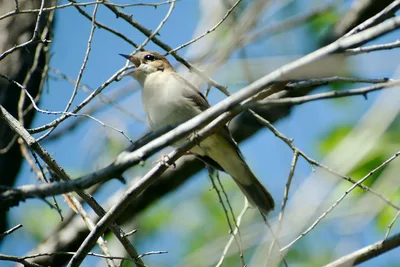 LC
Birds
Common nightingale
Luscinia megarhynchos
The common nightingale is a small brown songbird of dense scrub in Europe and western Asia.
Living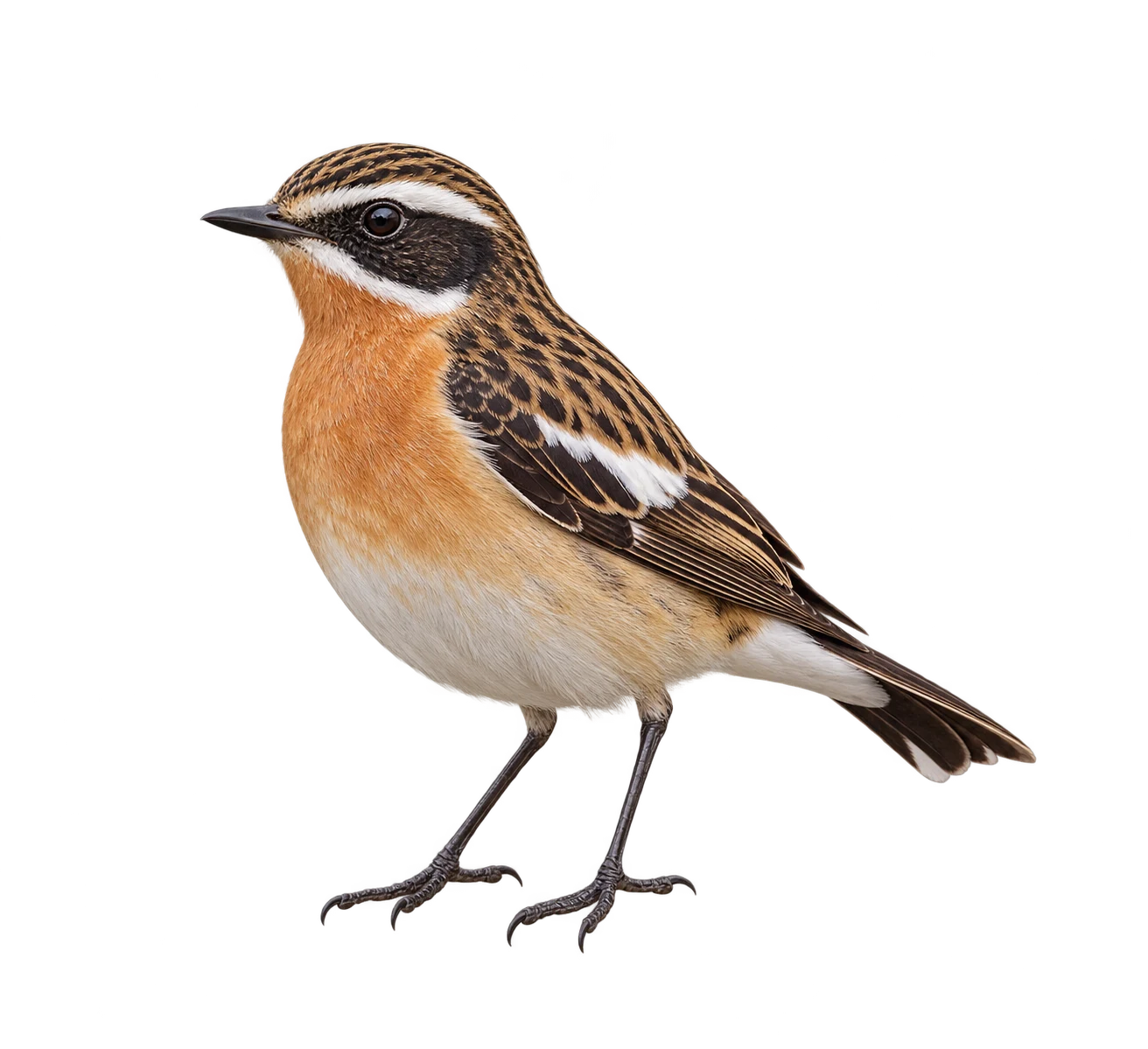
Birds
Whinchat
Saxicola rubetra
Classification and source reference
LivingAI illustration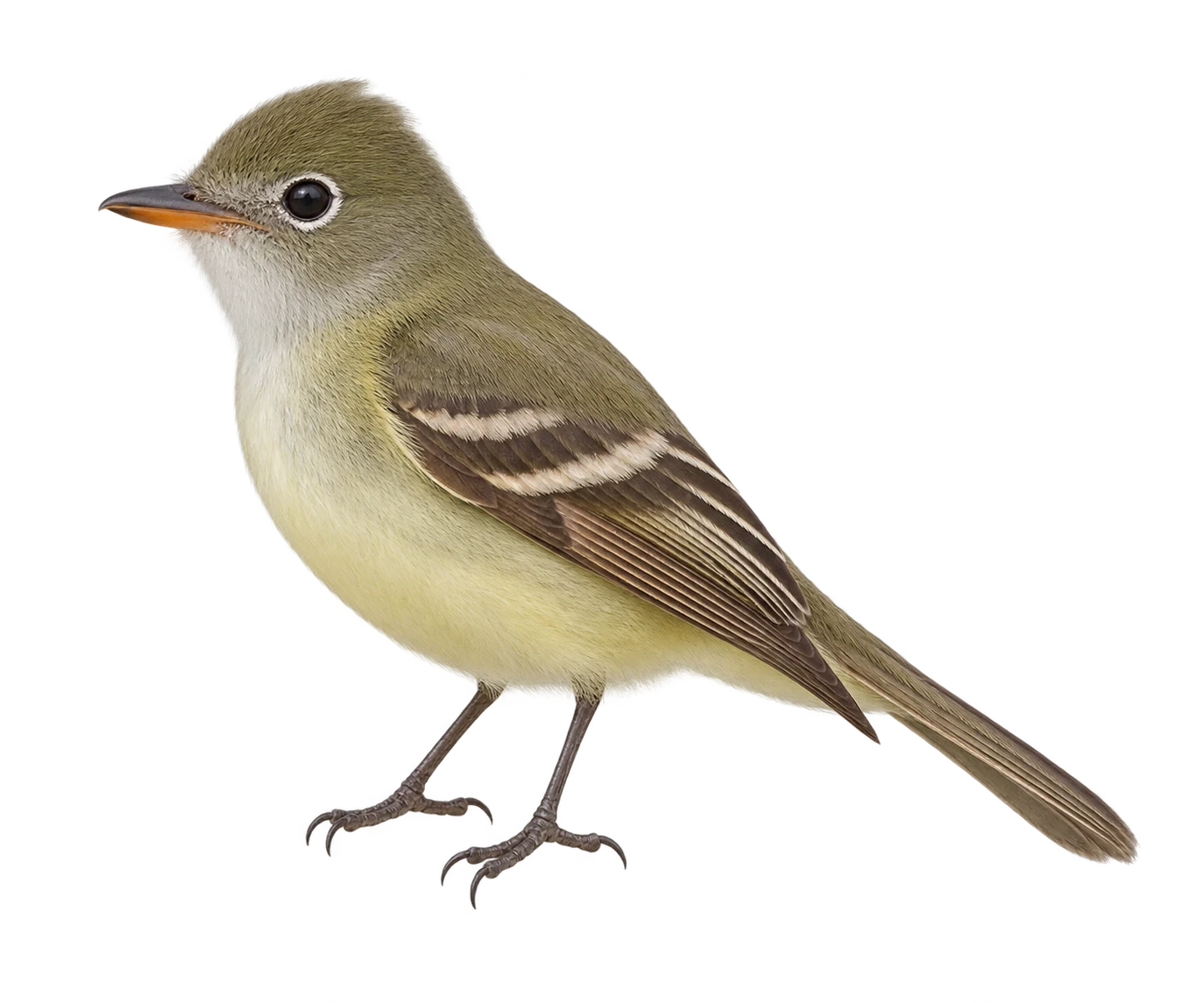
Birds
Acadian Flycatcher
Empidonax virescens
Classification and source reference
LivingAI illustration
Birds
Amazonian Royal Flycatcher
Onychorhynchus coronatus
Classification and source reference
LivingAI illustration LC
Birds
American crow
Corvus brachyrhynchos
The American crow is a large all-black bird of farms, woods and city streets across North America.
Living LC
Birds
American goldfinch
Spinus tristis
The American goldfinch is a small seed-eating finch of open weedy country across North America.
Living