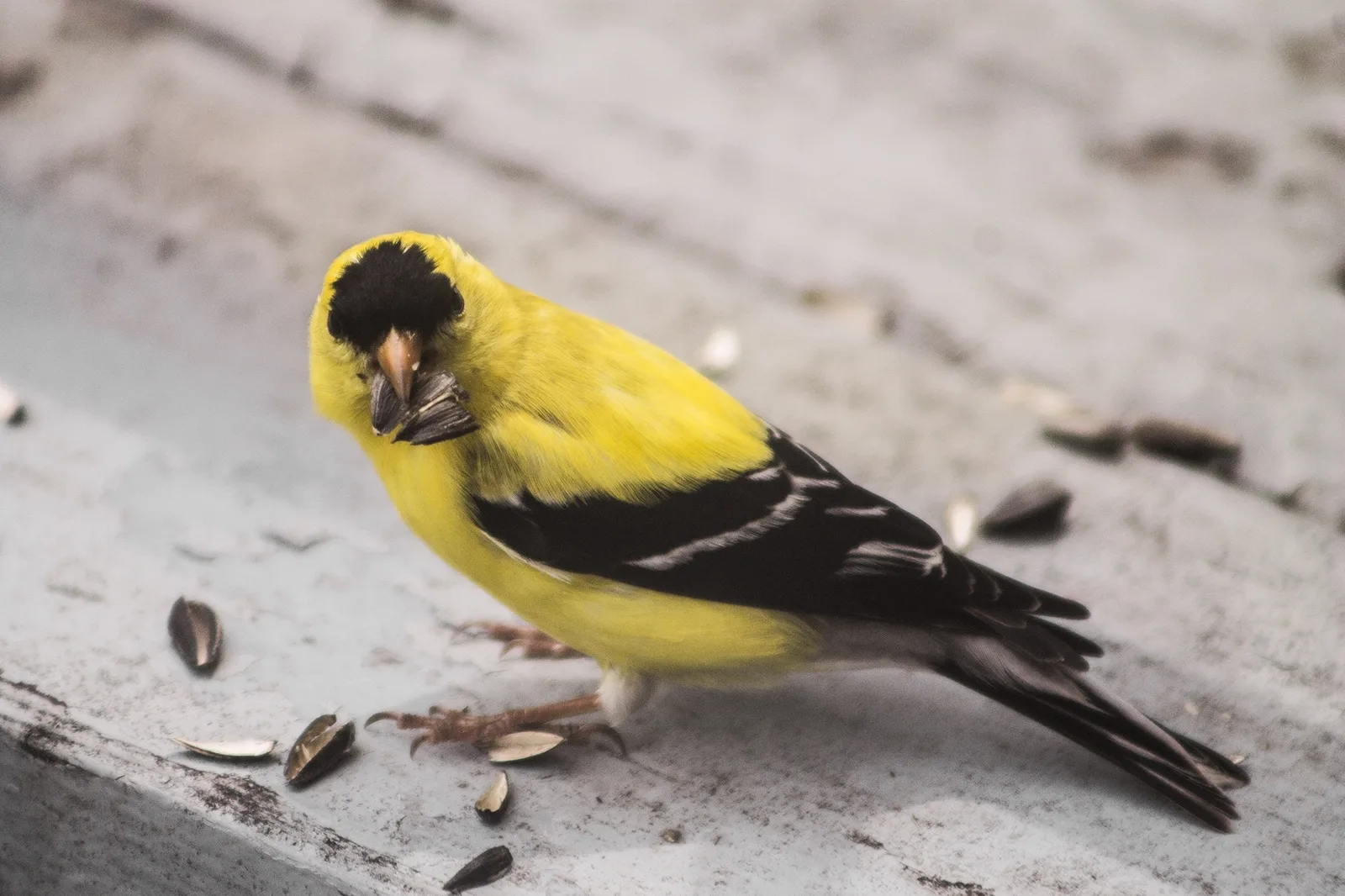
American goldfinch
The finch that waits for the thistle before it breeds
Spinus tristis
Also called Eastern goldfinch, Willow goldfinch, Golden finch
Living individuals or members of this group exist today. This does not mean they are safe from extinction.
Meet the american goldfinch
The American goldfinch is a small seed-eating finch of open weedy country across North America. The male turns bright lemon yellow with a black cap each spring, and the pair waits until late summer to nest.
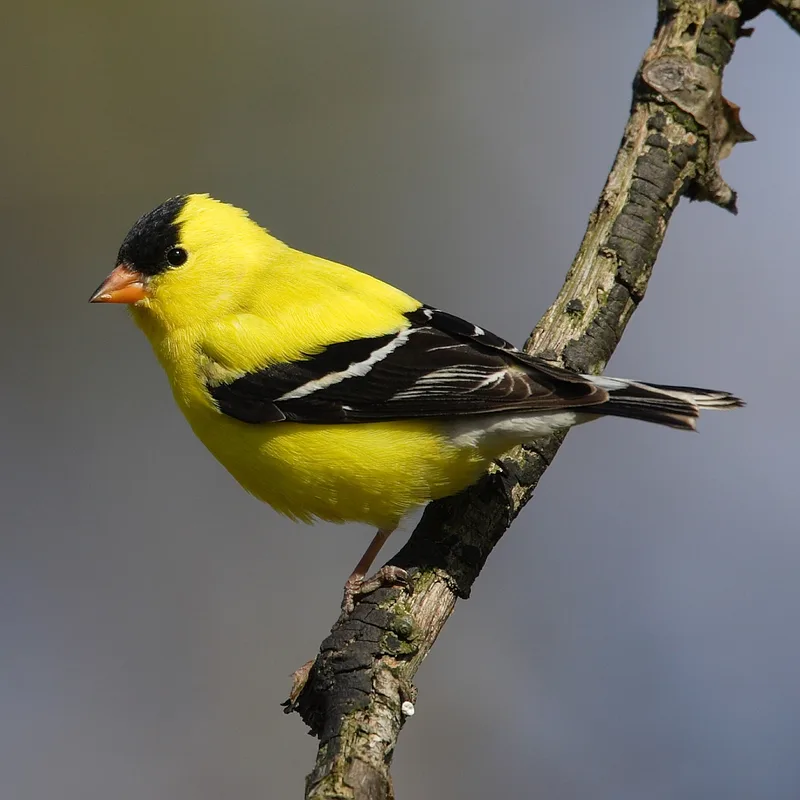
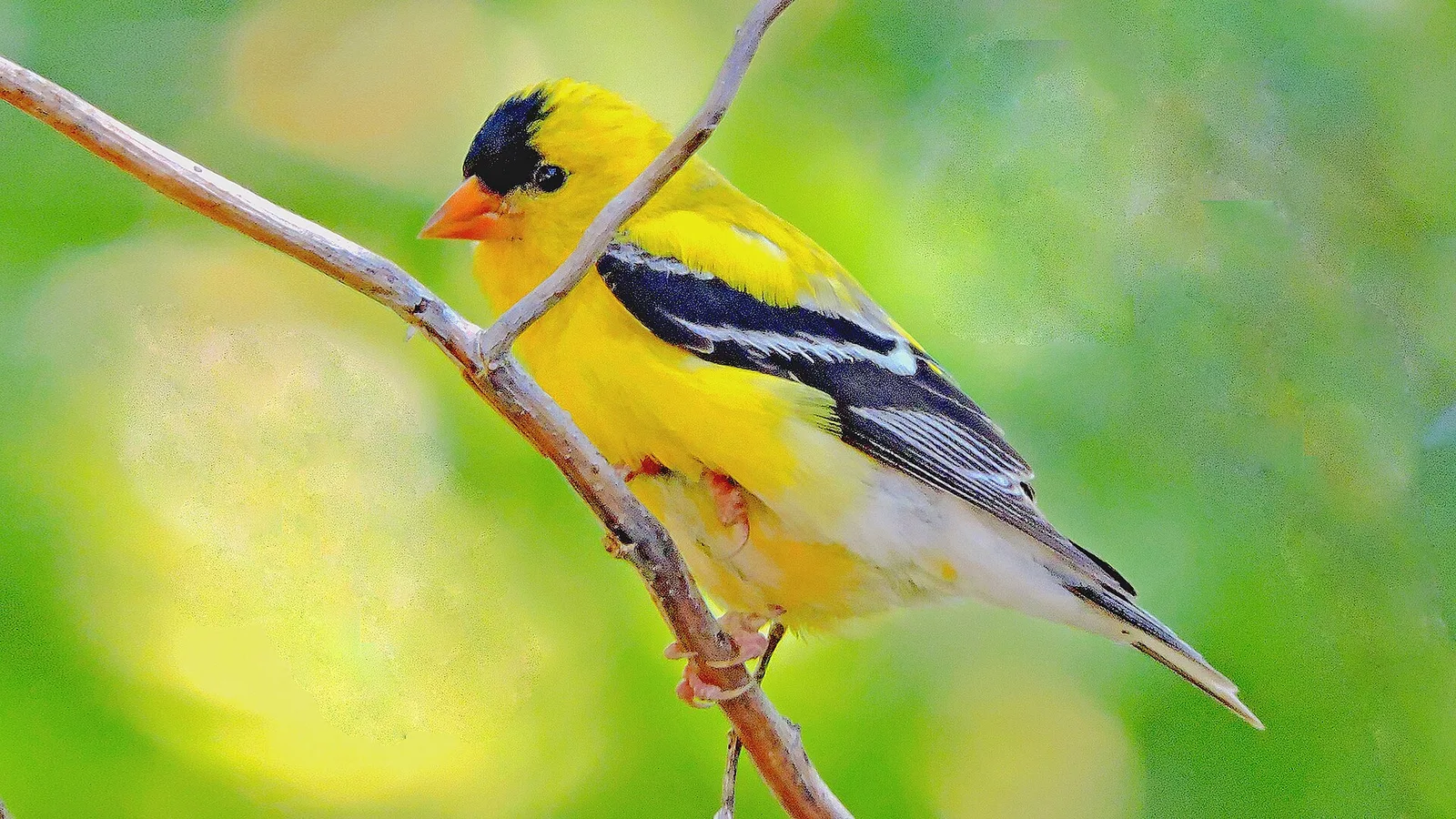
Images of the american goldfinch
Lifespan in the wild
Up to 13 years AnAge gives 13 years, and the oldest ringed bird known reached 10 years and 5 months
Weight
11 to 20 g
Length
11 to 14 cm
Wingspan
19 to 22 cm
Fact file
American goldfinch
- Location
- Southern Canada, the United States and northern Mexico
- Habitat
- Grassland, Temperate forest, Towns and cities
- Diet
- Herbivore
- Predators
- Snakes, weasels, squirrels, blue jays, hawks and cats
- Lifestyle
- Active by day, in flocks outside the breeding season
- Group name
- Flock
- Name of young
- Chick
- Incubation
- Incubation 12 to 14 days
- Clutch size
- 4 to 6 eggs
- Population
- 42 to 47 million mature birds
- Biggest threat
- A slow decline across a very large range
- Distinctive feature
- A lemon yellow male with a black cap in summer
- Colour
- Yellow and black in summer, olive-brown in winter
- Skin type
- Feathers
Size
Next to a person
Measurements
Size and speed
- Length
- 11 to 14 cm
- Wingspan
- 19 to 22 cm
- Tail
- 4.2 to 5.1 cm
- Weight
- 11 to 20 g 11 to 20 grams
Typical adult ranges. Source: Wikipedia.
Life cycle
Lifespan
- In the wildUp to 13 years AnAge gives 13 years, and the oldest ringed bird known reached 10 years and 5 months
- 013 years
The pale bar is the record. Source: AnAge.
Appearance
Colour and coat
- Primary colours
- yellowblack
- Secondary colours
- whitebrownolive
- Skin type
- feathers
- Male and female
- Strong in summer. The male is lemon yellow with a black cap, black wings and a white rump. The female is brown with a yellow bib. After the autumn moult the two look almost alike, though the male keeps yellow shoulder patches.
Life cycle
Mating and family
- Mating system
- monogamous pairs
- Social structure
- large flocks in winter, loose colonies of two or three pairs in summer
- Breeding
- one brood a year, starting in late July
Courtship starts in late July, later than in any other North American finch. The male chases the female, then circles with her and warbles. She builds a tight cup nest alone and lays four to six pale blue eggs. She incubates them for 12 to 14 days while the male brings her food. The young leave the nest at 11 to 15 days and the male feeds them for up to three more weeks.
Classification
Taxonomy
- Kingdom
- Animalia
- Phylum
- Chordata
- Class
- Aves
- Order
- Passeriformes
- Family
- Fringillidae
- Genus
- Spinus
- Species
- Spinus tristis
Conservation
Red List status
- LC
- NT
- VU
- EN
- CR
- EW
- EX
Least Concern on the IUCN Red List
Range
Recorded in 2 countries
Habitat layer: temperate broadleaf and mixed forest, temperate conifer forest, boreal forest and taiga, tropical grassland, savanna and shrubland, temperate grassland, savanna and shrubland.
Countries from 134,604 wild records on GBIF (iNaturalist research grade), filtered and checked by hand. Country shapes: Natural Earth. Habitat: RESOLVE Ecoregions 2017, CC BY 4.0. Basemap: Natural Earth.
Habitats
Three things to know
- 1
The male turns lemon yellow in spring and olive-brown again in autumn.
- 2
It nests later than any other finch, because it waits for the seed crop of late summer.
- 3
The nest is woven so tightly that it can hold rain water.
Did you know
Seven more facts
- 1
The yellow of the male comes from pigments in the seeds he eats.
- 2
The bill changes from pink to bright orange at the spring moult.
- 3
A finished nest cup measures about 6.5 centimetres across inside.
- 4
The flight call is often written as potato chip.
- 5
Goldfinches hold a birch catkin still with one foot while they strip it.
- 6
Clearing forest has helped this bird, because it opens weedy ground.
- 7
Washington schoolchildren voted for the willow goldfinch in 1951.
Field notes
How it looks and acts
Field notes
Distinguishing features
- A lemon yellow body with a black cap on the summer male.
- A white rump that shows clearly in flight.
- Black wings with white bars in the male, dark brown in the female.
- A short, conical bill that turns orange in spring.
- A length of 11 to 14 centimetres and a wingspan of 19 to 22 cm.
- A short notched tail of 4.2 to 5.1 centimetres.
Field notes
Unique adaptations
- A conical bill shaped to lift seeds out of a packed seed head.
- Feet strong enough to hang from a swaying stem while feeding.
- Two moults a year, which give a bright summer coat and a dull winter one.
- A late breeding season timed to the peak of the seed crop.
- A seed diet that kills cowbird chicks and defeats brood parasites.
Field notes
Interesting behaviours
- Flying in rising and falling arcs and calling only on the upbeat.
- Hanging upside down from a thistle head to reach the seed.
- Pinning a catkin against a branch with one foot.
- Gathering in large mixed flocks outside the breeding season.
- Settling disputes with head-up and carpals-raised postures.
Field notes
Temperament
- Sociable for most of the year and happy in a crowd at a feeder.
- Briefly territorial while the nest goes up, then peaceable again.
- Timid towards predators, and the bird calls rather than attacks.
- Probably tame around houses and gardens where food is put out.
Field notes
Communication
- A long warbling song from the male, often with a drawn-out final note.
- A per-chic-o-ree flight call given on each wingbeat burst.
- A soft tee-tee-tee-tee from a sitting female to her mate.
- A sweet alarm that calls other goldfinches to a threatened nest.
- A bearbee call that makes the nestlings crouch and fall silent.
Ecology
Ecological role
The American goldfinch links weedy ground to the wider food web, as a seed eater and as prey.
- It eats the seeds of thistle, ragweed, dandelion, sunflower and many grasses.
- It feeds hawks, cats, weasels, squirrels, snakes and blue jays.
- It acts as a dead end for brown-headed cowbirds, whose chicks starve in its nests.
- Its late nesting probably spreads bird demand for insects and seed across the season.
Stories
Myths and legends
- In American civic tradition, Iowa made the eastern goldfinch its state bird in 1933.
- In American civic tradition, Washington let schoolchildren pick the willow goldfinch in 1951.
- In European Christian tradition, the goldfinch recalls the crown of thorns, since thistle is its food.
- In Renaissance painting, Raphael placed a goldfinch in the hands of the young John the Baptist.
- In European art tradition, the goldfinch also stands for endurance and for new growth.
People
Relationship with humans
People
Living alongside us
People have made life easier for the American goldfinch. Clearing forest opened the weedy ground it feeds in, and garden feeders carry it through hard winters. Backyard birders draw it with niger seed and with flowers that set good seed heads. Iowa, New Jersey and Washington have all named it their state bird. The species causes no trouble on farms or in gardens.
- The bird weighs less than a pencil, so it probably cannot harm anyone.
- It flies from people rather than defending itself.
- No disease or damage of any kind appears to be linked to the species.
People
Status, uses and products
- Domestication
- Wild
- As a pet
- Not suitable. The American goldfinch is a protected wild bird in the United States and Canada, so keeping one is illegal. It is far better watched at a feeder, where niger seed and a few seed-bearing flowers will hold a flock all winter.
- Uses
- birdwatchinggarden feeding
- Products
- None recorded
The full account
About the american goldfinch
The American goldfinch is a small finch of open country in North America. Science knows it as Spinus tristis. Adults measure 11 to 14 centimetres long with a wingspan of 19 to 22 cm. They weigh 11 to 20 grams. In summer the male is lemon yellow with a black cap and white rump.
The female is brown with a yellow bib, and both sexes turn dull in winter. The bird eats seeds, above all from thistles, sunflowers and other daisy plants. It breeds later than any other finch, and nesting starts in late July. Flocks travel in a rising and falling flight and call as they go. The IUCN lists the species as Least Concern, with 42 to 47 million mature birds. Three American states have chosen it as their state bird.
Name and taxonomy
Carl Linnaeus described the American goldfinch in 1758 and placed it in the genus Fringilla. Later work moved it to Spinus, the genus of the New World goldfinches and siskins. In 1976 that genus was folded into Carduelis as a subgenus. Newer studies have brought Spinus back as a genus of its own. Carduelis comes from carduus, the Latin word for a thistle. Its species name, tristis, means sorrowful in Latin.
The bird shares an English name with the European goldfinch, but the two are not close kin. They belong to separate genera on separate continents. Four subspecies of the American bird are recognised. The eastern goldfinch is the commonest, and the pale goldfinch is bigger and lighter. The northwestern goldfinch is smaller and darker, on the seaward side of the Cascades. The willow goldfinch of California and Baja keeps browner winter feathers.
Evolution and relatives
The nearest relatives are the lesser goldfinch and Lawrence's goldfinch. The siskins sit close to them in the same group. Like other small finches, they carry conical bills built for prising seeds out of a head. The family Fringillidae holds most of the world's true finches. The American goldfinch belongs to the cardueline branch of it.
One habit sets the species apart from every other cardueline finch. It moults its body feathers twice a year rather than once. That second moult probably buys the male a bright breeding coat and a dull winter one. The four subspecies differ only in size and in the shade of the plumage. Their ranges overlap on the Pacific slope, which probably keeps them from drifting apart.
Appearance
This is a small, neat finch, 11 to 14 centimetres long. The wingspan runs 19 to 22 cm, and the weight runs 11 to 20 grams. The tail is short and notched, at 4.2 to 5.1 cm. The wing chord measures 6.5 to 7.8 centimetres. The bill is small and cone-shaped, pink for most of the year. It turns bright orange in both sexes at the spring moult.
After that moult the male is a brilliant lemon yellow. Carotenoid pigments from his food make the colour, so his diet shows in his feathers. He carries a jet black cap and a white rump that flashes in flight. The female is mostly brown, paler beneath, with a yellow bib. The wings and tail keep their colour through both moults, black on him and brown on her.
The autumn moult replaces all of that with buff underparts and olive-brown upperparts. Winter birds keep only a pale yellow face and bib. The sexes look almost alike then, though the male keeps yellow shoulder patches. A young bird has a dull brown back and pale yellow underparts. Its wing and rump markings are buff rather than white.
Habitat and range
The goldfinch wants open ground where weeds can grow. Fields, meadows, flood plains, roadsides, orchards and gardens all suit it. It also uses open deciduous woodland, riverside trees and scrubby regrowth. The breeding range crosses the continent from coast to coast. It reaches north to Saskatchewan and south to North Carolina and northern California.
The species is a short-distance migrant that moves when cold and hunger push it. Movement seems to begin as nightly low temperatures approach freezing. Flocks travel in tight groups with a wavelike flight. The winter range runs from southern Canada down into parts of Mexico. Northern birds may stay put where feeders keep them fed. GBIF holds records from 16 countries, and iNaturalist carries 197,134 observations.
People tried to plant the bird outside its range twice. One attempt reached Bermuda in the nineteenth century. Another reached Tahiti in 1938. Neither population took hold.
Diet and feeding
The American goldfinch feeds by day and eats seeds almost to the exclusion of all else. The Cornell Lab of Ornithology calls it one of the strictest vegetarians among birds. Thistle, teasel, dandelion, ragweed, mullein, goatsbeard, sunflower and alder all feed it. It also takes tree buds, maple sap and berries. Insects appear only now and then, and mostly go to the chicks for protein. At a garden feeder it prefers niger seed, which people often call thistle seed.
The conical bill prises seeds straight out of a seed head. The feet do as much work as the bill, which is unusual in a finch. A bird will hang upside down from a seed head to reach the middle of it. In spring it pulls a birch or alder catkin up with the bill. It then pins the catkin against the branch with a foot and works it over. That trick opens food that other small birds cannot reach.
Behaviour and social life
The flight is a series of arcs, and the bird beats its wings, then folds them and glides. It calls during the flapping part and falls silent while it coasts. Outside the breeding season the goldfinch is highly social. Large flocks form, often mixed with other finches. In the breeding season two or three pairs may settle in a loose colony.
A flock has a pecking order that shifts with the calendar. Males win most contests outside the breeding season. Females come out on top once breeding starts. A study published in 1987 found that a hungry subordinate could win a place at a feeder. Males chase other males away while a nest is going up, and females chase other females. That aggression stops once the eggs are laid.
Goldfinches settle arguments with posture before they use their bills. In the head-up display the neck and legs stretch a little, which signals mild threat. In the carpals-raised display the neck pulls back and the wing joints lift. A bird in that pose is likely to attack. A loser leans away, flexes its legs and turns its bill down.
Communication and senses
The song is a run of musical warbles and twitters, often ending on a long note. The flight call is written as tsee-tsi-tsi-tsit or as per-chic-o-ree. Some listeners hear the same call as the words potato chip. A sitting female calls her mate in with a soft, steady tee-tee-tee-tee. Nestlings start a chick-kee or chick-wee call shortly before they fly.
Adults use two alarm calls at the nest. The sweet call brings other goldfinches in and pulls a predator's attention about. The bearbee call tells the nestlings to go quiet and crouch down. Colour probably carries as much as sound in the breeding season. A male's bill colour and plumage advertise both his health and his genes.
Reproduction and life cycle
No other native North American bird waits as long to breed, except sometimes the sedge wren. Courtship begins in late July, when the seed crop peaks. A male chases a female while she flies in tight zigzags. If she accepts him, the pair circles in wide loops while he warbles. He then marks a territory by singing from perch to perch around its edge. He finishes with a flat low flight and then a looping dive and climb.
The female builds the nest alone in a shrub or tree, up to 10 metres above the ground. Building takes about six days, in bursts of 10 to 40 minutes. The male follows her while she gathers material but leaves the work to her. Bark, weeds, vines and grass make the outer shell, and the cup is about 6.5 centimetres across. Spider web and caterpillar silk bind the rim, and plant down lines the inside. The weave is so tight that rain can fill it and drown the young.
A clutch holds four to six pale bluish-white eggs, each about 16 by 12 millimetres. The female incubates alone for 12 to 14 days while the male feeds her. Chicks hatch naked and blind, and their eyes open after three days. The mother feeds them regurgitated seed with a few insects mixed in. They grow juvenile plumage in 11 to 15 days and start short flights. The male feeds the fledglings for up to three weeks and finds them by their calls.
Most pairs raise a single brood in a year. Brown-headed cowbirds lay in about 9% of goldfinch nests. Almost no cowbird chick survives in one, because it cannot live on a diet of seed. The goldfinch has no known behaviour against brood parasites, so the seed diet appears to do the work. Birds breed in their first year, and the oldest known wild bird reached 10 years and 5 months.
Predators and threats
Snakes, weasels, squirrels and blue jays raid nests for eggs and young. Hawks and cats take fledglings and adults as well. A goldfinch does not mob a predator inside its territory. It answers with alarm calls and nothing more. The sweet call gathers neighbours, which may confuse the hunter.
Heavy rain can drown nestlings when the parents leave the cup uncovered. Cowbird eggs probably cost a pair some effort, even though the chicks fail. The population is thought to be falling slowly across the range. Audubon names a warming climate as a pressure on the range. Cats around houses probably kill more goldfinches than any wild predator does.
Population and conservation
The IUCN evaluated the species as Least Concern in 2025. The global range covers about 7,900,000 square kilometres. Between 42 and 47 million mature birds live in it. That total is expected to fall, though slowly. Nothing in human activity threatens the species as a whole.
Clearing woodland has helped this bird, unlike most. Open ground grows the weeds whose seeds the goldfinch lives on. Long-distance migrants lose out when forest goes, while short-distance ones gain. Garden feeders raise winter survival where people keep them filled. The bird appears to be a familiar sight in suburbs across its range.
Relationship with humans
Backyard birders draw goldfinches with niger seed in a hanging feeder. Planting zinnias, cosmos, bee balm or globe thistle works as well. Those plants set the seed heads the finches prefer. The species is common in residential streets throughout its range. It probably does no damage to crops or property.
Three states have named the American goldfinch as their official bird. Iowa adopted it in 1933 and New Jersey followed in 1935. Both states use the name eastern goldfinch. Washington chose the willow goldfinch in 1951, on a vote by schoolchildren. Few birds appear to have been picked as a state emblem by children.
In culture and myth
The American goldfinch appears to carry little old folklore of its own. Its cultural weight seems modern and civic instead. Three state legislatures put the bird on their list of official symbols. A generation of Washington schoolchildren chose their own state bird in 1951. The bird appears on state road signs, coins and school posters.
The older goldfinch stories in Europe belong to a different bird. That bird eats thistle seed, and Christian painters linked it to the crown of thorns. Raphael put one in the hands of John the Baptist in a painting of about 1505. Painters also used the goldfinch as a sign of endurance and of new life. None of that lore appears to attach to the American bird, which is only a namesake.
The two birds seem to share one thing, which is the thistle. The old genus name Carduelis takes its root from the Latin word for that plant. Trappers in nineteenth-century Britain caged thousands of European goldfinches a year. Public anger at that trade fed the founding of a large British bird charity. The American bird appears to have escaped that trade and stayed a wild garden visitor.
A sentence with a dotted underline is inferred: it describes the group the animal belongs to, or is a reading of the sources, rather than a measured or reported fact about this species.
Questions
American goldfinch questions, answered
How big is an American goldfinch?
It is 11 to 14 centimetres long with a wingspan of 19 to 22 cm. It weighs 11 to 20 grams. That makes it a small finch, lighter than a pencil.
Why do goldfinches turn yellow?
The male moults into bright breeding feathers each spring to attract a mate. The yellow comes from carotenoid pigments in the seeds he eats. He moults back to olive-brown in autumn.
What do American goldfinches eat?
Almost only seeds, especially from thistle, dandelion, ragweed, sunflower and alder. They add tree buds, maple sap and berries. Insects appear rarely, mostly as food for chicks.
What seed attracts goldfinches to a feeder?
Niger seed, which shops often label thistle seed. Sunflower hearts work too. Planting cosmos, zinnias, bee balm or globe thistle brings them in as well.
When do American goldfinches nest?
In late summer. Courtship starts in late July, later than for any other North American finch. The timing matches the peak of the seed crop.
How many eggs does an American goldfinch lay?
Four to six pale bluish-white eggs, each about the size of a peanut. The female incubates them alone for 12 to 14 days. Most pairs raise one brood a year.
Do American goldfinches migrate?
Some do. They are short-distance migrants and move south as nights approach freezing. Birds with a reliable feeder often stay north all winter.
Are American goldfinches endangered?
No. The IUCN lists them as Least Concern, with 42 to 47 million mature birds. The population is thought to be falling slowly, but the range is enormous.
Which states have the goldfinch as their state bird?
Iowa, New Jersey and Washington. Iowa chose it in 1933 and New Jersey in 1935, both as the eastern goldfinch. Washington picked the willow goldfinch in 1951.
How long do American goldfinches live?
Most die in their first years. The oldest bird known from a ring lived 10 years and 5 months, and AnAge gives a maximum of 13 years.
What does an American goldfinch sound like?
The song is a long string of warbles and twitters. The flight call is usually written as per-chic-o-ree, and many people hear it as potato chip.
Is the American goldfinch the same as the European goldfinch?
No. They share a name and a taste for thistle seed, but they sit in different genera on different continents and are not close relatives.
Why do goldfinches fly up and down?
The flight is a set of arcs. The bird beats its wings to climb, then folds them and glides down before repeating. It calls while flapping and goes quiet while it coasts.
Do cowbirds parasitise goldfinch nests?
They try. About 9% of goldfinch nests hold a cowbird egg, but almost no cowbird chick survives. The seed diet of the goldfinch does not feed it.
Where do goldfinches go in winter?
Many stay put, especially near feeders. Others move south, and the winter range runs from southern Canada into parts of Mexico. Winter birds are olive-brown and easy to overlook.
Food web
Prey and food
Not recorded.
Food web
Predators
- snakes
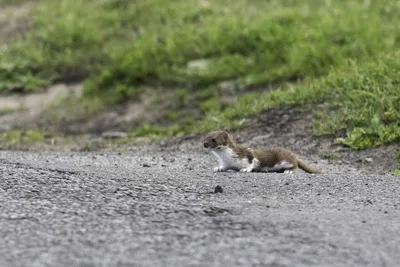 Least weasel
- squirrels
- blue jays
- hawks
- cats
Ecological equivalents
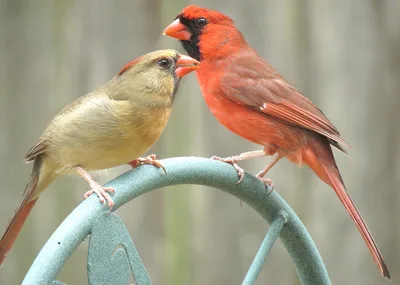
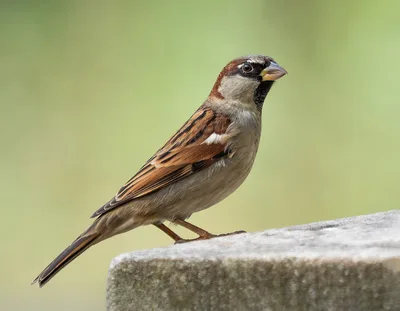
Related species on this site
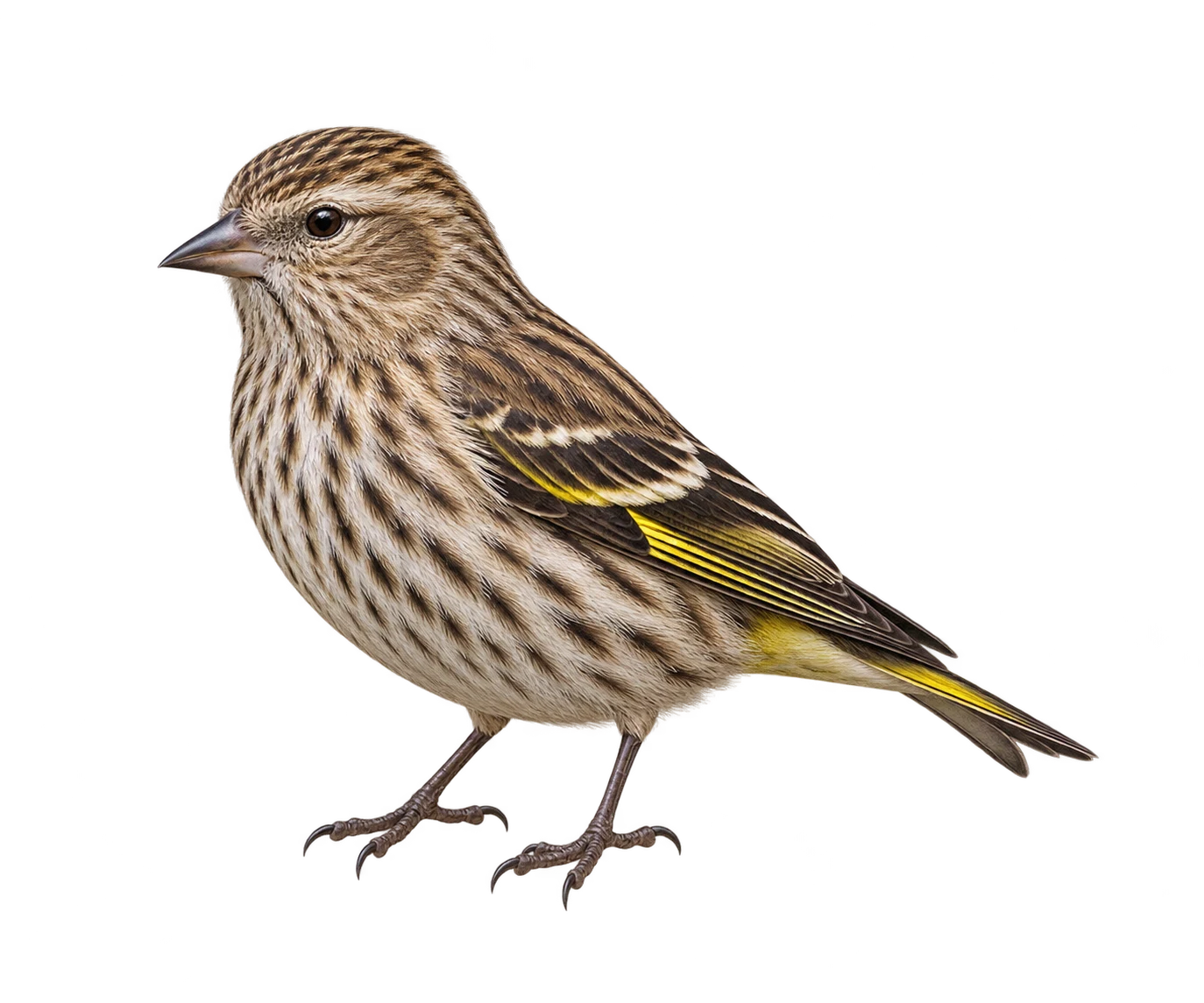
Pine Siskin (same genus), Atlantic canary (same family), Belgian Canary (same family), Eurasian Bullfinch (same family), European Goldfinch (same family), Evening Grosbeak (same family), and more.
Birds
Pine Siskin
Spinus pinus
Classification and source reference
LivingAI illustration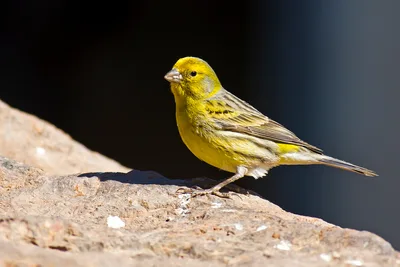
Birds
Atlantic canary
Serinus canaria
The Atlantic canary is the wild island finch from which domestic canaries descend.
Living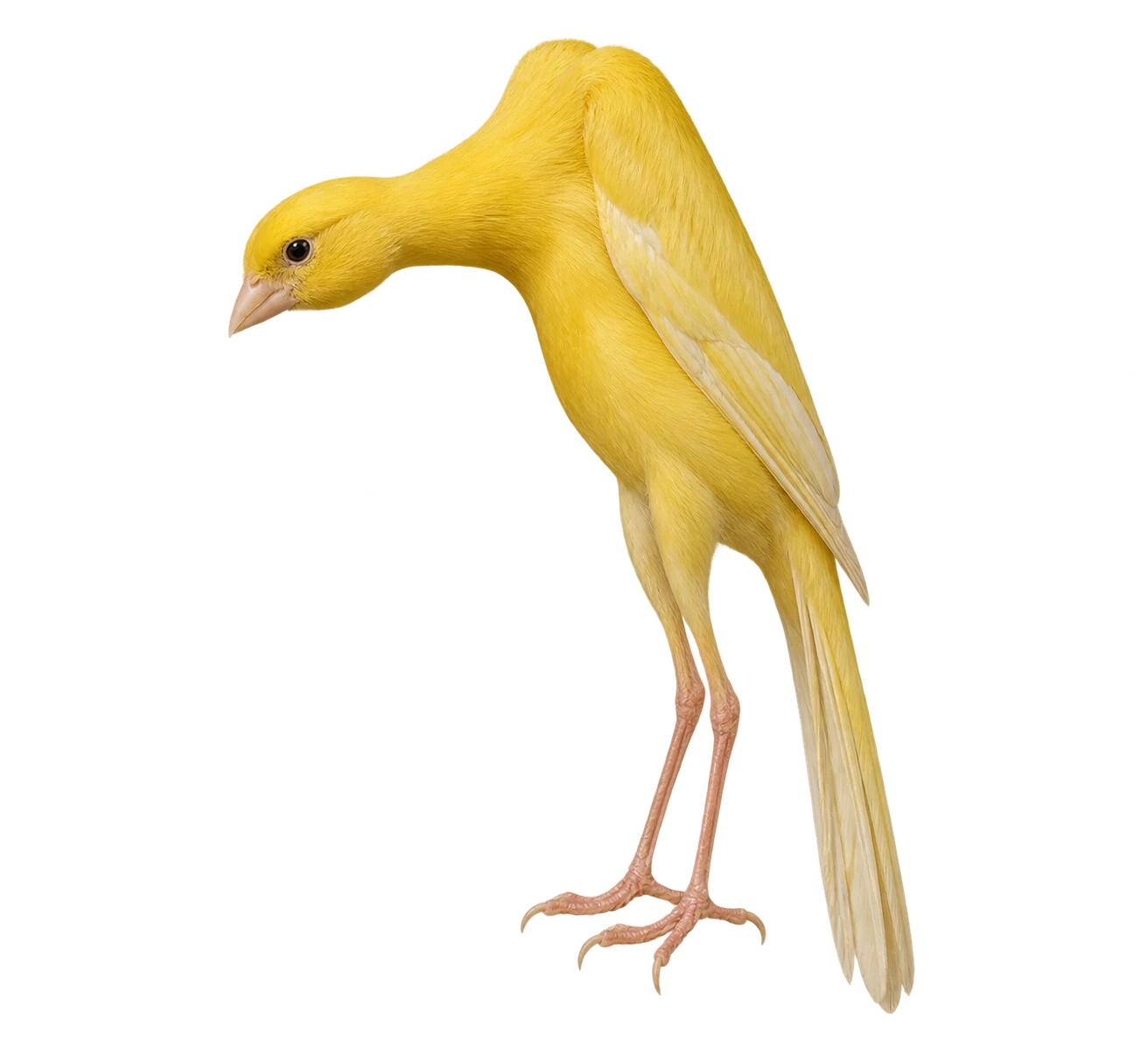
Birds
Belgian Canary
Serinus canaria
Classification and source reference
LivingAI illustration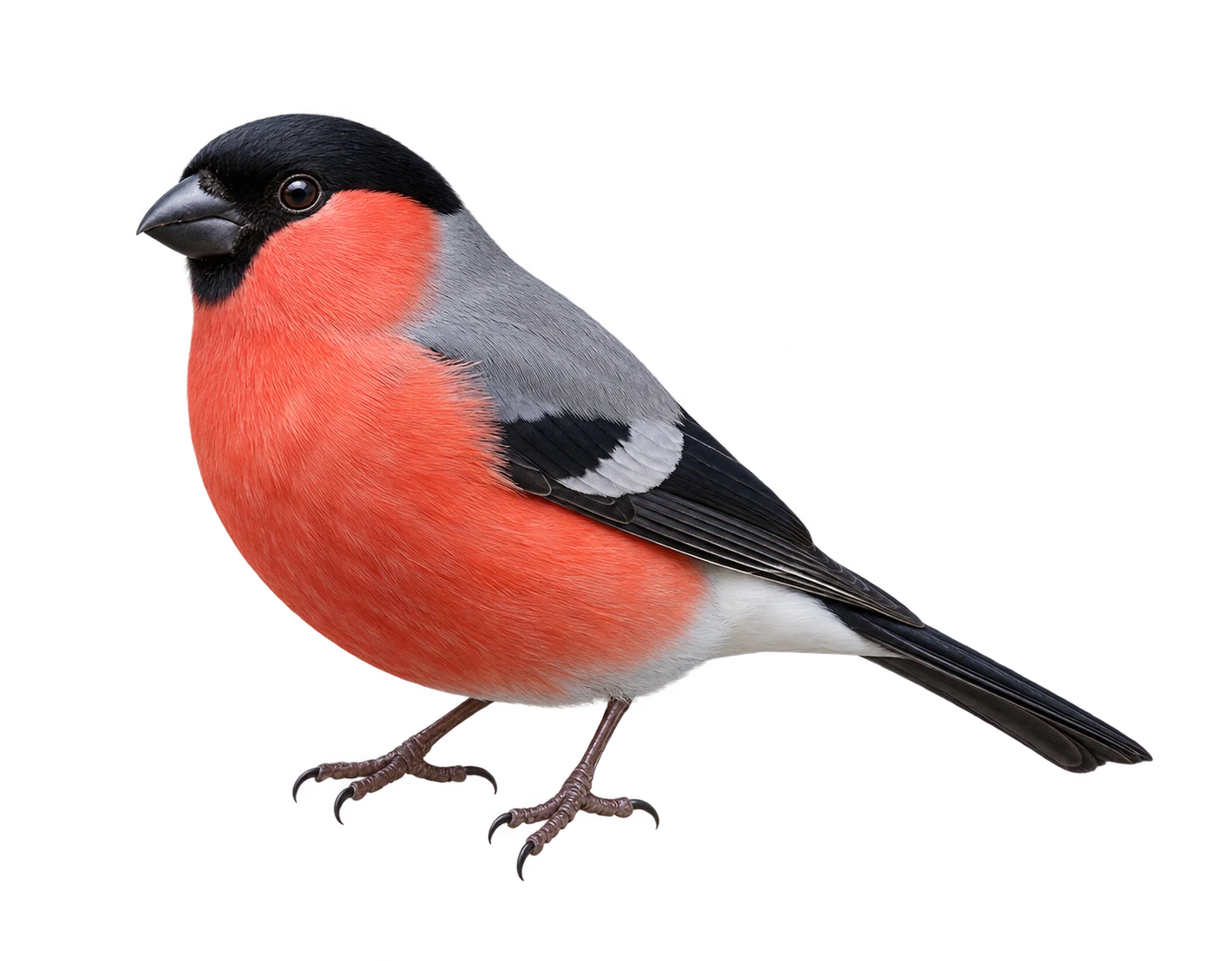
Birds
Eurasian Bullfinch
Pyrrhula pyrrhula
Classification and source reference
LivingAI illustration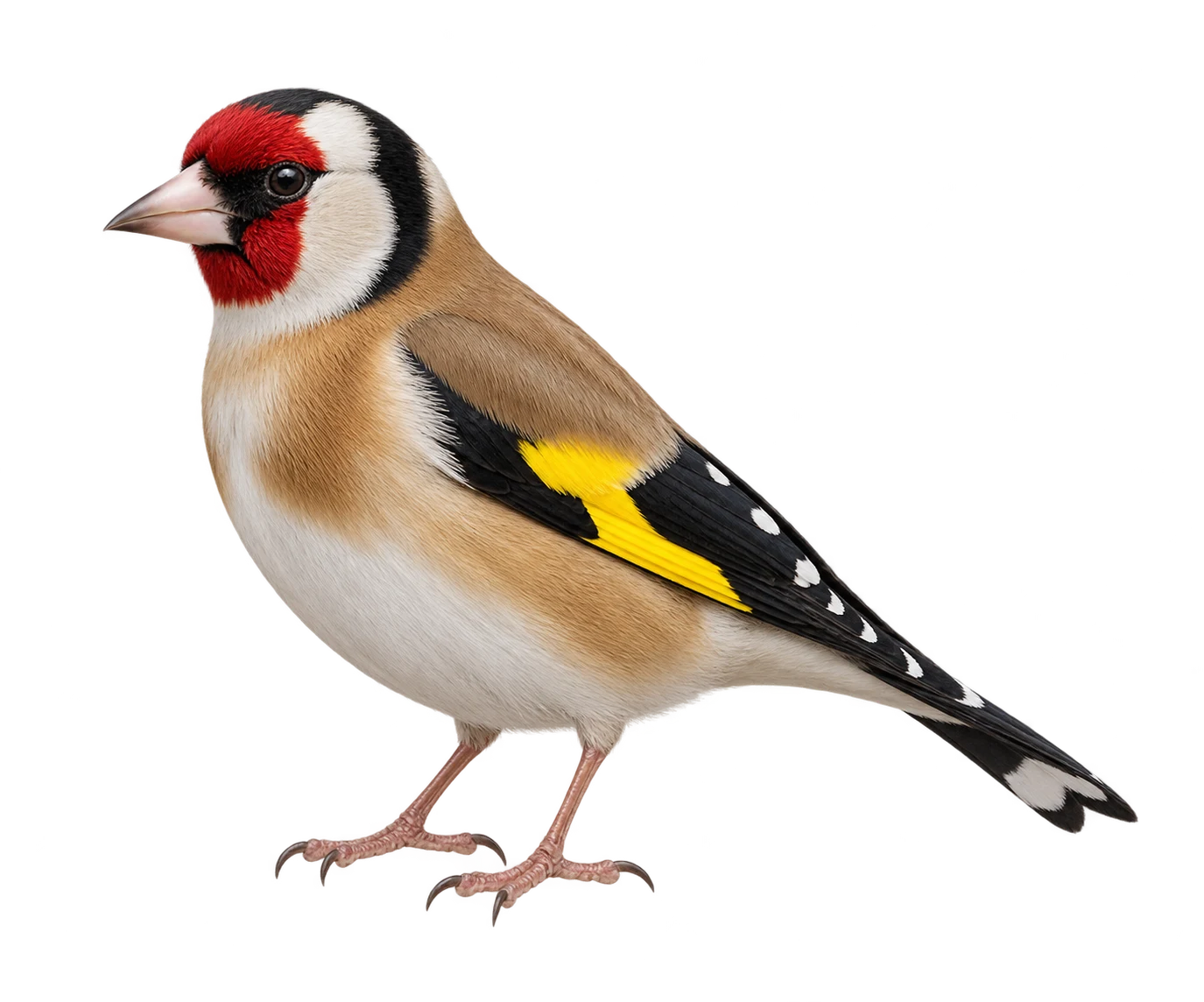
Birds
European Goldfinch
Carduelis carduelis
Classification and source reference
LivingAI illustration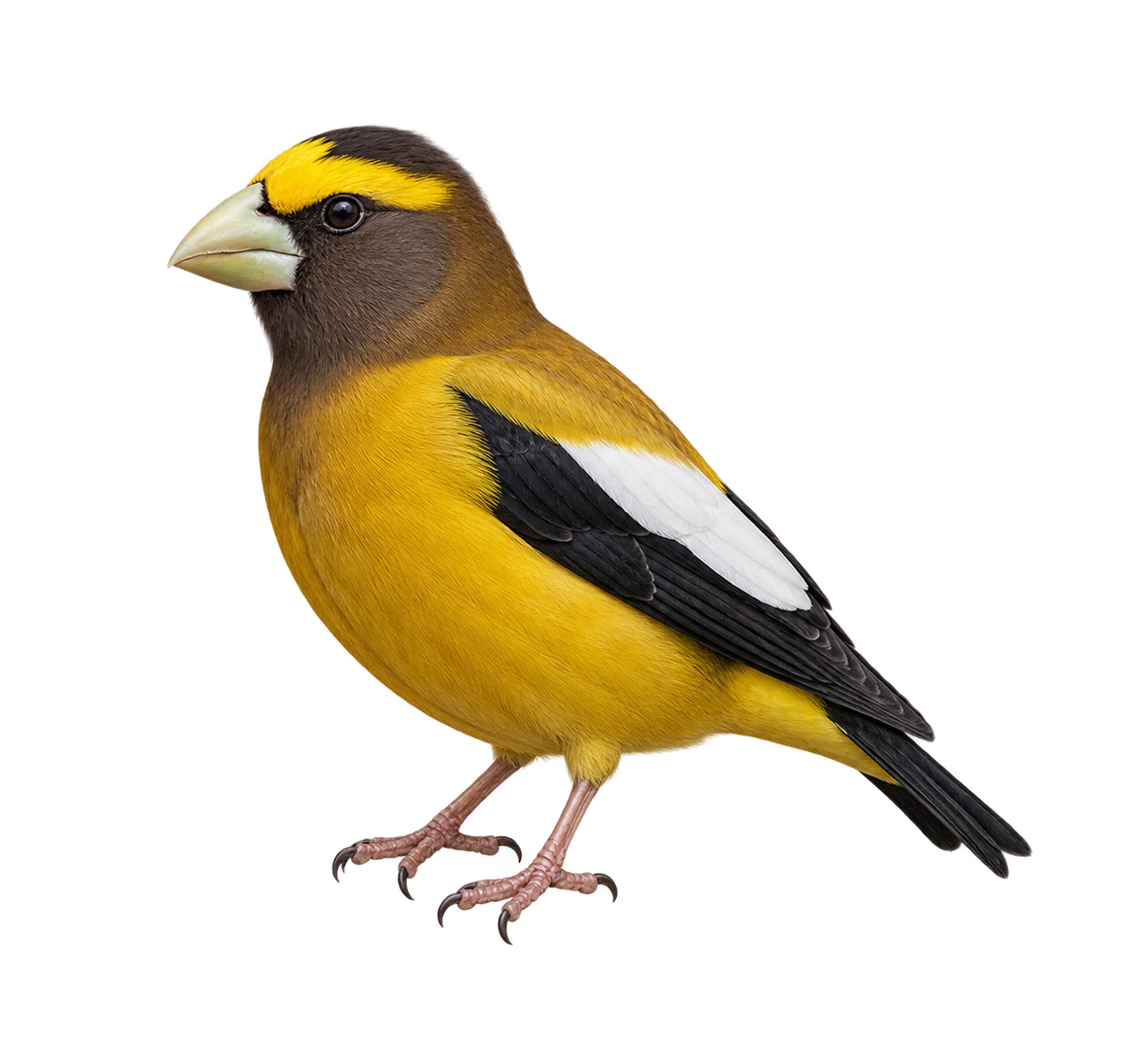
Birds
Evening Grosbeak
Hesperiphona vespertina
Classification and source reference
LivingAI illustration