Atlantic canary
Serinus canaria
Living individuals or members of this group exist today. This does not mean they are safe from extinction.
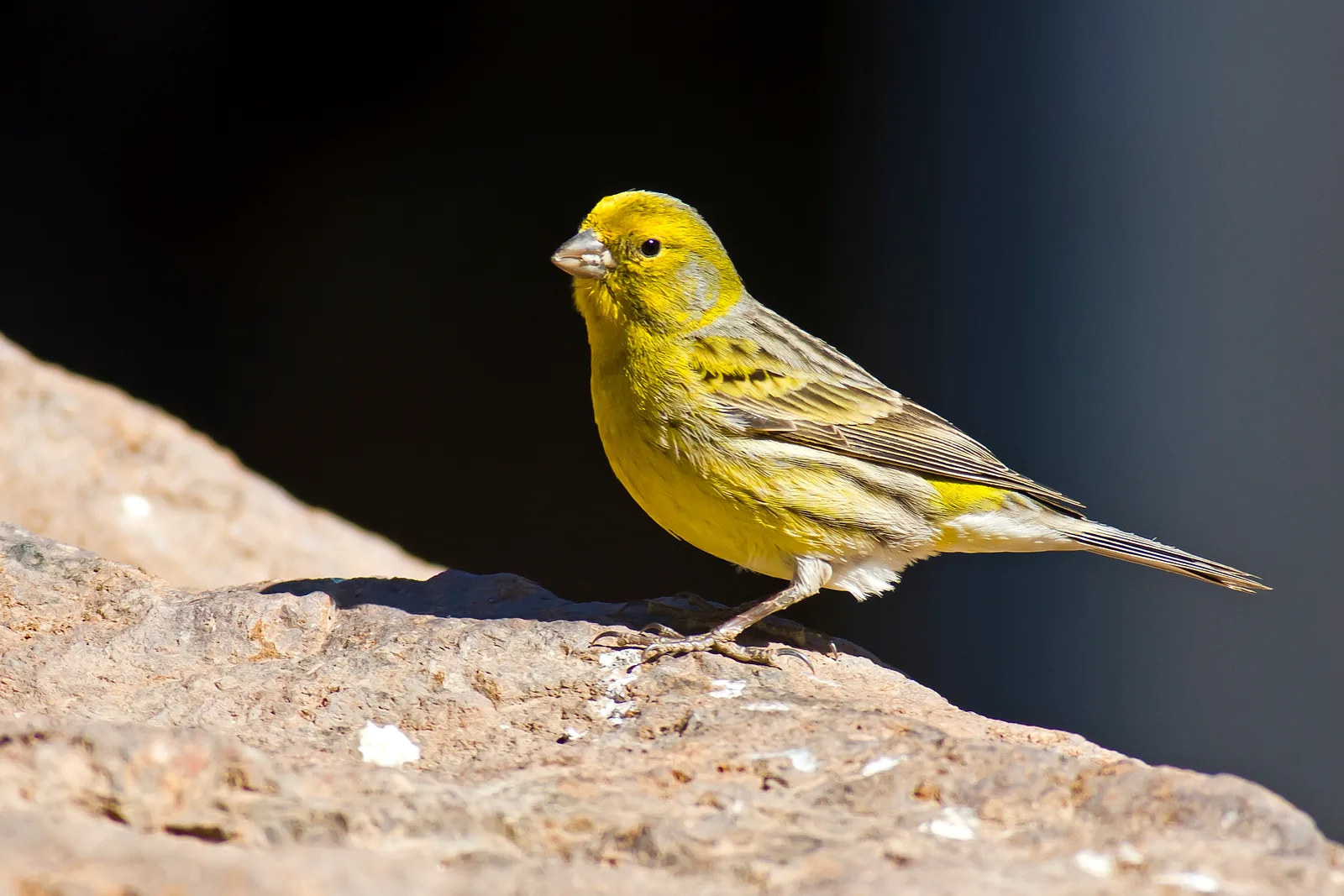
The Atlantic canary is the wild island finch from which domestic canaries descend. Its greenish plumage and lively song belong to wooded and cultivated landscapes in the eastern Atlantic.
At a glance
- Location
- Canary Islands, Madeira and the Azores.
- Habitat
- Temperate forest, Towns and cities
- Diet
- Herbivore
- Food
- Seeds, buds and shoots, with occasional insects.
Classification
- Common name
- Atlantic canary
- Browse group
- Birds
- Scientific name or taxon
- Serinus canaria
- Taxon rank
- species
- Order
- Passeriformes
- Family
- Fringillidae
- Genus
- Serinus
- Source classification
- Aves
Taxonomy checked against GBIF. For breeds and hybrids, this describes the listed parent taxon.
Three things to know
- Wild birds are greenish rather than uniformly bright yellow.
- Males show more yellow on the face and breast.
- Its native range spans three Atlantic archipelagos.
Habitat and range
The wild Atlantic canary is native to the Canary Islands, Madeira and the Azores. It occupies a varied mosaic of woodland edges, scrub, orchards, planted areas and gardens.
Appearance and adaptations
A short bill and streaked back identify this small finch. Both sexes are greenish, but males have stronger yellow colouring on the face, throat and breast.
Diet and behaviour
Seeds, buds and shoots form the main diet; insects are a smaller component. These sociable, vocal birds breed in places with trees and shrubs. The wild species is the ancestor of the many differently coloured domestic strains.
Sources
- SEO/BirdLife: Serín canario
- GBIF: Atlantic canary · Directory entry
Explore birds
Browse all birds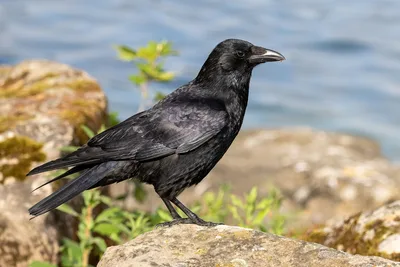 LC
Birds
Carrion crow
Corvus corone
The carrion crow is an all-black crow of western Europe and eastern Asia with a heavy bill and a harsh croak.
Living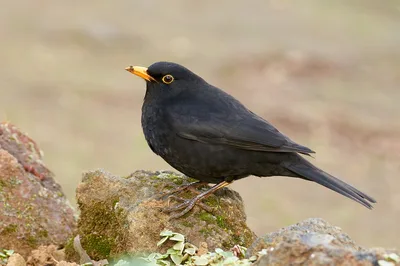 LC
Birds
Common blackbird
Turdus merula
The common blackbird is a true thrush of Europe, North Africa and western Asia, and the male is glossy black with a yellow eye-ring.
Living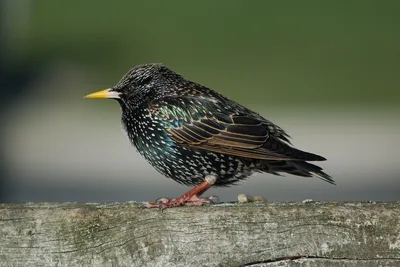 LC
Birds
Common starling
Sturnus vulgaris
The common starling is a glossy black songbird of Europe and Asia, spangled with white spots in winter.
Living LC
Birds
Common swift
Apus apus
The common swift is a blackish-brown bird with narrow curved wings that catches every meal in the air.
Living