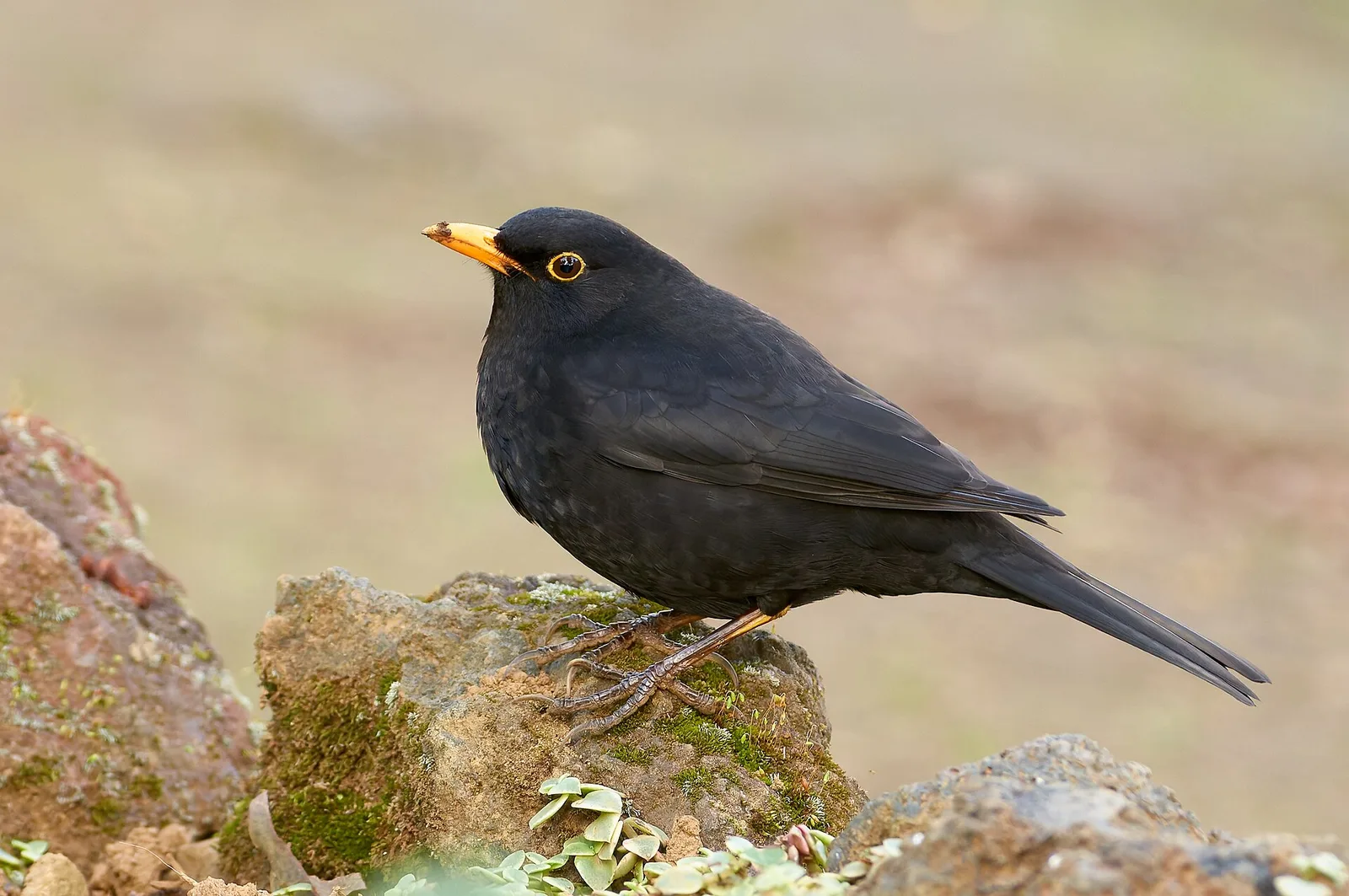
Common blackbird
The garden thrush with the finest song in Europe
Turdus merula
Also called Eurasian blackbird, Blackbird, Ouzel, Merle
Living individuals or members of this group exist today. This does not mean they are safe from extinction.
Meet the common blackbird
The common blackbird is a true thrush of Europe, North Africa and western Asia, and the male is glossy black with a yellow eye-ring. It feeds on the ground on worms, insects and berries, and it sings one of the richest songs of any European bird.
Images of the common blackbird
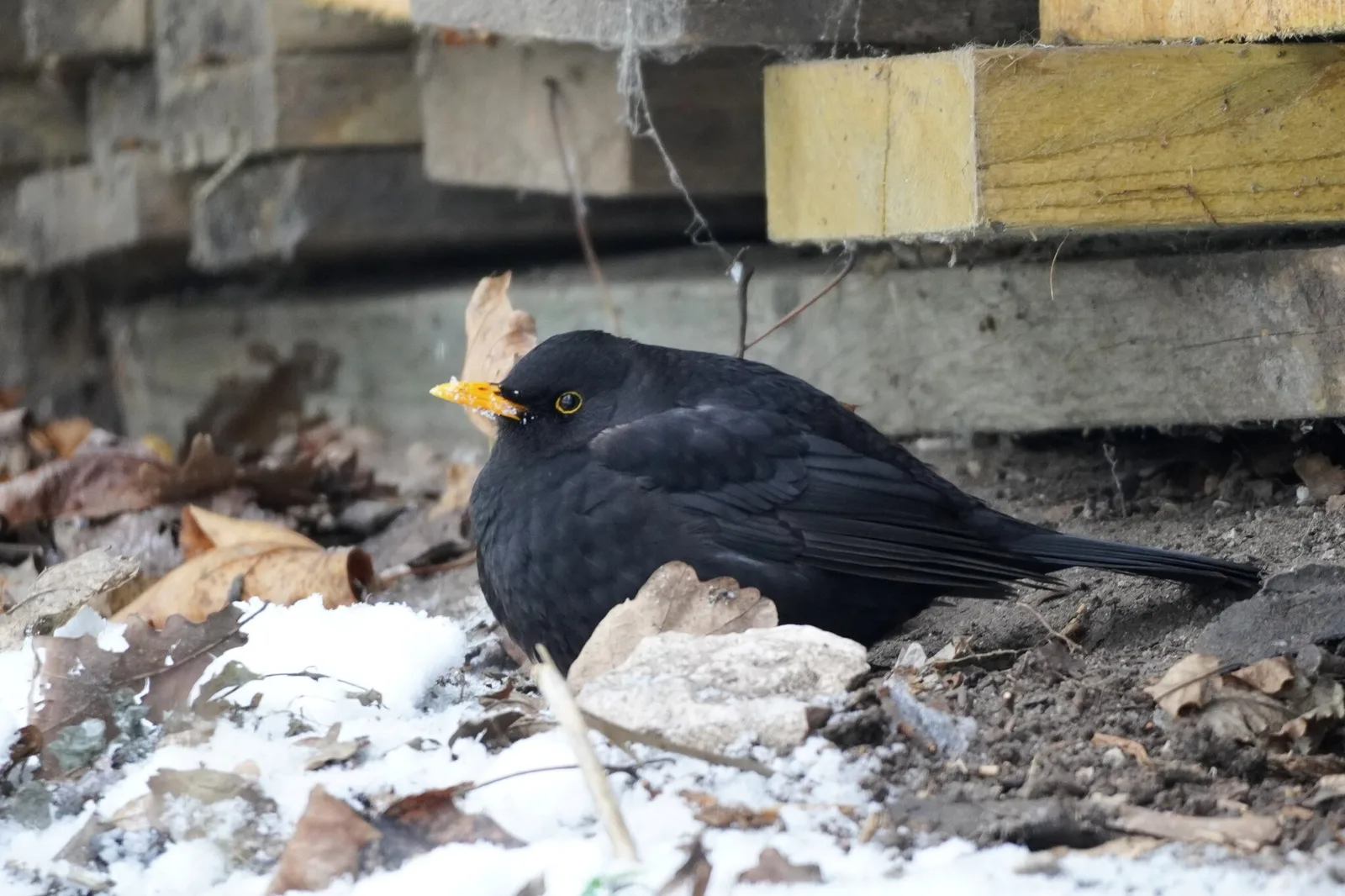
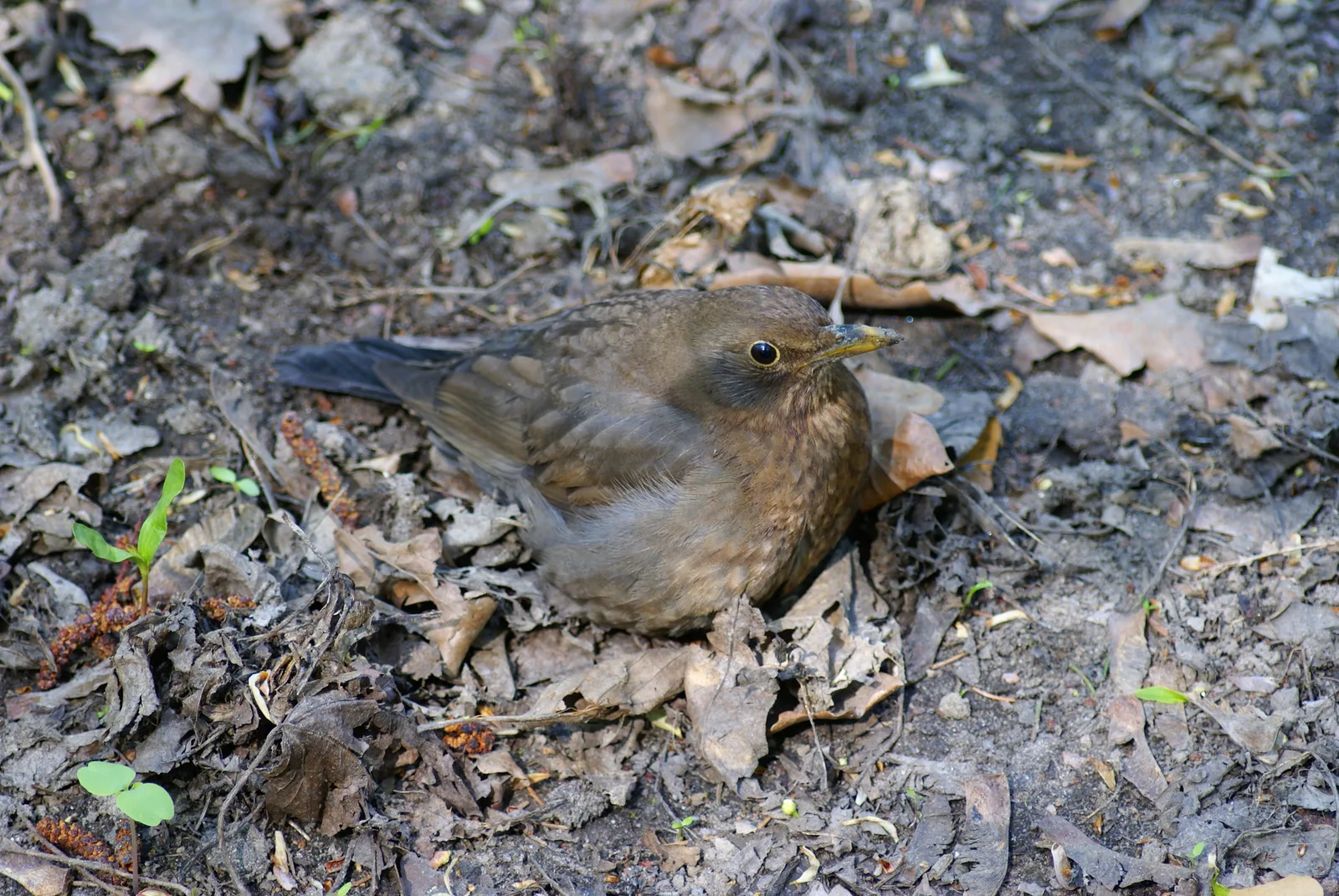
Lifespan in the wild
About 2.4 years the average life expectancy, and the ringing record
Weight
80 to 125 g
Length
23.5 to 29 cm
Wingspan
34 to 38 cm
Fact file
Common blackbird
- Location
- Europe, North Africa and western Asia, plus Australia and New Zealand
- Habitat
- Temperate forest, Towns and cities, Grassland
- Diet
- Omnivore
- Prey / food
- Earthworms, beetles, caterpillars, snails and spiders
- Predators
- Cats, sparrowhawks, foxes, magpies and jays
- Lifestyle
- Active by day and feeding on the ground
- Group name
- Flock
- Name of young
- Chick
- Incubation
- Incubation 12 to 14 days
- Clutch size
- 3 to 5 eggs, usually 4
- Population
- 79 to 160 million birds in Europe alone
- Biggest threat
- Usutu virus, and the loss of farm hedgerows
- Distinctive feature
- A yellow eye-ring and an orange-yellow bill on the black male
- Colour
- Glossy black male, sooty brown female
- Skin type
- Feathers
Size
Next to a person
Measurements
Size and speed
- Length
- 23.5 to 29 cm
- Wingspan
- 34 to 38 cm
- Weight
- 80 to 125 g 80 to 125 grams, averaging about 102 g; ADW gives the mean as 102.06 g
Typical adult ranges. Sources: Wikipedia, Animal Diversity Web.
Life cycle
Lifespan
- In the wildAbout 2.4, up to 21.8 years the average life expectancy, and the ringing record
- 021.8 years
The pale bar is the record. Source: Animal Diversity Web.
Appearance
Colour and coat
- Primary colours
- blackbrown
- Secondary colours
- yelloworange
- Skin type
- feathers
- Male and female
- Strong in colour, slight in size. The male is glossy black with a yellow eye-ring and an orange-yellow bill. The female is sooty brown with a dull brownish bill and a faintly mottled breast.
Life cycle
Mating and family
- Mating system
- socially monogamous pairs, with some young fathered outside the pair
- Social structure
- a pair on one territory, in loose flocks on migration
- Breeding
- two broods a year, and three in the south
Blackbirds first breed at one year old. The female builds a mud-lined cup nest in a thick bush and lays three to five eggs. She incubates them for 12 to 14 days on her own. Both parents feed the chicks, which leave the nest after 10 to 19 days and beg for up to three more weeks. Most birds live only a few years, though one ringed bird reached 21 years and 10 months.
Classification
Taxonomy
- Kingdom
- Animalia
- Phylum
- Chordata
- Class
- Aves
- Order
- Passeriformes
- Family
- Turdidae
- Genus
- Turdus
- Species
- Turdus merula
Conservation
Red List status
- LC
- NT
- VU
- EN
- CR
- EW
- EX
Least Concern on the IUCN Red List
Range
Recorded in 25 countries
- Austria
- Ashmore and Cartier Islands
- Belgium
- Switzerland
- Czech Republic
- Germany
- Denmark
- Spain
- Finland
- France
- United Kingdom
- Croatia
- Hungary
- Ireland
- Italy
- Luxembourg
- Netherlands
- Norway
- New Zealand
- Poland
- Portugal
- Romania
- Russia
- Sweden
- Ukraine
Habitat layer: temperate broadleaf and mixed forest, temperate conifer forest, boreal forest and taiga, tropical grassland, savanna and shrubland, temperate grassland, savanna and shrubland.
Countries from 173,861 wild records on GBIF (iNaturalist research grade), filtered and checked by hand. Country shapes: Natural Earth. Habitat: RESOLVE Ecoregions 2017, CC BY 4.0. Basemap: Natural Earth.
Habitats
Three things to know
- 1
Only the male is black; the female is sooty brown with a dull bill.
- 2
Gardens hold up to 7.3 pairs per hectare, about ten times the density of woodland.
- 3
The bird can sleep with one half of its brain while the other half stays awake.
Did you know
Seven more facts
- 1
The name blackbird was first written down in 1486, when a crow counted as a fowl instead.
- 2
An older English name for the species was the ouzel.
- 3
The female builds the nest alone and binds it with mud.
- 4
A shell makes up 6 per cent of the weight of a blackbird egg.
- 5
Ticks infest 74 per cent of rural birds in France and only 2 per cent of urban ones.
- 6
New Zealand blackbirds have lost the habit of recognising an adult cuckoo over about 130 years.
- 7
The Serbian name for Kosovo comes from kos, the word for a blackbird.
Field notes
How it looks and acts
Field notes
Distinguishing features
- The male is entirely glossy black with no pale markings on the body.
- A bright yellow ring surrounds the eye of the adult male.
- The bill of the breeding male is orange-yellow.
- The female is sooty brown with a faintly mottled breast.
- The tail is long for a thrush of this size.
- The bird hops and stops in short bursts as it feeds.
Field notes
Unique adaptations
- Sharp hearing helps the bird locate an earthworm under the surface.
- Half-brain sleep lets it rest in exposed places and on long flights.
- A higher song pitch cuts through traffic noise in cities.
- Strong rejection of odd eggs keeps cuckoos out of the nest.
- A mixed diet of fruit and invertebrates probably carries it through every season.
Field notes
Interesting behaviours
- It performs a bow and run display to warn a rival male off.
- It calls chink-chink at dusk to keep other birds out of its roost.
- It reuses the same nest for a second brood when the first succeeded.
- It follows its parents and begs for food for up to three weeks after fledging.
- It joins loose winter flocks when it migrates.
Field notes
Temperament
- Males are strongly territorial through the breeding season.
- Females fight less often, but their fights are fiercer.
- Birds probably tolerate people closely, and they feed within a few metres of them.
- A pair keeps the same partner and the same ground year after year.
Field notes
Communication
- The song is a low, fluted, varied warble given from a high perch.
- A pook-pook-pook call warns of a cat or a fox.
- A thin seee warns of a hawk and is hard to trace through leaves.
- Bill colour signals a male's age and condition to rivals.
- The bird copies other songs and human-made sounds.
Ecology
Ecological role
The common blackbird moves seed and eats invertebrates in gardens, hedges and woodland. In New Zealand it has become the most important seed spreader of all.
- It swallows fruit and drops the seed elsewhere, including that of wild cherry.
- It takes worms, snails, beetles and caterpillars from soil and leaf litter.
- It feeds sparrowhawks, cats, foxes and corvids.
- It hosts ticks, blowfly larvae and several blood and gut parasites.
Stories
Myths and legends
- In Classical Greek tradition, the blackbird was sacred and was said to die from eating pomegranates.
- In English nursery tradition, four and twenty blackbirds are baked into a pie for the king.
- In English carol tradition, the four calling birds may once have been colly birds, meaning blackbirds.
- In Jacobean theatre, the blackbird stood for resignation in The Duchess of Malfi.
- In Serbian tradition, the name of Kosovo Polje means the field of blackbirds.
People
Relationship with humans
People
Living alongside us
The blackbird is one of the most familiar garden birds in Europe. It visits feeders, nests in hedges and sheds, and sings from rooftops. People once trapped it at its roost for food, and it now supplies data for studies of urban wildlife. Australia treats the introduced population as a fruit pest. New Zealand relies on it as a seed spreader, for better and for worse.
- The bird weighs about 102 grams and cannot hurt a person.
- A parent may dive at a cat or a person near the nest without making contact.
- It carries ticks that may pass on bacteria, though the risk to people is slight.
People
Status, uses and products
- Domestication
- Wild
- As a pet
- Not suitable. The species is protected across Europe and is not bred in captivity. Anyone who wants blackbirds should plant berry bushes and leave leaf litter for worms.
- Uses
- birdwatchingresearch
- Products
- None recorded
The full account
About the common blackbird
The common blackbird is a true thrush of Europe, North Africa and western Asia. It measures 23.5 to 29 centimetres long and weighs 80 to 125 grams. The adult male is glossy black, with a yellow eye-ring and an orange-yellow bill. The female and the young bird are sooty brown instead. People probably mistake a brown female for a different species altogether.
The bird feeds on the ground, hopping and stopping as it hunts worms and insects. It also takes berries and fruit from bushes through the autumn. The male sings a low, fluted warble from a rooftop or a high branch. That song has made the bird a fixture of European poetry and music. Gardens suit it better than woodland does.
The IUCN lists the species as Least Concern. Europe alone holds an estimated 79 to 160 million birds.
Name and taxonomy
Carl Linnaeus described the species in 1758 as Turdus merula. Both words are Latin, and they mean thrush and blackbird. The second word gives the French merle and the Scots merl. The English name blackbird was first written down in 1486. North Americans say Eurasian blackbird, to keep it apart from their own unrelated blackbirds.
The name seems odd, because crows and rooks are black too. In older English, the word bird meant only a small bird, and a crow counted as a fowl. This was therefore the only common black bird in Britain by that rule. An older name for the species was the ouzel, from Old English osle. Shakespeare used it in A Midsummer Night's Dream, and the ring ouzel still carries it.
Evolution and relatives
The genus Turdus holds about 65 thrushes with round heads, pointed wings and good voices. The song thrush and the mistle thrush split off early from the Eurasian line. This bird came by a different route, through ancestors that reached the Canary Islands from Africa. Those birds then crossed into Europe. The island thrush of Southeast Asia and the Pacific is a close and fairly recent relative.
Several Asian thrushes also carry the name blackbird. The Indian, Tibetan and Chinese blackbirds were once treated as subspecies of this one. All three are now handled as separate species. Seven or more geographic subspecies remain, and the Central Asian intermedius may be another species. The New World blackbirds are not thrushes at all, and sit near the warblers and tanagers.
Appearance
The adult male is glossy black with blackish-brown legs. His bill is orange-yellow and darkens a little in winter. A clean yellow ring circles the eye. The average weight is about 102 grams and the average length about 25 centimetres. The wingspan runs from 34 to 38 cm.
The female is sooty brown with a dull yellowish-brown bill. Her throat is brownish white and her breast carries faint mottling. A juvenile looks like the female but shows pale spots above and a speckled breast. Darker young birds are probably males. A first-year male has a dark bill, a weak eye-ring and brown folded wings.
Bill colour matters to the birds themselves. A male defending ground reacts hardest to a model with an orange bill. He reacts least to the brown bill of a first-year male. Females ignore the hue and respond to how glossy the bill is. The colour itself comes from carotenoid pigments in the food the male finds.
Habitat and range
The species breeds across temperate Eurasia, North Africa, the Canary Islands and South Asia. Birds in the south and west stay put all year. Northern birds move south to North Africa and tropical Asia for the winter. Ringing shows blackbirds crossing from southern Norway to Scotland and on to Ireland. Females in Scotland and northern England migrate more often than males do.
Deciduous woodland with thick undergrowth is the natural habitat. Gardens beat it, and hold up to 7.3 pairs per hectare. Woodland holds roughly a tenth as many, and open or heavily built ground fewer still. Parks and hedgerows hold birds as well. At higher altitude the ring ouzel replaces it.
The bird reaches 1,000 metres in Europe and 2,300 m in North Africa. Himalayan populations live far higher, from 3,200 to 4,800 m in the breeding season. Urban males are more likely than country males to stay north through the winter. Warmer streets and steady food let them hold a territory and breed earlier. Records from North America are usually escaped birds, though one Newfoundland bird of 1994 was accepted as wild.
Diet and feeding
The blackbird is an omnivore and eats insects, earthworms, seeds and berries. It works the ground, running and then hopping in short broken bursts. It pulls worms out of the soil, finding them by sight and sometimes by ear. It turns over leaf litter for beetles, snails, spiders and caterpillars. Small amphibians, lizards and even small mammals are taken now and then.
Fruit probably matters most in autumn and winter. Hawthorn, sloe, ivy, elder, bramble and dog rose all appear in the diet. The bird prefers large fruit with few seeds that pass easily through the gut. It perches in a bush to reach berries rather than taking them from the ground. Garden feeders now supply a further share of the food near houses.
Behaviour and social life
A male defends his ground by chasing rivals or by a bow and run display. He runs a short way, lifts his head, then bows it and dips the tail together. Real fights are short, and the intruder usually leaves at once. Females fight less often over nest sites, but their fights are more violent. Nests sit at least 30 metres apart, and a pair uses about 12,700 square metres.
A pair holds its territory all year where winter food lasts. The two birds then use different parts of the same ground. Migrants are far more sociable and travel in small flocks. They feed in loose groups on the wintering ground. Autumn and winter journeys cover 800 to 2,000 kilometres.
Migrating flight comes in bursts of fast beats with level or dipping glides between. That differs from the quick agile flight the bird uses at home. The blackbird can sleep with one half of the brain at a time. The other half stays awake, which allows rest in dangerous places and on long flights. Heavy human traffic pushes birds to quieter ground and cuts their feeding time.
Communication and senses
The male sings a varied, low-pitched fluted warble. He sings from trees, rooftops and other high perches, mainly from March to June. A first-year male may start as early as late January in mild weather. September and October are the only months with no song at all. In winter the birds sing quietly to themselves.
The calls appear as useful as the song. A pook-pook-pook warns of a cat or another ground hunter. A thin high seee marks a bird of prey, and vegetation muffles it so the caller is hard to locate. Chink-chink calls at dusk try to move other blackbirds out of the roost. That attempt usually fails.
The bird copies sounds it hears around it. Other birds' songs, human whistling and car alarms all turn up in its repertoire. City birds sing at a higher pitch than country birds, by about 198 hertz on average. Traffic noise appears to drive that shift. Pitch and pattern change again when a male means to fight.
Reproduction and life cycle
The male courts with slanting runs, head bows, an open beak and a low strangled song. The female stays still until she lifts her head and tail to allow mating. Pairs are socially monogamous and usually stay together for life. Separation rates of up to 20 per cent follow a bad breeding season. Studies have found as much as 17 per cent of chicks fathered outside the pair.
European birds may start nesting in March, and Asian races a month or more later. New Zealand birds nest in August, which is late winter there. The female alone builds a cup of grass, leaves and other plants bound with mud. She sites it in ivy, holly, hawthorn or another thick evergreen or thorny plant. Sheds and outbuildings serve too, wherever a ledge or cavity offers itself.
A clutch is three to five eggs, and four is the usual number. The eggs are bluish green with reddish-brown blotches, about 2.9 by 2.1 centimetres, and weigh 7.2 grams. The female incubates for 12 to 14 days, and the chicks hatch naked and blind. Both parents feed them for another 10 to 19 days until they leave the nest. Two broods are normal and three are possible in the south, and average life expectancy is 2.4 years.
Predators and threats
Near houses the domestic cat is the main predator. Newly fledged young are the most vulnerable stage. Sparrowhawks, other hawks and foxes take birds when the chance comes. Magpies, jays and the garden dormouse rob nests, which are often poorly hidden. There is little evidence that any of this reduces the overall population.
Parasites may be a heavier burden than predators. Intestinal parasites were found in 88 per cent of birds examined, and blood parasites in more than 80 per cent. In France, ticks infested 74 per cent of country blackbirds but only 2 per cent of city birds. The common cuckoo rarely succeeds here, because the blackbird knows the adult and rejects the egg. Only three of 59,770 British nests examined held a cuckoo egg.
Population and conservation
The range covers an estimated 32.4 million square kilometres. Europe alone holds 79 to 160 million birds, so the IUCN rates the species Least Concern. Numbers in the western Palearctic are stable or rising overall. Farmland populations have dropped in places, after hedgerows were removed and damp grassland drained. More pesticide has also cut the supply of insects and worms.
A newer threat is the Usutu virus, which mosquitoes carry. It was found in Italy in 1996 and has since reached Germany and the United Kingdom. The virus has cut blackbird numbers sharply in parts of Europe. Finland, Portugal and Israel all rate the species Least Concern on their own lists. iNaturalist holds 263,570 records of the bird.
Relationship with humans
Few wild birds appear to live as close to people as this one. It visits feeders in city parks and gardens across Europe. ADW records no negative economic effect of the species in its native range. Country people once trapped blackbirds at their night roosts for food. Researchers use the bird to measure how human disturbance changes feeding behaviour.
Abroad the record is different. A bird dealer released blackbirds in Melbourne in early 1857, and they spread across south-eastern Australia. Australians treat the introduced bird as a pest of berries, cherries, stone fruit and grapes. It also spreads weeds such as blackberry and competes with native birds for food and nest sites. New Zealand received the species in 1862, and it now reaches 1,500 metres and outlying islands there.
In New Zealand the blackbird is the most widespread bird that spreads seed. It shares that role with the native silvereye. It eats native and exotic fruit alike and helps woody weeds establish. Those weed thickets then feed introduced birds better than they feed endemic ones. One useful effect and one harmful effect appear to come from the same habit.
In culture and myth
In Classical Greek tradition the blackbird was sacred and destructive at once. The story held that the bird would die if it ate pomegranates. Unlike most black animals, it is not usually read as a sign of bad luck. The poet R. S. Thomas found a hint of dark places about it. In the seventeenth-century play The Duchess of Malfi it stands for resignation.
The best-known English reference is the rhyme Sing a Song of Sixpence. It was printed about 1744, and the four and twenty blackbirds replaced naughty boys about 1780. Cooks really did serve pies holding live birds, a trick recorded from 1549. Songbirds flew out of the napkins at a royal wedding in 1600, that of Marie de Medici. Iona and Peter Opie collected many readings of the rhyme, none of them supported by evidence.
The carol The Twelve Days of Christmas may once have named this bird. Four calling birds is thought to have been four colly birds, meaning black as coal. Paul McCartney recorded the Beatles song Blackbird on 11 June 1968, with a real blackbird in the background. He has said the song used the bird as a symbol for black people in the southern United States. Sweden made the blackbird its national bird and put it on a Christmas stamp in 1970.
A sentence with a dotted underline is inferred: it describes the group the animal belongs to, or is a reading of the sources, rather than a measured or reported fact about this species.
Questions
Common blackbird questions, answered
Are female blackbirds black?
No. She is sooty brown, with a dull brownish bill and light mottling on the breast. Only the adult male is glossy black.
How big is a common blackbird?
It is 23.5 to 29 centimetres long with a wingspan of 34 to 38 cm. Adults weigh 80 to 125 grams.
What do blackbirds eat?
Earthworms, beetles, caterpillars, snails and spiders, plus berries and fruit. They feed mostly on the ground and take berries from bushes in autumn.
How long do blackbirds live?
The average life expectancy is 2.4 years. The oldest ringed bird lived 21 years and 10 months.
Where do blackbirds nest?
In a thick bush or creeper such as ivy, holly or hawthorn, and sometimes on a ledge in a shed. The female builds a cup of grass and leaves bound with mud.
How many eggs do blackbirds lay?
Three to five, and usually four. They are bluish green with reddish-brown blotches.
How long do blackbird eggs take to hatch?
The female incubates them for 12 to 14 days. The chicks then stay in the nest for another 10 to 19 days.
Do blackbirds migrate?
Some do. Southern and western birds stay put, while northern birds fly 800 to 2,000 kilometres south for the winter.
Why do blackbirds sing at dawn and dusk?
The male sings to hold his territory and attract a mate. At dusk he adds chink-chink calls to move other blackbirds out of his roost.
Are blackbirds endangered?
No. The IUCN rates the species Least Concern, and Europe alone holds 79 to 160 million birds.
What is the Usutu virus?
A mosquito-borne virus that kills blackbirds. Italy reported it in 1996, and it has since reached Germany and the United Kingdom.
Can blackbirds mimic other sounds?
Yes. They copy the songs of other birds, human whistling and even car alarms.
Why are blackbirds more common in gardens than in woods?
Gardens supply more food and more nest sites. They hold up to 7.3 pairs per hectare, about ten times the density of woodland.
Do cuckoos lay eggs in blackbird nests?
Very rarely. The blackbird recognises an adult cuckoo and throws out an egg that does not match its own.
Are blackbirds a pest in Australia?
Yes. The introduced population damages berries, cherries, stone fruit and grapes, and it spreads weeds such as blackberry.
What is the Beatles song Blackbird about?
Paul McCartney has said it used the bird as a symbol for black people in the southern United States. A real blackbird sings in the background of the recording.
Food web
Prey and food
- earthworms
- beetles
- caterpillars
- snails
- spiders
Food web
Predators
- cats
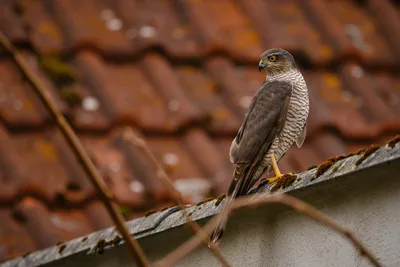 Eurasian sparrowhawk
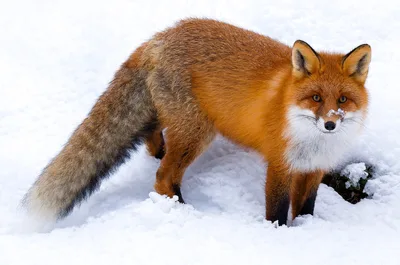 Red fox
- magpies
- jays
Ecological equivalents
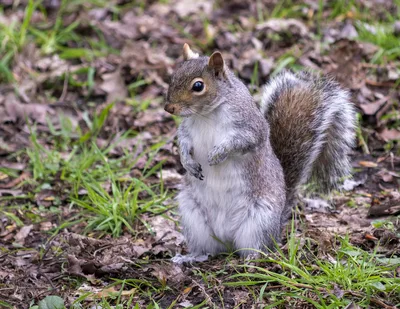
Related species on this site
American robin (same genus), Song Thrush (same genus), Eastern Bluebird (same family), Mountain Bluebird (same family), Thrush (same family), Veery (same family), and more.
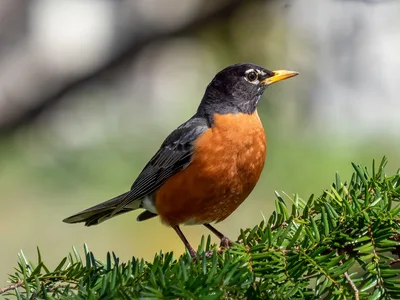 LC
Birds
American robin
Turdus migratorius
The American robin is a large thrush that feeds on lawns and open ground across North America.
Living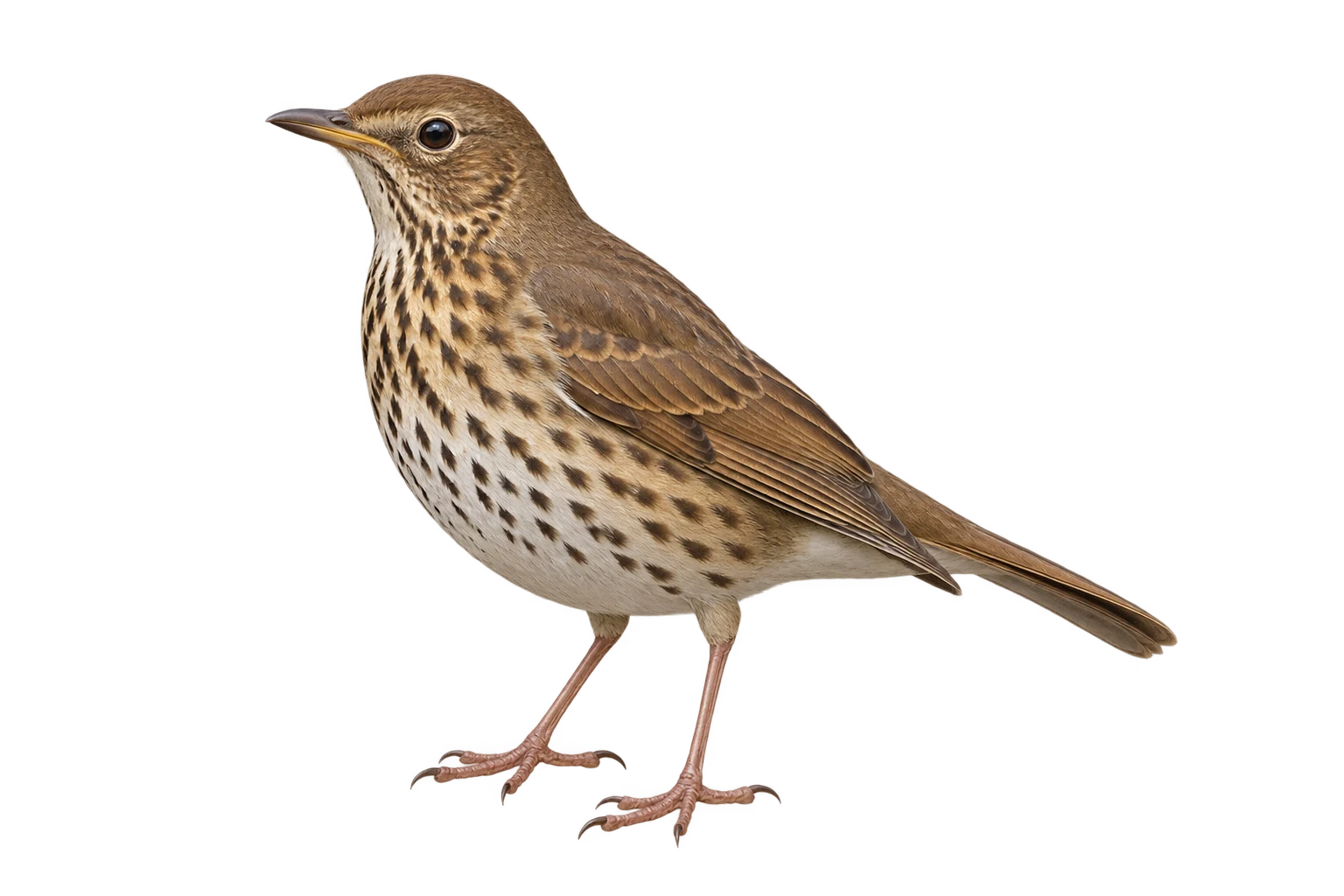
Birds
Song Thrush
Turdus philomelos
Classification and source reference
LivingAI illustration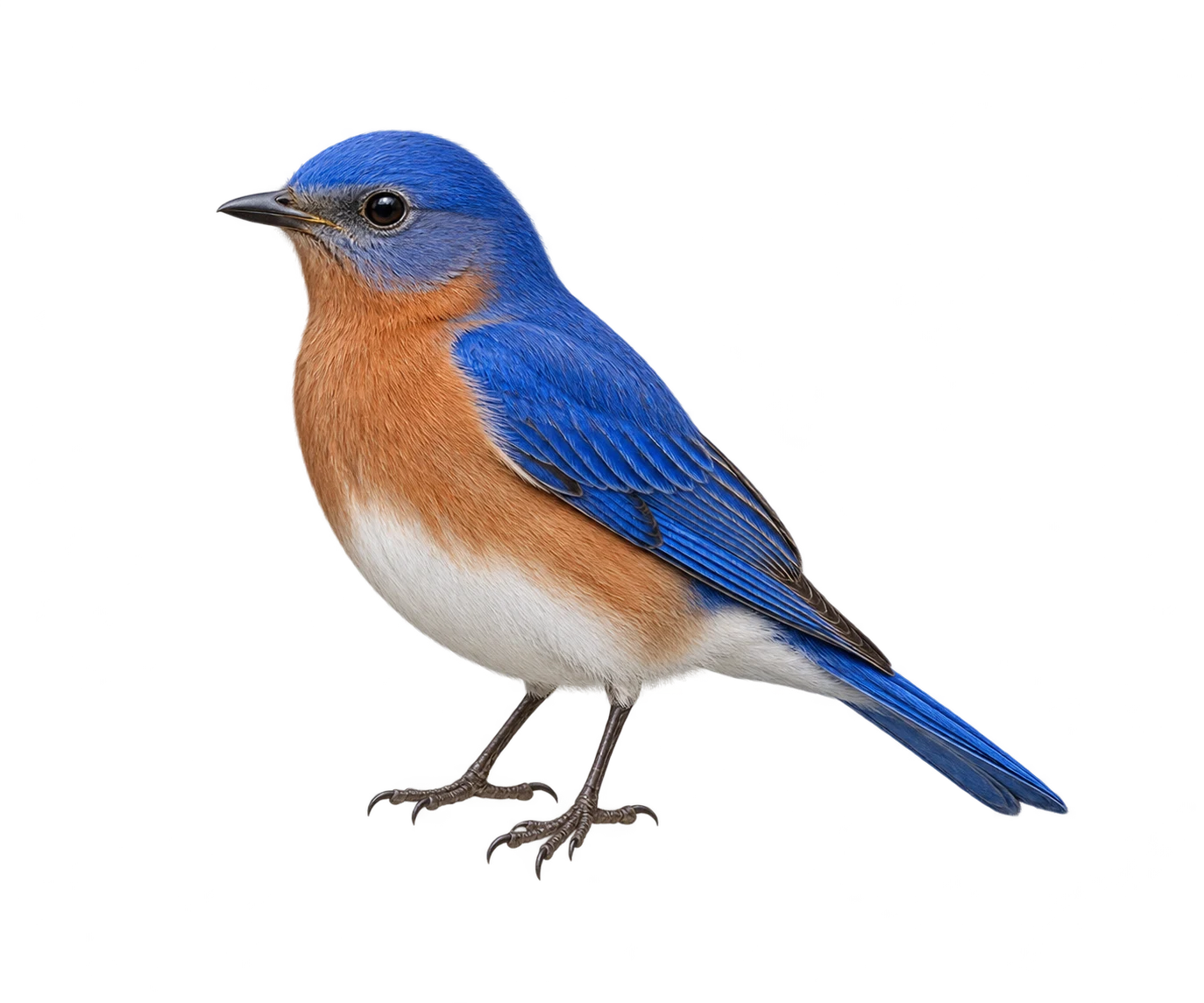
Birds
Eastern Bluebird
Sialia sialis
Classification and source reference
LivingAI illustration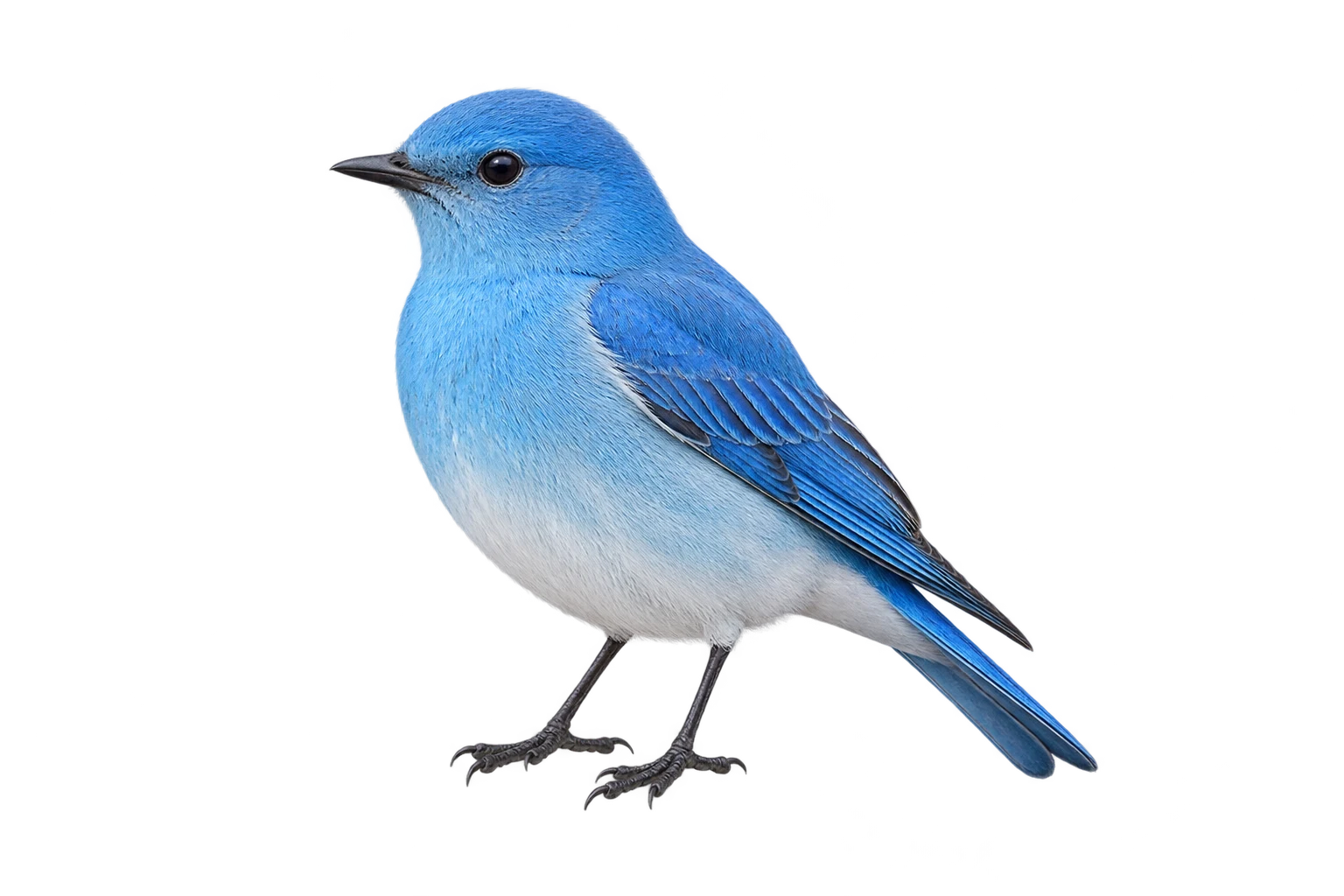
Birds
Mountain Bluebird
Sialia currucoides
Classification and source reference
LivingAI illustration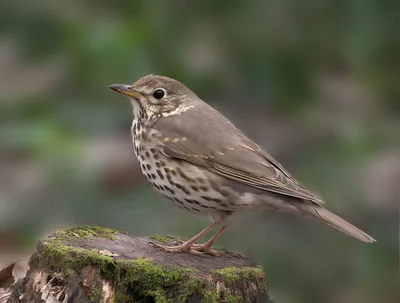
Birds
Thrush
Turdidae
Thrushes include many spotted and unspotted songbirds.
Living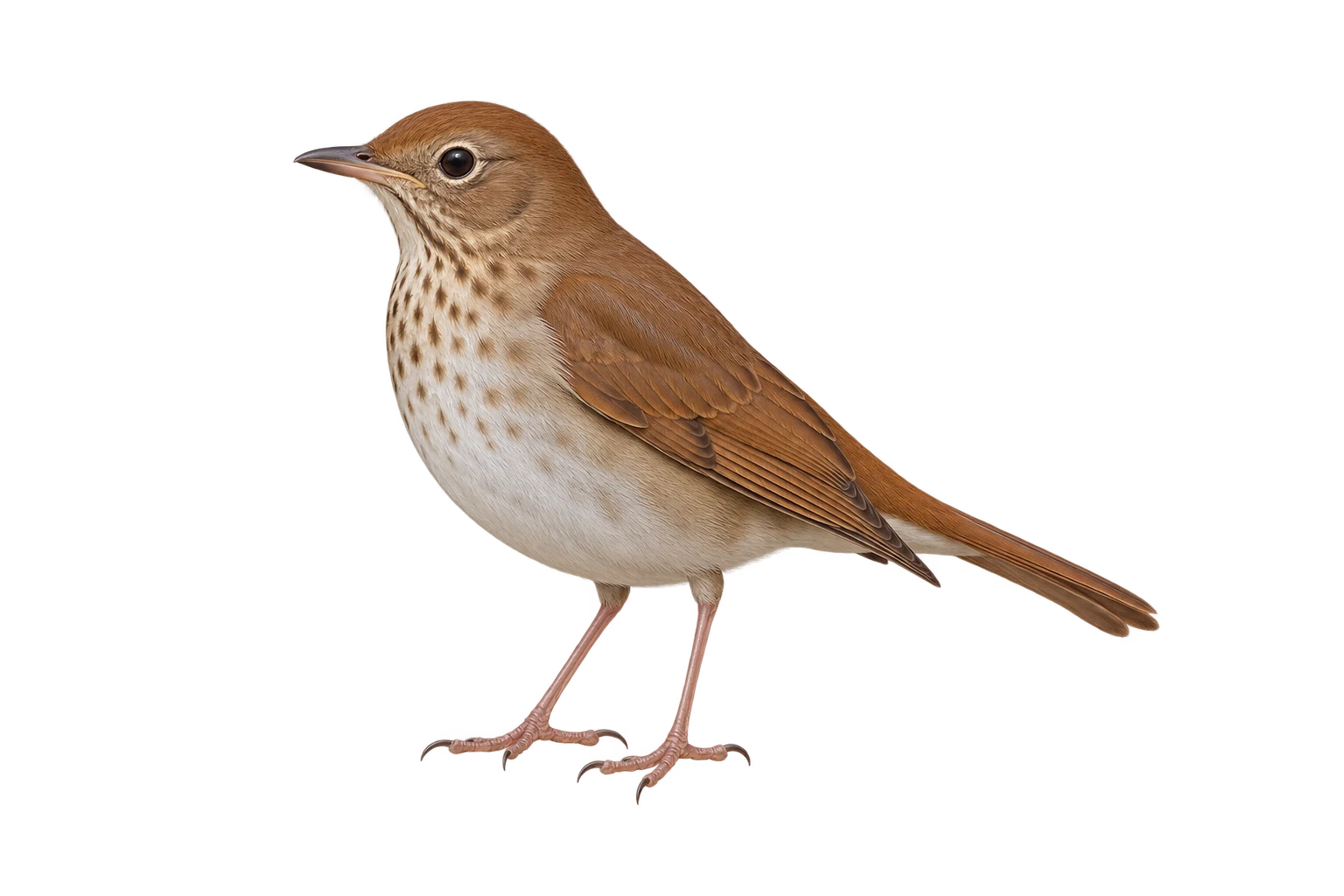
Birds
Veery
Catharus fuscescens
Classification and source reference
LivingAI illustration