Thrush
Turdidae
Living individuals or members of this group exist today. This does not mean they are safe from extinction.
Thrushes include many spotted and unspotted songbirds. This account describes the song thrush (Turdus philomelos), recognised by repeated song phrases and its habit of breaking snail shells on hard surfaces.
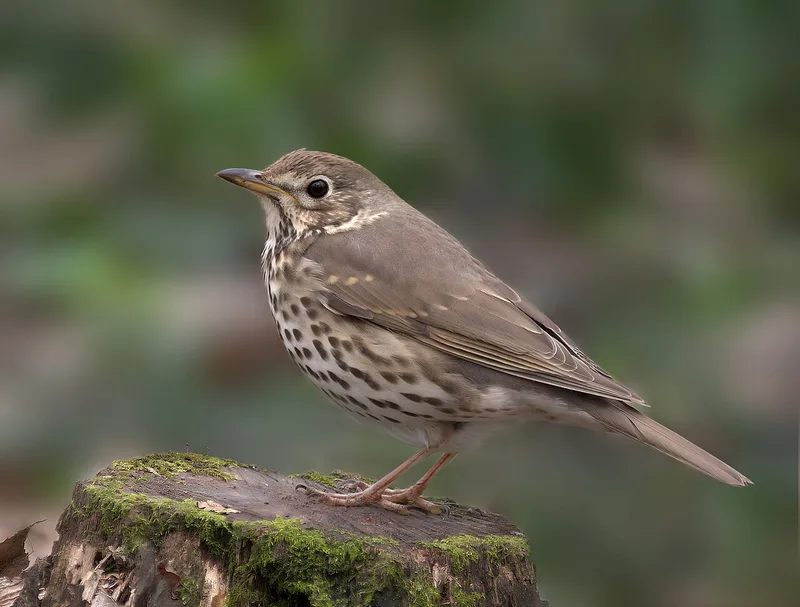
Representative species: Turdus philomelos.
At a glance
- Habitat
- Temperate forest, Towns and cities
- Diet
- Omnivore
- Food
- Invertebrates and seasonal plant foods.
Classification
- Common name
- Thrush
- Browse group
- Birds
- Scientific name or taxon
- Turdidae
- Taxon rank
- family
- Order
- Passeriformes
- Family
- Turdidae
- Source classification
- Aves
Taxonomy checked against GBIF. For breeds and hybrids, this describes the listed parent taxon.
Three things to know
- It uses hard surfaces to break snail shells.
- Its song repeats short phrases.
- Some northern birds winter farther south.
Habitat and range
Song thrushes breed across much of Europe into western and central Asia. Some migrate south for winter, including to North Africa. Woods, gardens, parks and scrub provide food and cover.
Appearance and adaptations
Warm brown upperparts contrast with a pale breast marked by dark spots. The bird is smaller and more compact than a mistle thrush, a similar European species.
Diet and behaviour
Snails are struck against a stone or other hard surface to reach the soft body. Damp ground and dense cover support feeding and nesting. Songs repeat short phrases several times before changing to a new phrase.
Sources
Explore birds
Browse all birds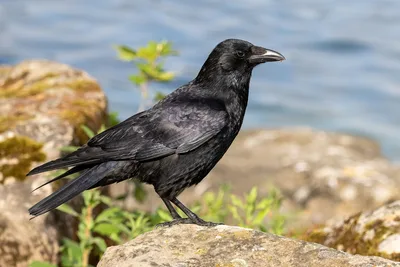 LC
Birds
Carrion crow
Corvus corone
The carrion crow is an all-black crow of western Europe and eastern Asia with a heavy bill and a harsh croak.
Living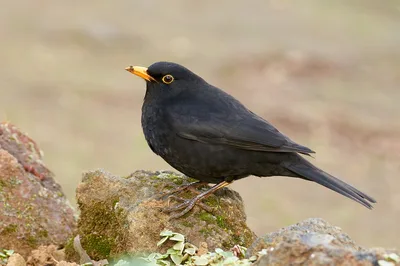 LC
Birds
Common blackbird
Turdus merula
The common blackbird is a true thrush of Europe, North Africa and western Asia, and the male is glossy black with a yellow eye-ring.
Living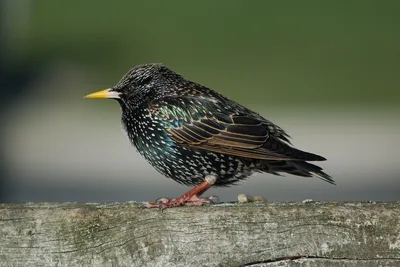 LC
Birds
Common starling
Sturnus vulgaris
The common starling is a glossy black songbird of Europe and Asia, spangled with white spots in winter.
Living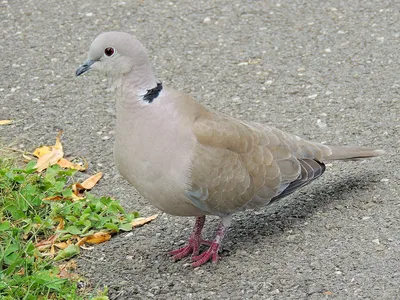 LC
Birds
Eurasian collared dove
Streptopelia decaocto
The Eurasian collared dove is a pale grey dove with a black half-collar on the neck.
Living