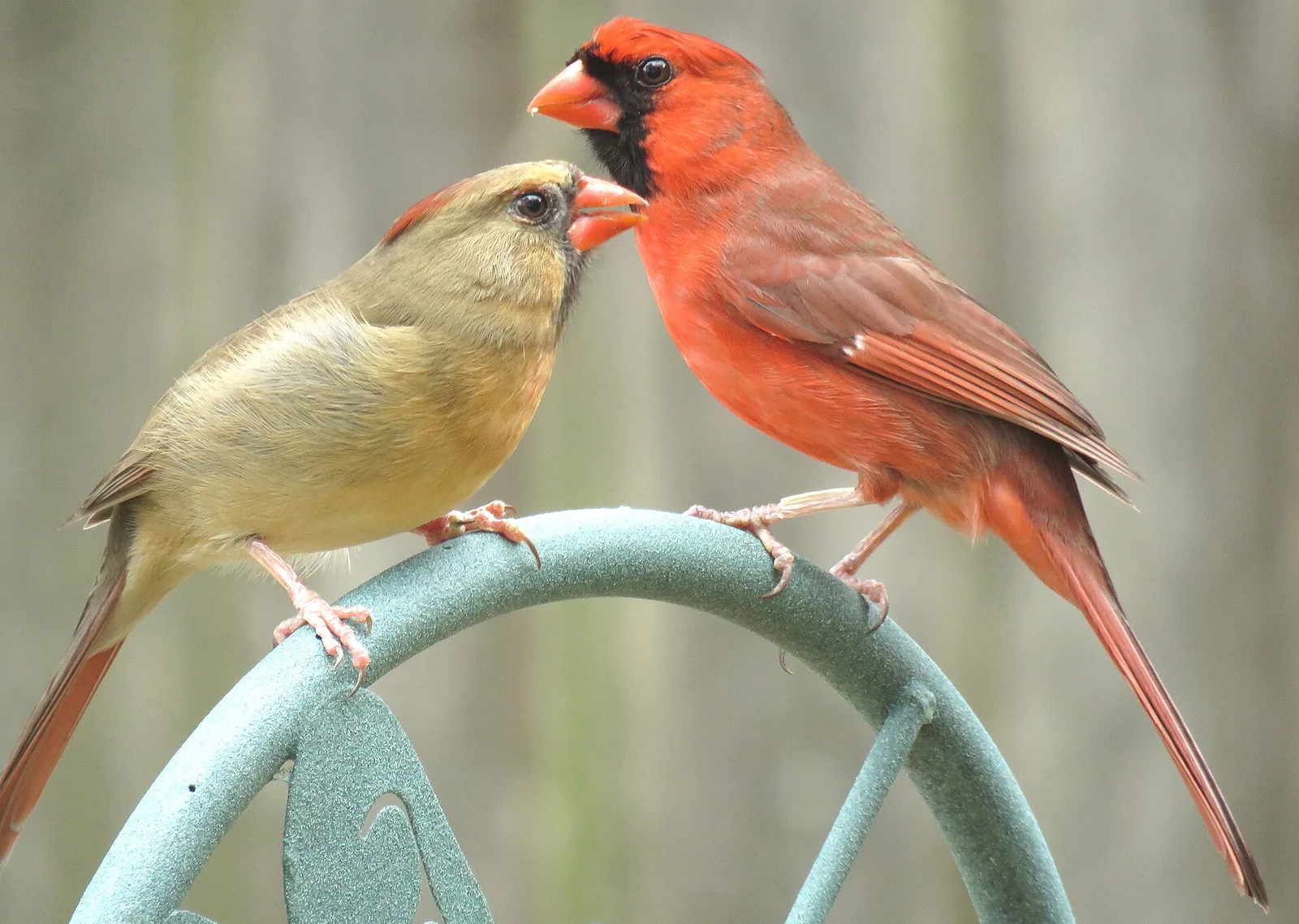
Northern cardinal
The red bird of the eastern garden, and both sexes sing
Cardinalis cardinalis
Also called Common cardinal, Red cardinal, Redbird
Living individuals or members of this group exist today. This does not mean they are safe from extinction.
Meet the northern cardinal
The northern cardinal is a crested songbird of eastern North America, scarlet in the male and warm brown in the female. It stays all year, sings from the top of a tree, and comes readily to a garden feeder.
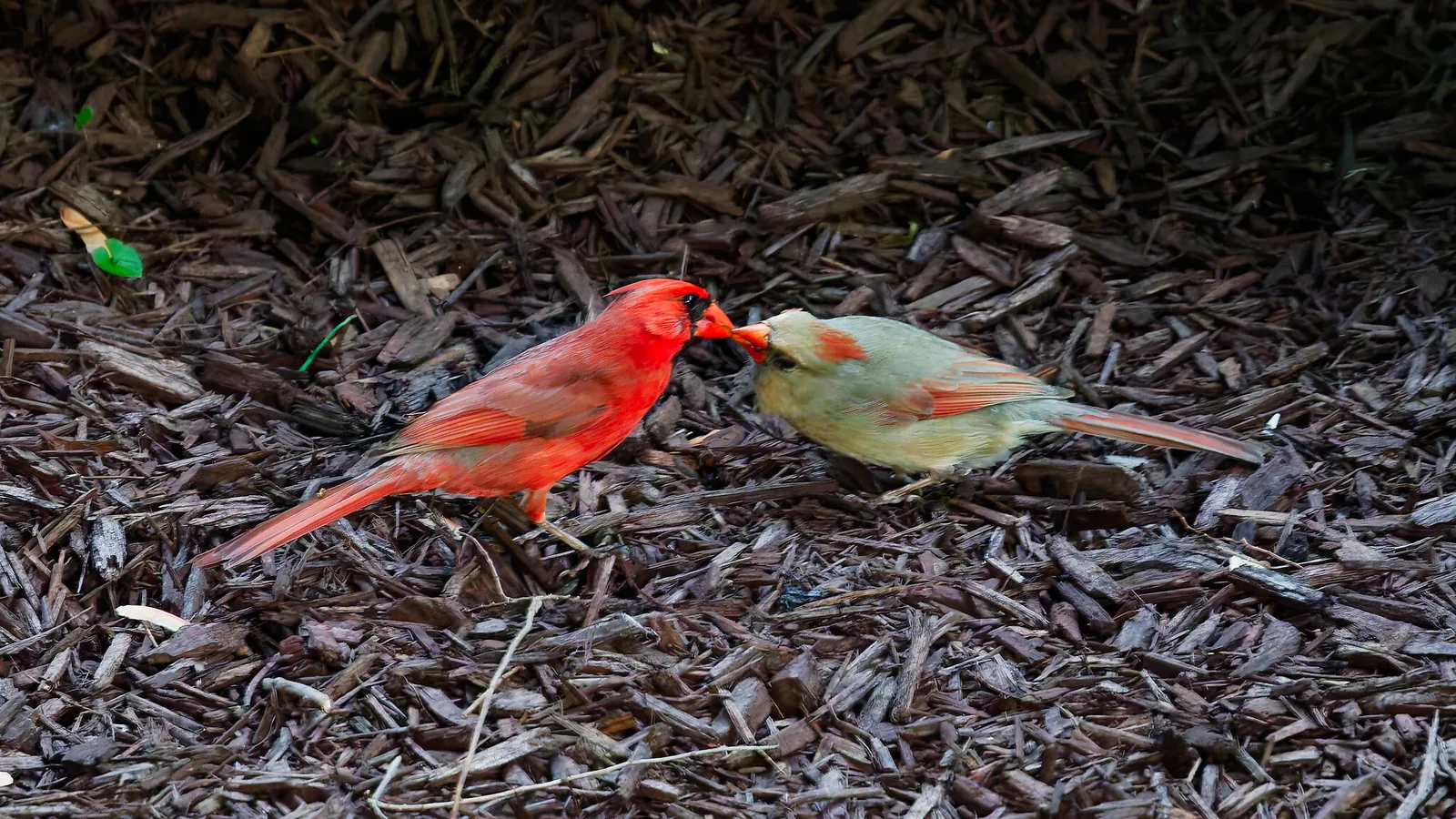
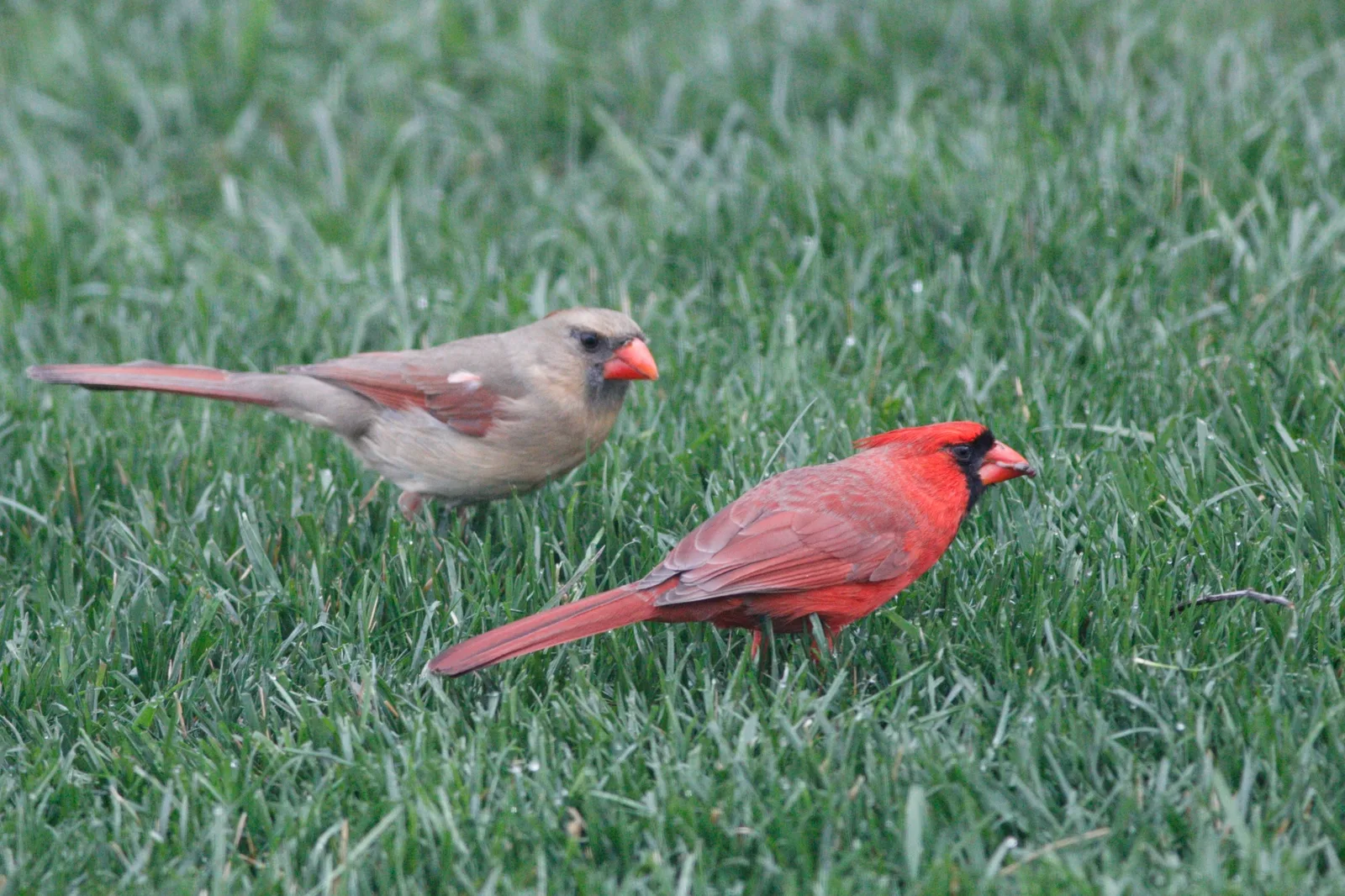
Images of the northern cardinal
Lifespan in the wild
Up to 15.8 years the oldest ringed wild bird lived at least 15 years and 9 months
Weight
33.6 to 65 g
Length
21 to 23.5 cm
Wingspan
25 to 31 cm
Fact file
Northern cardinal
- Location
- Eastern North America south to Guatemala, plus Hawaii and Bermuda
- Habitat
- Temperate forest, Towns and cities, Wetlands
- Diet
- Omnivore
- Prey / food
- Weed seeds, grain, sunflower seeds, fruit, beetles, cicadas, grasshoppers, snails
- Predators
- Cats, Cooper's hawks, shrikes, owls; snakes and squirrels take eggs
- Lifestyle
- Resident all year, active by day, in pairs or winter flocks
- Group name
- College
- Name of young
- Chick
- Incubation
- Incubation 12 to 13 days
- Clutch size
- 3 or 4 eggs, and two or three broods a year
- Population
- About 100 million
- Biggest threat
- Cats and nest predators; the species is still increasing
- Distinctive feature
- A tall pointed crest and a heavy coral bill
- Colour
- Scarlet in the male, warm fawn-brown in the female
- Skin type
- Feathers
Size
Next to a person
Measurements
Size and speed
- Length
- 21 to 23.5 cm
- Wingspan
- 25 to 31 cm
- Weight
- 33.6 to 65 g 33.6 to 65 grams, averaging 44.8 g
Typical adult ranges. Source: Wikipedia.
Life cycle
Lifespan
- In the wildUp to 15.8 years the oldest ringed wild bird lived at least 15 years and 9 months
- In captivityUp to 28.5 years
- 028.5 years
The pale bar is the record. Sources: Animal Diversity Web, AnAge.
Appearance
Colour and coat
- Primary colours
- redbrown
- Secondary colours
- blackgrey
- Skin type
- feathers
- Male and female
- The sexes differ clearly. The male is crimson with a black face mask, and the female is fawn-brown with red only on the crest, wings and tail.
Life cycle
Mating and family
- Mating system
- monogamous pairs, often for several seasons
- Social structure
- territorial pairs in summer, flocks in winter
- Breeding
- two or three broods a year, from March to September
Pairs form in early spring and the male feeds the female bill to bill. The female builds a cup nest low in a thicket and lays three or four eggs. She incubates for 12 or 13 days while the male brings her food. Chicks leave the nest 10 or 11 days after hatching and are fed for weeks afterwards. The male takes over the fledged brood while the female starts the next clutch.
Classification
Taxonomy
- Kingdom
- Animalia
- Phylum
- Chordata
- Class
- Aves
- Order
- Passeriformes
- Family
- Cardinalidae
- Genus
- Cardinalis
- Species
- Cardinalis cardinalis
Conservation
Red List status
- LC
- NT
- VU
- EN
- CR
- EW
- EX
Least Concern on the IUCN Red List
Range
Recorded in 3 countries
Habitat layer: temperate broadleaf and mixed forest, temperate conifer forest, boreal forest and taiga, flooded grassland and savanna, mangrove.
Countries from 278,275 wild records on GBIF (iNaturalist research grade), filtered and checked by hand. Country shapes: Natural Earth. Habitat: RESOLVE Ecoregions 2017, CC BY 4.0. Basemap: Natural Earth.
Habitats
Three things to know
- 1
The male is red because of carotenoid pigments in his food, and a poor diet leaves him pale.
- 2
Female cardinals sing as well as males, which is unusual among North American songbirds.
- 3
The cardinal is the state bird of seven American states, more than any other species.
Did you know
Seven more facts
- 1
A male cardinal will fight his own reflection in a window for hours.
- 2
Rare yellow cardinals cannot turn their food pigments red, so they grow yellow feathers instead.
- 3
Cardinals drink maple sap from holes that sapsuckers have drilled.
- 4
The female builds the nest by bending twigs around her own body with her feet.
- 5
A pair almost never uses the same nest a second time.
- 6
Neighbouring cardinals share more song syllables with each other than with distant birds.
- 7
The bird reached Bermuda in 1700 and Hawaii from 1929, in both cases by human hand.
Field notes
How it looks and acts
Field notes
Distinguishing features
- A tall pointed crest on both sexes.
- A thick coral-red conical bill.
- Crimson plumage with a black face mask in the male.
- Fawn-brown plumage with red in crest, wings and tail in the female.
- A body of 21 to 23.5 centimetres with a 25 to 31 cm wingspan.
- A long tail and dark pink-brown legs.
Field notes
Unique adaptations
- A heavy conical bill husks hard seed that thinner-billed birds cannot open.
- Down at the base of each flight feather traps warm air in winter.
- Shivering with the breast muscles makes heat on a freezing night.
- A drop in body temperature of 3 to 6 degrees Fahrenheit saves energy in extreme cold.
- A taste for garden seed probably lets the bird live where woodland has become suburb.
Field notes
Interesting behaviours
- Song perching: the male sings from the highest point in his territory.
- Courtship feeding: the male passes seed to the female bill to bill.
- Ground foraging: the bird hops on the ground to find fallen seed.
- Winter flocking: cardinals gather and roost together once breeding ends.
- Mirror fighting: a male attacks his reflection as though it were a rival.
Field notes
Temperament
- Territorial and noisy in spring, when a male chases every rival off.
- Tolerant of people, and quick to use a garden feeder.
- Cautious at the nest, where a pair scolds rather than attacks.
- Sociable in winter, which is typical of a resident seed eater.
Field notes
Communication
- Clear whistled phrases, repeated and then varied, from both sexes.
- A short metallic chip as an alarm and as a contact call.
- Regional song dialects, because young birds learn what they hear.
- Crest raising and tail flicking as visual signals.
- Duetting, when a pair sings together before nesting.
Ecology
Ecological role
The cardinal spreads seed, eats crop insects, and feeds a long list of predators.
- It eats large amounts of seed and fruit, so it moves seeds around and shapes what grows.
- It takes boll weevils, cutworms and caterpillars during the breeding season.
- It feeds hawks, owls, shrikes, snakes and squirrels across eastern North America.
- It raises cowbird chicks that are laid in its nest, which helps the cowbird population.
Stories
Myths and legends
- In Cherokee tradition, the cardinal belongs to the sun and brings good luck.
- In one Cherokee story, the first red bird is said to be the daughter of the sun.
- In another Native American story, a brown bird is said to guide a blinded wolf and take red paint as its pay.
- In Roman Catholic usage, the red robes of the church cardinals gave the bird its name.
- In modern American folk belief, a cardinal at the window may be a message from the dead.
People
Relationship with humans
People
Living alongside us
The northern cardinal is one of the most familiar garden birds in the eastern United States. People feed it sunflower and safflower seed, and that habit has pushed its range north. It was once trapped and sold as a cage bird. The Migratory Bird Treaty Act of 1918 ended the trade and still protects the species. Seven states and many sports teams have taken the bird as an emblem.
- A cardinal weighs 33.6 to 65 grams and cannot hurt anyone.
- A parent defends the nest with an alarm call and short flights, not with attacks.
- Cardinals suppress West Nile virus instead of spreading it, according to a study in Atlanta.
People
Status, uses and products
- Domestication
- Wild
- As a pet
- Not suitable. It is illegal to take, kill or keep a northern cardinal in the United States. The penalty reaches a fine of 15,000 dollars and six months in prison.
- Uses
- birdwatchinggarden bird feedingstate emblems and sports mascots
- Products
- None recorded
The full account
About the northern cardinal
The northern cardinal is a crested songbird of eastern and central North America. The male is scarlet with a black face, and the female is fawn-brown with red in the wings and tail. Both sexes carry a tall crest and a heavy coral-coloured bill. The body measures 21 to 23.5 centimetres, with a wingspan of 25 to 31 cm. Weight runs from 33.6 to 65 grams, and the average is 44.8 g.
The species holds woodland edges, thickets, gardens and wooded wetlands. It does not migrate, so the red bird in a snowy garden is the same bird as in June. Seeds and fruit make up most of the food, and the chicks eat insects. Garden feeding has helped the cardinal spread north through the past century. Seven American states name it their state bird, which is more than any other species can claim.
Name and taxonomy
Carl Linnaeus described the bird in 1758, in the tenth edition of Systema Naturae. He put it in Loxia, a genus that now holds only the crossbills. It moved to Cardinalis virginianus in 1838 and passed through the name Richmondena cardinalis in 1918. The present name, Cardinalis cardinalis, was settled in 1983.
The English name honours the Roman Catholic cardinals, whose robes and caps are the same red. The word northern was added to separate this bird from the other cardinals of the Americas. It is the most northerly of them, which is what the word records. Many people still call it the redbird or simply the cardinal. Wikipedia lists 19 subspecies and Animal Diversity Web lists 18, most of them told apart by the female's face.
Evolution and relatives
The cardinal belongs to Cardinalidae, a family of 14 genera and 53 species. Every member of it lives in the Americas, between Canada in the north and Uruguay in the south. Its members run 11 to 28 centimetres long, and the males are red, yellow or blue while the females are duller. The indigo bunting, the scarlet tanager and the rose-breasted grosbeak are all relatives.
The genus Cardinalis holds only three species. The other two are the pyrrhuloxia of the south-western deserts and the vermilion cardinal, a bird of Venezuela and Colombia. The vermilion cardinal split away earliest, and this bird is the youngest of the three lineages. All three carry the crest and the thick conical bill. Like other seed-crushing cardinalids, this bird probably owes that heavy bill to a diet of hard seed.
Appearance
An adult measures 21 to 23.5 centimetres long and spans 25 to 31 cm across the wings. Weight ranges from 33.6 to 65 grams and averages 44.8 g, and males run slightly larger. The male is brilliant crimson, with a black mask that covers the eyes and reaches the upper chest. The red darkens on the back and the wings. The female is grey-brown with a red wash on the crest, wings and tail, and her mask is grey and vague.
Young birds of both sexes look like the female until they moult in the autumn. A juvenile has a grey-black bill and gains the orange-red one only with adult feathers. The red comes from carotenoid pigments in the food, not from the bird itself. A male fed only yellow pigments turns a pale red instead of crimson. A few rare birds cannot convert those pigments at all, and they grow yellow feathers and a yellow bill.
Habitat and range
Cardinals live across the eastern United States from Maine to Minnesota and south to Texas. In Canada they hold southern Ontario, Quebec, New Brunswick and Nova Scotia, east to Cape Breton Island. Southward the range crosses Mexico as far as the Isthmus of Tehuantepec, then reaches northern Guatemala and Belize. A separate population sits on the Pacific slope of Mexico between Jalisco and Oaxaca. People introduced the bird to Bermuda in 1700 and to every main Hawaiian island from 1929.
The species likes edges: woodland margins, hedgerows, brushy fields and thick cover near houses. It avoids the interior of large forests. Gardens with dense shrubs beside open lawn suit it as well as any wild habitat. The range has grown steadily since the early 1800s, and mild winters and bird feeders both helped. New England held few cardinals in 1929, and Massachusetts counts have climbed since 1960.
Diet and feeding
About 90% of the adult diet is weed seed, grain and fruit. The bird hops on the ground and through low branches to find it. Corn, oats and sunflower seeds are all taken, and the heavy bill husks them easily. Cardinals prefer seed that shells cleanly, and they grow less fussy in winter. They also drink maple sap from the holes that sapsuckers drill.
Insects and snails fill out the rest of the year's food. Beetles, cicadas and grasshoppers are the usual catch. The nestlings eat almost nothing but insects, which the parents crush before feeding them. Cardinals also eat crop pests, among them boll weevils, cutworms and caterpillars. Sunflower and safflower seed will bring the bird to a garden feeder in any month.
Behaviour and social life
The northern cardinal stays on its ground all year and never migrates. It is busiest in the early morning and again towards dusk. Pairs hold a territory through the breeding season and often travel together outside it. In winter most cardinals join flocks and roost together in cover. One study in northern Kentucky put a winter home range at about 0.212 square kilometres.
A territorial male sings from the top of a tree and chases rivals out. He will attack his own reflection in a window or a wing mirror for hours on end. Winter cold is met by fluffing the down at the base of each flight feather. The legs and feet carry no feathers and lose heat fast, so the bird shivers to make more. A cardinal can also drop its body temperature by 3 to 6 degrees Fahrenheit to survive a hard night.
Communication and senses
Both sexes sing clear whistled phrases, repeated several times and then changed. Birdwatchers write the phrases as what-cheer, what-cheer or purdy, purdy, purdy. In general a female North American songbird does not sing, and the cardinal is a well-known exception. The songs of the two sexes differ in ways the human ear cannot catch. Hormone levels are the suggested reason for that difference.
A short metallic chip is the alarm, and a parent gives it when a predator nears the nest. The same chip works as a contact call between a pair. Cardinals learn their songs, so the phrases vary from region to region. Neighbouring birds share more syllables with each other than with birds further away. Flicking the tail and raising or lowering the crest carry visual signals as well.
Reproduction and life cycle
Pairs form in early spring and may stay together for several seasons. Some pairs separate between years, and a lost mate is replaced quickly. The male courts by collecting food and passing it to the female bill to bill. Faithfulness is partial, and DNA work found 9 to 35% of nestlings fathered by another male. Mated birds sometimes sing together before they nest.
The female builds a cup nest 1 to 3 metres up in a dense shrub or a low tree. She crushes twigs in her bill until they bend, then shapes them around her body with her feet. The finished cup runs 5.1 to 7.6 centimetres tall and about 10.1 cm across, and it takes three to nine days. A pair almost never uses the same nest twice. Brown-headed cowbirds often lay in the second nest of the season.
A clutch holds three or four eggs, and counts from one to five occur. The eggs are white with a green, blue or brown tint and dark blotches, and measure about 26 by 19 millimetres. The female incubates for 12 or 13 days while the male brings her food. Chicks hatch naked and blind at about 3 to 3.5 grams and gain 2 to 3 g a day. They leave the nest 10 or 11 days after hatching, and the parents feed them for 25 to 56 days more.
Predators and threats
Adult cardinals are taken by falcons, hawks in the genus Accipiter, shrikes and several owls. Long-eared owls and eastern screech owls both hunt them. Domestic cats and dogs kill cardinals around houses. Eggs and chicks go to milk snakes, black racers, blue jays, crows, squirrels and chipmunks. A pair answers a predator with the chip call and short flights towards it, but they do not mob.
Adults survive from one year to the next at a rate of 60 to 65%. The oldest ringed wild bird lived at least 15.75 years, which is 15 years and 9 months. A captive bird reached 28.5 years. Cowbirds remove cardinal eggs from a nest and sometimes eat them. A study in Atlanta in 2016 found that cardinals suppress West Nile virus rather than spreading it.
Population and conservation
The IUCN Red List rates the northern cardinal as Least Concern. The world population stands at about 100 million birds. The global range covers roughly 5,800,000 square kilometres. Counts are stable or rising, which probably sets the bird apart from most woodland songbirds.
Numbers and range have both grown over the past 200 years. Suburbs, hedges and garden feeding created more edge habitat than the bird had before. The Migratory Bird Treaty Act of 1918 protects the species in the United States. Taking, killing or keeping a cardinal can bring a fine of up to 15,000 dollars and six months in prison. Naturalists have logged 386189 cardinal observations on iNaturalist.
Relationship with humans
Few wild birds are probably as welcome in a garden as this one. Sunflower and safflower seed bring cardinals to feeders across the whole range. That habit has pushed the range north and raised local numbers. The birds eat insect pests of crops as well as seed. No harmful effect on people has been recorded.
Cardinals were once caught and sold as cage birds for their colour and their song. The Migratory Bird Treaty Act of 1918 ended that trade in the United States. Canada protects the species under its own convention for migratory birds. American sports teams use the bird as a mascot, from the St. Louis Cardinals to the Arizona Cardinals. Most of those team images give the bird yellow legs and a yellow bill, which no real cardinal has.
In culture and myth
In Cherokee tradition the cardinal is tied to the sun and counts as a sign of good luck. In one story from that tradition the first red bird is said to be a child of the sun. Another tale is said to describe a brown bird that guides a blinded wolf and takes red rock as its reward. Some accounts are said to treat the bird as a weather prophet that sings ahead of rain. Many people today believe that a cardinal at the window may carry a message from someone who has died.
Seven states claim it: Illinois, Indiana, Kentucky, North Carolina, Ohio, Virginia and West Virginia. No other species holds that title in so many states. Delaware considered the cardinal and chose the Blue Hen instead. The Amtrak train between Chicago and Washington is named the Cardinal after the bird. The route passes through several of the states that claim it.
A sentence with a dotted underline is inferred: it describes the group the animal belongs to, or is a reading of the sources, rather than a measured or reported fact about this species.
Questions
Northern cardinal questions, answered
How big is a northern cardinal?
A cardinal is 21 to 23.5 centimetres long with a wingspan of 25 to 31 cm. It weighs 33.6 to 65 grams, and the average is 44.8 g.
Why are male cardinals red?
The red comes from carotenoid pigments in the food. A male fed only yellow pigments turns pale red, and a few birds cannot make red at all and grow yellow feathers.
Do female cardinals sing?
Yes, and that is unusual for a North American songbird. The songs of the two sexes differ in ways the human ear cannot separate.
What do cardinals eat?
Weed seed, grain and fruit make up about 90% of what an adult eats. Adults also take beetles, cicadas, grasshoppers and snails, and the chicks eat almost nothing but insects.
Do northern cardinals migrate?
No. They stay on the same ground all year, which is why they appear at feeders in deep winter.
How long do cardinals live?
The oldest ringed wild bird lived at least 15 years and 9 months. A captive bird reached 28.5 years, and adults survive each year at a rate of 60 to 65%.
Where do cardinals build their nests?
She builds a cup nest one to three metres above the ground in a thick shrub or low tree. Building takes three to nine days, and a pair almost never reuses the nest.
How many eggs does a cardinal lay?
Three or four is normal. A clutch may hold a single egg, or as many as five, and two or three broods are raised each year.
How long do cardinal eggs take to hatch?
Incubation lasts 12 or 13 days and the female does nearly all of it. Chicks leave the nest 10 or 11 days after hatching.
Why does a cardinal attack my window?
A territorial male mistakes his reflection for a rival. He may fight the glass for hours, and covering the outside of the pane usually stops it.
Are cardinals endangered?
No. The IUCN rates the species Least Concern, and the world population is about 100 million and stable or rising.
Can you keep a cardinal as a pet?
No. The Migratory Bird Treaty Act of 1918 makes it illegal to take, kill or keep one in the United States.
How do you attract cardinals to a garden?
Put out sunflower and safflower seed, and keep dense shrubs near the open ground. Cardinals feed on or near the ground, so a low tray helps.
Which states have the cardinal as their state bird?
Illinois, Indiana, Kentucky, North Carolina, Ohio, Virginia and West Virginia. No other bird is the state bird of so many states.
What is the difference between a cardinal and a pyrrhuloxia?
They are the two North American species in the genus Cardinalis. The pyrrhuloxia is a grey desert bird with red trim, while the cardinal is red all over.
What does a cardinal sound like?
It whistles clear phrases that are repeated then changed, written as what-cheer, what-cheer or purdy, purdy, purdy. Its alarm is a short metallic chip.
Food web
Prey and food
- weed seeds
- grain
- sunflower seeds
- fruit
- beetles
- cicadas
- grasshoppers
- snails
Food web
Predators
- cats
- cooper's hawks
- shrikes
- owls
- snakes
- squirrels
Ecological equivalents

Related species on this site
Blue Grosbeak (same family), Cardinals (same family), Dickcissel (same family), Hepatic Tanager (Red Tanager) (same family), Painted Bunting (same family), Rose-Breasted Grosbeak (same family), and more.
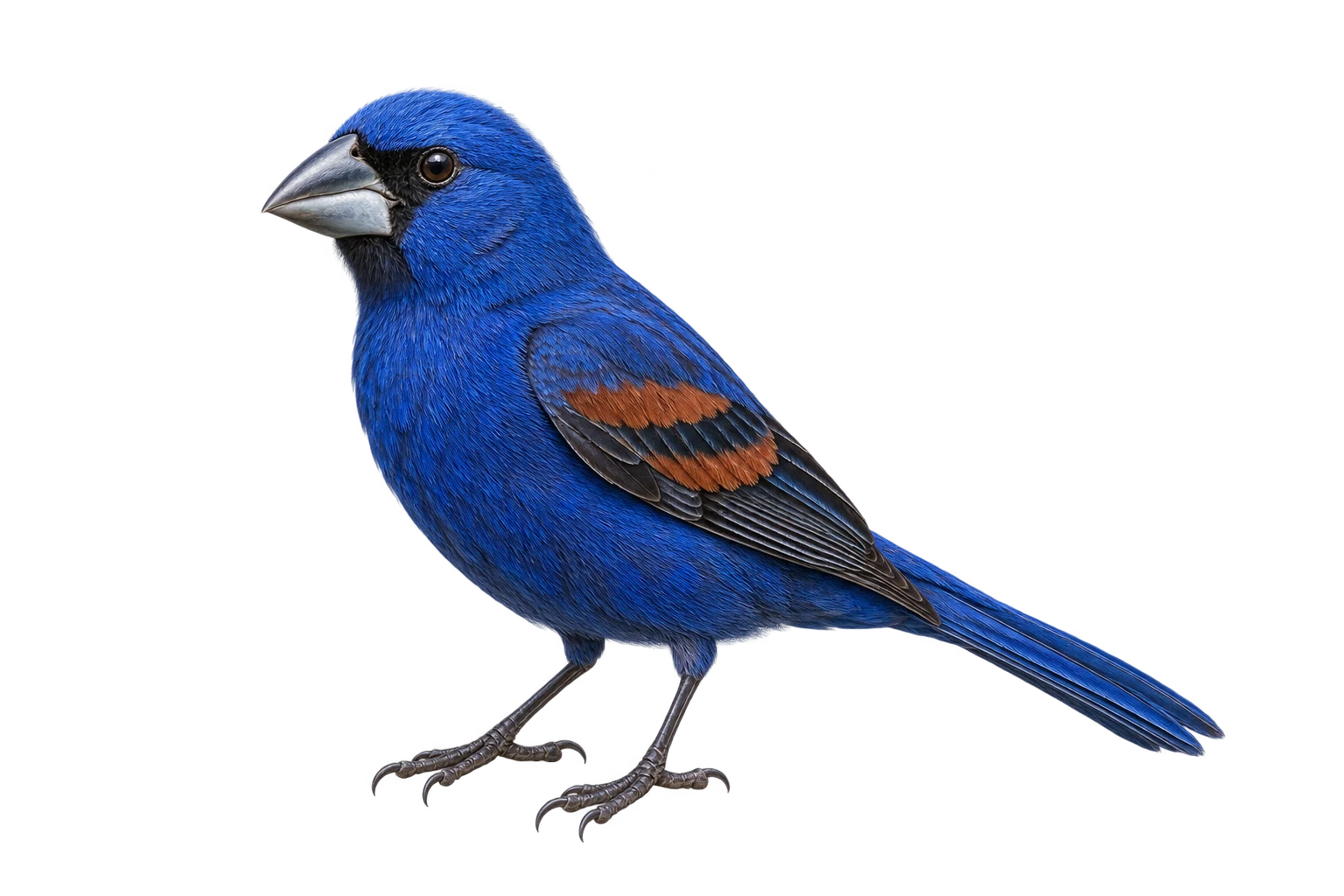
Birds
Blue Grosbeak
Passerina caerulea
Classification and source reference
LivingAI illustration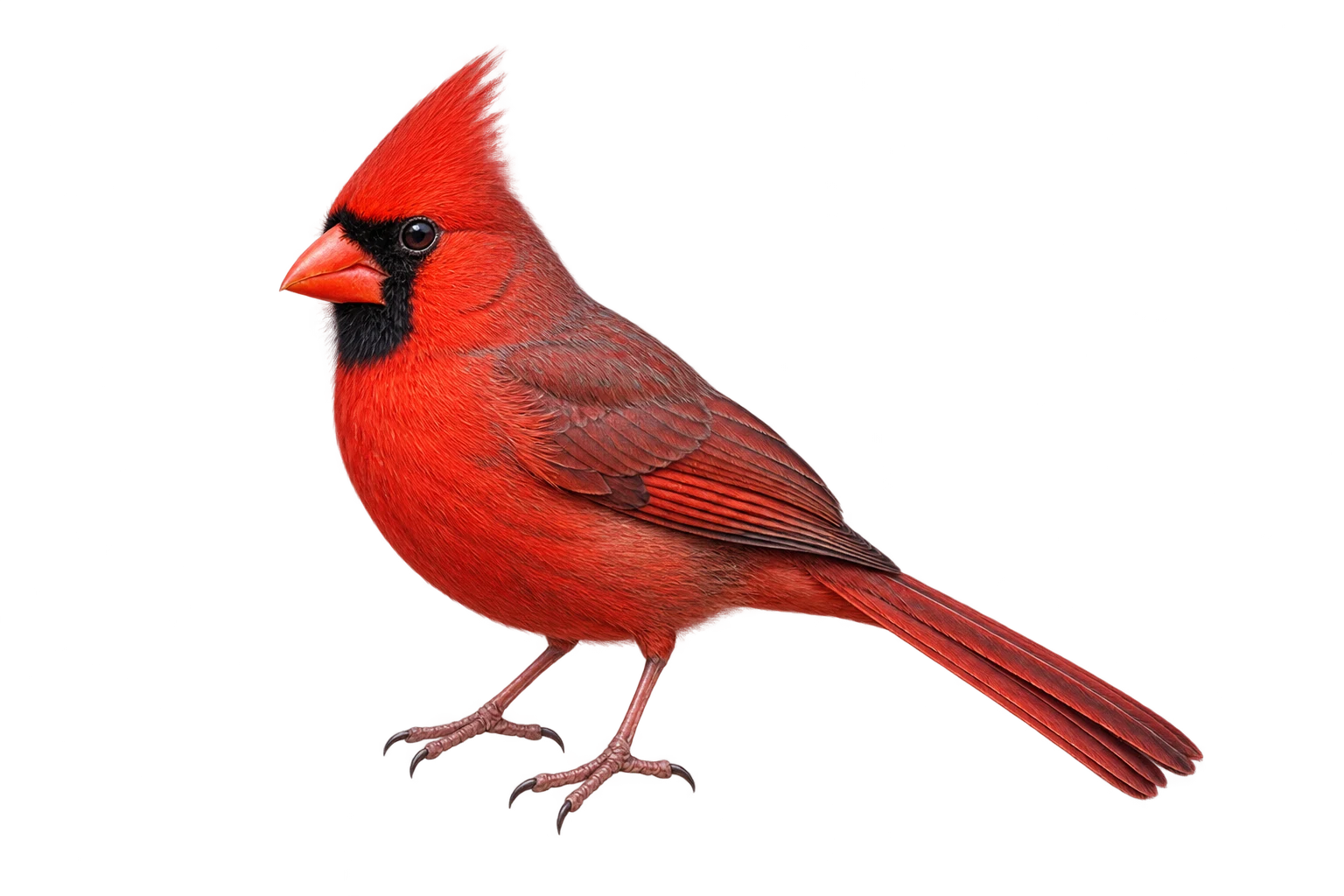
Birds
Cardinals
Cardinalidae
Classification and source reference
LivingAI illustration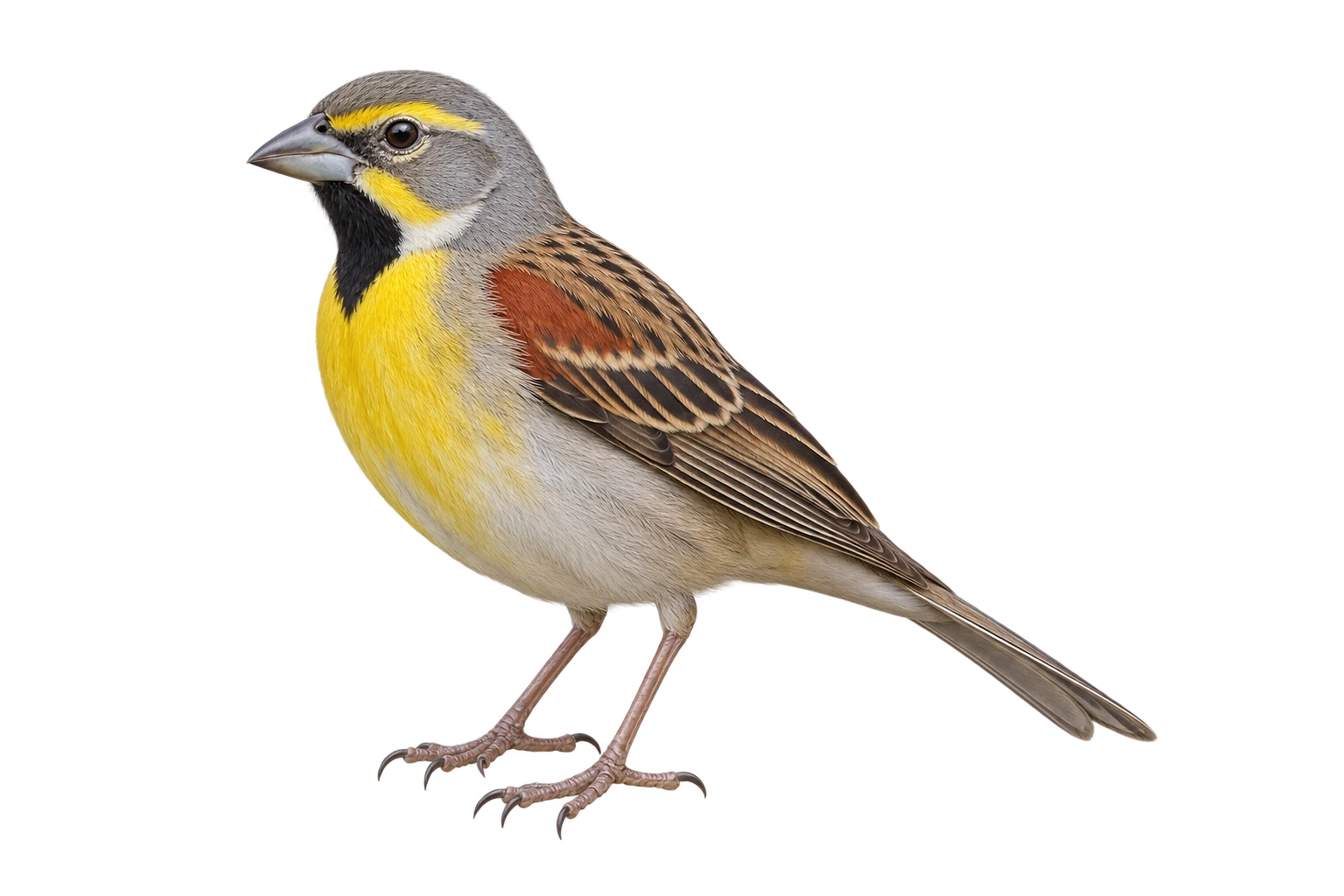
Birds
Dickcissel
Spiza americana
Classification and source reference
LivingAI illustration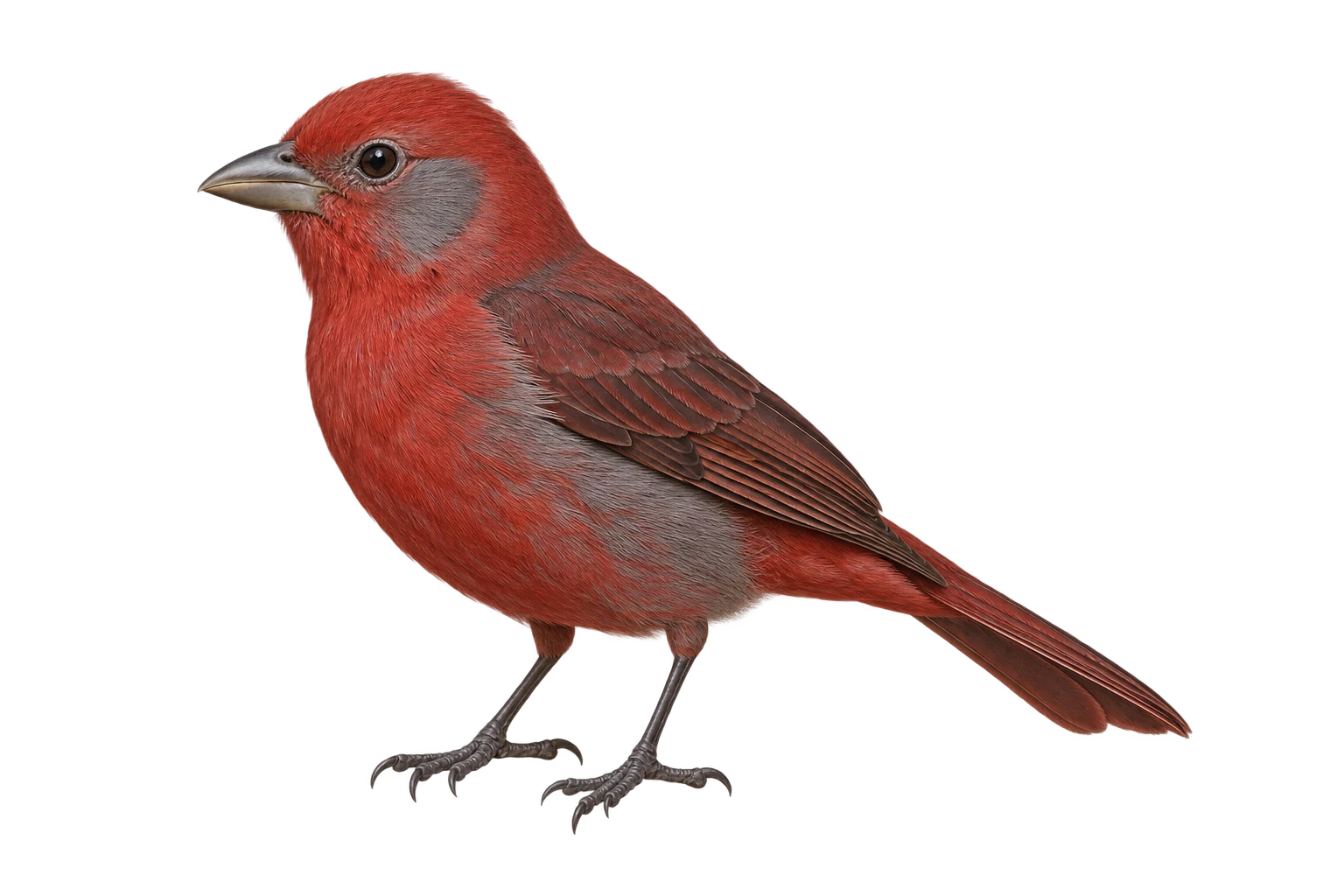
Birds
Hepatic Tanager (Red Tanager)
Piranga flava
Classification and source reference
LivingAI illustration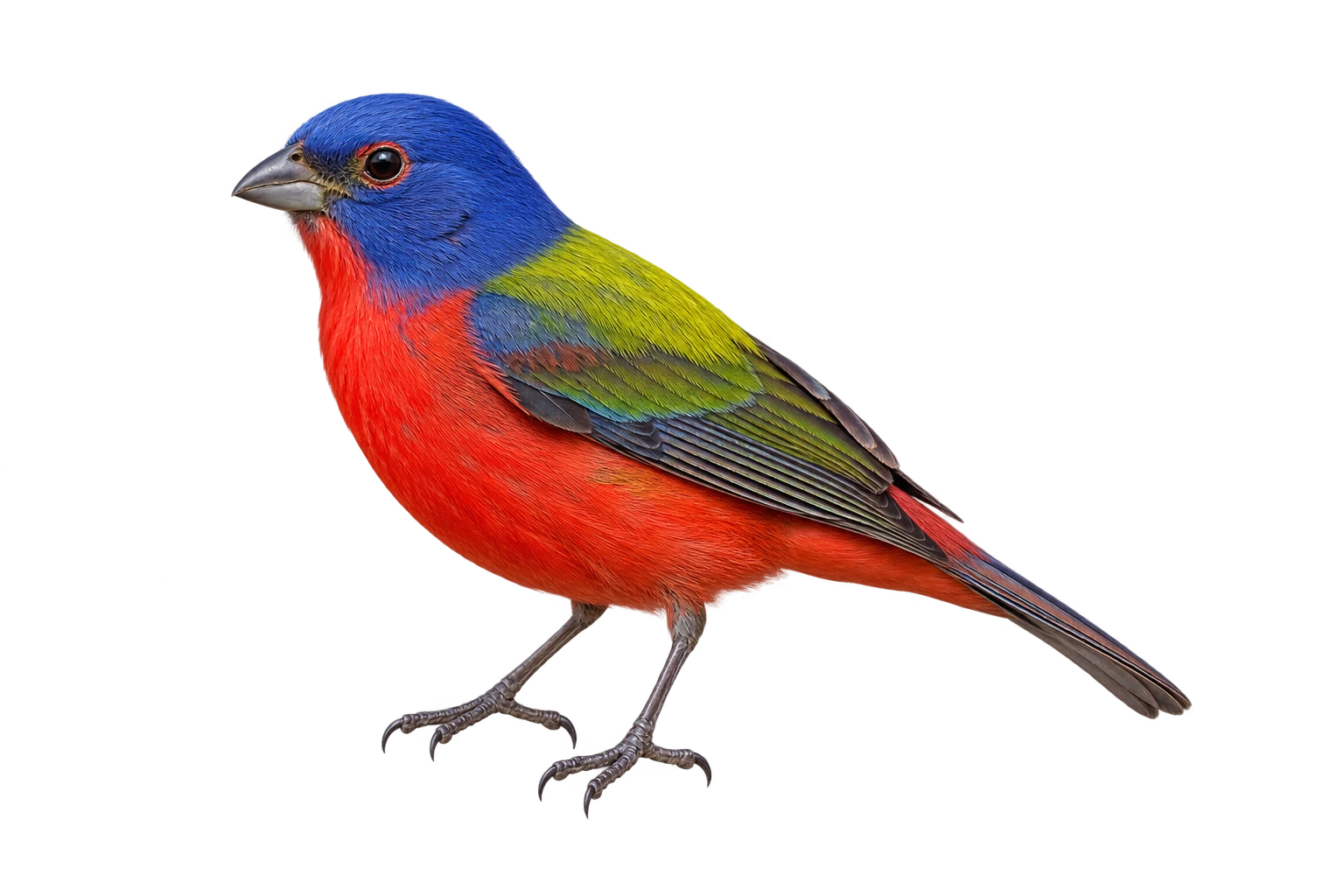
Birds
Painted Bunting
Passerina ciris
Classification and source reference
LivingAI illustration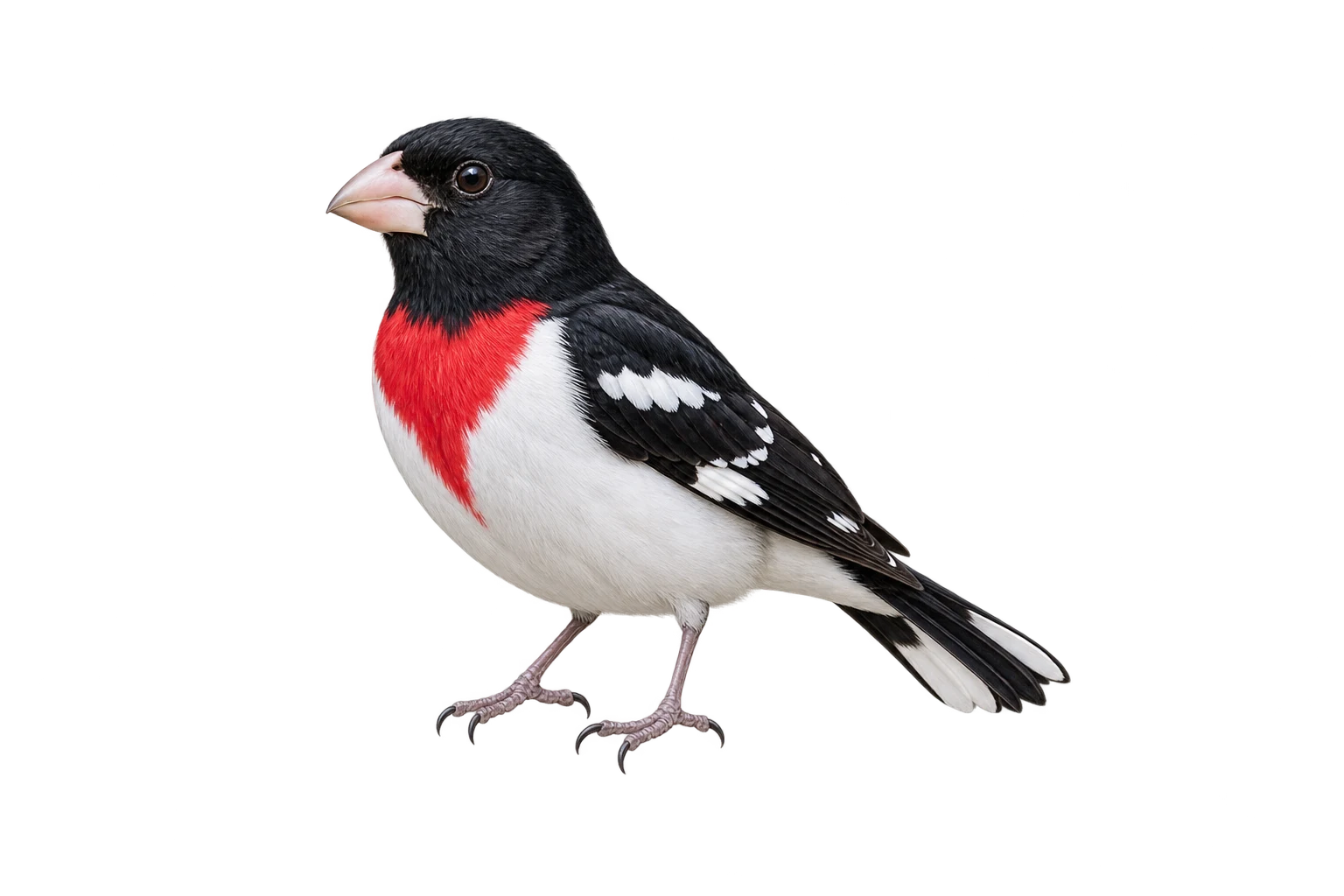
Birds
Rose-Breasted Grosbeak
Pheucticus ludovicianus
Classification and source reference
LivingAI illustration