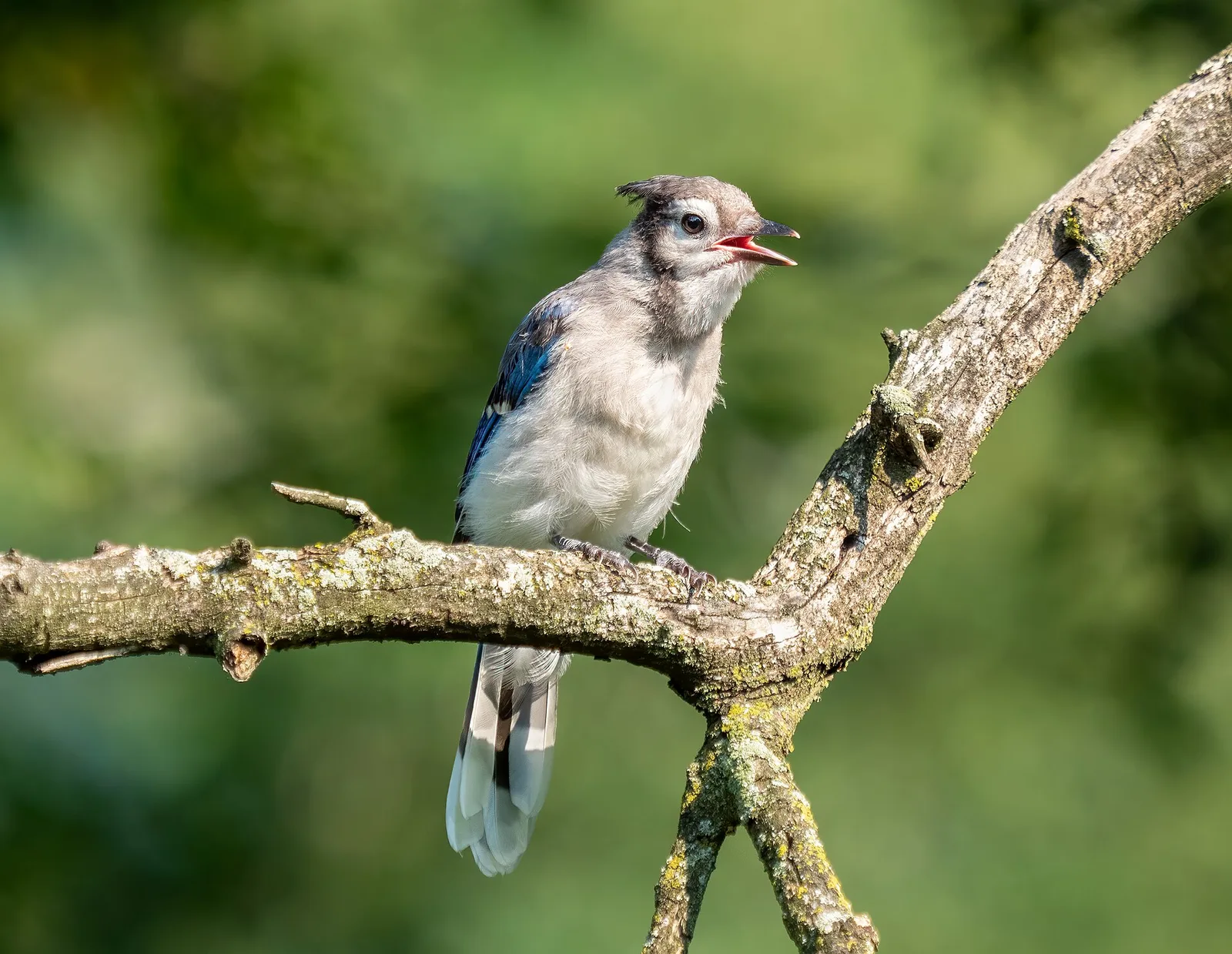
Blue jay
The crow-family bird that plants oak woods
Cyanocitta cristata
Also called Jaybird, Bluejay
Living individuals or members of this group exist today. This does not mean they are safe from extinction.
Meet the blue jay
The blue jay is a loud blue songbird of the crow family, native to eastern and central North America. It buries acorns for the winter, and the nuts it never returns to grow into oak trees.
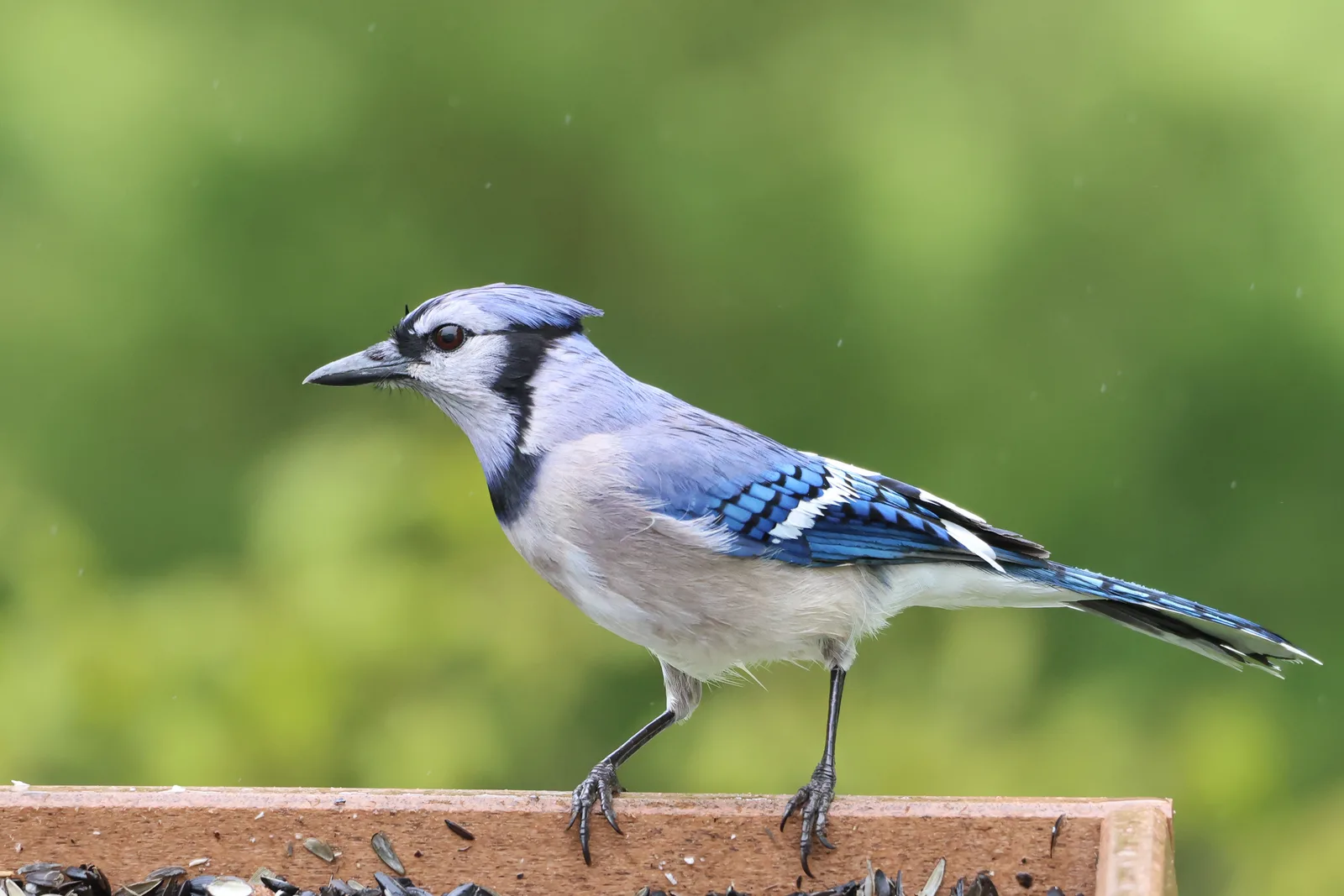
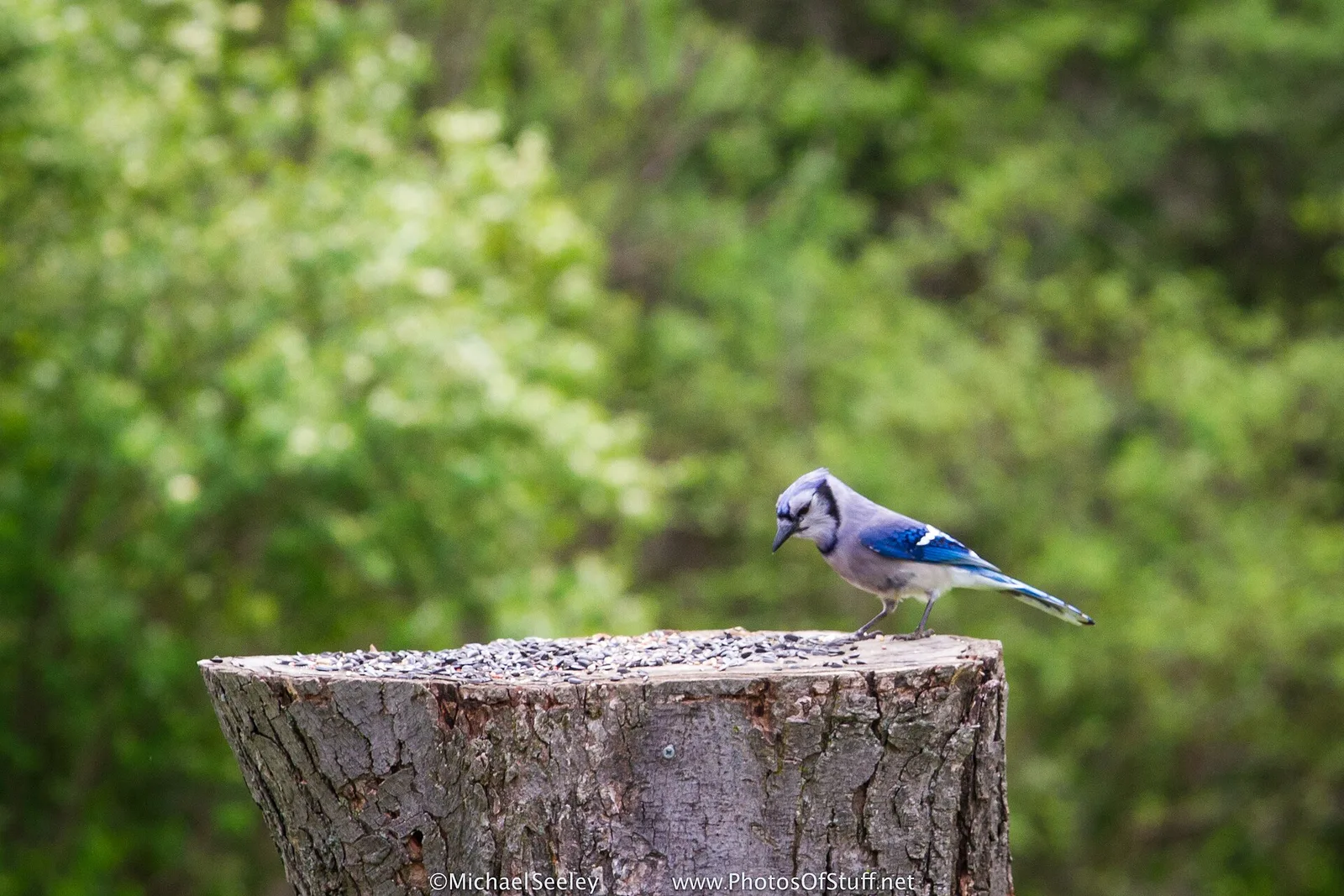
Images of the blue jay
Lifespan in the wild
7 to 17.5 years about 7 years is usual for a bird that reaches adulthood; the oldest ringed wild jay was at least 26 years old
Weight
70 to 100 g
Length
22 to 30 cm
Top speed
32 to 40 km/h
Fact file
Blue jay
- Location
- Southern Canada and the United States east of the Rocky Mountains
- Habitat
- Temperate forest, Towns and cities
- Diet
- Omnivore
- Prey / food
- Acorns, beech mast, seeds, fruit, insects, spiders, mice, frogs
- Predators
- Hawks, owls and falcons; squirrels, snakes, crows and raccoons take eggs
- Lifestyle
- Active by day, in pairs or small parties
- Group name
- Party
- Name of young
- Chick
- Incubation
- Incubation 16 to 18 days
- Clutch size
- 3 to 6 eggs, usually 4 or 5
- Population
- About 17 million
- Biggest threat
- West Nile virus
- Distinctive feature
- A blue crest the bird raises and lowers
- Colour
- Blue above, off-white below, with black barring and a black neck band
- Skin type
- Feathers
Size
Next to a person
Measurements
Size and speed
- Length
- 22 to 30 cm bill tip to tail tip
- Wingspan
- 34 to 43 cm
- Weight
- 70 to 100 g 70 to 100 grams; ADW gives a wider range of 65 to 109 grams
- Top speed
- 32 to 40 km/h ordinary flapping flight, when the bird is not chased
Typical adult ranges. Source: Wikipedia.
Life cycle
Lifespan
- In the wild7 to 17.5, up to 26 years about 7 years is usual for a bird that reaches adulthood; the oldest ringed wild jay was at least 26 years old
- In captivityUp to 26.3 years
- 026.3 years
The pale bar is the record. Sources: Wikipedia, Animal Diversity Web.
Appearance
Colour and coat
- Primary colours
- bluewhite
- Secondary colours
- blackgrey
- Skin type
- feathers
- Male and female
- Males and females look alike, in colour and in the pattern of the wings and tail. The male is only slightly larger, and the difference is too small to see in the field.
Life cycle
Mating and family
- Mating system
- monogamous pairs, usually for life
- Social structure
- pairs and family parties, with larger flocks on migration
- Breeding
- one brood a year in the north, sometimes two in the south
Blue jays pair for life and both birds build the cup nest. The female lays 3 to 6 eggs and incubates them for 16 to 18 days while the male feeds her. Chicks hatch helpless and leave the nest 17 to 21 days later. The family stays together into early autumn, then the young scatter. A jay can breed at one year old and often lives about 7 years.
Classification
Taxonomy
- Kingdom
- Animalia
- Phylum
- Chordata
- Class
- Aves
- Order
- Passeriformes
- Family
- Corvidae
- Genus
- Cyanocitta
- Species
- Cyanocitta cristata
Conservation
Red List status
- LC
- NT
- VU
- EN
- CR
- EW
- EX
Least Concern on the IUCN Red List
Range
Recorded in 2 countries
Habitat layer: temperate broadleaf and mixed forest, temperate conifer forest, boreal forest and taiga.
Countries from 138,816 wild records on GBIF (iNaturalist research grade), filtered and checked by hand. Country shapes: Natural Earth. Habitat: RESOLVE Ecoregions 2017, CC BY 4.0. Basemap: Natural Earth.
Habitats
Three things to know
- 1
The blue in the feathers is a trick of light and structure, not a blue pigment.
- 2
A blue jay copies the scream of a red-shouldered hawk well enough to clear a bird feeder.
- 3
Jays bury acorns one by one, and the ones they forget help oak woodland spread.
Did you know
Seven more facts
- 1
The crest is a mood signal: it stands up in anger and lies flat over a quiet bird.
- 2
Blue jays migrate by day, in loose flocks of 5 to 250 birds.
- 3
The same bird may fly south one autumn and stay north the next.
- 4
Captive blue jays have used strips of newspaper to pull food towards the cage bars.
- 5
Jays often take over an old American robin nest instead of building from scratch.
- 6
The black markings on the face and throat differ between birds and probably help jays tell each other apart.
- 7
One call sounds so like an old hand water pump that birders named it after one.
Field notes
How it looks and acts
Field notes
Distinguishing features
- A blue crest that the bird raises and lowers at will.
- A black band across the throat that runs up behind the head.
- Wings and tail barred in black over sky blue and white.
- A white face and an off-white belly under blue upperparts.
- A heavy black bill built for cracking acorns.
- A body of 22 to 30 centimetres with a 34 to 43 cm wingspan.
Field notes
Unique adaptations
- A throat pouch and bill let the bird carry several acorns on one trip.
- Strong feet hold a nut still while the bill hammers the shell.
- Caching stores autumn nuts for a winter when nothing else is on offer.
- Mimicry of hawk calls clears rivals from food and tests for real danger.
- A broad diet probably lets the jay switch from acorns to insects to scraps as the year turns.
Field notes
Interesting behaviours
- Mobbing: several jays scream at an owl or a hawk until it moves away.
- Caching: the bird buries acorns one at a time through the autumn.
- Feeder bullying: a jay drives smaller birds off a food source.
- Object play: young jays carry bottle caps and foil about for no reward.
- Family foraging: parents and fledged young feed together into early autumn.
Field notes
Temperament
- Bold and noisy, and quick to approach a garden or a picnic table.
- Aggressive towards other birds at food and near the nest.
- Curious about new objects, which is typical of the crow family.
- Quiet and secretive around its own nest, unlike the rest of its year.
Field notes
Communication
- A loud harsh alarm scream is the sound most people know.
- A jayer-jayer call speeds up as the bird gets more worked up.
- Quiet rattles, bell notes and a soft spring song pass between birds close together.
- Copied hawk screams warn other jays, or clear a feeder of rivals.
- Bobbing, crouching and fluffing carry meaning in courtship and in disputes.
Ecology
Ecological role
The blue jay works as a planter of oaks and as an alarm system for the whole wood.
- Buried acorns that the bird never recovers can grow, which spreads oak and beech woodland.
- Alarm calls warn smaller songbirds of a hawk, and they take cover on the sound.
- Jays are prey themselves for hawks, falcons and owls across the whole range.
- Nest raiding puts a small extra pressure on other songbirds, though it makes up little of the diet.
Stories
Myths and legends
- In African-American tradition, the jay fetched the first grit and so made dry land.
- In the same tradition, the jay works for the Devil every Friday and carries wood for his fire.
- In Coast Salish and Chinook stories, Bluejay plays a boastful trickster in the place Raven holds elsewhere.
- In modern symbolism writing the jay appears as a bird of gossip and mischief, which is a blog claim rather than a record.
People
Relationship with humans
People
Living alongside us
The blue jay is one of the most familiar garden birds in eastern North America. It nests in suburbs, takes peanuts from feeders and shouts at cats. People enjoy the colour and complain about the noise in equal measure. The bird does no direct harm, but it can carry West Nile virus. It is a wild bird and is protected across most of its range.
- A jay may dive at a person who walks close to its nest, but it rarely makes contact.
- Like other songbirds, the jay carries no venom and has no weapon beyond its bill.
- Blue jays can hold West Nile virus, and mosquitoes carry it on from them.
People
Status, uses and products
- Domestication
- Wild
- As a pet
- Not suitable. The blue jay is a wild bird and is protected across most of its range. It is loud, destructive indoors and needs a varied diet, so it makes a poor pet.
- Uses
- birdwatchinggarden bird feedingsports and university mascots
- Products
- None recorded
The full account
About the blue jay
The blue jay is a bright blue songbird of eastern and central North America. It belongs to Corvidae, the family of crows, ravens and magpies. Adults measure 22 to 30 centimetres from the bill tip to the tail tip. The wings span 34 to 43 cm, and a jay weighs 70 to 100 grams. A crest on the crown rises and falls with the bird's mood.
Blue jays hold woodland with oaks and beeches, and they are as common in gardens and town parks. They carry acorns away one at a time and push them into the soil. Nuts the birds never return to can sprout, so jays help oak woods spread. The species is listed as Least Concern, and its range still grows towards the north west. Loud calls, hawk mimicry and a taste for other birds' nests give the jay a mixed reputation.
Name and taxonomy
The scientific name of the blue jay is Cyanocitta cristata. The genus name joins two Greek words, one for blue and one for a chattering bird. The species name comes from the Latin word for crested, and it points at the crown feathers. Mark Catesby figured the bird in his natural history of Carolina in 1731. Linnaeus placed it in the crow genus Corvus in 1758, and Hugh Strickland gave it the modern name in 1845.
The English word jay describes the noisy, chattering habit of the whole group. People also call the bird a jaybird, and the two names mean the same thing. Four subspecies are usually accepted, and they grade into one another across the range. Only the two coastal forms have edges that anyone can draw on a map.
Evolution and relatives
The blue jay sits in Corvidae beside the crows, the ravens, the magpies and the other jays. Its nearest relative is Steller's jay, a dark crested bird of western conifer forest in the same genus. The two ranges now meet where the Rocky Mountain foothills begin, and the birds sometimes pair. Like other corvids, the blue jay probably owes its curiosity to a large brain for its body size.
A stranger cross turned up near San Antonio in Texas in 2023. A male blue jay had bred with a female green jay, and birders named the chick a grue jay. Genetic work confirmed the cross in 2025. Both crosses probably follow one pattern: two jay ranges spread until they touch, and the birds interbreed.
Appearance
A blue jay is lavender to mid blue over the crest, back, wings and tail. The face is white and the underside is off white. A black band crosses the throat and runs up behind the head like a bridle. The flight feathers and the tail carry hard black bars over pale blue and white. The bill, the legs and the eyes are all black.
The body runs 22 to 30 centimetres long, with a wingspan of 34 to 43 cm. Weight falls between 70 and 100 grams, which is close to the weight of a small apple. Northern birds are heavier: jays in Connecticut averaged 92.4 grams against 73.7 grams in southern Florida. No blue pigment sits in the feather at all. Tiny structures inside the feather scatter light, so a crushed feather loses its colour and shows brown melanin.
Habitat and range
The blue jay lives from southern Canada south to Florida and north eastern Texas. The western limit falls near the foothills of the Rocky Mountains, where Steller's jay takes over. Resident birds hold Newfoundland, and breeding birds run right across southern Canada. Tree planting and fire control across the Great Plains gave the species a corridor west during the past century. It is now a rare but yearly winter visitor to the northern Pacific coast.
Jays use pine woods in Florida and spruce and fir forest in northern Ontario. They do best in mixed woodland with oaks and beeches, and they thin out in closed forest. Gardens, hedges and city parks suit them well, and they nest in them freely. The northern subspecies moves south in some winters, in daylight flocks of 5 to 250 birds. Nobody has explained the pattern, and one bird may travel south one year and stay north the next.
Diet and feeding
The blue jay is an omnivore, and the Audubon Society puts plant food at about 75% of the diet. Acorns and beech mast matter most, with weed seeds, grain, berries and soft fruit beside them. The bird holds a nut under one foot and hammers the shell open with the bill. Insects, spiders and other small invertebrates fill out the rest of the year's food. Mice, frogs and other small vertebrates turn up now and then.
Jays do raid nests for eggs and chicks, but the habit is rarer than its reputation suggests. One study found bird material in only 1% of the food it examined. Autumn is the season of caching: a jay carries acorns off and buries each one alone. How much a bird stores varies a great deal from individual to individual. Peanuts, bread and scraps from bird tables all go the same way.
Behaviour and social life
The blue jay is bold, loud and quick to pick a fight. It flies level, on slow wing beats, at about 32 to 40 kilometres per hour when nothing chases it. Pairs hold a territory and drive other birds off a feeder to clear the food. A jay that finds a roosting owl calls other jays in and mobs the owl until it leaves. Smaller songbirds gain from that habit, because the jay screams at any hawk it sees.
Curiosity runs through the family, and young jays play with bright rubbish. A fledgling will carry a bottle cap or a scrap of foil about until it tires of it. Captive birds have used strips of newspaper to drag food within reach of the cage. One wild jay used a piece of bark to help it catch a spider. The crest works as a mood flag, up when the bird is angry and flat when it feeds in company.
Communication and senses
The blue jay owns a wide set of sounds, and no two birds use them in quite the same way. The best known is the alarm, a loud harsh scream that carries across a wood. A jayer-jayer note speeds up as the bird grows more excited. Another call squeaks like an old hand water pump, and birders know it by that name. Rattles, bell notes and a very quiet spring song fill out the rest.
Mimicry is the party trick: a jay copies the scream of a red-tailed or red-shouldered hawk. The copy may test whether a real hawk sits nearby, or it may clear rivals off food. Captive jays sometimes learn a few words of human speech, as other corvids do. Body language carries meaning too, and a bobbing bird is courting or squaring up. A crouching jay that fluffs its body and holds the crest up is giving way.
Reproduction and life cycle
Blue jays pair for life, and a bond usually ends only when one bird dies. The season opens in the middle of March, peaks from mid April into May and runs into July. Both birds build, and they choose an evergreen where they can find one. The nest is a cup of twigs, rootlets, bark strips, moss and grass, often with mud in the base. It usually sits 3 to 10 metres up, though a rural mailbox will do in open country.
A clutch holds 3 to 6 eggs, and four or five is the normal number. The eggs are blue, green or buff, with brown or grey spots. Incubation takes 16 to 18 days, and the female does most of it while the male brings her food. Chicks hatch blind and helpless, and the female broods them for 8 to 12 days. They leave the nest 17 to 21 days after hatching, and both parents feed them.
The family forages together into early autumn before the young scatter to avoid competing in winter. A young jay can breed in its first year. Northern pairs may raise a single brood, while southern pairs sometimes fit in a second. A bird that reaches adulthood lives about 7 years, and the record for a ringed wild jay is at least 26.
Predators and threats
Level flight at 32 to 40 kilometres per hour leaves a jay exposed over open ground. Bird-hunting hawks in the genus Accipiter take adults, and so do falcons and owls. Squirrels, snakes, cats, crows, raccoons, opossums and other jays all take eggs and chicks. Both parents attack a predator at the nest, and they will strike at a person who stands too close.
West Nile virus has become a serious cause of death since it reached North America. Corvids as a group suffer badly from the disease, and jays act as a reservoir for it. Some local populations crashed, but the species as a whole held its numbers. Collisions with windows, cars and other structures kill a steady share of birds.
Population and conservation
The IUCN Red List places the blue jay in the Least Concern category. The Audubon Society puts the world population near 17 million birds. NatureServe ranks the species as secure across Canada and in almost every eastern province. Only British Columbia carries a slightly lower rank, probably because the birds arrived there recently.
Survey work from 1966 to 2015 found a fall along the Atlantic coast. Over the same years the northern edge of the range gained more than 1.5% a year. Clearance of woodland probably cut numbers in earlier centuries, and replanting has since returned them. Naturalists have logged 203759 blue jay observations on iNaturalist, which shows how easy the bird is to find.
Relationship with humans
Like other corvids, the blue jay settles close to people without any trouble. Blue jays nest in gardens, feed on lawns and empty a peanut feeder in a morning. Their size and colour probably make them the easiest garden bird for a beginner to name. They do no direct harm to people, though they carry West Nile virus.
Gardeners complain that jays bully smaller birds and empty a feeder fast. At feeders the jay is not always the winner: grey squirrels, grackles and woodpeckers push it aside in Florida. As with other native songbirds, the law protects the blue jay, and people do not keep it. Watching jays bury acorns is probably the simplest way to see a wild animal store food.
In culture and myth
Old folktales told by African-Americans in the southern states make the jay the bringer of the first grit. That grit became dry land, in a world that had held nothing but water. Other stories in the same tradition send the jay to the Devil each Friday with firewood, and it sings again on Saturday. In Coast Salish and Chinook stories Bluejay is a boaster and a trickster, close in role to Raven.
Prince Edward Island in Canada names the blue jay as its provincial bird. Johns Hopkins University, Elmhurst University and Creighton University all use it as a mascot. The Toronto Blue Jays took the bird as a team badge, and their mascot Ace wears the crest. An animated blue jay called Mordecai leads the Cartoon Network series Regular Show. In popular symbolism the jay appears as a bird of loud talk, mimicry and mischief.
A sentence with a dotted underline is inferred: it describes the group the animal belongs to, or is a reading of the sources, rather than a measured or reported fact about this species.
Questions
Blue jay questions, answered
What does a blue jay eat?
Mostly plant food, and the Audubon Society puts that at about 75% of the diet. Acorns, beech mast, seeds, grain and fruit come first, with insects, spiders and the odd mouse or frog beside them.
How big is a blue jay?
A blue jay is 22 to 30 centimetres long from bill to tail. The wings span 34 to 43 cm and the bird weighs 70 to 100 grams.
Are blue jays actually blue?
No blue pigment sits in the feathers. Structures inside the feather scatter light and make the bird look blue, and a crushed feather turns brown.
Do blue jays migrate?
Some do and some do not. Northern birds move south in daylight flocks of 5 to 250, and the same bird may travel one year and stay put the next.
Why do blue jays scream like hawks?
A jay copies red-tailed and red-shouldered hawks. The call may test whether a hawk is nearby, and it may also frighten rivals away from food.
Are blue jays aggressive?
Yes, towards other birds. They drive smaller species off feeders and mob owls and hawks, and they will dive at a person who stands beside the nest.
Do blue jays eat other birds' eggs?
Sometimes, but far less often than their reputation suggests. In one study bird material made up just 1% of the food examined.
How long do blue jays live?
A bird that survives to adulthood lives about 7 years. The oldest ringed wild jay was at least 26 years old, and a captive female reached 26.25 years.
Where do blue jays live?
They live from southern Canada south to Florida and north eastern Texas, east of the Rocky Mountains. They use mixed woodland, gardens and city parks.
Are blue jays endangered?
No. The IUCN lists the blue jay as Least Concern, and the Audubon Society puts the population near 17 million birds.
How many eggs does a blue jay lay?
A clutch holds 3 to 6 eggs, and four or five is normal. Incubation takes 16 to 18 days.
Do blue jays mate for life?
Yes. A pair usually stays together until one of the birds dies, and both build the nest and feed the chicks.
How fast can a blue jay fly?
An unhurried blue jay flies at about 32 to 40 kilometres per hour. That is slow for a bird of its size, which is why hawks catch jays in the open.
Do blue jays plant oak trees?
In effect, yes. A jay buries acorns one at a time and does not find them all again, so the survivors sprout and oak woodland spreads.
Can you keep a blue jay as a pet?
No. It is a wild bird and is protected across most of its range, and it is loud and destructive indoors.
What is the difference between a blue jay and a Steller's jay?
Steller's jay is the western bird, dark headed and at home in conifer forest. The blue jay is paler and lives east of the Rocky Mountains, and the two hybridise where the ranges meet.
Food web
Prey and food
- acorns
- beech mast
- seeds
- fruit
- insects
- spiders
- mice
- frogs
 Northern mockingbird
Food web
Predators
- hawks
- owls
- falcons
- squirrels
- snakes
- crows
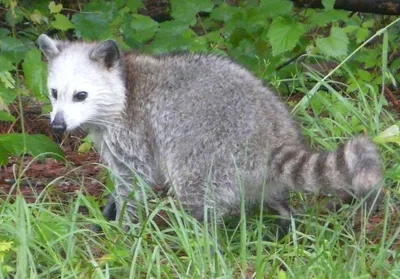 Raccoon
Ecological equivalents
Related species on this site
American crow (same family), Carrion crow (same family), Common Green Magpie (same family), Common raven (same family), Eurasian jay (same family), Eurasian magpie (same family), and more.
 LC
Birds
American crow
Corvus brachyrhynchos
The American crow is a large all-black bird of farms, woods and city streets across North America.
Living LC
Birds
Carrion crow
Corvus corone
The carrion crow is an all-black crow of western Europe and eastern Asia with a heavy bill and a harsh croak.
Living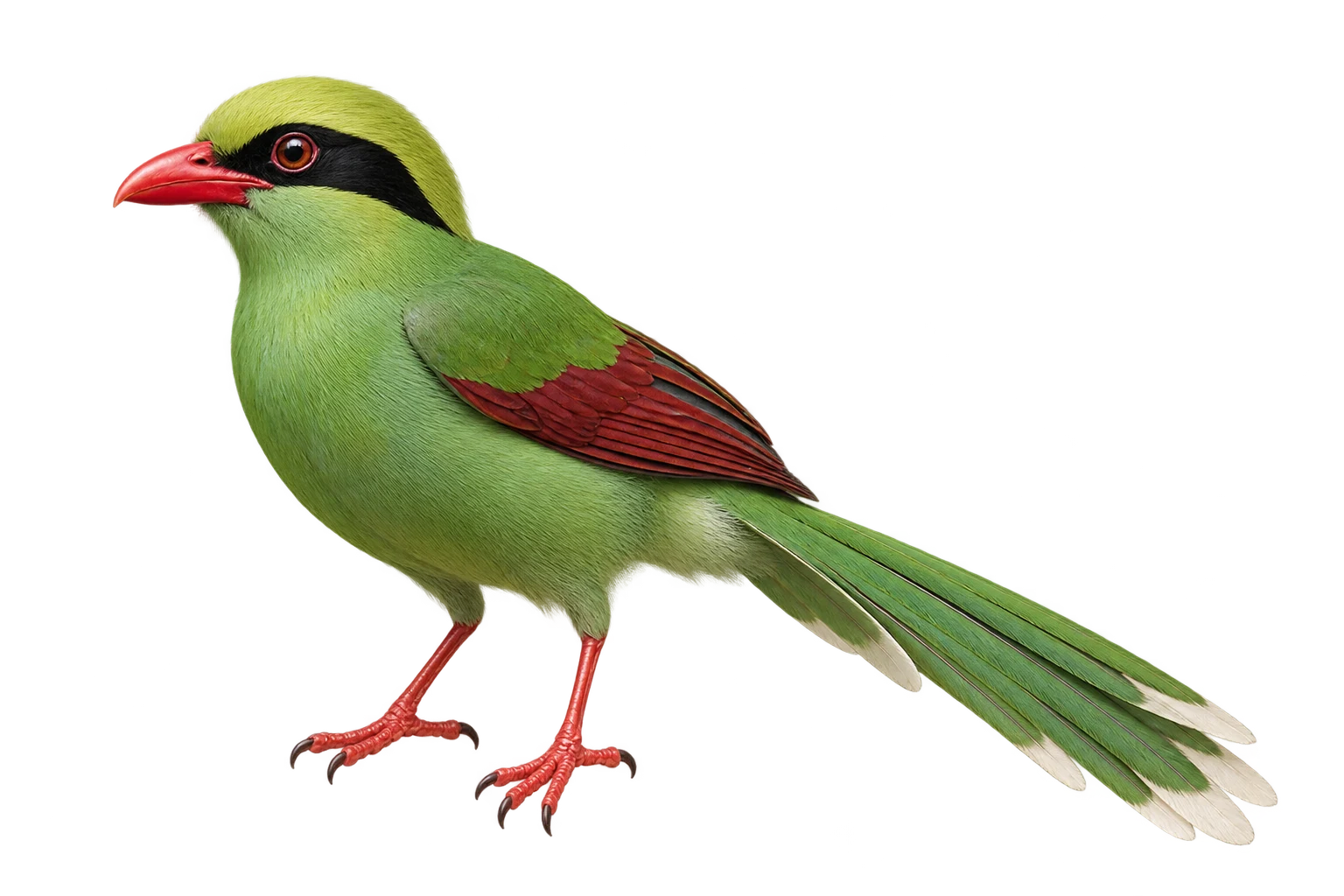
Birds
Common Green Magpie
Cissa chinensis
Classification and source reference
LivingAI illustration LC
Birds
Common raven
Corvus corax
The common raven is a large black crow that lives right across the northern half of the world.
Living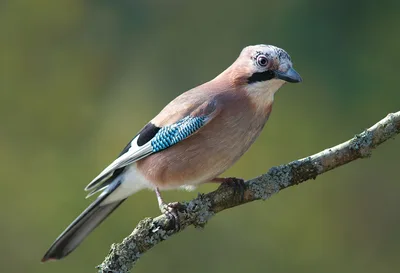 LC
Birds
Eurasian jay
Garrulus glandarius
The Eurasian jay is a pinkish-brown crow with a bright blue panel on each wing.
Living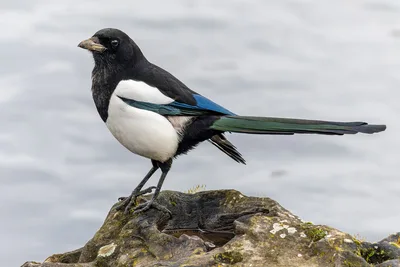 LC
Birds
Eurasian magpie
Pica pica
The Eurasian magpie is a long-tailed crow of temperate Eurasia, black and white with a green and violet sheen.
Living