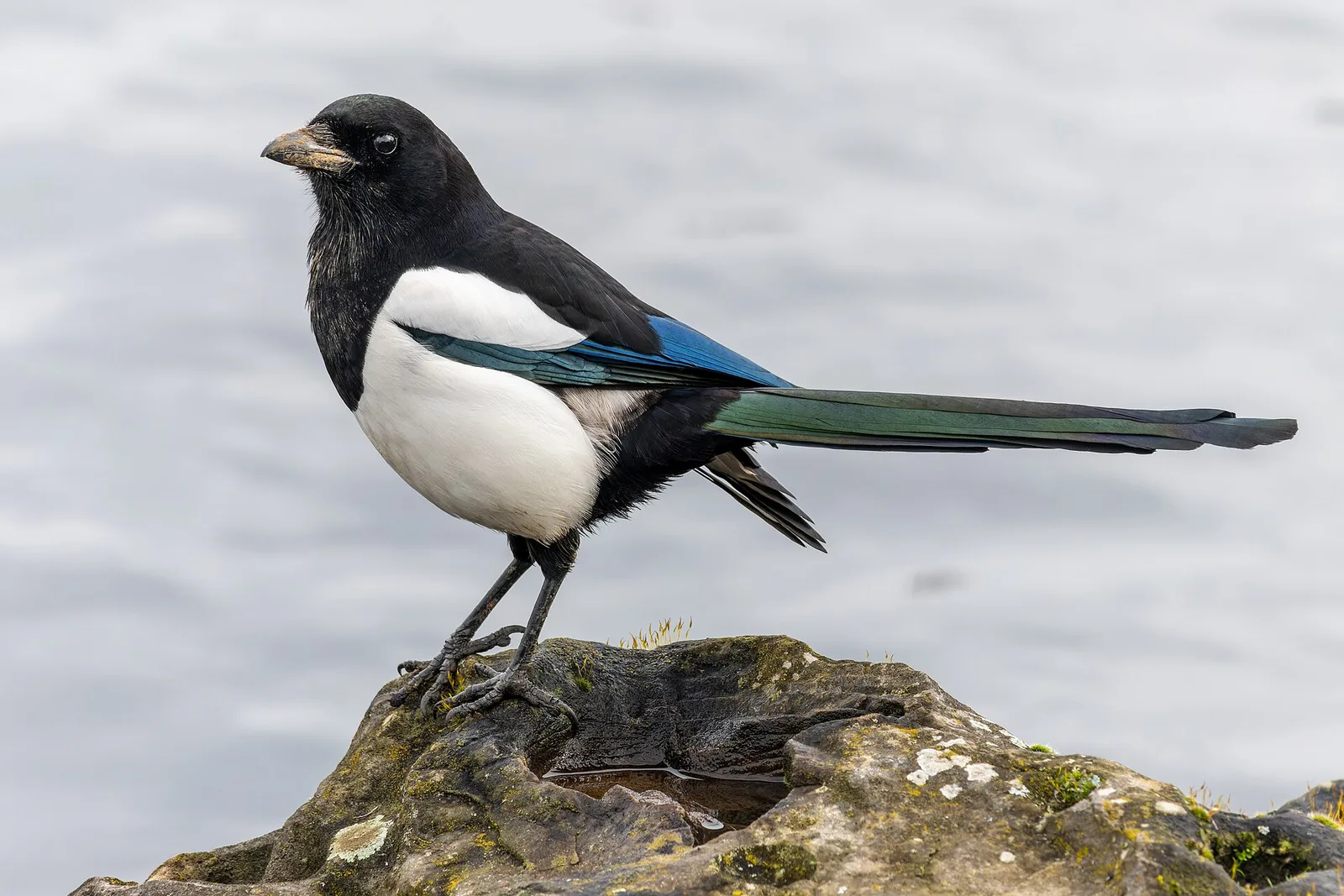
Eurasian magpie
A black and white bird that knows its own face
Pica pica
Also called Common magpie, Pie, Eurasian magpie
Living individuals or members of this group exist today. This does not mean they are safe from extinction.
Meet the eurasian magpie
The Eurasian magpie is a long-tailed crow of temperate Eurasia, black and white with a green and violet sheen. It is one of the few animals that recognises itself in a mirror, and it lives happily beside people.
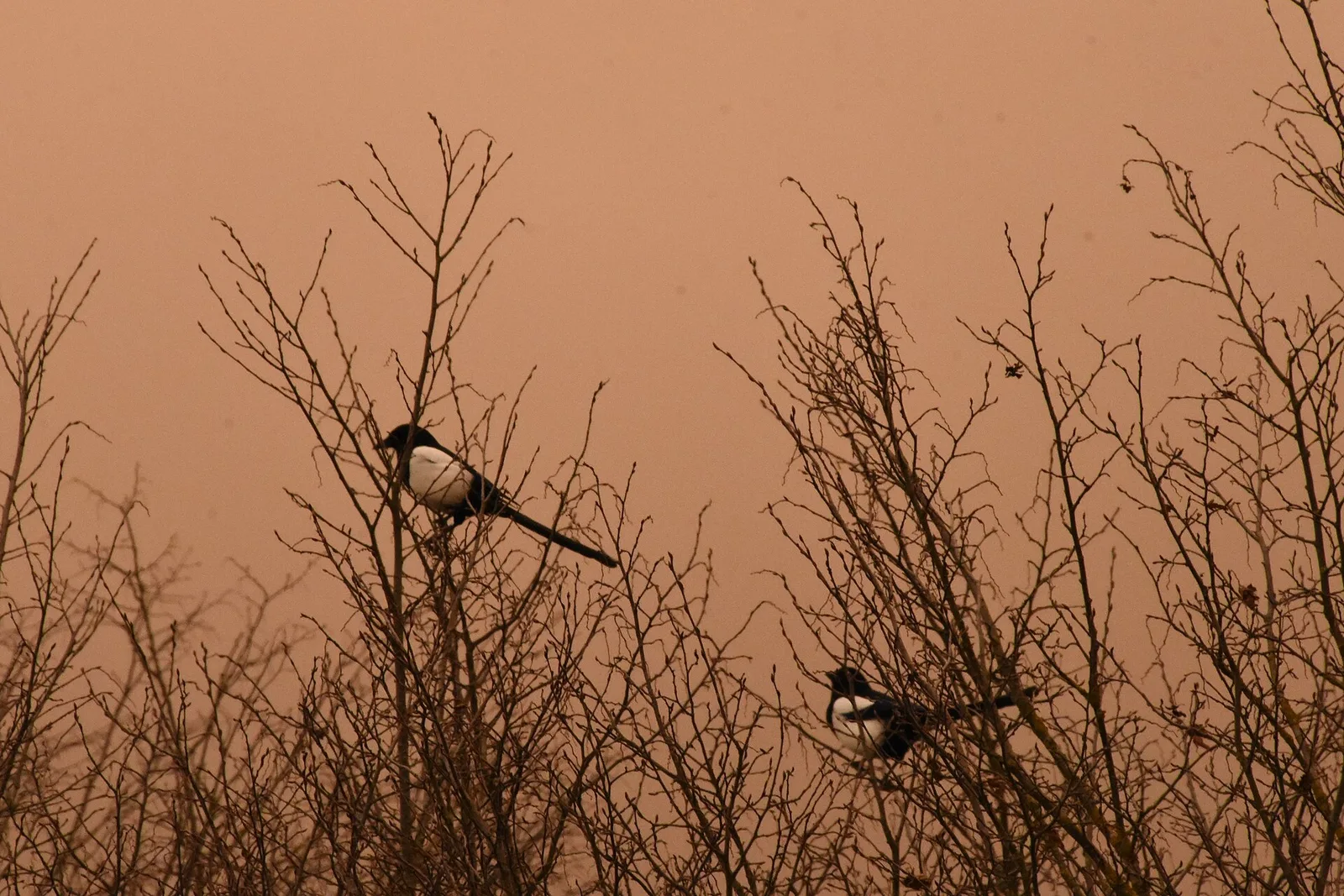
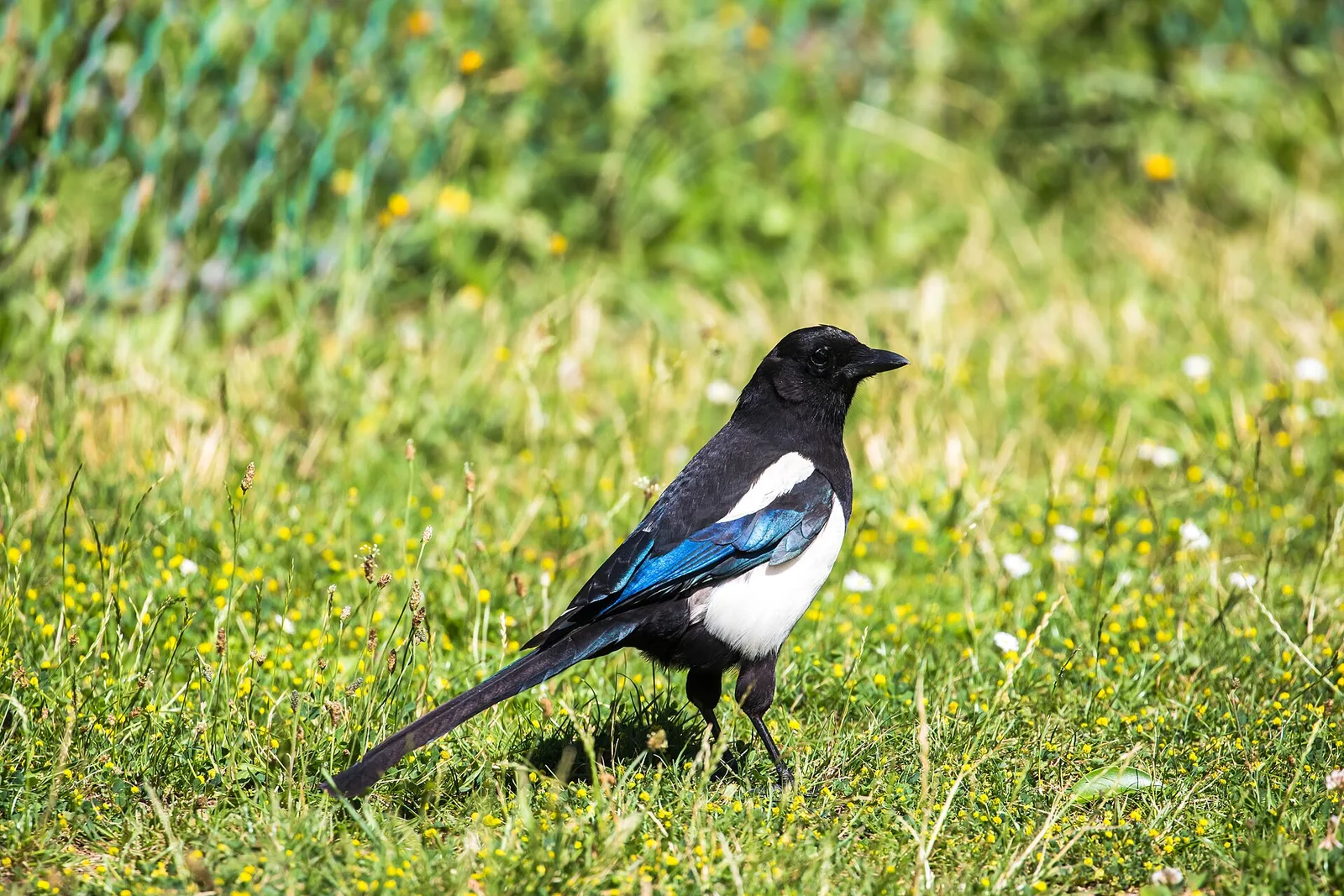
Images of the eurasian magpie
Lifespan in the wild
About 3.7 years the average covers birds that survive their first year, and AnAge gives the same maximum
Weight
182 to 272 g
Length
44 to 46 cm
Wingspan
52 to 62 cm
Fact file
Eurasian magpie
- Location
- Temperate Eurasia from Ireland and Portugal to Kamchatka
- Habitat
- Temperate forest, Grassland, Towns and cities
- Diet
- Omnivore
- Prey / food
- Insects, eggs, nestlings, small mammals, carrion, acorns, grain
- Predators
- Nest predators take eggs and chicks, though starvation kills more
- Lifestyle
- Sedentary and active by day, roosting in flocks in winter
- Group name
- Tiding
- Name of young
- Chick
- Incubation
- Incubation 21 to 22 days
- Clutch size
- 5 or 6 eggs, sometimes 3 to 10
- Population
- 46 to 228 million birds worldwide
- Biggest threat
- None serious; the European population has been stable since 1980
- Distinctive feature
- A long graduated tail that is over half the bird's length
- Colour
- Black and white, with a green and violet gloss
- Skin type
- Feathers
Size
Next to a person
Measurements
Size and speed
- Length
- 44 to 46 cm nominate male, more than half of it tail
- Wingspan
- 52 to 62 cm
- Tail
- 12 to 28 cm
- Weight
- 182 to 272 g females 182 to 214 grams, males 210 to 272 grams
- Weight, male
- 210 to 272 g
- Weight, female
- 182 to 214 g
Typical adult ranges. Source: Wikipedia.
Life cycle
Lifespan
- In the wildAbout 3.7, up to 21.7 years the average covers birds that survive their first year, and AnAge gives the same maximum
- 021.7 years
The pale bar is the record. Source: Wikipedia.
Appearance
Colour and coat
- Primary colours
- blackwhite
- Secondary colours
- greenpurple
- Skin type
- feathers
- Male and female
- Slight. The sexes wear the same plumage, and the female is a little smaller and lighter. Males weigh 210 to 272 grams and females 182 to 214 g.
Life cycle
Mating and family
- Mating system
- monogamous pairs
- Social structure
- territorial pairs, with non-breeders in flocks
- Breeding
- one brood a year, laid in April
A pair holds a territory and usually stays together between seasons. The female lays five or six eggs in a domed nest high in a tree. She incubates them for 21 to 22 days while the male feeds her. The chicks leave the nest at about 27 days, and only three or four of a brood get that far. A bird that survives its first year lives about 3.7 years.
Classification
Taxonomy
- Kingdom
- Animalia
- Phylum
- Chordata
- Class
- Aves
- Order
- Passeriformes
- Family
- Corvidae
- Genus
- Pica
- Species
- Pica pica
Conservation
Red List status
- LC
- NT
- VU
- EN
- CR
- EW
- EX
Least Concern on the IUCN Red List
Range
Recorded in 24 countries
- Austria
- Belgium
- Belarus
- Czech Republic
- Germany
- Denmark
- Spain
- Finland
- France
- United Kingdom
- Greece
- Ireland
- Italy
- Kazakhstan
- Luxembourg
- Netherlands
- Norway
- Poland
- Portugal
- Romania
- Russia
- Sweden
- Turkey
- Ukraine
Habitat layer: temperate broadleaf and mixed forest, temperate conifer forest, boreal forest and taiga, tropical grassland, savanna and shrubland, temperate grassland, savanna and shrubland.
Countries from 134,660 wild records on GBIF (iNaturalist research grade), filtered and checked by hand. Country shapes: Natural Earth. Habitat: RESOLVE Ecoregions 2017, CC BY 4.0. Basemap: Natural Earth.
Habitats
Three things to know
- 1
The magpie passed the mirror test, which very few animals outside the great apes have done.
- 2
One nest found in Antwerp was built from about 1500 metal anti-bird spikes.
- 3
Europe holds between 7.5 and 19 million breeding pairs of this bird.
Did you know
Seven more facts
- 1
More than half the length of a magpie is tail.
- 2
The black feathers are not really black, and they shine green and violet in sunlight.
- 3
The word pied comes from this bird, and it was first written down in 1552.
- 4
A magpie nest has a roof of thorny twigs with one hidden door.
- 5
In Sweden a magpie far from a human house is a rare sight.
- 6
Magpies hide food and come back for it months later.
- 7
The Chinese and Korean luck-bringing magpie is now treated as a separate species.
Field notes
How it looks and acts
Field notes
Distinguishing features
- The long graduated tail makes up over half the bird's total length.
- White inner webs on the flight feathers show as a bar when the wing opens.
- The belly and the shoulder patch are clean white against black.
- The black plumage carries a green and violet metallic sheen.
- The bill, the legs and the eye are all dark.
- A white stripe crosses the black rump, and its width varies with the subspecies.
Field notes
Unique adaptations
- A very large forebrain supports planning, memory and social skill.
- Food hoarding probably carries the bird through the season when little is available.
- A domed thorny nest keeps crows and other raiders off the chicks.
- The long tail probably helps the bird steer in tight cover.
- A very wide diet lets it live in farmland, woodland edge and city street.
Field notes
Interesting behaviours
- Pairs defend one territory across many years.
- Birds without a territory live together in flocks.
- In winter the birds roost in groups, sometimes with other species.
- Groups mob a predator until it leaves the area.
- A parent cuts food to a size its chicks can swallow.
Field notes
Temperament
- The magpie is bold, and it seems to stay close to people without becoming tame.
- It is noisy, and it rattles at anything it does not trust.
- It appears quick to learn and quick to test a new object.
- Pairs are loyal and keep the same partner between seasons.
Field notes
Communication
- The common call is a harsh chattering chac-chac.
- A young bird gives a sharp uik like the yap of a small dog.
- Both ages can make a faint hiss.
- A courting male sings in soft notes unlike his usual rattle.
- Raised crown feathers and a fanned tail carry the message without a sound.
Ecology
Ecological role
The magpie works as a mid-sized predator and a scavenger, and it clears a great deal of what dies or is dropped.
- It takes eggs and nestlings, which is a pressure on small songbirds at the nest.
- Studies find no effect of that pressure on songbird numbers overall.
- It eats carrion and human waste, which probably clears both from the ground.
- Buried acorns that the bird forgets may grow into oaks.
Stories
Myths and legends
- In British tradition a single magpie brings sorrow, and a pair brings joy.
- In Scottish tradition a magpie at the window foretells a death in the house.
- In Shropshire tradition the walker defies the devil and spits three times at the bird.
- In Swedish tradition the magpie belongs to witchcraft, and in Norwegian tradition to the hidden people.
- In Chinese tradition the magpies build a bridge each year so two parted lovers can meet.
People
Relationship with humans
People
Living alongside us
The magpie is a wild bird that chose to live beside people. It scavenges in gardens, streets and farmyards across Eurasia. Gamekeepers and gardeners have persecuted it for taking eggs and chicks, and studies find no effect on songbird numbers. European folklore made the bird an omen of bad luck, while Chinese and Korean tradition treats its eastern cousin as a bringer of joy.
- The magpie does not attack people, and it seems to keep its distance on the ground.
- A pair may dive at a cat or a dog that comes near the nest.
- The bird takes eggs and chicks from garden nests, which upsets many gardeners.
People
Status, uses and products
- Domestication
- Wild
- As a pet
- Not suitable. The magpie is a wild bird, and most countries protect it. It needs space, company and constant problem solving, and a caged bird gets none of that. Hand-reared magpies also grow loud and destructive indoors.
- Uses
- birdwatchingresearch on animal intelligence
- Products
- None recorded
The full account
About the eurasian magpie
The Eurasian magpie, Pica pica, is a long-tailed member of the crow family. It breeds across temperate Eurasia, from Ireland and Portugal east to Kamchatka. An adult male measures 44 to 46 centimetres, and over half of that is tail. The wingspan runs from 52 to 62 cm. Males weigh 210 to 272 grams, and females weigh 182 to 214 g.
The plumage looks black and white until the sun catches it. Then the black turns green and violet, and the tail shows a reddish purple sheen. The bird ranks among the cleverest animals alive, and not only among birds. It recognises itself in a mirror, which few species outside the great apes do. Europe alone holds 7.5 to 19 million breeding pairs. The IUCN lists the species as Least Concern.
Name and taxonomy
Conrad Gessner described and drew the magpie in his Historiae animalium of 1555. Linnaeus listed it in 1758 as Corvus pica, inside the crow genus. Mathurin Jacques Brisson gave it the genus Pica in 1760. Pica is simply the Latin word the Romans used for this bird. The International Ornithological Congress accepts six subspecies across the range.
English speakers first called the bird a pie, which came through French from pica. The syllable mag arrived in the 16th century, from the name Margaret. People once used that name for women in general, and they likened the bird's chatter to gossip. Shakespeare wrote magot pie in Macbeth in 1606, and a French form appears in 1573. The word pied, first written down in 1552, spread from this bird to every black and white one.
Evolution and relatives
The magpie sits in the Corvidae, beside the crows, ravens and jackdaws. It belongs to a northern group of black and white magpies. The Iberian magpie is the only other magpie that breeds in Europe. The Australian magpie shares the name and the colours but sits in another family. The two birds meet only at the level of a very large clade, the Corvides.
The black-billed magpie of North America looks almost the same as this bird. Ornithologists once treated the two as one species. In 2000 the American Ornithologists' Union split them, on voice and behaviour. The black-billed bird turned out to be closer to the yellow-billed magpie of California. Four former subspecies are now species in their own right, among them the Oriental magpie. DNA work found that birds in eastern China differ from those in Spain and northwest China.
Appearance
Glossy black covers the head, the neck, the breast and the vent, with a green and violet shine. The belly and the shoulder feathers are clean white. The wings are black with a green or purple gloss, and the flight feathers carry white inner webs. That white probably flashes as a signal when the wing beats. The tail is graduated, black, and shot with green and reddish purple. The tail alone measures 12 to 28 centimetres.
The bill and legs are black, and the iris is dark brown. A white stripe crosses the black rump, and its width changes between subspecies. The sexes look alike, though the female is a little smaller. Young birds lack the gloss, show a pink cheek patch and carry a shorter tail. Adults moult every year after they breed, from June or July to September or October. Replacing the main flight feathers takes about three months.
Habitat and range
The range crosses temperate Eurasia from Portugal, Spain and Ireland to the Kamchatka Peninsula. The bird wants open ground with a few tall trees on it. Treeless country and closed forest both hold very few magpies. Parks, gardens and suburbs suit it well, and it breeds in them at high density. Birds turn up close to the centre of a large city.
In Sweden the magpie lives only where people live. A Swedish bird that sits far from any house is a rare find. Archaeology suggests the birds began scavenging around Scandinavian settlements in the Iron Age. Most magpies stay near their territory all winter. Birds at the northern edge of the range may move south when the weather turns hard. One bird reached Port Fuad in Egypt in 2023, probably aboard a ship in the Suez Canal.
Diet and feeding
The magpie eats almost anything it can handle. Insects probably make up much of the summer food. It takes eggs and nestlings from the nests of smaller birds. It also kills small mammals and picks over carrion. Acorns, grain and other plant food carry it through the cold months. Scraps from streets and gardens feed the birds that live in towns.
Magpies hide food and come back to it in another season. That habit suggests a memory for both place and time. A parent cuts food into pieces that match the size of its chicks. In the wild the birds form gangs and work together to catch other birds. Like other crows, the magpie learns fast where a meal is reliable.
Behaviour and social life
A breeding pair holds one territory and returns to it year after year. Birds that have no territory live in flocks until they get one. Some magpies breed at one year old, and others wait for their second year. In winter the birds gather at dusk and sleep in a group. They will share a roost with starlings, thrushes, pigeons and jackdaws.
Magpies also gang up to drive a predator away from their ground. Observers have recorded elaborate social rituals at the body of a dead magpie. Some writers read those rituals as grief, and that may go further than the evidence. Captive birds use tools to clean their cage. They have also counted their way to a reward and copied human speech.
Communication and senses
The usual call is a hard rattling chatter, written as chac-chac. A bird may repeat the note many times when something disturbs it. Young birds add a sharp uik that sounds like a small dog. Adults and young can both make a hiss that is hard to hear at any distance. A courting male drops his voice to soft notes that carry none of the usual rattle.
Display appears to matter as much as sound in this species. The male lifts and lowers his crown feathers and fans his tail. He pulls his flank feathers over the wing to show the white shoulder. The magpie also passed the mirror test, which very few animals have done. A marked bird seems to treat the reflection as itself, because it picks at the mark.
Reproduction and life cycle
Magpies are monogamous, and a pair often stays together for several seasons. Mating happens in spring, after a display of feathers, tail and soft calls. Short bouncing flights and chases follow the display. The pair builds a bulky nest in a fork high in a tall tree. Where trees are scarce they will settle for a bush or a hedge.
The birds bind a frame of sticks with mud and clay, then line it with fine roots. Over the cup they build a loose dome of thorny twigs with one hidden way in. The nests stand out once the leaves fall. In 2023 biologists found magpie nests built from metal anti-bird spikes. One nest from Antwerp in Belgium holds about 1500 of those spikes. The birds set them in the dome, where the spikes keep other birds off the chicks.
A European clutch usually holds five or six eggs, and April is the usual month. Clutches of three and of ten have both been recorded. An egg is pale blue-green with olive brown specks and weighs about 9.9 grams. The female sits for 21 to 22 days while the male brings her food. Chicks hatch nearly naked with their eyes shut, and they open them after seven or eight days. They fledge at about 27 days, and only three or four of a brood get that far.
Predators and threats
Hunger kills more nestlings than any predator does. The eggs hatch on different days, so the youngest chick starves first in a poor year. Some nests are still lost whole to predators. Fledglings fly badly for their first weeks, and both parents guard them. A study near Sheffield found that only 22 percent of fledglings reached one year old.
Adults that clear that first year survive at about 69 percent a year. The average life then works out at 3.7 years. The oldest known magpie lived 21 years and 8 months. That bird was ringed near Coventry in 1925 and shot in 1947. People have shot magpies for centuries, probably to protect game birds and songbirds.
Population and conservation
The magpie holds what may be one of the largest ranges of any land bird. Europe holds an estimated 7.5 to 19 million breeding pairs. Counting the birds on other continents gives 46 to 228 million individuals. The European trend has been stable since 1980. The IUCN therefore lists the species as Least Concern.
Regional lists may tell a smaller story here and there. Finland placed the magpie on its national red list as Near Threatened in 2019. Austria treats the bird as not at risk. iNaturalist holds 180,144 observations of the species. GBIF has records from 100 countries.
Relationship with humans
Few wild birds seem to live as close to people as this one. It feeds on scraps, nests in garden trees and walks on the pavement. Bones from Scandinavian sites suggest the habit is thousands of years old. Gardeners and gamekeepers have long blamed the bird for the loss of songbirds. The magpie does eat eggs and chicks, so the charge has a basis.
Careful studies do not support the wider claim. One found no effect of magpie numbers on the growth of songbird populations. Another found more small songbirds where magpies were common. Britain ran a children's television programme named after the bird from 1968 to 1980. Football clubs in several countries carry the magpie as a nickname, probably for the black and white colours.
In culture and myth
European folklore has treated the magpie badly for centuries. The folklorist Steve Roud notes that British tradition reads large black birds as evil. A Victorian book of household knowledge records a proverb about a single magpie and foul weather. The same book explains that a pair only forages together in fine weather. In Scotland a magpie at the window is said to foretell a death.
English tradition says a greeting will turn away the bad luck of a lone bird. A Shropshire version tells the speaker to defy the devil and spit three times. The counting rhyme One for Sorrow reads the future from the number of birds seen. Its first printed version dates from 1780, and a longer one from 1846. A Lancashire version counts as far as thirteen birds.
Italian, British and French stories give the bird a taste for jewels and coins. Rossini built the opera La gazza ladra on that idea. A recent study casts doubt on whether magpies like shiny things at all. In Hungarian tradition a singing magpie announces that guests are on the way. In Norwegian tradition it is a thief, and also the bird of the hidden people. In Chinese and Korean tradition the magpie brings good luck, though that bird is now a separate species.
A sentence with a dotted underline is inferred: it describes the group the animal belongs to, or is a reading of the sources, rather than a measured or reported fact about this species.
Questions
Eurasian magpie questions, answered
How big is a Eurasian magpie?
An adult male is 44 to 46 centimetres long, and more than half of that is tail. The wingspan is 52 to 62 cm. Males weigh 210 to 272 grams.
Are magpies intelligent?
Yes, they are among the cleverest animals known. They use tools, hoard food for later, plan ahead and read the behaviour of other magpies. Their brain-to-body ratio matches that of great apes.
Can a magpie recognise itself in a mirror?
Yes. The Eurasian magpie is one of the few species that passes the mirror test. It treats a mark on its own body as its own, not as another bird.
Do magpies really steal shiny things?
Probably not. The idea runs through Italian, British and French stories and gave Rossini an opera. A recent study casts doubt on the whole belief.
What do magpies eat?
They eat insects, eggs, nestlings, small mammals, carrion, acorns, grain and human scraps. They also hide food and return to it in a later season.
Do magpies kill songbirds?
They take eggs and chicks from nests. Studies of whole populations find no effect on songbird numbers, and one found more songbirds where magpies were common.
Where do magpies live?
Across temperate Eurasia, from Ireland and Portugal to Kamchatka. They like open ground with tall trees, and they breed readily in parks, gardens and suburbs.
How long do magpies live?
A bird that survives its first year lives about 3.7 years on average. The oldest known magpie reached 21 years and 8 months.
How many eggs does a magpie lay?
Usually five or six, laid in April in Europe. Clutches of three and of ten have been recorded. The female incubates them for 21 to 22 days.
What does a magpie nest look like?
It is a bulky stick nest wedged in a high fork, bound with mud and lined with fine roots. A dome of thorny twigs covers it, with one hidden entrance.
Why do magpies chatter?
The rattling chac-chac is the everyday call, and a bird repeats it when something disturbs it. Courting males switch to soft notes instead.
What does one magpie mean?
In British folklore a single magpie means sorrow and two mean joy. Many people still greet a lone bird to cancel the bad luck. The counting rhyme has many regional versions.
Are magpies related to Australian magpies?
No. The Australian magpie belongs to a different family and only shares a very broad clade with this bird. It got its name from the black and white plumage.
Are magpies endangered?
No. The world population is put at 46 to 228 million birds, and the European trend has been stable since 1980. Finland lists the bird as Near Threatened at national level.
Do magpies mate for life?
Pairs are monogamous, and many keep the same partner for several seasons in a row. They usually hold the same territory as well.
Food web
Prey and food
- insects
- eggs
- nestlings
- mammals
- carrion
- acorns
- grain
Food web
Predators
- nest predators
Ecological equivalents
Related species on this site
Magpie (same genus), American crow (same family), Blue jay (same family), Carrion crow (same family), Common Green Magpie (same family), Common raven (same family), and more.
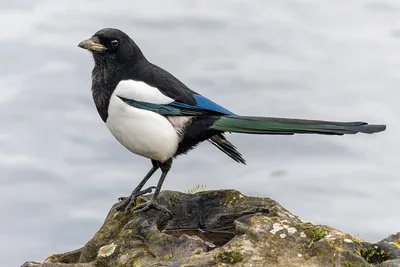
Birds
Magpie
Pica pica
The Eurasian magpie is a long-tailed member of the crow family.
Living LC
Birds
American crow
Corvus brachyrhynchos
The American crow is a large all-black bird of farms, woods and city streets across North America.
Living LC
Birds
Blue jay
Cyanocitta cristata
The blue jay is a loud blue songbird of the crow family, native to eastern and central North America.
Living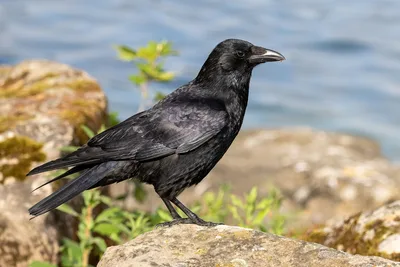 LC
Birds
Carrion crow
Corvus corone
The carrion crow is an all-black crow of western Europe and eastern Asia with a heavy bill and a harsh croak.
Living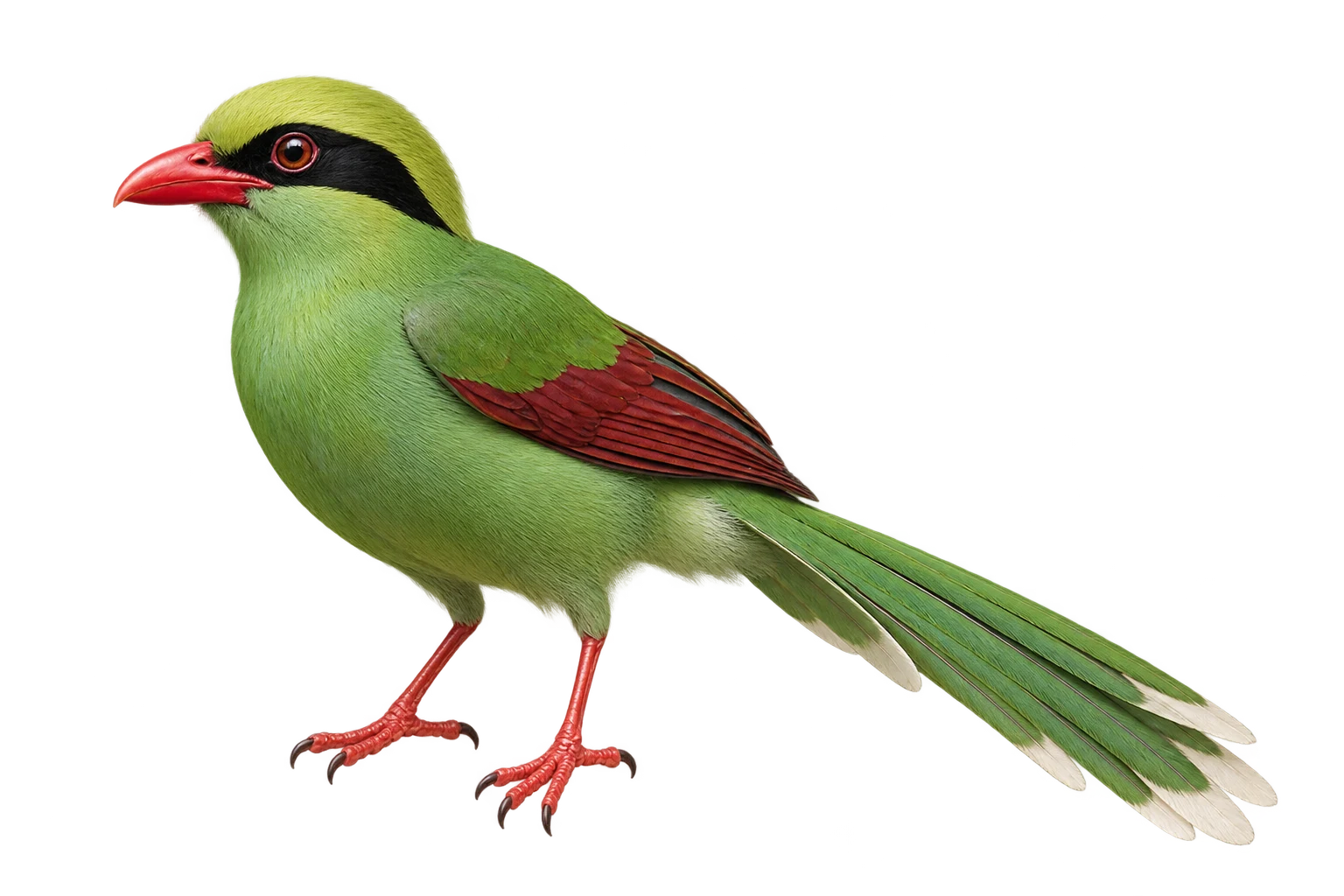
Birds
Common Green Magpie
Cissa chinensis
Classification and source reference
LivingAI illustration LC
Birds
Common raven
Corvus corax
The common raven is a large black crow that lives right across the northern half of the world.
Living