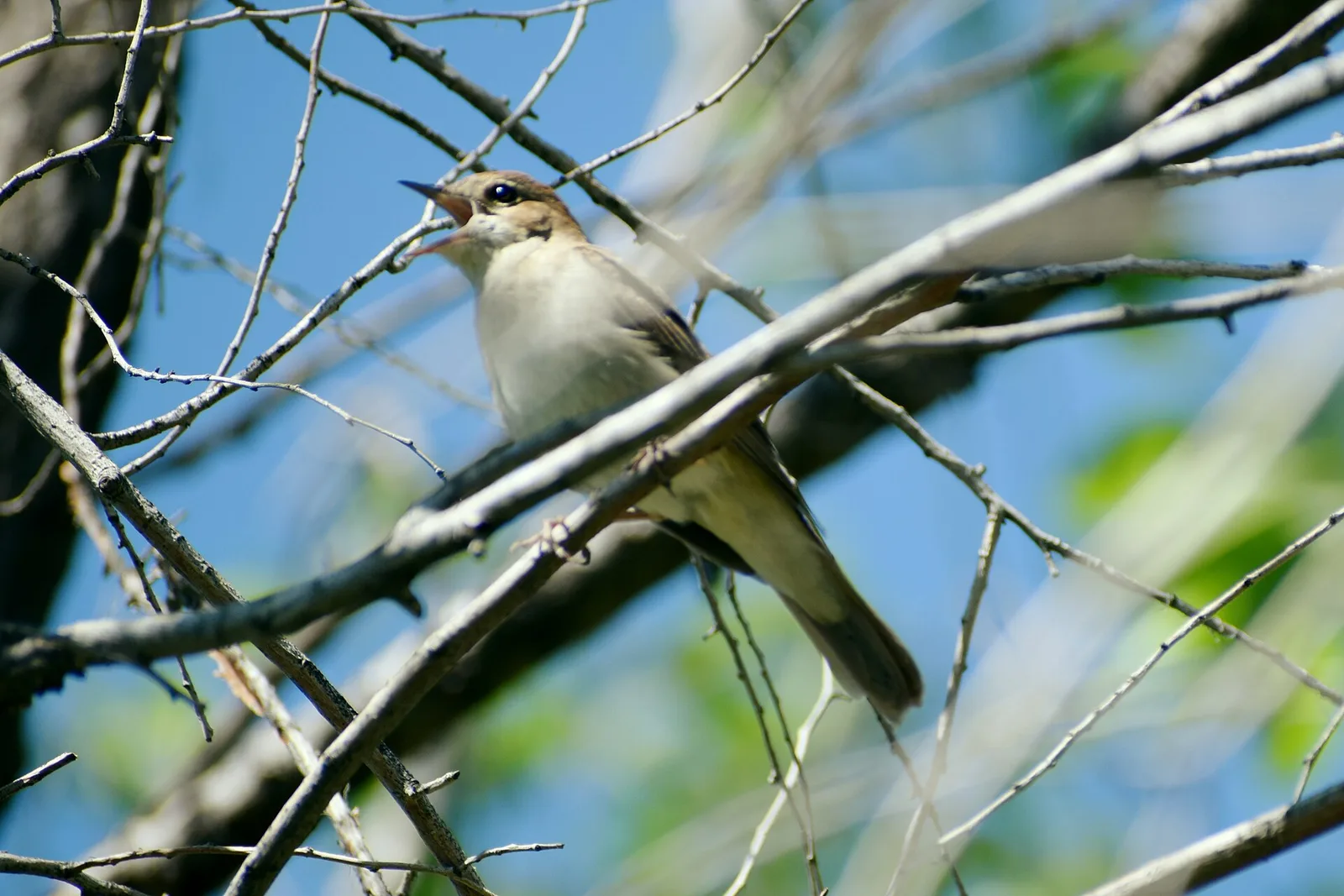
Common nightingale
A plain brown bird with the loudest song in the wood
Luscinia megarhynchos
Also called Nightingale, Rufous nightingale, Western nightingale
Living individuals or members of this group exist today. This does not mean they are safe from extinction.
Meet the common nightingale
The common nightingale is a small brown songbird of dense scrub in Europe and western Asia. The male sings by night as well as by day, and he can hold more than 200 song types.
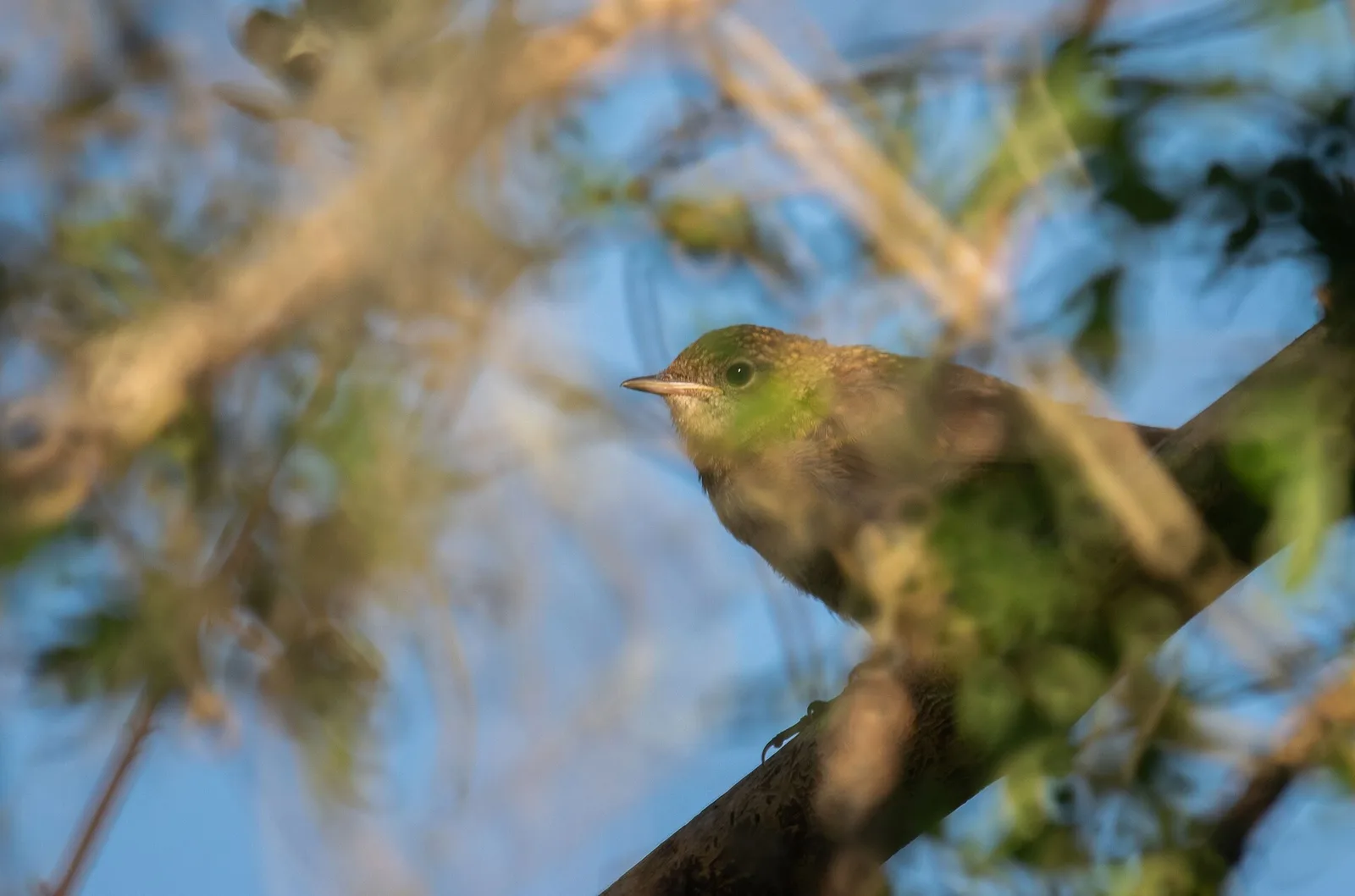
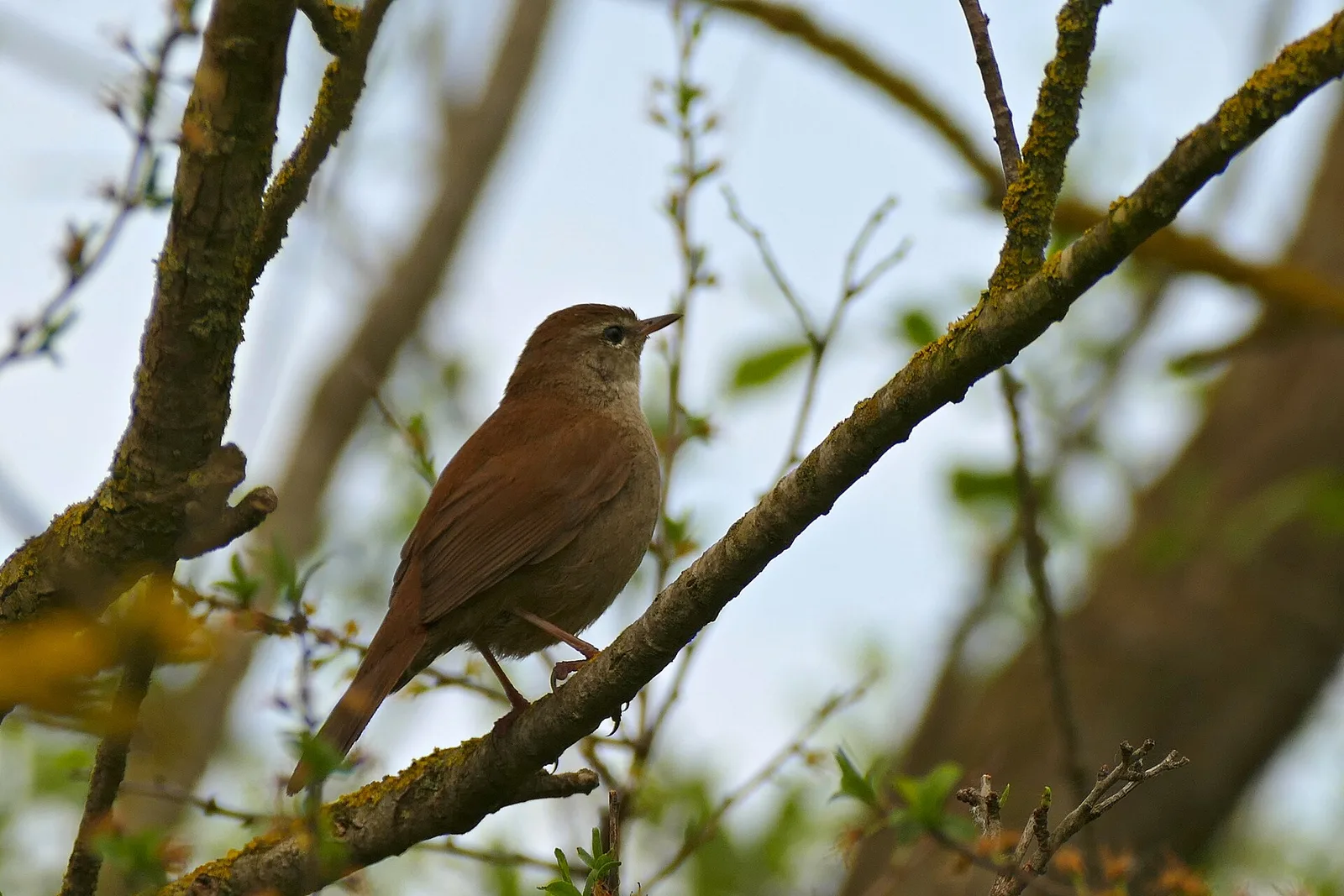
Images of the common nightingale
Lifespan in the wild
1 to 5 years the oldest known bird was 8 years and 4 months old
Weight
18 to 23 g
Length
14 to 17 cm
Wingspan
20 to 24 cm
Fact file
Common nightingale
- Location
- Europe, North Africa and western Asia; winters in sub-Saharan Africa
- Habitat
- Temperate forest, Grassland, Savanna
- Diet
- Insectivore
- Prey / food
- Beetles, ants, spiders, worms, insect larvae, autumn berries
- Predators
- Tawny owls take adults; ground predators take eggs and chicks
- Lifestyle
- Migratory, secretive, and vocal by night and by day
- Group name
- None, the bird is solitary outside the breeding season
- Name of young
- Chick
- Incubation
- Eggs hatch after 13 to 14 days
- Clutch size
- About 4 or 5 eggs
- Population
- 3.2 to 7 million pairs in Europe
- Biggest threat
- Loss of dense coppice and scrub, and browsing deer
- Distinctive feature
- Plain brown body with a warm chestnut tail
- Colour
- Brown above, buff to white below
- Skin type
- Feathers
Size
Next to a person
Measurements
Size and speed
- Length
- 14 to 17 cm
- Wingspan
- 20 to 24 cm
- Weight
- 18 to 23 g 18 to 23 grams
Typical adult ranges. Source: Animal Diversity Web.
Life cycle
Lifespan
- In the wild1 to 5, up to 8.3 years the oldest known bird was 8 years and 4 months old
- 08.3 years
The pale bar is the record. Source: Animal Diversity Web.
Appearance
Colour and coat
- Primary colours
- brown
- Secondary colours
- chestnutbuffwhite
- Skin type
- feathers
- Male and female
- Slight. The sexes are alike to the eye. Males average a little longer with wider wings, and females sometimes weigh more.
Life cycle
Mating and family
- Mating system
- seasonally monogamous pairs
- Social structure
- solitary, with males holding separate territories in the breeding season
- Breeding
- one brood a year, from mid-May
Males take a territory in spring and sing to advertise it. Song decides much of the outcome, and up to 49 percent of males find no mate at all. The female builds a nest of leaves and grass low in dense shrubs and lays about four or five eggs. She incubates alone for 13 or 14 days, and both parents then feed the chicks. The young leave the nest 11 to 13 days after hatching and can breed the following year.
Classification
Taxonomy
- Kingdom
- Animalia
- Phylum
- Chordata
- Class
- Aves
- Order
- Passeriformes
- Family
- Muscicapidae
- Genus
- Luscinia
- Species
- Luscinia megarhynchos
Conservation
Red List status
- LC
- NT
- VU
- EN
- CR
- EW
- EX
Least Concern on the IUCN Red List
Range
Recorded in 24 countries
- Austria
- Bulgaria
- Switzerland
- Czech Republic
- Germany
- Algeria
- Spain
- France
- United Kingdom
- Greece
- Croatia
- Hungary
- Italy
- Kazakhstan
- Luxembourg
- Netherlands
- Poland
- Portugal
- Romania
- Serbia
- Russia
- Slovakia
- Turkey
- Ukraine
Habitat layer: temperate broadleaf and mixed forest, temperate conifer forest, boreal forest and taiga, tropical grassland, savanna and shrubland, temperate grassland, savanna and shrubland.
Countries from 9,677 wild records on GBIF (iNaturalist research grade), filtered and checked by hand. Country shapes: Natural Earth. Habitat: RESOLVE Ecoregions 2017, CC BY 4.0. Basemap: Natural Earth.
Habitats
Three things to know
- 1
A male can hold about 190 song types on average, and the best males pass 300.
- 2
Only unpaired males sing through the night, and the song stops once a female arrives.
- 3
Nightingales sing louder in noisy towns so that the song carries over the traffic.
Did you know
Seven more facts
- 1
The name comes from Old English and means night singer.
- 2
Early naturalists credited the song to the female, but only the male sings.
- 3
A night session of song can last seven or eight hours with few pauses.
- 4
The alarm call sounds like a frog rather than a bird.
- 5
A nightingale egg weighs about 2.7 g, and the shell is 6 percent of that.
- 6
Males sing less at night when tawny owls are hunting nearby.
- 7
The Croatian one kuna coin carried a nightingale from 1993 to 2009.
Field notes
How it looks and acts
Field notes
Distinguishing features
- The body is plain brown above with no streaks or bars.
- The broad tail is a warm chestnut and shows as the bird slips into cover.
- A pale ring circles the large black eye.
- The bird measures 14 to 17 cm, a little larger than a European robin.
- The song ends phrases with a rising whistled crescendo.
Field notes
Unique adaptations
- A very large song repertoire probably gives a male an edge in female choice.
- Night song reaches females at an hour when almost no other bird competes for the air.
- Plain brown plumage likely hides a ground feeder in leaf litter.
- Freezing in place when threatened works better than flight in dense cover.
- Autumn fruit probably builds the fat a bird needs before it crosses the Sahara.
Field notes
Interesting behaviours
- Males sing through the night before they pair, then fall quiet after dark.
- Birds feed on the ground under thick shrubs rather than in the open.
- Males chase and fight rivals that cross into their territory.
- Away from migration the bird flies only short distances between branches.
- The whole population leaves Europe for Africa in autumn.
Field notes
Temperament
- Secretive and hard to see, even when singing at full volume.
- Aggressive to other males during the breeding season.
- Solitary for most of the year, with no flock and no hierarchy.
- Wary of open ground and of people.
Field notes
Communication
- Whistle songs carry over distance and serve to attract a mate.
- Non-whistle songs fill out a repertoire that can pass 300 types.
- Dawn song is thought to mark out the territory to neighbours.
- A frog-like croak works as the alarm call.
- Volume rises in noisy places so the message still gets through.
Ecology
Ecological role
The nightingale is a ground-feeding insect eater of scrub and coppice, and its presence marks woodland that still has a living shrub layer.
- It eats beetles, ants and larvae that damage leaves and young growth.
- It feeds tawny owls and other predators of small woodland birds.
- It carries the acanthocephalan parasite Apororhynchus silesiacus.
- Its decline probably signals the loss of coppice and dense scrub across Europe.
Stories
Myths and legends
- In Greek myth Philomela becomes a nightingale after Tereus cuts out her tongue.
- In Persian tradition the bird loves the rose and sings for a beauty it cannot reach.
- In Ukrainian legend a nightingale flew from India and sang to comfort a sad people.
- In the Baha'i Faith the nightingale stands for the writings of Baha'u'llah.
- In English Romantic poetry the bird became a teacher of an art no human could match.
People
Relationship with humans
People
Living alongside us
The nightingale has no practical use and enormous cultural weight. It damages nothing and is not hunted for food. People travel to reserves in May simply to hear it, and recordings of the song have sold in their thousands. Poets from Homer onwards used the bird as an image, and Iran made it a national symbol. The bird itself stays out of sight in the scrub while all of this happens.
- The bird weighs about 21 g and cannot hurt a person.
- It avoids open ground and people, so close contact is rare.
- It carries a gut parasite that is thought to be harmless to people.
People
Status, uses and products
- Domestication
- Wild
- As a pet
- Not suitable. No. The nightingale is a protected wild migrant that needs live insects and dense cover. Caging one is illegal across Europe, and a caged male loses the territory and the migration that shape its year.
- Uses
- birdwatchingwildlife recordingindicator of scrub habitat
- Products
- None recorded
The full account
About the common nightingale
The common nightingale, Luscinia megarhynchos, is a small brown songbird of thick scrub. It measures 14 to 17 centimetres long and weighs 18 to 23 grams. The wings span 20 to 24 cm. The plumage is plain brown above, buff to white below, with a warm chestnut tail. Nothing in the look of the bird appears to explain its fame.
The male sings at night as well as by day, which gave the bird its English name. A single male can hold a very large set of song types and switch between them. The bird breeds in Europe, North Africa and western Asia. It spends the winter in sub-Saharan Africa and crosses the desert twice a year. The IUCN lists the species as Least Concern, though British numbers have fallen hard.
Name and taxonomy
The English name joins night with the Old English verb galan, which meant to sing. The form nihtegale is more than a thousand years old and means night singer. The genus name Luscinia is simply the Latin for a nightingale. The species name megarhynchos comes from Greek words for great and bill. Early writers thought the singer was the female, and the belief lasted for centuries.
Three subspecies are recognised, and each has its own breeding range. The western form breeds from western Europe through North Africa to Asia Minor. The Caucasian form runs from the Caucasus and eastern Turkey into Iran and Iraq. The eastern form breeds from the Aral Sea across to Mongolia. All three leave for Africa in autumn, but each winters in a different part of it.
Evolution and relatives
The nightingale sits in the Muscicapidae, the Old World flycatchers. It belongs to the ground-loving group within that family that birders call the chats. Ornithologists once filed the chats with the thrushes because they look like small thrushes. Genetic work moved them, and the thrush-like build turned out to be convergent evolution.
The closest relative is the thrush nightingale, which breeds further north and east. The two ranges overlap in places, and the birds sometimes hybridise there. The common nightingale prefers a milder and warmer climate than its northern cousin. The European robin is another member of the same group, and it is slightly smaller. Like other chats, the nightingale probably spread from a ground-feeding ancestor of open woodland.
Appearance
This appears to be a plain bird by any measure. The upper parts are an even brown, and the underside fades to buff and then to white. The tail is broad and a warm chestnut, and it is the one splash of colour. The eye is large and black, ringed by a pale circle of feathers. A bird measures 14 to 17 cm, so it is a shade larger than a European robin.
Males and females look the same in the field. Males average a little longer with a wider wing, and the span runs from 20 to 24 cm. Females sometimes weigh more, because a singing male burns energy at a higher rate. Adults weigh 18 to 23 g, and about 21 g is normal. The eastern and Caucasian forms are paler above and show a clearer stripe over the eye.
Habitat and range
The nightingale needs thick low cover with bare ground beneath it. Coppiced woodland suits it well, and hazel is the tree most often named. The cover hides the bird from predators while it hunts on the open floor below. A closed canopy is no good, probably because the shade kills the shrub layer. The nest sits on the ground or just above it in dense growth.
German research listed the conditions that mark out good breeding ground. The sites lie below 400 metres, with growing season temperatures above 14 degrees Celsius. They have more than 20 warm days a year above 25 degrees and dry summers. Annual rainfall stays under 750 millimetres.
The breeding range covers central and southern Europe, North Africa and central Asia. France, Italy and Spain hold the birds most visitors hear. Britain lies at the northern edge, and the range there has pulled back. Winter takes the whole population to tropical Africa, from the western Sahara to Kenya and Nigeria. The species has never established itself in the Americas.
Diet and feeding
The nightingale is an insect eater first and last. Beetles, ants, spiders and worms taken from the ground make up most meals. Insect larvae are a large part of what the parents carry to the nest. In autumn the bird adds berries and other soft fruit before it migrates.
Feeding happens on the woodland floor under cover. The bird likely hops, pauses and picks prey from leaf litter and bare soil. Bare ground under a thicket appears to matter as much as the thicket itself. A male that sings through the night must spend the day feeding to make the weight back. That trade takes time away from song and raises the risk of being seen by a predator.
Behaviour and social life
Outside the breeding season the nightingale lives alone. There is no flock and no pecking order in this species. Birds stay in dense shrubs and thickets and keep away from open ground. A bird that senses danger often freezes rather than flying, which makes it very hard to see. Most people who meet a nightingale only ever hear one.
Males hold territories and defend them hard. A rival that crosses the line is chased and fought. Song contests between neighbouring males probably settle much of the argument without a fight. Away from migration the birds fly only short hops from branch to branch. The same birds then cross the Sahara twice a year, which seems a striking contrast.
Communication and senses
The song is loud and mixes whistles, trills and gurgling notes. A rising whistled crescendo is the mark of this species and the thrush nightingale lacks it. Males average about 190 different song types, and some reach 250. Exceptional birds pass 300 song types, and older males hold larger sets than young ones. One study counted about 1,160 syllables in the species, against 108 for the blackbird.
Researchers split the output into whistle songs and non-whistle songs. Whistle songs carry furthest and do the work of attracting a mate and holding a territory. A male drops his whistle songs once he has paired. Night song belongs to unpaired males and probably serves to draw a female in. Dawn song in the hour before sunrise is thought to defend the territory instead.
A night session can run for seven or eight hours with few breaks. Birds in towns sing louder than birds in the country to beat the background noise. Males cut their night singing when owls are about, which lowers the risk. The alarm call is a low croak that sounds more like a frog than a bird.
Reproduction and life cycle
Nightingales pair for one season at a time. In general, males arrive first, and each takes a territory and sings to advertise it. Female choice appears to run on song, and the best singers pair soonest. Older males with larger song sets do better than young males. As many as 49 percent of males may fail to find a mate in a season.
Breeding starts in the middle of May in most of the range. The female builds the nest in a dense shrub from dried leaves, grass and twigs. A clutch holds about four or five eggs. Each egg measures about 21 by 16 millimetres and weighs about 2.7 g. The female alone incubates, and the eggs hatch after 13 or 14 days.
Both parents guard the nest and feed the chicks once they hatch. The young leave the nest 11 to 13 days after hatching. Birds can breed at one year old. A typical nightingale lives 1 to 5 years in the wild. The oldest known bird reached 8.3 years, or 8 years and 4 months.
Predators and threats
The tawny owl is the main predator of adult nightingales. The owl hunts the same woods at the same hours, so night song probably carries a cost. Ground nests are open to whatever walks past, so eggs and chicks appear to be the weakest point. The bird hosts a gut parasite named Apororhynchus silesiacus.
Habitat change is the larger threat. Coppicing has stopped in many woods, and the shrub layer probably closes over or thins out. Deer are a direct cause in Britain, where muntjac and roe deer graze out the low cover. Climate is a second factor, and the species does badly where summers turn cool and wet. Conditions in the African wintering grounds may be changing as well.
Population and conservation
The IUCN lists the common nightingale as Least Concern. Europe holds an estimated 3.2 to 7 million breeding pairs. That total appears to keep the global status green even where local declines are steep. Naturalists have logged 17931 observations of the species on iNaturalist. GBIF holds records from 115 countries and territories.
The European trend seems poor. One report put the European decline at 63 percent between 1980 and 2005. British numbers fell by 53 percent between 1995 and 2008. A British Trust for Ornithology survey in 2012 and 2013 found about 3,300 territories. Almost all of them lay in Kent, Essex, Suffolk and the two Sussex counties.
The RSPB now puts the British figure at around 6,700 singing males. The bird sits on the British red list of conservation concern. Israel lists it as Near Threatened, while Portugal and Switzerland list it as Least Concern. Conservation work in Britain appears to aim at cutting coppice again and fencing deer out.
Relationship with humans
People have probably listened to nightingales for as long as they have written poems. The bird does no harm to crops, buildings or people. Animal Diversity Web records no negative effect of the species on human interests. Birdwatchers travel to a handful of reserves each May to hear the song.
Recordings of the song appear to have carried it far beyond its range. A famous wartime recording caught a nightingale singing while bombers flew over a garden. Manfred Mann's Earth Band used that recording and named an album after it in 1975. The single Let Nature Sing put the song into the British charts in 2019. Caged nightingales were once a trade, and the bird probably has no future as a pet.
In culture and myth
Greek myth turned a woman into a nightingale. Tereus, king of Thrace, attacked Philomela and cut out her tongue to keep her quiet. Philomela worked the story into a woven cloth and had it carried to her sister Procne, his wife. Procne killed their son and served him to Tereus, and the gods then turned the sisters into birds. Roman writers made Philomela the nightingale, and readers heard the song as a lament ever after.
European poets took the bird as the image of the poet. Aristophanes, Virgil, Chaucer and Shakespeare all put the nightingale to that use. Coleridge argued against the sad reading in a poem printed in 1798. John Keats wrote his Ode to a Nightingale in 1819, and it became the best known of them all. Shelley called the poet a nightingale who sits in the dark and sings to itself.
Iran names the nightingale its national bird. Persian verse pairs the bird with the rose, and the bird loves what it cannot have. Urdu and Turkish poetry carry the same pairing under the name bulbul. Ukrainian poetry uses the bird for longing, and one legend brings it from India to cheer sad singers. The Baha'i Faith uses the nightingale as a figure for the writings of Baha'u'llah.
A sentence with a dotted underline is inferred: it describes the group the animal belongs to, or is a reading of the sources, rather than a measured or reported fact about this species.
Questions
Common nightingale questions, answered
What does a nightingale look like?
It is a plain brown bird a little larger than a robin, with a broad chestnut tail. The underside is buff to white. A pale ring circles the large dark eye.
How big is a nightingale?
A nightingale measures 14 to 17 cm long and weighs 18 to 23 g. The wings span 20 to 24 cm.
Why do nightingales sing at night?
Only males without a mate sing after dark, and the night song probably draws females in. Few other birds sing then, so the song carries without competition.
Do female nightingales sing?
No. Only the male sings. Early writers assumed the singer was female, and the mistake lasted for centuries.
How many songs does a nightingale know?
A male averages about 190 song types and can reach 250. Exceptional birds pass 300. The species uses about 1,160 different syllables.
What do nightingales eat?
They eat beetles, ants, spiders, worms and insect larvae picked off the ground. In autumn they add berries and soft fruit before migrating.
Where do nightingales live?
They breed in scrub and coppice woodland across Europe, North Africa and western Asia. They winter in tropical Africa, from the western Sahara east to Kenya.
Are nightingales found in America?
No. The species does not occur naturally in the Americas. The birds that Americans call nightingales are usually thrushes or mockingbirds.
How long do nightingales live?
Most live 1 to 5 years. The record is 8.3 years, a bird of 8 years and 4 months.
Are nightingales endangered?
Not globally. The IUCN lists the species as Least Concern, and Europe holds 3.2 to 7 million pairs. British numbers have fallen sharply, and the bird sits on the British red list.
How many nightingales are left in Britain?
The RSPB puts the figure at around 6,700 singing males. A survey in 2012 and 2013 recorded about 3,300 territories, mostly in Kent, Essex, Suffolk and Sussex.
When can you hear a nightingale?
In Britain the birds arrive in April and sing hardest through May. Song fades once males pair, and the birds leave for Africa by September.
How many eggs does a nightingale lay?
About four or five. The female incubates alone for 13 or 14 days. The chicks leave the nest 11 to 13 days after hatching.
What eats nightingales?
The tawny owl is the main predator of adults. Ground predators take eggs and chicks from the low nest.
Why is the nightingale in so many poems?
Its song is loud, varied and sung in the dark, which invites meaning. Greek myth tied it to grief, and Romantic poets turned it into an image of the poet.
What is the difference between a nightingale and a thrush nightingale?
The thrush nightingale breeds further north and east and prefers cooler ground. The common nightingale ends phrases with a rising whistled crescendo that its relative lacks.
Food web
Prey and food
- beetles
- ants
- spiders
- worms
- insect larvae
- autumn berries
Food web
Predators
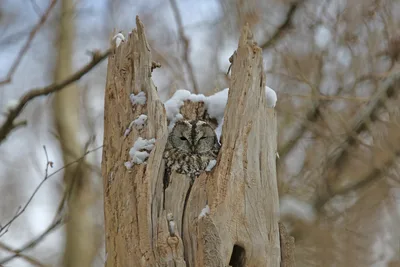 Tawny owl
- ground predators
Ecological equivalents
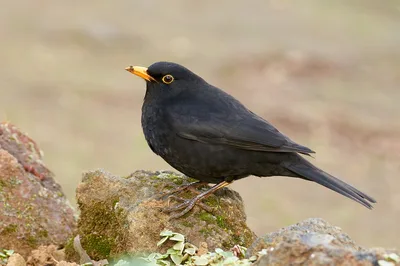
Related species on this site
European robin (same family), Whinchat (same family), Acadian Flycatcher (same order), Amazonian Royal Flycatcher (same order), American crow (same order), American goldfinch (same order), and more.
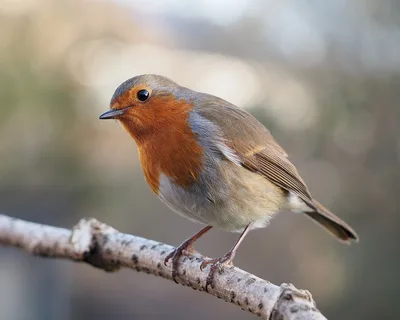 LC
Birds
European robin
Erithacus rubecula
The European robin is a small orange breasted songbird of European woods, parks and gardens.
Living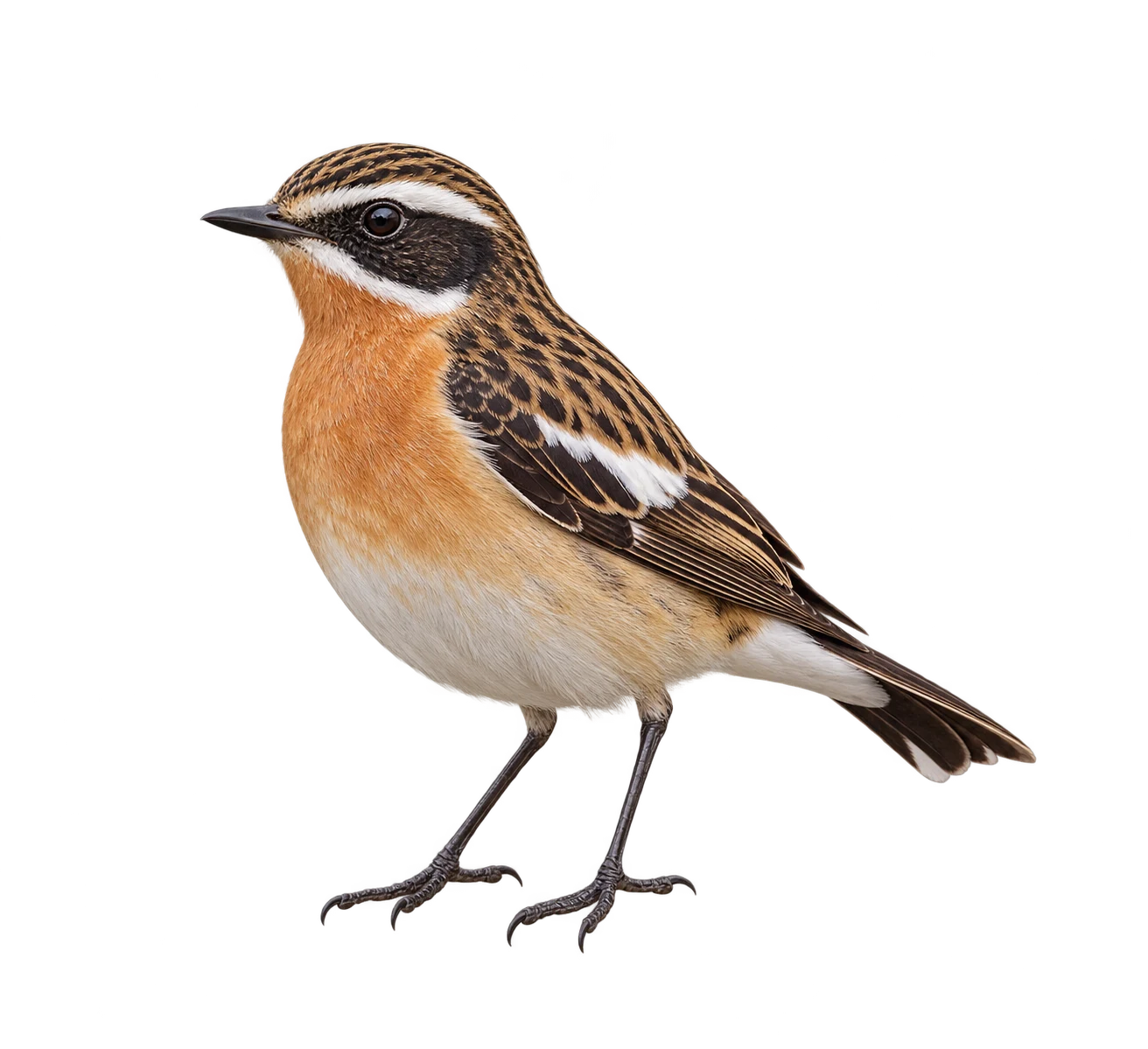
Birds
Whinchat
Saxicola rubetra
Classification and source reference
LivingAI illustration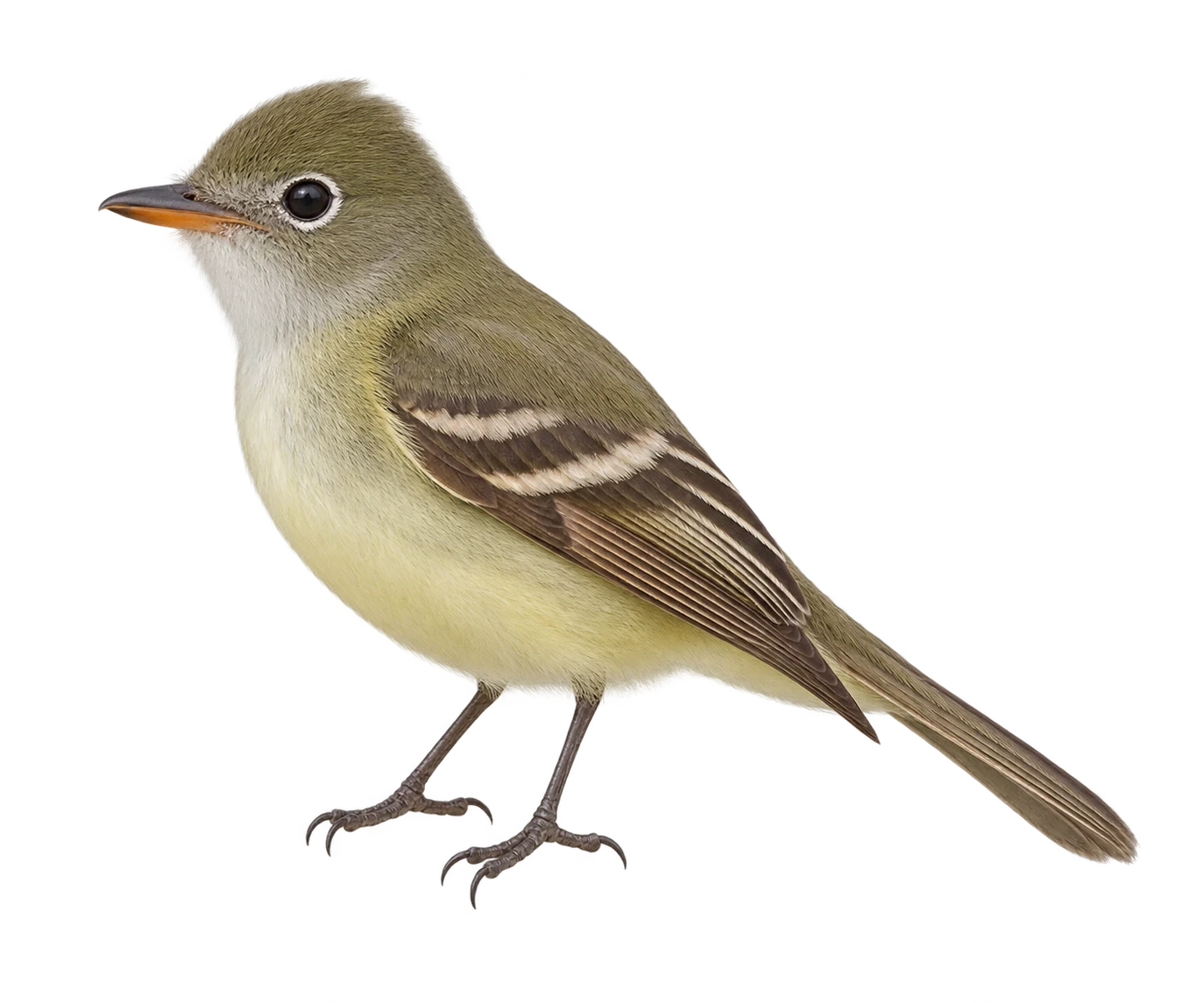
Birds
Acadian Flycatcher
Empidonax virescens
Classification and source reference
LivingAI illustration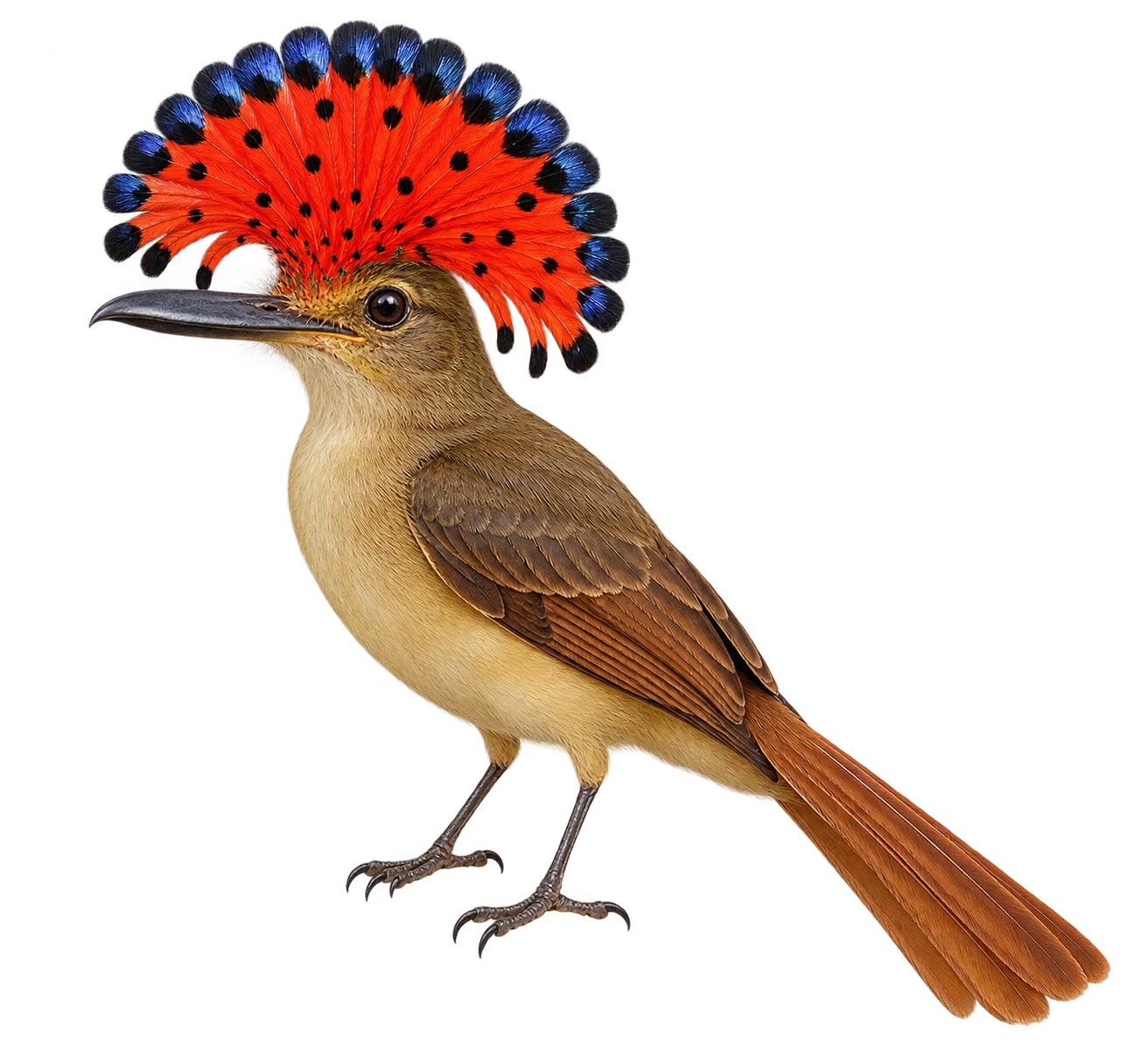
Birds
Amazonian Royal Flycatcher
Onychorhynchus coronatus
Classification and source reference
LivingAI illustration LC
Birds
American crow
Corvus brachyrhynchos
The American crow is a large all-black bird of farms, woods and city streets across North America.
Living LC
Birds
American goldfinch
Spinus tristis
The American goldfinch is a small seed-eating finch of open weedy country across North America.
Living