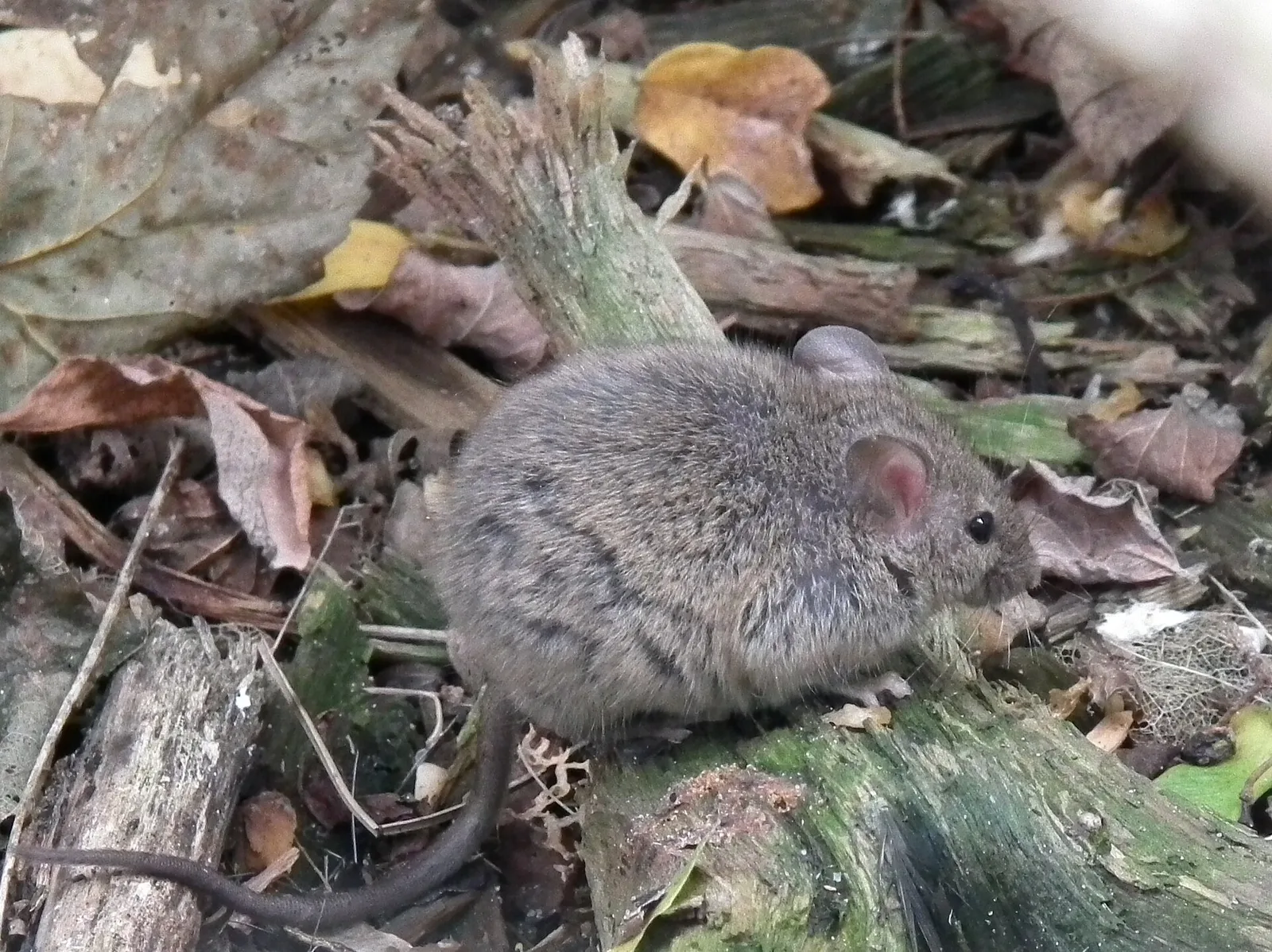
House mouse
The small rodent that followed people around the world
Mus musculus
Also called Eurasian house mouse, Eastern house mouse
Living individuals or members of this group exist today. This does not mean they are safe from extinction.
Meet the house mouse
The house mouse is a small grey-brown rodent that lives in and around human buildings on every inhabited continent. It breeds fast, eats almost anything, and is the wild source of the pet fancy mouse and the laboratory mouse.
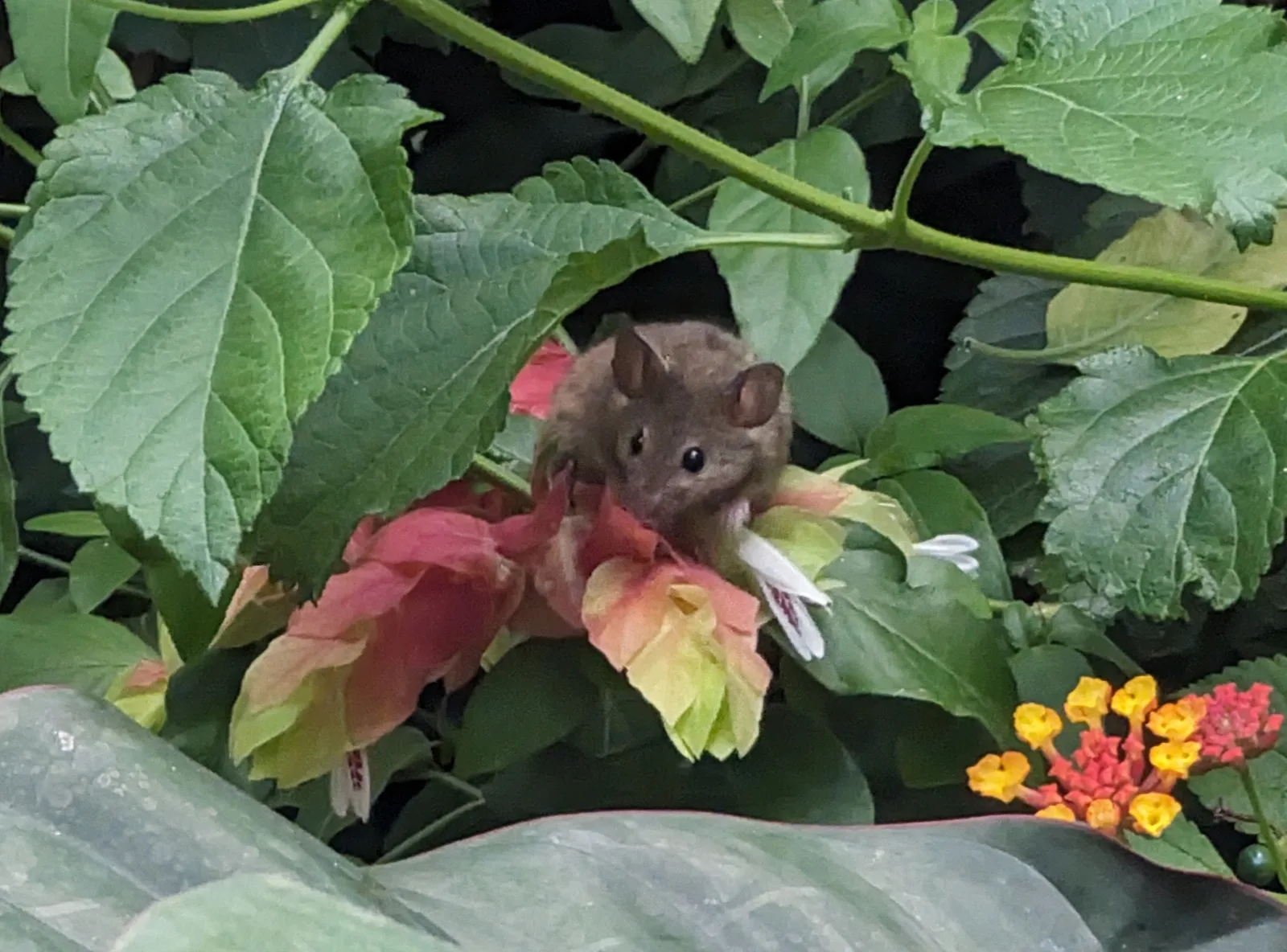
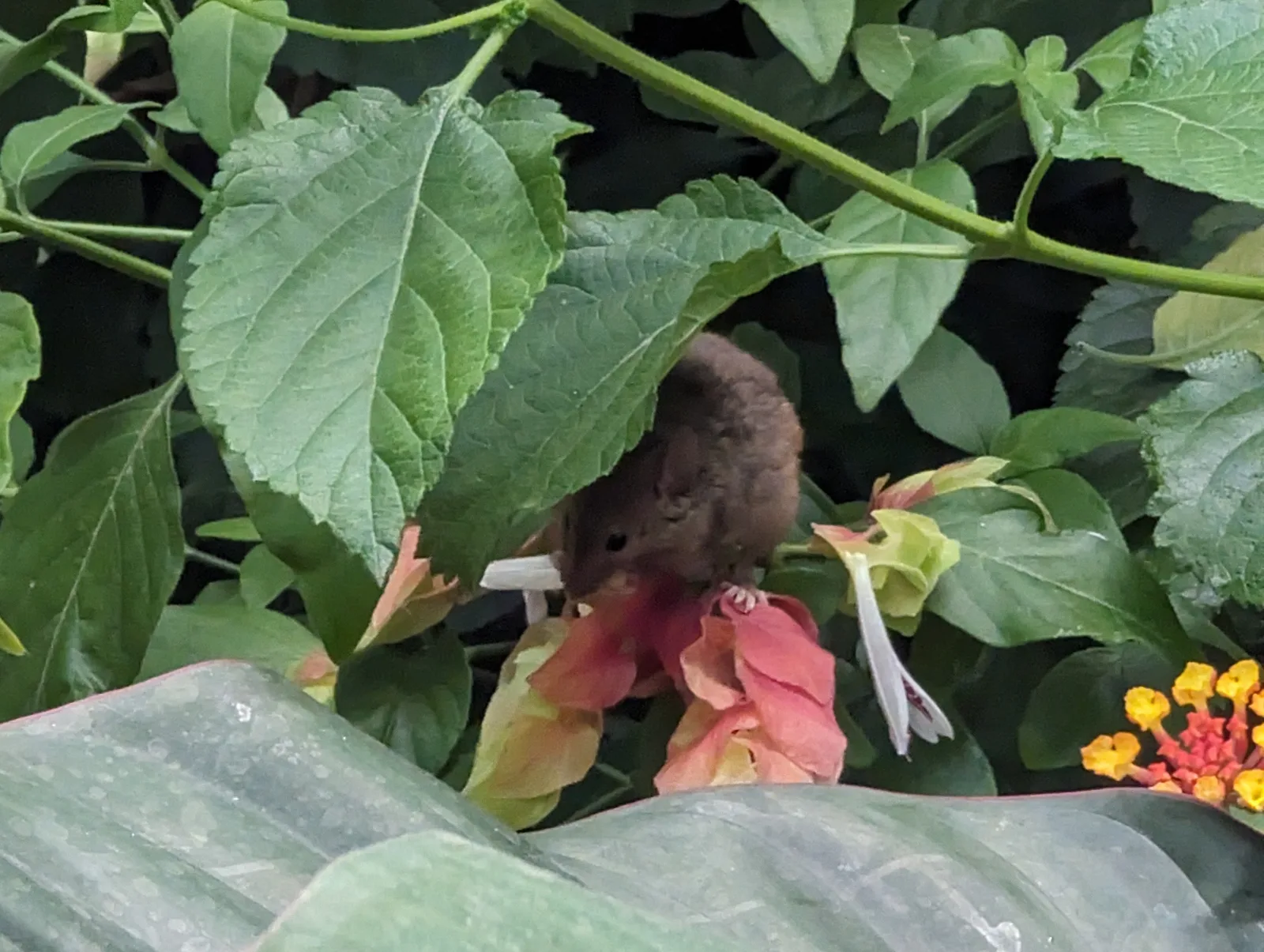
Images of the house mouse
Lifespan in the wild
12 to 18 months 12 to 18 months
Weight
12 to 30 g
Length
6.5 to 9.5 cm
Top speed
Up to 13 km/h
Fact file
House mouse
- Location
- Worldwide alongside people; native to India and southern Asia
- Habitat
- Towns and cities, Grassland, Temperate forest
- Diet
- Omnivore
- Prey / food
- Seeds, roots, leaves, insects, carrion, human food
- Predators
- Cats, foxes, weasels, snakes, owls, hawks, rats
- Lifestyle
- Nocturnal and crepuscular
- Group name
- Colony
- Name of young
- Pup
- Gestation
- 19 to 21 days
- Litter size
- 3 to 12 pups, usually 5 or 6
- Population
- No global count; up to 10 per square metre around buildings
- Biggest threat
- Predators and cold; the species itself is secure
- Distinctive feature
- Long near-hairless tail, large round ears, pointed snout
- Colour
- Grey to light brown, paler belly
- Skin type
- Fur
Size
Next to a person
Measurements
Size and speed
- Length
- 6.5 to 9.5 cm head and body, without the tail
- Tail
- 6 to 10.5 cm
- Weight
- 12 to 30 g 12 to 30 grams
- Top speed
- Up to 13 km/h ADW gives up to 8 miles per hour
Typical adult ranges. Source: Animal Diversity Web.
Life cycle
Lifespan
- In the wild12 to 18 months 12 to 18 months
- In captivityAbout 2, up to 5 years
- 05 years
The pale bar is the record. Source: Animal Diversity Web.
Appearance
Colour and coat
- Primary colours
- greylight brown
- Secondary colours
- blackwhite
- Skin type
- fur
- Male and female
- Slight. Males have large testicles that they can pull into the body, and females have five pairs of nipples. Newborn males show a wider gap between anus and genitals.
Life cycle
Mating and family
- Mating system
- polygynous, with some polyandry
- Social structure
- one dominant male with several related females and their young
- Breeding
- 5 to 10 litters a year, all year round indoors
A female comes into heat every 4 to 6 days. Gestation takes 19 to 21 days and a litter has 3 to 12 pups, most often 5 or 6. The pups open their eyes at around 13 days and are weaned at about 21 days. Both sexes can breed at 5 to 7 weeks. Most wild mice die within 12 to 18 months, and a pet mouse lives about 2 years.
Classification
Taxonomy
- Kingdom
- Animalia
- Phylum
- Chordata
- Class
- Mammalia
- Order
- Rodentia
- Family
- Muridae
- Genus
- Mus
- Species
- Mus musculus
Conservation
Red List status
- LC
- NT
- VU
- EN
- CR
- EW
- EX
Least Concern on the IUCN Red List
Range
Recorded in 21 countries
- Austria
- Ashmore and Cartier Islands
- Brazil
- Canada
- Germany
- Ecuador
- Spain
- France
- United Kingdom
- Israel
- India
- Italy
- Mexico
- Netherlands
- New Zealand
- Poland
- Portugal
- Russia
- Ukraine
- United States of America
- South Africa
Habitat layer: temperate broadleaf and mixed forest, temperate conifer forest, boreal forest and taiga, tropical grassland, savanna and shrubland, temperate grassland, savanna and shrubland.
Countries from 7,782 wild records on GBIF (iNaturalist research grade), filtered and checked by hand. Country shapes: Natural Earth. Habitat: RESOLVE Ecoregions 2017, CC BY 4.0. Basemap: Natural Earth.
Habitats
Three things to know
- 1
One female can produce 5 to 10 litters in a single year.
- 2
Males court females with ultrasonic songs at 30 to 110 kilohertz.
- 3
Its spread from Asia tracks the spread of farming and of people.
Did you know
Seven more facts
- 1
The house mouse reached Europe from the eastern Mediterranean only around 1000 BC, because it needs farming settlements of a certain size.
- 2
The smell of a strange male can end a female's pregnancy, an effect called the Bruce effect.
- 3
The record for a laboratory mouse is 1,819 days, seven days short of five years.
- 4
A mouse eats some of its own droppings, because its gut bacteria make nutrients it can only absorb the second time round.
- 5
The complete mouse genome was sequenced in 2002, and mice have served science since the 1650s.
- 6
A newborn male can be told from a female because the gap between anus and genitals is about twice as long.
- 7
Mice that grow up in cold regions end up with shorter tails than mice raised in the warm.
Field notes
How it looks and acts
Field notes
Distinguishing features
- A pointed snout and large, rounded ears with little hair.
- A long, scaly tail of 6 to 10.5 centimetres with almost no fur.
- Grey to brown agouti fur on the back, often with a white or buff belly.
- Hind feet only 15 to 19 millimetres long, shorter than a wood mouse's.
- A head and body of 6.5 to 9.5 centimetres and a weight of 12 to 30 grams.
- A high-pitched squeak as its audible call.
Field notes
Unique adaptations
- A tail that dumps heat: blood flow can lift its skin temperature by up to 10 degrees.
- A vomeronasal organ that reads pheromones in urine and tears.
- Whiskers that map surfaces and air currents, so the mouse can run along walls in the dark.
- Front teeth that grow all its life, kept short by gnawing on almost anything.
- Fast breeding, with pups able to mate at 5 weeks, so a colony probably recovers from any loss.
Field notes
Interesting behaviours
- Stands on its hind legs, propped on the tail, to eat, fight or look around.
- Runs along walls and edges rather than across an open floor.
- Builds a nest of shredded paper, rags or grass in a hidden spot near food.
- Marks its territory with urine and drives out intruders.
- Moves indoors in autumn and back to the fields in spring.
Field notes
Temperament
- Timid and quick to flee, and it avoids bright light and open ground.
- Males fight strangers of their own sex, but family groups rarely quarrel.
- Females tolerate each other where food is plentiful and fight where it is scarce.
- Captive-bred mice grow bolder and calmer within a few generations.
Field notes
Communication
- Squeaks in the nest and in alarm.
- Sings in ultrasound during courtship, at 30 to 110 kilohertz.
- Leaves scent marks in urine that state sex, rank and identity.
- Uses tail posture to show dominance when two mice meet.
Ecology
Ecological role
The house mouse is a prey species and a seed eater, and where people carry it, an invasive competitor.
- Feeds cats, foxes, weasels, snakes, owls and many other small predators.
- Eats large amounts of stored grain and seed where it is abundant.
- On islands it competes with native birds for food and kills lizards, insects and seabird chicks.
- Hosts tick larvae, which pass Lyme disease bacteria on to their next hosts.
Stories
Myths and legends
- In ancient Egyptian tradition, a story cast the mouse as a vizier.
- In South Slav tradition, an annual Mouse Day was kept, in late October in the east and in spring in the west.
- In German and Mexican tradition, a child's milk tooth went into a mousehole so the new tooth would come through.
- In Spanish tradition, the folk tale of the vain little mouse tells of a mouse who must pick a husband from many suitors.
- In European folklore, as collected by Icy Sedgwick, a mouse that ran over a person was an omen of death.
People
Relationship with humans
People
Living alongside us
The house mouse has lived with people since the first farms, and people carried it to every inhabited continent. It is a pest that fouls food and gnaws buildings, and it can carry a few mild diseases. The same species gave us the fancy mouse of pet shops and the laboratory mouse, the most used mammal in research. On islands it has become a serious invader of seabird colonies.
- A house mouse is thought to bite only when it is caught or handled.
- It can carry a few diseases, such as lymphocytic choriomeningitis, but human infections are rare and usually mild.
- The greater risk is to food: droppings and urine contaminate stored grain and kitchens.
People
Status, uses and products
- Domestication
- Wild
- As a pet
- Kept by some. Fancy mice are cheap, calm and easy to keep, and a pet mouse lives about 2 years. A wild-caught house mouse is nervous and may carry parasites, so choose a bred one.
- Uses
- laboratory researchpet tradefood for pet reptiles and birds
- Products
- None recorded
The full account
About the house mouse
Mus musculus, the house mouse, is a small member of the rodent family Muridae. It has a pointed nose, large round ears and a long tail with almost no hair on it. An adult weighs 12 to 30 grams, and the head and body measure 6.5 to 9.5 centimetres. Few wild mammals live as closely with people. Most house mice today live in or near buildings, and truly wild populations are much rarer.
The species began in southern Asia and reached the rest of the world in grain, in cargo and on ships. It eats seeds and other plant matter first, but it takes insects, carrion and almost any human food. A female can raise 5 to 10 litters a year, so numbers rise fast when food is plentiful. The IUCN lists the species as Least Concern. Its domesticated forms, the fancy mouse and the laboratory mouse, are among the most studied animals in science.
Name and taxonomy
Carl Linnaeus described the species in 1758, and GBIF still lists the name as Mus musculus Linnaeus, 1758. The name is thought to come from the Latin mus, meaning mouse, with musculus as its diminutive. The house mouse sits in the order Rodentia and the family Muridae, alongside the rats of the genus Rattus. GBIF lists many local names, such as Hausmaus in German, camundongo in Portuguese and chuột nhà in Vietnamese. Some English lists also call it the eastern house mouse or the Eurasian house mouse.
Three subspecies are widely accepted, and some researchers now rank them as full species. M. m. domesticus lives in western Europe and was carried to the Americas, Africa and Oceania. M. m. musculus lives in eastern Europe and northern Asia, and M. m. castaneus lives in southern and south-eastern Asia. Two more, M. m. bactrianus and the pygmy house mouse M. m. gentilulus, are accepted by some authors. Where domesticus and musculus meet in Europe they interbreed, but the hybrid males are usually sterile. The normal karyotype holds 40 chromosomes, though some western European populations have fewer because pairs have fused.
Evolution and relatives
Mice belong to the clade Glires, which joins the rodents with the rabbits and hares. Within the placental mammals, that clade is among the closest relatives of the primates, including humans. Genetic work published in 2013 traced the species to south-western Asia and named five subspecies with separate origins. A later study of 89 whole genomes placed the ancestral population in the Indian subcontinent some 700 thousand years ago. From there mice moved to Iran about 360 thousand years ago, forming domesticus, and to Afghanistan about 260 thousand years ago, forming musculus.
The closest living relatives are the other species of Mus, and the house mouse is one of the most numerous of them. Its ability to breed in a wide range of conditions is probably what let it outdo other mice near people. Even the Japanese house mouse, M. m. molossinus, is a hybrid of two subspecies rather than a separate line.
Appearance
The head and body measure 6.5 to 9.5 centimetres, and the tail adds 6 to 10.5 cm. Adults weigh 12 to 30 grams, so even a large mouse weighs less than a hen's egg. Wild mice are grey, light brown or nearly black on the back, and each hair carries agouti banding. The belly is often white or buff, though not in every subspecies. The fur is short, and the ears and tail carry very little of it. The tail has rings of scales, and mice that live indoors tend to have longer tails and darker coats.
The hind feet are short, only 15 to 19 millimetres, which separates the house mouse from the wood mice of the genus Apodemus. A running stride covers about 4.5 cm, and a mouse can jump 45 cm straight up. The tail sheds heat: blood flow to it can raise the skin temperature by up to 10 degrees Celsius. Mice raised in cold places grow shorter tails. A second, tiny thymus sits in the neck beside the windpipe, in addition to the usual one in the chest. Fancy and laboratory mice come in white, champagne, pink and spotted coats that breeders selected.
Habitat and range
The house mouse is native to India and the surrounding parts of southern Asia. It reached the eastern Mediterranean by about 13,000 BC, but the rest of Europe only around 1000 BC. The delay is thought to reflect a need for farming settlements above a certain size. Spanish ships carried mice to the Americas in the early sixteenth century. French fur traders and English colonists brought them to North America about a hundred years later. People have since carried the species to every inhabited part of the world.
Most house mice live in houses, barns, granaries and other buildings. Others live in fields, hedgerows and woodland, but they rarely stray far from a building. Some spend the summer in the fields and move indoors when the autumn turns cold. With human shelter the species survives in places such as tundra and desert that it could not occupy alone. In the wild it digs a burrow with nesting rooms, food stores and three or four exits. Indoors it nests behind rafters, in woodpiles and in any hidden spot near food.
Away from people the house mouse competes poorly, and it usually loses out where wood mice or other small mammals are present. In Australia, though, it lives alongside native rodents. Rats and mice also share forest habitats in New Zealand and North America, even though rats kill mice.
Diet and feeding
The house mouse is an omnivore that eats plant matter first. In the wild it takes seeds, fleshy roots, leaves and stems. It adds insects such as beetle larvae, caterpillars and cockroaches, and it eats carrion when it finds it. Near people it eats any food it can reach, including leftovers and garden produce. It also chews glue, soap and other household materials. Many mice store food, or simply live inside a human food store.
Like other rodents, the house mouse cannot vomit. It eats its own droppings to recover nutrients that gut bacteria produce. Mice forage outdoors in spring and summer and retreat into buildings in autumn and winter for warmth and food. Their gnawing keeps the ever-growing front teeth short, and it damages wires, wood and cloth in the process. Where mice are abundant they eat large amounts of grain, which leaves less for native animals.
Behaviour and social life
House mice are mostly active at dusk and at night, and they avoid bright light. A captive mouse sleeps about 12.5 hours a day. Mice run, climb, jump and swim well, and they prefer to move along walls and edges, a habit called thigmotaxis. When a mouse eats, fights or looks around, it stands on its hind legs and props itself on its tail. Most mice rarely travel more than about 15 metres from their nest.
Social life changes with food and space. Around buildings, food is plentiful, mice crowd together and territories shrink into a pecking order. A typical group holds one dominant male with several females, usually relatives, and their young. Related females nurse the pups together, which raises the number that survive. In fields, food and water are scarce, territories are large and both sexes fight more.
Males mark their territory with urine and drive off intruders. Two strange males put together in a cage usually fight, unless they grew up together. Young males leave their birthplace to find a territory, while most young females stay close to home. Rats often kill and eat mice, so mice avoid them where they can.
Communication and senses
Mice see in two colours only, because they have two cone types instead of the three that people have. The lower part of the retina holds many cones tuned to ultraviolet light, for reasons that are still unknown. Smell is probably the most important sense. Both sexes produce pheromones, and male urine and tears carry major urinary proteins that signal identity. A special organ at the base of the nose, the vomeronasal organ, detects these signals. Male urine has a strong smell, and at least 10 different compounds have been found in it.
Scent also controls breeding. A male's smell can bring females into heat together, and a strange male's smell can end a pregnancy. Mice squeak to each other in the nest, and the audible voice is a high squeak. Males also sing to females in ultrasound, between 30 and 110 kilohertz, in patterns as complex as birdsong. Whiskers sense surfaces and air currents, and a mouse blind from birth grows extra-long whiskers to compensate. The tail signals rank when two mice meet.
Reproduction and life cycle
The house mouse is usually polygynous: a male guards a territory and mates with the females in it. A female comes into heat every 4 to 6 days, for less than a day each time. Crowded females may stop cycling, and the smell of male urine restarts them within 72 hours. After mating a plug forms in the female, and it stays for about 24 hours. Pregnancy lasts 19 to 21 days, and a litter holds 3 to 12 pups, usually 5 or 6. A female can mate again 12 to 18 hours after giving birth, and she may raise 5 to 10 litters in a year.
Pups are born blind, naked and with closed ears. The ears open by day 4, fur shows at about 6 days and the eyes open at around 13 days. The mother weans them at about 21 days, and most leave her territory soon after. Both sexes can breed at 5 to 7 weeks old. Wild mice breed all year where food allows, but outdoor populations stop in the cold months. In about 30% of wild populations a female's litter has more than one father, which raises genetic diversity.
Most wild mice die within 12 to 18 months, mainly from predators and weather. A pet mouse lives about 2 years, and a few have reached 5 years. One genetically engineered laboratory mouse lived 1,819 days, just short of five years.
Predators and threats
Almost every small predator eats house mice. Cats, foxes, weasels, ferrets and mongooses hunt them on the ground. Snakes and large lizards take them too, and hawks, falcons and owls hunt them from the air. Rats kill mice as well, a behaviour called muricide. A mouse defends itself by staying out of the open and by being quick. Fast breeding means a colony recovers quickly after heavy losses.
People probably kill more house mice than any wild predator, through traps and poison. Harsh weather takes many outdoor mice in winter. No threat puts the species itself at risk.
Population and conservation
The IUCN lists the house mouse as Least Concern. No global count exists, but the species is one of the most abundant members of its genus. Around buildings, densities can reach 10 mice per square metre. In open country, densities may fall below 1 mouse per 100 square metres, and numbers swing more widely. Human buildings help the species, so its populations grow rather than shrink.
Conservation effort goes the other way: on many islands the mouse is the problem. New Zealand had no land mammals except two bats before people arrived. Introduced mice there eat the same food as native birds, kill lizards and harm native insects. On Gough Island in the South Atlantic, mice that arrived with sailors in the 19th century have grown unusually large. They attack the chicks of the Tristan albatross and the Atlantic petrel in groups and gnaw them until they die. In south-eastern Australia the introduced mice reach plague densities of 1000 per hectare about every three years. Those plagues cost farming about A$36 million a year.
Relationship with humans
Probably no wild mammal lives more closely with people. The mouse followed farming out of Asia, and its spread tracks early human movements so closely that geneticists use mouse DNA to trace them. Mouse DNA from Madeira, for example, hints at an early link between that island and northern Europe. House mice are thought to be the main reason people first domesticated cats.
In homes and on farms the mouse is a pest. It eats and fouls stored food, gnaws wires and furniture, and carries fleas, ticks, lice and mites. It can pass on lymphocytic choriomeningitis virus, leptospirosis and rickettsialpox, though these infections are rare and usually mild. It is rarely a carrier of plague, because it has fewer fleas than a rat and its fleas seldom bite people. Ticks that feed on infected mice can later pass Lyme disease to people.
The oldest written record of pet mice appears in the Erya, a Chinese dictionary, in a version from 1100 BC. Breeders have produced fancy mice in many colours with calm temperaments. The laboratory mouse is the most used mammal in research, thanks to its close genetic match with humans, easy care and fast breeding. Scientists have used mice since the 1650s, and the full mouse genome was published in 2002. Captivity changes a mouse fast: after 4 to 5 generations, captive-bred mice differ in boldness and activity from wild-caught ones.
In culture and myth
Because the mouse raids houses and granaries, many cultures built stories and rituals around it. The ancient Egyptians told a tale called The mouse as vizier. Many South Slavs kept an annual Mouse Day. In Bulgaria and North Macedonia it fell on 27 October by the modern calendar, the day after the feast of Saint Demetrius. In Bosnia and Croatia the day came in spring, around the start of Lent.
The folklore writer Icy Sedgwick records old European beliefs that treated mice as omens. A sudden swarm in a house foretold a death, and a mouse that ran over a person meant the same. Because people blamed mice and rats for plague, folk medicine also used them as cures. In Germany and Mexico a parent placed a child's milk tooth in a mousehole so that the adult tooth would grow. Spain has the folk tale of the vain little mouse, who must choose a husband from many suitors. In modern popular symbolism the mouse is said to stand for humility, resourcefulness and attention to small things.
A sentence with a dotted underline is inferred: it describes the group the animal belongs to, or is a reading of the sources, rather than a measured or reported fact about this species.
Questions
House mouse questions, answered
How big is a house mouse?
The head and body measure 6.5 to 9.5 centimetres, and the tail adds another 6 to 10.5 cm. An adult weighs 12 to 30 grams.
How long do house mice live?
Most wild house mice die within 12 to 18 months. A pet mouse lives about 2 years, and a few reach 5. The laboratory record is 1,819 days.
What do house mice eat?
Seeds, roots, leaves and stems come first, with insects and carrion when available. Indoors they eat any human food they can reach, plus glue and soap.
How many babies does a house mouse have?
A litter holds 3 to 12 pups, usually 5 or 6, after a pregnancy of 19 to 21 days. A female can raise 5 to 10 litters a year.
Are house mice dangerous?
Not directly. They bite only when handled, and the diseases they carry rarely reach people. The main harm is fouled food and gnawed wiring.
Do house mice carry disease?
They can pass on lymphocytic choriomeningitis, leptospirosis and rickettsialpox, but these infections are rare and mostly mild. They seldom carry plague, because they have fewer fleas than rats.
Where do house mice live?
In and around buildings on every inhabited continent, and in nearby fields, hedgerows and woods. The species is native to India and southern Asia.
How did house mice spread around the world?
They followed farming out of Asia, reaching the eastern Mediterranean about 13,000 BC and the rest of Europe around 1000 BC. Ships took them to the Americas in the early sixteenth century.
Can a house mouse climb and jump?
Yes. It climbs and swims well and can jump 45 centimetres straight up.
Are house mice nocturnal?
Mostly. They are active at dusk and through the night, and they avoid bright light. Some indoor mice also move about by day.
Do house mice make good pets?
Fancy mice, the domesticated form, do. They are calm, cheap to keep and live about 2 years. Wild house mice are nervous and are best left alone.
How far does a house mouse travel?
Not far. Most stay within about 15 metres of the nest, and they move along walls rather than across an open floor.
Why are house mice used in laboratories?
They breed fast, need little space and share much of their genetics with humans. Inbred strains keep the genetic background constant, and the mouse genome was sequenced in 2002.
What is the difference between a house mouse and a rat?
A house mouse weighs 12 to 30 grams, while rats are far larger. Rats also kill and eat mice, so mice avoid them.
Are house mice an invasive species?
Yes, on islands. In New Zealand they harm native birds, lizards and insects. On Gough Island they kill albatross chicks, and in Australia they reach plague numbers every few years.
What sounds does a house mouse make?
A high squeak that people can hear, plus ultrasonic songs between 30 and 110 kilohertz that males sing to females.
Food web
Prey and food
- seeds
- roots
- leaves
- insects
- carrion
- human food
Food web
Predators
- cats
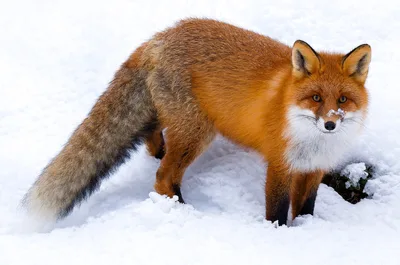 Red fox
 Least weasel
- snakes
- owls
- hawks
- rats
Ecological equivalents
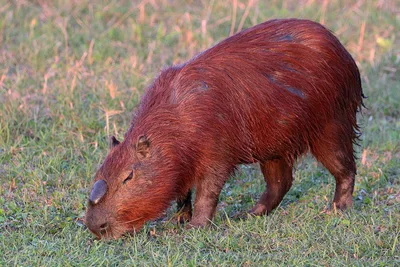
Related species on this site
Fancy Mouse (same genus), Brown rat (same family), Mouse (same family), Palm Rat (same family), Abyssinian Guinea Pig (same order), Agouti (same order), and more.
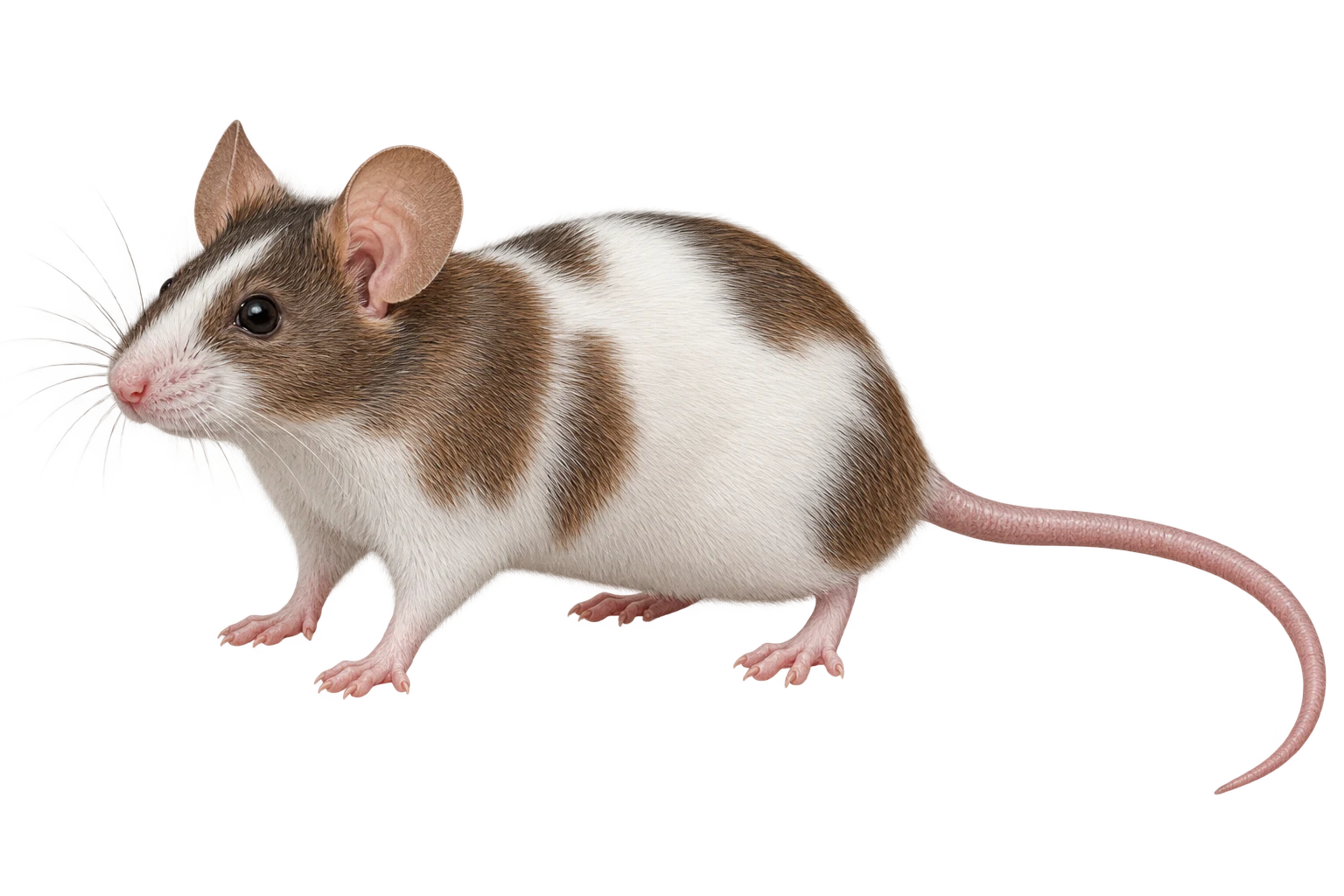
Mammals
Fancy Mouse
Mus musculus
Classification and source reference
LivingAI illustration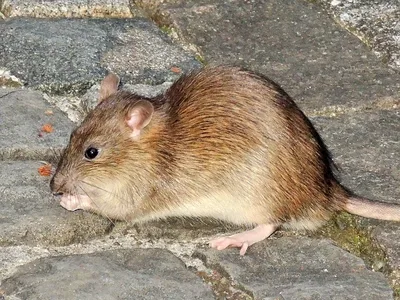 LC
Mammals
Brown rat
Rattus norvegicus
The brown rat is a large, burrowing rodent that lives wherever people live.
Living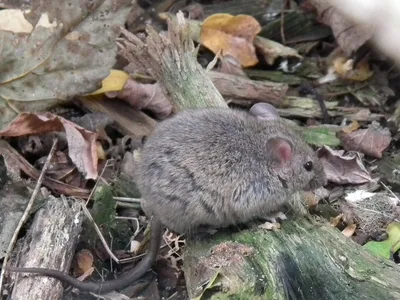
Mammals
Mouse
Muridae
Mice include many small rodents.
Living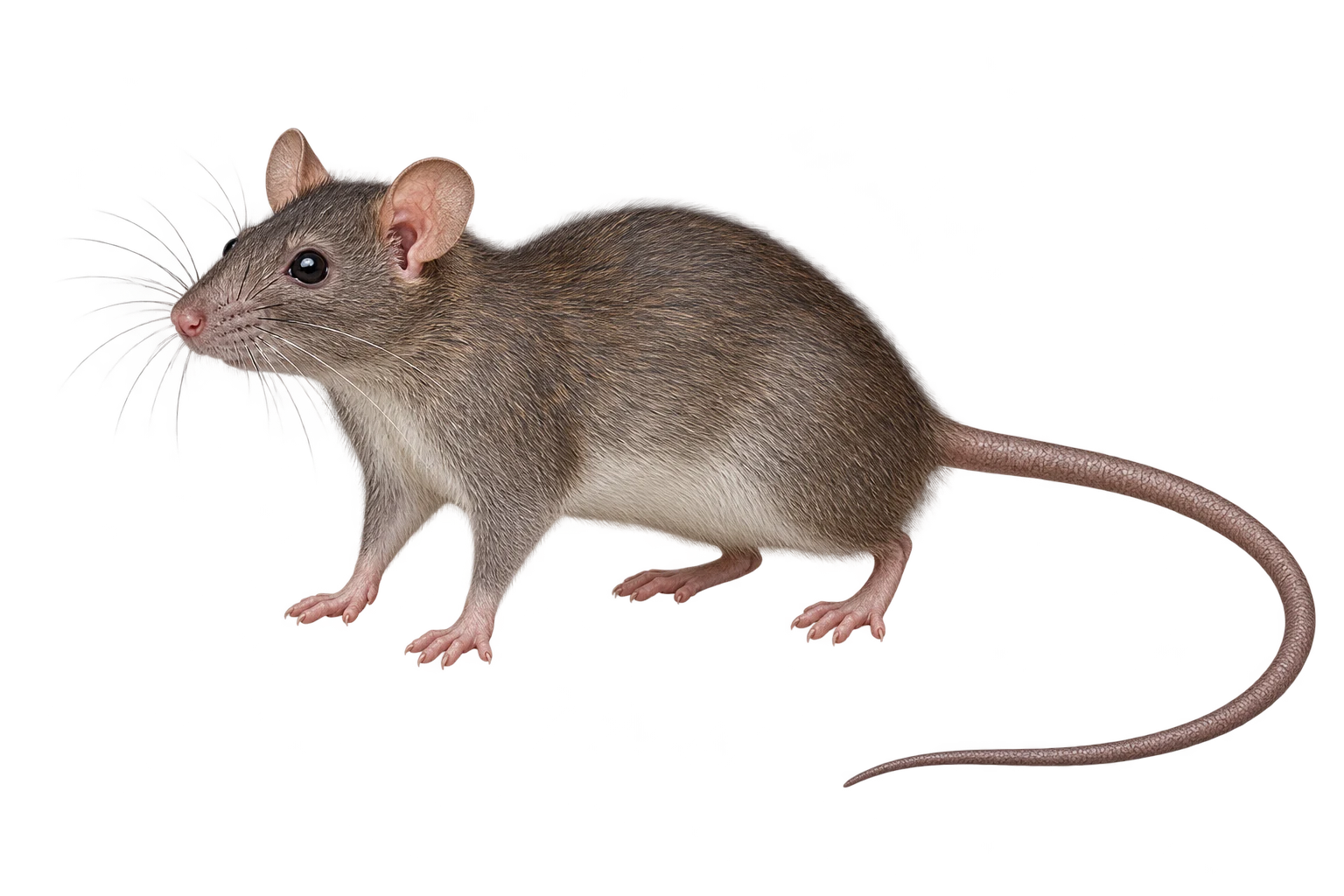
Mammals
Palm Rat
Rattus rattus
Classification and source reference
LivingAI illustration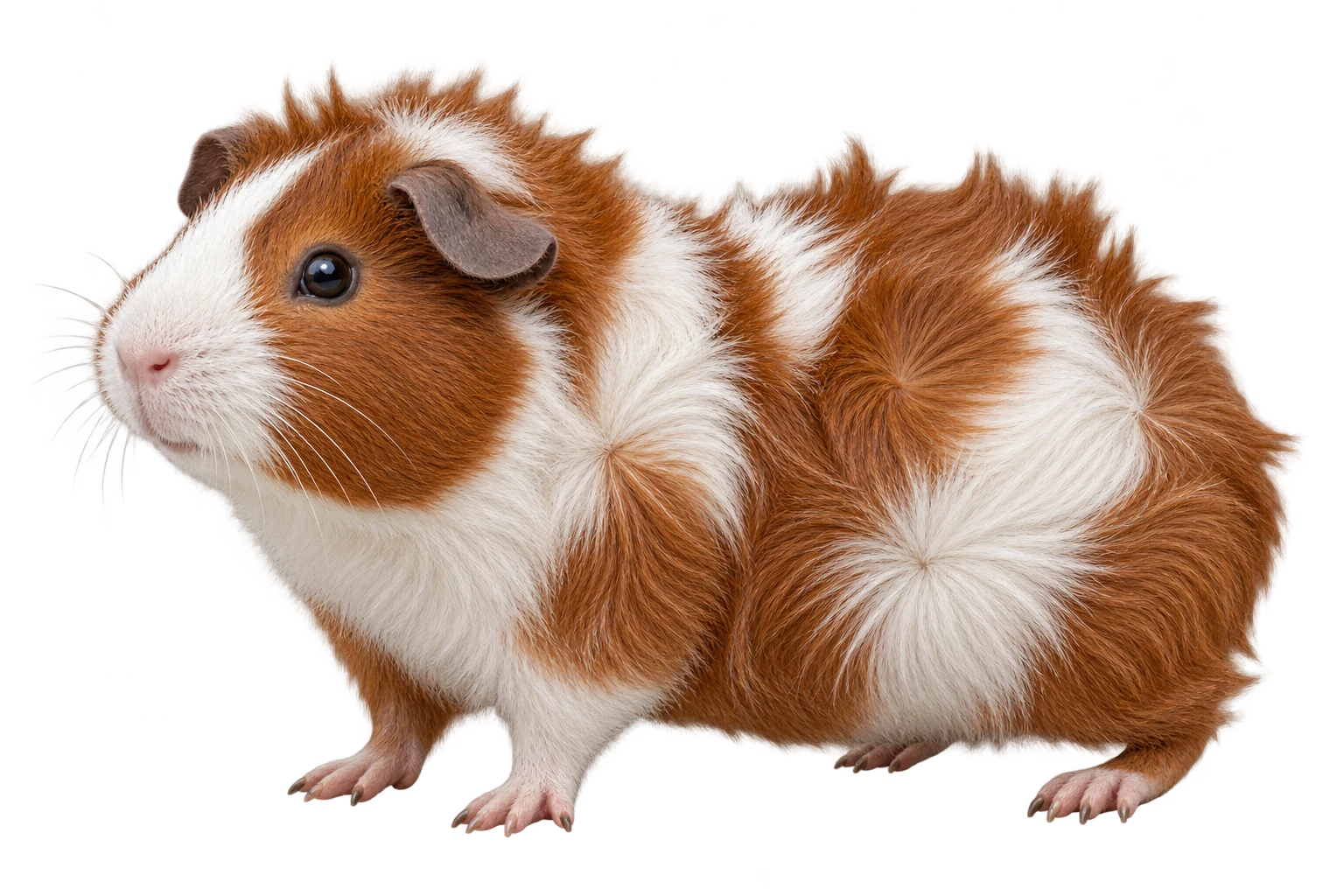
Mammals
Abyssinian Guinea Pig
Cavia porcellus
Classification and source reference
LivingAI illustration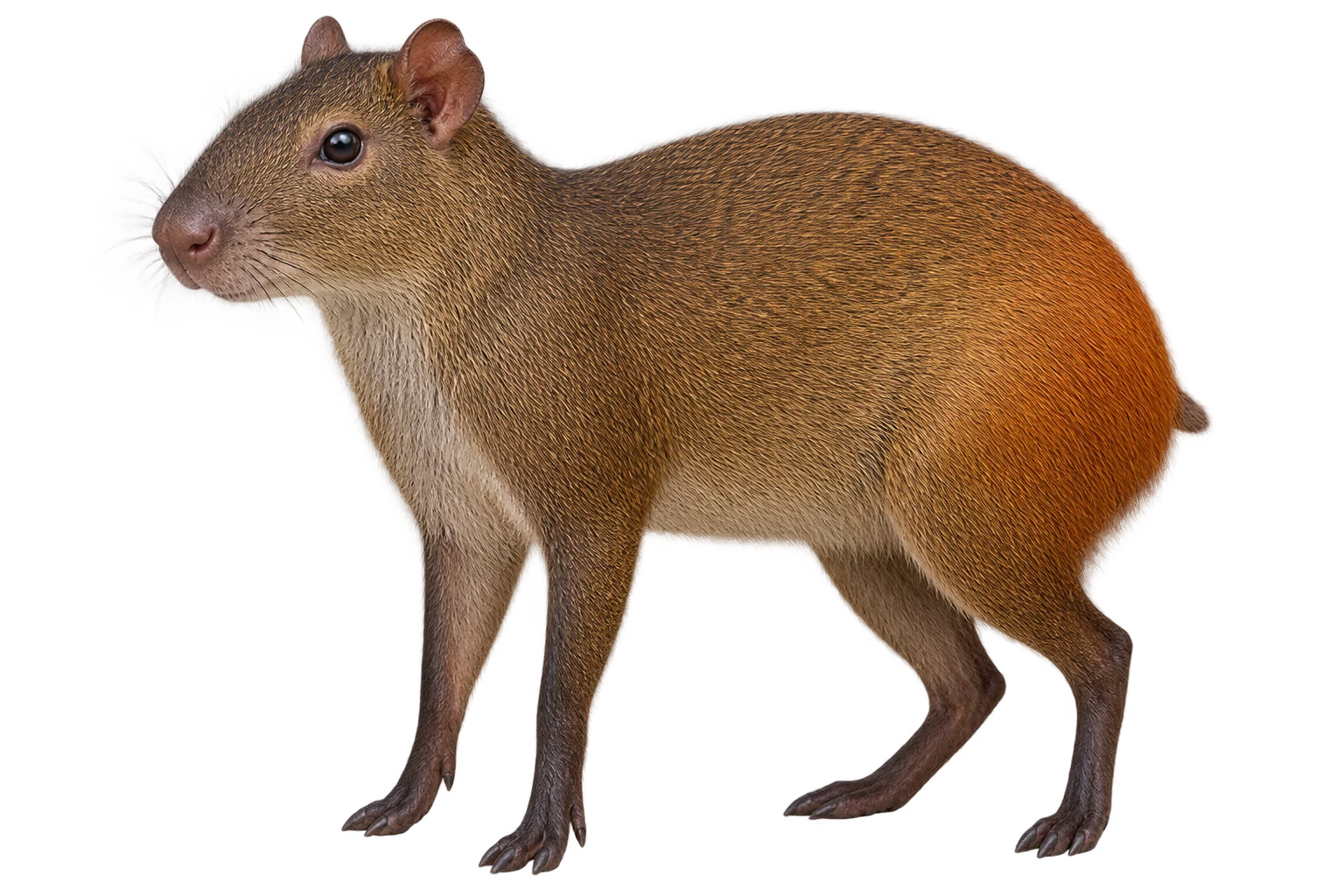
Mammals
Agouti
Dasyprocta
Classification and source reference
LivingAI illustration