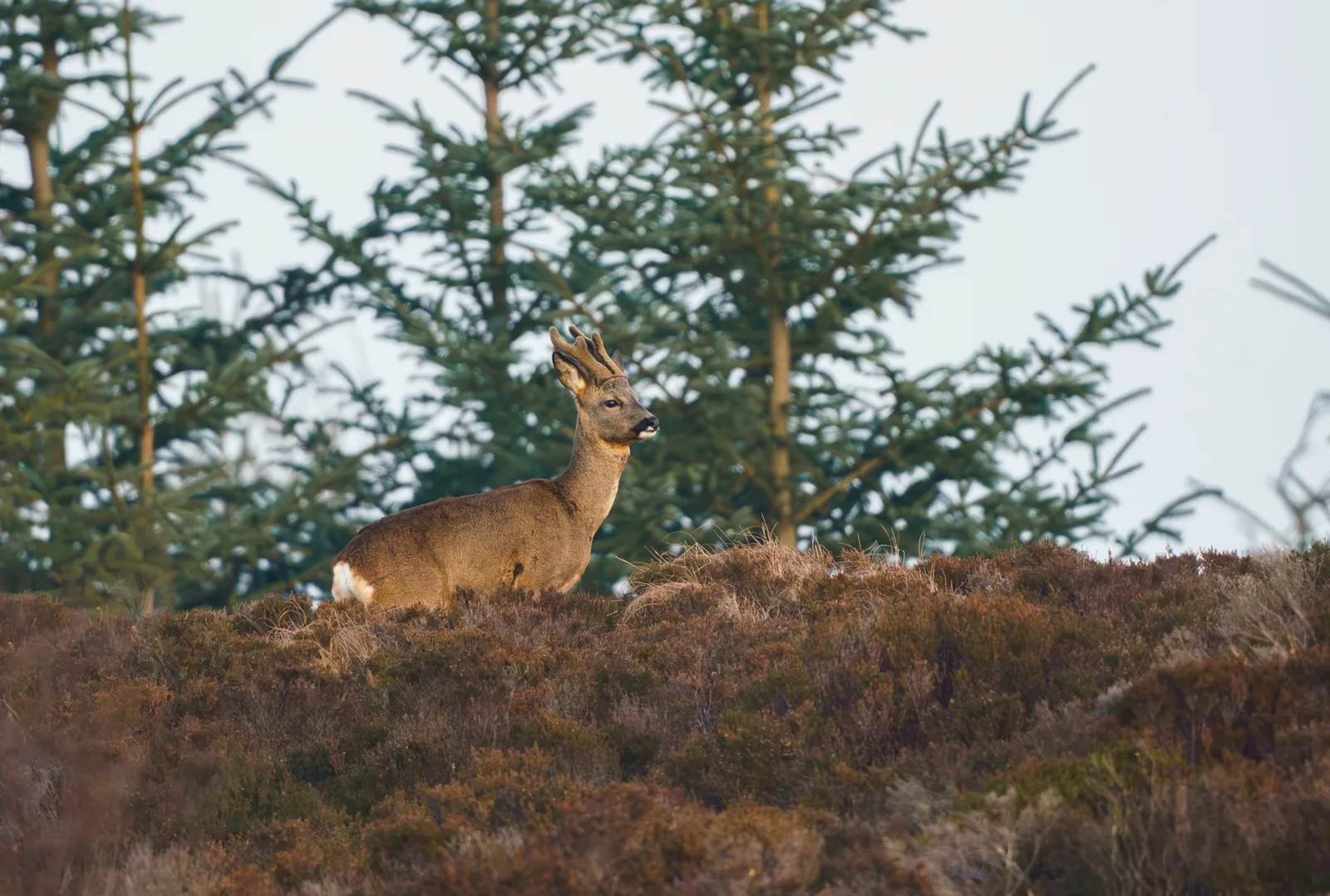
Roe deer
Europe's small deer that pauses its own pregnancy
Capreolus capreolus
Also called European roe deer, Western roe deer, Roe, Roebuck
Living individuals or members of this group exist today. This does not mean they are safe from extinction.
Meet the roe deer
The roe deer is the smallest and most common deer in Europe, red in summer and grey in winter. It is the only hoofed animal that delays the implantation of its embryo, so a July mating gives a June fawn.
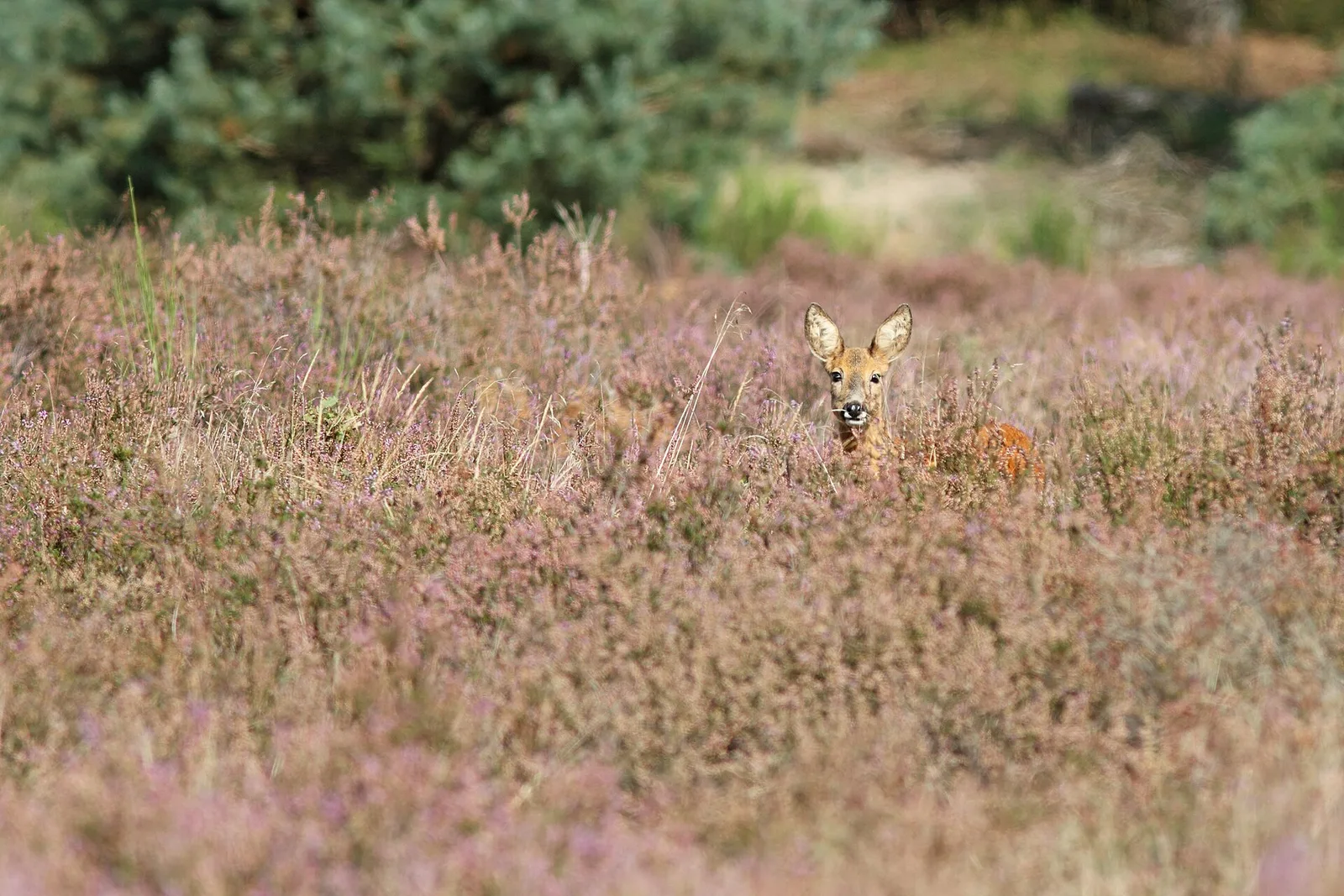
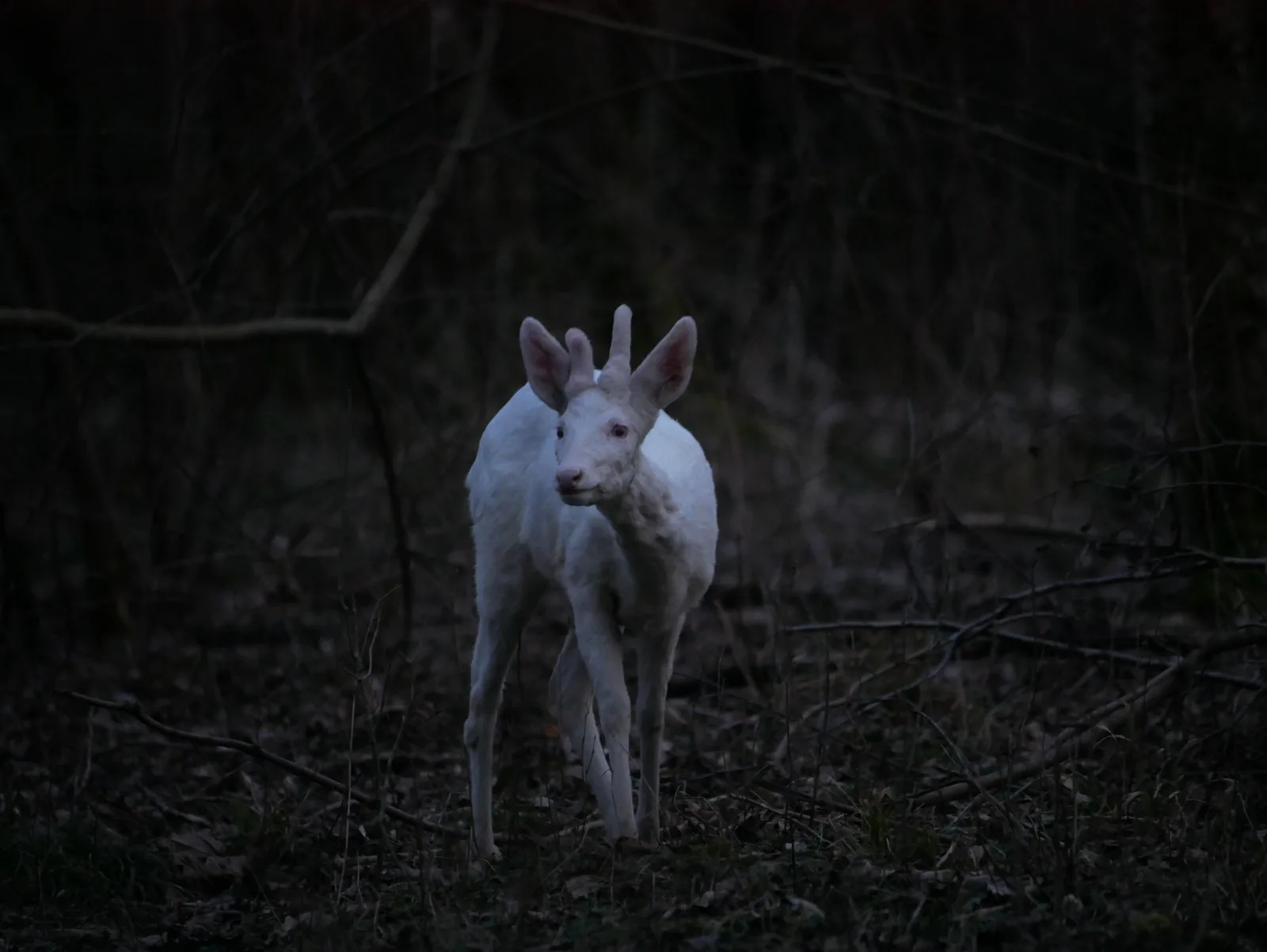
Images of the roe deer
Lifespan in the wild
7 to 10 years a normal wild life is seven to ten years; the record is about 20
Weight
15 to 35 kg
Length
0.95 to 1.35 m
Height
63 to 67 cm
Fact file
Roe deer
- Location
- Europe from Scotland to the Caucasus, plus Turkey and northern Iran
- Habitat
- Temperate forest, Grassland, Mountains, Towns and cities
- Diet
- Herbivore
- Prey / food
- Buds, shoots, leaves, forbs, grass, berries, seeds
- Predators
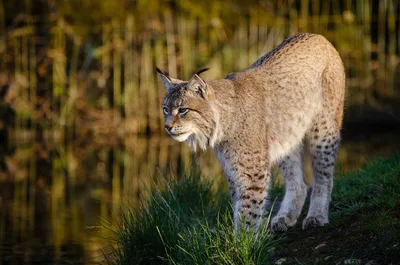
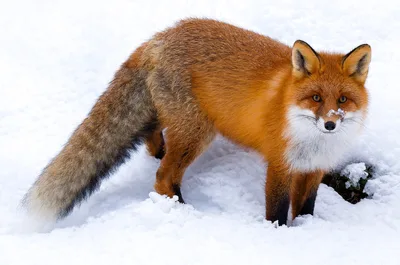
- Gray wolf, Eurasian lynx; foxes take fawns
- Lifestyle
- Active at dawn and dusk, alone or in small groups
- Group name
- Small family group
- Name of young
- Fawn or kid
- Gestation
- About 10 months, including a 5-month pause
- Litter size
- 2 fawns, sometimes 1 or 3
- Population
- About nine million in Europe
- Biggest threat
- Hunting, road traffic and poaching in the south
- Distinctive feature
- White rump patch, no visible tail and short three-point antlers
- Colour
- Red-brown in summer, grey-brown in winter
- Skin type
- Fur
Size
Next to a person
Measurements
Size and speed
- Height
- 63 to 67 cm at the shoulder
- Length
- 0.95 to 1.35 m head and body
- Tail
- 2 to 3 cm
- Weight
- 15 to 35 kg adults average 20 to 25 kg
- Weight, male
- 22 to 30 kg adult bucks after the rut
Typical adult ranges. Sources: Wikipedia, Animal Diversity Web.
Life cycle
Lifespan
- In the wild7 to 10, up to 20 years a normal wild life is seven to ten years; the record is about 20
- In captivityUp to 17.5 years
- 020 years
Appearance
Colour and coat
- Primary colours
- red-browngrey-brown
- Secondary colours
- whiteblack
- Skin type
- fur
- Male and female
- Moderate. Bucks carry short antlers and are about 5 to 10 percent heavier than does. The rump patch is kidney-shaped on a buck and heart-shaped on a doe.
Life cycle
Mating and family
- Mating system
- polygynous, a territorial buck with several does
- Social structure
- solitary or small family groups
- Breeding
- two fawns a year, born in May or June
The rut runs from mid-July to mid-August, and a doe is receptive for only 36 to 48 hours. The embryo waits until January to implant, so the whole pregnancy lasts about 10 months. Twins are usual, born in May or June, and each weighs about 1.3 kg. The fawns hide in long grass for their first weeks and are weaned after about three months. Does breed from 14 months, and a wild deer normally lives 7 to 10 years.
Classification
Taxonomy
- Kingdom
- Animalia
- Phylum
- Chordata
- Class
- Mammalia
- Order
- Artiodactyla
- Family
- Cervidae
- Genus
- Capreolus
- Species
- Capreolus capreolus
Conservation
Red List status
- LC
- NT
- VU
- EN
- CR
- EW
- EX
Least Concern on the IUCN Red List
Range
Recorded in 24 countries
- Austria
- Belgium
- Switzerland
- Czech Republic
- Germany
- Denmark
- Spain
- Finland
- France
- United Kingdom
- Hungary
- Italy
- Lithuania
- Luxembourg
- Netherlands
- Norway
- Poland
- Portugal
- Romania
- Russia
- Sweden
- Slovenia
- Slovakia
- Ukraine
Habitat layer: temperate broadleaf and mixed forest, temperate conifer forest, boreal forest and taiga, tropical grassland, savanna and shrubland, temperate grassland, savanna and shrubland, montane grassland and shrubland.
Countries from 57,067 wild records on GBIF (iNaturalist research grade), filtered and checked by hand. Country shapes: Natural Earth. Habitat: RESOLVE Ecoregions 2017, CC BY 4.0. Basemap: Natural Earth.
Habitats
Three things to know
- 1
The roe deer is the only hoofed animal that pauses its pregnancy, holding the embryo for five months before it implants.
- 2
About nine million roe deer live in Europe, and hunters take millions of them every year.
- 3
Bambi was a roe deer in the original book, before Disney turned him into a white-tailed deer.
Did you know
Seven more facts
- 1
The white rump patch is heart-shaped on a doe and kidney-shaped on a buck.
- 2
A roe deer barks like a dog when alarmed.
- 3
Unlike most deer, a buck starts to regrow his antlers as soon as he sheds them.
- 4
The deer feeds 9 to 11 times a day because its stomach is small.
- 5
Roe deer live in Glasgow and Bristol, where they favour cemeteries.
- 6
Hybrids with the Siberian roe deer grow bigger than their mothers by 4 to 5 months.
- 7
Roe deer will not usually enter a field where livestock have grazed.
Field notes
How it looks and acts
Field notes
Distinguishing features
- A small deer of 63 to 67 centimetres at the shoulder.
- A red-brown summer coat and a grey-brown winter coat.
- A large white rump patch and almost no visible tail.
- Short, upright, three-point antlers with a rough, pearled base on the buck.
- A black muzzle with white lips and chin.
- A rump that stands higher than the shoulders.
Field notes
Unique adaptations
- Delayed implantation that times the birth for early summer despite a July rut.
- Salivary glands that neutralise tannins, so it can eat plants other browsers avoid.
- A short, high-rumped body built for slipping through thick cover.
- A spotted, scentless fawn that freezes in long grass while the mother feeds at a distance.
- A thick grey winter coat that suits cold climates.
Field notes
Interesting behaviours
- Rests in cover by day and comes out to feed in the half-light and after dark.
- A buck marks his territory by rubbing, fraying and scraping.
- Flashes its rump patch and barks when alarmed.
- Scrapes leaf litter aside to make a bed.
- Gathers in loose winter herds on open farmland.
Field notes
Temperament
- Shy and quick to flee.
- Bucks turn aggressive towards other bucks from spring to late summer.
- Adaptable enough to live in cropland, hedges and city parks.
Field notes
Communication
- A dog-like bark as an alarm.
- A high whine from a doe in the rut.
- Scent from forehead, leg and hoof glands on saplings and scrapes.
- A raised white rump patch as a visual warning.
Ecology
Ecological role
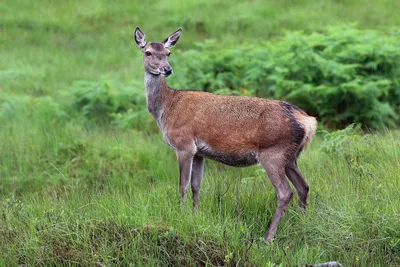
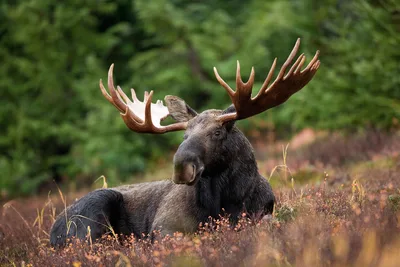
The roe deer is the most abundant wild hoofed animal in Europe and a key prey of the wolf and the lynx.
- Its browsing shapes the regrowth of young woodland and can hold back tree regeneration.
- It feeds wolves, lynx, leopards and foxes across its range.
- It spreads few seeds despite eating many.
Stories
Myths and legends
- In Hebrew tradition the roe deer is among the clean animals of Deuteronomy that may be eaten.
- In ancient Chinese tradition an albino roe deer was a sacred animal.
- In German tradition, the Grimm tale Brother and Sister turns a boy into a roe deer.
- In Central European hunting lore a hunter must never shoot a white deer, because it is an omen.
People
Relationship with humans
People
Living alongside us
People have hunted the roe deer since the Stone Age, and it remains Europe's main game animal and source of venison. Overhunting cut its numbers from the 17th century, but laws and new forests brought it back. It now damages young trees and collides with cars in many countries, so managers cull it. It is shy and poses almost no direct danger to people.
- The deer flees from people and does not attack them.
- Collisions with cars are the main harm it causes.
- A rutting buck may be aggressive to other bucks, but it is thought to leave people alone.
People
Status, uses and products
- Domestication
- Wild
- As a pet
- Not suitable. A roe deer is a wild game animal that needs cover, space and a browse diet of many plant species. Hand-reared fawns can become tame, but adults do not settle in captivity.
- Uses
- sport huntingvenisonscientific study
- Products
- venisonantlershides
The full account
About the roe deer
The roe deer, Capreolus capreolus, is a small deer of Europe and western Asia. It stands 63 to 67 centimetres at the shoulder and measures 95 to 135 cm from nose to rump. Most adults weigh 20 to 25 kilograms, and the full range runs from 15 to 35 kg. The coat turns red-brown in summer and grey-brown in winter, and the tail is so short it is hard to see. A white rump patch flashes when the deer runs, and the male, called a roebuck, carries short three-point antlers.
The species lives from Scotland to the Caucasus and from the Mediterranean to Scandinavia, with outposts in Turkey and northern Iran. It is the most common deer in Europe, with about nine million animals. It thrives in farmland, hedges and city cemeteries as well as in forest. Its pregnancy is unusual, because the embryo waits about five months before it implants. The IUCN lists the roe deer as Least Concern, and its numbers keep rising.
Name and taxonomy
The English word roe comes from Old English and is related to the German Reh and the Dutch ree. It may trace back to an old root that meant streaked or spotted, a fitting name for a spotted fawn. The word appears in runes on a 5th-century deer ankle bone found at Caistor-by-Norwich. For centuries the animal was simply the roe, and roe deer is a later habit. The Latin Capreolus is a diminutive of capra, a goat, and may once have meant an ibex or a chamois.
Linnaeus named the species Cervus capreolus in 1758. John Edward Gray proposed the genus Capreolus in 1821, but most writers ignored it until the 20th century. The type locality is Sweden. Some lists give subspecies in Spain, Italy and the north Caucasus, but two leading specialists treated the species as having none in 2001. The Siberian roe deer of Russia and East Asia was split off as its own species from 1985, based on protein and chromosome studies. Mammal Species of the World adopted that split in 1993.
Evolution and relatives
The roe deer belongs to the Capreolinae, the subfamily that also holds the deer of the Americas. Its closest relative is the water deer, and the pair sit nearest to the moose and the reindeer. The genus probably descends from Procapreolus, a Eurasian line of about 10 species that spread west from the Late Miocene onward. The European and Siberian species parted between 1.375 and 2.75 million years ago. The western species first appears in Europe about 600 thousand years ago.
During the last ice age the roe deer retreated to refuges in Iberia, southern France, Italy, the Balkans and the Carpathians. It moved north to Germany about 12.5 thousand years ago and vanished again in the cold Younger Dryas. It came back for good about 9.7 thousand years ago. Genetic data suggest that the modern northern population came from the Carpathians or further east, the opposite of the red deer's route from Iberia. Since the 1960s the European and Siberian species have met again, and a broad hybrid zone runs from the Volga to eastern Poland. Female hybrids are fertile, male hybrids are not, and the young grow so large that some births needed a Caesarean section.
Appearance
The roe deer is a small, elegant deer with a long neck, a short body and a rump that sits higher than the shoulders. The summer coat is red-brown, and the winter coat is grey-brown to dark brown and much thicker. The deer moults in April to June and again in September to October. The muzzle is black, the chin and lips are white, and the ears are large, about 12 to 14 cm. In winter a big white rump patch shows: kidney-shaped on a buck, heart-shaped on a doe. The doe has a tuft of white hair under the rump that looks like a tail. The true tail is only 2 to 3 cm.
Body length is 95 to 135 cm and shoulder height 63 to 67 cm. Bucks weigh 22 to 30 kg after the rut, and they run 5 to 10 percent heavier than does. The heaviest animals live in Scandinavia and the Baltic states, and the lightest in Spain, Italy and cold alpine valleys. Antlers are short, about 16 to 23 cm on an adult buck, with three points and a rough, pearled base. Good bucks reach 20 to 25 cm, and a four-point head is rare. Bucks cast their antlers in October or November and, unlike most deer, start to regrow them at once.
The new antlers grow under velvet, which the buck rubs off on saplings in March or April. Fawns are brown flecked with black, with white spots along the sides and back that fade by about five months. The hooves are narrow and pointed, 4 to 5 cm long. There are no glands in front of the eyes, but a buck has a scent gland on the forehead between the antler bases.
Habitat and range
The roe deer lives across almost all of mainland Europe. It is absent from Iceland, Ireland, the far north of Scandinavia and the Mediterranean islands. Eastward it reaches western Russia, Ukraine, Turkey, the Caucasus, northwest Syria, northern Iraq and northern Iran. It is extinct in Lebanon and Israel, though Israel began a reintroduction in the Carmel hills in the 1990s. Scottish deer released in County Sligo in about 1870 survived for some 50 years and then died out.
The deer needs food and cover, and beyond that it is not fussy. It lives in Mediterranean scrub, boreal forest, Scottish moorland, alpine slopes up to 2,400 metres and open farmland. In the southern Czech Republic it lives in almost treeless cropland. By day it rests in dense wood, conifer plantations or bramble, though a hedgerow will do. Deep snow sets the northern limit, because the deer struggles in more than 40 cm.
It is a pioneer of young woodland and forest edge, and it spread when Neolithic farmers first cleared the forest. In Britain it was almost gone from the south in 1900, but it has since retaken most of England and reached Wales. German deer released in Thetford Forest in 1884 stocked much of East Anglia. Roe deer now live in cities such as Glasgow and Bristol, where they like cemeteries. In Flanders the spread of tall maize crops, which give cover, may have helped the deer move west.
Diet and feeding
The roe deer is a browser and a selective feeder. It picks soft food rich in sugars, protein and water: buds, shoots, leaves, forbs, berries and, in autumn, seeds and fruit. It likes tender young grass, best of all after rain. Across Europe it eats about 1,000 plant species, and up to 370 in one region. One analysis put the diet at 54 percent broadleaved herbs, 25 percent woody plants and 16 percent grasses and sedges. Conifer needles are winter food only, taken when little else is left.
The rumen is small, so the deer feeds often, about 9 to 11 times a day, with the longest bouts at dawn and dusk. Daily intake is about 2 to 4 kilograms of fresh plants. It carries little body fat, so it must find most of its energy in food even in winter. Large salivary glands let it cope with tannins that would poison many other herbivores. Roe deer usually avoid fields where livestock have grazed. In Iran it eats many seeds but spreads few of them, so it is a poor seed disperser.
Behaviour and social life
Roe deer are not very social. In summer they live alone or as a doe with her fawns. From September to February does form small groups of 2 to 4 with their young and sometimes a buck. Two families may join into a clan of 6 to 8, and on open farmland loose herds of 40 to 90 gather in snowy winters. These spring gatherings break up as soon as the bucks turn aggressive and move to their territories.
From April to August an adult buck holds a territory and drives other bucks out of it. He marks it by rubbing saplings with his forehead, fraying plants with his antlers and scraping the ground with his hooves. One study counted about 90 scrapes and about 95 rubs per hectare. A buck can hold his ground for 5 to 7 years, and each year an old holder faces a young challenger. Yearlings live in the gaps between territories or attach themselves to a tolerant older buck.
The deer stays in cover by day and moves into the open at dusk, at night and at dawn. It scrapes the leaf litter aside to make a bed. Home ranges average 5 to 7 square kilometres in woodland and 8 to 10 in open country. In the Alps and Scandinavia some deer move 4 to 12 km down to the valleys for winter. It can jump about 5 metres in length and clear a high fence.
Communication and senses
The alarm call is a bark much like a dog's, given as the deer flashes its white rump and bounds away. Bucks also bark and give a low grunt. During the rut a doe gives a high, thin whine to draw a buck. Fawns, does and bucks of the European and Siberian species each make different sounds.
Scent matters more than sound. A buck's forehead gland, hoof glands and leg glands leave marks on saplings, scrapes and trails. He follows the scent trail of a doe and tests her state with the vomeronasal organ in the roof of his mouth. Like other deer, the roe probably relies on large ears and a keen nose more than on sharp eyesight. The white rump patch is thought to be a visual signal that warns the group and confuses a pursuer.
Reproduction and life cycle
The rut runs from mid-July to mid-August. A doe is receptive for only 36 to 48 hours in the whole year. The buck chases her first in wide circles and then in tight circles or figures of eight. The trampled plants form roe rings 1 to 3 metres across. He stays with her for 2 to 4 days and then seeks another doe. A buck may lose about 10 percent of his weight during the rut. Does often go looking for a buck themselves and lead him back to their own range. A buck may mount the same doe many times over several hours.
The fertilised egg travels to the uterus but does not implant. It rests as a tiny blastocyst for about five months and implants in January. The roe deer is the only hoofed animal with this delay, and the trigger is the embryo itself, not day length. True growth then takes about 150 days, so the whole pregnancy lasts about 10 months. Fawns arrive in May or June, and twins are the rule in most of Europe. Heavy Scandinavian does often bear triplets, and Mediterranean does often bear one.
A newborn weighs about 1.3 kg, and it doubles that within 10 to 15 days. For the first weeks it lies hidden in long grass and freezes at danger while its mother feeds 50 to 150 metres away. She suckles it 5 to 9 times a day in the first month, and lactation lasts about three months. Does breed from about 14 months, but bucks rarely win a mate before 2 to 3 years. A normal wild life is 7 to 10 years, and the record is about 20. In hunted populations the average deer lives under three years.
Predators and threats
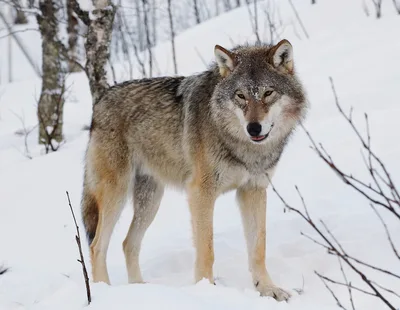
The gray wolf and the Eurasian lynx are the main predators. The red fox takes young fawns, and in the Alborz Mountains of Iran the Persian leopard depends on roe deer. Feral dogs kill deer in southern Italy and Spain. Britain has no large predators left, which is one reason its roe deer have spread so far.
Most deaths come in the first weeks, from predators or from farm machinery cutting hay over hidden fawns. The first winter is the next hurdle, and in a bad year up to 90 percent of fawns die of hunger or disease. Road traffic kills many deer, and in some countries the numbers are high enough to be a safety problem. Poaching, competition with livestock and crossing with released stock threaten some Mediterranean populations. A gut nematode, Spiculopteragia asymmetrica, infects the species.
Population and conservation
The IUCN lists the roe deer as Least Concern. Europe holds about nine million, of which 2 to 9 million are shot each year. Densities run at 5 to 25 deer per square kilometre, and up to 50 to 70 in the best places. The species can double its numbers in a year, because does keep breeding even when the population is dense. Hunting in the 17th to early 20th centuries pushed it back across most of Europe. Better laws, new forests and reintroductions then let it retake its old range.
The Netherlands had almost none in 1875 and about 110,000 in 2016. Israel imported 27 deer from France, Hungary and Italy in 1991 and released the first into the Carmel hills in 1996. Ireland has had a few unconfirmed sightings, and one confirmed in County Armagh in 2014. In some countries the population is now too large for the woods, and game managers cull it.
Relationship with humans
The roe deer is the most valuable game animal in Europe. In 1998 hunters shot about 2,500,000 in western Europe, and Germany alone took 700,000 a year in the 1990s. Even that harvest has not slowed its growth. Most venison eaten in Europe comes from this species, and the meat is darker than that of farmed deer. In the Middle Ages ordinary people could hunt it, unlike the red deer of the nobles.
Deer browsing damages young trees, and dense herds change the plants of a woodland. Collisions with cars are the main harm the deer does to people. The deer is shy and harmless to people, though a cornered buck may gore a dog. Its abundance makes it one of the most studied wild mammals in Europe.
In culture and myth
Deuteronomy lists the yahmur among the animals that may be eaten, and most Bibles render the word as roe deer. The King James Bible chose fallow deer instead. Older Bible translations also applied the Greek pygargos to the roe, though scholars now think it meant the addax. In ancient China an albino roe was so rare that it was treated as a sacred animal or a national treasure. In the Grimm story of the brother and the sister, the boy drinks from a cursed stream and turns into a roe deer.
Bambi was a roe deer in the Austrian book, and Disney changed him into a white-tailed deer for the film. Medieval bestiaries used deer as emblems of timidity and speed. Hunters in Central Europe once spared any white deer, which they read as an omen. Spirit-animal websites read the roe as gentleness and sensitivity, but those claims are modern and probably owe more to Bambi than to folklore.
A sentence with a dotted underline is inferred: it describes the group the animal belongs to, or is a reading of the sources, rather than a measured or reported fact about this species.
Questions
Roe deer questions, answered
How big is a roe deer?
It stands 63 to 67 centimetres at the shoulder and measures 95 to 135 cm long. Most adults weigh 20 to 25 kilograms.
Where do roe deer live?
Across almost all of mainland Europe, from Scotland to the Caucasus, and east into Turkey and northern Iran. They are absent from Ireland, Iceland and the Mediterranean islands.
What do roe deer eat?
Buds, shoots, leaves, herbs, berries and young grass. They pick soft, rich food and eat about 1,000 plant species across Europe.
Why is roe deer pregnancy so long?
The embryo waits about five months before it implants in January. Growth then takes about 150 days, which brings the total to about 10 months.
When are roe deer fawns born?
In May or June. Twins are usual, and the fawns hide in long grass for their first weeks.
Do roe deer bark?
Yes. The alarm call is a loud bark much like a dog's, often given as the deer flashes its white rump and runs.
How long do roe deer live?
Seven to 10 years is normal in the wild, and the record is about 20. Where hunting is heavy the average falls under three years.
Are roe deer endangered?
No. The IUCN lists them as Least Concern, and Europe holds about nine million. Numbers are still rising.
What are roe rings?
Circles and figures of eight that a courting buck tramples into the plants as he chases a doe. They are 1 to 3 metres across.
When do roe bucks shed their antlers?
In October or November. Unlike most deer, they start to regrow them at once, and the velvet comes off in March or April.
What eats roe deer?
Wolves and Eurasian lynx take the most adults. Foxes take fawns, and the Persian leopard hunts roe deer in Iran.
Are roe deer dangerous?
No. They are shy and run from people. The main risk is a collision with a car.
Can you tell a roe buck from a doe in winter?
Yes. A buck's white rump patch is kidney-shaped, and a doe's is heart-shaped with a tuft of hair below it.
Was Bambi a roe deer?
Yes, in the original book by Felix Salten. Disney changed him into a white-tailed deer for the film.
Do roe deer live in cities?
Yes. They live in Glasgow and Bristol, where they are fond of cemeteries, and in many European towns with parks and hedges.
Food web
Prey and food
- buds
- shoots
- leaves
- forbs
- grass
- berries
- seeds
Food web
Predators
 Gray wolf
 Eurasian lynx
 Red fox
Ecological equivalents
Related species on this site
Cervalces latifrons (Broad-Fronted Moose) (same family), Chinese Water Deer (same family), Coues Deer (same family), Deer (same family), Elk (same family), Fallow deer (same family), and more.
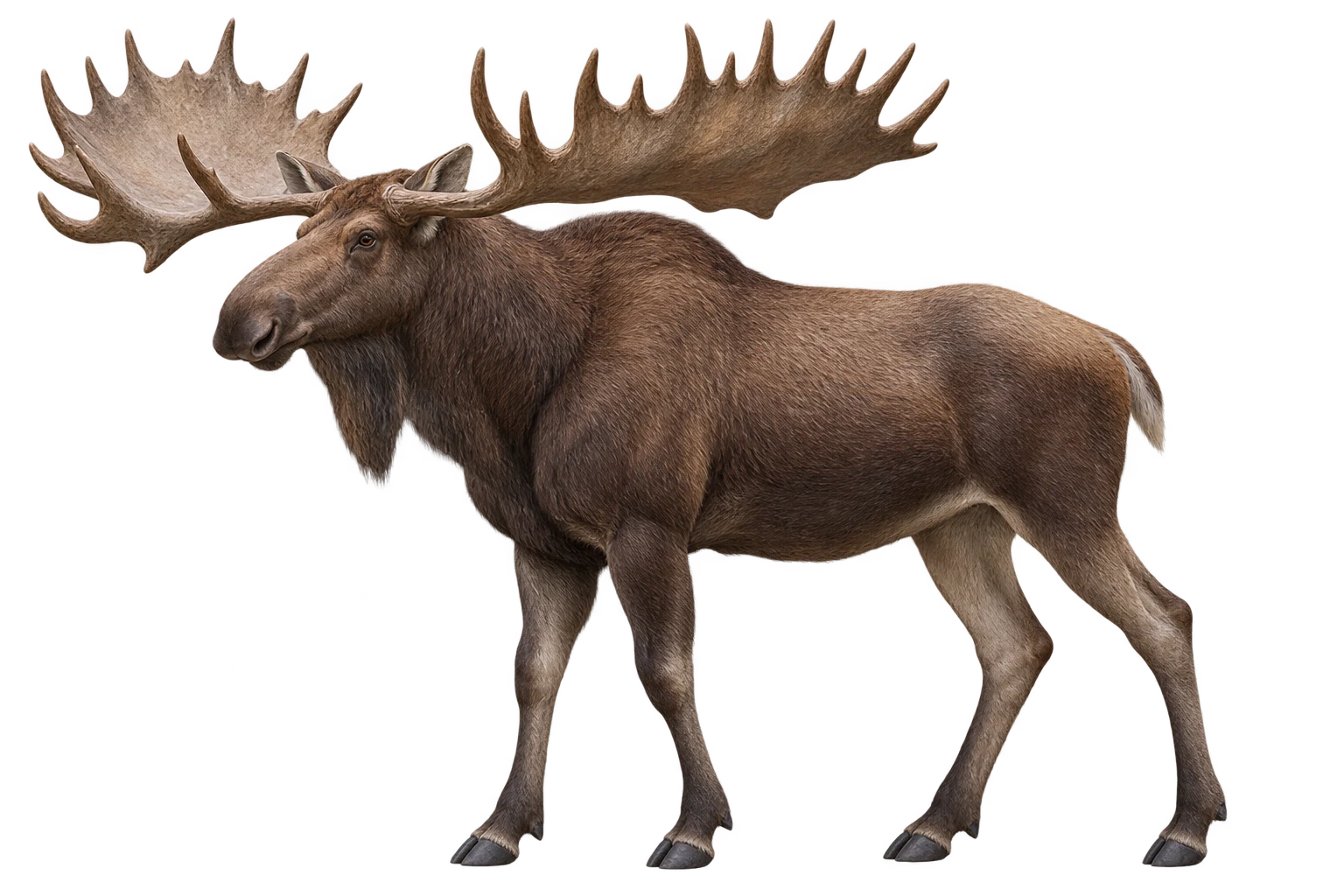
Mammals
Cervalces latifrons (Broad-Fronted Moose)
Cervalces latifrons
Classification and source reference
ExtinctAI reconstruction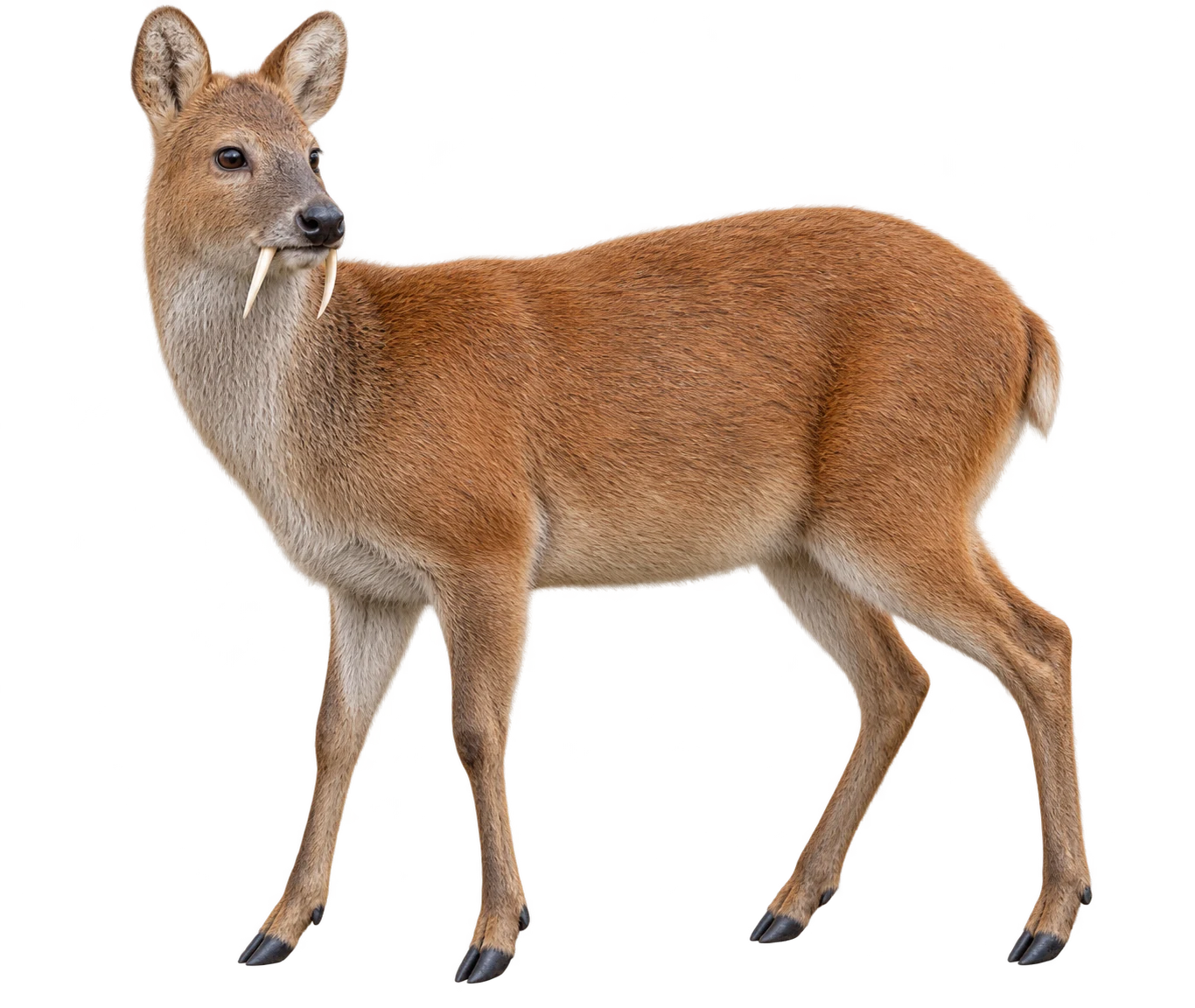
Mammals
Chinese Water Deer
Hydropotes inermis
Classification and source reference
LivingAI illustration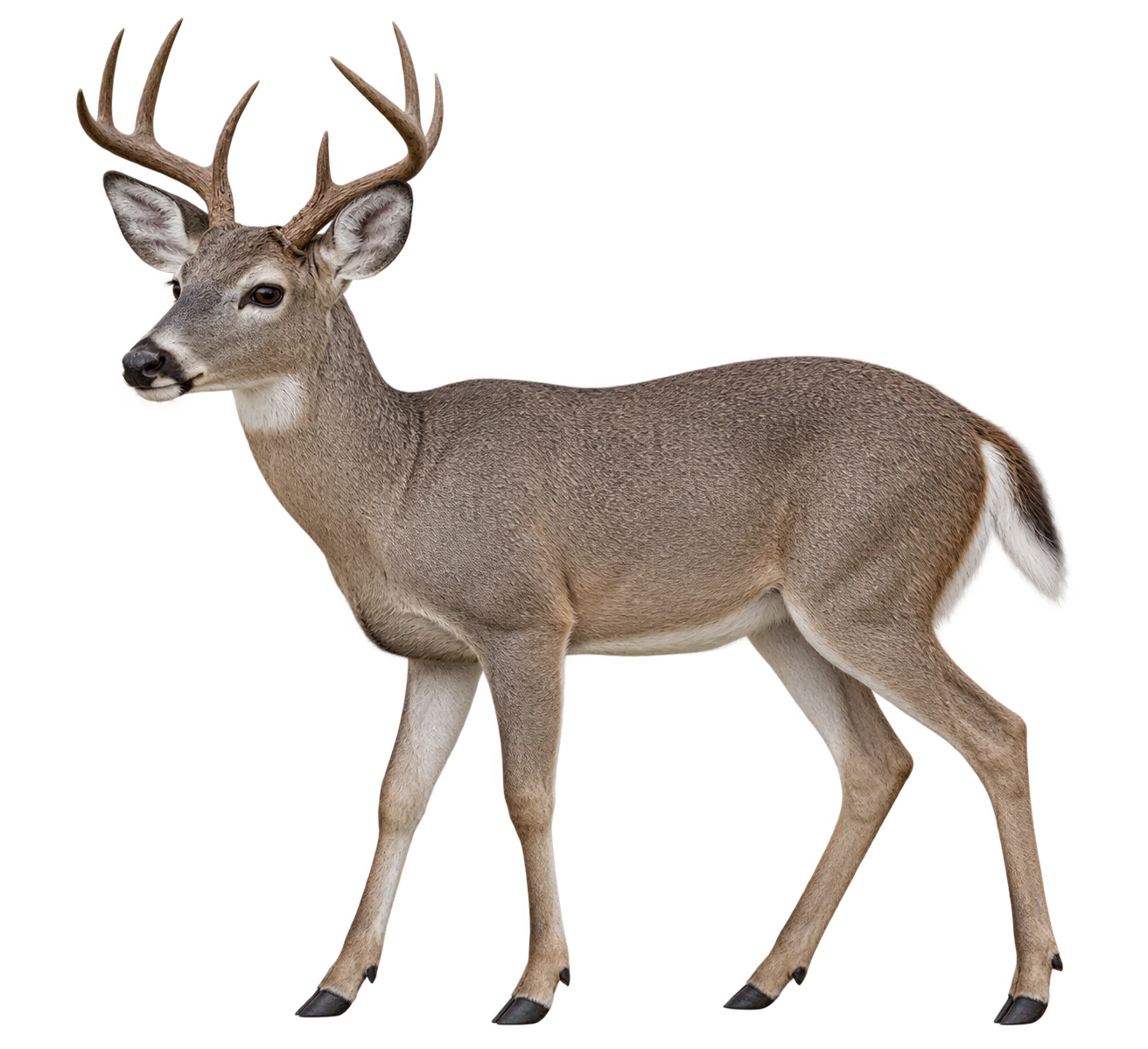
Mammals
Coues Deer
Odocoileus virginianus couesi
Classification and source reference
LivingAI illustration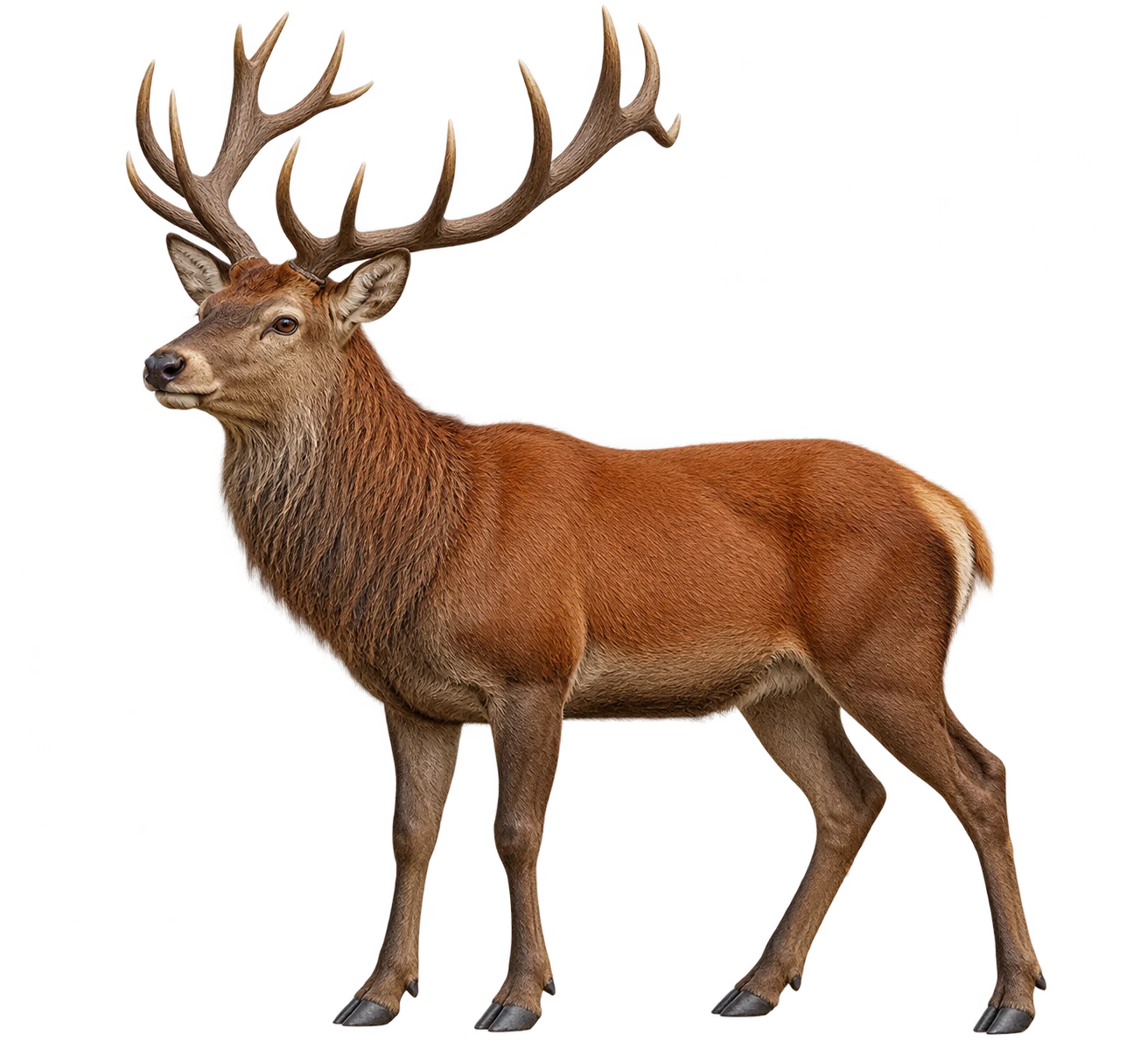
Mammals
Deer
Cervidae
Classification and source reference
LivingAI illustration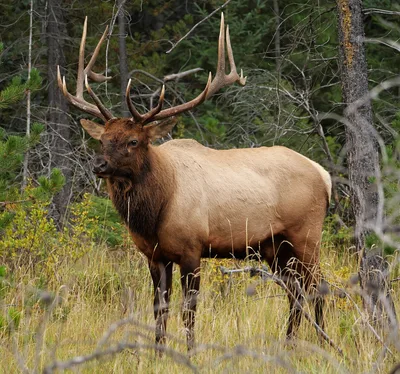 LC
Mammals
Elk
Cervus canadensis
The elk, or wapiti, is the second largest deer in the world.
Living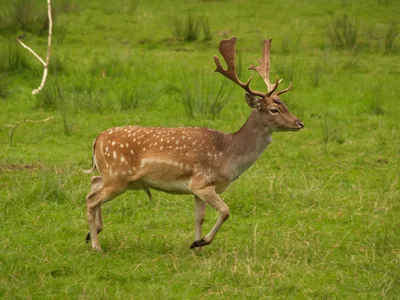
Mammals
Fallow deer
Dama dama
The fallow deer is a grazing and browsing deer often associated with woodland edges and open grass.
Living