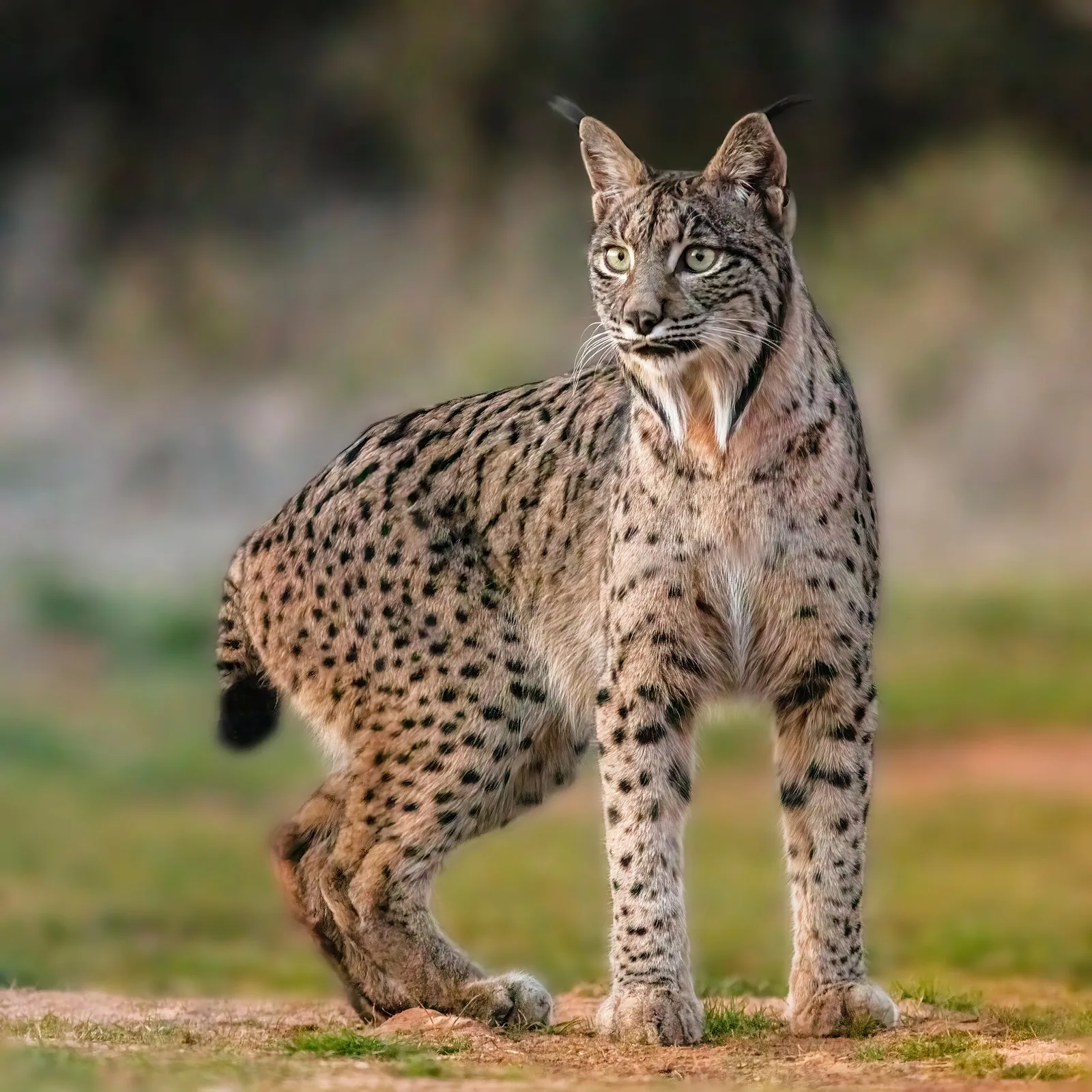
Iberian lynx
The rabbit hunter that came back from 94 animals
Lynx pardinus
Also called Spanish lynx, Pardel lynx, Lince ibérico
Living individuals or members of this group exist today. This does not mean they are safe from extinction.
Meet the iberian lynx
The Iberian lynx is a spotted, tufted-eared cat found only in Spain and Portugal. It lives almost entirely on rabbits, and it has climbed from 94 animals in 2002 to more than 2,000 today.
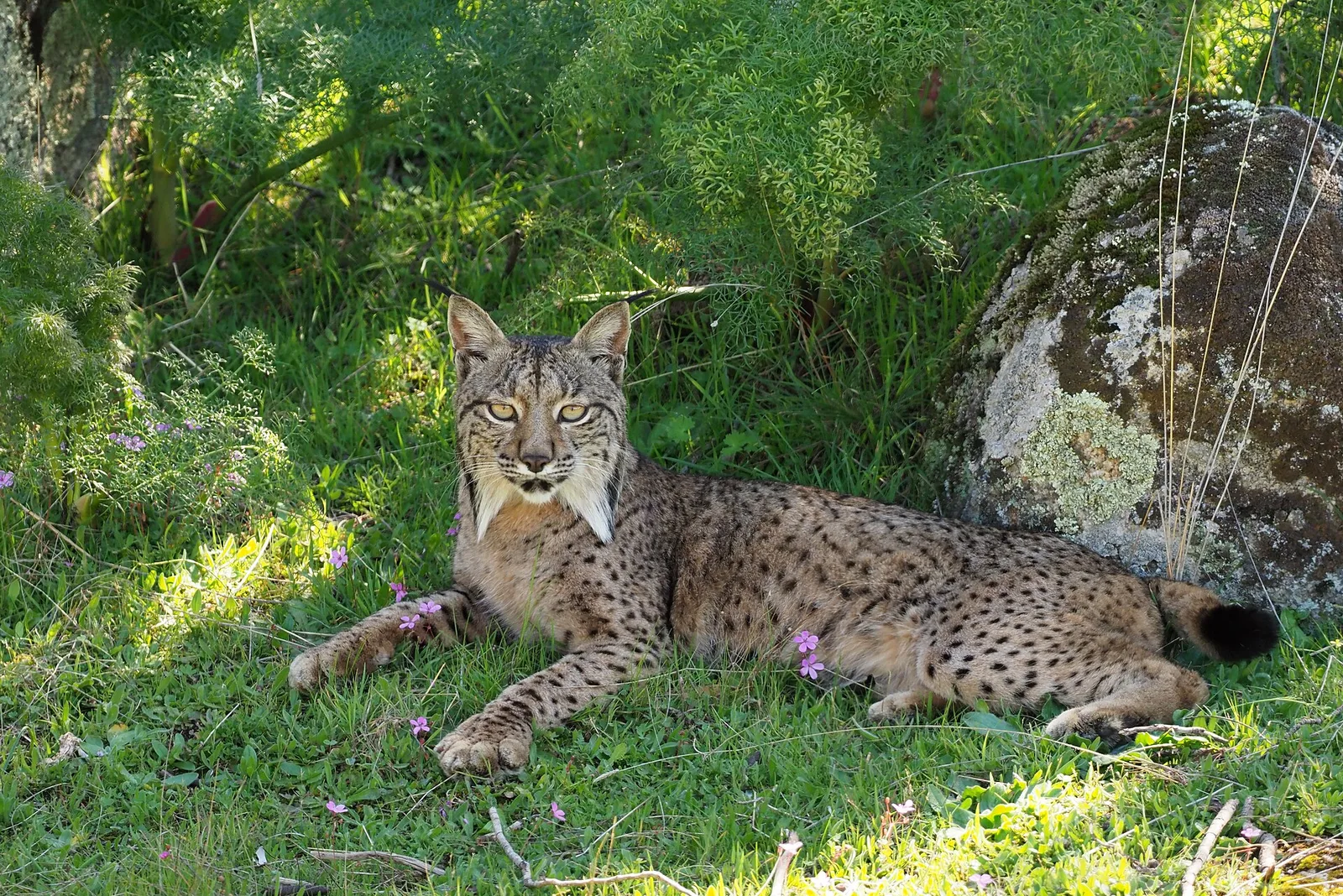
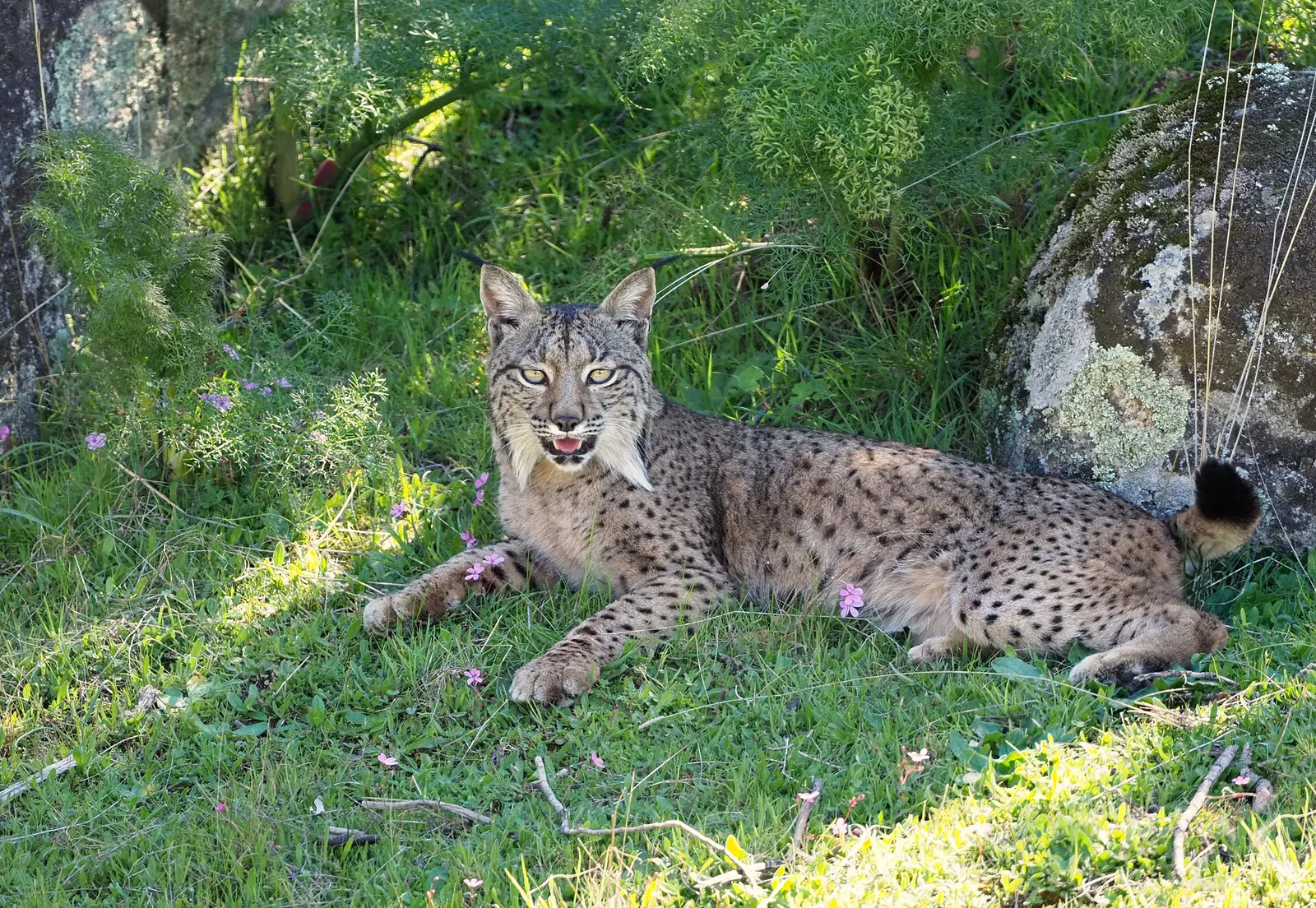
Images of the iberian lynx
Lifespan in the wild
Up to 13 years the oldest known wild lynx; captive longevity is unknown
Weight
11 to 15 kg
Length
0.8 to 1.3 m
Fact file
Iberian lynx
- Location
- Southern and central Spain, southern Portugal
- Habitat
- Temperate forest, Grassland, Wetlands
- Diet
- Carnivore
- Prey / food
- European rabbit, red-legged partridge, rodents, young deer
- Predators
- None; road traffic and poaching are the main killers
- Lifestyle
- Solitary; hunts at dusk and by night
- Group name
- Solitary; no group
- Name of young
- Kitten
- Gestation
- 63 to 73 days
- Litter size
- 2 to 4 kittens, usually 3
- Population
- About 2,021 in 2024 (Spain 1,730, Portugal 291)
- Biggest threat
- Rabbit disease, road deaths, habitat loss, illegal traps
- Distinctive feature
- Black ear tufts, a bearded ruff and a short black-tipped tail
- Colour
- Tawny yellow with dark spots
- Skin type
- Fur
Size
Next to a person
Measurements
Size and speed
- Length
- 0.8 to 1.3 m Wikipedia gives a head and body length of 68 to 82 cm
- Length, male
- 74.7 to 82 cm head and body
- Length, female
- 68.2 to 77.5 cm head and body
- Tail
- 12.5 to 16 cm
- Weight
- 11 to 15 kg average 12.8 kg; Wikipedia gives males 7 to 15.9 kg and females 9.2 to 10 kg
- Weight, male
- 7 to 15.9 kg
- Weight, female
- 9.2 to 10 kg
Typical adult ranges. Sources: Animal Diversity Web, Wikipedia.
Life cycle
Lifespan
- In the wildUp to 13 years the oldest known wild lynx; captive longevity is unknown
- 013 years
The pale bar is the record. Source: Animal Diversity Web.
Appearance
Colour and coat
- Primary colours
- tawnyyellow
- Secondary colours
- blackwhite
- Skin type
- fur
- Male and female
- Moderate. Males weigh 7 to 15.9 kilograms and measure 74.7 to 82 cm, while females weigh 9.2 to 10 kg and measure 68.2 to 77.5 cm. The coat pattern is the same in both sexes.
Life cycle
Mating and family
- Mating system
- polygynous, monogamous where territories are crowded
- Social structure
- solitary, with overlapping male and female ranges
- Breeding
- one litter a year, only when the territory is good
Mating peaks in January, and gestation lasts 63 to 73 days. A female gives birth to 2 to 4 kittens in March or April, in a tree hollow or a cave. She moves them between dens and weans them at 10 weeks, and usually only two survive that long. The young hunt alone by 7 to 10 months and leave by about 20 months. A female breeds only after she wins a territory, and the oldest wild lynx reached 13 years.
Classification
Taxonomy
- Kingdom
- Animalia
- Phylum
- Chordata
- Class
- Mammalia
- Order
- Carnivora
- Family
- Felidae
- Genus
- Lynx
- Species
- Lynx pardinus
Conservation
Red List status
- LC
- NT
- VU
- EN
- CR
- EW
- EX
Vulnerable on the IUCN Red List
Range
Recorded in 2 countries
Habitat layer: temperate broadleaf and mixed forest, temperate conifer forest, boreal forest and taiga, tropical grassland, savanna and shrubland, temperate grassland, savanna and shrubland, flooded grassland and savanna, mangrove.
Countries from 356 wild records on GBIF (iNaturalist research grade), filtered and checked by hand. Country shapes: Natural Earth. Habitat: RESOLVE Ecoregions 2017, CC BY 4.0. Basemap: Natural Earth.
Habitats
Three things to know
- 1
Only 94 Iberian lynx survived in 2002, and the 2024 count found 2,021.
- 2
Rabbits make up about 75 percent of the diet, and an adult male needs one rabbit a day.
- 3
The Iberian lynx kills foxes, mongooses and genets to cut competition for rabbits.
Did you know
Seven more facts
- 1
The Iberian lynx is one of only two carnivores found nowhere outside Europe.
- 2
It is about half the size of the Eurasian lynx.
- 3
A mother may move her kittens through as many as six dens.
- 4
In 2023 road traffic killed 144 lynx.
- 5
A white Iberian lynx was photographed in Jaén in 2025.
- 6
Remains about 40,000 years old show the species once lived in southern Italy.
- 7
The first captive-born kittens arrived on 29 March 2005 at El Acebuche in Doñana.
Field notes
How it looks and acts
Field notes
Distinguishing features
- Long black tufts on the tips of the ears.
- A ruff of long fur on the cheeks that looks like a beard.
- A short tail with a black tip.
- Tawny yellow fur with dark spots in rows.
- Long legs and a small head on a short body.
Field notes
Unique adaptations
- A short skull concentrates bite force in the canines for a killing bite on small prey.
- Narrow muzzle and small canines pierce a rabbit's skin more easily than a big cat's teeth would.
- Vertical pupils and large eyes suit hunting in dim light.
- Spotted fur hides the cat in broken scrub.
- Gut bacteria appear to help it digest rabbit and plant matter from the rabbit's gut.
Field notes
Interesting behaviours
- Hunts alone at dusk and by night, when rabbits are out.
- Marks its territory with urine, scratches and droppings.
- Rests through the heat of the day in dense scrub.
- Moves kittens between dens to shake off parasites and predators.
- Walks about 7 kilometres a day in search of prey.
Field notes
Temperament
- Solitary and secretive, it avoids people.
- It is aggressive toward smaller carnivores that compete for rabbits.
- Adults of the same sex rarely fight over mates, except in crowded populations.
Field notes
Communication
- Scent marks along range borders warn other lynx away.
- Adults call only when threatened or when a mother has kittens.
- Kittens cry out when they are cold or in distress.
Ecology
Ecological role
The Iberian lynx is the top predator of Mediterranean scrub and a measure of its health.
- It depends on rabbits and on a patchwork of scrub and grass, so its presence shows both are intact.
- Its predation may reduce disease in rabbit populations.
- By killing foxes, mongooses and genets it raises the number of rabbits for itself and other hunters.
Stories
Myths and legends
- In ancient Greek and Roman writing, lynx urine hardened into a gem called lyngurium.
- In Ovid's Roman myth, Ceres turned King Lyncus into a lynx as punishment for treachery.
- In medieval European belief, the lynx could see through solid walls.
- In Spanish speech, a person with sharp eyes has ojos de lince.
People
Relationship with humans
People
Living alongside us
Spain paid bounties for lynx carcasses through the mid 20th century and listed the cat as vermin until the late 1970s. Protection came in 1973 in Spain and 1974 in Portugal. Since 2002 both countries have bred lynx in captivity, released them and restored rabbits and scrub. The species has never attacked a person, and it now draws wildlife tourists to Andalusia.
- No attack on a person has ever been recorded.
- Attacks on livestock are very rare.
- Like any wild cat, it may scratch or bite if cornered or handled.
People
Status, uses and products
- Domestication
- Wild
- As a pet
- Not suitable. The Iberian lynx is fully protected under CITES Appendix I and European law. Every animal belongs to a recovery programme, and private ownership is illegal.
- Uses
- ecotourismconservation flagship
- Products
- fur (historical)
The full account
About the iberian lynx
The Iberian lynx is a medium-sized spotted cat that lives only in Spain and Portugal. It is one of four living lynx species, and it is the smallest. Adults weigh 11 to 15 kilograms and measure 80 to 130 centimetres. Black tufts on the ears and a fringe of fur on the cheeks give the face a bearded look.
The cat is a specialist. It hunts the European rabbit almost to the exclusion of everything else, so a crash in rabbits is a crash in lynx. Two rabbit diseases, hunting, traps and roads pushed the species to the edge of extinction. In 2002 only 94 animals remained, in two pockets of Andalusia.
Since then Spain and Portugal have bred lynx in captivity, restored scrub and restocked rabbits. The 2024 census counted 2,021 animals, and the IUCN moved the species from Endangered to Vulnerable. It is probably the clearest recovery of any carnivore in Europe.
Name and taxonomy
Coenraad Jacob Temminck named the species Felis pardina in 1827. He worked from skins of lynx killed near the Tagus river in Portugal and sold in Paris and London. The cat now sits in the genus Lynx, in the family Felidae. It is monotypic, which means no subspecies are recognised.
The word lynx comes through Latin from the Greek, from a root that means light, for the shine of the eyes. English speakers also call it the Spanish lynx or the pardel lynx. In Spanish and Portuguese it is lince ibérico.
Evolution and relatives
Fossils place the cat on the peninsula from the close of the Early Pleistocene, about one million years ago. It is thought to descend from Lynx issiodorensis, an extinct lynx of Europe. Genetic work places its split from other lynx at 1.98 to 0.7 million years ago. The Eurasian lynx is its nearest living kin, and the two shared parts of the peninsula until the 20th century.
The species once ranged beyond Iberia. Bones from Arene Candide in northern Italy date to about 24,820 to 18,620 years ago. A specimen from a cave in southern France dates to about 3780 years ago. In 2021 a large deposit of Iberian lynx remains about 40,000 years old turned up at Ingarano in Apulia, southern Italy.
Appearance
The coat is short and bright yellowish to tawny, marked with dark spots. The spots run in lines and shrink in size from the back toward the flanks. Lynx from the Sierra Morena carry many tiny spots, while lynx from Doñana carry fewer, larger spots in dotted rows. A white lynx has been recorded twice, most recently photographed in Jaén in October 2025.
The head is small, the legs are long and the tail is short with a black tip. Males measure 74.7 to 82 cm in head and body, with a tail of 12.5 to 16 cm, and weigh 7 to 15.9 kg. Females measure 68.2 to 77.5 cm and weigh 9.2 to 10 kg. The Iberian lynx is about half the size of the Eurasian lynx and close to a bobcat in size. The skull is short, which gives the canine teeth more bite force for a killing bite on small prey.
Habitat and range
The lynx needs a mosaic of dense Mediterranean scrub and open grassland below about 1300 metres. Scrub gives it cover for resting and for dens. Open patches hold the rabbits. In Doñana the land is flat, from sea level to about 50 metres, with a mild climate shaped by the Atlantic.
In the 1950s the species still ranged from the Mediterranean north to Galicia and across central and southern Spain. Between the early 1960s and 2000 it lost about 80 percent of that range. By 2012 breeding was confirmed only in the Sierra Morena and on the coastal plains of Doñana.
The range has grown again. Lynx now breed in the Sierra Morena, the Montes de Toledo, several parts of Extremadura, Albacete and the Sierras Subbéticas. In Portugal a reintroduced population holds the Guadiana Valley. A new project has started in the region of Murcia.
Diet and hunting
The European rabbit is the main food, and it makes up about 75 percent of what the cat eats. A male needs about one rabbit a day. A female with kittens eats three. When rabbits are scarce the lynx turns to red-legged partridge, rodents, hares and ducks, and sometimes young deer or mouflon.
The lynx hunts alone, mostly at dusk and by night when rabbits move. It kills with one bite to the back of the neck that cuts the spinal cord. Larger cats suffocate their prey instead. It walks about 7 kilometres a day through its range in search of prey.
The cat also kills smaller carnivores that compete with it, including red foxes, Egyptian mongooses and genets. It does so more often when prey is scarce. Bacteria in its gut appear to help it digest rabbit and even the plant matter in a rabbit's stomach.
Behaviour and social life
Like most cats, the Iberian lynx lives alone. Each adult holds a home range of about 4 to 20 square kilometres, and the range stays stable for years. Where rabbits are plentiful the range shrinks to 5 to 10 square kilometres. A male's range overlaps those of several females, and each sex drives off rivals of its own sex.
The lynx marks its ground with urine, scratches on tree bark and droppings. It rests through the hottest hours and is most active around sunset. In summer it is almost strictly nocturnal, while in winter it may move at any hour. Young lynx are active by day in their first year and then switch to night.
Young adults leave home to find a territory, and most go by the age of two. The average move is about 16 kilometres, though some travel 3 to 30. Dispersal is the most dangerous time of life, and about 48 percent of dispersing lynx die each year. The populations are small and scattered, so they depend on corridors of scrub between them.
Communication and senses
Like all cats, the lynx has vertical pupils and sees well in dim light. Its large tufted ears give it sharp hearing. The whiskers report fine detail by touch. The ear tufts probably help the cat pick up faint sounds, as in other lynx.
Adults are mostly silent. They call when threatened or when a mother has kittens, and distressed kittens cry out. Scent does the rest of the talking, through urine and scratch posts along the borders of a range.
Reproduction and life cycle
Mating peaks in January, and the breeding season runs from January to July. It is the only time males and females meet. Most pairings are polygynous, but in crowded parts of Doñana a male may guard one female alone. Gestation lasts 63 to 73 days, and most kittens are born in March and April.
A litter holds 2 to 4 kittens, usually 3. The mother gives birth in a tree hollow, a rock cave or an enlarged burrow. After about twenty days she starts moving the kittens between dens under bushes, and may use as many as six. Kittens take meat at one month and stop nursing at 10 weeks. Usually only two survive to weaning.
The young hunt for themselves at 7 to 10 months but stay near the mother until about 20 months. Both sexes can breed at one year, but a female waits until she has a territory of her own. One female did not breed until five, when her mother died. The oldest wild lynx on record reached 13 years.
Predators and threats
An adult Iberian lynx has no natural predators. People and their machines kill it instead. Road traffic causes most deaths: 14 lynx died on roads in 2013, 21 in 2014 and 144 in 2023. Snares laid for rabbits and foxes killed more lynx than anything else in the 1990s, and poaching still takes about 5 percent a year. Dogs, wells and forest fires kill more.
The deeper threat is the rabbit. Myxomatosis and rabbit haemorrhagic disease cut rabbit numbers again and again in the 20th century, and the lynx did not switch prey. Roads, resorts and tree plantations cut the scrub into fragments. Isolation forces inbreeding, which lowers sperm quality and raises deaths from disease. Feline leukaemia killed several lynx in 2007, and one male tested positive for feline immunodeficiency virus in 2013.
Population and conservation
In 1988 a survey estimated 880 to 1150 adults in nine populations. By 2002 only 94 survived, all in Andalusia. The count rose to 326 in 2012, 856 by the end of 2019 and 2,021 in 2024, with 1,730 in Spain and 291 in Portugal. The IUCN listed the species as Vulnerable in 2024, because more than 2,000 mature animals now live in the wild.
Captive breeding drove much of the recovery. A female named Saliega bore the first captive litter, three kittens, at El Acebuche in Doñana on 29 March 2005. A Portuguese centre near Silves has bred 122 lynx, of which 89 survived and 73 went to the wild. Spain and the European Union spent about 90 million euros on the species between 1994 and 2013.
Releases began at Guadalmellato in 2009 and in Portugal's Guadiana Valley in 2015. Managers also plant scrub, restock rabbits and build road crossings. The cat is on CITES Appendix I and the European Habitats Directive. Frozen embryos and eggs from Saliega sit in liquid nitrogen in Madrid as a reserve for the future.
Relationship with humans
For most of the last century Spain treated the lynx as vermin. The state paid bounties for carcasses, and hunters sold the fur. A law under Franco listed the cat as a pest from the 1950s until the late 1970s. Spain protected the species in 1973 and Portugal in 1974.
The lynx poses almost no risk to people or livestock. No attack on a person has been recorded, and attacks on farm animals are very rare. Game estates once blamed it for lost rabbits, but fewer lynx probably meant more rabbit disease, not more rabbits. Today the cat draws wildlife tourists to Andújar and Doñana, and it is probably the best known symbol of Spanish conservation.
In culture and myth
The lynx of ancient writers was a creature of strange powers. Theophrastus wrote that its urine set hard into a gem called lyngurium, and Pliny and Ovid passed the story on. Bestiaries repeated it until the 17th century. In Ovid's Metamorphoses the goddess Ceres turns King Lyncus into a lynx after he tries to kill her messenger Triptolemus.
Medieval scholars held that a lynx saw through walls, so the animal came to stand for clear sight and hidden truth. In 1603 Federico Cesi founded the Accademia dei Lincei in Rome with a lynx on its emblem. The astronomer Hevelius named a faint constellation Lynx in 1687, because only a lynx could see its stars. Spanish speakers still say a sharp-eyed person has ojos de lince.
In Spain the animal appears in Goya's 1799 print The Sleep of Reason Produces Monsters, where a lynx sits in the shadows. In 2019 the Portuguese street artist Bordalo II built a lynx from rubbish in Lisbon's Parque das Nações. Spirit-animal blogs say the lynx is a keeper of secrets in Native American lore, but that claim is likely about the Canada lynx.
A sentence with a dotted underline is inferred: it describes the group the animal belongs to, or is a reading of the sources, rather than a measured or reported fact about this species.
Questions
Iberian lynx questions, answered
Where do Iberian lynx live?
Only in Spain and Portugal. The main populations are in the Sierra Morena, Doñana, Extremadura, the Montes de Toledo and Portugal's Guadiana Valley.
How many Iberian lynx are left?
The 2024 census counted 2,021, with 1,730 in Spain and 291 in Portugal. Only 94 survived in 2002.
Is the Iberian lynx endangered?
It is listed as Vulnerable by the IUCN since 2024. It was Critically Endangered in the early 2000s and Endangered until the population passed 2,000 mature animals.
What do Iberian lynx eat?
Mostly European rabbits, which make up about 75 percent of the diet. They also take partridges, rodents, hares, ducks and young deer.
How big is an Iberian lynx?
An adult weighs 11 to 15 kilograms and is 80 to 130 centimetres long. That is about half the weight of a Eurasian lynx.
Why did the Iberian lynx nearly go extinct?
Rabbit diseases removed its food, hunters and traps killed it, and roads and development cut its scrub into pieces.
How was the Iberian lynx saved?
Spain and Portugal bred lynx in captivity, released them into restored scrub and restocked rabbits. About 90 million euros went into the work between 1994 and 2013.
Are Iberian lynx dangerous to humans?
No. No attack on a person has been recorded, and attacks on livestock are very rare.
How long do Iberian lynx live?
Up to 13 years in the wild, the age of the oldest lynx on record. Most die much younger, often on roads.
How many kittens does an Iberian lynx have?
Between 2 and 4 kittens, most often 3. In most cases only two survive to weaning at 10 weeks.
What is the difference between the Iberian lynx and the Eurasian lynx?
The Iberian lynx is about half the size, more heavily spotted and eats rabbits. The Eurasian lynx is larger and hunts deer.
Do Iberian lynx live in groups?
No. Adults live alone in home ranges of about 4 to 20 square kilometres and meet only to mate.
Can you keep an Iberian lynx as a pet?
No. It is protected under CITES Appendix I and European law, and every animal is part of a recovery programme.
What kills Iberian lynx today?
Road traffic is the biggest killer, with 144 deaths in 2023. Poaching, traps, dogs, wells and disease add more.
Why are Iberian lynx active at night?
They hunt when rabbits are out, mostly around sunset and after dark. In winter they may also move by day.
Food web
Prey and food
- european rabbit
- red-legged partridge
- rodents
- deer
Food web
Predators
- road traffic
- poaching are the main killers
Ecological equivalents
Related species on this site
Balkan Lynx (same genus), Bobcat (same genus), Canada lynx (same genus), Eurasian lynx (same genus), Lynx (same genus), Abyssinian (same family), and more.
Mammals
Balkan Lynx
Lynx lynx balcanicus
Classification and source reference
LivingAI illustration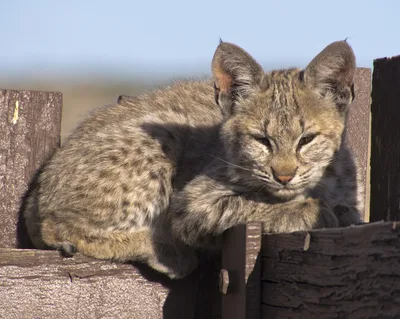 LC
Mammals
Bobcat
Lynx rufus
The bobcat is a medium-sized lynx with a short black-tipped tail, found from southern Canada to southern Mexico.
Living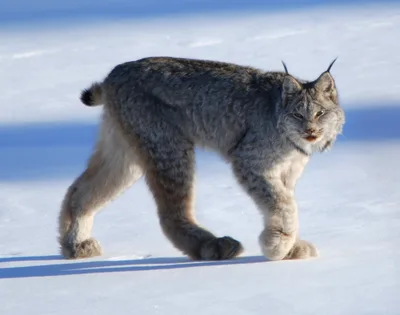 LC
Mammals
Canada lynx
Lynx canadensis
The Canada lynx is a thick-furred cat of the boreal forest with tufted ears and huge snowshoe paws.
Living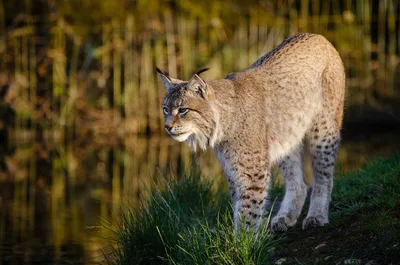 LC
Mammals
Eurasian lynx
Lynx lynx
The Eurasian lynx is the biggest of the four lynx species and the largest wild cat in Europe.
Living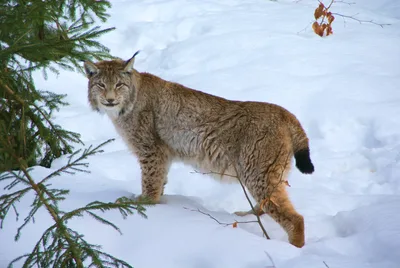
Mammals
Lynx
Lynx
Lynx are short-tailed wild cats with tufted ears.
Living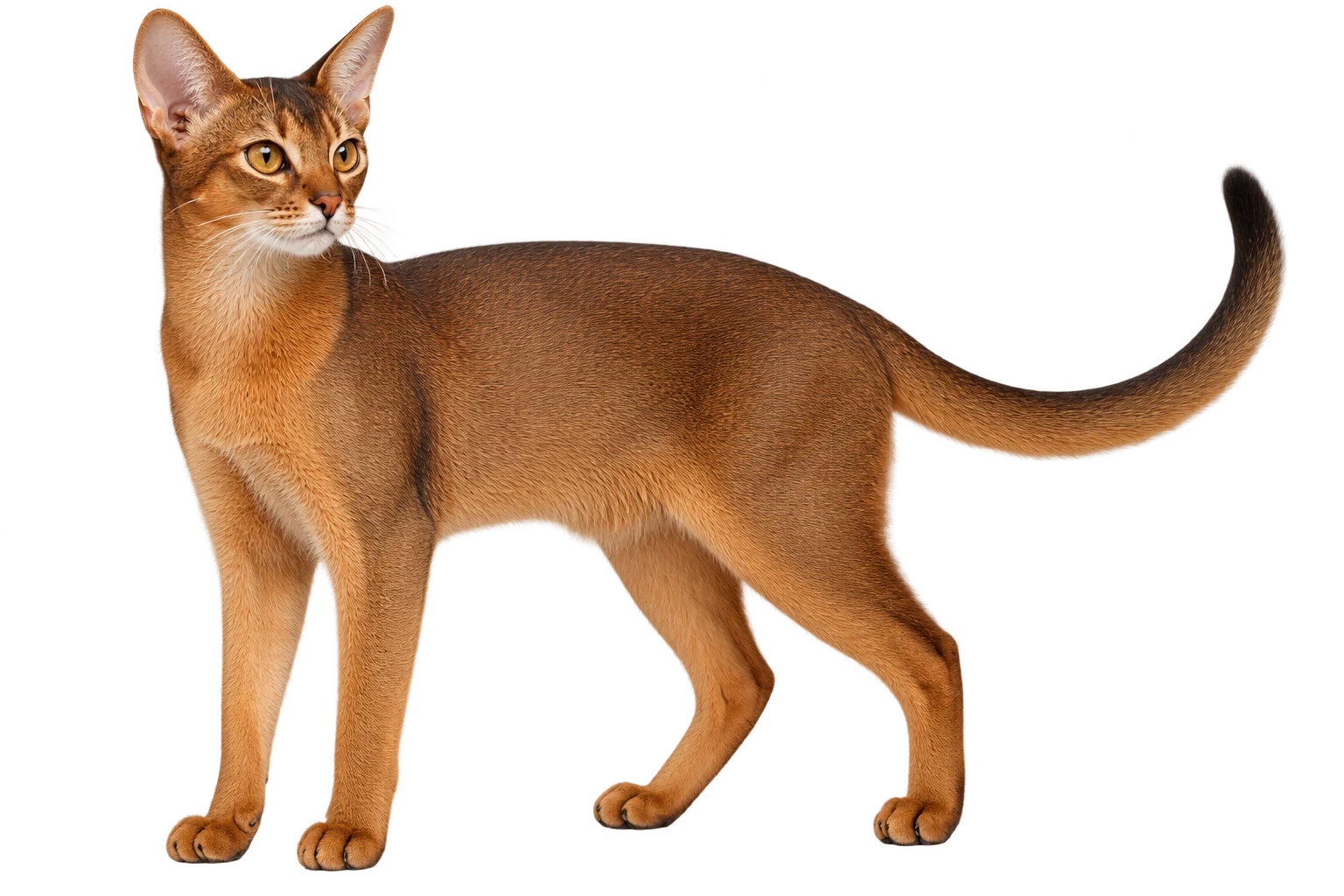
Mammals
Abyssinian
Felis catus
Classification and source reference
LivingAI illustration