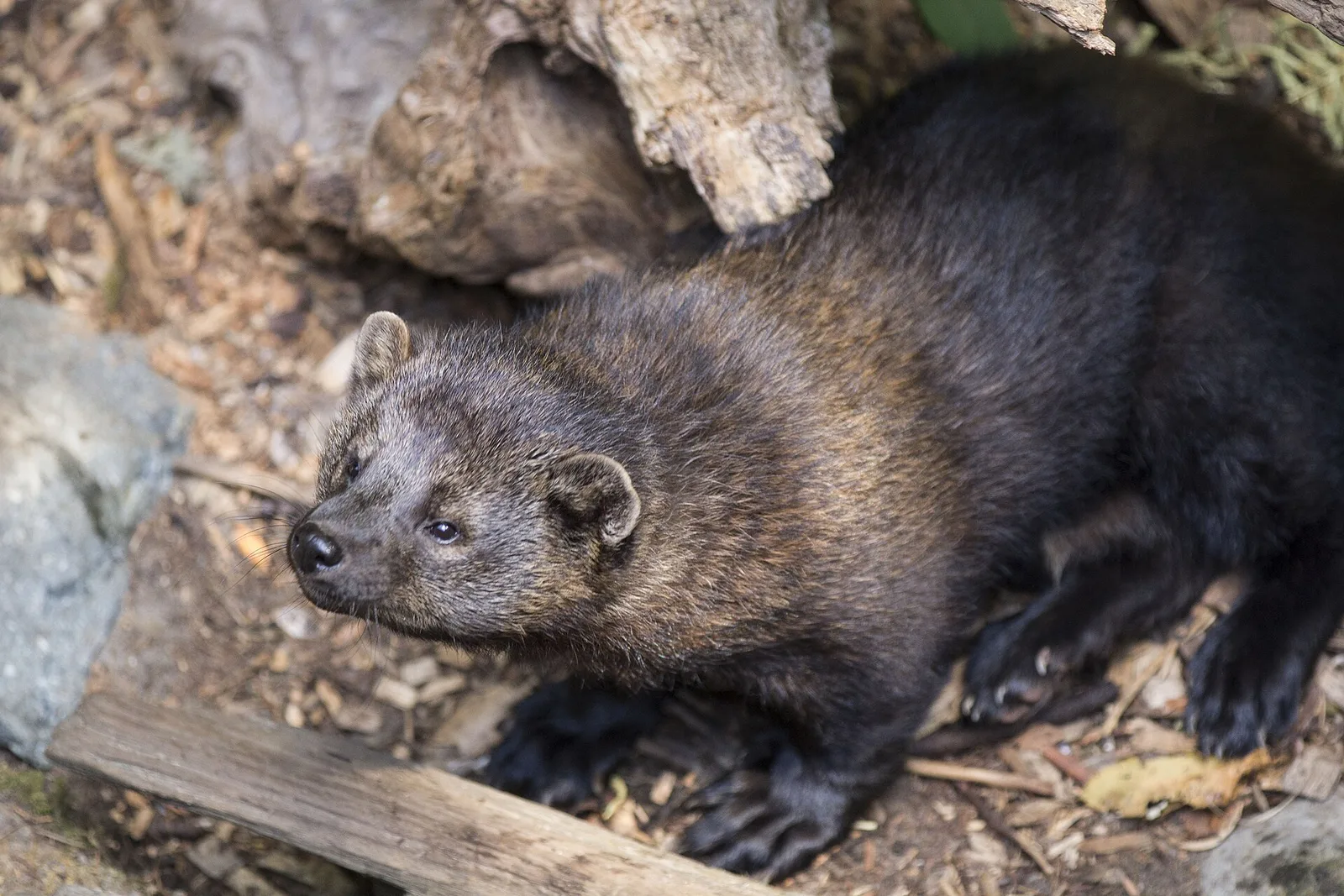
Fisher
The forest weasel that hunts porcupines and eats no fish
Martes pennanti
Also called Fisher cat, Pekan, Wejack, Pennant's marten
Living individuals or members of this group exist today. This does not mean they are safe from extinction.
Meet the fisher
The fisher is a large, dark member of the weasel family that lives in the northern forests of North America. It is one of the few animals that kills porcupines, and despite its name it almost never eats fish.
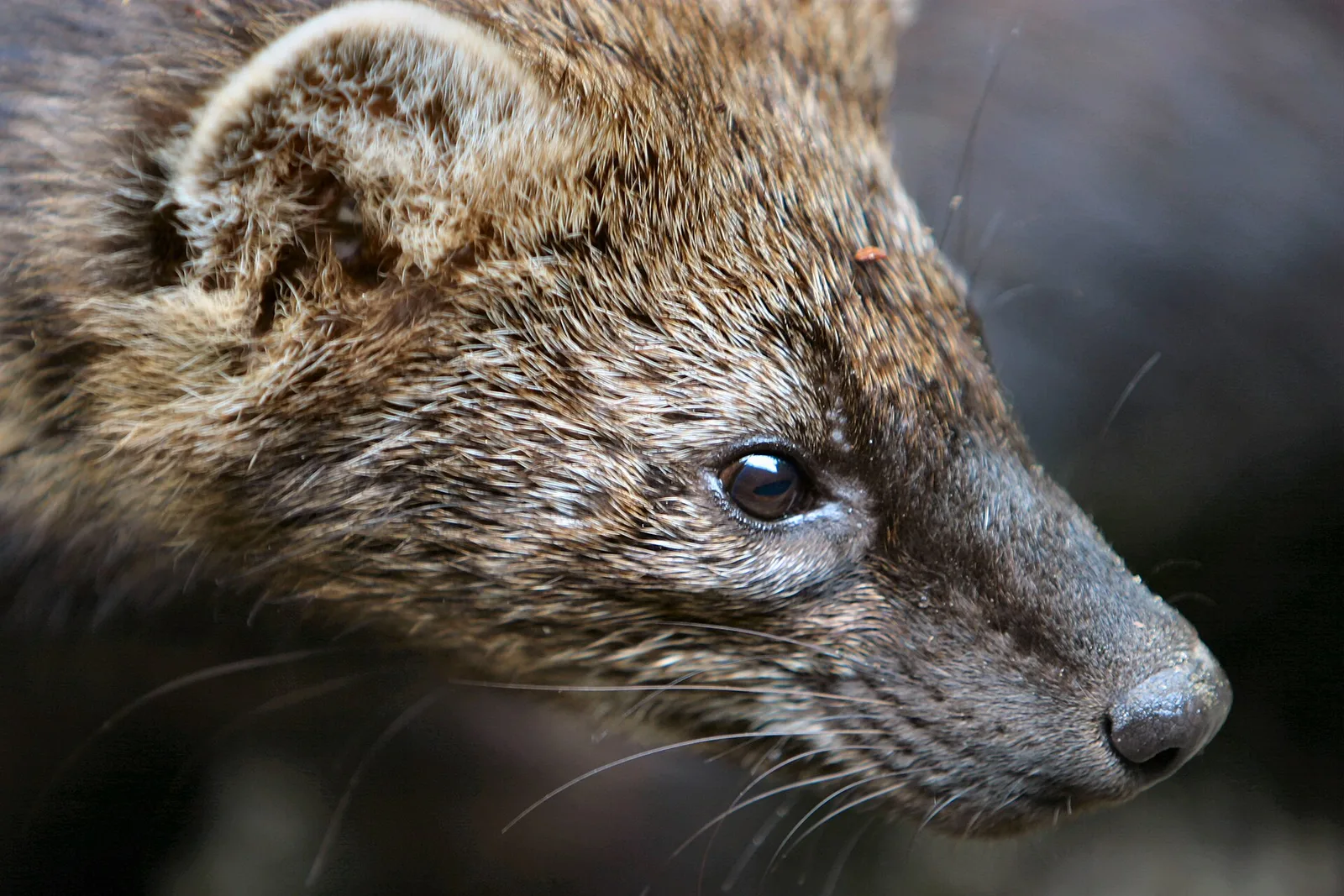
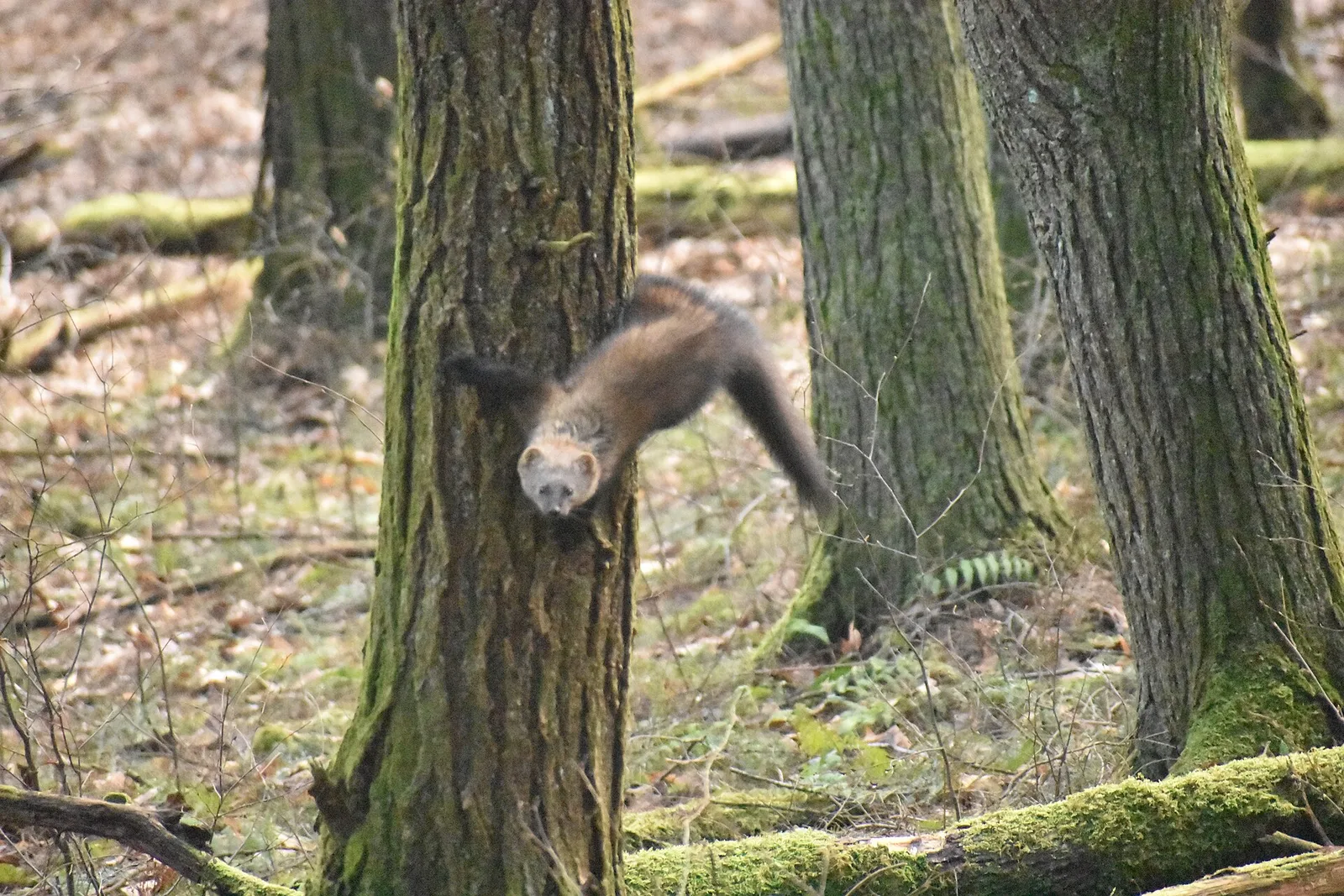
Images of the fisher
Lifespan in the wild
Up to 10 years
Weight
2 to 6 kg
Length
0.75 to 1.2 m
Fact file
Fisher
- Location
- Boreal and mixed forest from Nova Scotia to British Columbia and Alaska, south to the Sierra Nevada and the Appalachians
- Habitat
- Temperate forest, Mountains
- Diet
- Omnivore
- Prey / food
- Snowshoe hare, porcupine, squirrels, mice, birds, carrion, berries, mushrooms
- Predators
- Bears, coyotes, lynx, bobcats, cougars, eagles and hawks take young; adults have few
- Lifestyle
- Solitary, active at dawn and dusk, on the ground and in trees
- Group name
- None; solitary
- Name of young
- Kit
- Gestation
- About 50 days of growth after a 10 month delay; almost a year in all
- Litter size
- 1 to 4 kits, usually 3
- Population
- Not counted range-wide; recovered across Canada and the northern United States
- Biggest threat
- Trapping and the logging of old forest
- Distinctive feature
- A long, low, dark brown body with a bushy tail and a frosted head
- Colour
- Dark brown to black, with gold or silver frosting on the head and shoulders
- Skin type
- Fur
Size
Next to a person
Measurements
Size and speed
- Length
- 0.75 to 1.2 m total length with the tail; females 75 to 95 cm, males 90 to 120 cm
- Length, male
- 0.9 to 1.2 m total length
- Length, female
- 75 to 95 cm total length
- Tail
- 30 to 42 cm
- Weight
- 2 to 6 kg, up to 9 kg females 2.0 to 2.5 kg, males 3.5 to 6.0 kg
- Weight, male
- 3.5 to 6 kg, up to 9 kg
- Weight, female
- 2 to 2.5 kg
Typical adult ranges. Source: Wikipedia.
Life cycle
Lifespan
- In the wildUp to 10 years
- In captivityUp to 14.3 years
- 014.3 years
The pale bar is the record. Sources: Animal Diversity Web, AnAge.
Appearance
Colour and coat
- Primary colours
- dark brownblack
- Secondary colours
- goldsilvercream
- Skin type
- fur
- Male and female
- Strong in size only. Males weigh 3.5 to 6 kilograms and females 2 to 2.5 kg, so a male can be twice as heavy. Males also have a coarser coat.
Life cycle
Mating and family
- Mating system
- promiscuous; a male's range overlaps several females
- Social structure
- solitary
- Breeding
- one litter a year, born in spring
Fishers mate from late March to early April. The embryo then waits about ten months and implants in mid February, and active pregnancy takes about 50 days. The female bears one to four kits in a hollow tree and mates again within 7 to 10 days. Kits open their eyes at about seven weeks, hunt at four months and leave at five. A wild fisher lives up to 10 years, and one captive animal reached 14.3.
Classification
Taxonomy
- Kingdom
- Animalia
- Phylum
- Chordata
- Class
- Mammalia
- Order
- Carnivora
- Family
- Mustelidae
- Genus
- Pekania
- Species
- Martes pennanti
Conservation
Red List status
- LC
- NT
- VU
- EN
- CR
- EW
- EX
Least Concern on the IUCN Red List
Range
Recorded in 2 countries
Habitat layer: temperate broadleaf and mixed forest, temperate conifer forest, boreal forest and taiga, montane grassland and shrubland.
Countries from 3,333 wild records on GBIF (iNaturalist research grade), filtered and checked by hand. Country shapes: Natural Earth. Habitat: RESOLVE Ecoregions 2017, CC BY 4.0. Basemap: Natural Earth.
Habitats
Three things to know
- 1
The fisher rotates its hind feet almost 180 degrees and climbs down a tree head first.
- 2
A female mates within 7 to 10 days of giving birth, then carries the embryo for ten months before it starts to grow.
- 3
The fisher kills a porcupine by biting its face again and again for 25 to 30 minutes.
Did you know
Seven more facts
- 1
A fisher pelt sold for 450 to 750 dollars in New York in 1936.
- 2
Kits weigh about 40 grams at birth and open their eyes after about seven weeks.
- 3
The fisher has 38 teeth, one premolar more in each jaw than a weasel.
- 4
Only one of over 1,000 fisher stomachs from New Hampshire held cat hair.
- 5
One California fisher had 16 illegal cannabis farms inside its territory.
- 6
Fur farmers gave up on fishers because the females seemed to mate and then never give birth.
- 7
Fisher tails once went into spodiks, the tall fur hats of some Hasidic Jews.
Field notes
How it looks and acts
Field notes
Distinguishing features
- A long, low body with short legs and a bushy tail.
- Dark brown to black fur with gold or silver frosting on the head and shoulders.
- A total length of 75 to 120 centimetres, tail included.
- Males about twice the weight of females.
- Broad five-toed feet with retractable claws.
- A cream patch on the chest in many animals.
Field notes
Unique adaptations
- Ankles that rotate almost 180 degrees for head-first descent of trees.
- Broad furred feet that carry it over snow and grip ice.
- A long, narrow body that follows prey into burrows and hollow trunks.
- Delayed implantation, which times every birth for spring.
- A dense winter coat up to 70 millimetres deep on the back.
Field notes
Interesting behaviours
- Hunts at dawn and dusk along fixed trails through its range.
- Kills porcupines with repeated bites to the face.
- Attacks lynx bedded down in snowstorms with one bite to the neck.
- Rests in hollow trees, logs and, in winter, snow dens with long tunnels.
- Moves her kits to a new den if the litter is disturbed.
Field notes
Temperament
- Solitary and secretive, and hides from people.
- Bold with prey, and will take on animals larger than itself.
- Aggressive when cornered or startled.
Field notes
Communication
- Scent marks from glands on the hind feet, which swell in the breeding season.
- Probably hisses and growls when cornered, like other mustelids.
- Reads the trails of other fishers by smell.
Ecology
Ecological role
The fisher is a mid-level predator that keeps porcupines and hares in check in the northern forest.
- Controls porcupine numbers, which protects timber from bark stripping.
- Competes with foxes, bobcats, lynx, coyotes, wolverines, martens and weasels for prey.
- Suppresses martens where the two overlap, and sometimes kills lynx.
- Cleans up deer carcasses in winter.
Stories
Myths and legends
- In Anishinaabe tradition, Fisher brought fire or warmth to people and scorched his tail black doing it.
- In Woodland Indigenous tradition, Fisher is a brave hero, while Weasel and Wolverine are villains.
- In some Indigenous star lore, Fisher himself became the Big Dipper.
- In New England tradition, the fisher cat screams in the night, though the scream belongs to a fox or an owl.
People
Relationship with humans
People
Living alongside us
Trappers have hunted the fisher for its fur since the 18th century, and pelt prices once reached 750 dollars. Overtrapping wiped it out across the southern half of its range by the 1930s, and protection and releases brought it back. It now lives near towns, raids chicken coops and is blamed, mostly wrongly, for missing cats. Attacks on people are extremely rare. Foresters value it because it controls porcupines.
- Unprovoked attacks on people are extremely rare.
- A fisher will bite if cornered, and two attacks on children have been blamed on it.
- It can kill chickens and, rarely, a cat or small dog.
People
Status, uses and products
- Domestication
- Wild
- As a pet
- Not suitable. The fisher is a wild predator that hides all day, needs a range of many square kilometres and bites when handled. Zoos struggle to keep it, and fur farms gave up on it.
- Uses
- fur trappingporcupine control
- Products
- fur
The full account
About the fisher
The fisher, Pekania pennanti, is a large forest weasel of Canada and the northern United States. People call it a fisher cat, but it is neither a cat nor a fish eater. It is the only living member of its genus and a close cousin of the martens. A male measures 90 to 120 centimetres from nose to tail tip and weighs 3.5 to 6 kilograms. A female is smaller, 75 to 95 cm and 2 to 2.5 kg.
The fisher hunts snowshoe hares, squirrels, mice and birds on the forest floor, and it also eats fruit and mushrooms. It is one of very few animals that kills porcupines on purpose. Trappers took so many for their fur that the species vanished from much of the United States by the 1930s. Closed seasons, regrown forest and releases brought it back, and the IUCN now lists it as Least Concern. It now turns up in suburbs from Massachusetts to Iowa.
Name and taxonomy
The name fisher has nothing to do with fish. It comes from the Dutch fisse or visse, the word for a polecat or its pelt, which the animal resembles. A 19th century naturalist claimed the name came from the animal's taste for fish bait in traps, but that is probably local lore. The species name pennanti honours Thomas Pennant, who described it in 1771. Buffon had described the same specimen in 1765 and called it a pekan, a name still used in some regions.
Indigenous names include wejack, from an Algonquian word, and thacho in Chipewyan and chunihcho in Carrier, which both mean big marten. Smith placed the fisher in the marten genus Martes in 1843. DNA work in 2008 showed it was distinct enough for its own genus, Pekania. Older sources still write Martes pennanti. Three subspecies were named in 1935, but later work found no way to tell them apart, so the fisher is treated as one form.
Evolution and relatives
The fisher's ancestors crossed into North America in the Pliocene, between 5.0 and 2.5 million years ago. Two extinct relatives, Pekania palaeosinensis and P. anderssoni, are known from eastern Asia. The first true fisher, P. diluviana, appears in the Middle Pleistocene of North America and seems related to the Asian fossils. The living species is known from about 125,000 years ago, and it has barely changed since. Fossils show it once lived further south than it does today.
Pekania differs from the weasels in having four premolars in each jaw, where Mustela has three. The fisher has 38 teeth in all. GBIF notes a suggestion that the fisher and the wolverine may form a group of their own within the martens. Its nearest living relatives are the American marten and the Pacific marten, both smaller.
Appearance
The fisher is long, thin and low to the ground, with short legs and a bushy tail. Males run 90 to 120 centimetres in total length and weigh 3.5 to 6 kilograms. Females measure 75 to 95 cm and weigh 2 to 2.5 kg, so a big male is about twice a female's weight. Head and body take up 47 to 75 cm, and the tail adds 30 to 42 cm. The heaviest male on record weighed 9 kg.
The winter coat is dense and glossy, 30 millimetres deep on the chest and 70 mm on the back. It runs from deep brown to black and looks blackest against snow. Three-toned guard hairs give the face and shoulders a gold or silver frost. The belly is brown with scattered white or cream patches, and many animals carry a cream patch on the chest. The coat lightens and turns patchy in summer, and the moult runs from late summer to November or December.
Each foot has five toes with retractable claws, and the feet are broad, which helps on snow. Coarse hair between the pads of the hind feet gives grip on ice and bark. The ankle joints turn almost 180 degrees, so the fisher can come down a trunk head first. A round patch of hair on each hind pad marks a scent gland that swells in the breeding season.
Habitat and range
The fisher lives in the boreal and mixed forest belt that runs from Nova Scotia to the Pacific coast of British Columbia and into Alaska. It reaches Great Slave Lake in the north and the mountains of Oregon in the south. Separate populations live in the Sierra Nevada of California, across New England, in the Catskills and down the Appalachians to Virginia. It never lived on the prairies or in the southern states.
It wants continuous forest with a closed canopy, above 80% cover, and it avoids stands under 50%. Old growth suits it best, because a female needs a large hollow tree for her den. Heavily logged forest with young second growth does not meet that need. It likes a floor littered with fallen logs, and in the fire-prone west it keeps to riverside woodland. It avoids deep soft snow.
The fisher was wiped out across the southern and eastern parts of its range in the late 19th and early 20th centuries. Releases brought it back to Oregon in 1961 and to Crater Lake from 1977 to 1980. More releases went to Washington from 2008 and to the northern Sierra Nevada from 2008 to 2011. In the east it has moved into farmland and suburbs as far south as northern New Jersey.
Diet and hunting
The fisher is a generalist hunter that takes whatever it can overpower alone. Snowshoe hares and porcupines are its main prey, with squirrels, mice, shrews and birds behind them. It also eats insects, nuts, berries, mushrooms and small apples, and it scavenges deer carcasses. Despite the name, it is not known to eat fish. It sometimes kills animals as large as raccoons, foxes, martens, bobcats and Canada lynx.
In northern Maine, biologists recorded 14 lynx killed by fishers between 1999 and 2011. The fisher attacked lynx that were bedded down in snowstorms, with a single hard bite to the neck. In that study area, fishers were the leading cause of lynx deaths. Where fishers are common, martens are usually scarce, and the reverse.
The porcupine kill is the fisher's best-known feat. The old story that it flips the porcupine and scoops out the belly was shown to be wrong in 1966. Instead it circles and bites the unprotected face over and over, and the porcupine dies after about 25 to 30 minutes. Web sources say the fisher eats the organs first and returns to the carcass over several days. Where fishers were wiped out, porcupines multiplied and stripped bark from timber, and releasing fishers brought the numbers down again.
Behaviour and social life
The fisher lives alone and meets other fishers only to mate. It is most active at dawn and dusk, all year round, though ADW records activity by day and night. Males move more in the mating season, and females move least while pregnant. Males sometimes fight each other, which fits a solitary life.
A hunting range covers about 6.6 square kilometres in summer and 14.1 in winter, and up to 20 in poor habitat. ADW gives home ranges of 15 to 35 square kilometres, averaging about 25. A male's range overlaps with several females but seldom with another male. The fisher follows set trails through its range, on the ground and through the trees.
It climbs and swims well, but it does most of its hunting on the forest floor, working around fallen trees. It rests in logs, stumps, hollow trees, brush piles and ground burrows. In winter it digs snow dens, reached by long narrow tunnels. Like the marten, it can stretch its body to follow prey into holes and hollow trunks.
Communication and senses
The fisher has good smell, hearing and sight. Scent is its main language. The glands on its hind feet enlarge in the breeding season and probably lay a trail that lets males and females find each other. Its rounded ears pick up the small sounds of prey under leaves and snow.
The fisher is a quiet animal, and no scream is recorded for it in the sources. The blood-curdling night shriek that people blame on the fisher cat is usually a red fox or an owl. Like other mustelids, it probably hisses and growls when cornered.
Reproduction and life cycle
The fisher's breeding cycle takes almost a full year. Mating happens from late March to early April, and ADW notes that copulation may last up to seven hours. The fertilised egg then stops growing for about ten months. It implants in mid February, and active pregnancy lasts about 50 days. The female bears one to four kits, usually three, high in a hollow tree. She comes into season again 7 to 10 days later and goes out to mate, so an adult female is almost always pregnant.
Kits are born blind, nearly naked and about 40 grams. They crawl at about three weeks and open their eyes at about seven weeks. They climb at eight weeks, take milk for eight to ten weeks and then move to solid food. By four months they hunt for themselves and no longer tolerate their litter mates. When they are five months old the mother drives them off, and by one year each has its own range.
A female first breeds at one year and has her first litter at two. A male first breeds at two years. Wikipedia gives a natural lifespan of about 7 years, and ADW says a wild fisher can reach 10. One captive animal lived 14.3 years.
Predators and threats
An adult fisher is rarely hunted by anything but people. Bears, coyotes, lynx, bobcats, cougars, wolverines, golden eagles, bald eagles and perhaps great horned owls can take one. Young fishers fall to hawks, red foxes, lynx and bobcats. It carries roundworms, tapeworms and flukes, including Trichinella, but disease is uncommon.
Trapping is the old threat and logging the modern one. Between 1900 and 1940, unregulated trapping nearly wiped the fisher out across the southern half of its range. Pelt prices soared again in the early 1970s and caused a second crash in 1976. In California, rat poison laid at illegal cannabis farms is a newer killer. A 2012 study found 79% of tested fishers carried anticoagulant poisons, and a 2015 follow-up raised that to 85%, with 13 dead in all.
Population and conservation
The IUCN lists the fisher as Least Concern. No range-wide count exists, but the species has recovered across much of its former range. Most states restricted trapping by the 1930s, and full protection came in 1934. Canada still trapped over 3,000 a year through the low years, and in 1999 sold 16,638 pelts. Forest regrowth on abandoned farms gave the animals somewhere to return to.
Trapping resumed in the United States after 1962, closed again after the 1976 crash, and reopened in 1979 with short seasons and bag limits. Numbers have risen steadily since. The fisher is protected in Oregon, Washington and Wyoming, and the California population is listed as threatened under the Endangered Species Act. Washington released 90 animals on the Olympic Peninsula from 2008, and about 40 went into the northern Sierra Nevada from 2008 to 2011. Radio collars and cameras show the released animals are breeding.
Relationship with humans
The fisher's story with people is mostly the story of its fur. Trappers have taken it since the 18th century for scarves and neck pieces. Its tail went into spodiks, the fur hats of some Hasidic Jews. Winter pelts fetch the best prices. In 1936 a pelt sold in New York for 450 to 750 dollars. In 1979 the Hudson's Bay Company paid 410 dollars for one female pelt. By 1999 the average Canadian pelt brought only 27 dollars.
Fur farmers tried to breed fishers in the 1920s but failed, because no one yet knew about delayed implantation. Females mated in spring and then seemed never to give birth. Most fisher farms closed by the late 1940s. Zoos find the animal a poor exhibit, since it hides all day.
Unprovoked attacks on people are extremely rare, though a fisher will bite if cornered. Two attacks on boys, one aged six and one aged 12, have been blamed on fishers. Fishers raid chicken coops, and they are accused of taking cats. A 1979 New Hampshire study found cat hair in one of over 1,000 fisher stomachs, and two later studies found none.
In culture and myth
In Anishinaabe tradition, Fisher is a bold helper who brings warmth or fire to people. One telling has his tail burned black in the deed. In some Indigenous star lore, Fisher was set among the stars, and the Big Dipper is his body. Woodland peoples usually cast the fisher as a brave hero, while the weasel and the wolverine play the villains. The Abenaki name pekan and the Cree ocêk passed to fur traders as pekan and wejack.
In modern New England folklore, the fisher cat screams in the night, but the sound is almost always a fox or an owl. Popular writing long claimed the fisher flips a porcupine and eats its belly like a melon, a tale dismissed in 1966. Cameron Langford's novel Winter of the Fisher tells of a recluse who frees a trapped fisher and nurses it until it returns to the woods. A fisher hunts porcupines in the children's novel Ereth's Birthday, and one also turns up in The Sign of the Beaver. Conservationists now read the fisher's comeback as a mark of mature, connected forest.
A sentence with a dotted underline is inferred: it describes the group the animal belongs to, or is a reading of the sources, rather than a measured or reported fact about this species.
Questions
Fisher questions, answered
Is a fisher cat a cat?
No. The fisher is a mustelid, a relative of martens and weasels. The name fisher cat is a folk name, and the animal is neither a cat nor a fish eater.
What do fishers eat?
Snowshoe hares, porcupines, squirrels, mice, shrews and birds, plus carrion, nuts, berries, mushrooms and apples. They are not known to eat fish.
How big is a fisher?
A male is 90 to 120 centimetres long including the tail and weighs 3.5 to 6 kilograms. A female is 75 to 95 cm and 2 to 2.5 kg. The record male weighed 9 kg.
Do fishers eat cats?
Very rarely. A New Hampshire study found cat hair in one of over 1,000 fisher stomachs, and two later studies found none. Most missing cats are taken by coyotes or cars.
Do fishers scream at night?
No scream is recorded for the fisher. The shriek people blame on the fisher cat is nearly always a red fox or an owl.
How does a fisher kill a porcupine?
It attacks the unprotected face with repeated bites and wears the porcupine down over 25 to 30 minutes. It does not flip the porcupine onto its back.
Are fishers dangerous to humans?
Hardly ever. Unprovoked attacks are extremely rare. A cornered fisher will bite, and two attacks on children have been blamed on the species.
Where do fishers live?
In the boreal and mixed forests of Canada and the northern United States, from Nova Scotia to British Columbia and Alaska. Separate populations live in the Sierra Nevada, New England and the Appalachians.
Why is it called a fisher?
The name comes from the Dutch fisse or visse, a polecat pelt, because the animal looks like a polecat. It has nothing to do with fishing.
Are fishers endangered?
No. The IUCN lists the fisher as Least Concern, and it has recovered across most of its range. The California population is listed as threatened, and Oregon, Washington and Wyoming protect it.
How long do fishers live?
About 7 years is typical, and a wild fisher can reach 10. The captive record is 14.3 years.
How many kits does a fisher have?
One to four, usually three, born in spring in a hollow tree. The mother mates again within 7 to 10 days of the birth.
Can fishers climb trees?
Yes, very well. Their ankles rotate almost 180 degrees, so they can climb down head first. Even so, they do most of their hunting on the ground.
Do fishers kill lynx?
Sometimes. In northern Maine, fishers killed 14 Canada lynx between 1999 and 2011, mostly lynx bedded down in snowstorms.
Why did fishers disappear from the United States?
Unregulated trapping for fur, plus logging of old forest, wiped them out across the south and east by the 1930s. Closed seasons, regrown forest and releases brought them back.
How can I keep fishers away from my chickens?
Lock the coop at night, remove pet food and rubbish, and keep small pets indoors after dark. Fishers are only looking for food.
Food web
Prey and food
- snowshoe hare
- porcupine
- squirrels
- mice
- birds
- carrion
- berries
- mushrooms
 Canada lynx
Food web
Predators
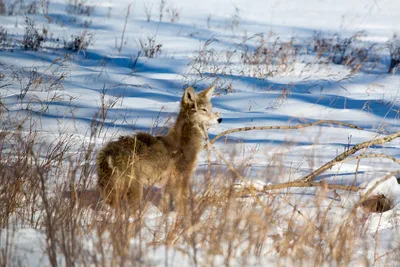 Coyote
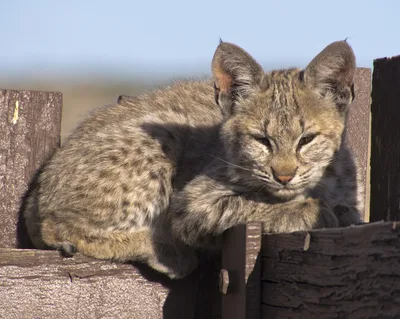 Bobcat
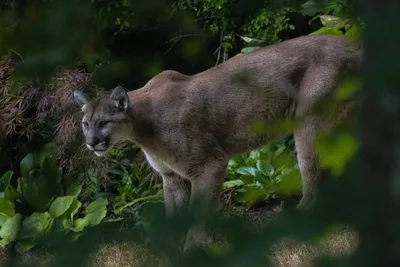 Cougar
Ecological equivalents
Related species on this site
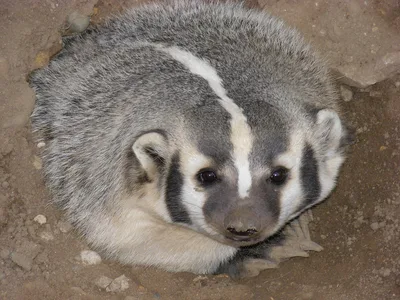
American badger (same family), Angora Ferret (same family), Black-Footed Ferret (same family), Cinnamon Ferret (same family), European badger (same family), European pine marten (same family), and more.
 LC
Mammals
American badger
Taxidea taxus
The American badger is a flat, powerful digger of the North American grassland that tunnels after gophers and ground squirrels.
Living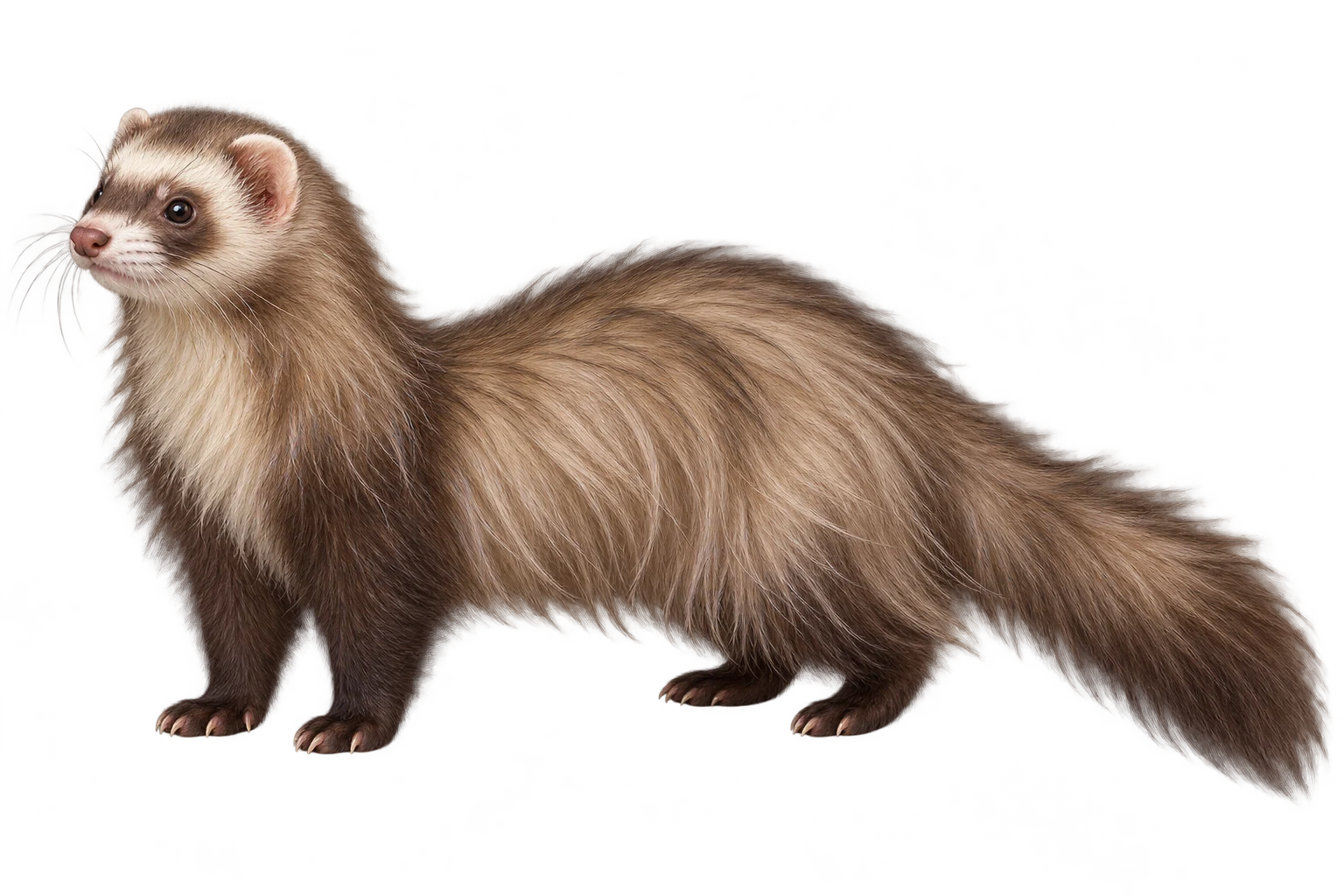
Mammals
Angora Ferret
Mustela putorius furo
Classification and source reference
LivingAI illustration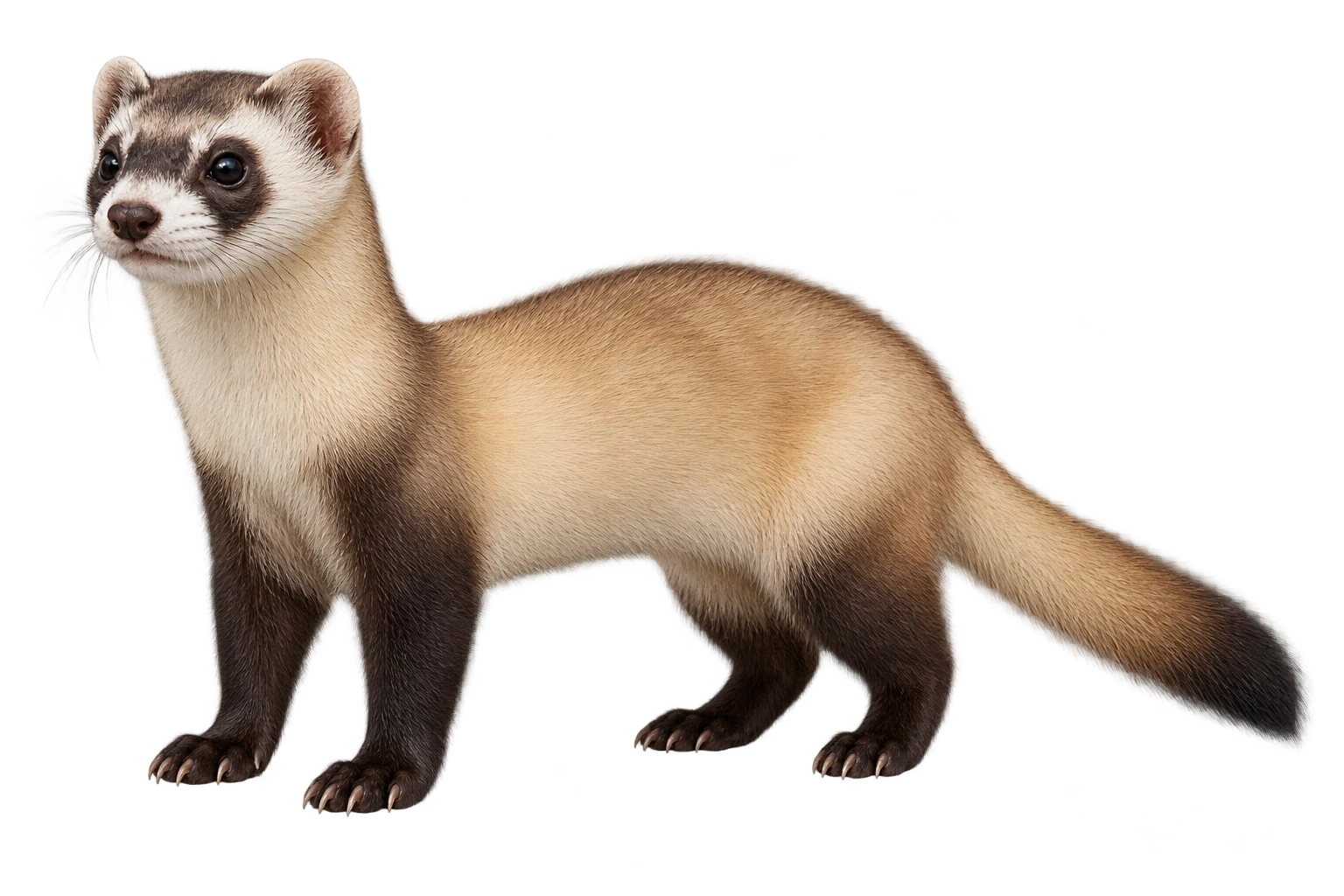
Mammals
Black-Footed Ferret
Mustela nigripes
Classification and source reference
LivingAI illustration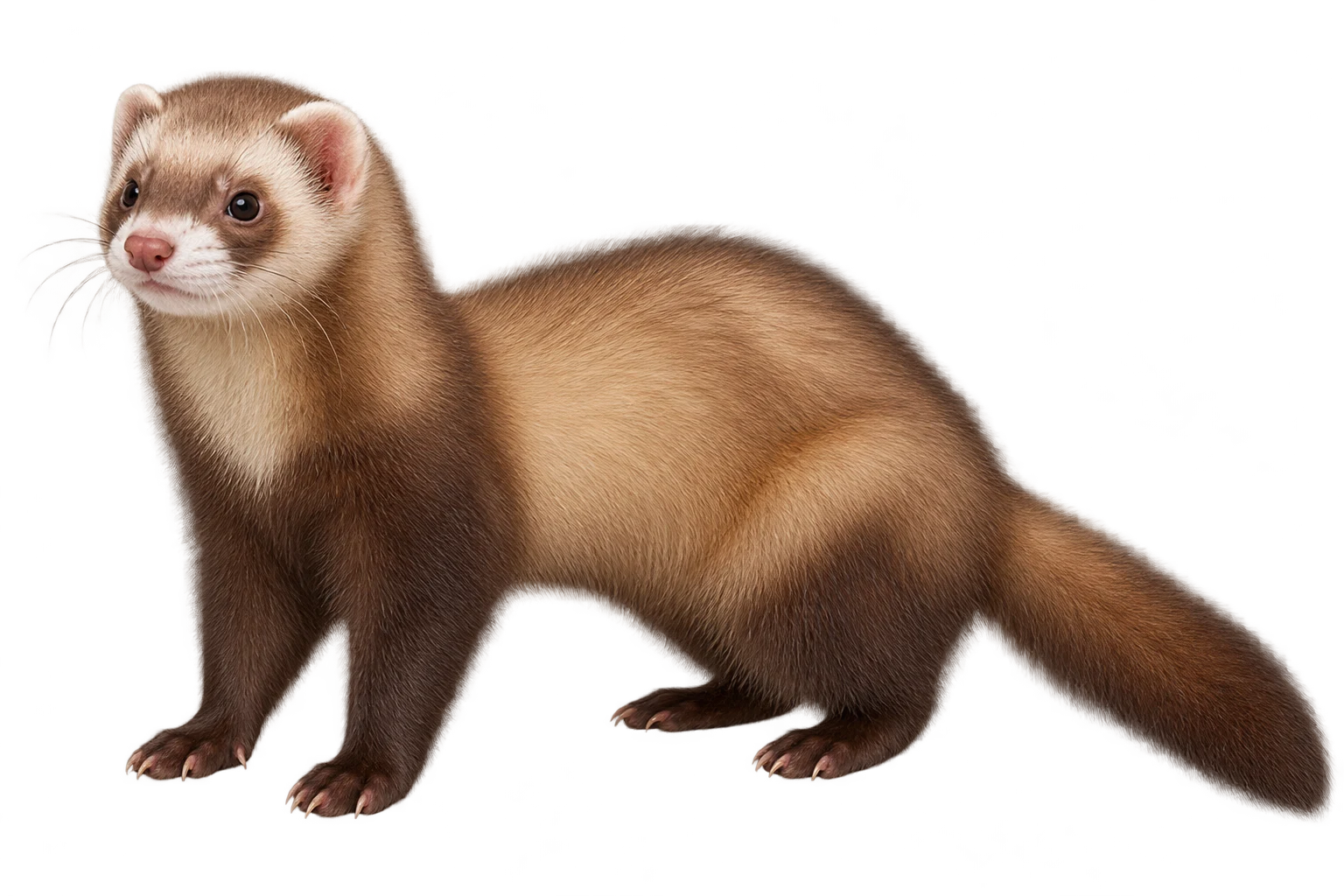
Mammals
Cinnamon Ferret
Mustela putorius furo
Classification and source reference
LivingAI illustration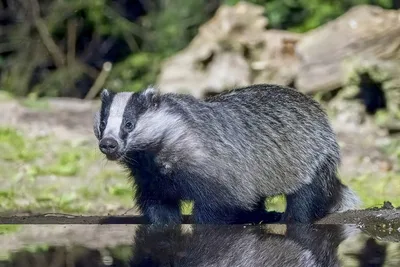 LC
Mammals
European badger
Meles meles
The European badger is a stocky, striped-faced mustelid that lives in family clans across Europe and western Asia.
Living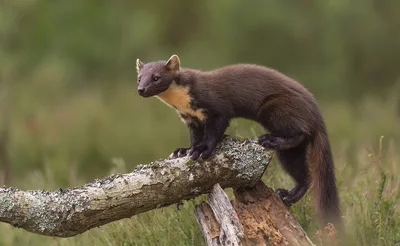 LC
Mammals
European pine marten
Martes martes
The European pine marten is a cat-sized mustelid with a brown coat and a cream bib.
Living