Canada goose
The honking V that marks the turn of the seasons
Branta canadensis
Also called Canadian goose, Greater Canada goose, Lesser Canada goose, Giant Canada goose
Living individuals or members of this group exist today. This does not mean they are safe from extinction.
Meet the canada goose
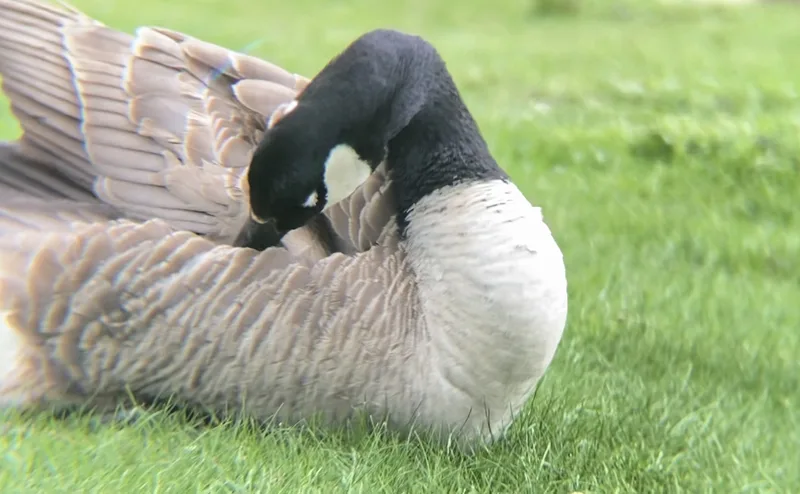
The Canada goose is a large black-necked goose with a white chinstrap, native to North America and now settled on four continents. It grazes grass beside water, flies in a honking V, and defends its nest against anything that comes near.
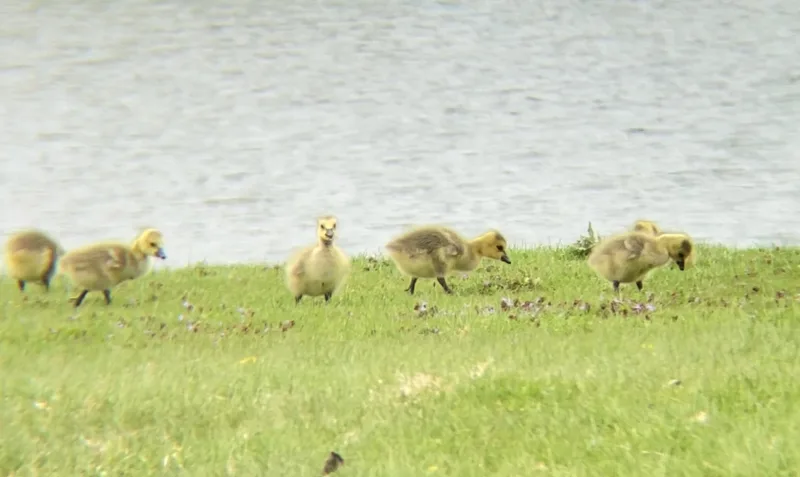
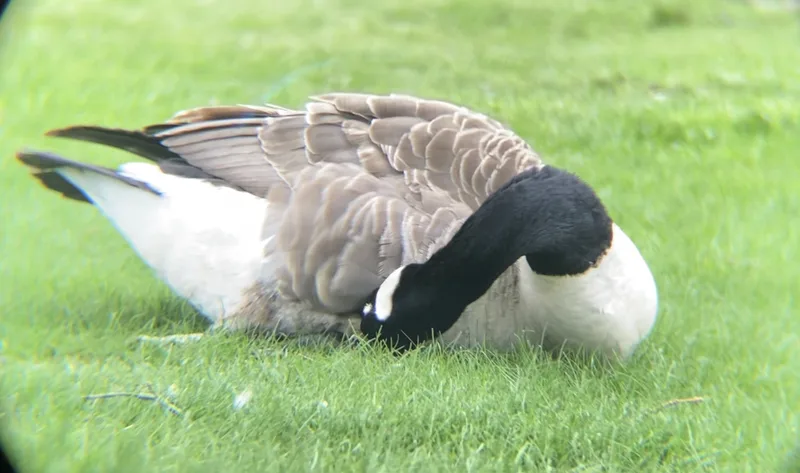
Images of the canada goose
Lifespan in the wild
10 to 24 years
Weight
2.4 to 6.5 kg
Length
0.75 to 1.1 m
Wingspan
1.27 to 1.85 m
Fact file
Canada goose
- Location
- Canada, the United States, Mexico; introduced to Britain, Europe and New Zealand
- Habitat
- Wetlands, Rivers and lakes, Grassland, Towns and cities
- Diet
- Omnivore
- Prey / food
- Grass, sedges, water plants, algae, seeds, berries, grain
- Predators
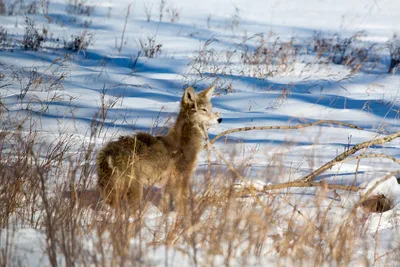
- Coyote, red fox, raccoon, gull, bald eagle; mostly eggs and goslings
- Lifestyle
- Grazes by day in flocks, migratory or resident
- Group name
- Gaggle on the ground, skein in the air
- Name of young
- Gosling
- Incubation
- Incubation 24 to 32 days
- Clutch size
- 2 to 9 eggs, about 5 on average
- Population
- About 4 to 5 million in North America
- Biggest threat
- Culling and hunting where the bird is treated as a pest
- Distinctive feature
- Black head and neck with a white chinstrap
- Colour
- Black, white and brown
- Skin type
- Feathers
Size
Next to a person
Measurements
Size and speed
- Length
- 0.75 to 1.1 m
- Wingspan
- 1.27 to 1.85 m, up to 2.24 m the max belongs to one exceptional giant Canada goose
- Weight
- 2.4 to 6.5 kg, up to 10.9 kg the range covers both sexes; the max is the heaviest wild goose ever recorded
- Weight, male
- 2.6 to 6.5 kg
- Weight, female
- 2.4 to 5.5 kg
Typical adult ranges. Source: Wikipedia.
Life cycle
Lifespan
- In the wild10 to 24, up to 33 years
- In captivityUp to 80 years
- 080 years
The pale bar is the record. Sources: Wikipedia, Animal Diversity Web.
Appearance
Colour and coat
- Primary colours
- blackbrownwhite
- Secondary colours
- greycream
- Skin type
- feathers
- Male and female
- Slight, and in size only. The gander is about a tenth larger than the goose in most measurements, and the two carry identical plumage.
Life cycle
Mating and family
- Mating system
- monogamous pairs, usually for life
- Social structure
- pairs on territory in spring, large flocks the rest of the year
- Breeding
- one brood a year, laid from April into May
Birds pair in their second year and often first breed in their third. The female builds a lined scrape on raised ground near water and lays 2 to 9 eggs. She incubates for 24 to 32 days while the gander guards the site. Goslings leave the nest within a day and fly at six to nine weeks. The family stays together until the following spring migration.
Classification
Taxonomy
- Kingdom
- Animalia
- Phylum
- Chordata
- Class
- Aves
- Order
- Anseriformes
- Family
- Anatidae
- Genus
- Branta
- Species
- Branta canadensis
Conservation
Red List status
- LC
- NT
- VU
- EN
- CR
- EW
- EX
Least Concern on the IUCN Red List
Range
Recorded in 6 countries
Habitat layer: tropical grassland, savanna and shrubland, temperate grassland, savanna and shrubland, flooded grassland and savanna, mangrove.
Countries from 355,113 wild records on GBIF (iNaturalist research grade), filtered and checked by hand. Country shapes: Natural Earth. Habitat: RESOLVE Ecoregions 2017, CC BY 4.0. Basemap: Natural Earth.
Habitats
Three things to know
- 1
A goose flock rotates the front position in the V, because leading costs the most energy.
- 2
Goslings can walk, swim and feed within a day of leaving the egg.
- 3
Adults lose their flight feathers for several weeks each summer and cannot fly at all.
Did you know
Seven more facts
- 1
The white chinstrap is the quickest field mark on any goose.
- 2
A gander honks, while the goose answers with a shorter, higher call.
- 3
The oldest known wild bird was a female tagged in Ohio and found at 33.
- 4
Samuel de Champlain sent the first birds to France for King Louis XIII.
- 5
Britain held perhaps 3,000 birds in 1953 and 165,000 wintering birds in 2017.
- 6
Families with young often merge into a nursery group called a creche.
- 7
The goose can survive about 30 days without food.
Field notes
How it looks and acts
Field notes
Distinguishing features
- The head and neck are black, cut by a white strap under the chin.
- The body is brown above and pale below, never grey like a greylag.
- It is the largest of the true geese, at 75 to 110 cm long.
- The bill edge carries fine ridges that cut grass.
- Flocks travel in a V, unlike the loose lines of most ducks, as with other geese.
Field notes
Unique adaptations
- Ridged bill edges let the bird shear grass all day.
- A gut built for grass probably lets the goose live on poor plant food.
- Formation flight cuts the cost of a long migration.
- Goslings feed themselves at once, which likely spreads the risk across the brood.
- Salt glands in the head let older birds drink brackish water.
Field notes
Interesting behaviours
- Pairs return to the same nesting site season after season.
- Geese graze in open ground with a wide view of any approach.
- The gander guards the nest and charges anything that comes close.
- Flocks rotate the lead position during long flights.
- Parents walk goslings in a line with one adult at each end.
Field notes
Temperament
- Nesting birds are bold and will attack a person on foot.
- Fed birds lose their fear of people and grow pushy.
- Hunted flocks stay wary and flush at long range.
Field notes
Communication
- The honk carries far and holds a flying flock together.
- A hiss is the first warning to anything near the nest.
- Raised wings and a stretched neck signal a coming charge.
- Researchers count ten separate calls for different situations.
Ecology
Ecological role
The Canada goose is a grazer that moves plant material and seeds between wetlands, and in large numbers it reshapes the ground it feeds on.
- Seeds pass through the gut and are dropped far from the parent plant.
- Heavy grazing thins the shoots and roots of water plants.
- Droppings add nutrients to ponds and can trigger algal blooms.
- Nesting flocks push native ducks and swans off the best sites.
Stories
Myths and legends
- In Canadian tradition, the bird stands for the country itself and its northern seasons.
- In British tradition, the goose arrived as a royal ornament and stayed as a park bird.
- In popular tradition, the lifelong pair bond seems to make the goose a symbol of loyalty.
- In farming tradition, a goose flock overhead is said to mark the end of the growing season.
People
Relationship with humans
People
Living alongside us
People have moved the Canada goose around the world as an ornament and as game. It is hunted in large numbers in North America, and its down is used in bedding and coats. Where flocks settle in parks the birds become a nuisance through droppings, noise and aggression. Aircraft strikes are the most serious conflict, and both civil and military crashes have followed. Managers now cull birds, shake eggs and haze flocks in built-up areas.
- A nesting gander will hiss, charge and strike a person with its wings.
- Bites and wing blows cause bruises and falls rather than deep wounds.
- A flock sucked into an aircraft engine can bring the aircraft down.
People
Status, uses and products
- Domestication
- Wild
- As a pet
- Not suitable. The Canada goose is a protected wild bird in the United States, Canada and Britain, and keeping one needs a licence. It is loud, aggressive in the breeding season and needs open water.
- Uses
- huntingdownmeat
- Products
- downmeatfeathers
The full account
About the canada goose
The Canada goose is a large goose with a black head and neck. A white patch runs under the chin and up each cheek, like a strap. The body is brown above and pale underneath. Adults measure 75 to 110 centimetres long, with a wingspan of 127 to 185 cm. Most weigh 2.4 to 6.5 kilograms, which makes this the largest of the true geese.
The species belongs to North America, from the Arctic south to Mexico. People carried it to Britain, France, Scandinavia, New Zealand and South America. It feeds on grass and water plants, and it nests beside fresh water. Mown lawns, ponds and playing fields suit it better than most wild ground.
That success has turned a hunted bird into a pest in many towns. Geese foul paths, graze crops, hiss at passers-by and collide with aircraft. They also seem to be one of the clearest signs of spring and autumn in the sky.
Name and taxonomy
Carl Linnaeus described the Canada goose in the 18th century. The genus name Branta comes from an Old Norse word meaning a burnt or blackened goose. The second name, canadensis, is Latin for a bird from Canada. The Oxford English Dictionary traces the English name back to 1772. Many people say Canadian goose, but that form has never been the standard one.
Seven subspecies are recognised, and they differ in size and in plumage detail. The giant Canada goose is the largest, and the lesser Canada goose is the smallest. In 2004 American ornithologists split the smaller forms off as the cackling goose. British ornithologists accepted that split in 2005. One researcher later proposed six species and 200 subspecies for the group. The nomenclature commission set that proposal aside after strong criticism.
Evolution and relatives
Branta holds the black geese, and Anser holds the grey ones. The Canada goose sits close to the cackling goose, which was long treated as the same bird. The barnacle goose grew out of the cackling goose line. The Hawaiian goose, by contrast, descends from ancestral Canada geese.
Barnacle geese share the black neck but have a black breast and grey body. Small Canada geese and large cackling geese overlap in weight and confuse observers. A cackling goose has a shorter neck and a smaller bill, which helps. Canada geese hybridise with greylag, snow and barnacle geese in captivity. Wild crosses are rarer, and adoption of stray chicks may explain some of them.
Appearance
The black head and neck with the white chinstrap identify the bird at a glance. Only the cackling goose and the barnacle goose share that pattern. Back and wings are shades of brown and grey, and the belly and rump are pale. Length runs 75 to 110 cm, and the wings span 127 to 185 cm. Males weigh 2.6 to 6.5 kg and females 2.4 to 5.5 kg.
A female is otherwise almost identical, about a tenth smaller in her measurements. One giant Canada goose weighed 10.9 kg and spanned 224 cm across the wings. That bird remains the heaviest wild goose ever recorded. The bill carries comb-like ridges along the edge, which grip and cut grass. Goslings hatch yellow, with grey-green down on the back and a black bill and feet. Some adults show a speckled brown neck, and these are probably leucistic birds.
Habitat and range
The species breeds across Canada and the northern United States. The Great Lakes hold a very large share of the total. Birds from the far north winter as far south as northern Mexico. Along both American coasts many flocks now stay put all year. The birds want open grassy ground with a clear view and water close by. They avoid tall grass and scrub, which can hide an approaching predator.
Some geese cross the Atlantic on their own, and ringing has proved it. The bird also occurs naturally in Kamchatka and eastern China. Samuel de Champlain sent pairs to France as a gift for King Louis XIII. Birds reached England in the late 17th century for the royal collection in St James's Park. Sweden received its first birds in 1929, and New Zealand in 1905.
The British population suggests how fast the bird can spread. Surveys in 1953 counted somewhere between 2,670 and 10,090 birds. The estimate reached 82,000 in 1999 and 165,000 wintering birds in 2017. Reservoirs, flooded gravel pits and farm change all helped. Moving breeding pairs away from farmland in the 1950s only founded new colonies.
Diet and feeding
The bird lives mostly on plants, and grass is the staple. It grips a blade in the bill and tears it free with a jerk of the head. The ridges along the bill edge do the cutting. Sedges, leaves, roots, seeds and berries all go the same way. On water the goose sifts plants from the bottom and takes algae and seaweed.
Wheat, rice, corn and beans are taken from fields wherever they grow. Animal food is a minor part: some insects, small fish, snails and crustaceans. Geese eat more of it while breeding and while rearing young. Plants loaded with bitter compounds are left alone. A goose can go about 30 days without food if conditions turn bad. In towns the birds prefer mown lawn, and some raid bins or beg from people.
Behaviour and social life
Canada geese live in flocks outside the breeding season. They fly in the familiar V, which saves energy for the birds behind. The lead bird works hardest, so the flock swaps that position around. A flock can cover up to 2,400 kilometres in one day of flying. Migrating birds usually travel about 1 km above the ground. One report puts geese at 9 km, though the true ceiling is unknown.
Autumn passage runs from September into early November. Early migrants rest less and move faster than the birds that follow. Many pairs come back to the same patch of nesting ground each spring. Ganders are aggressive on and off the breeding ground. In one recorded case a gander killed a brant that strayed onto his territory. Families with goslings often merge into a group called a creche.
Communication and senses
Ten different calls have been described for the species. The deep honk belongs to the gander. The female answers with a shorter, higher note. Flocks call constantly in flight, which probably keeps the formation together.
A threatened goose starts with a hard hiss. It then stands tall and spreads its wings to look larger. If that fails the bird charges, pecks and beats with the wings. Sight appears to matter most, because the birds graze where they can see far. Goslings recognise their parents' voices and follow them in a line.
Reproduction and life cycle
Geese find a mate in their second year. Pairs match up by size, and most stay together for the rest of their lives. A bird whose partner dies will usually take another. First breeding often waits until the third year. The pair breeds once a season, from April into May, later in cold country.
The female chooses the site, on raised dry ground with water and a view. She scrapes a hollow, lines it with plants and adds down from her own breast. Beaver lodges and small islands are both popular. She lays 2 to 9 eggs, about 5 on average, one every day and a half. Incubation lasts 24 to 32 days and falls mainly to her, with the gander on guard.
Goslings can walk, swim and feed themselves within a day of hatching. The parents lead them in a line, one in front and one behind. Adults moult during this period and cannot fly for 20 to 40 days. The young fly at six to nine weeks, about the time their parents get their wings back. Families stay together until the spring migration ends. Wild geese that reach adulthood live 10 to 24 years, and one female reached 33.
Predators and threats
Eggs and goslings are the vulnerable stage. Coyotes, red foxes, Arctic foxes, raccoons and bears all raid nests. Large gulls, ravens and crows take eggs and small young. In Europe the mink, the otter and the mute swan add to the list. Loose dogs kill geese in parks, which a lead would prevent.
Healthy adults are probably large enough to deter most hunters. Bald eagles, golden eagles and snowy owls can still kill a grown bird. The gander normally leads the defence and tries to draw a predator away. Disease is a real risk, including avian influenza, botulism and avian cholera. Salt water kills young goslings before their salt glands start working. People kill far more Canada geese than any other predator does.
Population and conservation
The IUCN lists the Canada goose as Least Concern. Around 2000 the North American total was put at 4 million to 5 million birds. The picture was very different a century ago. Hunting and habitat loss cut the species hard by the early 20th century. The giant subspecies was thought extinct until a flock turned up in Minnesota in 1962.
A breeding programme in North Dakota released more than 6,000 giant Canada geese. Restored birds, safe ponds and few predators then drove numbers up sharply. Ohio counted about 130,000 geese in 2015, up from 18,000 in 1979. The United States has run lethal culls in built-up areas since 1999. Managers also shake or oil eggs, which stops a clutch without killing adults. The bird still keeps legal protection outside the open season on both sides of the border.
Relationship with humans
The Canada goose is a game bird across its native range. The American harvest for one recent season passed 1.3 million birds. Opinions on the meat differ sharply between countries. Down from the plumage goes into coats, pillows and bedding. The birds are rarely farmed, and wild meat is hard to sell legally.
Where flocks settle in parks the complaints are droppings, noise and aggression. Grazing packs the soil and thins the grass on playing fields and greens. Droppings feed algae in ponds and raise bacteria counts on beaches. Aircraft strikes are the most serious problem of all. American authorities logged 1,772 civil strikes between 1990 and 2018. A military aircraft hit a flock in Alaska in 1995 and crashed, killing 24 crew. In 2009 geese stopped both engines of an airliner that then landed on the Hudson.
In culture and myth
Canadians treat the goose as one emblem of the country itself. Its shape and its call appear on badges, coins and company names. For many people in North America the V overhead marks the change of season. That association works in both directions, spring and autumn.
European aristocrats first kept the bird as an ornament. A French king and an English king both received geese as gifts. British estates stocked them as decoration and as something to shoot. New Zealand imported them purely as game in 1905. In each case the ornament probably outgrew the garden that held it.
The pair bond appears to have given the bird a reputation for loyalty. Writers may use the goose as a symbol of a mate kept for life. The Hudson River landing of 2009 probably fixed a darker image alongside it. Both readings rest on real behaviour: strong pair bonds and heavy flocks.
A sentence with a dotted underline is inferred: it describes the group the animal belongs to, or is a reading of the sources, rather than a measured or reported fact about this species.
Questions
Canada goose questions, answered
How big is a Canada goose?
Adults are 75 to 110 cm long with a wingspan of 127 to 185 cm. A male weighs 2.6 to 6.5 kg, and a female 2.4 to 5.5 kg.
Is it a Canada goose or a Canadian goose?
Canada goose is the correct name, first recorded in English in 1772. Canadian goose is common in speech but is not the standard form.
What do Canada geese eat?
Mostly grass, sedges, water plants, algae, seeds, berries and farm grain. They take a few insects, snails and small fish, mainly while breeding.
Why do geese fly in a V?
The shape saves energy for the birds behind the leader. Because the front position costs the most, the flock swaps it around during the flight.
How long do Canada geese live?
Birds that reach adulthood usually live 10 to 24 years. The oldest known wild female was 33, and a captive goose reached 80.
Are Canada geese aggressive?
They are during the nesting season. A gander hisses, stands tall, then charges and strikes with the wings if you keep walking towards the nest.
How many eggs do Canada geese lay?
Between 2 and 9 eggs, with about 5 as the usual number. The female incubates them for 24 to 32 days.
Do Canada geese mate for life?
Most pairs stay together for the rest of their lives. If one bird dies, the survivor normally finds a new partner.
Why do some Canada geese not migrate?
Mild winters, safe ponds and mown grass remove the reason to leave. Goslings learn the route from their parents, so a resident pair raises resident young.
Are Canada geese endangered?
No. The IUCN lists the species as Least Concern, and North America alone held 4 million to 5 million birds around 2000.
Can Canada geese bring down a plane?
Yes. In 2009 a flock stopped both engines of an airliner over New York, and the crew landed it on the Hudson River.
When do Canada geese lose their feathers?
Adults moult in summer while the goslings are growing. They cannot fly for 20 to 40 days and get their flight back as the young learn to fly.
Should I feed geese bread?
No. Feeding makes geese bold, gathers them into crowds and gives them food their gut is not built for.
Where do Canada geese live outside North America?
Britain, Ireland, France, Scandinavia and the Netherlands hold established flocks. There are also birds in New Zealand, Japan, Chile, Argentina and the Falkland Islands.
What is a group of geese called?
A gaggle on the ground and a skein in the air. A group of families with goslings is called a creche.
Food web
Prey and food
- grass
- sedges
- water plants
- algae
- seeds
- berries
- grain
Food web
Predators
 Coyote
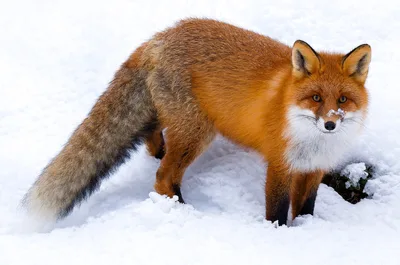 Red fox
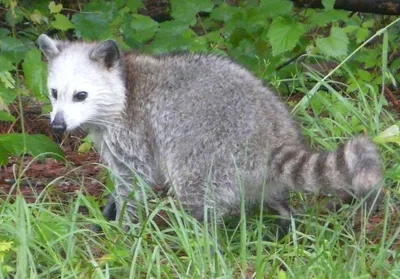 Raccoon
- gull
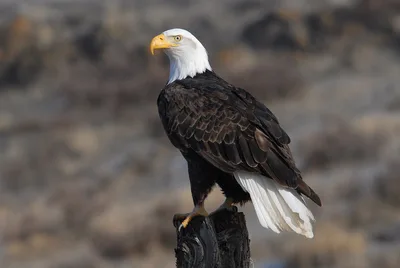 Bald eagle
- mostly eggs
- goslings
Ecological equivalents
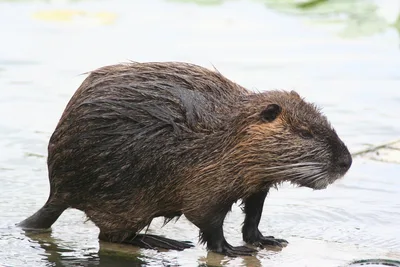
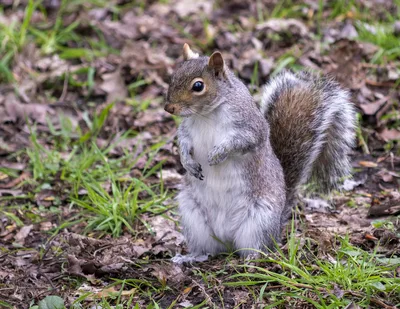
Related species on this site
Hawaiian Goose (Nene) (same genus), Black swan (same family), Black-Bellied Whistling Duck (same family), Canvasback (same family), Chinese Geese (same family), Common Goldeneye (same family), and more.
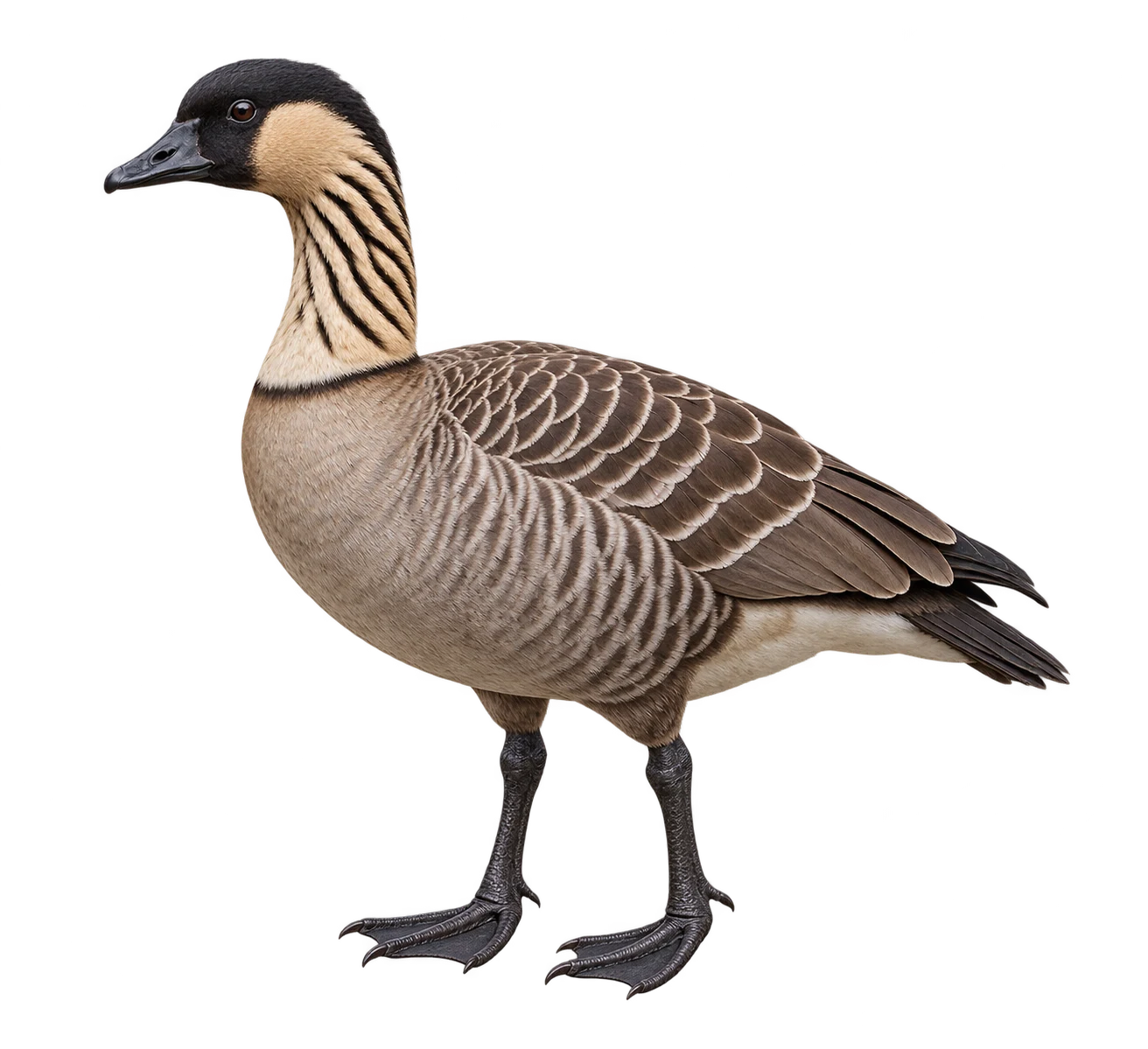
Birds
Hawaiian Goose (Nene)
Branta sandvicensis
Classification and source reference
LivingAI illustration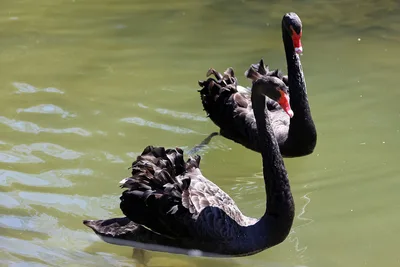 LC
Birds
Black swan
Cygnus atratus
The black swan is a large Australian waterbird with black plumage, white flight feathers and a bright red bill.
Living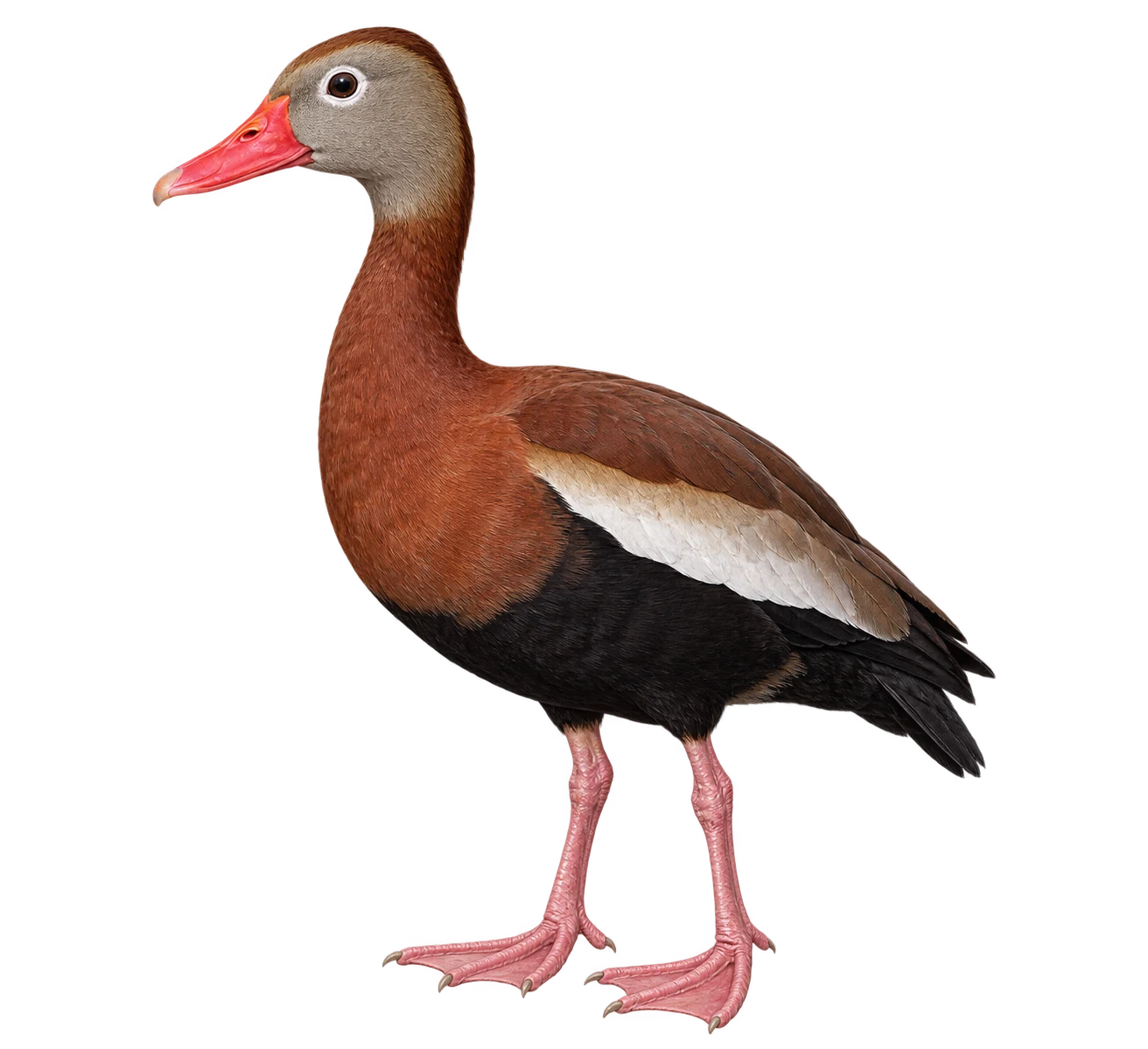
Birds
Black-Bellied Whistling Duck
Dendrocygna autumnalis
Classification and source reference
LivingAI illustration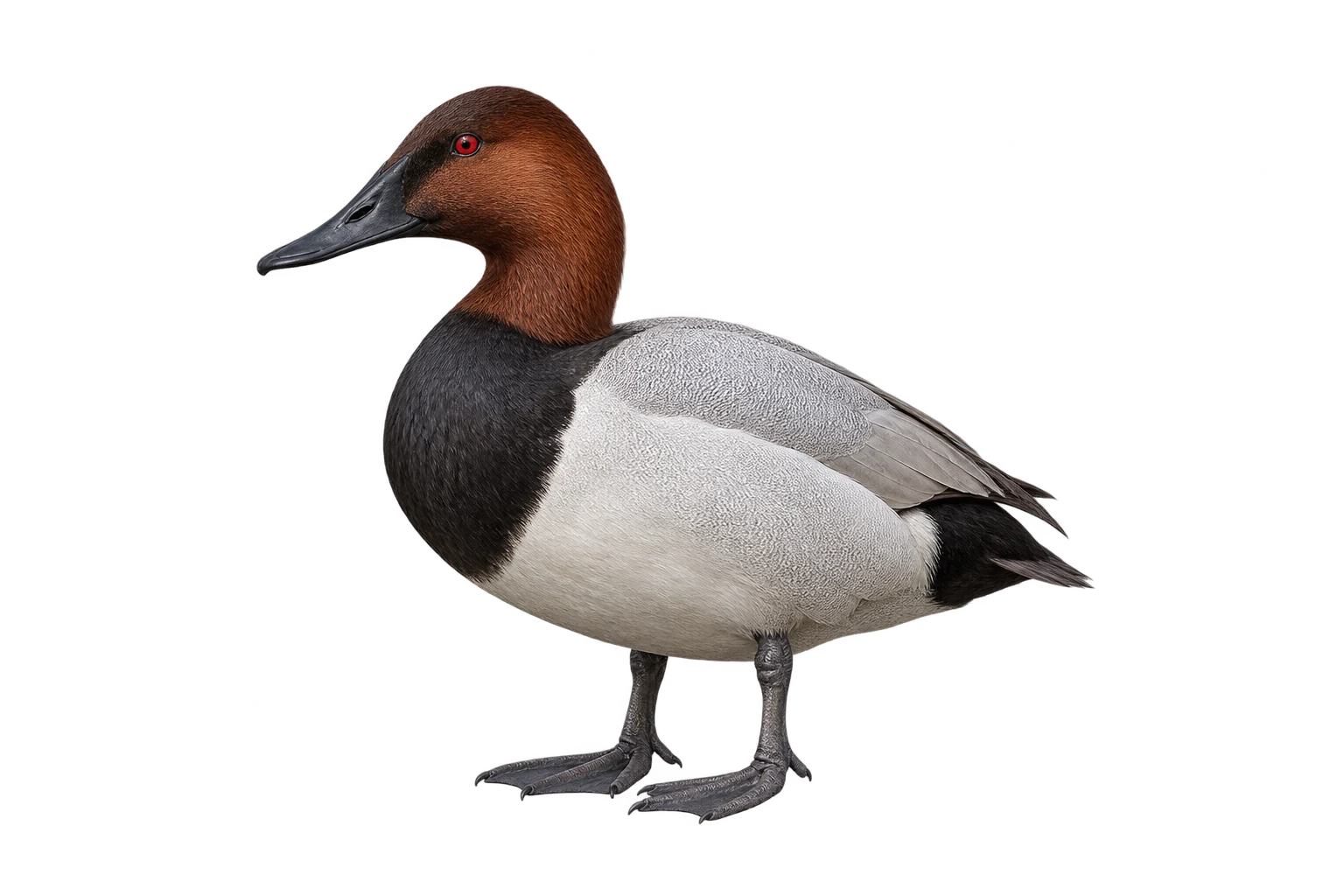
Birds
Canvasback
Aythya valisineria
Classification and source reference
LivingAI illustration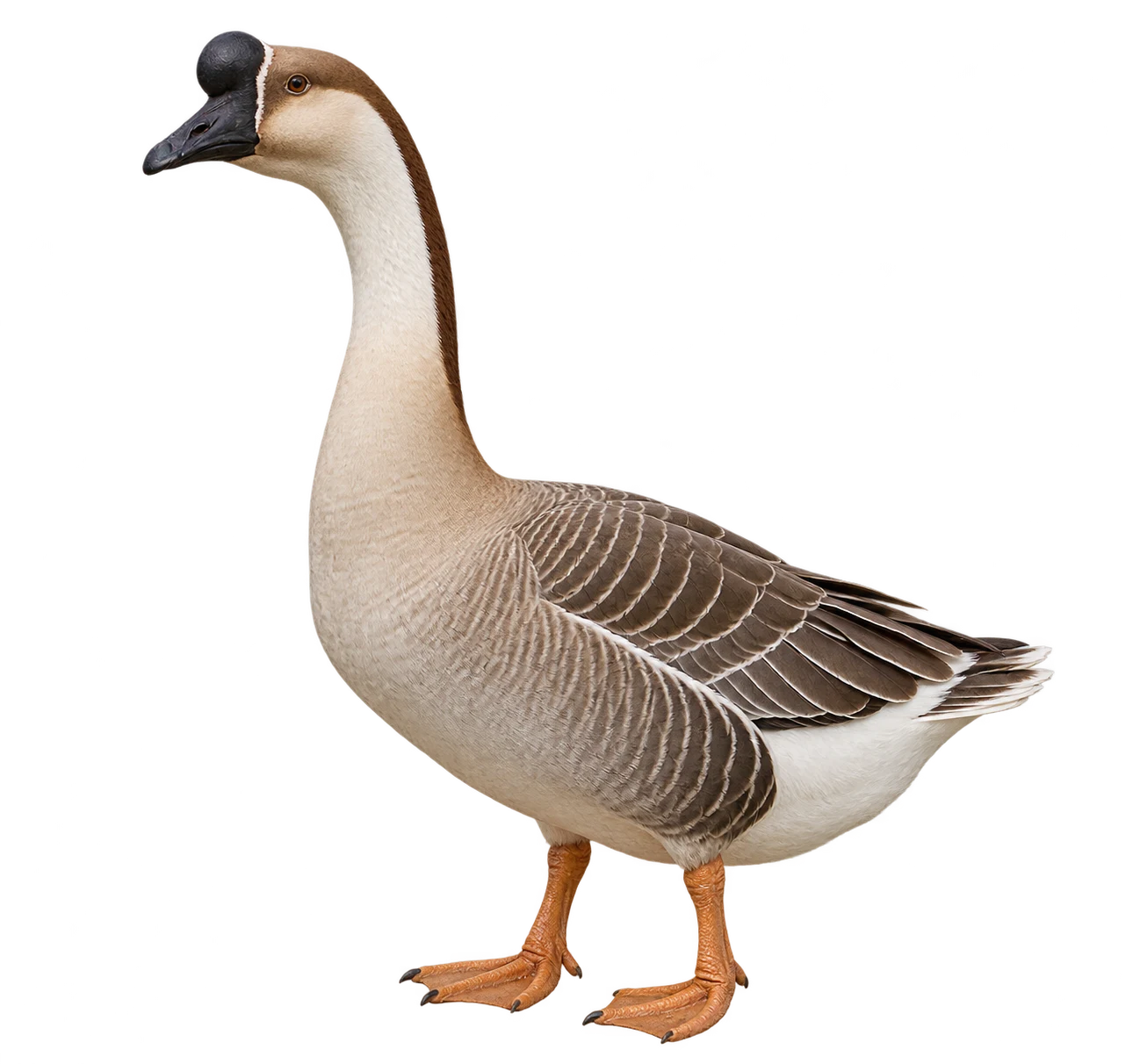
Birds
Chinese Geese
Anser cygnoides domesticus
Classification and source reference
LivingAI illustration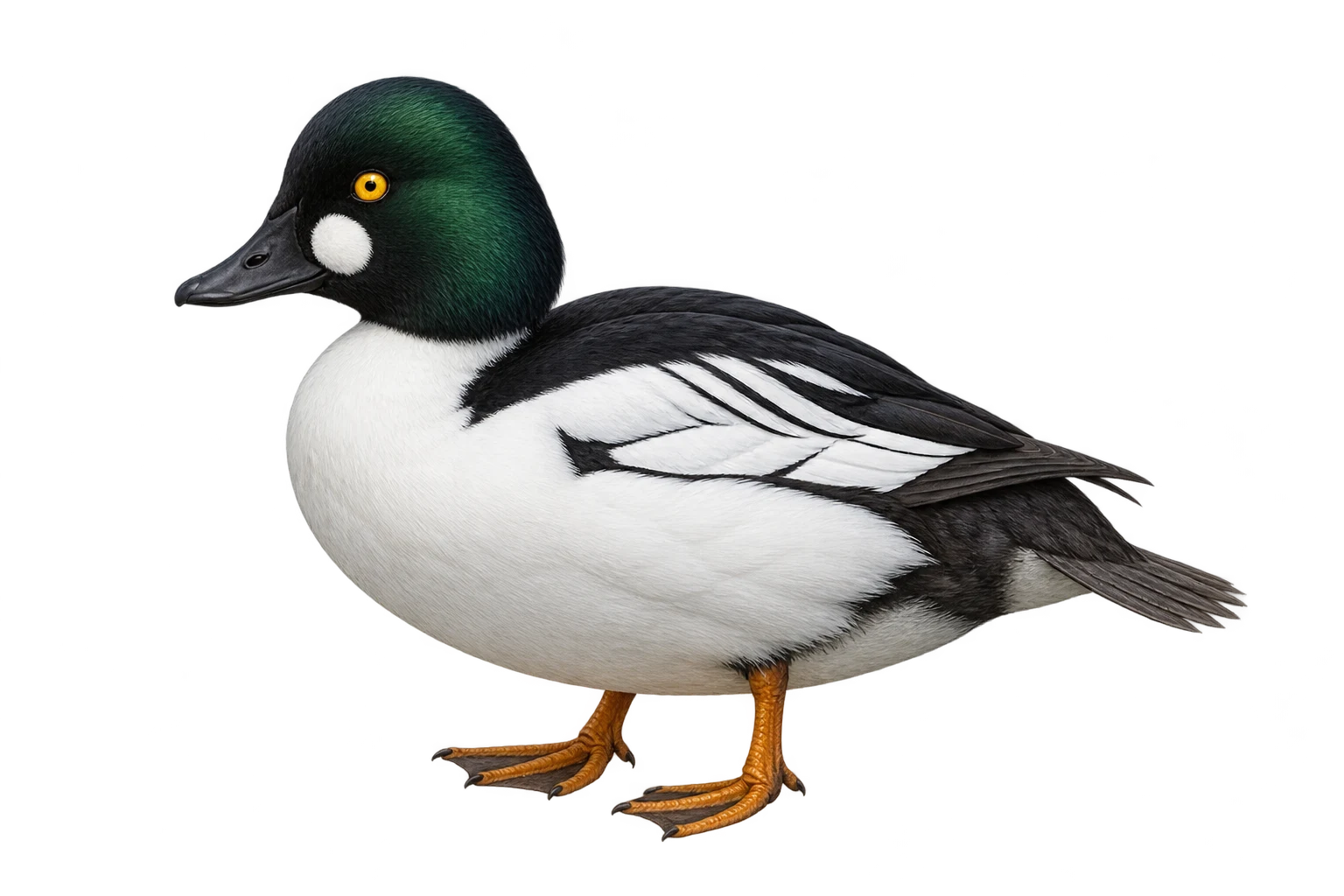
Birds
Common Goldeneye
Bucephala clangula
Classification and source reference
LivingAI illustration