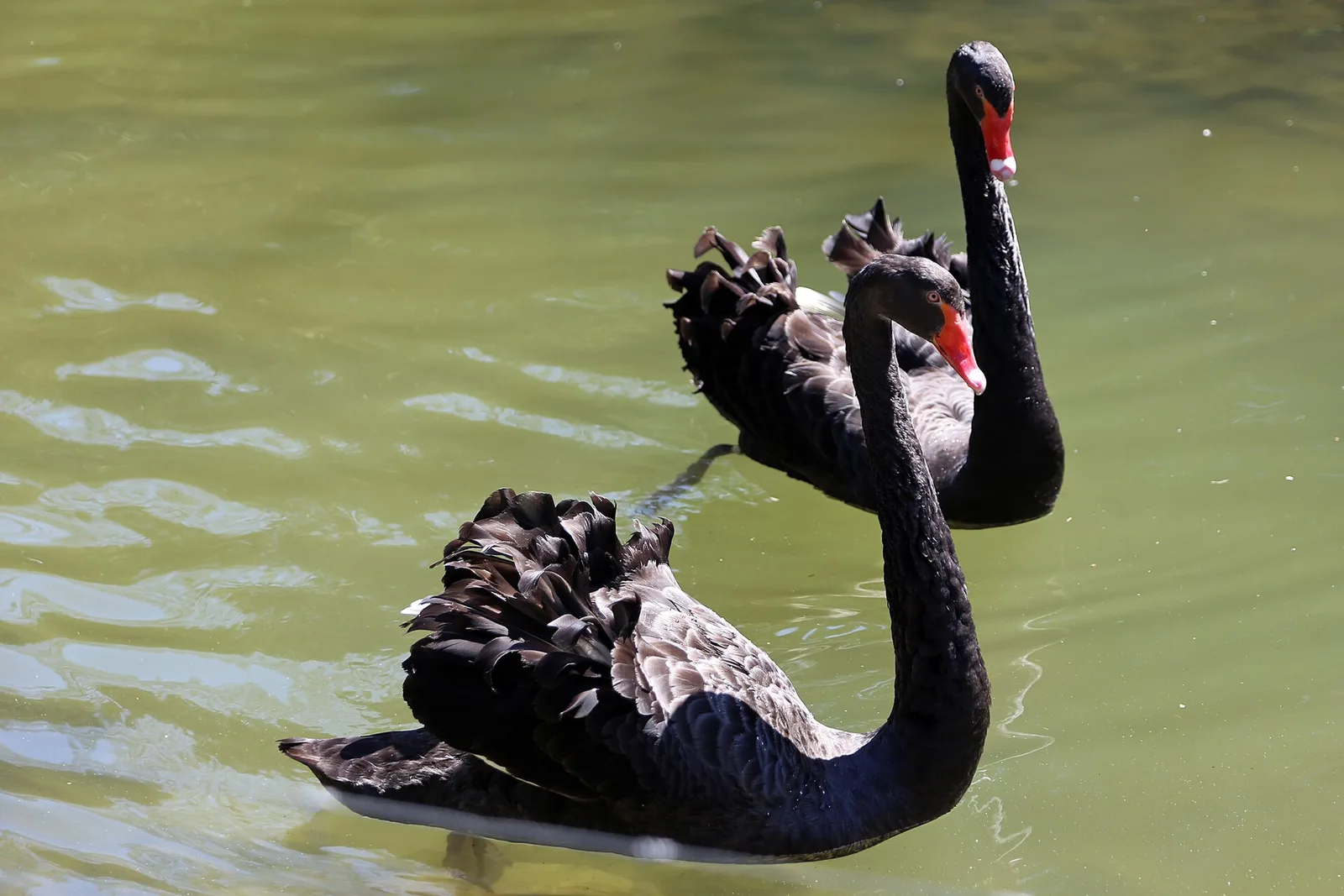
Black swan
The Australian swan that made a phrase famous
Cygnus atratus
Also called Kuljak, Maali
Living individuals or members of this group exist today. This does not mean they are safe from extinction.
Meet the black swan
The black swan is a large Australian waterbird with black plumage, white flight feathers and a bright red bill. It grazes water plants, pairs for life and wanders across the continent with the rain.
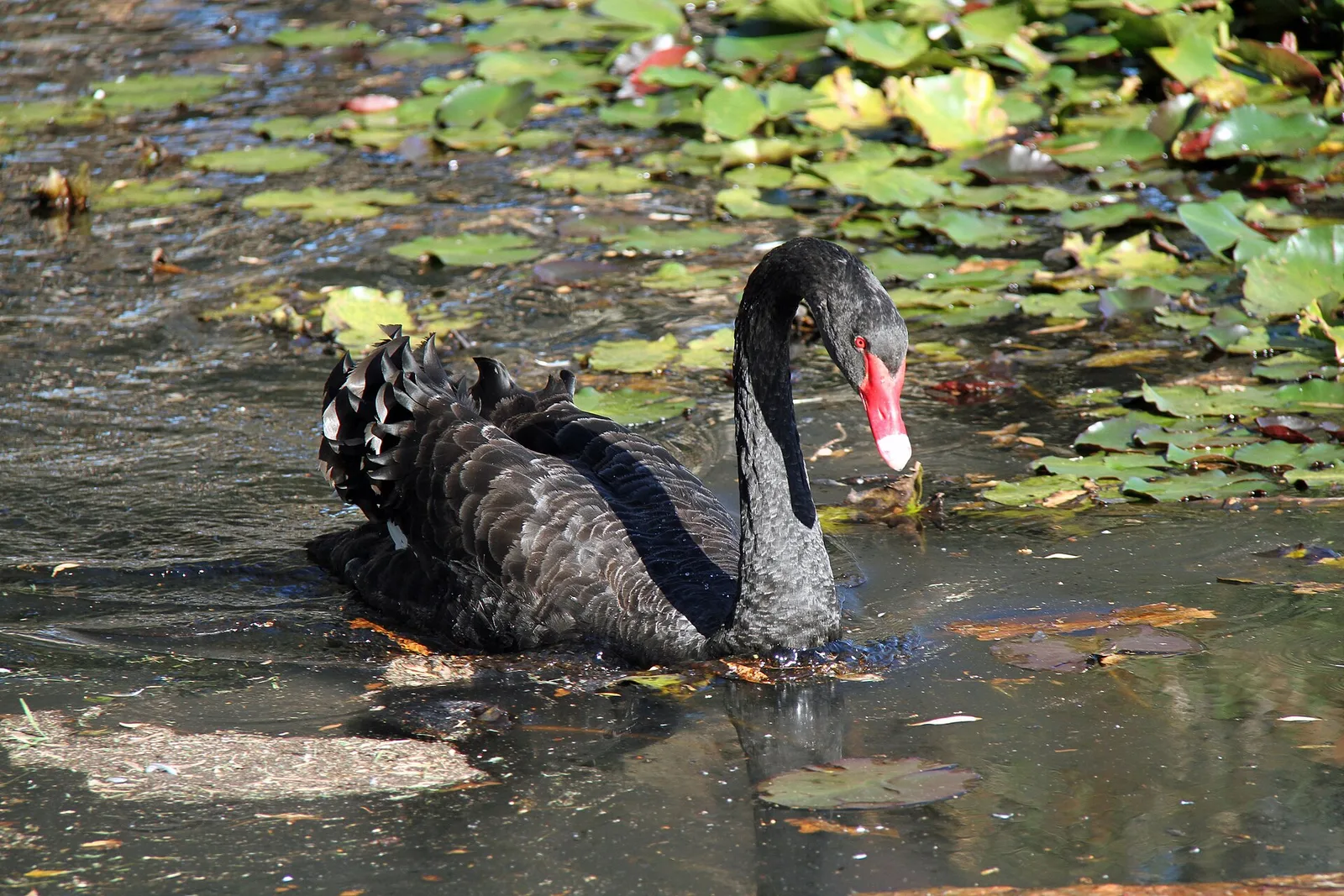
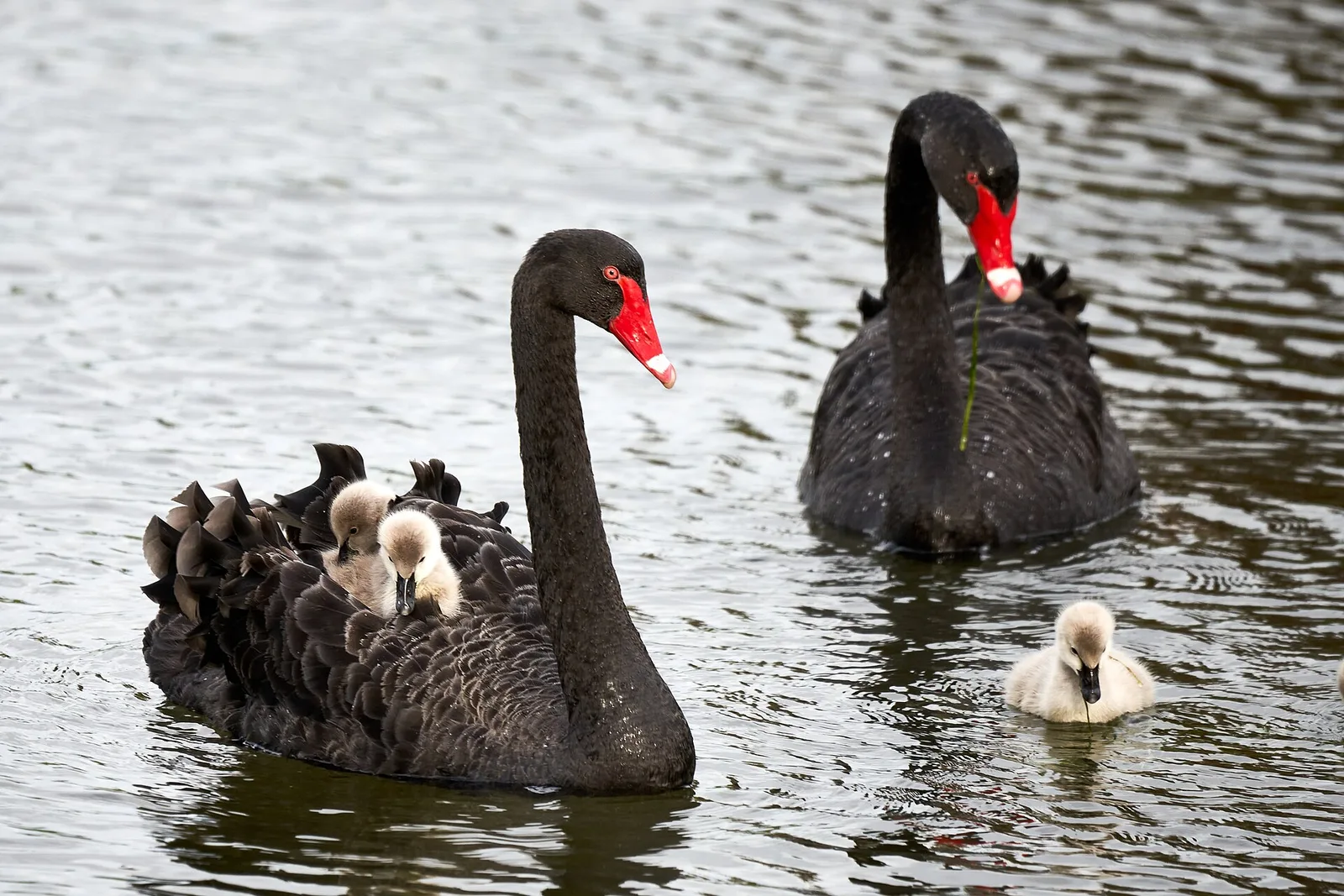
Images of the black swan
Lifespan in the wild
Up to 40 years the ringing record is lower, at 24.7 years
Weight
3.7 to 9 kg
Length
1.1 to 1.42 m
Wingspan
1.6 to 2 m
Fact file
Black swan
- Location
- Southern and eastern Australia and Tasmania, plus New Zealand
- Habitat
- Wetlands, Rivers and lakes, Coast
- Diet
- Herbivore
- Predators
- Ravens, rats, swamp harriers, sea eagles and quolls take eggs and cygnets
- Lifestyle
- Nomadic, and it moves with the rainfall
- Group name
- Flock; a male is a cob and a female a pen
- Name of young
- Cygnet
- Incubation
- Incubation 35 to 40 days
- Clutch size
- 4 to 8 eggs
- Population
- Up to 500,000 birds worldwide
- Biggest threat
- Drought that dries out the breeding wetlands
- Distinctive feature
- Black body, white flight feathers, bright red bill
- Colour
- Black with white wing feathers, a red bill and a red eye
- Skin type
- Feathers
Size
Next to a person
Measurements
Size and speed
- Length
- 1.1 to 1.42 m
- Wingspan
- 1.6 to 2 m
- Weight
- 3.7 to 9 kg
- Weight, male
- About 6.2 kg
- Weight, female
- About 5.1 kg
Typical adult ranges. Sources: Wikipedia, Animal Diversity Web, Wikidata.
Life cycle
Lifespan
- In the wildUp to 40 years the ringing record is lower, at 24.7 years
- 040 years
The pale bar is the record. Source: Animal Diversity Web.
Appearance
Colour and coat
- Primary colours
- black
- Secondary colours
- whitered
- Skin type
- feathers
- Male and female
- Slight. The male, a cob, is a little larger than the female, a pen, and his bill is longer and straighter. Averages are about 6.2 kg for males and 5.1 kg for females.
Life cycle
Mating and family
- Mating system
- monogamous pairs for life, with frequent same-sex pairings
- Social structure
- pairs within loose flocks, and sometimes nesting colonies
- Breeding
- one or more clutches between February and September
A pair builds a mound of reeds in shallow water and returns to it year after year. The female lays four to eight greenish white eggs, and both birds sit on them for about 35 to 40 days. The cygnets swim within hours and sometimes ride on a parent's back. They fly at about six months and leave the family at about nine. Young birds join flocks for a year or two before they pair off.
Classification
Taxonomy
- Kingdom
- Animalia
- Phylum
- Chordata
- Class
- Aves
- Order
- Anseriformes
- Family
- Anatidae
- Genus
- Cygnus
- Species
- Cygnus atratus
Conservation
Red List status
- LC
- NT
- VU
- EN
- CR
- EW
- EX
Least Concern on the IUCN Red List
Range
Recorded in 11 countries
- Ashmore and Cartier Islands
- Brazil
- People's Republic of China
- Germany
- Spain
- France
- United Kingdom
- Netherlands
- New Zealand
- Singapore
- United States of America
Habitat layer: flooded grassland and savanna, mangrove.
Countries from 27,380 wild records on GBIF (iNaturalist research grade), filtered and checked by hand. Country shapes: Natural Earth. Habitat: RESOLVE Ecoregions 2017, CC BY 4.0. Basemap: Natural Earth.
Habitats
Three things to know
- 1
White flight feathers are hidden until the bird opens its wings.
- 2
About a quarter of pairings are between two birds of the same sex, usually two males.
- 3
The bird has the longest neck, for its size, of any swan.
Did you know
Seven more facts
- 1
The white flight feathers stay hidden until the bird spreads a wing.
- 2
Black swans have the longest neck of any swan for their body size.
- 3
A male swan is a cob, a female is a pen and a chick is a cygnet.
- 4
In Noongar the bird is kuljak, and in Tasmania it was called pickerdar.
- 5
The swan on the Western Australian flag once faced the wrong way for forty years.
- 6
Swans abandon eggs and chicks if the water dries up before the brood can fly.
- 7
Adults measure up to 142 cm long, which makes this one of the largest waterbirds.
Field notes
How it looks and acts
Field notes
Distinguishing features
- The body plumage is black, which no other Australian waterbird matches.
- The flight feathers are white and flash when the wings open.
- The red bill carries a pale bar across it and a pale tip.
- The eye is red or pink rather than dark.
- A wingspan of 160 to 200 cm makes a broad, slow silhouette in flight.
- The neck is very long and is held in a tight S while swimming.
Field notes
Unique adaptations
- The long neck reaches plants on the bottom without the need to dive.
- Up-ending lets the bird feed in water deeper than its neck.
- Nomadic movement tracks rainfall across a dry and unreliable continent.
- A floating nest of reeds probably rises and falls with the water level.
- Moulting all at once probably shortens the flightless period to about a month.
Field notes
Interesting behaviours
- It grazes water plants with its head under the surface and its body level.
- It flies inland to breed as soon as rain reaches the dry interior.
- It performs a triumph ceremony with its mate, calling and circling together.
- It gathers on wide open water while it is unable to fly.
- It flies at night in a line or a V, calling as it goes.
Field notes
Temperament
- The black swan is sociable and often feeds in a large loose company.
- It is the least territorial swan, and pairs will nest close together.
- A nesting bird turns aggressive and drives off anything that comes near.
- Park birds appear calm around people who keep their distance.
Field notes
Communication
- The bugle call carries far across open water.
- Quiet crooning notes serve between birds that are close together.
- A whistle signals alarm at the nest.
- The wings whistle in flight and announce a passing flock.
- Raised shoulders and a lowered bill warn a rival away.
Ecology
Ecological role
The black swan is a large grazer of water plants. It shapes the wetlands it visits, and it feeds the predators that take its eggs and young.
- It crops reedmace, pondweed and algae, and heavy grazing probably thins the plant bed.
- Its eggs and cygnets feed ravens, rats, harriers and sea eagles.
- It may carry seeds and plant fragments between wetlands as it wanders.
- Its nomadic habit likely brings grazing pressure to newly flooded country.
Stories
Myths and legends
- In Roman writing, Juvenal used the black swan as a figure for something that cannot be found.
- In European usage before 1697, a black swan named an impossibility.
- In modern finance, Taleb's black swan names a rare event with an enormous effect.
- In Western Australian symbolism, the swan stands on the flag, the arms and the state stamp.
- In Noongar tradition, the bird carries its own names, kuljak and maali.
People
Relationship with humans
People
Living alongside us
The black swan changed European thought before it was ever kept. Sailors found it in 1697 and destroyed a proverb about impossible things. Collectors then shipped it worldwide as an ornamental bird, and escaped flocks now breed in New Zealand, Britain and Japan. In Australia it is fully protected, though farmers still count it a pest where flocks graze crops.
- A black swan away from a nest generally appears to ignore people and swims off.
- A nesting pair may strike with the wings and the bill at anyone who comes close.
- A blow from a swan wing may be heavy enough to bruise, so keep clear of a nest.
People
Status, uses and products
- Domestication
- Wild
- As a pet
- Not suitable. Black swans are kept on ornamental lakes rather than in homes. A bird needs open water, plants to graze and space to fly. It is protected in Australia, and elsewhere it needs a licence and a pond, so it belongs to collections and parks.
- Uses
- ornamental waterfowlbirdwatchingstate and town emblem
- Products
- eggs
The full account
About the black swan
The black swan, Cygnus atratus, is a big waterbird of southern Australia. It carries a bright red bill and white flight feathers that show only in the air. Adults measure 110 to 142 centimetres long and weigh 3.7 to 9 kilograms. The wings span 160 to 200 cm.
The species breeds in the wetlands of southern Australia and Tasmania. It wanders after the rain instead of following a fixed migration route. Pairs stay together for years and share the nest and the young. People took the bird abroad as an ornament, and some of those flocks went wild. The IUCN lists it as Least Concern, with a world total of up to 500,000 birds.
Name and taxonomy
The English naturalist John Latham described the bird in 1790 as Anas atrata. Later authors moved it into a genus of its own, Chenopis. In 1997 it went into Cygnus, the swan genus, with Chenopis kept as a subgenus. The species is monotypic, so no subspecies are recognised.
Australian languages have their own names for the bird. In Noongar, spoken across the south west, it is kuljak, kooldjak or gooldjak. Language schools sometimes use the name maali. The Teen Toomele Menennye people of Tasmania call it pickerdar.
Evolution and relatives
Swans, geese and ducks share the family Anatidae, and swans are the largest of them. The nearest relative of the black swan is the mute swan of Eurasia. Its neck is the longest of any swan in proportion to the body. The all-black plumage probably developed in isolation on an island continent.
New Zealand once held a swan of its own. People hunted that bird out before Europeans reached the islands. Settlers filled the gap in 1864 with black swans shipped from Australia. A few birds have also crossed the Tasman Sea on their own. The present New Zealand population descends mostly from the deliberate releases.
Appearance
The body feathers are black and the flight feathers are white. A swimming bird therefore appears wholly black until it lifts a wing. A pale bar and a pale tip mark the bright red bill. The legs and feet are greyish black, and the eye is red or pink. The long neck curves into an S when the bird swims.
A male is called a cob and a female a pen. The cob is slightly larger, and his bill is longer and straighter. Wikidata gives adult averages of 6.2 kilograms for males and 5.1 kg for females. Cygnets are greyish brown with pale feather edges and a paler bill. A captive flock in Florida has thrown a few mottled grey birds. White individuals also occur, and they are leucistic rather than albino.
Habitat and range
The stronghold is the wetland country of south-western and eastern Australia. In the west the range lies between North West Cape, Cape Leeuwin and Eucla. In the east it runs from the Atherton Tableland to the Eyre Peninsula and Tasmania. The Murray and Darling basin carries very large numbers. The bird is uncommon in central and northern Australia.
Fresh, brackish and salt water all suit it, if plants grow in and around the water. Lakes, swamps, rivers, flooded pasture and tidal mudflats all serve. Ornamental lakes in parks and gardens suit the species just as well. Birds sometimes turn up on the open sea near a shore or an island. Published figures for the extent of the range run from 1 to 10 million square kilometres. GBIF holds records from 85 countries, and that count includes park birds and escapes.
Diet and feeding
The black swan eats plants almost exclusively. Water plants and marsh plants make up the bulk of the diet. Reedmace leaves are the main item for birds in New South Wales wetlands. Queensland birds take pondweed, stoneworts and algae instead. The mixture shifts with the water level and the season. Insects turn up in the diet now and then.
In shallow water the swan pushes its head and neck under and grazes the bottom. It holds the body level while the head works below. In deeper water it up-ends, tail in the air, to reach further down. It can also strain food from the surface film. When a flood puts the usual plants out of reach, the birds graze pasture on shore. That habit makes them a crop pest in some districts.
Behaviour and social life
Black swans gather in loose companies of hundreds or even thousands of birds. They are the least territorial of the swans, and some pairs nest in colonies. A single bird or a lone pair is just as common a sight. The species is nomadic and follows the rain. Wet years draw birds inland from the south, and dry years send them back. When rain reaches the dry centre, swans fly there to nest.
If the drought returns too soon, the parents leave the eggs or cygnets behind. After breeding the swan drops every flight feather at once. It cannot fly for about a month, so it settles on wide open water for safety. Feeding peaks at dusk, and the birds often travel at night, calling as they go. A threat display raises the neck, points the bill down and ruffles the feathers. The wings then beat two or three loud strokes, followed by a call.
Communication and senses
The main call is a musical bugle that carries a long way. The swan gives it on the water and in the air. Softer crooning notes serve at close range. A bird disturbed at the nest whistles. The wings whistle too, so a passing flock can be heard before it is seen.
The triumph ceremony is the most elaborate display of the species. The male approaches with his wings and chin raised, calling again and again. The female answers with the same call, and the two dip their heads in turn. They stretch their necks upward, point the bills, and then swim in a circle. The ceremony binds mates together and links parents to their cygnets. It grows more frequent when other swans are near.
Reproduction and life cycle
Black swans pair for life, and only about 6 per cent of pairs split up. Around a third of broods contain a chick fathered outside the pair. About a quarter of pairings join two birds of the same sex, usually two males. Such pairs take over a nest, or bring in a female and drive her off after she lays. Breeding runs through the wetter months, from February to September.
The nest is a heap of reeds, grasses and weed in shallow water or on an island. It measures 1 to 1.5 metres across and stands up to a metre high. The same mound serves each year, repaired or rebuilt as needed. A clutch holds four to eight greenish white eggs. An egg is 9.5 to 11.7 cm long and weighs 200 to 320 grams.
Both parents incubate, and the female takes the night shift. Sitting lasts about 35 to 40 days and begins once the last egg is laid. That timing makes the whole brood hatch together. Either parent can roll a stray egg back with the neck. In every other swan only the female performs that trick. Both birds defend the nest fiercely with the wings and the bill.
Cygnets swim and feed soon after they hatch. They ride on a parent's back for a long trip into deep water. Black swans do this less often than mute and black-necked swans. The young fly at about six months and stay with the family for about nine. First breeding comes at 18 to 36 months old. The oldest ringed bird passed 24.7 years, and wild swans of 40 are reported.
Predators and threats
An adult black swan is large, and few predators appear to trouble a healthy one. Eggs are taken by Australian ravens, by common rats and by golden-bellied water rats. Swamp harriers and white-bellied sea eagles rob nests, and so do other hawks. Fledglings fall to harriers, sea eagles, quolls, water rats, gulls and terns. Parents meet an attacker with raised wings and a stabbing bill.
Drought is probably the largest natural threat to the species. A dry season can end a whole round of breeding across the interior. Some districts run a hunting season where flocks damage crops. The bird is fully protected in every Australian state and may not be shot. New South Wales protects it under an act of 1974. The moult leaves adults flightless for a month, which is probably the riskiest time.
Population and conservation
The IUCN lists the black swan as Least Concern. The world population is put at up to 500,000 birds. No decline and no threat of extinction have been identified. New South Wales alone counts numbers in the thousands and tens of thousands. iNaturalist holds 39,028 observations of the species.
Introduced flocks probably add a little to the world total. New Zealand now holds large numbers on its coastal and inland lakes. Rotorua, Lake Wairarapa, Te Waihora and the Chatham Islands all carry them. The British population is not counted as self-sustaining. The Wildfowl and Wetlands Trust logged nine breeding pairs in Britain in 2001. It estimated 43 feral birds there across 2003 and 2004.
Relationship with humans
Europeans first saw the bird in 1697, when Willem de Vlamingh explored the Swan River. The species went abroad as an ornamental bird during the 1800s. Escapes founded stable flocks in several countries. New Zealand received birds in 1864, and Japan between 1950 and 1960. British groups live at Marlow on the Thames, at Dawlish in Devon and near Stockton-on-Tees. A campus flock went onto an artificial lake at Shenzhen University in 2018.
Zoos and park lakes keep the bird, probably because it looks striking and tolerates people. Farmers count it a pest where a flock grazes a crop or pulls it up. People take the eggs in some places. Birdwatchers rate the species highly, and it draws visitors to park lakes. The swan is not domesticated, and captive birds appear to keep their wild behaviour.
In culture and myth
The black swan is the emblem of Western Australia. It stands on the state flag as a black bird on a yellow disc. The design dates from 1870, and the swan became the official state bird in 1973. At first the bird faced away from the hoist, which broke the rules of flag design. The direction was reversed in 1953, ahead of a royal visit. Western Australia used one postage stamp from 1854 to 1902, and it carried the swan.
The Roman poet Juvenal wrote of a rare bird that was very like a black swan. For Europeans the phrase named a thing that could not exist. The sighting of 1697 turned it into a figure for the unforeseen instead. Nassim Nicholas Taleb built a theory of rare events on the phrase from 2001. His three tests are surprise, extreme effect, and an explanation invented afterwards.
The town of Dawlish in Devon has used the introduced bird as its emblem for forty years. Australians have long read the swan as a mark of their own half of the world. The white swan of the northern hemisphere stands opposite it. The bird appears in the coat of arms and the badges of Western Australian institutions.
A sentence with a dotted underline is inferred: it describes the group the animal belongs to, or is a reading of the sources, rather than a measured or reported fact about this species.
Questions
Black swan questions, answered
Are black swans real?
Yes. They are a real Australian species, Cygnus atratus. Europeans doubted their existence until Dutch sailors found them in 1697.
How big is a black swan?
Adults measure 110 to 142 cm long with a wingspan of 160 to 200 cm. They weigh 3.7 to 9 kg.
Where do black swans live?
Mainly in the wetlands of south-western and eastern Australia and in Tasmania. Introduced flocks live in New Zealand, Britain, Japan and elsewhere.
What do black swans eat?
Water plants, marsh plants and algae, with a few insects. In floods they graze pasture on the shore instead.
Are black swans aggressive?
Only near the nest. A sitting pair defends the eggs with the wings and the bill, so give a nesting swan room.
Do black swans mate for life?
Mostly. Only about 6 per cent of pairs separate. A third of broods still hold a chick fathered outside the pair.
How many eggs does a black swan lay?
Four to eight greenish white eggs. Both parents sit on them for about 35 to 40 days.
How long do black swans live?
The ringing record is at least 24.7 years. Reports of wild birds reaching 40 years exist, though they are anecdotal.
Why is it called a black swan event?
Because the bird was thought impossible until it was found. Nassim Nicholas Taleb borrowed the phrase for a rare event with a huge effect.
Are black swans endangered?
No. The IUCN lists the species as Least Concern, with up to 500,000 birds and no known decline.
Can black swans fly?
Yes, strongly, in lines and V formations. They cannot fly for about a month each year, while they moult all their flight feathers at once.
Do black swans have white feathers?
Yes. The flight feathers are white and hidden by the black body feathers until the bird spreads a wing.
How did black swans get to New Zealand?
Settlers released them in 1864 as ornamental waterfowl. A few birds have flown there naturally, but most are descended from those releases.
What is a baby black swan called?
A cygnet. It is greyish brown with pale feather edges, and it can swim and feed within hours of hatching.
Why is the black swan on the Western Australian flag?
The bird is native there and named the Swan River Colony. It has been on the flag since 1870 and became the state bird in 1973.
Food web
Prey and food
Not recorded.
Food web
Predators
- ravens
- rats
- swamp harriers
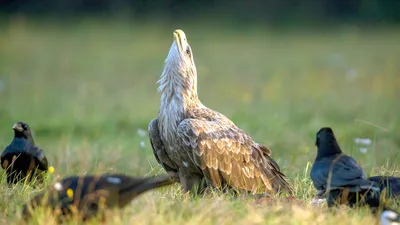 White-tailed eagle
- quolls
Ecological equivalents
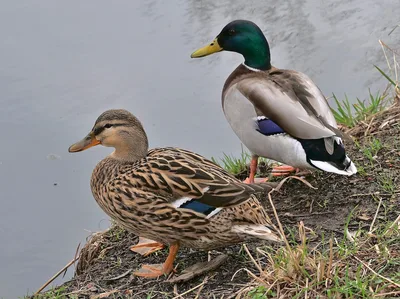
Related species on this site
Mute swan (same genus), Tundra Swan (same genus), Black-Bellied Whistling Duck (same family), Canada goose (same family), Canvasback (same family), Chinese Geese (same family), and more.
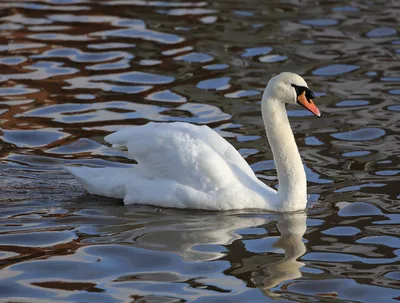 LC
Birds
Mute swan
Cygnus olor
The mute swan is a large white waterbird of lakes, rivers and sheltered coasts across Europe and Asia.
Living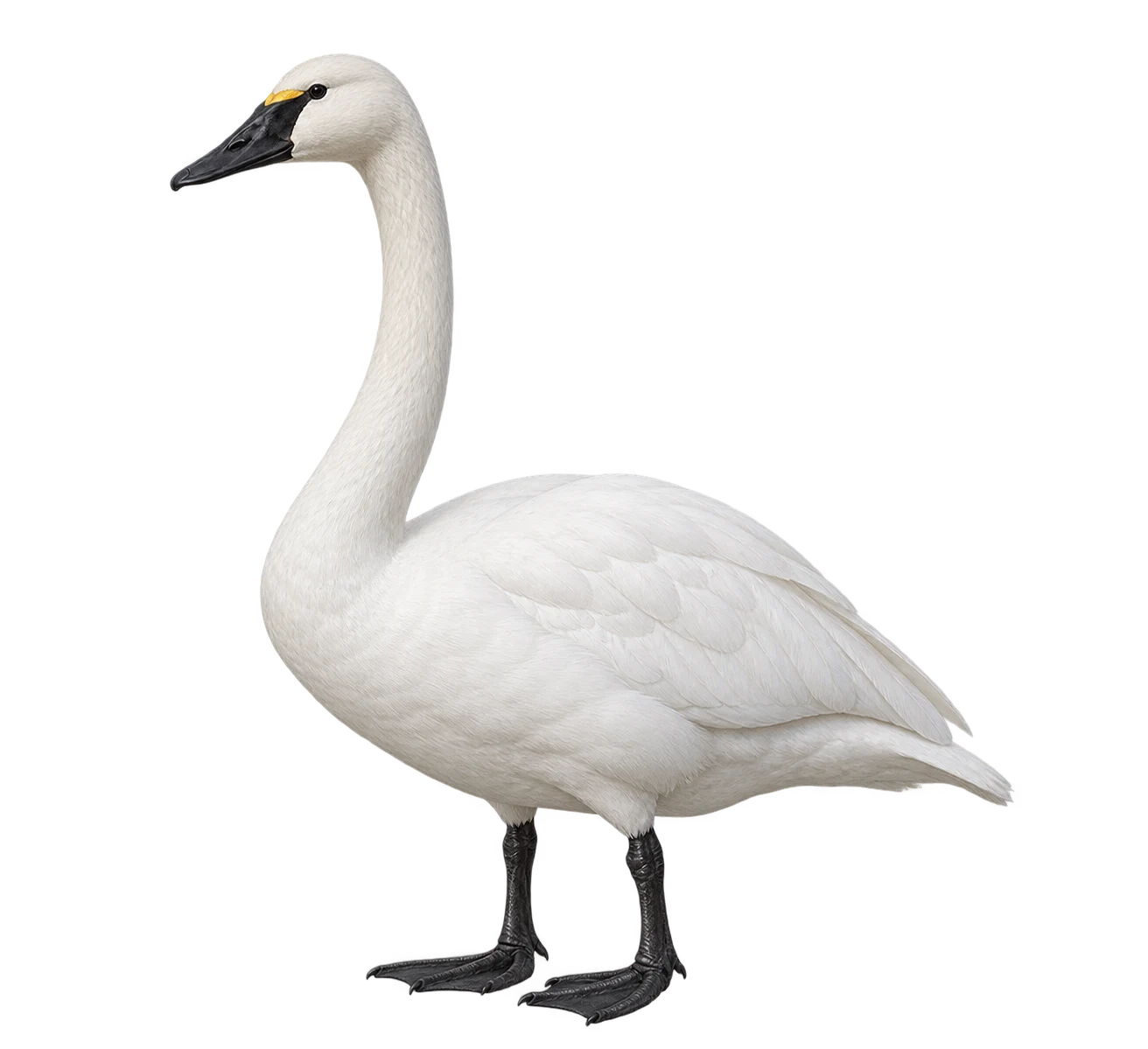
Birds
Tundra Swan
Cygnus columbianus
Classification and source reference
LivingAI illustration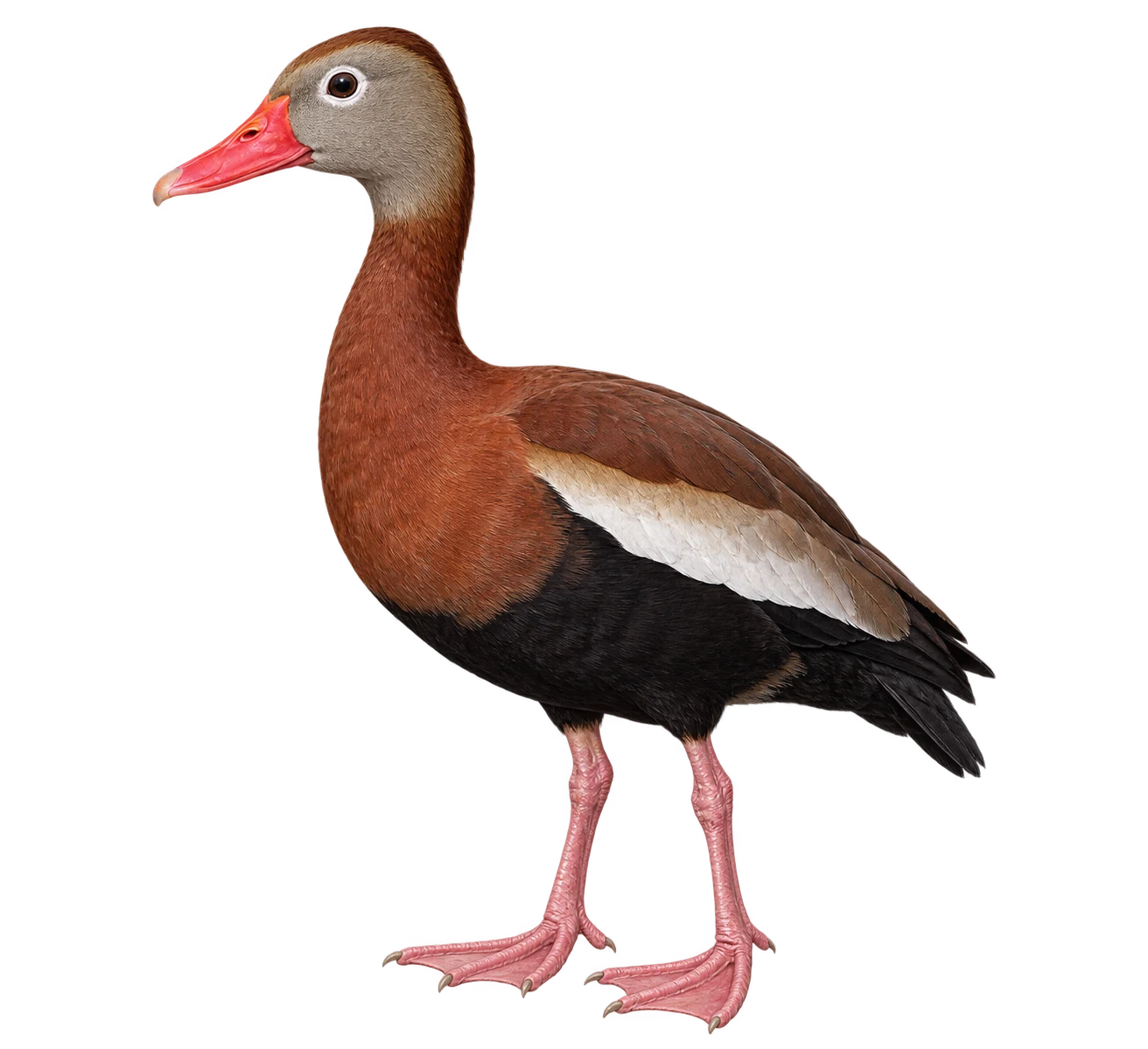
Birds
Black-Bellied Whistling Duck
Dendrocygna autumnalis
Classification and source reference
LivingAI illustration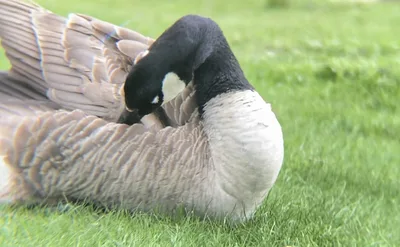 LC
Birds
Canada goose
Branta canadensis
The Canada goose is a large black-necked goose with a white chinstrap, native to North America and now settled on four continents.
Living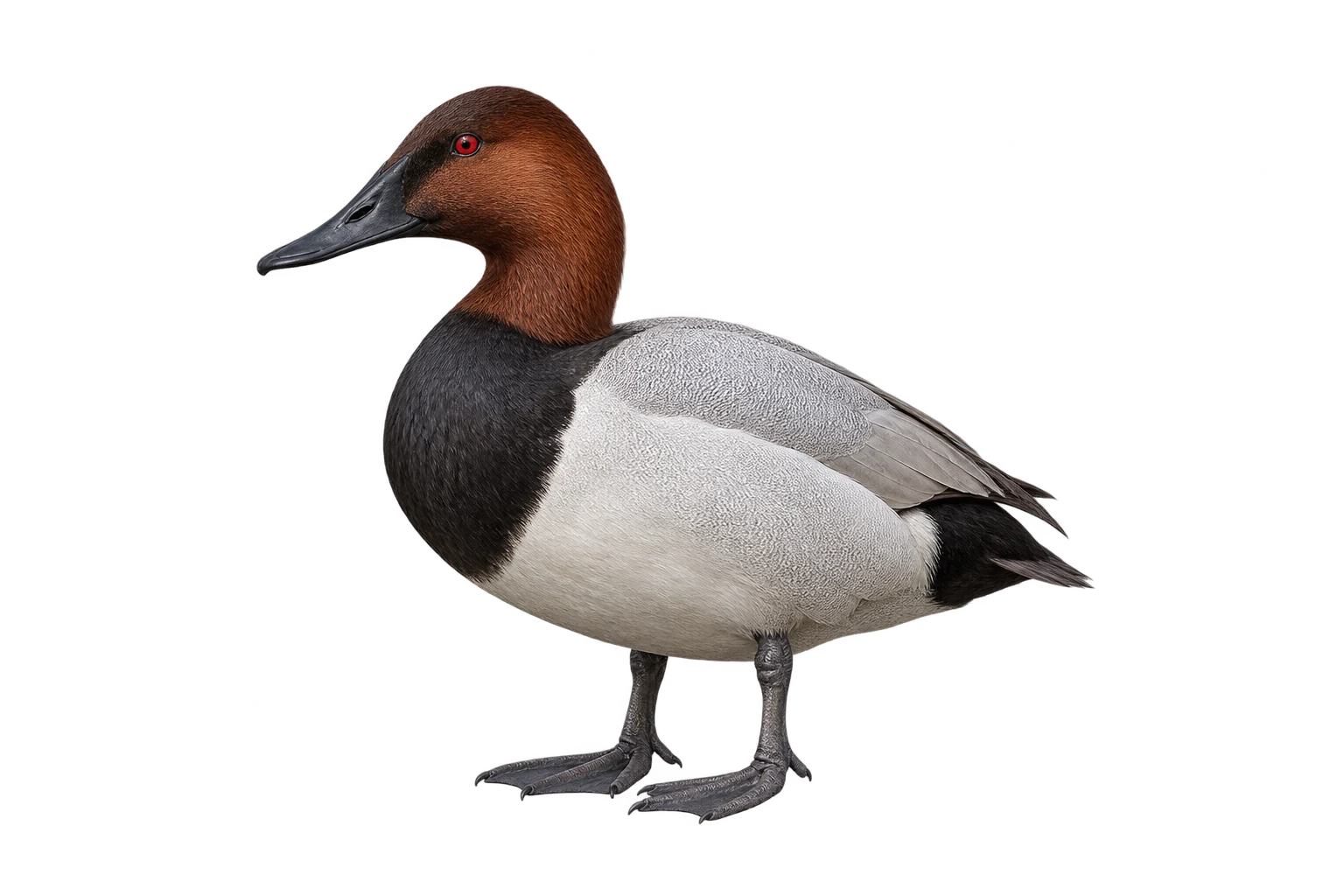
Birds
Canvasback
Aythya valisineria
Classification and source reference
LivingAI illustration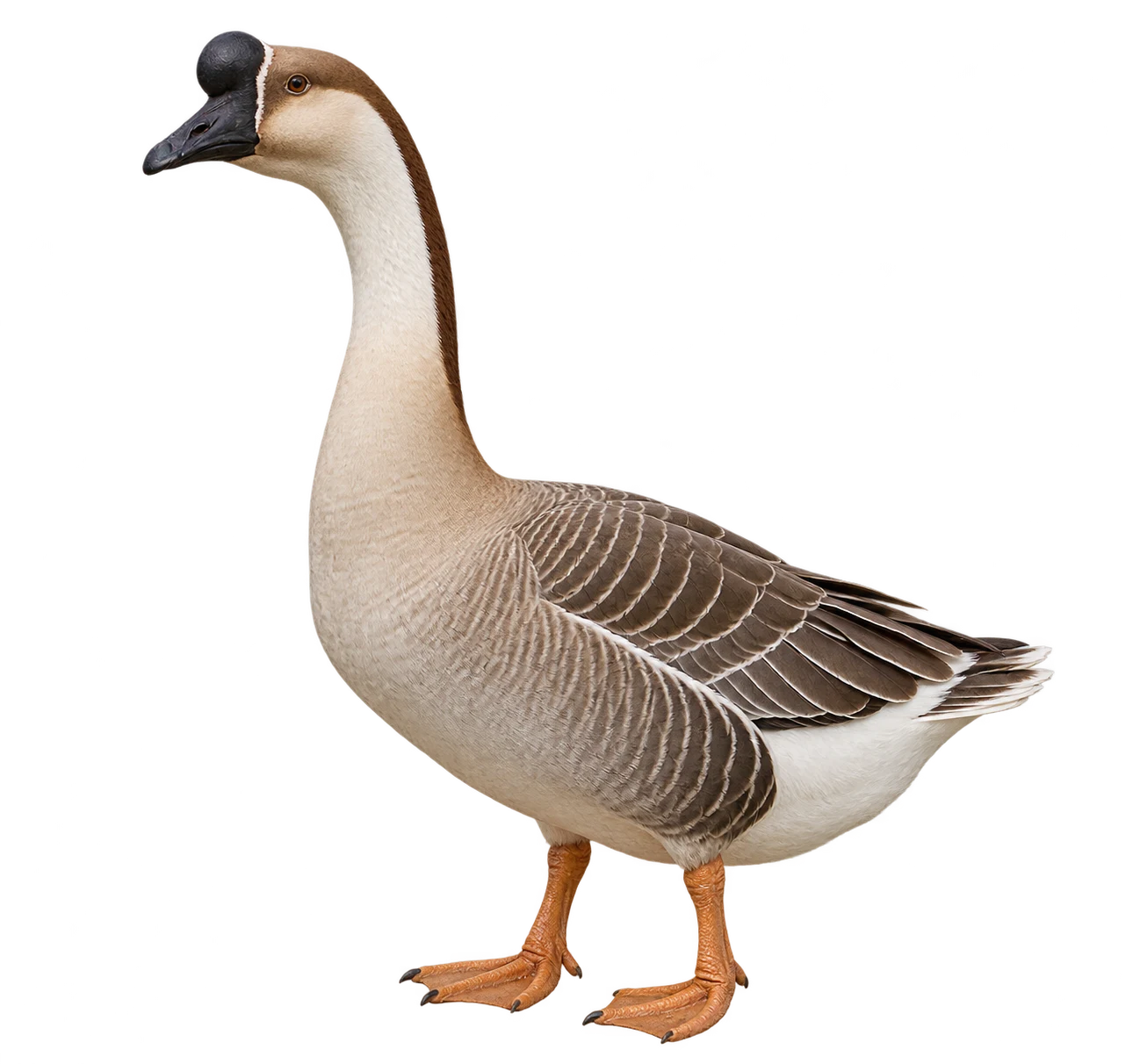
Birds
Chinese Geese
Anser cygnoides domesticus
Classification and source reference
LivingAI illustration