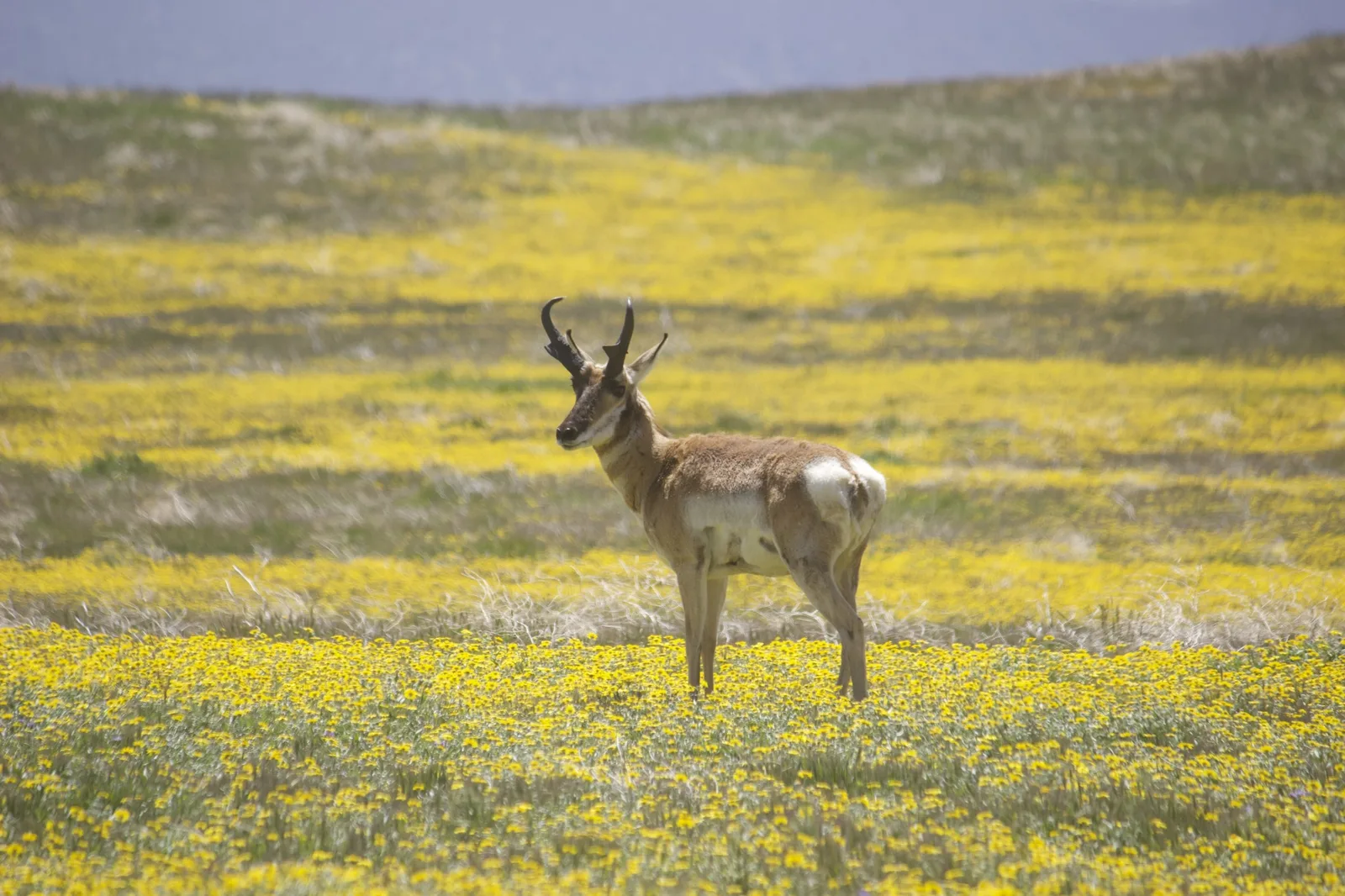
Pronghorn
The fastest runner in the Americas, built for a ghost
Antilocapra americana
Also called American antelope, Pronghorn antelope, Prairie antelope, Prongbuck, Berrendo
Living individuals or members of this group exist today. This does not mean they are safe from extinction.
Meet the pronghorn
The pronghorn is a hoofed animal of western North America, the last of its family and the fastest land mammal in the Americas. It looks like an antelope but is closer to the giraffe, and it can hold a sprint far longer than a cheetah.
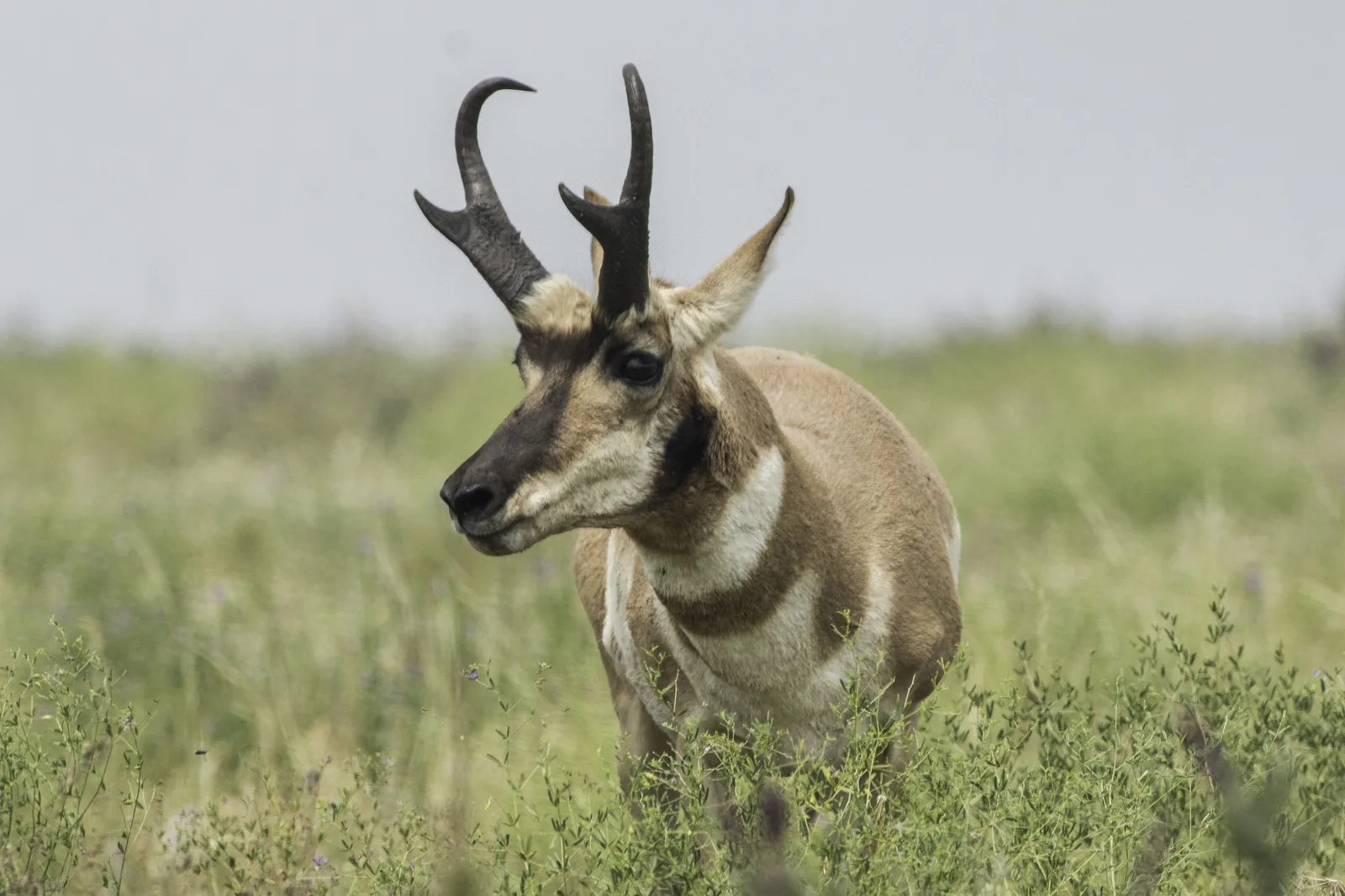
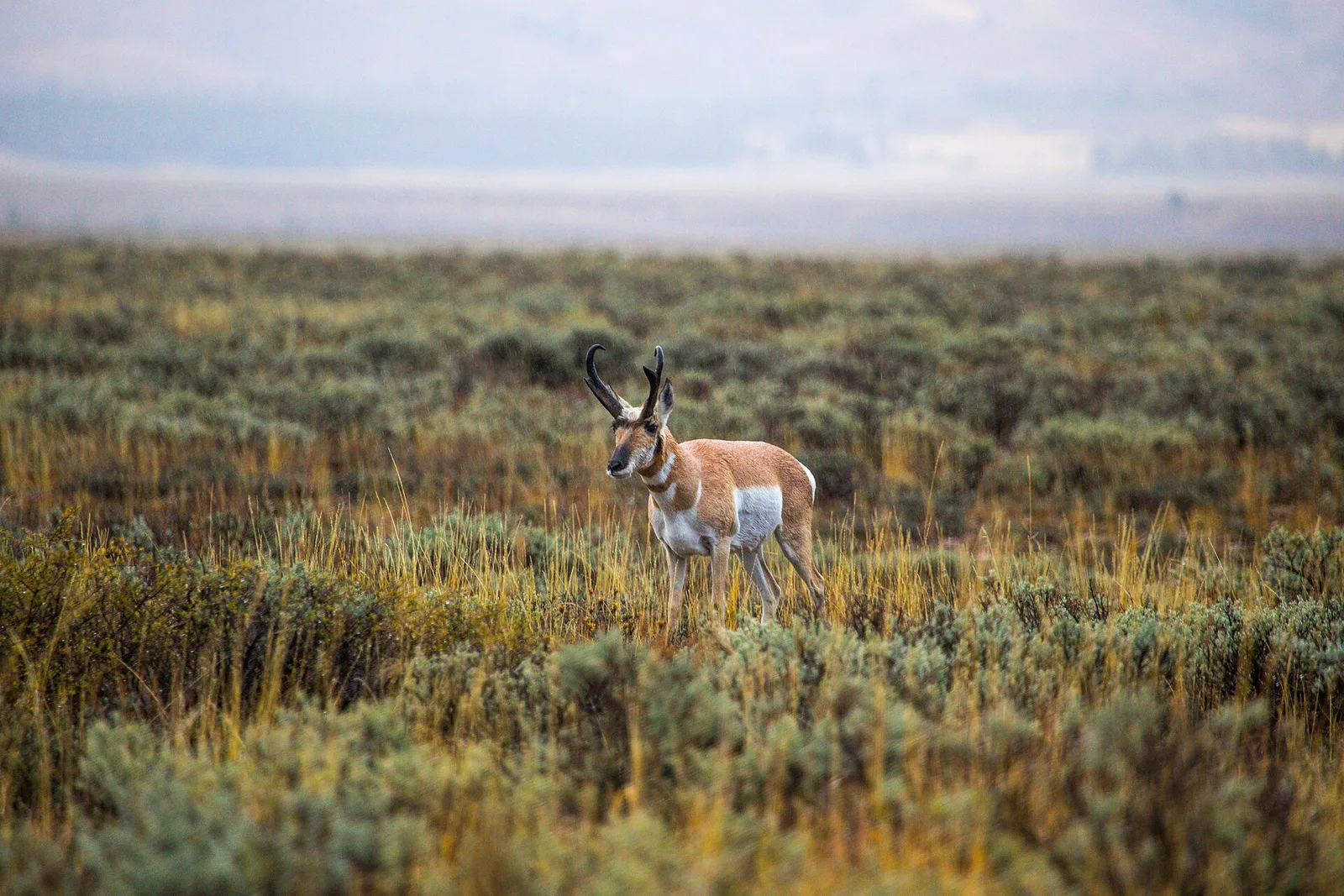
Images of the pronghorn
Lifespan in the wild
About 10 years ADW records a doe aged 16
Weight
34 to 65 kg
Length
1.3 to 1.5 m
Top speed
56 to 68 km/h
Fact file
Pronghorn
- Location
- Western North America, from southern Canada to northern Mexico
- Habitat
- Grassland, Desert
- Diet
- Herbivore
- Prey / food
- Forbs, sagebrush, other shrubs, cacti, a little grass
- Predators
- Coyotes, cougars, wolves, bobcats, golden eagles
- Lifestyle
- Herd-living, active by day and night, migrates in many populations
- Group name
- Herd
- Name of young
- Fawn
- Gestation
- About 235 to 252 days
- Litter size
- 1 to 2 fawns, usually twins after the first year
- Population
- About 500,000 to 1,000,000; the Sonoran and Baja subspecies number in the hundreds
- Biggest threat
- Fences and roads that block migration
- Distinctive feature
- Black forked horns with a sheath shed every year
- Colour
- Reddish tan above, white below, with a white rump patch
- Skin type
- Fur
Size
Next to a person
Measurements
Size and speed
- Height
- 0.82 to 1.04 m at the shoulder
- Length
- 1.3 to 1.5 m nose to tail, adult males
- Tail
- Up to 10.5 cm
- Weight
- 34 to 65 kg lightest females to heaviest males
- Weight, male
- 40 to 65 kg
- Weight, female
- 34 to 48 kg
- Top speed
- 56 to 68 km/h, up to 88.5 km/h 56 over 6.5 km, 68 over 1.5 km, 88.5 over 800 m
Typical adult ranges. Sources: Wikipedia, Animal Diversity Web.
Life cycle
Lifespan
- In the wildAbout 10, up to 15 years ADW records a doe aged 16
- In captivityUp to 17 years
- 017 years
Appearance
Colour and coat
- Primary colours
- reddish tanwhite
- Secondary colours
- black
- Skin type
- fur
- Male and female
- Bucks are heavier, 40 to 65 kilograms against 34 to 48 for does. Bucks carry long pronged horns, a black cheek patch and a black mane. Doe horns are short or absent.
Life cycle
Mating and family
- Mating system
- polygynous, with bucks holding territories or harems and does choosing among them
- Social structure
- large mixed winter herds; summer bands of does and fawns, bachelor bands, and lone territorial bucks
- Breeding
- one litter a year, usually twins, born in late May and June
Pronghorns rut in September and October. A doe samples several bucks and often mates with the winner of a fight. After about 252 days she bears one or two fawns in late May or June. All the does in a herd give birth in the same few days. The fawn hides for its first three weeks and can outrun a person within days. Does breed at 16 months, bucks at about three years, and a wild pronghorn lives about 10 years.
Classification
Taxonomy
- Kingdom
- Animalia
- Phylum
- Chordata
- Class
- Mammalia
- Order
- Artiodactyla
- Family
- Antilocapridae
- Genus
- Antilocapra
- Species
- Antilocapra americana
Conservation
Red List status
- LC
- NT
- VU
- EN
- CR
- EW
- EX
Least Concern on the IUCN Red List
Range
Recorded in 3 countries
Habitat layer: tropical grassland, savanna and shrubland, temperate grassland, savanna and shrubland, desert and xeric shrubland.
Countries from 19,133 wild records on GBIF (iNaturalist research grade), filtered and checked by hand. Country shapes: Natural Earth. Habitat: RESOLVE Ecoregions 2017, CC BY 4.0. Basemap: Natural Earth.
Habitats
Three things to know
- 1
A pronghorn can run 88.5 kilometres an hour, and it can hold 68 km/h for a mile and a half, far longer than any cheetah.
- 2
Its closest living relatives are the giraffe and the okapi, not the antelopes it resembles.
- 3
When alarmed it flares its white rump hairs and releases a scent that people say smells like buttered popcorn.
Did you know
Seven more facts
- 1
A pronghorn cannot jump, so it crawls under fences at speed.
- 2
Its eyes see about 320 degrees, and it can spot an object two miles away.
- 3
A doe sheds 4 to 7 eggs, but crowding in the womb leaves only one or two fawns.
- 4
Lewis and Clark called it a goat, and Clark shot the first one they recorded in 1804.
- 5
Only about 13,000 were left in the 1920s, and today there are up to a million.
- 6
Some Wyoming herds walk a round trip of about 300 miles every year.
- 7
The species is the emblem of the American Society of Mammalogists.
Field notes
How it looks and acts
Field notes
Distinguishing features
- Black horns that fork, with a short forward prong, on both sexes.
- A reddish-tan back and a white belly, rump and throat bands.
- A large white rump patch that flares when alarmed.
- A black cheek patch and short black mane on the buck.
- Huge eyes set high on a long muzzle.
- A shoulder height of 82 to 104 centimetres on slender legs.
Field notes
Unique adaptations
- An oversized windpipe, heart and lungs take in three times the oxygen expected for its size.
- Long, cushioned, pointed hooves absorb the shock of running at 88.5 km/h.
- Light hollow bones and hinge-like leg joints save weight and waste no motion.
- Hollow hair traps air against the prairie winter.
- A large liver lets it eat plants that poison livestock.
Field notes
Interesting behaviours
- Gathers in large mixed herds in winter and small bands in summer.
- Migrates up to 160 kilometres to escape deep snow.
- Walks towards anything strange to see what it is.
- Hides its newborn fawn and returns to nurse it about three times a day.
- Marks territory with scent glands and scrapes.
Field notes
Temperament
- Shy and quick to flee.
- Curious about anything new.
- Bucks are combative in the rut and can hurt each other badly.
Field notes
Communication
- Flares its white rump hairs to warn the herd.
- Releases an alarm scent from rump glands.
- Bucks give a snort-wheeze to warn rivals.
- A courting buck calls softly and shows his cheek patches.
Ecology
Ecological role
The pronghorn is the main browser of the sagebrush steppe and short-grass prairie, and its fawns feed the coyote.
- Eats forbs, sagebrush and weeds that cattle refuse, which improves the range.
- Feeds coyotes, cougars, wolves, bobcats and golden eagles, mainly through its fawns.
- Hosts more than 30 species of roundworm and shares parasites with sheep and deer.
- Its migrations probably carry seeds and dung across hundreds of kilometres of steppe.
Stories
Myths and legends
- In Plains Indian tradition, an antelope brings a message from the spirit world.
- In Blackfoot tradition, Napi the creator made both the bighorn sheep and the antelope.
- In Pueblo tradition, antelope clans and an Antelope Dance survive in New Mexico.
- In Hopi tradition, the Antelope Society admits women as well as men, and Chop is the antelope kachina.
People
Relationship with humans
People
Living alongside us
Plains peoples hunted the pronghorn for meat and gave it a place in their stories. Settlers hunted it almost to extinction, then rescued it with refuges and game laws. It is now a major game animal in the western states. Its migrations run into fences, roads and railways, and conservation groups work to open them. It does no harm to people and little to crops.
- A pronghorn runs from people and has never been known to attack one.
- A cornered buck can strike with hooves and horns, so a handler may be hurt.
- The main risk to people is a collision on a highway at night.
People
Status, uses and products
- Domestication
- Wild
- As a pet
- Not suitable. A pronghorn needs open range, forbs and sagebrush, and it panics in an enclosure. Early refuges lost whole herds inside fences. It is a game animal under state law, and permits are needed to hold one.
- Uses
- sport huntingmeatwildlife tourism
- Products
- meathidehorn
The full account
About the pronghorn
The pronghorn, Antilocapra americana, is a hoofed mammal of the open plains and deserts of western North America. It is the last living member of its family, the Antilocapridae. A buck stands 82 to 104 centimetres at the shoulder and weighs 40 to 65 kilograms. It looks like an antelope, and Americans call it one, but its nearest living relatives are the giraffe and the okapi. Both sexes carry black horns with a forward prong, and the outer sheath falls off and regrows every year.
No land mammal in the Americas runs faster: the pronghorn reaches 88.5 kilometres an hour. It can hold high speed far longer than a cheetah, and no living American predator can catch a healthy adult. It probably evolved that speed to escape the American cheetah, which died out at the end of the ice age. Hunting cut the species to about 13,000 animals by the 1920s. Refuges and hunting laws brought it back to between 500,000 and a million, and the IUCN lists it as Least Concern.
Name and taxonomy
The name describes the horn: a sheath that forks, with a short tine pointing forward. No member of the ox family has a branched horn. Spanish explorers saw the animal in the 16th century, but Lewis and Clark made the first careful record in 1804 near the Niobrara River. Clark called it a buck goat of this country and compared it to the antelopes and gazelles of Africa. The ornithologist George Ord gave it its scientific name in 1815.
Antilocapra probably means antelope-goat, and americana marks its home. It is the only species in the family Antilocapridae, within the order Artiodactyla. Five subspecies are named, among them the Sonoran pronghorn of Arizona and Sonora and the Baja California pronghorn. Other English names are American antelope, prong buck and prairie antelope, and in Mexico it is the berrendo.
Evolution and relatives
The pronghorn is the survivor of a family that once filled North America. About 11 other antilocaprids lived during the Pleistocene, many with long or twisted horns. Three other genera, Capromeryx, Stockoceros and Tetrameryx, were still alive when people first entered the continent. All of them are gone.
The family belongs to the infraorder Pecora, so its cousins are the deer, the bovids and the musk deer. Its closest living relatives are the giraffe and the okapi. Like a giraffe, it grows a bony horn core covered in skin. In the pronghorn that skin turns into a horn sheath, and the sheath is shed. Its likeness to the antelopes of the Old World is a case of parallel evolution for the same open-country life. Bone studies from Natural Trap Cave show that American cheetahs, American lions and wolves all ate pronghorns in the ice age.
Appearance
An adult buck measures 130 to 150 centimetres from nose to tail and stands 82 to 104 cm at the shoulder. Bucks weigh 40 to 65 kilograms and does 34 to 48 kg, though the sexes stand the same height. The tail is short, up to 10.5 cm. The body is barrel-shaped on long slender legs, and each foot has two hooves and no dewclaws. The coat is reddish tan above and white on the belly, chest, rump and two bands across the throat.
The hair is coarse and hollow, and it traps air for insulation in the winter wind. A buck wears a black cheek patch, a short black mane and a black band across the forehead. Buck horns run 12 to 43 cm, about 25 cm on average, with the prong. Doe horns are 1 to 6 cm, straight, and often hard to see at all. The eyes are huge and set high on the skull, with a field of view of about 320 degrees.
Habitat and range
Pronghorns live on grassland, sagebrush steppe and desert from sea level to about 3,500 metres. They keep to open ground with long sight lines and avoid anything closed in. The densest herds live between 910 and 1,800 metres where 254 to 406 millimetres of rain falls a year. Most animals stay within 8 kilometres of water, though juicy forbs can replace drinking for weeks.
The range runs west of the Mississippi from southern Alberta and Saskatchewan through 16 western states into Mexico. The Sonoran subspecies reaches Baja California Sur and San Luis Potosi in shrinking numbers. Iowa, Minnesota and Manitoba have lost the species. An introduction to Lanai in Hawaii in 1959 dwindled to about 12 animals by 1983. GBIF holds records from 7 countries, nearly all of them the United States, Canada and Mexico.
Many populations migrate to snow-free winter range. A herd in Idaho walks more than 260 kilometres from the Pioneer Mountains across Craters of the Moon to the Continental Divide. At one point that route narrows to a gap only 200 yards wide. Wyoming herds travel about 300 miles round trip between the Upper Green River and Grand Teton. No land migration in the lower 48 states is longer.
Diet and feeding
The pronghorn is a picky browser that nibbles small amounts of many plants. Forbs, the soft broad-leaved plants of the prairie, are the favourite food in summer. In one study forbs made up 62% of the diet, shrubs 23% and grasses 15%. Another study found 40% cacti, 22% grass, 20% forbs and 18% shrubs. Grass is eaten mainly as fresh spring growth.
In winter, northern herds depend on sagebrush, and herds on bare grassland can starve while sagebrush herds nearby do well. Pronghorns eat plants that poison cattle and sheep, helped by a large liver. They dig through snow with their hooves and follow wind-blown ridges where the ground is bare. Like cattle, they chew the cud in a four-chambered stomach. In dry country an animal may drink up to 3 litres a day, and one cow is said to eat as much as 38 pronghorns.
Behaviour and social life
Pronghorns are almost never alone. In winter both sexes gather in large herds, which break up in early spring. Summer groups hold up to about 12 animals: does with fawns, or young bucks in bachelor bands. Adult bucks live alone on territories they hold from March to the end of the rut in October. Does keep a rank order, and a dominant doe shoves lower does away from good feeding spots.
A buck marks his ground with scent from glands below the ears, and with scrapes where he sniffs, paws, urinates and defecates. Rivals stare, snort-wheeze, thrash their heads, grind their teeth and walk side by side with heads low. If neither backs down they lock horns and push, and a fight of about 2 minutes can leave a serious wound. Where rain is plentiful bucks hold territories, and where it is scarce they follow and guard a harem instead.
The animals feed and rest in cycles around the clock and seldom seem to sleep. An undisturbed herd walks about 6 kilometres a day. Pronghorns are curious and will walk towards something strange until they can tell what it is. They cannot jump, so they crawl under fences, sometimes at speed, and a fence with a low bottom wire can stop a whole migration.
Communication and senses
Sight comes first. The big eyes sit high and far back, and a pronghorn can pick out an object about two miles away. When one sees danger, the white hair on its rump stands up and shows from a great distance. At the same time two rump glands release a scent that people compare to buttered popcorn. Humans have smelt it 65 to 100 feet downwind of an alarmed herd.
Scent runs through pronghorn life. Glands sit on the cheeks, between the hooves, on the rump and, in bucks, on the back. A courting buck approaches a doe from behind, waves his head to show his cheek patches and spread his scent, and calls softly. A territorial buck gives a falling snort-wheeze with his mane, rump and cheek patches raised. A doe knows her fawn by sight, sound and smell together.
Reproduction and life cycle
The rut falls in mid September to October in the north and from July to October in the south. A doe in season samples several bucks, or provokes fights between them and mates with the winner. Her choice matters: a small set of bucks sires about 60% of each year's fawns. She sheds 4 to 7 eggs, and as many as 7 embryos may start, but the crowding kills all but one or two. Pregnancy lasts about 252 days, or 235 by another count, which is long for a North American hoofed animal.
Fawns arrive in late May and June, and all the does in a herd drop their fawns in the same few days. A first-time mother usually has one fawn, and after that twins are the rule. A newborn weighs 2 to 4 kilograms, most often 3, and stands within minutes. For its first 21 to 26 days it lies hidden while its mother feeds within about two miles. She eats the afterbirth and the fawn's droppings so that no scent gives it away.
Within days a fawn can outrun a person, and by 3 weeks it is nibbling plants. Does breed at about 16 months, and bucks, though fertile in their first year, seldom mate before their third. A wild pronghorn lives about 10 years and rarely 15. One captive animal reached 17.
Predators and threats
Coyotes, cougars, wolves, bobcats and grizzly bears hunt pronghorns, and golden eagles take fawns and even adults. Jaguars probably take some in the far south-west. Most kills are fawns or weak animals, because a healthy adult simply runs. It can hold 56 kilometres an hour for 6.5 km, 68 km/h for 1.5 km, and 88.5 km/h for 800 metres. Cornered, it strikes with its hooves and horns.
Hard winters, deep snow and drought kill more pronghorns than predators do in many years. Bluetongue, a virus carried by midges from sheep, has wiped out local herds. Fences, highways and railways cut migration routes and can leave herds to starve on one side. Sheep strip the forbs and sagebrush that pronghorns need, and cattle bring worms and heavier parasite loads. Cars kill many where roads cross the range.
Population and conservation
Before European settlement perhaps 35 million pronghorns roamed the plains, alongside the bison herds of the so-called American Serengeti. Market and sport hunting cut that to about 13,000 by the 1920s. The Boone and Crockett Club thought the species doomed and began restocking refuges in 1910. In 1927 the club and the Audubon Society bought land in northern Nevada for the Sheldon Antelope Refuge. President Roosevelt enlarged it to 222,000 hectares in 1936, the true start of the recovery.
Today the IUCN lists the pronghorn as Least Concern, with 500,000 to a million animals. About half live in Wyoming, where for a time they outnumbered people. Only one game species in North America outnumbers it, and it is hunted under permit in every western state. Yellowstone counted 500 to 600 in 2024, back from a sharp fall in the early 1990s.
Two subspecies are in deep trouble. Fewer than 300 Sonoran pronghorns survive in the United States and 200 to 500 in Mexico, and their US count once fell to 21. About 200 Baja California pronghorns live in and around breeding pens. Both are on the US endangered list, and Mexican animals sit on CITES Appendix I. Groups such as the Arizona Antelope Foundation now remove the bottom wire from fences so herds can pass.
Relationship with humans
Plains peoples hunted the pronghorn as a staple food. Lewis and Clark wrote that tribes near the Rockies ran them down on horseback and shot them with arrows. The Mandan built a strong pen with brush wings and drove whole herds gently into it. Its curiosity probably made it easy to lure with a waving cloth, a trick that hunters still describe.
Today it is a prized game animal, and hunters on open range succeed up to 90% of the time. Ranchers gain too, because pronghorns eat noxious weeds and thrive on land that cattle have overgrazed. In deep snow a herd may move into wheat or alfalfa and cut the yield. The pronghorn is the emblem of the American Society of Mammalogists.
In culture and myth
The pronghorn holds a large place in Native American story and ceremony, usually under the name antelope. In Plains tradition the antelope is a messenger, and one that walked into camp carried word from the spirit world. In Blackfoot tradition, the creator Napi made the bighorn and the antelope, and a second tale explains the difference between deer and antelope. A Yokut story tells why antelopes live on the plains, and an Apache tale follows a woman who married an antelope.
In Pueblo tradition, antelope clans, called Kurts or Kuts-hano in the Keres languages, exist in several villages of New Mexico. Some Pueblos dance an Antelope Dance. In Hopi tradition the Antelope Society is one of the few religious orders that admits women as well as men. Chop is the Hopi antelope kachina. American writers and hunters made the pronghorn a symbol of the open West, and it appears on state wildlife emblems and hunting art.
A sentence with a dotted underline is inferred: it describes the group the animal belongs to, or is a reading of the sources, rather than a measured or reported fact about this species.
Questions
Pronghorn questions, answered
Is the pronghorn an antelope?
No. It looks like one, and Americans call it one. But it is the last member of its own family, and its closest living relatives are the giraffe and the okapi.
How fast can a pronghorn run?
Up to 88.5 kilometres an hour over 800 metres. It can keep up 68 km/h for 1.5 km and 56 km/h for 6.5 km, which no cheetah can match.
Why is the pronghorn so fast?
Probably to escape the American cheetah, which died out at the end of the ice age. No living predator on the plains can catch a healthy adult.
How big is a pronghorn?
A buck stands 82 to 104 centimetres at the shoulder, measures 130 to 150 cm nose to tail, and weighs 40 to 65 kilograms. Does weigh 34 to 48 kg.
Where do pronghorns live?
On the plains, sagebrush steppe and deserts of western North America, from southern Alberta and Saskatchewan through 16 US states into northern Mexico.
What do pronghorns eat?
Forbs, sagebrush and other shrubs, cacti in the south, and a little fresh grass in spring. Sagebrush keeps northern herds alive in winter.
Do pronghorns migrate?
Many herds do. Wyoming herds make a round trip of about 300 miles, and an Idaho herd walks more than 260 kilometres each way. Fences and roads now block many of these routes.
Can pronghorns jump fences?
No. They are built for speed, not jumping, so they crawl under fences. Conservation groups remove or replace the bottom wire so herds can pass.
Are pronghorns endangered?
The species is Least Concern, with 500,000 to a million animals. Two subspecies are endangered: fewer than 300 Sonoran pronghorns survive in the United States and about 200 Baja California pronghorns in Mexico.
What are pronghorn horns made of?
A bony core covered by a black sheath of keratin, the same material as hair. The sheath forks with a forward prong, and it is shed and regrown every year.
Do female pronghorns have horns?
Usually yes, but they are short, 1 to 6 centimetres, straight, and sometimes hard to see.
How many fawns does a pronghorn have?
One in a doe's first year and twins after that, born in late May and June after a pregnancy of about 252 days.
How long do pronghorns live?
About 10 years in the wild, rarely 15. One captive animal reached 17.
What does the pronghorn's alarm smell like?
When it flares its white rump hairs, two glands release a scent that people compare to buttered popcorn. Humans have smelt it 65 to 100 feet downwind.
What does the antelope mean in Native American culture?
In Plains tradition it is a messenger from the spirit world. Pueblo villages have antelope clans and an Antelope Dance, and the Hopi Antelope Society is one of the few orders open to women.
Food web
Prey and food
- forbs
- sagebrush
- shrubs
- cacti
- a little grass
Food web
Predators
 Coyote
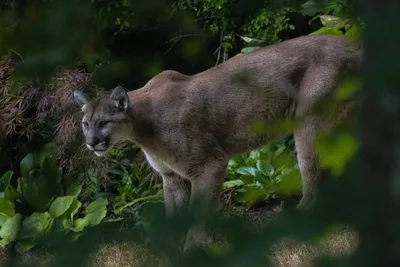 Cougar
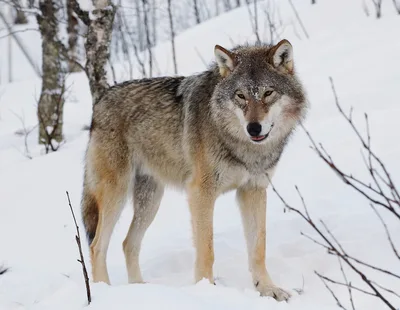 Gray wolf
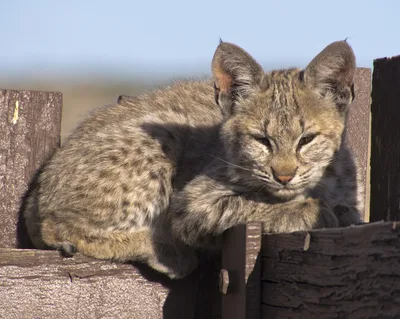 Bobcat
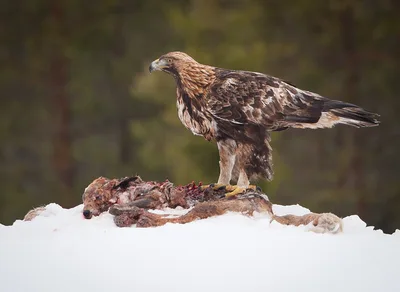 Golden eagle
Ecological equivalents
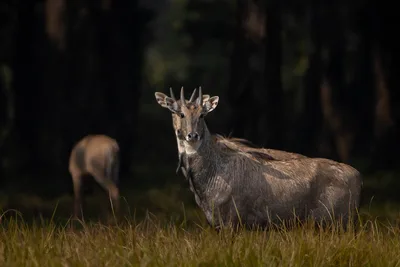
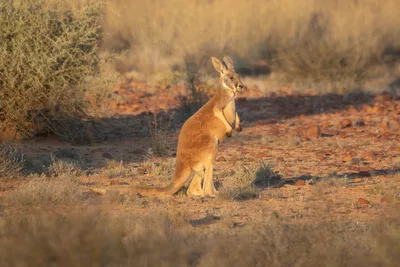
Related species on this site
Addax (same order), African buffalo (same order), Alpaca (same order), Alpine Goat (same order), American bison (same order), American Pygmy Goat (same order), and more.
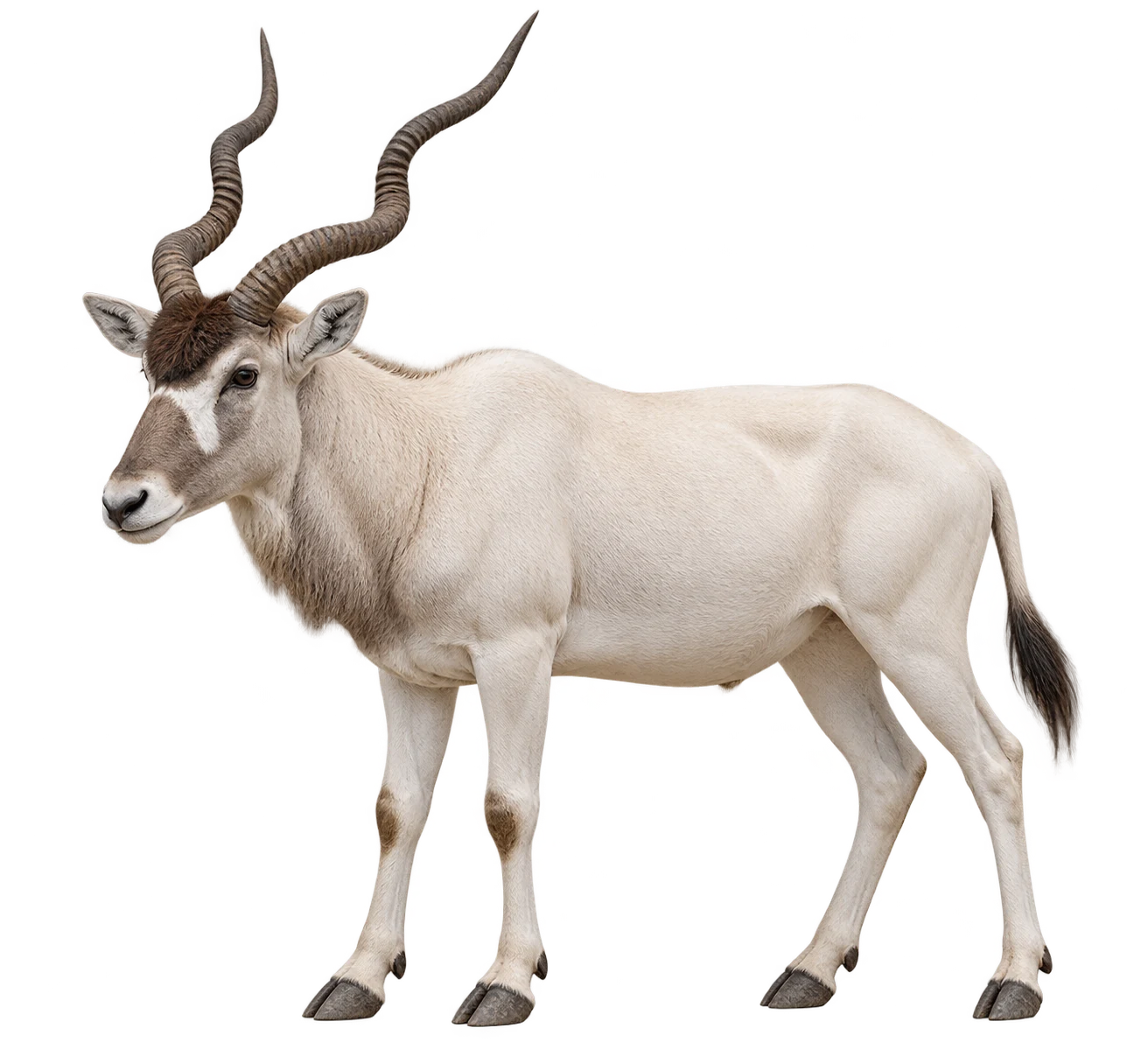
Mammals
Addax
Addax nasomaculatus
Classification and source reference
LivingAI illustration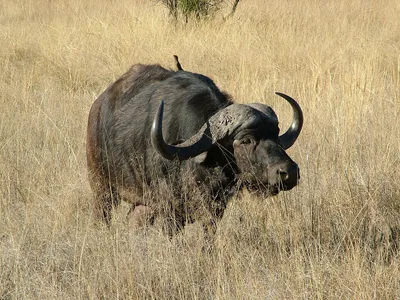 NT
Mammals
African buffalo
Syncerus caffer
The African buffalo is a heavy wild ox of sub-Saharan Africa that lives in herds of dozens to thousands and must drink every day.
Living
Mammals
Alpaca
Vicugna pacos
The alpaca is a domesticated Andean camelid kept for its fleece.
Living
Mammals
Alpine Goat
Capra hircus
Classification and source reference
LivingAI illustration NT
Mammals
American bison
Bison bison
The American bison is the heaviest land animal in North America and the national mammal of the United States.
Living
Mammals
American Pygmy Goat
Capra hircus
Classification and source reference
LivingAI illustration