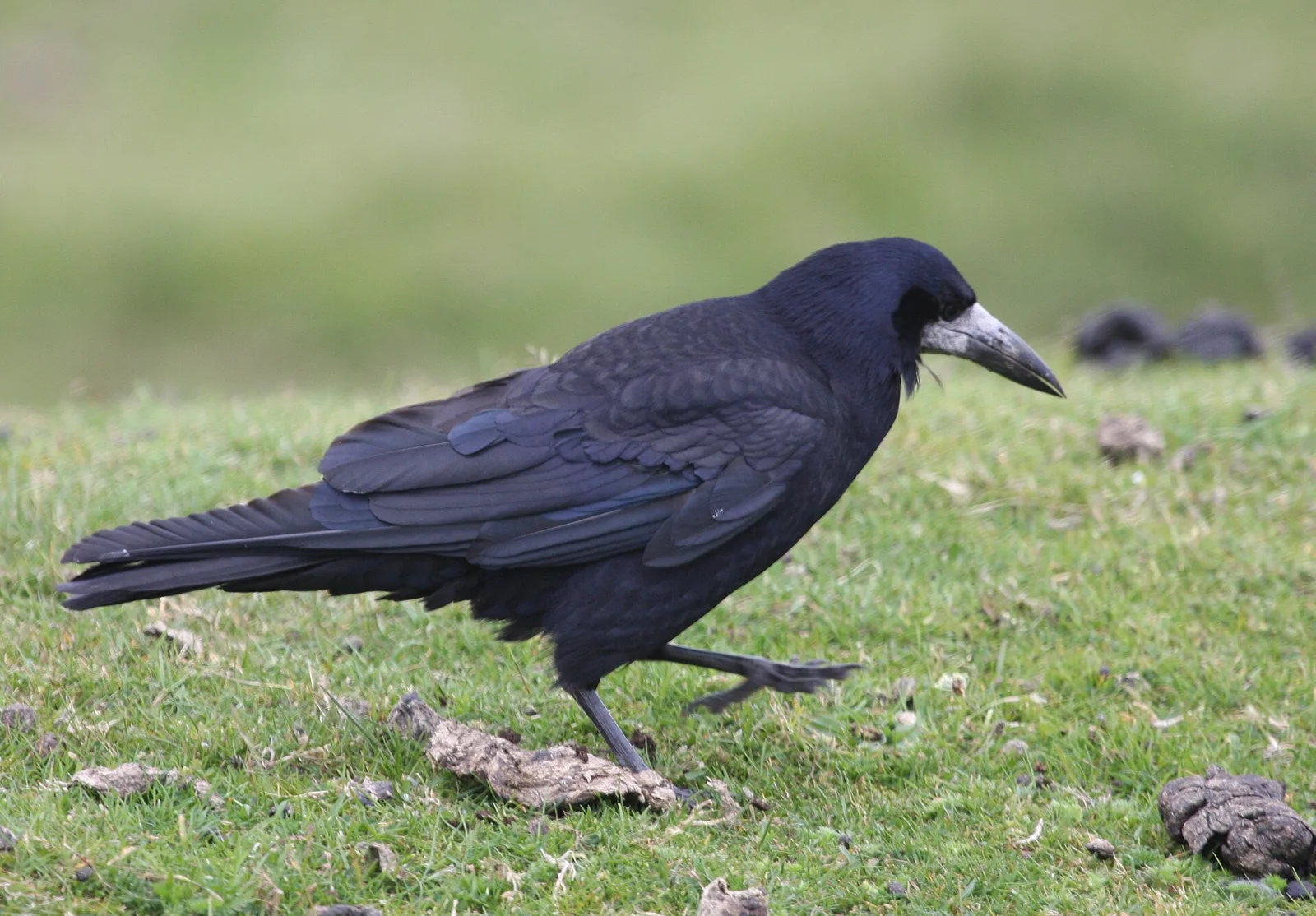
Rook
The farmland crow that nests in noisy treetop colonies
Corvus frugilegus
Also called Western rook, Oriental rook
Living individuals or members of this group exist today. This does not mean they are safe from extinction.
Meet the rook
The rook is a large black crow of European and Asian farmland, known by the bare pale skin around the base of its bill. It nests in treetop colonies called rookeries and feeds by probing soft ground for worms and grubs.
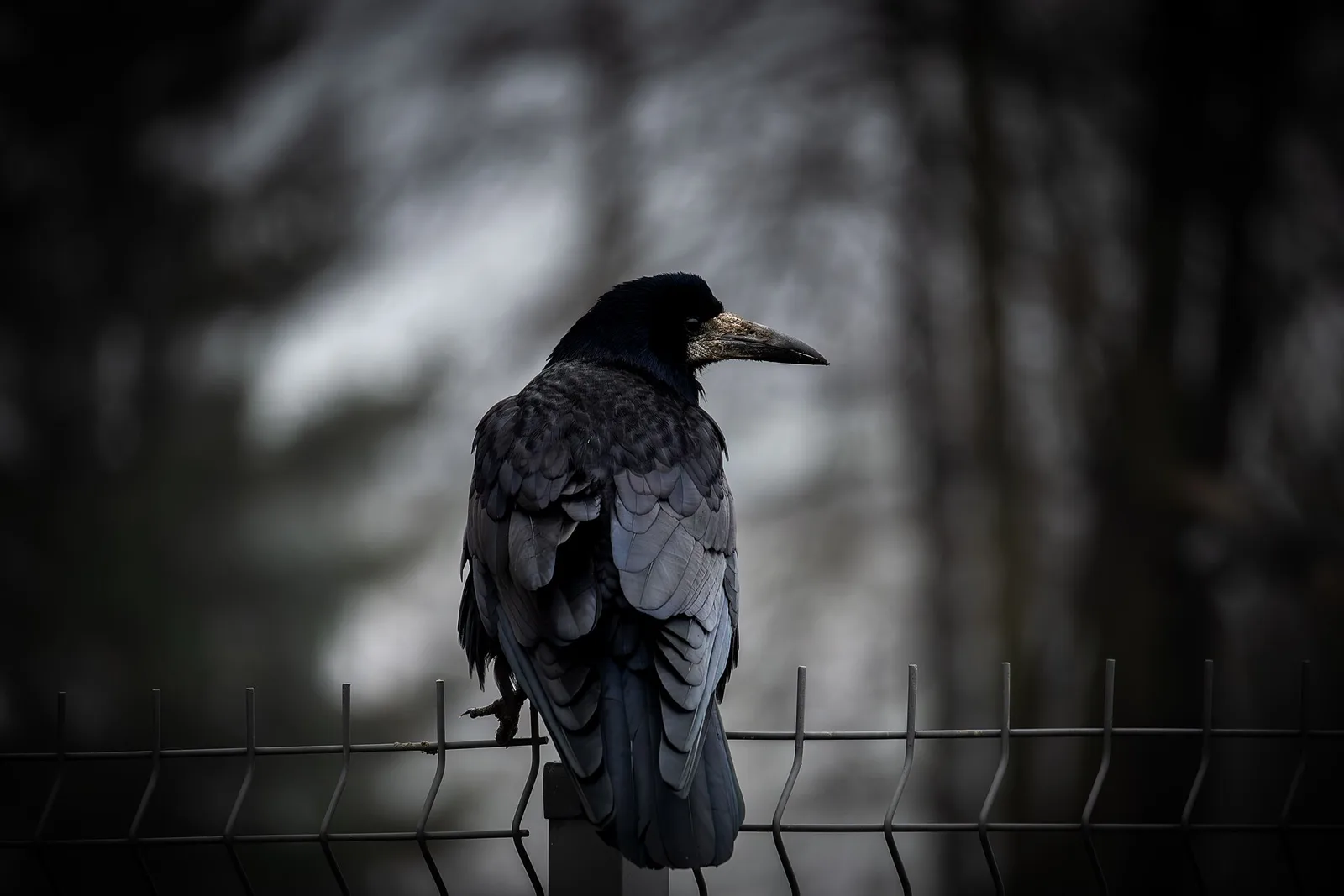
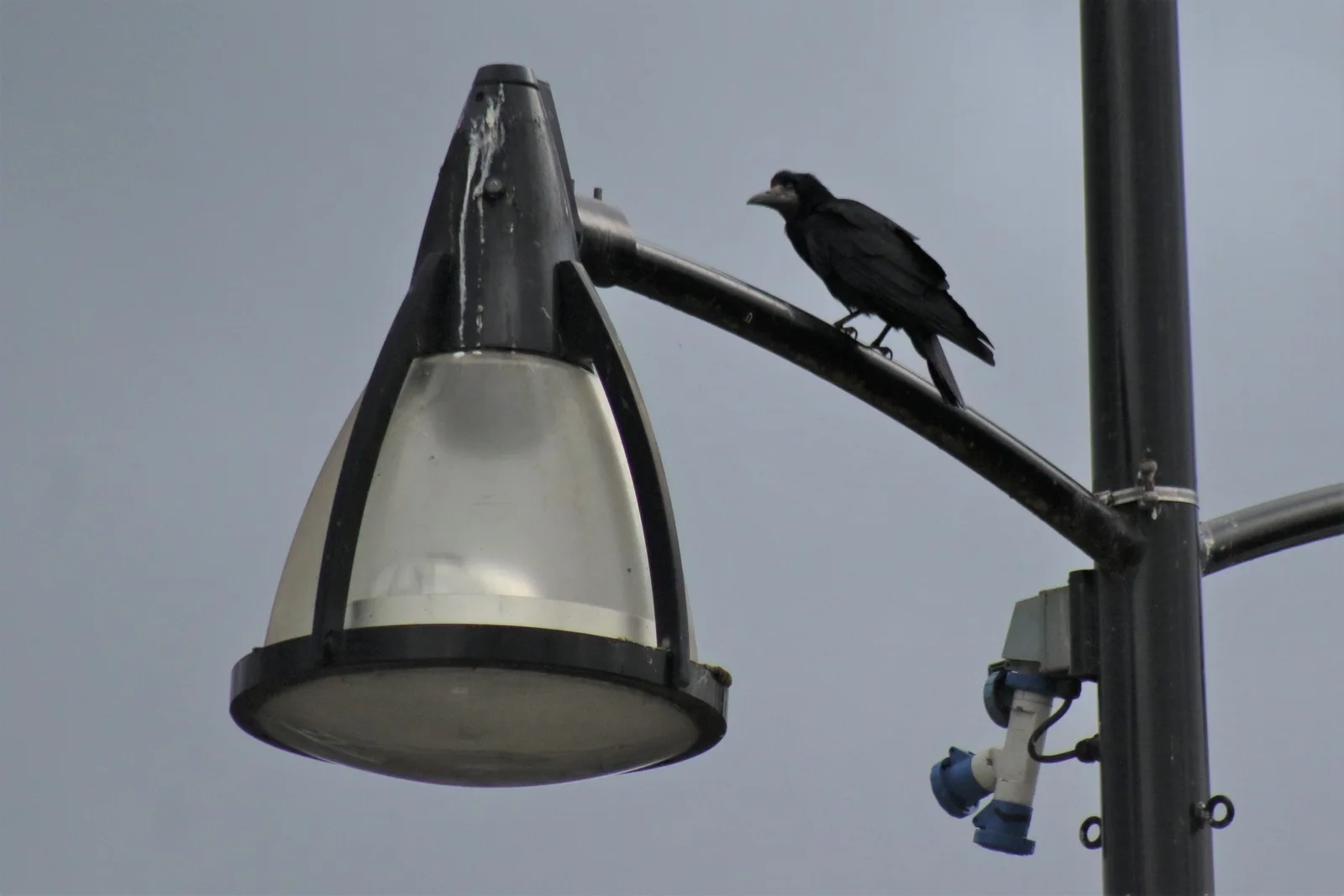
Images of the rook
Lifespan in the wild
15 to 20 years AnAge records a ringed bird of at least 23.8 years
Weight
280 to 340 g
Length
44 to 46 cm
Wingspan
81 to 99 cm
Fact file
Rook
- Location
- The Palearctic, from Ireland east to Siberia
- Habitat
- Grassland, Temperate forest, Towns and cities
- Diet
- Omnivore
- Prey / food
- Earthworms, insect larvae, beetles, spiders, slugs, snails
- Predators
- Owls, hawks and other crows take eggs and fledglings
- Lifestyle
- Social, active by day, mostly resident
- Group name
- Parliament
- Name of young
- Chick
- Incubation
- Incubation 16 to 18 days
- Clutch size
- Three to five eggs
- Population
- About one million breeding pairs in the United Kingdom
- Biggest threat
- Changes in farming, seed dressings and shooting
- Distinctive feature
- Bare whitish skin at the base of the bill
- Colour
- Black with a blue or purple sheen
- Skin type
- Feathers
Size
Next to a person
Measurements
Size and speed
- Length
- 44 to 46 cm
- Wingspan
- 81 to 99 cm
- Weight
- 280 to 340 g 280 to 340 grams
Typical adult ranges. Source: Wikipedia.
Life cycle
Lifespan
- In the wild15 to 20, up to 23.8 years AnAge records a ringed bird of at least 23.8 years
- 023.8 years
The pale bar is the record. Source: Animal Diversity Web.
Appearance
Colour and coat
- Primary colours
- black
- Secondary colours
- bluepurplewhite
- Skin type
- feathers
- Male and female
- Very slight. Males average a little larger than females and the two look the same. Young birds are duller, with a greenish gloss and a feathered face.
Life cycle
Mating and family
- Mating system
- monogamous pairs that last for years
- Social structure
- flocks all year, with colonial nesting in treetops
- Breeding
- one clutch a year in early spring
Rooks pair at about two years old and keep the same partner. The male bows and caws to the female and feeds her before mating. Both build a stick nest high in a tree, in a colony with many others. The female lays three to five eggs and incubates them for 16 to 18 days while the male brings food. Chicks fledge on about the 32nd day and follow their parents for food afterwards.
Classification
Taxonomy
- Kingdom
- Animalia
- Phylum
- Chordata
- Class
- Aves
- Order
- Passeriformes
- Family
- Corvidae
- Genus
- Corvus
- Species
- Corvus frugilegus
Conservation
Red List status
- LC
- NT
- VU
- EN
- CR
- EW
- EX
Least Concern on the IUCN Red List
Range
Recorded in 20 countries
- Austria
- Belarus
- Czech Republic
- Germany
- Denmark
- France
- United Kingdom
- Hungary
- Ireland
- South Korea
- Kazakhstan
- Lithuania
- Luxembourg
- Netherlands
- Poland
- Romania
- Serbia
- Russia
- Sweden
- Ukraine
Habitat layer: temperate broadleaf and mixed forest, temperate conifer forest, boreal forest and taiga, tropical grassland, savanna and shrubland, temperate grassland, savanna and shrubland.
Countries from 44,263 wild records on GBIF (iNaturalist research grade), filtered and checked by hand. Country shapes: Natural Earth. Habitat: RESOLVE Ecoregions 2017, CC BY 4.0. Basemap: Natural Earth.
Habitats
Three things to know
- 1
A rookery can hold thousands of nests in the tops of a single stand of trees.
- 2
Captive rooks bend wire into hooks and drop stones to raise the water in a tube.
- 3
About 60% of the rook's diet is plant food, and the rest is animal.
Did you know
Seven more facts
- 1
Young rooks have feathered faces and lose them at about six months.
- 2
The word rookery started with these birds and now means any dense colony.
- 3
A pair often steals nest sticks from the neighbours instead of gathering its own.
- 4
Rooks understand which stone is heavy enough to topple a platform.
- 5
In tests of gravity they match a baby of six months and beat a chimpanzee.
- 6
Two rooks will pull a string together to open a box, with no fuss about sharing.
- 7
The oldest wild rook on record lived 23.8 years.
Field notes
How it looks and acts
Field notes
Distinguishing features
- Bare greyish-white skin covers the base of the bill and the face in front of the eye.
- The black plumage shows a blue or purple gloss in sunlight.
- The tail is wedge-shaped, unlike the square tail of a carrion crow.
- Wingtip feathers spread into clear fingers in flight.
- Loose shaggy feathering covers the top of the legs.
- An adult spans 81 to 99 cm across the wings.
Field notes
Unique adaptations
- A long tapered bill probes soft soil for worms and larvae.
- The bare face probably stays cleaner than feathers would while the bird digs.
- A throat pouch lets a parent carry a full load of food to the nest.
- Colonial nesting in high treetops probably keeps eggs and chicks from ground hunters.
- Like other crows, it has a large brain and solves problems few birds can.
Field notes
Interesting behaviours
- Flocks probe pasture and plough side by side all day.
- Birds meet at the rookery each evening before moving to a shared roost.
- Autumn flocks tumble and roll together in the air above the trees.
- Mates twine their bills after a dispute.
- Rooks join jackdaws in mixed winter flocks.
Field notes
Temperament
- The rook is sociable and tolerates crowding that a raven would not accept.
- It is wary of people, and shooting makes a local flock warier still.
- It is bold around towns and will open a rubbish sack in daylight.
- Pairs are loyal, and partners appear to support each other in fights.
Field notes
Communication
- A flat caw is the everyday call, given singly in flight.
- A perched bird bows and fans its tail with each note.
- Snarling and gull-like calls drive an intruder from a nest.
- Pairs sing duets that seem to reinforce their bond.
- A solitary rook may mutter clicks, wheezes and near-human sounds to itself.
Ecology
Ecological role
The rook works the soil of farmland, eating the pests in it and moving seed and nutrients around.
- It removes large numbers of leatherjackets, beetles and other crop pests.
- Its probing turns and aerates the top of the soil.
- Cracked cereal grains pass through the bird and help spread seed.
- Colony ground grows unusually rich in nutrients from droppings.
Stories
Myths and legends
- In English tradition a flock of rooks is called a parliament, a clamour or a storytelling.
- In Russian tradition the return of the rooks marks the first sign of spring.
- In Tudor tradition the rook was legally vermin, and two acts ordered its destruction.
- In English rural tradition the rook shoot and rook pie were a fixture of early summer.
- In heraldic tradition the rook is rarely separated from the crow or the raven.
People
Relationship with humans
People
Living alongside us
The rook has lived beside European farming for centuries. Tudor law named it vermin, and two acts ordered culls to protect grain. Later naturalists showed that the bird takes far more crop pests than grain. Rook shoots and rook pie survived in the countryside long after that. Today the species is a common sight on farmland, and New Zealand is the one country that still controls it hard.
- The rook does not attack people and keeps its distance in open country.
- It may mob a person who walks close to a nest tree in spring.
- The worst it does is open a rubbish sack or take grain from a field.
People
Status, uses and products
- Domestication
- Wild
- As a pet
- Not suitable. A rook is highly social, needs a flock and a large area of open ground, and lives for two decades. It is protected in most of Europe. Watch a rookery instead of keeping a bird.
- Uses
- pest controlbirdwatching
- Products
- meat
The full account
About the rook
The rook is a large black crow of open farmland. Adults measure 44 to 46 centimetres long, with a wingspan of 81 to 99 cm. A bird weighs 280 to 340 grams. Bare whitish skin at the base of the bill separates it from a carrion crow. The black feathers throw a blue or purple sheen in strong sunlight.
Rooks live in flocks and nest together in the tops of tall trees. A group of nests is a rookery, and the word now covers any dense bird colony. The birds walk over pasture and plough and probe the soil for worms and grubs. Farmers once treated them as vermin, and English law ordered their destruction. The IUCN lists the species as Least Concern.
Name and taxonomy
The scientific name of the rook is Corvus frugilegus. Carl Linnaeus named the bird in 1758 in the tenth edition of his great catalogue. Corvus is Latin for raven, and the second word means fruit gathering. The English name rook comes from the harsh sound the bird makes. Collective nouns for the species include building, parliament, clamour and storytelling.
Two subspecies are recognised. The western rook lives from western Europe to southern Russia and the far northwest of China. The eastern rook runs from central Siberia and northern Mongolia across the rest of Asia. The Altai Mountains divide the two ranges. Eastern birds are slightly smaller and carry more feathering on the face.
Evolution and relatives
The rook belongs to Corvidae, the crow family, inside the huge order of perching birds. Its genus, Corvus, also holds the ravens, the carrion crow and the jackdaw. The carrion crow is the species most often mistaken for it. A rook has longer, narrower wings, a wedge-shaped tail and spread wingtip feathers. Its bill is paler and tapers to a sharper point than a crow's.
Like other crows, the rook has a large brain for its size and solves problems in tests. Unlike the ravens, it feeds and nests in dense groups all year. The bare face is unusual in the family and may reduce soiling while the bird probes soil. Rooks flock with jackdaws through the winter, which suggests the two suit the same fields.
Appearance
The plumage is black throughout, with a gloss that turns blue or bluish purple in sun. Head, neck and shoulder feathers grow dense and silky. An adult is 44 to 46 cm long and spans 81 to 99 cm across the wings. Body weight runs from 280 to 340 g. The legs and feet are black, the bill is grey-black and the iris is dark brown.
The bare pale patch covers the face ahead of the eye and wraps the bill base. It makes the bill look longer and the head look more domed than they really are. Loose shaggy feathering hangs around the top of the legs. A juvenile is duller, with a greenish gloss and brownish-black underparts. Young birds still carry face feathers and lose them at about six months old. Males average slightly larger than females, and the sexes look alike.
Habitat and range
The rook lives across the Palearctic, from Ireland and Scandinavia east to Siberia. Southern limits reach Turkey and Iran, and northern birds stay mostly below 60 degrees. It chooses arable land, pasture, river plains and steppe with soft, fertile soil. Tall trees for nesting must stand within reach of the feeding ground. The bird avoids closed forest, swamp, heath and moorland.
Most rookeries sit below 120 metres, though birds breed at 300 m and higher where food allows. Rooks settle beside farms and villages, and in open towns, though not in heavy city centres. Northern birds drift south in autumn to escape the hardest weather. Southern populations mostly stay put and wander only in a loose way. Several hundred rooks were released in New Zealand between 1862 and 1874. Councils there now treat the bird as an invasive pest and control it.
Diet and feeding
Stomach studies show that about 60% of the food is plant material. Grain, potatoes, roots, acorns, berries, fruit and seeds make up that share. The animal share is mostly earthworms and insect larvae. Beetles, spiders, millipedes, slugs and snails are taken too. The bird also eats small mammals, small birds, eggs, nestlings and carrion.
Feeding happens on the ground, with the bird striding about and probing with its strong bill. The long tapered bill reaches worms and grubs below the surface. Rooks prefer fields of spring barley to tall winter cereals, because short crops are easier to work. In towns they take scraps from bins and streets, usually at dawn or dusk when it is quiet. Like other crows, the rook hides food and returns to it later. Birds in a French theme park were even trained to collect litter.
Behaviour and social life
The rook is one of the most social crows and is nearly always in a flock. Pairs bond for life and stay together inside the flock. Birds gather at the rookery in the evening, then move on to a communal roost. Flocks swell in autumn as separate groups join up, often with jackdaws. In the morning the roost empties, and birds scatter up to 10 kilometres to feed.
Autumn flocks perform group flights with synchronised turns, dives, tumbles and rolls. Flight is direct, with steady beats and little gliding when the bird has somewhere to be. Near the rookery the same bird glides and wheels for longer. Partners back each other up in disputes with other rooks. After a quarrel a bird returns to its mate, and the two twine their bills together. Large colonies change the soil beneath them, which grows rich in droppings and nest waste.
Communication and senses
The usual call is a flat caw, less harsh than the call of a carrion crow. The pitch varies, and the bird has several versions for different situations. A perched rook fans its tail and bows with each caw. Calls in flight come singly, while a crow tends to call in threes and fours. Around the colony the birds add squawks, burring notes and half-chirrups.
A lone bird sometimes sings quietly to itself in clicks, wheezes and near-human notes. Pairs sing duets, which appears to strengthen the bond between them. A female uses a begging call towards her mate. Hearing is sharp, and a rook knows the voice of its partner and of its own chicks. Snarling and gull-like calls warn an intruder away from a nest.
Reproduction and life cycle
Rooks usually take a mate at two years old and keep the same partner for years. The male bows to the female with drooping wings, cawing and fanning his tail. She may crouch, arch her back and quiver her wings in answer. The male then feeds her, and mating follows on the nest. Neighbouring males often mob a mating pair, and the female leaves the nest to end it.
Nesting is always colonial, high in big trees and often on the frame of last year's nest. The male gathers most of the sticks and the female builds them into a cup. Earth binds the structure, and grass, moss, roots, leaves and straw line it. Many sticks are stolen from neighbours rather than broken from a tree. Building can start as early as January in Britain.
A clutch holds three to five eggs, sometimes six and rarely seven. Eggs are laid by late March or early April in Britain and Ireland, and in May farther east. They average 40 by 28.3 millimetres and are heavily blotched in grey and brown. The female incubates almost alone for 16 to 18 days while the male feeds her. He carries food to the nest in a throat pouch, and she joins the work after ten days. Chicks fledge on about the 32nd day, and a wild rook may live 15 to 20 years.
Predators and threats
Owls, hawks and other crows take eggs and young from the nests. Birds of prey attack fledglings far more often than they attack adults. A colony high in the treetops is probably a defence in itself. Rooks mob an intruder and call it away from the nests.
People remain the largest threat, through shooting and the loss of nesting trees. Changes in farming, seed dressings and pesticides all cut the food supply. A moderate decline has been measured in the United Kingdom since 1995. Rooks carry mites in their feathers and single-celled parasites in their blood. Those passengers appear to do the bird little harm.
Population and conservation
The IUCN lists the rook as Least Concern. The range is very wide and the total population is large. Roughly a million pairs nest across the United Kingdom every year. Numbers may be slipping slowly across the range, but not fast enough to raise concern. The bird is scarce in mountains and absent from the centre of large cities.
New Zealand runs the only large control programme against the species. Culling there has destroyed the big colonies, and the survivors have grown wary. Elsewhere the main need is probably to keep tall nesting trees near open ground. Warmer springs may shift the nesting date, and researchers now watch for that. A farm that leaves permanent pasture probably helps the rook more than any protection law.
Relationship with humans
Farmers have long seen rooks in their fields and judged them thieves. Henry VIII brought in a Vermin Act in 1532 that named crows, jackdaws and rooks. Elizabeth I passed a firmer grain protection act in 1566, and large culls followed. Francis Willughby wrote in 1678 that children were sent out with rattles to scare the birds. He also described scarecrows dressed as country workers to keep them off the grain.
Later naturalists worked out that rooks eat more pests than grain. One study found that 60 to 90% of the insects they take are agricultural pests. Their probing also turns and aerates farm soil. Rook shoots were once a social event, and young birds called branchers were shot before they could fly. Rabbit and rook pie was the dish that followed, because an adult rook is not worth eating.
In culture and myth
English tradition appears to give the rook the finest collective nouns of any bird. A group may be called a building, a parliament, a clamour or a storytelling. The word rookery passed from the birds to any crowded settlement. The name itself began as an attempt to write down the bird's call.
In Russian tradition the returning rook announces the end of winter. Alexei Savrasov painted The Rooks Have Returned in 1871 on exactly that theme. The picture is said to be one of the best known landscapes in Russian art.
In British rural tradition the rookery seems to have been a fixture of the village skyline. The nests may sit on a church spire or in the tallest elms, and the noise marks the season. In heraldry the rook is seldom told apart from the crow or the raven. That blurring probably explains why so little rook-specific folklore survives.
A sentence with a dotted underline is inferred: it describes the group the animal belongs to, or is a reading of the sources, rather than a measured or reported fact about this species.
Questions
Rook questions, answered
What is the difference between a rook and a crow?
A rook has bare whitish skin at the base of its bill, and a carrion crow does not. The rook also has a wedge-shaped tail, longer narrower wings and shaggy leg feathering.
What is a group of rooks called?
A building, a parliament, a clamour or a storytelling. Their nesting colony is a rookery.
How big is a rook?
About 44 to 46 cm long with a wingspan of 81 to 99 cm. An adult weighs 280 to 340 g.
What do rooks eat?
Roughly 60% plant food such as grain, roots, fruit and acorns. The rest is animal food, mostly earthworms and insect larvae.
Are rooks intelligent?
Yes. In tests captive rooks bend wire into hooks, drop stones to raise water and pick the right stone to topple a platform.
Do rooks use tools in the wild?
Nobody has recorded it. They use and even shape tools readily in captivity, which suggests the ability is there without the need.
Where do rooks nest?
High in the tops of tall trees, in a colony, often rebuilding on last year's nest. In hilly country they will use smaller trees, chimneys or a church spire.
How many eggs do rooks lay?
Three to five, sometimes six and rarely seven. The female incubates for 16 to 18 days.
When do rooks start nesting?
Building can begin in January in Britain, and eggs usually arrive by late March or early April. Farther east the clutch may not be complete until May.
How long do rooks live?
Usually 15 to 20 years in the wild. The oldest ringed bird reached 23.8 years.
Are rooks endangered?
No. The IUCN lists the species as Least Concern, although the United Kingdom has seen a moderate decline since 1995.
Do rooks damage crops?
They take cereal grain when their preferred food is scarce. Studies suggest most of the insects they eat are crop pests, so they usually do more good than harm.
Why are rooks in New Zealand a problem?
Several hundred birds were released there between 1862 and 1874 and the population spread. Councils now cull them as an invasive pest.
What sound does a rook make?
A flat caw, less raucous than a crow's, given singly in flight. Around the colony it adds squawks, burrs and half-chirrups.
Do rooks mate for life?
Pairs form at about two years old and usually stay together for many years. Partners support each other in disputes and twine bills afterwards.
Why is a crowded place called a rookery?
The word began as the name for a colony of rook nests. It later spread to any dense settlement of animals or people.
Food web
Prey and food
- earthworms
- insect larvae
- beetles
- spiders
- slugs
- snails
Food web
Predators
- owls
- hawks
- crows
Ecological equivalents
Related species on this site
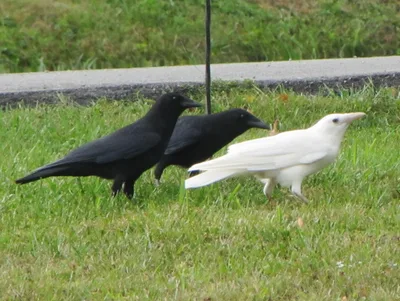
American crow (same genus), Carrion crow (same genus), Common raven (same genus), Hawaiian Crow (same genus), Blue jay (same family), Common Green Magpie (same family), and more.
 LC
Birds
American crow
Corvus brachyrhynchos
The American crow is a large all-black bird of farms, woods and city streets across North America.
Living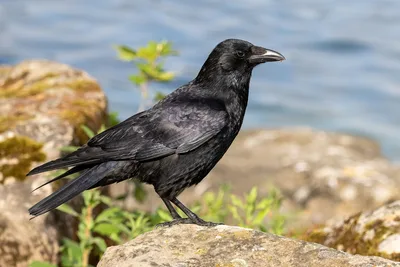 LC
Birds
Carrion crow
Corvus corone
The carrion crow is an all-black crow of western Europe and eastern Asia with a heavy bill and a harsh croak.
Living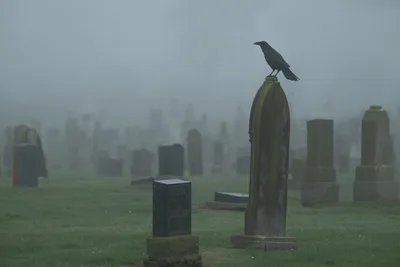 LC
Birds
Common raven
Corvus corax
The common raven is a large black crow that lives right across the northern half of the world.
Living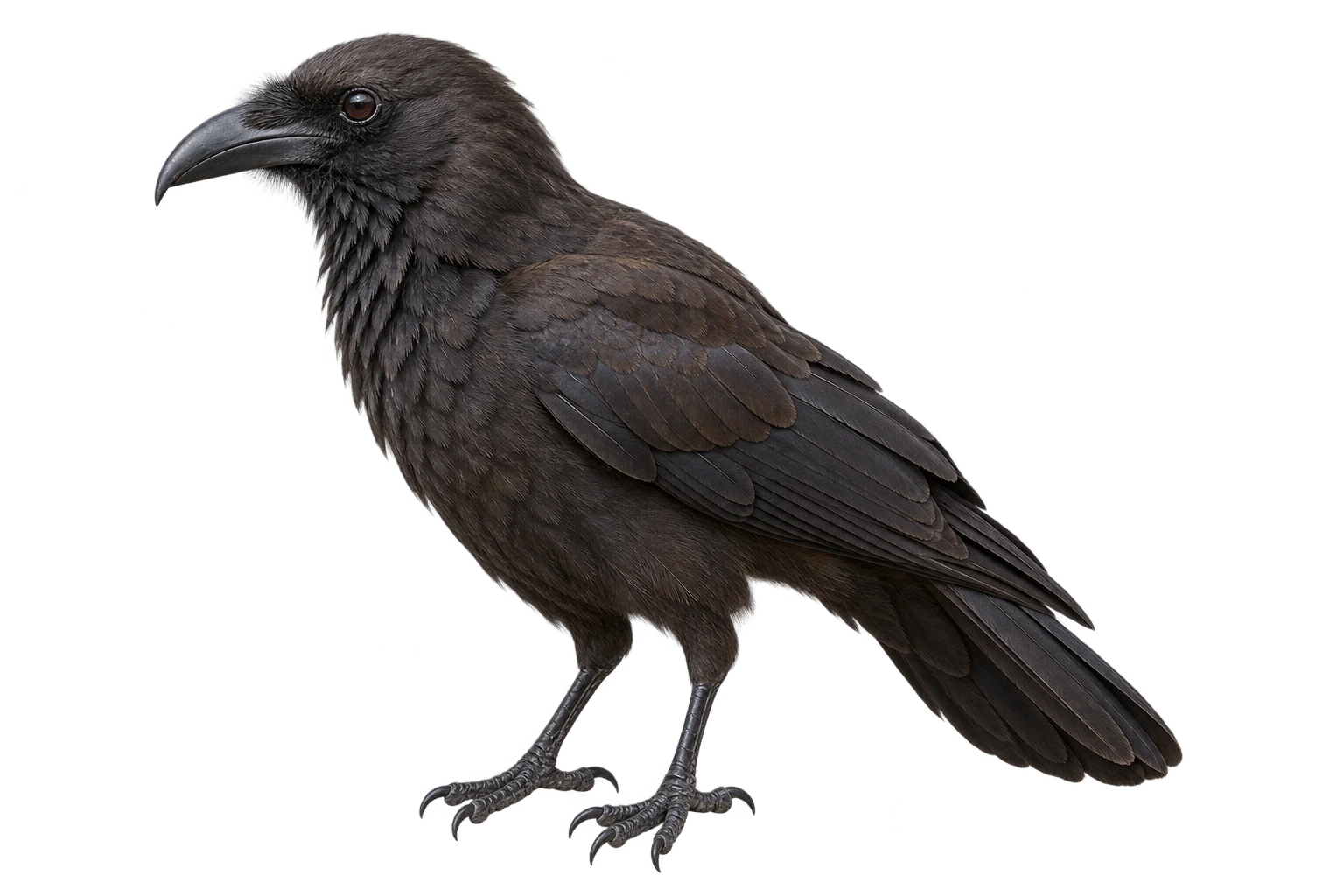
Birds
Hawaiian Crow
Corvus hawaiiensis
Classification and source reference
LivingAI illustration LC
Birds
Blue jay
Cyanocitta cristata
The blue jay is a loud blue songbird of the crow family, native to eastern and central North America.
Living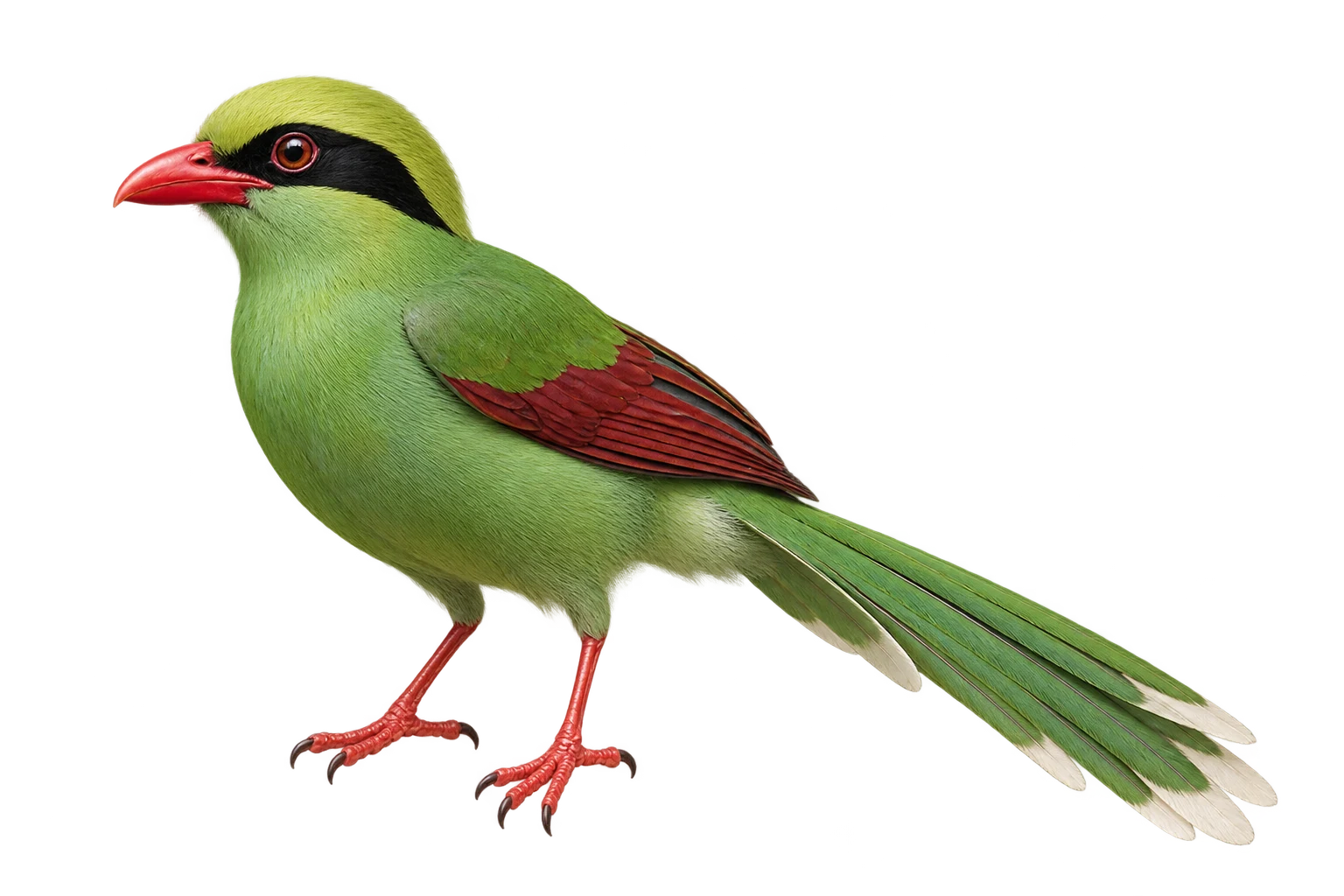
Birds
Common Green Magpie
Cissa chinensis
Classification and source reference
LivingAI illustration