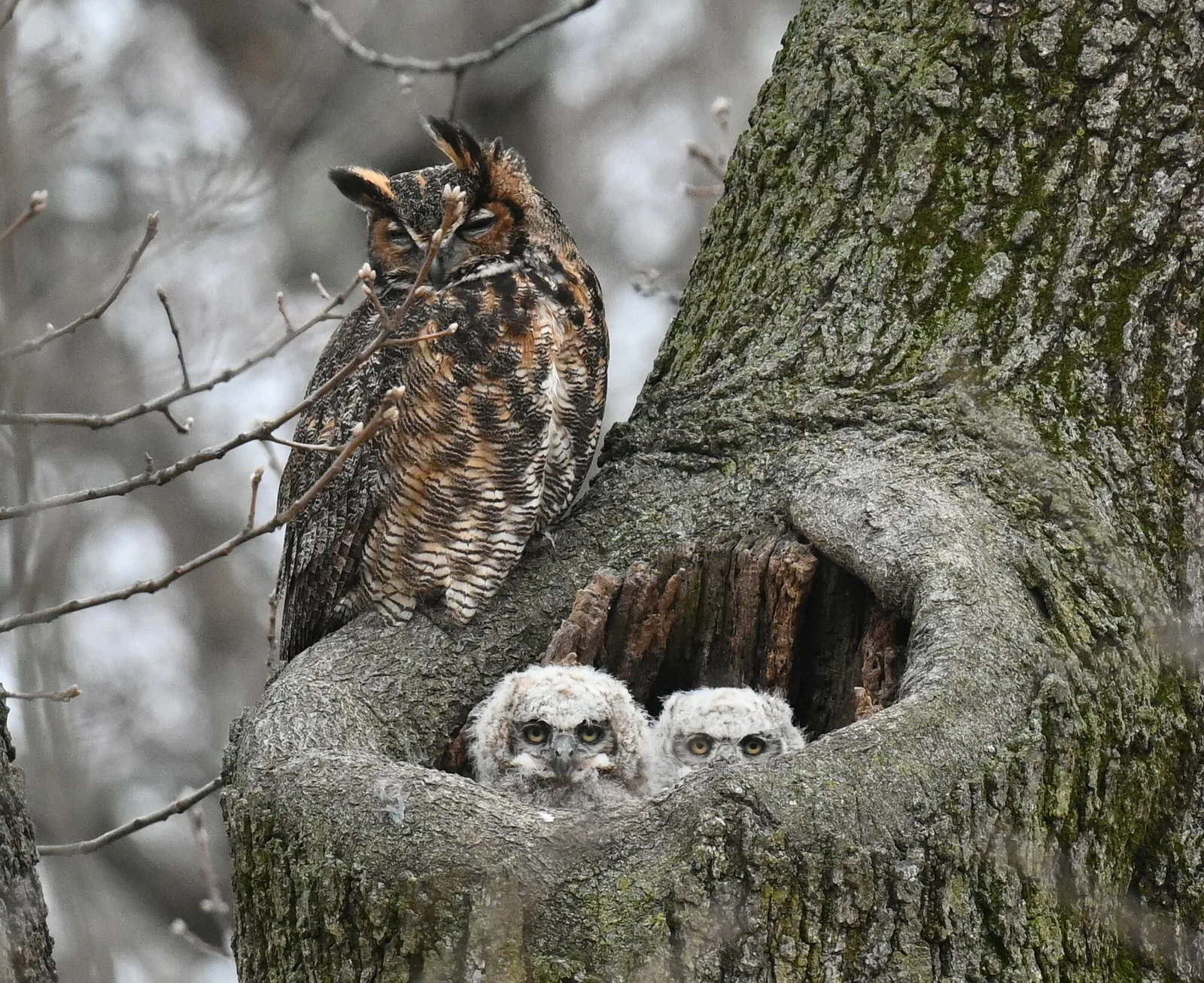
Great horned owl
The heavy night hunter with feathered horns
Bubo virginianus
Also called Tiger owl, Hoot owl, American eagle-owl, Cat owl
Living individuals or members of this group exist today. This does not mean they are safe from extinction.
Meet the great horned owl
The great horned owl is a heavy, ear-tufted owl of the Americas, at home from Alaska to Argentina. It hunts by night from a perch and takes more kinds of prey than any other raptor on the continent.
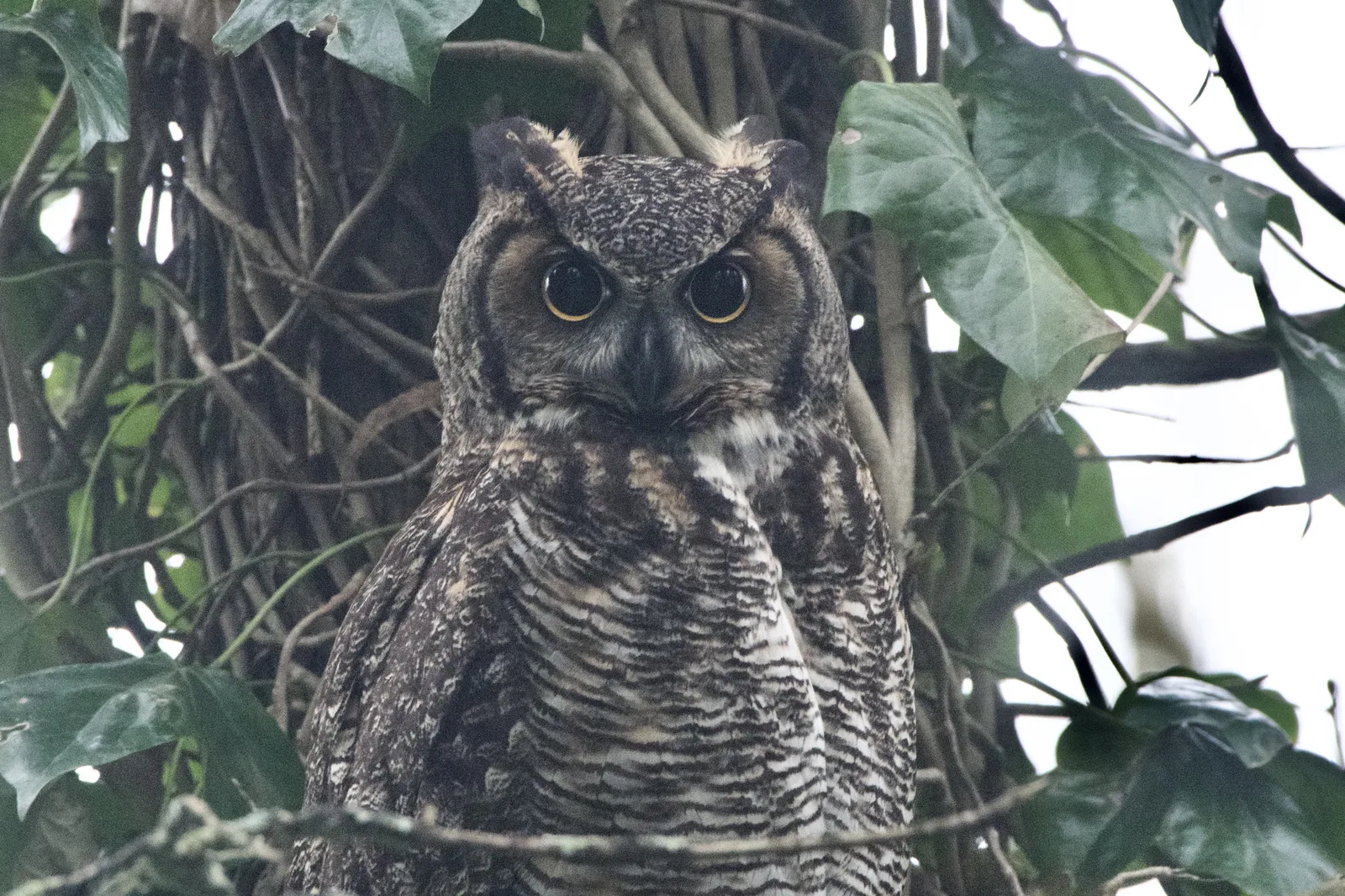
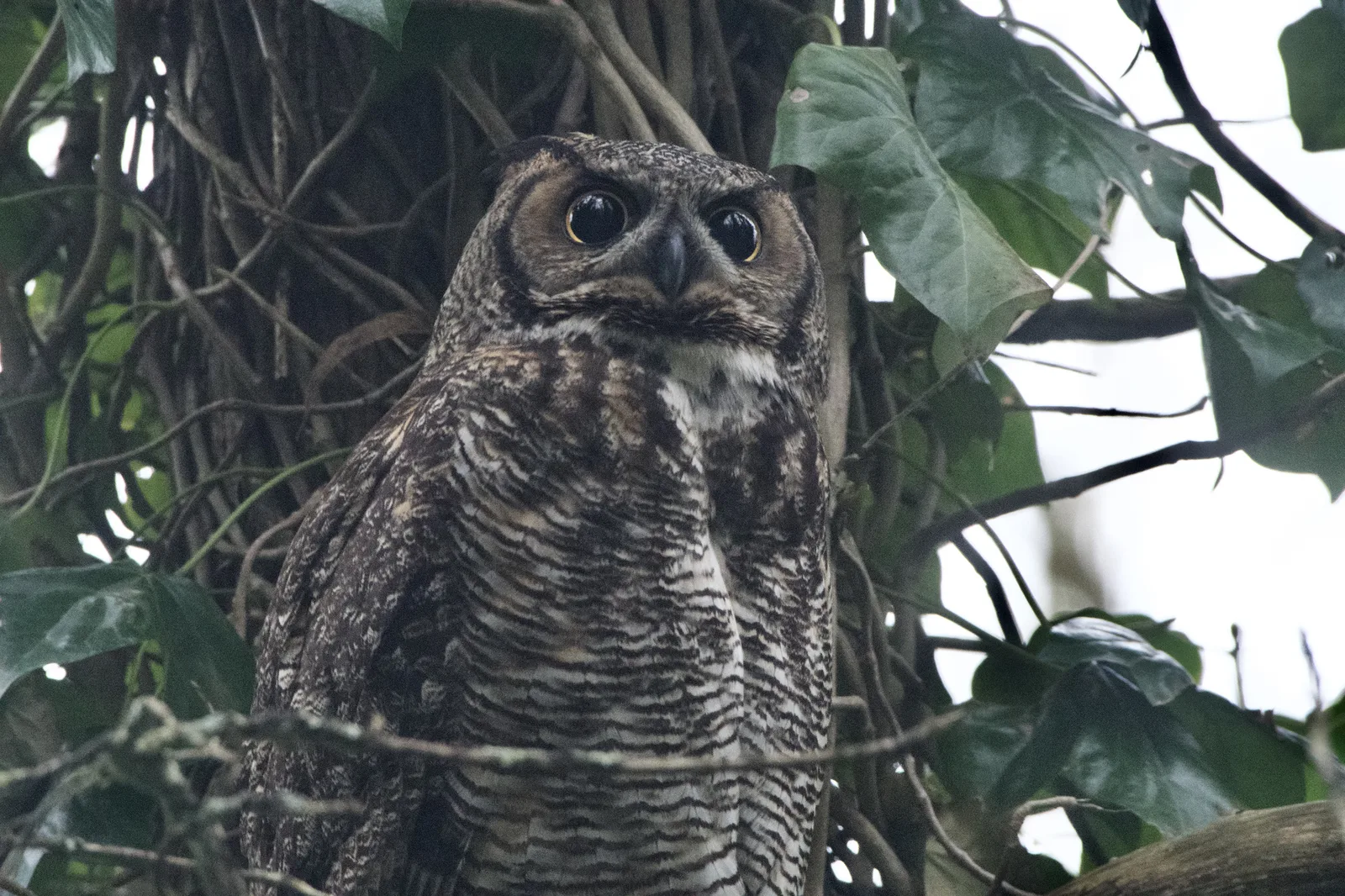
Images of the great horned owl
Lifespan in the wild
13 to 28 years 13 is the typical span, 28 the wild record
Weight
1.22 to 1.61 kg
Length
43 to 64 cm
Top speed
Up to 65 km/h
Fact file
Great horned owl
- Location
- Alaska and Canada south to Argentina and Bolivia
- Habitat
- Temperate forest, Desert, Grassland, Towns and cities
- Diet
- Carnivore
- Prey / food
- Rabbits, hares, voles, mice, rats, skunks, ducks, grouse
- Predators
- None as adults; eagles and other great horned owls kill a few
- Lifestyle
- Nocturnal, and solitary outside the breeding season
- Group name
- Parliament
- Name of young
- Owlet
- Incubation
- Incubation 28 to 37 days
- Clutch size
- 1 to 6 eggs, usually 2
- Population
- About 5.3 million horned owls in the Americas
- Biggest threat
- Collisions with cars, wires and buildings
- Distinctive feature
- Feather tufts like horns and a white throat patch
- Colour
- Mottled brown and grey, barred below
- Skin type
- Feathers
Size
Next to a person
Measurements
Size and speed
- Length
- 43 to 64 cm
- Wingspan
- 0.91 to 1.53 m
- Weight
- 1.22 to 1.61 kg, up to 2.5 kg the low figure is the mean for males, the high figure the mean for females
- Top speed
- Up to 65 km/h level flight
Typical adult ranges. Source: Wikipedia.
Life cycle
Lifespan
- In the wild13 to 28 years 13 is the typical span, 28 the wild record
- In captivity20 to 35 years
- 035 years
Source: Animal Diversity Web.
Appearance
Colour and coat
- Primary colours
- browngrey
- Secondary colours
- whiteblackbuff
- Skin type
- feathers
- Male and female
- Reversed and modest. Females are larger, averaging about 1,608 grams against 1,224 g for males. The plumage of the two sexes looks the same, but the female's voice is higher.
Life cycle
Mating and family
- Mating system
- monogamous pairs, with rare cases of one male and two females
- Social structure
- solitary, in a pair that holds one territory all year
- Breeding
- one clutch a year, and none at all in a poor prey year
Courtship runs from October to December in most of North America. The female lays a clutch of about 2 eggs and sits on them for 28 to 37 days while the male hunts. Owlets climb out onto branches at six weeks and fly a week after that. Their parents feed them into the autumn, and some are still begging in late October. Young birds wander as floaters and first breed at two years old.
Classification
Taxonomy
- Kingdom
- Animalia
- Phylum
- Chordata
- Class
- Aves
- Order
- Strigiformes
- Family
- Strigidae
- Genus
- Bubo
- Species
- Bubo virginianus
Conservation
Red List status
- LC
- NT
- VU
- EN
- CR
- EW
- EX
Least Concern on the IUCN Red List
Range
Recorded in 5 countries
Habitat layer: temperate broadleaf and mixed forest, temperate conifer forest, boreal forest and taiga, tropical grassland, savanna and shrubland, temperate grassland, savanna and shrubland, desert and xeric shrubland.
Countries from 61,424 wild records on GBIF (iNaturalist research grade), filtered and checked by hand. Country shapes: Natural Earth. Habitat: RESOLVE Ecoregions 2017, CC BY 4.0. Basemap: Natural Earth.
Habitats
Three things to know
- 1
It is one of very few predators that will attack a skunk, because its sense of smell is poor.
- 2
It nests earlier than any other bird in North America, sometimes laying eggs in the snow.
- 3
Its two ear openings sit at different heights, which lets it place a sound in the dark.
Did you know
Seven more facts
- 1
The tufts on the head are feathers, not ears, and are called plumicorns.
- 2
The owl was once nicknamed the winged tiger by early naturalists.
- 3
Its wing loading is the highest of any raptor, so the wings are small for the weight.
- 4
It can still glide at walking pace on a light breeze.
- 5
In the boreal forest only the Canada lynx kills more snowshoe hares.
- 6
Great horned owls caused 78 per cent of eastern screech owl nest failures in one Wisconsin study.
- 7
The bird walks badly on the ground and rolls from side to side like a starling.
Field notes
How it looks and acts
Field notes
Distinguishing features
- Two long feather tufts stand up from the head like horns.
- A white throat patch shows clearly when the bird hoots.
- The underparts are pale with fine dark horizontal bars.
- The facial disc is edged with a dark rim and bold black side brackets.
- The legs and toes are feathered right down to the talons.
- The eyes are bright yellow, except in South American birds, where they are amber.
Field notes
Unique adaptations
- Comb-like fringes on the flight feathers cut the noise of the wingbeat.
- The left and right ear openings sit at different heights and give the bird a fix on a sound.
- Cylindrical eyes packed with rods give sharp sight in very low light.
- A weak sense of smell lets the owl attack skunks that other predators avoid.
- Mottled brown plumage hides a roosting bird against tree bark.
Field notes
Interesting behaviours
- It hunts from a perch and glides down onto prey with its wings folded.
- It stores surplus kills in a tree fork and thaws frozen food with its own body heat.
- It coughs up a pellet of bone and fur about six to ten hours after a meal.
- It defends a territory by hooting from several fixed song perches.
- It sits tall and thin on the roost to look like part of the branch.
Field notes
Temperament
- Adults are solitary and meet only to breed.
- A parent at the nest will strike an intruder with its feet, including a person.
- Captive birds usually turn aggressive towards their keepers once mature.
- Territory disputes between neighbours can end in death.
Field notes
Communication
- The male sings a deep run of four or five hoots.
- The female replies in a higher voice.
- Bill-clapping and hissing warn an intruder before a strike.
- Owlets beg with loud hisses and screeches that sound like a barn owl.
- The white throat flashes as a visual signal during courtship.
Ecology
Ecological role
The great horned owl is the main night predator of open woodland across the Americas. It shapes the numbers of prey and of rival hunters.
- It holds down rodent numbers, and a family can clear a colony of field rats.
- Its own numbers rise and fall with the ten-year snowshoe hare cycle.
- It limits other raptors by killing nestlings and adults of hawks, falcons and smaller owls.
- It reuses the nests of hawks, crows and herons, so it depends on those builders.
Stories
Myths and legends
- In Pima tradition, owls hold the spirits of warriors who died in battle.
- In Hopi tradition, owl calls in summer promise heat and a good peach crop.
- In Iroquois tradition, the creator Raweno covered the owl in mud for pestering him.
- In Greek tradition, the owl belongs to Athena and stands for wisdom.
- In Welsh tradition, Blodeuedd becomes an owl as a punishment for betrayal.
People
Relationship with humans
People
Living alongside us
People have called this owl both a pest and a good neighbour. Poultry keepers once shot it and collected bounties for it. Laws in most countries now protect it, and chickens locked in a covered coop are safe anyway. Birdwatchers find it easily, and iNaturalist holds 92,318 records of the species. Alberta chose it as the provincial bird.
- The owl does not hunt people and avoids busy places.
- A parent will dive at a person who comes close to the nest and can cut the scalp.
- Captive birds attack their keepers, so handlers may need heavy gloves.
People
Status, uses and products
- Domestication
- Wild
- As a pet
- Not suitable. Keeping one is illegal in most countries without a licence. The bird is strong, nocturnal and aggressive to handlers once mature, and it needs whole prey every day.
- Uses
- rodent controlbirdwatchingfalconry
- Products
- None recorded
The full account
About the great horned owl
The great horned owl is the heavy, ear-tufted owl of the Americas. It lives from the edge of the Arctic in Alaska and Canada south to Argentina and Bolivia. Adults measure 43 to 64 centimetres long, with a wingspan of 91 to 153 cm. The two feather tufts on its head look like horns, and they give the bird its name. They are not ears, and researchers agree they play no part in hearing.
This owl hunts at night from a perch and drops onto prey with its feet. Over 500 kinds of animal have been recorded in its diet, more than for any other raptor in the Americas. It takes rabbits, hares, voles, mice, ducks, grouse and skunks. It also kills other birds of prey, including hawks, falcons and smaller owls. Its call is a deep string of hoots that carries a long way through still air.
The species suits almost any landscape with trees to roost in and open ground to hunt over. That flexibility has kept it common, and the IUCN lists it as Least Concern.
Name and taxonomy
Johann Friedrich Gmelin described the great horned owl in 1788 and placed it in the genus Strix. He based his account on a bird from Virginia that George Edwards had drawn in 1747. The species moved to the genus Bubo, which André Duméril set up in 1805. The species name virginianus appears to record that first bird from Virginia.
Early naturalists called the bird the winged tiger, and the name tiger owl came from that. Country people in North America often call it the hoot owl. In Spanish it is the buho cornudo, and in Portuguese the jacurutu. More than 20 subspecies have been named, and 15 are now accepted. The rest were only local shades of colour, not true subspecies.
Evolution and relatives
The genus Bubo reached the Americas across the Bering land bridge from Asia. Genetic work puts the lesser horned owl of southern South America closest to this bird. The snowy owl is the next closest living relative. The Eurasian eagle-owl looks similar and fills the same role in Eurasia, but it sits in a separate clade.
Fossil Bubo owls from the Pleistocene turn up across North America, mostly in and west of the Rockies. Nearly all of those birds were larger than the great horned owls alive today. The lesser horned owl was once treated as a subspecies of this bird. Genetic evidence now separates the two, and the great horned owl is the parent species. Dudley Zoo in England once raised a healthy hybrid of this bird and a Eurasian eagle-owl.
Appearance
The plumage is mottled brown and grey above, and pale below with dark horizontal bars. A white patch sits on the throat and can run down the breast as a pale streak. The round facial disc is brown, grey or reddish, with a dark rim and heavy black brackets at the sides. The eyes are yellow in almost every population, and amber in the South American birds. The bill and talons are a dark gunmetal grey.
This is a bulky owl with a barrel-shaped body, a big head and broad wings. A male averages about 1,224 grams and a female about 1,608 g. The heaviest birds recorded reach 2,503 g. Even tropical birds have feathered legs and feet, and only the snowy owl has longer foot feathers. A fully spread foot spans about 20 centimetres from talon to talon.
Habitat and range
The breeding range runs north into the subarctic of Canada and Alaska. It continues south through the United States and Mexico, thinly through Central America, and into South America. In the far south the lesser horned owl takes over and reaches Tierra del Fuego. The bird is missing from the West Indies and from almost every offshore island in the Americas. It is the second most widely spread owl of the Americas, after the barn owl.
Few birds accept as many habitats as this owl does. It lives in deciduous, coniferous and mixed woodland, in prairie, in desert margins, in mangrove and on rocky coasts. It prefers a patchwork of open ground to hunt over and woodland to roost and nest in. Thinly settled farmland therefore appears to suit it well. It is rare in unbroken old-growth forest and has been recorded only a handful of times in true rainforest.
In North American mountains it usually stops at the tree line. It reaches 3,300 metres in the Rockies, and the Andean birds live higher still. In Ecuador and Peru they are regular on treeless puna grassland at 4,100 to 4,500 m. Snowy owls replace them on the high Arctic tundra. Some birds live in city parks, though they avoid the busiest suburbs.
Diet and hunting
In North America mammals make up 87.6 per cent of the diet by number. Birds add 6.1 per cent, and reptiles, amphibians, fish and invertebrates make up the rest. Small rodents are the commonest prey, above all deermice and voles. Rabbits and hares supply most of the weight of food across the continent. Prey has ranged from a 2 gram shrew to animals of 6.8 kilograms.
The owl is one of the few predators that attacks skunks, because its sense of smell is poor. All six North American skunk species appear in its diet. The remains of 57 striped skunks were counted at a single nest. A nest may therefore smell of skunk long after the meal. It also kills more kinds of bird of prey than any other American predator.
Hunting peaks between about half past eight in the evening and midnight. The owl watches from a snag, pole or rock, then drops with its wings folded. The useful range of such a dive is about 90 metres. In level flight it can pass 65 kilometres per hour. Its feet crush prey with a force of at least 2,100 kilopascals. Small animals go down whole, and the bones return hours later in a large dark pellet.
Behaviour and social life
The great horned owl is active at night and roosts by day in a large tree. Dense conifers are favoured, because they give cover in every season. A roosting bird may sit bolt upright and pull itself thin to look like a broken branch. Males often keep a favourite roost near the nest and use it for years. Outside the breeding season a bird simply roosts wherever dawn finds it.
Pairs hold a territory all year and rarely leave it. Territory size ranges from an average of 16 square kilometres in the Yukon to 2.1 sq km in Wyoming. Borders are set by hooting, and most of that work falls to the male. A dispute that is not settled by voice can turn into a fight with feet and claws. Birds that cannot win ground live quietly as floaters along the edges of held territories.
Crows find roosting owls by day and mob them for hours. Dozens or even hundreds of crows may join in. Hawks, falcons, ravens and jays dive at the owl as well. A mobbed bird usually flies to the nearest hidden perch. If it is caught in the open it raises its wings and threatens the mob.
Communication and senses
The song is a low run of four or five hoots, deep and carrying. The female answers in a higher voice that lifts at the end. Her voice is higher because the larger sex has the smaller syrinx. Hooting peaks after midnight and drops away once the eggs are laid. Angry birds add growls, screeches, bill-clapping and a cat-like wail.
The ear openings lie hidden under feathers and sit at slightly different heights. That difference lets the owl time a sound at each ear and fix its source. It can find a vole moving under snow. The dish of the face gathers sound and steers it towards the ears. Its hearing is thought to be about ten times sharper than a human's.
The eyes are nearly as big as human eyes and rank among the largest of any land vertebrate. They are cylindrical rather than round, which lengthens the distance from lens to retina. Colour vision is weak, but night vision is excellent. The eyes cannot swivel, so the bird turns its neck instead, through 270 degrees. Comb-like edges on the flight feathers break up the air and let the owl fly in near silence.
Reproduction and life cycle
No other North American bird starts its nest this early in the year. Courtship runs from October to December, and pairs are usually settled by January. The male hoots with his white throat puffed out like a ball in the low light. He brings the female fresh prey and bows to her again and again. Pairs often stay together for many years.
No owl builds its own nest, and this one is no exception. It takes over the old stick nest of a hawk, eagle, crow or heron, often 4.5 to 22 metres up. Tree hollows, cliff ledges, cactus cavities and bare ground are all used as well. Urban pairs favour tall ornamental trees and nest higher than country pairs do. In a poor year for prey a pair may skip breeding altogether.
A clutch is usually 2 eggs, and the full range is 1 to 6. An egg is about 55 millimetres long, 46.5 mm wide and 51 grams in weight. Incubation takes 28 to 37 days and averages 33, with the female sitting and the male hunting. Owlets hatch at about 34.7 g and gain roughly 33 g a day for four weeks. They climb onto nearby branches at six weeks and fly a week later. Full flying skill comes at 10 to 12 weeks, and breeding starts at two years old.
Predators and threats
Adults have almost no natural predators. The exceptions are eagles and other great horned owls, which kill rivals in territory fights. Dead owls are sometimes eaten by the owl that killed them. Eggs and small owlets are taken by crows, ravens, raccoons and black bears when the parents are driven off. Owlets that fall early are caught by foxes, bobcats, coyotes and cats.
Prey can hurt the hunter. Five owls were found blind after skunks sprayed them in the eyes. Porcupine quills have disabled and killed others. Blackflies spread a blood parasite that causes anaemia and kills many young birds in the Yukon. More than half of young owls die during their first autumn away from the nest.
Population and conservation
The IUCN lists the great horned owl as Least Concern. Counting the lesser horned owl, about 5.3 million horned owls live in the Americas. Audubon puts the great horned owl alone at about 5.7 million birds. The picture is different in places, and a French Guiana list rates the species Endangered there. NatureServe ranks it as vulnerable in Vermont and secure across Canada.
Most deaths now come from people rather than from nature. Cars, wires, fences and buildings kill the largest share. Rat poison passes up the food chain and reaches owls that live on city rats. The owl also presses rare species, and it slowed the return of peregrine falcons and ospreys after DDT. Great horned owls hunt 50 species on the American Bird Conservancy's list of birds in decline.
Relationship with humans
Farmers once treated the owl as vermin because it killed poultry and game birds. Small bounties were paid for dead birds, and even early conservation campaigns left this species out. Michigan counted it as endangered around 1900 after heavy illegal collecting. Killing and trapping the owl is now illegal in most countries. Chickens shut in a covered coop at night are safe from it.
The owl also works for farmers by taking rats, mice and pest insects. It is easy to find and popular with birdwatchers, with 92,318 observations logged on iNaturalist. Alberta made it the provincial bird. Captive birds resent handling and often attack their keepers once grown. They are seldom trained for falconry with the success seen in hawks and falcons.
In culture and myth
Many warrior nations of North America admired the owl for its strength and courage. The Pima held that owls carried the spirits of warriors killed in battle. Arikara owl societies gave new members a face mask made from the wing and tail feathers of this bird. The Passamaquoddy of Maine heard its call as a love flute that could stir human passion. A Passamaquoddy story also makes the owl a deceiver who chases a woman by trickery.
The Hopi linked the owl to summer heat and to a good peach crop. At the winter solstice they used its feathers in a ceremony to call the summer back. Nations in New Mexico fletched arrows with owl feathers so the shot would make less noise. Zuni fighters held owl feathers in the mouth to borrow the bird's silence. In an Iroquois story the creator Raweno covered a pestering owl in mud and left it hooting by night.
Owl traditions outside the Americas appear just as old. The owl of Athena stands for wisdom in Greek tradition. Welsh myth changes Blodeuedd into an owl to punish her betrayal. Hindu tradition seats Lakshmi on an owl, yet still reads the bird as bad luck. In several Native American traditions an owl heard at night warns of a coming death.
A sentence with a dotted underline is inferred: it describes the group the animal belongs to, or is a reading of the sources, rather than a measured or reported fact about this species.
Questions
Great horned owl questions, answered
How big is a great horned owl?
Adults are 43 to 64 centimetres long with a wingspan of 91 to 153 cm. Females weigh about 1,608 grams and males about 1,224 g.
What do great horned owls eat?
Mostly mammals, which make up 87.6 per cent of the diet by number. Rabbits, hares, voles, mice and rats lead the list, with ducks, grouse, skunks, snakes and large insects behind them.
Do great horned owls really eat skunks?
Yes. Their sense of smell is poor, so the spray does not put them off. One nest held the remains of 57 striped skunks.
How far can a great horned owl turn its head?
It can turn its neck through 270 degrees. It has to, because its eyes cannot move in their sockets.
Are great horned owls endangered?
No. The IUCN lists the species as Least Concern, and about 5.3 million horned owls live in the Americas.
How long do great horned owls live?
About 13 years is typical in the wild, and the wild record is 28 years. Captive birds average 20 years and have reached 35.
Where do great horned owls live?
From Alaska and Canada south to Argentina and Bolivia. They use woodland, prairie, desert edges, mangrove and city parks.
Do great horned owls build nests?
No. They take over the old stick nest of a hawk, eagle, crow or heron, or use a tree hollow, a cliff ledge or bare ground.
When do great horned owls lay eggs?
Earlier than any other North American bird. Florida pairs may lay in late November, and Alaskan pairs wait until late March or May.
How many eggs does a great horned owl lay?
Usually 2, with a full range of 1 to 6. Incubation takes 28 to 37 days and averages 33.
What sound does a great horned owl make?
A deep run of four or five hoots that carries a long way. The female's answer is pitched higher and lifts towards the end.
Are great horned owls dangerous to humans?
Only near the nest. A defending parent will strike with its feet and can cut a scalp, but the bird does not hunt people.
How fast can a great horned owl fly?
It can pass 65 kilometres per hour in level flight. Hunting flights are much slower, because it needs control rather than speed.
Do great horned owls kill other birds of prey?
Yes, more than any other predator in the Americas. Hawks, falcons, ospreys and smaller owls all appear in its diet.
Can you keep a great horned owl as a pet?
No. It is protected by law in most countries, and a mature bird attacks the people who handle it.
What are the horns on a great horned owl?
They are tufts of feathers called plumicorns, not ears. Researchers think they signal to other owls over territory and courtship.
Food web
Prey and food
- rabbits
- hares
- voles
- mice
- rats
- skunks
- ducks
- grouse
 Raccoon
 Osprey
 Common raven
 Sandhill crane
 Red-tailed hawk
 Turkey vulture
 Wild turkey
 Barred owl
 American crow
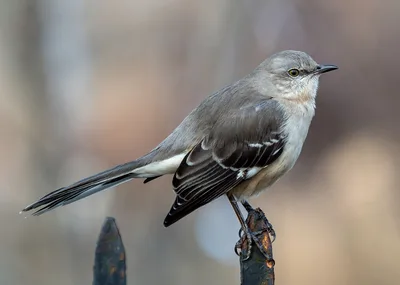 Northern mockingbird
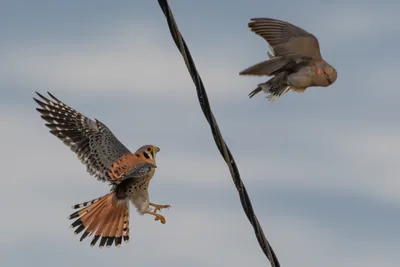 American kestrel
Food web
Predators
- eagles
- great horned owls kill a few
Ecological equivalents
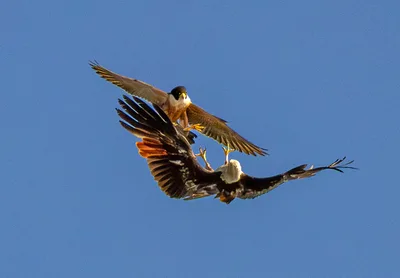
Related species on this site
Eurasian eagle-owl (same genus), Snowy owl (same genus), Barred owl (same family), Burrowing owl (same family), Elf Owl (same family), Long-Eared Owl (same family), and more.
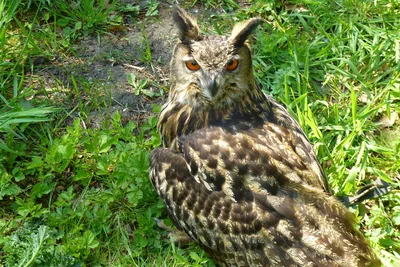 LC
Birds
Eurasian eagle-owl
Bubo bubo
The Eurasian eagle-owl is one of the largest owls in the world, with orange eyes and long ear tufts.
Living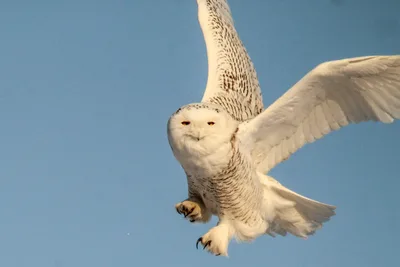 VU
Birds
Snowy owl
Bubo scandiacus
The snowy owl breeds on the open Arctic tundra and hunts by day under the midnight sun.
Living- LC
Birds
Barred owl
Strix varia
The barred owl is a large brown owl of North American woodland, with dark eyes, a round head and no ear tufts.
Living 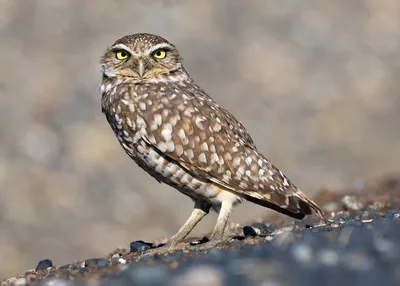 LC
Birds
Burrowing owl
Athene cunicularia
The burrowing owl is a small, long-legged owl of open country in the Americas.
Living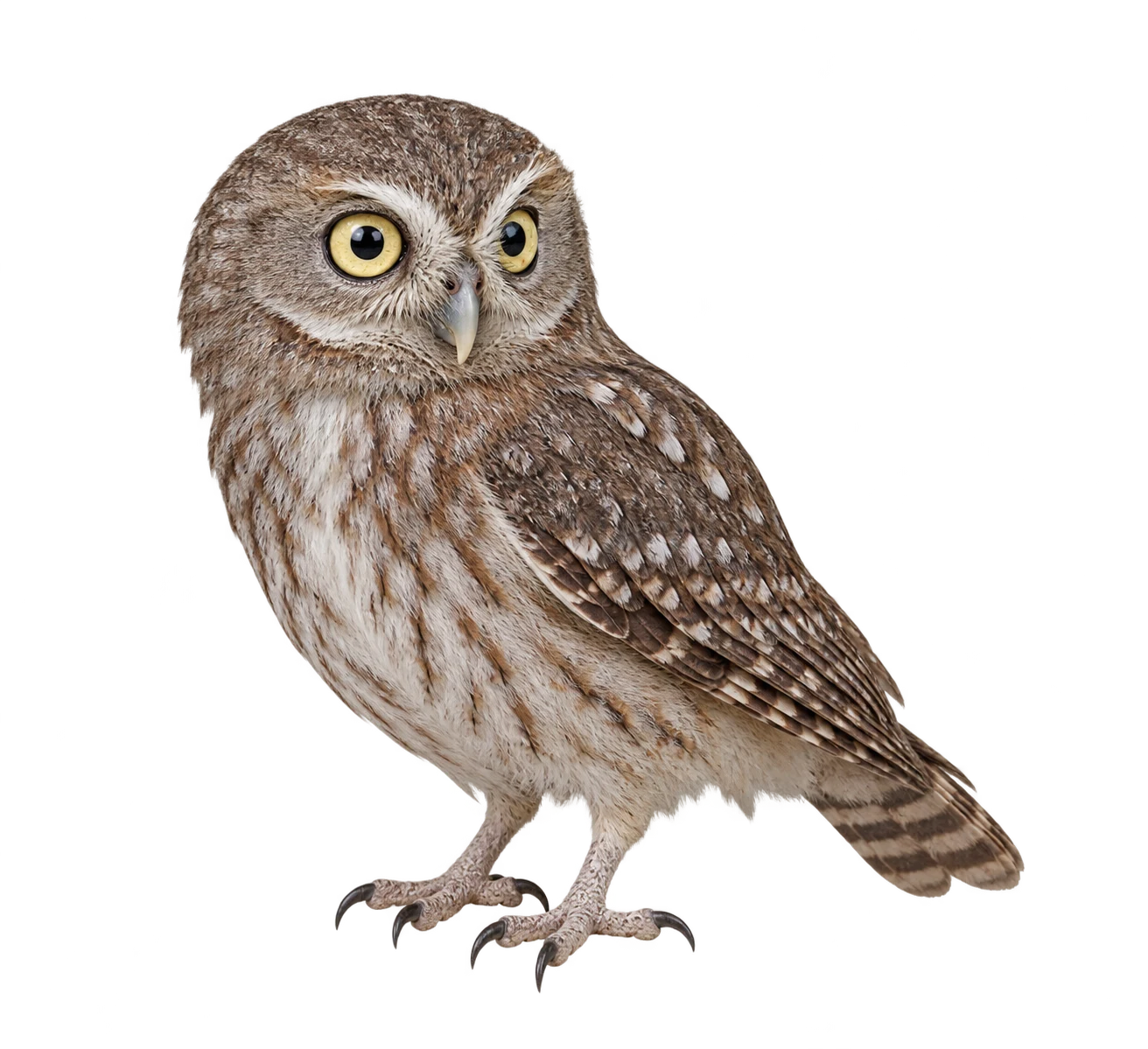
Birds
Elf Owl
Micrathene whitneyi
Classification and source reference
LivingAI illustration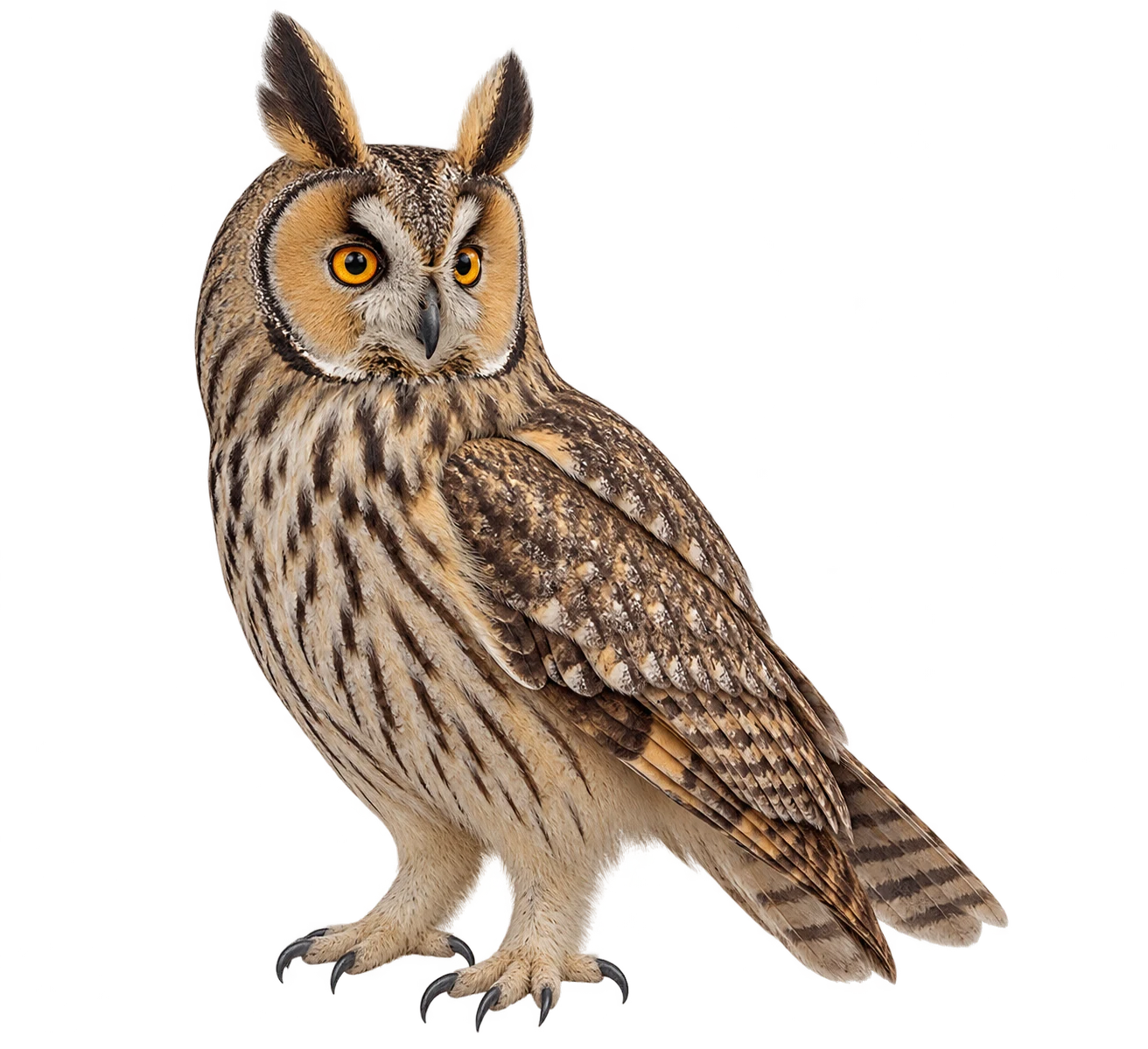
Birds
Long-Eared Owl
Asio otus
Classification and source reference
LivingAI illustration