Eurasian eagle-owl
The largest owl of Europe and Asia hunts after dark
Bubo bubo
Also called Eagle-owl, European eagle-owl, Uhu, Bubo bubo
Living individuals or members of this group exist today. This does not mean they are safe from extinction.
Meet the eurasian eagle-owl
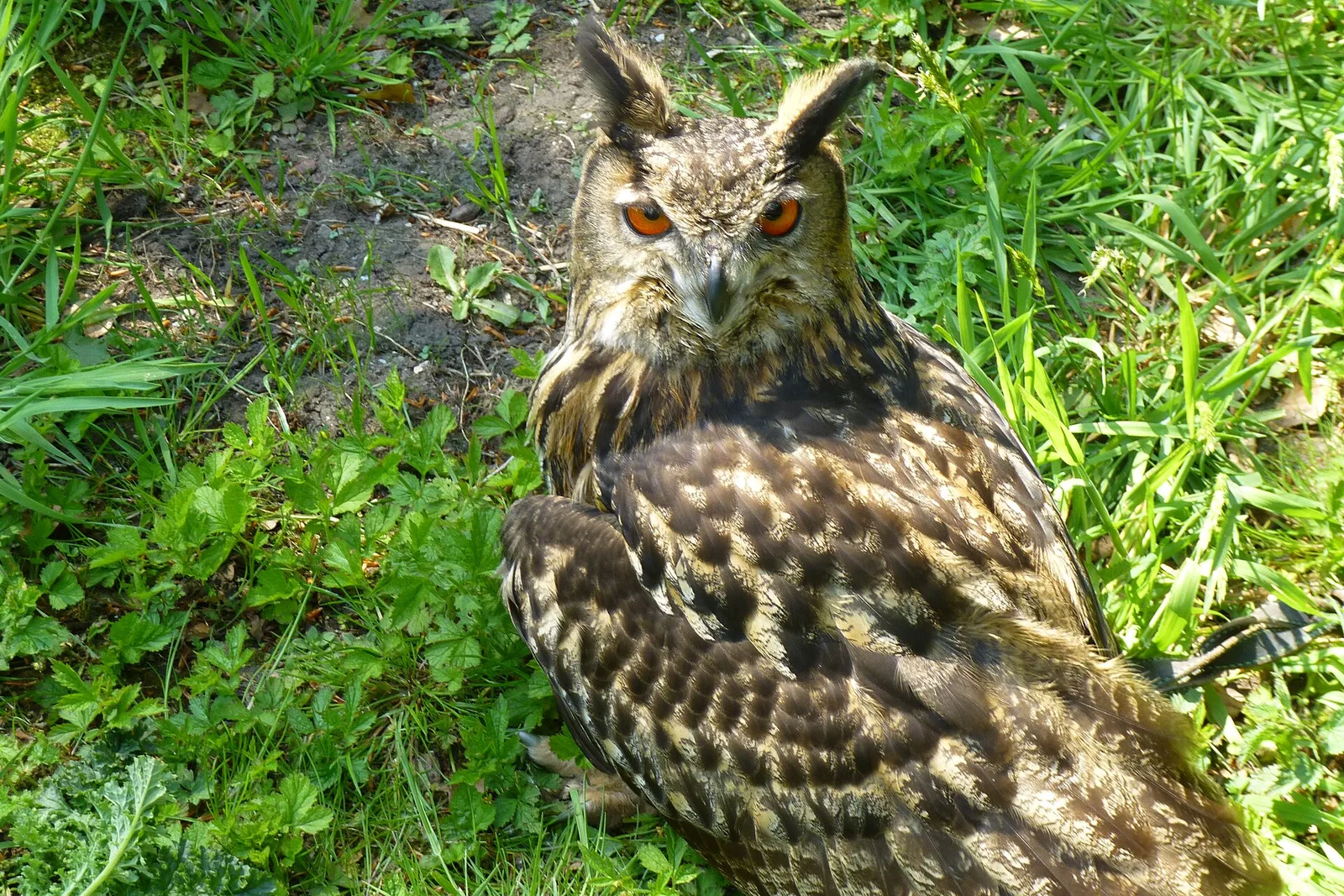
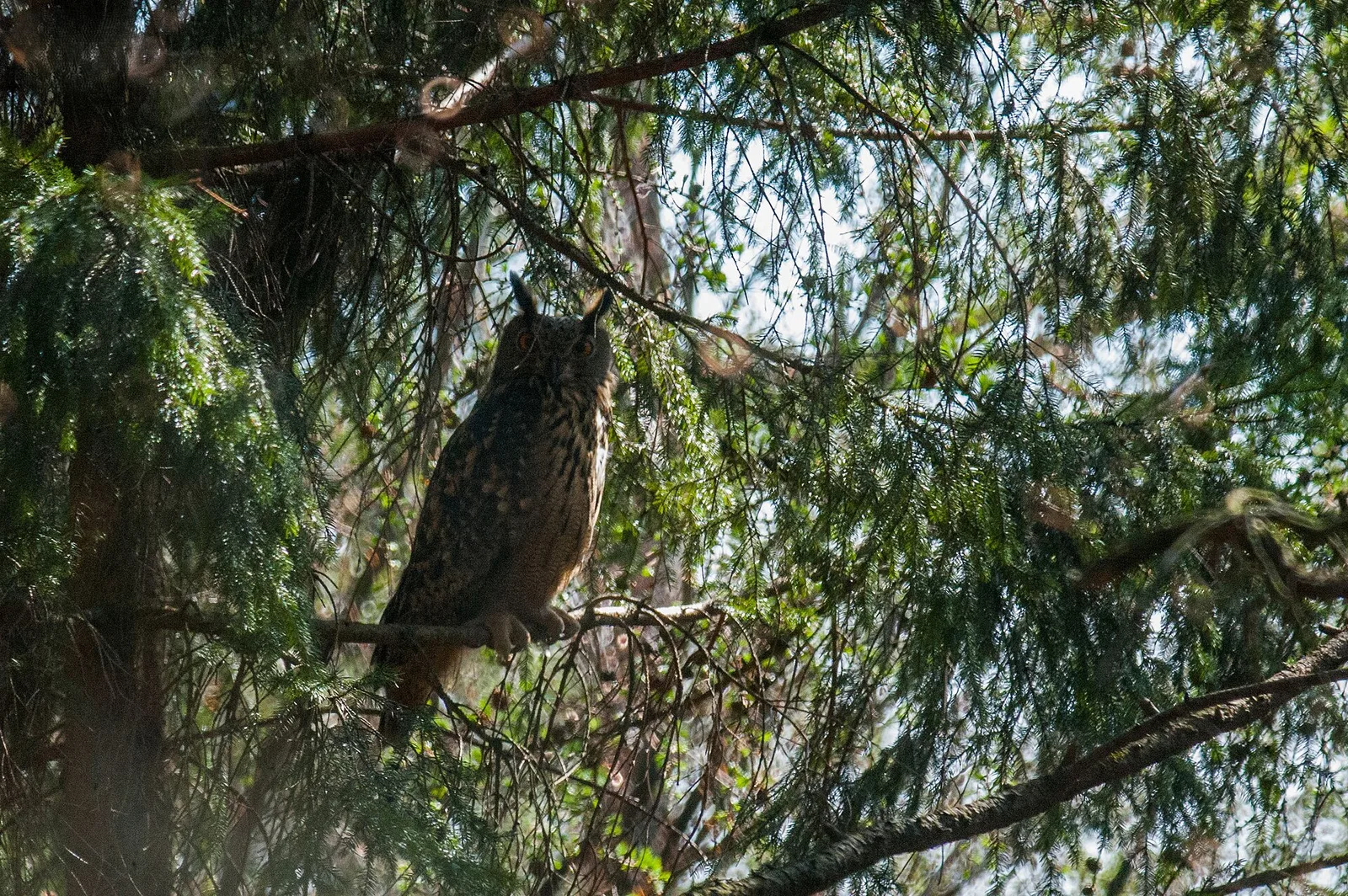
The Eurasian eagle-owl is one of the largest owls in the world, with orange eyes and long ear tufts. It hunts voles, rabbits and birds at night across Europe and Asia, and nests on cliff ledges and rocky ground.
Images of the eurasian eagle-owl
Lifespan in the wild
15 to 20 years a ringed wild bird reached 27 years and 9 months
Weight
1.2 to 4.2 kg
Length
56 to 75 cm
Wingspan
1.31 to 1.88 m
Fact file
Eurasian eagle-owl
- Location
- Europe and Asia, from Spain to the Russian Far East
- Habitat
- Mountains, Temperate forest, Grassland, Desert
- Diet
- Carnivore
- Prey / food
- Voles, rats, rabbits, hares, hedgehogs, crows, ducks, other owls
- Predators
- None as adults; foxes and other ground hunters take eggs and chicks
- Lifestyle
- Nocturnal, solitary and territorial for life
- Group name
- Pair
- Name of young
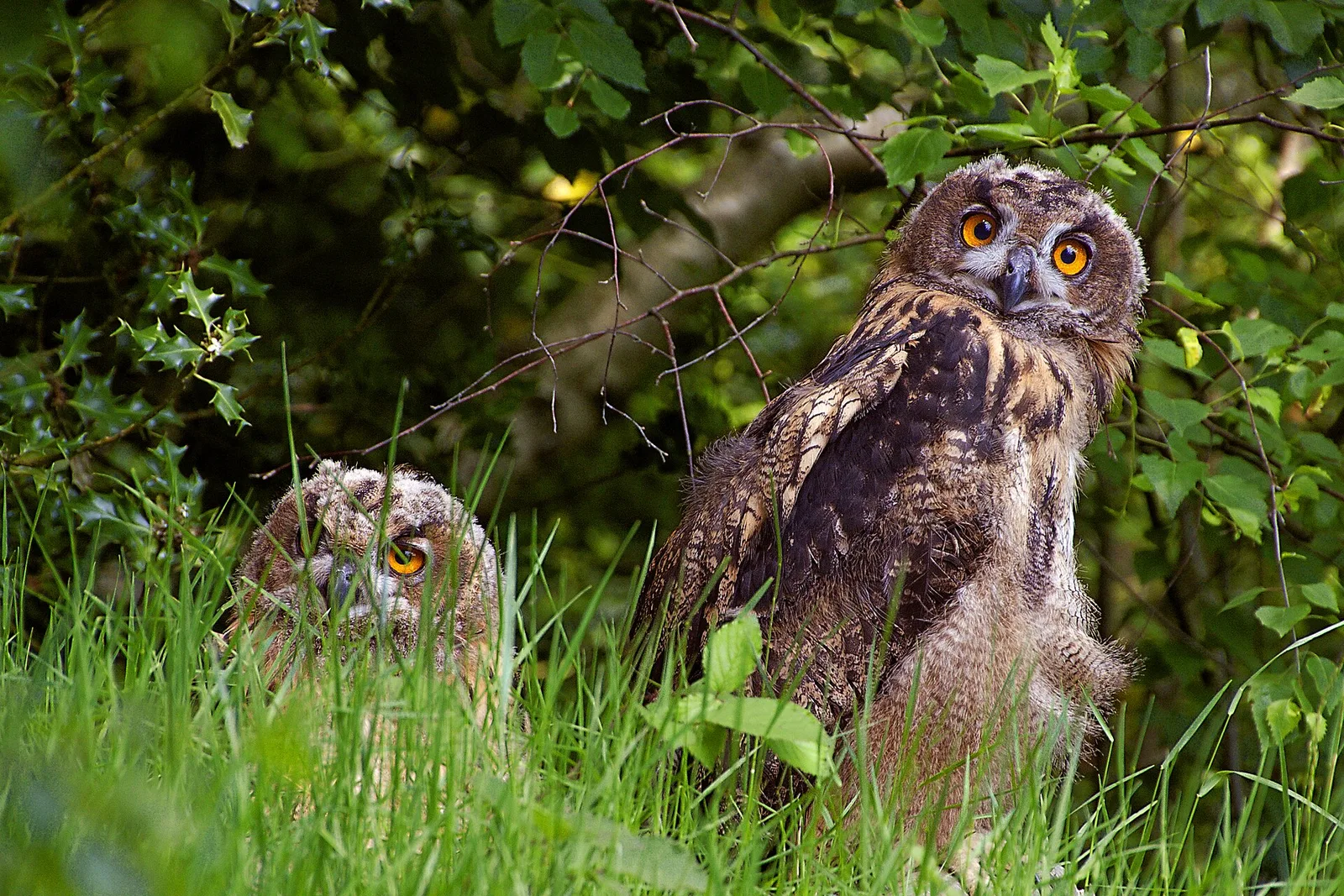
- Owlet
- Incubation
- Incubation 31 to 36 days
- Clutch size
- 1 to 4 eggs
- Population
- About 250,000 to 2,500,000 birds
- Biggest threat
- Electrocution on power poles, plus shooting and poisoning
- Distinctive feature
- Long ear tufts above bright orange eyes
- Colour
- Tawny-buff, streaked and barred with black-brown
- Skin type
- Feathers
Size
Next to a person
Measurements
Size and speed
- Length
- 56 to 75 cm bill tip to tail tip; females are the larger sex
- Wingspan
- 1.31 to 1.88 m, up to 2 m the widest birds reach about 2 metres
- Tail
- 22.9 to 31 cm
- Weight
- 1.2 to 4.2 kg, up to 4.6 kg males 1.2 to 3.2 kg, females 1.75 to 4.6 kg
- Weight, male
- 1.2 to 3.2 kg
- Weight, female
- 1.75 to 4.6 kg
Typical adult ranges. Source: Wikipedia.
Life cycle
Lifespan
- In the wild15 to 20, up to 27 years a ringed wild bird reached 27 years and 9 months
- In captivityUp to 68 years
- 068 years
The pale bar is the record. Sources: Wikipedia, Animal Diversity Web.
Appearance
Colour and coat
- Primary colours
- tawnybrown
- Secondary colours
- blackbuffwhite
- Skin type
- feathers
- Male and female
- The female is longer and heavier than the male. The plumage is nearly the same in both, though a male's ear tufts stand more upright. An observer in the field usually cannot tell the sexes apart.
Life cycle
Mating and family
- Mating system
- monogamous pairs, usually for life
- Social structure
- solitary, or a pair on one permanent territory
- Breeding
- one clutch a year, laid in late winter
The pair forms in autumn and calls together through the winter. The female lays one to four eggs on bare rock or soil and sits on them alone for about a month. The male brings all the food until the owlets are four or five weeks old. The young leave the nest at five to six weeks and stay with their parents for another four months. They breed for the first time at two or three years old.
Classification
Taxonomy
- Kingdom
- Animalia
- Phylum
- Chordata
- Class
- Aves
- Order
- Strigiformes
- Family
- Strigidae
- Genus
- Bubo
- Species
- Bubo bubo
Conservation
Red List status
- LC
- NT
- VU
- EN
- CR
- EW
- EX
Least Concern on the IUCN Red List
Range
Recorded in 21 countries
- Austria
- Belgium
- Switzerland
- People's Republic of China
- Czech Republic
- Germany
- Denmark
- Spain
- Finland
- France
- Greece
- Croatia
- Israel
- Italy
- South Korea
- Kazakhstan
- Luxembourg
- Netherlands
- Portugal
- Russia
- United States of America
Habitat layer: temperate broadleaf and mixed forest, temperate conifer forest, boreal forest and taiga, tropical grassland, savanna and shrubland, temperate grassland, savanna and shrubland, montane grassland and shrubland, desert and xeric shrubland.
Countries from 3,819 wild records on GBIF (iNaturalist research grade), filtered and checked by hand. Country shapes: Natural Earth. Habitat: RESOLVE Ecoregions 2017, CC BY 4.0. Basemap: Natural Earth.
Habitats
Three things to know
- 1
Its deep two-note hoot carries across a whole valley and gave the bird its German name, Uhu.
- 2
It nests on bare rock or soil and never builds anything.
- 3
Power lines kill more eagle-owls in Europe than any natural cause.
Did you know
Seven more facts
- 1
The German name Uhu copies the two-note call of the male.
- 2
Finland's footballers are the Huuhkajat, named after an owl that halted an international match.
- 3
This owl carries the highest wing loading of any European owl, at 0.72 grams per square centimetre.
- 4
The white throat patch only shows when the bird calls or displays.
- 5
Eagle-owls almost never nest in tree holes, although Blakiston's fish owl uses nothing else.
- 6
In 2020 a female raised three owlets in a window planter in Geel, Belgium.
- 7
The eggs are plain white and weigh about 75 to 80 grams each.
Field notes
How it looks and acts
Field notes
Distinguishing features
- Long ear tufts held upright on a big blocky head.
- Bright orange eyes, sometimes closer to red.
- Tawny-buff plumage streaked and barred with black-brown.
- A white throat patch that shows during a call.
- Legs and toes feathered to the base of black talons.
- A wingspan of 131 to 188 cm, the widest of any European owl.
Field notes
Unique adaptations
- Fringed flight feathers muffle the wingbeat, as in other owls.
- Very large feet grip and crush prey that struggles.
- High wing loading probably suits a heavy bird that drops on prey from a perch.
- Barred, freckled plumage hides a roosting bird against rock and bark.
- Feathered toes may hold heat through a Siberian winter.
Field notes
Interesting behaviours
- Singing from a rock pinnacle at the edge of the territory.
- Calling back and forth with the mate through the winter.
- Attacking a rival that shows a puffed white throat.
- Spreading the wings and snapping the bill when cornered.
- Coughing up pellets of fur and bone at the day roost.
Field notes
Temperament
- Solitary except with its mate.
- Strongly territorial in every month of the year.
- Shy of people, and often calmer at the nest than a smaller owl.
- Bold towards other birds of prey, which it kills and eats.
Field notes
Communication
- A deep two-note song that carries across a valley.
- A higher and longer answer from the female.
- Bill-clicking and cat-like spitting when the bird is annoyed.
- A flared white throat used as a signal to rivals.
- Staccato clucking from a male offering a nest site.
Ecology
Ecological role
The eagle-owl sits at the top of its food web and eats almost any animal it can carry.
- It holds down the numbers of voles, rats and rabbits over a wide area.
- It kills smaller owls and birds of prey, including long-eared owls.
- Its pellets tell researchers which small mammals live in a district.
- It also takes rare animals, such as the European mink and the marbled polecat.
Stories
Myths and legends
- In Greek tradition, Athena kept an owl as her bird and it stood for wisdom.
- In Roman tradition, an owl hooting on a roof announced a death in the house.
- In Hindu tradition, an owl serves as the mount of Lakshmi, the goddess of wealth.
- In Kikuyu tradition, an owl seen or heard means that a death is near.
- In German tradition, the eagle-owl is the Uhu, and the name repeats its call.
People
Relationship with humans
People
Living alongside us
People have hunted, released and admired this owl in turn. Gamekeepers shot it for centuries as a rival for game, and it vanished from several countries. Reintroductions in Germany and Sweden brought it back to much of western Europe. Falconers keep the bird, and escapes muddle the record of wild pairs in Britain. Farmers gain from it, because it kills rats and other pests.
- The species has killed nobody, and attacks on people are rare.
- A cornered bird may strike with feet strong enough to hold a hare.
- Some pairs defend the nest, and aggression at nests has risen in Scandinavia in recent decades.
People
Status, uses and products
- Domestication
- Wild
- As a pet
- Not suitable. This is a large wild predator with a territory measured in square kilometres. It needs whole carcasses, a huge aviary and a licence in most countries. Hand-reared owls imprint on people and then treat them as rivals in the breeding season.
- Uses
- falconrybird scaringbirdwatching
- Products
- None recorded
The full account
About the eurasian eagle-owl
The Eurasian eagle-owl, Bubo bubo, is one of the largest owls in the world. Adults measure 56 to 75 centimetres from the bill to the tip of the tail. The wings open to 131 to 188 cm, and the broadest birds reach about 2 metres. A male weighs 1.2 to 3.2 kilograms, and a female 1.75 to 4.6 kg. Long ear tufts and orange eyes set the bird apart from every other European owl.
The species lives right across Europe and Asia, from Spain to the Pacific coast of Russia. It likes broken ground, so cliffs, ravines and rocky slopes with open country nearby suit it best. It hunts at dusk and through the night, and takes voles, rats, rabbits, hares and birds. The IUCN lists the bird as Least Concern, on a world estimate of 250,000 to 2,500,000 birds. Numbers still fall in western Europe, where power poles kill many young owls each year.
Name and taxonomy
Carl Linnaeus gave the eagle-owl its first scientific name in 1758. He placed it in the genus Strix, where he put most owls. André Duméril set up the genus Bubo in 1805, and the species belongs there now. Bubo holds about ten living species, and most of them are large owls. About 12 subspecies of the eagle-owl are accepted today.
German speakers call the bird Uhu, a name copied from its call. Spanish speakers call it buho real, and Swedish speakers berguv. Norwegians know it as hubro, and Finns as huuhkaja. In much of Europe and Asia people simply call it the eagle-owl.
Evolution and relatives
The genus Bubo probably arose in Africa, on the evidence of fossils and of where its species live today. The pharaoh eagle-owl and the Indian eagle-owl were both treated as subspecies of this bird until recently. Genetic work split them off, and the pharaoh bird differs by about 3.8% in its mitochondrial DNA. The great horned owl of North America grew out of early eagle-owls that crossed into that continent. It is much smaller, carries yellow eyes and shows horizontal bars below rather than upright streaks.
The snowy owl also belongs to this group and split from it at least 4 million years ago. Genetic tests place the snowy owl closer to the great horned owl than to the eagle-owl. In captivity the species has produced hybrids with the Indian eagle-owl, and with the great horned owl. Fossils from southern France show that Middle Pleistocene eagle-owls were larger than the birds alive now. Eight owls once placed in Bubo now sit in the genus Ketupa with the fish owls.
Appearance
The upper parts are mottled tawny-buff, freckled and streaked with black-brown. The underside is paler, with heavy dark streaks on the breast and fine wavy bars on the belly. Two ear tufts stand on the head, and in Spanish birds their feathers run 63.3 to 86.6 millimetres long. The facial disc is tawny and only weakly framed, unlike the deep dish of a barn owl. The iris is usually orange, and in some European birds it burns almost blood-red.
The bill and the talons are black, and feathers cover the legs down to the toes. Adults measure 56 to 75 cm long, and the tail alone runs 22.9 to 31 cm. The wingspan is 131 to 188 cm, wider than that of any other owl in Europe. Females weigh 1.75 to 4.6 kg and males 1.2 to 3.2 kg, so the female is the larger sex. One British female had a middle claw of 57.9 mm, as long as the hind claw of a golden eagle.
Habitat and range
The eagle-owl ranges over about 32,000,000 square kilometres of Europe and Asia. It reaches the Iberian Peninsula in the west and Magadan in the Russian Far East. It is absent only from the wet rainforest of Southeast Asia and from the high Arctic tundra. Cliffs, gullies and rocky slopes with scattered trees hold the densest populations. A nest set among rocks or on a steep slope is hard for a ground predator to reach.
Birds breed at sea level and as high as 2,100 metres in the Alps. In the Himalayas they reach 4,500 metres, and on the Tibetan Plateau 4,700 metres. Farmland suits them only where the fields are rough, lightly worked or left fallow. Some pairs settle beside towns, and at least five have nested in Helsinki since 2005. Feral rabbits in the city gave those Helsinki owls a steady food supply. GBIF holds records of the species from 83 countries.
Diet and hunting
The eagle-owl takes mostly small mammals, and voles, rats, rabbits and hares fill most meals. It also kills birds, from crows and ducks to other owls. Reptiles, amphibians, fish and large insects round out the list. It eats whatever is common near its territory, so the diet shifts from place to place. European hares supply the greatest weight of food across much of the natural range.
The bird hunts from a perch and in low flight over open ground. It prefers open country to closed woodland when it hunts. It kills with its feet, and the talons hold the prey while the grip does the work. Fur, feathers and bone come back up later as a pellet. Rare animals turn up in the diet too, among them the European mink and the great bustard.
Behaviour and social life
An adult lives alone or with its mate and holds one territory for the rest of its life. A territory covers about 15 to 80 square kilometres. The male sings from rock pinnacles and ridges along the edge of his ground. Males attacked stuffed owls set near their borders, and struck hardest at models with a puffed white throat. Females reacted far less strongly to the same models.
The flight is direct, with shallow beats and long fast glides. The bird sometimes soars on rising air, which is unusual for an owl. It roosts by day on a ledge or in a tree and moves little. Crows mob it when they find it out in daylight. The species does not migrate, though five tagged adults moved over 20 km from their nests after breeding.
Communication and senses
The male's territorial song is a deep two-note hoot with the stress on the first note. The female answers higher and longer, and a pair often calls in turn. The song runs at 250 to 350 hertz, deeper than that of the great horned owl. Calling peaks from October to February, first over territory and then over courtship. In one Spanish study the birds started no earlier than 29 minutes after sunset.
Other sounds include a laughing series of notes, a harsh bark and loud bill-clicking. A flared white throat patch works as a visual signal at close range. Sight matters more than hearing here, because the ear openings are simple and the facial disc is shallow. As in other owls, one ear opening sits higher than the other, which helps place a sound. Fringed feathers quieten the wingbeat, as in other owls.
Reproduction and life cycle
Pairs usually stay together for life and renew the bond with courtship each winter. The male shows the female possible nest sites and scrapes a shallow hollow at each one. Eagle-owls build nothing, so the eggs lie on bare rock, on soil or in another bird's old nest. Cliff ledges, crevices, caves and the ground under a bush all serve as nest sites. Laying starts in late winter, and the mean date in the Italian Alps was 27 February.
A clutch holds one to four white eggs, and rarely as many as six. Each egg weighs about 75 to 80 grams. The eggs arrive three days apart, and the female alone sits on them. The first chick hatches after 31 to 36 days. The male carries food to the nest through the whole of that period.
Owlets open their eyes at four days old and swallow small prey whole at about three weeks. They walk well at five weeks and take short flights at seven weeks. They leave the nest at five to six weeks and fly weakly by about eight weeks. The young depend on their parents for 20 to 24 weeks in all. Most birds first breed at two or three years old, once they hold a territory.
Predators and threats
A healthy adult eagle-owl has no natural predator. Eggs and small owlets are at risk from ground hunters, and the female guards them closely. Most eagle-owls that are found dead were killed by people or by human structures. Electrocution on power poles was the leading cause of death in 68% of 25 published studies. Across those studies it caused 38.2% of recorded deaths on average.
In Finland, electrocution accounted for 39% of deaths and vehicle collisions for 22%. Spanish records of 1,476 dead owls put 313 of them down to deliberate persecution. Gamekeepers and landowners shot and poisoned the bird for centuries because it kills game. Wind turbines kill some birds where turbines stand near good hunting ground. Insulating the pylons steadies local numbers, because floaters then fill the empty territories.
Population and conservation
The IUCN lists the Eurasian eagle-owl as Least Concern. The world population is put at 250,000 to 2,500,000 birds. Europe alone holds 19,000 to 38,000 breeding pairs. The trend is downward, and human activity is the reason. The species sits on Appendix II of CITES, which controls international trade.
Persecution wiped the bird out of Luxembourg in 1903 and Belgium in 1943. Germany had lost its breeding birds by the 1960s. More than a thousand owls were then released in the Eifel, at about US$1,500 a bird. Those birds now breed as well as wild ones, though many still die on power lines. Sweden's population also grew from a series of releases, and the Low Countries were repopulated from the east.
Relationship with humans
The eagle-owl kills nobody, and it attacks people at the nest less often than many smaller owls. A cornered bird raises its wings into a half circle, puffs up and snaps its bill. Some females feign an injury to draw a climber away from the eggs. Farmers gain from the owl, because it takes rats, mice and pigeons. Tame birds have been flown to keep gulls from nesting on buildings.
Falconers keep the species, and escapes are common in Britain. Between 1994 and 2007, 73 escaped eagle-owls were never logged as recovered. About 12 to 40 pairs were thought to live in the United Kingdom in 2016. People argue over whether those British birds are native returns or escapes. Fossils from Meare Lake Village show the species in Britain about 2,000 years ago.
In culture and myth
Germany calls the bird the Uhu, and the name follows the shape of its call. Finland named its national football team Huuhkajat, the Finnish word for eagle-owls. A wild eagle-owl landed in the Helsinki Olympic Stadium in 2007 and stopped a match for six minutes. The city named the bird its citizen of the year that December. Gamekeepers once tethered a live eagle-owl as a decoy, because crows and hawks mob it on sight.
Greek myth gave Athena an owl of her own, though hers was the small Athene noctua. Athens stamped that owl on its silver tetradrachm from about 510 BCE. To Roman writers, an owl that called above a house warned of a death inside. In medieval Europe the owl stood for plague, for mourning and for darkness. Hindu tradition gives an owl to Lakshmi, the goddess of wealth, as her mount.
The Kikuyu of Kenya treat an owl seen or heard as the sign of a coming death. Chinese bronzes carry owls, and the bird stood for both evil and luck in war. Japan once read the owl as a death sign and now sells it as a charm. British folklore holds no eagle-owl stories, which suggests the bird had gone before those tales formed.
A sentence with a dotted underline is inferred: it describes the group the animal belongs to, or is a reading of the sources, rather than a measured or reported fact about this species.
Questions
Eurasian eagle-owl questions, answered
How big is a Eurasian eagle-owl?
Adults are 56 to 75 cm long with a wingspan of 131 to 188 cm. Females weigh 1.75 to 4.6 kg and males 1.2 to 3.2 kg. It is one of the largest owls in the world.
Is the Eurasian eagle-owl the biggest owl?
It is among the biggest. Blakiston's fish owl averages slightly heavier, and the great grey owl averages slightly longer. The heaviest eagle-owls match any owl on record.
What do Eurasian eagle-owls eat?
Mostly small mammals such as voles, rats, rabbits and hares. They also take crows, ducks and other owls, plus reptiles, fish and large insects. The diet follows whatever prey is common locally.
Where do Eurasian eagle-owls live?
Across Europe and Asia, from Spain and Norway to the Russian Far East, Korea and northern Japan. They favour cliffs and rocky ground with open hunting country nearby.
Are Eurasian eagle-owls endangered?
No. The IUCN rates the species as Least Concern, on an estimate of 250,000 to 2,500,000 birds. Numbers are falling, and western Europe holds the most damaged populations.
How long do Eurasian eagle-owls live?
Wild birds in protected areas often reach 15 to 20 years. One ringed bird was found at 27 years and 9 months. Captive owls have lived to 68.
What does a Eurasian eagle-owl sound like?
The male gives a deep two-note hoot with the stress on the first note, at 250 to 350 hertz. The female answers higher and longer. The call carries for a long distance on a still night.
Do Eurasian eagle-owls attack humans?
Very rarely. The species has killed nobody, and most adults retreat when a person nears the nest. A few birds defend a nest, and reports of that have increased in Scandinavia.
How many eggs does a Eurasian eagle-owl lay?
One to four white eggs, and six in exceptional cases. The female lays at intervals of about three days and incubates alone. The first egg hatches after 31 to 36 days.
Where do Eurasian eagle-owls nest?
On cliff ledges, in crevices and caves, and often on the ground under a bush or a fallen trunk. They build nothing and lay on the bare surface. They may reuse the same site for many years.
Do Eurasian eagle-owls have any predators?
Healthy adults have none. Eggs and small owlets can be taken by ground hunters while the female is away. Nearly all recorded adult deaths come from people and their structures.
Do Eurasian eagle-owls live in Britain?
A few pairs breed there, and about 12 to 40 pairs were thought present in 2016. Most experts treat them as escapes from captivity. Fossils show wild birds in Britain about 2,000 years ago.
Are Eurasian eagle-owls nocturnal?
Mainly, yes. They hunt in the hours after sunset and before sunrise. In the far north, where summer nights stay light, they hunt in daylight as well.
Can you keep a Eurasian eagle-owl as a pet?
No. It is a large predator that needs an aviary, whole carcasses and a licence in most countries. Falconers keep the species, but it is not a household bird.
Why do so many eagle-owls die on power lines?
They perch on pylons to hunt and to sing, and an uninsulated pole can kill a bird that spans nearly 2 metres. Electrocution led the causes of death in 68% of 25 studies. Insulation work fixes it where money allows.
What is the difference between an eagle-owl and a great horned owl?
The eagle-owl is much larger, with orange eyes and upright streaks below. The great horned owl has yellow eyes and horizontal bars. The two are close relatives on separate continents.
Food web
Prey and food
- voles
- rats
- rabbits
- hares
- hedgehogs
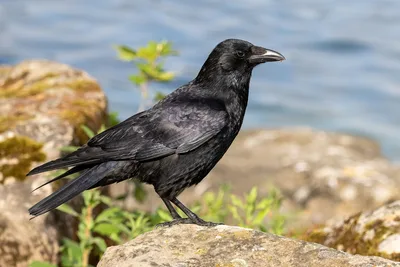
- crows
- ducks
- owls
 Black-footed cat
 Carrion crow
 Mandarin duck
 Western capercaillie
 Tawny owl
 Black kite
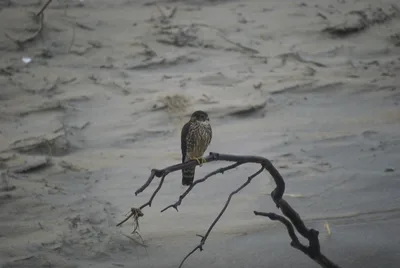 Merlin
Food web
Predators
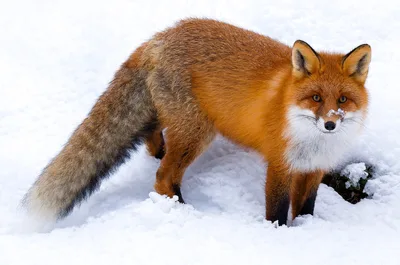 Red fox
- ground hunters
Ecological equivalents
Related species on this site
Great horned owl (same genus), Snowy owl (same genus), Barred owl (same family), Burrowing owl (same family), Elf Owl (same family), Long-Eared Owl (same family), and more.
 LC
Birds
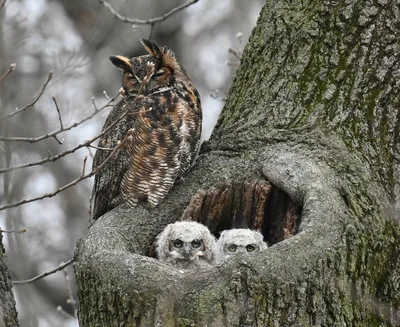
Great horned owl
Bubo virginianus
The great horned owl is a heavy, ear-tufted owl of the Americas, at home from Alaska to Argentina.
Living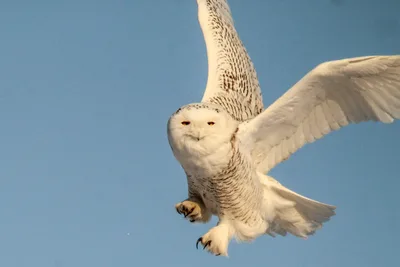 VU
Birds
Snowy owl
Bubo scandiacus
The snowy owl breeds on the open Arctic tundra and hunts by day under the midnight sun.
Living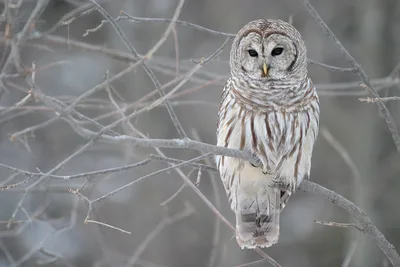 LC
Birds
Barred owl
Strix varia
The barred owl is a large brown owl of North American woodland, with dark eyes, a round head and no ear tufts.
Living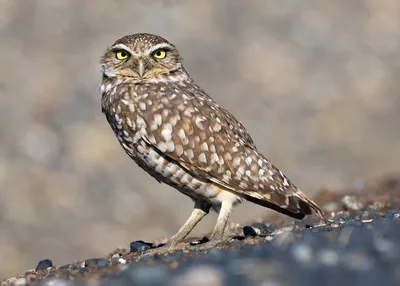 LC
Birds
Burrowing owl
Athene cunicularia
The burrowing owl is a small, long-legged owl of open country in the Americas.
Living
Birds
Elf Owl
Micrathene whitneyi
Classification and source reference
LivingAI illustration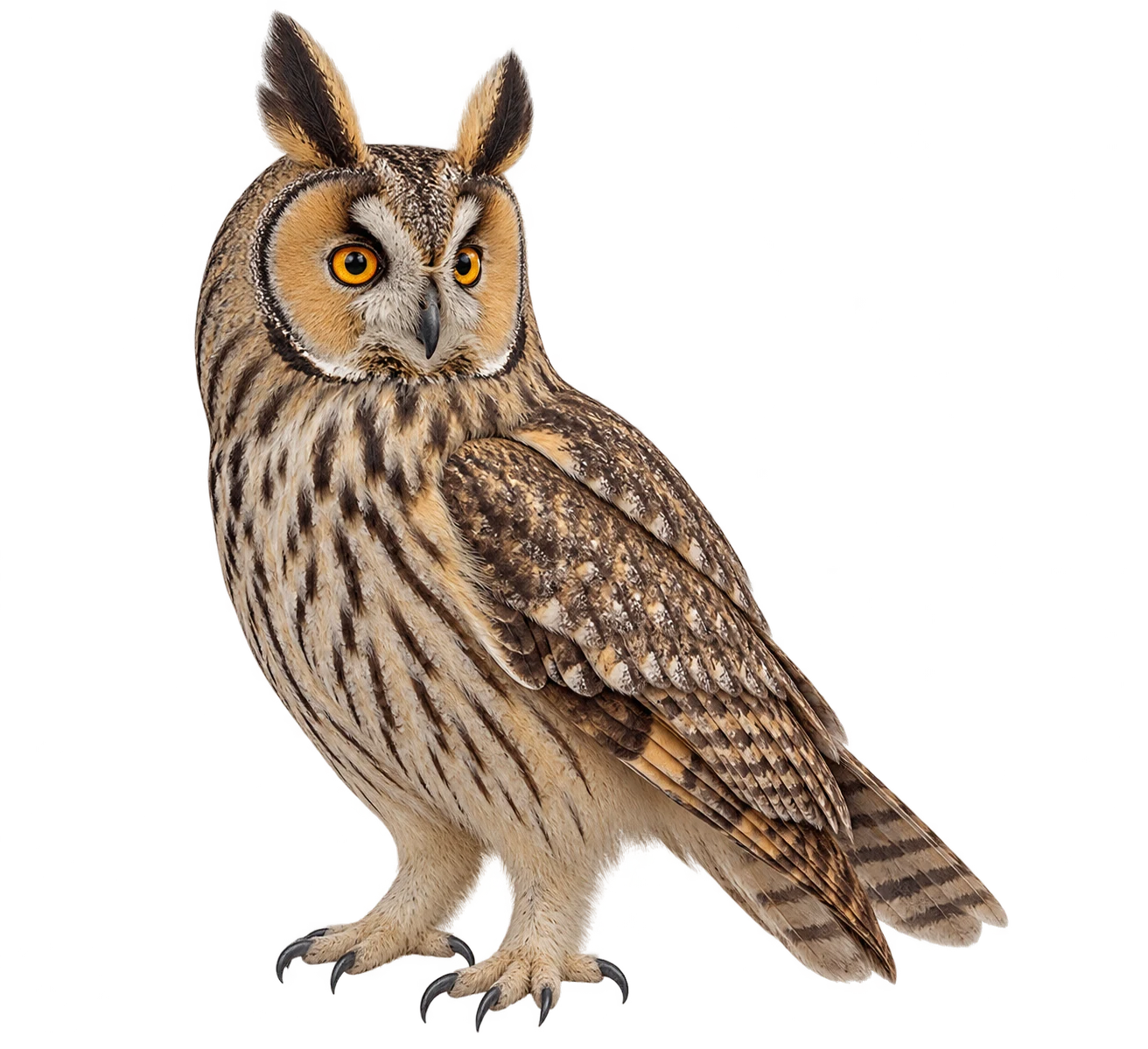
Birds
Long-Eared Owl
Asio otus
Classification and source reference
LivingAI illustration