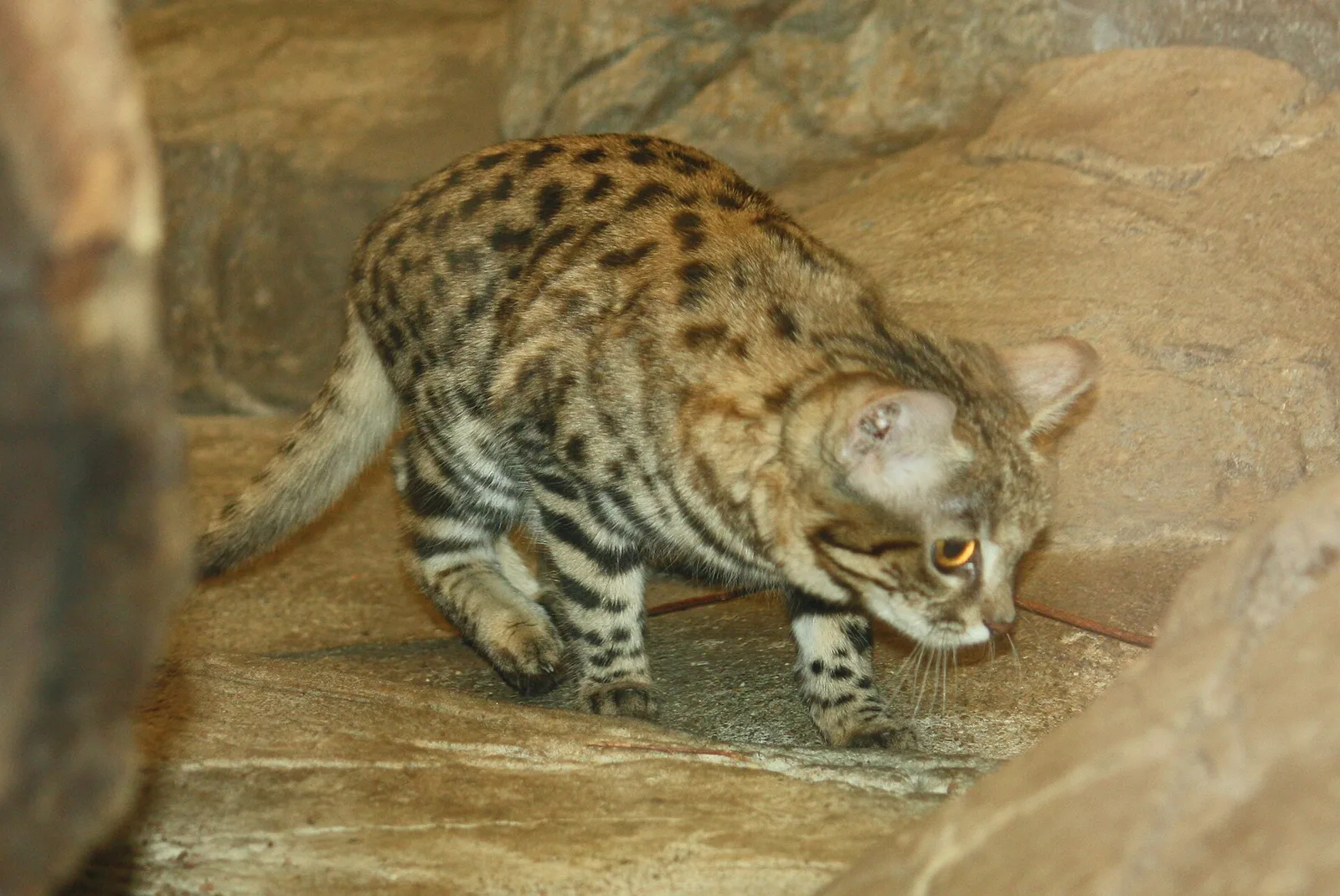
Black-footed cat
Africa's smallest cat, and its most relentless hunter
Felis nigripes
Also called Small-spotted cat, Anthill tiger
Living individuals or members of this group exist today. This does not mean they are safe from extinction.
Meet the black-footed cat
The black-footed cat is Africa's smallest wild cat, a spotted night hunter of the dry grasslands of South Africa, Namibia and Botswana. It kills up to 14 small animals in one night and rests by day in termite mounds and old burrows.
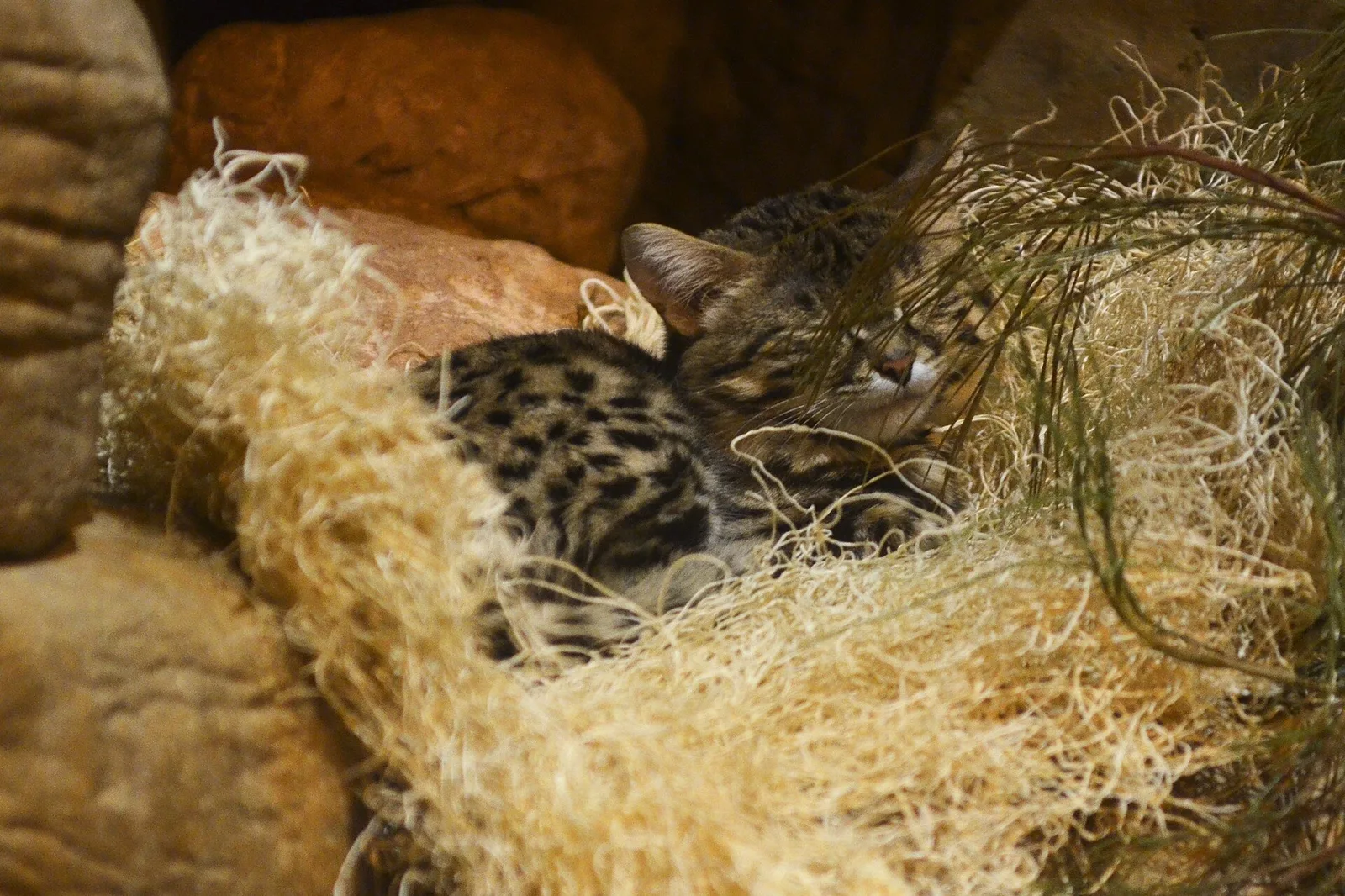
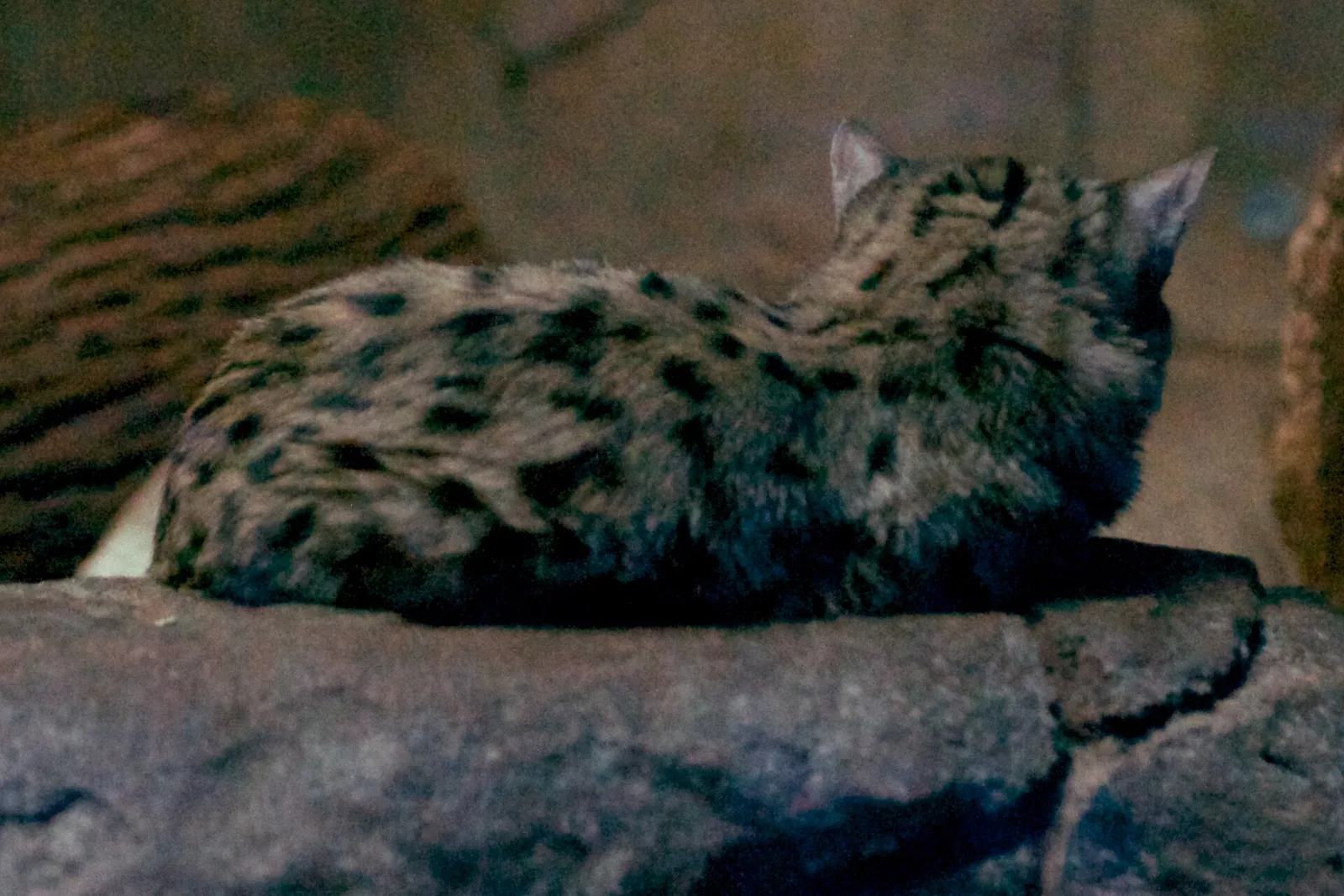
Images of the black-footed cat
Lifespan in the wild
Up to 13 years
Weight
1.1 to 2.45 kg
Length
33.7 to 50 cm
Height
Up to 25 cm
Fact file
Black-footed cat
- Location
- Karoo and Kalahari of South Africa, Namibia and Botswana
- Habitat
- Savanna, Grassland, Desert
- Diet
- Carnivore
- Prey / food
- Gerbils, mice, shrews, larks, hares, lizards, insects
- Predators
- Black-backed jackal, caracal, eagle-owls, domestic dogs
- Lifestyle
- Strictly nocturnal, solitary, lives on the ground
- Group name
- Solitary
- Name of young
- Kitten
- Gestation
- About 63 to 68 days
- Litter size
- 1 to 2 kittens, rarely up to 4
- Population
- Unknown; about 0.03 to 0.17 cats per square kilometre
- Biggest threat
- Poison baits and traps set for jackals, and loss of prey and habitat
- Distinctive feature
- Bold black spots on tawny fur, black cheek streaks, black soles
- Colour
- Tawny to sandy with black spots
- Skin type
- Fur
Size
Next to a person
Measurements
Size and speed
- Height
- Up to 25 cm shoulder height is under 25 cm
- Length
- 33.7 to 50 cm head and body; females 33.7 to 36.8 cm, males 42.5 to 50 cm
- Length, male
- 42.5 to 50 cm
- Length, female
- 33.7 to 36.8 cm
- Tail
- 15 to 20 cm
- Weight
- 1.1 to 2.45 kg females 1.1 to 1.65 kg, males 1.6 to 2.45 kg
- Weight, male
- 1.6 to 2.45 kg
- Weight, female
- 1.1 to 1.65 kg
Typical adult ranges. Source: Wikipedia.
Life cycle
Lifespan
- In the wildUp to 13 years
- In captivityUp to 15.6 years
- 015.6 years
The pale bar is the record. Source: Animal Diversity Web.
Appearance
Colour and coat
- Primary colours
- tawnysandy
- Secondary colours
- blackwhite
- Skin type
- fur
- Male and female
- Moderate. Males are clearly larger, at 42.5 to 50 centimetres of head and body against 33.7 to 36.8 cm for females, and heavier. The coat is the same in both sexes.
Life cycle
Mating and family
- Mating system
- polygynous, one male overlapping one to four females
- Social structure
- solitary
- Breeding
- one or two litters a year in the southern summer
A female is in heat for about 36 hours, and the resident male guards her against rivals. After 63 to 68 days she bears one or two kittens in a termite mound or burrow, between October and March. She hunts again within four days and moves the kittens to a new den every six to ten days. They are weaned at two months and independent at three to four months. In the wild the cat is thought to reach 13 years.
Classification
Taxonomy
- Kingdom
- Animalia
- Phylum
- Chordata
- Class
- Mammalia
- Order
- Carnivora
- Family
- Felidae
- Genus
- Felis
- Species
- Felis nigripes
Conservation
Red List status
- LC
- NT
- VU
- EN
- CR
- EW
- EX
Vulnerable on the IUCN Red List
Range
Recorded in 1 country
Habitat layer: tropical grassland, savanna and shrubland, temperate grassland, savanna and shrubland, desert and xeric shrubland.
Countries from 33 wild records on GBIF (iNaturalist research grade), filtered and checked by hand. Country shapes: Natural Earth. Habitat: RESOLVE Ecoregions 2017, CC BY 4.0. Basemap: Natural Earth.
Habitats
Three things to know
- 1
A black-footed cat kills up to 14 rodents and birds in a single night and eats about a sixth of its own weight.
- 2
It can leap 1.4 metres into the air to snatch a bird in flight.
- 3
Karoo farmers call it the anthill tiger, because it dens in hollow termite mounds and fights fiercely when cornered.
Did you know
Seven more facts
- 1
Only the soles of the feet are black, so the name fits a part few people ever see.
- 2
A kitten weighs 60 to 93 grams at birth and can crawl within hours.
- 3
The mother moves her kittens to a new den every six to ten days.
- 4
A female is in heat for about 36 hours but accepts a male for only five to ten hours in the wild.
- 5
The first black-footed cats born from frozen embryos arrived in 2011.
- 6
Marsh owls sometimes shadow a hunting cat and grab the prey it flushes.
- 7
In one study 98% of 184 daytime resting places were empty springhare burrows.
Field notes
How it looks and acts
Field notes
Distinguishing features
- A head and body of 33.7 to 50 centimetres, the smallest of any African cat.
- Black or dark brown soles on all four feet.
- Two black streaks that run back from each eye over the cheek.
- A short banded tail with a black tip, about half the body length.
- Bold black spots on tawny fur, with bands on the shoulders and legs.
- Large, rounded ears set wide apart on a broad head.
Field notes
Unique adaptations
- Enlarged ear chambers pick up faint sounds in open country.
- A spotted coat hides it in moonlit grass.
- It gets all the water it needs from its prey.
- A small body lets it hunt and hide in bare, dry land where larger cats cannot.
- Strong forelegs and claws dig and reshape burrows for shelter.
Field notes
Interesting behaviours
- Hunts all night and sleeps all day in a termite mound or burrow.
- Uses three hunting styles, fast, slow and sit-and-wait.
- Buries the remains of a large kill under sand and returns to it.
- Attacks prey from behind and pins it with its dewclaws.
- Brings live prey to its kittens so they can learn to kill.
Field notes
Temperament
- Shy and secretive, and bolts for cover at any disturbance.
- Fierce when cornered, and defends itself against much larger animals.
- Solitary except for a mother with kittens.
Field notes
Communication
- Sprays urine to mark its range and to advertise readiness to mate.
- A male calls with a loud meow repeated up to ten times.
- Purrs and gurgles at close range, and hisses and growls when threatened.
- A mother gives a special alarm call to her kittens.
Ecology
Ecological role
The black-footed cat is the main small predator of rodents and ground birds in the dry heart of southern Africa.
- Takes large numbers of gerbils, mice and shrews every night.
- Preys on larks and other ground-nesting birds and their eggs.
- Depends on springhares, aardvarks and termites for the holes it shelters in.
- Feeds jackals, caracals and eagle-owls in turn, mainly as kittens and young cats.
Stories
Myths and legends
- In Afrikaans tradition of the Karoo, the cat is the miershooptier, the anthill tiger.
- In San tradition, the cat can bring down a giraffe with a throat bite, a tale that praises its courage.
- In modern internet tradition, it is the deadliest cat on Earth, a title based on its hunting success.
People
Relationship with humans
People
Living alongside us
Few people ever see a black-footed cat, and it does no harm to livestock. It helps farmers by killing rodents. It dies in the poison baits and traps that farmers set for jackals, and herding dogs kill some. Trade in the species is banned, and hunting it is illegal in South Africa and Botswana. Zoos in several countries breed it under a studbook.
- It weighs at most 2.45 kilograms and cannot seriously injure a person.
- It flees at the slightest disturbance and hides in a burrow.
- A cornered cat bites and scratches in self-defence.
People
Status, uses and products
- Domestication
- Wild
- As a pet
- Not suitable. The species is on CITES Appendix I, so private trade is banned. It is nocturnal, shy and fierce when handled, and it needs live prey and kilometres of open ground each night. Captive cats also die young of kidney disease.
- Uses
- zoo breeding programmesfield research
- Products
- None recorded
The full account
About the black-footed cat
The black-footed cat, Felis nigripes, is the smallest wild cat in Africa. A female weighs 1.1 to 1.65 kilograms and a male 1.6 to 2.45 kg, and the shoulder stands under 25 centimetres. Its tawny coat is covered in bold black spots, and two black streaks run from the eyes across the cheeks. The name comes from the black undersides of the feet, the only black part of the animal. It lives in the dry grasslands and scrub of the Karoo and the Kalahari in southern Africa.
For its size it is a formidable hunter. It walks 5 to 16 kilometres a night, kills up to 14 small animals, and leaps 1.4 metres to take a bird from the air. By day it sleeps in a hollow termite mound or in the empty burrow of a springhare or aardvark. Because it defends itself so fiercely, Karoo farmers call it the anthill tiger. The IUCN has listed it as Vulnerable since 2002, because its range is small and its numbers are thought to be falling.
Name and taxonomy
The British explorer William John Burchell named the species Felis nigripes in 1824. He worked from skins of small spotted cats that he saw near Dithakong in the northern Karoo of South Africa. The Latin name means black-footed cat. Some books call it the small-spotted cat, and GBIF also lists the Afrikaans name anthill tiger.
In 1931 Guy Shortridge proposed a darker subspecies, thomasi, from Griqualand West. No geographical barrier separates the darker cats from the paler ones, so the split has always been doubtful. In 2017 the IUCN Cat Specialist Group concluded that the species is most probably monotypic, with no subspecies at all. Reginald Pocock of the Natural History Museum in London confirmed that it belongs in the genus Felis with the domestic cat.
Evolution and relatives
The cat family began to spread out in Asia in the Miocene, between 14.45 and 8.38 million years ago, according to nuclear DNA. The genus Felis split from its common ancestor about 4.44 to 2.16 million years ago. The jungle cat branched off first, and the black-footed cat came next. That makes it one of the oldest lines among the small cats that include the wildcat, the sand cat and the domestic cat.
No fossil of the species has ever been found. Its ancestors probably crossed from Asia into Africa in the Pleistocene, when low sea levels opened a land route. GBIF notes that its chromosomes differ clearly from those of other Felis species. In build it resembles the sand cat of the northern deserts, and some authors treat it as that species' southern counterpart.
Appearance
A female measures 33.7 to 36.8 centimetres from head to rump, and a male 42.5 to 50 cm. The tail is short, 15 to 20 cm, about half the length of the body, and it ends in a black tip. Females weigh 1.1 to 1.65 kilograms and males 1.6 to 2.45 kg. The body is stocky, the head broad and round, and the ears are large, rounded and set wide apart. The eyes are light green to dark yellow, and the pupils close to a vertical slit like those of all Felis cats.
The ground colour varies from sandy through pale to dark ochre, and northern animals are paler. Black spots cover the whole body, and on the neck and back some spots stretch into stripes. Bold bands ring the shoulders and the upper legs, and two or three dark rings cross the throat. The belly is white or pale buff. The guard hairs are 25 to 30 millimetres long, grey at the base with white or dark tips, and the coat thickens in winter. The African wildcat is almost three times as large, with longer legs and plainer grey fur.
Habitat and range
The black-footed cat lives only in southern Africa, and its range is smaller than that of any other small cat there. Most records come from South Africa, with others from Namibia and southern Botswana. A few confirmed records exist from the far south of Angola and from southern Zimbabwe. It is unlikely to occur in Lesotho or Eswatini. GBIF holds records from 7 countries, which include zoo animals.
It favours open, dry savanna and semi-arid scrub with short grass, low bushes and scattered taller clumps. These areas receive 100 to 500 millimetres of rain a year. It avoids the driest dunes of the Namib and Kalahari, rocky ground and thick bush. In the Drakensberg it has been recorded at 2,000 metres. Shelter is the key need, and in one study 98% of 184 resting places were old springhare burrows.
Diet and hunting
The black-footed cat takes anything it can overpower. Researchers have identified 54 prey species, and the gerbil mouse is among the most important. Mammals make up about 72% of the prey mass and birds about 26%. The average prey item weighs 24.1 grams, but the cat also kills Cape hares heavier than itself. Frogs, lizards, snakes and insects such as termites and grasshoppers fill in the rest. It needs about 250 to 300 g of meat a night, roughly a sixth of its body weight.
It hunts every night, whatever the weather, in temperatures from minus 10 to 35 degrees Celsius. It uses three methods. In a fast hunt it bounds through cover at 2 to 3 kilometres per hour to flush prey. In a slow hunt it creeps through the grass at 0.5 to 0.8 km/h, turning its head from side to side. In a sit-and-wait hunt it crouches at a rodent hole, sometimes with its eyes shut, and opens them at the first sound.
In 1993 researchers followed a male and a female for 622 hours. The cats caught a vertebrate about every 50 minutes and killed up to 14 animals in a night. Of 10 attempts in five hours, about six succeeded. They stalked birds, then chased and jumped up to 1.4 metres high and 2 metres forward, and caught some in the air. Large birds were plucked, eaten over several hours and the remains buried under sand for later. The cat can get all its water from prey, but it drinks when it can.
Behaviour and social life
The black-footed cat is nocturnal and solitary. The only lasting company is a mother with her kittens, and a male and female meet for just five to ten hours to mate. It spends the day in a hollow termite mound or in the disused burrow of a springhare, aardvark or porcupine. It digs hard to widen or reshape these holes. At the slightest disturbance it bolts for cover, but when cornered it fights with real ferocity.
Unlike most cats it climbs badly, because a thickset body and a stubby tail give it little balance in trees. One cat was photographed resting in the low branches of a camelthorn, but that is rare. It moves fast across country and avoids roads and tracks, which makes it hard to survey. Adults cover about 8.42 kilometres a night, mostly in small circles and zigzags among the bushes and termite mounds.
A female uses a home range of 6.23 to 15.53 square kilometres over a year, and a resident male 19.44 to 23.61 km2. A male's range overlaps those of one to four females, but ranges of the same sex barely overlap. Densities are low. At Benfontein near Kimberley the estimate fell from 0.17 cats per km2 in 1998 to 1999 to 0.08 between 2005 and 2014. In poorer habitat the figure is probably closer to 0.03 per km2.
Communication and senses
A solitary cat talks mainly with scent. Both sexes spray urine, not only at the edge of the range but at spots they use often. One female in heat sprayed 41 times along 685 metres. A male can spray up to 585 times a night before mating. She sprays less when pregnant and not at all while raising kittens. Cats also rub objects, rake with their claws and leave faeces in open places.
It calls more loudly than other cats of its size, presumably so the sound carries across open country. A male seeking a mate gives a loud meow repeated up to ten times in a row. At close range it purrs or gurgles, and when threatened it hisses and growls. The ear openings and the bony ear chambers are larger than in most Felis cats, which sharpens hearing in bare country. Its eyesight is keen at dusk and in the dark.
Reproduction and life cycle
A female's cycle runs about 54 days, and she is in heat for around 36 hours. In the wild she accepts a male for only five to ten hours, so he must find her fast. The resident male guards her and fights any intruder, and the pair mate six to ten times. Pregnancy lasts 63 to 68 days. Kittens arrive in the southern summer, between October and March, and a female can raise two litters a year.
A litter holds one or two kittens, rarely up to four. Each weighs 60 to 93 grams at birth, blind but able to crawl within hours. The kittens open their eyes within three to ten days, walk at two weeks and take solid food within a month. The mother hunts again four days after the birth and may leave the den for up to 10 hours a night. She shifts the litter to a fresh hiding place every six to ten days, far more often than other small cats do. She brings live prey so the kittens can practise, and at times half of her night's catch goes to them.
Kittens are weaned at two months and independent at three to four months, but they stay in their mother's range for a while. In captivity females mature at seven months and males at nine. Wild animals are thought to reach 13 years. One captive cat lived 15.6 years.
Predators and threats
Kittens and young cats fall to black-backed jackals, caracals and the large eagle-owls of the region. Adults may be taken by the same hunters, and herding dogs have killed several. Disease is a major killer. Both wild and captive cats often develop AA amyloidosis, a build-up of protein that ends in kidney failure. Wild cats can also catch infections from domestic dogs and cats.
The greatest human threat is indirect. Farmers set poison baits and steel traps for jackals and caracals, and the black-footed cat, a ready scavenger, takes them too. Night shooting aimed at jackals kills cats in the central Karoo. Overgrazing, spreading farmland, bush encroachment and locust poisoning degrade its habitat. Hunting of springhares for bushmeat removes both prey and the burrows the cat sleeps in. Most protected areas are probably too small to hold a viable population.
Population and conservation
No one knows how many black-footed cats exist. The cat is so secretive that even radio-collared animals are hard to count. Densities in the best habitat reach about 0.17 per square kilometre, and elsewhere perhaps 0.03. The South African red data book lists it as rare, at about 8 adults per 60 km2 in the central Karoo. The IUCN lists it as Vulnerable, and populations appear fragmented and in decline.
The species sits on CITES Appendix I, which bans commercial trade, and the United States lists it as Endangered. Hunting it is illegal in South Africa and Botswana. Its range includes several national parks, among them Karoo, Addo Elephant and Mountain Zebra. The Black-footed Cat Working Group has radio-collared 65 cats between 1992 and 2018 at Benfontein and nearby farms. Camera traps watch the collared cats and their meetings with aardwolves.
Relationship with humans
Few people ever see a black-footed cat. It is harmless to livestock, because its prey is too small, and it bites only in self-defence. Farmers gain from it, since it kills the rodents that eat crops and carry disease. Its main conflict with people comes from poisons and traps set for other predators.
Zoos have kept the species since Wuppertal Zoo in Germany acquired cats in 1957 and bred them in 1963. A European breeding programme began in 1993, and by 2011 the studbook recorded 726 captive cats since 1964. In February 2011 two male kittens in Louisiana were the first of the species born from frozen sperm and frozen embryos. A year later a kitten named Crystal was born to a domestic cat that carried a black-footed cat embryo.
In culture and myth
In the Afrikaans tradition of the Karoo, the cat is the miershooptier, the anthill tiger. The name records both its habit of denning in termite mounds and its fury when cornered. In San tradition, a tale tells how this tiny cat brings down a giraffe with a bite to the throat. The tale is told to praise courage, not to describe a hunt.
Modern wildlife websites have made the cat famous as the deadliest cat in the world, because it succeeds in so many hunts. A San Diego Zoo article passes on a local saying: it has the character of a tiger. The black-cat superstitions of Europe and Egypt concern domestic cats and probably have nothing to do with this species.
A sentence with a dotted underline is inferred: it describes the group the animal belongs to, or is a reading of the sources, rather than a measured or reported fact about this species.
Questions
Black-footed cat questions, answered
How big is a black-footed cat?
Head and body measure 33.7 to 36.8 centimetres in a female and 42.5 to 50 cm in a male. The tail adds 15 to 20 cm. A female weighs 1.1 to 1.65 kilograms, a male 1.6 to 2.45 kg.
Is the black-footed cat the smallest cat in the world?
It is the smallest wild cat in Africa. The rusty-spotted cat of Asia is often called the smallest of all, and the two are close in size.
Why is it called the deadliest cat?
Because so many of its hunts succeed. In one study about six of ten attempts ended in a kill, and a cat took up to 14 animals in a night.
Where do black-footed cats live?
Only in southern Africa. Most live in the Karoo and Kalahari of South Africa, with others in Namibia and southern Botswana.
What do black-footed cats eat?
Mainly gerbils, mice and shrews, plus larks and other small birds. It also takes hares, lizards, frogs and insects, and needs 250 to 300 grams of meat a night.
Are black-footed cats endangered?
The IUCN lists the species as Vulnerable. Its range is small, densities are low and numbers are thought to be falling.
How many black-footed cats are left?
No one has a total. The best habitat holds about 0.17 cats per square kilometre, and poorer land perhaps 0.03.
Can you keep a black-footed cat as a pet?
No. Trade is banned under CITES Appendix I, and the cat is shy, nocturnal and fierce when handled.
Are black-footed cats dangerous to people?
No. A cat of 2 kilograms cannot hurt a person badly. It bites only when cornered.
Why are its feet black?
The undersides of the feet are black or very dark brown. The rest of the foot is spotted like the body, so the black shows only when the cat walks or rests.
How long do black-footed cats live?
Probably about 13 years in the wild. One captive cat reached 15.6 years, though many die earlier of kidney disease.
How many kittens does a black-footed cat have?
Usually one or two, rarely up to four, after a pregnancy of 63 to 68 days. A female can raise two litters in a summer.
Do black-footed cats climb trees?
Rarely. Its thickset body and stubby tail suit it badly to climbing, so it lives on the ground and in burrows.
What is an anthill tiger?
It is the Karoo name for the black-footed cat, from the Afrikaans miershooptier. The cat dens in hollow termite mounds and fights hard when cornered.
What eats black-footed cats?
Black-backed jackals, caracals and large eagle-owls take kittens and young cats. Herding dogs kill some adults.
Food web
Prey and food
- gerbils
- mice
- shrews
- larks
- hares
- lizards
- insects
Food web
Predators
- black-backed jackal
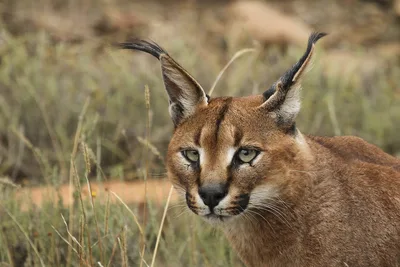 Caracal
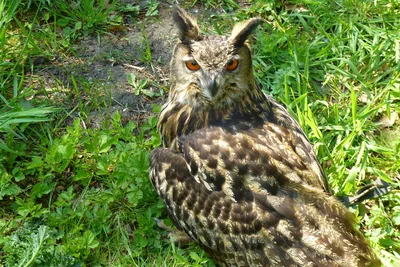 Eurasian eagle-owl
- domestic dogs
Ecological equivalents
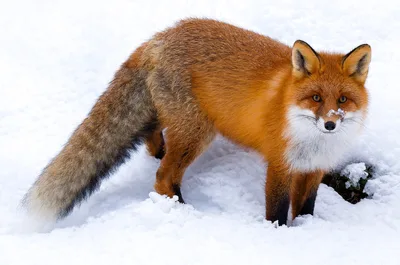
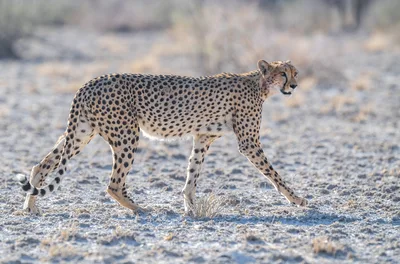
Related species on this site
Abyssinian (same genus), African wildcat (same genus), American Wirehair (same genus), Australian Mist (same genus), Balinese (same genus), Birman (same genus), and more.
Mammals
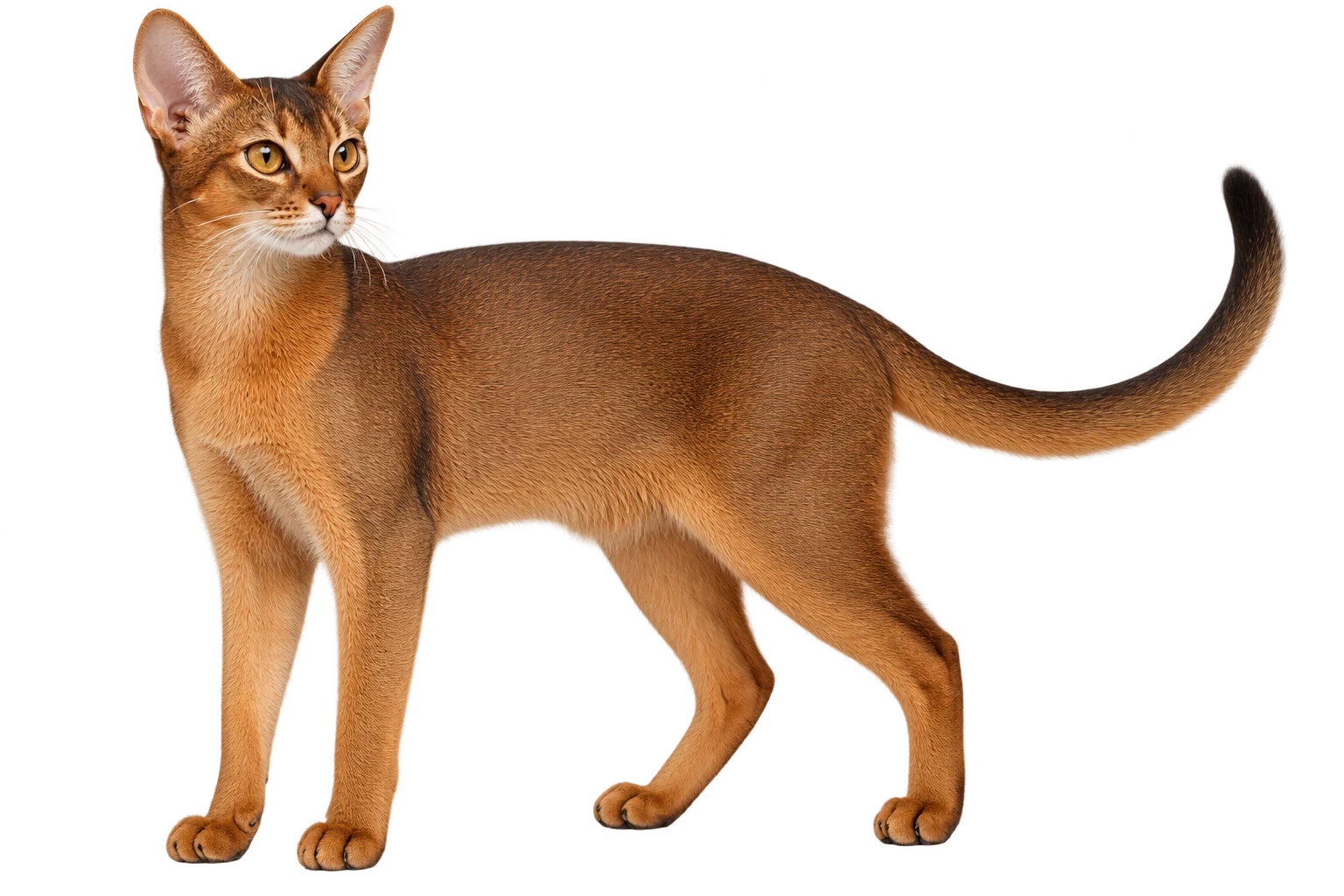
Abyssinian
Felis catus
Classification and source reference
LivingAI illustration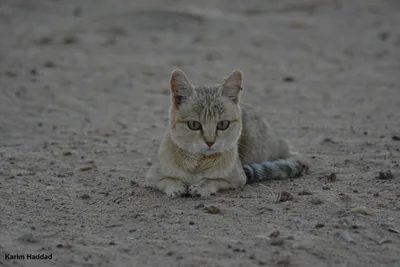 LC
Mammals
African wildcat
Felis lybica
The African wildcat is a small striped cat of dry Africa and Asia, and the ancestor of every domestic cat.
Living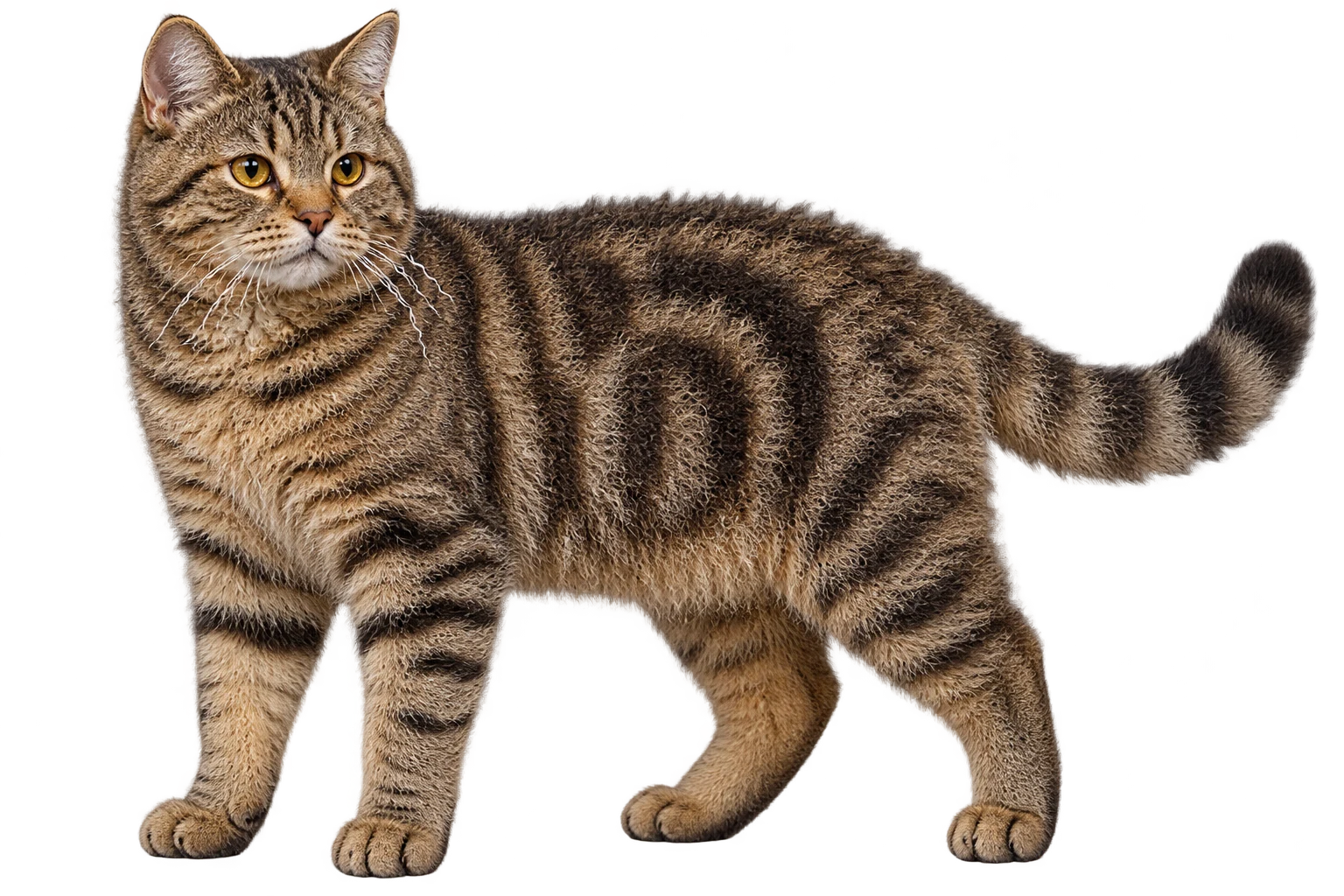
Mammals
American Wirehair
Felis catus
Classification and source reference
LivingAI illustration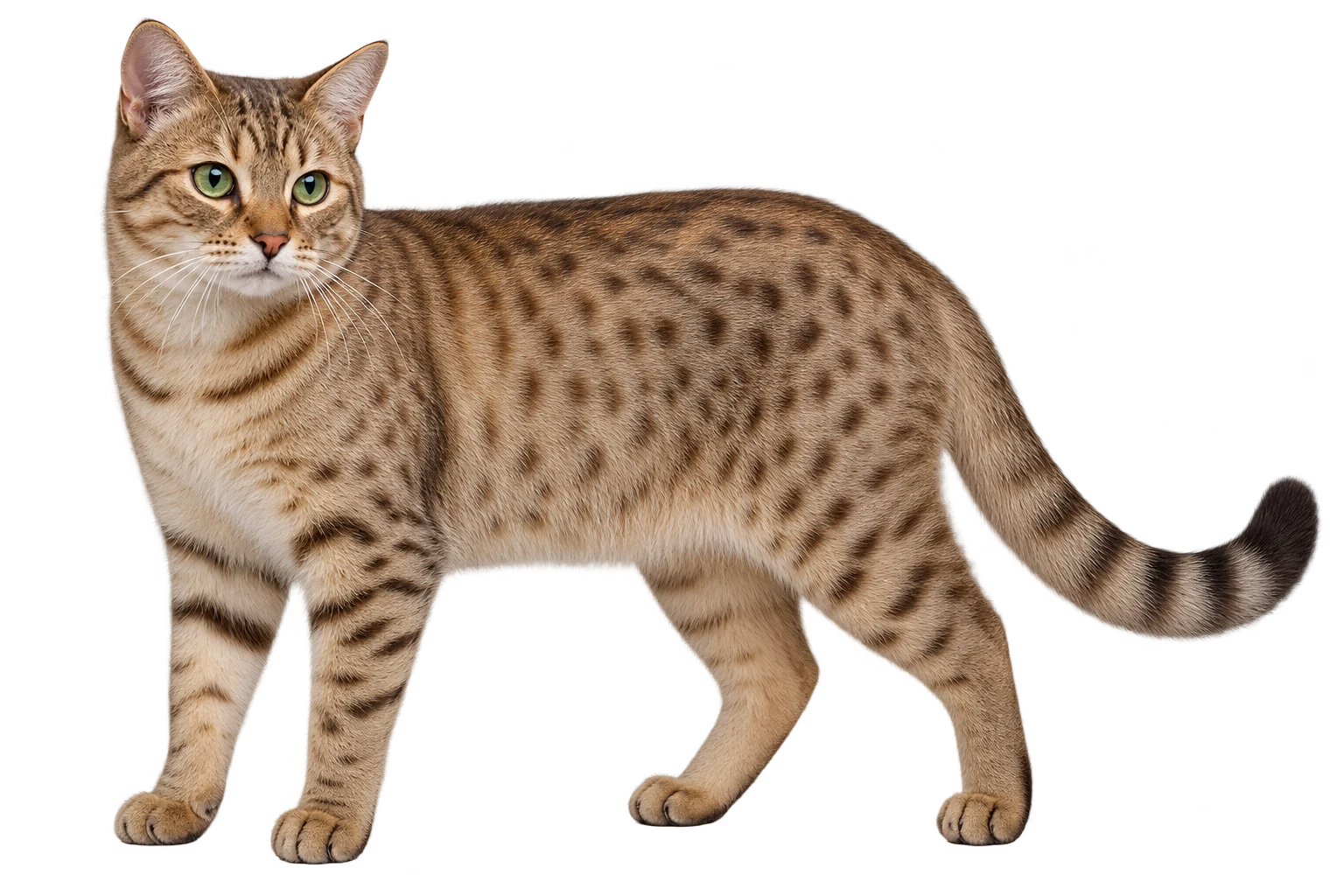
Mammals
Australian Mist
Felis catus
Classification and source reference
LivingAI illustration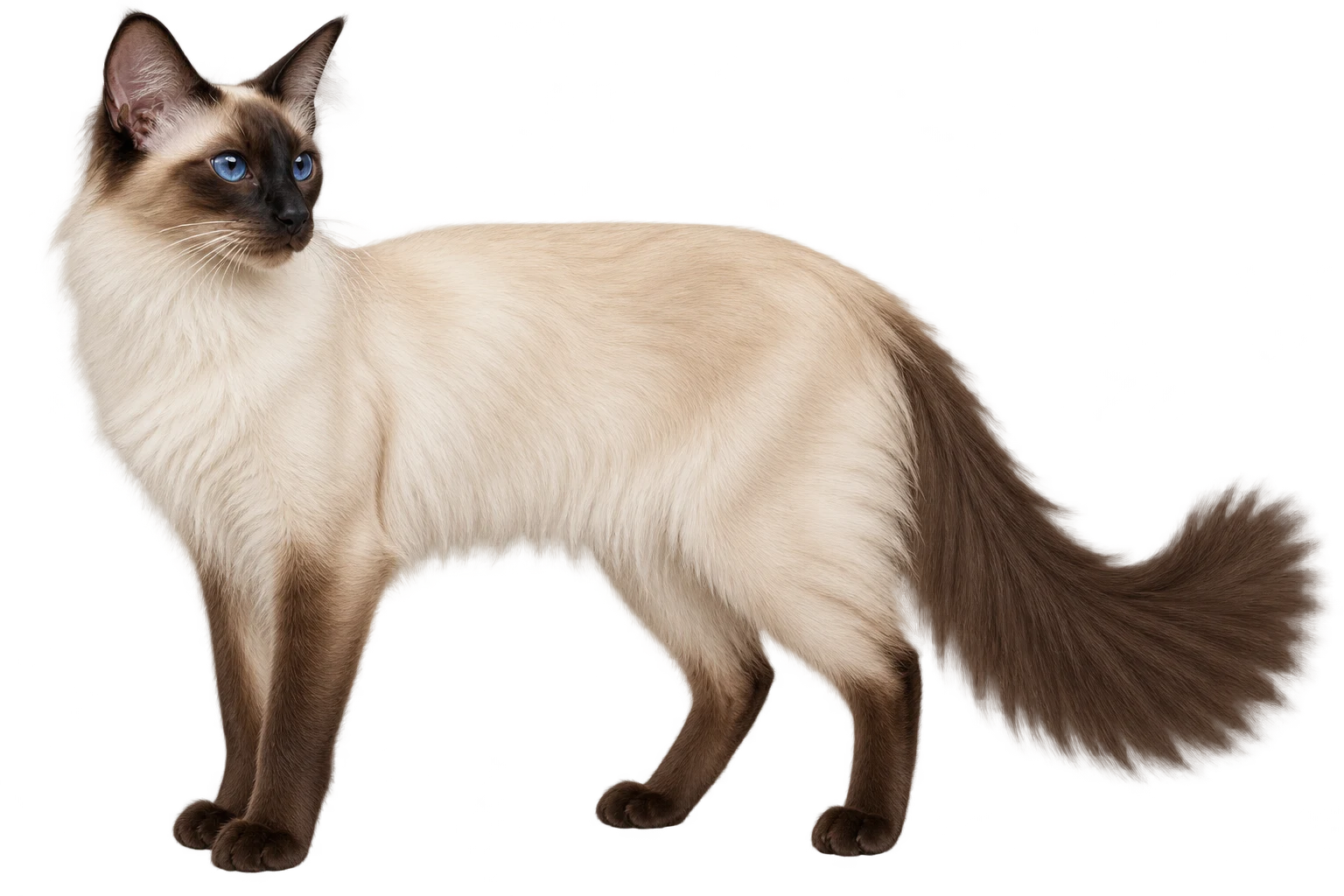
Mammals
Balinese
Felis catus
Classification and source reference
LivingAI illustration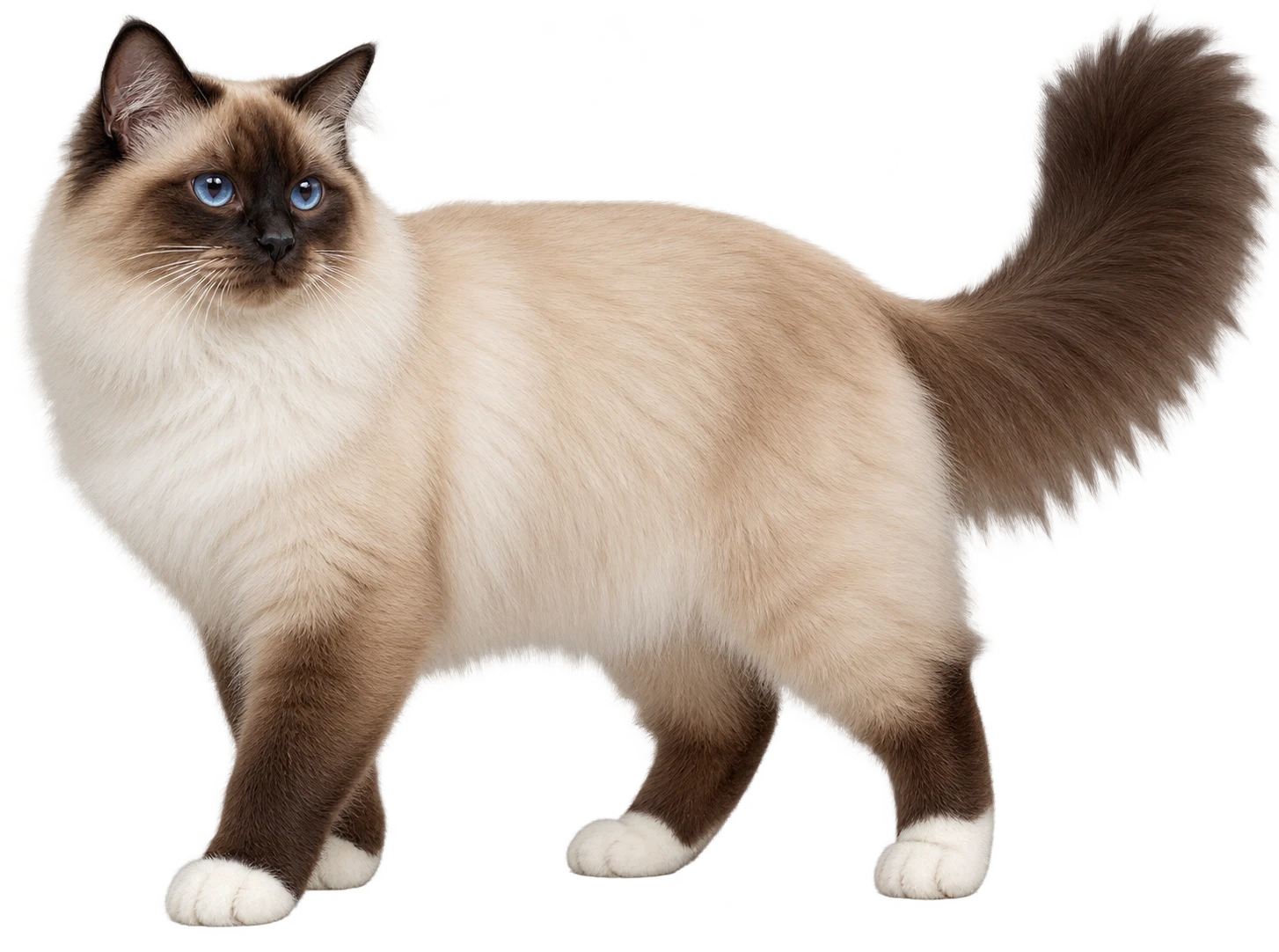
Mammals
Birman
Felis catus
Classification and source reference
LivingAI illustration