Living individuals or members of this group exist today. This does not mean they are safe from extinction.
Meet the cheetah
The cheetah is the fastest land animal. Its light frame, long legs and flexible spine let it reach full speed in about three seconds on the open plains of Africa.
Images of the cheetah
Lifespan in the wild
Up to 8 years
Weight
21 to 65 kg
Length
1.12 to 1.5 m
Top speed
93 to 104 km/h
Fact file
Cheetah
- Location
- Eastern and southern Africa; a small population in Iran
- Habitat
- Savanna, Grassland, Desert
- Diet
- Carnivore
- Prey / food
- Gazelle, impala, hares, young wildebeest
- Predators
- Lions, leopards and hyenas take cubs and kills
- Lifestyle
- Diurnal
- Group name
- Coalition
- Name of young
- Cub
- Gestation
- About 93 days
- Litter size
- 3 to 5 cubs
- Population
- About 7,000 in the wild
- Biggest threat
- Habitat loss and the illegal pet trade
- Distinctive feature
- Black tear marks from the eyes to the mouth
- Colour
- Tan with black spots
- Skin type
- Fur
Size
Next to a person
Measurements
Size and speed
- Height
- 67 to 94 cm at the shoulder
- Length
- 1.12 to 1.5 m head and body
- Tail
- 60 to 80 cm
- Weight
- 21 to 65 kg
- Top speed
- 93 to 104 km/h in a sprint
Typical adult ranges. Sources: Wikipedia, Animal Diversity Web.
Life cycle
Lifespan
- In the wildUp to 8 years
- In captivityUp to 20.5 years
- 020.5 years
The pale bar is the record. Sources: Animal Diversity Web, AnAge.
Appearance
Colour and coat
- Primary colours
- tawnyblack
- Secondary colours
- whitebuff
- Skin type
- fur
- Male and female
- Slight. Males average a little larger and heavier than females and carry a more obvious neck mane. The coat pattern is the same in both sexes.
Life cycle
Mating and family
- Mating system
- promiscuous, with females mating with several males
- Social structure
- solitary females with cubs; males alone or in life-long coalitions of brothers
- Breeding
- one litter about every 17 to 20 months
Cheetahs breed all year. A female carries her cubs for about 93 days and gives birth to three or four in a hidden lair. She keeps them hidden for eight weeks, then they follow her and learn to hunt on live prey she brings. Cubs leave at about 20 months. Most cubs die young, and a wild cheetah rarely lives beyond 8 years.
Classification
Taxonomy
- Kingdom
- Animalia
- Phylum
- Chordata
- Class
- Mammalia
- Order
- Carnivora
- Family
- Felidae
- Genus
- Acinonyx
- Species
- Acinonyx jubatus
Conservation
Red List status
- LC
- NT
- VU
- EN
- CR
- EW
- EX
Vulnerable on the IUCN Red List
Range
Recorded in 15 countries
- Angola
- Benin
- Botswana
- Ethiopia
- Iran
- Kenya
- Malawi
- Mozambique
- Namibia
- Niger
- Chad
- Tanzania
- South Africa
- Zambia
- Zimbabwe
Habitat layer: tropical grassland, savanna and shrubland, temperate grassland, savanna and shrubland, desert and xeric shrubland.
Countries from 4,040 wild records on GBIF (iNaturalist research grade), filtered and checked by hand. Country shapes: Natural Earth. Habitat: RESOLVE Ecoregions 2017, CC BY 4.0. Basemap: Natural Earth.
Habitats
Three things to know
- 1
A cheetah cannot roar. It chirps and purrs instead.
- 2
A chase lasts about 20 to 30 seconds before the cheetah tires.
- 3
The claws only partly retract, which gives grip like running spikes.
Did you know
Seven more facts
- 1
The tail acts as a rudder in the chase, and its thick fur adds 40% to its working surface.
- 2
A cheetah's thigh muscles are 50% heavier than expected for a mammal of its size.
- 3
A famous figure of 114 kilometres per hour came from a faulty measurement, and the best reliable record is 104.
- 4
Cheetah mummies between 4223 and 127 years old have been found in a cave in Saudi Arabia.
- 5
In the Serengeti a cheetah catches 70% of the Thomson's gazelles it chases, while a lion succeeds 26% of the time.
- 6
A cheetah's canines are small, but its jaws have the highest scaled bite force at the canines of any cat.
- 7
iNaturalist holds 7,376 observations of the species, and GBIF has records from 46 countries.
Field notes
How it looks and acts
Field notes
Distinguishing features
- Black tear streaks from the eyes to the corners of the mouth, found in no other cat.
- Solid round black spots on a tawny coat, unlike the rosettes of a leopard.
- A small round head, a deep chest and very long thin legs.
- A tail of 60 to 80 centimetres with dark rings near the end and a white tip.
- Blunt claws that only partly retract, plus a sharp curved dewclaw.
- A short rough mane along the neck, longer and greyer in cubs.
Field notes
Unique adaptations
- A long flexible spine adds up to 76 centimetres to each stride.
- Half the hind-limb muscle is fast-twitch fibre, which gives a sprint of 93 to 104 kilometres per hour.
- Large nasal passages and the biggest frontal sinuses of any cat cool the air it breathes.
- Blunt claws grip the ground like running spikes, and the dewclaw hooks fleeing prey.
- Blade-like cheek teeth let it strip meat fast before a lion or hyena arrives.
Field notes
Interesting behaviours
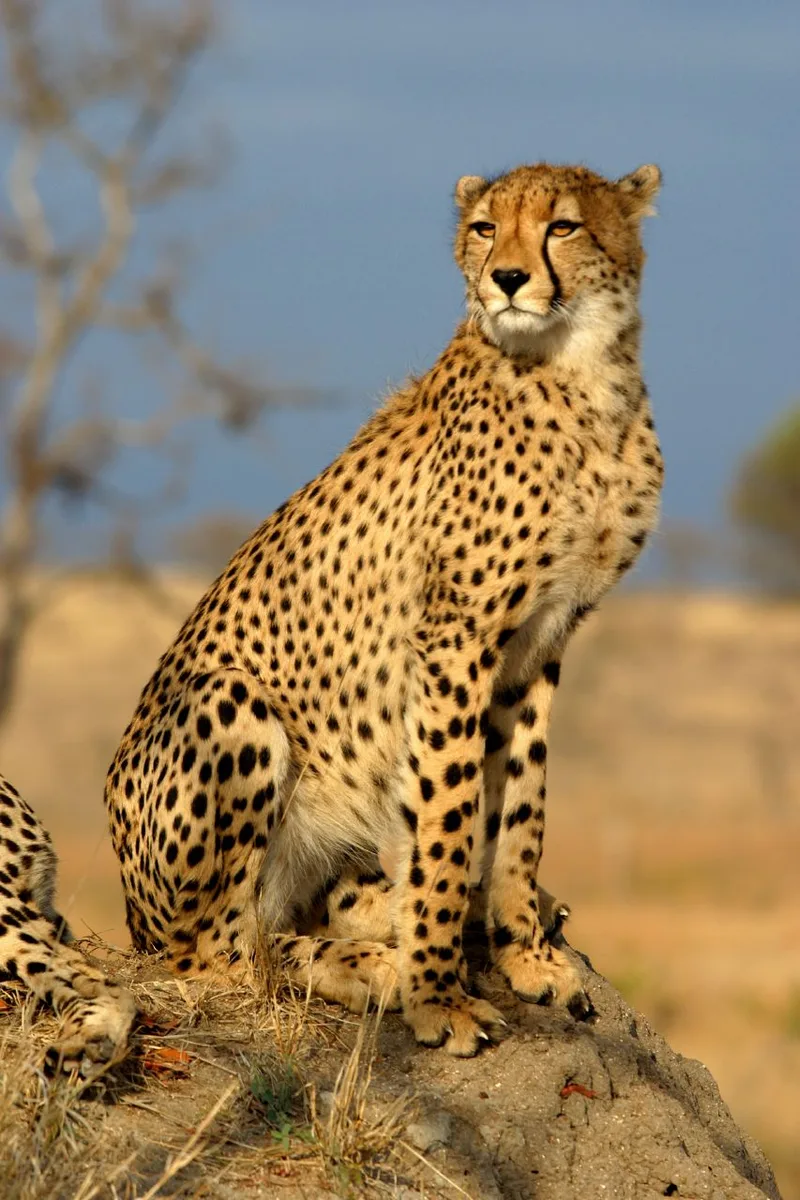
- Watches for prey from termite mounds, low branches and other high points.
- Hunts mainly by day, which keeps it away from lions and hyenas.
- Rests and pants for 20 to 30 minutes after a kill before eating.
- Moves cubs to a fresh hiding place every five or six days.
- Male coalitions groom each other and call when one is lost.
Field notes
Temperament
- Shy and non-confrontational, it usually gives up a kill rather than fight a lion or hyena.
- Amicable within a coalition, with brothers resting in contact and grooming each other.
- Females avoid each other and stare from a distance rather than meet.
- Tame enough that ancient nobles trained wild-caught adults for hunting.
Field notes
Communication
- Chirps and yelps to call cubs or coalition partners, with the yelp carrying 2 kilometres.
- Purrs loudly in greeting and when grooming.
- Bleats in distress, and growls or hisses while slapping the ground with a paw.
- Sprays urine on trees and rocks at shared marking points, which other cheetahs visit and answer.
- Sniffs faces and rubs cheeks at friendly meetings.
Ecology
Ecological role
The cheetah is a daytime predator of gazelles and small antelope on open plains, and it feeds many scavengers.
- Takes mainly young and weak animals, which probably keeps gazelle herds healthy.
- Loses 9% to 14% of its kills to lions, leopards, hyenas and vultures.
- Fills the daytime hunting niche that nocturnal lions and hyenas leave open.
- Its density stays stable when lion numbers rise, unlike the African wild dog.
Stories
Myths and legends
- In ancient Egyptian tradition, the goddess Mafdet took the form of a cheetah and cheetahs carried away the spirits of dead pharaohs.
- In Roman tradition, the cheetah was a hybrid of leopard and lion, an idea drawn from the cub's mane.
- In Shona tradition in Zimbabwe, the king cheetah was nsuifisi, the offspring of a leopard and a hyena.
- In Greek tradition as painted by Titian, cheetahs draw the chariot of the god Dionysus.
People
Relationship with humans
People
Living alongside us
People have tamed cheetahs for hunting since the Sumerians and the pharaohs, and Mughal emperors kept them by the hundred. The species was never bred in numbers, so every hunting cheetah came from the wild. Today farmers in Namibia and Botswana trap and shoot cheetahs that take livestock. Cubs are smuggled from the Horn of Africa for the pet trade. Wild cheetahs have never killed a person.
- There is no documented case of a wild cheetah killing a person.
- Captive cheetahs killed a woman in Belgium in 2007 and a child in South Africa in 2017.
- A cheetah runs from danger rather than fighting, even to protect its own kill.
People
Status, uses and products
- Domestication
- Wild
- As a pet
- Not suitable. Cheetahs are tamed easily, which is why the pet trade drains cubs from the Horn of Africa. But they breed poorly, fall ill under stress and need kilometres of open ground to run. Keeping one is illegal in most countries.
- Uses
- ecotourismzoo exhibitioncoursing game in the past
- Products
- skins
The full account
About the cheetah
The cheetah, Acinonyx jubatus, is the fastest land animal and the only living member of its genus. In a sprint it reaches 93 to 104 kilometres per hour. A light frame, long legs, a flexible spine and heavy thigh muscles serve that burst. It is a slim, spotted cat with a small round head and a black streak from each eye to the mouth. Adults weigh 21 to 65 kilograms and stand 67 to 94 centimetres at the shoulder.
Cheetahs live in small scattered populations across eastern, southern and northwestern Africa, with a few dozen left in Iran. They hunt by day on open ground and take gazelles, impala and other prey under about 40 kg. Females raise their cubs alone, while brothers often stay together for life in a coalition. The IUCN rates the species Vulnerable, and about 7,000 remain in the wild. Loss of habitat, conflict with farmers and the illegal pet trade drive the decline.
Name and taxonomy
The word cheetah comes from Hindi and Urdu, and before that from a Sanskrit word for spotted or painted. Older English writers called it the hunting leopard. Johann Christian Daniel von Schreber described the species in 1777 from a skin taken at the Cape of Good Hope. He called it Felis jubatus, and jubatus is Latin for maned. Joshua Brookes proposed the genus Acinonyx in 1828, a name that probably means fixed claw.
Pocock once gave it a subfamily of its own because it looked so like a greyhound. It now sits in Felinae, the small cats, rather than with the roaring cats of Panthera. In 2017 the IUCN Cat Specialist Group accepted four subspecies. One of them, A. j. venaticus, is the Asiatic cheetah of Iran, and it is rated Critically Endangered on its own. The king cheetah, with blotched spots and stripes down the back, was named a species in 1927 but is only a colour form.
Evolution and relatives
The cheetah's nearest relatives are the cougar and the jaguarundi of the Americas. These three form the Puma lineage, which split from the other cats about 6.7 million years ago. The oldest cheetah fossils are African and 3.5 to 3 million years old, and they belong to larger, slower forms. The modern species turns up in the African record about 1.9 million years ago. A giant cheetah, A. pardinensis, lived across Eurasia and Africa, and a smaller one, A. intermedius, ranged from Europe to China.
North America once had cheetah-like cats, now placed in the genus Miracinonyx. They are closer to the cougar than to the cheetah, so their long legs evolved in parallel. The cheetah went through two population bottlenecks, about 100,000 years ago and again 10,000 to 12,000 years ago. As a result its genetic variation is only 0.1% to 4% of that in an average living species. Skin grafts between unrelated cheetahs heal as if the animals were twins.
Appearance
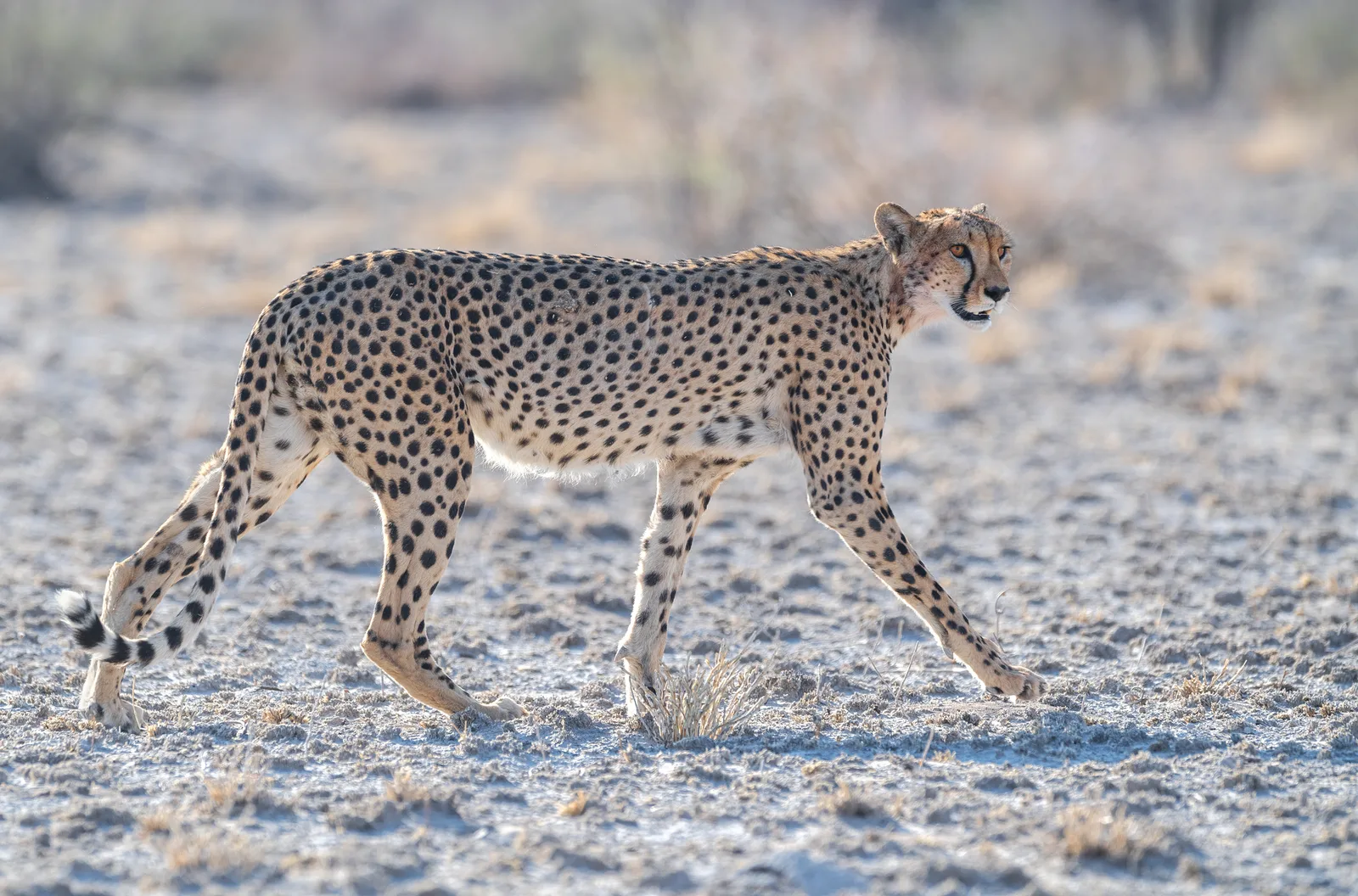
The cheetah has a slim body, a deep chest, long thin legs and a small head with a short muzzle. The head and body measure 112 to 150 centimetres, and the tail adds 60 to 80 cm. Shoulder height is 67 to 94 cm, and adults weigh 21 to 65 kilograms, with males a little heavier than females. The coat is tawny to pale buff, darker along the middle of the back, with a white chin, throat and belly. Around 2,000 solid black spots, each 3 to 5 cm across, cover the rest of the body. Every cheetah has its own spot pattern.
A black tear streak runs down from each eye to the side of the mouth. No other cat has them, and they may cut the sun's glare or sharpen facial expressions. The ears are small and round, with a black patch behind each. A short rough mane runs along the neck and shoulders, more obvious in males. The last third of the tail carries four to six dark rings and ends in a white tuft.
A leopard has rosettes instead of solid spots and no tear streaks. Cubs wear a long grey mantle of hair down the back that fades as they grow. The claws only partly retract and have no sheath, so they stay blunt, but the dewclaw is sharp.
Habitat and range
In eastern and southern Africa the cheetah lives mainly on savanna such as the Serengeti and the Kalahari. Further north it uses dry mountain ranges and valleys, and in the Sahara it favours high ground with a little more rain. In Iran it lives in hilly desert up to 2,000 to 3,000 metres, where rainfall stays under 100 millimetres a year. It wants open ground with good views, some scattered cover and few lions. It seldom enters tropical forest.
In prehistory the cheetah ranged across Africa and western and central Asia. It has now gone from most of that area, and as of 2017 it held just nine per cent of its former African range. India lost its last wild cheetahs in 1947, when a maharaja shot three in one night. In 2022 eight cheetahs from Namibia were released into Kuno National Park in India as the start of a reintroduction. GBIF holds records from 46 countries, but that count includes zoos and old records, not the living range.
Cheetahs live at low density, usually 0.3 to 3.0 adults per 100 square kilometres. That is only 10% to 30% of the density reported for lions and leopards in the same places. Female home ranges in central Namibia run from 554 to 7,063 square kilometres, because prey there is thin.
Diet and hunting
The cheetah hunts small and medium prey of 20 to 60 kilograms, and most kills weigh under 40 kg. Thomson's gazelle is the main prey in the Serengeti, impala in the woodlands, springbok in the dry south and dama gazelle in the Sahara. Hares, guineafowl and other birds fill in when antelope are scarce. Only male coalitions and mothers with cubs try for bigger animals such as wildebeest or nyala. In Namibia it is the main predator of livestock, which is the root of its conflict with farmers.
The cheetah hunts by sight and by day, often scanning from a termite mound or a low branch. With cover it stalks to about 30 metres, and without it, the chase can start from 60 to 200 metres. A chase averages 37.9 seconds and 173 metres, and the longest run measured was 559 metres. It uses top speed only to close the gap, then follows the prey through three or four zigzag turns. At the end it hooks a leg or the rump with the sharp dewclaw, and the prey falls.
Large prey dies from a throat hold that lasts about 5 minutes, small prey from a bite to the nape or skull. After the kill the cat pants beside it for 20 to 30 minutes before it can eat. That pause is when lions, leopards and hyenas steal the meal. A cheetah loses 9% to 14% of its kills that way, and it rarely fights back. It eats about 4 kg a day on average but can take 10 kg in two hours. Hunting success runs at 25% to 40%, and reaches 70% on Thomson's gazelles in the Serengeti.
Behaviour and social life
The cheetah is mostly active by day, with peaks after dawn and before dusk. That schedule keeps it clear of lions and hyenas, which hunt mainly at night. Where those predators are absent, as on Namibian farmland or in the Sahara, it hunts more at night, especially by moonlight. Groups rest in grassy clearings and take turns keeping watch from raised ground.
Cheetahs live in three kinds of group: a mother with cubs, a male coalition, or a lone male. Females do not defend a territory and roam large home ranges after prey. Two females that spot each other will sit and stare from up to 2 kilometres apart until one walks off. Males, usually brothers from one litter, form coalitions that hold a small territory for life. In the Serengeti about 30% of coalition members are unrelated males that were let in. Coalition males groom each other, call when separated and share kills without much fuss.
A coalition of three in Kruger National Park held 126 square kilometres, and a lone male there held 195. Around 40% of Kalahari males live alone, and some drift between territory and nomad life as females move. Territorial males are healthier and live longer than the nomads. A study in the Kalahari found cheetahs moving nearly 11 kilometres a day on average.
Communication and senses
The cheetah cannot roar, but it is one of the most vocal cats. Its chirp is a short bird-like call, used when excited at a kill, in greeting and by mothers calling hidden cubs. A louder yelp carries up to 2 kilometres and helps mothers and cubs find each other. It purrs like a house cat but much louder, when content or grooming a companion. Growls, hisses and moans come with hard slaps of a front paw on the ground. A bleat means distress, for example when a hyena has just taken the kill.
Scent carries the long-distance messages. A male sprays urine on tree trunks, stumps and rocks, and other cheetahs sniff the spot and add their own. Marking peaks in females in heat, and their scent draws males from far away. Ranchers in Botswana set traps at these marking trees. Close up, cheetahs sniff faces, lick cheeks and rub heads, and the tear streaks make expressions easy to read. The dark rings on the tail probably help cubs follow their mother through grass.
Reproduction and life cycle
Cheetahs breed all year, with a birth peak in the Serengeti rainy season. A female cycles about every 12 days and ovulates only after mating. Males fight over her, and she may mate with more than one. A pair mates three to five times a day for two or three days, then parts. Gestation lasts about 93 days.
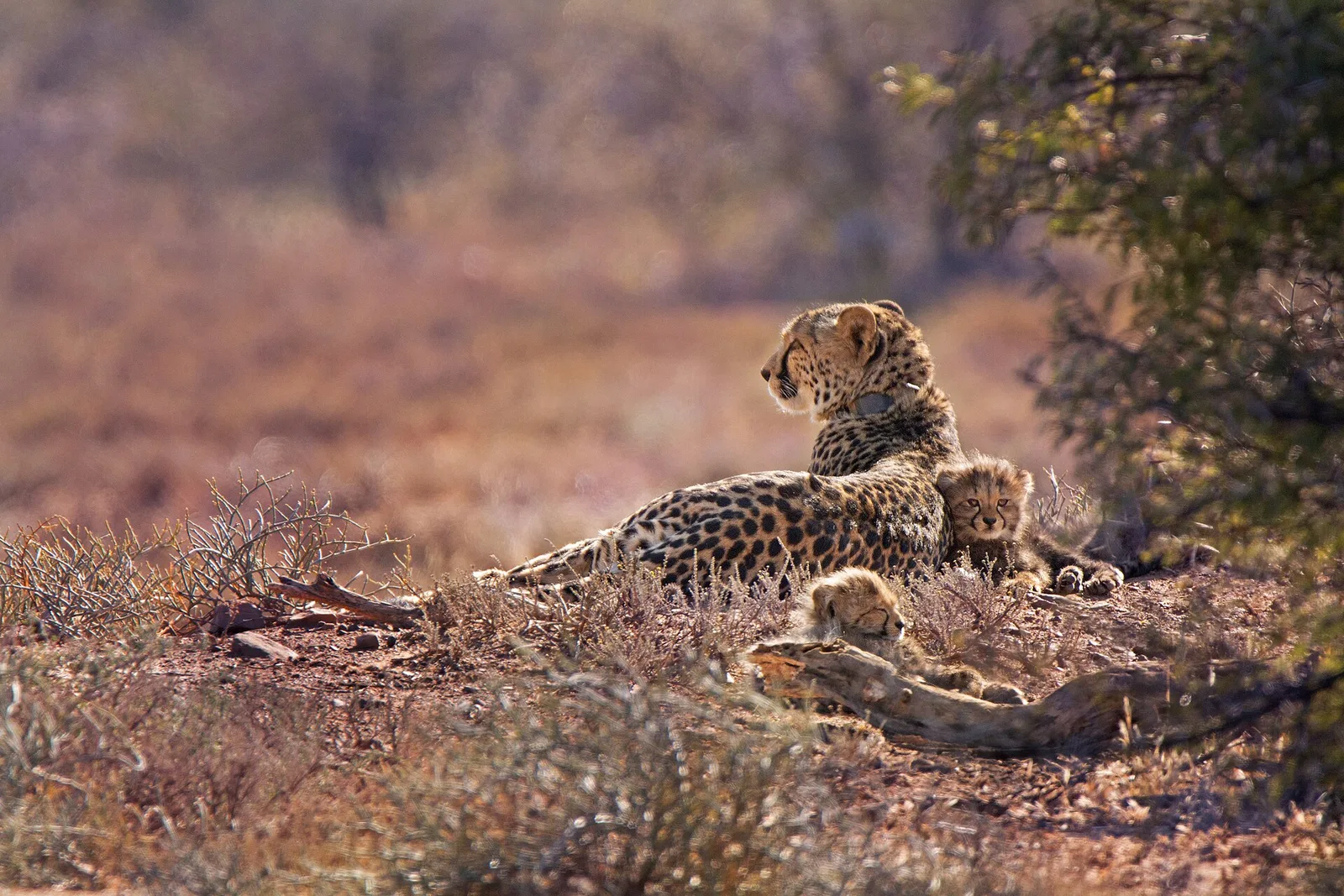
The litter is large for a cat: three or four cubs is usual, and up to six in the wild. A wild cub weighs 150 to 300 grams at birth, and its eyes open at 4 to 11 days. The mother hides the cubs in thick grass, a thicket or a rocky spot for about eight weeks. She moves them every five or six days and stays within 1 kilometre of the lair. The grey mantle on a cub's back may make it look like a honey badger, an animal predators avoid.
At two months the cubs follow their mother and start on meat. Weaning ends at four to six months, and she brings them live prey to practise on. Cubs chase hares and fawns from six months but may not make a kill of their own until 15 months. They leave their mother at around 20 months, and siblings stay together a few months more. Females first breed at two to three years and wait 17 to 20 months between litters. A wild cheetah rarely lives past 8 years, and the captive record is 20.5.
Predators and threats
Lions, leopards and spotted hyenas kill cheetah cubs, and cub mortality is the highest of any cat not hunted by people. In the Serengeti, predators caused 58.3% of cub deaths, and in the Kgalagadi Transfrontier Park 88.9%. Only about a third of cubs reach independence. Adults usually run rather than fight, and they give up kills to lions and hyenas. A leopard killed an adult cheetah during one study in Iran.
The larger threats come from people. Farms, industry and bush encroachment eat into the open habitat the cheetah needs. About 76% of its range lies outside protected land, so farmers in Namibia and elsewhere shoot or trap cheetahs that take stock. Cubs are smuggled out of the Horn of Africa for the pet trade, and some Maasai still use skins in ceremonies. Cars kill cheetahs on roads through Iranian reserves. Low genetic variation leaves the species open to disease.
Population and conservation
The IUCN Red List rates the cheetah Vulnerable. The world population was put at about 7,100 mature animals in 2016 and 6,517 in 2021. The largest group, close to 4,000, is spread thinly across six countries of southern Africa, from Angola to Mozambique. Kenya and Tanzania hold about 1,000 more. Every other population has fewer than 100 animals, and the Asiatic cheetah in Iran fell to 43 by 2016.
Sub-Saharan Africa held an estimated 15,000 cheetahs in 1975, after the first proper survey. South Africa lists the species as Vulnerable, and the Mediterranean population is rated Endangered. CITES Appendix I bans commercial trade, though Namibia, Zimbabwe and Botswana keep small annual quotas. The United States lists the cheetah as Endangered.
The Cheetah Conservation Fund, founded in Namibia in 1990, runs research, farmer education and the only cheetah genetics lab. A range-wide programme for cheetahs and wild dogs began in 2007 under the IUCN specialist groups. Iran launched its Asiatic cheetah project in 2001 and marks a National Cheetah Day on 31 August. Malawi brought cheetahs back in 2017, and India's Kuno cheetahs had produced 17 cubs by 2024, though 12 animals had died.
Relationship with humans
The cheetah has been tamed for thousands of years, though never truly domesticated. Egyptians, Sumerians and Assyrians kept hunting cheetahs, and a Sumerian seal of about 3000 BC may show one on a leash. New Kingdom pharaohs walked cheetahs on collars, and Egyptians believed the animal carried a dead king's spirit away. Arab, Persian and Indian nobles rode to the hunt with a hooded cheetah on the saddle and let it go near the game. The Mughal emperor Akbar is said to have kept 1000 cheetahs, and only one ever gave birth.
London Zoo took the first captive cheetah in 1829, and early zoo animals lived just three or four years. In 2014 there were about 1730 captive cheetahs in the world, 87% of them born in captivity. Captive breeding is hard: Serengeti females bred with 95% success against 20% for North American zoo cheetahs. Stress makes captive cheetahs ill, so zoos give them space and handle them little.
No wild cheetah has ever been recorded killing a person. Captive cheetahs have killed twice: a woman in a Belgian zoo in 2007, and a small child on a South African farm in 2017. Cheetahs draw tourists, but farmers shoot them as pests where they take goats and calves.
In culture and myth
The oldest known pictures of cheetahs are in the Chauvet Cave in France, painted 32,000 to 26,000 years BC. In ancient Egypt the goddess Mafdet, worshipped in the First Dynasty, was sometimes shown as a cheetah. Rock carvings of cheetahs at Twyfelfontein in Namibia are 2000 to 6000 years old. The Romans took the cheetah for a leopard-lion hybrid, misled by the cub's mane. A fourth century mosaic from Lod in Israel shows a Roman hunting cheetah.
Tang dynasty paintings show cheetahs on leashes and riding on horses, and Chinese emperors gave them as gifts. In Manicaland, Zimbabwe, people called the king cheetah nsuifisi and believed a leopard had bred with a hyena. Titian painted two cheetahs pulling the chariot of Bacchus in the 16th century. George Stubbs recorded a cheetah given to King George III in 1764, hooded and held by two Indian attendants.
Today the cheetah stands for speed, grace and fragility in advertising and animation. In Iran the Asiatic cheetah has become a symbol of rarity and survival, and it appears in public campaigns. Spirit-animal writers link it to adaptability and quick decisions, but that seems to be modern invention rather than folklore.
A sentence with a dotted underline is inferred: it describes the group the animal belongs to, or is a reading of the sources, rather than a measured or reported fact about this species.
Questions
Cheetah questions, answered
How fast can a cheetah run?
A cheetah sprints at 93 to 104 kilometres per hour, and 104 km/h is the best reliable record. It reaches 97 km/h in under 3 seconds. It keeps that pace for only a few hundred metres.
How long can a cheetah keep up its top speed?
Not long. An average chase lasts 37.9 seconds and covers 173 metres, and the longest measured run was 559 metres. After that the cat must rest and pant for 20 to 30 minutes.
How big is a cheetah?
The head and body measure 112 to 150 centimetres, with a tail of 60 to 80 cm. It stands 67 to 94 cm at the shoulder and weighs 21 to 65 kilograms.
What do cheetahs eat?
Mostly gazelles, impala, springbok and other antelope under 40 kilograms. They also take hares, guineafowl and the calves of larger animals. In Namibia they kill goats and calves on farms.
Are cheetahs endangered?
The IUCN lists the cheetah as Vulnerable, one step below Endangered. About 7,000 remain in the wild, and the Asiatic cheetah in Iran is down to a few dozen animals.
Where do cheetahs live?
Mainly on the savannas and dry plains of eastern and southern Africa, with small groups in the Sahara and northwest Africa. A tiny population survives in the deserts of Iran. A few were released in India in 2022.
How long do cheetahs live?
A wild cheetah rarely lives beyond 8 years, and most cubs die in their first months. In captivity the record is 20.5 years.
Can a cheetah roar?
No. The cheetah chirps, yelps, purrs, growls and bleats, but its throat cannot produce a roar. Its yelp can be heard 2 kilometres away.
Why do cheetahs have tear marks?
The black streaks from the eyes to the mouth are unique to the cheetah. They may cut the glare of the sun or make facial expressions clearer at close range. Nobody has proved either idea.
What is the difference between a cheetah and a leopard?
A cheetah is slim with solid round spots, black tear streaks and long thin legs. A leopard is heavier, has rosettes rather than spots and no tear streaks. Leopards climb and hunt at night, while cheetahs run and hunt by day.
Do cheetahs live in groups?
Females live alone with their cubs. Males often form coalitions, usually of brothers, that stay together for life and hold a territory. Some males live alone.
How many cubs does a cheetah have?
Usually three or four, and up to six in the wild. Gestation lasts about 93 days. Only about a third of cubs survive to independence.
Are cheetahs dangerous to humans?
Wild cheetahs are not known to have killed anyone. Two people have died from captive cheetahs, in Belgium in 2007 and South Africa in 2017.
Why can cheetahs not retract their claws?
The claws retract only partly and have no sheath, so they stay out and blunt. That gives grip on a fast turn, like running spikes. The dewclaw on each front leg stays sharp and hooks the prey.
What is a king cheetah?
A king cheetah has blotched spots that merge into three dark stripes down the back. It comes from a recessive gene, the same one that makes a blotched tabby cat. It was named a separate species in 1927 but is only a colour form.
Can you keep a cheetah as a pet?
No. Cheetahs tame easily, which fuels an illegal cub trade from the Horn of Africa. They breed badly and fall ill in captivity, and most countries ban private ownership.
Food web
Prey and food
- gazelle
- impala
- hares
- wildebeest
 Common ostrich
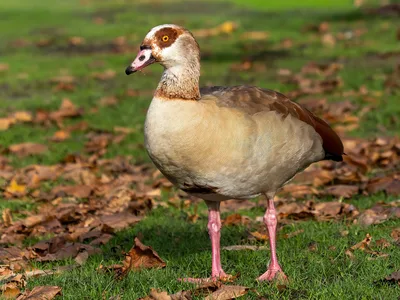 Egyptian goose
Food web
Predators
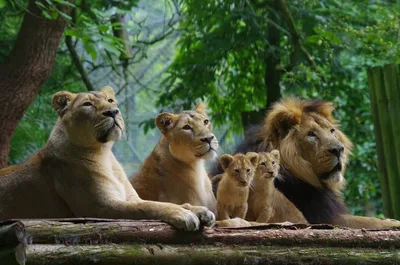 Lion
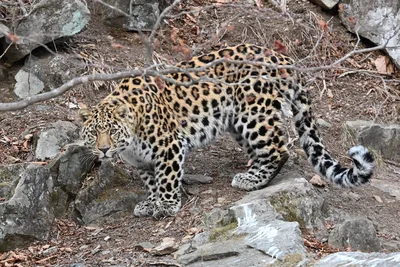 Leopard
Ecological equivalents
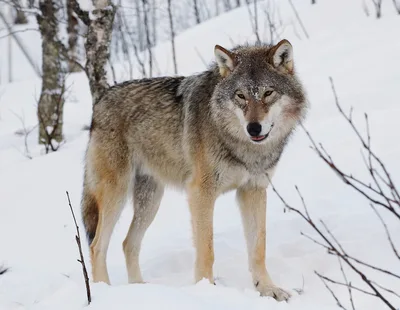
Related species on this site
Abyssinian (same family), African Golden Cat (same family), African wildcat (same family), American Wirehair (same family), Amur Leopard (same family), Australian Mist (same family), and more.
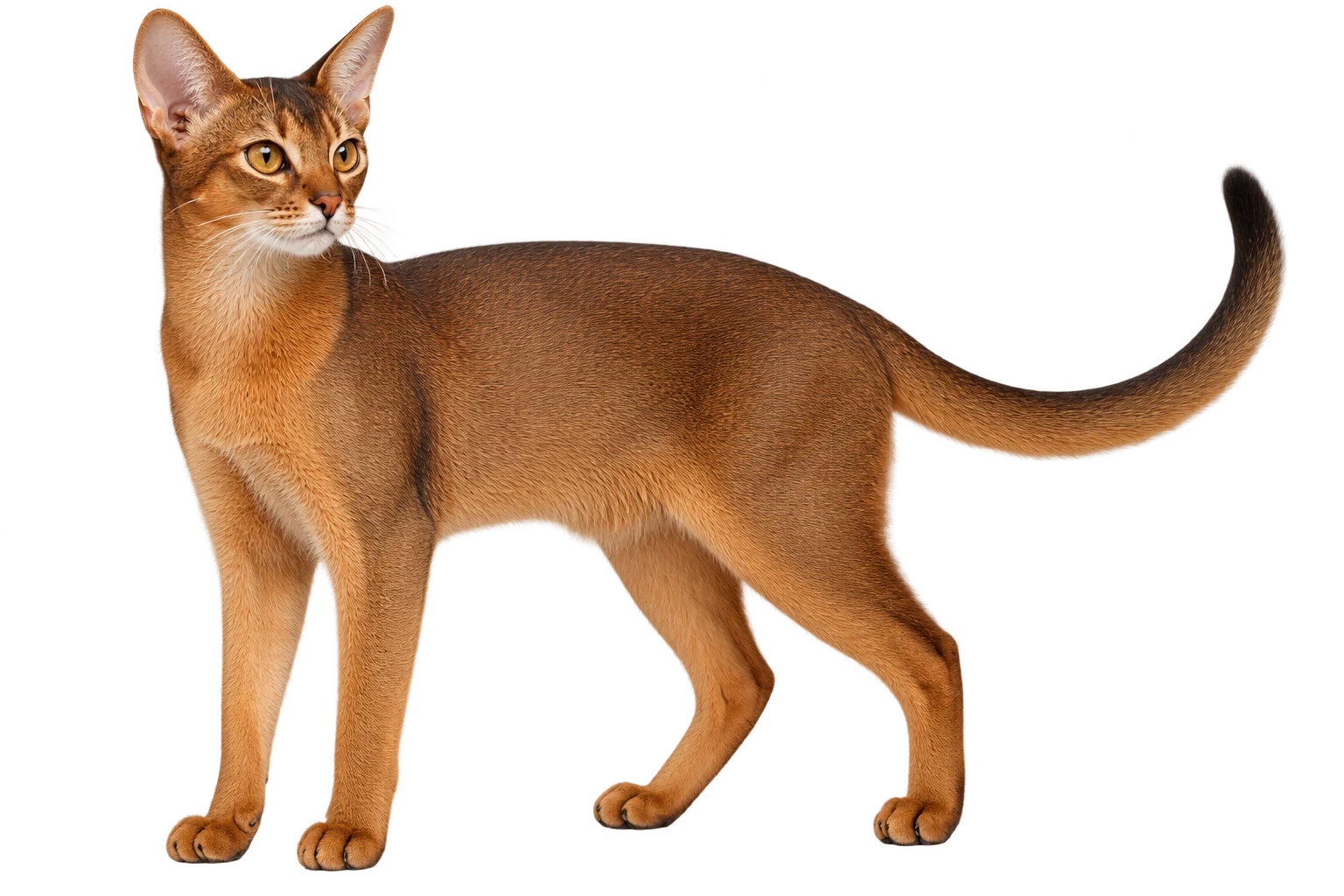
Mammals
Abyssinian
Felis catus
Classification and source reference
LivingAI illustration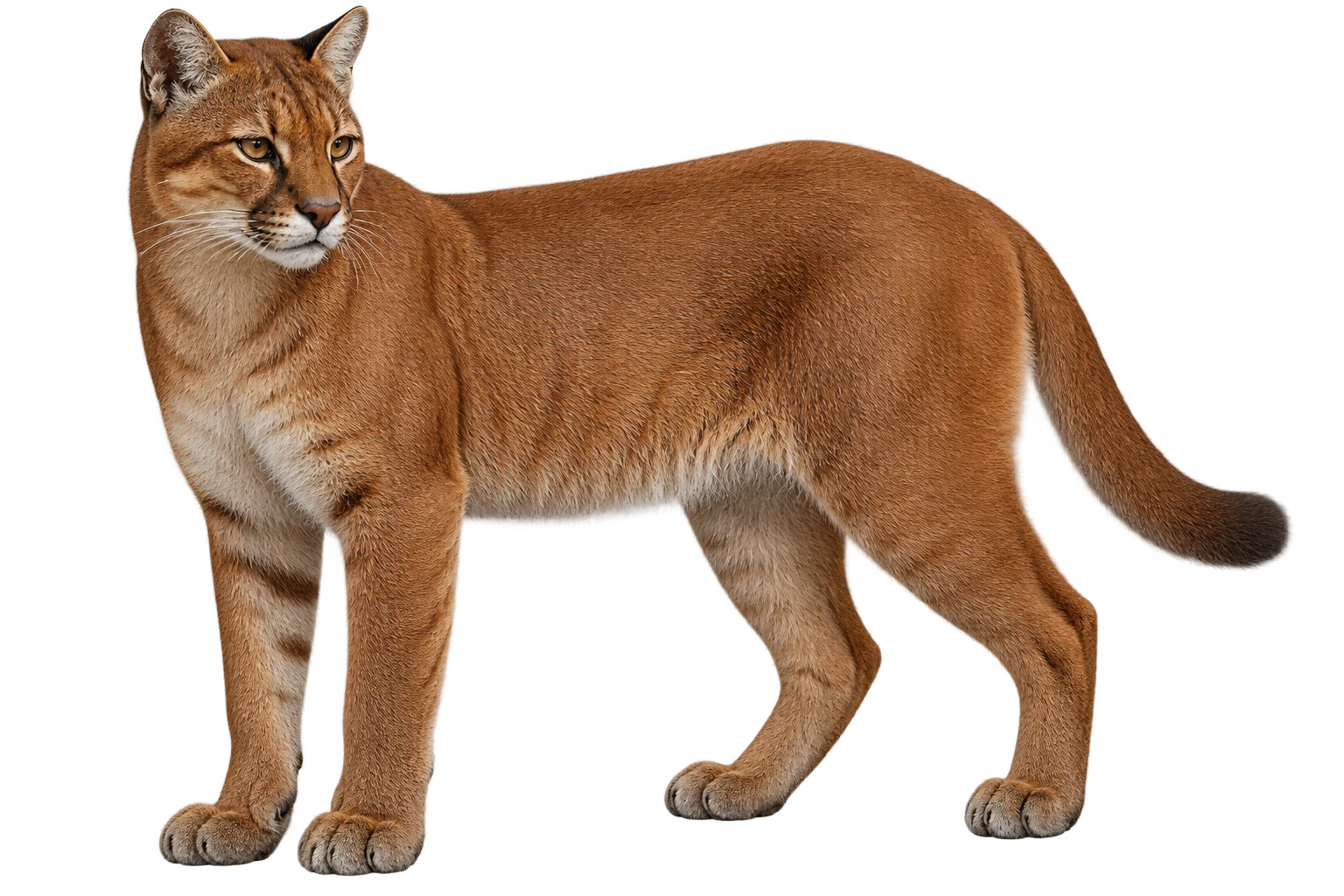
Mammals
African Golden Cat
Caracal aurata
Classification and source reference
LivingAI illustration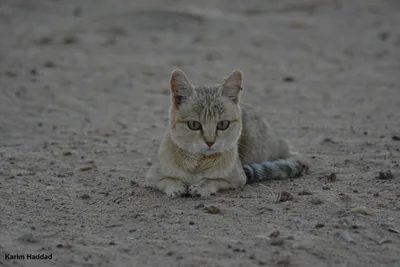 LC
Mammals
African wildcat
Felis lybica
The African wildcat is a small striped cat of dry Africa and Asia, and the ancestor of every domestic cat.
Living
Mammals
American Wirehair
Felis catus
Classification and source reference
LivingAI illustration
Mammals
Amur Leopard
Panthera pardus orientalis
Classification and source reference
LivingAI illustration
Mammals
Australian Mist
Felis catus
Classification and source reference
LivingAI illustration