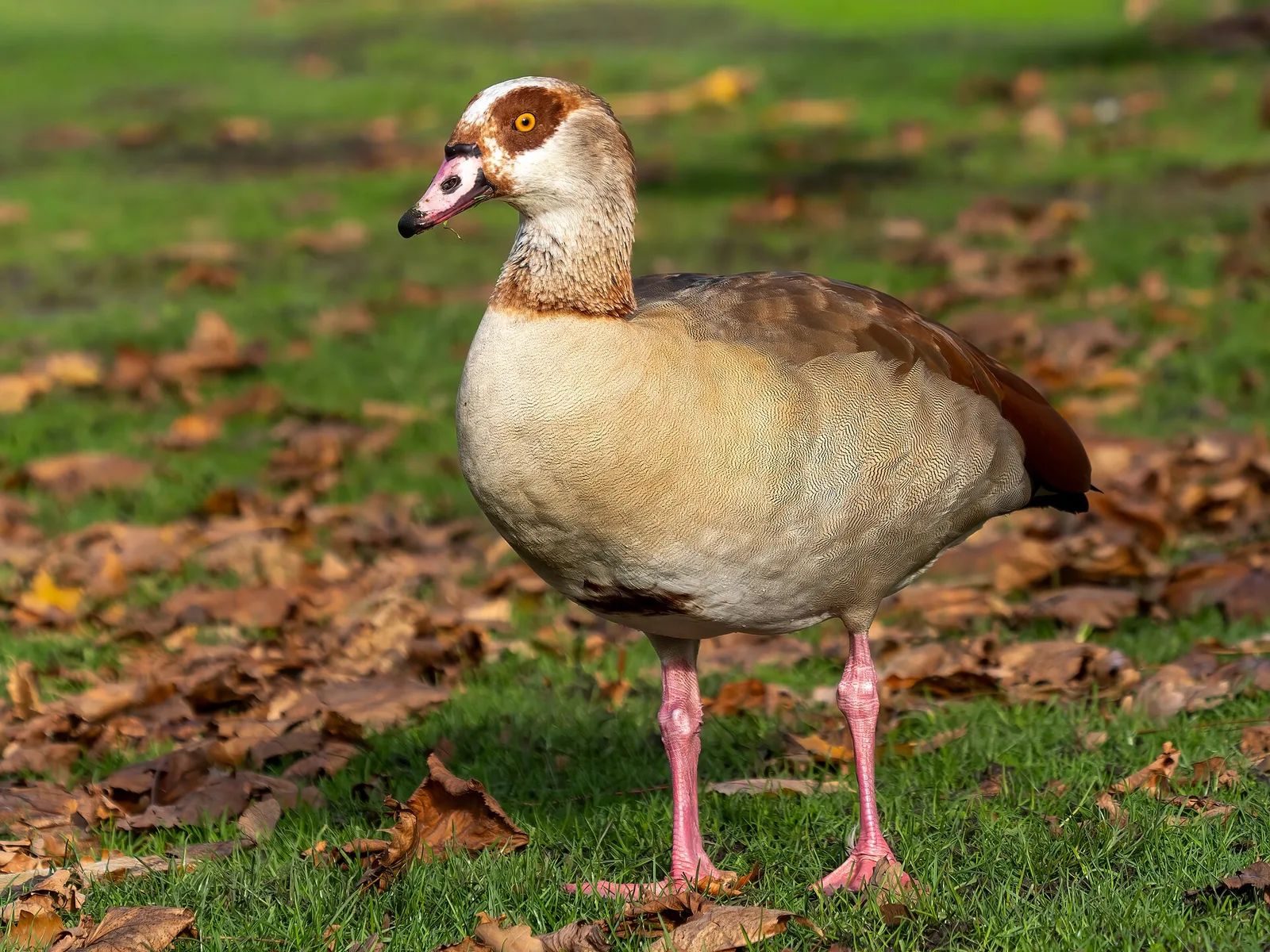
Egyptian goose
An African shelduck that conquered European parks
Alopochen aegyptiaca
Also called Nile goose
Living individuals or members of this group exist today. This does not mean they are safe from extinction.
Meet the egyptian goose
The Egyptian goose is a pale brown waterbird of African rivers, lakes and grassland, marked by a dark ring around each eye. Ornamental collections carried it to Europe and North America, where escaped birds now breed in the wild.
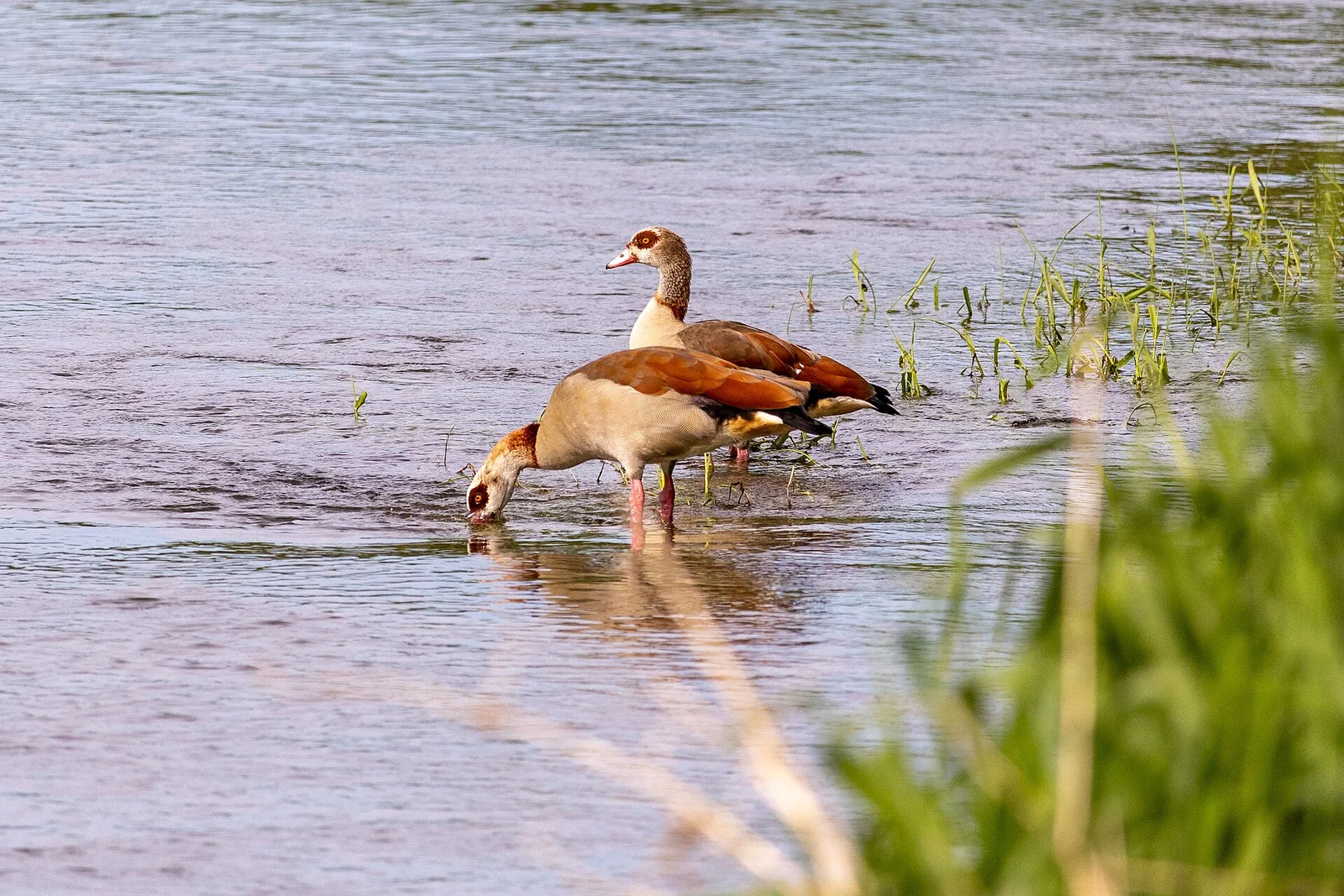
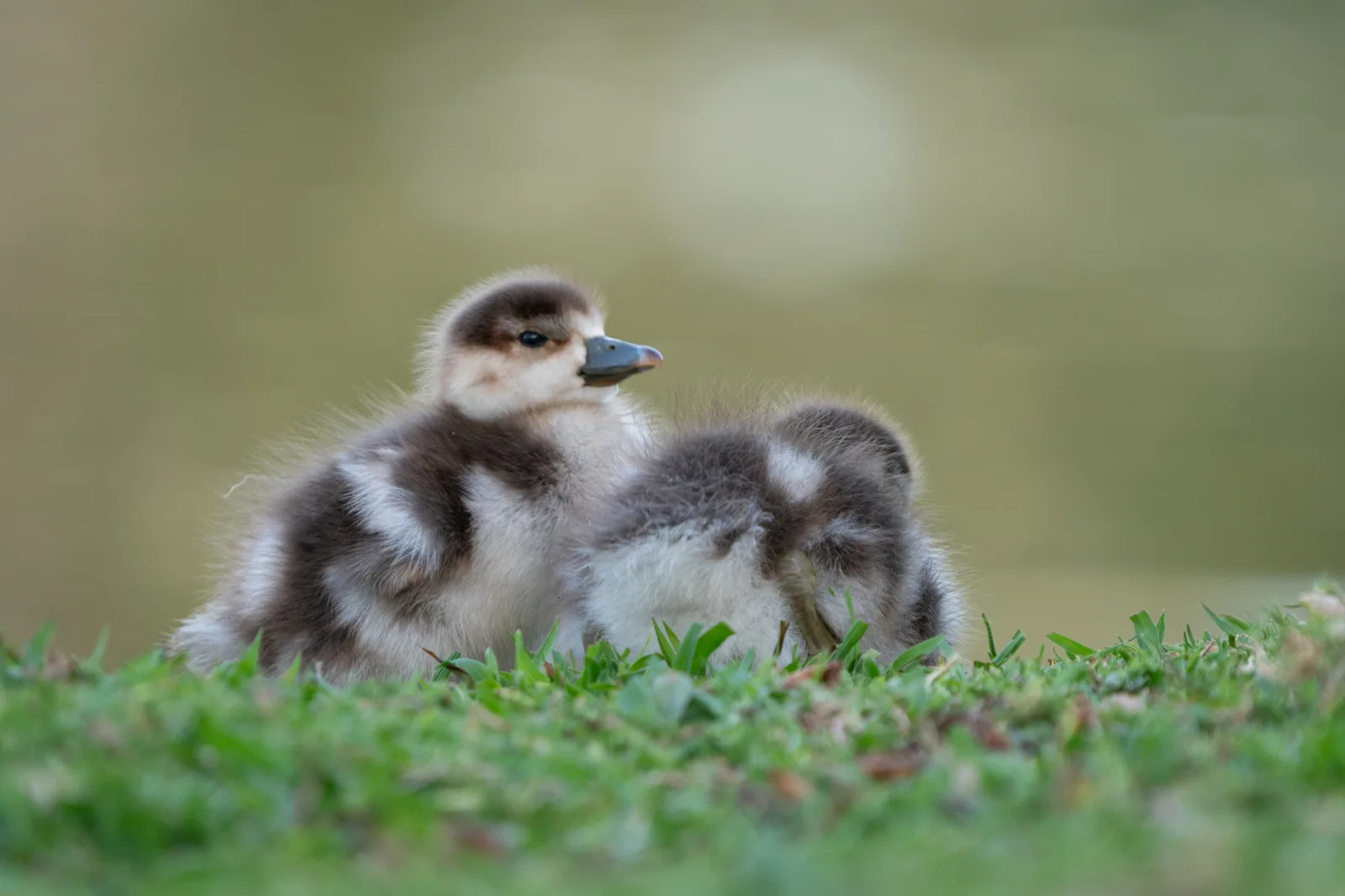
Images of the egyptian goose
Lifespan in the wild
Up to 15 years
Weight
1.5 to 2.35 kg
Length
63 to 73 cm
Fact file
Egyptian goose
- Location
- Sub-Saharan Africa and the Nile Valley, plus introduced populations in Europe and the United States
- Habitat
- Wetlands, Rivers and lakes, Grassland, Towns and cities
- Diet
- Herbivore
- Predators
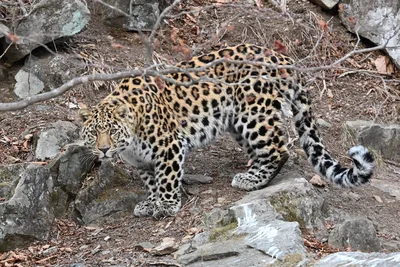
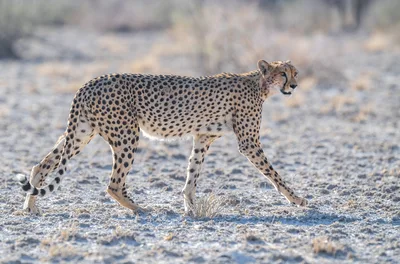
- Lions, leopards, cheetahs, hyenas, crocodiles and vultures
- Lifestyle
- Active by day, in pairs when breeding and in flocks otherwise
- Group name
- Flock
- Name of young
- Gosling
- Incubation
- Incubation 28 to 30 days
- Clutch size
- 5 to 12 eggs
- Population
- Common to abundant across sub-Saharan Africa
- Biggest threat
- None known; the range is still growing
- Distinctive feature
- A dark brown patch around each eye
- Colour
- Pale brown body with a chestnut chest patch and white wing panels
- Skin type
- Feathers
Size
Next to a person
Measurements
Size and speed
- Length
- 63 to 73 cm
- Weight
- 1.5 to 2.35 kg ADW gives a range of 1,500 to 2,250 grams
Typical adult ranges. Source: Wikipedia.
Life cycle
Lifespan
- In the wildUp to 15 years
- In captivityUp to 35 years AnAge records a maximum of 25.5 years
- 035 years
The pale bar is the record. Source: Wikipedia.
Appearance
Colour and coat
- Primary colours
- brownbuff
- Secondary colours
- whitechestnut
- Skin type
- feathers
- Male and female
- Slight. The two sexes wear the same plumage, and the male is only somewhat larger. The voice separates them: the male gives a quiet hoarse quack and the female a loud raucous one.
Life cycle
Mating and family
- Mating system
- monogamous pairs, usually for life
- Social structure
- small flocks, with pairs holding territory in the breeding season
- Breeding
- one brood a year
Birds first breed at two years old. A male wins a mate with loud honking and a spread of feathers. The pair nests in thick cover, a tree hole or an old raptor nest near water. The female lays five to twelve eggs, and both parents sit for 28 to 30 days. The goslings feed themselves from the first day and fly at about 70 days.
Classification
Taxonomy
- Kingdom
- Animalia
- Phylum
- Chordata
- Class
- Aves
- Order
- Anseriformes
- Family
- Anatidae
- Genus
- Alopochen
- Species
- Alopochen aegyptiaca
Conservation
Red List status
- LC
- NT
- VU
- EN
- CR
- EW
- EX
Least Concern on the IUCN Red List
Range
Recorded in 17 countries
- Belgium
- Botswana
- Czech Republic
- Germany
- Spain
- France
- United Kingdom
- Israel
- Italy
- Kenya
- Luxembourg
- Namibia
- Netherlands
- Portugal
- Tanzania
- United States of America
- South Africa
Habitat layer: tropical grassland, savanna and shrubland, temperate grassland, savanna and shrubland, flooded grassland and savanna, mangrove.
Countries from 65,855 wild records on GBIF (iNaturalist research grade), filtered and checked by hand. Country shapes: Natural Earth. Habitat: RESOLVE Ecoregions 2017, CC BY 4.0. Basemap: Natural Earth.
Habitats
Three things to know
- 1
It is not a true goose at all, but a close relative of the shelducks.
- 2
Ancient Egyptians drew this bird more often than almost any other, and a goose god guarded the world egg.
- 3
A breeding pair will chase a rival into the air and fight it in flight.
Did you know
Seven more facts
- 1
The genus name Alopochen means fox-goose, and it points at the ruddy colour of the back.
- 2
The other two members of the genus were island birds, and both are extinct.
- 3
The white on the wing stays hidden until the bird is alarmed or angry.
- 4
Goslings feed on freshwater plankton before they are strong enough to graze.
- 5
The bird lives as high as 4,000 metres in the Ethiopian Highlands.
- 6
It was added to the official British bird list only in 1971.
- 7
The European Union has listed it as an invasive species since 2017.
Field notes
How it looks and acts
Field notes
Distinguishing features
- A dark brown patch around each eye.
- A brown patch in the middle of a pale chest.
- Long pink legs and a pink bill.
- Large white wing panels that flash open in flight.
- A body of 63 to 73 centimetres and a weight of 1.5 to 2.3 kilograms.
- A heavy and slow flight, goose-like rather than duck-like.
Field notes
Unique adaptations
- Like other grazing waterfowl, it can feed on land far from the water.
- Goslings can find their own food from the day they hatch.
- Nesting in a tree hole or an old raptor nest puts eggs out of reach of ground hunters.
- White wing panels open as a warning signal without any sound.
- The habit of moving to new water carries the birds through a drought.
Field notes
Interesting behaviours
- Grazing on short grass away from the water through the day.
- Returning to open water to roost every night.
- Chasing a rival pair into the air and fighting there.
- Taking over the abandoned nest of a buzzard or a magpie.
- Gathering into small flocks outside the breeding season.
Field notes
Temperament
- Quiet and reserved for most of the year.
- Loud and aggressive through the breeding season.
- Intolerant of other waterbirds near a nest.
- Seems bold around people in a town park.
Field notes
Communication
- A hoarse, subdued quack from the male when he is roused.
- A loud breathy run of notes, likened to a steam engine.
- A raucous quack from the female guarding her goslings.
- Honking, neck stretching and feather display in courtship.
- The white wing panel shown in alarm or threat.
Ecology
Ecological role
The Egyptian goose is a grazer that works the ground between water and pasture. In its native Africa it feeds many predators.
- It moves seeds between wetlands and grassland as it feeds on land.
- Its feeding breaks up soil and helps dead plants rot down.
- It provides food for lions, leopards, hyenas, crocodiles and vultures.
- Outside Africa it competes with native waterbirds for nest sites.
Stories
Myths and legends
- In ancient Egyptian tradition, the goose god Gengen-Wer guarded the egg the world came from.
- In ancient Egyptian tradition, that god's name meant the great honker or the great cackler.
- In ancient Egyptian art, the bird appears on tomb walls and in hunting scenes.
- In Egyptological tradition, the earth god Geb was wrongly linked to the creator goose.
- In British birdwatching tradition, it stayed off the official list until 1971.
People
Relationship with humans
People
Living alongside us
The Egyptian goose owes its spread entirely to people. Ornamental collections in Britain, the Netherlands and Belgium supplied the birds that now breed wild in Europe. Farmers in Africa and Europe shoot it to protect crops. The European Union bans keeping or moving the species. In town parks it is now a common and quarrelsome resident.
- The bird weighs 1.5 to 2.3 kg and cannot seriously injure a person.
- A breeding pair may hiss and charge at anyone near the nest.
- Flocks damage sprouting crops, which is a cost to farmers rather than a danger.
People
Status, uses and products
- Domestication
- Wild
- As a pet
- Not suitable. No. Keeping, breeding or moving the species is banned across the European Union. It is also loud, strongly territorial and needs open water and grazing. Wildfowl collections outside the EU keep it under licence.
- Uses
- ornamental wildfowl collectionssport shooting where it is a pest
- Products
- None recorded
The full account
About the egyptian goose
The Egyptian goose is an African waterbird in Anatidae, the family of swans, geese and ducks. Despite the name it is not a true goose, and its nearest relatives are the shelducks. An adult measures 63 to 73 centimetres in length. It weighs 1.5 to 2.3 kilograms, and the male is usually the larger bird. A dark brown ring around each eye and a brown patch on the chest name it at a glance.
The natural range covers sub-Saharan Africa and the Nile Valley. People carried the bird to Europe and North America as an ornament for a park lake. Escaped birds now breed in Britain, the Netherlands, Germany, France and several American states. It grazes on grass, leaves and grain, and it feeds away from the water by day. The IUCN lists it as Least Concern, and the European Union treats it as an invasive species. Egyptian artists drew this bird for thousands of years, and a goose god guarded the world egg.
Name and taxonomy
Carl Linnaeus described the species in 1766, in the twelfth edition of Systema Naturae. He called it Anas aegyptiaca and worked partly from a French account of 1760. Mathurin Jacques Brisson had described and drawn the bird in his Ornithologie. Leonhard Stejneger introduced the modern genus Alopochen in 1885. The name means fox-goose, from the Greek words for a fox and for a goose. It refers to the ruddy colour of the back.
The species name aegyptiaca is simply the Latin for Egyptian. No subspecies are recognised, so the species is monotypic. The genus Alopochen holds two extinct island birds beside this one. Those were the sheldgeese of Mauritius and of Reunion, both now gone. English speakers sometimes call the bird the Nile goose.
Evolution and relatives
The Egyptian goose sits in the subfamily Tadorninae with the shelducks of the genus Tadorna. Like other shelducks, it stands between the true geese and the ducks in shape and habit. The heavy body and the slow flight give this species its goose-like look. That look is the reason the English name calls it a goose at all. Studies of mitochondrial DNA leave the link to Tadorna unsettled. More work is probably needed before the group is fully sorted.
The two other members of Alopochen died out after people reached their islands. The Mauritius and Reunion sheldgeese are known, as far as the record suggests, only from remains and old reports. This species is therefore the last of its genus. It is also the most widely spread member of the duck family in Africa.
Appearance
The bird is 63 to 73 cm long and weighs 1.5 to 2.3 kg. The neck is long, the legs are long and pink, and the bill is pink. A dark brown patch rings each eye, which is the clearest field mark. A second brown patch sits in the middle of the chest. The head and the upper wings are brown, and the rest of the body is a paler brown. Plumage tone varies a great deal, and some birds look grey while others look brown.
That variation follows neither sex nor age. A large part of the wing is white in a mature bird. The wing coverts hide the white when the bird rests. An alarmed or angry bird opens the wing and shows the white panel. The underside of the wing carries white and green. A young bird lacks both the eye patches and the chest patch.
The two sexes wear the same plumage, which makes them hard to tell apart. Males run somewhat larger than females. The voice appears to be the surest test, rather than the look. In flight the bird looks heavy and slow, more like a goose than a duck.
Habitat and range
The natural range runs across sub-Saharan Africa and up the Nile Valley. The bird is common to abundant over most of that ground. It has grown scarce in the northern part of the Nile Valley. It wants open or half-open country near fresh water. Rivers, streams, lakes, ponds, marshes, meadows and crop fields all suit it. It avoids thick forest and true desert.
The species reaches 4,000 metres above sea level in the Ethiopian Highlands. Outside the breeding season it wanders, sometimes north into the dry Sahel. A few birds reach Algeria and Tunisia, which were once a regular part of the range. The species bred in southeastern Europe until the early 1700s. Birds held on in Turkey and in the western Middle East as late as the early 1900s. Nobody knows why it vanished from either place.
British landowners brought the bird to estates and parks in the 17th century. Those were the first birds released anywhere outside Africa. The British list added the species formally only in 1971. It now breeds mainly in East Anglia and along the River Thames. In winter the birds spread through river valleys and feed on short grass and cereals. GBIF holds occurrence records from 107 countries.
Diet and feeding
The Egyptian goose is mainly a plant eater. It grazes young grass on grassland and savanna. It also takes grain from farmland, and wheat is a favourite. Soft leaves and other plant matter fill out the diet. Locusts, worms, insects and the odd frog make up a small animal share.
Most feeding happens on land, in pasture or in an arable field. The birds leave the water in the morning and return to it at night. Goslings cannot graze for their first few weeks. They eat small water animals instead, above all freshwater plankton. That diet carries a risk when a pond loses its oxygen. Botulinum toxin can then pass up the food chain in worms and larvae and kill a whole brood.
The parents eat almost none of those small animals, so they usually escape the poisoning. Adults feed themselves and never carry food to the young. A gosling forages for itself from the day it hatches. Farmers in southern Africa complain that flocks strip young crops. The same flocks probably remove pest insects from those fields as well.
Behaviour and social life
Outside the breeding season the birds live in small flocks. A flock gives more eyes to watch for danger, which is probably why it forms. Pairs split away from the flock to breed and rejoin it afterwards. Most birds settle on one pond, lake or river for life. They move only if a drought dries the water or predators grow too many.
Both sexes turn fiercely territorial once they start to breed. A pair chases an intruding bird into the air and attacks it there. Observers describe those chases as aerial dogfights. The birds have even attacked drones that flew over their water. A neighbouring pair may kill another pair's goslings to free up food and space. That aggression is the reason the European Union treats the species as a problem.
Communication and senses
The two sexes sound quite different, and the voice is the best way to tell them apart. A male gives a hoarse, quiet quack that he uses only when roused. He also gives a louder breathy call in a fast run of notes. That call has been likened to a steam engine. A female has a far louder and rougher quack. She uses it most in anger while she is minding her young.
For most of the year the birds are quiet and reserved. In the breeding season they turn noisy, and a stressed bird makes a great deal of sound. A courting male honks loudly, stretches his neck and spreads his feathers. The white wing panel works as a visual signal in alarm or aggression. Like other waterfowl, the birds see well and feed by sight in daylight.
Reproduction and life cycle
Both sexes are ready to breed at two years old. Most pairs breed in the spring, or else as the dry season closes. The season falls somewhere between July and March, depending on the region. A male wins his mate with a loud display of honking and posturing. Egyptian geese are monogamous, and most pairs stay together for life.
The pair nests alone in thick plants, in a hole, or flat on the ground. Holes in old trees in parkland are a favourite site. Some pairs take over the old nest of a buzzard or a magpie, high in a tree or on a ledge. The female builds with reeds, leaves, grass and feathers. A nest sits near water for safety and near grass for food.
A clutch holds five to twelve eggs. Both parents take turns to incubate for 28 to 30 days. The goslings hatch active and covered in down. The father guards the brood while the mother keeps them together. The young fly at about 70 days old. A pair raises one brood a year.
Wild birds live up to 15 years. One captive bird reached the age of 35. A zoo bird in the United States lived fourteen years. Nobody has measured a typical wild lifespan for the species.
Predators and threats
In Africa the bird faces a long list of hunters. Lions, leopards, cheetahs and hyenas all take Egyptian geese. Crocodiles take birds at the water's edge. Old World vultures take eggs and goslings. Flocking is probably the main defence, because many birds watch at once.
Botulism poisoning kills whole broods of goslings in stagnant water. Neighbouring pairs kill goslings in fights over ground and food. Drought forces birds off a lake and into unfamiliar country. Farmers in southern Africa shoot at flocks to drive them off young crops. In Great Britain the law now allows anyone to shoot a bird that causes problems. None of these pressures appears to threaten the species as a whole.
Population and conservation
The IUCN lists the Egyptian goose as Least Concern. It is the most widely spread member of its family in Africa. More dams and farm ponds in southern Africa have raised local numbers. CITES places the species on Appendix III. The conservation problem here appears to be the opposite of scarcity.
Birds released in the Netherlands in 1967 and in Belgium in 1982 founded the European population. Escapes from other collections probably added to it. The species spread into Germany and France in the mid-1980s. In the early 2000s it reached Switzerland, Luxembourg, Denmark and the Czech Republic. Single birds and odd nests have turned up in Austria, Italy, Poland, Spain and Sweden.
The United Kingdom declared the bird a non-native species in 2009. The European Union added it to the invasive species list in 2017. Member states may not import, breed, sell or release it, and must try to remove it. Breeding populations also live in Mauritius, Israel, the United Arab Emirates and the United States. American birds nest in Arkansas, California, Florida, Nebraska, Oklahoma and Texas. Releases in Australia and New Zealand failed to take hold.
Relationship with humans
People have kept this bird for its looks for a very long time. British estates stocked ornamental lakes with it from the 17th century. Dutch and Belgian collections did the same three hundred years later. Every wild European population probably began with birds that escaped a park. In Africa few people hunt the species, because it often lives far from towns.
Farmers are the main exception, and they shoot to protect sprouting crops. In European towns the bird now grazes lawns, sports pitches and park banks. Its droppings and its temper likely make it unpopular with park keepers. It drives other waterbirds off nesting islands and tree holes. That displacement is the reason for the European ban on keeping it.
In culture and myth
No wild bird appears more often in ancient Egyptian art than this one. Painters and carvers appear to have shown it on tomb walls, on panels and in hunting scenes. In ancient Egyptian religion a goose god named Gengen-Wer guarded a sky egg. The name translates as the great honker or the great cackler. The egg was said to hold the creative force that began the world. The Book of the Dead names Gengen-Wer in its fifty-ninth chapter.
Scholars long linked the earth god Geb to that creator goose. The link appears to be a mistake, born of a similar sound. The Egyptian word for the white-fronted goose meant the lame one or the stumbler. That word resembled the god's name, so a goose sign spelled it. The sign was a sound spelling and never a holy bird of Geb.
In modern Britain the bird appears to be a fixture of ornamental water and country house parks. Birdwatchers there probably argued for years over whether to count it as a wild British bird. The British list settled the question in 1971. The English name misleads, because the animal is a shelduck rather than a goose.
A sentence with a dotted underline is inferred: it describes the group the animal belongs to, or is a reading of the sources, rather than a measured or reported fact about this species.
Questions
Egyptian goose questions, answered
Is the Egyptian goose really a goose?
No. It belongs to the shelduck subfamily, Tadorninae, within the duck and goose family. The English name comes from its heavy body and slow flight.
How big is an Egyptian goose?
It is 63 to 73 centimetres long and weighs 1.5 to 2.3 kilograms. Males are usually somewhat larger than females, though the two look alike.
Where do Egyptian geese live?
They are native to sub-Saharan Africa and the Nile Valley. Introduced birds now breed in Britain, the Netherlands, Germany, France and six American states. GBIF holds records from 107 countries.
What do Egyptian geese eat?
Mostly grass, leaves and grain, and wheat in particular. They also take locusts, worms and the odd frog. Goslings eat freshwater plankton before they can graze.
How can you tell a male from a female?
Not by the plumage, which is the same in both. Listen instead. The male gives a quiet hoarse quack and the female a loud raucous one.
Are Egyptian geese aggressive?
Very, in the breeding season. A pair chases intruders into the air and fights them there. Neighbouring pairs sometimes kill each other's goslings.
Why are Egyptian geese in Britain?
Estates brought them in during the 17th century to decorate ornamental lakes. Some escaped and bred. The British list added the species formally in 1971.
Are Egyptian geese invasive?
Yes, in Europe. The European Union listed the species as invasive in 2017 and bans keeping or releasing it. The United Kingdom declared it non-native in 2009.
How many eggs does an Egyptian goose lay?
Five to twelve. Both parents incubate them for 28 to 30 days. The goslings feed themselves as soon as they hatch.
How long do Egyptian geese live?
Wild birds live up to 15 years. One captive bird reached 35. No one has measured a typical wild lifespan.
What eats an Egyptian goose?
In Africa lions, leopards, cheetahs, hyenas and crocodiles all take them. Vultures rob the nests. Living in flocks is the main defence.
Do Egyptian geese nest in trees?
Often. Holes in mature parkland trees are a favourite. Some pairs use the old nest of a buzzard or a magpie instead.
Were Egyptian geese sacred in ancient Egypt?
A goose god called Gengen-Wer guarded the egg from which the world came. The name means the great honker. The bird itself appears constantly in tomb art.
Are Egyptian geese endangered?
No. The IUCN lists them as Least Concern, and they are common to abundant across Africa. CITES places them on Appendix III.
Can you shoot an Egyptian goose in Britain?
Yes. Since it was declared non-native in 2009, a bird causing problems may be shot without special permission.
How high do Egyptian geese live?
Up to 4,000 metres above sea level in the Ethiopian Highlands. They avoid dense forest and true desert, but take almost any open country near fresh water.
 Lion
 Leopard
 Cheetah
Ecological equivalents
Related species on this site
Black swan (same family), Black-Bellied Whistling Duck (same family), Canada goose (same family), Canvasback (same family), Chinese Geese (same family), Common Goldeneye (same family), and more.
 LC
Birds
Black swan
Cygnus atratus
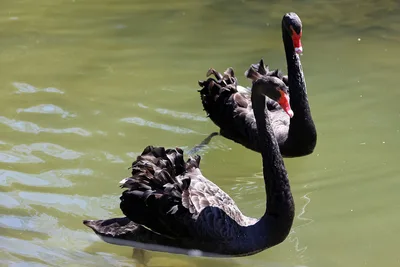
The black swan is a large Australian waterbird with black plumage, white flight feathers and a bright red bill.
Living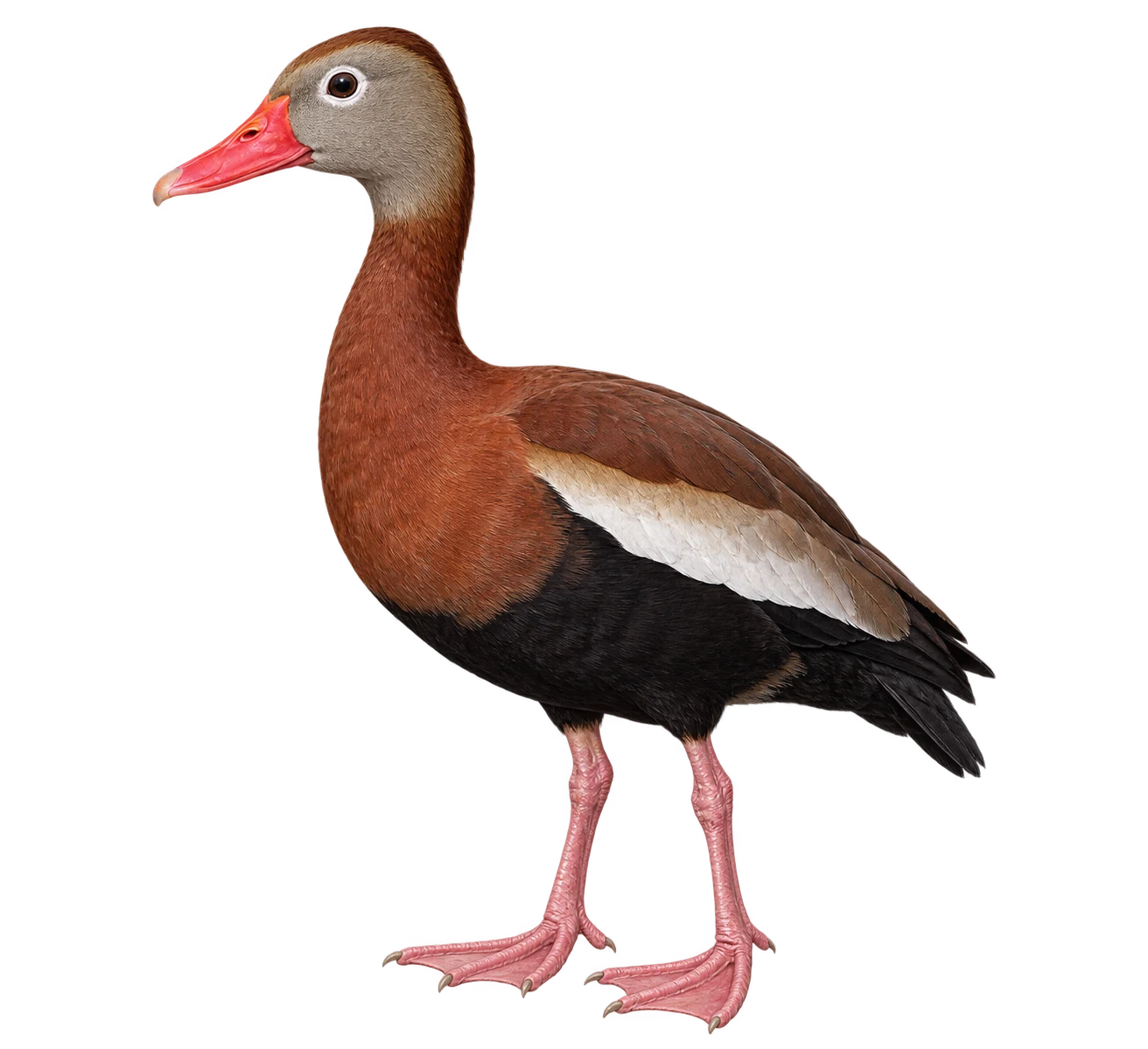
Birds
Black-Bellied Whistling Duck
Dendrocygna autumnalis
Classification and source reference
LivingAI illustration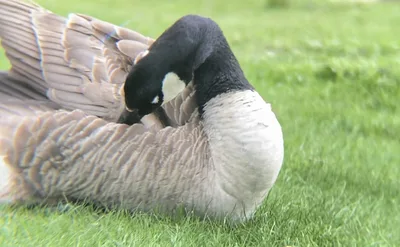 LC
Birds
Canada goose
Branta canadensis
The Canada goose is a large black-necked goose with a white chinstrap, native to North America and now settled on four continents.
Living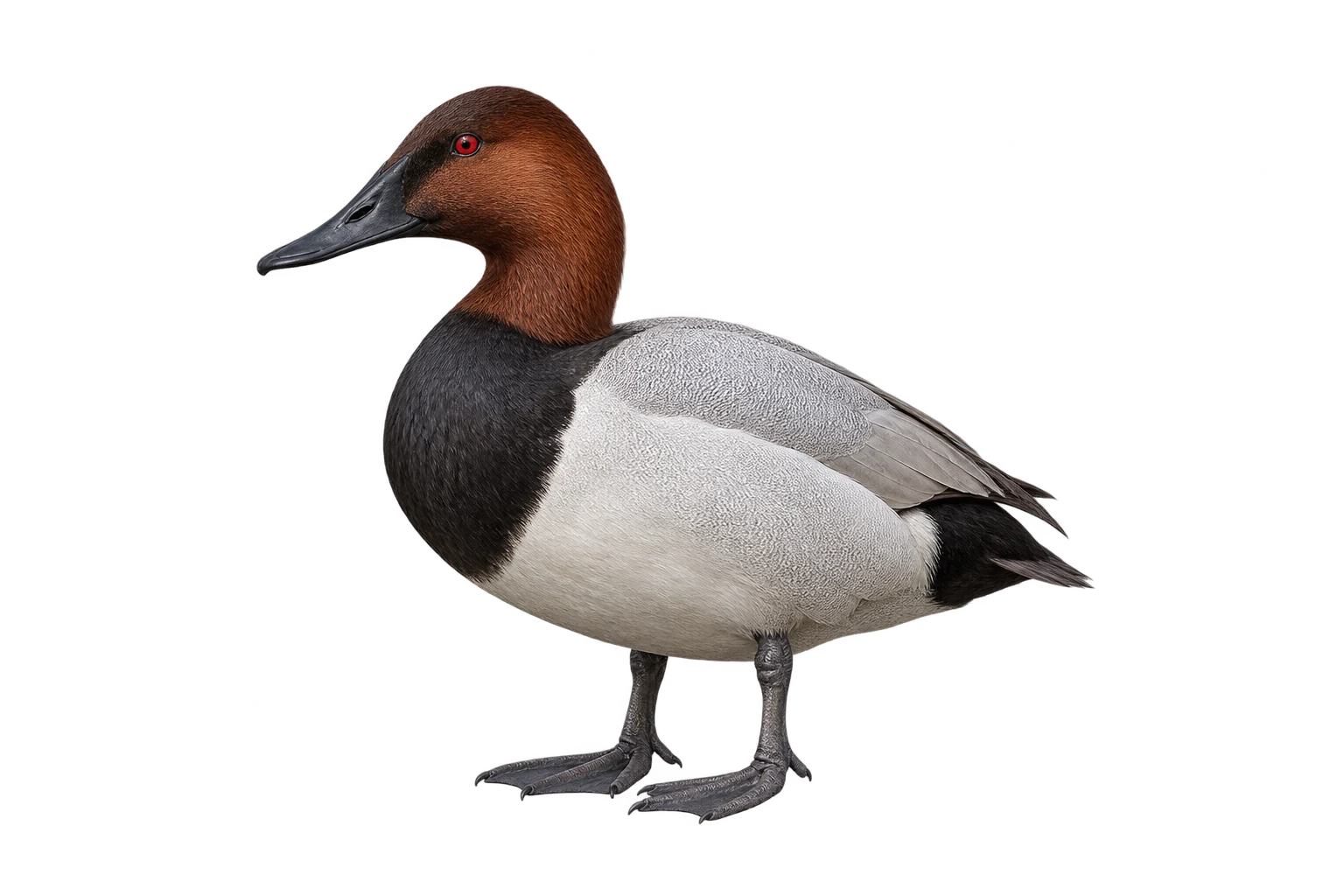
Birds
Canvasback
Aythya valisineria
Classification and source reference
LivingAI illustration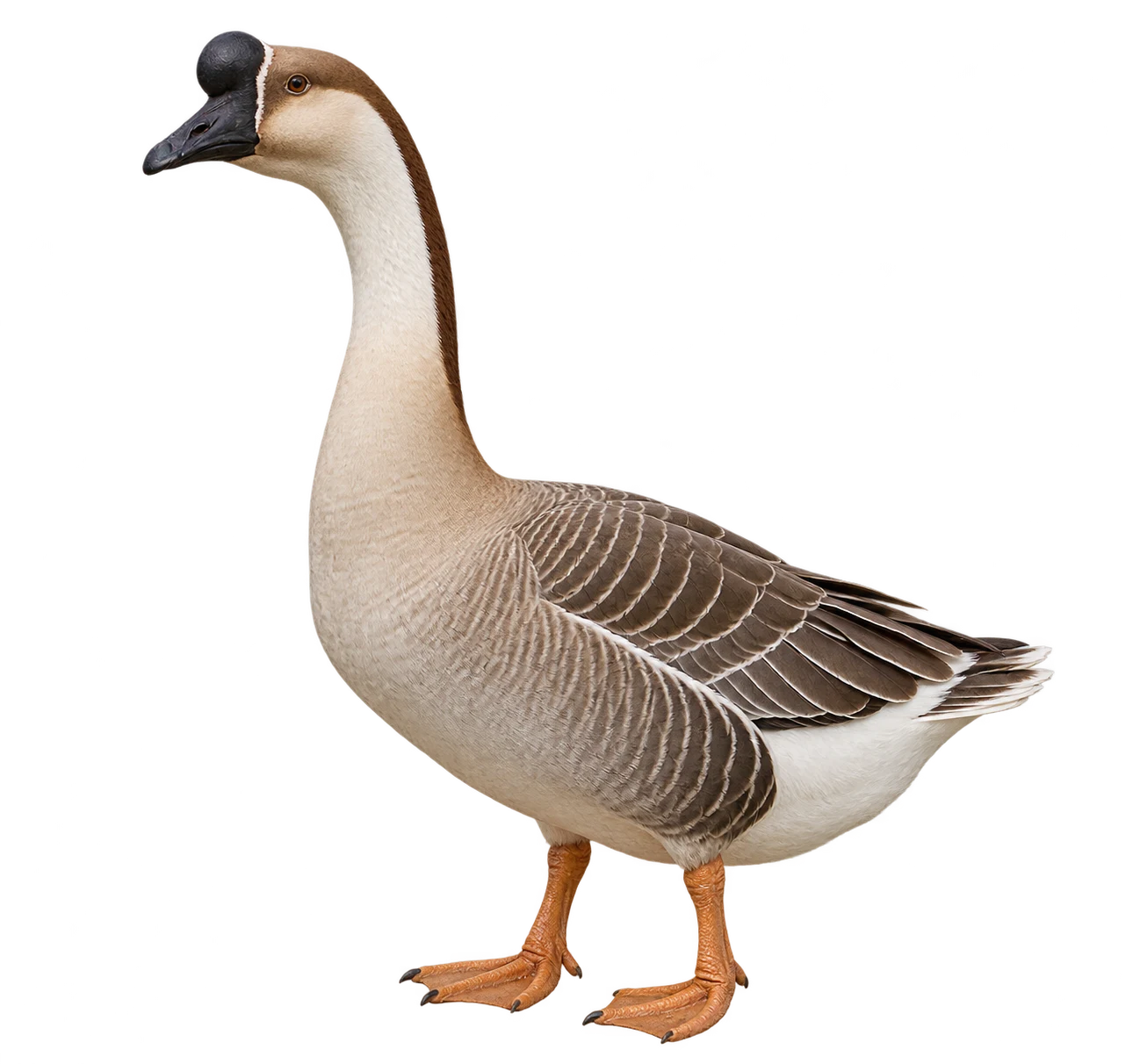
Birds
Chinese Geese
Anser cygnoides domesticus
Classification and source reference
LivingAI illustration
Birds
Common Goldeneye
Bucephala clangula
Classification and source reference
LivingAI illustration