Living individuals or members of this group exist today. This does not mean they are safe from extinction.
Meet the common ostrich
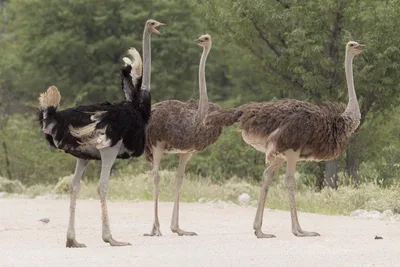
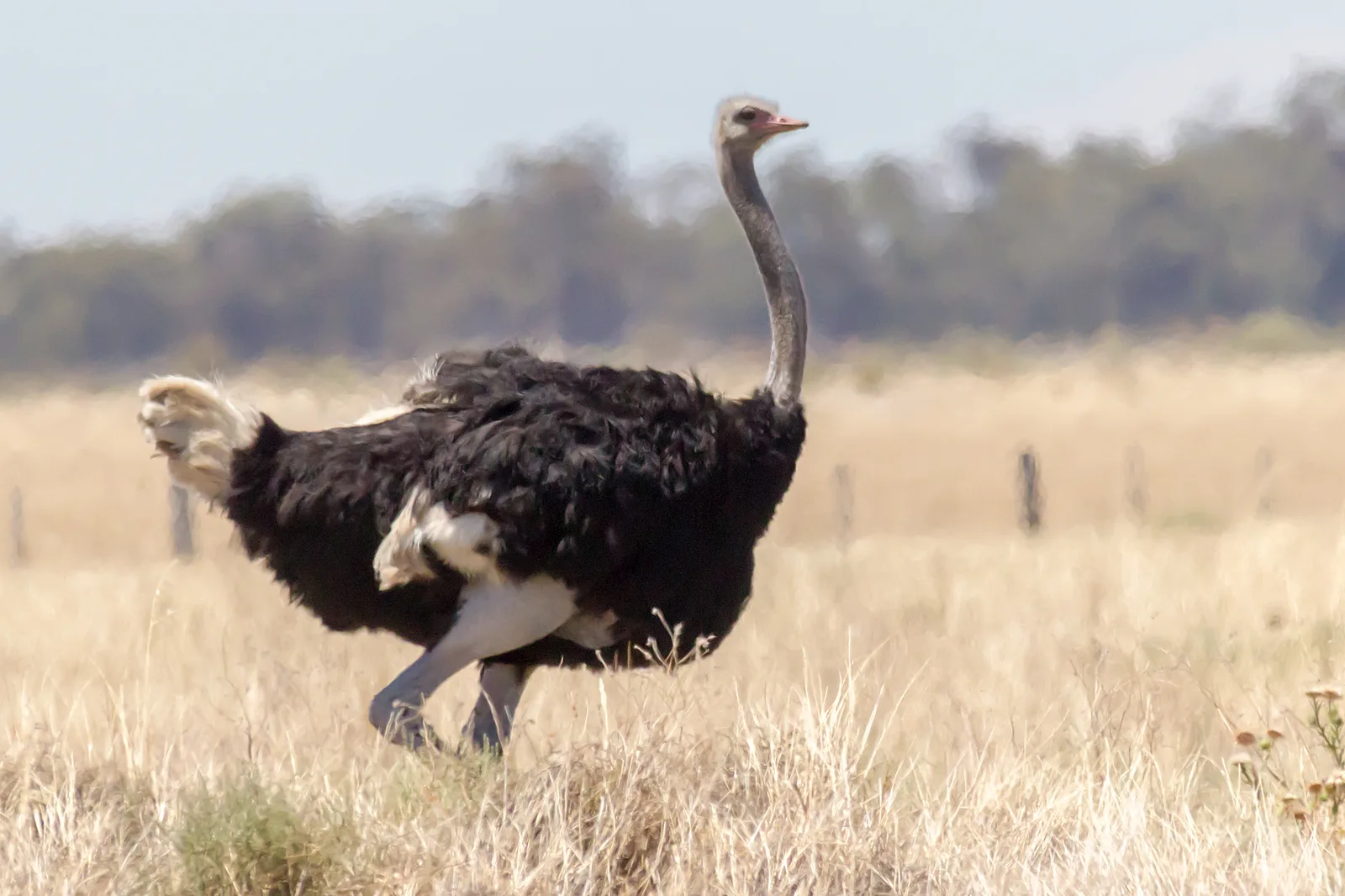
The common ostrich is the largest and heaviest living bird and lays the largest egg. It cannot fly, but it runs faster than any other bird.
Images of the common ostrich
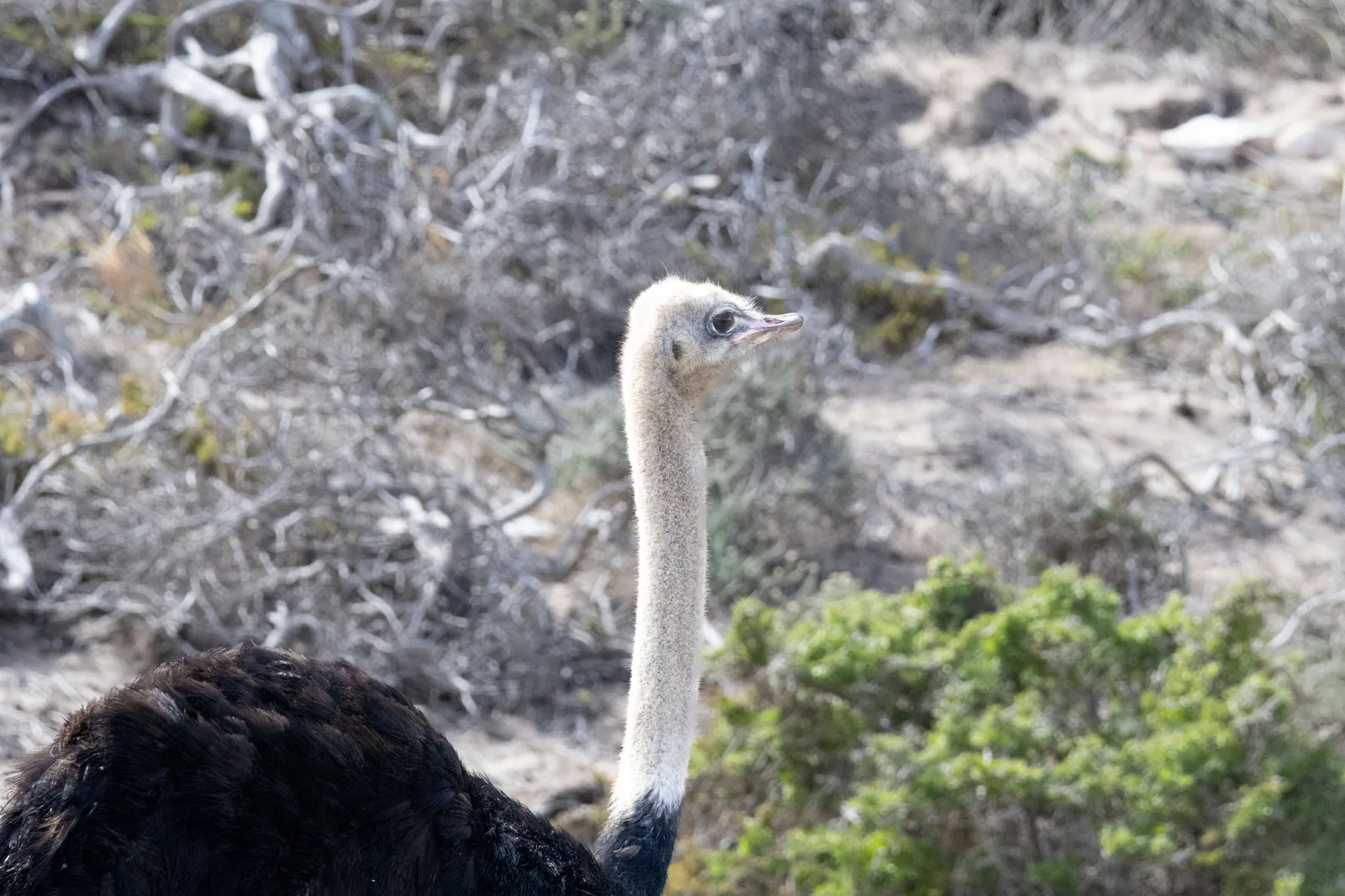
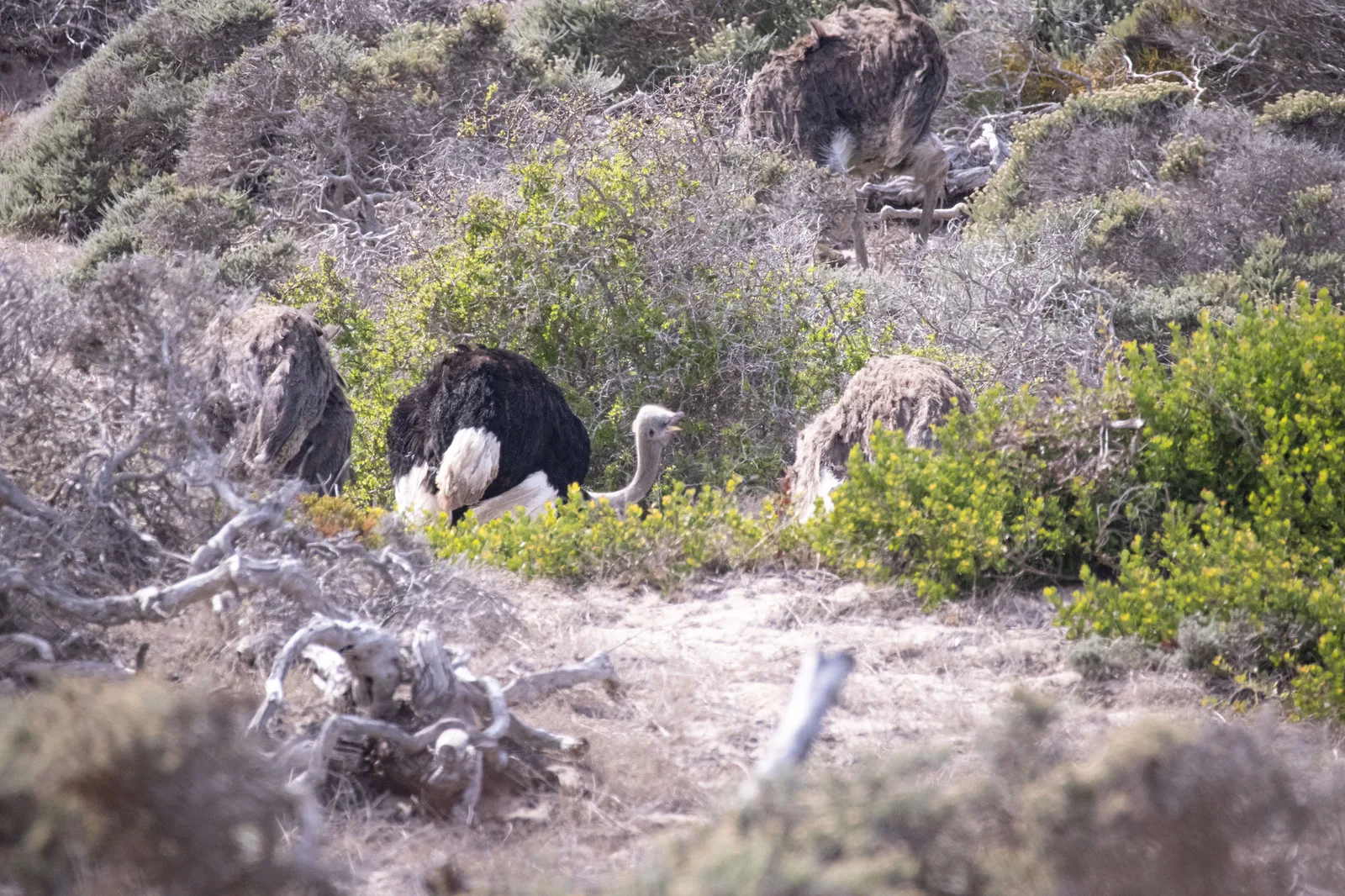
Lifespan
Up to 50 years
Weight
90 to 130 kg
Height
1.75 to 2.75 m
Top speed
Up to 70 km/h
Fact file
Common ostrich
- Location
- Africa south of the Sahara
- Habitat
- Savanna, Desert, Grassland
- Diet
- Omnivore
- Prey / food
- Seeds, roots, leaves, insects, lizards
- Predators
- Lions, cheetahs, hyenas; jackals take eggs
- Lifestyle
- Diurnal
- Group name
- Flock
- Name of young
- Chick
- Incubation
- About 42 days of incubation
- Clutch size
- 7 to 10 eggs per female in a shared nest
- Biggest threat
- Hunting and habitat loss
- Distinctive feature
- A long bare neck and two-toed feet
- Colour
- Black and white males, grey-brown females
- Skin type
- Feathers and bare skin
Size
Next to a person
Measurements
Size and speed
- Height
- 1.75 to 2.75 m
- Height, male
- 2.1 to 2.75 m
- Height, female
- 1.75 to 1.9 m
- Weight
- 90 to 130 kg
- Weight, male
- 100 to 130 kg, up to 157 kg
- Weight, female
- 90 to 120 kg
- Top speed
- Up to 70 km/h in short bursts
Typical adult ranges. Sources: Animal Diversity Web, Wikipedia.
Life cycle
Lifespan
- In captivityUp to 50 years
- 050 years
The pale bar is the record. Source: AnAge.
Appearance
Colour and coat
- Primary colours
- blackwhitegrey-brown
- Secondary colours
- pinkred
- Skin type
- feathers and bare skin
- Male and female
- Strong. The male is taller and heavier, black with white wings and tail, and has red leg scales. The female is grey-brown and smaller.
Life cycle
Mating and family
- Mating system
- polygynous, with one major female per male
- Social structure
- loose groups of 5 to 50 that grow larger in the breeding season
- Breeding
- one shared clutch of about 20 eggs a year
A male wins a harem of two to seven hens and scrapes a pit in the ground. Every hen lays in it, and the major female keeps about 20 eggs. Females sit by day and the male by night for 35 to 45 days. Fewer than 10% of nests survive, and only 15% of hatched chicks reach one year. A survivor can live to 50 in captivity.
Classification
Taxonomy
- Kingdom
- Animalia
- Phylum
- Chordata
- Class
- Aves
- Order
- Struthioniformes
- Family
- Struthionidae
- Genus
- Struthio
- Species
- Struthio camelus
Conservation
Red List status
- LC
- NT
- VU
- EN
- CR
- EW
- EX
Least Concern on the IUCN Red List
Range
Recorded in 22 countries
- Angola
- Burkina Faso
- Botswana
- Cameroon
- Eritrea
- Ethiopia
- Kenya
- Morocco
- Mali
- Mauritania
- Mozambique
- Namibia
- Niger
- Sudan
- Senegal
- South Sudan
- Chad
- Tanzania
- Uganda
- South Africa
- Zambia
- Zimbabwe
Habitat layer: tropical grassland, savanna and shrubland, temperate grassland, savanna and shrubland, desert and xeric shrubland.
Countries from 8,703 wild records on GBIF (iNaturalist research grade), filtered and checked by hand. Country shapes: Natural Earth. Habitat: RESOLVE Ecoregions 2017, CC BY 4.0. Basemap: Natural Earth.
Habitats
Three things to know
- 1
An ostrich egg weighs about 1.4 kg, as much as two dozen hen's eggs.
- 2
The eye is about 5 cm across, the largest of any land animal.
- 3
One kick can kill a lion.
Did you know
Seven more facts
- 1
No other bird walks on two toes, and the big toe carries a nail like a hoof.
- 2
The gizzard can hold 1,300 grams, and almost half of that can be pebbles and sand.
- 3
A hen recognises her own eggs among the twenty or more in a shared nest.
- 4
The name camelus means camel, and the Greeks called the bird the camel sparrow.
- 5
A male ostrich has a retractable copulatory organ 20 cm long, which almost no other bird has.
- 6
People engraved ostrich eggshell in South Africa 60,000 years ago.
- 7
iNaturalist holds 15,368 observations, and GBIF lists records from 76 countries, many of them farms.
Field notes
How it looks and acts
Field notes
Distinguishing features
- A height of 175 to 275 centimetres, the tallest of any bird.
- A long bare neck and small head on a heavy body.
- Black and white plumage in the male, grey-brown in the female.
- Two toes on each foot, with a hoof-like nail on the inner one.
- Long bare legs with red scales in the male and black in the female.
- Soft, loose feathers with no hooks to lock them together.
Field notes
Unique adaptations
- Two toes and a long lower leg for fast running across open ground.
- Huge eyes set high on the neck that see a predator far off.
- A kidney and gut that concentrate urine and dry the dung to hold water in a desert.
- A network of vessels behind the eye that keeps the brain cool in the heat.
- Wings used as brakes and rudders when the bird turns at speed.
Field notes
Interesting behaviours
- Grazes beside zebras and antelopes and shares the watch for predators.
- Lies flat with the neck on the ground to look like a mound of earth.
- Swallows pebbles to grind food in the gizzard.
- Bathes in water and in dust whenever it can.
- Takes the nest by day if female and by night if male.
Field notes
Temperament
- Wary, and quick to run from people and predators.
- Aggressive when cornered or guarding chicks, and able to kill.
- Farm birds keep the wild instincts and may attack under stress.
Field notes
Communication
- A deep boom from a male with an inflated neck to claim territory.
- Hisses and other noises between rival males.
- A wing-beating dance from the male and a circling run from the hen in courtship.
- A feigned injury from a parent to lure a predator away from chicks.
Ecology
Ecological role
The ostrich is a large grazer of the African savanna and desert, and it feeds the big predators at every stage of its life.
- Crops seed heads, flowers and fruit and spreads seeds across dry country.
- Feeds lions, cheetahs, hyenas and wild dogs, mostly as eggs and chicks.
- Acts as a lookout for zebras and antelopes that graze beside it.
- Eats locusts and small animals, which probably helps keep some pests down.
Stories
Myths and legends
- In ancient Egyptian tradition, Ma'at's ostrich feather was weighed against the heart of the dead.
- In Roman tradition, Pliny wrote that the ostrich hides its head and believes its body hidden, the root of the head-in-the-sand tale.
- In Eastern Christian tradition, an ostrich egg hung by a lamp recalls the hen who never takes her eyes off her eggs.
- In African folklore, the ostrich's long neck came from a quarrel between mates over turns on the nest.
People
Relationship with humans
People
Living alongside us
People have used ostrich eggshell for water and beads for 60,000 years and hunted the bird for plumes for centuries. Farming began in South Africa in the 19th century and now supplies feathers, leather and lean meat around the world. Farms also sell tours and ostrich rides. A cornered bird can kill with one kick, and a few people are seriously hurt each year near the farms.
- A slashing kick from the clawed foot can open a person's belly or kill with one blow.
- Two to three attacks a year cause serious injury or death near Oudtshoorn, South Africa.
- Wild birds run from people, and attacks come mostly from cornered birds or parents with chicks.
People
Status, uses and products
- Domestication
- Wild
- As a pet
- Not suitable. An ostrich is a farm animal, not a pet. It needs hectares of open ground, a tall fence and handlers who know how to avoid the kick. Hand-raised birds may court their keepers and attack under stress.
- Uses
- farmingecotourismracing and rideseggshell craft
- Products
- feathersleathermeateggs
The full account
About the common ostrich
The common ostrich, Struthio camelus, is the tallest and heaviest bird alive. A male stands 2.1 to 2.75 metres tall and weighs 100 to 130 kilograms, and the largest on record reached 156.8 kg. It cannot fly, but it runs faster than any other animal on two legs, with bursts of about 70 kilometres per hour. It lives in the savannas, grasslands and deserts of Africa, mostly south of the Sahara. No other bird has just two toes on each foot.
Ostriches feed mostly on seeds, grass, leaves and fruit, and take insects and small animals when they find them. They live in loose groups and often graze beside zebras and antelopes, which gain from the ostrich's long view. Several females lay in one nest, and the male sits on the eggs at night while the females take the day shift. The egg is the largest of any living bird, at about 1.4 kg. The IUCN lists the species as Least Concern, though wild numbers fell hard over the last two centuries.
Name and taxonomy
Carl Linnaeus described the ostrich in his Systema Naturae in the 18th century under the name it still carries. Struthio is Late Latin for ostrich. The species name camelus recalls the ancient Greek word strouthokamelos, the camel sparrow, a nod to its dry home. Modern Greek still uses that word for the bird. In German it is the Strauss, in French the autruche d'Afrique and in Spanish the avestruz comun.
The ostrich is the only living member of the family Struthionidae and the order Struthioniformes. Four subspecies are accepted. The Somali ostrich was a fifth until 2014, when BirdLife International and other authorities raised it to a full species. The Arabian subspecies died out around 1966, and a Sahara form from Rio de Oro vanished later in the 20th century.
Evolution and relatives
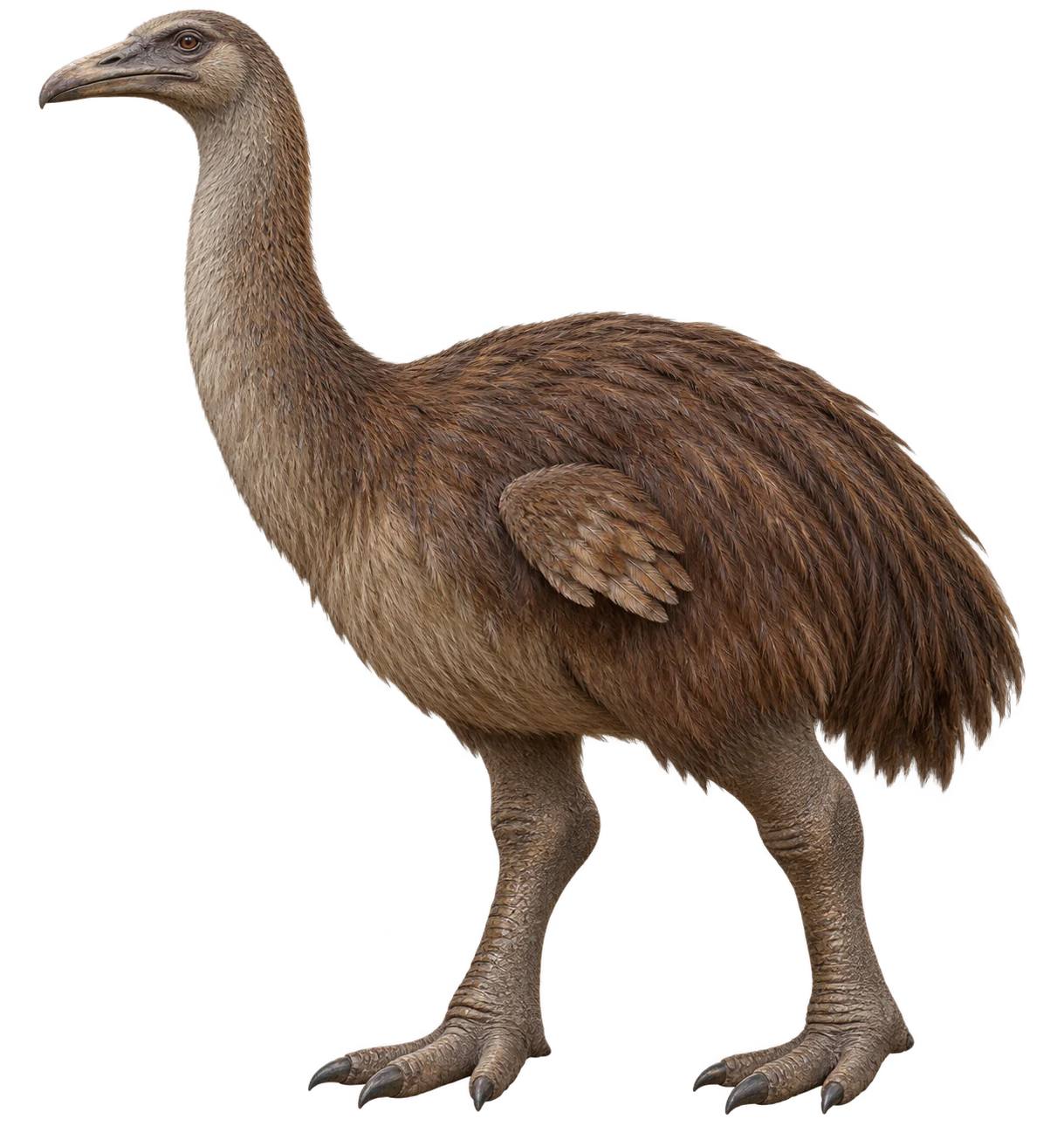
The ostrich is a ratite, one of the flightless birds in the infraclass Palaeognathae. Its relatives include the emus, rheas, cassowaries, kiwis, the flying tinamous and the extinct moa and elephant birds. Genetic studies show that the ostrich line split off before any of the others, so it is the sister group to all of them. The order Struthioniformes once held every ratite, but that grouping proved paraphyletic, and now it holds only the ostriches.
The Somali ostrich probably split from the common ostrich about 4 million years ago, when the East African Rift formed. The two rarely cross, because the Somali bird browses bushland while the common ostrich grazes open savanna. Fossil eggshell from India shows that ostriches lived there 25,000 years ago, with 92% genetic similarity to the North African form. As the largest living bird, the ostrich is also the largest living dinosaur, and scientists use it to model how extinct dinosaurs moved.
Appearance
A male stands 210 to 275 centimetres tall and weighs 100 to 130 kilograms. A female is smaller, at 175 to 190 cm and 90 to 120 kg. The long neck and legs lift the head up to 2.8 metres above the ground. The eye is 50 millimetres across, the largest of any land vertebrate, and it is shaded from the sun above. The head and the flat, broad bill are small for such a big bird, and the bill measures 12 to 14.3 cm.
An adult male is mostly black with white wing tips and a white tail. Hens and young cocks are grey-brown with white. The neck and head are almost bare, with only thin down, and the neck skin is pinkish grey in the female. The bare legs carry scales on the lower part, red in the male and black in the female. The lower leg bone is the longest of any living bird, at 39 to 53 cm.
Each foot has two toes, and the nail on the big inner toe looks like a hoof. The feathers lack the tiny hooks that zip a flying bird's feathers together, so they are soft and loose. The wings span about 2 metres, and the breastbone has no keel because there are no flight muscles to anchor. Chicks are fawn with dark brown spots, reach adult height at one year and full weight at 18 months.
Habitat and range
Ostriches once ranged across Africa north and south of the Sahara and into Asia Minor and Arabia. Hunters wiped out the Arabian birds by the middle of the 20th century, and an attempt to bring them back to Israel failed. Today the species lives in the savannas and the Sahel on both sides of the equatorial forest belt. In south-west Africa it lives in semi-desert and true desert. It prefers open ground, where its eyes can see a predator from a long way off.
The range still covers about 9,800,000 square kilometres, which is why the IUCN keeps the species at Least Concern. Birds have been seen on islands of the Dahlak Archipelago in the Red Sea. Farmed ostriches in Australia escaped, and a small feral population lives in the outback. GBIF holds records from 76 countries, but many of those are farms and zoos rather than wild birds. A male's territory covers 2 to 20 square kilometres.
Diet and feeding
The ostrich eats mainly seeds, shrubs, grass, fruit and flowers. It is a picky feeder and picks out grass seed heads and particular flowers rather than whole plants. Now and then it eats locusts, mice, lizards and scraps left by big cats. A captive bird needs about 3.5 kilograms of food a day.
The bird has no teeth, so it swallows pebbles that grind food inside the gizzard. It packs food into its gullet and sends it down the neck as a ball that can hold 210 millilitres. The gizzard can hold 1,300 grams, and up to 45% of that can be sand and stones. Like other ratites, the ostrich has no crop.
It can go several days without drinking, because it draws water from its food and from its own metabolism. Some of its food plants hold up to 87% water. It survives the loss of 25% of its body weight through dehydration. Even so, it enjoys water and bathes whenever it can.
Behaviour and social life
Ostriches are active by day and busiest early and late, though they may move about on moonlit nights. In winter they live alone or in pairs, and only 16 percent of sightings show more than two birds. In the breeding season, and in long droughts, they form wandering bands of five to 100, and a dominant hen leads each one. These groups often travel with zebras and antelopes, and each species watches for danger on behalf of the rest.
When a predator appears the ostrich runs. It holds a steady 50 kilometres per hour and bursts past 70 km/h, covering 3 to 5 metres in a stride. The wings act as stabilisers and help it brake, turn and zigzag at speed. If it cannot run it lies flat with its neck along the ground. In the heat haze it then looks like a mound of earth. If cornered it kicks forward, and a kick can deliver about 225 kilograms of force.
The ostrich copes with a daily swing of 40 degrees Celsius by changing its posture. It drapes its wings over the bare skin of its thighs to keep heat in, or lifts them to let heat out. It fluffs its feathers to trap a 7 cm layer of air in the heat. It pants at 40 to 60 breaths a minute without upsetting its blood chemistry. It has no sweat glands, so panting and a network of vessels behind the eye that cools the brain do the work.
Communication and senses
The ostrich relies on sight and hearing, and it can spot a lion at a great distance. The eyes are the largest of any land animal, and they sit high on a neck that gives a view over the grass. Groups grazing with zebras and wildebeest pick up a threat sooner than a lone bird would.
A territorial male booms by filling his neck with air, and the sound warns rivals off his ground and his hens. Males hiss and make other noises to intimidate each other. In courtship the male beats one wing and then the other, and the female runs a circle around him with her wings lowered. A parent whose nest is threatened may feign injury to draw a predator away, a display common to many ground-nesting birds. Ostriches raised by people alone may aim their courtship at their keepers instead of other ostriches.
Reproduction and life cycle
Ostriches mature at 2 to 4 years, and females about six months before males. The season runs from March or April to some time before September. A territorial male fights for a harem of two to seven hens and mates with several, but he bonds with only one major female. He clears a nest in the soil with hard wing beats and pokes the ground with his bill. Then he spirals his head as the hen circles him with lowered wings.
The male scrapes the nest, a pit 30 to 60 cm deep and 3 metres wide, in bare ground. Every hen in the group lays in it, and the major female lays first. She can tell her own eggs from the rest, and when incubation starts she rolls out the extra eggs of weaker hens, leaving about 20. Each egg is about 15 cm long and 13 cm wide and weighs about 1.4 kg. The thick, glossy cream shell is marked with small pits. It is over 20 times the weight of a hen's egg. Yet at 1 to 4% of the female's weight it is the smallest egg of any bird relative to its layer.
The drab females sit by day and blend with the sand, and the black male sits by night when he is almost invisible. The eggs hatch after 35 to 45 days, a short time for a ratite, probably because predators find so many nests. Fewer than 10% of nests survive the nine weeks of laying and incubation, and only 15% of the chicks that hatch reach one year. The male usually guards the chicks and teaches them to feed, though both parents help. A bird that reaches adulthood can live a long time. AnAge gives a captive record of 50 years, and Wikipedia reports one bird that lived to 62.
Predators and threats
Cheetahs, lions, leopards, wild dogs and spotted hyenas can take an ostrich of any age. Jackals, warthogs, mongooses and birds of prey raid nests and take chicks. The Egyptian vulture throws stones at ostrich eggs to break the shell. About 90% of chicks die, most of them to predators.
An adult that has seen a predator is almost impossible to catch, so most hunters try an ambush from cover. In the Kalahari, groups of male cheetahs hunt ostriches at night, when the birds keep a poorer watch. Lions there also take ostriches, but elsewhere the bird is a small part of any predator's diet. A parent defending chicks has killed hyenas and even lions with its kick. On farms in North America an adult ostrich has no natural enemy, and one is recorded killing a coyote.
Hunting for plumes almost wiped the species out in the 18th century, and hunting and habitat loss remain the main threats.
Population and conservation
The IUCN lists the common ostrich as Least Concern. The wild population has fallen sharply over the last 200 years, and most surviving birds live in reserves or on farms. The very large range keeps the species off the threatened lists. South Africa also lists it as Least Concern.
The North African subspecies is on Appendix I of CITES, which bans commercial trade across borders. The Arabian subspecies went extinct around 1966. Feather farms appeared in the 19th century, and they eased the pressure on wild birds because a farmed bird can be plucked and kept. By the start of the 20th century over 700,000 birds lived in captivity. iNaturalist holds 15,368 observations, and many of those come from parks in eastern and southern Africa.
Relationship with humans
People and ostriches go back at least 60,000 years. Engraved eggshell from Diepkloof Rock Shelter in South Africa dates to that age. Kalahari hunter-gatherers still punch a hole in an eggshell and use it as a water flask, and they make beads from the pieces. One egg holds as much as about 24 hen's eggs, and people and animals both eat them. Romans wanted ostriches for arena games, for the kitchen and for medicine.
Farming began in South Africa at the start of the 19th century, when settlers near Cape Town raised captured chicks. A farmed bird can be plucked again after seven or eight months. The feather market collapsed after the First World War, and farming for skins and meat spread in the 1970s. Ostrich leather is claimed to be the strongest on the market, and the meat is lean and dark red like beef. Farms offer tours and rides, and people race ostriches in South Africa and at festivals in the United States.
Wild ostriches avoid people, but a cornered bird or one guarding chicks will attack. A kick from the clawed foot can disembowel or kill a person with one blow. Around Oudtshoorn in South Africa, where farms sit beside wild birds, two to three attacks a year cause serious injury or death. By that count the ostrich is the most dangerous bird in the world.
In culture and myth
Ostriches have appeared in art for 5,000 years in Mesopotamia, Egypt and the Kingdom of Kush. A statue found in an Egyptian tomb shows Queen Arsinoe II riding one. In Egyptian belief the ostrich feather of the goddess Ma'at was weighed against the heart of the dead to judge a life. In Eastern Christian churches, decorated ostrich eggs hang on the chains of oil lamps. One story says the hen stares at her eggs without a pause until they hatch, a picture of the attention a Christian owes to prayer.
The claim that an ostrich buries its head in the sand is false. It probably began with Pliny the Elder, who wrote that the bird hides its head in a bush and thinks itself unseen. Lying flat with the neck along the ground, or turning eggs in a sand pit, may have looked like burying from a distance. The image now stands for denial, and economists call the avoidance of bad news the ostrich effect. An African folktale says the ostrich got its long neck in a quarrel between mates over whose turn it was on the nest.
A sentence with a dotted underline is inferred: it describes the group the animal belongs to, or is a reading of the sources, rather than a measured or reported fact about this species.
Questions
Common ostrich questions, answered
How big is an ostrich?
A male stands 210 to 275 centimetres tall and weighs 100 to 130 kilograms, and the heaviest on record reached 156.8 kg. A female stands 175 to 190 cm and weighs 90 to 120 kg.
How fast can an ostrich run?
It holds a steady 50 kilometres per hour and sprints at about 70 km/h in short bursts. That makes it the fastest animal on two legs.
Can an ostrich fly?
No. It has no keel on its breastbone for flight muscles, and its feathers are too soft to form a wing surface. It uses its wings for balance, display and shade.
Do ostriches bury their heads in the sand?
No. The story probably comes from Pliny the Elder and from the bird's habit of lying flat with its neck on the ground to hide. From a distance that can look like a buried head.
What do ostriches eat?
Mostly seeds, grass, shrubs, fruit and flowers. They also take locusts, mice, lizards and leftovers from predator kills. They swallow pebbles to grind the food in the gizzard.
How big is an ostrich egg?
About 15 cm long and 13 cm wide, and it weighs about 1.4 kilograms. That is over 20 times the weight of a hen's egg and equal to about 24 of them.
How many eggs does an ostrich lay?
Several hens lay in one nest, and the major female keeps about 20 eggs for incubation. Wikidata gives an average clutch of about 7.4 eggs per female.
Can an ostrich kill a lion?
Yes. A kick delivers about 225 kilograms of force, and ostriches defending chicks have killed hyenas and lions.
Are ostriches dangerous to humans?
They can be. A kick can disembowel or kill a person, and near Oudtshoorn in South Africa two to three attacks a year cause serious injury or death. Wild birds usually run away.
Where do ostriches live?
In the savannas, grasslands and deserts of Africa, mostly south of the Sahara and on both sides of the equatorial forest. A feral population lives in the Australian outback.
Are ostriches endangered?
No. The IUCN lists the common ostrich as Least Concern because of its huge range. Wild numbers have fallen over the last 200 years, and the Arabian subspecies died out around 1966.
How long do ostriches live?
Ostriches that survive to adulthood are among the longest-lived birds. AnAge gives a captive record of 50 years, and Wikipedia reports one captive bird that lived past 62.
Why does the male ostrich sit on the eggs?
He sits at night, when his black plumage hides him. The grey-brown hens sit by day, when they blend with the sand. The two shifts hide the nest around the clock.
Do people ride ostriches?
Yes, mainly in South Africa, with a saddle, reins and a bit. Farms now set a weight limit for riders, so the practice is mostly for children and small adults.
What is ostrich meat like?
It is dark red, lean and low in fat and cholesterol, and it tastes much like lean beef. It counts as both poultry and red meat.
 Lion
 Cheetah
Ecological equivalents
Related species on this site
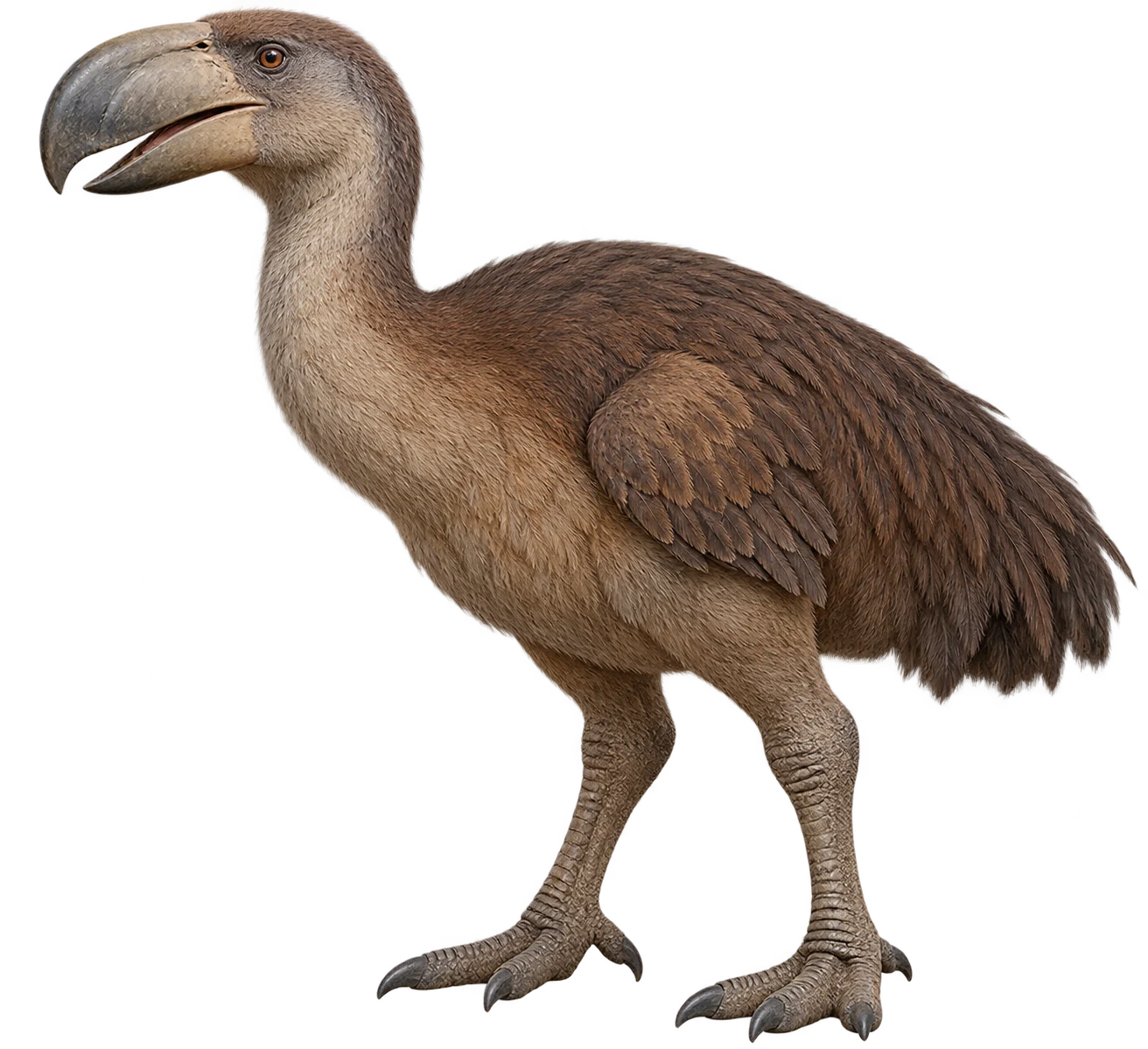
Ostrich (same genus), Dromornis stirtoni (same order), Elephant Bird (same order).