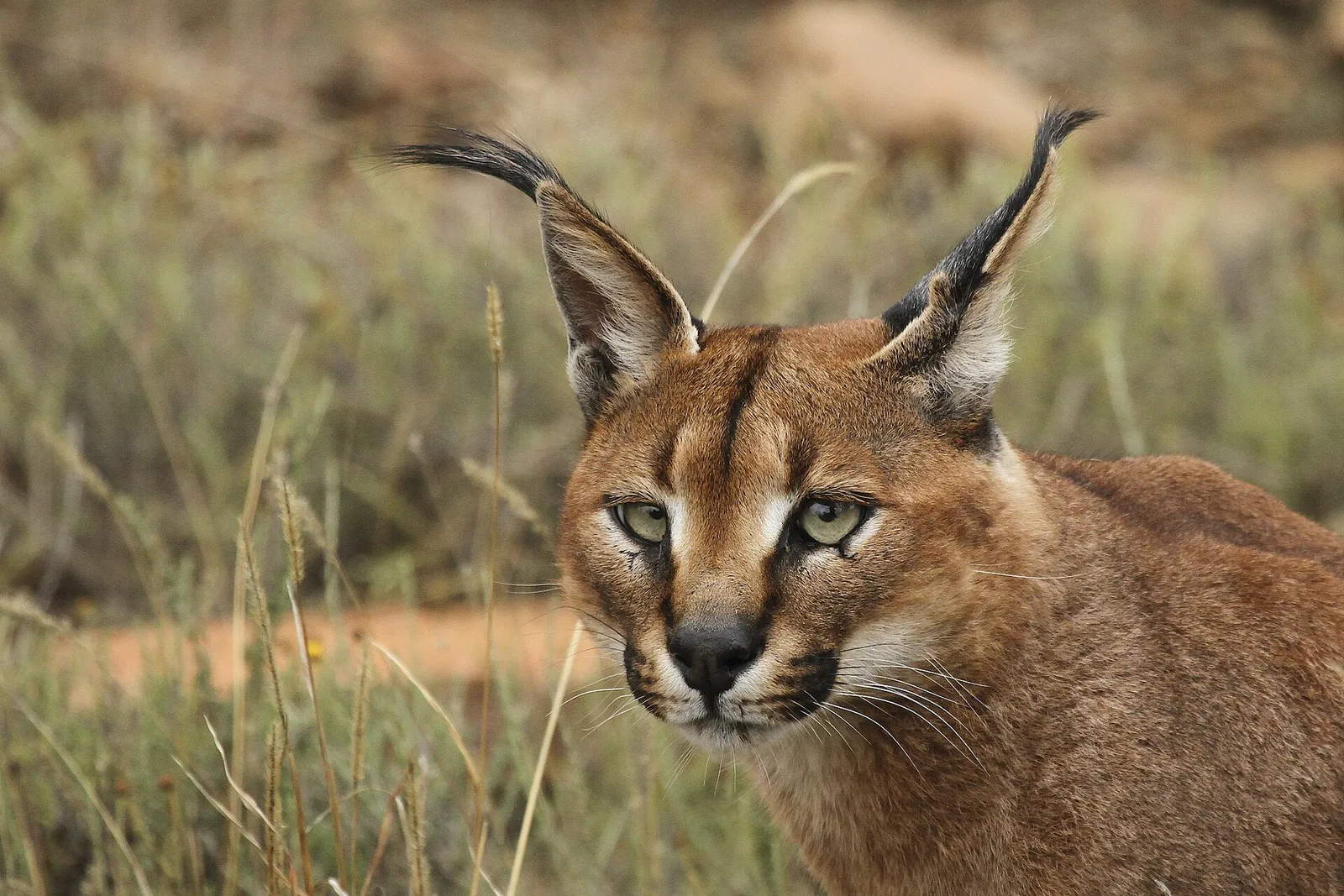
Caracal
The tufted cat that plucks birds out of the air
Caracal caracal
Also called Desert lynx, Persian lynx, African lynx, Red lynx, Gazelle cat
Living individuals or members of this group exist today. This does not mean they are safe from extinction.
Meet the caracal
The caracal is a slim, long-legged cat with black ear tufts, found across Africa and from Arabia to India. It hunts alone at night and can leap more than 3 metres to snatch a bird in flight.
Images of the caracal

Lifespan in the wild
About 12 years
Weight
8 to 19 kg
Length
0.71 to 1.08 m
Height
40 to 50 cm
Fact file
Caracal
- Location
- Africa outside the Sahara and the rainforest belt; Arabia to northwest India
- Habitat
- Savanna, Desert, Grassland, Mountains
- Diet
- Carnivore
- Prey / food
- Rodents, hyraxes, hares, birds, small monkeys, young antelope
- Predators
- Lions, leopards and hyenas on occasion; farmers and herders
- Lifestyle
- Nocturnal and solitary
- Group name
- None; solitary
- Name of young
- Kitten
- Gestation
- 68 to 81 days
- Litter size
- 1 to 6 kittens, usually up to 3
- Population
- Not counted range-wide; common in Southern and East Africa, under 100 in India
- Biggest threat
- Habitat loss and killing over livestock
- Distinctive feature
- Long black ear tufts on a plain tan coat
- Colour
- Reddish tan or sandy above, pale below
- Skin type
- Fur
Size
Next to a person
Measurements
Size and speed
- Height
- 40 to 50 cm at the shoulder
- Length
- 0.71 to 1.08 m head and body, without the tail
- Length, male
- 0.78 to 1.08 m head and body
- Length, female
- 0.71 to 1.03 m head and body
- Tail
- 18 to 34 cm
- Tail, male
- 21 to 34 cm
- Tail, female
- 18 to 31.5 cm
- Weight
- 8 to 19 kg
- Weight, male
- 7.2 to 19 kg 77 males
- Weight, female
- 7 to 15.9 kg 63 females
Typical adult ranges. Source: Wikipedia.
Life cycle
Lifespan
- In the wildAbout 12 years
- In captivityUp to 20.3 years
- 020.3 years
The pale bar is the record. Sources: Animal Diversity Web, AnAge.
Appearance
Colour and coat
- Primary colours
- reddish tansandy
- Secondary colours
- blackwhite
- Skin type
- fur
- Male and female
- Males are larger in almost every measure. Head and body run 78 to 108 centimetres against 71 to 103 for females, and weight up to 19 kilograms against 15.9. A large female can outweigh a small male.
Life cycle
Mating and family
- Mating system
- promiscuous; a female mates with several males
- Social structure
- solitary, with brief pairs in the mating season
- Breeding
- one litter a year
Caracals can breed all year, with a birth peak from October to February. Gestation lasts 68 to 81 days and the litter holds one to six kittens, usually up to three in the wild. The kittens open their eyes at about ten days, eat meat from six weeks and make a first kill at about three months. They leave the mother at nine to ten months. Wild cats live about 12 years, and one captive female reached 20.3.
Classification
Taxonomy
- Kingdom
- Animalia
- Phylum
- Chordata
- Class
- Mammalia
- Order
- Carnivora
- Family
- Felidae
- Genus
- Caracal
- Species
- Caracal caracal
Conservation
Red List status
- LC
- NT
- VU
- EN
- CR
- EW
- EX
Least Concern on the IUCN Red List
Range
Recorded in 10 countries
Habitat layer: tropical grassland, savanna and shrubland, temperate grassland, savanna and shrubland, montane grassland and shrubland, desert and xeric shrubland.
Countries from 1,170 wild records on GBIF (iNaturalist research grade), filtered and checked by hand. Country shapes: Natural Earth. Habitat: RESOLVE Ecoregions 2017, CC BY 4.0. Basemap: Natural Earth.
Habitats
Three things to know
- 1
A caracal can jump more than 3 metres straight up and turn in mid-air to catch a bird.
- 2
Its name comes from the Turkish for black ear.
- 3
Indian rulers once bet on which caracal would kill the most pigeons from a flock, the likely origin of a cat among the pigeons.
Did you know
Seven more facts
- 1
The ear tufts are about 4.5 centimetres long and may droop as the cat ages.
- 2
A caracal stops moving once the air rises above 20 degrees Celsius.
- 3
Kittens are born with claws they cannot retract, and a spotted belly that fades.
- 4
A male in Saudi Arabia may patrol up to 1,116 square kilometres.
- 5
Caracals caused about 11% of African penguin deaths at one South African colony over 22 years.
- 6
A caracal and a house cat produced a hybrid kitten at Moscow Zoo in the 1990s.
- 7
The cat has only 30 teeth, because it lacks the second upper premolar.
Field notes
How it looks and acts
Field notes
Distinguishing features
- Long black tufts on the tips of the ears.
- A plain reddish tan coat with no spots on the back.
- Hind legs longer than the front legs, so the back slopes down to the shoulders.
- Two black lines from forehead to nose and white patches around the eyes.
- A short bushy tail of 18 to 34 centimetres.
- Shoulder height of 40 to 50 centimetres.
Field notes
Unique adaptations
- Long, muscular hind legs power a jump of more than 3 metres.
- A lowered upper eyelid cuts glare in open sun.
- Guard hairs grow from 2 to 3 centimetres between summer and winter.
- A plain sandy coat makes it vanish when it lies flat in dry grass.
- Large ear openings pick up small prey by sound alone.
Field notes
Interesting behaviours
- Hunts at night and rests through the heat of the day.
- Stalks to within about 5 metres before it sprints.
- Marks its territory with urine, uncovered dung and claw scratches.
- Scrapes earth over a half-eaten kill and returns to it.
- Moves her kittens to a new hiding place each day.
Field notes
Temperament
- Secretive and hard to see, even where it is common.
- Bold for its size, and will chase off a predator twice as big.
- Solitary, and short with company outside the mating season.
Field notes
Communication
- Meows, growls, hisses, spits and purrs like other cats.
- Flicks the ear tufts at another caracal in a face-to-face meeting.
- A female in season sprays urine to draw males.
- A cough-like call has been recorded during courtship.
Ecology
Ecological role
The caracal is a mid-sized predator that keeps rodent, hyrax and bird numbers in check across dry Africa and Asia.
- Eats whatever prey is most common, which stops any one species from booming.
- In some areas it is one of the few animals able to kill certain prey, such as small antelope.
- Takes seabirds and game birds, including about 11% of penguin deaths at one colony.
- Serves as occasional prey for lions and hyenas.
Stories
Myths and legends
- In ancient Egyptian tradition, caracal statues guarded the tombs of pharaohs, and some cats were embalmed.
- In Mughal Indian tradition, the caracal was a royal hunting cat for birds, paired with the cheetah for larger game.
- In Turkish tradition, the cat is simply the black ear, the name the whole world now uses.
- In some African traditions, the cat is said to stand for hunting, protection and survival in dry country.
People
Relationship with humans
People
Living alongside us
Kings in India and Persia trained caracals to course birds and small deer, and Chinese emperors paid gold for them. Today farmers in Southern Africa kill thousands a year over sheep and goats, and the cat is trapped for the pet trade in Arabia. It avoids people and almost never harms them. Its pelt is worth little, though it is eaten as bushmeat in parts of Africa.
- The caracal avoids people and no attacks on humans are recorded in the sources.
- It can probably injure a handler or a dog if cornered, as any cat its size can.
- Its real conflict with people is over sheep, goats and poultry.
People
Status, uses and products
- Domestication
- Wild
- As a pet
- Not suitable. A caracal needs a territory of many square kilometres, live prey and a night-time life. Pet-trade capture is one of the threats to the Arabian population, and the cat stays wild in a house.
- Uses
- falconry-style huntingzoo exhibition
- Products
- peltsbushmeat
The full account
About the caracal
The caracal, Caracal caracal, is a medium-sized wild cat of dry country in Africa and southwest Asia. It is easy to know by its long black ear tufts and its plain reddish tan coat. It stands 40 to 50 centimetres at the shoulder and weighs 8 to 19 kilograms. The hind legs are longer than the front legs, which gives it a jump of more than 3 metres. That jump lets it take birds out of the air, a trick that made it a hunting cat for Indian kings.
Caracals live alone, hunt mostly at night and hide so well that people seldom see them. Small mammals make up at least 80% of the diet, but the cat will kill an antelope two to three times its own weight. The IUCN lists the species as Least Concern, because it lives in over 50 countries. In parts of Asia it is close to extinction, and in India fewer than 100 may survive.
Name and taxonomy
Georges Buffon proposed the name caracal in 1761, from the Turkish karrah-kulak, black ear. Johann Christian Daniel von Schreber described the species as Felis caracal in 1776, from a skin taken at the Cape of Good Hope. John Edward Gray moved it into its own genus, Caracal, in 1843. It sits in the cat family Felidae and the subfamily Felinae, the small cats.
People often call it the desert lynx or Persian lynx, and GBIF also lists red lynx, African lynx and gazelle cat. When Greek and Roman writers said lynx, they most likely meant this cat, but the true lynxes are a separate genus. Since 2017 three subspecies are accepted: the southern caracal, the northern caracal of North and West Africa, and the Asiatic caracal.
Evolution and relatives
The caracal's closest relative is the African golden cat, and the two split between 2.93 and 1.19 million years ago. Those two cats plus the serval make up the Caracal lineage. That lineage broke away from the other cats between 11.56 and 6.66 million years ago. Its ancestor reached Africa between 8.5 and 5.6 million years ago.
The caracal is not a lynx, despite the ear tufts. A lynx has a spotted, blotched coat, while the caracal's coat is plain. The golden cat is built much the same way but is darker and has no tufts. The serval, which shares much of its range, has a spotted coat, longer legs, a longer tail and white spots behind the ears. In the 1990s a captive caracal mated with a domestic cat at Moscow Zoo and produced a hybrid kitten.
Appearance
The caracal is a slim but solid cat with a short face, long legs and long canine teeth. Its short bushy tail reaches the hocks. It stands about 40 to 50 centimetres at the shoulder. A male measures 78 to 108 centimetres from head to rump, with a tail of 21 to 34 cm, and weighs 7.2 to 19 kilograms. A female measures 71 to 103 cm, with a tail of 18 to 31.5 cm, and weighs 7 to 15.9 kg. The hind legs stand taller than the front legs, so the back slopes down towards the shoulders.
The ear tufts are black and about 4.5 centimetres long, and they may droop with age. Two black lines run from the forehead to the nose, the mouth has a black outline, and white patches ring the eyes and mouth. The upper eyelid sits low, which probably shields the eye from glare. Eye colour runs from gold and copper to green or grey.
The coat is an even reddish tan or sand colour, paler on the belly and inside the legs, with small reddish spots there. Black caracals occur but are very rare. The fur is short, soft and dense, and the guard hairs grow to 3 centimetres in winter and 2 cm in summer. The cat has 30 teeth, with canines up to 2 cm long, and it lacks the second upper premolar.
Habitat and range
In Africa the caracal lives almost everywhere south of the Sahara, outside the rainforest belt of West and Central Africa. It is rare in North Africa and may be close to extinction there. In Asia it ranges from the Arabian Peninsula and the Middle East through Turkmenistan and Uzbekistan to western India. GBIF holds records from 50 countries, though that count includes zoos.
It uses savanna, scrub, semi-desert, marshy lowland, rocky hills and dry forest. It likes dry places with low rainfall and some cover, and it does best where forest meets grassland. It copes with far drier country than the serval, but it avoids true desert and wet tropical forest. In the Ethiopian Highlands it climbs to 3,000 metres.
The Asian range is thin and broken. In Uzbekistan the cat survives only on the Ustyurt Plateau and in the Kyzylkum Desert, where 15 were seen alive from 2000 to 2017. A camera trap in Abu Dhabi caught a male in 2019, the first record there since the mid 1980s. In India it holds on in Rajasthan, Gujarat and Madhya Pradesh, including Sariska and Ranthambhore.
Diet and hunting
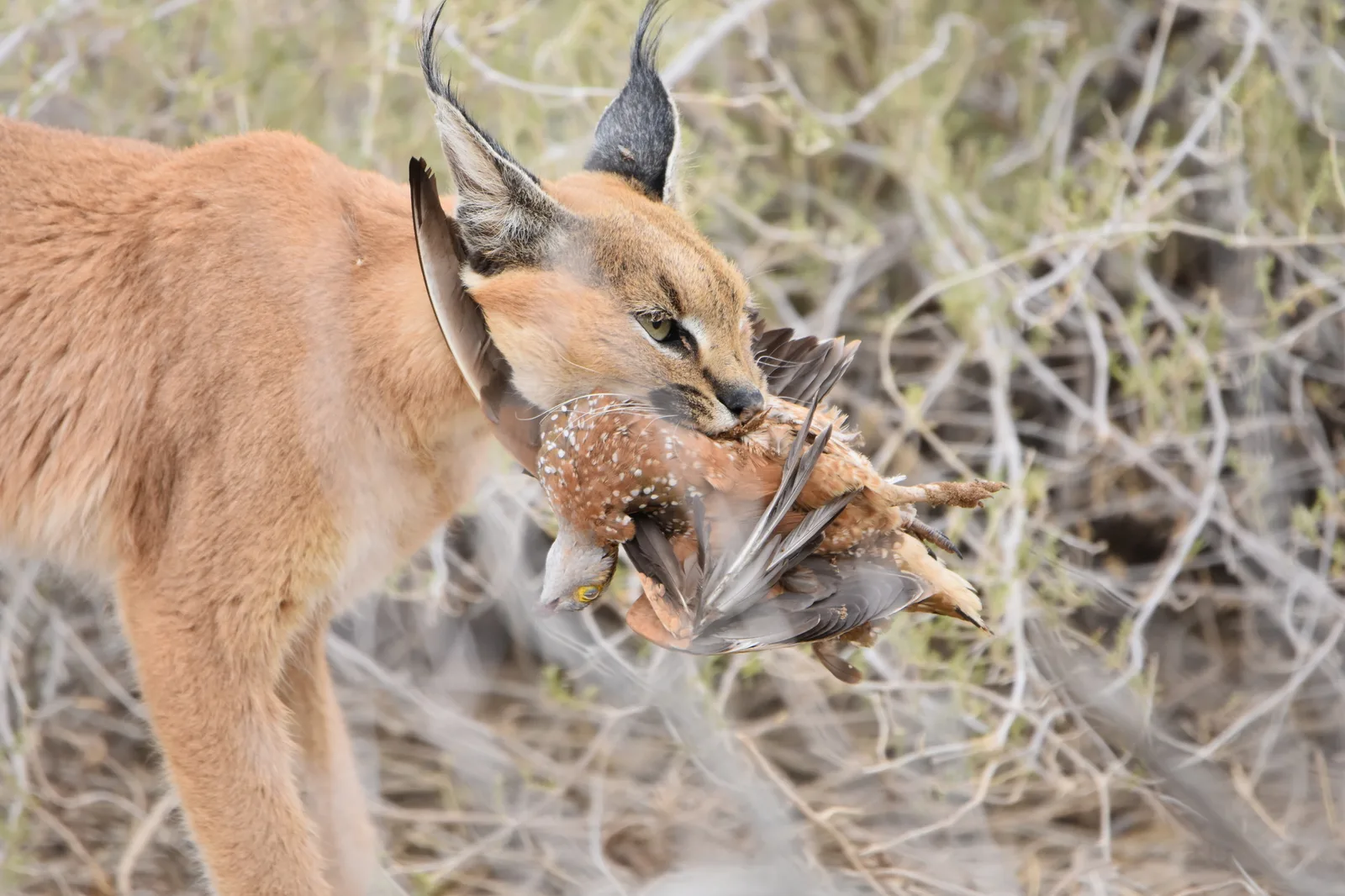
Small mammals make up at least 80% of the diet. Rock hyraxes, hares, rodents and birds are the staples, and doves and partridges matter in season. In South Africa it takes Cape grysbok, common duiker, vlei rats and Cape hares. It also kills young kudu, impala, springbok and several gazelles, and small monkeys. Lizards, snakes and insects fill the rest, and it eats grass and grapes now and then, which may clear parasites.
The caracal stalks to within about 5 metres, then sprints. Its hind legs launch it more than 3 metres into the air, and it can twist in flight to meet a bird. Large prey dies from a throat bite that cuts off the air, and small prey from a bite to the nape. It eats a kill on the spot, and it returns to a large carcass if nothing disturbs it. Unlike a leopard, it rarely drags a kill into a tree, but it will scrape earth over the remains.
Where sheep and goats graze, the cat takes some, mostly when wild prey runs short. At Simon's Town in South Africa, caracals caused about 11% of African penguin deaths between 1999 and 2021. In western India, rodents form a large share of the diet.
Behaviour and social life
The caracal is mostly nocturnal, though it moves by day in cool weather or in undisturbed reserves. A South African study found it most active below 20 degrees Celsius, with activity stopping in the heat. It lives alone or briefly in pairs, and the only groups are mothers with kittens. It is so secretive that daytime activity may simply go unseen.
Both sexes hold territories and mark rocks and bushes with urine, and probably with uncovered dung. Claw scratching is common. In Israel a male's range averages 220 square kilometres and a female's 57. In Saudi Arabia male ranges run from 270 to 1,116 square kilometres. In South Africa's Mountain Zebra National Park a female needs only 4.0 to 6.5 square kilometres. A male's range overlaps with several other males, while a female keeps hers for herself.
The cat climbs well and is bold for its size. ADW records a single caracal driving off a predator twice its own size. When threatened in open country it lies flat and lets its plain coat hide it.
Communication and senses
No one has studied caracal communication in depth, and most of what is known comes from captive cats. Like other cats it meows, growls, hisses, spits and purrs. Captive cats also gurgle, give a wah-wah call and bark with a loud cough. A cough-like call has been reported as a mating signal.
The ear tufts and face markings seem to carry visual messages. Caracals have been seen flicking their heads sideways, which makes the tufts flutter at each other. A female in season marks with urine far more often, and a male reads that scent with the vomeronasal organ. Hearing is sharp enough to locate small prey by sound alone, and sight then guides the pounce.
Reproduction and life cycle
Both sexes can breed by one year old, though the first successful mating usually comes at 12 to 15 months. Breeding goes on all year, but births peak from October to February. ADW suggests a female comes into season when she is best fed, which explains the peak. Oestrus lasts one to three days and returns every two weeks until she conceives. Several males may court one female, and she tends to pick the older and larger ones. Mating lasts under five minutes, and she almost always mates with more than one male.
Gestation takes 68 to 81 days. The litter holds one to six kittens, though wild litters rarely exceed three. The den is a burrow left by an aardvark or porcupine, a tree hollow, a cave or thick cover. Kittens are born deaf and blind, with claws they cannot yet draw in, and with a spotted belly. The eyes open by ten days, and the ears stand up and the claws retract by the third or fourth week.
Play and the first meat begin around the fifth or sixth week, but the first kill waits nearly three months. The mother moves the kittens to a new spot every day once they can walk. Nursing ends at about 15 weeks, and the young leave at nine to ten months, though some daughters stay on. A female raises only one litter a year. Wild caracals live about 12 years on average, and the captive record is 20.3 years.
Predators and threats
Lions and hyenas can kill a caracal, but they do not hunt it regularly. Its main defences are camouflage and climbing. Male caracals sometimes kill kittens, perhaps to bring the mother back into season.
People are the real threat. Farms, roads and settlements eat into its habitat in every range country. Herders and farmers kill it over sheep and goats, and in South Africa and Namibia it is culled as a pest. In Uzbekistan at least 11 were killed by herders between 2000 and 2017, against 15 seen alive. Cars kill many in Turkey, Iran and Ethiopia, and the pet trade takes cats in Arabia.
Population and conservation
The IUCN has listed the caracal as Least Concern since 2002. No range-wide count exists, but numbers are stable in central and Southern Africa. The picture is worse at the edges: nearly gone from North Africa, critically endangered in Pakistan and endangered in Jordan. Uzbekistan has listed it as Critically Endangered since 2009 and Kazakhstan since 2010. India may hold fewer than 100.
African populations sit on CITES Appendix II, and Asian populations on Appendix I, which bans commercial trade. Hunting is illegal in 17 countries, from Afghanistan and Algeria to Turkey and Uzbekistan. South Africa rates it Least Concern and asks farmers to report sightings and livestock losses to a national centre. The cat recolonises cleared farmland quickly, which keeps its African numbers up despite the culls.
Relationship with humans
Rulers in India and Persia trained caracals to course game birds and small deer. Mughal emperors used them from at least the time of the Delhi Sultanate, and Indian princes kept the sport up into the 20th century. The caracal took bustards, francolins and other game birds, while the cheetah took larger game. Cats were loosed into arenas full of pigeons, and people bet on which would kill the most. That game probably gave English the phrase about a cat among the pigeons.
Yuan dynasty rulers in China bought caracals, cheetahs and tigers from Muslim traders in the 13th and 14th centuries, paying in gold, silver and silk. The Ming court kept the practice going. The pelt once went into fur coats, though its plain colour keeps demand low today. In West and Central Africa the cat is eaten as bushmeat.
Today the caracal is mostly a farmer's problem and an exotic pet. Predator control in South Africa and Namibia kills thousands each year. The cat avoids people and poses no real danger to them.
In culture and myth
In ancient Egyptian tradition the caracal held religious meaning. It appears in tomb paintings and as bronze figurines, and its sculptures probably stood guard at the tombs of pharaohs. Embalmed caracals have been found. Web sources link the cat to the goddess Bastet and the sun god Ra, and say Egyptians believed it kept off evil spirits.
In Turkish the cat is the black ear, and that name travelled into every European language. In Mughal India the caracal stood for the sport of kings, second only to the cheetah. Some African traditions are said to tie the cat to hunting skill, protection and survival in dry land. Claims of Native American or Celtic caracal lore come from spirit-animal blogs and seem invented, since the cat never lived in either region.
A sentence with a dotted underline is inferred: it describes the group the animal belongs to, or is a reading of the sources, rather than a measured or reported fact about this species.
Questions
Caracal questions, answered
How high can a caracal jump?
More than 3 metres straight up. It uses the jump to knock birds out of the air, and it can twist in mid-air to change direction.
What do caracals eat?
Mostly small mammals, which make up at least 80% of the diet: hyraxes, hares, rodents and small antelope. They also take birds, lizards, snakes and insects, and sometimes sheep or goats.
How big is a caracal?
Shoulder height is 40 to 50 centimetres and weight is 8 to 19 kilograms. The head and body measure 71 to 108 cm, with a tail of 18 to 34 cm.
Where do caracals live?
Across Africa south of the Sahara, outside the rainforest belt, and from Arabia and the Middle East through Central Asia to northwest India. They favour dry savanna, scrub and rocky hills with some cover.
Are caracals endangered?
No. The IUCN lists them as Least Concern because they live in over 50 countries. They are nearly gone from North Africa, critically endangered in Pakistan and Uzbekistan, and fewer than 100 may remain in India.
Is a caracal a lynx?
No. It is often called the desert lynx because of its ear tufts, but true lynxes are a separate genus with spotted coats. Its closest relative is the African golden cat.
Why do caracals have ear tufts?
No one knows for certain. Caracals flick their heads so the tufts flutter at each other, so the tufts probably serve as a signal between cats.
Can you keep a caracal as a pet?
It is a poor idea and often illegal. The cat needs a large territory and live prey, and demand for pets drives trapping in Arabia.
Are caracals dangerous to humans?
No. They avoid people and no attacks are recorded in the sources. The conflict is over livestock, not people.
How long do caracals live?
About 12 years in the wild. Captive cats live nearly 16 years on average, and one wild-born female reached 20.3.
How many kittens does a caracal have?
One to six after a gestation of 68 to 81 days. Wild litters rarely hold more than three.
What does the name caracal mean?
Black ear, from the Turkish karrah-kulak. Georges Buffon proposed the name in 1761.
Are caracals nocturnal?
Mostly. They hunt at night and move by day only in cool weather or in undisturbed reserves. A South African study found them most active below 20 degrees Celsius.
Do caracals kill livestock?
Sometimes, mostly sheep and goats when wild prey is scarce. South Africa and Namibia run control programmes that kill thousands a year, but the cats soon recolonise the land.
Why were caracals used for hunting?
Indian and Persian rulers trained them to catch game birds and small deer, because they could take a bird in flight. The cheetah handled larger game.
How do you tell a caracal from a serval?
A serval has a spotted coat, longer legs, a longer tail and white spots behind the ears, and no ear tufts. A caracal is plain tan with black tufts.
Food web
Prey and food
- rodents
- hyraxes
- hares
- birds
- monkeys
- antelope
 African wildcat
 Black-footed cat
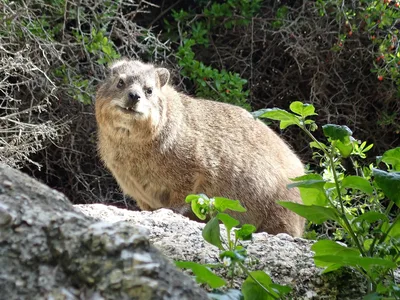 Rock hyrax
Food web
Predators
 Lion
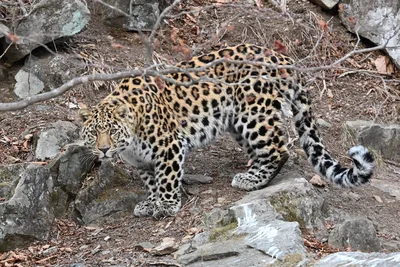 Leopard
Ecological equivalents
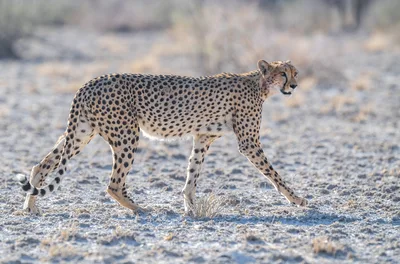

Related species on this site
Abyssinian (same family), African Golden Cat (same family), African wildcat (same family), American Wirehair (same family), Amur Leopard (same family), Australian Mist (same family), and more.
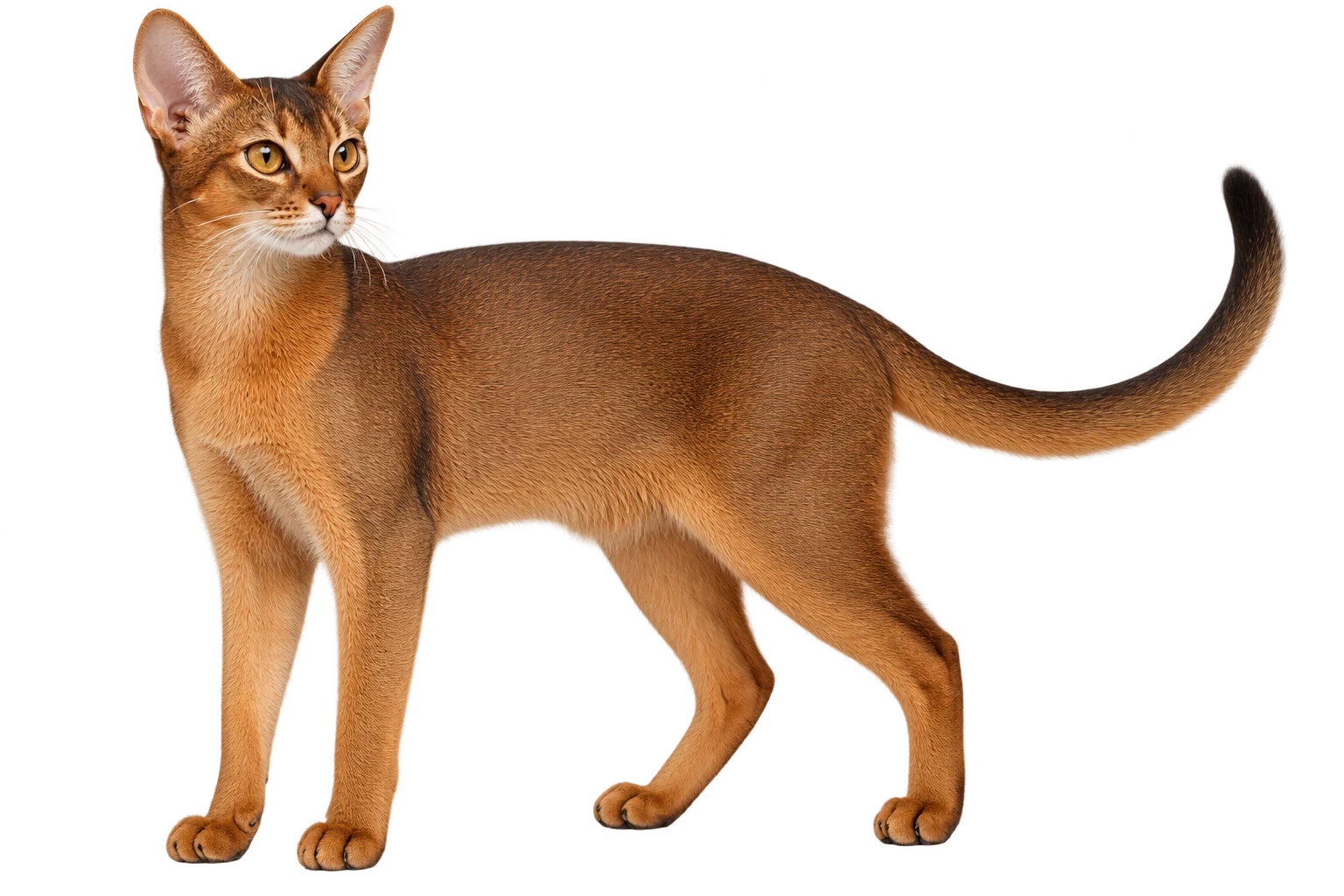
Mammals
Abyssinian
Felis catus
Classification and source reference
LivingAI illustration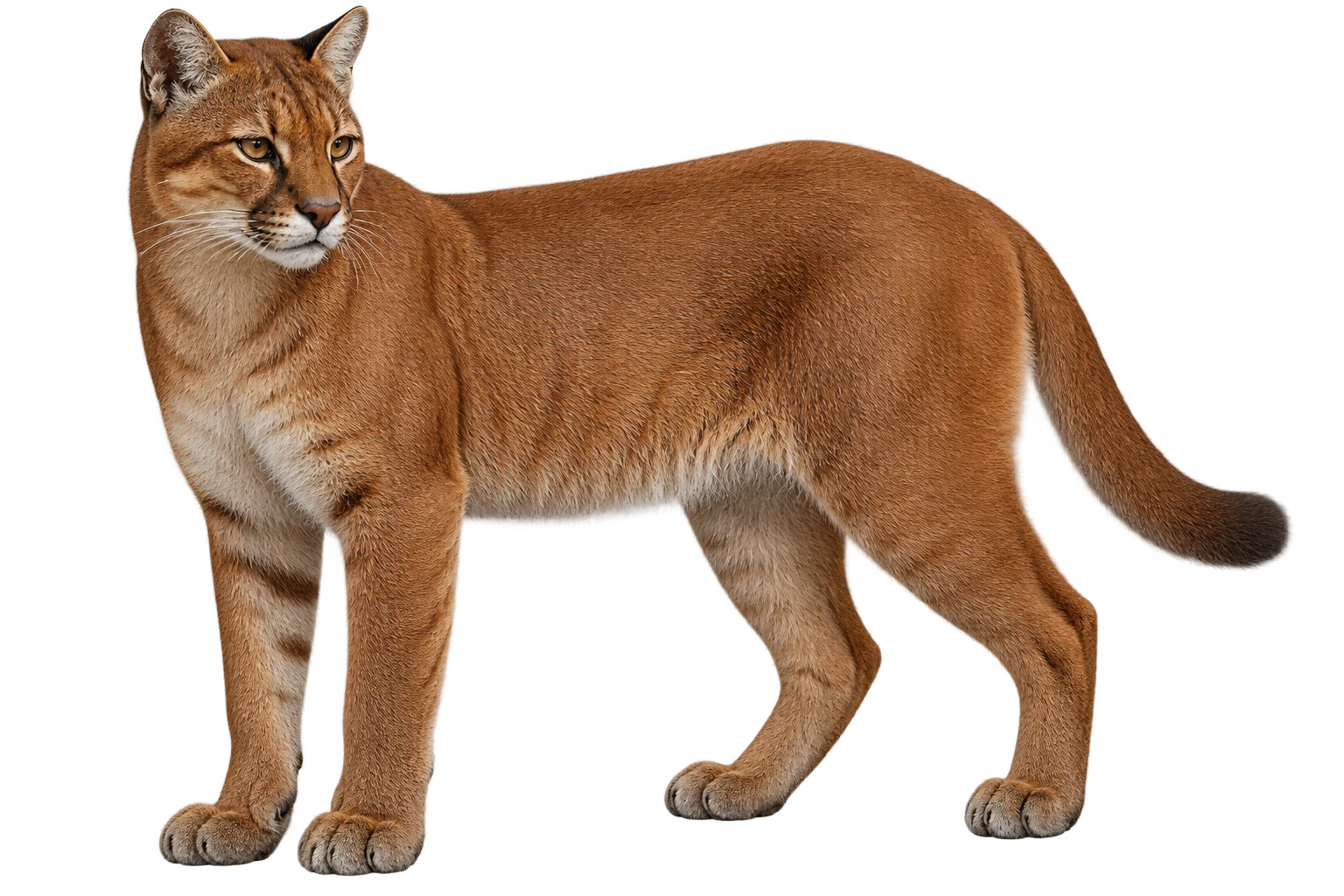
Mammals
African Golden Cat
Caracal aurata
Classification and source reference
LivingAI illustration- LC
Mammals
African wildcat
Felis lybica
The African wildcat is a small striped cat of dry Africa and Asia, and the ancestor of every domestic cat.
Living 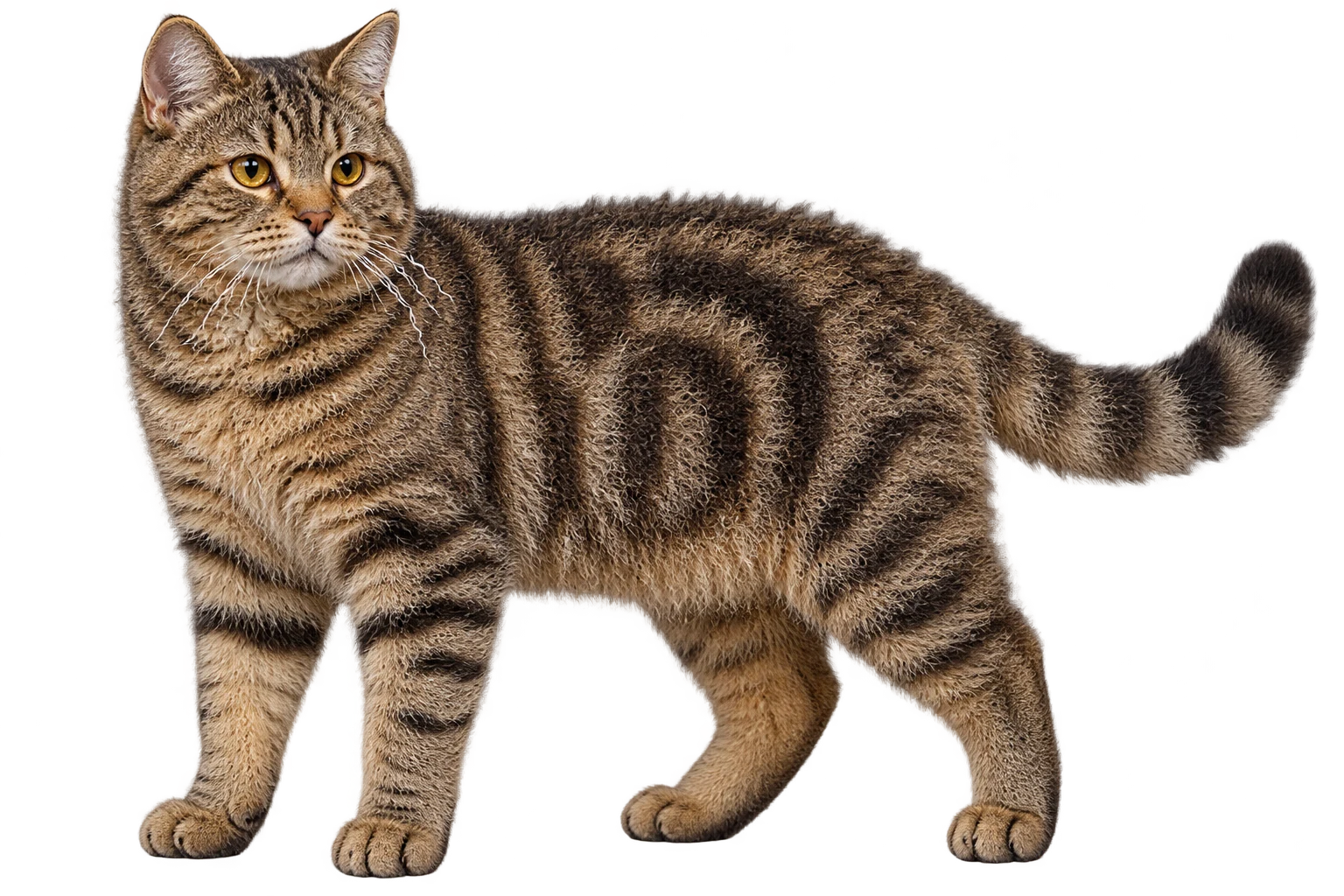
Mammals
American Wirehair
Felis catus
Classification and source reference
LivingAI illustration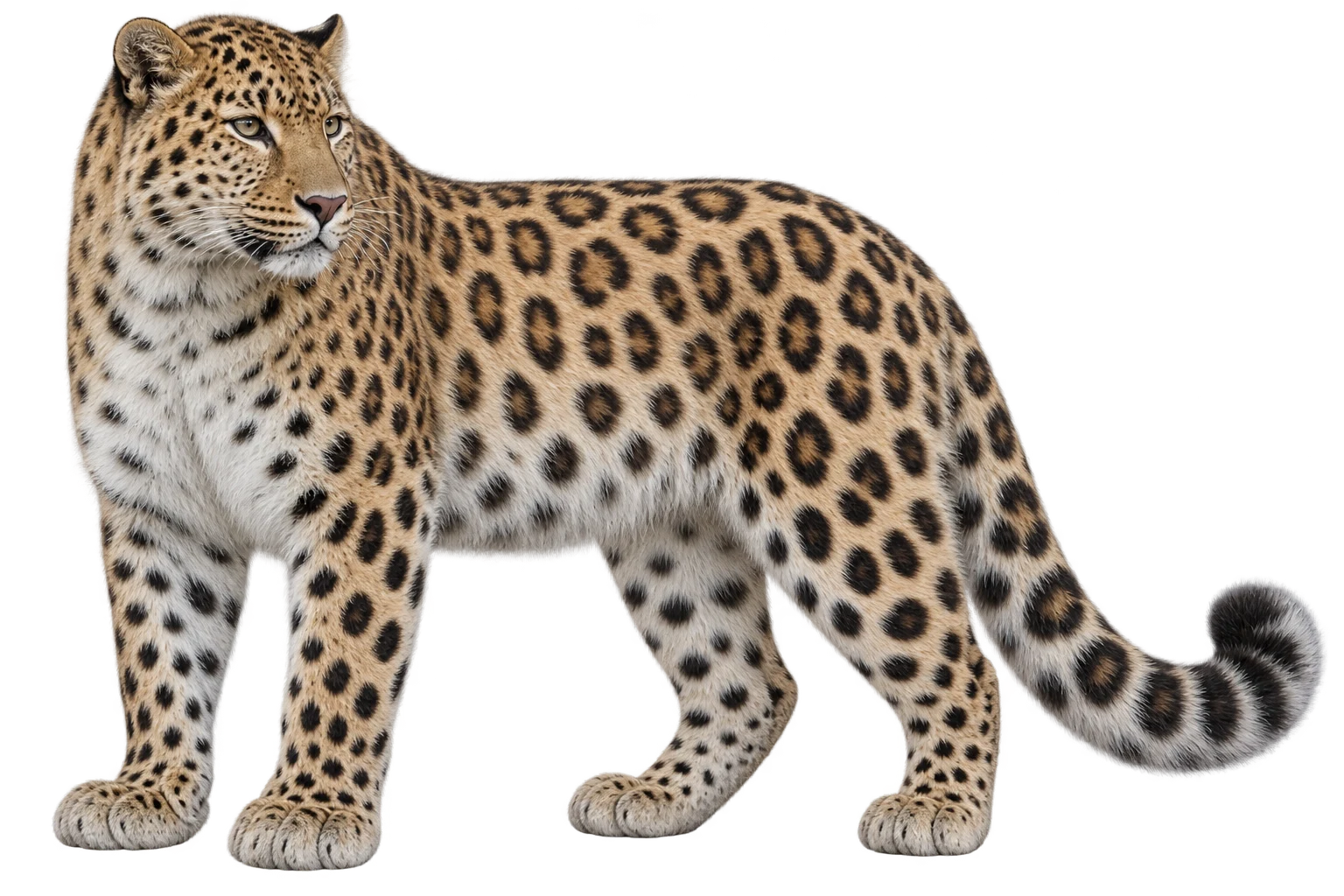
Mammals
Amur Leopard
Panthera pardus orientalis
Classification and source reference
LivingAI illustration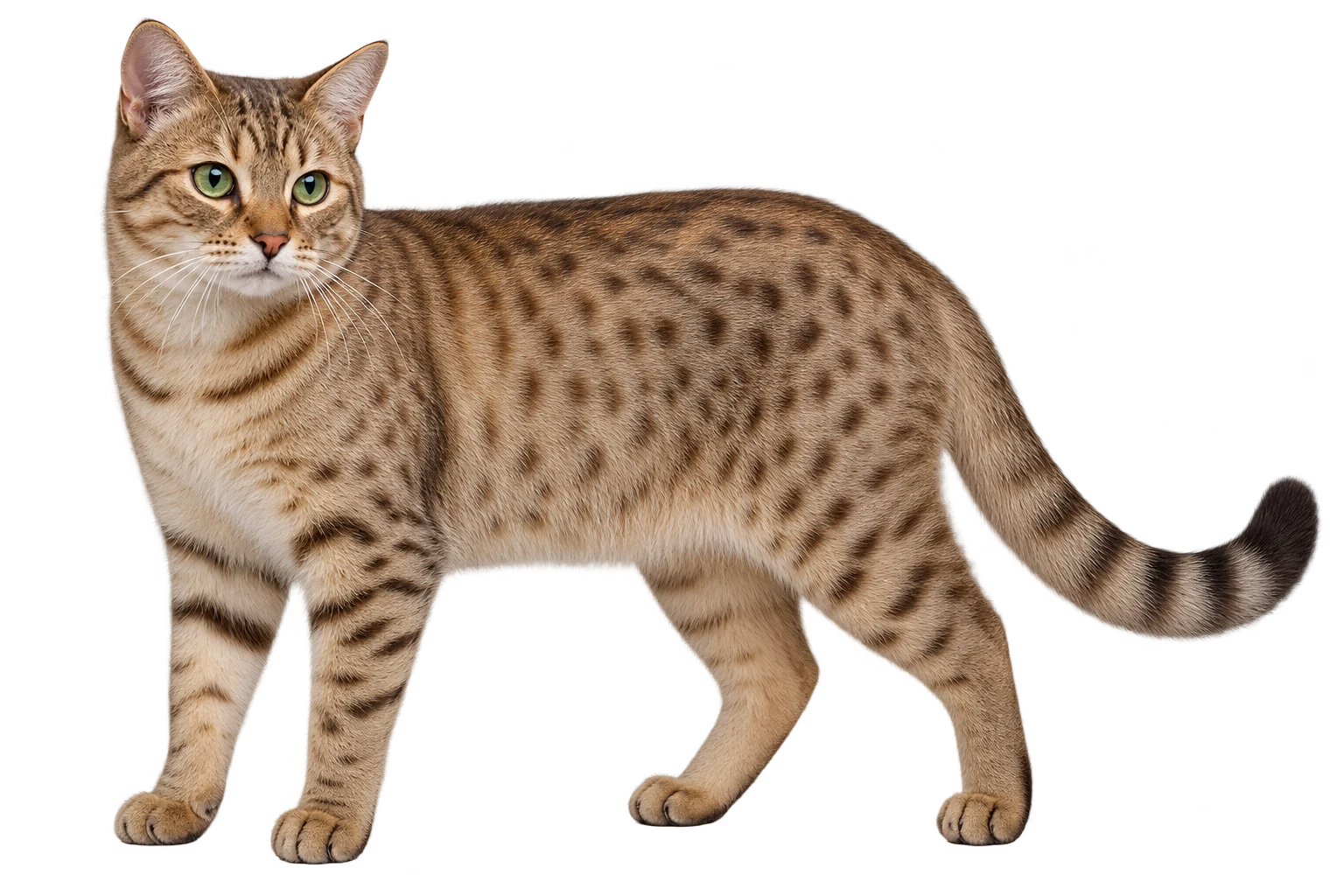
Mammals
Australian Mist
Felis catus
Classification and source reference
LivingAI illustration