Rock hyrax
A rabbit-sized cousin of the elephant that posts sentries
Procavia capensis
Also called Dassie, Cape hyrax, Rock rabbit, Klipdassie, Coney
Living individuals or members of this group exist today. This does not mean they are safe from extinction.
Meet the rock hyrax
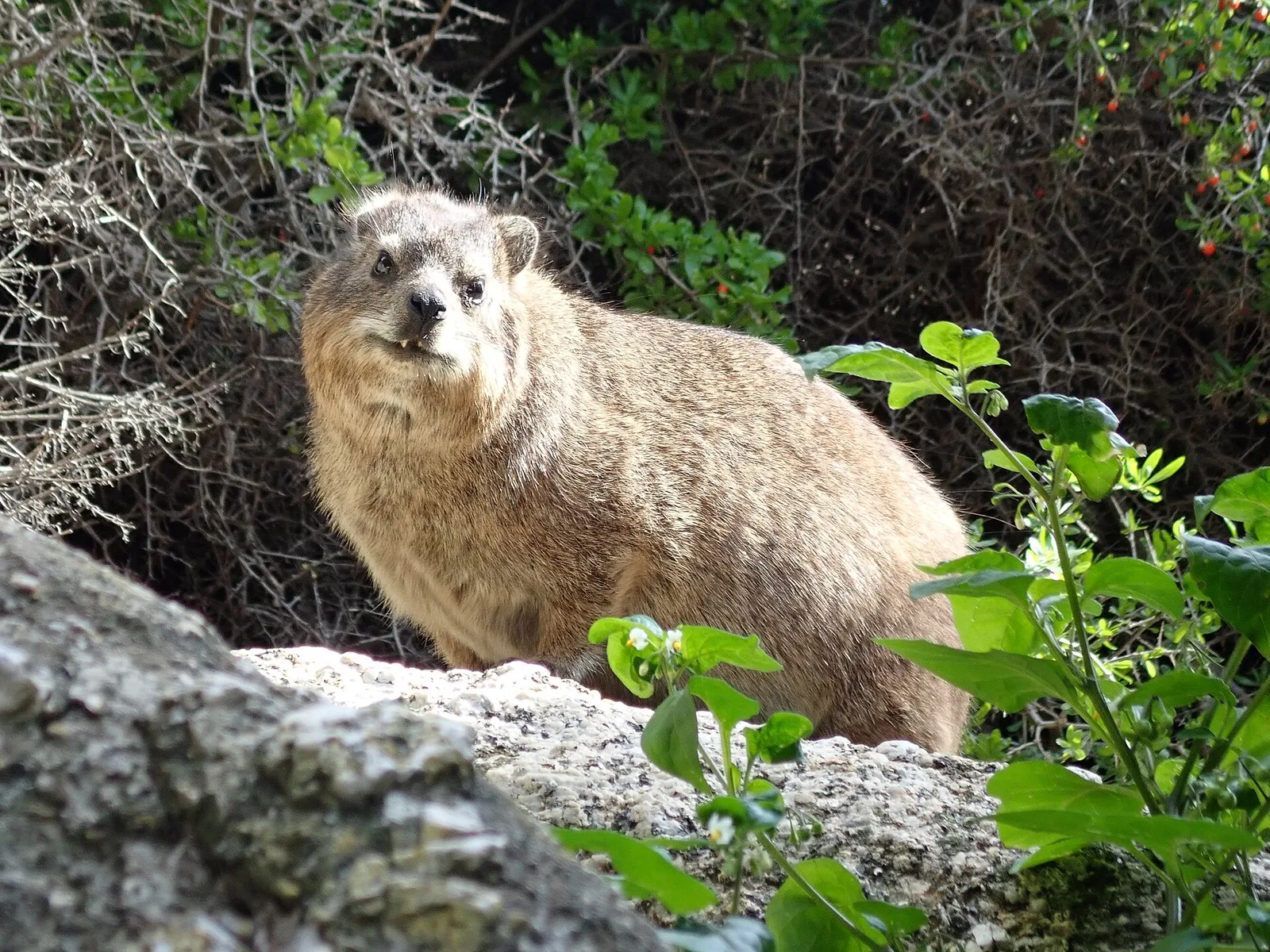
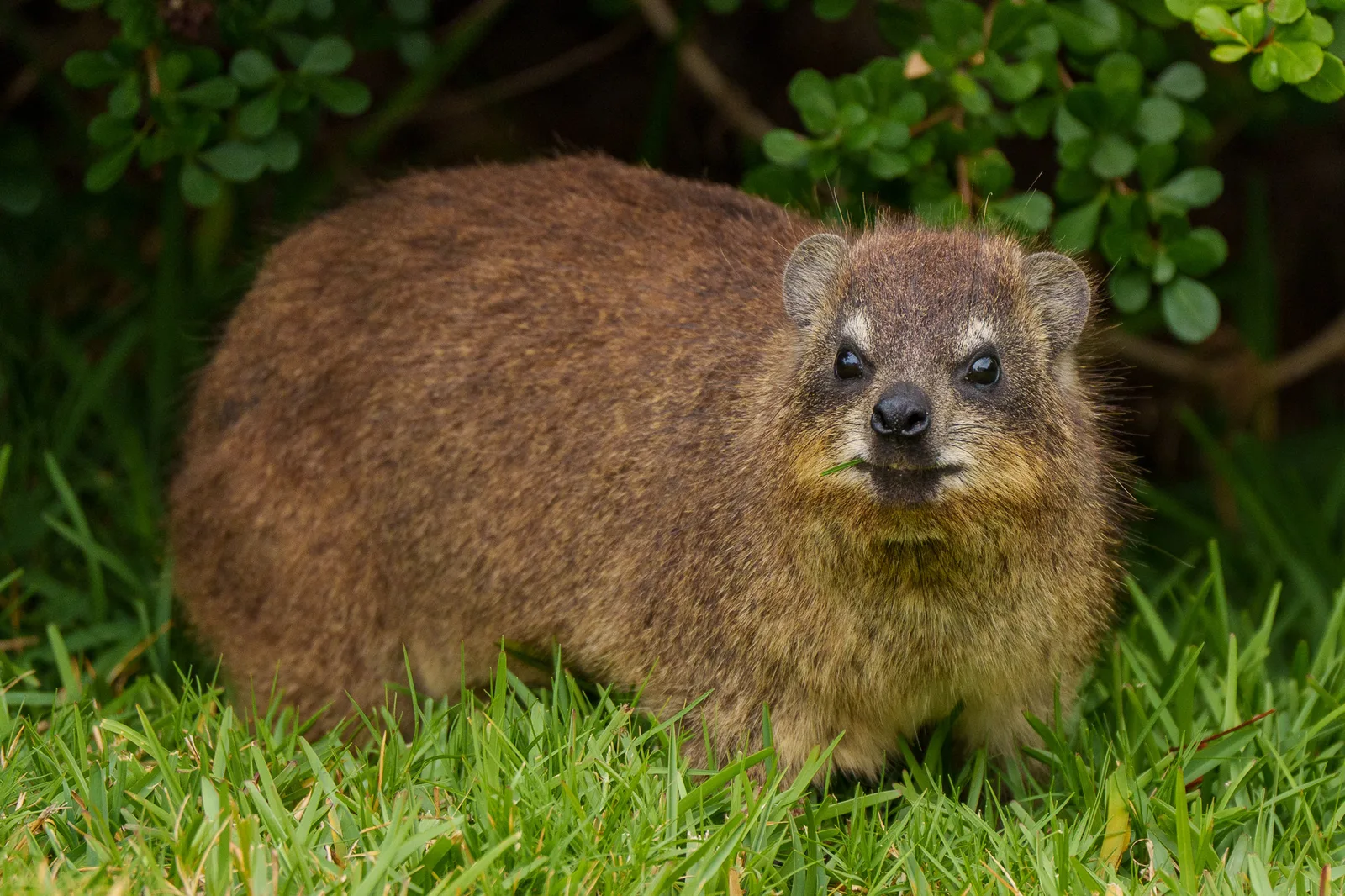
The rock hyrax is a squat, rabbit-sized mammal of African and Middle Eastern rock outcrops. Its nearest living relatives are the elephants and the sea cows. It lives in colonies of up to 80, posts sentries while it grazes, and spends most of the day resting in the sun.
Images of the rock hyrax
Lifespan in the wild
Up to 12 years
Weight
3.6 to 4.3 kg
Length
30.5 to 55 cm
Fact file
Rock hyrax
- Location
- Sub-Saharan Africa, the Sahara fringes, Egypt, the Levant and Arabia
- Habitat
- Mountains, Desert, Savanna
- Diet
- Herbivore
- Prey / food
- Grasses, leaves, shoots, buds, fruit, bark, lichens; some insects
- Predators
- Leopard, Verreaux's eagle, caracal, python, cobra, puff adder, jackal, owls
- Lifestyle
- Diurnal and social; basks in the morning, feeds in the evening
- Group name
- Colony
- Name of young
- Pup
- Gestation
- 6 to 8 months
- Litter size
- 1 to 4 young, usually 2 or 3
- Population
- Common across its range; trend unknown
- Biggest threat
- None major; hunted for meat and treated as a pest in places
- Distinctive feature
- Tusk-like upper incisors and a scent gland on the back
- Colour
- Grey-brown, from dark brown in wet areas to pale grey in deserts
- Skin type
- Fur
Size
Next to a person
Measurements
Size and speed
- Length
- 30.5 to 55 cm total length; the tail is a stub
- Tail
- 11 to 24 mm
- Weight
- 3.6 to 4.3 kg a female averages 3.6 kg and a male 4; Wikipedia gives 4 to 5
- Weight, male
- About 4 kg
- Weight, female
- About 3.6 kg
Typical adult ranges. Source: Animal Diversity Web.
Life cycle
Lifespan
- In the wildUp to 12 years
- In captivityUp to 14.8 years
- 014.8 years
The pale bar is the record. Sources: Animal Diversity Web, AnAge.
Appearance
Colour and coat
- Primary colours
- grey-brown
- Secondary colours
- creamblackorange
- Skin type
- fur
- Male and female
- Slight. A male weighs about 4 kilograms and a female about 3.6 kg, and the male has a blunter face, a thicker neck and larger tusks.
Life cycle
Mating and family
- Mating system
- polygynous
- Social structure
- colonies of a territorial male, related females and young
- Breeding
- one litter a year, timed to the rains
A territorial male mates with the females of his harem in a short season. Pregnancy lasts 6 to 8 months, and the litter of 1 to 4 arrives furred and open-eyed. The young ride on the mother's back and wean by three months. They mature at 16 months and reach full size at three years. A wild hyrax can live up to 12 years.
Classification
Taxonomy
- Kingdom
- Animalia
- Phylum
- Chordata
- Class
- Mammalia
- Order
- Hyracoidea
- Family
- Procaviidae
- Genus
- Procavia
- Species
- Procavia capensis
Conservation
Red List status
- LC
- NT
- VU
- EN
- CR
- EW
- EX
Least Concern on the IUCN Red List
Range
Recorded in 8 countries
Habitat layer: tropical grassland, savanna and shrubland, montane grassland and shrubland, desert and xeric shrubland.
Countries from 6,893 wild records on GBIF (iNaturalist research grade), filtered and checked by hand. Country shapes: Natural Earth. Habitat: RESOLVE Ecoregions 2017, CC BY 4.0. Basemap: Natural Earth.
Habitats
Three things to know
- 1
Its closest living relatives are elephants, manatees and dugongs.
- 2
Pregnancy lasts 6 to 8 months, an unusually long time for a mammal of its size.
- 3
Adults spend about 95% of their time resting, often in a heap of bodies.
Did you know
Seven more facts
- 1
A male's testes grow to more than 20 times their normal size in the breeding season.
- 2
Newborns arrive furred, with open eyes, and can jump at two days old.
- 3
Damp black foot pads let it climb near-vertical rock.
- 4
A colony may spend less than an hour a day eating.
- 5
Hyrax urine leaves white calcium stains on cliffs that mark a colony for years.
- 6
The coney of the King James Bible is this animal.
- 7
It hosts up to 25 species of lice.
Field notes
How it looks and acts
Field notes
Distinguishing features
- A squat, tailless body about the size of a rabbit.
- A pair of long, pointed, tusk-like upper incisors.
- A patch of contrasting hair on the back over a scent gland.
- Short rounded ears and long black whiskers.
- Hoof-like nails on the toes, four in front and three behind.
Field notes
Unique adaptations
- Sweat-dampened foot pads that grip smooth rock.
- A wide gape and fast feeding, so it spends little time exposed.
- A gut that gets most of its water from plants.
- Basking and heaping to manage a body temperature it cannot hold steady.
- A sentry system and narrow crevices that most predators cannot enter.
Field notes
Interesting behaviours
- Basks for about an hour each morning before feeding.
- Feeds in two short bouts, morning and evening, within about 50 metres of the refuge.
- Piles into a heap with colony mates to keep warm.
- Uses a shared latrine near the den.
- Faces away from neighbours while feeding to avoid a fight.
Field notes
Temperament
- Watchful and quick to bolt at an alarm call.
- Tolerant of people at tourist sites, where it sits on rocks near visitors.
- Aggressive between males, and a stare can start a fight.
Field notes
Communication
- A high trill as an alarm call.
- Long territorial songs from the male that end in guttural notes.
- Growls and tooth grinding when threatened.
- Scent from the dorsal gland and white urine stains on the rocks.
- Body postures: a curled lip for threat, a turned rump for submission.
Ecology
Ecological role
The rock hyrax is the main herbivore on rocky outcrops and a staple prey for eagles, leopards and snakes.
- Grazes and browses the plants of kopjes and cliffs across Africa.
- Feeds Verreaux's eagles, leopards, caracals and pythons.
- Its alarm calls warn other species, and it heeds theirs in turn.
- Its latrines build deposits of hyraceum whose layers probably record centuries of climate.
Stories
Myths and legends
- In Jewish tradition, the hyrax is the unclean shafan of Leviticus, said to chew the cud.
- In Christian teaching, the conies of Proverbs stand for the weak who find safety in the rock.
- In southern African folklore, the dassie is a shape-changing trickster that steals crops.
- In some African communities, the hyrax is a sign of fertility and rain.
People
Relationship with humans
People
Living alongside us
The hyrax lives close to people wherever rock meets farmland, and it damages orchards and gardens. It is hunted for meat, and its hardened dung is a folk medicine and a perfume ingredient. It carries a parasite that causes leishmaniasis in people. At tourist sites it is a familiar sight on the rocks. It poses no threat to anyone who leaves it alone.
- It flees at any threat and does not attack people.
- The tusks may cut, so do not handle a cornered animal.
- It carries Leishmania tropica, a parasite spread to people by sand flies.
People
Status, uses and products
- Domestication
- Wild
- As a pet
- Not suitable. A social wild animal that needs rock, sun and a colony. It marks with scent and urine, and it can carry leishmaniasis.
- Uses
- meatfolk medicineperfumewildlife watching
- Products
- meathyraceum
The full account
About the rock hyrax
The rock hyrax, Procavia capensis, looks like a large guinea pig, but its nearest relatives are the elephants and the sea cows. South Africans call it the dassie, and early English Bibles called it the coney. It lives on rocky outcrops across sub-Saharan Africa, the edges of the Sahara, and the deserts of the Middle East. It is the only land afrotherian, the group that includes elephants, left in the Middle East.
An adult measures about 30.5 to 55 centimetres and weighs 3.6 to 4.3 kilograms. Colonies of 10 to 80 animals graze together while one or more sentries watch for eagles and leopards. The hyrax cannot hold a steady body temperature, so it basks in the morning and rests about 95% of the day. The IUCN lists it as Least Concern, and in some farming areas it counts as a minor pest.
Name and taxonomy
The Afrikaans name klipdas joins the words for rock and badger, and most South Africans shorten it to dassie. Swahili speakers call it pimbi. In Classical Hebrew it was the shafan, and the King James Bible rendered that word as coney. Arabic speakers know it as the rock wabr or the tabsoun. GBIF lists English names that include Cape hyrax, rock dassie, rock rabbit and western hyrax.
The hyrax belongs to the order Hyracoidea, which has five living species, and it is the only member of the genus Procavia. Peter Simon Pallas named the species in 1766. Five main subspecies are recognised, and some authors raise them to full species. They include the Cape rock hyrax of South Africa and Namibia and the Ethiopian rock hyrax of northeast Africa and Arabia. A third, the red-headed rock hyrax, lives in the southern Sahara. GBIF records many more named subspecies, which suggests how variable the animal is across its range.
Evolution and relatives
Hyraxes, elephants and sirenians form a group within the afrotherians, and the hyrax is the closest living relative of the elephant. The two share odd anatomical traits: tusk-like upper incisors, and testes that stay inside the abdomen for life. The long pregnancy of the hyrax is thought to be a leftover from ancestors that were much larger. Its molars resemble the cheek teeth of a rhinoceros.
The rock cavy of Brazil is not related, but it has evolved the same shape and habits on the same kind of rock. Two other hyrax genera share Africa with Procavia: the bush hyrax and the tree hyraxes. The shape of the male penis differs between the genera, which keeps the species apart where they overlap.
Appearance
The hyrax is squat and heavy, with a pointed head, a short neck, rounded ears and almost no tail. Total length runs about 30.5 to 55 centimetres, and the tail is only 1.1 to 2.4 cm. A female averages about 3.6 kilograms and a male about 4 kg, and the heaviest reach 4.3 kg. Wikipedia puts the typical adult at 4 to 5 kg, with males about 10% heavier than females. Males have blunter faces, thicker necks, larger tusks and a larger larynx.
The coat is dense and rough, grey-brown in most places, with long guard hairs. Animals in wet country are dark brown, and animals in deserts are pale grey. A patch of longer hair on the back, black, yellow or orange, surrounds a bare spot with a scent gland. This dorsal gland exists in no other mammal group, and it is most visible on dominant males. Long black whiskers grow on the muzzle and along the back.
The front feet have four toes and the hind feet three, each with a hoof-like nail. One inner hind toe carries a claw for grooming. Large black pads on the soles stay damp with sweat and grip bare rock. A membrane in the eye, the umbraculum, is thought to shade the pupil from the sun.
Habitat and range
The species lives across most of sub-Saharan Africa in two separate blocks, north and south of the Congo Basin. It is absent from the Congo forests and from Madagascar. In the north it reaches southern Algeria, Libya and Egypt. It extends into Israel, Jordan, Lebanon and the Arabian Peninsula, and people introduced it to Jebel Hafeet on the Oman border. It is rare in Syria, where it clings to a few rocky valleys near the Golan.
The hyrax needs rock: cliffs, boulder piles, kopjes and stone walls with crevices to hide in. It is the most drought-tolerant hyrax, and it lives in the Namib, the Sahara and the Arabian deserts. It also lives in savanna and scrub, and it reaches 4,200 metres in the mountains. A large, long-haired population lives in the alpine moraines of Mount Kenya.
It does not dig, but it uses abandoned burrows of aardvarks and meerkats. It rarely crosses open ground without cover nearby. Road culverts and garden walls serve as well as natural rock, which brings it into towns. GBIF holds records from 56 countries, though that count includes zoos.
Diet and feeding
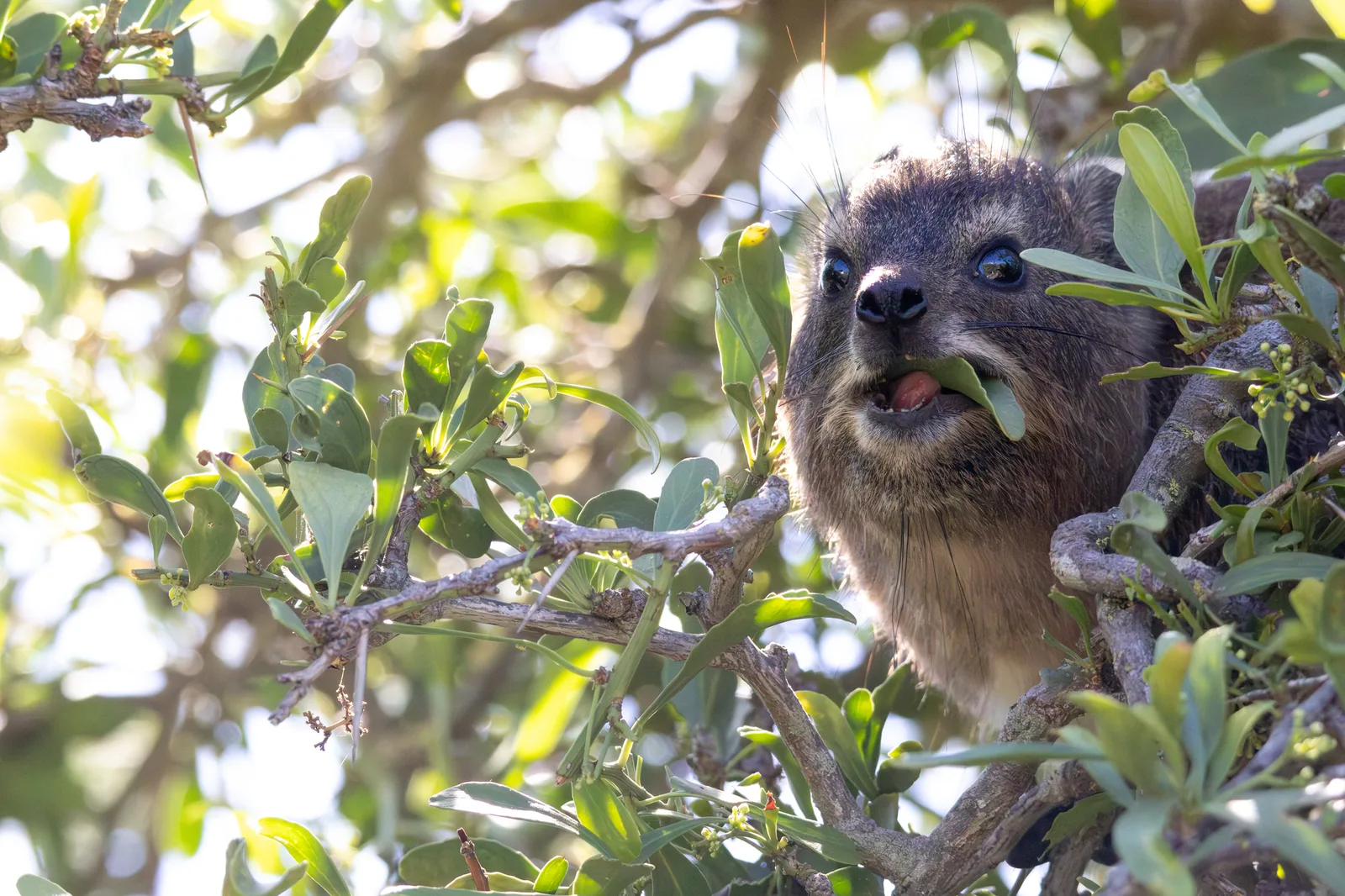
The hyrax is mainly a grazer, and it eats many plant species in one outing. Grasses make up about 78% of the diet in the wet season and 57% in the dry season. After rain it picks new shoots, buds and leaves. In drought it falls back on bark, lichens and liverworts. On Mount Kenya it favours giant lobelias and certain daisies, and in the lowlands it takes fruit, berries and figs. It has been seen eating insects and grubs.
It feeds fast, and a whole colony may spend less than an hour a day eating. Most feeding falls into two bouts of about twenty minutes, one three hours after sunrise and one two hours before sunset. It holds its head almost sideways to use its wide gape and tears off large mouthfuls. It does not carry or handle food, and it uses a foot only to pull a twig closer. Quick meals and long rests let it live on plants too sparse for a more active mammal of its size.
The colony feeds within about 50 to 60 metres of its refuge, and it goes further only in drought. Moisture in the food lets it go for days without drinking, but direct sun dries it out quickly. It climbs trees, though less readily than the bush hyrax, and it raids garden citrus for leaves. Giraffes and elephants are probably its main competitors for browse.
Behaviour and social life
A colony holds a territorial male, a harem of about 3 to 7 related females, and their young. Larger colonies of up to 80 animals may contain several such families. The male's territory can be smaller than 4,000 square metres. Females usually stay in the colony where they were born, and older females act as the most watchful members. The male watches for danger and for rival males, and he marks the rocks with his scent gland.
Young males must leave by about 30 months, and most go at 17 to 24 months. A dispersing male may travel more than 2 kilometres to find empty rock. Most find nothing free and settle as peripheral males on the edge of a colony. When the territorial male dies, the strongest peripheral male takes his place. Hyraxes were the first animals outside humans shown to keep balanced friendships, on the rule that a friend's friend is a friend. Animals in groups with evenly spread social ties live longer.
The hyrax is warm-blooded, but its body temperature swings through the day, and it manages heat much as a lizard does. It leaves the den in the morning and basks for about an hour before it feeds. It rests in shade through the hottest hours and stays inside on cold, rainy days. Adults rest about 95% of the time, often in a heap of bodies piled on one another. As the air warms, the heap loosens to a huddle and then to solitary resting. It is sometimes active on moonlit nights.
Communication and senses
Captive hyraxes make more than 20 distinct sounds. The best known is a high trill given at the sight of danger. Territorial males sing long, repetitive songs that grow louder toward the end and finish in guttural notes. A song encodes the singer's size, age, weight, rank and hormone state. Researchers have found syntax and regional dialects in these songs, a first outside primates, whales and bats. Harsh snorts within a song signal rising excitement or aggression, and each male has a stable vocal signature.
Newborns use only five of the twenty-one adult sounds, including a mewing call when lost or begging. When threatened, an adult growls or grinds its molars. A loud grunt with chewing jaw movements probably signals aggression. That display may be the source of the old belief that the hyrax chews the cud. Hyraxes also react to the alarm calls of bush hyraxes and of some birds.
Scent and posture carry the rest of the message. Urine on the rocks leaves white stains of calcium carbonate that mark a colony site. A threatening hyrax curls its lip, raises its neck hair and opens its dorsal gland. A submissive one turns its rump, backs away, flattens its ears and closes the gland. A direct stare counts as a threat, and the tusks can kill, so feeding animals face away from each other. All the senses are keen, though near vision is thought to be weak.
Reproduction and life cycle
The mating system is polygynous, and the territorial male mates with the mature females of his harem. Peripheral males mostly reach only young females under 28 months old. Breeding is seasonal, and births fall in the rainy season. In Kenya the season runs from August to November, and in the Cape the males become fertile from February. During the season a male's testes swell to more than 20 times their resting size, and he calls and fights far more.
Pregnancy lasts 6 to 8 months, very long for an animal of this size. Pregnant females grow aggressive and form small nursing groups apart from the colony. Birth takes place in the dark, and the mother squeaks in time with her contractions. A litter holds 1 to 4 young, with an average of about 2.4, and the litter weighs about 10.8% of the mother. A newborn weighs 170 to 240 grams, and it arrives furred with both eyes open.
The young can jump at two days old and nibble food by the third or fourth day. They ride on the mother's back and rest on her dorsal gland, which is thought to help them imprint on her. Weaning is complete by about three months. Both sexes mature at 16 months, but they reach full size only at three years. A wild hyrax can live up to 12 years, and a captive one has reached 14.8 years.
Predators and threats
Leopards are the main predator over most of Africa. Verreaux's eagle is a hyrax specialist, and martial eagles, hawks and owls also hunt them. Snakes such as the Egyptian cobra, the puff adder and the rock python take them in their crevices. Caracals, servals, lions, jackals and wild dogs join the list, and mongooses take newborns.
The colony's defence is vigilance and a nearby hole. Sentries call, and every animal bolts for a crevice too narrow for most predators. A hyrax has been known to play dead, and a group will mob a small predator from the mouth of a burrow. In the Middle East the system works so well that hyrax remains are almost absent from wolf droppings in the Judaean Desert.
People hunt the hyrax for meat across its range, and it has vanished from some local areas. No large-scale threat to the species is known. It hosts up to 25 species of lice, and it carries Leishmania tropica, a parasite that infects people.
Population and conservation
The IUCN lists the rock hyrax as Least Concern. It is common across a very large range, and no population estimate exists. The population trend is unknown. It is treated as a minor pest in parts of its range rather than a species at risk.
At the edges of the range it is scarce. In Syria it survives only in the rocky valleys of ar-Ruqad and the Yarmuk. It has spread along the Jordan Valley into southern Lebanon. Some subspecies may deserve species status, which would change how each is assessed.
Relationship with humans
The hyrax is harmless to people, though its tusks may cut a hand that grabs it. In South Africa it moves into culverts, stone walls and the rock piles left when farmers clear a field. From there it browses fruit trees and does real damage to orchards. It also strips leaves from citrus in suburban gardens. It is a reservoir of Leishmania tropica, so colonies near houses carry a health risk.
Colonies use shared latrines, and the dung and urine harden over years into a sticky black mass called hyraceum. South African folk medicine uses hyraceum against epilepsy, convulsions and some women's disorders. Perfumers now dissolve it in alcohol to make a natural animal musk. The meat is eaten across Africa and the Middle East.
In Joy Adamson's Born Free books, a hyrax named Pati-Pati lived with her for six years and later minded the lion cubs. Hyraxes are easy to watch at Cape Point and on many African kopjes, where they sit on the rocks near visitors.
In culture and myth
The hyrax appears in the Hebrew Bible as the shafan. Leviticus calls it unclean because it seems to chew the cud but has no split hoof, so Jewish food law forbids it. The hyrax is not a ruminant, and the chewing-like jaw movements probably gave rise to the belief. Proverbs 30:26 counts the conies among small but wise creatures, because they are feeble yet build their homes in the rocks. From that verse Christian teaching took the animal as an emblem of modest shelter and prudence.
In southern African folk tales the hyrax is a sly shape-changer that steals crops and plays pranks. Some communities link its plump body and its life in dry rock to fertility and rain. Some people reportedly use its fat in witchcraft and its body parts in remedies for wounds. One blog claims ancient Egyptians held it sacred, but that claim seems to rest on nothing.
The 2013 animated film Khumba shows a colony of hyraxes that offers one of its own to a white Verreaux's eagle. Spirit-animal writers read the hyrax as resilience and community, which seems a modern gloss on the Proverbs verse.
A sentence with a dotted underline is inferred: it describes the group the animal belongs to, or is a reading of the sources, rather than a measured or reported fact about this species.
Questions
Rock hyrax questions, answered
Is the rock hyrax really related to elephants?
Yes. Hyraxes, elephants and sea cows share an ancestor, and the hyrax is the elephant's closest living relative. They share tusk-like incisors and internal testes.
What is a dassie?
Dassie is the South African name for the rock hyrax, from the Afrikaans klipdas, which means rock badger.
How big is a rock hyrax?
About the size of a rabbit. Adults measure 30.5 to 55 centimetres and weigh 3.6 to 4.3 kilograms, with almost no tail.
What do rock hyraxes eat?
Mostly grass, plus leaves, shoots, buds, fruit and bark. They eat fast in two short bouts a day and get most of their water from plants.
Where do rock hyraxes live?
On rocky outcrops across sub-Saharan Africa, the fringes of the Sahara, Egypt, the Levant and Arabia, from sea level up to 4,200 metres.
Do rock hyraxes live in groups?
Yes. A colony holds a territorial male, several related females and their young, and large colonies reach 80 animals.
Why do hyraxes bask in the sun?
Their body temperature swings through the day, and they cannot hold it steady. Morning basking warms them before they feed.
Are rock hyraxes dangerous?
No. They run from people, though their tusks can cut a hand that grabs one.
How long is a hyrax pregnant?
6 to 8 months, which is very long for an animal of this size. The young are born furred and with open eyes.
How long do rock hyraxes live?
Up to about 12 years in the wild. One captive animal reached 14.8 years.
What eats rock hyraxes?
Leopards, Verreaux's eagles, caracals, jackals, pythons, cobras, puff adders and owls.
Is the hyrax the coney in the Bible?
Yes. The King James Bible translated the Hebrew shafan as coney. Leviticus lists it as unclean, and Proverbs praises it for making its home in the rocks.
What is hyraceum?
The hardened dung and urine of hyrax latrines. South African folk medicine uses it, and perfumers dissolve it in alcohol as a musk.
Are rock hyraxes endangered?
No. The IUCN lists the species as Least Concern, and it is common across a huge range.
Do hyraxes sing?
Yes. Territorial males sing long songs with syntax and regional dialects, and each male has a stable vocal signature.
Food web
Prey and food
- grasses
- leaves
- shoots
- buds
- fruit
- bark
- lichens
- some insects
Food web
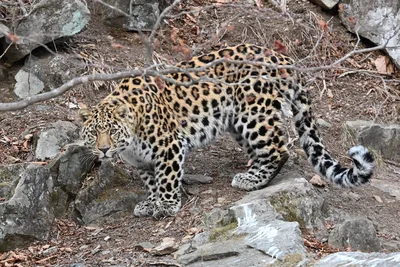 Leopard
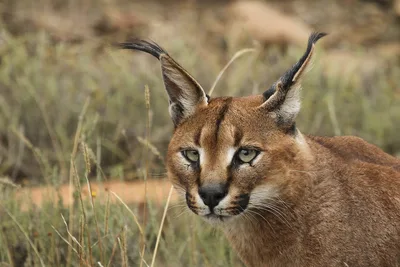 Caracal