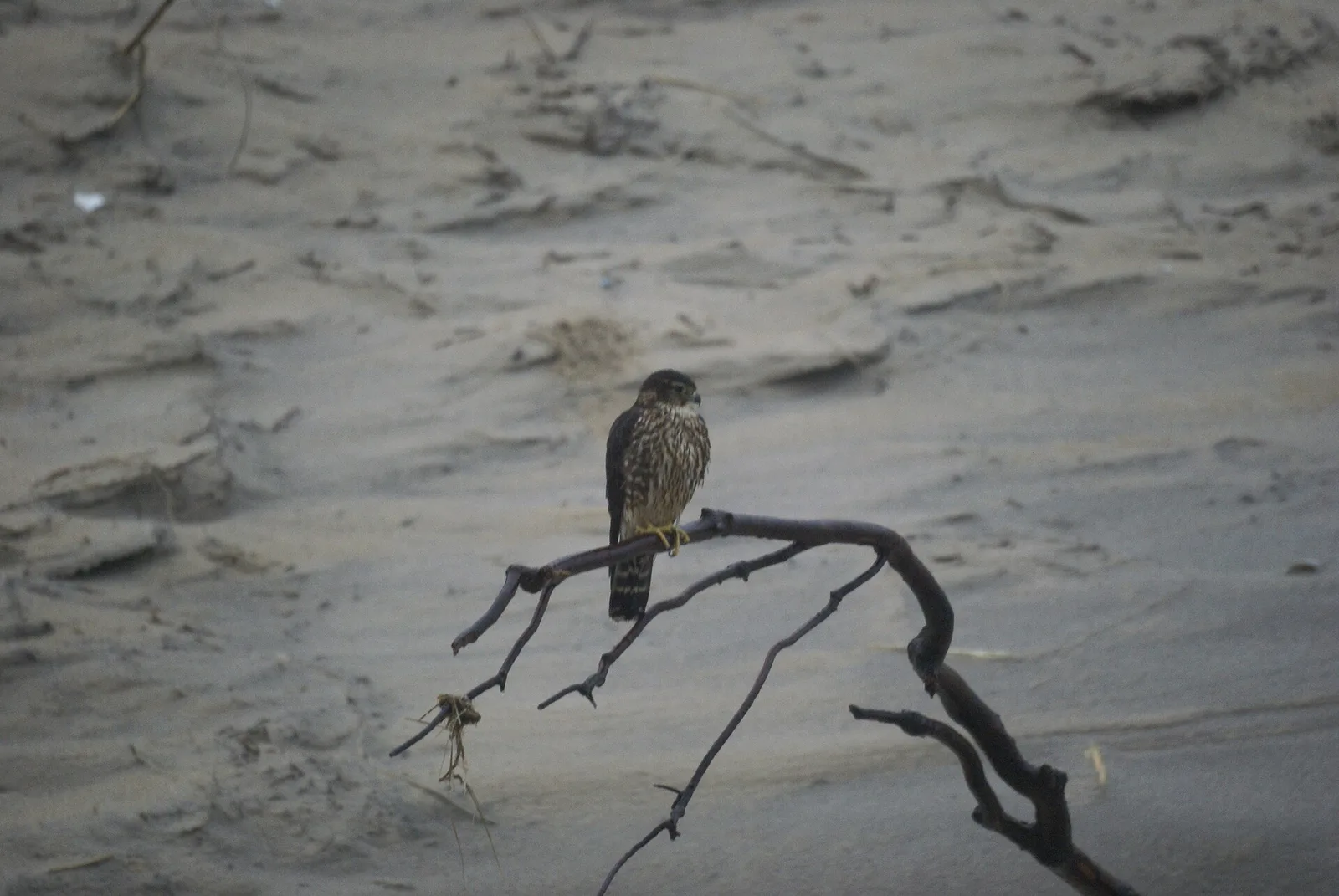
Merlin
A small falcon that runs down birds in level flight
Falco columbarius
Also called Pigeon hawk, Esmerejón, Faucon émerillon, Bibiigiwizens
Living individuals or members of this group exist today. This does not mean they are safe from extinction.
Meet the merlin
The merlin is a small, stocky falcon of open northern country that hunts small birds in fast low flight. Most merlins migrate, and falconers have flown the species since the Middle Ages.
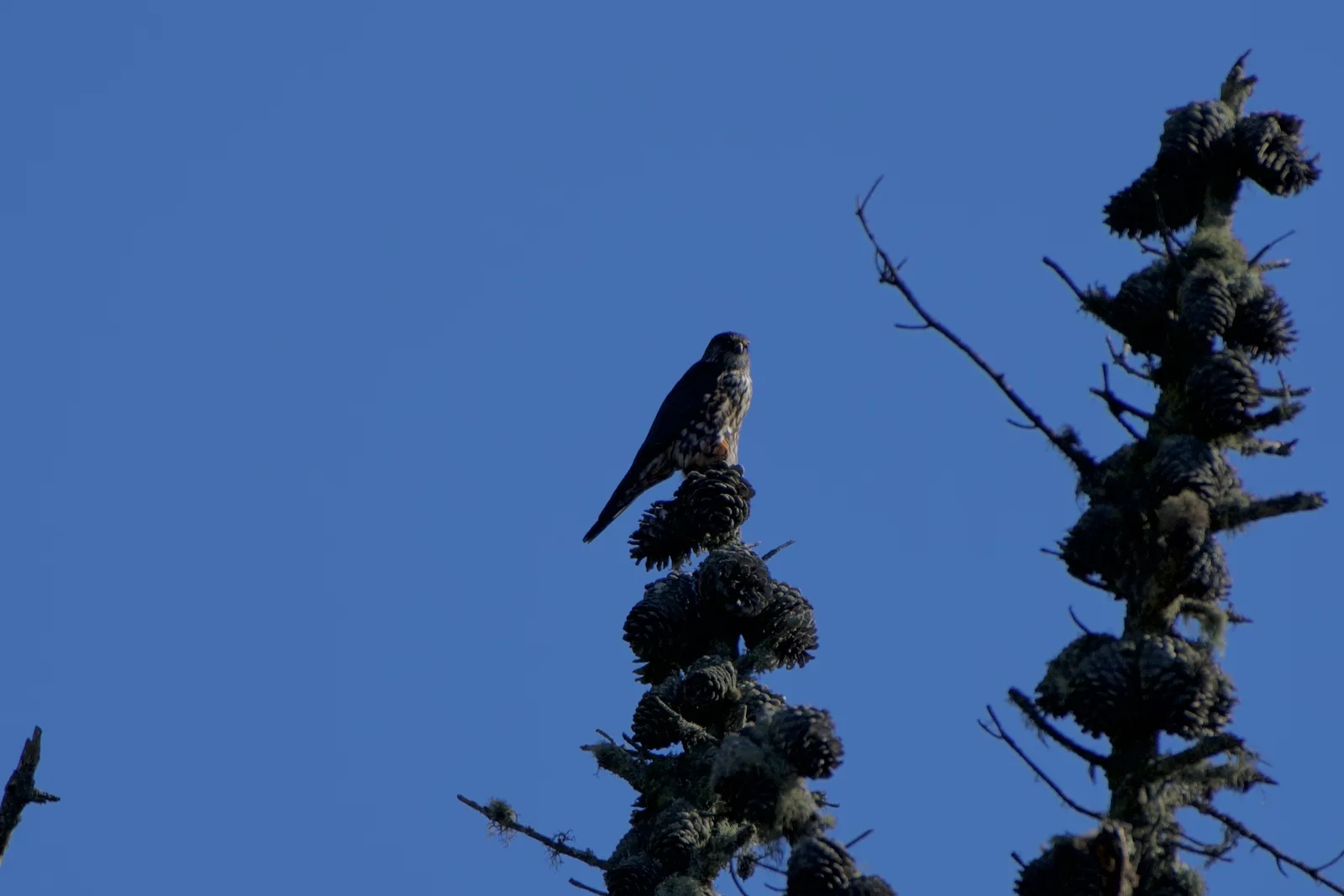
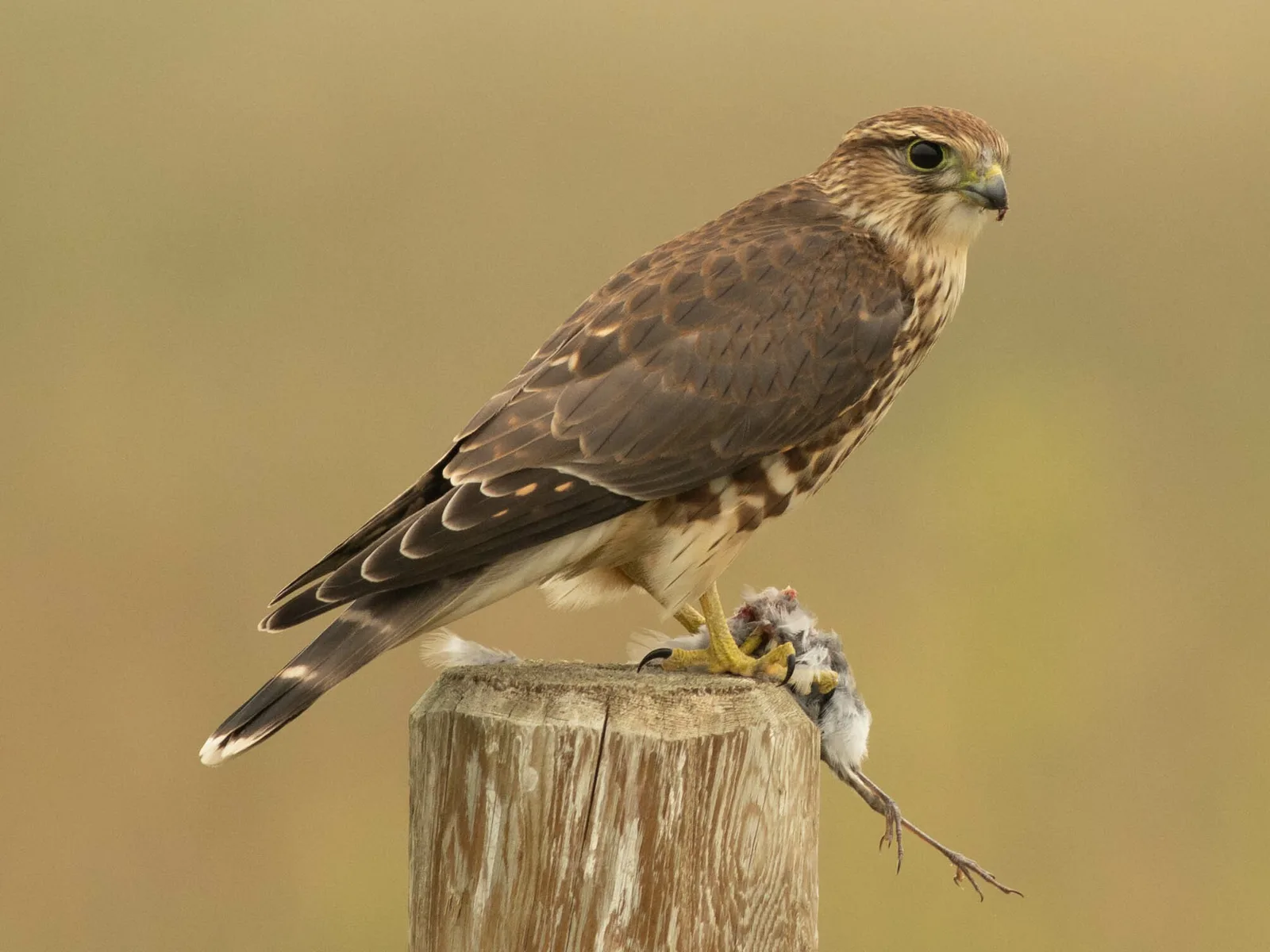
Images of the merlin
Lifespan in the wild
Up to 12.7 years
Weight
125 to 300 g
Length
24 to 33 cm
Wingspan
50 to 73 cm
Fact file
Merlin
- Location
- Northern North America and Eurasia; winters south to the tropics
- Habitat
- Grassland, Tundra, Temperate forest, Coast
- Diet
- Carnivore
- Prey / food
- Larks, pipits, finches, house sparrows, wheatears, thrushes, buntings
- Predators
- Peregrine falcons, eagle-owls and goshawks; crows take eggs
- Lifestyle
- Migratory and active by day; hunts low and fast
- Group name
- Pair
- Name of young
- Chick
- Incubation
- 28 to 32 days of incubation
- Clutch size
- 3 to 6 eggs, usually 4 or 5
- Population
- Hundreds of thousands; European Russia alone held up to 30,000 pairs
- Biggest threat
- Loss of moorland and other breeding habitat
- Distinctive feature
- Compact fast falcon with a plain face
- Colour
- Blue-grey male, brown female, both streaked below
- Skin type
- Feathers
Size
Next to a person
Measurements
Size and speed
- Length
- 24 to 33 cm
- Wingspan
- 50 to 73 cm males usually span 53 to 58 centimetres
- Weight
- 125 to 300 g males 125 to 210 grams, females 190 to 300 grams
- Weight, male
- 125 to 210 g
- Weight, female
- 190 to 300 g
Typical adult ranges. Source: Wikipedia.
Life cycle
Lifespan
- In the wildUp to 12.7 years
- In captivityUp to 16 years reported but not verified
- 016 years
The pale bar is the record. Source: AnAge.
Appearance
Colour and coat
- Primary colours
- greybrown
- Secondary colours
- bufforangeblack
- Skin type
- feathers
- Male and female
- Strong. The male is blue-grey above and averages about 165 grams, while the larger brown female averages about 230 g. The size gap lets the pair take different prey.
Life cycle
Mating and family
- Mating system
- monogamous within a season
- Social structure
- solitary or in pairs, with communal winter roosts in Europe
- Breeding
- one clutch a year, in May or June
A pair takes over an old crow nest or scrapes a hollow in deep heather. The female lays three to six eggs, usually four or five, and incubates most of the time while the male hunts. The eggs hatch after 28 to 32 days. Chicks fly at about 30 days and follow their parents for up to four more weeks. Merlins can breed at one year old.
Classification
Taxonomy
- Kingdom
- Animalia
- Phylum
- Chordata
- Class
- Aves
- Order
- Falconiformes
- Family
- Falconidae
- Genus
- Falco
- Species
- Falco columbarius
Conservation
Red List status
- LC
- NT
- VU
- EN
- CR
- EW
- EX
Least Concern on the IUCN Red List
Range
Recorded in 6 countries
Habitat layer: temperate broadleaf and mixed forest, temperate conifer forest, boreal forest and taiga, tropical grassland, savanna and shrubland, temperate grassland, savanna and shrubland, tundra, mangrove.
Countries from 28,858 wild records on GBIF (iNaturalist research grade), filtered and checked by hand. Country shapes: Natural Earth. Habitat: RESOLVE Ecoregions 2017, CC BY 4.0. Basemap: Natural Earth.
Habitats
Three things to know
- 1
It chases and harasses raptors as large as a golden eagle.
- 2
It builds no nest and uses an old crow nest or a scrape in heather.
- 3
Medieval falconry called the merlin the hawk for a lady.
Did you know
Seven more facts
- 1
The bird's name has nothing to do with the wizard of the Arthurian stories.
- 2
North Americans called it the pigeon hawk until the twentieth century.
- 3
Merlins follow sharp-shinned hawks to catch birds those hunters flush.
- 4
The falcon has been seen attacking moving cars and trains.
- 5
Merlin chicks hatch at about 13 grams.
- 6
European merlins share winter roosts with hen harriers.
- 7
The oldest wild merlin on record reached 12.7 years.
Field notes
How it looks and acts
Field notes
Distinguishing features
- The face is plainer than in other falcons, with only a faint moustache mark.
- Males are blue-grey above and streaked orange-buff below.
- Females and young birds are brown above and spotted below.
- The tail ends in black with a narrow white tip.
- The wingspan is 50 to 73 centimetres, which makes this Britain's smallest raptor.
- The build is stocky and heavy for a falcon of this length.
Field notes
Unique adaptations
- Pointed wings and heavy flight muscle give speed in level chases.
- Low flight uses trees and shrubs as cover until the last moment.
- A large size gap between the sexes widens the range of prey a pair can take.
- Taking over old crow nests saves the bird the work of building.
- Food caching carries the falcon through days when hunting fails.
Field notes
Interesting behaviours
- Pairs hunt together, one flushing prey towards the other.
- Birds tail-chase startled prey rather than stoop from above.
- Merlins mob larger raptors that cross the territory.
- European birds gather at communal winter roosts.
- First-year males sometimes help at another pair's nest.
Field notes
Temperament
- The merlin is fearless and attacks anything that moves conspicuously.
- It appears territorial around the nest and noisy when disturbed.
- It shows little caution near people, roads or buildings.
- It appears quick to give up a chase and start another.
Field notes
Communication
- Calls are shrill and chattering, and they appear to be heard mostly at the nest.
- A pair probably calls when passing food from male to female.
- An attack on a bigger raptor may announce the boundary of a territory.
- Adults probably call to warn chicks when a predator comes near.
Ecology
Ecological role
The merlin is the small-bird specialist of open northern country, and it shapes the flocks it hunts.
- It removes larks, pipits, finches and sparrows, above all inexperienced young ones.
- It takes insects, voles and lemmings when small birds are scarce.
- It depends on crows and magpies, whose old nests it uses.
- Its breeding success tracks vole numbers, so it probably signals wider changes in the uplands.
Stories
Myths and legends
- In medieval English falconry the merlin was assigned to a lady by the Book of Saint Albans.
- In English folk belief the falcon is wrongly linked to the wizard Merlin.
- In colonial American naming the bird was the pigeon hawk, after its shape in flight.
- In Ojibwe tradition the bird is known as Bibiigiwizens.
People
Relationship with humans
People
Living alongside us
People have flown merlins in falconry since the Middle Ages, and the bird still has a following. Pesticides cut numbers hard in the 1960s and 1970s, and restrictions on DDT allowed a recovery. The species is protected across its range and listed on Appendix II of CITES. Some countries licence the capture of birds for falconry. Merlins have moved into towns in North America and now breed there all year.
- The merlin appears too small to injure a person seriously.
- A bird defending a nest may dive at anyone who comes close.
- Handled birds may grip with sharp claws, so falconers wear a glove.
People
Status, uses and products
- Domestication
- Wild
- As a pet
- Not suitable. No. A merlin is a licensed falconry bird, not a pet. It needs daily flying, whole fresh prey and an experienced keeper, and taking one from the wild is illegal in most countries.
- Uses
- falconrybirdwatching
- Products
- None recorded
The full account
About the merlin
The merlin is a small, heavily built falcon of the northern half of the world. It measures 24 to 33 centimetres long and spans 50 to 73 cm across the wings. Males are blue-grey above, and females and young birds are brown. The face is plainer than in most falcons, with only a weak moustache mark.
This bird hunts other birds, from sparrows and larks up to doves and small waders. It flies fast and low, often under a metre above the ground, and surprises its prey. Most merlins migrate, and northern birds winter as far south as northern South America. Falconers have flown the merlin for centuries, and medieval writing called it the lady's hawk.
Name and taxonomy
The English naturalist Mark Catesby recorded the bird in the American colonies as the pigeon hawk. Carl Linnaeus used his account to name the species Falco columbarius in 1758. Falco comes from the Latin falx, a sickle, which points at the hooked talons. The word columbarius means of the doves, and it keeps Catesby's comparison with a pigeon. Marmaduke Tunstall named the Eurasian birds Falco aesalon in 1771.
The common name comes from the Old French esmerillon, by way of Anglo-Norman forms such as merilun. Older Germanic words, including Middle Dutch smeerle and Old Icelandic smyrill, lie behind the French one. The English name is old, and it appears in the Wycliffe Bible around 1382. The name has no link at all to the Arthurian wizard, whose name comes from Welsh Myrddin. The two words only became homophones because both entered English at the same period.
Evolution and relatives
The merlin sits apart from the other living falcons in size, shape and colour. Its line appears to have stood apart since early in the Pliocene, roughly 5 million years back. An old idea tied it to the red-necked falcon, but the likeness comes from a shared hunting style. Recent genetic work instead links it to the grey kestrel and Dickinson's kestrel of Africa.
A fossil falcon from Kansas, dated 4.3 to 4.8 million years ago, was slightly smaller than a merlin. It may be the ancestor of the living bird, which suggests the line began in North America. Merlins then spread back into Eurasia, and the ice ages cut the two groups apart. Gene flow stopped at least a million years ago, and the two groups may be separate species. Nine subspecies are accepted for now, three in America and six across Eurasia.
Appearance
A merlin is 24 to 33 centimetres long with a wingspan of 50 to 73 cm. Males average about 165 grams and females about 230 g. Weights vary widely, from 125 to 210 grams in males and 190 to 300 g in females. That gap in size lets a pair hunt different prey and keeps the territory they need smaller. The bird is stockier and more solid than other small falcons.
The male has a blue-grey back that ranges from silver to near black across the subspecies. His underside is buff to orange and streaked with black or reddish brown. Females and young birds are brownish grey to dark brown above and spotted brown below. The tail carries three or four wide dark bands and ends in black with a narrow white tip. The eye and bill are dark, the cere is yellow, and the yellow feet carry black claws.
Habitat and range
The merlin breeds right across the northern Holarctic, in North America and Eurasia. It uses open country: willow and birch scrub, taiga, steppe, prairie, moorland and parkland. It is found from sea level up to the treeline and avoids dense forest and bare desert. A mix of low and medium vegetation with a few trees suits it best. GBIF holds records from 145 countries and territories.
Most populations migrate, and northern European birds winter in southern Europe and North Africa. North American birds winter from the southern United States to northern South America. Birds in Britain, Iceland and the Pacific Northwest only drop from high ground to the coast. Return migration starts in late February, and the last birds reach the breeding range in May. European merlins roost together in winter, often with hen harriers, which North American birds rarely do.
Diet and hunting
The merlin lives on small birds, and it takes almost any species that is common where it hunts. In the breeding season most prey weighs 10 to 40 grams. Larks, pipits, finches, house sparrows, wheatears, thrushes, kinglets and buntings all appear in the diet. Inexperienced young birds of the year are taken most readily of all. Larger prey includes sandpipers, woodpeckers, grouse, ducks and rock doves as heavy as the falcon itself.
Speed and agility do the work, and the bird catches most of its prey in the air. It flies fast and less than 1 metre above the ground, using trees and shrubs as cover. It then tail-chases the bird it has flushed until the chase is won or lost. A pair often hunts together, with one bird driving prey towards its mate. Merlins also follow sharp-shinned hawks and snatch the birds those hunters flush into the open.
In poor conditions about one attack in 20 succeeds, and in good conditions almost half do. The falcon caches food it cannot eat at once. Insects, bats, voles, lemmings, lizards and even amphibians pad the diet outside the breeding season. In Norway a good vole year lifts breeding success well above the usual level. The bird is bold enough to chase cars and trains, and it will rob mist nets set by ornithologists.
Behaviour and social life
The merlin is aggressive out of all proportion to its size. It drives larger raptors out of its airspace, and birdwatchers use that habit to find it. One raptor guide notes merlins harassing birds as large as a golden eagle. Because of that boldness, other meat-eating birds usually leave the merlin alone. Small birds, by contrast, avoid a hunting merlin whenever they can.
Pairs stay together through a breeding season and hold a territory around the nest. Outside the season the bird is usually alone, except at a winter roost. Some merlins in North America have taken to towns so well that they no longer migrate. A first-year male sometimes stays on as a helper at another pair's nest. The falcon appears to perch openly on a post or a low branch between flights.
Communication and senses
The merlin appears to rely on sight above every other sense. It probably has to judge a moving target at speed and only a metre above the ground. A hunting bird probably reads the panic of a flock and picks the bird that flies badly. In the Cayman Islands, bananaquits have died of shock during a merlin attack without being touched.
Calls are chattering and shrill, and they appear to carry furthest around the nest. A pair probably calls while passing food and while driving off an intruder. The merlin also signals with flight, and a dive at a larger raptor may be a message in itself. Falconers appear to judge a merlin's mood from its posture and from how it answers the lure.
Reproduction and life cycle
Breeding usually happens in May and June. Pairs are monogamous for the season, though birds do mate outside the pair. The merlin builds no nest of its own. It takes over an old crow or magpie nest in a stand of conifers, or an old hawk nest. On British moorland the female scrapes a hollow in deep heather instead. Some pairs use a cliff crevice, bare ground or even a building.
The clutch is three to six eggs, and usually four or five. The eggs are rusty brown and average about 40 millimetres by 31.5 mm. Incubation runs 28 to 32 days, and the female does about 90 percent of it. The male hunts through that period and brings food to the nest. Chicks hatch at about 13 grams, covered in pale buff down.
The young fly after about 30 days and depend on their parents for up to four more weeks. More than half of the eggs in a clutch usually hatch, and two-thirds of the chicks fledge. In a year with little food only one chick in three may reach the wing. Merlins are mature at one year old and normally try to breed at once. The oldest wild bird on record reached 12.7 years, and one captive bird was reported at 16.
Predators and threats
Crows and their relatives are the main danger to eggs and nestlings. Peregrine falcons, eagle-owls and goshawks kill adult merlins. Those attacks are uncommon, because the merlin is quick and fights back hard. The nest itself is probably exposed, since the falcon uses whatever another bird built.
Collision with a man-made object is the commonest accidental death, often during a chase. That may account for almost half of all early deaths. Organochlorine pesticides thinned eggshells and broke down immune systems in the 1960s and 1970s. Canadian populations fell hardest, and they recovered after DDT was restricted. Habitat loss on the breeding grounds is the long-term problem, above all on burnt moorland.
Population and conservation
The IUCN Red List rates the merlin as Least Concern. The range is huge, and most countries in it hold hundreds or thousands of birds. Belarus held 250 to 300 pairs, while European Russia was credited with up to 30,000 pairs in 1993. North American numbers have risen sharply in recent decades. European numbers grew until about 2000 and have held steady since.
The species is listed on Appendix II of CITES, so international trade needs an export permit. Britain places the merlin on the Red list and protects it under Schedule 1 of the Wildlife and Countryside Act. Estonia and Portugal list the bird as Vulnerable, and Sweden as Near Threatened. Moorland managed by burning large blocks of heather loses the tall growth that ground nesters need. A mosaic of old and new heather appears to serve the bird far better.
Relationship with humans
The merlin has followed people into towns rather than away from them. Some North American birds now live in cities all year and skip migration. The falcon takes house sparrows and starlings, which are probably drawn to settled ground themselves. Nest sites, not food, are usually what limits a merlin in a settled landscape.
Artists have drawn the bird for centuries. William Lewin figured it in 1789 in his Birds of Great Britain and their Eggs. John James Audubon painted it as Plate 75 of Birds of America under the title Le Petit Caporal. Audubon later admitted the bird he had called Falco temerarius was simply a small male merlin. Some countries still allow merlins to be taken for falconry under licence.
In culture and myth
In medieval European falconry the merlin was a popular and fashionable bird. The Book of Saint Albans, printed in 1486, matched each hawk to a rank of person. Its list gave the gyrfalcon to a king, the peregrine to an earl and the merlin to a lady. The same book praised the merlin for ringing flights after the English skylark. Ringing means climbing in tight circles after prey that tries to out-fly the falcon.
In English folklore the falcon is often confused with the wizard Merlin, and the two names are unrelated. In North American usage the bird was the pigeon hawk well into the twentieth century. In Ojibwe the bird carries the name Bibiigiwizens. In modern falconry writing the merlin is praised for raw power in a very small body.
A sentence with a dotted underline is inferred: it describes the group the animal belongs to, or is a reading of the sources, rather than a measured or reported fact about this species.
Questions
Merlin questions, answered
What is a merlin?
The merlin is a small falcon of the northern hemisphere that hunts other birds. It is the smallest bird of prey in Britain.
Is the merlin named after the wizard?
No. The bird's name comes from the Old French esmerillon. The wizard's name is a Latin form of the Welsh name Myrddin.
How big is a merlin?
It is 24 to 33 centimetres long with a wingspan of 50 to 73 cm. A male weighs about 165 grams and a female about 230 g.
What do merlins eat?
Mainly small birds weighing 10 to 40 grams, such as larks, pipits, finches and sparrows. They also take insects, voles and bats outside the breeding season.
How does a merlin hunt?
It flies fast and less than a metre above the ground, using cover to get close. It then chases the bird it has flushed and catches it in the air.
How fast is a merlin?
No reliable top speed is published for the species. Its strength is level flight and endurance in a tail-chase, not a high stoop.
Where do merlins live?
Across northern North America and northern Eurasia, in open country from sea level to the treeline. Most migrate south for the winter.
Do merlins migrate?
Most do. North American birds winter from the southern United States to northern South America, and northern European birds reach North Africa.
Where do merlins nest?
In an old crow or magpie nest, in a scrape in deep heather, or on a cliff ledge. The merlin does not build a nest of its own.
How many eggs does a merlin lay?
Three to six, and usually four or five. The female does about 90 percent of the incubation, which takes 28 to 32 days.
How long do merlins live?
The oldest wild bird on record reached 12.7 years. One captive bird was reported at 16 years, though the record was not verified.
Are merlins endangered?
Not globally. The IUCN Red List rates the species Least Concern, but Britain places it on the Red list and Portugal and Estonia call it Vulnerable.
Can you keep a merlin for falconry?
In some countries, under licence. The merlin is a classic falconry bird for small game, but it needs an experienced keeper and daily flying.
Why was the merlin called a lady's hawk?
The Book of Saint Albans of 1486 matched each hawk to a rank of person and gave the merlin to a lady. The bird is small, and it flies well in open country.
What is the difference between a merlin and a kestrel?
The merlin is stockier, faster in level flight and grey or brown rather than rufous. A kestrel hovers over the ground, and a merlin does not.
Food web
Prey and food
- larks
- pipits
- finches
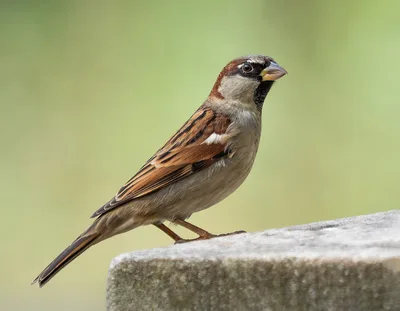 House sparrow
- wheatears
- thrushes
- buntings
Food web
Predators
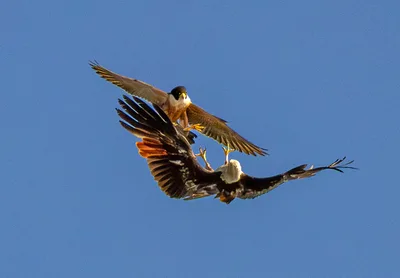 Peregrine falcon
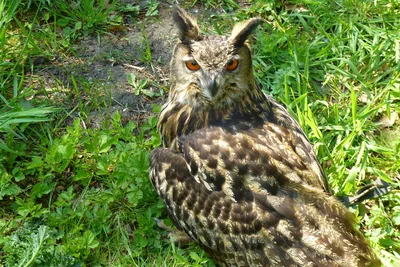 Eurasian eagle-owl
- goshawks
- crows
Ecological equivalents
Related species on this site
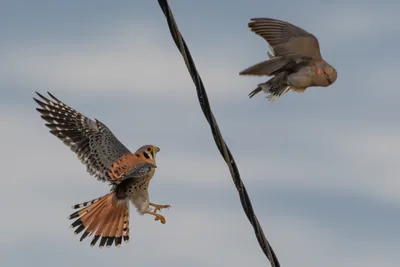
American kestrel (same genus), Gyrfalcon (same genus), Peregrine falcon (same genus), Falcon (same family).
 LC
Birds
American kestrel
Falco sparverius
The American kestrel is the smallest falcon in the Americas and the most numerous.
Living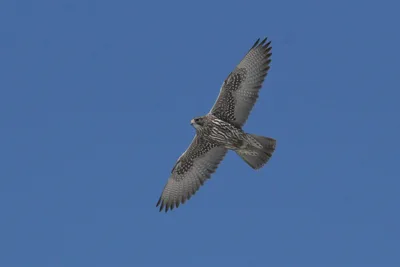 LC
Birds
Gyrfalcon
Falco rusticolus
The gyrfalcon is the biggest of all falcons, and it hunts across the Arctic tundra.
Living- LC
Birds
Peregrine falcon
Falco peregrinus
The peregrine falcon is the fastest animal on Earth.
Living 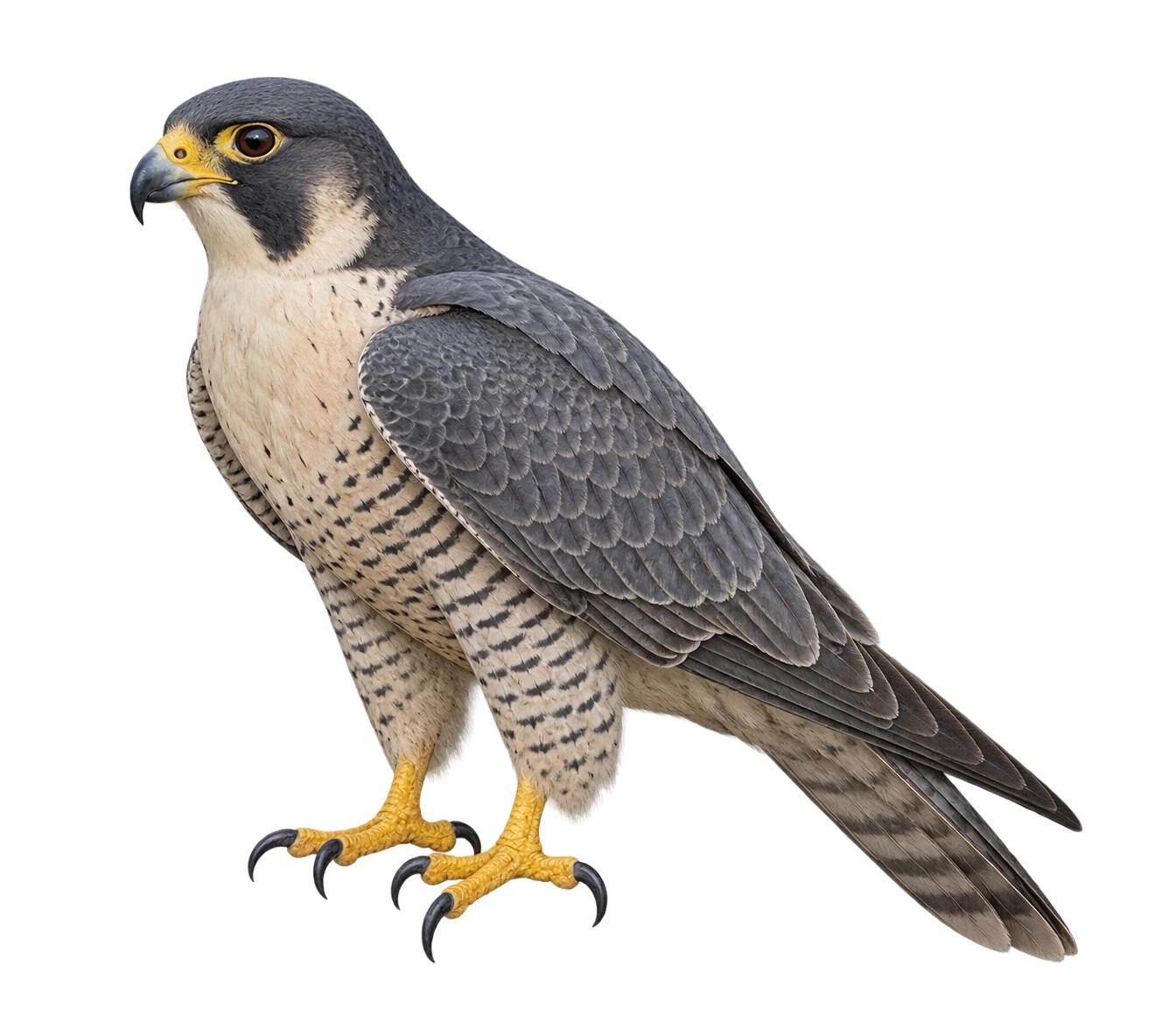
Birds
Falcon
Falconidae
Classification and source reference
LivingAI illustration