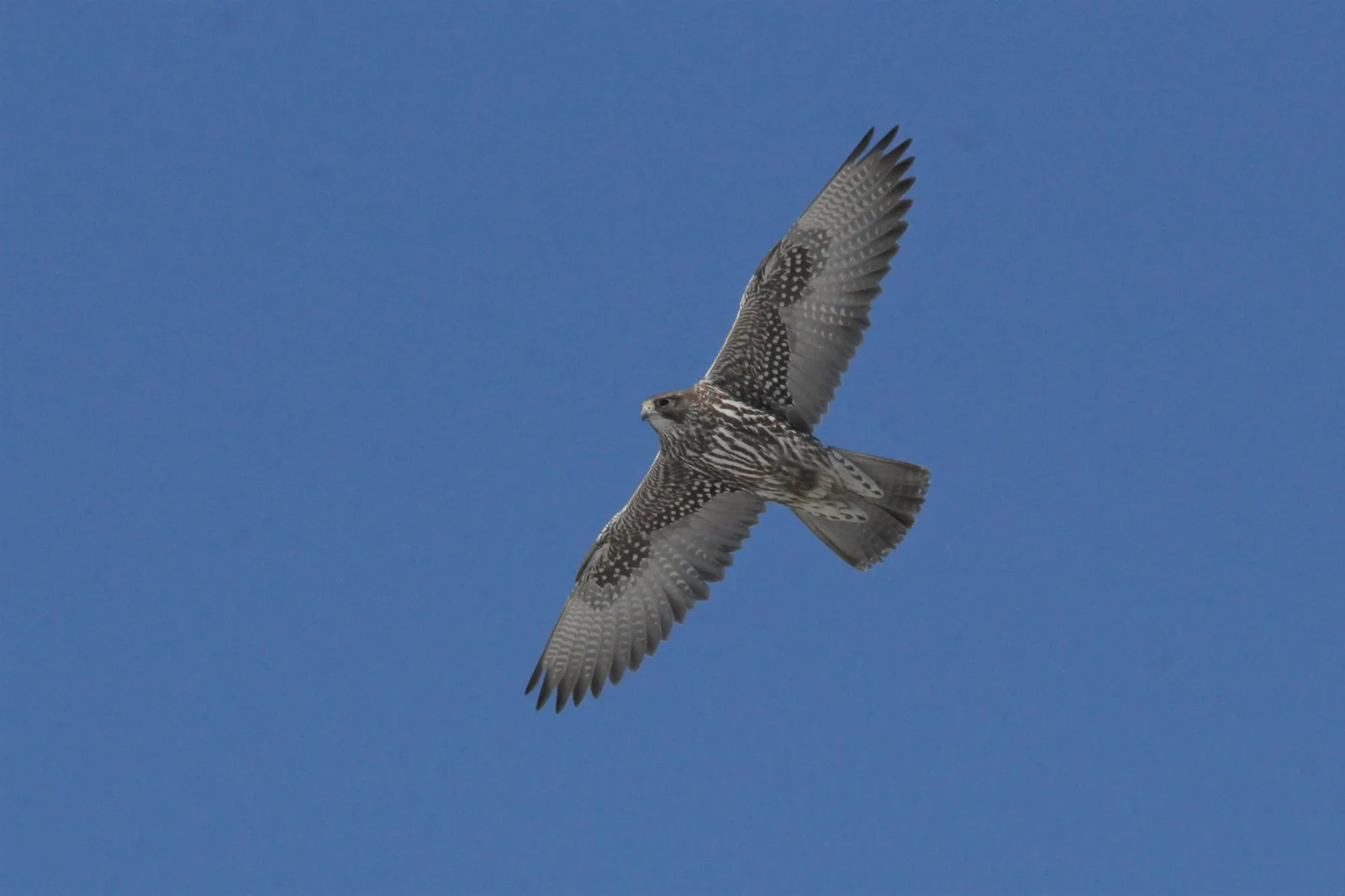
Gyrfalcon
The largest falcon, and the bird of kings
Falco rusticolus
Also called Gerfalcon, Gyr falcon, Gyr
Living individuals or members of this group exist today. This does not mean they are safe from extinction.
Meet the gyrfalcon
The gyrfalcon is the biggest of all falcons, and it hunts across the Arctic tundra. Its plumage runs from pure white in Greenland to near black in the east of its range.
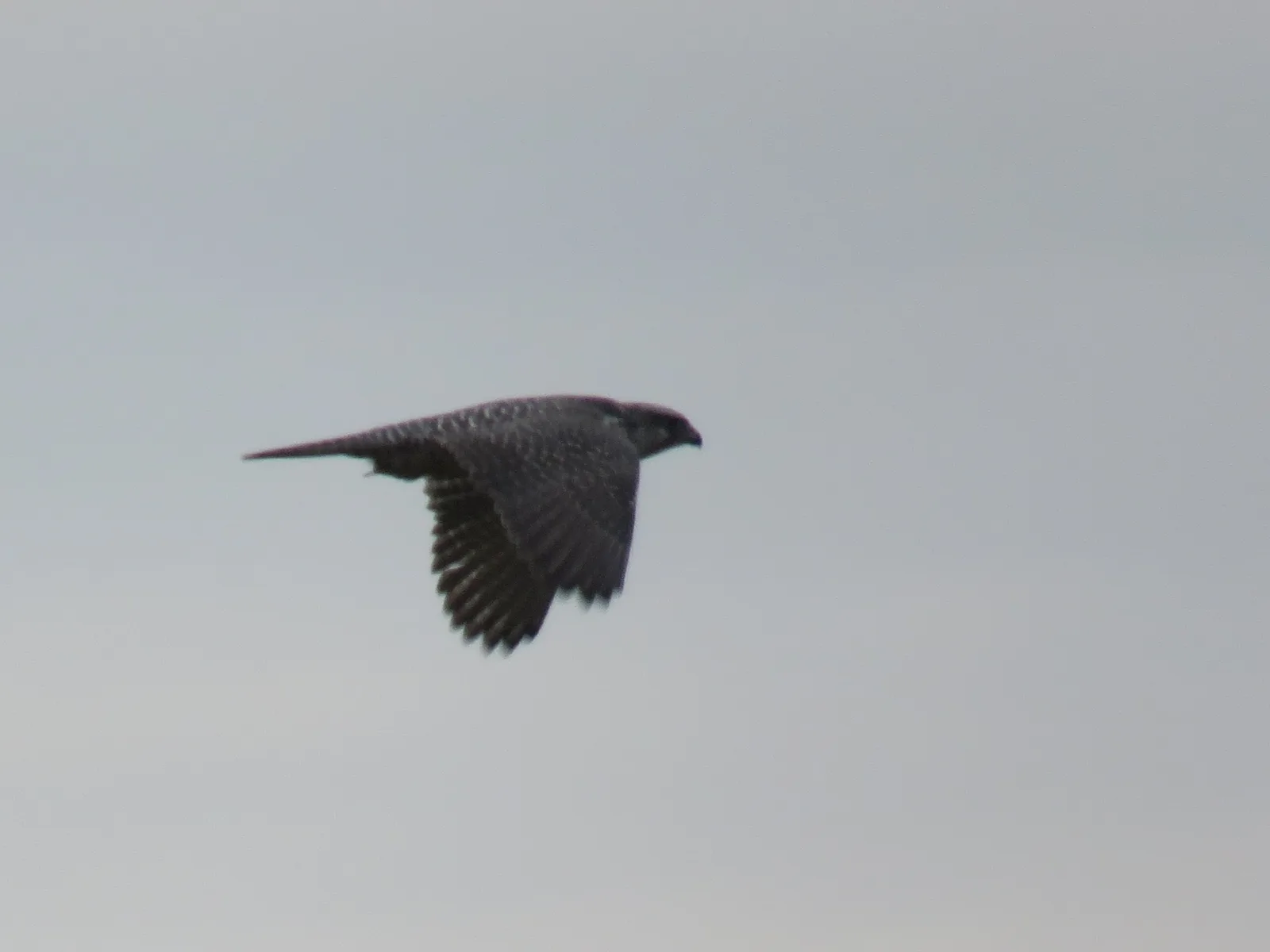
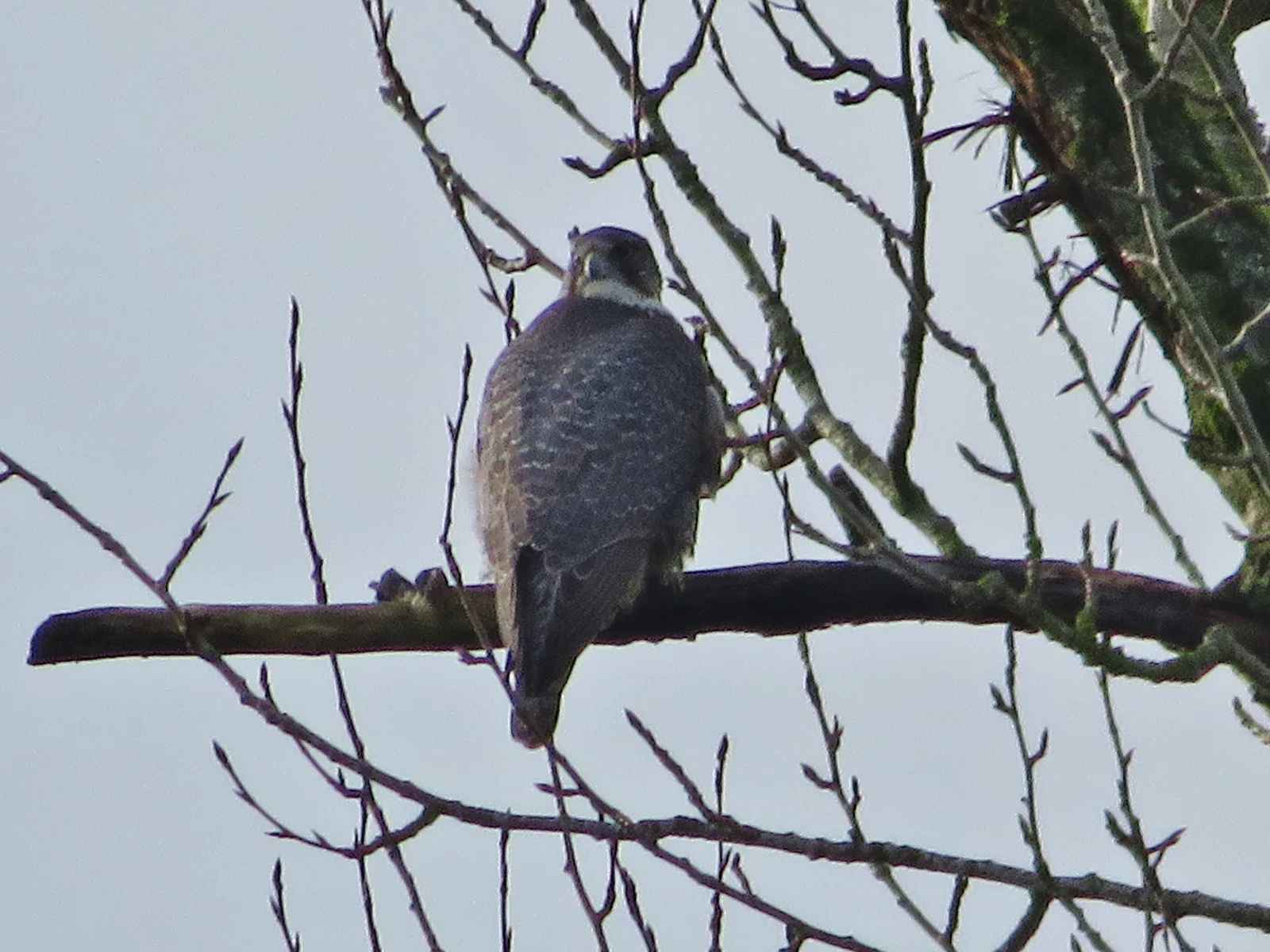
Images of the gyrfalcon
Lifespan in the wild
Up to 20 years for birds that survive into adulthood
Weight
0.81 to 2.1 kg
Length
48 to 65 cm
Wingspan
1.1 to 1.34 m
Fact file
Gyrfalcon
- Location
- Arctic coasts and tundra of North America, Greenland, Iceland and Eurasia
- Habitat
- Tundra, Mountains, Coast, Polar ice
- Diet
- Carnivore
- Prey / food
- Rock ptarmigan, willow grouse, ducks, geese, gulls, auks, arctic hare, ground squirrel, lemming
- Predators
- Golden eagle; ravens take eggs and chicks
- Lifestyle
- A solitary daytime hunter of open Arctic country
- Group name
- Solitary, and paired only for the breeding season
- Name of young
- Chick
- Incubation
- Incubation about 35 days
- Clutch size
- 2 to 4 eggs, and up to 5
- Population
- Under 50,000 worldwide
- Biggest threat
- Illegal capture for falconry, and peregrines taking nest sites
- Distinctive feature
- The largest falcon, with plumage from pure white to near black
- Colour
- White, silver, brown or dark grey-brown
- Skin type
- Feathers
Size
Next to a person
Measurements
Size and speed
- Length
- 48 to 65 cm males 48 to 61 cm, females 51 to 65 cm
- Length, male
- 48 to 61 cm
- Length, female
- 51 to 65 cm
- Wingspan
- 1.1 to 1.34 m males 110 to 130 cm, females 124 to 134 cm
- Wingspan, male
- 1.1 to 1.3 m
- Wingspan, female
- 1.24 to 1.34 m
- Weight
- 0.81 to 2.1 kg, up to 2.6 kg males 805 to 1,350 g, females 1,180 to 2,100 g; the largest female weighed 2,600 g
- Weight, male
- 0.81 to 1.35 kg
- Weight, female
- 1.18 to 2.1 kg, up to 2.6 kg
Typical adult ranges. Source: Wikipedia.
Life cycle
Lifespan
- In the wildUp to 20 years for birds that survive into adulthood
- 020 years
The pale bar is the record. Source: Wikipedia.
Appearance
Colour and coat
- Primary colours
- whitegrey
- Secondary colours
- brownblack
- Skin type
- feathers
- Male and female
- Strong in size. A female is much larger and heavier than a male and can weigh nearly twice as much. The sexes match in colour, although black plumage shows up almost only in females.
Life cycle
Mating and family
- Mating system
- monogamous pairs for the season
- Social structure
- solitary outside the breeding season
- Breeding
- one clutch a year
A male takes a nesting territory in late January, and a female arrives in March. The pair bonds for about six weeks, and the eggs follow at the end of April. The female lays 2 to 4 eggs on a bare cliff ledge and sits for about 35 days. The chicks keep themselves warm after ten days, and both parents then hunt. The young fly at seven to eight weeks and leave their parents at three to four months.
Classification
Taxonomy
- Kingdom
- Animalia
- Phylum
- Chordata
- Class
- Aves
- Order
- Falconiformes
- Family
- Falconidae
- Genus
- Falco
- Species
- Falco rusticolus
Conservation
Red List status
- LC
- NT
- VU
- EN
- CR
- EW
- EX
Least Concern on the IUCN Red List
Range
Recorded in 8 countries
Habitat layer: montane grassland and shrubland, tundra, mangrove.
Countries from 691 wild records on GBIF (iNaturalist research grade), filtered and checked by hand. Country shapes: Natural Earth. Habitat: RESOLVE Ecoregions 2017, CC BY 4.0. Basemap: Natural Earth.
Habitats
Three things to know
- 1
A gyrfalcon runs its prey down in level flight instead of diving from a height.
- 2
Greenland gyrfalcons are often pure white, and kings prized the white birds.
- 3
An Egyptian sultan once paid 1,000 dinars for a single live gyrfalcon.
Did you know
Seven more facts
- 1
The male gyrfalcon has its own falconry name, the gyrkin.
- 2
Falco comes from falx, the Latin word for a sickle, after the shape of the talons.
- 3
An adult has yellow skin around the eye, and a young bird has blue.
- 4
Greenland holds the palest gyrfalcons, and Eurasia the darkest.
- 5
Black plumage shows up almost only in females.
- 6
A pair uses the same cliff ledge for years, and the rock below turns white.
- 7
A vaccine can protect gyrfalcons against bird flu.
Field notes
How it looks and acts
Field notes
Distinguishing features
- The largest falcon, 48 to 65 centimetres long.
- A wingspan of 110 to 134 centimetres.
- Plumage from pure white through silver and brown to near black.
- Broader wings and a longer tail than a peregrine.
- Wingtips that reach only two thirds down the tail when the bird perches.
- Yellow legs and eye-rings on an adult, blue on a young bird.
Field notes
Unique adaptations
- A heavy build and raw power for a level chase across open tundra.
- White plumage in the far north, where snow lies for most of the year.
- Thick down on the chicks, which keeps them warm after about ten days.
- A notched bill for killing struggling prey.
- The habit of storing large kills near the nest.
Field notes
Interesting behaviours
- Coursing low over open ground to flush ptarmigan.
- Forcing a flying bird down to the ground before killing it.
- Nesting on a bare cliff ledge with no material added.
- Diving at ravens, foxes and even brown bears near the nest.
- Wintering out on the sea ice away from land.
Field notes
Temperament
- Solitary for most of the year.
- Fierce at the nest, and ready to attack a much larger animal.
- Less aggressive than a peregrine in a contest over a site.
- Steady in the open, and often perched low on a post in winter.
Field notes
Communication
- Screaming alarm at an intruder near the cliff ledge.
- The male passing food to the female through the nesting season.
- Displays between the pair at the nest site, as in other falcons.
- Plumage colour that varies from white to near black across the range.
Ecology
Ecological role
The gyrfalcon is the top bird predator of the Arctic tundra, and the ptarmigan supply sets its own numbers.
- It limits the numbers of rock ptarmigan and willow grouse on the tundra.
- It takes Arctic hares and ground squirrels, and it uses lemmings in peak years.
- Its old ledges probably feed scavengers, because prey remains pile up there.
- Its numbers work as an indicator of the health of the Arctic ecosystem.
Stories
Myths and legends
- In medieval European tradition only a king or a noble could fly a gyrfalcon.
- In Icelandic tradition the white falcon stood on the national coat of arms.
- In Khitan tradition nobles hunted swans with gyrfalcons taken from the Jurchen.
- In Inuit tradition the gyrfalcon carries spiritual weight in the far north.
- In Arab falconry tradition a live gyrfalcon was worth 1,000 dinars.
People
Relationship with humans
People
Living alongside us
People have flown gyrfalcons at game for more than a thousand years. Scandinavian traders carried them to Baghdad, and European kings kept them as a mark of rank. Wild birds may not be taken in North America, but illegal capture continues elsewhere. Inuit hunters use a few birds for food and ceremony. Birdwatchers now travel north to see one.
- The gyrfalcon does no reported harm to people.
- A parent will dive at a person who climbs near the nest ledge.
- Any injury is likely to come from the talons of a defending bird.
People
Status, uses and products
- Domestication
- Wild
- As a pet
- Not suitable. The gyrfalcon is a trained falconry bird in some countries, not a pet. It needs daily flying, a diet of whole birds and mammals, and a licence. Taking a wild gyrfalcon is illegal in North America.
- Uses
- falconrybirdwatching tourismsubsistence hunting
- Products
- feathers
The full account
About the gyrfalcon
The gyrfalcon, Falco rusticolus, is the largest falcon in the world. It breeds on Arctic coasts and tundra across North America, Greenland, Iceland and Siberia. Males measure 48 to 61 centimetres long, and females 51 to 65 cm. A male weighs 805 to 1,350 grams and a female 1,180 to 2,100 g. The wings span 110 to 134 cm.
Plumage runs from pure white through silver and brown to almost black. These colour forms are called morphs, and both sexes show the same range. The bird hunts ptarmigan, seabirds, ducks, hares and ground squirrels. It chases prey down in level flight instead of diving from a height. Falconers have valued it for more than a thousand years. The IUCN lists the species as Least Concern.
Name and taxonomy
Carl Linnaeus described the gyrfalcon in 1758 as Falco rusticolus. Falco is late Latin for a falcon and comes from falx, a sickle. The word points at the curved talons. The epithet rusticolus means a dweller in the country. The English name arrived through French gerfaucon and medieval Latin gyrofalco. Falconers call the male a gyrkin.
The first part of the name has two possible sources. It may come from an Old High German word for a vulture, which points at the bird's size. It may instead come from the Latin word for a circle, after the way the bird circles for prey. Writers have named several subspecies, but none of them hold up. No living subspecies is accepted today. The Icelandic population is the most distinct of them.
Evolution and relatives
The gyrfalcon belongs to the hierofalcon group, which also holds the saker falcon. The group spread through the Holarctic near the start of the Late Pleistocene. Crossing between the species makes the DNA hard to read. A 2023 study suggested that gyrfalcons descend from eastern saker falcons. The same work found no support for the old idea that the Altai falcon is a gyrfalcon cross.
A fossil form named Falco rusticolus swarthi lived in the Late Pleistocene. Its bones turned up in Wyoming, New Mexico and California. The bird was larger than a modern gyrfalcon and lived in a dry temperate climate. It probably hunted land birds and mammals rather than seabirds. Plumage colour is tied to the melanocortin 1 receptor gene. One captive pair produced four young of four different colours.
Appearance
The gyrfalcon is broad-winged, long-tailed and heavier than a peregrine. The wings are pointed, which separates it from a buzzard at a distance. When it perches, the wingtips reach only two thirds of the way down the tail. An adult has yellow legs, eye-rings and cere, and a young bird has blue ones. The eyes look black, as they do in every falcon.
Four main morphs carry names: white, silver, brown and black. White birds are the only mostly white falcons in the world. Greenland holds the palest birds and Eurasia the darkest. Icelandic birds are pale, and no white birds occur in Eurasia. Black plumage appears to be linked to sex and shows mostly in females. Young birds are darker and browner than adults.
Females are much larger than males. A female measures 51 to 65 centimetres and weighs 1,180 to 2,100 grams. A male measures 48 to 61 cm and weighs 805 to 1,350 g. One female from eastern Siberia weighed 2,600 g. The wing chord runs 34.5 to 41 cm and the tail 19.5 to 29 cm.
Habitat and range
The gyrfalcon breeds on Arctic coasts, tundra and northern islands. It nests on cliffs and hunts over open ground with no cover. South of 60 degrees north it becomes a rare bird. In eastern Canada it breeds south to 55 degrees along the sea coast. It keeps out of the closed boreal forest.
In 2011 researchers showed that the bird spends much of the winter out on sea ice, well away from any coast. Most adults stay near the breeding grounds all year. Young birds and some northern breeders move south for the winter. A few reach the northern United States and perch low on fence posts over open fields. GBIF holds occurrence records from 33 countries. iNaturalist carries only 1,211 observations of the species.
Diet and hunting
The gyrfalcon eats birds and mammals and almost nothing else. It takes mammals more often than most other falcons. Rock ptarmigan and willow grouse are the chief prey on the tundra. On the coast it takes auks, gulls and sea ducks. On wetlands it takes waders and ducks such as the mallard. Prey ranges from a redpoll of about 20 grams to a goose of 4 kilograms.
Arctic ground squirrels and Arctic hares are the main mammal prey. The falcon takes Norway lemmings in the years when they swarm. It usually carries young hares, because a grown hare is too heavy to lift. Even so, a falcon can kill a hare of 4.5 kg and carry the pieces to the nest. Mice, water voles, muskrats, stoats, mink and Arctic fox pups also appear in the diet. Brown trout have been recorded, which is very unusual for this bird.
The hunt is a level chase rather than a dive. The falcon flies low over open ground and drives the prey to earth. It knocks the animal down with a blow from the talons and then lands on it. It can hold a chase long enough to wear the prey out. During the nesting season it stores large kills between meals.
Behaviour and social life
The gyrfalcon lives alone outside the breeding season. It hunts, feeds and roosts by itself. A pair comes together for the nesting season and then separates. Males start to hold a nesting territory at about the end of January. Females reach the site at the beginning of March. The pair then bonds for about six weeks before the eggs are laid.
The birds use the same cliff ledge year after year. Piles of prey remains build up on the ledge. Guano turns the rock below the nest white. The falcon drives off animals that come near the nest. Observers have watched gyrfalcons dive at brown bears.
The species is less aggressive than the peregrine falcon. As the Arctic warms, peregrines have moved north into Greenland. Peregrines attack gyrfalcons and can drive them off a site. The gyrfalcon avoids a fight, so it loses ground despite its size.
Communication and senses
The gyrfalcon hunts by sight. Almost every Arctic animal is camouflaged, so the falcon must pick prey out of plain ground. It can probably see a ptarmigan against snow from a great distance. A notched bill lets the bird kill a struggling animal quickly. Long pointed wings likely give it control in strong Arctic wind.
The gyrfalcon probably does most of its signalling at the nest. A pair spends about six weeks together before the female lays. Like other falcons, the two call and display to each other through that time. A parent screams and dives at a raven, a fox or a person near the ledge. Plumage colour may also carry information between birds. In Greenland the white birds lay earlier and raise more young than dark ones.
Reproduction and life cycle
The gyrfalcon almost always nests on a cliff. It builds nothing of its own. It takes a bare ledge, or the old nest of a golden eagle or a common raven. A few pairs use an old raven nest in a tree. The female lays at the end of April. A clutch holds 2 to 4 eggs, and 1 to 5 have been recorded.
An egg measures about 58.46 by 45 millimetres and weighs about 62 grams. The female does most of the sitting, with some help from the male. Incubation lasts about 35 days. All the eggs hatch within a day and a half of each other. A chick weighs about 52 grams when it hatches. Thick down lets the chicks hold their own heat after about ten days.
The female then leaves the ledge to hunt with the male. The parents brood the young for 10 to 15 days. The chicks leave the nest at seven to eight weeks. They become independent of their parents at three to four months old. Brothers and sisters may stay together through the following winter. A bird that reaches adulthood can live up to 20 years.
Predators and threats
An adult gyrfalcon has almost no natural enemy. Golden eagles are the only predator that attacks one, and they do so rarely. Common ravens take eggs and small chicks. Arctic foxes, red foxes, wolverines, brown bears and great horned owls kill young birds. Most deaths fall on inexperienced or injured birds.
People cause most gyrfalcon deaths. Cars kill some, and poisoned carrion set out for scavengers kills others. Shooting takes more. Pesticides cut the population in the middle of the 20th century. The species was listed as Near Threatened until 1994. Falcons catch bird flu easily, and a vaccine protects them.
Population and conservation
The IUCN lists the gyrfalcon as Least Concern, because the range is so large. One estimate puts the world total under 50,000 birds. Many of those are young birds that have not yet bred. Numbers have stayed fairly steady over the long term. Habitat loss matters little, because few people live in the nesting country.
Better pollution controls in wealthy countries let the population recover. Canada does not list the bird as endangered or threatened. It breeds in Alaska but only visits the rest of the United States. Illegal capture for falconry remains the main worry. Peregrine falcons moving north are a newer pressure in Greenland.
Relationship with humans
The gyrfalcon has been a falconry bird for more than a thousand years. Scandinavians tamed gyrfalcons from the seventh century onwards. Large numbers appear in records of gifts to the caliphs of Baghdad in the late ninth century. The settlement of Iceland in the 870s seems to have raised the supply of white birds. An Egyptian sultan paid 1,000 dinars for a live gyrfalcon and 500 for a dead one.
In Europe the bird was reserved for kings and nobles. A man of lower rank was rarely seen with one on his fist. In 12th-century northeast Asia the Khitan nobility hunted swans with gyrfalcons. The Liao emperor taxed the Jurchen in gyrfalcons and let collectors take them by force. That demand helped start the rebellion that destroyed the Liao empire in 1125.
Collecting wild raptors is illegal in North America. Birds are still taken in parts of the Old World and sold on the black market. Inuit hunters take a few birds for food, feathers and ceremony. Birdwatchers travel a long way to see one, which brings money to northern communities.
In culture and myth
Iceland placed a white falcon on a blue shield as its coat of arms in 1903. The falcon stayed in the arms until 1919 and left Danish heraldry in 1948. King Christian X founded the Order of the Falcon in 1921. The white falcon still sits at the centre of that order's insignia. The gyrfalcon is the official bird of the Northwest Territories in Canada.
The white gyrfalcon is the mascot of the United States Air Force Academy. Falconers have called the white bird the bird of kings for centuries. Medieval European rules kept the gyrfalcon out of the hands of ordinary people. Records of gifts to Baghdad show the same value placed on the white bird. The peoples of the far north treat the falcon as spiritually important.
A sentence with a dotted underline is inferred: it describes the group the animal belongs to, or is a reading of the sources, rather than a measured or reported fact about this species.
Questions
Gyrfalcon questions, answered
How big is a gyrfalcon?
A male is 48 to 61 centimetres long and weighs 805 to 1,350 grams. A female is 51 to 65 cm and weighs 1,180 to 2,100 g. The wings span 110 to 134 cm.
What is the largest falcon in the world?
The gyrfalcon. It is bigger, broader-winged and longer-tailed than a peregrine. A large female weighs about 2,100 grams.
What do gyrfalcons eat?
Mostly birds, above all rock ptarmigan and willow grouse. On the coast they take auks, gulls and sea ducks. They also take Arctic hares, ground squirrels and lemmings.
How does a gyrfalcon hunt?
It flies low and fast and runs its prey down in level flight. Most kills happen on the ground. It knocks the animal over with the talons and lands on it.
Is a gyrfalcon faster than a peregrine?
In a dive, no. The peregrine drops from a height and is the faster bird. The gyrfalcon wins by power in a level chase.
Why are some gyrfalcons white?
Plumage colour is linked to one gene. Greenland birds are usually white, and Eurasian birds are dark. In Greenland the white birds lay earlier and raise more young.
Where do gyrfalcons live?
On Arctic coasts and tundra in North America, Greenland, Iceland and northern Eurasia. They are rare south of 60 degrees north. Some winter out on the sea ice.
Do gyrfalcons migrate?
Most adults stay near the breeding grounds. Young birds and some northern breeders move south in winter. A few reach the northern United States.
How long do gyrfalcons live?
Birds that reach adulthood may live to 20 years. Most young birds die in their first year.
Where do gyrfalcons nest?
On a bare cliff ledge, or in the old nest of a golden eagle or a raven. They build nothing themselves. The same ledge serves for many years.
How many eggs does a gyrfalcon lay?
Usually 2 to 4, and 1 to 5 have been recorded. Incubation lasts about 35 days. The young fly at seven to eight weeks.
Are gyrfalcons endangered?
No. The IUCN rates the species Least Concern. One count puts the world total below 50,000 birds. Illegal capture for falconry is the main worry.
What eats a gyrfalcon?
Golden eagles attack adults, though rarely. Ravens take eggs and small chicks. Foxes, wolverines, bears and great horned owls kill young or injured birds.
Why were gyrfalcons so valuable in falconry?
They were rare, hard to reach and the largest falcon available. European kings kept them for themselves. An Egyptian sultan paid 1,000 dinars for a live bird.
Is the gyrfalcon on the Icelandic coat of arms?
A white falcon stood on the Icelandic arms from 1903 to 1919. The falcon left Danish heraldry in 1948. It still appears on the Order of the Falcon.
Can you keep a gyrfalcon?
Only as a trained falconry bird, and only with a licence. A wild gyrfalcon may not be taken in North America. The bird needs daily flying and a diet of whole prey.
Food web
Prey and food
 Rock ptarmigan
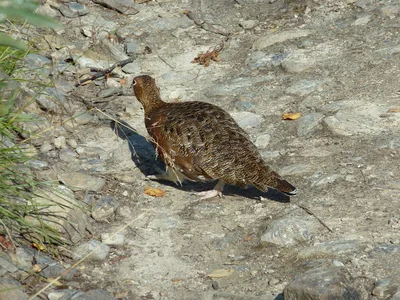 Willow ptarmigan
- ducks
- geese
- gulls
- auks
- arctic hare
- ground squirrel
- lemming
Food web
Predators
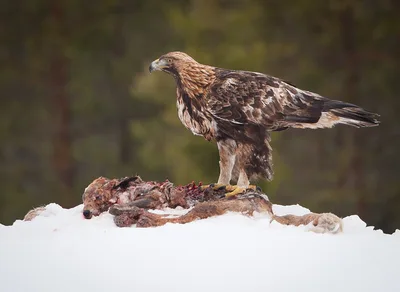 Golden eagle
- ravens
Ecological equivalents
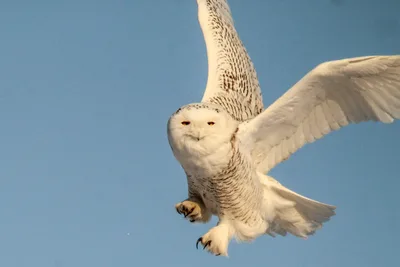
Related species on this site
American kestrel (same genus), Merlin (same genus), Peregrine falcon (same genus), Falcon (same family).
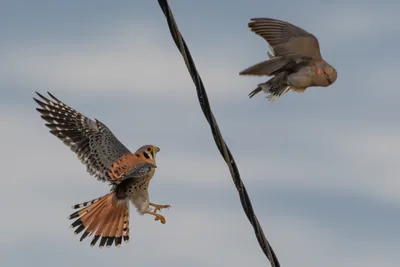 LC
Birds
American kestrel
Falco sparverius
The American kestrel is the smallest falcon in the Americas and the most numerous.
Living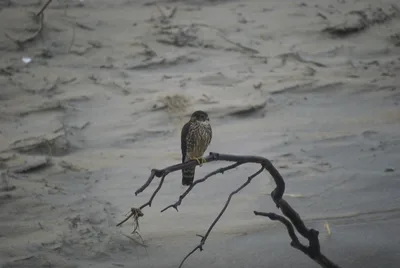 LC
Birds
Merlin
Falco columbarius
The merlin is a small, stocky falcon of open northern country that hunts small birds in fast low flight.
Living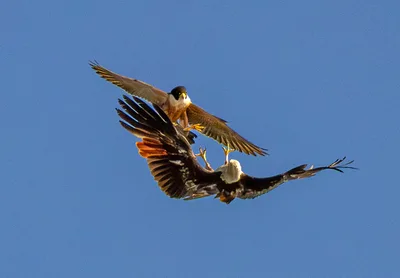 LC
Birds
Peregrine falcon
Falco peregrinus
The peregrine falcon is the fastest animal on Earth.
Living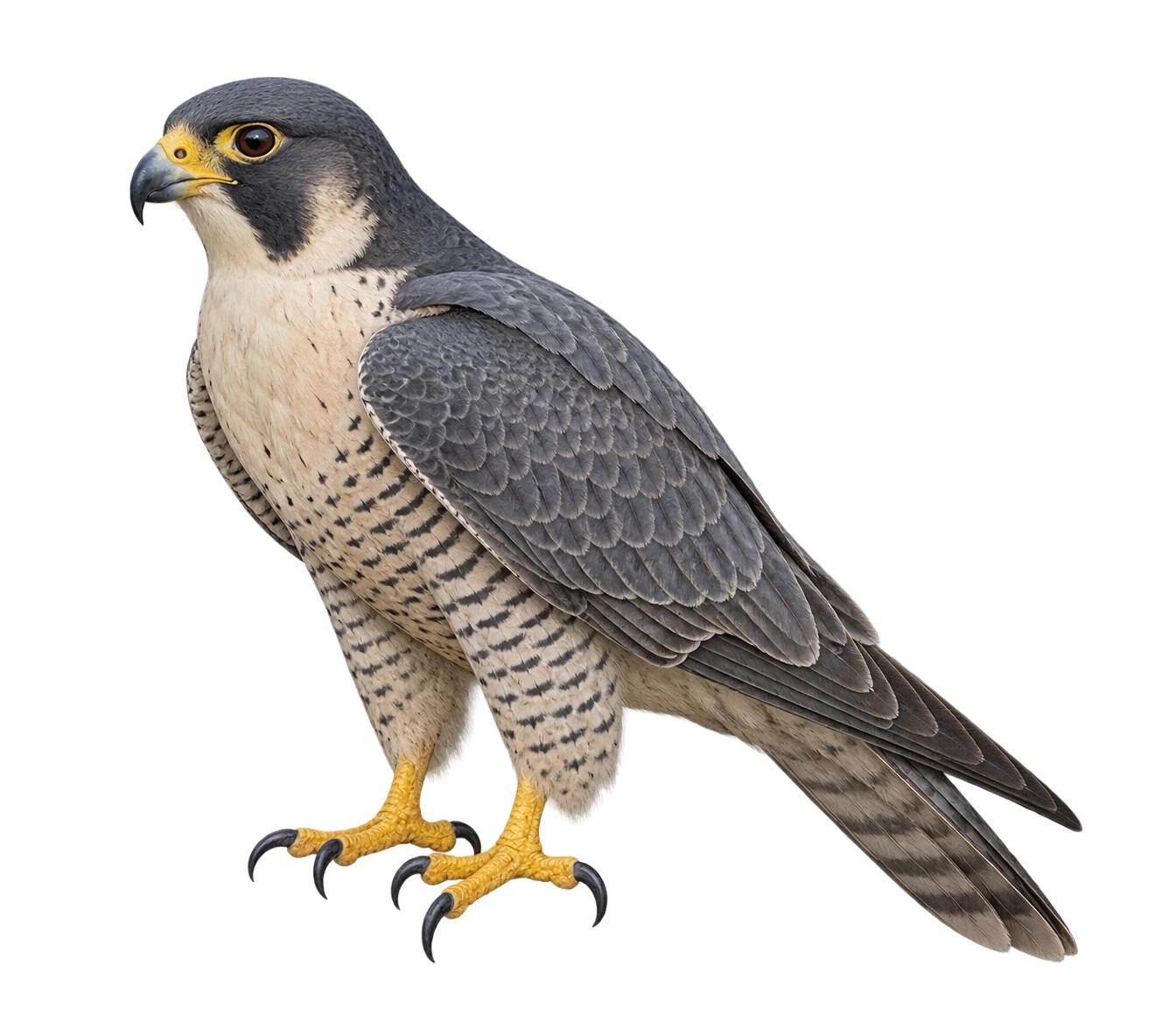
Birds
Falcon
Falconidae
Classification and source reference
LivingAI illustration