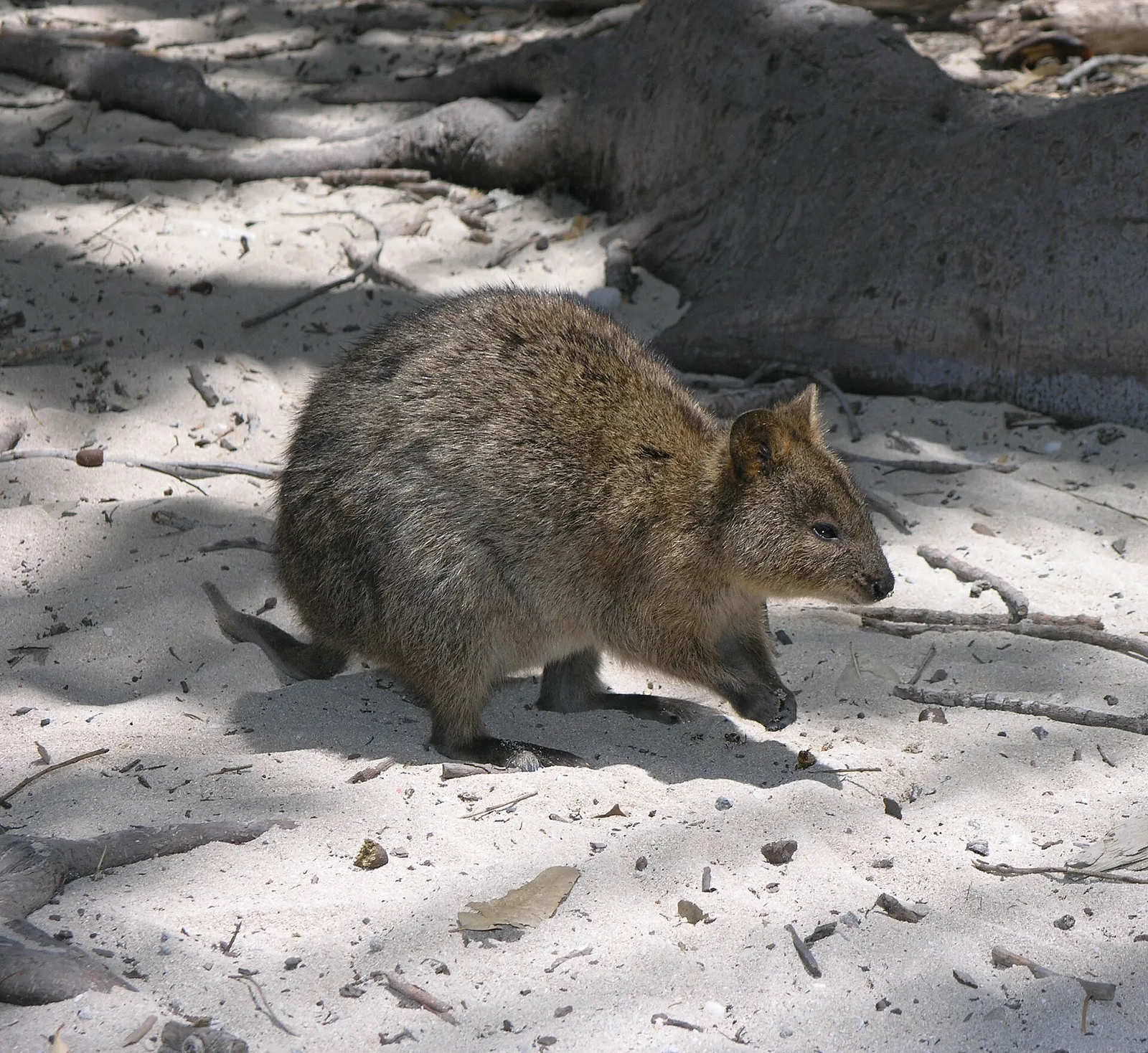
Quokka
The cat-sized wallaby that looks as if it smiles
Setonix brachyurus
Also called Short-tailed wallaby, Short-tailed pademelon
Living individuals or members of this group exist today. This does not mean they are safe from extinction.
Meet the quokka
The quokka is a small, stocky wallaby of south-western Australia, best known from Rottnest Island near Perth. Foxes, cats and habitat loss have made it Vulnerable on the mainland, where about 4,000 remain.
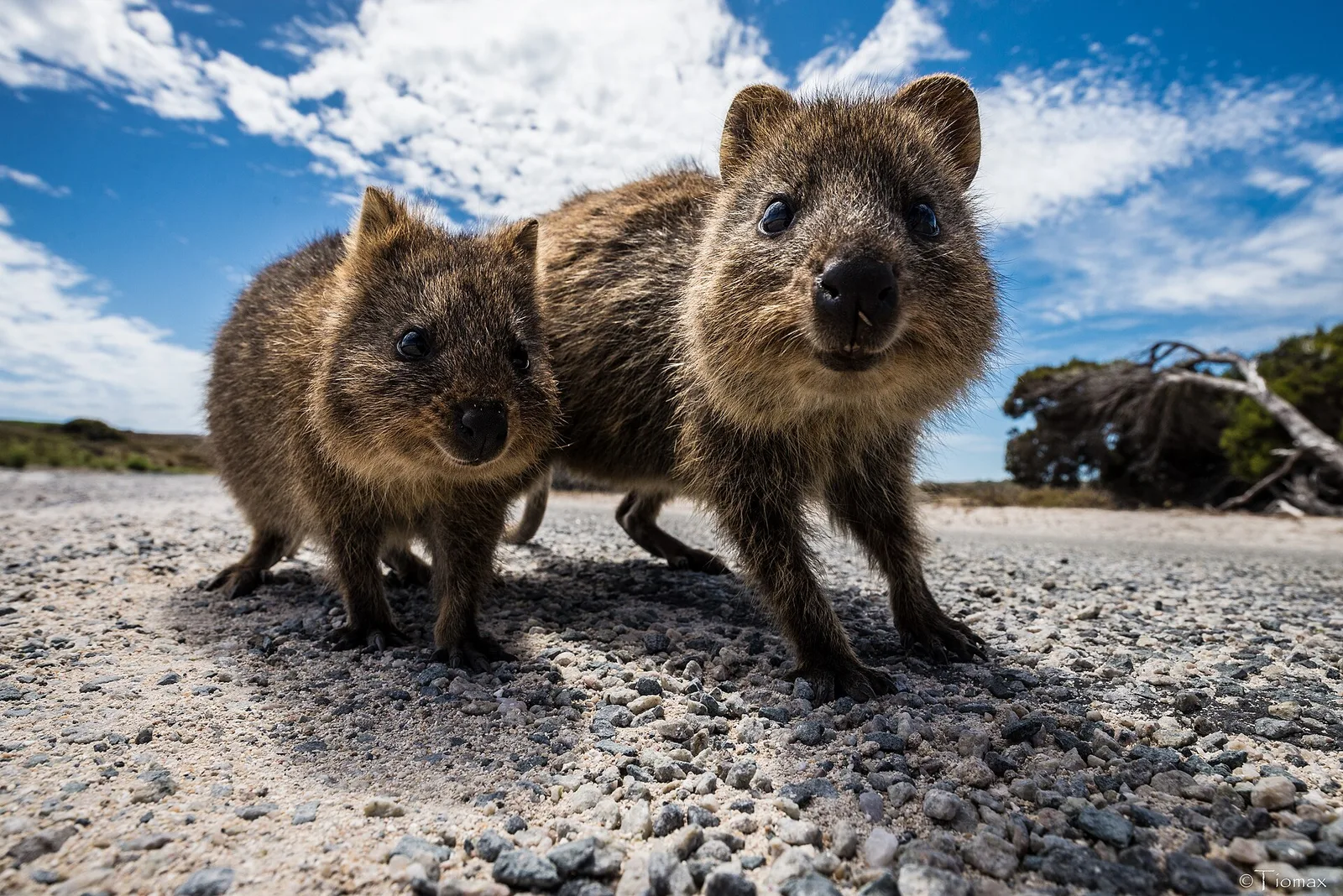
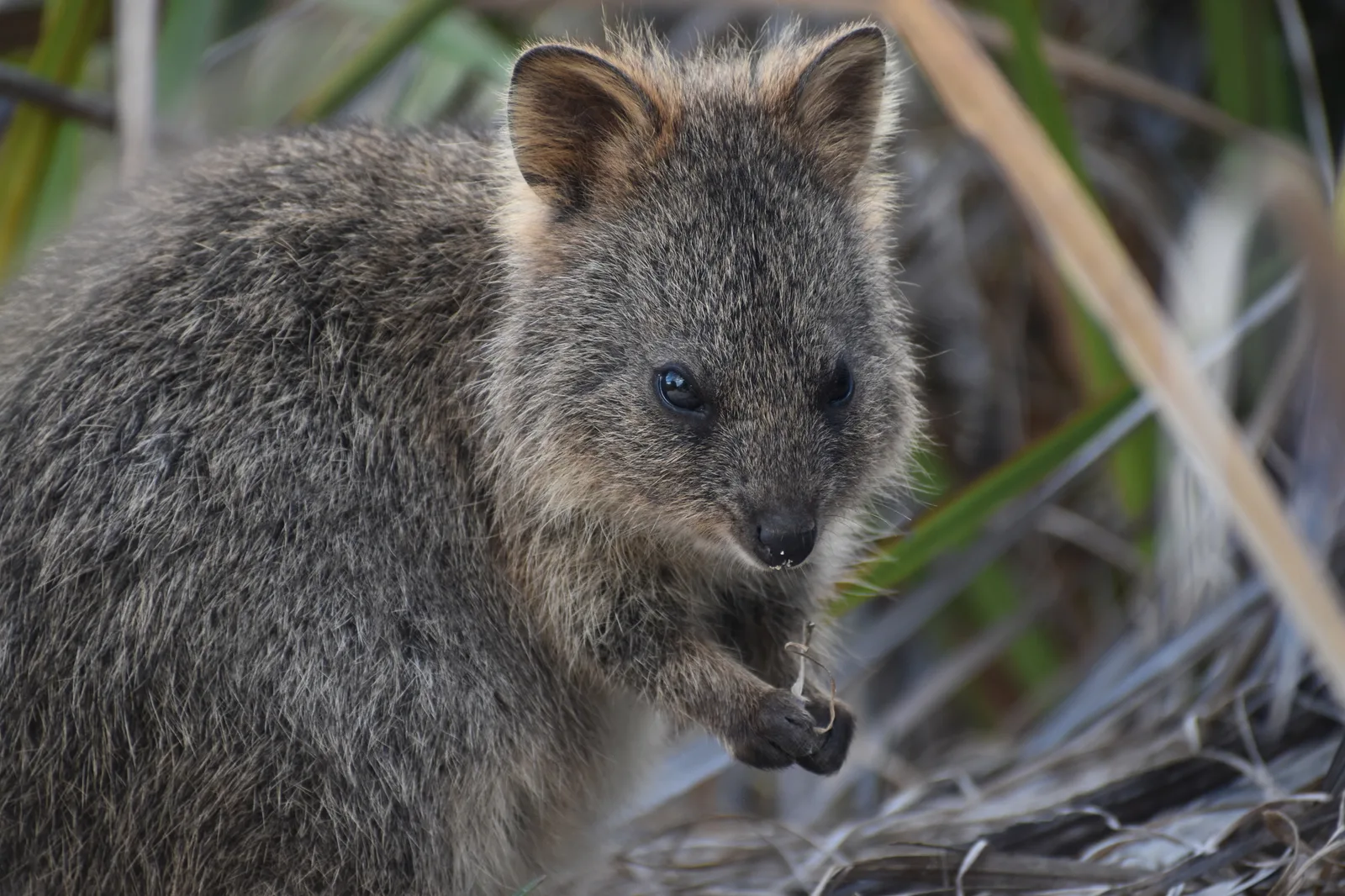
Images of the quokka
Lifespan in the wild
8 to 15 years
Weight
1.6 to 4.2 kg
Length
40 to 54 cm
Fact file
Quokka
- Location
- South-western Western Australia, Rottnest Island and Bald Island
- Habitat
- Temperate forest, Wetlands, Coast
- Diet
- Herbivore
- Prey / food
- Shrub leaves and stems, saltbush, grasses, sedges, seeds and berries
- Predators
- Red fox, feral cat, dog, dingo, birds of prey; snakes on Rottnest
- Lifestyle
- Nocturnal, rests in dense shrubs by day
- Group name
- Colony
- Name of young
- Joey
- Gestation
- About 27 days
- Litter size
- 1 joey, rarely twins
- Population
- About 8,000 to 12,000 on Rottnest Island; about 4,000 on the mainland
- Biggest threat
- Introduced foxes and cats, habitat clearing, fire and a drying climate
- Distinctive feature
- A short face and upturned mouth that give a smiling look
- Colour
- Grizzled grey-brown above, paler below
- Skin type
- Fur
Size
Next to a person
Measurements
Size and speed
- Length
- 40 to 54 cm head and body, without the tail
- Tail
- 25 to 30 cm
- Weight
- 1.6 to 4.2 kg
- Weight, male
- 2.7 to 4.2 kg
- Weight, female
- 1.6 to 3.5 kg
Typical adult ranges. Sources: Animal Diversity Web, Wikipedia.
Life cycle
Lifespan
- In the wild8 to 15 years
- In captivityUp to 13.8 years
- 015 years
The pale bar is the record. Sources: Animal Diversity Web, AnAge.
Appearance
Colour and coat
- Primary colours
- grey-brown
- Secondary colours
- buffrufous
- Skin type
- fur
- Male and female
- Slight. Males weigh 2.7 to 4.2 kilograms and females 1.6 to 3.5 kg, and males are a little longer. The coat is the same in both sexes.
Life cycle
Mating and family
- Mating system
- promiscuous, with a male dominance hierarchy
- Social structure
- loose colonies of one to two dozen on the mainland, up to 150 on Rottnest
- Breeding
- one joey a year on the islands, up to two a year on the mainland
A female quokka mates with several males and gives birth to one joey after about 27 days. She mates again at once and holds the new embryo in diapause. The joey spends about six months in the pouch and is weaned at around eight months. Island females breed mainly from January to March, while mainland females breed all year. A wild quokka lives about 10 years.
Classification
Taxonomy
- Kingdom
- Animalia
- Phylum
- Chordata
- Class
- Mammalia
- Order
- Diprotodontia
- Family
- Macropodidae
- Genus
- Setonix
- Species
- Setonix brachyurus
Conservation
Red List status
- LC
- NT
- VU
- EN
- CR
- EW
- EX
Vulnerable on the IUCN Red List
Range
Recorded in 1 country
Habitat layer: temperate broadleaf and mixed forest, temperate conifer forest, boreal forest and taiga, flooded grassland and savanna, mangrove.
Countries from 1,549 wild records on GBIF (iNaturalist research grade), filtered and checked by hand. Country shapes: Natural Earth. Habitat: RESOLVE Ecoregions 2017, CC BY 4.0. Basemap: Natural Earth.
Habitats
Three things to know
- 1
The quokka's upturned mouth made it the internet's happiest animal, though the smile is an accident of facial structure.
- 2
Dutch explorer Willem de Vlamingh took quokkas for giant rats in 1696 and named their island Rottnest, the rat nest.
- 3
A female quokka keeps a spare embryo on pause, which grows only if the joey in her pouch dies.
Did you know
Seven more facts
- 1
The quokka chews the cud like a cow.
- 2
A female quokka raises about 17 joeys over her lifetime.
- 3
Quokkas have colour vision, which most marsupials lack.
- 4
Rottnest quokkas walk up to 2 kilometres to reach a freshwater soak.
- 5
Bright moonlight keeps a quokka in cover for the night.
- 6
A new quokka population was found in the Perth Hills in late 2024, and its location is secret.
- 7
Some quokkas on Rottnest eat snails.
Field notes
How it looks and acts
Field notes
Distinguishing features
- A short, broad face with an upturned mouth that looks like a smile.
- A tail of only 25 to 30 centimetres, short for a macropod.
- Short rounded ears and a bare black nose.
- Thick, coarse, grizzled grey-brown fur, paler on the belly.
- A stocky, hunched body on strong hind legs, with short forearms.
Field notes
Unique adaptations
- A paused embryo that restarts if the pouch joey is lost.
- A diet of water-rich leaves that meets most of its need to drink.
- Cud chewing that squeezes more nutrition from tough shrubs.
- Colour vision that probably helps it pick out a predator.
- The ability to climb 1.5 metres into shrubs for foliage out of reach on the ground.
Field notes
Interesting behaviours
- Feeds at night with peaks in the early evening and before dawn.
- Sleeps by day under spiky Acanthocarpus shrubs.
- Follows worn runways through dense cover on the mainland.
- Gathers in crowds of more than 100 at freshwater soaks on Rottnest.
- Returns to the same few resting sites each day.
Field notes
Temperament
- Bold around people on Rottnest, where it approaches visitors closely.
- Shy and rarely seen on the mainland, where it keeps to thick cover.
- Males fight over resting sites and females, with the heaviest on top.
- Not very social, and it often feeds alone even in a crowd.
Field notes
Communication
- A joey dropped from the pouch calls out loudly.
- A female grooms a male she accepts and hops away from one she rejects.
- Males chase and fight to show rank.
Ecology
Ecological role
The quokka is a browsing prey animal that shapes the shrub layer of south-western Australia's wet thickets.
- Feeds foxes, cats, dingoes, snakes and birds of prey.
- Browses new growth after fire and may hold back plant regeneration where it is too abundant.
- Like other browsers, it probably spreads the seeds of the berries and fruit it eats.
Stories
Myths and legends
- In Noongar tradition, the animal is gwaga or ban-gup, and the first name became the English quokka.
- In Dutch seafaring tradition, the quokka was a giant rat, and its island became Rottnest, the rat nest.
- In internet tradition since the mid-2010s, the quokka is the happiest animal in the world.
- In a story retold on web sites, a Noongar god shrank a lazy kangaroo into the quokka, though the tale is probably modern.
People
Relationship with humans
People
Living alongside us
Settlers once hunted the quokka as a farm pest, and foxes and clearing then drove it from most of the mainland. Today it is a tourist icon on Rottnest Island, where visitors queue for selfies. Handling or feeding one is illegal, because human food harms the animal and bites are not rare. Zoos across Australia keep the species. Fox control and reserves protect the mainland remnants.
- A few dozen people a year are bitten on Rottnest, mostly children who get too close.
- Wild quokkas carry Salmonella, especially in summer.
- The animal weighs under 5 kilograms, so it is probably unable to cause serious injury.
People
Status, uses and products
- Domestication
- Wild
- As a pet
- Not suitable. The quokka is a protected Vulnerable species, and keeping one is illegal. It also needs native shrubs and a colony, which no home can supply.
- Uses
- ecotourismzoo exhibition
- Products
- None recorded
The full account
About the quokka
The quokka, Setonix brachyurus, is a small wallaby about the size of a house cat. It is the only species in its genus. Its short face and upturned mouth make it look as if it smiles, so the internet calls it the happiest animal in the world. Like other macropods it eats plants and moves about mainly at night.
An adult weighs 1.6 to 4.2 kilograms, with a head and body of 40 to 54 centimetres and a tail of 25 to 30 cm. The species survives in one corner of south-western Australia: on Rottnest Island, on Bald Island and in scattered mainland pockets. Foxes, cats and habitat loss had cut the mainland range by more than 50% by 1992.
The IUCN lists the quokka as Vulnerable. Rottnest holds perhaps 8,000 to 12,000 quokkas, and the mainland about 4,000. Selfies with quokkas draw tourists to the island, where feeding or handling one can bring a $300 fine.
Name and taxonomy
The name quokka comes from a Noongar word, probably gwaga or gawaga. Noongar people also call the animal ban-gup or bungeup. Other English names are short-tailed wallaby and short-tailed pademelon, and German speakers say Kurzschwanzkänguru. The species name brachyurus is thought to come from the Greek for a short tail.
The quokka belongs to the kangaroo family, Macropodidae, in the order Diprotodontia. It sits alone in the genus Setonix, with no subspecies. A Dutch mariner, Samuel Volckertszoon, reported a wild cat on Rottnest in 1658. In 1696 Willem de Vlamingh took the animals for giant rats and named the island 't Eylandt 't Rottenest, the rat nest island. The French artist Charles-Alexandre Lesueur drew two living quokkas after French ships called at Rottnest in 1801 and 1803. The type locality is King George Sound, near Albany.
Evolution and relatives
The quokka's closest relatives are the other wallabies and kangaroos of the family Macropodidae. Like them it has strong hind legs, a pouch and a hopping gait. It carries 22 chromosomes. It is among the smallest wallabies, and its build recalls the pademelons and rock wallabies. The sources used here give no fossil record for the genus, so its deeper history is thought to follow that of the wallabies in general.
Appearance
The quokka is a thickset wallaby with a short face, a broad head and small rounded ears. Head and body measure 40 to 54 centimetres, and the tail adds 25 to 30 cm, short for a macropod. Adults weigh 1.6 to 4.2 kilograms. Males weigh 2.7 to 4.2 kg and females 1.6 to 3.5 kg. Body size falls with latitude.
The fur is thick, coarse and grizzled grey-brown on the back, and paler below. The head, neck and shoulders sometimes carry a reddish wash. The tail is dark, thinly furred and sometimes paler beneath. The nose is bare and black, the back is rounded, and the forearms are short. Despite its kangaroo shape, it climbs shrubs and small trees up to 1.5 metres to reach leaves. Unlike most wallabies it has colour vision, which probably helps it spot predators.
Habitat and range
Wild quokkas live only in the far south-west of Western Australia. The largest population lives on Rottnest Island off Perth. A smaller one lives off Albany, on Bald Island. Neither island has foxes or cats. On the mainland, scattered groups survive between Perth and Albany in forest and in coastal heath, mostly inside reserves and national parks. One colony shares Two Peoples Bay Nature Reserve with the critically endangered Gilbert's potoroo. In late 2024 a new population turned up in the Perth Hills, and its location is kept secret.
Mainland quokkas need dense ground cover: swamps, thickets, rushes and sedges. They keep to country with more than 700 millimetres of rain a year, and most now live where it passes 1,000 mm. They favour scrub that burned 10 to 19 years earlier, when the regrowth is richest. On Rottnest they use everything from semi-arid scrub to cultivated gardens and the settlement itself. By day they sleep under the spiky shrub Acanthocarpus preissii, which keeps larger animals out.
At settlement the species covered about 41,200 square kilometres of the south-west. By 1992 the mainland range had shrunk to about 17,800 km2. GBIF holds records from 5 countries, a count that includes zoo animals.
Diet and feeding
The quokka is a browser that eats leaves and stems from a wide but selective set of shrubs. Mainland studies recorded 29 plant species in the diet, though 11 shrubs made up 90% of it. On Rottnest the diet covers 40 species, with saltbush and other succulents dominant in summer. Grasses, forbs and sedges fill in as the seasons turn, and fresh growth is preferred. A small mallow, Guichenotia ledifolia, is a favourite food.
An adult male eats about 32 to 45 grams of dry food a day. Leaves supply most of the water it needs, so it drinks little for much of the year. Even so, Rottnest animals walk up to 2 kilometres to freshwater soaks in the dry months. It swallows food, brings it back up and chews the cud, much like a cow. It also eats seeds, berries and fruit, and it has been seen eating snails. On Rottnest it scavenges from rubbish dumps and from visitors, though human food makes it ill.
Behaviour and social life
The quokka is nocturnal. It wakes in the late afternoon, feeds through the night with peaks in the early evening and before dawn, and returns to shelter. Heavy rain and bright moonlight keep it under cover. On the mainland it moves along well-worn runways through dense vegetation and seldom strays far from cover. It is highly sedentary, and a home range covers about 5 hectares for either sex.
On Rottnest each animal uses a few resting sites and forages in the open 50 to 600 metres away. Ranges overlap, and more than 100 animals may gather at a freshwater soak. Animal Diversity Web describes mainland colonies of one to two dozen and island groups of up to 150. Even so the quokka is not very social, and it often rests and feeds alone. Males fight to hold resting sites, and a hierarchy forms with the heaviest males on top. A resting site may be shared by several females, or by a male with one or two females.
Young animals mostly settle within 100 metres of where they were born, though one moved 900 m. Adults occasionally travel up to 10 kilometres. A mother chased by a predator may drop her joey from the pouch. The joey squeals, which may draw the predator while the mother escapes.
Communication and senses
Little has been published on how quokkas communicate. The quokka has colour vision, which is unusual among marsupials and probably helps it see predators. Males signal rank by fighting and by chasing rivals from resting sites and from females. A female accepts a male by staying with him and grooming him, and she rejects one by hopping away. A dropped joey calls out, which suggests sound plays a part in the bond between mother and young.
Reproduction and life cycle
Females mature at about nine months and males at 13 months. The mating system is promiscuous, and a female in oestrus may mate with up to five males. A dominant male guards a receptive female by chasing off rivals, and he loses interest after mating. Copulation lasts 2 to 4 minutes, sometimes up to 11, and may repeat up to nine times with one male. Females choose too: they refuse some males, or hop away when the guard is distracted.
Gestation lasts about 27 days, and the female bears a single joey, rarely twins. She mates again shortly after the birth, and the new embryo pauses in diapause. If the pouch joey dies, the embryo resumes growth, and if the joey lives, the embryo is lost. Mainland females breed all year and may raise two young a year. On Rottnest and Bald Islands most births fall between January and March, and females rest for much of the year.
The joey stays in the pouch for about six months. It then follows its mother as a young-at-foot and is weaned at around eight months. Some young stay near the mother until 19 to 20 months. A female produces about 17 joeys in her lifetime. Wild quokkas live 8 to 15 years, typically about 10, and one captive animal reached 13.8.
Predators and threats
On the mainland the introduced red fox is the chief predator, and it reached the south-west in the 1930s. Feral and domestic cats, dogs, dingoes and birds of prey also take quokkas. On Rottnest, snakes are the only predator. Bald Island has none.
Habitat loss is the other great threat. Clear-fell logging, farming, housing, and the draining and burning of swamps have all cut the mainland range. Feral pigs degrade the wet thickets that remain. A 2015 bushfire near Northcliffe killed about 90% of a population of 500. Quokkas recover slowly after severe fire and take years to return to burnt ground.
Late summer brings hunger on Rottnest, as plants dry and surface water vanishes, and many juveniles die. Summer also brings high rates of Salmonella infection. Falling rainfall and rising temperatures since the 1970s squeeze the wet habitat the species needs. One severe climate scenario predicts the loss of all suitable range by 2070.
Population and conservation
The IUCN lists the quokka as Vulnerable, and Australia lists it the same way. Rottnest Island held an estimated 8,000 to 12,000 animals in 2007. Bald Island holds 600 to 1,000. The mainland holds about 4,000, nearly all in groups of fewer than 50. One declining group of more than 700 lives between Nannup and Denmark, in the southern forest.
In the early 1900s the quokka was common enough to be hunted and treated as a farm pest. The sharpest decline ran from the 1930s to the 1990s. Mainland groups are now small, isolated and low in genetic diversity. Some have grown where foxes are controlled, and pig control runs in some areas. A recovery plan exists, and the species breeds well in captivity.
On Rottnest the problem may be the reverse: quokkas could be so abundant that they stop native plants from regrowing. Numbers there swing with the seasons.
Relationship with humans
Quokkas show little fear of people, and on Rottnest they walk right up to visitors. That confidence made the quokka selfie a social media trend in the mid-2010s. Chris Hemsworth, Roger Federer and Margot Robbie have all posed with one, and tourist numbers rose afterwards. The smile is an accident of facial structure, not an expression.
It is illegal to handle a quokka, and feeding is discouraged because chips and bread cause dehydration and malnutrition. The Rottnest Island Authority issues $300 fines, and cruelty carries up to a $50,000 fine and five years in prison. A few dozen people a year are bitten, most of them children. Wild quokkas carry Salmonella at high rates in summer, so contact brings some risk. Perth Zoo, Taronga Zoo and Adelaide Zoo keep the species, and one study found that animals in walk-through enclosures hid from visitors.
In culture and myth
The Noongar people of the south-west named the animal, and their word became the English name. The Dutch, the first Europeans to meet it, took it for a rat and left that mistake in the name Rottnest. Lesueur's drawing of two live quokkas, made after the French visits of 1801 and 1803, is one of the earliest European images. Web sources retell a Noongar story in which a lazy kangaroo was shrunk into the quokka as a punishment. The tale is thought to be poorly attested.
In the 2010s the quokka became an internet symbol of happiness and positivity. Its face now sells Rottnest Island, and tourism there grew on the strength of it. Spirit-animal blogs link the quokka with joy and resilience, and some add Dreamtime or Celtic connections that probably have no basis.
A sentence with a dotted underline is inferred: it describes the group the animal belongs to, or is a reading of the sources, rather than a measured or reported fact about this species.
Questions
Quokka questions, answered
Where do quokkas live?
Quokkas live only in south-western Western Australia. Most are on Rottnest Island near Perth, with a smaller population on Bald Island and scattered groups in mainland forest and heath.
Are quokkas endangered?
Yes, the IUCN rates it Vulnerable. Island numbers are healthy, but only about 4,000 remain on the mainland, in small isolated groups.
Why do quokkas look like they are smiling?
The shape of the short face and upturned mouth gives the impression of a smile. It is not an expression, and the animal is not smiling at you.
How big is a quokka?
A quokka weighs 1.6 to 4.2 kilograms. Head and body measure 40 to 54 centimetres, and the tail adds 25 to 30 cm.
What do quokkas eat?
Quokkas browse the leaves and stems of native shrubs, plus grasses, sedges, seeds and berries. On Rottnest saltbush and other succulents dominate in summer.
Can you touch a quokka?
No. It is illegal to handle a quokka on Rottnest Island, and the fine is $300. You may photograph one from close by if it approaches you.
Can you feed a quokka?
No. Human food such as chips causes dehydration and malnutrition, and feeding can bring a fine. Let the animal find its own plants.
Do quokkas bite?
Sometimes. A few dozen people a year are bitten on Rottnest, mostly children. Keep your hands away from the face.
Are quokkas dangerous?
Not seriously. A bite can break the skin, and wild quokkas carry Salmonella in summer, so wash your hands after any contact.
How long do quokkas live?
A wild quokka lives about 10 years, within a range of 8 to 15. One captive animal reached 13.8 years.
Are quokkas nocturnal?
Yes. They rest under dense shrubs by day and feed from the late afternoon through the night, with peaks in the early evening and before dawn.
How many babies does a quokka have?
One joey at a time, rarely twins. It rides in the pouch for about six months and is weaned at around eight months.
Do quokkas throw their babies at predators?
Not exactly. A mother chased by a predator may relax the pouch and drop the joey. Its cries distract the predator while she escapes.
Why is Rottnest Island called that?
Dutch explorer Willem de Vlamingh took the quokkas for giant rats in 1696. He named the island 't Eylandt 't Rottenest, the rat nest island.
Can quokkas be kept as pets?
No. The species is protected, and keeping one is illegal in Australia.
What eats quokkas?
On the mainland, red foxes, cats, dogs, dingoes and birds of prey. On Rottnest only snakes take them, and Bald Island has no predators at all.
Food web
Prey and food
- shrub leaves
- stems
- saltbush
- grasses
- sedges
- seeds
- berries
Food web
Predators
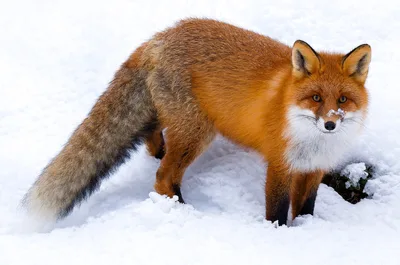 Red fox
- feral cat
- dog
- dingo
- birds of prey
- snakes on rottnest
Ecological equivalents
Related species on this site
Kangaroo (same family), Nabarlek (same family), Pademelon (same family), Procoptodon (same family), Red kangaroo (same family), Tree Kangaroo (same family), and more.
Mammals
Kangaroo
Macropodidae
Kangaroos are hopping marsupials in the macropod family.
Living
Mammals
Nabarlek
Petrogale concinna
Classification and source reference
LivingAI illustration
Mammals
Pademelon
Thylogale
Classification and source reference
LivingAI illustration
Mammals
Procoptodon
Procoptodon
Classification and source reference
ExtinctAI reconstruction LC
Mammals
Red kangaroo
Osphranter rufus
The red kangaroo is the largest marsupial and the largest animal in Australia.
Living
Mammals
Tree Kangaroo
Dendrolagus
Classification and source reference
LivingAI illustration