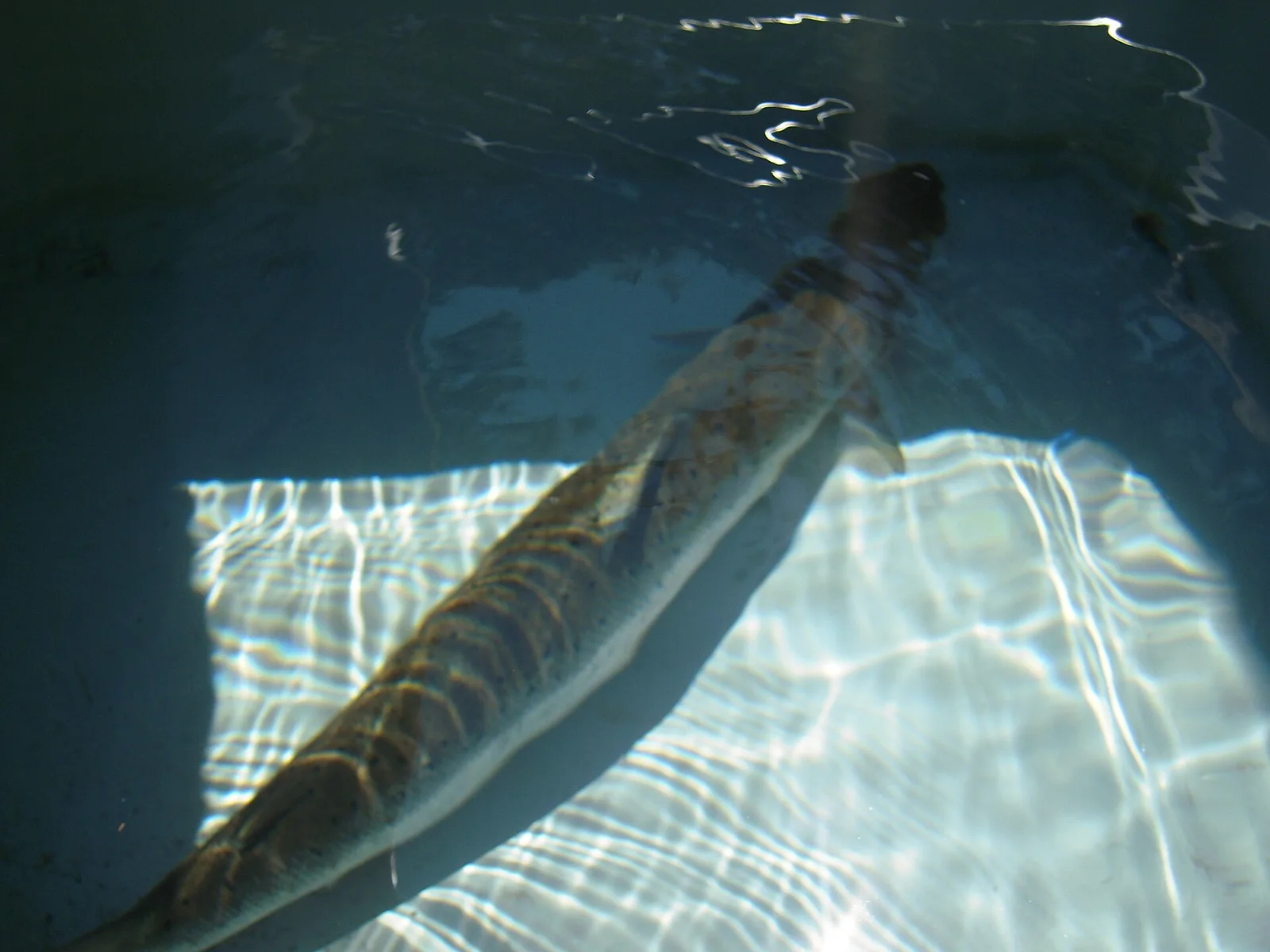
Living individuals or members of this group exist today. This does not mean they are safe from extinction.
Meet the atlantic salmon
The Atlantic salmon hatches in a river, grows up at sea, and returns to the same river to spawn. Unlike Pacific salmon, some survive to spawn again.
Images of the atlantic salmon
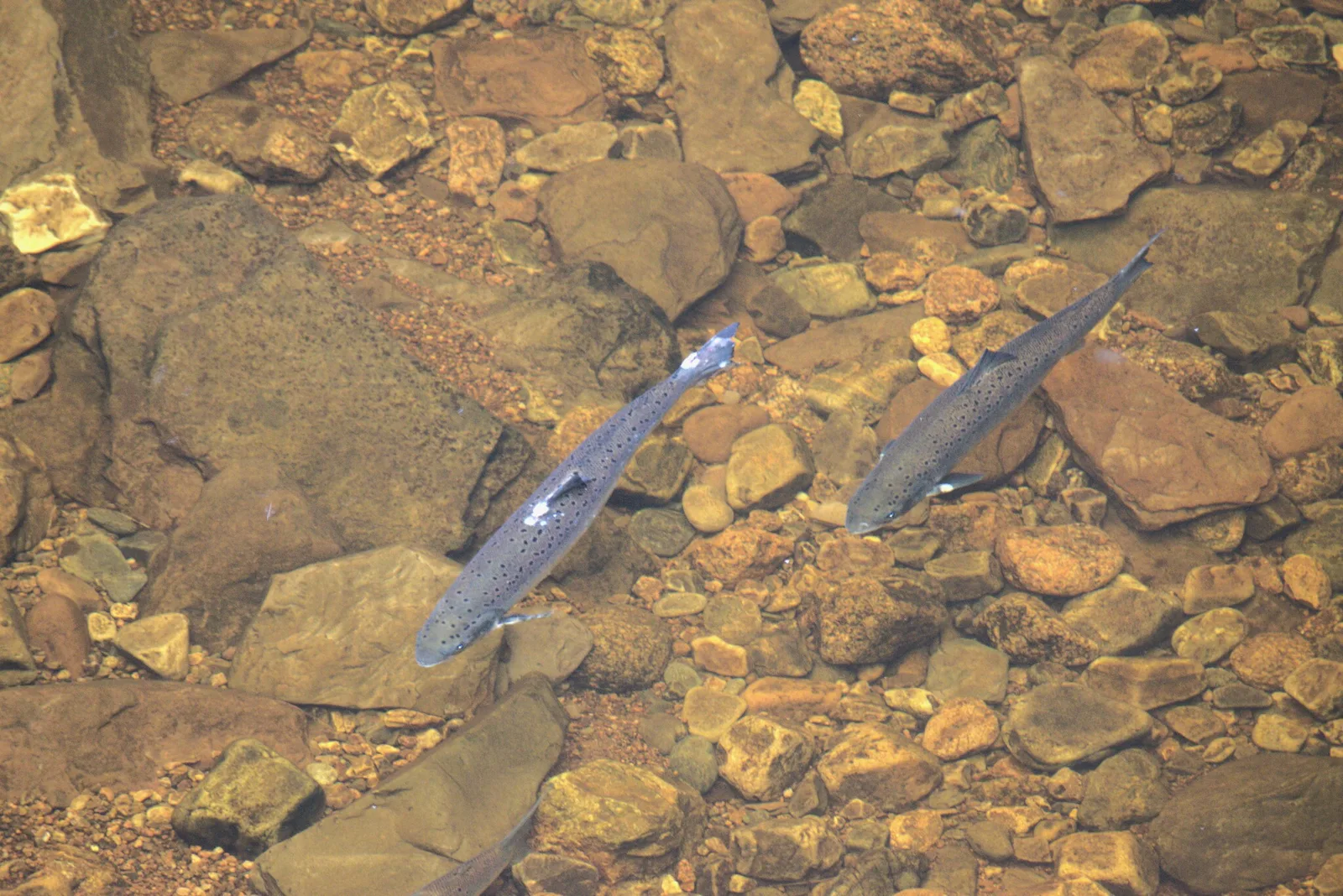
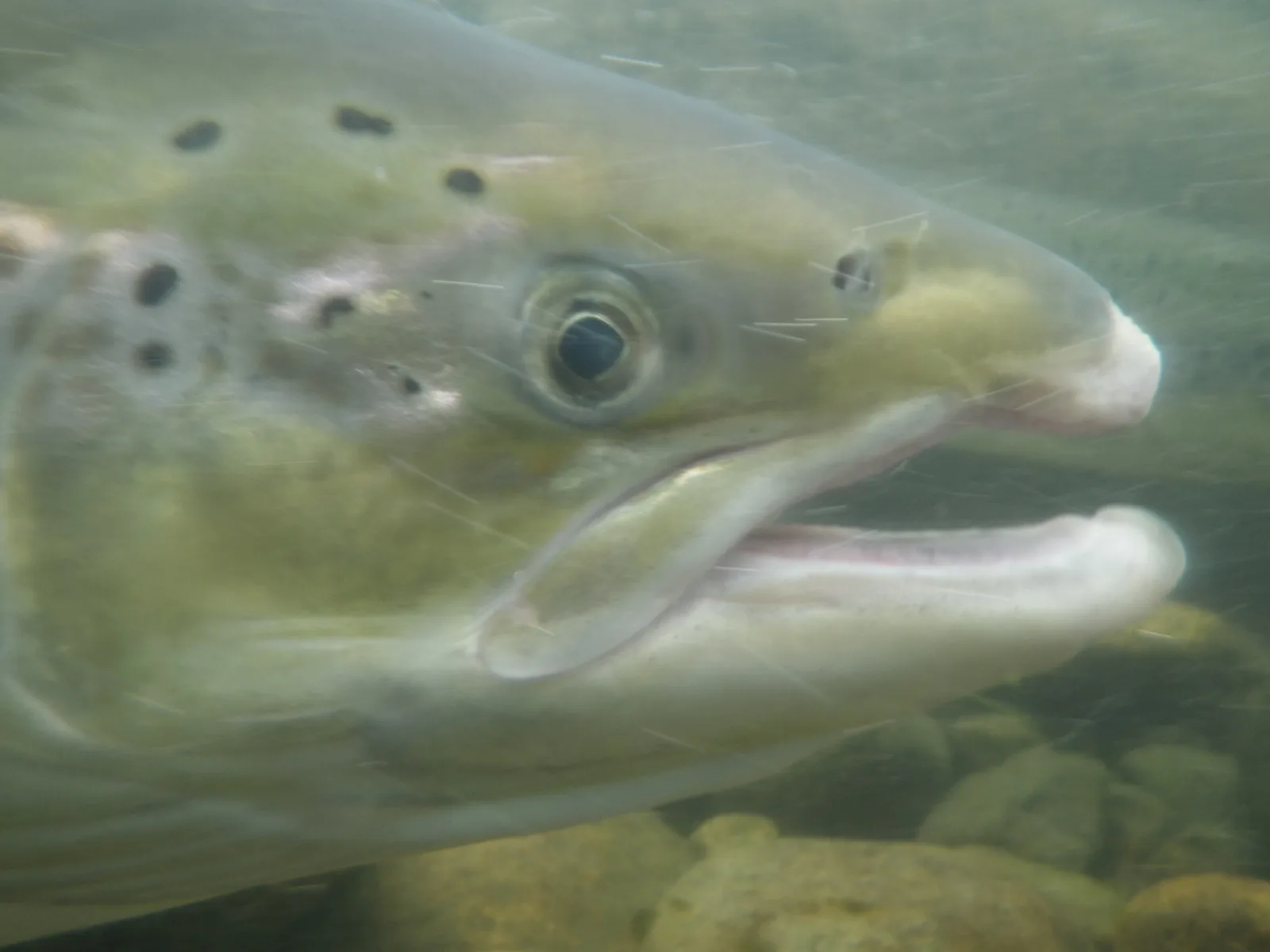
Lifespan in the wild
Up to 13 years
Weight
3.6 to 5.4 kg
Length
0.71 to 0.76 m
Fact file
Atlantic salmon
- Location
- The North Atlantic and its rivers
- Habitat
- Rivers and lakes, Open ocean, Coast
- Diet
- Carnivore
- Prey / food
- Insects when young; herring, capelin, shrimp at sea
- Predators
- Seals, otters, birds, larger fish
- Lifestyle
- Diurnal
- Group name
- Run or school
- Name of young
- Alevin, fry, parr, then smolt
- Incubation
- About 3 months of egg development in gravel
- Clutch size
- About 1,500 eggs per kilogram of female
- Biggest threat
- Dams, warming rivers and salmon farming
- Distinctive feature
- Silver flanks that darken and redden at spawning
- Colour
- Silver at sea; bronze and red in rivers
- Skin type
- Scales
Size
Next to a person
Measurements
Size and speed
- Length
- 0.71 to 0.76 m, up to 1.61 m after two years at sea
- Weight
- 3.6 to 5.4 kg, up to 49.4 kg after two years at sea
Typical adult ranges. Source: Wikipedia.
Life cycle
Lifespan
- In the wildUp to 13 years
- 013 years
The pale bar is the record. Source: AnAge.
Appearance
Colour and coat
- Primary colours
- silverblue-green
- Secondary colours
- blackbronzered
- Skin type
- scales
- Male and female
- Slight outside the breeding season. At spawning the male grows a hooked lower jaw, the kype, and a longer head, and both sexes turn bronze and red.
Life cycle
Mating and family
- Mating system
- pair spawning at a redd, with sneaking by small males
- Social structure
- schools as young and at sea, then solitary pairs at the redd
- Breeding
- once in most fish, though 5 to 10% return to spawn again
Salmon spawn in gravel in October and November. The eggs hatch in April, and the alevins leave the gravel in May or June. Parr spend one to four years in the river before they turn silver and go to sea as smolts. After one to four years at sea they return to the home river to spawn. Most spawn once, but some survive and return again, and the oldest known fish reached 13 years.
Classification
Taxonomy
- Kingdom
- Animalia
- Phylum
- Chordata
- Class
- Fish (several classes)
- Order
- Salmoniformes
- Family
- Salmonidae
- Genus
- Salmo
- Species
- Salmo salar
Conservation
Red List status
- LC
- NT
- VU
- EN
- CR
- EW
- EX
Near Threatened on the IUCN Red List
Range
Recorded in 15 countries
- Canada
- Germany
- Denmark
- Estonia
- Spain
- Finland
- France
- United Kingdom
- Ireland
- Iceland
- Latvia
- Norway
- Russia
- Sweden
- United States of America
Habitat layer: flooded grassland and savanna, mangrove.
Countries from 858 wild records on GBIF (iNaturalist research grade), filtered and checked by hand. Country shapes: Natural Earth. Habitat: RESOLVE Ecoregions 2017, CC BY 4.0. Basemap: Natural Earth.
Habitats
Three things to know
- 1
A salmon finds its home river by smell.
- 2
It can leap about 3 m up a waterfall.
- 3
Its diet of shrimp gives its flesh the pink colour.
Did you know
Seven more facts
- 1
A female lays about 1,500 eggs for every kilogram she weighs.
- 2
Smolts in Ungava Bay, northern Quebec, can be eight years old before they reach the sea.
- 3
Trout eat nearly 40% of young salmon in the river.
- 4
A salmon stops eating once it enters fresh water to spawn.
- 5
The longest Atlantic salmon on record measured 160.7 centimetres.
- 6
Salmon colonised Svalbard, at 78 degrees north, as the Arctic warmed.
- 7
iNaturalist holds 1,425 observations of the species.
Field notes
How it looks and acts
Field notes
Distinguishing features
- Silver flanks with X-shaped black spots above the lateral line.
- A tail fin with few or no spots.
- Under 13 anal fin rays, where Pacific salmon have more.
- A small fleshy adipose fin on the back.
- A hooked lower jaw on spawning males.
- A typical adult length of 71 to 76 centimetres after two years at sea.
Field notes
Unique adaptations
- Smolting changes the body chemistry so the fish can move from fresh water to the sea.
- Imprinting on the smell of the home river guides the adult back to spawn.
- A torpedo-shaped body and a strong tail let it leap falls and swim against the current.
- A range of ages at maturity spreads the risk of a drought year across a population.
- Survival after spawning probably lets a fish breed again if the first attempt fails.
Field notes
Interesting behaviours
- Rides surface currents at sea instead of swimming long distances.
- Leaves the river as a smolt on an ebb tide between March and June.
- Digs a redd in gravel with beats of the tail.
- Leaps waterfalls and passes beaver dams on the way upstream.
- Schools as a young fish, above all when leaving the estuary.
Field notes
Temperament
- More aggressive than other salmon as an adult.
- Probably wary of shadows and movement, which it senses through the lateral line.
- Will strike at a fly even when it has stopped feeding.
Field notes
Communication
- Reads the chemical signature of a river with its sense of smell.
- Feels pressure waves along the lateral line.
- Senses the Earth's magnetic field through iron in the lateral line.
- Probably signals at the redd by colour and posture, since males redden and grow a kype.
Ecology
Ecological role
The salmon carries food from the sea into cold rivers and feeds predators at every stage of its life.
- Young salmon eat insect larvae and are eaten in turn by trout, other fish and birds.
- Adults feed seals, Greenland sharks, cod and halibut at sea.
- Spent fish and eggs probably bring marine nutrients into the upper reaches of rivers.
- Its presence suggests a river is cool, clean and open to the sea.
Stories
Myths and legends
- In Irish tradition, the Salmon of Knowledge gave Fionn mac Cumhaill all wisdom when he burnt his thumb on it.
- In Welsh tradition, the Salmon of Llyn Llyw in the Mabinogion is the oldest living animal.
- In Norse tradition, Loki hid from the gods in the shape of a salmon.
- In Irish tradition, Fintan mac Bochra and Tuan mac Cairill spent ages as salmon.
People
Relationship with humans
People
Living alongside us
People have fished the Atlantic salmon for thousands of years, and medieval Scotland punished poachers with death. Dams, overfishing and pollution have wiped out many runs, and wild fish are now rare in the market. Sea-cage farms in Norway, Chile, Canada and Scotland raise nearly all the salmon we eat. Escaped farm fish breed with wild fish and spread parasites. Anglers still prize the wild fish, and many rivers allow only catch and release.
- The salmon poses no danger to people.
- It has teeth, but it uses them on small fish and insects.
- A large fish on a line can pull hard, and that is probably the only risk to an angler.
People
Status, uses and products
- Domestication
- Wild
- As a pet
- Not suitable. A salmon needs a cold, fast river and then the open sea. It is farmed in sea cages, not kept in tanks at home.
- Uses
- foodsport fishingaquaculture
- Products
- meateggs
The full account
About the atlantic salmon
The Atlantic salmon, Salmo salar, is a ray-finned fish of the family Salmonidae. It hatches in the gravel of a cold river, spends a few years there, then swims out to the North Atlantic to grow. After one to four years at sea it returns to the river where it was born and spawns. Only about 5% of returning fish choose the wrong river. Pacific salmon die after spawning, but this one can survive it and go back to sea for another try.
After two years at sea a typical adult measures 71 to 76 centimetres and weighs 3.6 to 5.4 kilograms. The heaviest on record, netted in Scotland in 1960, weighed 49.4 kg. The species is native to both sides of the North Atlantic, from Portugal and Connecticut north to the Arctic. The IUCN lists it as Near Threatened, and many river populations are endangered or already gone. Farms now supply nearly all the salmon on sale, and Norway alone produces over 50% of it.
Name and taxonomy
Carl Linnaeus named the species Salmo salar in 1758. Salmo is the Latin word for salmon. Salar is often translated as leaper, though it more likely meant a dweller in salt water. A Latin dictionary of 1879 reads it as a kind of trout, from a poem by Ausonius in the 4th century. The young fish look so different from the adults that they were once thought to be separate species.
The salmon belongs to the genus Salmo, which it shares with the brown trout, within the order Salmoniformes. It is the largest species in its genus and the third largest salmonid, after the Siberian taimen and the Chinook. English has a name for every stage of its life: alevin, fry, parr, smolt, grilse and kelt. Fishermen also call it bay salmon, black salmon, fiddler, silver salmon and winnish. In North America a population that never goes to sea is called ouananiche, or landlocked salmon.
Evolution and relatives
The salmon family also holds the trouts, chars, whitefishes and graylings. The closest relative is the brown trout, Salmo trutta, and the two breed together where they share a river. In two of four rivers studied in northern Spain, 2 to 3% of the salmon were salmon-trout hybrids. That is the highest rate of natural hybridisation reported anywhere in Europe.
Fish scales from a coastal pond in New Jersey show that salmon lived there 10,000 years ago. Like other salmonids, the species keeps a small fleshy adipose fin on the back near the tail. The anal fin has under 13 rays, while the Pacific salmons have more. Landlocked populations across the Northern Hemisphere show that the sea phase is not essential to the species.
Appearance
The salmon has a torpedo-shaped body, a small pointed head and well-developed teeth. The body is deepest under the dorsal fin and narrows to a slim tail stalk with a slightly forked tail. Every fin except the adipose fin has a black edge. At sea the flanks and belly are silver, and the back is brown, green or blue. Black spots shaped like an X sit mostly above the lateral line, and the tail fin usually has none.
Young parr carry 8 to 11 dark bars along each side, with a row of red spots between them. Those marks vanish when the fish turns silver as a smolt at about 15 centimetres. In the river before spawning, both sexes turn bronze to purple, and red spots appear on the head and body. A male grows a hooked lower jaw called a kype, and his head lengthens. Spent fish, the kelts, go so dark that anglers call them black salmon.
After two winters at sea a fish is 71 to 76 centimetres long and 3.6 to 5.4 kilograms. Fish that feed at sea for four or more winters, or that spawn again, grow far larger. The longest on record, from Norway in 1925, measured 160.7 cm. The heaviest, from the River Hope estuary in Scotland in 1960, weighed 49.4 kg.
Habitat and range
The salmon breeds in rivers on both sides of the North Atlantic. In Europe it runs rivers from northern Portugal and Spain to Norway, Iceland, Greenland and the Pechora River in Russia. In North America it breeds from Connecticut north to Labrador and Arctic Canada. Warming seas let it colonise Svalbard, at 78 degrees north, between 2002 and 2006. GBIF holds records from 55 countries, and that count includes farm escapes in the Pacific.
The young need large, cool rivers with wide gravel beds in the headwaters. At sea the fish prefer water of 4 to 12 degrees Celsius. They survive a short spell in water just below freezing, or as warm as 27.8 degrees, but no longer. Most sea-going fish from both continents gather on the continental shelf off West Greenland. The species is a cold-water fish, and it reacts quickly to a change in river temperature.
Landlocked populations live in large lakes and never see the sea. One lived in Lake Ontario until logging, dams and mills wiped it out by 1896. Farm escapes from net pens have reached Puget Sound, British Columbia and Alaska since the 1980s. One river on Vancouver Island has seen them breed, but no lasting Pacific population has formed.
Diet and feeding
A newly hatched alevin lives on its yolk sac and starts to hunt within days of using it up. In the river the young eat the larvae of blackflies, stoneflies, caddisflies, mayflies and midges. Land insects that fall into the water matter too, above all in late summer. Parr sometimes eat small fish, and a few have been seen eating salmon eggs.
At sea the young fish first take plankton such as krill, plus amphipods and shrimps. Larger salmon switch to fish, and capelin is the favourite. They also take herring, alewives, smelt, sand lance, small mackerel and small cod. The shrimp in the diet is what turns the flesh pink. Once a salmon enters fresh water to spawn it stops eating, even though it will still strike at an angler's fly.
Behaviour and social life
Fry and parr may hold small territories, but the evidence is unclear. They can be aggressive to each other, and many school together, above all when they leave the estuary. Adults are more aggressive than other salmon and attack other fish more readily. Salmon born in many different rivers share the same feeding grounds at sea.
Smolts leave the river between March and June, and they prefer to go on an ebb tide. Once at sea they follow the surface currents and feed as they drift. The idea that salmon swim thousands of kilometres is a misconception: they ride the currents. After a year of good growth they move into currents that carry them back towards home. Their range is the home river plus the loop of currents linked to it.
On the way upstream a salmon can leap about 3 metres up a waterfall. Beaver dams rarely stop them, and parr have been found upstream of the dams. In one restored Nova Scotia stream the dams only blocked fish in the smallest reaches in dry years. Beaver ponds help: two-year-old parr in Canadian beaver ponds grew faster and were in better condition than parr elsewhere.
Communication and senses
The salmon has a keen sense of smell, hearing and taste, which it uses to find food and to sense danger. The lateral line along each flank feels water movement, so a fish senses a predator's approach as pressure waves. Iron in the lateral line lets the fish sense changes in the Earth's magnetic field at sea. Like other fish, it probably uses that magnetic sense together with the currents to navigate.
As a smolt heads downstream it memorises the chemical signature of its home water, a process called imprinting. Years later the adult follows that scent back up the coast and into the right river. Scientists are not certain how the return works, and some suggest the sun and stars help. Most agree that the smell of the parent stream is the main guide. Salmon do not call to each other, and any signalling between fish at the redd is thought to be visual.
Reproduction and life cycle
Spawning runs from October into November, with a peak in late October. The female picks a gravel riffle above a pool and digs a nest, the redd, with strong beats of her tail. The male courts her and drives off rivals while she works. When the redd is ready the pair release eggs and milt together, and she covers them with gravel. Small precocious parr sometimes dart in and fertilise some of the eggs.
A female lays about 1,500 eggs per kilogram of her body weight. The eggs are pale orange, round and briefly sticky, and they lie 12.7 to 25.4 centimetres deep in the gravel. She rests, then digs another redd, and a full spawning can take a week or more. The eggs develop for about three months and hatch in April. The alevins stay in the gravel until the yolk is gone and emerge in May or June.
Parr grow slowly and stay in the river for one to four years, or up to eight in Ungava Bay. At 12 to 15 centimetres they turn silver, become smolts and head for the sea. A fish that returns after one winter at sea is a grilse. Some fish do not die after spawning, and 5 to 10% go back to sea and return to spawn again. A very few spawn three times or more, and the oldest known fish reached 13 years.
Predators and threats
The young are very vulnerable, and trout alone eat nearly 40% of them. Other fish and birds take the rest. Once a salmon passes about 250 grams, birds and most fish leave it alone. At sea the predators are seals, Greenland sharks, skates, cod, halibut and people. Grey seals and common seals often eat adult salmon, and survival to the return is put at 14 to 53%.
Dams and mills block the way to the spawning gravel, and over half of North America's runs were lost by 1850. In one region of Nova Scotia 31 of 33 salmon streams were dammed by lumber mills. Overfishing, pollution and acid rain add to the pressure, and warming rivers hurt a cold-water fish. Escaped farm fish breed with wild fish and pass on parasites. In the Northwest Atlantic 27.1% of fish in 17 of 18 rivers studied were stocked fish or farm hybrids.
Population and conservation
The IUCN Red List rates the Atlantic salmon as Near Threatened. A regional assessment found the European population Vulnerable. The runs along the Maine coast are listed as endangered under the US Endangered Species Act. Canada declared the inner Bay of Fundy runs endangered in 2000. Finland lists the species as Endangered, Portugal and Estonia as Critically Endangered. It is extinct in Czechia, the Netherlands, Poland, Slovakia and Switzerland.
In the 1950s fishermen found the sea feeding grounds off Greenland and the Faroes and set drift nets there. Catches fell from four million fish to 700,000 between 1979 and 1990. Around 1990 the death rate at sea in the western Atlantic more than doubled, and runs in Maine and Nova Scotia collapsed. NASCO, an international council based in Edinburgh, was set up in 1983 to protect the stocks.
Returns picked up after 2008. The Penobscot River in Maine saw about 940 fish in 2007 and 1,938 by mid-July 2008. In 2011 more than 3,100 returned, the most since 1986. Ontario's restoration programme, begun in 2006, has stocked over 6,000,000 young salmon in Lake Ontario and its rivers. In 2024 salmon spawned in the upper River Derwent in England for the first time in 100 years.
Relationship with humans
People have netted and trapped salmon for thousands of years, with wood and stone weirs in New England rivers. Medieval Scotland prized the fish so highly that a second conviction for poaching on royal land could bring death. King Robert I set a minimum mesh for fish traps in 1318 so that the young could pass. From the 15th century Aberdeen salted salmon in barrels and shipped them as far as the Baltic. In England the 1861 Salmon Fisheries Act followed a royal commission, and the 1975 act banned blocking the migration.
Fly anglers prize the salmon above almost every other river fish. The United States bans all fishing for wild sea-run salmon, and 11 rivers in Maine are on the endangered list. Quebec sets a limit per river, and some rivers allow only catch and release with 3 fish a day. Even catch and release adds stress to a fish already pressed by warming and predation.
Wild-caught salmon has almost vanished from shops, and nearly all fish on sale come from farms. Norway, Chile, Canada, the UK, Ireland, the Faroes, Russia and Tasmania raise them in sea cages. Fry grow in freshwater tanks for 12 to 20 months, then spend up to two years in cages at sea. Escapes are common: up to 300,000 fish broke out of a Puget Sound farm in 2017. Washington then voted to phase out salmon farming by 2025.
In culture and myth
In Irish tradition the Salmon of Knowledge ate nine hazelnuts that fell into the Well of Segais. The poet Finegas caught it, and the boy Fionn mac Cumhaill burnt his thumb while cooking it. Fionn sucked the thumb and gained all the salmon's wisdom. Two other figures of Irish legend, Fintan mac Bochra and Tuan mac Cairill, lived for ages in the shape of a salmon.
In the Welsh Mabinogion the Salmon of Llyn Llyw is the oldest of all animals, and it carries Arthur's men on its back. In Norse tradition Loki turned himself into a salmon to hide from the other gods. Across northern Europe the fish stands for wisdom, return and persistence. Its Latin name is often read as the leaper, and the leaping salmon appears on many Scottish and Irish crests.
A sentence with a dotted underline is inferred: it describes the group the animal belongs to, or is a reading of the sources, rather than a measured or reported fact about this species.
Questions
Atlantic salmon questions, answered
How big does an Atlantic salmon get?
After two years at sea a typical fish is 71 to 76 centimetres long and weighs 3.6 to 5.4 kilograms. The heaviest on record weighed 49.4 kg and the longest measured 160.7 cm.
How long do Atlantic salmon live?
Most spawn once after one to four years at sea and die. Some survive to spawn again, and the oldest known fish reached 13 years.
Do Atlantic salmon die after spawning?
Not always. Unlike Pacific salmon, 5 to 10% survive, return to sea and spawn again in a later year. A very few spawn three or more times.
How do salmon find their way home?
They ride ocean currents back to the coast, then follow the smell of their home river, which they learnt as smolts. Only about 5% end up in the wrong river.
What do Atlantic salmon eat?
In rivers the young eat insect larvae such as blackflies, mayflies and caddisflies. At sea adults eat capelin, herring, sand lance, small cod and shrimp.
Are Atlantic salmon endangered?
The IUCN lists the species as Near Threatened. Runs in Maine and the inner Bay of Fundy are endangered, and the fish is extinct in several European countries.
Where do Atlantic salmon live?
In rivers on both sides of the North Atlantic, from Portugal and Connecticut north to Norway, Iceland, Greenland and Arctic Canada. At sea most gather off West Greenland.
What is the difference between Atlantic and Pacific salmon?
The Atlantic salmon is one species in the genus Salmo, and it can survive spawning. Pacific salmon are several species that die after spawning. The Atlantic fish has fewer than 13 anal fin rays.
How high can a salmon jump?
About 3 metres up a waterfall. That is how it passes falls and small dams on the way to the spawning gravel.
How many eggs does a salmon lay?
About 1,500 eggs for every kilogram of the female's weight. The eggs lie 12.7 to 25.4 centimetres deep in gravel and hatch after about three months.
What is a smolt?
A young salmon that has turned silver, at about 12 to 15 centimetres, and is ready to go to sea. Before that it is a parr with dark bars on its sides.
What is a grilse?
A salmon that returns to the river after only one winter at sea. Fish that stay two or more winters come back much larger.
Is farmed salmon the same fish?
Yes, farms raise the same species in sea cages, mainly in Norway, Chile, Canada and Scotland. Escapees interbreed with wild stocks and carry parasites to them.
Why is salmon flesh pink?
The colour comes from the shrimp and krill in its diet.
Can I fish for wild Atlantic salmon?
It depends on the country. The United States bans all fishing for wild sea-run salmon. Canada and Europe allow it on many rivers with strict limits, often catch and release only.
What is the Salmon of Knowledge?
An Irish legend in which a salmon ate nine hazelnuts of wisdom. The boy Fionn burnt his thumb while cooking it, sucked the thumb and gained all knowledge.
Food web
Prey and food
- insects
- herring
- capelin
- shrimp
Food web
Predators
- seals
- otters
- birds
- fish
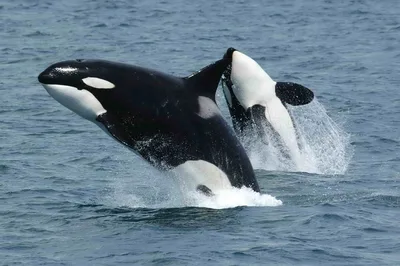 Orca
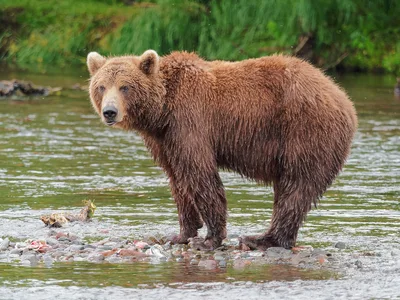 Brown bear
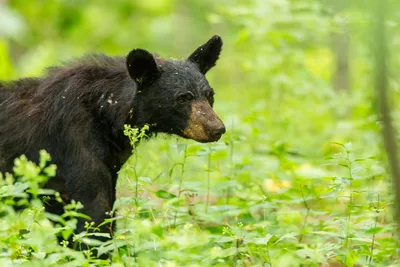 American black bear
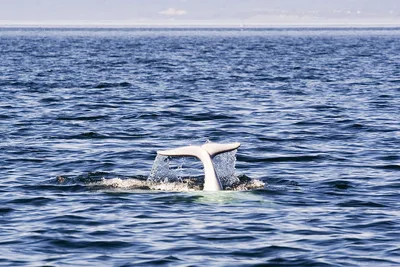 Beluga whale
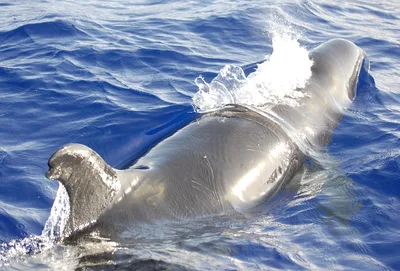 False killer whale
Ecological equivalents
Related species on this site
Sea Trout (same genus), Arctic Char (same family), Brook Trout (same family), Bull Trout (same family), Chinook Salmon (same family), Golden Trout (same family), and more.
Fish
Sea Trout
Salmo trutta
Classification and source reference
Living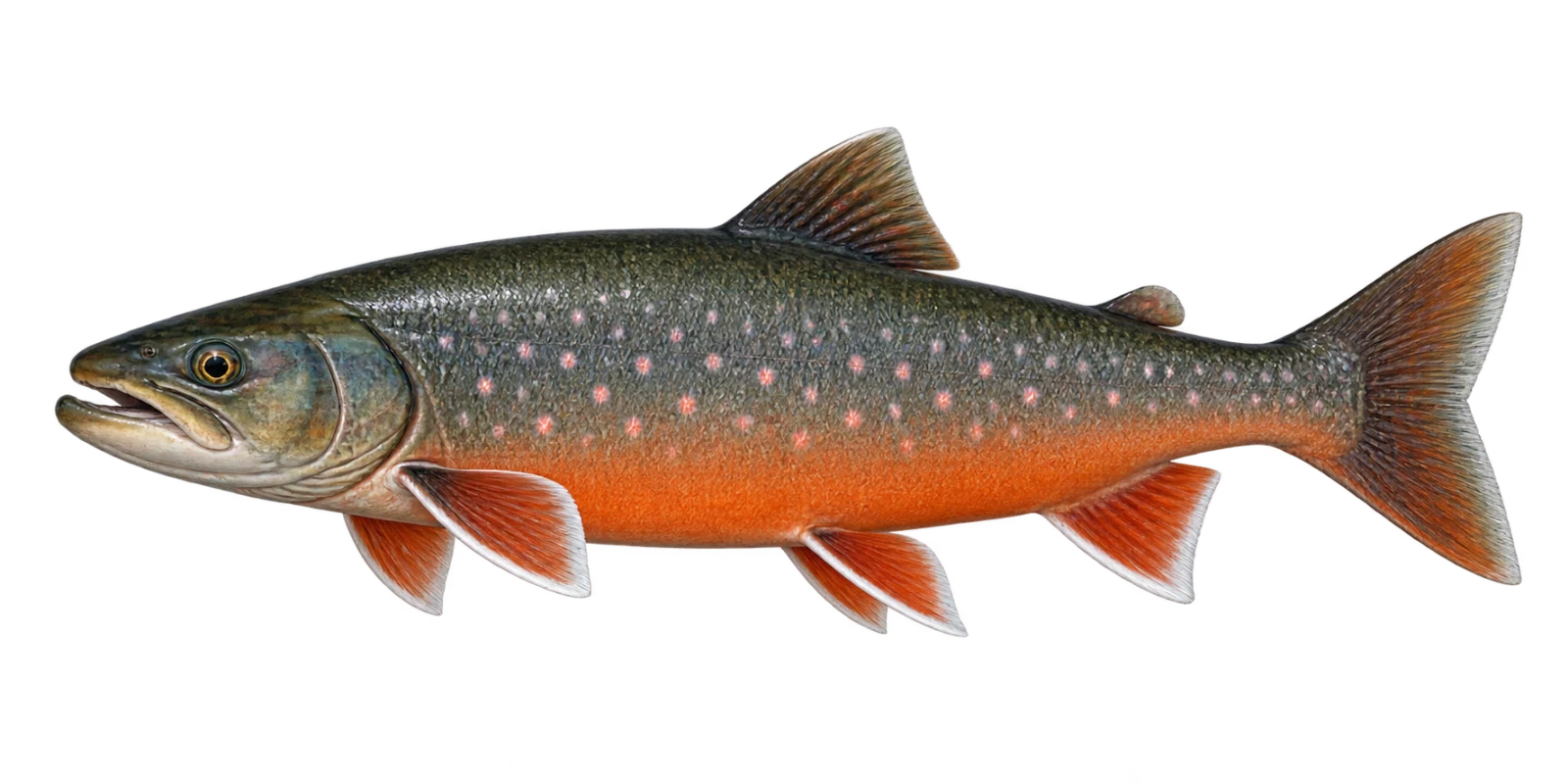
Fish
Arctic Char
Salvelinus alpinus
Classification and source reference
LivingAI illustration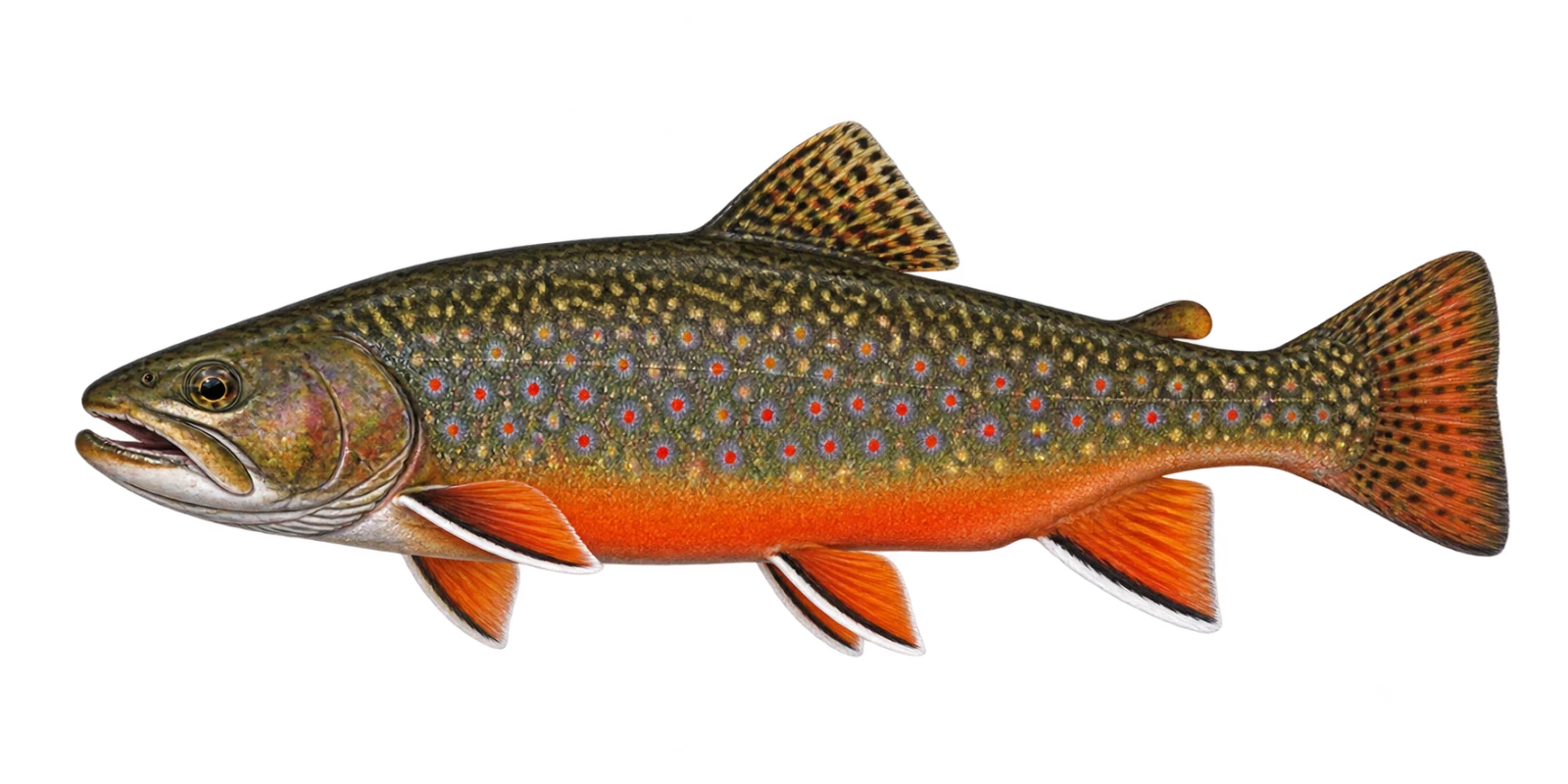
Fish
Brook Trout
Salvelinus fontinalis
Classification and source reference
LivingAI illustration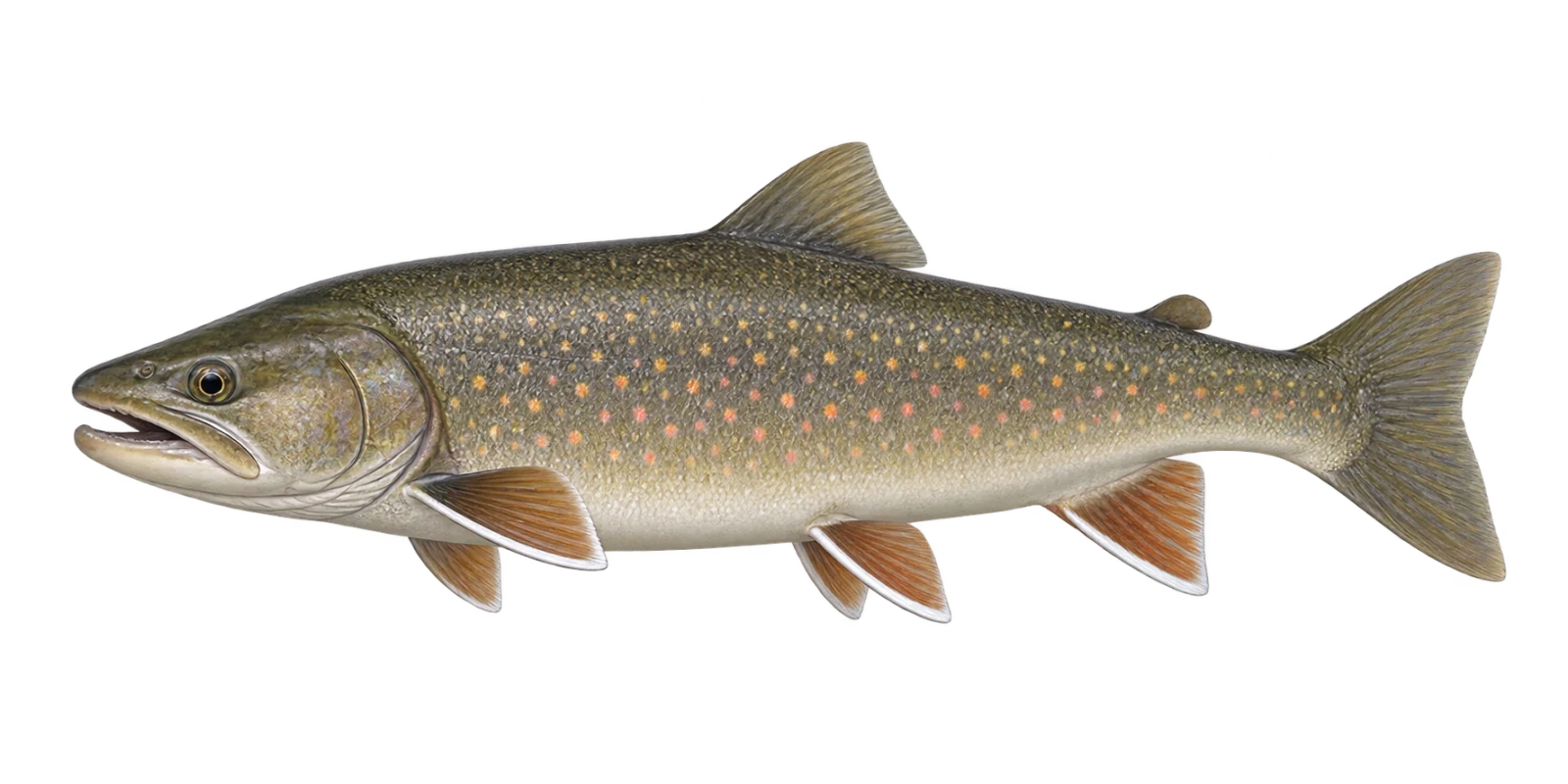
Fish
Bull Trout
Salvelinus confluentus
Classification and source reference
LivingAI illustration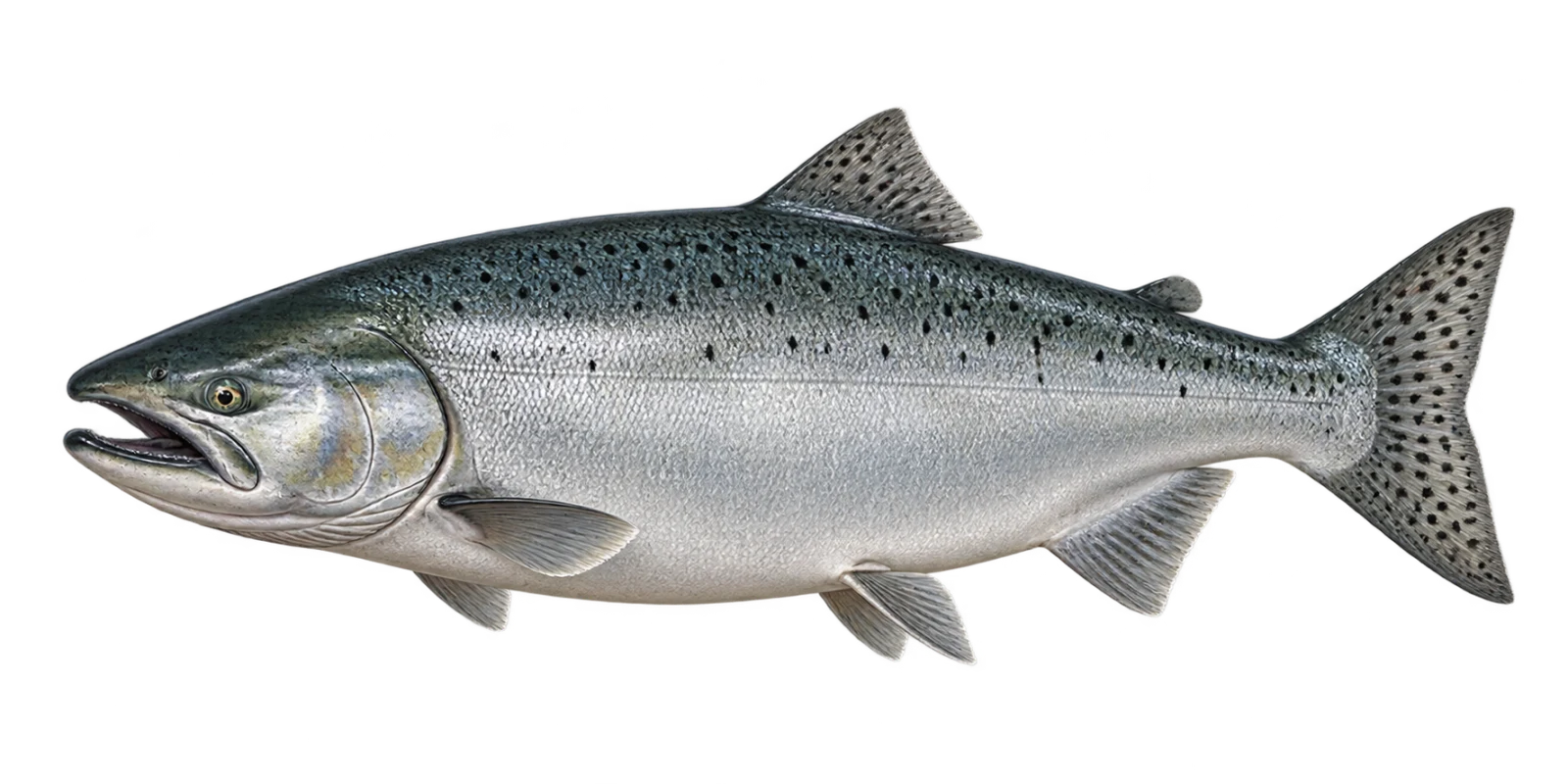
Fish
Chinook Salmon
Oncorhynchus tshawytscha
Classification and source reference
LivingAI illustration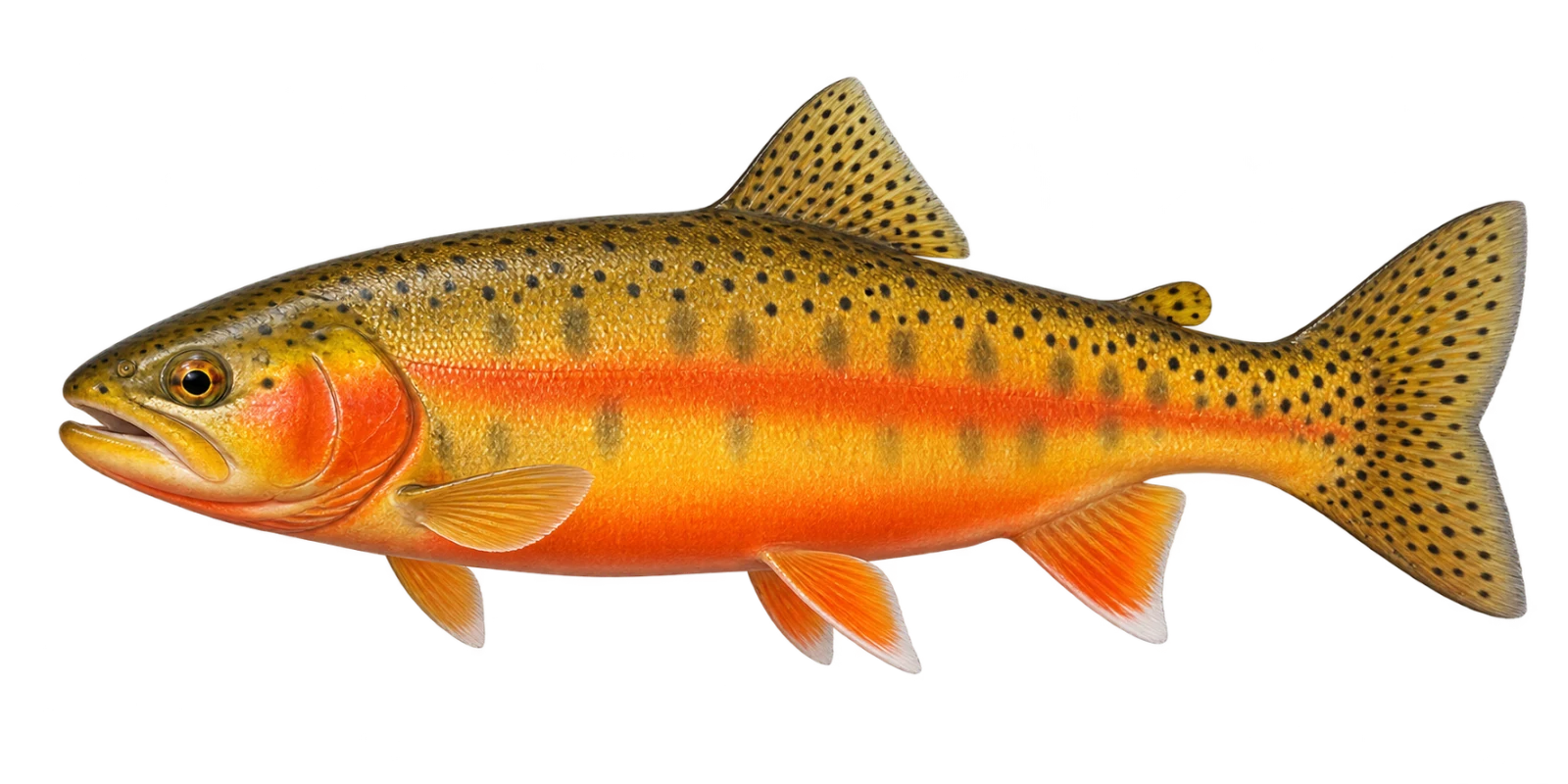
Fish
Golden Trout
Oncorhynchus mykiss aguabonita
Classification and source reference
LivingAI illustration