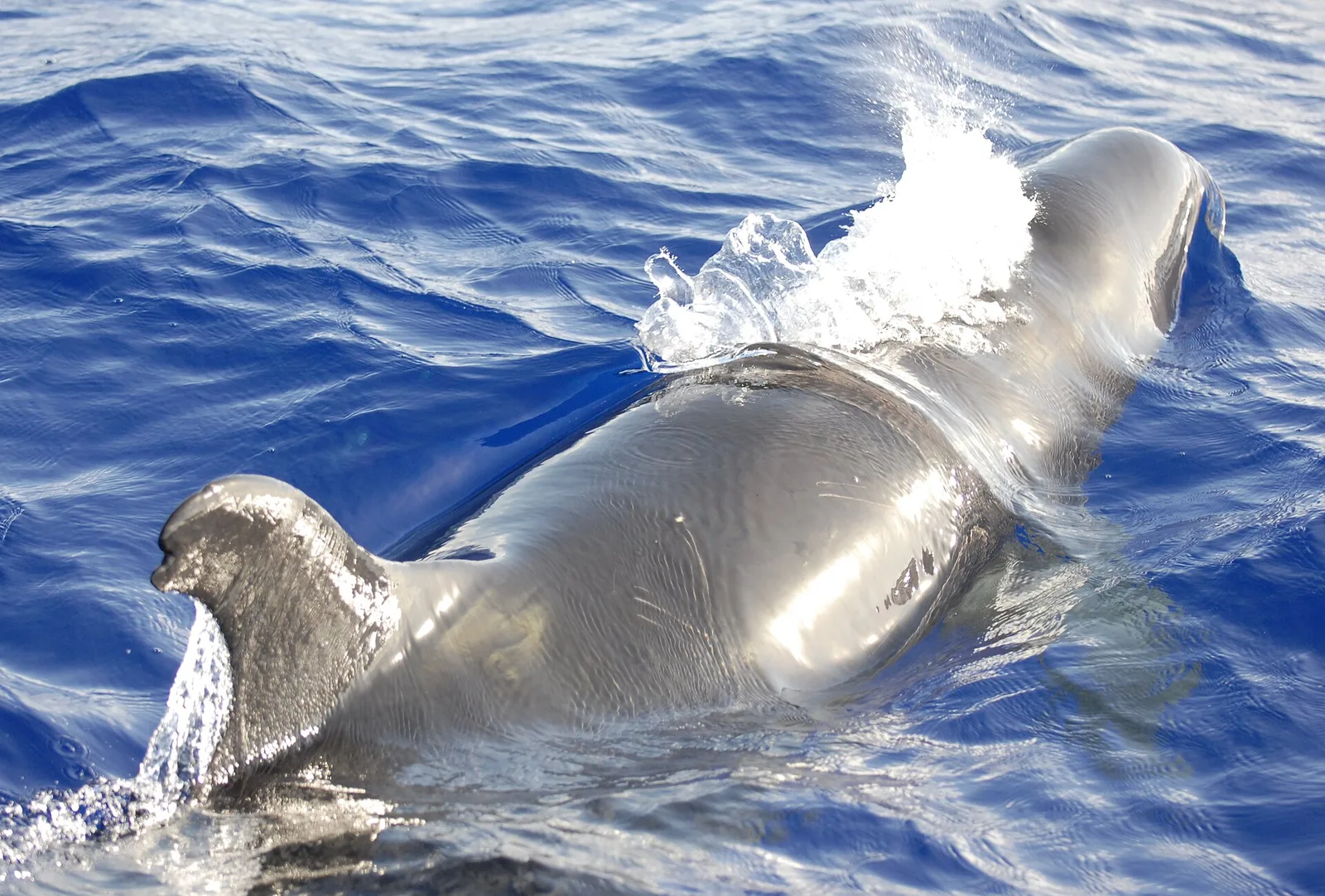
False killer whale
The dolphin named for a skull, that shares its fish
Pseudorca crassidens
Also called False pilot whale, Blackfish, Thick-toothed grampus
Living individuals or members of this group exist today. This does not mean they are safe from extinction.
Meet the false killer whale
The false killer whale is a large black dolphin of warm, deep seas that hunts tuna and squid in pods bound by lifelong ties. It is named for a skull that looks like an orca's, and it is known for stranding in hundreds and for offering fish to divers.
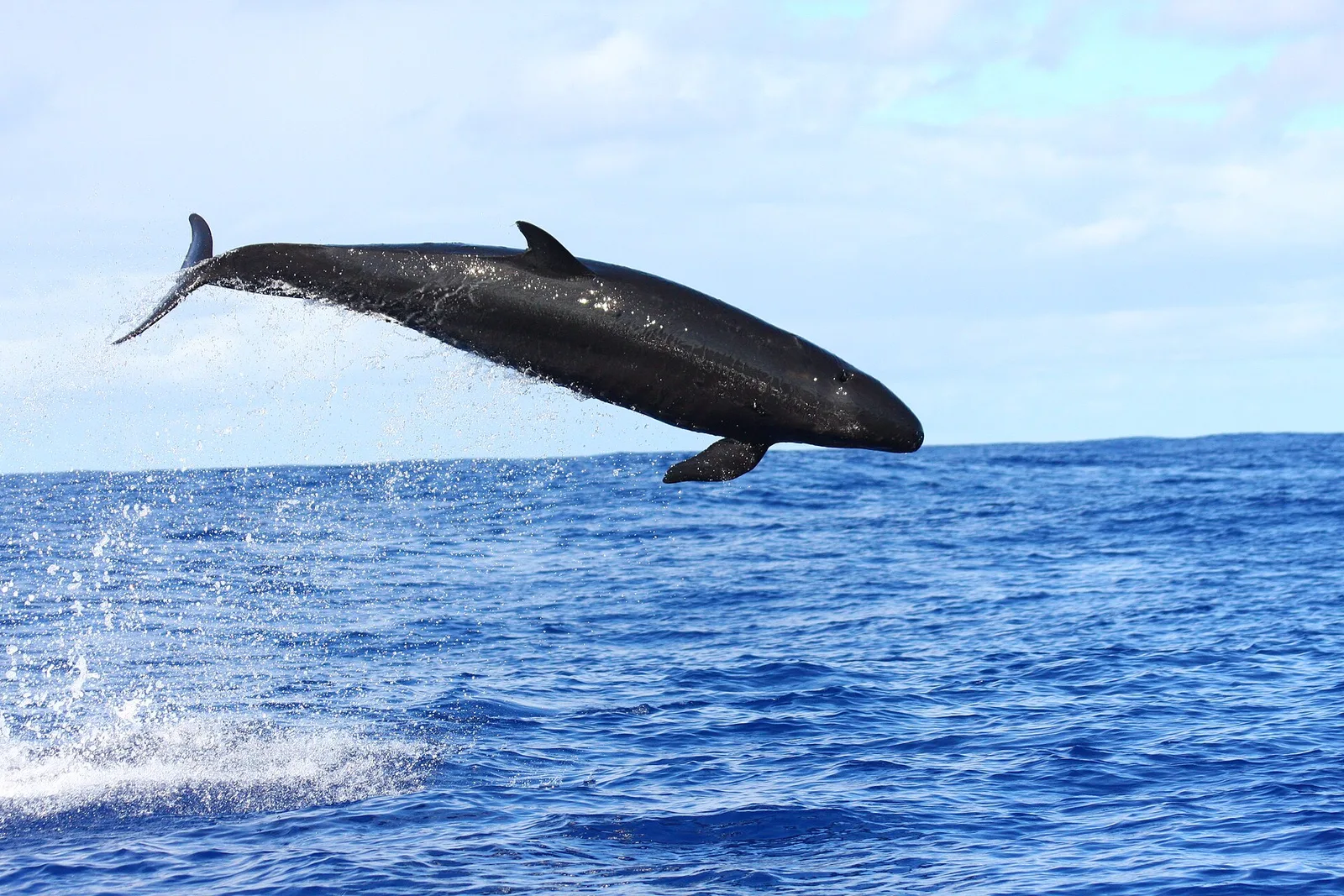
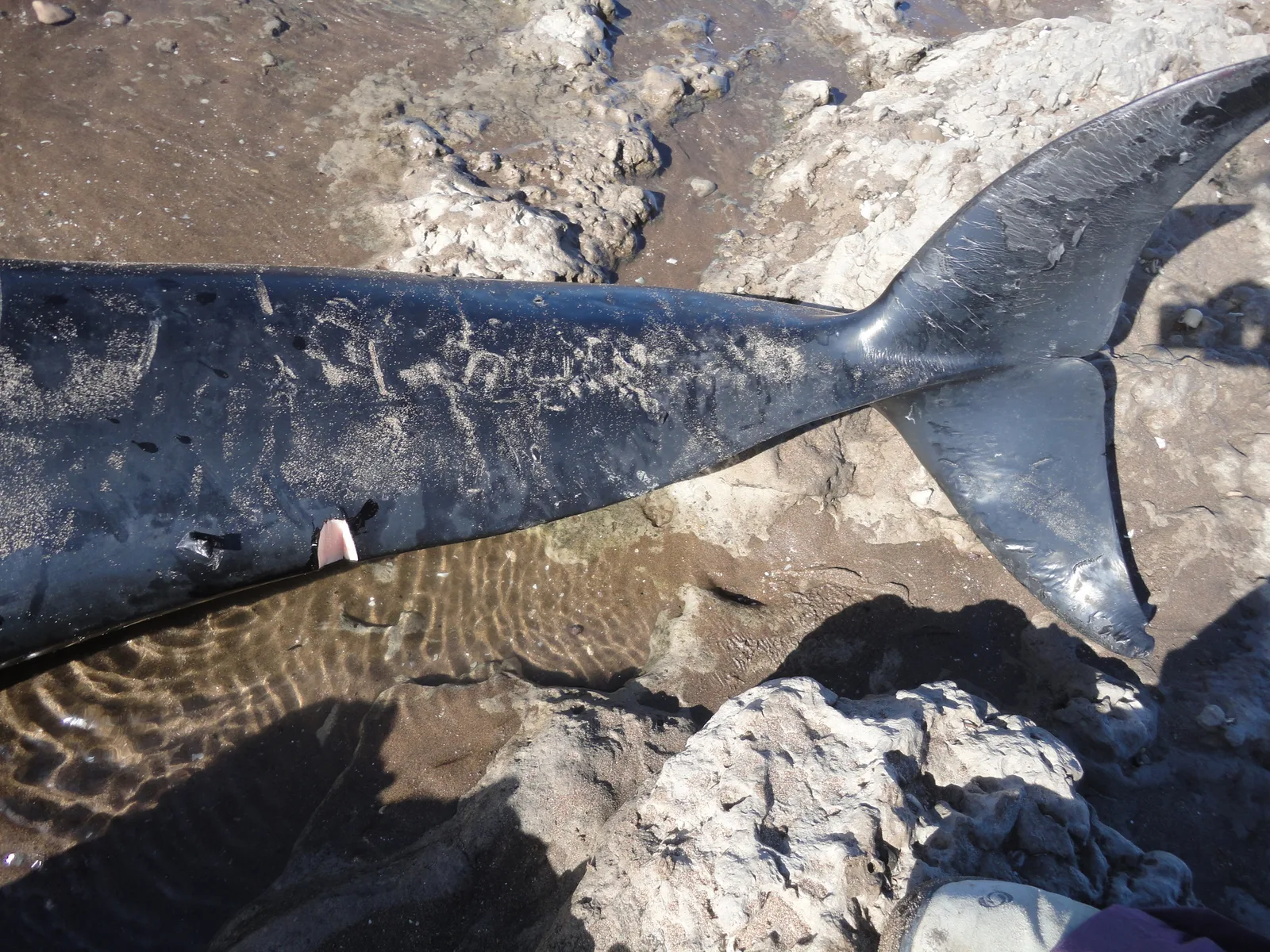
Images of the false killer whale
Lifespan in the wild
Up to 62.5 years females; males about 57.5
Weight
0.92 to 1.84 t
Length
3.5 to 6.1 m
Top speed
Up to 30 km/h
Fact file
False killer whale
- Location
- Tropical and subtropical oceans worldwide, mostly deep water
- Habitat
- Open ocean, Coast
- Diet
- Carnivore
- Prey / food
- Tuna, mahi-mahi, wahoo, squid, salmon, occasionally dolphins
- Predators
- Orca; possibly large sharks
- Lifestyle
- Social; hunts by day in pods of 10 to 20
- Group name
- Pod
- Name of young
- Calf
- Gestation
- 11 to 15.5 months
- Litter size
- 1 calf
- Population
- No global count; about 16,000 near China and Japan, 139 around the main Hawaiian Islands
- Biggest threat
- Hooking and entanglement on longline fishing gear
- Distinctive feature
- Slender black body, rounded head with no beak, a bulge on the flipper
- Colour
- Black to dark grey with a paler chest blaze
- Skin type
- Smooth skin
Size
Next to a person
Measurements
Size and speed
- Length
- 3.5 to 6.1 m
- Length, male
- 3.7 to 6.1 m
- Length, female
- 3.5 to 5 m
- Weight
- 0.92 to 1.84 t, up to 2.2 t the largest males reach about 2,200 kg, Wikipedia
- Top speed
- Up to 30 km/h a pod on the move; cruising about 15 km/h
Typical adult ranges. Sources: Animal Diversity Web, Wikipedia.
Life cycle
Lifespan
- In the wildUp to 62.5 years females; males about 57.5
- In captivityUp to 62 years 62 for a female, 57 for a male
- 062.5 years
The pale bar is the record. Sources: Animal Diversity Web, Wikipedia.
Appearance
Colour and coat
- Primary colours
- black
- Secondary colours
- grey
- Skin type
- smooth skin
- Male and female
- Moderate. Males are about 10 to 15 percent larger, reaching 6.1 metres against 5 metres for females, and have a bigger melon.
Life cycle
Mating and family
- Mating system
- probably polygynous, possibly polygynandrous
- Social structure
- stable pods of 10 to 20 within larger herds, thought to be led by mothers
- Breeding
- one calf about every 7 years
False killer whales breed in any month, with peaks in December to January and March. A female carries one calf for 11 to 15.5 months and nurses it for 18 to 24 months. She waits an average of 6.9 years before the next calf. Both sexes mature at 8 to 11 years. Females stop breeding at about 45 to 55 and can live past 62.
Classification
Taxonomy
- Kingdom
- Animalia
- Phylum
- Chordata
- Class
- Mammalia
- Order
- Cetacea
- Family
- Delphinidae
- Genus
- Pseudorca
- Species
- Pseudorca crassidens
Conservation
Red List status
- LC
- NT
- VU
- EN
- CR
- EW
- EX
Near Threatened on the IUCN Red List
Range
Recorded in 19 countries
- Argentina
- Ashmore and Cartier Islands
- Chile
- Costa Rica
- Dominica
- Ecuador
- Falkland Islands
- Indonesia
- Sri Lanka
- Mexico
- New Zealand
- Panama
- Portugal
- Saudi Arabia
- Thailand
- East Timor
- Taiwan
- United States of America
- Uruguay
Habitat layer: mangrove.
Countries from 256 wild records on GBIF (iNaturalist research grade), filtered and checked by hand. Country shapes: Natural Earth. Habitat: RESOLVE Ecoregions 2017, CC BY 4.0. Basemap: Natural Earth.
Habitats
Three things to know
- 1
A pod of 835 false killer whales stranded at Mar del Plata, Argentina, in 1946.
- 2
Wild false killer whales have handed fish to snorkelers and to people in boats.
- 3
The species can breed with the bottlenose dolphin, and the hybrid, the wholphin, is fertile.
Did you know
Seven more facts
- 1
It is the fourth largest oceanic dolphin, after the orca and the two pilot whales.
- 2
Females go through menopause at about 45 to 55 and live on for years.
- 3
A mother holds a fish in her mouth so that her calf can feed from it.
- 4
It leaps over the wake of a ship, which few large mammals do.
- 5
In 2025 more than 50 false killer whales were seen hunting two humpback whales.
- 6
Japanese animals are 10 to 20 percent larger than South African ones.
- 7
A female waits an average of 6.9 years between calves.
Field notes
How it looks and acts
Field notes
Distinguishing features
- A slender, all-black body with a faint grey blaze on the chest.
- A rounded head that tapers to the front with no beak.
- A bulge on the leading edge of each short, pointed flipper.
- A sickle-shaped dorsal fin 18 to 40 centimetres high in the middle of the back.
- Large conical teeth, 14 to 21 above and 16 to 24 below.
Field notes
Unique adaptations
- Echolocation through the melon lets it find fish and squid in deep, dark water.
- Thick conical teeth grip large, fast fish such as tuna.
- A slender body gives speed, with bursts of about 30 kilometres per hour.
- Deep dives of more than 900 metres reach prey that surface hunters cannot.
- Strong social bonds let a pod hunt together and share the catch.
Field notes
Interesting behaviours
- Travels in pods of 10 to 20 that merge into herds of hundreds.
- Rides the bow waves and wakes of fast ships.
- Shakes a fish until the head and guts fall off, then peels the skin.
- Steals bait and catch from longlines.
- Follows a pod member in trouble onto the beach.
Field notes
Temperament
- Highly social and curious toward boats and divers.
- Generous, sharing food within the pod and even with people.
- Aggressive toward other dolphins in captivity.
- A bold hunter that attacks dolphins, sharks and whales.
Field notes
Communication
- Echolocation clicks between 20 and 60 kilohertz, sometimes up to 130.
- Loud whistles that carry about 200 metres to a listening boat.
- Squeals and pulsed sounds within the pod.
- Distinct dialects in different oceans.
Ecology
Ecological role
The false killer whale is a top predator of the warm open ocean.
- It takes large fish such as tuna and mahi-mahi and so competes directly with fisheries.
- It preys on dolphins, seals and occasionally whales.
- It feeds orcas and carries a community of parasites from worms to barnacles.
- As a top predator it concentrates pollutants, which makes it a marker of ocean contamination.
Stories
Myths and legends
- In sailors' tradition, the false killer whale was simply blackfish, a name shared with pilot whales.
- In Victorian science, the species was a fossil animal thought extinct until living whales beached in Denmark in 1861.
- In Hawaiian research culture, the resident whales are kama'aina, locals of the islands.
People
Relationship with humans
People
Living alongside us
People know the false killer whale in three ways. It is a friendly animal that offers fish to divers, a thief that strips longlines, and the whale that strands by the hundred. Longline hooks and lines are its main threat, and the Hawaiian resident population is endangered. A few Japanese villages hunt it. Aquariums have kept and bred it, and one crossed with a bottlenose dolphin to make the wholphin.
- No attack on a person is on record, and wild animals have offered fish to divers.
- It is a large predator with heavy teeth, so a diver probably should not try to touch or feed one.
- A stranded whale may crush or strike a rescuer with its tail as it thrashes.
People
Status, uses and products
- Domestication
- Wild
- As a pet
- Not suitable. The animal is up to 6 metres long, dives past 900 metres and lives in pods of dozens. It is protected under CITES Appendix II and national marine mammal laws, and it can be aggressive to other dolphins in a tank.
- Uses
- aquarium displaywhale watchingmeat (a few countries)
- Products
- meat
The full account
About the false killer whale
The false killer whale is a big, slender, all-black dolphin of warm seas. It is the only living member of the genus Pseudorca. Adults measure 3.5 to 6.1 metres and weigh 917 to 1,842 kilograms. Only the orca and the two pilot whales are larger among the oceanic dolphins.
The name comes from a skull, not from the living animal. In 1846 Richard Owen described a fossil skull from England that looked like an orca's. Scientists thought the species extinct until carcasses washed up in 1861. The living whale looks nothing like an orca: it has no white patches and a rounded head with no beak.
The species is one of the most social of all whales. Pods stay together for decades, share their catch and sometimes offer a fish to a diver. The same bond brings disaster, because a whole pod will follow one member onto a beach. The IUCN lists the species as Near Threatened.
Name and taxonomy
Richard Owen described the species in 1846 from a skull dug up in the Lincolnshire Fens in 1843. The skull came from a marine deposit about 126,000 years old. Owen placed the animal among the porpoises and called it the thick-toothed grampus. The species name crassidens means thick-toothed.
John Edward Gray moved it to Orcinus, the orca genus, the same year. In 1861 the first bodies washed ashore in Kiel Bay, and a pod beached three months later. In 1862 Johannes Reinhardt created the genus Pseudorca, which means false orca, for the animal. It sits in the family Delphinidae, the oceanic dolphins. No subspecies are recognised, though Japanese animals run 10 to 20 percent larger than South African ones.
Evolution and relatives
The false killer whale belongs to the subfamily Globicephalinae. Its closest relatives are Risso's dolphin, the melon-headed whale, the pygmy killer whale and the pilot whales. The snubfin dolphins may belong to the same group. The orca, despite the name, is a more distant cousin.
The species can breed with the bottlenose dolphin, and the hybrid is fertile. Both parents carry 44 chromosomes. Kekaimalu, a wholphin, was born at Sea Life Park in Hawaii on 15 May 1985. Her mother was a bottlenose and her father a false killer whale. She bore three calves of her own and died in 2024 at 39.
Appearance
Males measure 3.7 to 6.1 metres and females 3.5 to 5 metres. A large male can weigh about 2,200 kilograms, and females reach about 1,200. Males run about 10 to 15 percent larger than females. A newborn is 1.5 to 2.1 metres long and weighs about 80 kilograms.
The body is black or dark grey, a little paler below, with a faint grey blaze on the chest. The head is rounded and tapers to the front without a beak, and the upper jaw sticks out a little past the lower. The dorsal fin is curved like a sickle and stands 18 to 40 centimetres high in the middle of the back. The flippers are short and pointed, with a bulge on the leading edge that no other dolphin has. The jaws hold 14 to 21 conical teeth above and 16 to 24 below.
Habitat and range
The false killer whale lives in tropical and subtropical waters of the Atlantic, Pacific and Indian Oceans. It rarely goes beyond 50 degrees north or south. Records from cooler seas, such as Britain or British Columbia, are probably strays or animals following warm water. It has been found in the Red Sea and the Mediterranean.
It prefers deep water in the open ocean. Around oceanic islands it comes close to shore. Hawaii holds three separate populations: an offshore group, one in the Northwestern Hawaiian Islands and a small resident group around the main islands. GBIF records the species in 99 countries, a count that includes strandings far outside the normal range.
Diet and hunting
The false killer whale eats fish and squid, and it likes them big. Mahi-mahi, wahoo, yellowfin tuna, bonito and salmon all appear in the diet. It hunts by day and dives to follow prey, with one Hawaiian animal recorded at 927.5 metres. A captive animal eats 3.4 to 4.3 percent of its body weight each day.
Pods spread out to search and then converge when one whale finds a fish. A whale may leap clear of the water with a fish in its mouth. It shakes a large fish until the head and guts fall away, peels off the skin with its teeth and eats the rest. Pod members share food, and a mother will hold a fish so that her calf can feed from it.
The whale also takes marine mammals. It has attacked small dolphins around tuna nets, sperm whales and a humpback calf, and in 2025 more than 50 were seen hunting two humpbacks. A group filmed near Sydney in 2016 killed a young shark. It steals fish from longlines, which is the root of its trouble with people.
Behaviour and social life
The species travels in pods of about 10 to 20, and these pods join into herds of hundreds. Groups of more than 500 have been recorded. While feeding a pod breaks into family groups of 4 to 6. Some animals have been seen in the same pod for 15 years, and the Hawaiian clusters hold bonds that last decades.
Pods appear to be led by mothers, as in pilot whales and sperm whales. Mixed pods with bottlenose dolphins, pilot whales and other species are common, probably because they share feeding grounds. The whale has been seen answering distress calls, guarding other species from predators and helping at a birth. It also mates with bottlenose dolphins and pilot whales.
It rides the bow waves and wakes of ships and leaps over the wake, a habit that helps observers tell it from pilot whales. A pod off Chile cruised at 15 kilometres per hour, and pods have been clocked at about 30. One dive off Japan lasted 12 minutes to 230 metres, and the longest dives probably reach 18.5 minutes.
Communication and senses
Like all toothed whales, the false killer whale finds its way and its food by echolocation. The melon in the forehead focuses the clicks, and it is larger in males. Most clicks fall between 20 and 60 kilohertz, with some up to 100 to 130.
The whales also whistle, squeal and pulse. Researchers can hear the whistles of a pod from about 200 metres away. One observer wrote that each whale seemed to make a different sound at the same time. Populations in different oceans use different calls, as other dolphins do.
Reproduction and life cycle
Breeding happens in any month but peaks from December to January and again in March. The mating system is probably polygynous, though some studies suggest both sexes take several mates. A female carries her single calf for 11 to 15.5 months. If she does not conceive at her first ovulation she keeps ovulating until she does.
The calf swims at once and nurses for 18 to 24 months. It stays in its mother's group after weaning. A female then waits an average of 6.9 years before her next calf. Females mature at 8 to 11 years and males at 8 to 10.
Females stop breeding at about 45 to 55 and live on for years after, as orcas and pilot whales do. In the wild, males live to about 57.5 years and females to about 62.5. One captive female reached 62 and one male 57. Such a slow life means a population recovers very slowly from any loss.
Predators and threats
The orca is the only known predator. Large sharks may also take some, though no attack has been documented. The whale carries worms in its sinuses, lungs, stomach and gut, along with whale lice and barnacles. Heavy worm loads were found in the animals that stranded in Florida in 1976 and 1986.
Fishing gear is the main human threat. A whale that takes bait from a longline can swallow the hook or tangle in the line. Many Hawaiian animals carry scars on the mouth and dorsal fin. The main Hawaiian Islands population fell by 75 percent between 1989 and 2009. As a top predator the whale stores more organochlorine pollutants and heavy metals than other dolphins. A few Japanese villages still take the species in drive hunts, 24 animals between 2010 and 2023.
Population and conservation
Nobody has counted the world population. The eastern Pacific probably holds tens of thousands, and about 16,000 live near China and Japan. Because the total is unknown, the IUCN lists the species as Near Threatened.
The resident population around the main Hawaiian Islands numbered about 139 in 2022 and falls about 3.5 percent a year. The United States listed it as endangered in November 2012 and set aside critical habitat in 2018. The Hawaiian offshore population is about 2,000. All populations are protected under the Marine Mammal Protection Act, and the species sits on CITES Appendix II. Regional agreements in Europe, West Africa and the Pacific islands cover it too.
Relationship with humans
The false killer whale is friendly to people at sea. Animals have swum up to divers and boats and offered fish they had caught. One whale repeatedly brought large salmon to boaters, and Hawaiian whales have handed fish to snorkelers. Fishermen see it differently, as a thief that strips longlines. In the eastern tropical Pacific some are killed for meat or to protect tuna catches.
Aquariums in Japan, the United States, the Netherlands, Hong Kong and Australia have kept the species. It trains easily and mixes with other species, but it can be aggressive toward other dolphins in a tank. It has bred in captivity. Chester, an orphan calf rescued near Tofino in 2014, lived at the Vancouver Aquarium until 2017.
Mass strandings have made the whale famous. The largest, 835 animals, came ashore at Mar del Plata in Argentina on 9 October 1946. In 1986 volunteers in Flinders Bay, Western Australia, saved 96 of 114 stranded whales. In 2005 a storm drove 120 ashore in Geographe Bay, and 1,500 volunteers turned out. In January 2017 about 100 stranded in the Florida Everglades and 81 died.
In culture and myth
No folk tale or legend singles out this species. Sailors lumped it with pilot whales under the name blackfish, and for centuries nobody knew it was a distinct animal. Its own story is a scientific one: a whale described as a fossil, presumed extinct, and then found alive on a Danish beach. The name false killer whale is probably the closest thing to a myth, because the resemblance lies only in the skull.
Its modern fame rests on two things. The first is the wholphin Kekaimalu, born in Hawaii in 1985, whose parents were a bottlenose dolphin and a false killer whale. The second is the stranding. Rescues in Western Australia in 1986 and 2005 drew huge crowds of volunteers and built the country's stranding network. In Hawaii, researchers call the resident whales kama'aina, the word for locals, and treat them as part of the islands.
A sentence with a dotted underline is inferred: it describes the group the animal belongs to, or is a reading of the sources, rather than a measured or reported fact about this species.
Questions
False killer whale questions, answered
Is a false killer whale a whale or a dolphin?
It is a dolphin, in the family Delphinidae. Like the orca and pilot whales, it is large enough that people call it a whale.
Why is it called a false killer whale?
Its skull looks like an orca's. The species was first described from a fossil skull in 1846, and the name stuck.
How big is a false killer whale?
An adult is 3.5 to 6.1 metres long and weighs 917 to 1,842 kilograms. A male is a little bigger than a female.
What do false killer whales eat?
Large fish such as tuna, mahi-mahi and wahoo, plus squid. They also attack dolphins, seals and sometimes whales.
Are false killer whales dangerous to humans?
No attack on a person has been recorded. Wild animals have swum up to divers and offered them fish.
Do false killer whales really give fish to people?
Yes. One whale brought salmon to boaters again and again, and Hawaiian whales have handed fish to snorkelers.
Why do false killer whales strand in such numbers?
They live in tight pods, and when one animal is in trouble the rest follow it ashore. Storms, gently sloping coasts and confusing echoes can start the trouble.
What was the largest false killer whale stranding?
A pod of 835 came ashore at Mar del Plata, Argentina, on 9 October 1946.
Are false killer whales endangered?
The IUCN lists the species as Near Threatened because nobody has counted it. The resident population around the main Hawaiian Islands, about 139 animals, is listed as endangered in the United States.
How long do false killer whales live?
Females live to about 62.5 years in the wild and males to about 57.5. A captive female reached 62.
How deep can a false killer whale dive?
One animal off Hawaii dived to 927.5 metres. Most dives are shallower and last up to about 18 minutes.
What is a wholphin?
A fertile cross between a bottlenose dolphin mother and a false killer whale father. The first to survive, Kekaimalu, was born at Sea Life Park in Hawaii in 1985.
Where do false killer whales live?
In tropical and subtropical waters of all oceans, mostly far offshore in deep water. They rarely go beyond 50 degrees north or south.
How fast can a false killer whale swim?
A pod has been clocked at about 30 kilometres per hour. Cruising speed is about 15.
Do false killer whales live with other dolphins?
Yes. They form mixed pods with bottlenose dolphins, pilot whales and other species, and they sometimes mate with them.
Food web
Prey and food
- tuna
- mahi-mahi
- wahoo
- squid
 Atlantic salmon
- occasionally dolphins
Food web
Predators
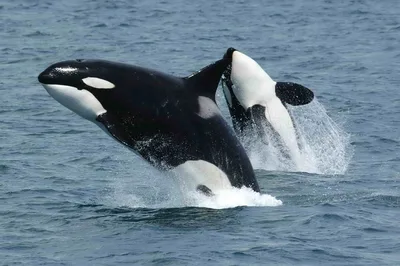 Orca
- possibly sharks
Ecological equivalents
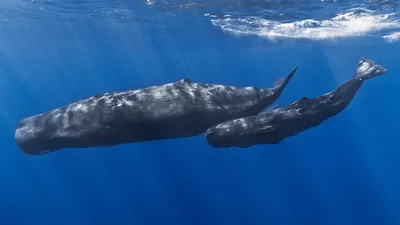
Related species on this site
Bottlenose Dolphin (same family), Dolphin (same family), Dusky Dolphin (same family), Orca (same family), Amazon River Dolphin (Pink Dolphin) (same order), Basilosaurus (same order), and more.
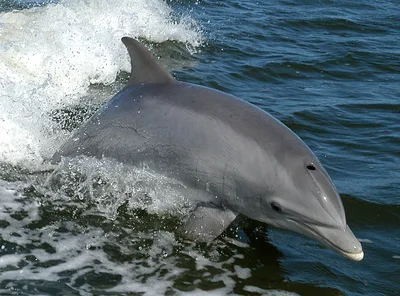
Mammals
Bottlenose Dolphin
Tursiops truncatus
The common bottlenose dolphin is a social marine mammal with a curved dorsal fin.
Living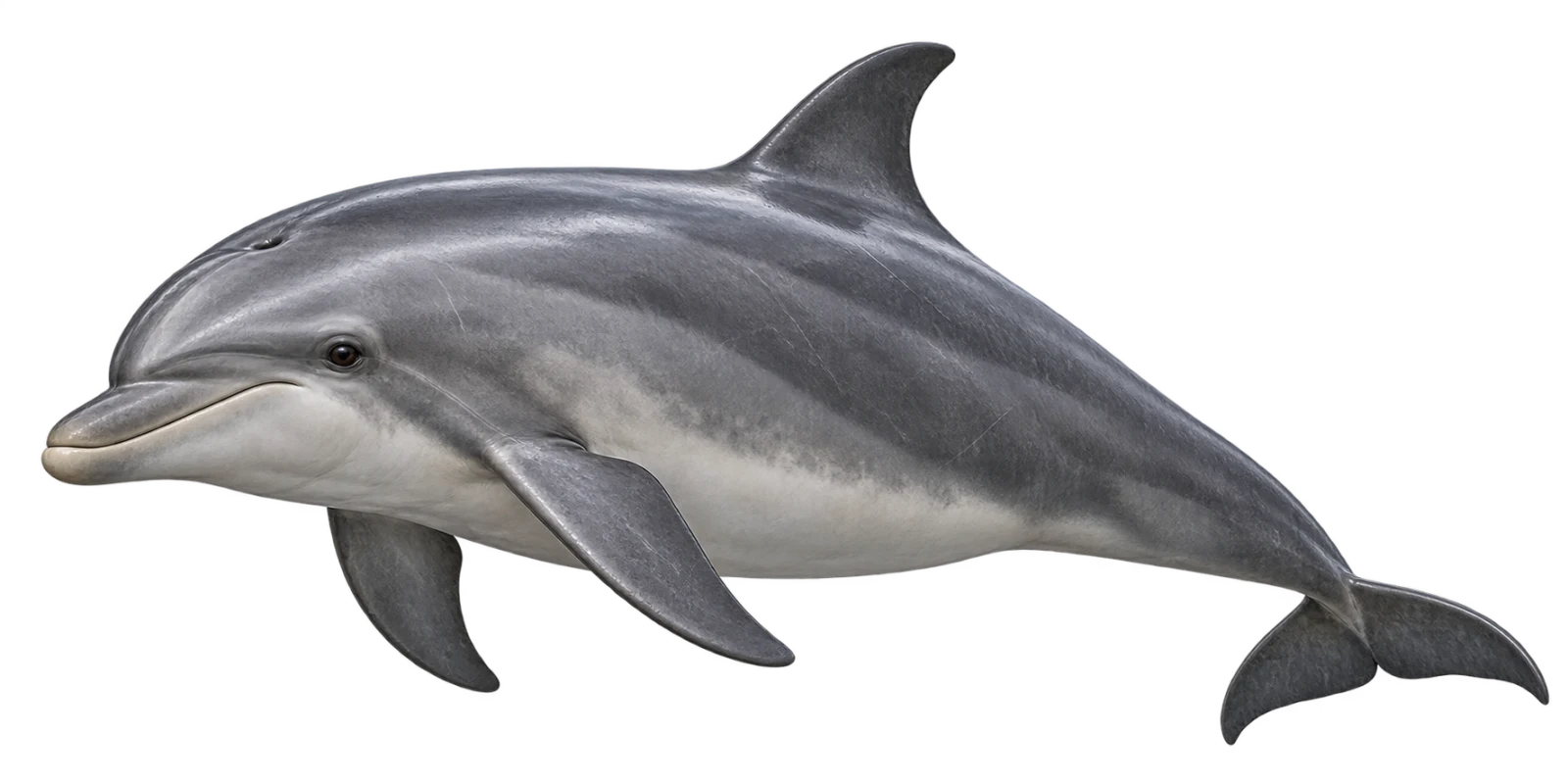
Mammals
Dolphin
Delphinidae
Classification and source reference
LivingAI illustration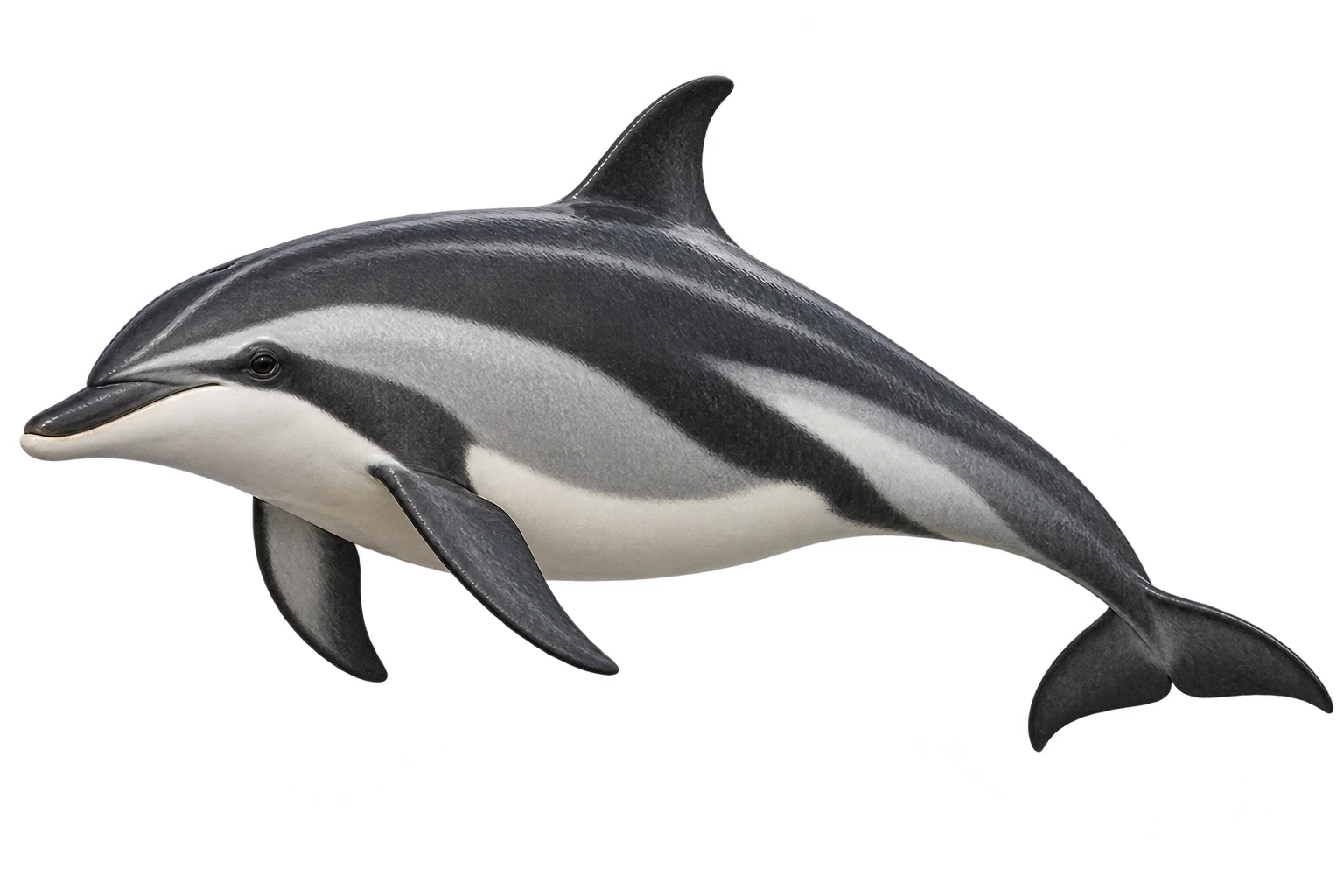
Mammals
Dusky Dolphin
Lagenorhynchus obscurus
Classification and source reference
LivingAI illustration- DD
Mammals
Orca
Orcinus orca
The orca is the largest dolphin and the top predator of the sea.
Living 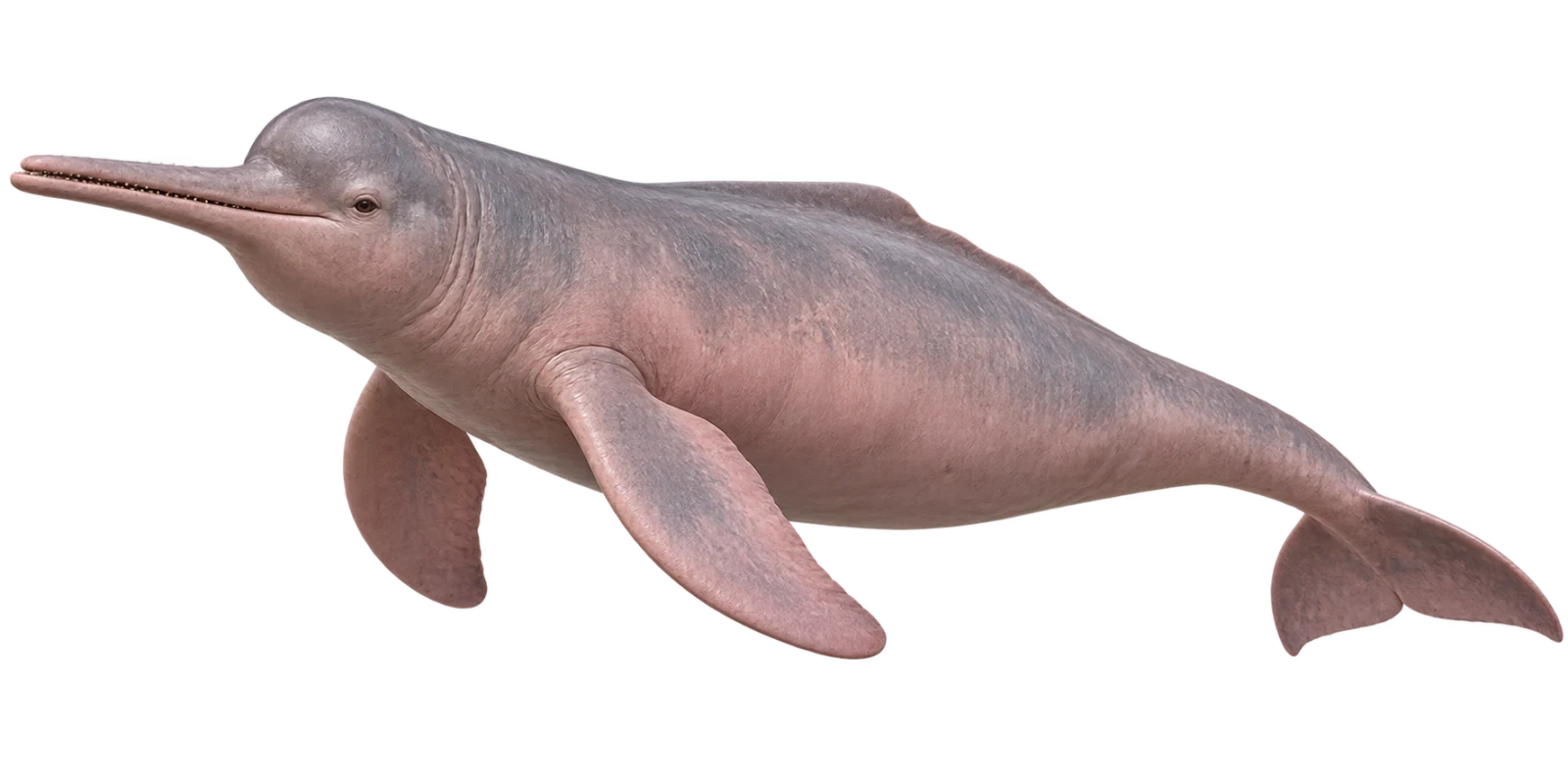
Mammals
Amazon River Dolphin (Pink Dolphin)
Inia geoffrensis
Classification and source reference
LivingAI illustration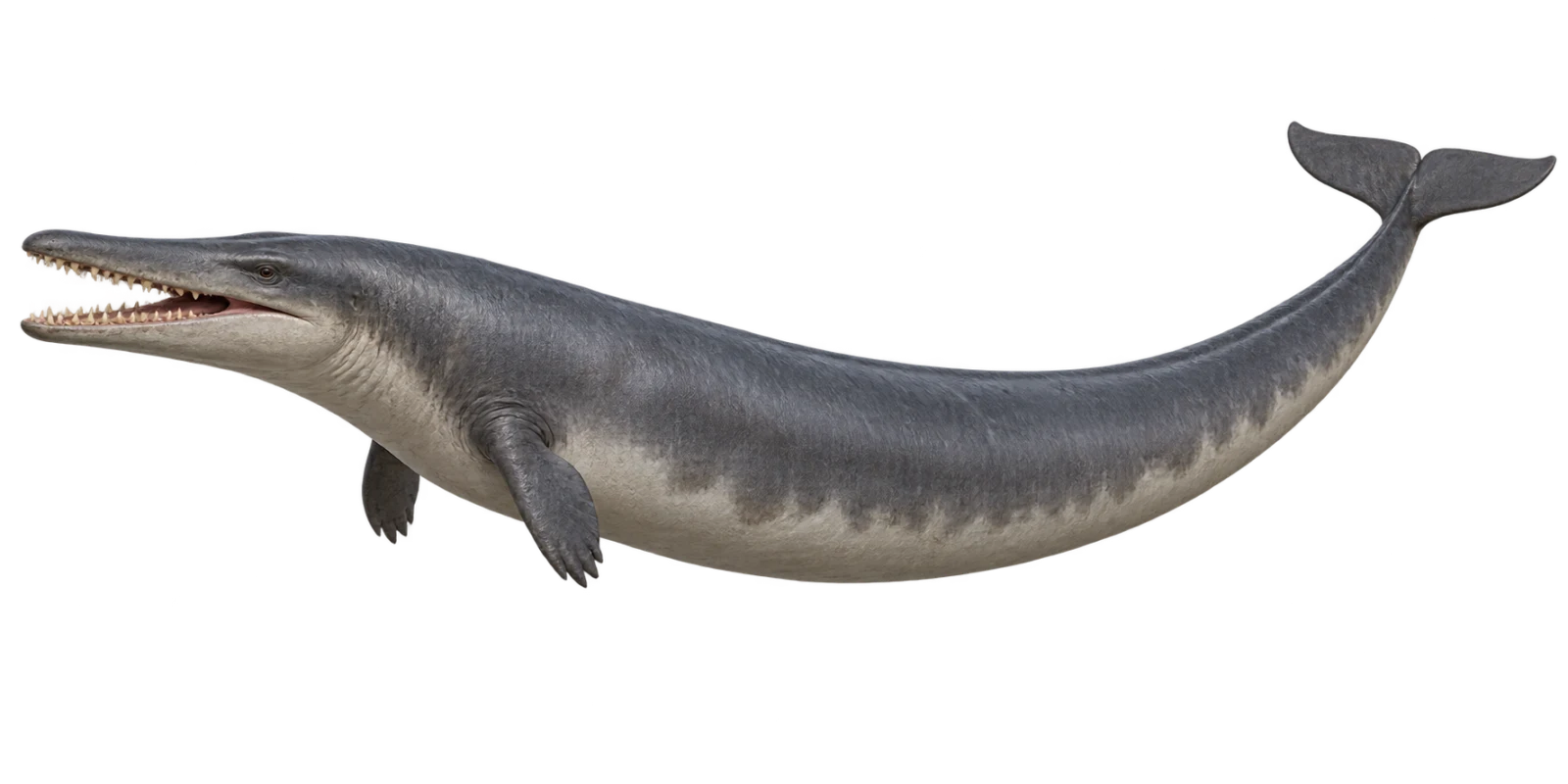
Mammals
Basilosaurus
Basilosaurus
Classification and source reference
ExtinctAI reconstruction