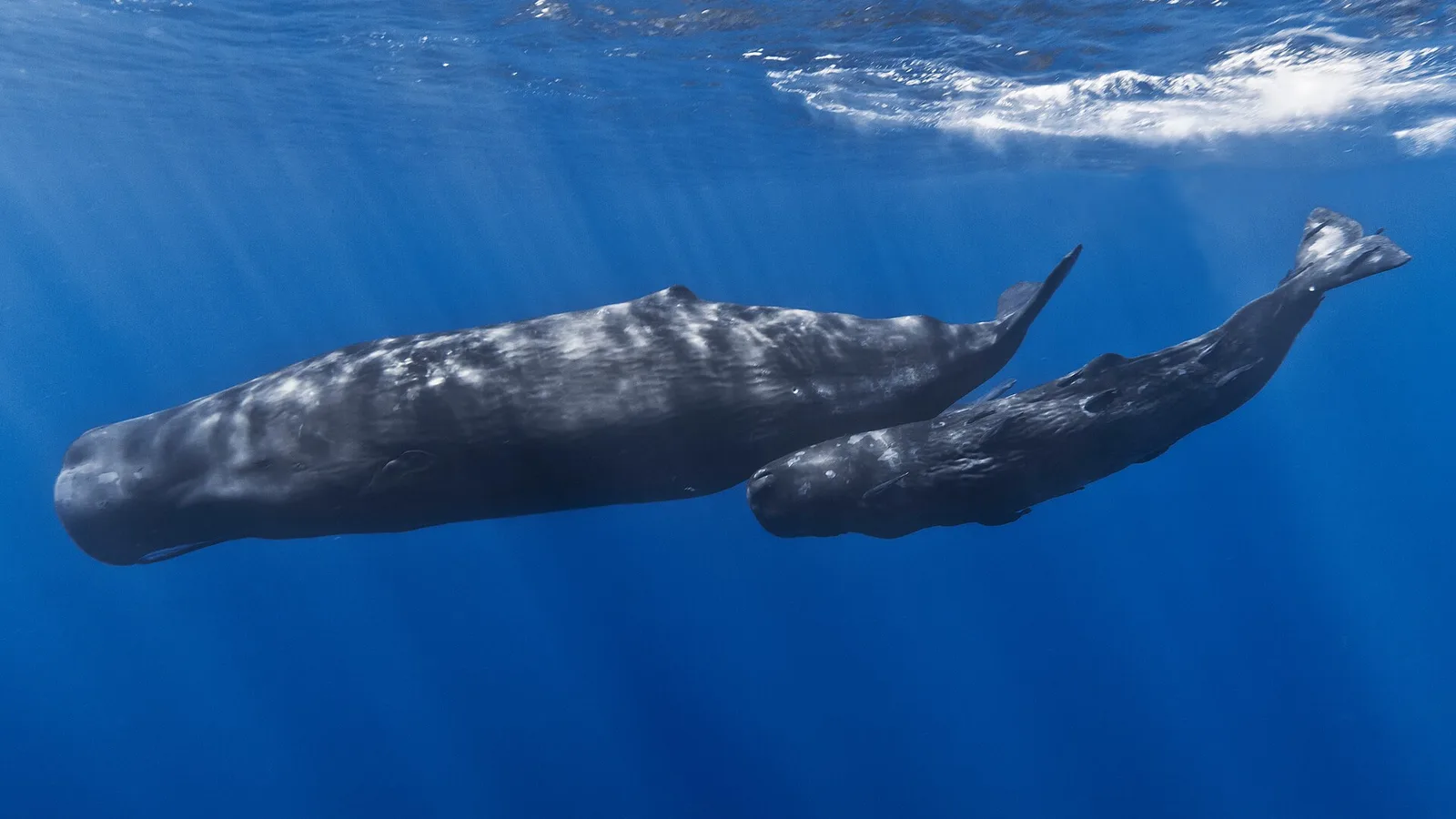
Sperm whale
A squid hunter with the biggest brain on the planet
Physeter macrocephalus
Also called Cachalot, Spermaceti whale, Pot whale
Living individuals or members of this group exist today. This does not mean they are safe from extinction.
Meet the sperm whale
The sperm whale is the biggest of the toothed whales and the largest predator with teeth. It dives more than a kilometre into the dark to hunt squid, and it lives in every ice-free ocean.
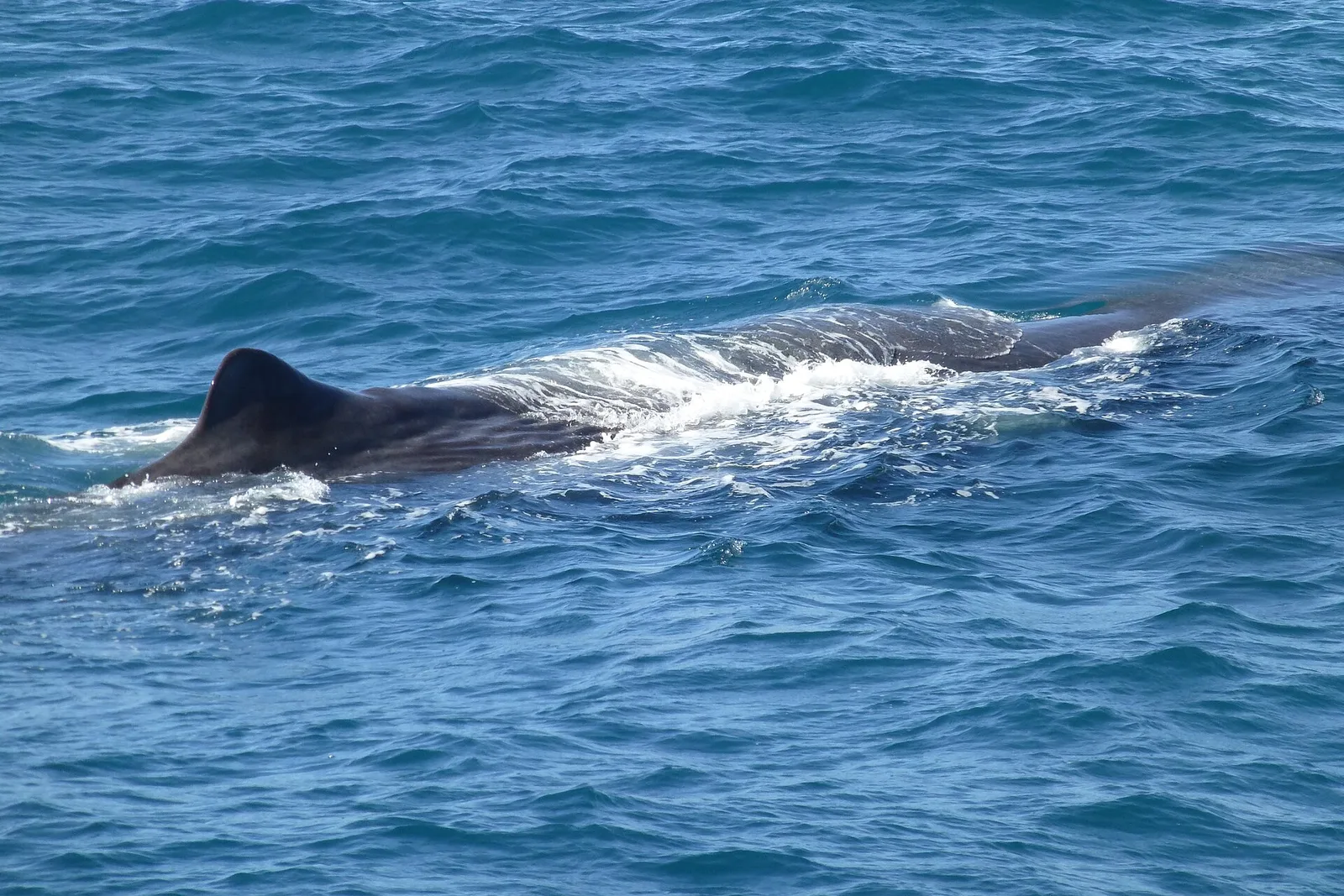
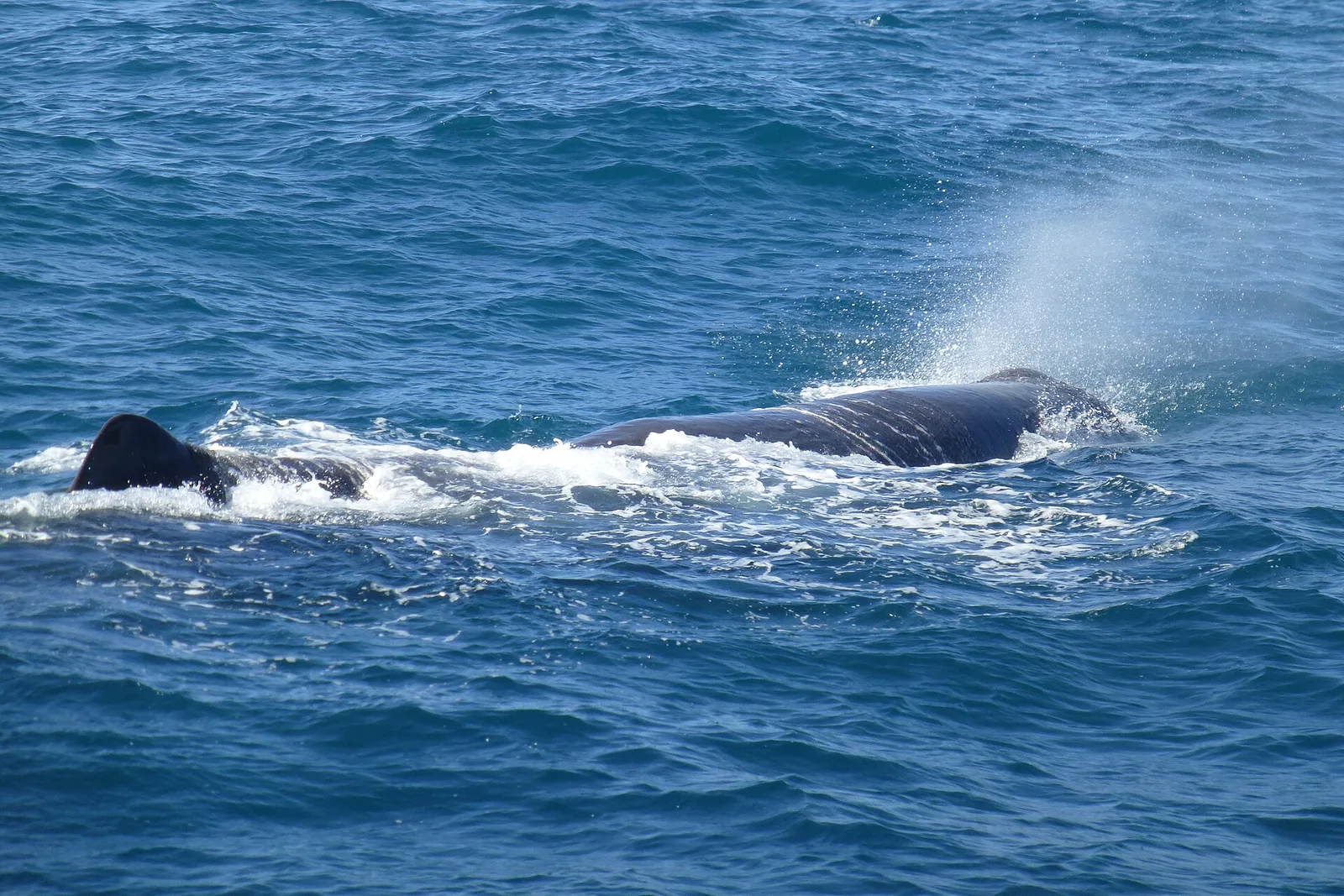
Images of the sperm whale
Lifespan in the wild
Up to 77 years
Weight
17 to 57 t
Length
11 to 16 m
Top speed
Up to 25 km/h
Fact file
Sperm whale
- Location
- All ice-free oceans over deep water
- Habitat
- Open ocean
- Diet
- Carnivore
- Prey / food
- Squid, giant squid, octopus, deep-sea fish, sharks, rays
- Predators
- Orca takes calves and weak adults; adult bulls have none
- Lifestyle
- Deep diver; pods of females and calves, solitary bulls
- Group name
- Pod
- Name of young
- Calf
- Gestation
- 14 to 16 months
- Litter size
- 1 calf, every 4 to 20 years
- Population
- About 360,000 worldwide
- Biggest threat
- Ship strikes and entanglement in fishing gear
- Distinctive feature
- A huge square head, up to a third of the body length
- Colour
- Dark grey
- Skin type
- Smooth skin, wrinkled on the back
Size
Next to a person
Measurements
Size and speed
- Length
- 11 to 16 m, up to 20.7 m an adult female about 11 metres, a mature male about 16; 20.7 m is the largest accurately measured
- Length, male
- 15 to 16 m, up to 20.7 m
- Length, female
- 10.6 to 11 m, up to 12.5 m
- Weight
- 17 to 57 t, up to 80 t a large female about 17 to 24 tonnes; an 18 metre male about 57 tonnes
- Top speed
- Up to 25 km/h
Typical adult ranges. Source: Wikipedia.
Life cycle
Lifespan
- In the wildUp to 77 years
- 077 years
The pale bar is the record. Source: AnAge.
Appearance
Colour and coat
- Primary colours
- dark grey
- Secondary colours
- white
- Skin type
- smooth skin
- Male and female
- Extreme. A mature male is 30 to 50% longer and about three times as heavy as a female, with a proportionally larger head and spermaceti organ.
Life cycle
Mating and family
- Mating system
- polygynous, with female choice
- Social structure
- stable units of females and calves; bachelor groups and then solitary bulls
- Breeding
- one calf every 4 to 20 years
Bulls visit the warm-water female groups to breed and leave again. A pregnancy lasts 14 to 16 months and yields a single calf of 3.5 to 4.5 metres. The calf suckles for 19 to 42 months and stays with its mother's unit for over a decade. Females mature at about 9 years and males at 9 to 21. The species lives 70 years or more, with a record of 77.
Classification
Taxonomy
- Kingdom
- Animalia
- Phylum
- Chordata
- Class
- Mammalia
- Order
- Cetacea
- Family
- Physeteridae
- Genus
- Physeter
- Species
- Physeter macrocephalus
Conservation
Red List status
- LC
- NT
- VU
- EN
- CR
- EW
- EX
Vulnerable on the IUCN Red List
Range
Recorded in 25 countries
- Argentina
- Ashmore and Cartier Islands
- Canada
- Chile
- Denmark
- Dominica
- Spain
- France
- United Kingdom
- Greenland
- Indonesia
- Iceland
- Italy
- Japan
- Morocco
- Mauritius
- Mexico
- Norway
- New Zealand
- Portugal
- Russia
- Tonga
- Taiwan
- United States of America
- South Africa
Countries from 2,070 wild records on GBIF (iNaturalist research grade), filtered and checked by hand. Country shapes: Natural Earth. Habitat: RESOLVE Ecoregions 2017, CC BY 4.0. Basemap: Natural Earth.
Habitats
Three things to know
- 1
Its clicks reach 236 decibels, which makes it the loudest animal on Earth.
- 2
A dive can reach 2,250 metres and last up to 120 minutes.
- 3
Its brain averages about 7.08 kilograms, the heaviest of any animal alive or extinct.
Did you know
Seven more facts
- 1
The head can hold up to 1,900 litres of spermaceti oil.
- 2
The gut of a large whale is over 300 metres long, the longest of any animal.
- 3
A newborn calf is already 3.5 to 4.5 metres long.
- 4
Ambergris, the perfume fixative, is a waxy lump that forms in the whale's intestine round squid beaks.
- 5
Sperm whales sleep upright, hanging in the water with their heads near the surface.
- 6
The heart of a 22 tonne male weighed 116 kilograms.
- 7
A Galapagos study saw only one fight between males in 11 years of watching.
Field notes
How it looks and acts
Field notes
Distinguishing features
- A huge square head that is a quarter to a third of the body.
- A single blowhole at the front left of the head, so the blow leans forward and left.
- A narrow lower jaw with 18 to 26 teeth a side and no visible teeth above.
- Wrinkled dark grey skin along the back.
- A row of humps instead of a dorsal fin.
- A length of 11 to 16 metres, with males far larger than females.
Field notes
Unique adaptations
- A flexible ribcage lets the lungs collapse under pressure, which cuts nitrogen uptake on a deep dive.
- Blood and muscle rich in oxygen-carrying pigments supply the brain while the rest of the body waits.
- The spermaceti organ shapes and focuses the loudest clicks in nature for hunting in the dark.
- A thick-walled first stomach crushes squid whole and resists their hooks and suckers.
- Milk with about 36% fat stays in a clump underwater so the calf can drink it.
Field notes
Interesting behaviours
- Raises its tail flukes high before each deep dive.
- Hunts upside down near the bottom of a dive.
- Rests at the surface for about eight minutes between dives.
- Rubs against pod mates and exchanges codas in afternoon social sessions.
- Circles the calves with tails outward when orcas approach.
Field notes
Temperament
- Social and cooperative within a female unit.
- Solitary in old bulls, which return to groups only to breed.
- Ready to fight back when attacked, unlike most large whales.
- Tolerant of other species, and one pod accepted a disabled bottlenose dolphin.
Field notes
Communication
- Echolocation clicks to find squid in darkness.
- Creaks, fast click runs, to home in on prey.
- Codas of 3 to 12 clicks to bond with the unit and signal the clan.
- Slow clicks from males on the breeding grounds.
Ecology
Ecological role
The sperm whale is the top predator of the deep sea, and it carries nutrients from the depths to the sunlit surface.
- Eats huge numbers of deep-water squid and controls their populations.
- Releases iron-rich faeces near the surface, which feeds plankton and draws down carbon.
- Its calves feed orcas, and its carcasses probably feed deep-sea scavengers for years.
- Hosts parasites, including possibly the largest nematode worm ever described.
Stories
Myths and legends
- In Fijian tradition, a sperm whale tooth, the tabua, is given to seek forgiveness or to honour a guest.
- In Maori tradition, a rei puta pendant of whale tooth was a rare treasure taken from stranded whales.
- In Hawaiian tradition, a hooked whale-tooth pendant showed a chief's rank and divine power.
- In the Bible, Jonah is swallowed by a great fish, and the sperm whale is the only whale that could probably manage it.
- In Melville's Moby-Dick, the white whale stands for the biblical Leviathan.
People
Relationship with humans
People
Living alongside us
For two centuries people hunted the sperm whale for spermaceti, sperm oil and ambergris, and the hunt cut the population to a third. The whale fought back, and one sank the whaleship Essex in 1820. Commercial whaling ended in the 1980s, and the species is now protected almost everywhere. Ships and fishing gear are the main dangers today. Whale watching brings income to Kaikoura, the Azores, Dominica and northern Norway.
- No modern record shows a sperm whale attacking a person in the water, and the animal is thought to avoid boats.
- A bull under attack can ram and sink a wooden ship, as the Essex crew learnt in 1820.
- The tail of a defending adult can deliver a fatal blow.
People
Status, uses and products
- Domestication
- Wild
- As a pet
- Not suitable. No sperm whale has ever been kept in captivity. An adult needs open ocean thousands of metres deep and eats about 3% of its weight in squid each day.
- Uses
- whale watchingscientific research
- Products
- spermacetisperm oilambergrisivory
The full account
About the sperm whale
The sperm whale, Physeter macrocephalus, is the largest whale with teeth and the largest predator that bites its prey. A mature male averages about 16 metres, and an adult female is about 11 m long. The square head can take up a third of that length. Inside it sits the heaviest brain of any animal, and a great tank of waxy oil called spermaceti. That oil gave the whale its name and made it the target of a global hunt for two centuries.
Sperm whales live in every ocean where the water is free of ice and more than 1,000 metres deep. They dive into the dark to catch squid, sometimes as deep as 2,250 m and for as long as 120 minutes. Females and their calves travel in stable groups, while big males roam alone in colder seas. About 360,000 remain, and the IUCN lists the species as Vulnerable.
Name and taxonomy
The name is short for spermaceti whale. Early whalers mistook the waxy fluid in the head for semen, and the error stuck. The older English name cachalot probably comes from an old French or Gascon word for tooth, or from a Portuguese word for a big head. Physeter is Greek for a blowpipe or blowhole, and macrocephalus means big-headed. A second name, catodon, means down-tooth, because the whale shows teeth only in its lower jaw.
Linnaeus named the animal in 1758 and split it into four species that experts soon merged into one. For most of two centuries the species was called Physeter catodon. In 1974 two Dutch zoologists argued that macrocephalus had priority, and most authors now follow them. The sperm whale is the only living member of its genus and family. Its nearest relatives are the pygmy and dwarf sperm whales of the genus Kogia.
Evolution and relatives
Sperm whales sit inside the toothed whales, alongside dolphins, porpoises and beaked whales. Their line split from the other toothed whales early, more than 23 million years ago. In the 1990s one genetic study placed them closer to the baleen whales, but later work rejected that idea. The oldest fossil with sperm whale features is Ferecetotherium from Azerbaijan, dated to about 28 to 23 million years ago. The pygmy and dwarf sperm whales branched off at least 8 million years ago.
Many fossil sperm whales had teeth in both jaws and shorter snouts. Some, such as Zygophyseter from Italy, probably hunted large prey much as an orca does today, and scientists call them killer sperm whales. The modern squid-eating body plan, with a toothless upper jaw, came later. Genetic work suggests that all living sperm whales descend from about 10,000 animals in the Pacific around 100,000 years ago.
Appearance
Nothing else in the sea looks like a sperm whale. The head is a huge block, a quarter to a third of the body, and the narrow lower jaw hangs beneath it. A single S-shaped blowhole sits at the front of the head on the left side, so the blow shoots forward and to the left. The skin is dark grey, and the back is wrinkled rather than smooth. There is no dorsal fin, only a row of humps along the rear third of the back. The tail flukes are thick and triangular, and the whale raises them high before a deep dive.
Males reach 15 to 16 metres, and the largest measured with confidence was 20.7 m. Females are physically mature at 10.6 to 11 metres and seldom pass 12.5 m. An 18 metre male weighs about 57 tonnes, and a big female about 17 to 24 tonnes. Mature males are 30 to 50% longer than females and about three times as heavy. Some historical claims of 24 to 25.9 metre whales are doubted, because whalers measured along the curve of the body.
The lower jaw carries 18 to 26 cone-shaped teeth on each side, and each tooth can weigh up to 1 kilogram. The teeth are not needed for eating, because well-fed whales have been found with none at all. Scientists read a whale's age from the growth layers in a tooth, as with tree rings. The brain weighs about 7.08 kilograms on average, and the largest known weighed 9.2 kg.
Habitat and range
The sperm whale is one of the most widespread mammals on Earth. It occurs in every ocean from the equator to the edge of the polar ice. It prefers water more than 1,000 metres deep, and numbers are highest along the edges of continental shelves and submarine canyons. It lives in the Mediterranean but not the Black Sea, whose shallow entrance and poisoned deep water keep it out. GBIF holds records from 164 countries, which include strandings and single wanderers.
Both sexes use the tropics and the temperate seas, but only adult males travel into cold high latitudes. Where the shelf is narrow the whales come close to land, as at the Azores, Dominica and Kaikoura in New Zealand. Off Japan they can be watched from the shore at the Shiretoko Peninsula. Coastal groups were more common before whaling, and the species is thought to be locally extinct off southern Australia.
Diet and hunting
The sperm whale eats mostly medium-sized squid, and it eats a lot of them. A whale takes about 3% of its body weight in food each day. It also eats giant and colossal squid, octopus, deep-water sharks and rays, and pyrosomes, which are glowing colonial animals. A study near the Galapagos found that most prey were squid of 12 to 650 grams. Much of what we know about deep-sea squid comes from the stomachs of hunted whales.
A feeding dive usually goes to 300 to 800 metres and sometimes to 1 or 2 kilometres. A typical dive is around 400 m and lasts about 35 minutes, then the whale rests at the surface for about eight minutes. It finds prey in total darkness with echolocation clicks. Tags show that it often hunts upside down near the bottom of a dive, which may let it see squid against the faint light above. Female groups appear to work together when they hunt Humboldt squid.
No person has ever watched a sperm whale fight a giant squid, and the white scars on whales are the only evidence of a struggle. The idea that a whale stuns squid with sound has not survived testing. In the Gulf of Alaska the whales have learnt to pull sablefish off long lines. One male was filmed bouncing a line to shake fish loose. Undigested squid beaks collect in the stomach, and one dissected whale held 18,000 of them.
Behaviour and social life
Female sperm whales live in social units that stay together for years. A unit usually holds six to nine animals, and a few hold more than twenty. Its members travel together, suckle each other's calves and babysit while a mother makes a long dive. Unlike orcas, the members of a unit are not necessarily close relatives. Feeding takes up about three-quarters of a unit's time, and the social hour falls in the afternoon.
Young males leave the units and form loose bachelor groups of similar size. As they age they turn solitary and return to the warm-water groups only to breed. Units belong to larger clans that share a dialect of clicks, and whales of different clans do not mix even in the same waters. Seven such clans are known among the roughly 150,000 females of the Pacific, and four more in the Atlantic.
Sperm whales sleep for short spells hanging upright in the water, with the head near the surface. A 2008 study found that they may sleep with both halves of the brain at once, for about 7% of the time. A whale can swim at up to 25 kilometres per hour. When a pod is threatened, the adults circle the calves with heads in and tails out. A tail can strike a deadly blow.
Communication and senses
The whole head is a sound machine. Air forced through a pair of phonic lips at the front of the nose makes a click that travels back through the spermaceti organ. It bounces off a sac against the skull and out through the melon, and that back-and-forth gives each click a multi-pulse shape. The pulse spacing depends on the size of the organ, so a click carries the identity of the whale that made it. Clicks can reach 236 decibels, which makes the sperm whale the loudest animal known. The lower jaw picks up the returning echoes and passes them through a fat-filled channel to the ear.
Scientists describe four kinds of click. The usual click searches for prey, and a creak, a fast run of clicks, homes in on a target. Slow clicks come from males on the breeding grounds, and they are thought to be mating signals. Codas are short rhythmic patterns of 3 to 12 clicks that whales exchange when they socialise. Calves learn the codas of their unit, and some patterns mark clan membership, much as a dialect does in people.
The eye is the largest of any toothed whale, at about 170 grams, and vision is probably good. The parts of the brain for smell are reduced, so the whale is thought to taste and smell poorly. The hearing centres are enlarged, and the skull is asymmetrical, which helps the whale tell where a sound comes from.
Reproduction and life cycle
Males mate with several females, and bulls sometimes fight over them, but a bull does not rule a group like a harem. Long studies off the Galapagos and the Dominican Republic saw almost no fights between males, so females may choose their mates. A female matures at about 9 years and becomes fertile around 10. Males mature at 9 to 21 years and then move to colder, richer waters, where they keep growing until about 50 to 60.
Pregnancy lasts 14 to 16 months and produces one calf, which is 3.5 to 4.5 metres long at birth. A birth is a social event, because mother and calf need the unit to guard them against orcas. The calf suckles for 19 to 42 months, and a few keep suckling for up to 13 years. The milk is about 36% fat, thick enough to hold together underwater. A female calves only once every 4 to 20 years, and the oldest pregnant female on record was 41.
A sperm whale lives for 70 years or longer, and the oldest recorded animal reached 77. Repeated deep dives leave the same bone damage seen in human divers with decompression sickness, and old whales show the most. The species breeds slowly and invests heavily in each calf, so it recovers slowly from any loss.
Predators and threats
A healthy adult sperm whale has no natural predator. Orcas attack groups of females and try to pull out a calf, and a large pod can kill an adult female. Pilot whales and false killer whales also harass them at times. Bulls are thought to be too big and too aggressive for orcas, and no attack on a bull has succeeded. A lone bull will sometimes come to the aid of a threatened group nearby.
Since the 2000s the main dangers have been ship strikes and entanglement in fishing nets. Swallowed plastic, ocean noise and chemical pollution add to the toll. Whales have been found with plastic in their stomachs since the 1970s. Parasites are common: every one of 35 whales caught in the Antarctic in 1976 carried stomach worms and blubber tapeworms.
Population and conservation
Before commercial whaling began, about 1,100,000 sperm whales swam the oceans. Whalers killed 184,000 to 236,000 in the 19th century and at least 770,000 in the 20th, most of them between 1946 and 1980. The population fell to about 33% of its original size. Today the estimate is 360,000, and the IUCN lists the species as Vulnerable rather than Endangered.
Full protection from the International Whaling Commission came in 1985, and Japan stopped hunting the species in the North Pacific in 1988. Japanese vessels still took 51 sperm whales in the 11 years from 2000. The United States lists it as Endangered, and CITES bans all commercial trade in its parts. Recovery is slowest in the South Pacific, where whalers took most of the breeding males.
The loss of whales also changed the sea itself. Sperm whale faeces are rich in iron and feed the plankton of the Southern Ocean, which draws carbon out of the air. Wikipedia cites an estimate that whaling leaves an extra 2 million tonnes of carbon in the atmosphere each year.
Relationship with humans
American whalers began to hunt sperm whales off New England around 1720, and spermaceti candles drove the trade from the 1740s. Sperm oil lit lighthouses and greased the machines of the Industrial Revolution until petroleum replaced it. Ambergris, a waxy lump that forms round squid beaks in the gut, is still prized as a fixative in perfume. Whalers carved the teeth into scrimshaw, and the art faded when the fleets retired in the 1880s.
Unlike most baleen whales, a sperm whale fights back, and a bull can use its head as a battering ram. On 20 November 1820 a whale rammed and sank the Nantucket whaleship Essex, and only 8 of the 20 crew survived. That event inspired Moby-Dick. Today the risk runs the other way, because ships hit whales and nets drown them.
Whale watching is popular at Kaikoura, in Arctic Norway, in the Azores and off Dominica, where a research project has run since 2005. Watchers often lower a hydrophone and listen for clicks to find a whale before it surfaces. No reliable record shows a sperm whale swallowing a person, although its throat is probably wide enough.
In culture and myth
Across the Pacific a sperm whale tooth was an object of power. In Fiji the tooth, called a tabua, was given to settle a quarrel or to honour a chief. It still matters in Fijian life today. The Maori of New Zealand wore tooth pendants called rei puta, cut from stranded whales, because they did not hunt the species. In Hawaii a hooked pendant of whale tooth, the lei niho palaoa, marked the rank of a chief. When European ships flooded Fiji with teeth, the old currency collapsed.
Herman Melville built Moby-Dick on the sinking of the Essex and tied the whale to the biblical Leviathan. Jules Verne's Nautilus fights a pack of cachalots in Twenty Thousand Leagues Under the Seas, and Verne calls them nothing but mouth and teeth. Medieval Scandinavian writers treated great whales as sea monsters, and a harpooned sperm whale trailing rope may explain some sea serpent sightings. Connecticut made the sperm whale its state animal in 1975 in memory of its whaling past.
A sentence with a dotted underline is inferred: it describes the group the animal belongs to, or is a reading of the sources, rather than a measured or reported fact about this species.
Questions
Sperm whale questions, answered
How big is a sperm whale?
A mature male averages about 16 metres and can weigh 57 tonnes. Females are much smaller, at about 11 m. The largest whale measured with confidence was 20.7 m long.
How deep can a sperm whale dive?
A feeding dive usually goes to 300 to 800 metres and lasts about 35 minutes. The record is 2,250 m, and a dive can last up to 120 minutes.
What do sperm whales eat?
Mostly medium-sized squid, plus giant squid, octopus, deep-water sharks and rays. A whale eats about 3% of its body weight a day. It hunts in darkness with echolocation.
Are sperm whales endangered?
The IUCN lists them as Vulnerable, one step below Endangered. About 360,000 remain, roughly a third of the number before whaling. Ship strikes and fishing nets are the main threats today.
Why is it called a sperm whale?
It is a clipped form of spermaceti whale. Early whalers thought the waxy oil in its head was semen, and the name stuck. Spermaceti is the substance that made the whale worth hunting.
Is the sperm whale the loudest animal?
Yes. Its echolocation clicks can reach 236 decibels, louder than any other animal's sound. The head acts as a sound generator and lens.
Does a sperm whale have the biggest brain?
Yes. It averages about 7.08 kilograms, more than five times the weight of a human brain, and the largest known weighed 9.2 kg. Brain size alone does not say how intelligent the whale is.
Where do sperm whales live?
In every ocean where the water is free of ice and deeper than 1,000 metres. Females and calves stay in warm and temperate seas. Only adult males travel to cold high latitudes.
How long do sperm whales live?
Seventy years or longer. The oldest recorded animal reached 77 years.
Do sperm whales fight giant squid?
They eat giant squid, but nobody has seen a fight. White scars on whales are the only evidence that squid resist. The dramatic battle in art and film is a myth.
Did a sperm whale really sink a ship?
Yes. In 1820 a large bull rammed and sank the Nantucket whaleship Essex, and only 8 of 20 crew survived. Herman Melville drew on the story for Moby-Dick.
What is ambergris?
A waxy lump that forms in the whale's intestine round undigested squid beaks. It is still used as a fixative in perfume, and beachcombers search for it as flotsam.
How do sperm whales communicate?
With clicks. Short rhythmic patterns of 3 to 12 clicks, called codas, bond a unit and mark its clan. Males make slow clicks on the breeding grounds.
Are sperm whales dangerous to humans?
Not in practice. They avoid boats and there is no modern record of an attack on a swimmer. A harpooned bull will fight, which is why whalers feared them.
How often does a sperm whale have a calf?
Once every 4 to 20 years. The pregnancy lasts 14 to 16 months, and the calf suckles for 19 to 42 months.
Can you see sperm whales in the wild?
Yes. Kaikoura in New Zealand, the Azores, Dominica and the Norwegian towns of Andenes and Tromso are the best-known places. Boats use hydrophones to hear the clicks before a whale surfaces.
Food web
Prey and food
- squid
- giant squid
- octopus
- deep-sea fish
- sharks
- rays
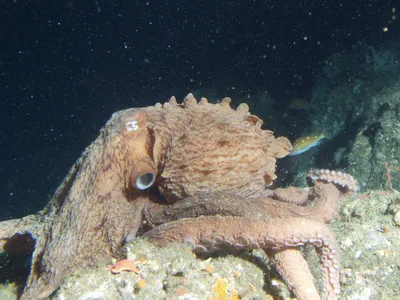 Giant Pacific octopus
Food web
Predators
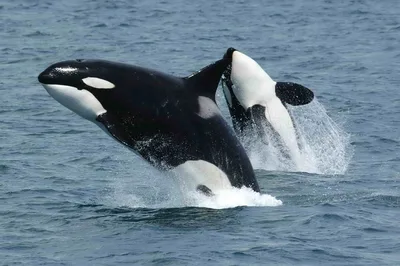 Orca
- bulls have none
Ecological equivalents
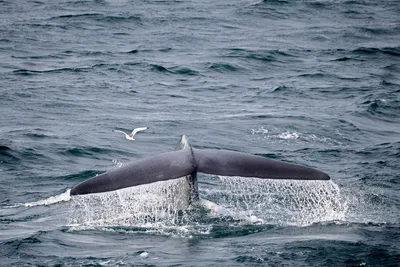
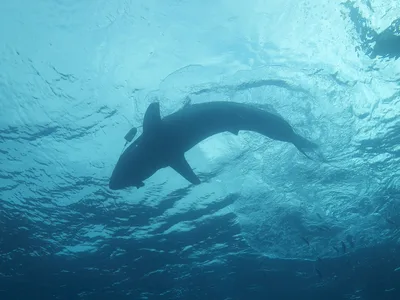
Related species on this site
Amazon River Dolphin (Pink Dolphin) (same order), Basilosaurus (same order), Beluga whale (same order), Bottlenose Dolphin (same order), Bowhead whale (same order), Dolphin (same order), and more.
Mammals
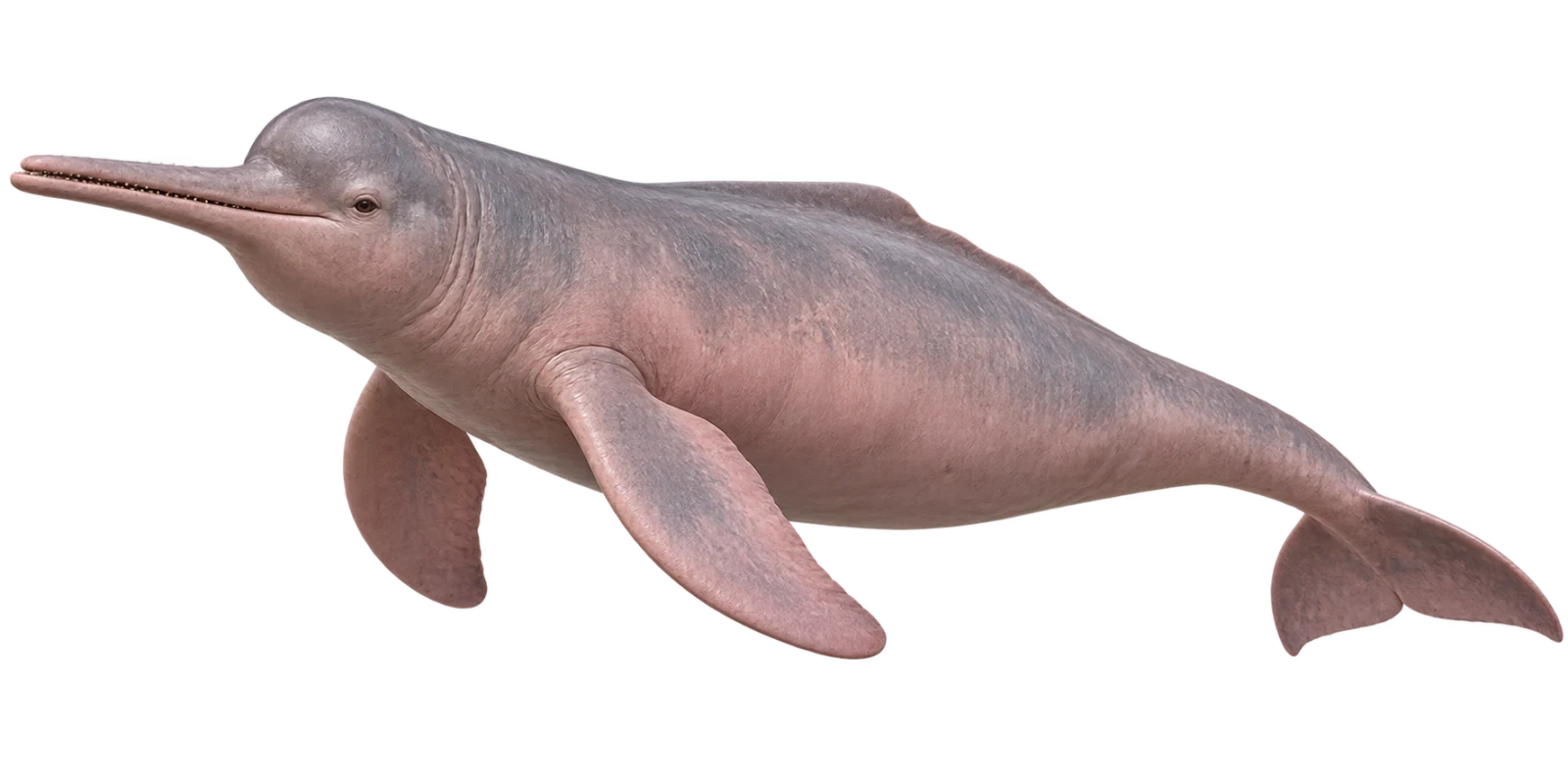
Amazon River Dolphin (Pink Dolphin)
Inia geoffrensis
Classification and source reference
LivingAI illustration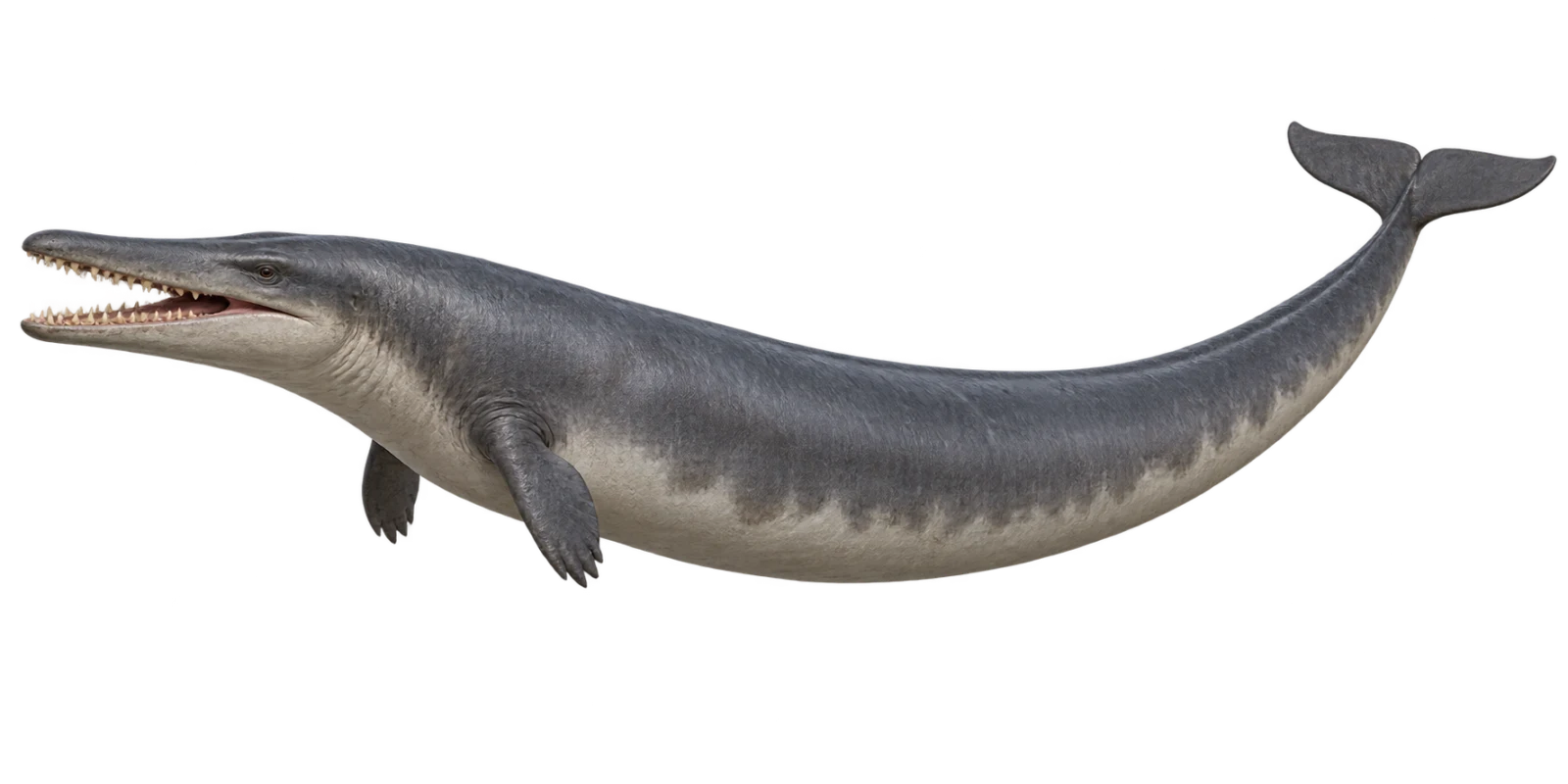
Mammals
Basilosaurus
Basilosaurus
Classification and source reference
ExtinctAI reconstruction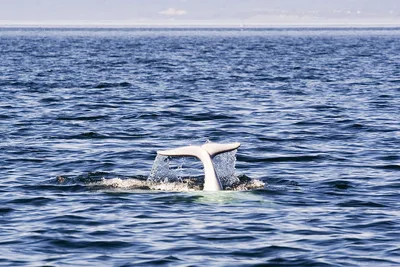 LC
Mammals
Beluga whale
Delphinapterus leucas
The beluga whale is a white toothed whale of Arctic and sub-Arctic seas.
Living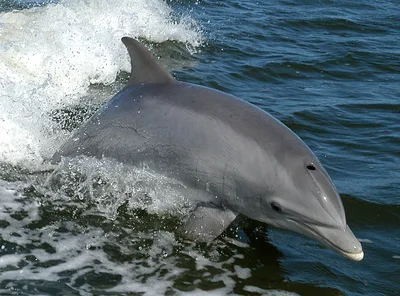
Mammals
Bottlenose Dolphin
Tursiops truncatus
The common bottlenose dolphin is a social marine mammal with a curved dorsal fin.
Living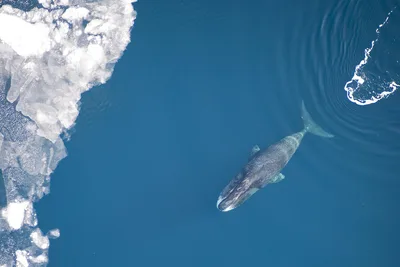 LC
Mammals
Bowhead whale
Balaena mysticetus
The bowhead whale is a heavy Arctic baleen whale that breaks sea ice with its huge arched head.
Living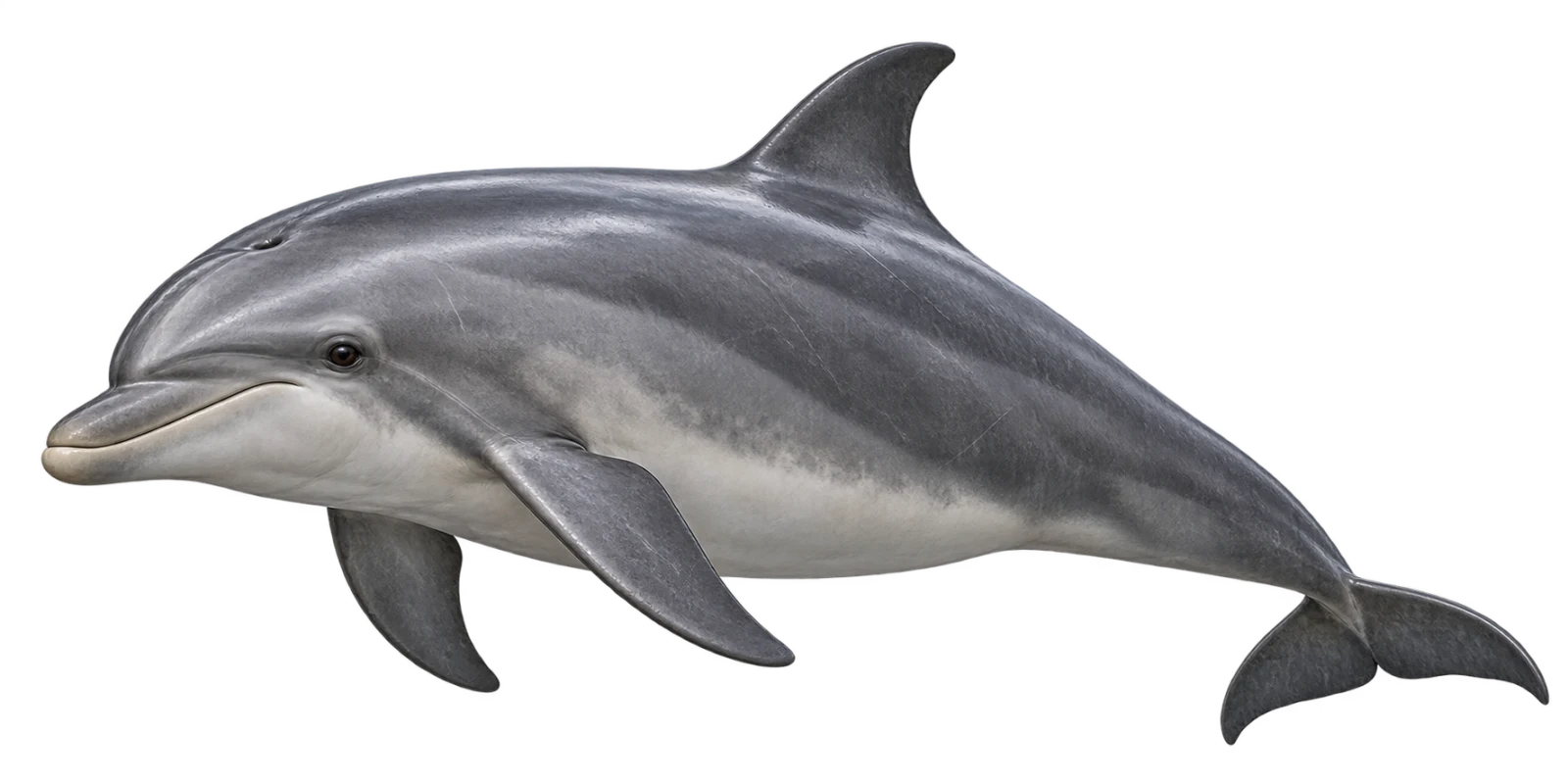
Mammals
Dolphin
Delphinidae
Classification and source reference
LivingAI illustration