Bottlenose Dolphin
Tursiops truncatus
Living individuals or members of this group exist today. This does not mean they are safe from extinction.
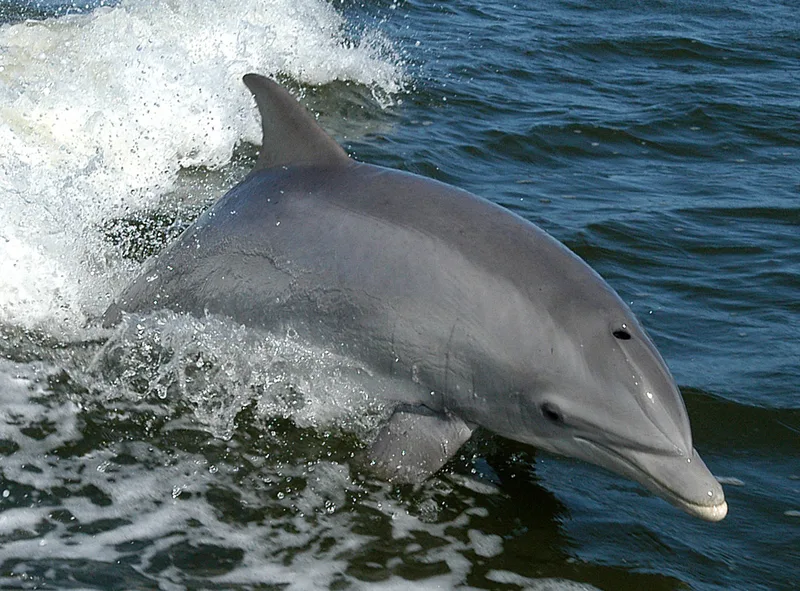
The common bottlenose dolphin is a social marine mammal with a curved dorsal fin. Coastal and offshore populations hunt a variety of aquatic prey.
At a glance
- Location
- Common bottlenose dolphins occupy tropical and warm-temperate seas. Bays, estuaries, shorelines and offshore waters support populations with different feeding habits.
- Habitat
- Coast, Open ocean
- Diet
- Piscivore
- Food
- Fish, squid and other marine animals are captured, with prey varying between locations.
Classification
- Common name
- Bottlenose Dolphin
- Browse group
- Mammals
- Scientific name or taxon
- Tursiops truncatus
- Taxon rank
- species
- Order
- Cetacea
- Family
- Delphinidae
- Genus
- Tursiops
- Source classification
- Mammalia
Taxonomy checked against GBIF. For breeds and hybrids, this describes the listed parent taxon.
Measurements
Size and speed
- Length
- 2.28 to 3.81 m combined adult female and male range
Typical adult ranges. Source: Animal Diversity Web.
Three things to know
- It breathes air through a blowhole.
- Its tail flukes propel it through water.
- Social groups can split and reunite.
Habitat and range
Common bottlenose dolphins occupy tropical and warm-temperate seas. Bays, estuaries, shorelines and offshore waters support populations with different feeding habits.
Appearance and adaptations
A streamlined grey body, front flippers and a curved dorsal fin suit swimming. Blubber helps insulate the body.
Diet and behaviour
Fish, squid and other marine animals are captured, with prey varying between locations. Individuals form flexible social groups, including mothers with calves and associations among males. Coastal feeding differs from hunting in deeper offshore water.
Sources
- Animal Diversity Web: Tursiops truncatus
- A–Z Animals: Bottlenose Dolphin · Directory entry
Explore mammals
Browse all mammals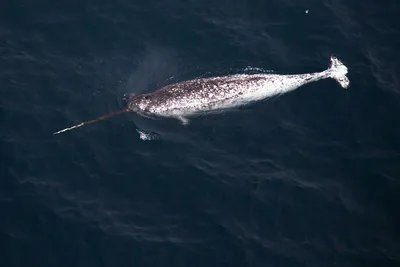 LC
Mammals
Narwhal
Monodon monoceros
The narwhal is an Arctic toothed whale, and the male carries a spiral tusk up to 3 metres long.
Living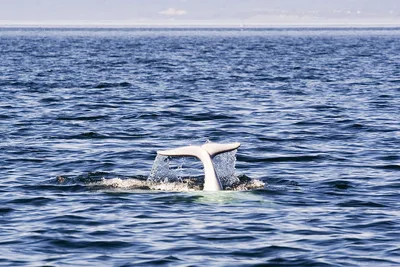 LC
Mammals
Beluga whale
Delphinapterus leucas
The beluga whale is a white toothed whale of Arctic and sub-Arctic seas.
Living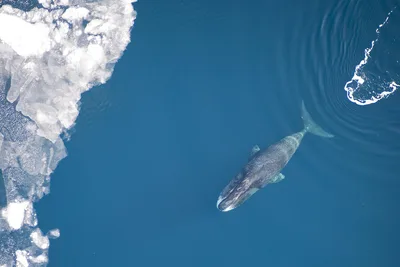 LC
Mammals
Bowhead whale
Balaena mysticetus
The bowhead whale is a heavy Arctic baleen whale that breaks sea ice with its huge arched head.
Living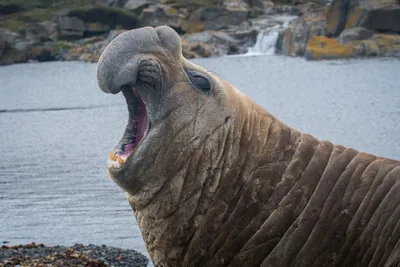
Mammals
Elephant Seal
Mirounga
Elephant seals are large marine mammals.
Living