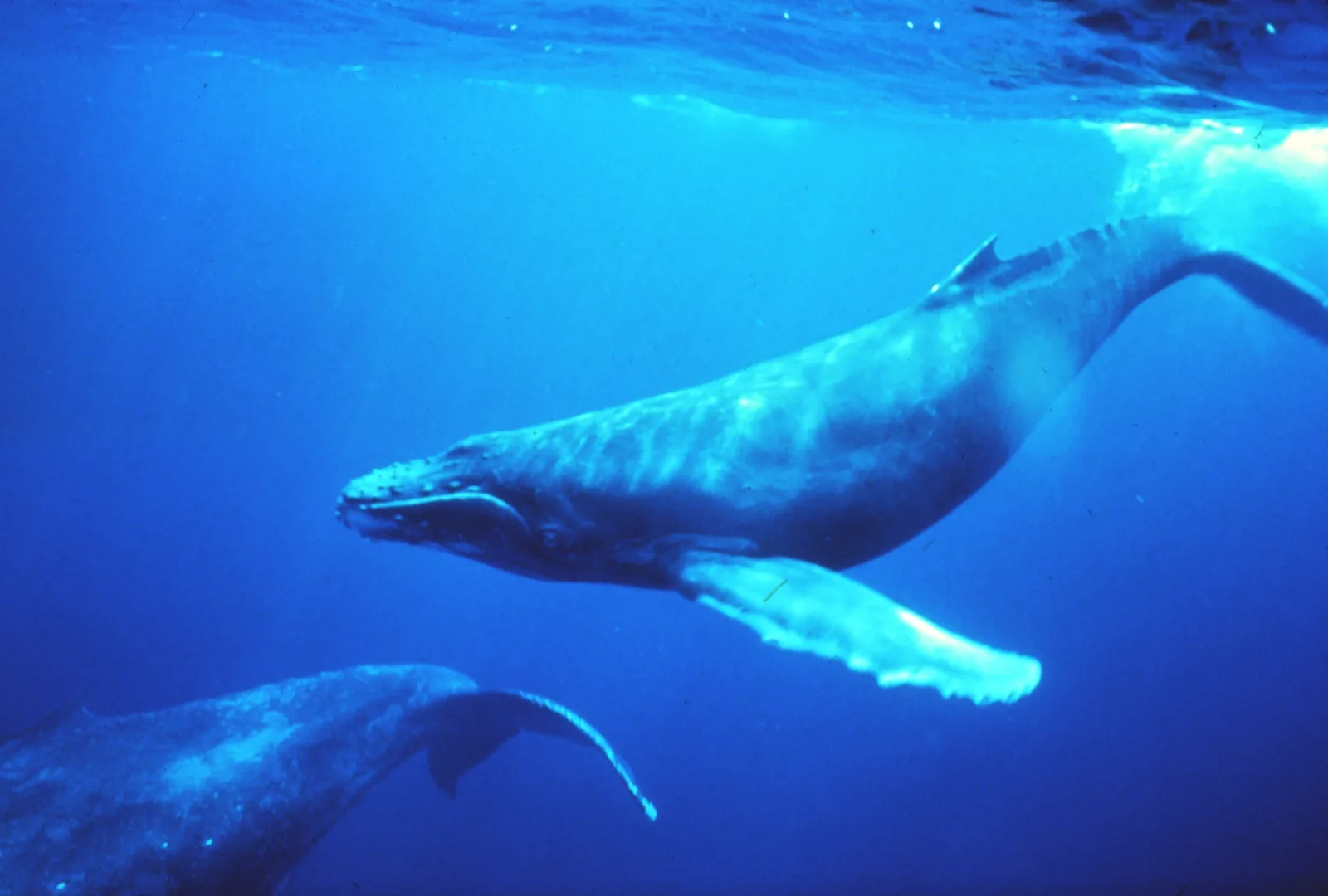
Humpback whale
The singing whale that fishes with a net of bubbles
Megaptera novaeangliae
Also called Humpback, Hunchback whale, Bunch whale
Living individuals or members of this group exist today. This does not mean they are safe from extinction.
Meet the humpback whale
The humpback whale is a large baleen whale found in every ocean. It migrates between polar feeding grounds and tropical breeding grounds, traps fish and krill in nets of bubbles, and the males sing long, structured songs.
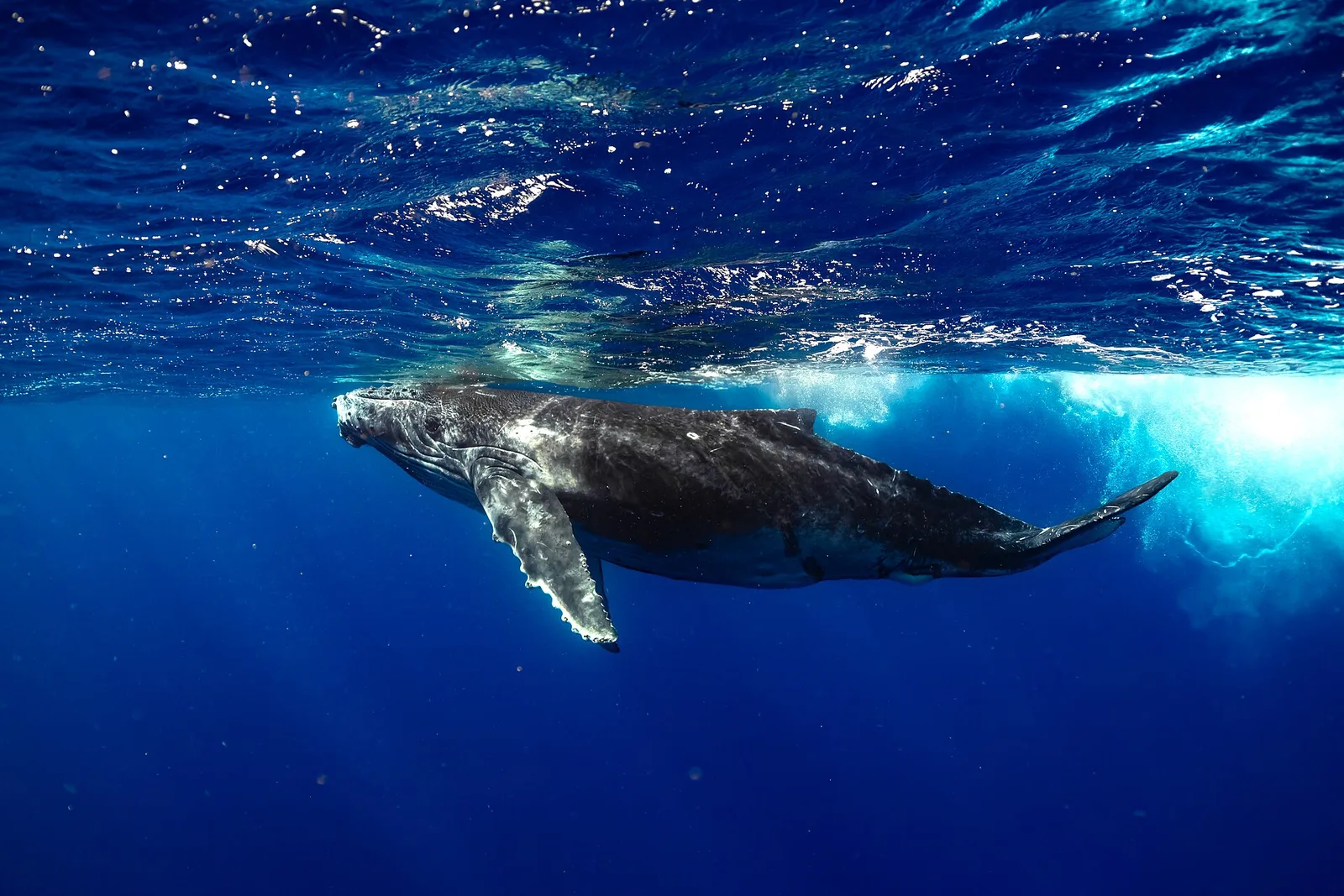
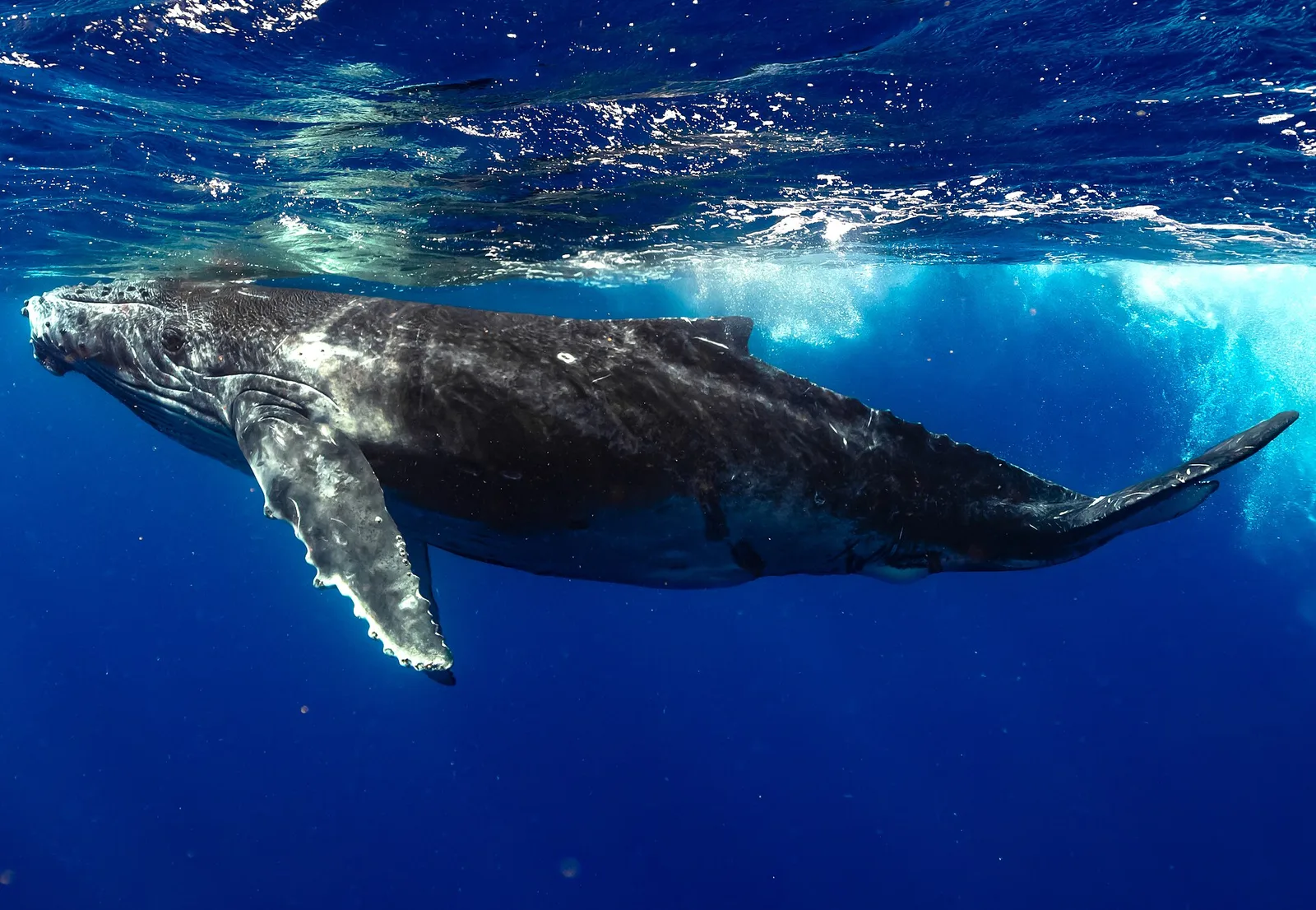
Images of the humpback whale
Lifespan in the wild
Up to 95 years many live past 50
Weight
Up to 40 t
Length
14 to 17 m
Top speed
7.9 to 15.1 km/h
Fact file
Humpback whale
- Location
- All oceans, from polar to tropical waters
- Habitat
- Open ocean, Coast
- Diet
- Filter feeder
- Prey / food
- Krill, herring, capelin, sand lance, mackerel
- Predators
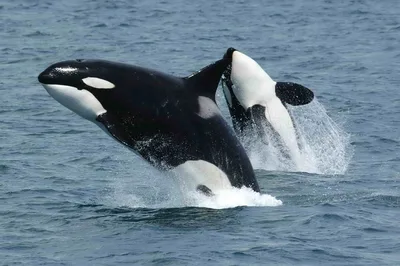
- Orca; large sharks take calves and weakened whales
- Lifestyle
- Migratory; feeds in summer near the poles, breeds in winter in the tropics
- Group name
- Pod
- Name of young
- Calf
- Gestation
- About 11.5 months
- Litter size
- 1 calf every two years
- Population
- About 135,000 worldwide and rising
- Biggest threat
- Entanglement in fishing gear and ship strikes
- Distinctive feature
- Flippers about one third of body length, with knobs on the head
- Colour
- Black above, black and white below
- Skin type
- Smooth skin
Size
Next to a person
Measurements
Size and speed
- Length
- 14 to 17 m, up to 18.6 m females are about 1 to 1.5 metres longer than males
- Weight
- Up to 40 t
- Top speed
- 7.9 to 15.1 km/h, up to 27 km/h cruising speed; the record is a burst when threatened
Typical adult ranges. Source: Wikipedia.
Life cycle
Lifespan
- In the wildUp to 95 years many live past 50
- 095 years
The pale bar is the record. Source: Wikipedia.
Appearance
Colour and coat
- Primary colours
- black
- Secondary colours
- whitegrey
- Skin type
- smooth skin
- Male and female
- Slight but real. Females are 1 to 1.5 metres longer than males, and a rounded lobe at the end of the genital slit marks a female.
Life cycle
Mating and family
- Mating system
- polygynandrous, with both sexes taking several partners
- Social structure
- loose groups that last days or weeks; mother and calf stay together for about a year
- Breeding
- one calf every two years, born in winter in warm water
Humpbacks mate in winter on tropical breeding grounds, where males fight for access to females. Gestation lasts about 11.5 months, and the mother gives birth in shallow water to one calf of about 4.3 metres. The calf suckles for up to a year and swims north or south with its mother on her next migration. Whales mature at 5 to 15 years and reach full size at 8 to 12 years. Many live past 50 years, and the oldest known reached 95.
Classification
Taxonomy
- Kingdom
- Animalia
- Phylum
- Chordata
- Class
- Mammalia
- Order
- Cetacea
- Family
- Balaenopteridae
- Genus
- Megaptera
- Species
- Megaptera novaeangliae
Conservation
Red List status
- LC
- NT
- VU
- EN
- CR
- EW
- EX
Least Concern on the IUCN Red List
Range
Recorded in 15 countries
- Antarctica
- Argentina
- Ashmore and Cartier Islands
- Brazil
- Canada
- Chile
- Costa Rica
- Ecuador
- Greenland
- Iceland
- Mexico
- New Zealand
- Russia
- United States of America
- South Africa
Habitat layer: mangrove.
Countries from 29,710 wild records on GBIF (iNaturalist research grade), filtered and checked by hand. Country shapes: Natural Earth. Habitat: RESOLVE Ecoregions 2017, CC BY 4.0. Basemap: Natural Earth.
Habitats
Three things to know
- 1
Male humpbacks sing songs of 4 to 33 minutes, and every male in a region sings the same version.
- 2
A group of humpbacks blows a shrinking ring of bubbles to trap fish, then surges up through it with open mouths.
- 3
Whaling cut the world population to about 5,000 by the 1960s, and it has since grown to about 135,000.
Did you know
Seven more facts
- 1
Females are 1 to 1.5 metres longer than males, which is rare among mammals.
- 2
The white pattern under the tail is unique to each whale, and researchers track thousands by photograph.
- 3
A newborn calf is about 4.3 metres long and weighs about 680 kilograms.
- 4
The fetus grows teeth in the womb and loses them before the baleen forms.
- 5
A humpback off Hawaii sang without a break for seven hours.
- 6
Migaloo, a famous white humpback off Australia, is a true albino.
- 7
The Soviet Union reported 2,820 humpback kills between 1947 and 1972 but took more than 48,000.
Field notes
How it looks and acts
Field notes
Distinguishing features
- Flippers about one third of the body length, white below and knobbed along the front edge.
- Rows of fleshy knobs on the head, each with a single hair.
- A small, stepped dorsal fin on a rounded back.
- A tail with a jagged trailing edge and a black and white underside.
- A body of 14 to 17 metres.
- Only 14 to 35 throat grooves, fewer than other rorquals.
Field notes
Unique adaptations
- Throat grooves that let the mouth swell around a whole shoal in one gulp.
- Knobs on the flippers that keep the flow attached and let the whale turn tightly inside a bubble net.
- The thickest blubber for its size of any rorqual, which fuels months of fasting on the breeding grounds.
- Nerve cells in the skin built to withstand the pressure of deep dives.
- A laryngeal sac that amplifies song so it carries at least 10 kilometres.
Field notes
Interesting behaviours
- Breaches clear of the water and lands on its back or side.
- Slaps the surface with the tail or a flipper, sometimes many times in a row.
- Blows a spiral of bubbles to herd fish, then lunges up through it.
- Lifts the tail high before a deep dive.
- Travels up to 8,000 kilometres between feeding and breeding grounds.
Field notes
Temperament
- Curious and tolerant of boats, which made it the favourite of whale watchers.
- Combative on the breeding grounds, where males ram and head-butt rivals.
- Protective, with adults escorting calves and mobbing orcas.
Field notes
Communication
- Long male songs of repeated themes, shared across a whole region.
- Snorts, grumbles and wops that pass between escorts, rivals and mother-calf pairs.
- Breaches and slaps that carry sound across the water.
- Clouds of bubbles blown from the mouth toward another whale.
Ecology
Ecological role
The humpback is a bulk consumer of krill and small fish, and its body hosts a community of barnacles and lice.
- Eats krill and schooling fish in bulk on polar and temperate feeding grounds.
- Competes with fin whales, minke whales and seabirds for the same shoals.
- Feeds orcas as calves and large sharks when sick or entangled.
- Carries acorn barnacles, goose barnacles and a whale louse found on no other host.
Stories
Myths and legends
- In Hawaiian tradition, the whale is a form of Kanaloa, god of the ocean.
- In Polynesian tradition, whales travel between islands as agents of the gods, and their song holds the voices of ancestors.
- In Maori tradition, the ancestor Paikea rode a whale to the shore of New Zealand.
- In Japanese coastal tradition, whales guarded sailors on behalf of the sea gods.
People
Relationship with humans
People
Living alongside us
People hunted the humpback for oil, meat and bone meal for four centuries and nearly wiped it out. Commercial whaling ended in 1966, and the species has recovered in most oceans. The humpback now earns far more alive, as the main draw of whale-watching tours from Hawaii to Iceland. Ships, fishing gear and underwater noise remain the main harm people do to it.
- Humpbacks do not attack people, and swimmers and divers approach them in several countries.
- A breaching whale or a slapping tail can crush a small boat, and collisions of that kind have probably injured people.
- Groups with calves may thrash at boats that come too close.
People
Status, uses and products
- Domestication
- Wild
- As a pet
- Not suitable. No humpback has ever been kept in captivity. An adult is up to 17 metres long, eats tonnes of fish a day and swims thousands of kilometres a year.
- Uses
- whale watchingecotourismsubsistence whalingscientific research
- Products
- oilmeatbone meal
The full account
About the humpback whale
The humpback whale, Megaptera novaeangliae, is a baleen whale found in every ocean. It belongs to the rorqual family, beside the blue and fin whales, and stands alone in its genus. An adult measures 14 to 17 metres, and the largest reach 18.6 m. The heaviest weigh up to 40 tonnes. The long white flippers and the knobs on the head make it easy to tell from any other whale.
Humpbacks feed in cold water near the poles in summer and travel to warm water near the equator to breed in winter. They eat krill and small schooling fish, and they often trap a shoal inside a ring of bubbles. Males sing long, structured songs on the breeding grounds. Whaling cut the species to about 5,000 animals by the 1960s. The population has since grown to about 135,000, and the IUCN lists the humpback as Least Concern.
Name and taxonomy
Mathurin Jacques Brisson listed the animal in 1756 as the whale of New England, because sailors met it often off that coast. Georg Heinrich Borowski turned that name into Latin in 1781 as Balaena novaeangliae. John Edward Gray set up the genus Megaptera in 1846, and Remington Kellogg restored Borowski's species name in 1932. Megaptera comes from Greek words for giant and wing, a reference to the flippers. The common name describes the way the back arches as the whale rolls into a dive.
A 2014 genetic study found that the whales of the North Atlantic, North Pacific and Southern Ocean mix little. It proposed one subspecies for each ocean: novaeangliae in the North Atlantic, kuzira in the North Pacific and australis in the south. A small population in the Arabian Sea does not migrate and has been cut off for about 70,000 years, so it may be a fourth.
Evolution and relatives
A 2018 study of whole genomes placed the split between rorquals and other baleen whales in the late Miocene, 10.5 to 7.5 million years ago. The same study found the humpback and the fin whale to be sister species. A hybrid between a humpback and a blue whale has been reported from the South Pacific. Modern humpback populations arose in the southern hemisphere about 880,000 years ago. They spread into the northern hemisphere between 200,000 and 50,000 years ago.
Like other baleen whales, the humpback descends from toothed ancestors, and its fetus still grows teeth before the baleen forms. The knobs on the head and flippers are unique among large whales and probably evolved as sensors, since they are rich in nerves.
Appearance
Most adults are 14 to 15 metres long, and animals of 16 to 17 m have been recorded. Females run 1 to 1.5 m longer than males, which is rare among mammals. The longest reliable records are 17.4 m for a male and 18.6 m for a female. Body mass reaches 40 tonnes. The body is bulky with a narrow snout, and the flippers are about one third of the body length.
The back is black, and the belly carries patches of black and white that differ from whale to whale. Southern hemisphere whales tend to carry more white. The pattern and scars on the underside of the tail identify each individual, and researchers catalogue them from photographs. One famous all-white animal, Migaloo, is a true albino. The dorsal fin is small and varies from a stub to a curved hook.
Rows of knobs, called tubercles, stud the head and the front edge of the flippers. Each is 5 to 10 centimetres thick at the base and holds at least one stiff hair. The throat carries 14 to 35 grooves that let the mouth swell during a gulp. Between 540 and 800 black baleen plates hang from the upper jaw. A newborn calf is about 4.3 m long and weighs about 680 kilograms.
Habitat and range
Humpbacks occur in all oceans except a few stretches of the equator, the high Arctic and some enclosed seas. The northernmost record is from 81 degrees north near Franz Josef Land. They favour water over the continental shelf and come close to shore on both feeding and breeding grounds. GBIF holds records from 141 countries, a count that reflects how many coastlines the species passes.
Each population feeds in cold water in summer and breeds in warm water in winter. One-way journeys of up to 8,000 kilometres have been tracked. In the North Atlantic, one group winters in the West Indies and feeds off New England, Canada and Greenland. Another winters off Cape Verde and feeds around Iceland and Norway. The North Pacific holds at least four breeding populations, off Mexico, Central America, Hawaii, and Okinawa and the Philippines.
The southern hemisphere is divided into seven breeding stocks that feed around Antarctica. Stock A winters off Brazil, stock D breeds off Western Australia, and the Oceania stocks breed around Tonga, New Caledonia and French Polynesia. The Arabian Sea whales stay in the northern Indian Ocean all year, mainly around Oman.
Diet and feeding
Humpbacks feed from spring to autumn and fast on the breeding grounds. They take krill, copepods and other plankton, and small schooling fish such as herring, capelin, sand lance and mackerel. In the North Atlantic, fish make up about 95% of the diet. Around Antarctica the main food is Antarctic krill. A humpback is a gulp feeder: it takes a mouthful of water and prey, then forces the water out through the baleen.
The best known method is the bubble net. A group swims upward in a shrinking spiral while blowing air, which traps the shoal inside a wall of bubbles. The whales then rise through the centre with open mouths. They may dive to 20 metres to set the net, and lone whales also use it. Some whales add a tail slap on the surface before the final loop, a trick that spread through one population over 27 years. Off Massachusetts, humpbacks brush the seabed with their jaws to flush out sand lance.
In 2009, a dense gathering of feeding humpbacks in Wilhelmina Bay, Antarctica, reached 5.1 whales per square kilometre. Southern whales have been seen feeding in groups of up to 200.
Behaviour and social life
Apart from a mother and her calf, humpback groups last only days or weeks. Larger gatherings form on feeding grounds and where males compete for a female. Humpbacks mix with right whales, fin whales and bottlenose dolphins. They are the most active large whale at the surface. They breach, slap the water with tail and flippers, and throw the rear body sideways in a peduncle throw. These displays may serve as play, as signals, or as a way to shed parasites.
The humpback cruises at 7.9 to 15.1 kilometres per hour, slower than other rorquals, and can reach 27 km/h when alarmed. The long flippers act like wings and let the whale turn sharply and swim in any direction. Dives seldom pass five minutes in summer but last 15 to 20 minutes in winter. Most dives stay above 80 metres, and the deepest recorded reached 616 m. A diving humpback usually lifts its tail clear of the water. It rests at the surface lying flat.
Communication and senses
Male humpbacks sing on the winter breeding grounds. A song runs from 4 to 33 minutes, and a whale off Hawaii once sang for seven hours. It is built from units, phrases and themes in a fixed order, and it carries at least 10 kilometres underwater. All the males in one region sing the same song, and when one changes it, the others copy the change. Songs can spread from one population to the next across several seasons. The purpose is still debated, but singing males gather in groups that females visit, much like birds at a lek.
Other sounds include snorts, grumbles, wops, cries and barks, used between escorts, rivals and mothers with calves. The vocal folds sit almost flat, and a sac in the larynx amplifies the call. Models of the ear suggest hearing from about 15 hertz up to several kilohertz, which matches the range of the calls. The eyes are small and see only outlines at a distance. The smell organs are so reduced that the whale may have no sense of smell at all.
Reproduction and life cycle
Mating happens in winter, when females come into oestrus and male hormone levels peak. Both sexes take several partners. Males trail a female or a mother and calf, and the nearest one, the principal escort, fights off challengers. The fights involve tail slashes, ramming and head butts.
Gestation lasts about 11.5 months, and a female usually calves every two years. She moves into shallow coastal water before the birth, which keeps escorts away, and helps the newborn to the surface. One birth watched off Madagascar took four minutes. A calf suckles for up to a year but can take adult food from six months. Its dorsal fin is folded at birth and stiffens as it grows.
Humpbacks mature at 5 to 15 years, depending on the population, and reach full size at 8 to 12 years. Many live past 50 years, and the oldest known animal was 95.
Predators and threats
Orcas are the only regular predator, and tooth scars on the tails of many adults show attacks survived as calves. A 2014 study off Western Australia found that orcas attack and sometimes kill young humpbacks when calves are plentiful. Mothers and other adults escort calves, and humpbacks mob attacking orcas. They even drive orcas off seals and other whales, probably as a side effect of defending their own young. The flippers, crusted with sharp barnacles, are heavy weapons in these fights.
Large sharks take sick or entangled whales. Tiger sharks killed an ailing humpback near Hawaii in 2006, and great white sharks have killed weakened animals off South Africa. Today the main dangers come from people: fishing gear, ship strikes, underwater noise and warming seas. Along the US Atlantic coast, 88 humpbacks stranded between January 2016 and February 2019, twice the earlier rate. Barnacles and whale lice ride on the skin, and tapeworms and roundworms live inside.
Population and conservation
Whalers hunted humpbacks from the late 1500s, often first in any new area because the whales stayed near the coast. More than 200,000 were killed in the southern hemisphere in the twentieth century and about 28,000 in the North Pacific. The North Atlantic fell to about 700 animals. The Soviet Union reported 2,820 kills between 1947 and 1972, but the true number passed 48,000. The International Whaling Commission banned commercial humpback whaling in 1966, when about 5,000 remained.
By 2018 the IUCN counted about 135,000 humpbacks, of which about 84,000 were mature, and moved the species to Least Concern. The North Atlantic holds about 13,000, the North Pacific about 21,000, and the southern hemisphere about 80,000. The Arabian Sea population holds only about 80 animals and is treated as endangered. The United States, Canada and Australia have lowered the threat status as numbers recovered. Hawaii set up a national marine sanctuary for the species in 1992, and Costa Rica created Ballena Marine National Park.
Relationship with humans
For centuries the humpback supplied lamp oil, machine lubricant, margarine fat, meat, animal feed and bone meal. A few are still taken each year off Bequia in Saint Vincent and the Grenadines, and Greenland received a small quota in 2010. Japan planned to kill 50 in the 2007 season but dropped the plan after protests.
The humpback built the whale-watching industry. Tours began in New England and Hawaii in 1975, and the trade brings Hawaii about 20 million dollars a year. Boats can stress whales and disturb feeding and nursing, so most countries now limit how close a vessel may come. Off eastern Canada, humpbacks feeding near shore damage cod and herring traps. Near the Strait of Magellan they are the whale most often hit by ships, and speed limits have been proposed.
In culture and myth
In Hawaiian tradition the whale is a body form of Kanaloa, the god of the ocean. Polynesian traditions treat whales as sacred travellers that carry messages from the gods, and the song is said to hold ancestral voices. The Maori story of Paikea, who reached New Zealand on the back of a whale, inspired the film Whale Rider. Japanese coastal communities saw whales as guardians of sailors and messengers of sea gods. Bronze Age rock carvings at Bangudae in Korea show whales, and some of them appear to be humpbacks.
The 1970 record Songs of the Humpback Whale, made by Roger Payne, carried the song into homes around the world. It helped turn public opinion against whaling and probably did more for the species than any law. A humpback song travels on the Voyager Golden Record launched in 1977. Modern symbolism writers link the humpback with music, intuition and emotional depth, which seems to come straight from the song.
A sentence with a dotted underline is inferred: it describes the group the animal belongs to, or is a reading of the sources, rather than a measured or reported fact about this species.
Questions
Humpback whale questions, answered
How big is a humpback whale?
An adult is 14 to 17 metres long, and the longest reliable record is 18.6 m. The largest weigh up to 40 tonnes.
What do humpback whales eat?
Krill, other plankton and small schooling fish such as herring, capelin, sand lance and mackerel. They feed only in summer and fast on the breeding grounds.
Why do humpback whales sing?
Only males sing, on the winter breeding grounds. The purpose is debated, but singing males gather in groups that females visit, so the song probably plays a part in courtship.
How long is a humpback whale song?
A single song lasts 4 to 33 minutes. Whales repeat it for hours, and one off Hawaii sang for seven hours.
How far do humpback whales migrate?
Journeys of up to 8,000 kilometres in one direction have been tracked between polar feeding grounds and tropical breeding grounds.
How long do humpback whales live?
Many live past 50 years. The oldest known humpback was 95 years old.
Are humpback whales endangered?
No. The IUCN lists the species as Least Concern with about 135,000 whales and a rising trend. The small Arabian Sea population of about 80 is treated as endangered.
What is bubble-net feeding?
A whale or a group swims upward in a shrinking spiral while blowing air. The bubbles trap a shoal of fish, and the whales rise through the middle with open mouths.
Why do humpback whales breach?
Nobody is sure. Breaching may be play, a signal to other whales, or a way to knock off barnacles and lice.
What eats humpback whales?
Orcas take calves and sometimes young adults. Tiger sharks and great white sharks have killed sick or entangled whales.
How fast can a humpback whale swim?
It cruises at 7.9 to 15.1 kilometres per hour, slower than other rorquals. When alarmed it can reach 27 km/h.
How deep do humpback whales dive?
Most dives stay within 80 metres of the surface. The deepest recorded dive reached 616 m.
Are humpback whales dangerous to humans?
No. They do not attack people. A breaching whale can damage a boat that comes too close, so watching rules keep vessels at a distance.
How many babies does a humpback whale have?
One calf, usually every two years, after a gestation of about 11.5 months. The calf suckles for up to a year.
Why is it called a humpback?
The back arches into a hump as the whale rolls forward into a dive. The genus name Megaptera means giant wing and refers to the flippers.
Food web
Prey and food
- krill
- herring
- capelin
- sand lance
- mackerel
Food web
Predators
 Orca
- sharks
Ecological equivalents
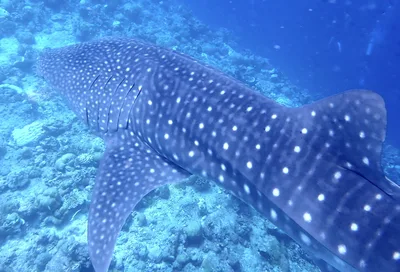
Related species on this site
Blue whale (same family), Fin whale (same family), Minke Whale (same family), Sei Whale (same family), Amazon River Dolphin (Pink Dolphin) (same order), Basilosaurus (same order), and more.
 EN
Mammals
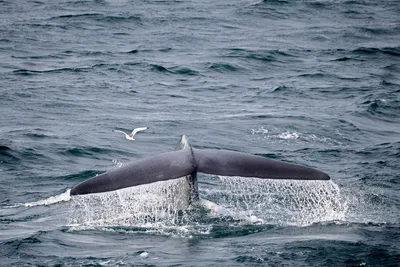
Blue whale
Balaenoptera musculus
The blue whale is the largest animal that has ever lived.
Living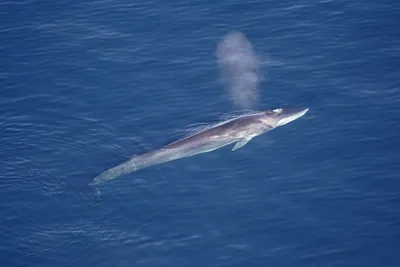 VU
Mammals
Fin whale
Balaenoptera physalus
The fin whale is the second longest animal alive and one of the fastest of the great whales.
Living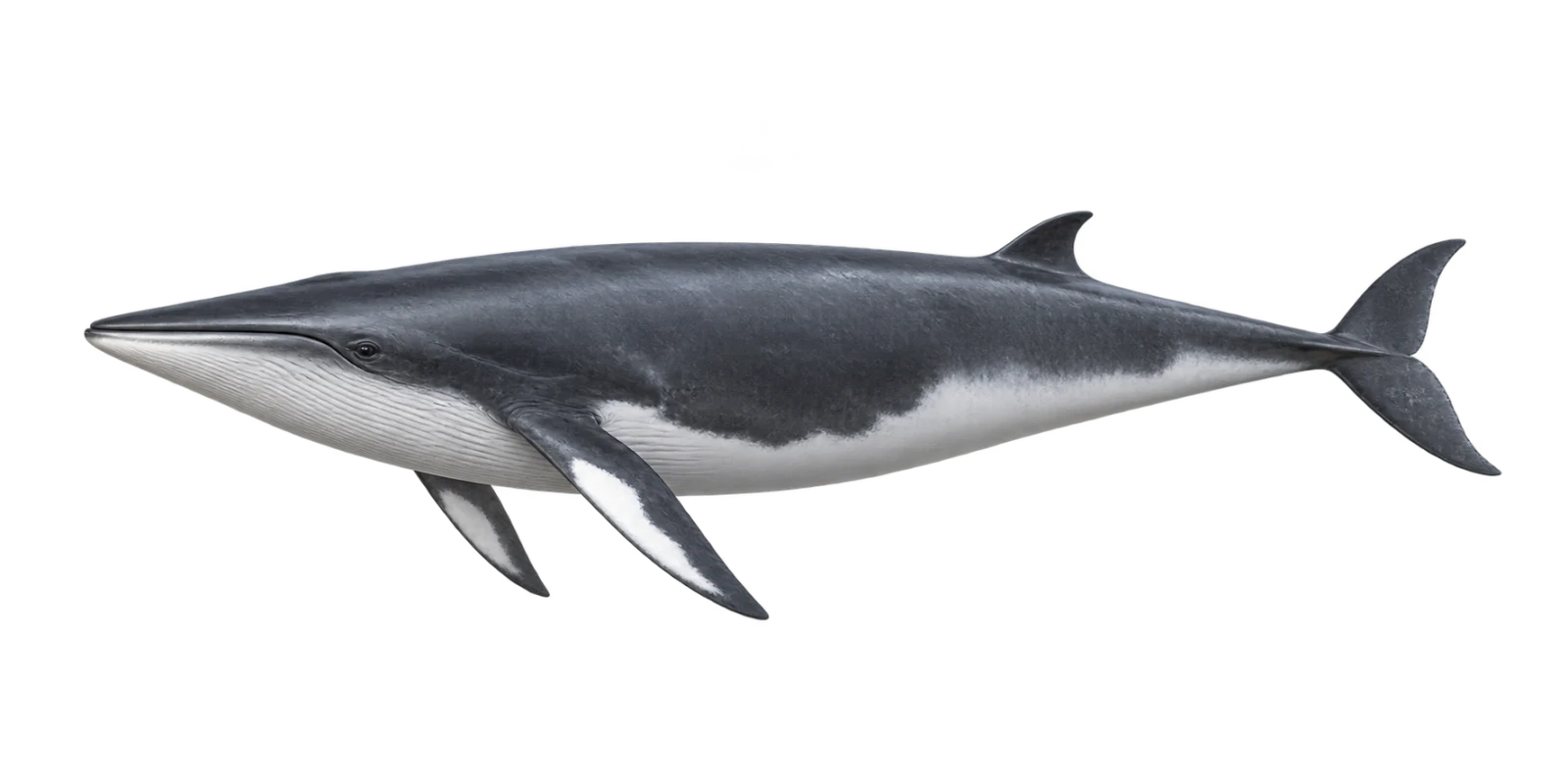
Mammals
Minke Whale
Balaenoptera acutorostrata
Classification and source reference
LivingAI illustration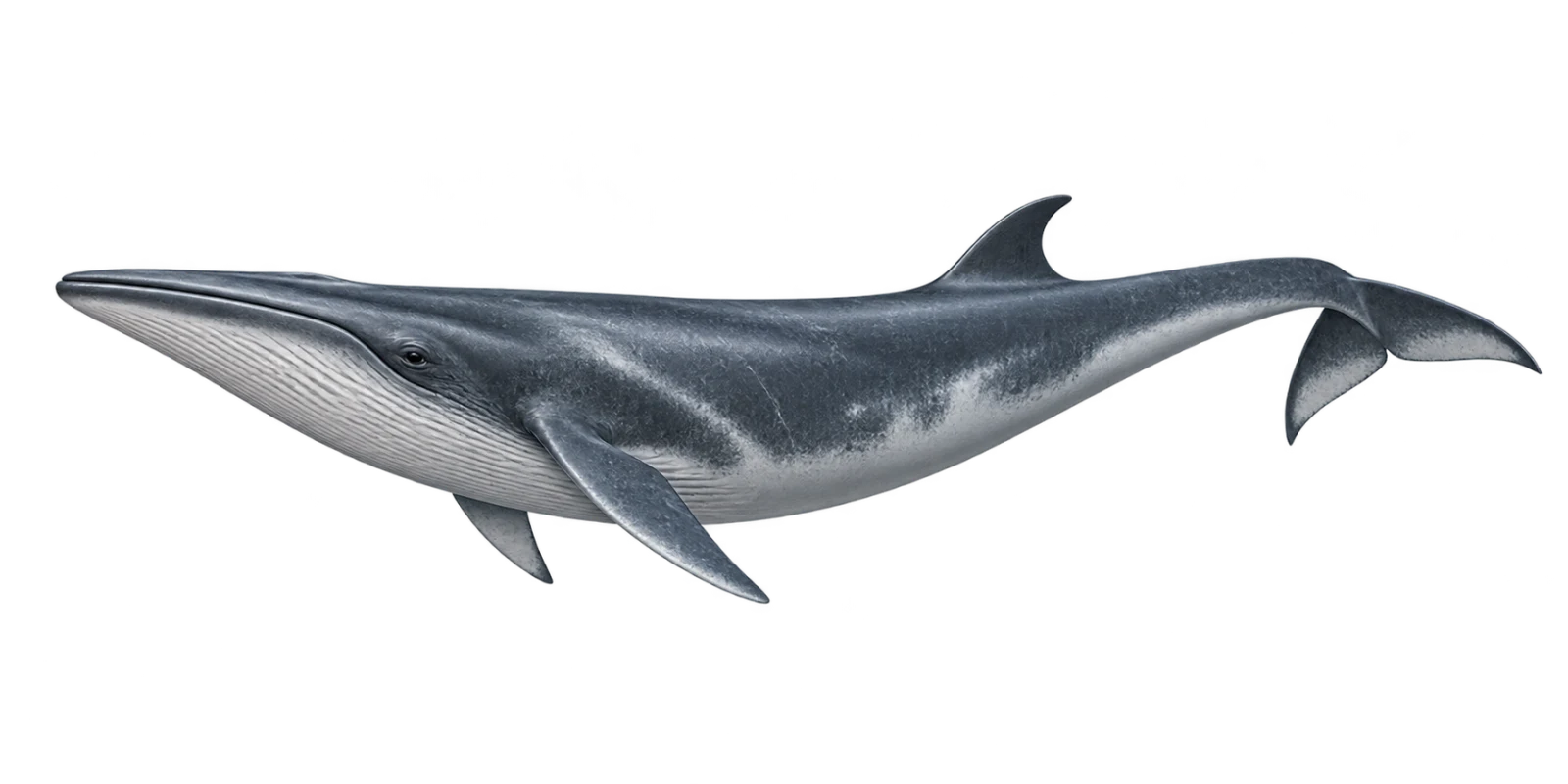
Mammals
Sei Whale
Balaenoptera borealis
Classification and source reference
LivingAI illustration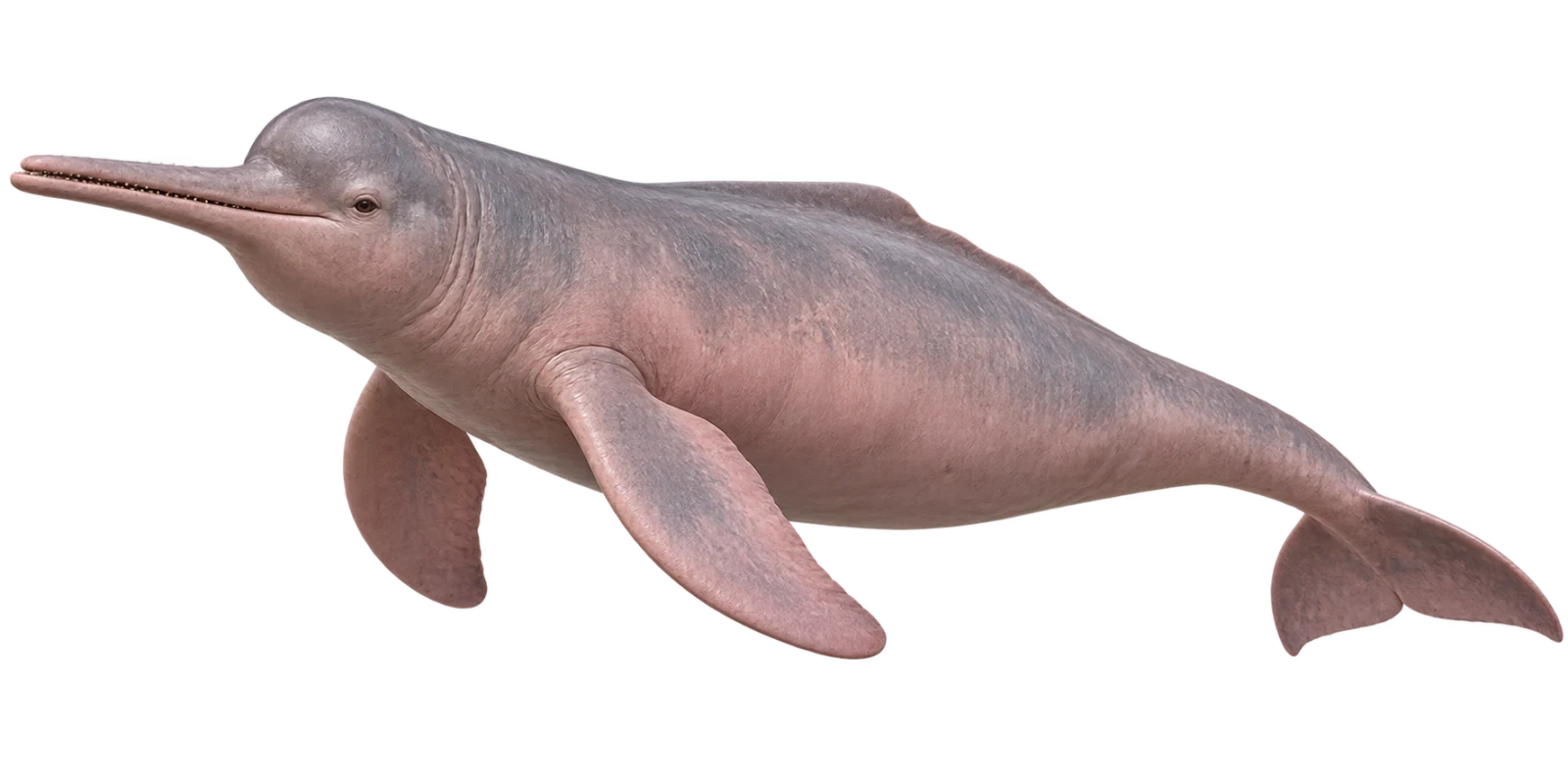
Mammals
Amazon River Dolphin (Pink Dolphin)
Inia geoffrensis
Classification and source reference
LivingAI illustration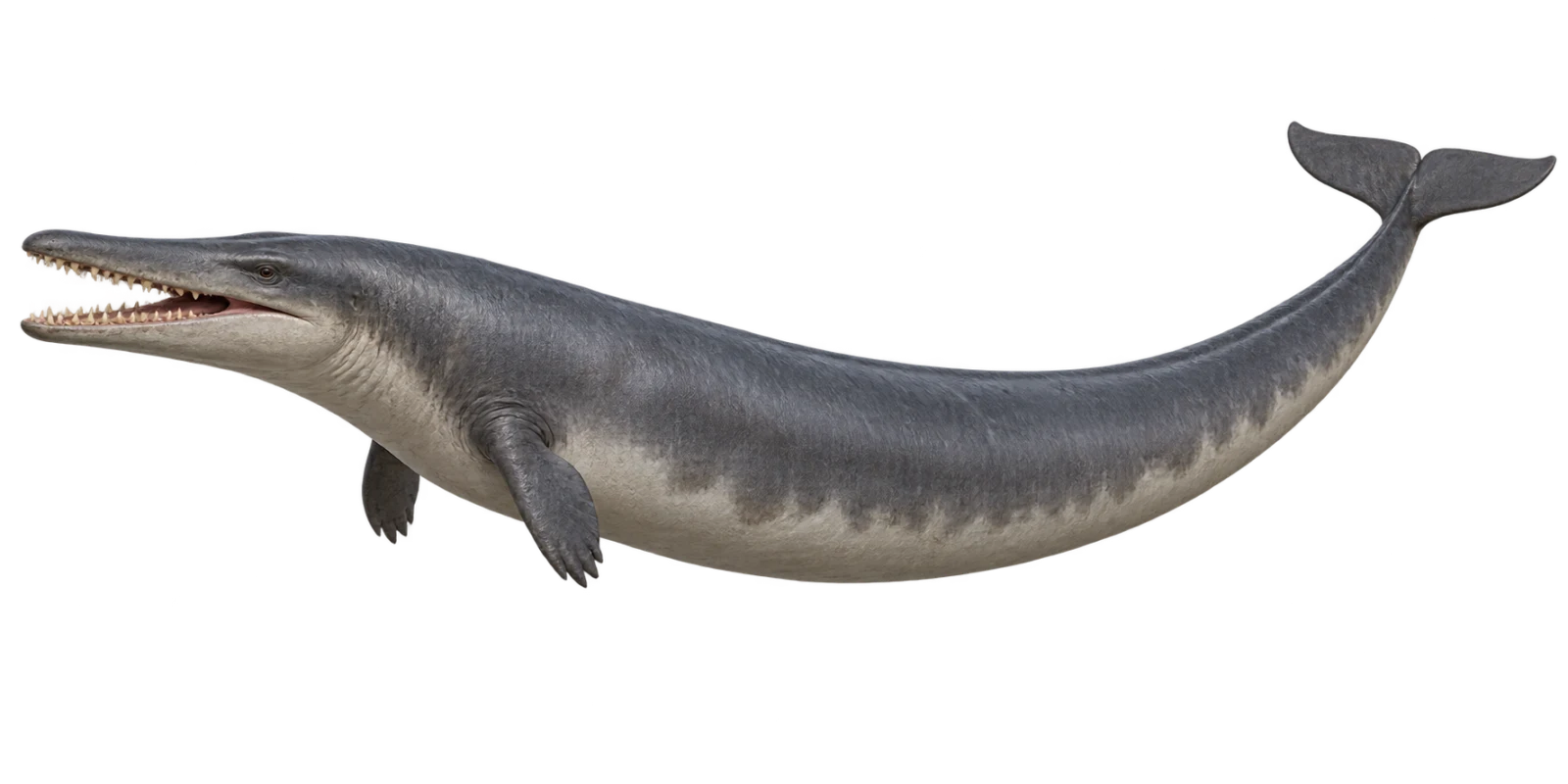
Mammals
Basilosaurus
Basilosaurus
Classification and source reference
ExtinctAI reconstruction