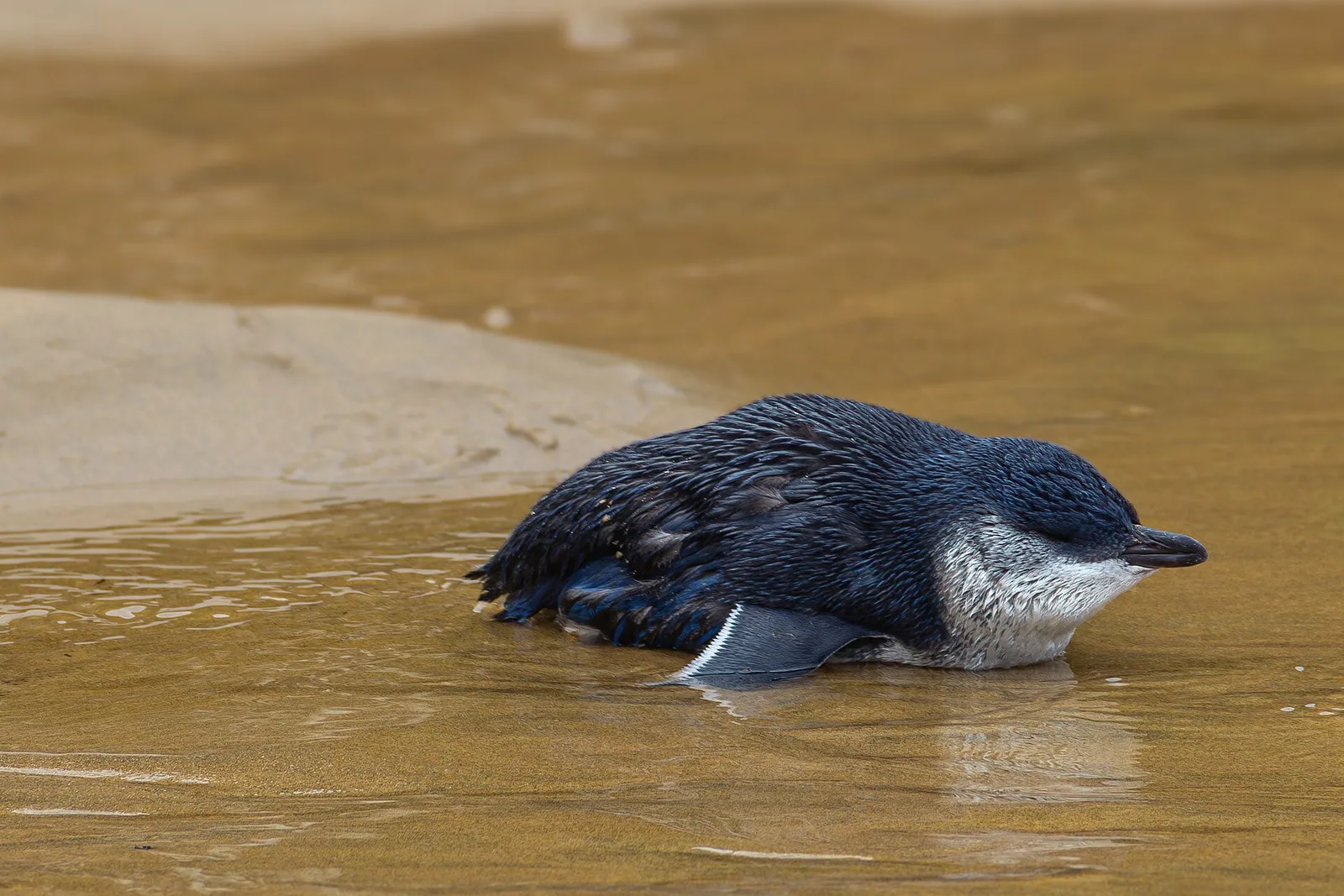
Little penguin
The smallest penguin comes ashore only after dark
Eudyptula minor
Also called Fairy penguin, Little blue penguin, Blue penguin, Korora
Living individuals or members of this group exist today. This does not mean they are safe from extinction.
Meet the little penguin
The little penguin is the smallest penguin in the world, a slate-blue seabird of New Zealand and southern Australia. It hunts small fish by day and walks up the beach to its burrow after dark.
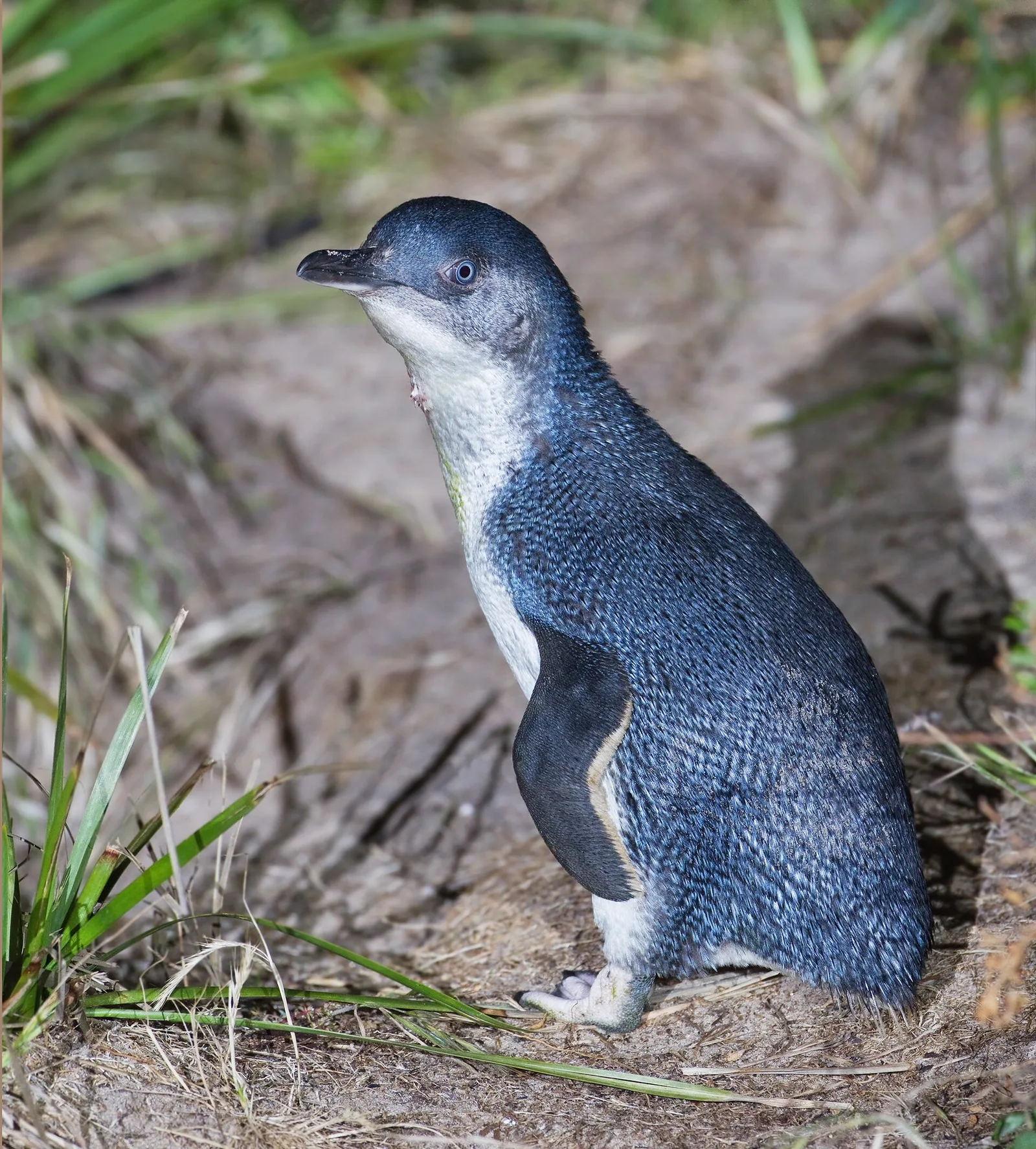
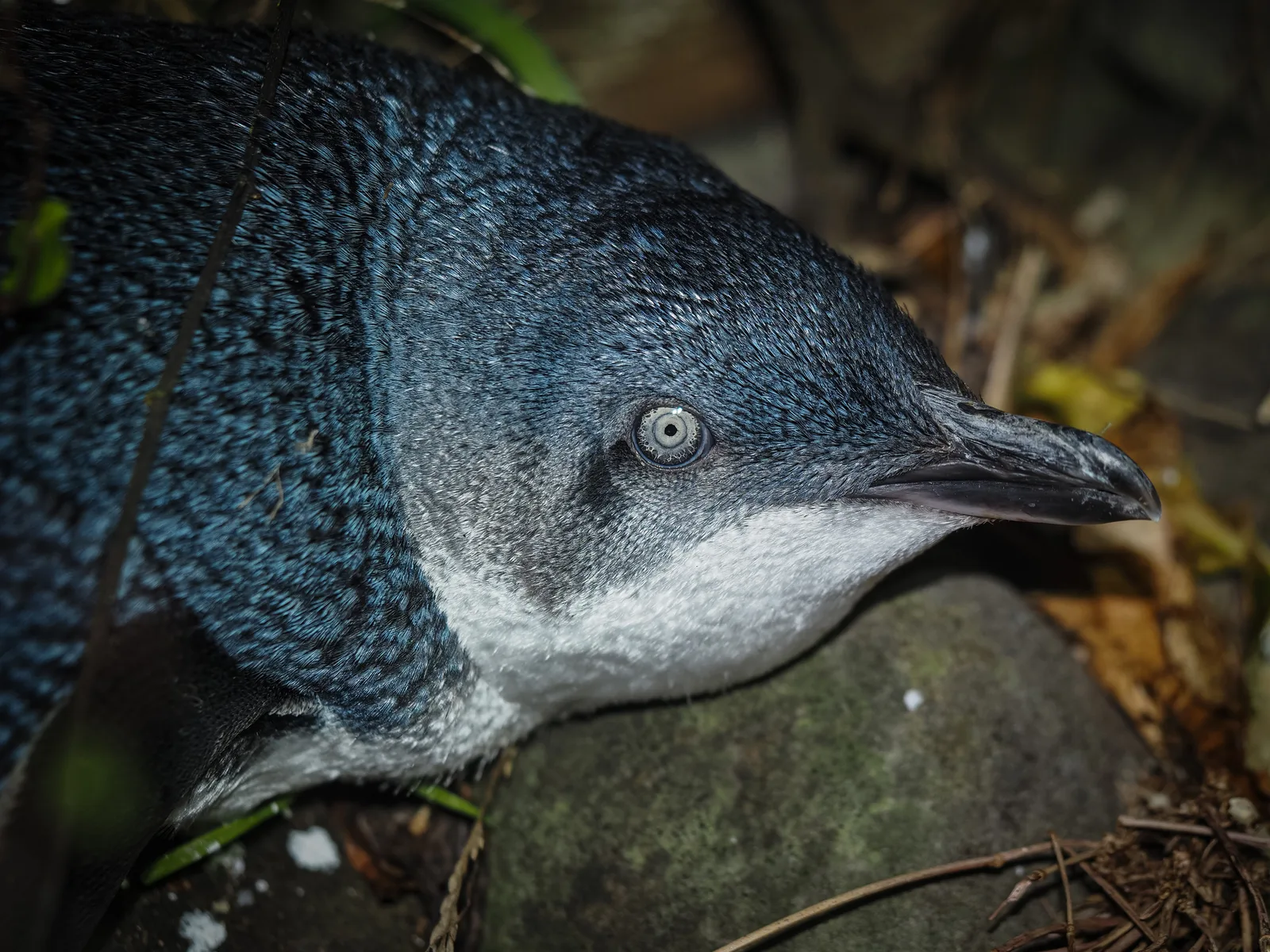
Images of the little penguin
Lifespan in the wild
6 to 6.5 years ADW gives an average of 6 years and Wikipedia 6.5; AnAge records a banded bird of at least 42.2 years
Weight
1.1 to 1.2 kg
Length
30 to 33 cm
Fact file
Little penguin
- Location
- Coasts of New Zealand and southern Australia
- Habitat
- Coast, Open ocean
- Diet
- Piscivore
- Prey / food
- Anchovy, pilchard, sprat, red cod, arrow squid, krill
- Predators
- Fur seals, sea lions, sharks, orcas, foxes, dogs, cats, stoats
- Lifestyle
- At sea by day, ashore only after dark
- Group name
- Colony
- Name of young
- Chick
- Incubation
- Incubation up to 36 days
- Clutch size
- 1 or 2 eggs
- Population
- About 1,000,000 birds, and declining
- Biggest threat
- Introduced foxes, dogs and cats on land
- Distinctive feature
- Slate-blue back and the smallest body of any penguin
- Colour
- Indigo-blue above and white below
- Skin type
- Feathers
Size
Next to a person
Measurements
Size and speed
- Length
- 30 to 33 cm standing height
- Weight
- 1.1 to 1.2 kg Wikipedia gives an average of 1.5 kg
Typical adult ranges. Sources: Wikipedia, Animal Diversity Web.
Life cycle
Lifespan
- In the wild6 to 6.5, up to 42.2 years ADW gives an average of 6 years and Wikipedia 6.5; AnAge records a banded bird of at least 42.2 years
- 042.2 years
The pale bar is the record. Source: Animal Diversity Web.
Appearance
Colour and coat
- Primary colours
- bluewhite
- Secondary colours
- greyblack
- Skin type
- feathers
- Male and female
- Slight. Males are a little larger and carry longer, deeper bills. A male's bill averages 35.7 mm against 34.5 mm for a female.
Life cycle
Mating and family
- Mating system
- monogamous pairs within a season
- Social structure
- loose colonies, and some isolated pairs
- Breeding
- one clutch a year, and sometimes two in Australia
Males come ashore between June and August to dig or repair a burrow. A pair lays one or two eggs and shares the sitting, swapping every three or four days. Incubation takes up to 36 days. The chicks are brooded for 18 to 38 days and fly the nest at 50 to 65 days old. Most birds first breed at three years of age.
Classification
Taxonomy
- Kingdom
- Animalia
- Phylum
- Chordata
- Class
- Aves
- Order
- Sphenisciformes
- Family
- Spheniscidae
- Genus
- Eudyptula
- Species
- Eudyptula minor
Conservation
Red List status
- LC
- NT
- VU
- EN
- CR
- EW
- EX
Least Concern on the IUCN Red List
Range
Recorded in 2 countries
Habitat layer: mangrove.
Countries from 5,130 wild records on GBIF (iNaturalist research grade), filtered and checked by hand. Country shapes: Natural Earth. Habitat: RESOLVE Ecoregions 2017, CC BY 4.0. Basemap: Natural Earth.
Habitats
Three things to know
- 1
It is the only penguin that comes ashore strictly at night.
- 2
One banded little penguin was found to be at least 42.2 years old.
- 3
Maremma sheepdogs guard a colony at Warrnambool in Victoria against foxes.
Did you know
Seven more facts
- 1
Dense pigment packets in the feathers shed water and give the bird its blue colour.
- 2
It is the only penguin that can raise more than one clutch in a single season.
- 3
Some birds walk 1.5 kilometres inland and climb 300 metres to a nest site.
- 4
Oiled birds are dressed in knitted jumpers so they cannot swallow the oil.
- 5
Each bird has its own song, which lets a chick pick out its parent in the dark.
- 6
About 500,000 people a year watch the penguin parade at Phillip Island.
- 7
Birds nest in the cellars and foundations of old buildings at Oamaru.
Field notes
How it looks and acts
Field notes
Distinguishing features
- A standing height of 30 to 33 cm, the smallest of any penguin.
- Indigo-blue head, back and upper flippers.
- White chin, throat and belly.
- A dark grey hooked bill of 3 to 4 cm.
- Pale silver, blue-grey or hazel eyes.
- Pink feet with black soles and black webbing.
Field notes
Unique adaptations
- Wings built as flippers that drive the bird under water.
- Feathers packed with pigment that repel water and hold in heat.
- An oil gland above the tail that keeps the plumage waterproof.
- A night-time landing that probably hides the bird from daytime hunters.
- Short shallow dives of about 21 seconds that suit an inshore hunter.
Field notes
Interesting behaviours
- Coming ashore in small parties after dusk and walking up the beach together.
- Digging a burrow in sand, or taking over a crevice, pipe or cellar.
- Preening a partner's head, which the bird cannot reach on itself.
- Braying at the burrow through the night.
- Escalating from a warning stance to biting and flipper blows at an intruder.
Field notes
Temperament
- Shy on land and quick to retreat into a burrow.
- Bold at the nest, where a bird will lunge and bite.
- Faithful to one partner through a breeding season.
- Sociable at sea, with birds hunting and landing in groups.
Field notes
Communication
- A loud bray at the nest that ends in an inhaled squeal.
- Deep growls used as a threat.
- A short barking call that keeps birds together at sea.
- An individual song that lets family members recognise each other.
- Courtship postures with the head raised and the flippers held back.
Ecology
Ecological role
The little penguin is an inshore hunter of small fish and squid, and it feeds seals, sharks and seabirds in turn.
- It takes large numbers of anchovy, pilchard, sprat and small squid.
- It feeds fur seals, sea lions, sharks and orcas at sea.
- Its eggs and chicks feed snakes, lizards, gulls and introduced mammals.
- It hosts a feather mite that eats the preening oil on its plumage.
Stories
Myths and legends
- In Maori tradition the bird is korora, and the name is now official in New Zealand.
- In Australian coastal tradition, the nightly parade at Phillip Island is a fixture since the 1920s.
- In computing culture, a little penguin's bite is credited with giving Linux its mascot.
- In Australian film, the guard dog Oddball made the Warrnambool colony famous in 2015.
- In Australian sport, Penny the Little Penguin served as a championship mascot in 2007.
People
Relationship with humans
People
Living alongside us
People once hunted little penguins for meat, skins and eggs. In the 20th century fishermen used them as bait and some people killed them for sport. Attitudes changed, and managed colonies now draw large numbers of visitors. About 500,000 people a year watch the parade at Phillip Island. Rescue centres clean birds caught in oil spills.
- A little penguin can peck or bite a hand that reaches into its burrow.
- The bird weighs about a kilogram, so it probably cannot do serious harm to a person.
- The risk runs the other way, since dogs, cars and boats kill many penguins.
People
Status, uses and products
- Domestication
- Wild
- As a pet
- Not suitable. A little penguin needs cold sea water, live fish and a burrow, and it is protected by law in both Australia and New Zealand. Only licensed zoos and aquariums keep the species, in purpose-built enclosures with pools and nest boxes.
- Uses
- ecotourismconservation research
- Products
- None recorded
The full account
About the little penguin
The little penguin is the smallest penguin in the world. It breeds on the coasts of New Zealand and southern Australia. People also call it the fairy penguin, the little blue penguin or the blue penguin. Its Maori name is korora. An adult stands 30 to 33 centimetres tall and weighs 1.1 to 1.2 kilograms. The back is slate blue, and the chin, throat and belly are white.
The bird spends the day at sea and dives for small fish and squid. It returns to a burrow on the shore after dusk. No other penguin comes ashore only in darkness. Pairs nest in burrows, caves, rock crevices and under buildings. The IUCN lists the species as Least Concern, and the world total is about a million birds. Foxes, dogs and cats have wiped out whole colonies on the mainland.
Name and taxonomy
Johann Reinhold Forster described the little penguin in 1781. The scientific name Eudyptula minor probably means the smaller good little diver. The common names all point at the blue of the back. The Maori call it korora, and that name is now used alongside the English one. The subspecies are still disputed, and several have been proposed.
Work on mitochondrial DNA in 2002 found two groups within the genus. One holds the birds of the North Island, Cook Strait and the Chatham Islands. The other holds the birds of Australia and of Otago in New Zealand. A study in 2016 named the Australian birds as a separate species. The IUCN still treats the two as one species with two distinct genetic groups. The white-flippered penguin of Banks Peninsula is counted as a subspecies or a colour form.
Evolution and relatives
The little penguin belongs to the Spheniscidae, the penguin family. Like every penguin, it has wings that work as flippers and cannot fly. It is the only living member of its genus in most treatments. Its nearest relatives on the site are probably the larger penguins of the far south. The Australian group reached Otago only between about 1500 and 1900. It moved in after people and their dogs cut back the New Zealand birds there.
The two groups differ in more than their genes. Australian birds carry brighter blue feathers than New Zealand ones. Their calls differ, and females prefer the local accent. Australian birds swim ashore in one large party after dark and walk up the beach together. That habit probably grew up against the marsupial hunters of Australia. Only the Australian birds lay a second clutch in a season.
Appearance
The head, back and upper flippers are indigo blue. Slate grey ear coverts fade into white on the chin, throat and belly. The bill is dark grey or black and measures 3 to 4 cm. The eyes are pale silver, blue-grey or hazel. The feet are pink above, with black soles and black webs. An adult stands 30 to 33 cm tall and weighs 1.1 to 1.2 kg.
The feathers hold dense packets of dark pigment. Those packets shed water and produce the blue colour of the bird. The sexes look alike, and only the bill separates them reliably. A male's bill averages 35.7 millimetres long, against 34.5 mm for a female. The flippers average 117.5 mm in both sexes. A young bird has a shorter, thinner bill and a brighter, lighter blue back.
Habitat and range
The species breeds around New Zealand and along the southern coast of Australia. Australian colonies run from Port Stephens in New South Wales west to Fremantle. Most sit on offshore islands, safe from foxes, dogs and people. Tasmania holds the largest Australian population, at 110,000 to 190,000 breeding pairs. Phillip Island in Victoria holds about 32,000 breeding adults. GBIF holds occurrence records from 12 countries and territories.
New Zealand colonies are smaller and more scattered than Australian ones. Some hold fewer than ten pairs. The broken coastline splits the birds into many small groups. Near Kaikoura, six or seven tiny colonies share less than 2% of the coast. Birds also nest in town, in cellars and foundations at Oamaru. Motunau Island holds 1,650 nests, the largest count in New Zealand.
A nest sits close to the sea, in sand, under vegetation or in a rock crevice. Birds also use caves, pipes, log piles, nest boxes and the space under a house. Some walk 1.5 kilometres inland and climb 300 metres to reach a site. Burrows usually sit more than 2 metres apart, and closer together inside a cave. Banding shows that individuals still travel far along the coast. A bird tagged at Gabo Island in Victoria was found dead in South Australia in 1984.
Diet and feeding
The little penguin chases small shoaling fish, squid and crustaceans under water. A two-year study of a Victorian colony found a diet of 76% fish and 24% squid. Nineteen fish species turned up, and pilchard and anchovy led the list. Most of the fish were under 10 cm long and many were young. New Zealand birds take arrow squid, slender sprat, red cod and ahuru. Krill, jellyfish, crab larvae, eels and seahorses appear in smaller amounts.
The bird feeds inshore rather than far out to sea. Data loggers show that half of all dives stop within 2 metres of the surface. The average dive lasts about 21 seconds. The deepest dive on record reached 66.7 metres and the longest lasted 90 seconds. While rearing chicks, a parent works within about 30 kilometres of the nest. Outside the breeding season a bird may travel up to 710 km.
Hunting style follows the prey. Birds hunt alone when the prey is large and taken one or two at a time. They hunt in groups when the prey is small and swims in shoals that can be surrounded. The Oamaru birds work in groups on sprat and gudgeon. Birds from Stewart and Codfish Islands hunt alone and eat mostly squid. Middle-aged adults range further from the nest and dive deeper than old ones.
Behaviour and social life
The little penguin is the most nocturnal of all penguins on land. It never visits a burrow in daylight. Moonlight and street lighting change the hour at which birds come ashore. They land in small parties rather than alone, which spreads the risk from predators. In good seasons a bird seeks out the same companions it left with that morning. Flippers drive the bird through water at up to 6 kilometres per hour.
Colonies are loose, and some pairs nest entirely on their own. Birds defend the burrow with a ladder of displays. A bird first stands upright with spread flippers and calls at an intruder 1 to 3 metres away. It then advances quickly with a braying call. Next comes light contact, a touch of bills or a slap with a flipper. A bird that will not retreat is bitten and beaten with the flippers.
Pairs preen each other, above all on the head, where a bird cannot reach itself. Preening removes parasites and strengthens the bond between the two birds. Each bird spreads a drop of oil from a gland above the tail onto every feather. That oil keeps the plumage waterproof. A moulting bird must stay ashore and lose condition, and some die soon afterwards.
Communication and senses
The colony is noisy through the night and quiet by day. Calls range from a low rumble to a sound like a trumpet. At the nest a bird gives a loud bray, and it finishes on an inhaled squeal. Deep growls carry a threat, and a short bark keeps contact at sea. Every bird has its own song. Parents and chicks use that song to tell family from stranger in the dark.
A male displays by standing tall with his flippers held back and his head to the sky. He then brays, alone or among a group of unpaired males. A female that accepts him joins a dance around the nest. The pair marches in small circles and brays as it goes. The calls of the Australian and New Zealand groups differ, and females favour the local pattern. Like other birds, the species uses sight, hearing, touch and chemical cues.
Reproduction and life cycle
Females are ready to breed at two years old and males at three. Males return to shore between June and August to dig or repair a burrow. They display at the entrance to attract a partner for the season. Pairs stay faithful through one season and often reunite in later years. The birds return to the same colony and often to the same burrow. The season shifts with the place, and eggs may appear from April to December.
A clutch holds one or two eggs, white or faintly speckled with brown, and three is rare. The eggs are laid one to four days apart and weigh about 55 grams each. Incubation takes up to 36 days, and both parents sit in turn. They swap duty every three or four days. Chicks hatch with down and are brooded for 18 to 38 days. After that the parents guard them only at night and hunt by day.
A chick flies the nest at 50 to 65 days old, weighing 800 to 1,150 grams. It reaches full independence between 57 and 78 days. Most birds first breed at three years old. Older parents raise more chicks, because experience improves the result. This is the only penguin that can raise more than one clutch in a season. A second brood at Oamaru raised breeding success by as much as 75%.
The average life is about 6 years by one measure and 6.5 by another. A banded bird was recaptured at 25 years and 8 months old. AnAge records one bird of at least 42.2 years. Food supply sets survival more than anything else. In April 1986 about 850 dead penguins washed ashore in western Victoria after the food failed.
Predators and threats
At sea the bird is taken by fur seals, sea lions, sharks, orcas and barracouta. Around Granite Island, roughly 40% of seal droppings held penguin remains. On land, tiger snakes and monitor lizards take chicks, and blue-tongued skinks take eggs. Gulls, skuas, currawongs and white-bellied sea eagles also kill penguins. Native predators alone do not threaten the species, because their diets are broad.
Introduced mammals do the real damage. Foxes, dogs, cats, rats, ferrets and stoats all raid colonies. A fox killed 53 penguins on Granite Island over a few nights in 1994. Middle Island near Warrnambool fell from about 600 birds in 2001 to under 10 in 2005. Tasmanian devils released on Maria Island in 2012 destroyed a colony of 3,000 pairs. A suspected stoat or ferret killed 29 penguins near Dunedin in November 2014.
Oil is the other great killer. It poisons a bird that swallows it and ruins the waterproofing of the plumage. The Iron Baron spill off Tasmania in 1995 was later estimated to have killed 25,000 penguins. The Rena grounding in New Zealand in 2011 killed about 2,000 seabirds directly. Nets drown birds, plastic blocks their stomachs, and boats strike them near the shore. In Perth, trauma from watercraft was the leading cause of death between 2003 and 2012.
Population and conservation
The IUCN Red List places the little penguin in Least Concern. The world total is put at about 1,000,000 birds, and it is falling. New Zealand classes the species as at risk and declining under its Wildlife Act. The New Zealand mainland population has dropped by 60 to 70% since the 1960s. iNaturalist holds 7,929 observations of the species.
Some Australian colonies have gone entirely. Granite Island fell from 1,548 birds in 2001 to 38 in 2013. A fox attack in 2020 cut it to 12 birds, and volunteers counted about 36 in 2025. The Manly colony in Sydney once numbered in the hundreds and now holds about 60 pairs. New South Wales listed that population as endangered in 1997.
Protection works where it is tried. Maremma sheepdogs guard Middle Island, and the colony climbed back to 100 birds by 2017. The first of those dogs, Oddball, gave her name to a film in 2015. A fence along 3.3 kilometres of a West Coast highway ended the roadkill after 2019. Dog-free zones, cat traps and nest boxes all help a colony hold its numbers. Victoria began vaccinating penguins against bird flu after a death at Phillip Island in 2026.
Relationship with humans
People once took little penguins for meat, skins and eggs. Shipwrecked sailors ate them, and the meat was soaked for days to soften it. Colonies were raided for skins, and a newspaper printed instructions for curing them in 1904. In the 20th century fishermen used the birds as bait for rock lobster pots. Others shot them for sport or killed them out of cruelty.
Attitudes turned in the second half of the 20th century. Breeding colonies are now managed for visitors and bring money to coastal towns. The nightly penguin parade at Phillip Island has drawn crowds since the 1920s. In 1987 more overseas visitors watched it than went to Uluru. About 500,000 tourists a year come to see the birds walk up the beach. Cameras and flash are banned there, because bright light frightens and blinds the birds.
Oiled birds are cleaned at rescue centres in Australia and New Zealand. Staff dress each arrival in a knitted jumper so that it cannot swallow the oil while preening. Phillip Island asked the public for 1,400 more jumpers in 2019. At the last big spill the centre cleaned 438 birds and 96% of them survived. Zoos in Australia, New Zealand and the United States keep the species in built enclosures.
In culture and myth
In Maori the bird is korora, and New Zealand agencies use that name beside the English one. Coastal towns in both countries treat the penguin as a local emblem. Oamaru built its tourism around the birds that nest under its old stone buildings. Victor Harbor still runs guided walks on Granite Island, though the colony has almost gone. Penny the Little Penguin was the mascot of the 2007 world swimming championships in Melbourne.
The species has an odd place in computing. A little penguin pecked Linus Torvalds on holiday in Australia. Reports say the bite led him to choose a penguin as the mascot of Linux. A programming exercise for the Linux kernel is named the Eudyptula Challenge. Its author writes under the name Little Penguin.
Australian film has taken up the bird as well. The story of the guard dog Oddball reached the screen in 2015. The dogs now on Middle Island were named Eudy and Tula after the genus. The knitted penguin jumper appears to have become a symbol of volunteer conservation. The birds appear on tourism posters across southern Australia and New Zealand.
A sentence with a dotted underline is inferred: it describes the group the animal belongs to, or is a reading of the sources, rather than a measured or reported fact about this species.
Questions
Little penguin questions, answered
How big is a little penguin?
It stands 30 to 33 centimetres tall and weighs 1.1 to 1.2 kilograms. No penguin is smaller.
Why is the little penguin blue?
Its feathers hold dense packets of dark pigment. Those packets shed water and give the plumage its slate-blue colour.
Where do little penguins live?
On the coasts of New Zealand and southern Australia. Most colonies sit on offshore islands, which keeps foxes and dogs away. Tasmania holds the largest Australian population.
What do little penguins eat?
Small shoaling fish, squid and crustaceans. One Victorian study found a diet of 76% fish and 24% squid, led by pilchard and anchovy.
How deep can a little penguin dive?
The record is 66.7 metres, and the longest recorded dive lasted 90 seconds. Half of all dives stop within 2 metres of the surface.
How long do little penguins live?
The average is about 6 years. One banded bird was recaptured at 25 years and 8 months, and AnAge records one of at least 42.2 years.
Why do little penguins come ashore at night?
Darkness hides them from hunters while they cross open beach. No other penguin is so strictly nocturnal on land.
How many eggs does a little penguin lay?
One or two, and very rarely three. Incubation runs to about 36 days, and the parents take turns on the eggs.
Are little penguins endangered?
The IUCN Red List places them in Least Concern, with about a million birds worldwide. New Zealand classes them as at risk and declining, and many colonies are shrinking.
What kills little penguins?
Introduced foxes, dogs, cats and stoats on land, and seals, sharks and orcas at sea. Oil spills, fishing nets and boat strikes kill many more.
What is the penguin parade?
It is the nightly walk of penguins up Summerland Beach on Phillip Island in Victoria. Crowds have watched it since the 1920s, and cameras are banned to protect the birds.
Is the little penguin the same as the fairy penguin?
Yes. Fairy penguin, little blue penguin and blue penguin all name the same species. The Maori name is korora.
Do little penguins mate for life?
They stay faithful through a season and often reunite the next year. A pair usually splits only after a failed nest or the death of one bird.
Why do rescued penguins wear jumpers?
A knitted jumper stops an oiled bird from preening and swallowing the oil. Staff remove it once the bird is clean.
Did a little penguin inspire the Linux logo?
Reports say a little penguin pecked Linus Torvalds while he was on holiday in Australia. He then chose a penguin, Tux, as the Linux mascot.
Can you keep a little penguin as a pet?
No. The species is protected in Australia and New Zealand, and it needs cold sea water and live fish. Only licensed zoos hold them.
Food web
Prey and food
- anchovy
- pilchard
- sprat
- red cod
- arrow squid
- krill
Food web
Predators
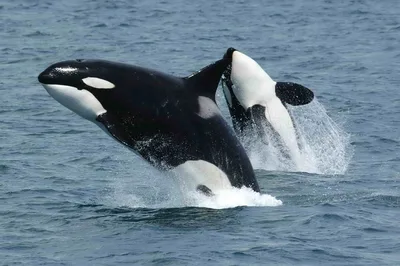 Orca
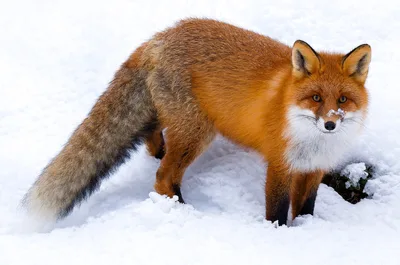 Red fox
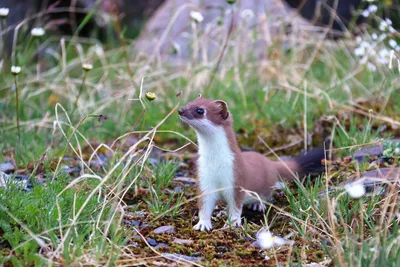 Stoat
Ecological equivalents
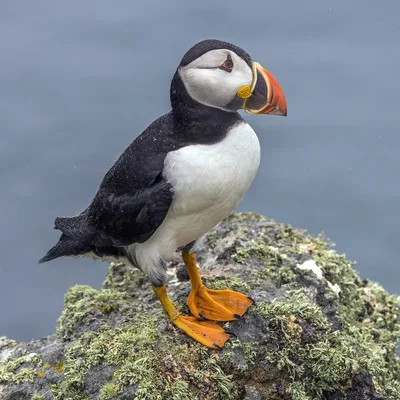
Related species on this site
Adélie penguin (same family), African penguin (same family), Chinstrap Penguin (same family), Crested Penguin (same family), Emperor penguin (same family), Galapagos Penguin (same family), and more.
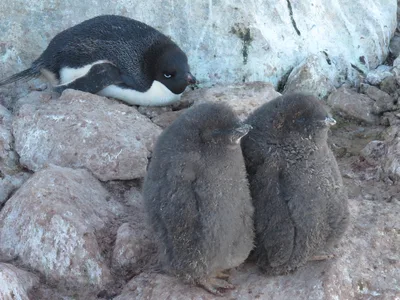 LC
Birds
Adélie penguin
Pygoscelis adeliae
The Adelie penguin is the most widespread penguin of the Antarctic coast.
Living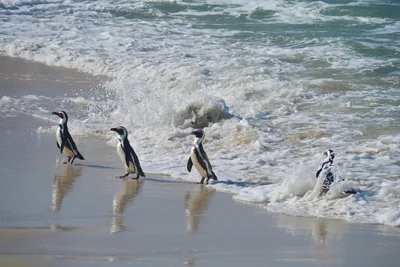 CR
Birds
African penguin
Spheniscus demersus
The African penguin is the only penguin that breeds on the African continent.
Living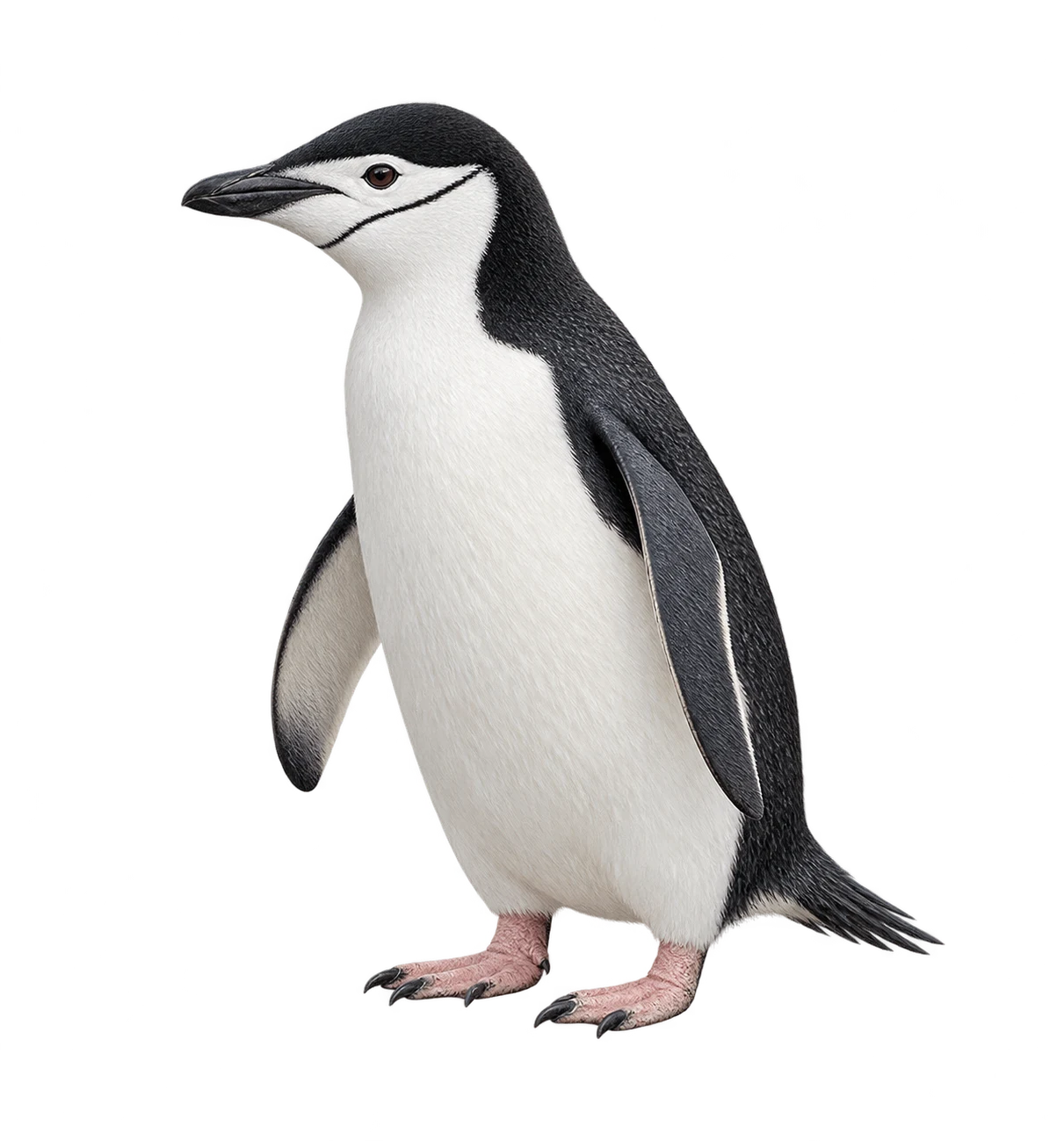
Birds
Chinstrap Penguin
Pygoscelis antarcticus
Classification and source reference
LivingAI illustration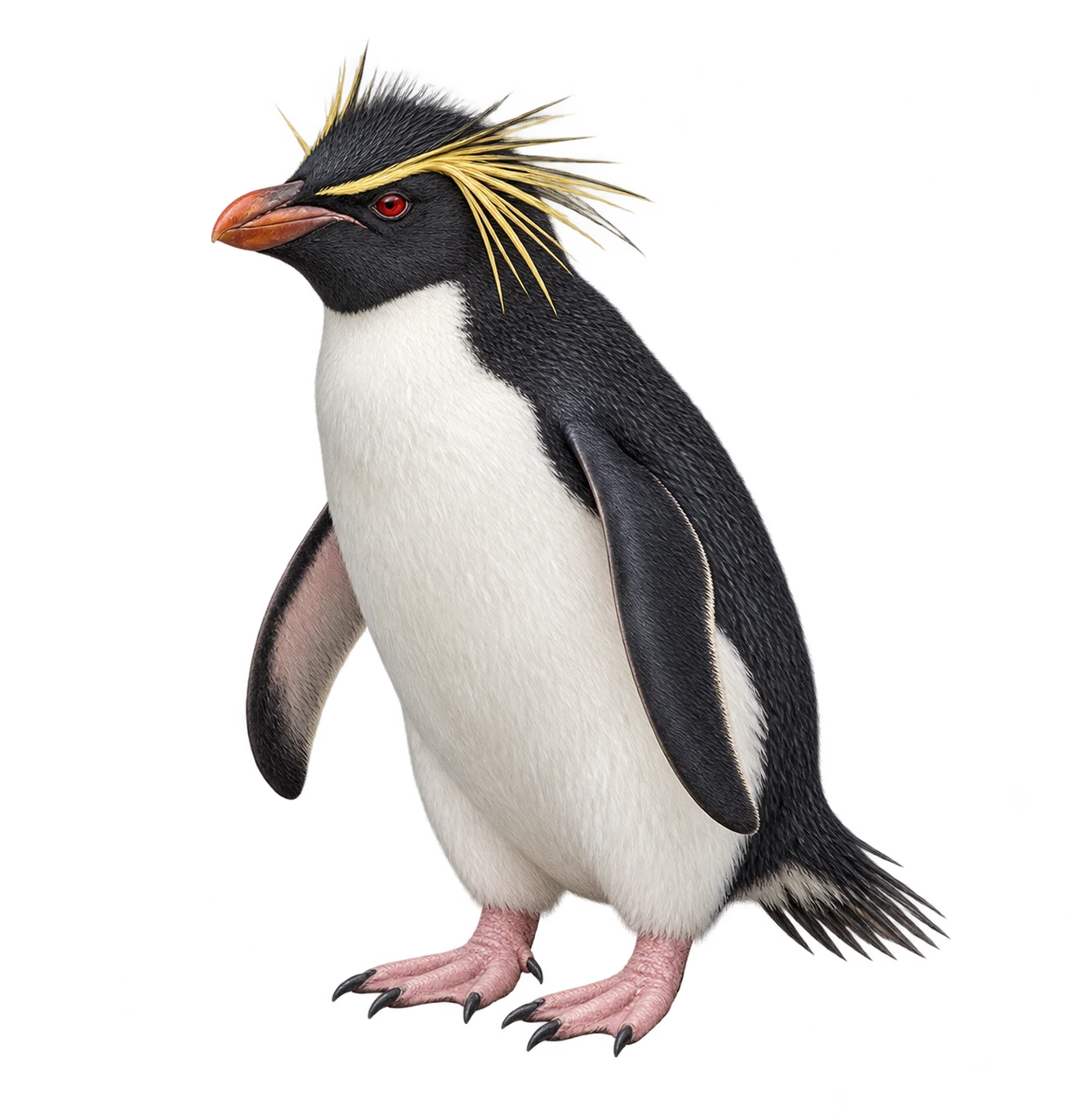
Birds
Crested Penguin
Eudyptes
Classification and source reference
LivingAI illustration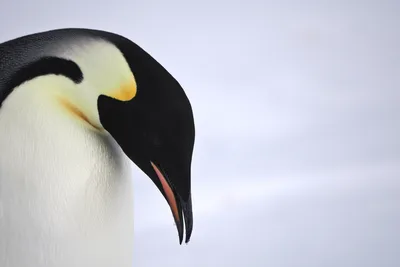 EN
Birds
Emperor penguin
Aptenodytes forsteri
The emperor penguin is the largest penguin and the only bird that breeds through the Antarctic winter.
Living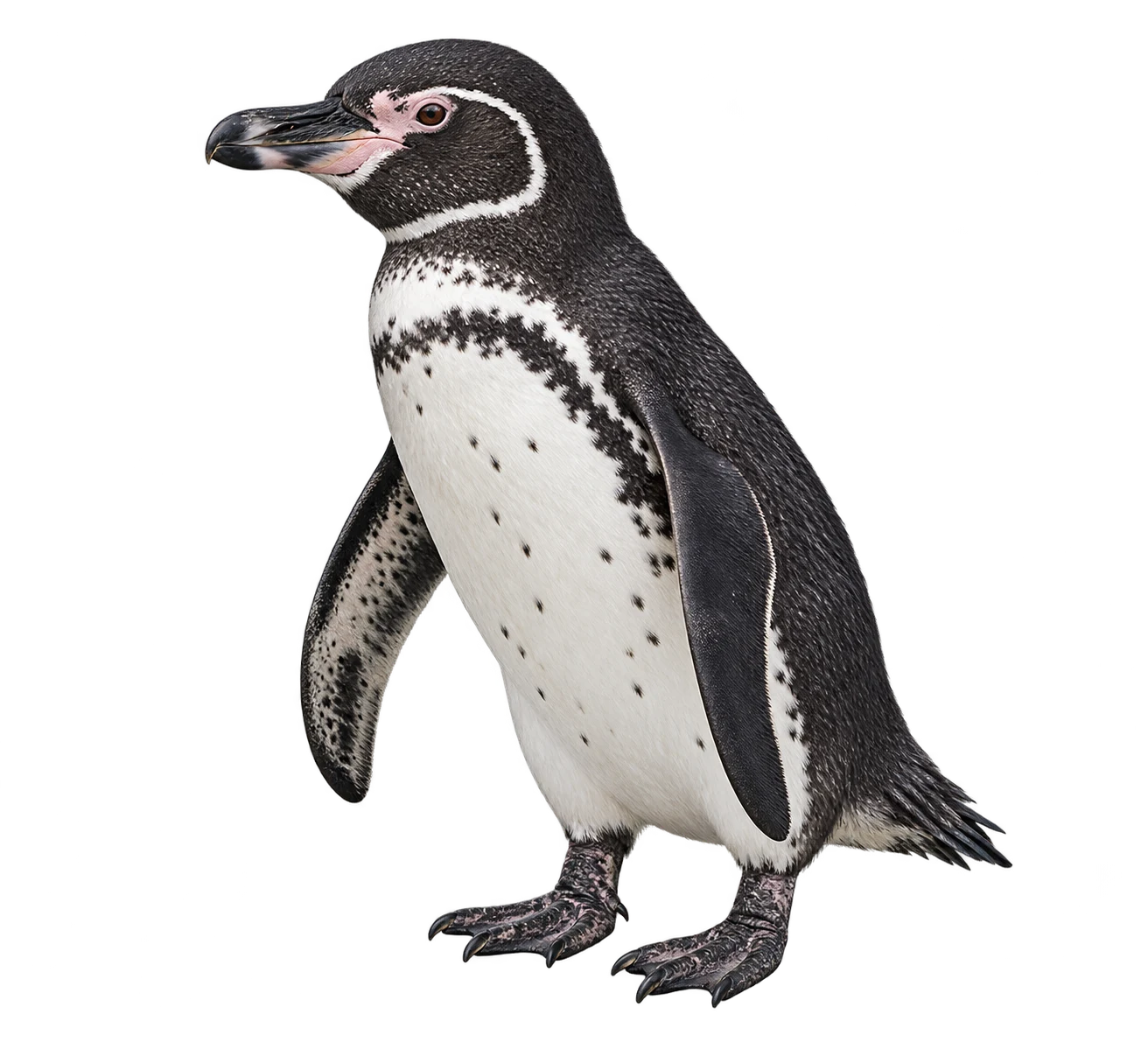
Birds
Galapagos Penguin
Spheniscus mendiculus
Classification and source reference
LivingAI illustration