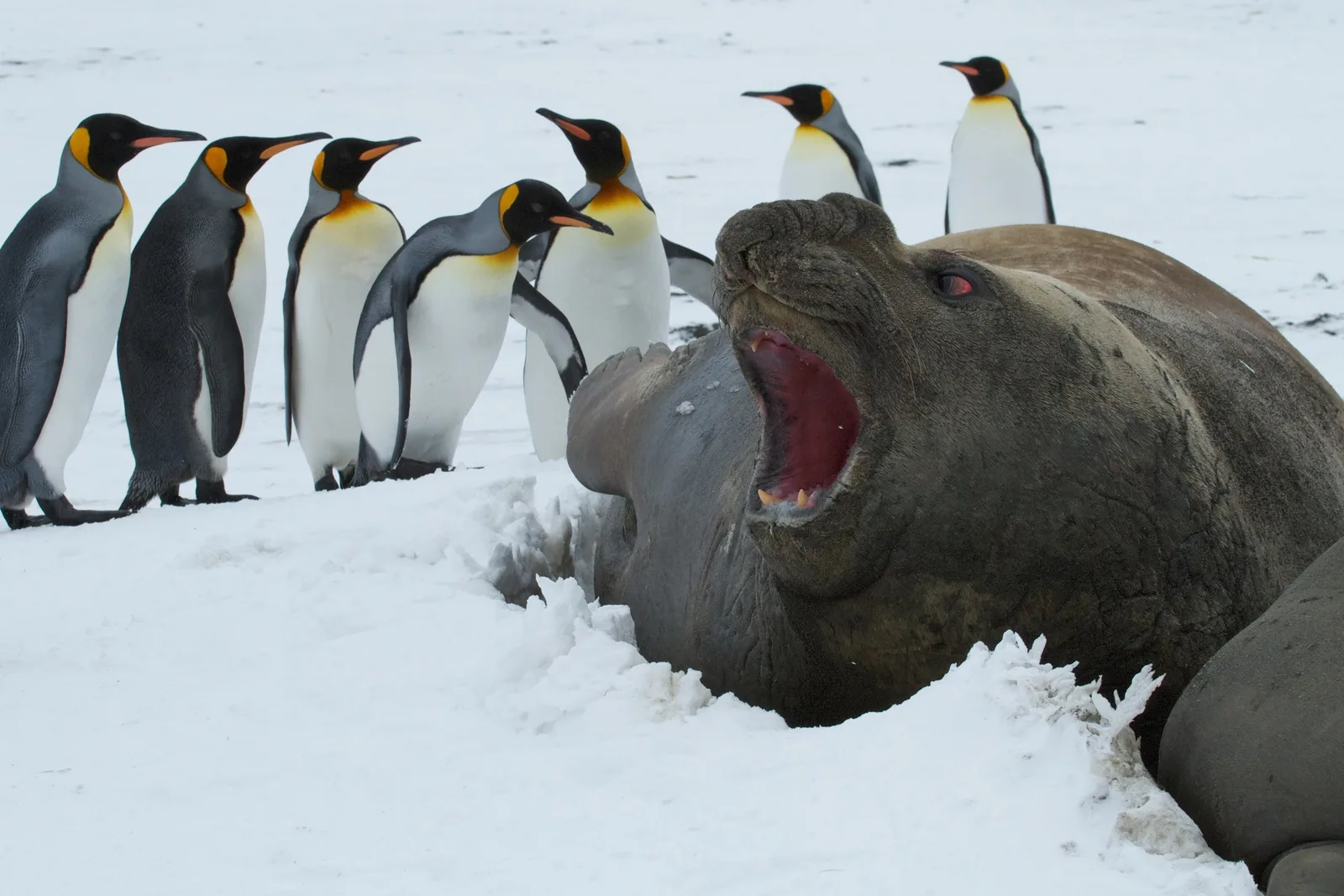
Southern elephant seal
The heaviest seal dives deeper than any other
Mirounga leonina
Also called Southern sea elephant, South Atlantic elephant seal, Bottle-nosed seal
Living individuals or members of this group exist today. This does not mean they are safe from extinction.
Meet the southern elephant seal
The southern elephant seal is the largest seal on Earth, and a bull can weigh more than four times as much as a cow. It hunts squid and fish in the Southern Ocean and returns to sub-Antarctic beaches to breed and moult.
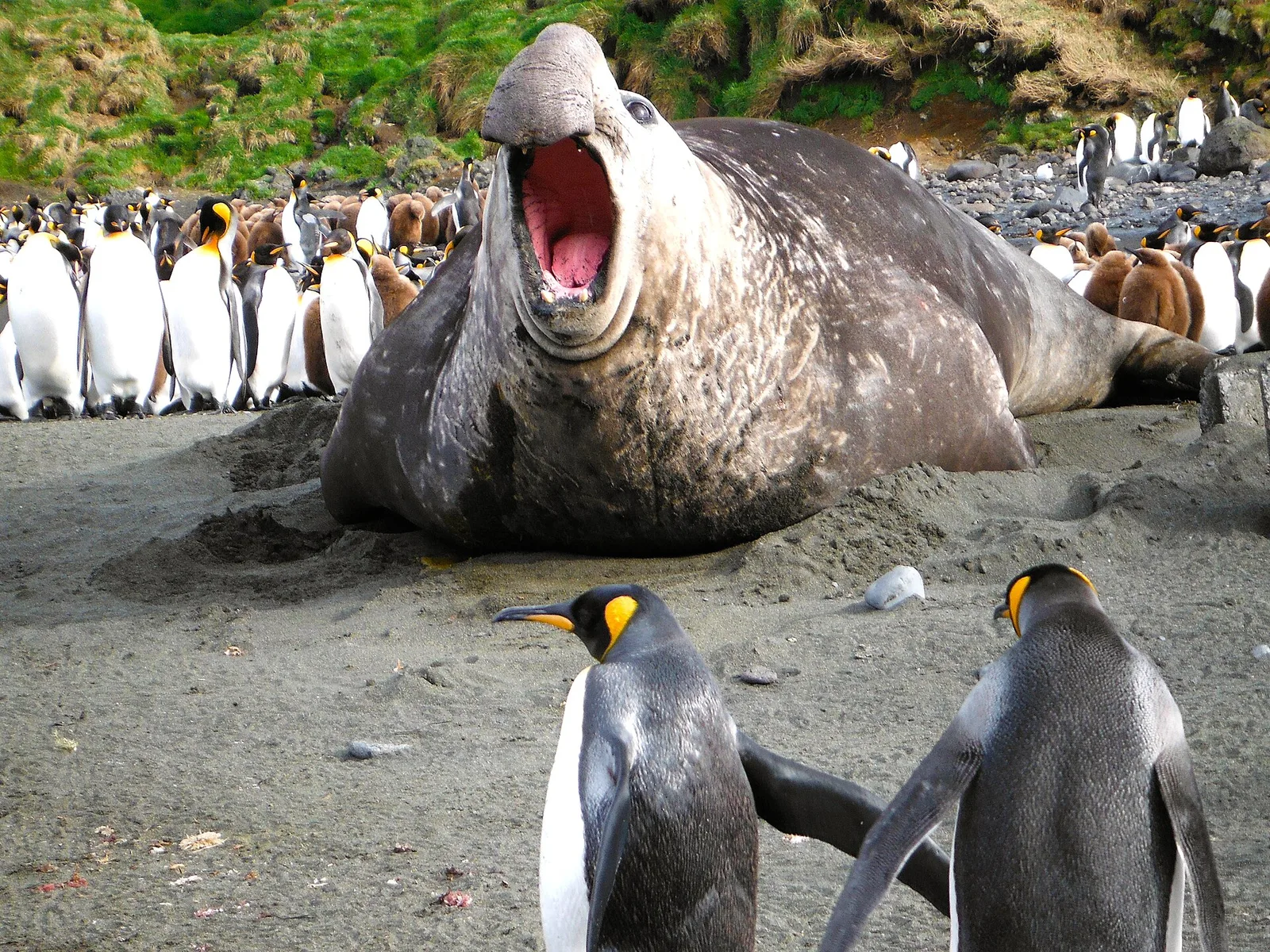
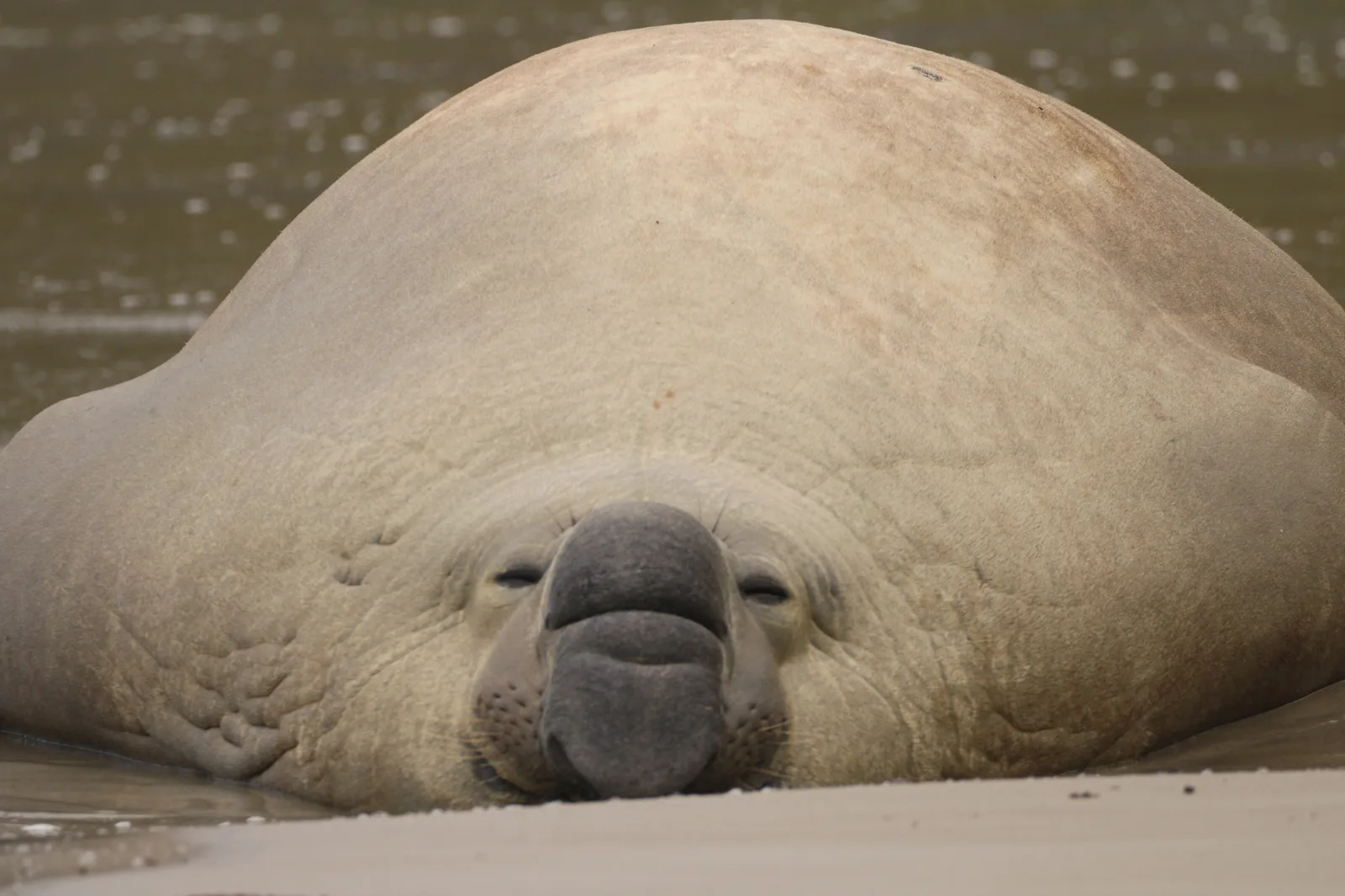
Images of the southern elephant seal
Lifespan in the wild
14 to 20 years males to about 14, females to about 20
Weight
0.4 to 3.7 t
Length
2.8 to 6 m
Top speed
Up to 10 km/h
Fact file
Southern elephant seal
- Location
- Sub-Antarctic islands and the Valdes Peninsula, Argentina; feeds to the Antarctic coast
- Habitat
- Open ocean, Coast, Polar ice
- Diet
- Carnivore
- Prey / food
- Squid, lanternfish, notothen fish, krill
- Predators
- Orca, leopard seal, great white shark, New Zealand sea lion
- Lifestyle
- Solitary at sea; crowded colonies ashore to breed and moult
- Group name
- Harem, colony
- Name of young
- Pup
- Gestation
- About 7 months of growth after a 4 month delay
- Litter size
- 1 pup, rarely 2
- Population
- About 664,000 to 740,000 (2005 estimate)
- Biggest threat
- Changes in prey supply linked to a warming Southern Ocean; fishing gear
- Distinctive feature
- The inflatable trunk-like nose of the adult male
- Colour
- Brown to grey; pups are born black
- Skin type
- Fur over thick blubber
Size
Next to a person
Measurements
Size and speed
- Length
- 2.8 to 6 m, up to 6.5 m the record bull measured 6.5 metres, Wikipedia
- Length, male
- 4.6 to 5.8 m, up to 6.5 m
- Length, female
- 2.6 to 3 m, up to 3.7 m
- Weight
- 0.4 to 3.7 t cows from about 350 to 900 kg, bulls 3,000 to 3,700 kg
- Weight, male
- 3 to 3.7 t
- Weight, female
- 0.35 to 0.9 t, up to 1 t
- Top speed
- Up to 10 km/h a short burst on land
Typical adult ranges. Sources: Animal Diversity Web, Wikipedia.
Life cycle
Lifespan
- In the wild14 to 20 years males to about 14, females to about 20
- 020 years
Source: Animal Diversity Web.
Appearance
Colour and coat
- Primary colours
- browngrey
- Secondary colours
- black
- Skin type
- fur
- Male and female
- Extreme. Bulls weigh 3,000 to 3,700 kilograms and reach 5.8 metres, while cows weigh 350 to 900 kg and reach about 3 metres. Only the bull grows the inflatable nose.
Life cycle
Mating and family
- Mating system
- polygynous harems held by a dominant bull
- Social structure
- solitary at sea, dense breeding colonies ashore
- Breeding
- one pup a year
Bulls come ashore in spring and fight for a stretch of beach. Cows arrive, give birth to a single pup and nurse it for about 22 to 23 days without eating. Near the end of nursing the cow mates, then returns to sea and leaves the pup. The egg implants after about 4 months, and the pup is born about 7 months later. Cows breed from 3 to 6 years of age and live to about 20.
Classification
Taxonomy
- Kingdom
- Animalia
- Phylum
- Chordata
- Class
- Mammalia
- Order
- Carnivora
- Family
- Phocidae
- Genus
- Mirounga
- Species
- Mirounga leonina
Conservation
Red List status
- LC
- NT
- VU
- EN
- CR
- EW
- EX
Vulnerable on the IUCN Red List
Range
Recorded in 12 countries
- Antarctica
- Argentina
- Ashmore and Cartier Islands
- Brazil
- Chile
- Falkland Islands
- South Georgia and the South Sandwich Islands
- Mexico
- New Zealand
- French Southern and Antarctic Lands
- Uruguay
- South Africa
Habitat layer: tundra, mangrove.
Countries from 2,827 wild records on GBIF (iNaturalist research grade), filtered and checked by hand. Country shapes: Natural Earth. Habitat: RESOLVE Ecoregions 2017, CC BY 4.0. Basemap: Natural Earth.
Habitats
Three things to know
- 1
A southern elephant seal has been tracked to a depth of 2,388 metres, deeper than any seal or sea lion.
- 2
A bull can weigh 3,700 kilograms, yet a cow of the same species weighs about 350 to 900.
- 3
A breeding bull may go more than three months without a meal while he guards his harem.
Did you know
Seven more facts
- 1
The southern elephant seal is the heaviest animal in the order Carnivora.
- 2
Bulls are typically four to five times heavier than cows.
- 3
The fertilised egg waits about 4 months before it implants.
- 4
Sailors of the 1800s called the animal the bottle-nosed seal.
- 5
Elephant seals can hold their breath for more than 100 minutes.
- 6
The only mainland breeding colony is on the Valdes Peninsula in Argentina.
- 7
A seal can move at up to 10 kilometres per hour on land for a short burst.
Field notes
How it looks and acts
Field notes
Distinguishing features
- The adult bull has a large inflatable nose.
- The body is huge and torpedo shaped, with wide rear flippers.
- There are no external ear flaps, as in all true seals.
- The eyes are large, round and black.
- Old bulls carry thick, scarred, leathery skin on the neck and chest.
- Pups are black at birth and turn grey or brown after the first moult.
Field notes
Unique adaptations
- A thick layer of blubber stores energy for months of fasting and keeps the animal warm.
- Blood sinuses in the abdomen and muscle rich in myoglobin store oxygen for long dives.
- The heart slows during a dive and blood is routed to the vital organs.
- Small veins wrapped around the arteries recover heat before it reaches the flippers.
- Large eyes with dim-light pigments help the seal see prey in the dark.
Field notes
Interesting behaviours
- Dives repeatedly for more than 20 minutes at a time, resting only briefly at the surface.
- Returns to the same feeding area every year.
- Comes ashore once to breed and once to moult.
- Bulls rear up, roar and bite to settle rank on the beach.
- Rests in torpor during the day to save energy while fasting.
Field notes
Temperament
- Bulls are aggressive toward each other in the breeding season.
- Resting seals are sluggish and slow to react to people.
- At sea the animal is solitary and avoids contact.
- Young seals such as Neil the Seal can become curious and bold around towns.
Field notes
Communication
- A bull's coughing roar signals identity and size to rivals.
- A beaten bull gives high-pitched cries as it retreats.
- Pups yap and mothers answer with a moan.
- Bulls raise the front body high to display size before a fight.
Ecology
Ecological role
The southern elephant seal is a top predator of the Southern Ocean and an indicator of its health.
- It eats large amounts of squid and fish, yet has little effect on their populations.
- Its breeding success tracks the productivity of the ocean, so scientists use it to monitor the ecosystem.
- Pups and young seals feed orcas, leopard seals and sharks.
- Colonies probably enrich beach and coastal soils with nutrients carried from the deep sea.
Stories
Myths and legends
- In Orkney and Shetland tradition, larger seals are selkies that can shed their skins and become human.
- In Faroese tradition, the seal woman of Kalsoy cursed the island after a farmer hid her skin.
- In Irish tradition, the Conneely family claimed descent from seals and refused to kill them.
- In internet culture, the Japanese aquarium seal Minazo became the lolrus meme.
People
Relationship with humans
People
Living alongside us
Sealers hunted the southern elephant seal for lamp oil from the early 1800s, and licensed sealing on South Georgia lasted until 1964. The population has recovered and most breeding islands are protected. Visitors now pay to watch the seals, and scientists fit them with tags that record ocean data. A few young animals, such as Neil the Seal in Tasmania, wander into towns.
- An adult weighs hundreds or thousands of kilograms and can crush or bite a person who comes too close.
- Breeding bulls are aggressive and charge intruders at up to 10 kilometres per hour.
- Attacks on people are probably rare, because the seals live on remote islands.
People
Status, uses and products
- Domestication
- Wild
- As a pet
- Not suitable. The animal reaches several tonnes, dives to more than a kilometre and fasts for months. It cannot live in a tank, and keeping one is illegal in the countries where it breeds.
- Uses
- ecotourismscientific research
- Products
- oil
The full account
About the southern elephant seal
The southern elephant seal is the biggest seal alive. It is also the heaviest member of the order Carnivora, the group that holds bears, cats and dogs. Adults weigh from about 400 kilograms, and the largest bulls reach 3,700 kg. The name comes from the inflatable nose of the adult male, which looks a little like a short trunk.
The species lives in the cold seas around Antarctica. It spends most of the year alone at sea, diving for squid and fish. Twice a year it hauls out on sub-Antarctic islands, once to breed and once to moult. On those beaches the bulls fight for groups of females, and the noise carries far along the shore.
No other seal dives as deep or stays down as long. One tagged animal reached 2,388 metres below the surface. Sealers nearly wiped the species out for its oil in the 1800s, but the population has since recovered to several hundred thousand.
Name and taxonomy
Carl Linnaeus described the species in 1758 and named it Phoca leonina. John Edward Gray created the genus Mirounga in 1827. The genus name is said to come from an Australian Aboriginal word for a seal, though nobody has confirmed the language. Sailors of the nineteenth century often called the animal the bottle-nosed seal. It belongs to the family Phocidae, the true seals, which have no external ear flaps.
Other languages name it for the south or for the elephant. Spanish speakers say elefante marino del sur, French speakers say elephant de mer austral. In Maori it is ihupuku, and GBIF records the species in several countries.
Evolution and relatives
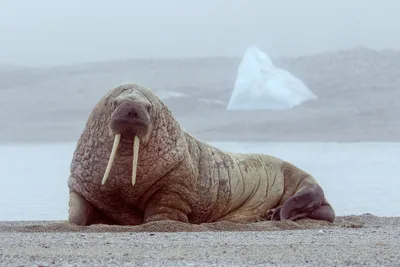
The southern elephant seal has one close living relative, the northern elephant seal of the eastern Pacific. The two species never meet, because one lives north of the equator and the other far to the south. The southern species is much heavier and has a shorter nose. A southern bull weighs about twice as much as a northern bull, and about twice as much as a Pacific walrus.
The oldest known fossils of the elephant seal line come from the late Pliocene of New Zealand. The group is thought to have arisen in the Pacific during the Pliocene. Some teeth from South Africa were once called Miocene elephant seals, but they are now read as toothed whale teeth. Like other true seals, the elephant seal probably shares a distant ancestor with bears and weasels.
Appearance
Adults measure 2.8 to 6 metres from nose to the tip of the rear flippers. The record bull, shot on South Georgia in 1913, measured 6.5 metres after flensing. Cows weigh 350 to 900 kg and measure 2.6 to 3 metres. Bulls weigh 3,000 to 3,700 kg and measure 4.6 to 5.8 metres. That gap makes the species one of the most size-dimorphic mammals known, with males four to five times heavier.
The adult male carries a large fleshy nose that he inflates to roar. The skin of an old bull is thick and leathery, and his neck carries the scars of many fights. Both sexes have short brown fur that fades and peels off during the annual moult, revealing grey skin. Pups are born with a black coat that keeps out cold air but is useless in water. The eyes are large, round and dark, and the animal moves on land with the front flippers at up to 10 kilometres per hour.
Habitat and range
The species lives across the Southern Ocean, in the Atlantic, Indian and Pacific sectors. Its main feeding grounds lie along the edge of the Antarctic continent. It breeds on sub-Antarctic islands and, at one site, on a mainland coast. That site is the Valdes Peninsula in Argentina.
Scientists recognise three sub-populations, one in each ocean. South Georgia holds the largest colonies, with about 113,000 breeding females, alongside the Falkland Islands and Gough Island. The Indian Ocean stock breeds mainly on the Kerguelen Islands, with smaller colonies on Crozet, Marion, Prince Edward and Heard. The Pacific stock breeds mostly on Macquarie Island, south of Tasmania.
Colonies once existed on Tasmania, Saint Helena and the Juan Fernandez Islands off Chile. Wandering animals turn up on the coasts of South Africa, Australia and Uruguay, usually at moulting time. The species now seems to be returning to parts of Chile where it once bred. At sea it rests on floating ice when it rests at all.
Diet and hunting
Southern elephant seals eat mostly squid and fish. Near the Antarctic coast the squid include the glacial squid and the smooth hooked squid. The fish include lanternfish and notothens, and the seals also take krill and other crustaceans. Because they feed so deep, nobody has a complete picture of what they prefer.
A feeding seal dives again and again, and spends only a few minutes at the surface between dives. Each dive lasts more than 20 minutes, and most hunting happens at 400 to 1,000 metres. The deepest recorded dive reached 2,388 metres. Females tend to hunt in open water, while males also feed on the sea floor. Each animal returns to the same feeding area year after year.
In the dark the seal appears to find prey partly by sight, helped by the glow of bioluminescent animals. Its whiskers sense vibration and probably help it track a squid in the last moments of a chase. During the breeding and moulting seasons the animal eats nothing and lives on stored fat.
Behaviour and social life
At sea the animals live alone. On land they gather in dense colonies, and few seals stay dry for as many weeks each year. Bulls arrive first and fight for control of the beach. Size decides most contests, and a ranking forms among the bulls. The highest ranked bulls, called beachmasters, each gather a harem of several dozen cows.
One bull can hold a harem of fewer than 50 cows, but a larger group draws more than one breeding male. Bulls that lose out wait at the edge and try to mate when the beachmaster looks away. Many females, especially first-time mothers, also mate at sea with roaming males. A bull cannot leave his ground to feed, so some go more than three months without a meal.
A fight starts with posture and roars, and most contests between big bulls end there. When neither backs down, the two rear up, slam their weight together and bite at the neck and nose. Deaths are rare, but the loser flees with deep cuts. During the day the seals may drop into torpor to save energy. In summer the adults come ashore again to moult, sometimes straight after breeding.
Communication and senses
The bull's roar is the loudest sound on the beach. He inflates the nose and produces a coughing roar that tells rivals who he is and how big he is. A defeated bull retreats with high-pitched cries. A newborn pup barks or yaps, and its mother answers with a high moan.
The large eyes hold a high concentration of pigments for dim light, which suggests sight matters in the deep. The seal has no echolocation of the kind that dolphins use. Its whiskers detect the water movement of nearby prey. Like other true seals, it is thought to hear well under water.
Reproduction and life cycle
Mating usually takes place in mid to late October, though it can begin at the end of September. The fertilised egg does not implant for about 4 months. The pup then grows for about 7 months, so the cows give birth together the next spring. Almost every cow bears one pup, and twins are rare.
A newborn weighs about 40 kilograms. It suckles at once, and the mother eats nothing while she nurses. Nursing lasts about 22 to 23 days, and by weaning the pup weighs 120 to 130 kg. The cow mates again near the end of nursing, then leaves for the sea and does not return to her pup.
Weaned pups gather in groups and shed their black birth coats. They learn to swim in shallow ponds and estuaries and reach independence at 6 to 7 weeks. Cows first breed at 3 to 6 years, bulls at 5 to 8 years. In the wild the animals live 14 to 20 years, with cows outliving bulls.
Predators and threats
An adult bull has almost no natural enemies. Orcas take weaned pups and young seals. Leopard seals and New Zealand sea lions have killed small weaned pups. Great white sharks hunt elephant seals near Campbell Island, but no record shows one killing an adult bull. Seals on Macquarie Island carry bite scars from the southern sleeper shark.
On the beach the danger comes from other seals. Fighting bulls trample pups, and an adult male sometimes kills a weaned pup. At sea some animals drown in fishing lines. The largest long-term threat is probably a change in the supply of squid and fish as the Southern Ocean warms.
Population and conservation
The world population was put at about 650,000 in the mid-1990s. A 2005 estimate gave 664,000 to 740,000 animals. The South Atlantic stock holds more than 400,000, the Indian Ocean stock up to 200,000 and the Pacific stock about 75,000. This fact file lists the species as Vulnerable, though Animal Diversity Web cites an IUCN listing of Least Concern with a stable trend.
Hunting in the 1800s brought the species close to extinction. Numbers rebounded by the 1950s, then the Indian and Pacific stocks fell for reasons nobody has explained. Suggested causes include a crash after a fast recovery, climate shifts, competition and even the disturbance of research itself. The population now appears stable. Most breeding sites are protected by treaty, as World Heritage Sites or under national law, and the species sits on CITES Appendix II.
Relationship with humans
Indigenous people in Australia and South America hunted elephant seals for thousands of years. From the early 1800s commercial sealers boiled the blubber for lamp oil. South Georgia records 131 sealing visits between 1786 and 1913, and licensed sealing tied to the whaling stations continued until 1964. Rusting try pots and hut ruins still mark the old beaches.
Today the seals earn money for the islands through tourism, as visitors pay to watch them on the sand. They are also research tools. Scientists fit satellite tags to the animals, which record temperature and salinity as the seals dive through the Southern Ocean. More than ten years of these records now describe both the ocean and the seals' response to a changing climate. A seal that gets tangled in a long line can wreck the gear of a deep-sea fishery.
In culture and myth
No known legend names the southern elephant seal itself, probably because few people ever lived near its beaches. Seal folklore belongs to the North Atlantic instead. In Orkney, Shetland, the Faroe Islands and Iceland, stories tell of selkies, seals that remove their skins and walk as people. Orkney tradition gives that power only to the larger seals. The Faroese seal woman of Kalsoy curses the island after a man steals her skin.
Modern fame came through two individuals. Minazo lived at the Enoshima Aquarium in Japan until his death in 2005 at age 11. His habit of holding a bucket with his tongue out became the lolrus meme. The noise musician Merzbow recorded a two-volume album in his memory. Neil the Seal, a young bull born in Tasmania in 2020, gained more than a million followers online. He napped on lawns and blocked a woman's car. Officials moved him in 2023 and later warned residents to keep away, comparing his case to Freya the walrus.
A sentence with a dotted underline is inferred: it describes the group the animal belongs to, or is a reading of the sources, rather than a measured or reported fact about this species.
Questions
Southern elephant seal questions, answered
How big is a southern elephant seal?
Adults measure 2.8 to 6 metres and weigh from about 400 to 3,700 kilograms. Bulls are far larger than cows.
Why is it called an elephant seal?
The adult male has a large inflatable nose that looks like a short trunk. Its size also earned the name.
How deep can a southern elephant seal dive?
Most feeding dives reach 400 to 1,000 metres. The record dive reached 2,388 metres, deeper than any other seal.
How long can it hold its breath?
A typical hunting dive lasts more than 20 minutes. Elephant seals can hold their breath for over 100 minutes.
What do southern elephant seals eat?
They eat mostly squid and fish, including lanternfish. They also take krill and other crustaceans.
Where do southern elephant seals live?
They live in the Southern Ocean and breed on sub-Antarctic islands such as South Georgia, Kerguelen and Macquarie. One colony breeds on the Valdes Peninsula in Argentina.
Are southern elephant seals endangered?
This fact file lists the species as Vulnerable. The population is about 664,000 to 740,000 and appears stable, though two of three stocks declined in the past.
How much bigger are males than females?
Bulls weigh 3,000 to 3,700 kilograms and cows 350 to 900 kg. That makes the male four to five times heavier.
Do southern elephant seals fight?
Yes. Bulls roar, rear up and bite each other on the neck to win control of a harem. Deaths are rare.
How long do southern elephant seals live?
They live 14 to 20 years in the wild. Cows usually outlive bulls.
How many pups does a female have?
One pup a year. Twins are very rare.
How long does a mother nurse her pup?
About 22 to 23 days. She eats nothing during that time and then leaves the pup for good.
Are southern elephant seals dangerous to humans?
They rarely meet people, but an animal this heavy can crush or bite. Keep well back from a bull in the breeding season.
What eats southern elephant seals?
Orcas take pups and young seals. Leopard seals, New Zealand sea lions and great white sharks also kill some young animals.
Who is Neil the Seal?
Neil is a young bull born in Tasmania in 2020. He became famous online after resting on lawns and blocking cars near Hobart.
What is the difference between the northern and southern elephant seal?
The southern species is about twice as heavy and has a shorter nose. The two live in different hemispheres and never meet.
Food web
Prey and food
- squid
- lanternfish
- notothen fish
- krill
Food web
Predators
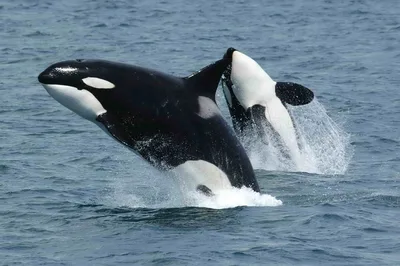 Orca
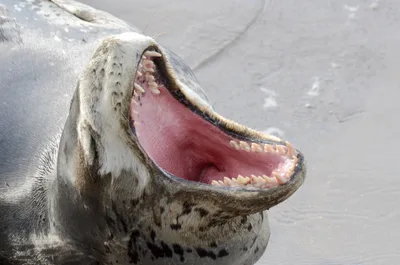 Leopard seal
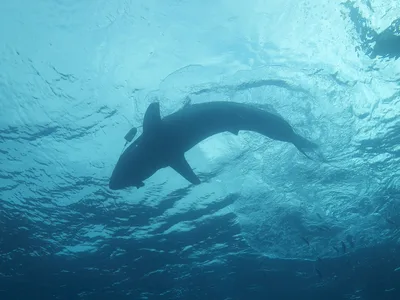 Great white shark
- new zealand sea lion
Ecological equivalents
Related species on this site
Elephant Seal (same genus), Crabeater Seal (same family), Grey Seal (same family), Harbor Seal (same family), Harp Seal (same family), Hawaiian Monk Seal (same family), and more.
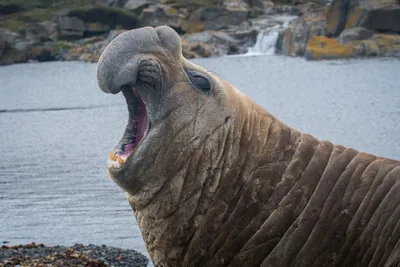
Mammals
Elephant Seal
Mirounga
Elephant seals are large marine mammals.
Living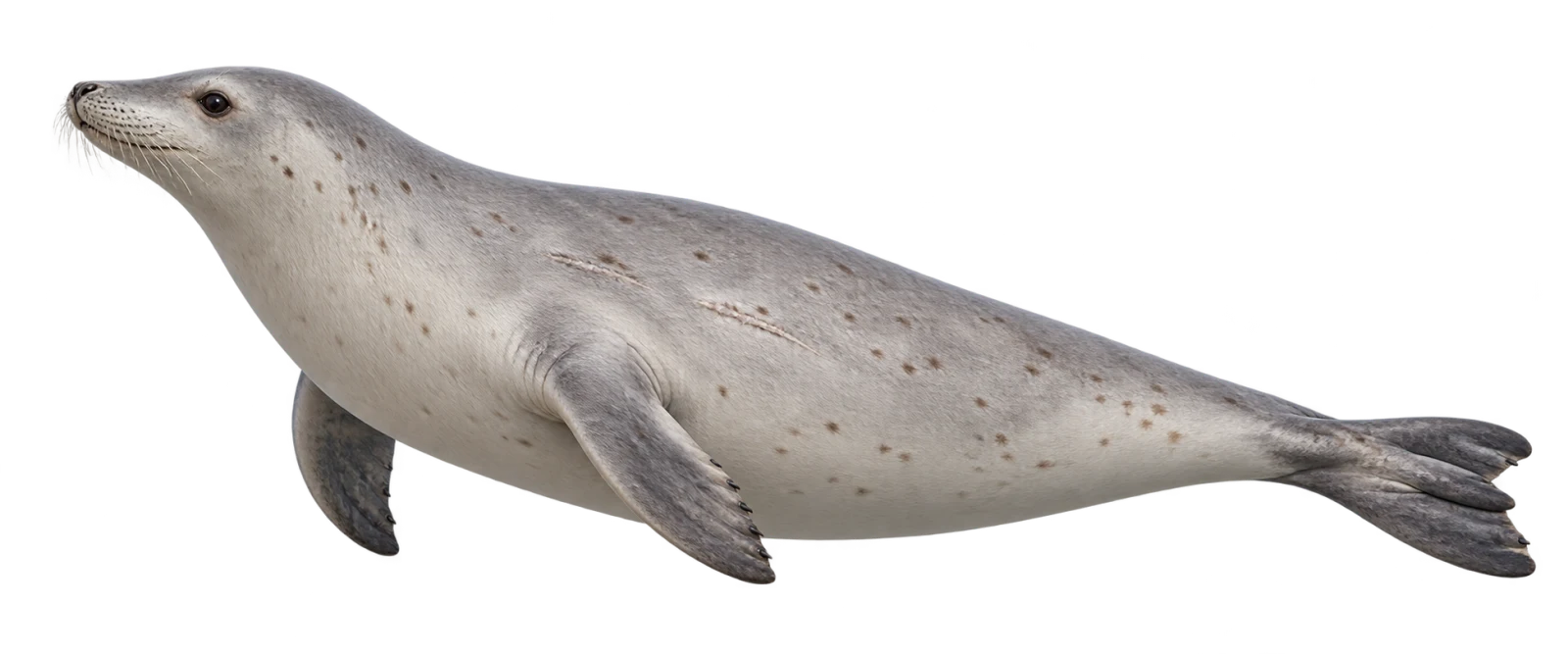
Mammals
Crabeater Seal
Lobodon carcinophaga
Classification and source reference
LivingAI illustration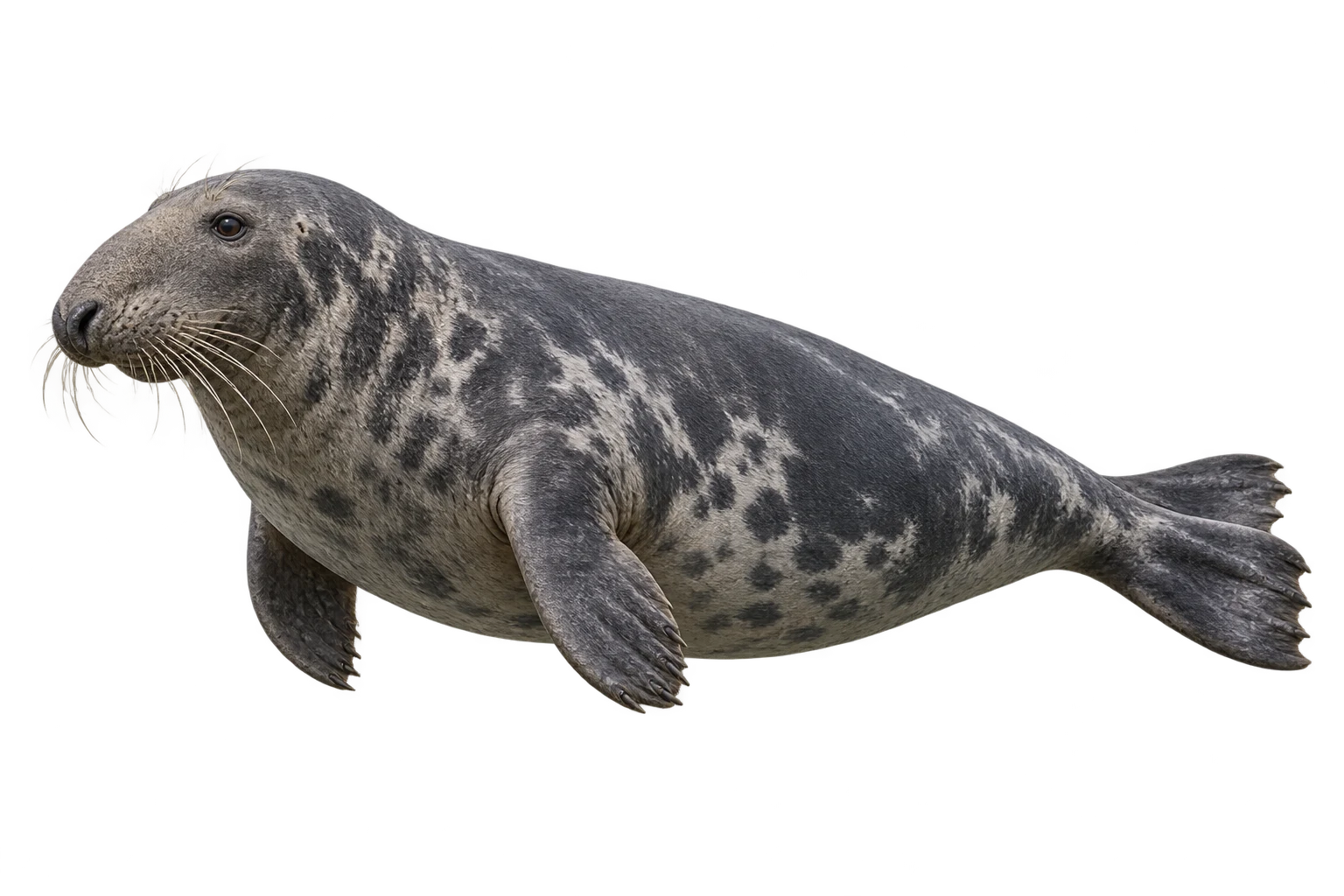
Mammals
Grey Seal
Halichoerus grypus
Classification and source reference
LivingAI illustration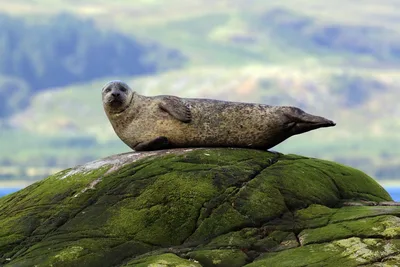
Mammals
Harbor Seal
Phoca vitulina
The harbor seal is a spotted marine mammal of northern coastal waters.
Living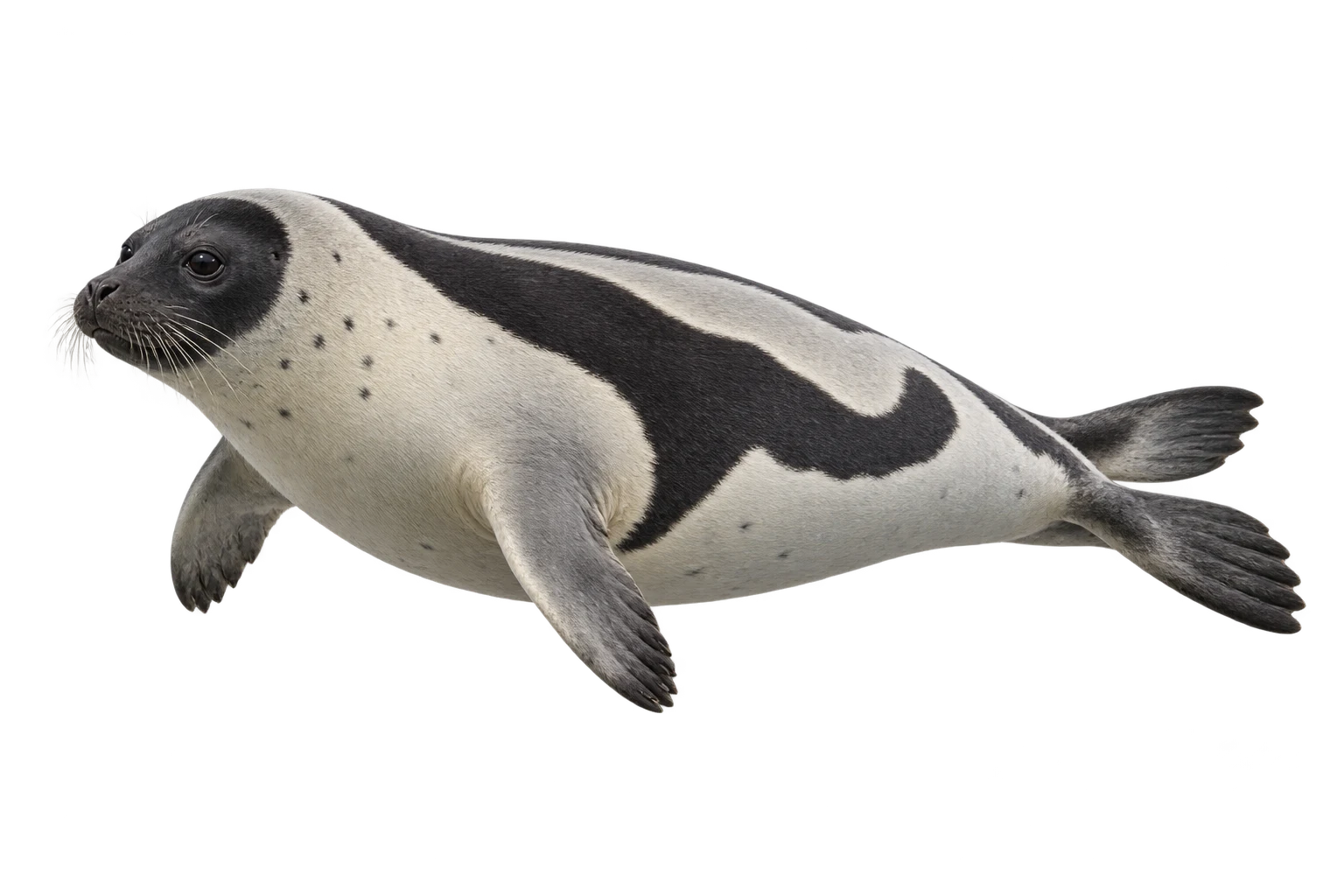
Mammals
Harp Seal
Pagophilus groenlandicus
Classification and source reference
LivingAI illustration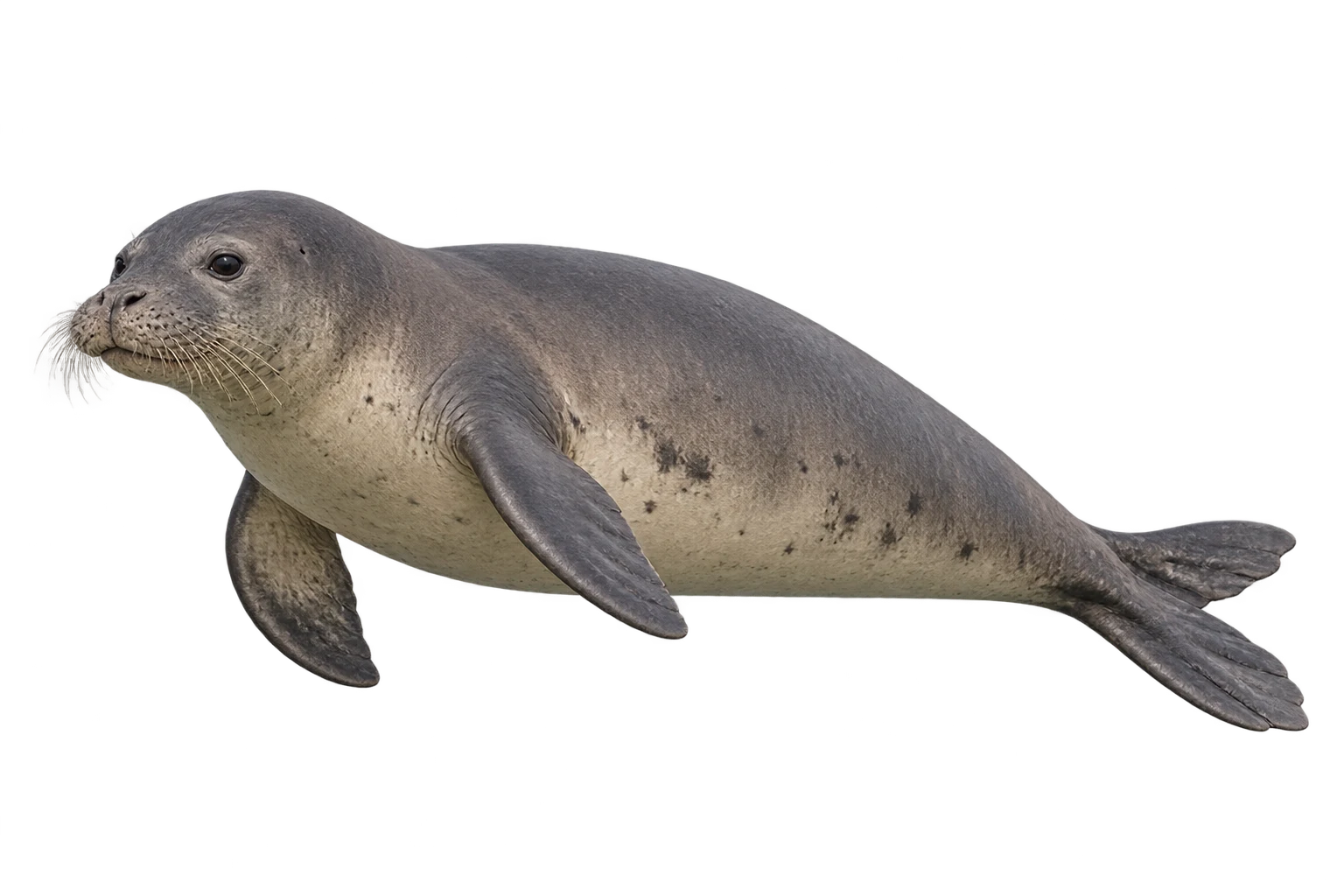
Mammals
Hawaiian Monk Seal
Neomonachus schauinslandi
Classification and source reference
LivingAI illustration