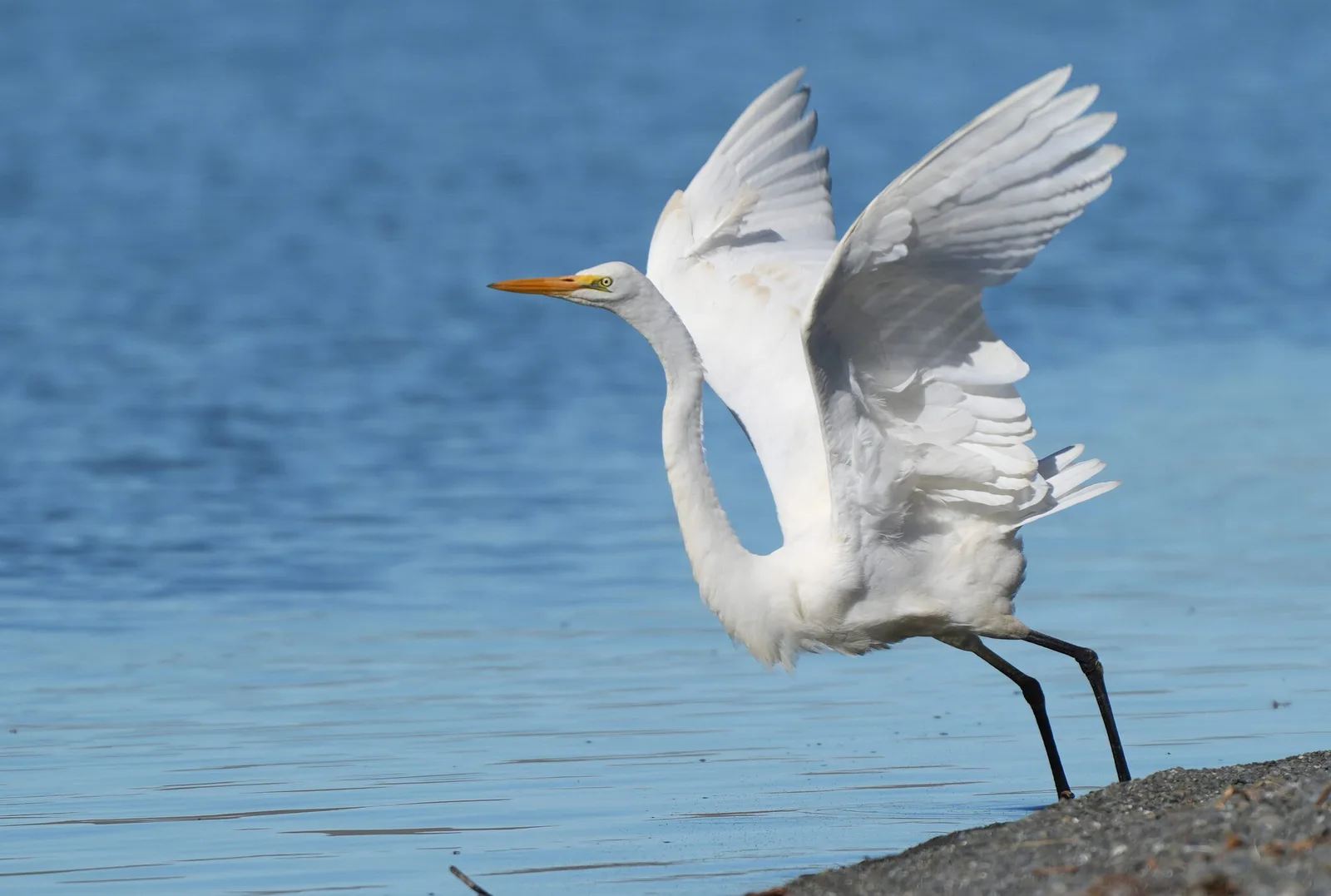
Great egret
A white heron that hunts by standing still
Ardea alba
Also called Common egret, Large egret, Great white egret, Great white heron, Kotuku
Living individuals or members of this group exist today. This does not mean they are safe from extinction.
Meet the great egret
The great egret is a tall white heron that hunts fish in shallow water on six continents. It nests in tree colonies, and its breeding plumes once made it a target for the hat trade.
Images of the great egret
Lifespan in the wild
About 15 years the oldest ringed bird
Weight
0.7 to 1.5 kg
Length
0.8 to 1.04 m
Height
Up to 1 m
Fact file
Great egret
- Location
- Wetlands across the warmer parts of every continent except Antarctica
- Habitat
- Wetlands, Rivers and lakes, Coast
- Diet
- Carnivore
- Prey / food
- Fish, frogs, crayfish, mice, snakes, grasshoppers, aquatic insects
- Predators
- Crows, vultures and raccoons take eggs and chicks
- Lifestyle
- Feeds by day, roosts in groups at night
- Group name
- Colony
- Name of young
- Chick
- Incubation
- Eggs hatch after 23 to 26 days
- Clutch size
- 3 to 4 eggs, sometimes up to six
- Population
- Large and increasing across most of the range
- Biggest threat
- Wetland drainage and water pollution
- Distinctive feature
- Yellow bill with black legs and feet
- Colour
- All white, with lacy back plumes when breeding
- Skin type
- Feathers
Size
Next to a person
Measurements
Size and speed
- Height
- Up to 1 m standing height
- Length
- 0.8 to 1.04 m bill to tail
- Wingspan
- 1.31 to 1.7 m
- Weight
- 0.7 to 1.5 kg
Typical adult ranges. Source: Wikipedia.
Life cycle
Lifespan
- In the wildAbout 15, up to 22.8 years the oldest ringed bird
- In captivityUp to 22 years
- 022.8 years
The pale bar is the record. Source: Animal Diversity Web.
Appearance
Colour and coat
- Primary colours
- white
- Secondary colours
- yellowblack
- Skin type
- feathers
- Male and female
- Very little. Males and females look the same, and juveniles look like adults out of breeding plumage. Males average slightly larger than females.
Life cycle
Mating and family
- Mating system
- seasonally monogamous pairs
- Social structure
- tree colonies, with communal roosts outside the breeding season
- Breeding
- one brood a year
The season opens in the middle of April in North America. A male picks a nest site, builds the first sticks and displays until a female joins him. She lays three or four pale blue-green eggs, and both birds incubate for 23 to 26 days. The chicks hatch helpless and are fed by both parents, first by regurgitation and then from the bill. They fly at about six or seven weeks and breed for the first time at two or three years old.
Classification
Taxonomy
- Kingdom
- Animalia
- Phylum
- Chordata
- Class
- Aves
- Order
- Pelecaniformes
- Family
- Ardeidae
- Genus
- Ardea
- Species
- Ardea alba
Conservation
Red List status
- LC
- NT
- VU
- EN
- CR
- EW
- EX
Least Concern on the IUCN Red List
Range
Recorded in 22 countries
- Argentina
- Austria
- Ashmore and Cartier Islands
- Brazil
- Canada
- Colombia
- Costa Rica
- Germany
- Ecuador
- Spain
- France
- United Kingdom
- Hong Kong
- India
- Italy
- Japan
- South Korea
- Mexico
- Russia
- Taiwan
- Ukraine
- United States of America
Habitat layer: flooded grassland and savanna, mangrove.
Countries from 296,753 wild records on GBIF (iNaturalist research grade), filtered and checked by hand. Country shapes: Natural Earth. Habitat: RESOLVE Ecoregions 2017, CC BY 4.0. Basemap: Natural Earth.
Habitats
Three things to know
- 1
Plume hunters almost destroyed the species in North America, and the National Audubon Society then took it as a badge.
- 2
It flies with its neck folded into an S, which sets herons apart from storks and cranes.
- 3
It often steals food from smaller herons rather than catching its own.
Did you know
Seven more facts
- 1
The name egret comes from aigrette, a French word for both a white heron and a brush.
- 2
A heron neck folds because of 20 or 21 specially shaped neck bones.
- 3
Great egrets carry powder down, a feather type that crumbles into a cleaning dust.
- 4
A pair will lay a second set of eggs if the first is broken.
- 5
The eastern form carries a neck half again as long as its own body.
- 6
Great egrets in central Europe were found to host 17 kinds of parasitic worm.
- 7
Standing still wins the bird more mid-sized prey than walking does.
Field notes
How it looks and acts
Field notes
Distinguishing features
- The plumage is white at every age and in every season.
- A yellow bill sits above black legs and black feet.
- The gape reaches back well beyond the eye.
- Breeding birds grow long lacy plumes down the back.
- The wingspan of 131 to 170 cm is wide for a bird of 1 kg.
- The bird flies with the neck folded and the legs trailing.
Field notes
Unique adaptations
- The S-shaped neck probably stores energy and releases it as one fast strike.
- Long black legs likely let the bird wade deeper than smaller herons can.
- Sharp forward-facing eyes probably judge the distance to a fish under the surface.
- A broad wingspan of up to 170 cm allows slow, low flight over marshes.
- A wide diet lets the bird switch to frogs, mice or grasshoppers when fish fail.
Field notes
Interesting behaviours
- It waits without moving in shallow water until prey swims within reach.
- It steals catches from smaller herons feeding nearby.
- It gathers at dusk into communal roosts with other wading birds.
- It defends a feeding patch by squawking, leaping or jabbing with the bill.
- It disperses far from the colony once the young can fly.
Field notes
Temperament
- The bird is aggressive to rivals even when food is plentiful.
- It is quiet and wary away from the colony.
- It tolerates people closely in parks and along town waterways.
Field notes
Communication
- A disturbed bird gives one low hoarse croak.
- Colony birds repeat a loud croaking call and add higher squawks.
- Courtship runs on long visual displays at the nest site.
- Raised back plumes probably make the display bird look larger to a rival.
Ecology
Ecological role
The great egret is a mid-sized predator of shallow water, and it links fish and insect life to the trees where it nests.
- As a predator it holds down the numbers of the fish, frogs and insects it eats.
- Its colonies probably carry nutrients from the water into the trees below the nests.
- It hosts many parasitic worms and carries them between wetlands on migration.
- Its nest trees shelter other herons that breed in the same colony.
Stories
Myths and legends
- In Maori tradition the kotuku is the image of a rare and welcome guest.
- In New Zealand usage the same comparison was paid to a visiting queen in 1953.
- In American conservation the bird became the emblem of a society founded to stop the plume trade.
- In Brazilian and Hungarian currency design the egret appears to stand for wetland wildlife.
People
Relationship with humans
People
Living alongside us
People almost destroyed the great egret for its feathers, then saved it. Plume hunters shot breeding adults at their colonies through the end of the nineteenth century. Wardens who guarded the colonies stopped the trade, and the Migratory Bird Treaty Act gave legal cover in 1918. The bird now nests further north than it did before the slaughter. It feeds in town ditches and park lakes and is one of the easiest large birds to watch.
- The great egret does not attack people and flies off when approached too closely.
- A cornered or handled bird can jab with a long sharp bill, so it may injure an eye.
- The species carries parasitic worms, but none of the 17 kinds found in Europe is thought to harm people.
People
Status, uses and products
- Domestication
- Wild
- As a pet
- Not suitable. No. The great egret needs open shallow water, live fish every day and space to fly. It is protected by law across most of its range, and keeping one without a permit is an offence in many countries.
- Uses
- birdwatchingwetland indicator species
- Products
- plumes
The full account
About the great egret
The great egret, Ardea alba, is a tall white heron of shallow water. It stands up to 1 metre high and measures 80 to 104 centimetres from bill to tail. The wings span 131 to 170 cm, and an adult weighs about 1 kilogram. A yellow bill above black legs is the quickest way to name it. Four subspecies live in Asia, Africa, the Americas and southern Europe.
The bird hunts by walking slowly, or by waiting without moving until prey comes close. It then straightens its neck and drives the bill down in one strike. Fish make up most of the food, but frogs, mice, snakes and insects all count. Great egrets nest in colonies in trees beside lakes and marshes. The IUCN lists the species as Least Concern, and its range keeps growing northwards.
Name and taxonomy
Carl Linnaeus described the bird in 1758 and gave it the name Ardea alba. Ardea is the Latin word for a heron, and alba means white. Linnaeus set the type locality as Europe. English speakers also call it the common egret, the large egret and the great white egret. The word egret comes from the French aigrette, a name for both a white heron and a brush.
Four subspecies are recognised, and they differ only a little. The differences lie in size and in the colour of the bare parts during the breeding season. The Asian and Australasian form, A. a. modesta, is the smallest of the four. Some taxonomists raise it to a full species, the eastern great egret, but most keep it as a subspecies. The other three forms breed in Europe and the Palearctic, in the Americas and in Africa.
Evolution and relatives
The great egret belongs to Ardeidae, the heron family. It sits in the genus Ardea beside the grey heron and the great blue heron. The typical small egrets belong to a different genus, Egretta, so the name egret does not track the family tree. Earlier authors placed the species in Egretta, or alone in a genus called Casmerodius.
Herons were once grouped with the storks in the order Ciconiiformes. They now sit in the Pelecaniformes, which makes pelicans their closer relatives. A pale form of the great blue heron looks similar, and people in North America often confuse the two. Like other herons, the great egret probably kept its stalking habits with very little change over a long span.
Appearance
The plumage is white all over at every age and in every season. An adult measures 80 to 104 cm in length and stands up to 1 m tall. The wingspan runs from 131 to 170 cm. Body mass ranges from 0.7 to 1.5 kg, and about 1 kg is normal. That makes the bird only a little smaller than the grey heron.
The bill is yellow and the legs and feet are black. In the breeding season the bill can darken and the lower legs can pale. Breeding adults also grow long lacy plumes along the back, and these are the aigrettes of the hat trade. The gape runs back well past the eye, which separates the bird from the intermediate egret. The snowy egret is smaller, with a black bill and yellow feet, so the colours are reversed.
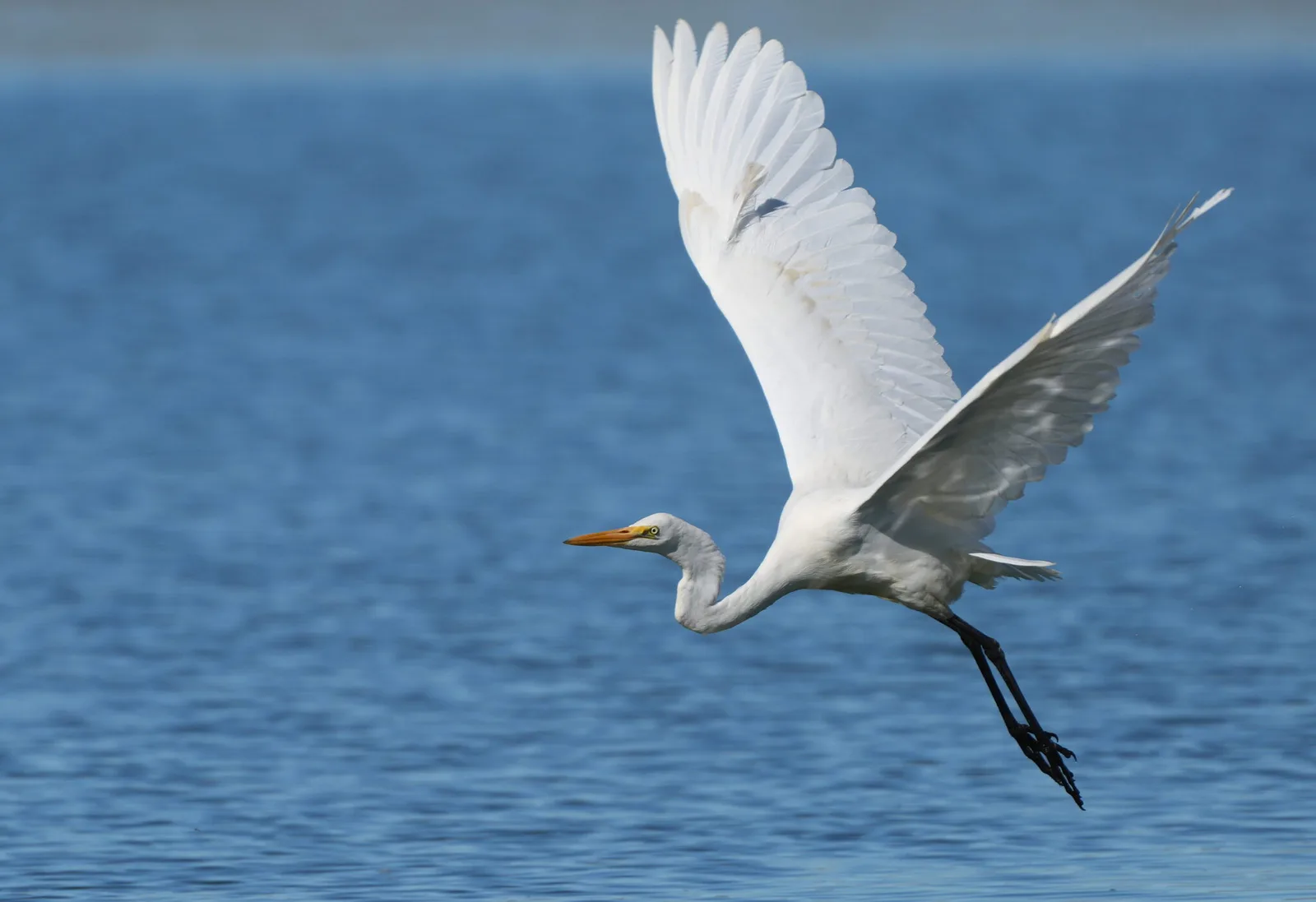
The neck is long and folds into a tight S shape. Herons manage this with modified neck bones, of which they have 20 or 21. The bird keeps the neck folded in flight and beats its wings slowly. Storks, cranes and ibises fly with the neck stretched out, so the shape names the family at a distance. On the ground the egret walks with the neck extended and the wings held in.
Habitat and range
Great egrets live in warm temperate and tropical wetlands around the world. Streams, lakes, ponds, mud flats and marshes all suit the bird. Wooded swamps appear to be the favourite, because they hold both feeding water and nest trees. The species uses fresh water and salt water without any obvious preference. It also feeds in dry fields when grasshoppers and rodents are easy to find.
In North America the bird is common right across the southern states and up the Atlantic coast. Its breeding range now reaches the Great Lakes and southern Canada. Birds leave the northern edge in winter and stay only where water keeps flowing. Many wander north after the young fledge, which is why late summer records run far beyond the nesting range.
Europe has watched a fast expansion northwards over the last two decades. The first Swedish nest was found in 2012 and the first Danish nest in 2014. A pair raised four young in a grey heron colony at Porvoo in Finland in 2018. Britain gained its first nest at Shapwick Heath in Somerset in 2012. Seven Somerset nests fledged 17 young in 2017, and Scotland gained its first chicks in 2024.
Diet and feeding
Fish are the mainstay of the diet. The bird also takes frogs and other amphibians, crayfish, snakes, mice and large insects. Grasshoppers and aquatic insects turn up often in studies of what it eats. The great egret seems to be an opportunist, and it will try most small animals it can swallow.
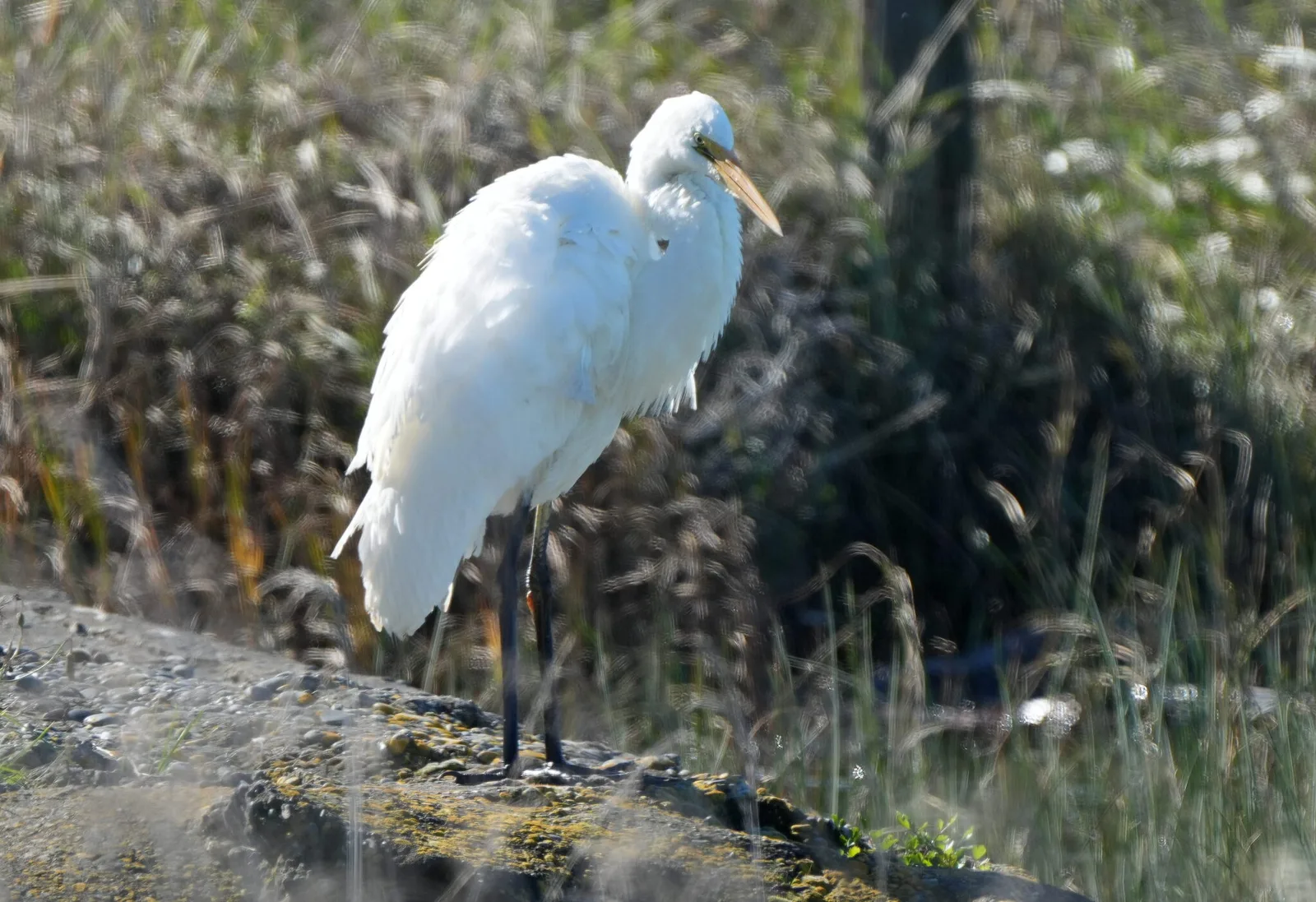
Hunting appears simple and is not. The bird wades through shallow water at a slow pace, or holds still and lets prey come to it. The strike is a single fast thrust of the bill, driven by the folded neck. Work on foraging found that a motionless bird takes more mid-sized prey than a bird on the move. That result suggests the egret works for good prey rather than for the largest possible number.
Great egrets also rob other birds. A high share of their food is taken from smaller herons that have already caught it. Chicks in the same nest fight each other over food that a parent brings. Other large waders eat the same prey and compete with the egret at the same pools.
Behaviour and social life
The great egret feeds by day and gathers at dusk into shared roosts. Birds come in to these roosts from wide areas of wetland around them. Nesting is colonial, so the species is social at the roost and at the colony. A single feeding bird still guards its patch of water.
The bird is strongly territorial over courtship, nest sites and feeding places. Studies found high aggression even when food was plentiful, so hunger is not the only trigger. An intruder may be met with a harsh squawk, a leap or a jab of the bill. Adults and grown young travel long distances together after the breeding season ends. This post-breeding dispersal is common and moves birds well outside the nesting range.
Communication and senses
The great egret is a quiet bird for most of the year. A disturbed bird gives a low hoarse croak as it lifts off. At the colony the voice is louder, with repeated croaks and higher squawks. Animal Diversity Web writes the usual call as a harsh low note.
Much of the signalling is visual rather than vocal. Courtship uses a long set of displays at the nest site, and the plumes are raised during them. Territorial display probably carries the same message to a rival that a call would. Like other herons, the bird relies mainly on sight to find prey under the surface. The eyes sit high on the head, which seems to suit a hunter that looks down into water.
Reproduction and life cycle
Great egrets form a new pair each season and stay with that partner for the season. Whether the same two birds pair again the next year is not known. Most birds first breed at two or three years old. In North America the season opens in the middle of April. The male picks the site, starts a nest and then displays to draw a female in.
Colonies sit in trees near large lakes with reed beds or other wide wetlands. Nests are usually placed between 3 and 12.2 metres above the ground or water. The nest itself is a loose platform of sticks and stems, lined with softer plant matter. Other heron species often nest in the same trees.
A clutch holds three or four pale blue-green eggs, and up to six are possible. A pair will lay again if the first eggs are broken. Both parents incubate, and the eggs hatch after 23 to 26 days. Chicks hatch helpless under a coat of long white down. Parents first feed them by bringing food back up, then hold prey for the chick to grab.
The young start to fly at about six weeks and are flying well by seven. One brood a year is the rule. A wild great egret lives about 15 years. The oldest ringed bird reached 22.8 years, and a captive bird reached 22.
Predators and threats
An adult great egret has no natural predator apart from people. Eggs and chicks are a different matter and many animals take them. Crows and vultures raid the nests from the air. Raccoons climb to the colony and do the most damage of any nest predator.
Habitat loss is the main modern threat in parts of the southern United States. Drainage, grazing, clearing, burning and groundwater extraction all shrink the wetlands the bird needs. Rising salinity and invading plants damage the remaining marshes. Water pollution appears to add a second problem that is harder to see. Hydrocarbons thin the eggshells, so more eggs crack before the chicks hatch. Mercury builds up in the feathers and can change behaviour, body chemistry and breeding.
Parasites are typical of a fish-eating bird. A field study in central Europe that ran from 1962 to 2013 found 17 helminth species in great egrets. Young birds carried fewer kinds of worm than adults but heavier infections.
Population and conservation
The IUCN lists the great egret as Least Concern. The range is large, and it has expanded in both Europe and North America. Birders have logged 419272 observations of the species on iNaturalist. GBIF holds records from 227 countries and territories, which include zoos and stray birds.
The global picture appears to hide sharp regional differences. The French IUCN committee lists the bird as Vulnerable in Guadeloupe. Indiana treats it as a species of special concern, and NatureServe ranks its breeding population there as critically imperilled. In New Zealand the eastern form nests at a single site, Waitangiroto Nature Reserve near Whataroa. Predator control lifted that colony to 56 pairs in 2023.
The recovery in North America is one of the best known in conservation. The Migratory Bird Treaty Act brought the species under protection in 1918. Numbers climbed steadily through the middle of the twentieth century. The bird now nests as far north as southern Canada.
Relationship with humans
The great egret adapts well to places where people live. It feeds in ditches, farm ponds and park lakes in towns and suburbs. A wading bird that stands in the open probably makes the easiest subject a marsh photographer can find. Animal Diversity Web records no harmful effect of the species on people.
The history appears darker than the present. Hat makers in Europe and America wanted the breeding plumes for women's hats and clothes. Hunters shot the adults at the colony, in the season when the plumes are grown. That timing likely killed the chicks as well as the parents. Large numbers died in North America at the end of the nineteenth century. Wardens who guarded colonies stopped the trade, and the population came back quickly.
In culture and myth
The National Audubon Society took the great egret as its symbol. The choice probably records the fight against the plume trade that founded the society. The bird appears on the back of the 5 real note of Brazil. New Zealand puts it on the two dollar coin, and Hungary puts it on the 5 forint coin. Belarus has struck a commemorative coin with the same bird on it.
In Maori tradition the bird is the kotuku, and it stands for a rare and honoured visitor. The comparison was paid to Queen Elizabeth II when she toured New Zealand in 1953. Its rarity probably gives the image force, because only one colony nests in the country. Werner Krutein photographed a breeding bird for the cover of Angel Dust, a 1992 album by Faith No More. The white shape in a green marsh has likely drawn artists for as long as people have painted birds.
A sentence with a dotted underline is inferred: it describes the group the animal belongs to, or is a reading of the sources, rather than a measured or reported fact about this species.
Questions
Great egret questions, answered
How big is a great egret?
An adult measures 80 to 104 cm from bill to tail and stands up to 1 m tall. The wings span 131 to 170 cm. Most birds weigh about 1 kg.
What do great egrets eat?
Fish come first. The bird also takes frogs, crayfish, snakes, mice, grasshoppers and aquatic insects. It will hunt in dry fields when insects and rodents are easy to catch.
How does a great egret catch fish?
It wades slowly, or stands without moving, until prey comes near. It then straightens the folded neck and drives the bill down in one strike.
Are great egrets endangered?
No. The IUCN lists the species as Least Concern, and the range is growing. Some regions differ, and the French IUCN committee lists it as Vulnerable in Guadeloupe.
What is the difference between a great egret and a snowy egret?
The great egret is larger, with a yellow bill and black feet. The snowy egret is smaller, with a black bill and yellow feet.
What is the difference between a great egret and a great blue heron?
The great blue heron is mostly grey and slightly larger with a thicker bill. Its rare white morph in Florida looks similar but has pale legs, not black ones.
Why does a great egret fly with its neck folded?
Herons have modified neck bones, 20 or 21 of them, that fold the neck into an S. The folded neck stays that way in flight, which sets herons apart from storks and cranes.
How long do great egrets live?
A wild bird lives about 15 years. The oldest ringed great egret reached 22.8 years, and a captive bird lived to 22.
How many eggs does a great egret lay?
Three or four is normal, and up to six can be laid. The eggs are pale blue-green. A pair will lay again if the first eggs are lost.
How long do great egret eggs take to hatch?
The male and the female share the sitting. Hatching comes after 23 to 26 days, and the chicks fly at about six or seven weeks.
Where do great egrets nest?
They nest in colonies in trees and shrubs beside lakes and marshes. Nests sit between about 3 and 12.2 metres up and are loose platforms of sticks.
Where do great egrets live?
They live in warm wetlands on every continent except Antarctica. Four subspecies cover Asia, Africa, the Americas and southern Europe.
Do great egrets migrate?
Northern birds move south when the water freezes. Many also wander north after breeding, so they turn up well beyond their nesting range in late summer.
Why were great egrets hunted?
Breeding adults grow long lacy back plumes called aigrettes. Hat makers wanted them, so hunters shot birds at the colonies. The trade almost ended the species in North America.
Why is the great egret the symbol of the Audubon Society?
The society grew out of the campaign against the plume trade. The great egret was the bird that campaign saved, so it became the emblem.
What is a kotuku?
Kotuku is the Maori name for the great egret in New Zealand. Only one colony nests in the country, and the bird stands for a rare and honoured visitor.
Food web
Prey and food
- fish
- frogs
- crayfish
- mice
- snakes
- grasshoppers
- aquatic insects
Food web
Predators
- crows
- vultures
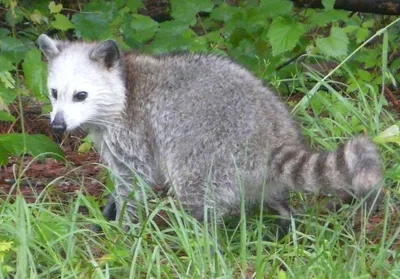 Raccoon
Ecological equivalents
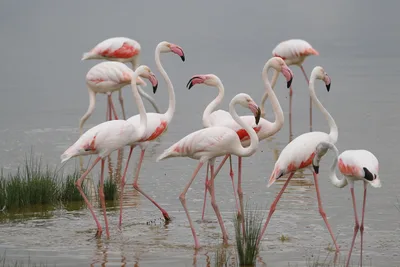
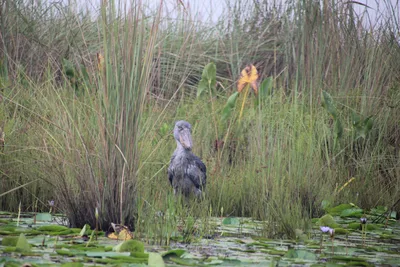
Related species on this site
Great blue heron (same genus), Grey heron (same genus), Egret (same family), Green Heron (same family), Heron (same family), Night Heron (same family), and more.
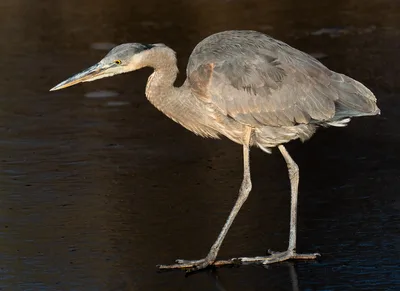 LC
Birds
Great blue heron
Ardea herodias
The great blue heron is the biggest of the North American herons and a patient hunter of shallow water.
Living LC
Birds
Grey heron
Ardea cinerea
The grey heron is a tall grey and white wading bird of European, Asian and African wetlands.
Living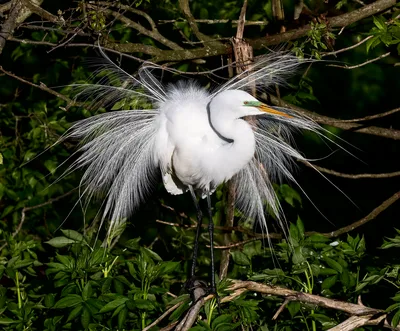
Birds
Egret
Ardeidae
Egrets are herons known for pale plumage in several species.
Living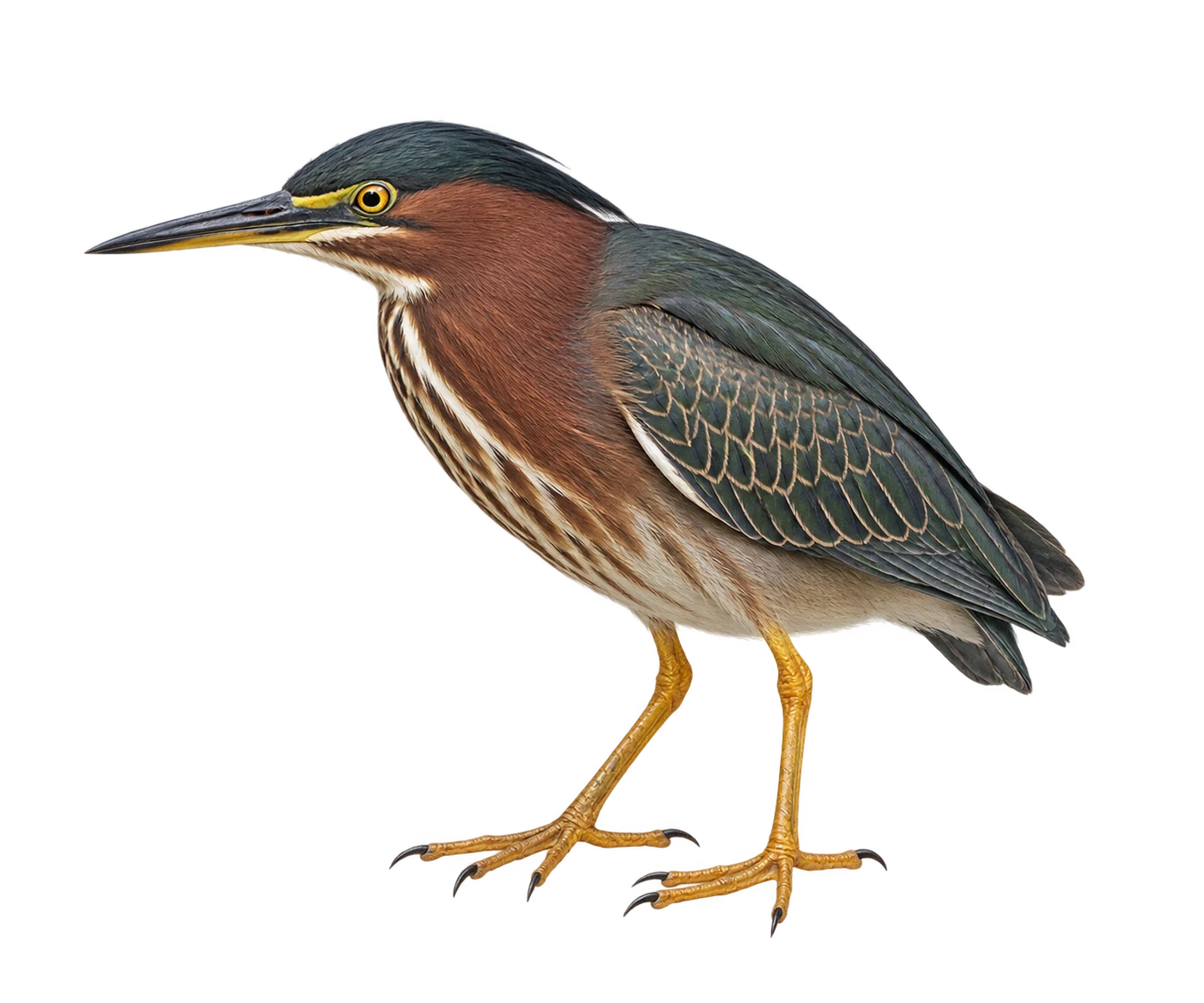
Birds
Green Heron
Butorides virescens
Classification and source reference
LivingAI illustration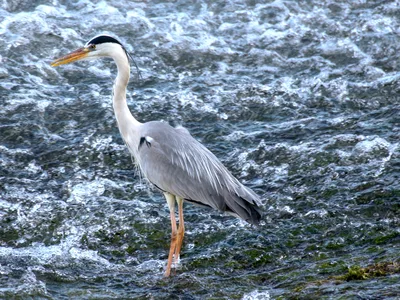
Birds
Heron
Ardeidae
Herons are long-legged waterbirds.
Living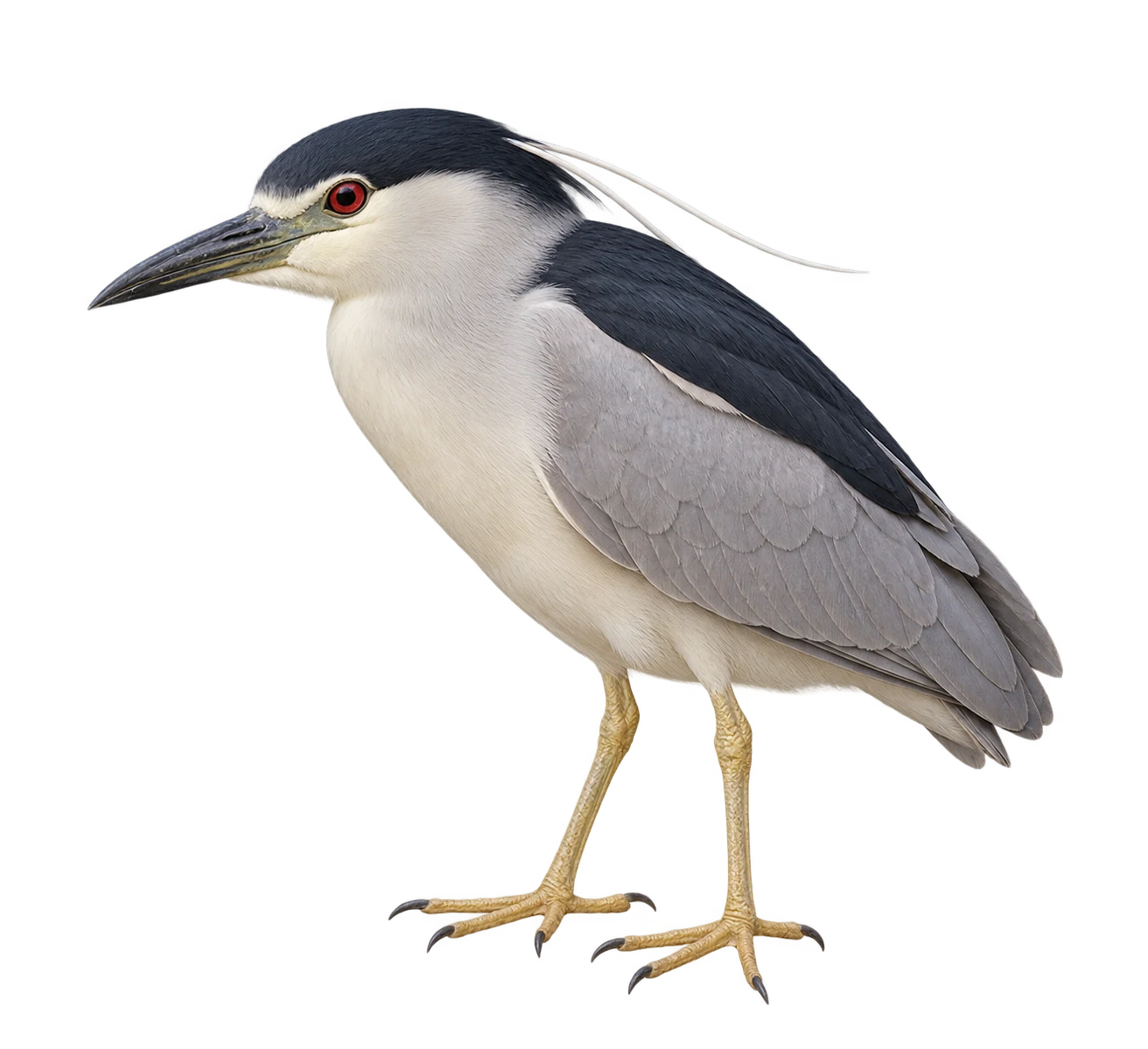
Birds
Night Heron
Nycticorax nycticorax
Classification and source reference
LivingAI illustration