Egret
Ardeidae
Living individuals or members of this group exist today. This does not mean they are safe from extinction.
Egrets are herons known for pale plumage in several species. This account describes the great egret (Ardea alba), a long-legged hunter that stalks shallow water.
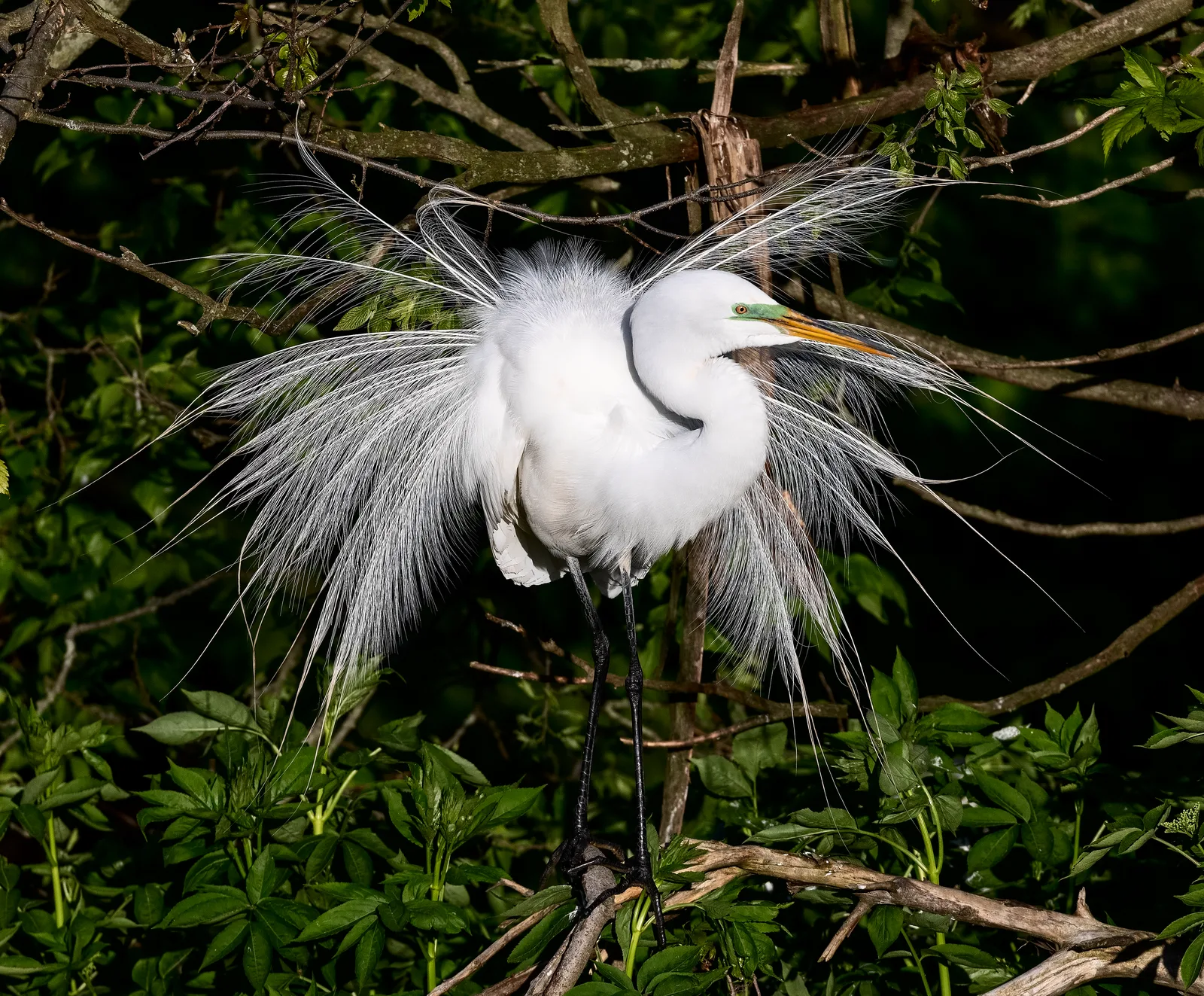
Representative species: Ardea alba.
At a glance
- Habitat
- Wetlands, Rivers and lakes, Coast
- Diet
- Piscivore
- Food
- Mostly fish, with other small animals.
Classification
- Common name
- Egret
- Browse group
- Birds
- Scientific name or taxon
- Ardeidae
- Taxon rank
- family
- Order
- Pelecaniformes
- Family
- Ardeidae
- Source classification
- Aves
Taxonomy checked against GBIF. For breeds and hybrids, this describes the listed parent taxon.
Three things to know
- It often waits motionless for prey.
- Breeding birds grow long ornamental plumes.
- Pairs share care of their young.
Habitat and range
Great egrets, treated broadly in the cited accounts, inhabit wetlands across much of the world. Marshes, lakes, streams, estuaries and damp open ground provide feeding places.
Appearance and adaptations
White plumage, long dark legs and a slender neck create a distinctive outline. Bill and facial colours change with breeding condition and differ between regional populations.
Diet and behaviour
Fish make up much of the diet, with amphibians, crustaceans, insects and other small animals also taken. A hunting bird stands still or wades slowly before striking. Pairs share nesting duties in colonies.
Sources
Explore birds
Browse all birds LC
Birds
Osprey
Pandion haliaetus
The osprey is a large brown and white raptor that lives on fish and hunts by plunging feet first into water.
Living
Birds
Duck
Anatidae
Ducks are waterbirds with many different feeding habits.
Living LC
Birds
Great egret
Ardea alba
The great egret is a tall white heron that hunts fish in shallow water on six continents.
Living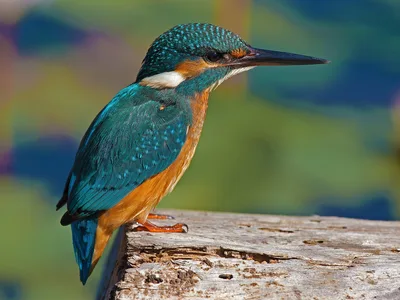 LC
Birds
Common kingfisher
Alcedo atthis
The common kingfisher is a small blue and orange bird of clear, slow rivers across Europe, Asia and North Africa.
Living