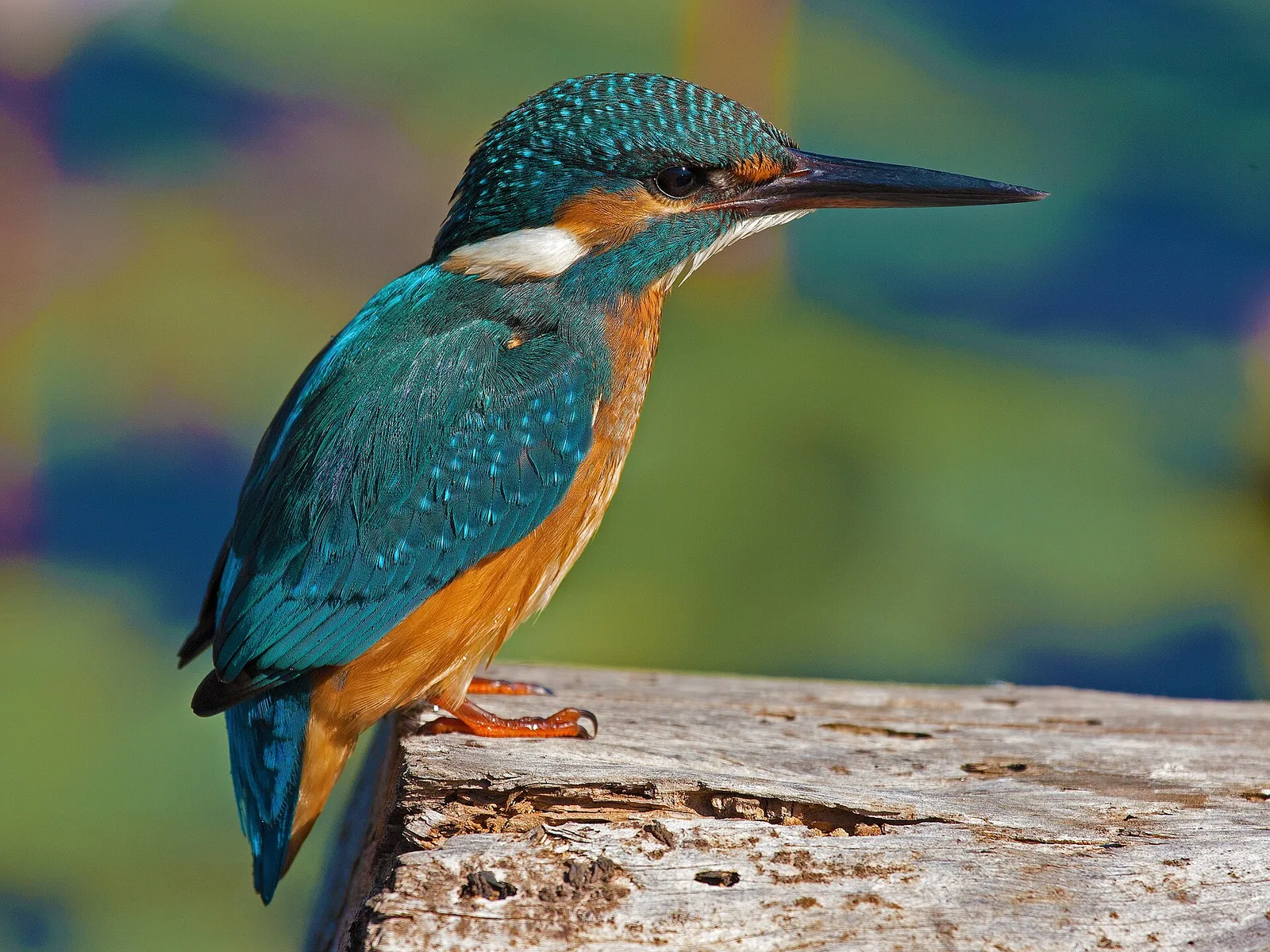
Common kingfisher
A blue flash along a slow river
Alcedo atthis
Also called Eurasian kingfisher, River kingfisher
Living individuals or members of this group exist today. This does not mean they are safe from extinction.
Meet the common kingfisher
The common kingfisher is a small blue and orange bird of clear, slow rivers across Europe, Asia and North Africa. It dives from a low perch to catch fish, and it nests at the end of a tunnel dug into a bank.
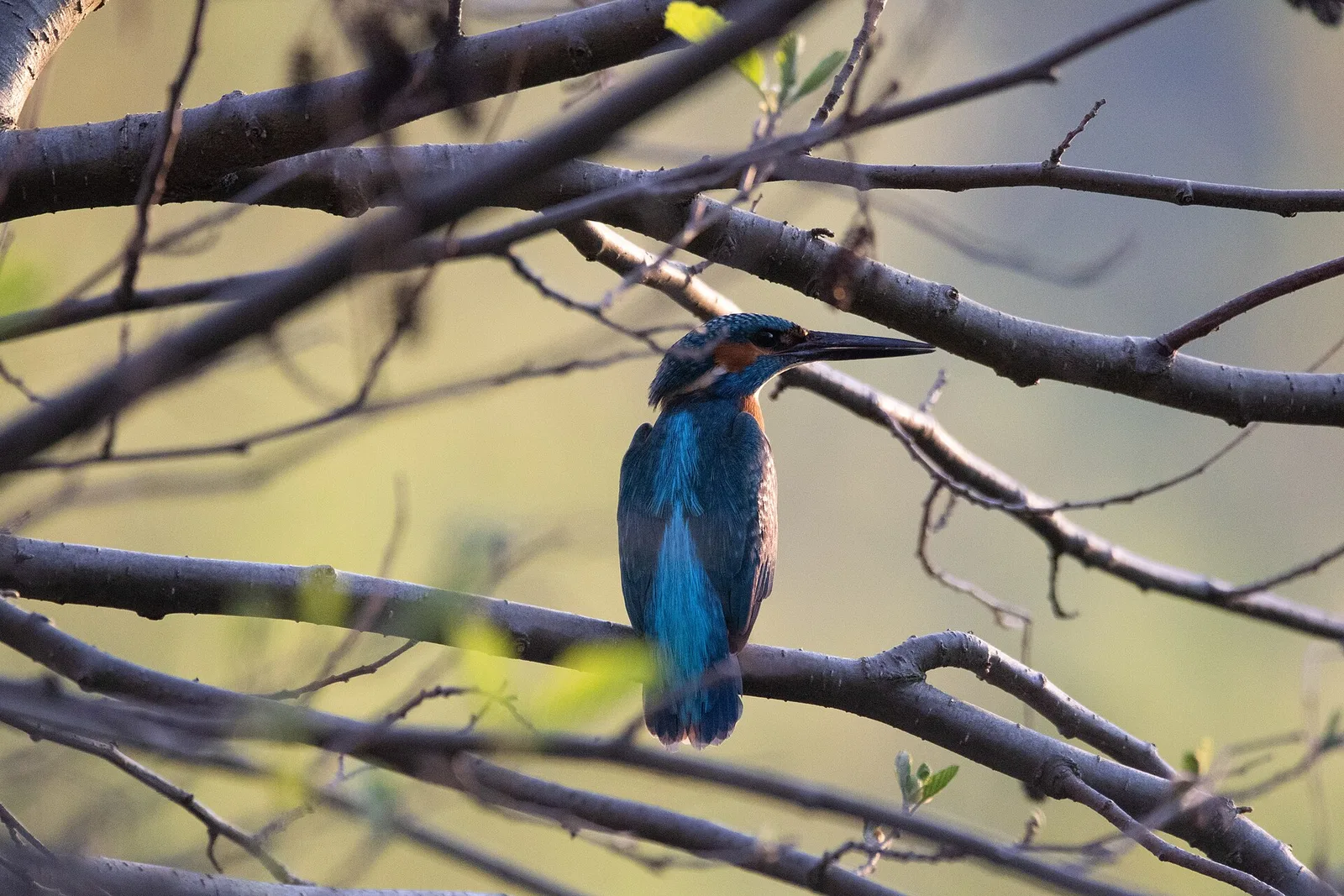
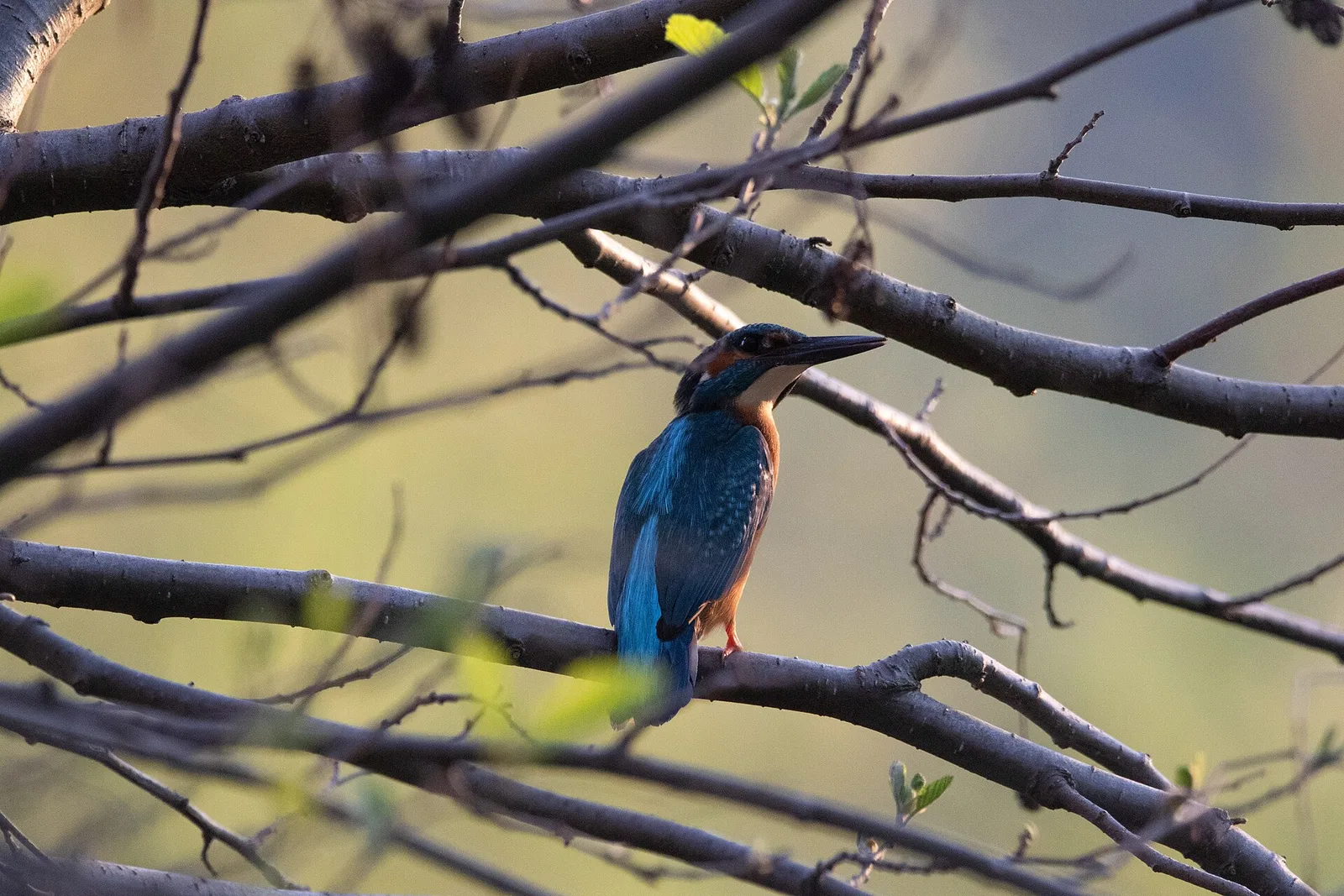
Images of the common kingfisher
Lifespan in the wild
About 7 years most birds die in their first year
Weight
26 to 46 g
Length
About 16 cm
Wingspan
24 to 26 cm
Fact file
Common kingfisher
- Location
- Europe, Asia and North Africa, mainly south of 60 degrees north
- Habitat
- Rivers and lakes, Wetlands, Coast
- Diet
- Piscivore
- Prey / food
- Minnows, sticklebacks, roach, trout fry, dragonfly larvae, water beetles, freshwater shrimps
- Predators
- Cats, rats and snakes; an adult has few enemies
- Lifestyle
- Active by day, solitary and strongly territorial
- Group name
- Solitary, or a pair in the breeding season
- Name of young
- Chick
- Incubation
- Incubation 19 to 21 days
- Clutch size
- 2 to 10 eggs, usually 6 or 7
- Population
- About 160,000 to 320,000 birds in Europe
- Biggest threat
- Hard winters and polluted water
- Distinctive feature
- An electric blue back above orange underparts
- Colour
- Blue-green above, rufous below, with a white throat patch
- Skin type
- Feathers
Size
Next to a person
Measurements
Size and speed
- Length
- About 16 cm
- Wingspan
- 24 to 26 cm Wikipedia gives about 25 cm
- Weight
- 26 to 46 g ADW gives 26 to 39 grams and Wikipedia 34 to 46
Typical adult ranges. Sources: Wikipedia, Animal Diversity Web.
Life cycle
Lifespan
- In the wildAbout 7, up to 21 years most birds die in their first year
- 021 years
The pale bar is the record. Source: Animal Diversity Web.
Appearance
Colour and coat
- Primary colours
- blueorange
- Secondary colours
- whitegreen
- Skin type
- feathers
- Male and female
- Slight. The two sexes look the same apart from the bill. A male's bill is entirely black. A female's lower bill is orange-red with a black tip.
Life cycle
Mating and family
- Mating system
- monogamous pairs for one season
- Social structure
- solitary and territorial outside the breeding season
- Breeding
- two broods a year, and sometimes three
Pairs form in autumn but keep separate ground until spring. Both birds dig a tunnel 60 to 90 centimetres into a bank. The female lays two to ten white eggs in the chamber at the end. The eggs hatch after 19 to 21 days, and the chicks stay underground for another three to four weeks. Most young die within weeks of leaving the tunnel.
Classification
Taxonomy
- Kingdom
- Animalia
- Phylum
- Chordata
- Class
- Aves
- Order
- Coraciiformes
- Family
- Alcedinidae
- Genus
- Alcedo
- Species
- Alcedo atthis
Conservation
Red List status
- LC
- NT
- VU
- EN
- CR
- EW
- EX
Least Concern on the IUCN Red List
Range
Recorded in 30 countries
- Austria
- Belgium
- Switzerland
- People's Republic of China
- Czech Republic
- Germany
- Denmark
- Spain
- France
- United Kingdom
- Greece
- Hong Kong
- Israel
- India
- Italy
- Japan
- South Korea
- Sri Lanka
- Luxembourg
- Netherlands
- Poland
- Portugal
- Romania
- Russia
- Singapore
- Thailand
- Turkey
- Taiwan
- Ukraine
- Vietnam
Habitat layer: flooded grassland and savanna, mangrove.
Countries from 41,102 wild records on GBIF (iNaturalist research grade), filtered and checked by hand. Country shapes: Natural Earth. Habitat: RESOLVE Ecoregions 2017, CC BY 4.0. Basemap: Natural Earth.
Habitats
Three things to know
- 1
The bird must eat about 60% of its own weight in fish every day.
- 2
It digs a tunnel up to 90 centimetres into a river bank and lays its eggs at the end.
- 3
A clear third eyelid closes over the eye during the dive and works like a diving mask.
Did you know
Seven more facts
- 1
The bird has no song at all, only a sharp whistle and a harsh alarm call.
- 2
Its main flight feathers take 90 to 100 days to moult and grow again.
- 3
A kingfisher sees with one eye at a time in air and with both eyes under water.
- 4
The nest chamber has no lining and fills with fish bones and cast pellets.
- 5
An egg weighs about 4.3 grams, and the shell is 5% of that weight.
- 6
Some Siberian birds fly at least 3,000 kilometres between breeding and wintering grounds.
- 7
Fighting kingfishers seize each other by the bill and try to duck the rival's head.
Field notes
How it looks and acts
Field notes
Distinguishing features
- An electric blue back that flashes as the bird flies away.
- Rufous underparts with a white throat and a white neck blaze.
- A long, straight, dagger-shaped bill.
- A large head, a short tail and a compact body of about 16 centimetres.
- Bright red legs and feet.
- A black bill in the male and an orange-red lower bill in the female.
Field notes
Unique adaptations
- Two foveae in each eye keep prey in focus above and below the surface.
- A clear third eyelid covers the eye during the dive.
- Red oil droplets in the cone cells reduce glare from the water.
- A long pointed bill grips a slippery fish and cuts into the water cleanly.
- A nest tunnel in a bank keeps eggs and chicks out of reach of most predators.
Field notes
Interesting behaviours
- Watching for fish from a low perch with the bill angled down.
- Bobbing the head to judge the range before a dive.
- Beating a caught fish against the perch before swallowing it.
- Coughing up a small grey pellet of bones a few times a day.
- Hovering over open water when no perch is near.
Field notes
Temperament
- Fiercely territorial, and willing to fight a rival in the water.
- Solitary for most of the year and shy of people.
- Bold in defence of the burrow against snakes and other raiders.
- Restless, with a fast direct flight and little time spent still.
Field notes
Communication
- A short whistled chee, repeated two or three times in flight.
- A harsh shrit-it-it from an anxious bird.
- A churring call from chicks begging inside the burrow.
- Continuous whistling by a male chasing a female.
- Bill and plumage displays between rivals on facing perches.
Ecology
Ecological role
The common kingfisher is a top predator of small fish in fresh water. Its presence is one of the plainest signs of a clean river.
- It preys on minnows, sticklebacks and other small fish along a whole stretch of bank.
- It concentrates pollutants from the water, so its body records what the river carries.
- The highest densities mark the clearest water and the best vegetated banks.
- Its old tunnels leave holes in soft banks that other animals may later use.
Stories
Myths and legends
- In Greek tradition, the gods turned Alcyone and Ceyx into kingfishers after he drowned.
- In Greek tradition, the halcyon days are calm winter days while the kingfisher nests.
- In English country tradition, a dead kingfisher on a thread pointed to the coming wind.
- In Victorian tradition, the bird was shot for glass cases and for hat trimming.
- In modern European tradition, the kingfisher was chosen as a motif for a new 10 euro note.
People
Relationship with humans
People
Living alongside us
The kingfisher lives beside people but keeps its distance. Victorian collectors shot it for display cases and for hat feathers. Anglers once killed it in the belief that it emptied trout streams. Today it is protected in Britain and watched by thousands of birdwatchers. Its main need from people is clean water and a soft river bank.
- The bird weighs 26 to 46 grams and poses no risk to a person.
- It may strike in defence of the burrow, but its bill is built for small fish.
- It takes a few fish from a fish farm and never enough to matter.
People
Status, uses and products
- Domestication
- Wild
- As a pet
- Not suitable. No. The species is protected across Europe, and in Britain it sits on Schedule 1 of the Wildlife and Countryside Act. It also needs live fish daily and a stretch of open water.
- Uses
- birdwatchingriver health monitoringwildlife photography
- Products
- None recorded
The full account
About the common kingfisher
The common kingfisher is a small, brightly coloured bird of clear fresh water. Its back is an electric blue, its underparts are rufous, and its bill is long and straight. The body is about 16 centimetres long, and the wings span about 25 cm. An adult weighs 26 to 46 grams, so it is no heavier than a small songbird. The head is large, the tail is short, and the whole shape is compact.
The species lives across Europe, Asia and North Africa, and reaches the western Pacific islands. It hunts from a low perch and dives head first to take a fish. Special eyes let it judge distance under water, where most birds would be helpless. It lays its white eggs at the end of a tunnel dug into a river bank. The IUCN lists it as Least Concern, and Europe holds 160,000 to 320,000 birds. Its need for clean water makes it a useful sign of the health of a river.
Name and taxonomy
Carl Linnaeus described this bird in 1758, and he first called it Gracula atthis. The modern genus name Alcedo is the Latin word for a kingfisher. It descends from the Greek halcyon, which carries the myth of Alcyone with it. The species name atthis honours Atthis, a young woman of Lesbos loved by the poet Sappho. English speakers also call the bird the Eurasian kingfisher or the river kingfisher.
The genus Alcedo holds seven small kingfishers, and all of them eat fish. The closest relative is the cerulean kingfisher of Indonesia, which has white underparts. Seven subspecies of the common kingfisher are recognised. They differ in the shade of the back and in the depth of the rufous below. Between subspecies the size differs by as much as 10%. Birds living south of the Wallace Line are the bluest of all.
Evolution and relatives
Kingfishers belong to the order Coraciiformes, alongside bee-eaters, rollers and hoopoes. Many members of that group nest in tunnels, so the habit is probably an old one. The family Alcedinidae includes birds that never fish, such as the kookaburras of Australia. The genus Alcedo holds the small, true fishing kingfishers of the Old World. In Europe, Asia north of the Himalayas and North Africa, this is the only small blue kingfisher.
In south and southeast Asia six other small blue and rufous kingfishers share the range. The rufous ear patches separate this bird from all of them but one. A young blue-eared kingfisher is the difficult case, and the head pattern settles it. The subspecies of the Solomon Islands is the largest of the southeast Asian forms. It interbreeds where its range meets the birds of New Guinea.
Appearance
The bird is about 16 cm long and weighs 26 to 46 g. The wingspan is about 25 centimetres, and the wings are short and rounded. In western Europe the upperparts are green-blue, with a pale azure back and rump. A rufous patch sits beside the base of the bill, and another covers the ear. The throat and a blaze on the neck are white, and the underparts are rufous. The legs and feet are bright red, and the bill is black with red at the base.
No blue pigment sits in the feathers of the back. The colour comes from the way the feather structure scatters light. A bird flying away therefore appears to show a sudden flash down the back. Male and female look alike apart from the bill. A male's bill is wholly black, and a female's lower half is orange-red with a black tip. A young bird is duller and greener above, with paler underparts and black legs.
Moult runs slowly from July to November. The main flight feathers take 90 to 100 days to drop and grow again. A late moult may pause through a cold spell in winter. The flight is fast, straight and usually low over the water.
Habitat and range
The common kingfisher lives across Europe, Asia and North Africa, mainly below 60 degrees north. It breeds widely in Eurasia, and in North Africa it is mostly a winter visitor. A few pairs nest on the coasts of Morocco and Tunisia. The eastern subspecies reach India, China, Japan, Indonesia and the Solomon Islands. GBIF holds occurrence records from 123 countries.
In temperate country it wants clear, slow streams and rivers, and lakes with green banks. Bushes and low branches over shallow water give it the perches it hunts from. In winter it moves to the coast and feeds in estuaries, harbours and rocky shores. Tropical birds use slow rivers, mangrove creeks and swamps. The bird accepts a certain amount of town around it, so long as the water stays clean.
Where winters stay mild the birds stay put all year. Where rivers freeze for long spells they must leave after breeding. Most winter in the southern part of the breeding range. A smaller number crosses into Africa, and others pass over the mountains of Malaysia. Kingfishers travel by night, and some Siberian birds cover at least 3,000 kilometres.
Diet and feeding
Fish make up most of the diet, and small ones at that. The bird takes fish up to 12.5 centimetres long, but the usual catch is far smaller. A study in central Europe found an average length of 6.5 cm and a mass of about 3 grams. Minnows, sticklebacks, small roach and trout are the common prey in Europe. The bird also takes dragonfly larvae, water beetles and, in winter, freshwater shrimps. Newts and even lamprey have turned up in its diet.
The kingfisher hunts from a perch 1 to 2 metres above the water. It sits on a branch, a post or the bank with the bill angled down. When it sees a fish it bobs its head to judge the range, then drops steeply. The dive rarely goes deeper than 25 centimetres below the surface. The wings open under water, and a clear third eyelid shields the open eyes. Where no perch is available the bird hovers over the water instead.
It rises bill first and carries the fish back to the perch. There it works the fish round until it holds it near the tail. It then beats the fish on the perch, which matters most with spiny prey. The dead fish is turned lengthways and swallowed head first. A few times a day the bird brings up a small grey pellet of bones. It must eat about 60% of its own weight each day, which is why it defends a river.
Behaviour and social life
The common kingfisher is solitary for most of the year. It roosts alone in thick cover near a favourite fishing spot. A territory runs at least 1 kilometre of bank, and sometimes as much as 3.5 km. The bird defends that stretch against every other kingfisher, including its own young. An intruder brings both birds to perches, where they display the bill and the plumage.
A display can become a fight, and one bird grabs the other's bill. It then tries to hold the rival's head under the water. Pairs form in autumn, but each bird keeps its own ground until spring. Only then do the two territories merge into one. Territory size probably depends on how much food and how many banks are available.
Communication and senses
The common kingfisher has no song. Its flight call is a short sharp whistle, written chee, given two or three times. An anxious bird gives a harsh shrit-it-it instead. Chicks in the burrow beg with a churring noise. A courting male chases the female through the trees while whistling without pause.
The eyes are the remarkable part of this bird. Each eye carries two foveae, the spots on the retina with the most light receptors. On entering the water the bird switches from the main fovea to the second one. A band of dense receptors joins the two, so the image can swing as the bird falls. The lens is egg-shaped and aims at the second fovea, which keeps the view sharp under water.
Because of that layout the bird sees with one eye at a time in air. Under water it uses both eyes together and judges distance well. The underwater image is less sharp, but distance matters more than sharpness in a dive. Oil droplets in the cone cells cut glare off the surface. Fishing kingfishers carry many red droplets, and nobody has explained why.
Reproduction and life cycle
The breeding season runs from early April to early October. Courtship starts with the chase, and ritual feeding follows before mating. Both birds dig the nest tunnel into a low vertical bank. A quarry face or a road cutting will serve when no river bank does. The tunnel runs straight and slightly uphill for 60 to 90 centimetres. It ends in a wider chamber with no lining at all.
Fish bones and cast pellets soon litter the floor of that chamber. A clutch holds two to ten glossy white eggs, and six or seven is usual. Each egg is about 2.2 centimetres long and 1.9 cm across. An egg weighs about 4.3 grams, and shell accounts for 5% of that. Both parents sit by day, and only the female sits at night. A sitting bird faces the tunnel and appears to be in a trance.
The eggs hatch after 19 to 21 days. In most clutches one egg or two never hatch, because a sitting bird cannot cover them all. The chicks are blind and helpless and stay underground for another 24 to 27 days. Once they are big enough they wait at the tunnel mouth to be fed. A parent hands over a fish of the right size, held by the tail for a head-first swallow. A pair raises two broods in a season, and sometimes three.
Each chick eats about 334 grams of fish before it leaves. That is roughly 37% of its own body mass every day. A brood of eight took 894 fish, against 505 for a brood of four. Most wild kingfishers live about 7 years once they are established. The oldest bird on record reached 21 years.
Predators and threats
An adult kingfisher has few natural enemies. Snakes and other ground hunters take chicks from the burrow. The parents are aggressive and defend the tunnel. Cats and rats kill birds near the water. Collisions with cars and windows kill more.
The first days out of the nest are the most dangerous of all. About four days after fledging a young bird makes its first dives. It can become waterlogged and drown on one of them. Many young are driven out of the parents' ground before they can fish, and only about half last a fortnight. Only a quarter of the young live to breed the next year.
Cold and hunger kill most adults, and a hard winter can wipe out a large share of them. A summer flood destroys nests and muddies the water, so a brood can starve. Of the adults, only a quarter live from one breeding season through to the next. The bird sits high in the food chain, so pollutants build up in its body. Industrial and farm run-off keeps kingfishers off many rivers that would otherwise suit them. River works with heavy machinery destroy the soft banks the birds must dig into.
Population and conservation
The species ranges over about 10,000,000 square kilometres. Europe alone holds an estimated 160,000 to 320,000 birds. Global trends are not measured, but the population appears to be steady. It is far from the threshold of a 30% decline that the IUCN uses. The IUCN therefore lists the common kingfisher as Least Concern.
Local numbers swing hard from year to year, mostly with the winter weather. One Belgian count fell to eight pairs after a severe winter. Five years later the same area held 45 pairs, and the year after that only 25. The United Kingdom places the bird on its Green list of lowest concern. British law also gives it Schedule 1 protection under the Wildlife and Countryside Act.
Clean water is the thing the species needs most. The highest breeding densities sit where the water is clear and the banks carry trees. Concrete channels replace soft banks and strip out fish, amphibians and waterside birds. A river with kingfishers is therefore probably a river in good order.
Relationship with humans
People have long treated the kingfisher as a prize rather than a neighbour. Victorian collectors shot the bird for glass display cases. The feathers went into hats and into flies for fly fishing. Anglers killed kingfishers because they believed the birds emptied trout streams. In fact only 7 to 28% of the fish a kingfisher eats are trout fry. All of that killing has largely stopped.
The bird sometimes fishes at a commercial fish farm. It is never numerous enough to cost the owner much. Today the species is a favourite with birdwatchers and photographers. Late summer gives the best chance of a sighting, as young birds spread out for new ground. River restoration schemes now build soft banks, probably to the benefit of this bird.
In culture and myth
The Greek myth of Alcyone gives the kingfisher its Latin name and an English phrase. Alcyone was a princess of Thessaly and a daughter of Aeolus, the god of the winds. She married Ceyx, the king of Trachis, and the two took the names of Zeus and Hera for themselves. Zeus took offence and killed Ceyx at sea with a thunderbolt. Morpheus brought her the news in a dream that wore her husband's shape. Alcyone drowned herself in grief, and the gods then made kingfishers of them both.
From that story come the halcyon days, seven calm days in the middle of winter. Aeolus was said to hold back the winds while his daughter laid her eggs on the shore. Real kingfishers nest in river banks and never on the sea, so the tale is myth alone. The phrase halcyon days now means any calm and happy spell.
The naturalist William Yarrell recorded an English country belief about the bird. People killed a kingfisher and hung it on a thread as a weather vane. The body was supposed to swing round to face the coming wind. The European Central Bank later chose a kingfisher over a waterfall as a banknote motif. The design was picked for a new 10 euro note, with a Commission building on the back.
A sentence with a dotted underline is inferred: it describes the group the animal belongs to, or is a reading of the sources, rather than a measured or reported fact about this species.
Questions
Common kingfisher questions, answered
How big is a common kingfisher?
It is about 16 centimetres long, with a wingspan of about 25 cm. An adult weighs 26 to 46 grams. That makes it roughly the size of a sparrow with a much longer bill.
What do kingfishers eat?
Mostly small fish such as minnows, sticklebacks, small roach and trout. They also take dragonfly larvae, water beetles and freshwater shrimps in winter. A bird eats about 60% of its own weight each day.
How does a kingfisher catch fish?
It watches from a perch 1 to 2 metres above the water, bill angled down. When it sees a fish it bobs its head to judge the range and dives. The dive rarely goes deeper than 25 centimetres.
Can kingfishers see under water?
Yes. Each eye has two foveae, and the bird switches to the second one as it enters the water. A clear third eyelid shuts over the eye on the way in.
Where do kingfishers nest?
At the end of a tunnel that the pair digs into a low vertical bank. The tunnel runs 60 to 90 centimetres and ends in a bare chamber. Quarry faces and cuttings also serve.
How many eggs does a kingfisher lay?
Two to ten glossy white eggs, and six or seven is usual. Hatching follows 19 to 21 days later. A pair raises two broods a year, and sometimes three.
How long do kingfishers live?
Most that survive their first year live about 7 years. The record for the species stands at 21 years. Only a quarter of adults survive from one season to the next.
Where do common kingfishers live?
Across Europe, Asia and North Africa, mainly below 60 degrees north, and east to Japan and the Solomon Islands. They need clear, slow water with green banks. GBIF holds records from 123 countries.
Are kingfishers endangered?
No. The IUCN lists the species as Least Concern, and the United Kingdom places it on the Green list. Numbers still swing sharply after a hard winter.
Why is a kingfisher blue?
There is no blue pigment in the feathers. The structure of each feather scatters light and returns blue to the eye. That is why the colour flashes as the bird turns.
How do you tell a male kingfisher from a female?
Look at the bill. A male's bill is entirely black. A female has an orange-red lower bill with a black tip.
What are halcyon days?
Calm days in midwinter, named after the Greek myth of Alcyone. The gods turned her into a kingfisher, and her father held back the winds while she laid. The phrase now means any happy, peaceful spell.
Do kingfishers migrate?
Only where the rivers freeze. Birds in mild country stay all year. Some Siberian breeders fly at least 3,000 kilometres, and they travel at night.
What sound does a kingfisher make?
A short sharp whistle, written chee, given two or three times in flight. An anxious bird gives a harsh shrit-it-it. The species has no song.
What eats a kingfisher?
Few animals take an adult. Cats and rats kill some, and snakes raid the burrow for chicks. Cold, hunger and collisions kill far more.
Are kingfishers a sign of a healthy river?
Yes. They need clear water to see their prey and soft, vegetated banks to nest in. A stretch of river with kingfishers usually carries clean water and plenty of fish.
Food web
Prey and food
- minnows
- sticklebacks
- roach
- trout fry
- dragonfly larvae
- water beetles
- freshwater shrimps
Food web
Predators
- cats
- rats
- snakes
- an has few enemies
Ecological equivalents

Related species on this site
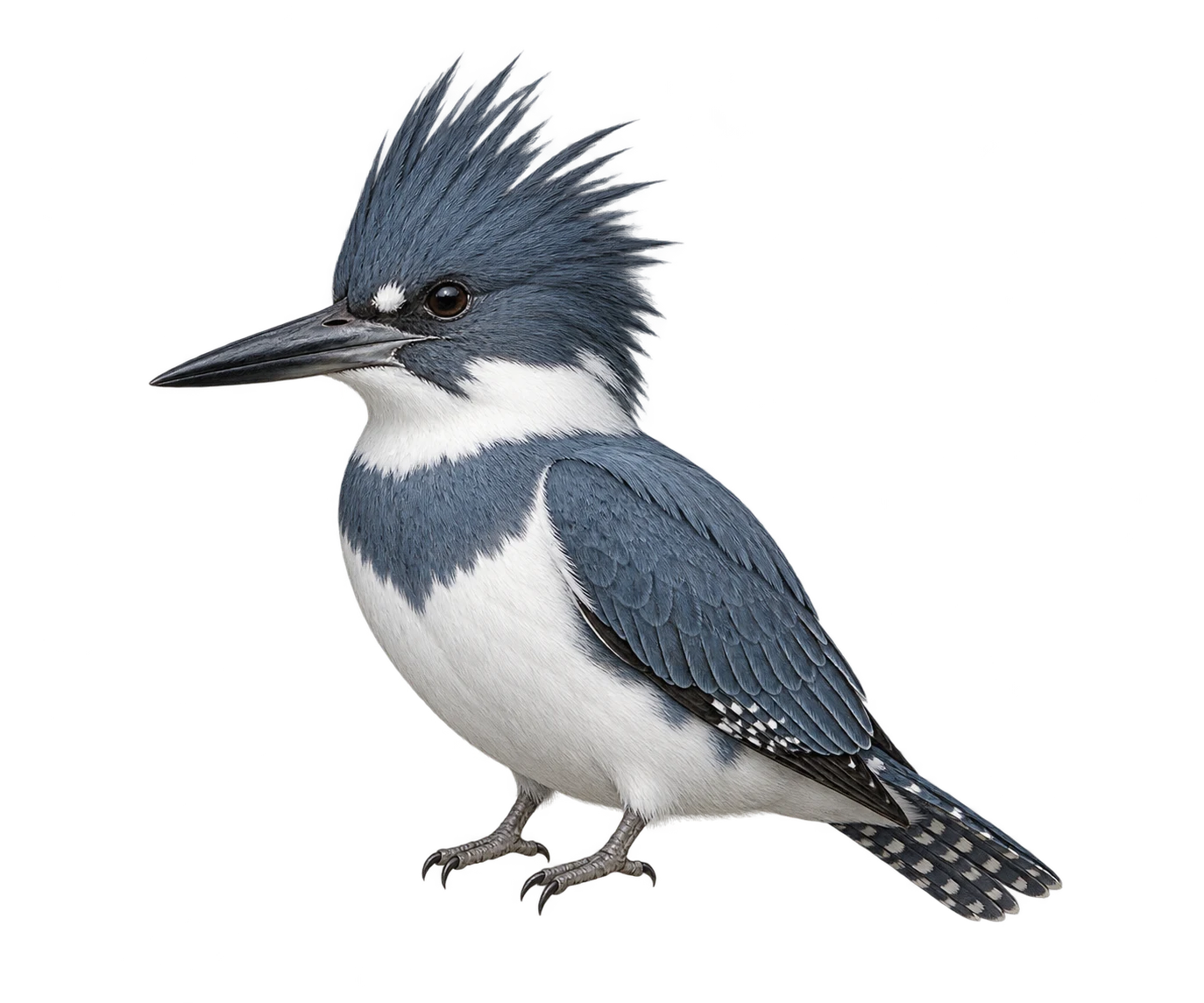
Belted Kingfisher (same family), Kingfisher (same family), Laughing Kookaburra (same family), Oriental Dwarf Kingfisher (same family), Ringed Kingfisher (same family), Bee-Eater (same order), and more.
Birds
Belted Kingfisher
Megaceryle alcyon
Classification and source reference
LivingAI illustration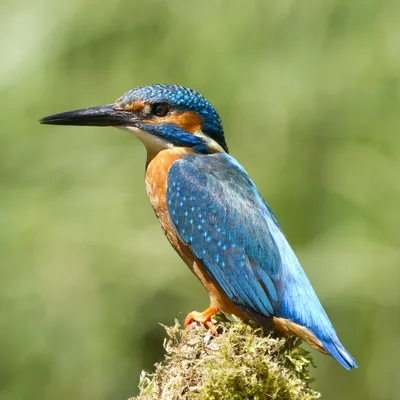
Birds
Kingfisher
Alcedinidae
Kingfishers include many differently coloured birds.
Living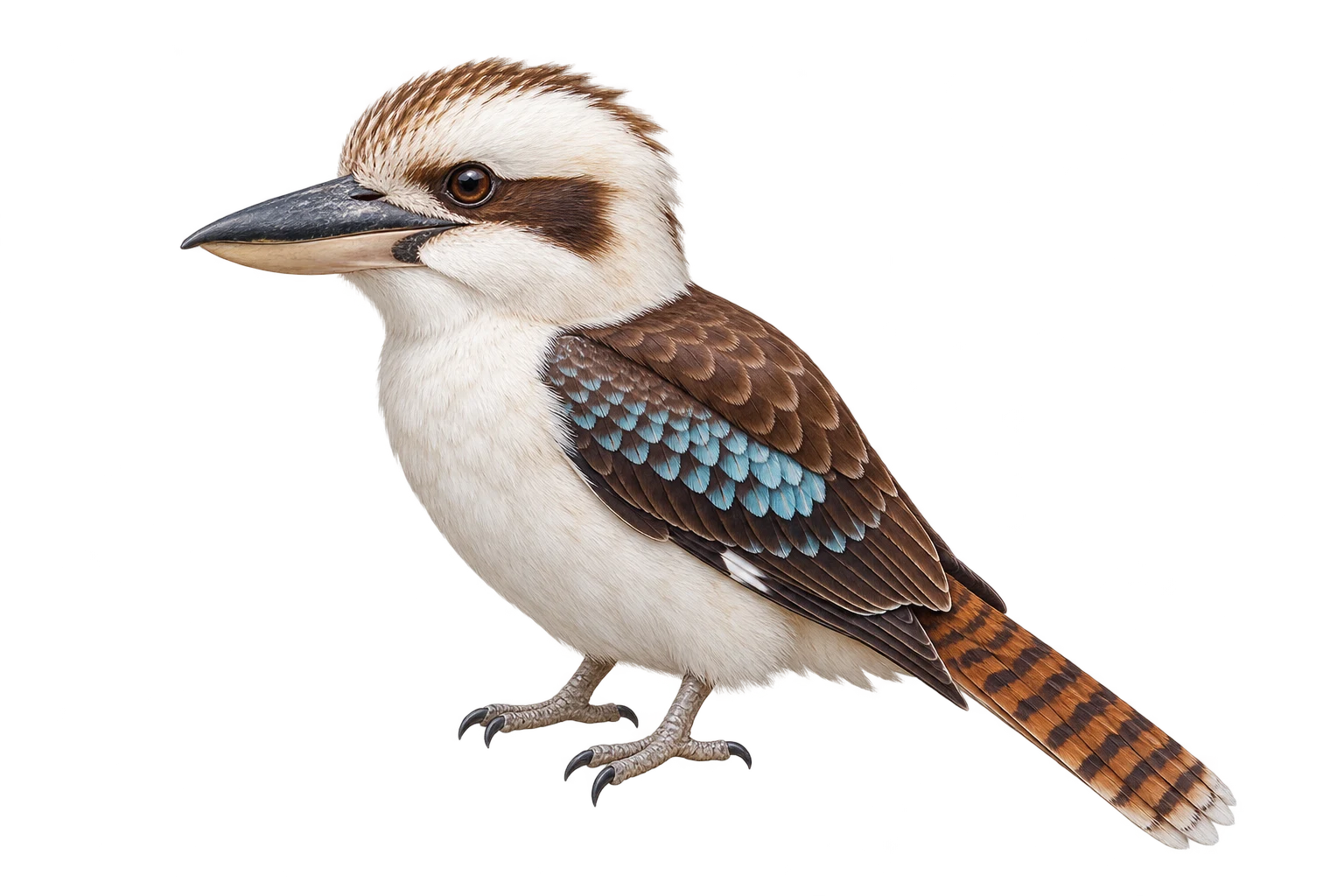
Birds
Laughing Kookaburra
Dacelo novaeguineae
Classification and source reference
LivingAI illustration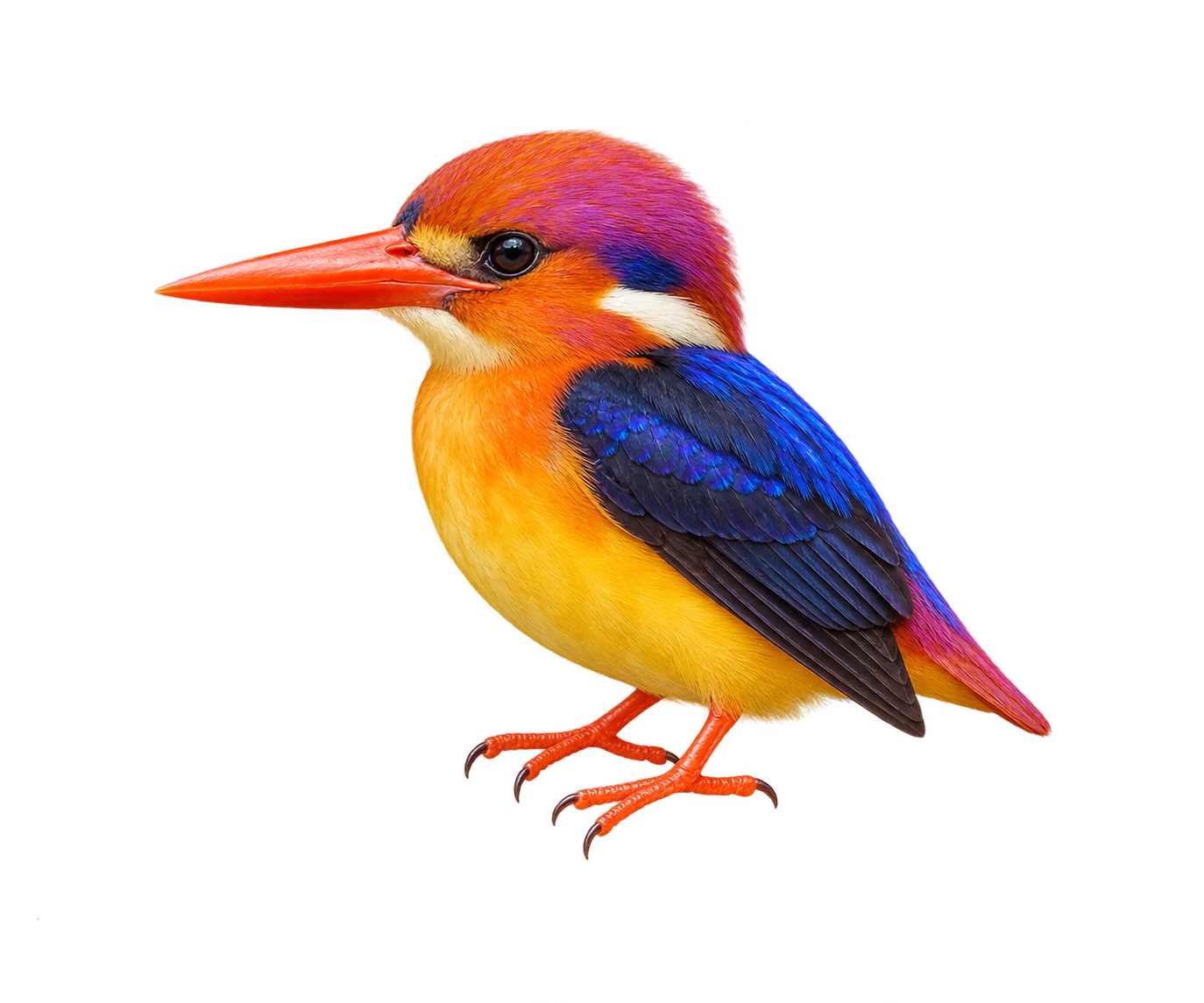
Birds
Oriental Dwarf Kingfisher
Ceyx erithaca
Classification and source reference
LivingAI illustration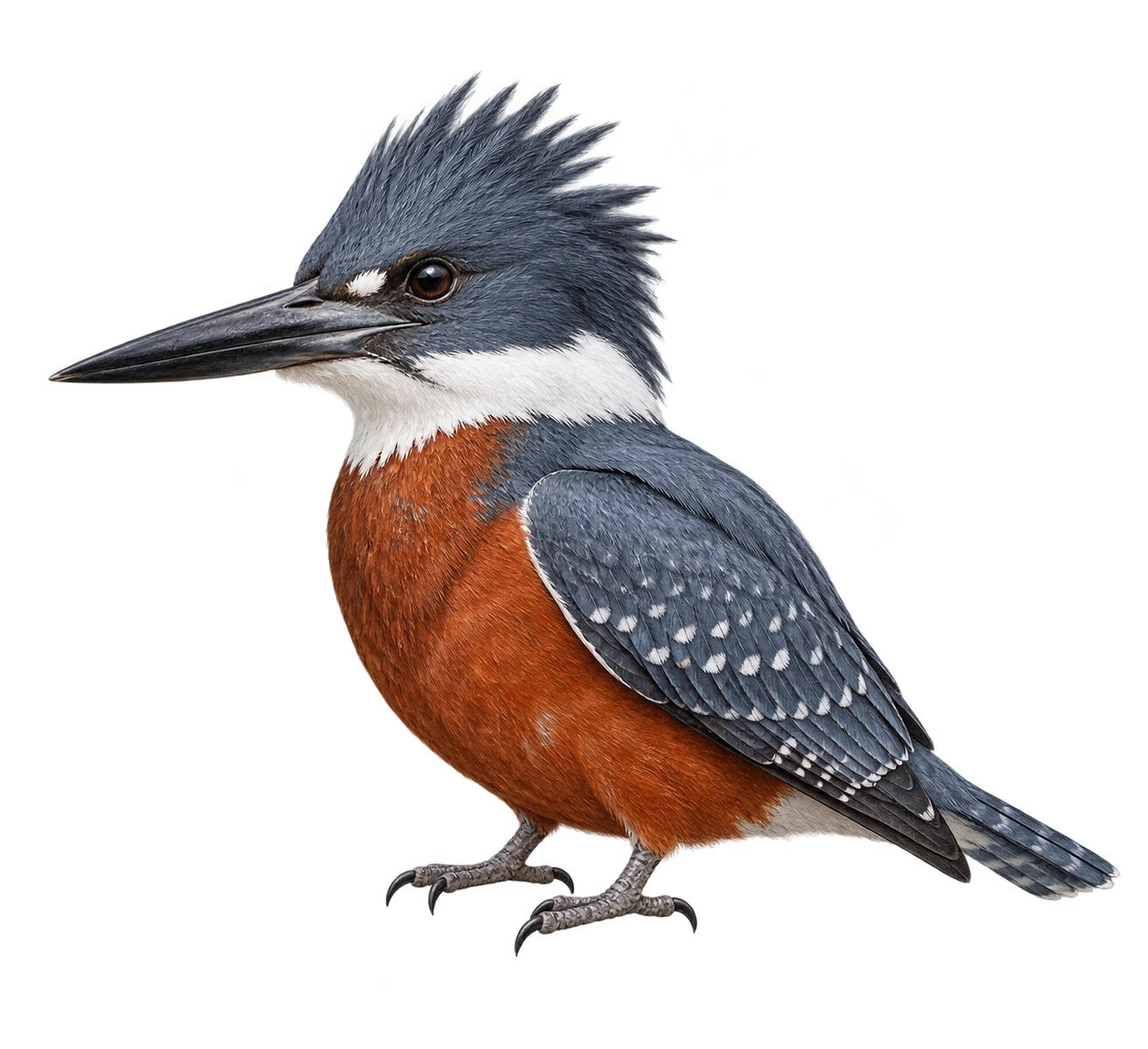
Birds
Ringed Kingfisher
Megaceryle torquata
Classification and source reference
LivingAI illustration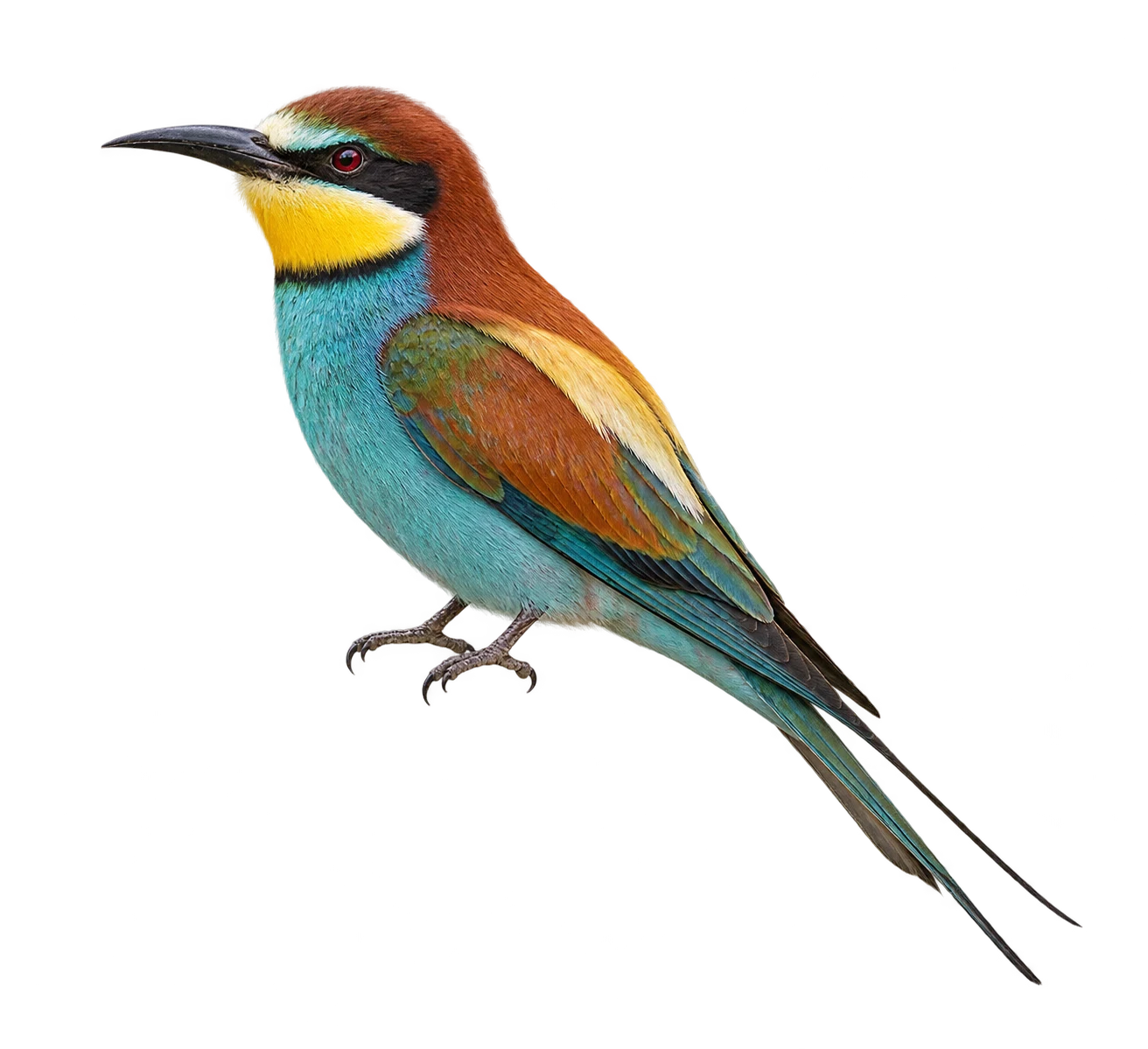
Birds
Bee-Eater
Meropidae
Classification and source reference
LivingAI illustration