
Grey heron
The still fisherman of Old World wetlands
Ardea cinerea
Also called Common heron, Gray heron
Living individuals or members of this group exist today. This does not mean they are safe from extinction.
Meet the grey heron
The grey heron is a tall grey and white wading bird of European, Asian and African wetlands. It hunts fish by standing still in shallow water and striking with a long bill.
Images of the grey heron
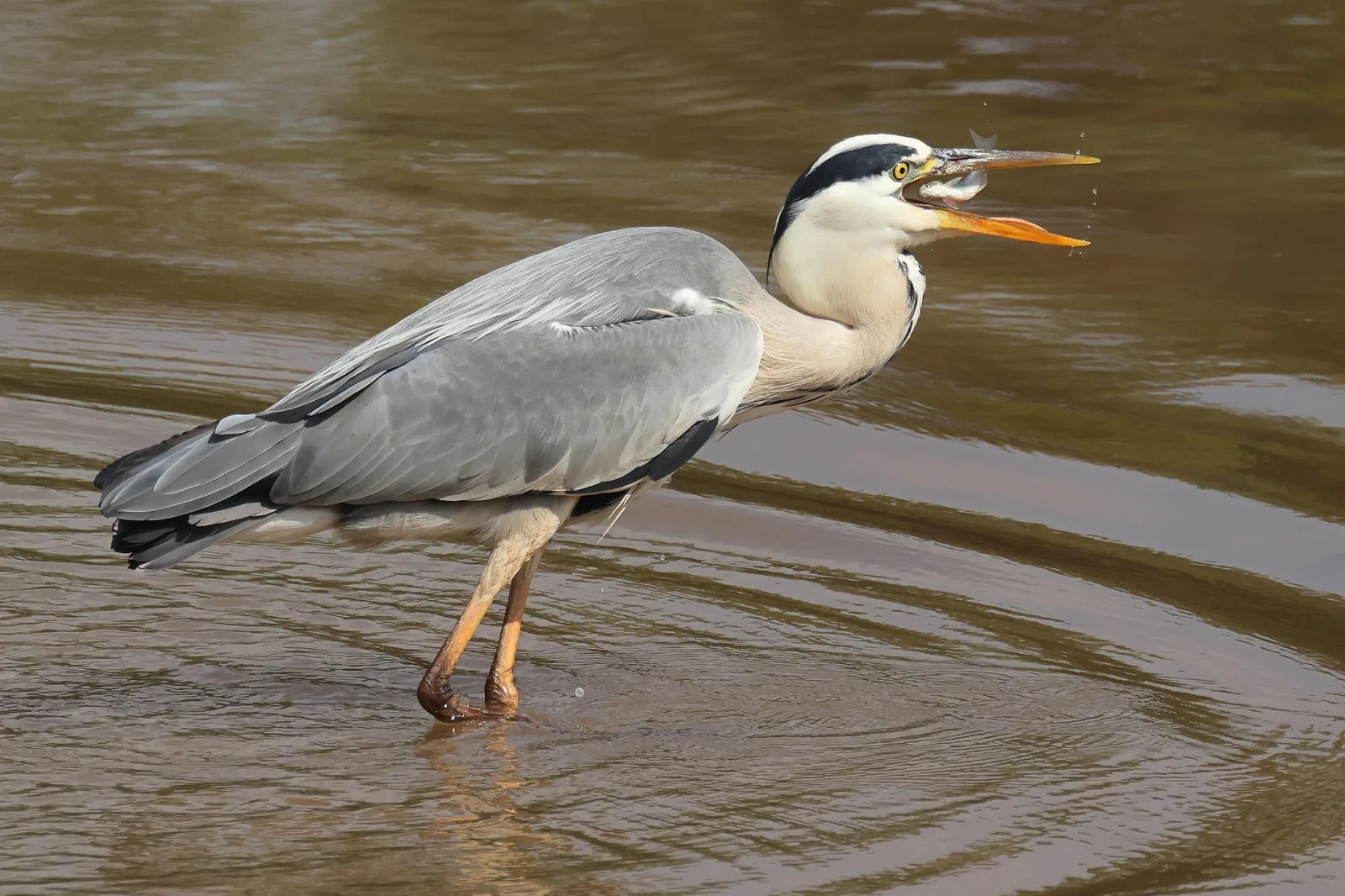
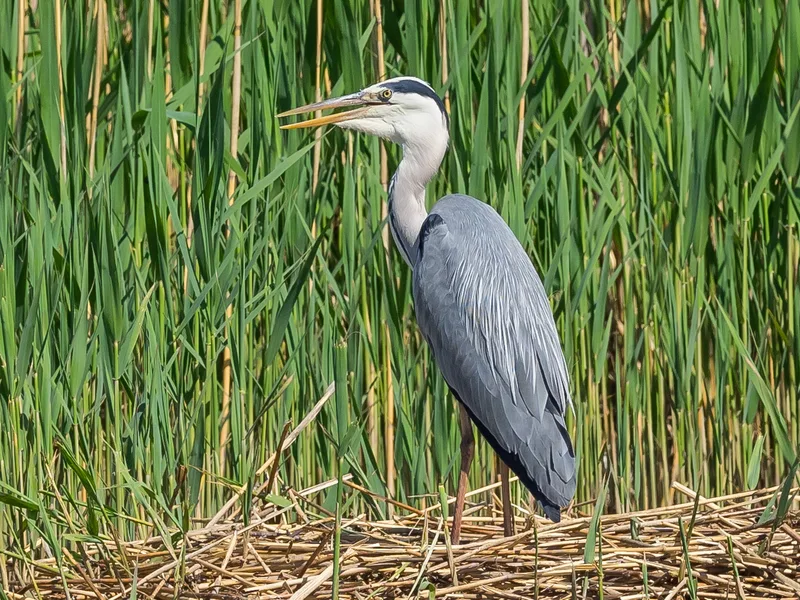
Lifespan in the wild
About 5 years the average for a bird that survives its first winter, and the ringing record
Weight
1.02 to 2.08 kg
Length
0.84 to 1.02 m
Height
Up to 1 m
Fact file
Grey heron
- Location
- Europe, Asia and Africa south of the Sahara
- Habitat
- Wetlands, Rivers and lakes, Coast, Towns and cities
- Diet
- Piscivore
- Prey / food
- Fish, frogs, insects, crustaceans, water voles, rats, ducklings
- Predators
- White-tailed eagle, golden eagle, goshawk, fox; crows take eggs
- Lifestyle
- Hunts alone by day and at dusk; nests in colonies
- Group name
- Colony, and the nest site is a heronry
- Name of young
- Chick
- Incubation
- Incubation about 25 days
- Clutch size
- 3 to 5 eggs
- Population
- 790,000 to 3,700,000 adults
- Biggest threat
- Shooting and poisoning at fish farms
- Distinctive feature
- Black eye stripe ending in a drooping crest
- Colour
- Ash grey above, greyish white below, white head
- Skin type
- Feathers
Size
Next to a person
Measurements
Size and speed
- Height
- Up to 1 m standing height
- Length
- 0.84 to 1.02 m
- Wingspan
- 1.55 to 1.95 m
- Weight
- 1.02 to 2.08 kg
Typical adult ranges. Sources: Animal Diversity Web, Wikipedia.
Life cycle
Lifespan
- In the wildAbout 5, up to 23 years the average for a bird that survives its first winter, and the ringing record
- 023 years
The pale bar is the record. Source: Animal Diversity Web.
Appearance
Colour and coat
- Primary colours
- greywhite
- Secondary colours
- blackyellow
- Skin type
- feathers
- Male and female
- Slight. Males and females share the same plumage and are hard to tell apart in the field. Males average a little larger.
Life cycle
Mating and family
- Mating system
- monogamous pairs for one season
- Social structure
- solitary feeder that breeds in colonies
- Breeding
- one brood a year, from February to June
A male picks a nest site in a colony and calls until a female accepts him. The pair display, preen each other and mate, and the female lays three to five eggs. Both birds incubate for about 25 days and both feed the chicks. The young fly at seven to eight weeks and depend on their parents until nine or ten weeks. They can breed in the next season, but most die before they get the chance.
Classification
Taxonomy
- Kingdom
- Animalia
- Phylum
- Chordata
- Class
- Aves
- Order
- Pelecaniformes
- Family
- Ardeidae
- Genus
- Ardea
- Species
- Ardea cinerea
Conservation
Red List status
- LC
- NT
- VU
- EN
- CR
- EW
- EX
Least Concern on the IUCN Red List
Range
Recorded in 29 countries
- Austria
- Belgium
- Switzerland
- People's Republic of China
- Czech Republic
- Germany
- Denmark
- Spain
- France
- United Kingdom
- Greece
- Hong Kong
- Ireland
- India
- Italy
- Japan
- South Korea
- Luxembourg
- Netherlands
- Poland
- Portugal
- Romania
- Russia
- Sweden
- Singapore
- Turkey
- Taiwan
- Ukraine
- South Africa
Habitat layer: flooded grassland and savanna, mangrove.
Countries from 188,225 wild records on GBIF (iNaturalist research grade), filtered and checked by hand. Country shapes: Natural Earth. Habitat: RESOLVE Ecoregions 2017, CC BY 4.0. Basemap: Natural Earth.
Habitats
Three things to know
- 1
The same stick nest can serve a colony for many years, growing bulkier each season.
- 2
Herons in Dutch cities beg at snack bars and take fish from anglers.
- 3
The bird flies with its neck folded into an S, unlike a stork or a crane.
Did you know
Seven more facts
- 1
The name cinerea is Latin for ash grey, which describes the back and the wings.
- 2
A heron folds its neck in flight, so a distant bird is easy to tell from a stork.
- 3
The bill turns brighter and more orange when the breeding season starts.
- 4
Herons wash great crested newts in water, which appears to rinse the toxins off the skin.
- 5
Irish people often call the grey heron a crane, even though it is not one.
- 6
The bird has been recorded in the Caribbean, Greenland, Bermuda and Newfoundland as a stray.
- 7
One tracked heron flew between China and Russia twice without stopping on the way.
Field notes
How it looks and acts
Field notes
Distinguishing features
- A black stripe runs back from the eye and hangs behind the head as a crest.
- The bill is long, straight and pinkish yellow, and it works like a spear.
- The neck folds into a tight S in flight, with the legs held out behind.
- Adults show a white head and neck against an ash grey back.
- The legs are brown and long enough to wade in deep shallows.
- A standing bird reaches 100 cm, taller than any other heron in Europe.
Field notes
Unique adaptations
- The long neck folds and then straightens, which turns the head into a fast spear.
- Long legs let the bird wade where fish gather without swimming.
- The bird brings up pellets of fur and bone, so indigestible prey parts cause no harm.
- Broad wings carry a heavy body on slow beats and allow long glides.
- Grey plumage against a grey water surface probably makes a standing bird hard to see.
Field notes
Interesting behaviours
- It stands still for many minutes, often on one leg, until prey comes near.
- It stalks slowly through the shallows with the body low and the neck curved.
- It carries a large fish ashore and beats it on the ground before eating it.
- It roosts in trees at night and often shares the roost with other herons.
- It raids garden ponds and zoo pools for easy fish.
Field notes
Temperament
- The grey heron is wary of people and flies off well before a walker arrives.
- Town birds lose that caution and will stand within a few metres of a stall.
- It is aggressive at the nest and stabs at any bird that comes close.
- Away from the colony it is solitary and keeps a distance from other species.
Field notes
Communication
- The flight call is a harsh croak that carries a long way over water.
- The male gives an advertising call from the nest to attract a mate.
- A pair greet each other by raising and lowering the wings and the plumes.
- Snapping the mandibles together is part of the courtship display.
- A raised crest with a lowered head warns an intruder to leave.
Ecology
Ecological role
The grey heron is a top predator of shallow fresh water, and it links the water to the land around it.
- It limits fish and amphibian numbers in rivers, ponds and estuaries.
- It removes diseased fish, which may slow the spread of parasites in a pond.
- Its nests give shelter to rodents and insects.
- A colony adds nitrogen and phosphorus to the soil and changes what grows below it.
Stories
Myths and legends
- In ancient Egyptian belief, the heron shaped deity Bennu rose over the first waters and began creation.
- In Roman practice, the heron was a bird of augury and its call was read as a sign.
- In medieval British heraldry, the heron stood for patience, contemplation and noble bearing.
- In Greek writing after Herodotus, the Egyptian bird became the phoenix that renews itself.
- In Maldivian popular culture, the heron name Maakana was given to a satirical television character.
People
Relationship with humans
People
Living alongside us
The grey heron and people share the same rivers, ponds and coasts. Fish farmers and pond keepers treat it as a thief, and shooting and poisoning still happen. Town birds in the Netherlands and Ireland have learned to feed at markets and beside anglers. The species has no farm or trade value today, though roast heron was once a banquet dish in Britain.
- The grey heron does not attack people and flies off long before anyone reaches it.
- A cornered or handled bird may stab with the bill, and the point reaches the eyes.
- The birds carry fish parasites and can pass fish diseases between ponds.
People
Status, uses and products
- Domestication
- Wild
- As a pet
- Not suitable. A grey heron needs metres of open water, live fish every day and space to fly. It is protected across Europe, so keeping one without a licence is illegal. The bill is a weapon and a captive bird stays wild.
- Uses
- birdwatchingwetland indicator
- Products
- None recorded
The full account
About the grey heron
The grey heron, Ardea cinerea, is a tall wading bird of Old World wetlands. It stands still in shallow water and waits for a fish to swim within reach. Adults measure 84 to 102 centimetres from the bill tip to the tail. The wingspan runs 155 to 195 cm, and a bird weighs 1.02 to 2.08 kilograms.
Grey plumage covers the back and the wings, and the head is white with a black band. The bird nests in colonies in tall trees, and one nest can serve for many years. It breeds across most of Europe and Asia, and in Africa south of the Sahara. Northern birds move south in autumn, while most of the rest stay where they are. The IUCN lists the species as Least Concern, and the world population is large.
Name and taxonomy
Carl Linnaeus gave the grey heron its scientific name in 1758. The genus name Ardea is the Latin word for a heron, and cinerea means ash grey. Four subspecies are recognised, and each holds a different part of the range. They divide Europe and western Asia, eastern Asia, Madagascar and the coast of Mauritania. Some ornithologists treat the Mauritanian form, A. c. monicae, as a species of its own.
The order Pelecaniformes groups the herons with the pelicans, the ibises and the spoonbills. Within the heron family the bird belongs to the subfamily Ardeinae, the typical herons. In Ireland people often call it a crane, although true cranes sit in another family.
Evolution and relatives
The genus Ardea holds the great herons, the largest members of the family. The nearest lookalike is the great blue heron of North America, which is bigger. That bird carries chestnut brown flanks and thighs, and the grey heron does not. The cocoi heron of South America forms a superspecies with the grey heron. The three birds probably descend from one ancestor that spread and then split.
Grey herons sometimes pair with other species and produce hybrid young. Recorded partners include the great egret, the little egret and the purple heron. Hybrids with the great blue heron are known as well.
Appearance
A grey heron stands up to 100 cm tall, so a bird on a riverbank reaches an adult's chest. The back and the wings are ash grey, and the underparts are a paler greyish white. A broad black stripe starts at the eye and ends in a thin drooping crest. The front of the neck carries dark streaks, and black marks show along the flanks. The bill is long, straight and pinkish yellow, and it brightens in the breeding season. The eye is bright yellow, and the very long legs are brown.
Young birds look duller than their parents. Their head stripe is grey rather than black, and the crest stays small and dark. The wings are broad, and a span of 155 to 195 cm gives a slow, heavy flight. A flying heron folds its neck into an S and trails its legs behind the tail. That shape separates herons from cranes and storks, which fly with the neck straight.
Habitat and range
The grey heron breeds across most of the Palearctic region. In Norway the breeding range reaches 70 degrees north, further than anywhere else. To the south it takes in Spain, the Balkans, Iraq, Iran, India and Myanmar. African birds hold the land south of the Sahara, plus Morocco, Algeria and Tunisia. Separate subspecies occupy eastern Asia, Madagascar and the islands off Mauritania.
Almost any shallow water with fish in it can hold a heron. The bird uses lakes, rivers, marshes, ditches, flooded fields, estuaries and the open shore. It also hunts on pasture, and it has taken beetles and lizards in desert country. Colonies usually sit near feeding water, though a few stand eight kilometres away. A hunting bird may travel as far as 20 km from the nest. GBIF holds records from 188 countries, a total that includes strays and captive birds.
Diet and feeding
Fish make up most of what a grey heron eats. The bird also takes frogs, insects, crustaceans, water voles, rats, stoats and young rabbits. It kills ducklings, and a water rail is about the largest bird it can swallow. Prey runs from 1 cm fish weighing under a gram to carp of 30 cm and eels of 57 cm. Items over 100 grams are common for an adult, and some pass 500 g. One paper describes a heron that caught and swallowed a sea trout of 680 g.
The hunting method is patience. The bird stands motionless in the shallows, or waits on a rock beside the water. It can also wade slowly with the neck curved, then straighten it and stab. Small fish go down head first, in one gulp. Bigger prey is carried ashore, beaten on the ground and torn apart before it is eaten. The heron coughs up pellets of fur, bone and insect cases that it cannot digest.
Behaviour and social life
A grey heron feeds alone and guards the stretch of water it is using. It gathers with others only to breed and to roost. Adults spend long spells standing still on one leg. They perch in trees and also stride about on open ground. Dawn and dusk are the main hunting periods, but the bird feeds at any hour. Near dusk the birds climb into trees, probably because poor light hides an approaching predator.
Flight is slow, with deep wingbeats and short glides. Herons sometimes circle to a great height, though less often than storks do. In spring the birds chase each other above the colony and swoop towards the ground. Adults drive away young birds that come too close to an active nest. They stare at the intruder, raise the crest and stab forward with the head.
Some grey herons now live in towns. In the Netherlands the species has settled in cities over recent decades. Amsterdam birds visit street markets and snack bars, and a few accept food at doorsteps. Others wait beside anglers and take a share of the catch. Zoo herons steal fish put out for penguins, pelicans, otters and seals.
Communication and senses
The usual call is a loud croak, often written as frank. A colony is noisier, with a range of rough throaty sounds. A male advertises from his nest site to bring a female in. He uses a harsh schaah to push rival birds away from the nest. A soft gogogo signals unease, for example when a person walks below the trees. Chicks make a loud chattering or ticking noise.
Posture carries as many messages as sound does. A raised crest and a stabbing head mean threat. A bill pointed at the sky, with the wings spread, belongs to courtship. Sight guides the strike, and hunting is harder once the light goes. Like other herons, the bird also uses hearing and touch to find its food.
Reproduction and life cycle
Grey herons breed in colonies, and the colony site is called a heronry. Most sit high in tall trees near water. Reed beds, bramble patches, low bushes and cliff ledges also serve. A nest starts as a small platform of sticks and grows bulky as pairs add material. The male gathers the sticks and the female builds with them. Breeding runs from February to June over much of the range.
The male calls from his chosen site until a female joins him. The pair then perform a stretching display, lifting the neck and folding it back. In the snapping ceremony a bird drops its head and claps its mandibles together. That display may be repeated 20 to 40 times. The male offers a stick, the two birds preen each other, and mating follows.
A clutch holds three to five greenish blue eggs, and an egg averages 60 by 43 millimetres. Eggs arrive at two day intervals, and sitting starts after the first or the second one. Both parents incubate, and the eggs hatch after about 25 days. Chicks first take food from the side of an adult's bill. Later the parents drop food into the nest and the young fight over it. Chicks fly at seven to eight weeks and stay dependent until nine or ten weeks.
Most pairs raise one brood a year, and a second brood is rare. A bird can breed in the season after it hatches. A heron that survives its first winter lives about 5 years, and the record is 23.
Predators and threats
An adult grey heron carries a heavy bill and has few enemies. White-tailed eagles and golden eagles kill them, and goshawks do so more rarely. Foxes are named as the main predator in some accounts. Crows and kites lure the parents off the nest and then take eggs or chicks. One heron found dead in the Pyrenees was probably killed by an otter.
Winter is the biggest killer of young birds. About 67 per cent of first year herons die, and the rate falls sharply after that. A Czech study recorded 29 species of parasitic worm in central European herons. Young birds carried fewer species than adults, but heavier infections. Fish farmers shoot and poison herons, and pollution can thin the eggshells.
Population and conservation
The IUCN places the grey heron in the Least Concern category. Estimates put the adult world population between 790,000 and 3,700,000 birds. Numbers look stable across the range as a whole. iNaturalist holds 259,944 observations of the species, which shows how easy it is to find. The British list places it on the green list of conservation concern.
Regional assessments do not all agree with the global one. Lists for Israel and Palestine record the breeding bird as regionally extinct. German and Austrian lists call it threatened or close to it. People long treated the heron as a fish thief, and shooting was common. Legal protection probably explains much of the recovery in western Europe.
Colonies can still be destroyed. An Estonian colony of up to 125 nesting trees was protected in 1990. Every suitable tree there was felled in 2001, against the rules that covered the site. That loss started a national heron project. It mapped the colonies and feeding grounds of the whole country between 2007 and 2014.
Relationship with humans
The grey heron lives close to people over most of its range. Garden ponds stocked with ornamental fish draw herons, and young birds learn to hunt there. Fish farms lose stock to the birds, and herons can also spread fish diseases. Named examples are pancreatic necrosis, viral haemorrhagic septicaemia and spring viraemia of carp. Soviet work in the 1970s counted heavy losses of carp and mullet in Ukraine.
Other studies balance the account. German pond research found that herons remove many fish that carry a tapeworm disease. The birds eat large numbers of harmful insects as well. A big colony changes the soil below it, because droppings add nitrogen and phosphorus. One Russian study measured a soil pH near 4.5 under a colony fifteen years old.
People once ate herons in Britain, and roast heron was a dish for a great occasion. Guests at the installation of George Neville as Archbishop of York in 1465 ate 400 of them. Young birds were still shot for the table in Romney Marsh in 1896. Nobody farms or keeps the species today, and it has no market value.
In culture and myth
In ancient Egypt the deity Bennu appeared as a heron in New Kingdom art. Bennu stood for the sun, for creation and for rebirth. Egyptian texts call the bird self created and treat it as the soul of Ra. Herodotus later wrote of an Egyptian bird that lived 500 years. The Greek phoenix may take its name from Bennu, though the stories differ. Roman augurs listened to the call of a heron and read it as an omen.
Medieval British heraldry used the heron as a badge of patience and nobility. Writers of the period linked the still fishing bird with quiet thought. Four English surnames come from the bird: Earnshaw, Hernshaw, Herne and Heron. The ending shaw means a wood, so the names mark a place where herons nested. Two grey herons appear in a stained glass window at Selborne church in Hampshire. In the Maldives the bird is called Maakana, and a satirical television character carries the name.
A sentence with a dotted underline is inferred: it describes the group the animal belongs to, or is a reading of the sources, rather than a measured or reported fact about this species.
Questions
Grey heron questions, answered
How big is a grey heron?
The body measures 84 to 102 cm from bill to tail, and a standing bird reaches 100 cm. The wings span 155 to 195 cm.
How much does a grey heron weigh?
An adult weighs 1.02 to 2.08 kg. That is light for such a tall bird, because the bones and the feathers are built for flight.
What do grey herons eat?
Mostly fish. They also take frogs, insects, crustaceans, water voles, rats and ducklings. Prey can be as small as a 1 cm fish or as large as a 57 cm eel.
Do grey herons eat garden pond fish?
Yes. A stocked pond is easy hunting, and young herons often learn on ornamental fish. A net or a sloping bank without a shallow edge is the usual defence.
Where do grey herons live?
Across Europe and Asia, and in Africa south of the Sahara. They need shallow water, so they use lakes, rivers, marshes, estuaries and the sea shore.
Do grey herons migrate?
Most stay put all year. Birds from the far north of Europe move south in autumn, and some cross the Sahara.
How long do grey herons live?
A bird that survives its first winter lives about 5 years on average. The oldest known wild grey heron reached 23 years.
How many eggs does a grey heron lay?
Three to five is normal, and clutches of two and of seven are recorded. The eggs are greenish blue and hatch after about 25 days.
What is a group of herons called?
A breeding colony is a heronry. Grey herons feed alone, so a crowd of them means a nesting site or a rich patch of water.
Are grey herons endangered?
No. The IUCN lists the species as Least Concern, and it holds between 790,000 and 3,700,000 adults. Israel and Palestine have lost their breeding birds.
Why do herons stand on one leg?
They rest that way for long periods while they watch the water. Tucking one leg into the body probably saves heat.
Are grey herons dangerous to people?
No. They keep their distance and fly off when anyone approaches. A handled bird can stab with its bill, so injured herons need care.
What is the difference between a grey heron and a great blue heron?
The great blue heron is larger and lives in the Americas. It has chestnut brown thighs and flanks, which the grey heron does not.
How can I tell a heron from a crane in flight?
Watch the neck. A heron folds it into an S against the body. A crane or a stork flies with the neck stretched out.
What eats a grey heron?
Few animals take a healthy adult. White-tailed eagles, golden eagles and foxes kill some, and crows and kites rob the nests.
Food web
Prey and food
- fish
- frogs
- insects
- crustaceans
- water voles
- rats
- ducklings
Food web
Predators
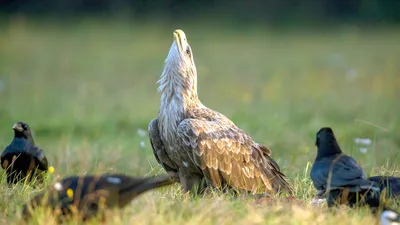 White-tailed eagle
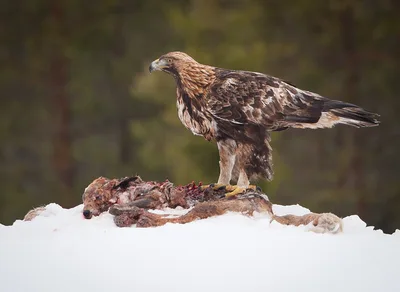 Golden eagle
- goshawk
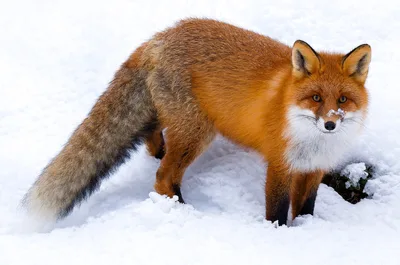 Red fox
- crows
Ecological equivalents
Related species on this site
Great blue heron (same genus), Great egret (same genus), Egret (same family), Green Heron (same family), Heron (same family), Night Heron (same family), and more.
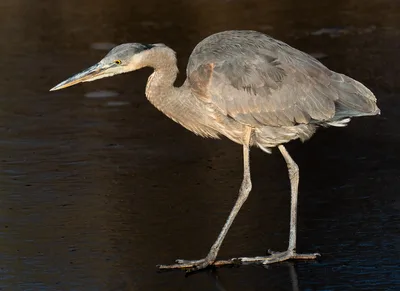 LC
Birds
Great blue heron
Ardea herodias
The great blue heron is the biggest of the North American herons and a patient hunter of shallow water.
Living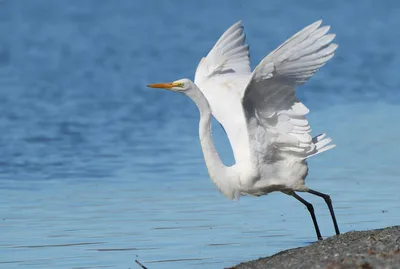 LC
Birds
Great egret
Ardea alba
The great egret is a tall white heron that hunts fish in shallow water on six continents.
Living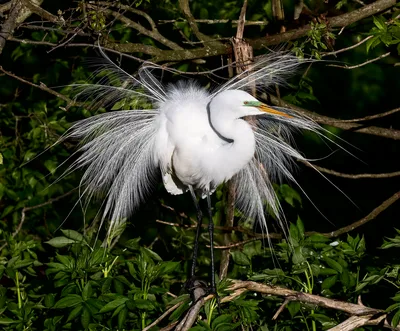
Birds
Egret
Ardeidae
Egrets are herons known for pale plumage in several species.
Living
Birds
Green Heron
Butorides virescens
Classification and source reference
LivingAI illustration
Birds
Heron
Ardeidae
Herons are long-legged waterbirds.
Living
Birds
Night Heron
Nycticorax nycticorax
Classification and source reference
LivingAI illustration