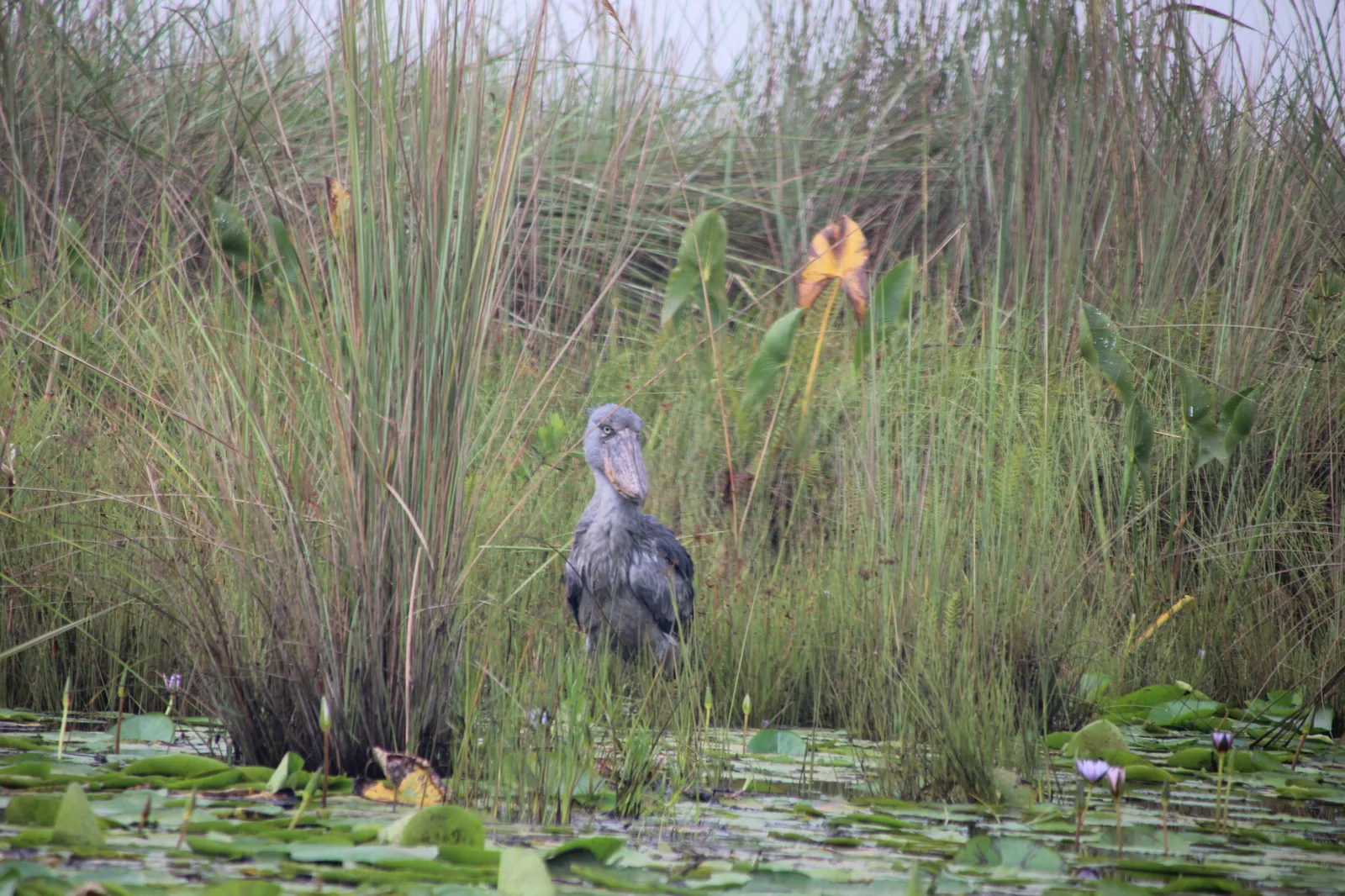
Shoebill
A swamp hunter with a bill shaped like a clog
Balaeniceps rex
Also called Whalehead, Whale-headed stork, Shoe-billed stork
Living individuals or members of this group exist today. This does not mean they are safe from extinction.
Meet the shoebill
The shoebill is a tall grey wading bird of central African swamps, named for its huge clog-shaped bill. It hunts lungfish and catfish alone, and about 5,000 to 8,000 birds remain.
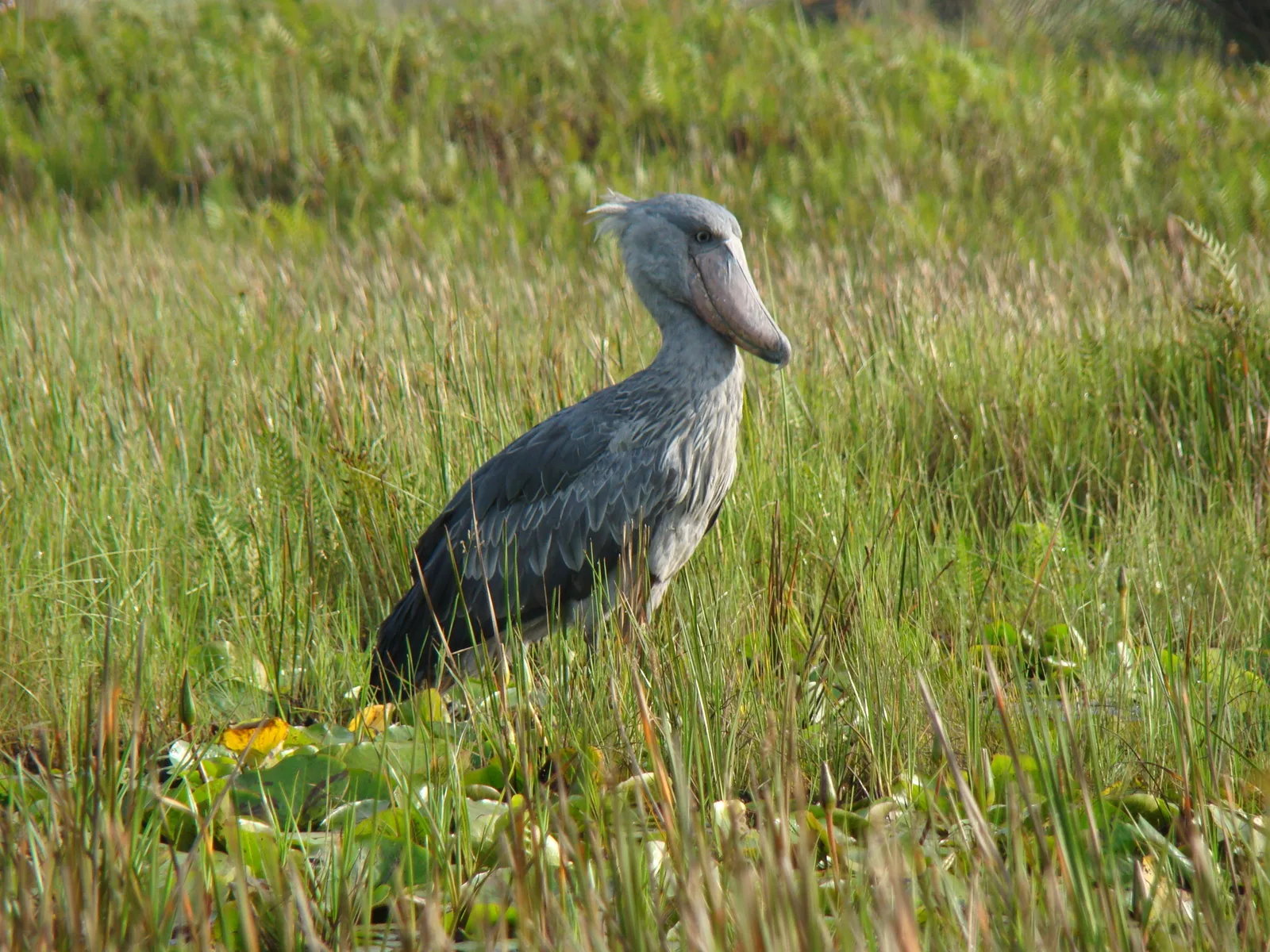
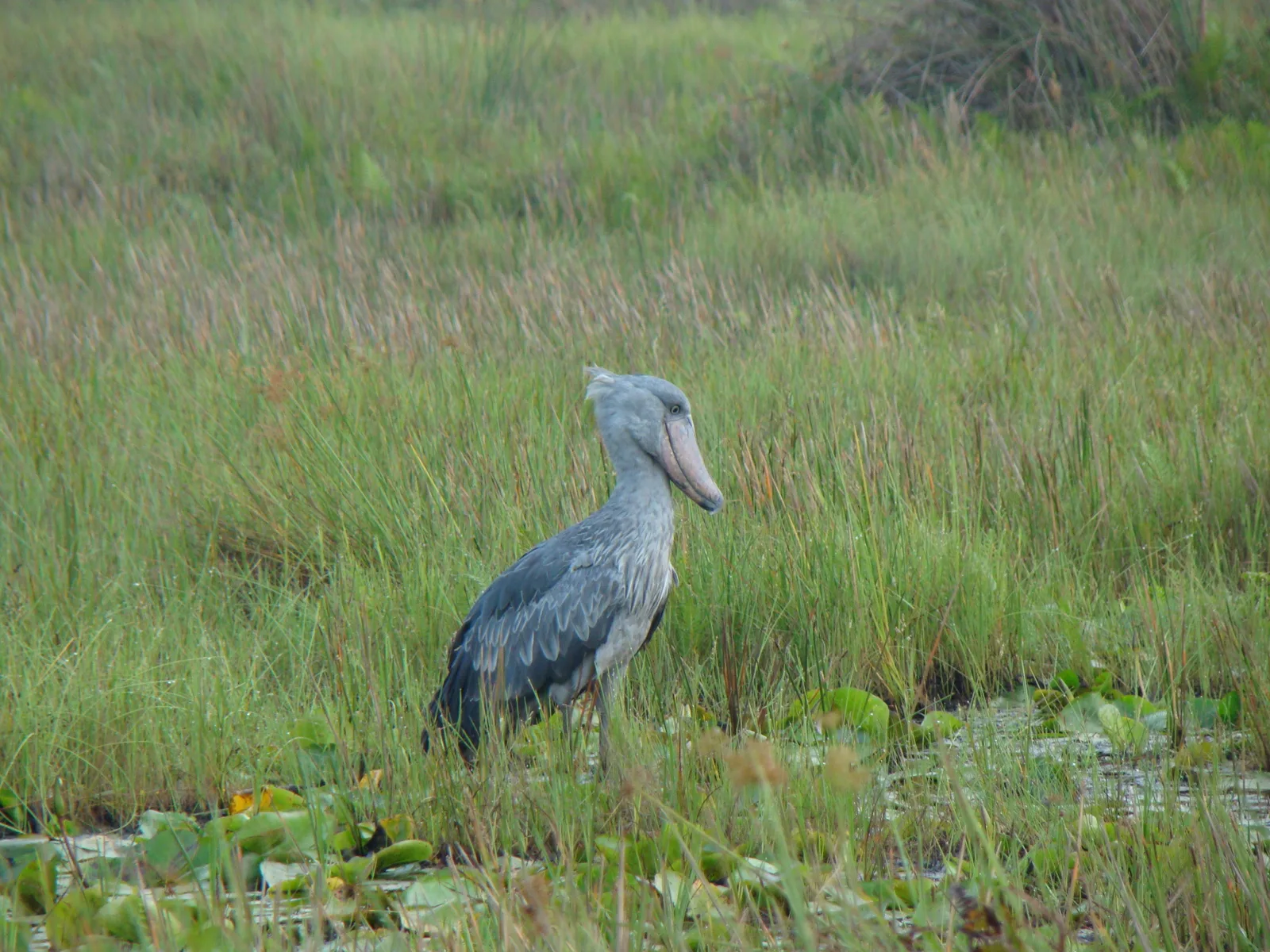
Images of the shoebill
Lifespan
Up to 35.7 years one captive bird
Weight
4 to 7 kg
Length
1 to 1.4 m
Height
1.1 to 1.4 m
Fact file
Shoebill
- Location
- Swamps from South Sudan south to Zambia
- Habitat
- Wetlands, Rivers and lakes
- Diet
- Piscivore
- Prey / food
- Lungfish, catfish, tilapia, bichirs, watersnakes, frogs, monitor lizards, baby crocodiles
- Predators
- Few as adults; nest raiders take eggs and chicks
- Lifestyle
- Solitary, active by day, mostly motionless
- Group name
- None; the shoebill lives alone
- Name of young
- Chick
- Incubation
- Incubation about 30 days
- Clutch size
- 1 to 3 eggs, usually 2
- Population
- 5,000 to 8,000 in the wild
- Biggest threat
- Wetland drainage, burning and disturbance
- Distinctive feature
- A huge shoe-shaped bill with a hooked tip
- Colour
- Blue-grey with paler underparts
- Skin type
- Feathers
Size
Next to a person
Measurements
Size and speed
- Height
- 1.1 to 1.4 m, up to 1.52 m standing height
- Length
- 1 to 1.4 m bill to tail
- Wingspan
- 2.3 to 2.6 m
- Weight
- 4 to 7 kg males average about 5.6 kg, females about 4.9 kg
- Weight, male
- About 5.6 kg
- Weight, female
- About 4.9 kg
Typical adult ranges. Source: Wikipedia.
Life cycle
Lifespan
- In captivityUp to 35.7 years one captive bird
- 035.7 years
The pale bar is the record. Source: AnAge.
Appearance
Colour and coat
- Primary colours
- grey
- Secondary colours
- slatepinkyellow
- Skin type
- feathers
- Male and female
- Slight. Males are a little larger and have longer bills. A male averages about 5.6 kg against about 4.9 kg for a female.
Life cycle
Mating and family
- Mating system
- monogamous pairs
- Social structure
- solitary outside the breeding pair
- Breeding
- one clutch a year
A pair builds a floating nest of swamp plants and defends 2 to 4 square kilometres around it. One to three white eggs are laid, and two is the usual number. Incubation lasts about 30 days, and both parents shade and water the eggs. The young leave the nest at about 105 days and fly well by 112 days. Breeding age comes at three years.
Classification
Taxonomy
- Kingdom
- Animalia
- Phylum
- Chordata
- Class
- Aves
- Order
- Pelecaniformes
- Family
- Balaenicipitidae
- Genus
- Balaeniceps
- Species
- Balaeniceps rex
Conservation
Red List status
- LC
- NT
- VU
- EN
- CR
- EW
- EX
Vulnerable on the IUCN Red List
Range
Recorded in 3 countries
Habitat layer: flooded grassland and savanna, mangrove.
Countries from 306 wild records on GBIF (iNaturalist research grade), filtered and checked by hand. Country shapes: Natural Earth. Habitat: RESOLVE Ecoregions 2017, CC BY 4.0. Basemap: Natural Earth.
Habitats
Three things to know
- 1
The shoebill hunts by collapsing its whole body forward onto a fish.
- 2
A pair pours water from the bill over the eggs to cool them.
- 3
The species is the only living member of its family.
Did you know
Seven more facts
- 1
John Gould named the bird in 1850 from a single skin.
- 2
Balaeniceps joins the Latin words for whale and head.
- 3
The middle toe alone can reach 18.5 centimetres.
- 4
A shoebill can stand on floating plants like a giant jacana.
- 5
Roughly six strikes in ten catch something.
- 6
The largest fish recorded from one measured 99 centimetres.
- 7
A captive shoebill has lived 35.7 years.
Field notes
How it looks and acts
Field notes
Distinguishing features
- A huge clog-shaped bill with a hooked nail at the tip.
- Sharp cutting edges along both sides of the bill.
- Blue-grey plumage with darker slate flight feathers.
- A short thick neck, unlike that of a heron or a crane.
- Very long toes with no webbing between them.
- A standing height of 110 to 140 centimetres.
Field notes
Unique adaptations
- Enormous feet spread the weight over floating vegetation.
- The hooked bill grips a slippery lungfish.
- Broad wings let the bird soar on thermals with little effort.
- A head held straight down lines both eyes on the prey.
- Throat fluttering sheds heat in an open swamp.
Field notes
Interesting behaviours
- It stands motionless for long stretches while watching the water.
- It hunts by collapsing forward onto the prey.
- It shakes plants out of the bill before swallowing.
- It usually removes the head of a fish first.
- It clatters its bill when a partner returns to the nest.
Field notes
Temperament
- The shoebill is calm and does not threaten people.
- It is sensitive to disturbance and may desert a nest.
- It will not tolerate another shoebill outside its own pair.
- It is patient, and hunts by waiting rather than chasing.
Field notes
Communication
- Bill-clattering is the main signal, at the nest and in greeting.
- Adults make a low sound like a cow.
- Adults also give high whines.
- Chicks beg with a sound like hiccups.
- One adult croaked in flight at a marabou stork.
Ecology
Ecological role
The shoebill is a top predator of the papyrus swamp, and it removes large fish.
- It takes lungfish and catfish that few other birds can handle.
- It hunts water with little oxygen, where fish must come up to breathe.
- Its presence probably marks a swamp that is still intact.
- African fish eagles profit by robbing it of large catches.
Stories
Myths and legends
- In folklore beside the East African swamps, people are taught to fear the shoebill.
- In Victorian European science, the bird was filed with the storks by mistake.
- In internet culture, the shoebill plays a menace, though it is calm with people.
- In Japanese the bird is hashibirokou, a name that points at the broad bill.
- In game design, it lent its shape to the Loftwing birds of a 2011 Zelda title.
People
Relationship with humans
People
Living alongside us
The shoebill draws birdwatchers from around the world to East African swamps. Boat trips in Uganda and Zambia bring money to communities beside the wetlands. The same wetlands are drained for crops and burned for grazing. People also take eggs and chicks to eat and to sell. Zoos pay high prices, which encourages capture from the wild.
- The shoebill has never been recorded harming a person.
- It stands and stares rather than attacking someone who comes close.
- The real risk runs the other way, because a flushed bird may leave its nest.
People
Status, uses and products
- Domestication
- Wild
- As a pet
- Not suitable. The shoebill is a protected wild bird that needs square kilometres of swamp. It eats large live fish and breeds only where nobody disturbs it. National law protects it across much of its range, and even zoos struggle to breed it.
- Uses
- birdwatching tourismzoo display
- Products
- None recorded
The full account
About the shoebill
The shoebill is a tall wading bird of the swamps of tropical Africa. Its bill is shaped like a wooden clog, and that shape gives the bird its name. Adults stand 110 to 140 centimetres tall. The broad wings span 230 to 260 centimetres. Most adults weigh 4 to 7 kilograms (kg).
The shoebill hunts alone in papyrus marshes and reed beds. It stands still for long periods and watches the water. Lungfish and catfish make up most of its food. It strikes by throwing its whole body forward at the prey. Sharp edges and a hooked tip let the bill hold a large fish.
The IUCN lists the shoebill as Vulnerable. Between 5,000 and 8,000 birds are thought to remain. Drainage, fire, disturbance and the capture of chicks all cut the numbers. Birdwatchers rank it among the most wanted birds in Africa.
Name and taxonomy
John Gould described the shoebill in 1850, from a skin taken on the upper White Nile. The traveller Mansfield Parkyns had brought that specimen to England. Gould gave a fuller account the next year and created the genus Balaeniceps. The name joins the Latin words for whale and head, which describes the bill. Other English names are whalehead, whale-headed stork and shoe-billed stork.
Naturalists long placed the bird with the storks. Patricia Cottam proposed a link with the pelicans in 1957, using bone evidence. Konstantin Mikhailov compared eggshell structure in 1995 and found the same signal. A DNA study in 2008 settled the species in the order Pelecaniformes. Its nearest living relative is the hamerkop, an African bird in another family.
Evolution and relatives
The shoebill is the only living member of the family Balaenicipitidae. Two fossil relatives have been named so far. Goliathia comes from the Early Oligocene of Egypt. Paludiavis comes from the Late Miocene of Pakistan and Tunisia. A puzzling African fossil bird has been compared with the shoebill and the secretary bird.
The family shares a hook at the end of the upper beak. They also share a furrow below the nostrils and a bony septum. Pelicans and herons sit further out along the same branch of the tree. Rock carvings at Oued Djerat in eastern Algeria record the bird far to the north. Wetlands covered much of the Sahara in the Early Holocene, which explains that find.
Appearance
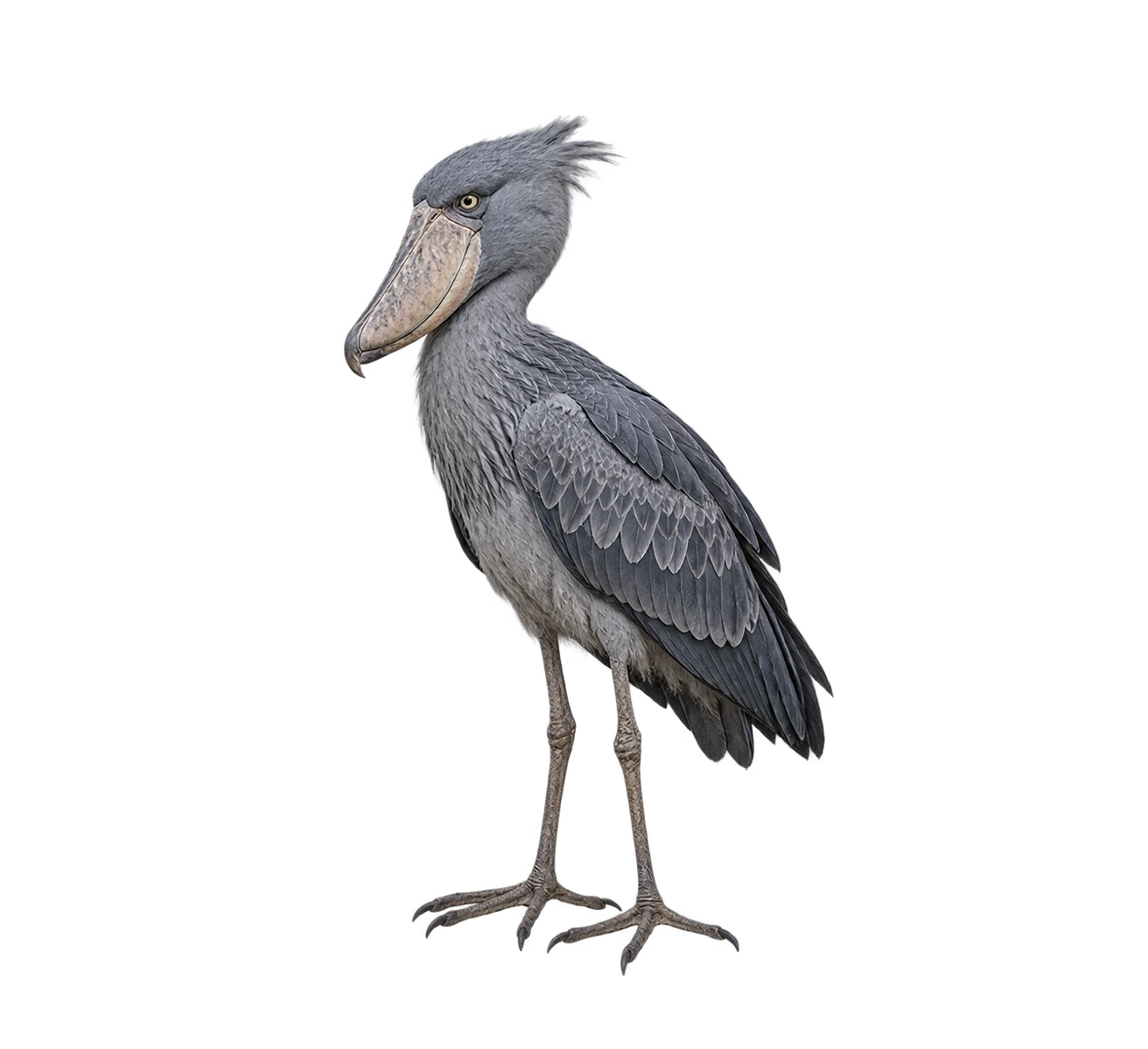
The bill is the feature everyone notices first. It is bulbous and pinkish, with irregular grey markings. Measured along the top, the upper mandible runs 18.8 to 24 centimetres. Only pelicans and the large storks carry a longer bill. The upper mandible is strongly keeled and ends in a sharp nail.
Adults stand 110 to 140 cm tall, and a few birds reach 152 cm. Measured from bill to tail, the body runs 100 to 140 cm. The wings are broad and span 230 to 260 cm. Reported weights fall between 4 and 7 kg. A male averages about 5.6 kg and a female about 4.9 kg.
Adult plumage is blue-grey, with darker slate on the flight feathers. Young birds wear the same pattern in a browner shade. A small tuft on the back of the head can rise into a crest. The dark legs are long, with a tarsus of 21.7 to 25.5 cm. The feet are huge, and the middle toe alone reaches 16.8 to 18.5 cm.
Habitat and range
The shoebill lives in fresh water swamps across central and eastern Africa. The range runs from South Sudan south to Zambia. Uganda, eastern Congo, Rwanda and western Tanzania all hold birds. The Sudd of South Sudan is the main stronghold. That swamp covers about 57,000 square kilometres and became a Ramsar site in 2006.
Papyrus beds and stands of reed mark the wetlands the bird uses. It avoids pure papyrus and prefers mixed vegetation. Deep water is only usable when floating plants give it a platform. Water with little oxygen suits the bird, because fish must surface to breathe. Stray records come from Kenya, Cameroon, Ethiopia, Malawi and Botswana.
The shoebill does not migrate. Water level, food supply and human disturbance still move it around locally. GBIF holds records from 18 countries, a figure that counts captive birds too.
Diet and feeding
Fish make up most of the diet. Lungfish, bichirs, tilapia and catfish are the usual catch. The bird also takes frogs, watersnakes, monitor lizards and young crocodiles. Snails, small turtles, rodents, waterfowl and carrion appear more rarely.
In the Bangweulu Swamps of Zambia, most fish taken run 15 to 50 cm long. In western Tanzania the birds often took fish of 60 to 80 cm. The largest fish recorded from a shoebill measured 99 cm. Anything over 60 cm is usually cut up and swallowed in pieces. Handling a big catch takes from 2 to 30 minutes.
The bird hunts by sight alone and does not feel for prey. It walks very slowly, then freezes and waits. The strike is a collapse, as head and neck throw forward and the body follows. About 60 per cent of strikes bring up prey. Water and plants come up as well, and the bird shakes them out of the bill. Before swallowing, it usually takes the head off the fish.
Behaviour and social life
The shoebill lives alone. Even where the birds are common they forage 20 metres or more apart. A breeding pair defends a territory of 2 to 4 square kilometres. Nests are spread thinly, at fewer than three to the square kilometre. Herons, pelicans and storks nest in colonies, so this pattern is unusual.
Observers call the bird statue-like. It can hold one position for long stretches without moving. It sheds heat by fluttering the bare skin of the throat. Hippopotamuses help it by pushing fish to the surface as they move. The birds soar on thermals above their own ground during the day.
Flight is slow and heavy, with the neck pulled back against the body. The wingbeat rate is about 150 a minute, one of the slowest known. Flapping and gliding alternate in cycles of about seven seconds. A disturbed bird usually flies only 100 to 500 metres. Flights beyond 20 metres from a feeding spot are rarely recorded.
Communication and senses
The shoebill is usually silent. It clatters its bill loudly at the nest instead. Adults greet each other with that sound, and the young make it too. Adults also produce a low sound like a cow, and high whines. A begging chick makes a noise that resembles human hiccups.
One flying adult was heard croaking at a marabou stork nearby. That call appeared to be aggression rather than contact. Bill-clattering probably carries well across open swamp, where sight lines are poor.
Hunting depends on vision, backed by hearing. The bird points its head and bill straight down against the breast. That posture lines both eyes up on the same patch of water. The eyes are large and pale, yellow or greyish white.
Reproduction and life cycle
Shoebills form monogamous pairs, and both birds share every task. In the far north and south of the range, nesting starts once the rains end. Birds in the middle of the range lay as the wet season closes. The pair clears a patch about 3 metres across on floating vegetation. The nest sits on that platform and measures 1.0 to 1.7 metres across.
One to three white eggs make up the clutch, and two is the usual number. Each egg is about 80 to 90 millimetres long and weighs around 164 grams. Incubation runs for about 30 days. On hot days the parents carry water in the bill and pour it over the eggs. They swallow a second mouthful and bring that up onto the nest as well.
A chick hatches with a small silvery bill. The bill grows obvious by 23 days and is well formed by 43 days. Parents bring food up whole from the gullet into the young bird's bill. Only one chick is usually raised, though more may hatch. The younger chicks act as spares in case the eldest fails.
Feathers finish growing at about 60 days. The young leave the nest around 105 days and fly well by 112 days. Independence follows at about 125 days. The adults keep feeding them for a month or more after fledging. A shoebill needs three years to reach breeding age.
Predators and threats
Few animals attack a full grown shoebill. The bill is a serious weapon, and a pair defends its nest hard. Nest raiders can still take eggs and small chicks. Pairs build in places that many predators cannot reach. African fish eagles rob the bird of large fish it has just landed.
People are the main threat. Swamps are drained, burned and turned into farmland and cattle pasture. Fishermen disturb the shallow water where the bird feeds. Local people collect eggs and chicks to eat and to sell. A canal built to control waterways drains more habitat in Sudan.
The zoo trade adds further pressure. Animal Diversity Web reports prices of 10,000 to 20,000 US dollars for one bird. Prices like that encourage capture from the wild. Young raised by keepers imprint on people and then fail to breed.
Population and conservation
The IUCN Red List places the shoebill in the Vulnerable category. The current estimate is 5,000 to 8,000 birds. Most live in South Sudan, Uganda, eastern Congo and Zambia. The Malagarasi wetlands of Tanzania hold another viable group. An older estimate of 11,000 to 15,000 birds appears in Animal Diversity Web.
Counting is hard, because the birds are scattered and the swamps are hard to reach. CITES lists the species on Appendix II, which controls trade in it. National law protects it in Sudan, Uganda, Rwanda, Zambia and other states. It also falls under Class A of the African Convention on nature. BirdLife International records a continuing decline in the population.
The Bangweulu Wetlands in Zambia are run by African Parks with local community boards. The Percy FitzPatrick Institute has drawn up conservation plans for the species. A tourist camp in those wetlands is named after the bird. Protection of large intact swamps probably matters more than any other measure.
Relationship with humans
Birdwatchers treat the shoebill as one of the five most wanted birds in Africa. Boat trips in Uganda and Zambia run specifically to find it. The Uganda Wildlife Authority reports it along the Albert Delta in Murchison Falls. That traffic brings money to communities beside the swamps.
The bird is calm around people and shows no threatening behaviour. Researchers have watched a bird on its nest from two metres away. It stares back rather than attacking. It will still desert a nest if people flush it off.
Zoos keep shoebills, but they seldom breed them. Pairi Daiza in Belgium and a zoo in Florida have both succeeded. The Ancient Egyptians may have known the bird. Europeans only described and classified it in the 19th century.
In culture and myth
In communities beside the swamps, folklore gives the shoebill some protection. Animal Diversity Web reports that people there are taught to respect and fear it. That attitude probably keeps some birds safe from casual killing.
In internet culture the shoebill is a celebrity. Memes about the bird began to spread in 2014. One clip shows a bird standing in the rain and staring into the camera. The species later became popular on TikTok. Attention of that kind carried an obscure bird to a very wide audience.
In game design, the shoebill shaped the Loftwing birds of a 2011 Zelda title. In French the bird is the bec-en-sabot, which means clog bill. In German it is the Schuhschnabel, which means shoe bill. In Japanese it is hashibirokou, and in Spanish it is picozapato. Every one of those names points at the same feature.
A sentence with a dotted underline is inferred: it describes the group the animal belongs to, or is a reading of the sources, rather than a measured or reported fact about this species.
Questions
Shoebill questions, answered
What is a shoebill?
The shoebill is a large grey wading bird of central African swamps. It is named for its huge clog-shaped bill.
How big is a shoebill?
It stands 110 to 140 cm tall, and a few birds reach 152 cm. The wings span 230 to 260 cm.
How much does a shoebill weigh?
Reported weights run from 4 to 7 kg. Males average about 5.6 kg and females about 4.9 kg.
What do shoebills eat?
Mostly fish, above all lungfish and catfish. They also take frogs, watersnakes, monitor lizards and young crocodiles.
How does a shoebill hunt?
It stands still and watches the water, then throws its body forward in a collapse. About six strikes in ten bring up prey.
Where do shoebills live?
In fresh water swamps from South Sudan south to Zambia. The Sudd of South Sudan holds the largest numbers.
Are shoebills endangered?
The IUCN Red List puts the shoebill in the Vulnerable category. An estimated 5,000 to 8,000 birds survive.
Are shoebills dangerous to humans?
No. They are calm near people and have never been recorded attacking anyone.
Is the shoebill a stork?
No, although it was long classed as one. DNA places it with the pelicans and herons in the Pelecaniformes.
What is the shoebill's closest relative?
The hamerkop, a smaller African bird in a family of its own. Pelicans and herons come next.
How long do shoebills live?
One bird in captivity reached 35.7 years. Nobody has measured a full lifespan in the wild.
How many eggs does a shoebill lay?
One to three, and two is the usual number. Only one chick is normally raised to fledging.
Why do shoebills clatter their bills?
It is their main signal, used in greeting at the nest. Adults and chicks both do it.
Can a shoebill fly?
Yes, on broad wings that soar well on thermals. Long flights are rare, and a flushed bird usually goes 100 to 500 metres.
Why is the shoebill famous online?
Memes about it spread from 2014 and later reached TikTok. Its still pose and heavy bill make it look menacing.
Can you keep a shoebill as a pet?
No. It is protected by law across much of its range and needs a large undisturbed swamp.
Food web
Prey and food
- lungfish
- catfish
- tilapia
- bichirs
- watersnakes
- frogs
- monitor lizards
- baby crocodiles
Food web
Predators
- few
- nest raiders
Ecological equivalents

Related species on this site
Shoebill Stork (same genus), Egret (same order), Great blue heron (same order), Great egret (same order), Green Heron (same order), Grey heron (same order), and more.
Birds
Shoebill Stork
Balaeniceps rex
Classification and source reference
LivingAI illustration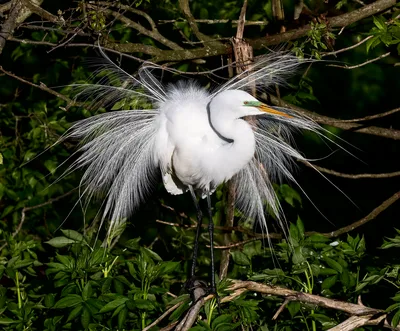
Birds
Egret
Ardeidae
Egrets are herons known for pale plumage in several species.
Living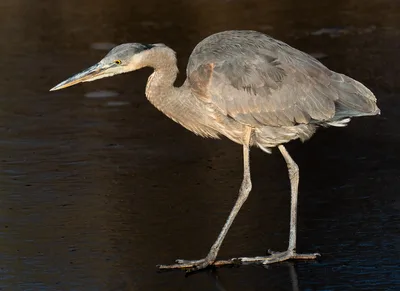 LC
Birds
Great blue heron
Ardea herodias
The great blue heron is the biggest of the North American herons and a patient hunter of shallow water.
Living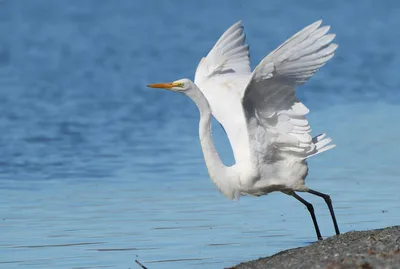 LC
Birds
Great egret
Ardea alba
The great egret is a tall white heron that hunts fish in shallow water on six continents.
Living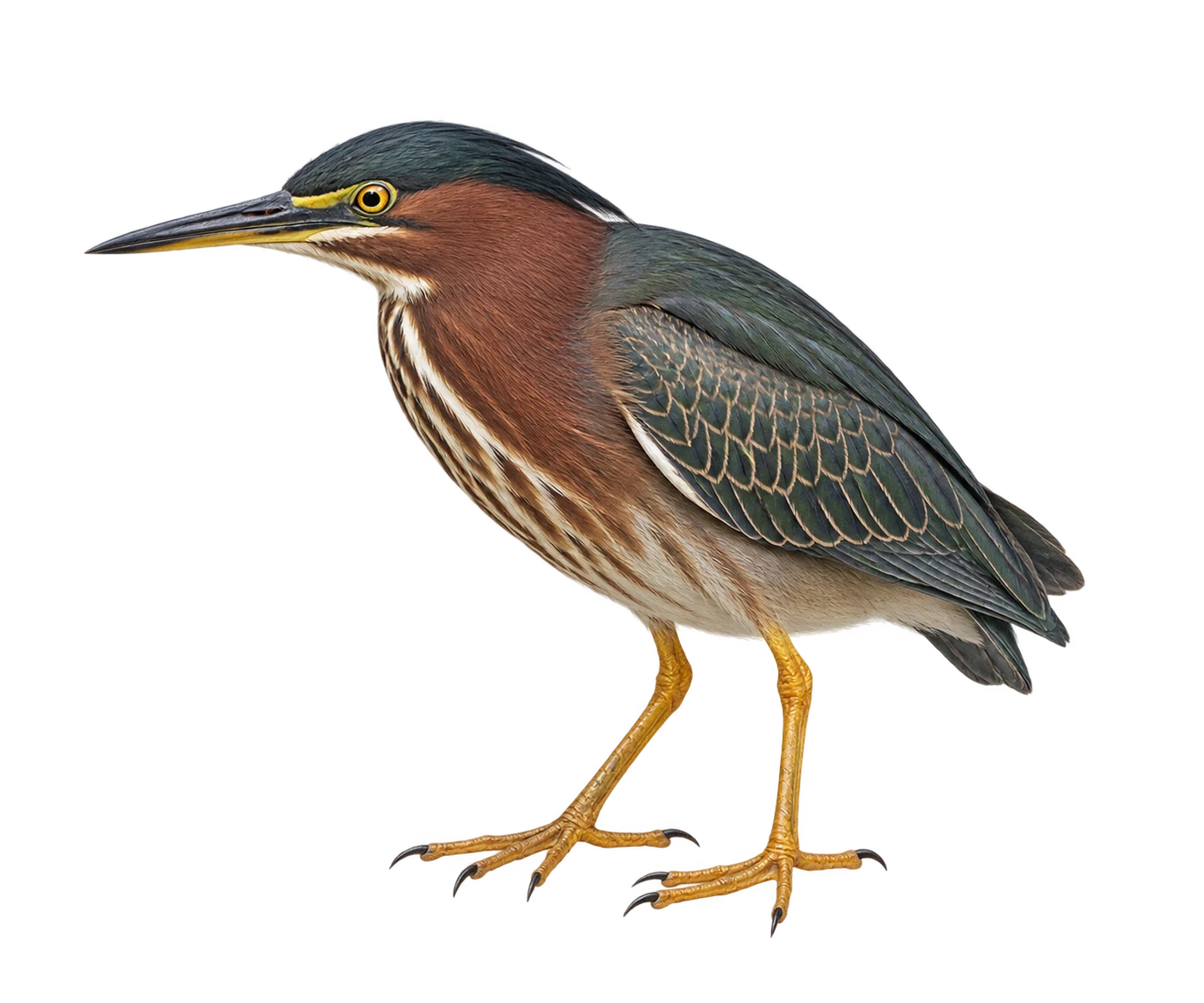
Birds
Green Heron
Butorides virescens
Classification and source reference
LivingAI illustration LC
Birds
Grey heron
Ardea cinerea
The grey heron is a tall grey and white wading bird of European, Asian and African wetlands.
Living