Aurochs
The wild ox behind every cow, hunted to nothing by 1627
Bos primigenius
Also called Urus, Ure, Wild ox, Aurochsen
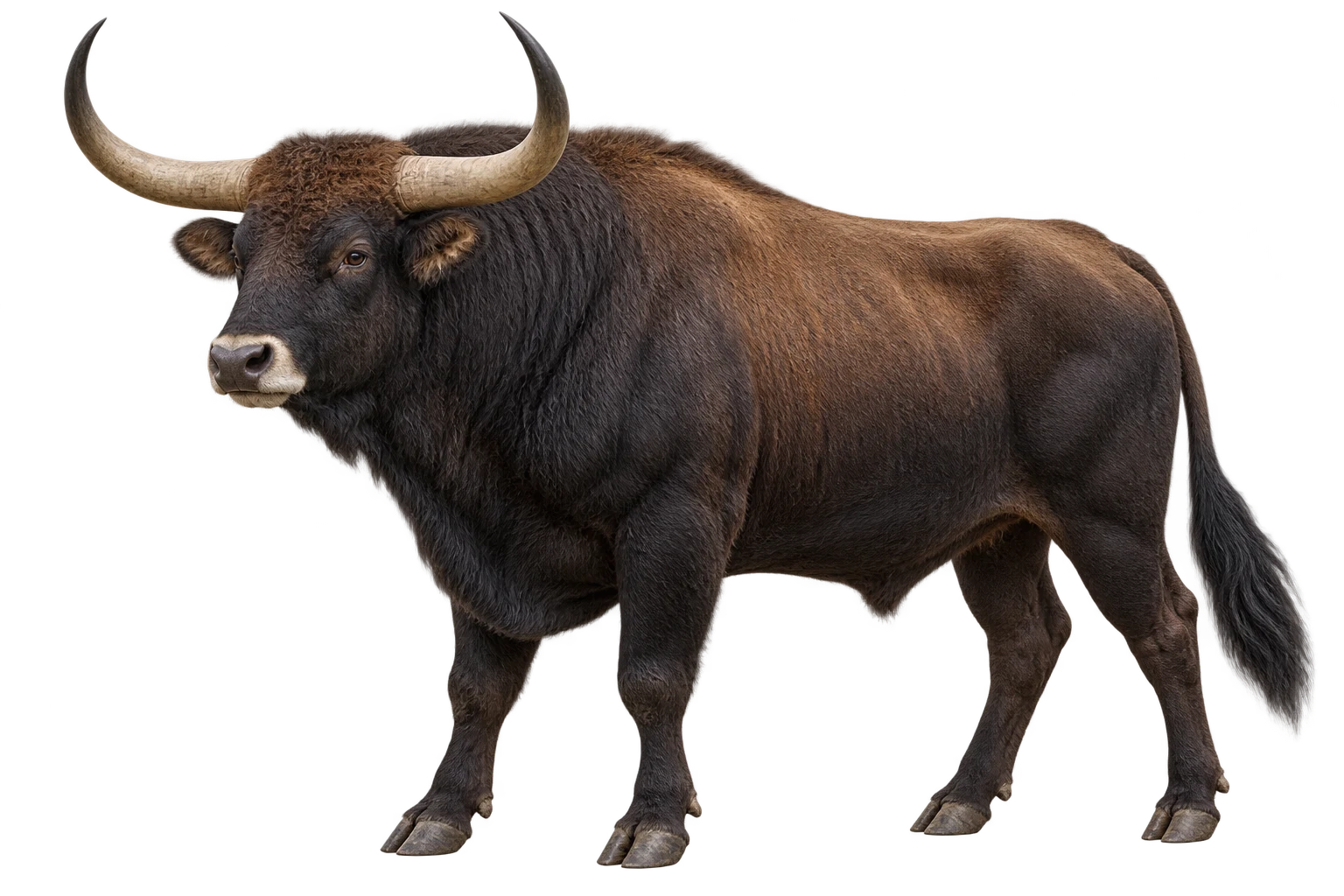
Meet the aurochs
The aurochs was the wild ox of Europe, North Africa and much of Asia, and the ancestor of domestic cattle. Hunting and forest clearance wore it down until the last cow died in Poland in 1627.
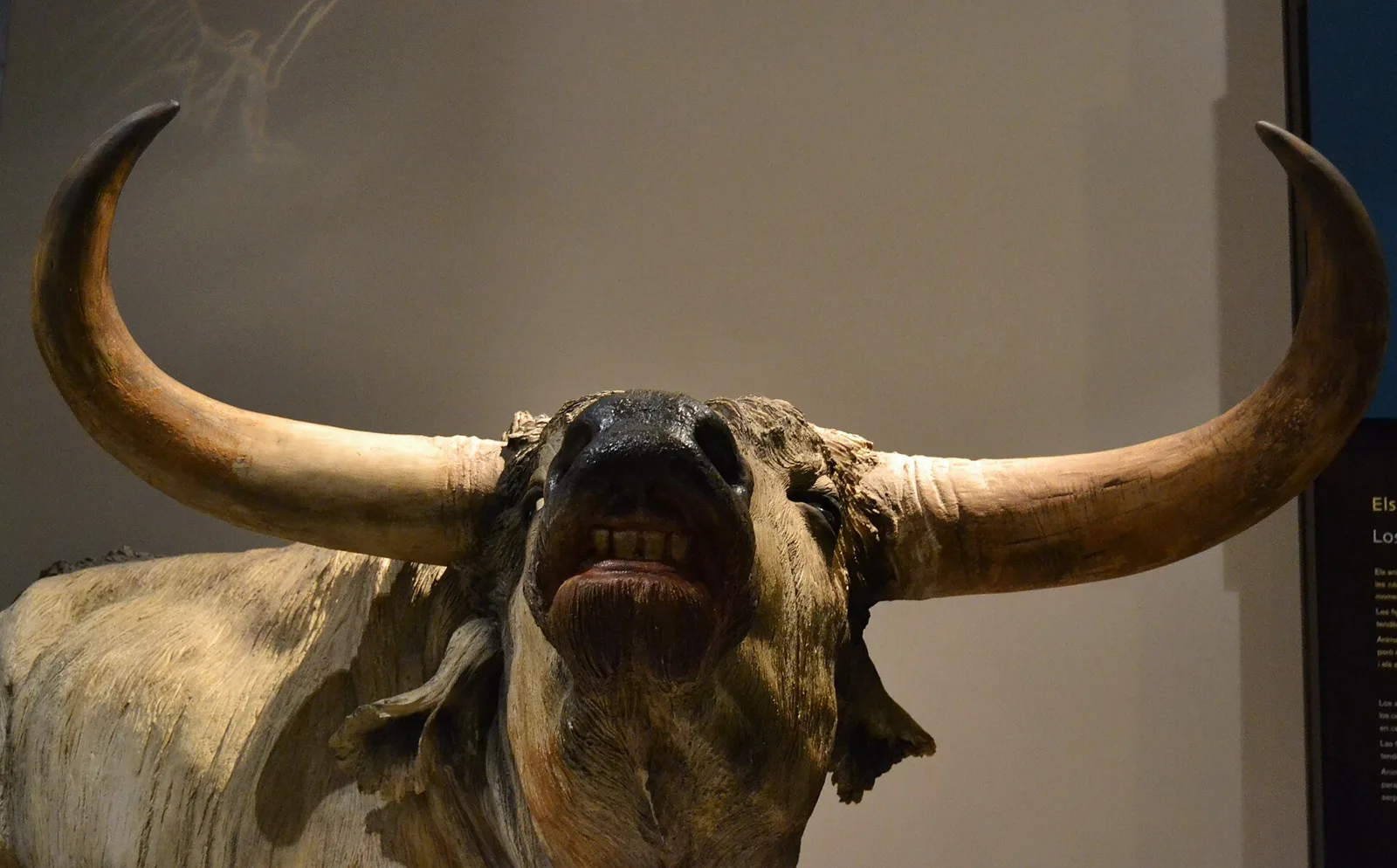
Images of the aurochs
Lifespan in the wild
20 to 25 years an estimate from secondary sources, by comparison with cattle; no primary record for the species exists
Weight
0.7 to 1.5 t
Height
1.35 to 1.8 m
Fact file
Aurochs
- Location
- Europe, North Africa, the Near East, India and East Asia; the last herd lived in Poland
- Habitat
- Temperate forest, Wetlands, Grassland
- Diet
- Herbivore
- Prey / food
- Grass, twigs, acorns
- Predators
- Wolves and brown bears took calves; lions, tigers and humans took adults
- Lifestyle
- Small herds in winter, alone or in small groups in summer
- Group name
- Herd
- Name of young
- Calf
- Gestation
- Probably about nine months, as in cattle
- Litter size
- One calf
- Population
- Extinct. The last known cow died in 1627
- Biggest threat
- Hunting and the clearing of forests
- Distinctive feature
- Long forward-curving horns on a tall, long-legged body
- Colour
- Bulls black with a pale stripe down the back; cows reddish brown
- Skin type
- Fur
Size
Next to a person
Measurements
Size and speed
- Height
- 1.35 to 1.8 m at the shoulder; cows 135 to 155 cm, bulls up to 180 cm in Denmark and Germany
- Height, male
- 1.6 to 1.8 m at the shoulder; Hungarian bulls 160 cm, northern bulls 180 cm
- Height, female
- 1.35 to 1.55 m at the shoulder
- Weight
- 0.7 to 1.5 t about 700 kg for later animals; 1,500 kg is an estimate for Middle Pleistocene bulls
Typical adult ranges. Source: Wikipedia.
Life cycle
Lifespan
- In the wild20 to 25 years an estimate from secondary sources, by comparison with cattle; no primary record for the species exists
- 025 years
Source: Wikipedia.
Appearance
Colour and coat
- Primary colours
- blackreddish brown
- Secondary colours
- pale greychestnut
- Skin type
- fur
- Male and female
- Strong. Bulls were far larger, stood up to 1.8 metres at the shoulder, and turned black with a pale stripe along the back. Cows stayed reddish brown and stood 1.35 to 1.55 metres.
Life cycle
Mating and family
- Mating system
- polygynous, with bulls fighting for cows in the rut
- Social structure
- small herds in winter; single animals or small groups in summer
- Breeding
- one calf a year, born in spring
The rut came in September, and bulls fought for cows. Calves were born in spring after a gestation that was probably about nine months, as in cattle. A calf was likely chestnut at birth and stayed with its mother until it could keep up with the herd. Young bulls turned black as they matured, and cows stayed reddish brown. No primary source records the lifespan, though secondary estimates give 20 to 25 years.
Classification
Taxonomy
- Kingdom
- Animalia
- Phylum
- Chordata
- Class
- Mammalia
- Order
- Artiodactyla
- Family
- Bovidae
- Genus
- Bos
- Species
- Bos primigenius
Conservation
Red List status
- LC
- NT
- VU
- EN
- CR
- EW
- EX
Extinct on the IUCN Red List
Range
Historical range: 36 countries
This animal is extinct. The map shows historical records, not a current living population.
- Argentina
- Ashmore and Cartier Islands
- Bulgaria
- Brazil
- Canada
- Chile
- Colombia
- Germany
- Algeria
- Egypt
- Spain
- France
- United Kingdom
- Greece
- Hong Kong
- Hungary
- India
- Italy
- Kenya
- Morocco
- Mexico
- Netherlands
- New Zealand
- Panama
- Peru
- Philippines
- Poland
- Puerto Rico
- Romania
- Russia
- Thailand
- Tunisia
- Turkey
- Ukraine
- United States of America
- South Africa
Habitat layer: temperate broadleaf and mixed forest, temperate conifer forest, boreal forest and taiga, tropical grassland, savanna and shrubland, temperate grassland, savanna and shrubland, flooded grassland and savanna, mangrove.
Countries from 3,917 wild records on GBIF (iNaturalist research grade), filtered and checked by hand. Country shapes: Natural Earth. Habitat: RESOLVE Ecoregions 2017, CC BY 4.0. Basemap: Natural Earth.
Habitats
Three things to know
- 1
A bull stood up to 1.8 metres at the shoulder, taller than most people.
- 2
Its horns reached 80 centimetres in length and curved forwards in three directions.
- 3
Every domestic cow alive today descends from aurochs tamed in the Near East and India.
Did you know
Seven more facts
- 1
Neanderthals in Spain seem to have kept aurochs skulls as hunting trophies.
- 2
A Natufian feast in Israel about 12,000 years ago used three aurochs to mark the burial of an older woman.
- 3
Philip V of Macedon gave a pair of aurochs horns 105 centimetres long to a temple of Hercules.
- 4
The mitochondrial genome of the aurochs holds 16,338 base pairs, read from one well-kept bone in 2010.
- 5
Heck cattle released in a Dutch polder starved in the cold winters of 2005 and 2010.
- 6
A bone from the heart, the os cordis, was taken from slaughtered aurochs and credited with magic.
- 7
A 6,750 year old aurochs bone from England shares gene variants with British and Irish cattle breeds.
Field notes
How it looks and acts
Field notes
Distinguishing features
- Long horns, up to 80 centimetres, set forward and curved in three planes.
- Shoulder height of 1.35 to 1.8 metres, with cows much smaller than bulls.
- Long slim legs, so the animal stood about as tall as it was long.
- A black bull with a pale stripe down the spine, a reddish brown cow.
- A light muzzle and long curly forehead hair.
- A heavy front end, with deep neck and shoulder muscle in bulls.
Field notes
Unique adaptations
- High-crowned teeth wore slowly on gritty grass.
- Autumn feeding laid down fat that carried the animal through winter.
- Great size and strength meant an adult rarely needed to run from a predator.
- A flexible diet let it switch between grazing and browsing as the forest changed.
- Retreat to southern refuges in each ice age probably kept the species alive through cold periods.
Field notes
Interesting behaviours
- Formed small herds in winter and split into single animals or small groups in summer.
- Rutted in September, with fights between bulls that could kill.
- Calved in spring.
- Fed hard in autumn to build fat and a glossy coat.
- Used riverside woods and lake marshes in forested Europe.
Field notes
Temperament
- Aggressive when provoked, according to the people who last saw it.
- Showed little fear of humans.
- Bulls fought each other hard in the rut.
Field notes
Communication
- Probably lowed and bellowed like other wild cattle.
- The horns and the black coat of a bull likely signalled rank and sex at a distance.
- Bulls probably tested a cow's scent with the flehmen grimace, as bovines do.
Ecology
Ecological role
The aurochs was the largest grazer in the wet forests of Holocene Europe, and its feeding kept glades and river meadows open.
- Grazing and browsing by large herds probably held back scrub and kept mixed, open ground in the forest.
- Calves fed wolves and brown bears, and adults fed lions and tigers in the warmer parts of the range.
- Its carcasses fed cave hyenas in the Pleistocene.
- Rewilding projects now release aurochs-like cattle to restore that grazing effect.
Stories
Myths and legends
- In Mesopotamian tradition, the wild bull was a title of the gods Enlil and Shamash and of Gilgamesh.
- In Greek tradition, Zeus became a bull to carry Europa across the sea, and some see an aurochs in the story.
- In Norse tradition, the rune Uruz is named for the aurochs and means strength.
- In Moldavian tradition, a prince's hunt of a great wild ox founded the state, and its head became the coat of arms.
- In Polish tradition, the shaggy black Turon figure of winter carolling takes its name from the aurochs.
People
Relationship with humans
People
Living alongside us
People hunted the aurochs from the time of the Neanderthals and painted it on cave walls. Farmers tamed it twice, in the Near East and in India, and every domestic cow descends from those herds. Wild aurochs then lost their forests to farms and their lives to hunters, and the last cow died in Poland in 1627. Its horns became drinking cups, its image entered heraldry, and cattle breeders now try to copy its shape.
- The species is extinct, so no living person can meet one.
- When alive it was fast, short-tempered and unafraid of people, and hunters were sometimes gored.
- A Mycenaean cup shows a bull tossing one hunter and charging a second.
People
Status, uses and products
- Domestication
- Wild
- As a pet
- Not suitable. The aurochs is extinct. Its nearest stand-ins, Heck and Tauros cattle, are large, horned and semi-wild, and belong in a reserve, not a garden.
- Uses
- huntingdomesticationrewilding
- Products
- hornshidemeat
The full account
About the aurochs
The aurochs, Bos primigenius, was the wild ox of Europe, North Africa and a broad belt of Asia. It is the ancestor of every domestic cow, from the dairy Holstein to the Indian zebu. It was also one of the largest land animals of its time. A bull stood up to 1.8 metres at the shoulder, and a cow stood 1.35 to 1.55 metres. The horns swept forwards and reached 80 centimetres in length.
People hunted the aurochs for hundreds of thousands of years and painted it on cave walls. Farmers then cleared its forests, and its range shrank towards eastern Europe. The last herd lived in a Polish forest, and the final cow died there in 1627. The IUCN lists the species as Extinct. Breeders now try to bring back its look through old cattle breeds, but no true aurochs survives.
Name and taxonomy
The English name comes from German. Old High German joined ur, a word for wild ox, to ohso, ox, and the result became Aurochs. Roman writers used the Latin word urus from the time of Caesar's Gallic wars. English speakers write the plural as aurochs or aurochsen, and both forms are in use.
Ludwig Heinrich Bojanus proposed the name Bos primigenius in 1825, after he compared aurochs bones with cattle bones. The paper appeared in 1827, the same year the last wild cow died. In 2003 the International Commission on Zoological Nomenclature confirmed the name for the wild species. Domestic cattle keep the older name Bos taurus, which Linnaeus gave in 1758 to feral cattle in Poland. Three subspecies are usually named: the Eurasian aurochs, the Indian aurochs and the North African aurochs. Geneticists in China argue for a fourth, the East Asian aurochs, on the basis of its mitochondrial DNA.
Evolution and relatives
The aurochs belonged to the tribe Bovini, which fossil dating places at about 11.7 million years old. The Bos line and the bison line parted between 2.5 and 1.65 million years ago. Its closest living relatives are probably domestic cattle, the zebu, the yak, the gaur and the two bison species. A possible ancestor, Bos acutifrons, left a skull in the Sivalik Hills of India about 2 million years old.
Where the species itself arose is still debated. The oldest firm fossil is a skull from Tunisia about 0.78 million years old, which points to Africa. Other authors favour Asia, because the earliest relatives lived there. In Europe the first secure records come from Ponte Molle in central Italy, about half a million years ago. Britain had aurochs by about 400,000 years ago, and East Asia probably not before 200,000 years ago. Genome studies show that the Indian aurochs split from the rest at least 166,000 years ago.
Appearance
The aurochs was built like an athlete, not like a farm cow. Its legs were long and slim, so its shoulder height came close to the length of its trunk. The skull was long and heavy to carry the horns. Bulls carried thick muscle on the neck and shoulders, which made the front end deeper than the rear. Even a cow in calf showed only a small udder from the side.
Size varied with region, and northern animals were the largest. Bulls in Denmark and Germany stood about 1.8 metres at the shoulder, while Hungarian bulls reached 1.6 metres. Cows stood 1.35 to 1.55 metres. Body mass was about 700 kilograms in later animals, and Middle Pleistocene bulls are estimated at up to 1,500 kg. The horns grew to 80 centimetres long and 10 to 20 cm thick, and curved up, out, forward and in.
No hair was known until the early 1980s, so colour comes from old descriptions and paintings. Calves were probably chestnut. Young bulls turned black, with a pale stripe along the spine, and cows stayed reddish brown. Both sexes had a light muzzle and long curly hair on the forehead. A 16th century observer, Sigismund von Herberstein, described a black animal with a grey line along its back.
Habitat and range
At its widest, the range ran from the Atlantic coast of Europe to the Pacific coast of China. It took in North Africa, Mesopotamia, the Caucasus, western Siberia and the Indian subcontinent. In the north it reached the Gulf of Finland and Lake Ladoga. Fossil horns from the edge of the Tibetan Plateau lay at 3,400 metres, though most Chinese finds sit below 1,000 m.
During ice ages the European animals withdrew to Iberia, Italy and the Balkans, then spread north again in warm periods. After the last glaciation they reached Denmark and southern Sweden about 12,000 to 11,000 years ago. Holocene aurochs in Europe descended mainly from the Iberian refuge.
The species favoured low, flat country. In forested Europe it used the wet woods along rivers and the marshes beside lakes. In China, pollen found with its bones suggests grassy plains at the edge of woodland. As farms spread, it was pushed into the open ground and forest edges that people also wanted.
Diet and feeding
The aurochs had high-crowned teeth, the mark of a grazer. Its food was probably much like that of free-ranging cattle: grass first, with twigs and acorns in season. Tooth wear tells a more varied story. Danish animals of the early Holocene were pure grazers, but later ones mixed grass with leaves and shoots. Pleistocene animals from Britain browsed more than they grazed.
In autumn the herds ate hard to build fat for winter. Old accounts say the coat shone brightest at that season. Like cattle, it is thought to have drunk daily, which fits its choice of wet lowland.
Behaviour and social life
Aurochs gathered in small herds in winter. In summer they split up and lived alone or in small groups. Web sources describe cow herds with calves and bulls that stayed apart outside the rut, as in wild cattle today. If it behaved like cattle, rank was probably settled by displays and fights, among cows as well as bulls.
Old reports agree on its temper. It moved fast for its size, it attacked when provoked, and it did not usually run from people. Bones from the Jaktorow forest show that rutting bulls could wound each other fatally. A calf stayed with its mother until it could keep pace with the herd on the feeding grounds.
Communication and senses
No one recorded the voice of an aurochs, so its calls are assumed to match those of cattle. Like other wild cattle, it probably lowed to keep a herd together and bellowed in the rut. The pale stripe on a bull's back and the dark coat may have served as signals at a distance. Bulls likely tested the air for cows in season, as bovines do with the flehmen grimace.
The forward-set horns were display and weapon at once. Bull horns curved more strongly than cow horns, which suggests a role in fights between males. As in cattle, smell and hearing were probably sharper than sight.
Reproduction and life cycle
The rut fell in September. Bulls fought hard for cows, and some fights ended in death. Calves arrived in spring, when new grass was ready. By comparison with cattle, gestation probably lasted about nine months and a cow bore one calf. A newborn was probably chestnut and changed colour as it grew, black in bulls and reddish in cows.
A calf followed its mother until it had the strength to travel with the herd. No source records an aurochs lifespan. Secondary web sources estimate 20 to 25 years, which is likely, given the lifespan of wild cattle.
Predators and threats
A healthy adult had little to fear from any animal. Grey wolves and brown bears took calves. In the Holocene, lions, tigers and wolves were probably its main predators across the wider range. Earlier, in the Middle Pleistocene, the European jaguar and the scimitar-toothed cat Homotherium hunted it. Cave hyenas ate aurochs in Italy during the Late Pleistocene.
The one predator it could not outlast was the human. Neanderthals butchered aurochs at Biache-Saint-Vaast in France about 240,000 years ago. Hunting continued through the Stone Age, the Roman period and the Middle Ages. Forest clearance between the 9th and 12th centuries removed its last cover in central Europe.
Population and conservation
The species vanished in stages, region by region. The Indian aurochs disappeared some time in the Holocene, probably before written records began there. The youngest African remains date to about 6,000 years ago, though some authors extend it to Roman times. In China it lasted to at least 3,600 years ago, and in Britain to about 3,000 years ago.
By the 13th century only eastern Europe held aurochs, and hunting them became a right of nobles and kings. The last herd lived in the marshy Jaktorow Forest in Poland. It fell from about 50 animals in the mid 16th century to four by 1601. The last cow died of natural causes in 1627. A horn core from Sofia hints that a few survived in Bulgaria into the late 17th or early 18th century.
The IUCN Red List code is EX, extinct. Heinz Heck began crossing cattle breeds in the 1920s to recreate the aurochs, which produced Heck cattle. Later projects, Taurus cattle, the Tauros Programme and the Uruz Project, use southern European breeds. An animal that looks like an aurochs still carries a cattle genome, so these herds are stand-ins, not a revival.
Relationship with humans
Farmers tamed the aurochs twice. About 10,500 years ago, in southeastern Anatolia and northern Syria, a founding stock of about 80 animals became taurine cattle. Those cattle followed the Danube and the Mediterranean coast into Europe. In the Indian subcontinent, the Indian aurochs became the zebu about 10,000 to 8,000 years ago. Wild bulls kept breeding with domestic cows in Europe between 9500 and 1000 BC, so some old breeds still carry aurochs genes.
Hunters valued it as much as herders did. Greeks and Romans drank from its horns, and Roman shows displayed captured aurochs in the Colosseum. In the Middle Ages the forehead hair was cut from living bulls and worn in belts, in the belief that it aided fertility in women. A drinking horn from the last bull survives, and one at Corpus Christi College, Cambridge carries the college arms.
A living aurochs would count as dangerous. Descriptions from its last centuries stress speed, a short temper and no fear of people. Today the animal exists only as bones, art and the cattle that carry its blood.
In culture and myth
The aurochs is among the oldest subjects in art. Painters at Chauvet worked about 36,000 years ago and at Lascaux about 21,000 years ago, and both caves show aurochs. Engravings at Qurta on the Nile, at least 15,000 years old, are the oldest known in Africa. Egyptian tombs show royal aurochs hunts, and the last such scene dates to about 1175 BC at Medinet Habu.
In Mesopotamian tradition, the wild bull stood for power and sexual potency. It served as a title of the gods Enlil and Shamash, of King Sennacherib and of the hero Gilgamesh. An aurochs appears on the Ishtar Gate of Babylon, built in the 6th century BC. In Greek tradition, Zeus took the form of a bull to carry off Europa, and some writers read that bull as an aurochs.
In the Germanic Nibelungenlied, Sigurd kills four aurochs on a single hunt. In Norse tradition, the rune Uruz means aurochs and stands for strength and vitality. In Moldavian tradition, a prince hunted a great wild ox, and the aurochs head with a star became the state arms. In Polish and Slovak tradition, the Turon, a shaggy black horned figure, joins midwinter carolling, and its name comes from tur, the aurochs. Eastern European speech still calls a big strong man an aurochs.
A sentence with a dotted underline is inferred: it describes the group the animal belongs to, or is a reading of the sources, rather than a measured or reported fact about this species.
Questions
Aurochs questions, answered
What was an aurochs?
The aurochs was a species of wild ox, Bos primigenius, that lived across Europe, North Africa and much of Asia. It is the ancestor of domestic cattle. It is now extinct.
When did the aurochs go extinct?
The last known aurochs, a cow, died in the Jaktorow Forest in Poland in 1627. A horn core from Bulgaria suggests a few may have lived on into the late 17th or early 18th century.
How big was an aurochs?
A bull stood up to 1.8 metres at the shoulder and a cow 1.35 to 1.55 metres. Body mass was about 700 kilograms in later animals, and some Middle Pleistocene bulls are estimated at 1,500 kg.
Why did the aurochs go extinct?
People hunted it for meat, horns and sport for thousands of years. Farmers cleared its forests and put cattle on its pastures. By the 13th century it survived only in eastern Europe, and hunting finished it there.
Are cows descended from the aurochs?
Yes. Taurine cattle come from about 80 aurochs tamed in Anatolia and Syria about 10,500 years ago. Zebu cattle come from the Indian aurochs, tamed about 10,000 to 8,000 years ago.
What did the aurochs eat?
It grazed grass and added twigs and acorns in season. Tooth wear shows that some populations browsed leaves and shoots as much as they grazed.
Where did the aurochs live?
From Portugal to China, and from southern Sweden to North Africa and India. In Europe it favoured low, wet woodland along rivers and lakes.
How long were aurochs horns?
The horns reached 80 centimetres in length and 10 to 20 cm in diameter. A pair given to a temple by Philip V of Macedon measured 105 cm.
What colour was the aurochs?
Bulls were black with a pale stripe down the spine. Cows were reddish brown, and calves were probably chestnut at birth. Both sexes had a light muzzle.
Was the aurochs dangerous?
Yes. Old accounts describe it as fast, aggressive when provoked and unafraid of people. Killing one counted as a feat of courage.
Can scientists bring the aurochs back?
Not as a true species. Breeders cross old cattle breeds to copy its look, which gives Heck cattle, Taurus cattle and the Tauros herds. These animals look the part but carry cattle genes.
How long did an aurochs live?
No primary source records its lifespan. Secondary web sources estimate 20 to 25 years, in line with wild cattle.
Is the aurochs the same as a bison?
No. The European bison, or wisent, is a separate genus that split from the Bos line about 2 million years ago. The two lived side by side in Europe.
Did the aurochs live in North America?
No. Its range covered Europe, North Africa and Asia. North America had bison instead.
What does the word aurochs mean?
It comes from Old High German ur, wild ox, plus ohso, ox. The Romans called the animal urus.
Did people paint the aurochs in caves?
Yes. Aurochs appear at Chauvet, about 36,000 years old, and Lascaux, about 21,000 years old, in France, and in caves across Spain and Italy.
Food web
Prey and food
- grass
- twigs
- acorns
Food web
Predators
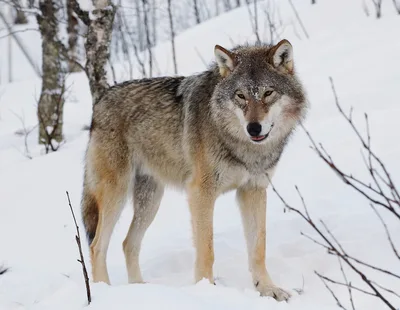 Gray wolf
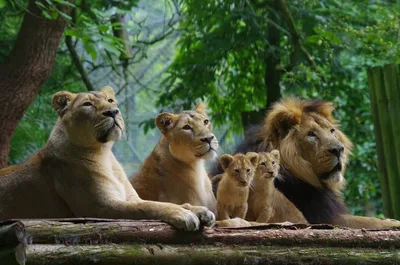 Lion
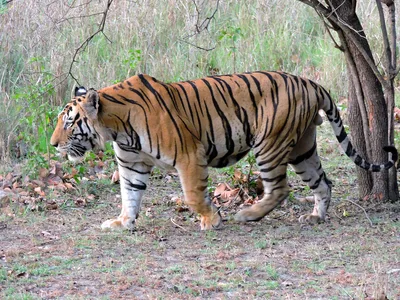 Tiger
Ecological equivalents
Related species on this site
Cow (same genus), English Longhorn Cattle (same genus), Fleckvieh Cattle (same genus), Gaur (same genus), Highland Cattle (same genus), Kouprey (same genus), and more.
Mammals
Cow
Bos taurus
Domestic cattle are large social herbivores kept in many parts of the world.
Living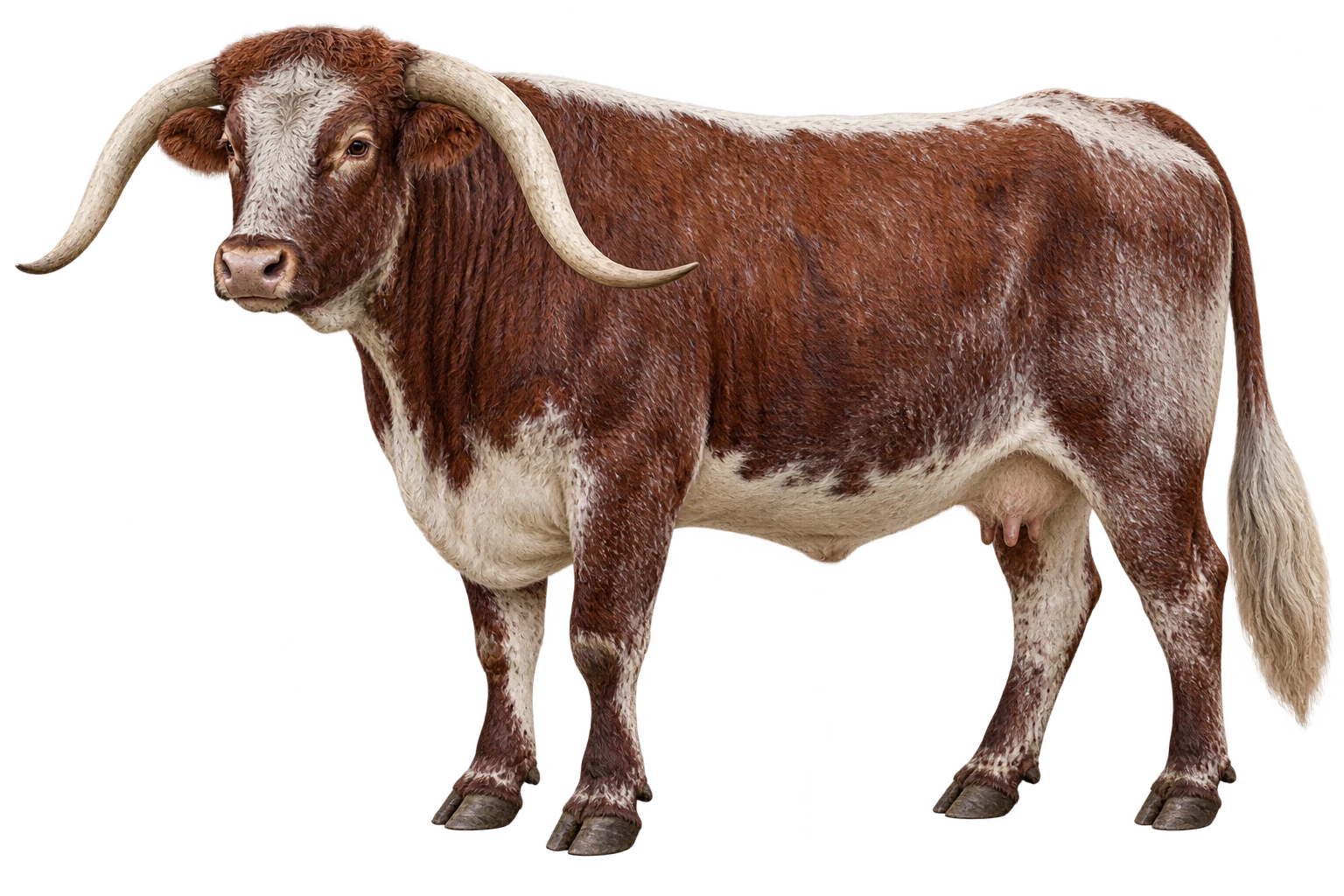
Mammals
English Longhorn Cattle
Bos taurus
Classification and source reference
LivingAI illustration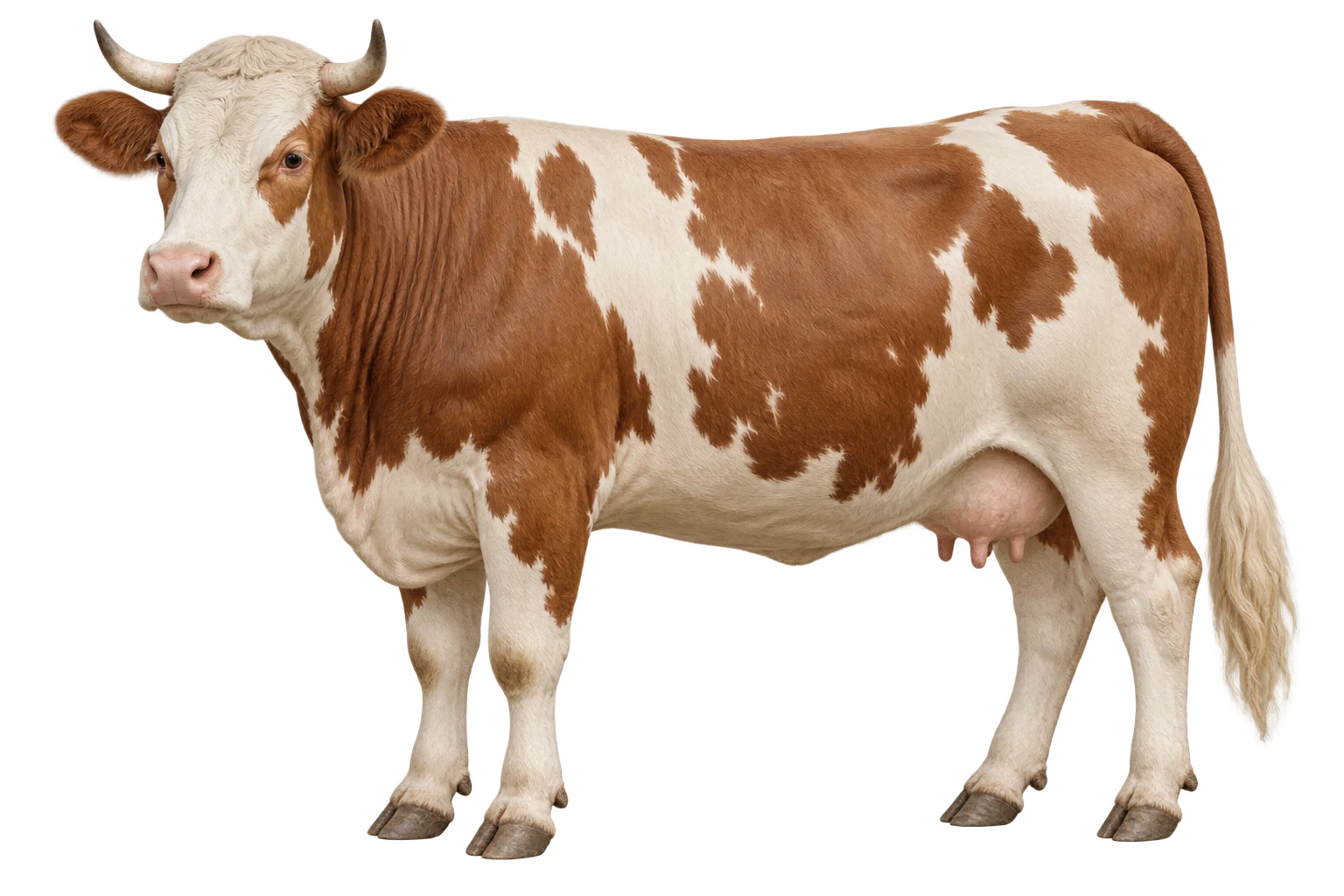
Mammals
Fleckvieh Cattle
Bos taurus
Classification and source reference
LivingAI illustration VU
Mammals
Gaur
Bos gaurus
The gaur, or Indian bison, is the largest of all wild cattle, a forest bovine of India and Southeast Asia.
Living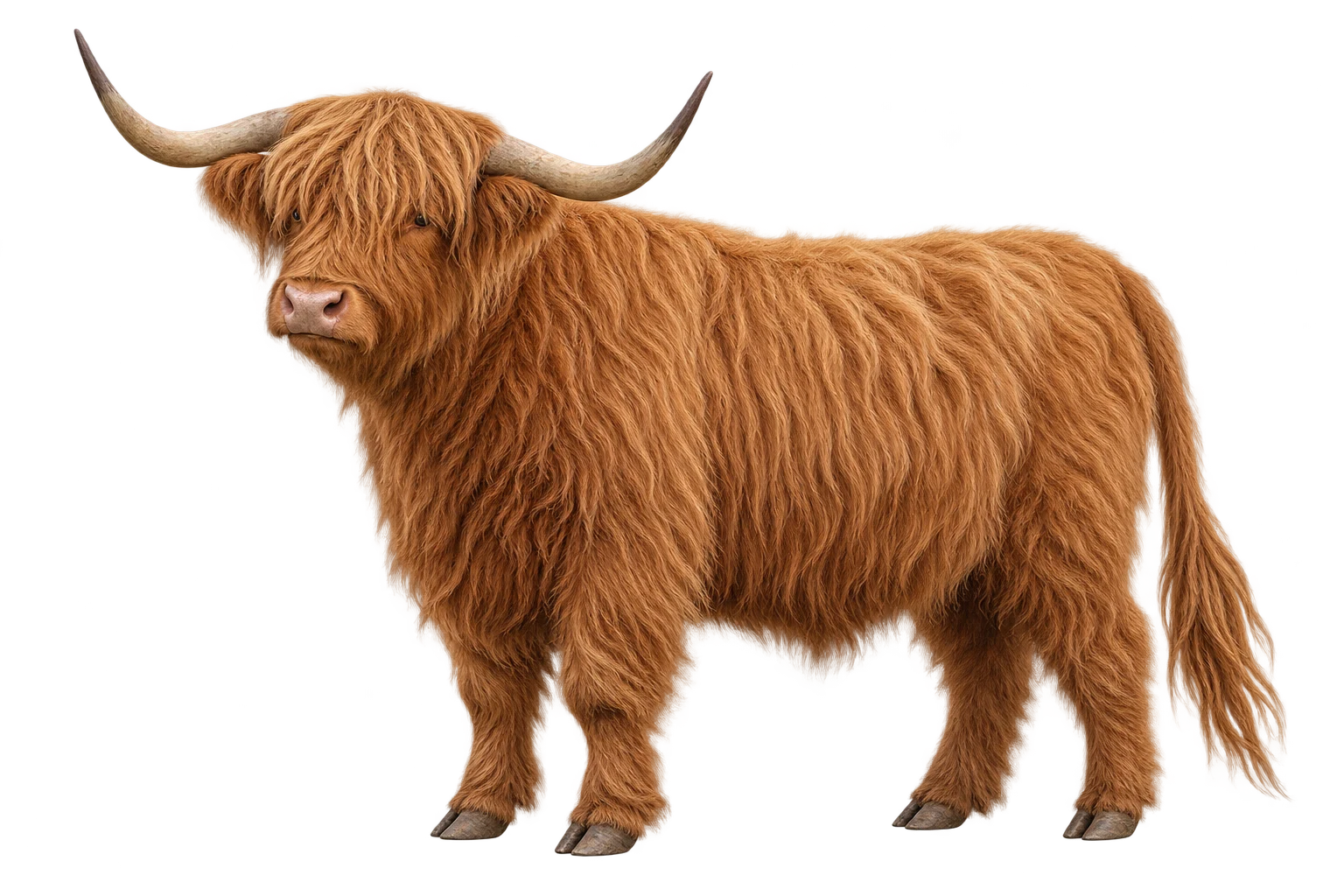
Mammals
Highland Cattle
Bos taurus
Classification and source reference
LivingAI illustration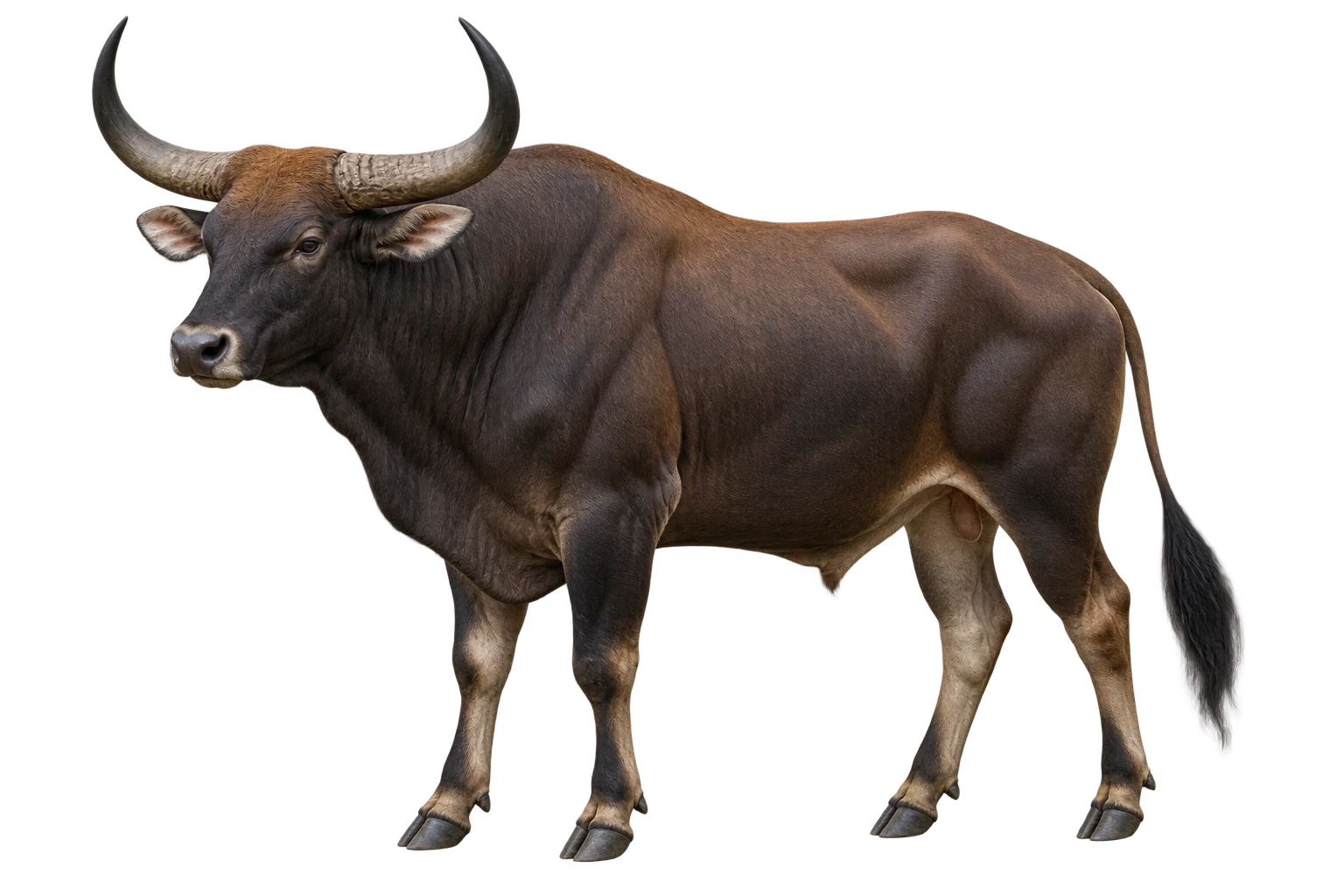
Mammals
Kouprey
Bos sauveli
Classification and source reference
Possibly extinctAI illustration
