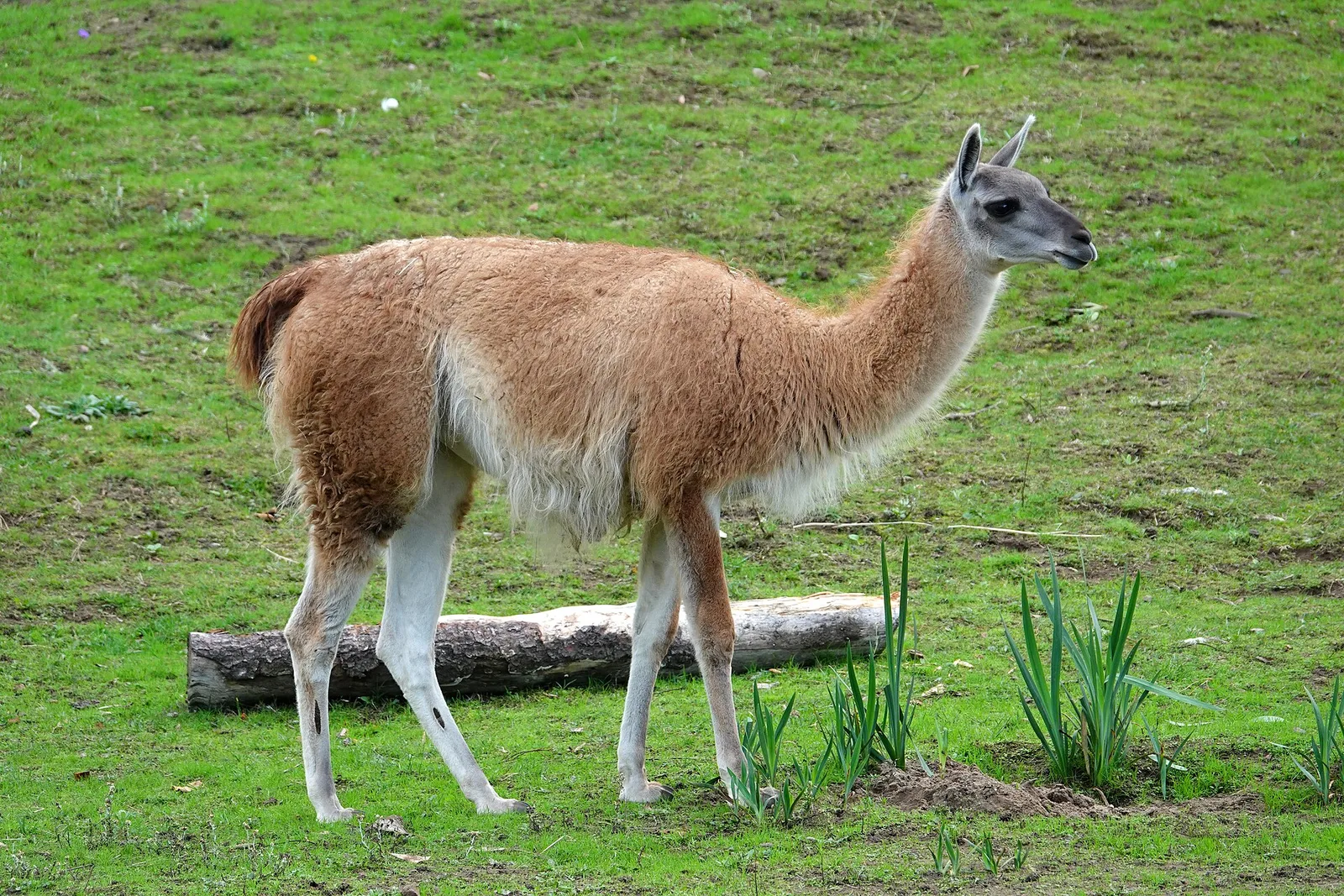
Guanaco
The wild llama that runs the Patagonian steppe
Lama guanicoe
Also called Wild llama, Wanaku
Living individuals or members of this group exist today. This does not mean they are safe from extinction.
Meet the guanaco
The guanaco is the wild camelid of South America and the ancestor of the llama. It lives in family herds on steppe, desert and mountain from Peru to Tierra del Fuego, and it can run at 56 kilometres per hour.
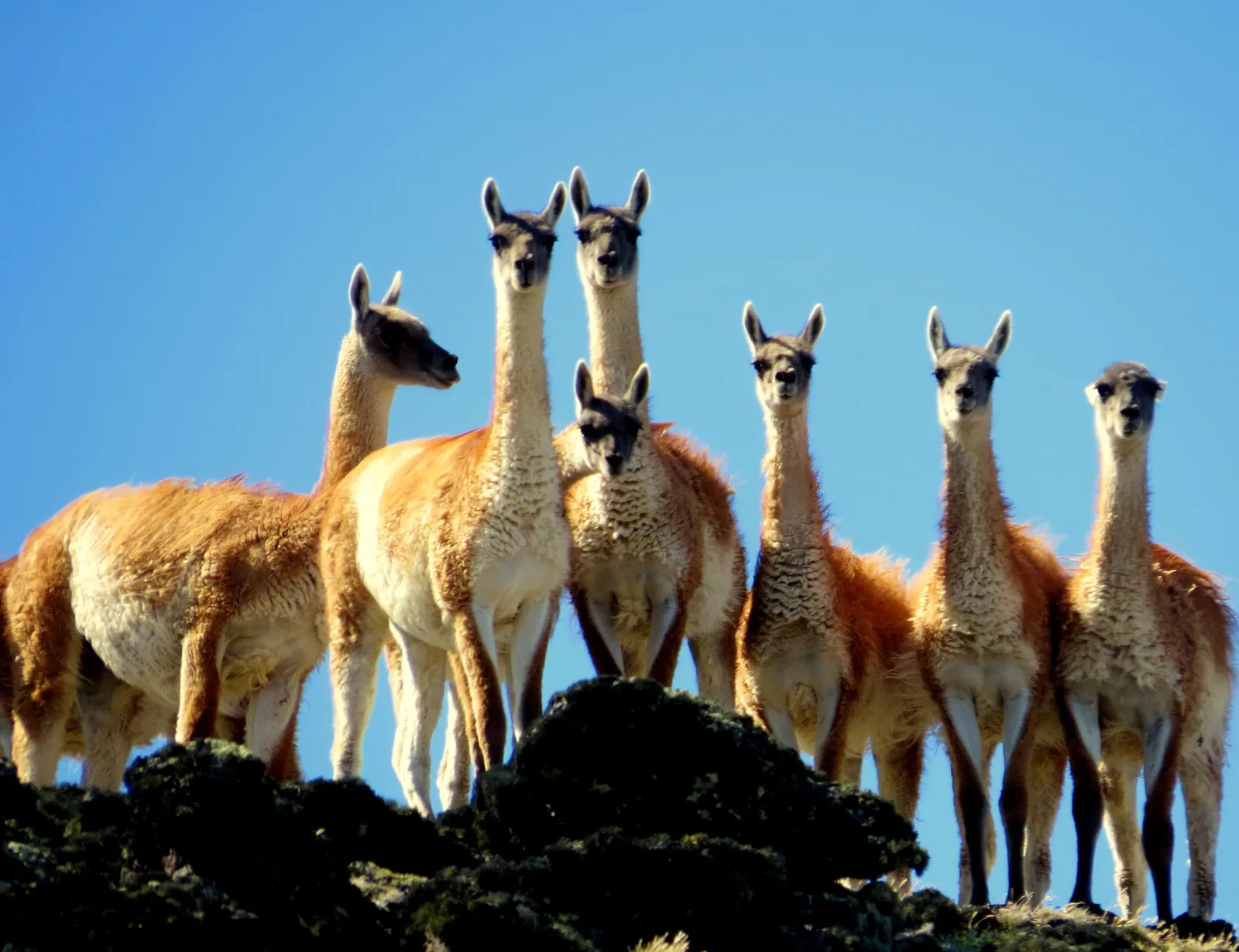
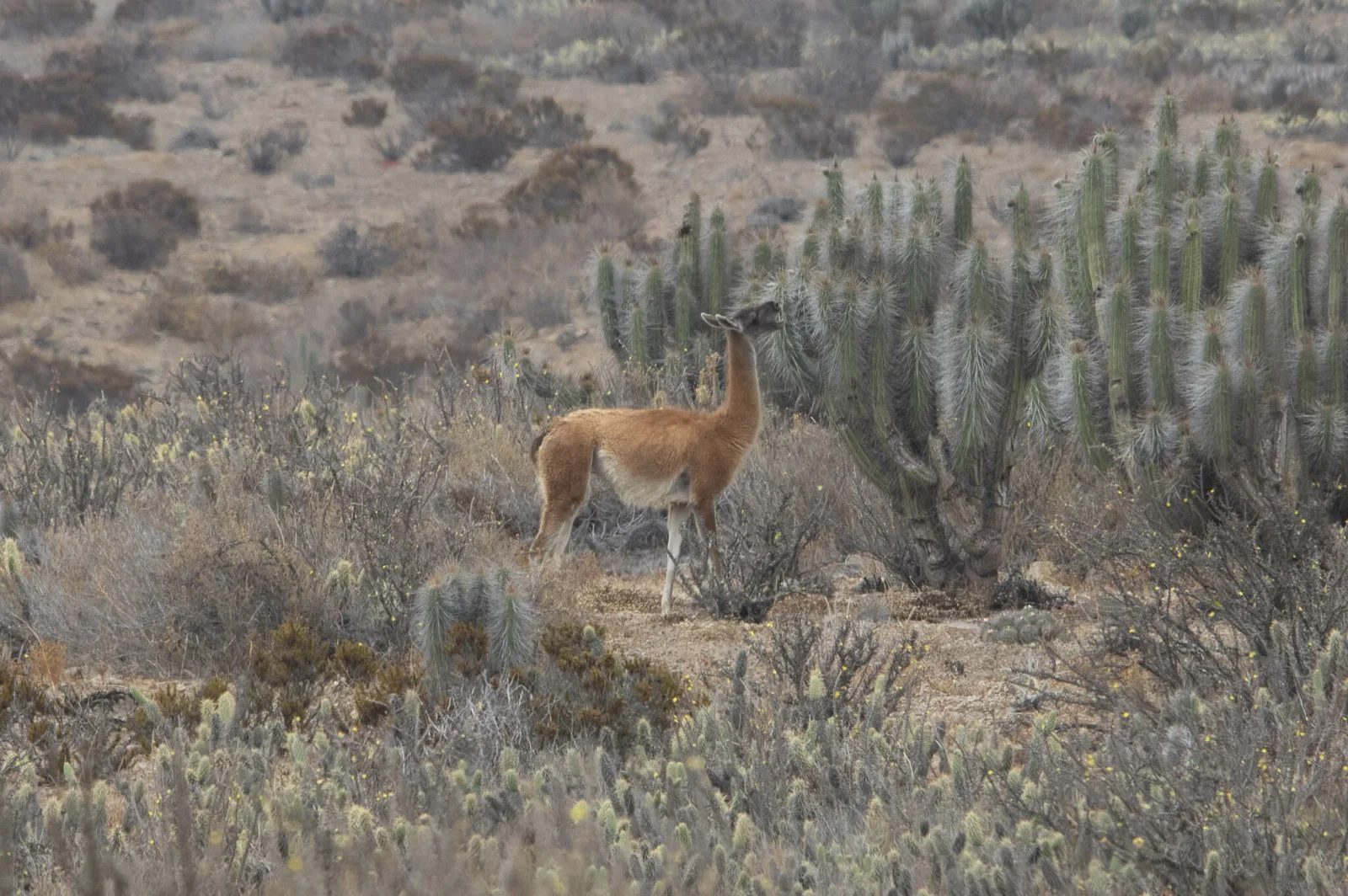
Images of the guanaco
Lifespan in the wild
20 to 25 years
Weight
90 to 140 kg
Length
1.9 to 2.15 m
Top speed
About 56 km/h
Fact file
Guanaco
- Location
- Andes and Patagonia: Peru, Bolivia, Chile, Argentina, Paraguay
- Habitat
- Grassland, Desert, Mountains, Temperate forest
- Diet
- Herbivore
- Prey / food
- None; grazes grasses, shrubs, lichens, fungi, cacti and flowers
- Predators
- Puma, culpeo fox
- Lifestyle
- Diurnal; family herds led by one male
- Group name
- Herd
- Name of young
- Chulengo
- Gestation
- About 11.5 months
- Litter size
- 1 chulengo
- Population
- About 1.5 to 2 million, most in Argentina
- Biggest threat
- Sheep fences, competition with livestock, hunting of young for pelts
- Distinctive feature
- Long neck, grey face and thick neck skin, a llama without the colour patches
- Colour
- Light brown to cinnamon above, white below, grey face
- Skin type
- Fur
Size
Next to a person
Measurements
Size and speed
- Height
- 0.9 to 1.3 m at the shoulder
- Length
- 1.9 to 2.15 m Wikipedia gives a body length of 210 to 220 cm
- Weight
- 90 to 140 kg
- Top speed
- About 56 km/h, up to 64 km/h
Typical adult ranges. Sources: Animal Diversity Web, Wikipedia.
Life cycle
Lifespan
- In the wild20 to 25, up to 28 years
- In captivityUp to 33.7 years
- 033.7 years
The pale bar is the record. Sources: Wikipedia, Animal Diversity Web.
Appearance
Colour and coat
- Primary colours
- browncinnamon
- Secondary colours
- whitegrey
- Skin type
- fur
- Male and female
- Almost none in size or colour. Males have enlarged canine teeth for fighting.
Life cycle
Mating and family
- Mating system
- resource-defence polygyny
- Social structure
- family groups of one territorial male with females and young; bachelor male groups
- Breeding
- one chulengo a year
Guanacos mate from early December to early January in the southern summer. A female carries one chulengo for about 11.5 months and gives birth in November or December. The young stands within an hour, grazes within weeks and is weaned at 4 to 8 months. The male expels it at 11 to 15 months. Females first breed at 3 years, and a guanaco can live up to 28 years.
Classification
Taxonomy
- Kingdom
- Animalia
- Phylum
- Chordata
- Class
- Mammalia
- Order
- Artiodactyla
- Family
- Camelidae
- Genus
- Lama
- Species
- Lama guanicoe
Conservation
Red List status
- LC
- NT
- VU
- EN
- CR
- EW
- EX
Least Concern on the IUCN Red List
Range
Recorded in 3 countries
Habitat layer: temperate broadleaf and mixed forest, temperate conifer forest, boreal forest and taiga, tropical grassland, savanna and shrubland, temperate grassland, savanna and shrubland, montane grassland and shrubland, desert and xeric shrubland.
Countries from 4,161 wild records on GBIF (iNaturalist research grade), filtered and checked by hand. Country shapes: Natural Earth. Habitat: RESOLVE Ecoregions 2017, CC BY 4.0. Basemap: Natural Earth.
Habitats
Three things to know
- 1
DNA work in 2001 confirmed that the domestic llama descends from the guanaco.
- 2
Guanaco blood carries four times as many red cells as human blood, about 68 million in a teaspoon.
- 3
Guanacos in the Atacama Desert drink by eating lichens and cactus flowers wet with sea fog.
Did you know
Seven more facts
- 1
A guanaco spits up to 2 metres when it fights or feels threatened.
- 2
Only 3 to 7 percent of the pre-Spanish population survives.
- 3
The undercoat fibre is 16 to 18 micrometres thick, as fine as cashmere.
- 4
Pumas cause up to 80 percent of chulengo deaths in some herds.
- 5
A newborn chulengo can stand within about an hour and follows its mother at once.
- 6
The Mapuche tamed the guanaco a second time on Mocha Island to make the chilihueque.
- 7
About 400 guanacos live on Staats Island in the Falklands, far from South America.
Field notes
How it looks and acts
Field notes
Distinguishing features
- A long, slender, curved neck on long legs.
- A grey face with small straight ears.
- A coat that is always brown to cinnamon above and white below, with no patches.
- Thick skin on the neck.
- Enlarged canine teeth in males.
- No hump, unlike the Old World camels.
Field notes
Unique adaptations
- Blood rich in red cells carries oxygen at 4,000 metres.
- Thin patches of wool on the flanks open and close as heat windows.
- A forestomach ferments tough desert plants.
- Thick neck skin blunts the bites of pumas and rivals.
- Speed of 56 kilometres per hour replaces cover on open plains.
Field notes
Interesting behaviours
- Lives in family groups of one male with females and young.
- Marks its territory with dung piles.
- Migrates in herds of up to 500 where winter snow covers the food.
- Forms a ring around the young to face down a fox.
- Drives out its yearlings at 11 to 15 months.
Field notes
Temperament
- Mild and watchful toward people.
- Males are violent toward each other in the breeding season.
- Mothers threaten, spit, charge and kick at predators.
Field notes
Communication
- A high bleat, like a short laugh, warns the herd of danger.
- Broadside and S-neck postures advertise a male's status.
- Clicking sounds pass between fighting males.
- A submissive crouch by a juvenile calms an aggressive male.
Ecology
Ecological role
The guanaco is the main wild grazer of the southern Andes and Patagonia and the chief prey of the puma.
- It spreads seeds in its dung and shapes the vegetation by grazing and browsing.
- It feeds pumas and culpeos, and its carcasses feed foxes, caracaras and Andean condors.
- Where its numbers fall, pumas turn to sheep and introduced deer, which brings conflict with ranchers.
Stories
Myths and legends
- In Inca tradition, the god Urcuchillay was a multicoloured llama, the guanaco's tame descendant, who guarded the herds.
- In Aymara tradition, a Heavenly Llama plays a part in the creation of the world.
- In Selk'nam tradition, a guanaco cape wrapped the body before burial.
- In Patagonian rock art from as early as 7,300 BC, hunters with bolas circle herds of guanacos.
People
Relationship with humans
People
Living alongside us
People have hunted the guanaco since the rock painters of Patagonia, and the Selk'nam lived on it for food, clothing and shelter. Its tame descendant, the llama, carried the loads of the Inca. Today wild guanacos are caught, sheared and released for wool as fine as cashmere, and their young are hunted for pelts. Ranchers see the animal as a rival for grass, and their fences kill many.
- The guanaco does not attack people, though it spits up to 1.8 metres when annoyed.
- A male may kick or bite if cornered in the breeding season.
- The main risk to people is probably a collision on a Patagonian road, where herds cross at speed.
People
Status, uses and products
- Domestication
- Wild
- As a pet
- Not suitable. The guanaco needs open range, a herd and a fence it will not jump into. Private herds exist in the United States, but the animal is protected in its home countries and listed on CITES Appendix II.
- Uses
- woolmeatecotourismhunting
- Products
- woolpeltshide
The full account
About the guanaco
The guanaco is a wild camelid of South America and the ancestor of the llama. It stands 90 to 130 centimetres at the shoulder and weighs 90 to 140 kilograms. Its coat is light brown to cinnamon above and white below, with a grey face and small straight ears. Unlike the llama it comes in only one colour.
The animal lives in family herds on some of the harshest land on the continent. It ranges from the Atacama Desert, where rain may not fall for 50 years, to the wet, windy islands of Tierra del Fuego. It climbs to 4,000 metres in the Andes on blood packed with red cells. On open ground it escapes pumas by running at 56 kilometres per hour.
About 1.5 to 2 million guanacos remain, most of them in Argentina. That is only 3 to 7 percent of the number that lived before the Spanish came. The IUCN lists the species as Least Concern, but sheep fences, ranching and the pelt trade press on it.
Name and taxonomy
The name comes from the Quechua word wanaku. A young guanaco is a chulengo, or a guanaquito. The scientific name is Lama guanicoe, in the family Camelidae, the camels. The type locality is the Andes of Patagonia in Chile.
Two subspecies are recognised. Lama guanicoe cacsilensis lives in the north, from northern Peru to northern Chile, and Lama guanicoe guanicoe holds the rest of the range. Some authors once treated the guanaco as a subspecies of the llama, since the llama descends from it. GBIF records the species in 15 countries.
Evolution and relatives
Camelids arose in North America. The ancestor of the true camels crossed into Asia about 7 million years ago. About 3 million years ago the guanaco's ancestor crossed the Panama land bridge into South America during the Great American Interchange. When the ice age megafauna died out, the New World camelids survived only in South America.
The guanaco has three close living relatives: the wild vicuña and the domestic llama and alpaca. A 2001 genetic study confirmed that the llama descends from the guanaco, though llamas have since crossed widely with alpacas. The alpaca descends from the vicuña. The Mapuche of Mocha Island tamed the guanaco a second time, producing the chilihueque, which vanished in the 17th century.
Appearance
The guanaco has the long neck, long legs and small head of all camelids, with a split upper lip and no horns. It measures 190 to 215 centimetres in the body. Size grows from north to south: the smallest animals are Peruvian, the biggest are from southern Chile. Wild guanacos of Tierra del Fuego were larger than those of Patagonia.
The wool is double: coarse guard hairs over a soft undercoat with fibres 16 to 18 micrometres thick, as fine as cashmere. The skin of the neck is thick, a shield against bites from pumas and from other males. Males and females look alike, but males carry enlarged canine teeth for fighting. Patches of thin wool on the flanks act as windows that the animal opens or closes by shifting its posture to shed or keep heat.
Habitat and range
The guanaco is the most widely spread of the four South American camelids. It lives from northern Peru through Bolivia, Chile and Argentina to Tierra del Fuego and Navarino Island. A small population survives in Paraguay. About 400 lived on Staats Island in the Falklands in 2003, from animals introduced in the 1930s.
The species prefers open, dry, windy country and avoids cliffs and steep rock. It uses desert, montane grassland, shrubland and even wet temperate forest. It ranges from sea level to 4,500 metres. In Patagonia the ice keeps it lower, because plants at high altitude lie under snow.
In the Atacama some guanacos live in fog oases called lomas. Cold sea air meets hot land and makes fog, which cacti catch and lichens soak up. The guanacos eat the lichens and the cactus flowers and so drink without rain. Today the species holds less than 40 percent of its former range.
Diet and feeding
The guanaco both grazes and browses. It eats grasses, shrubs, herbs, lichens, fungi, cacti, fruit and flowers, and switches as the seasons change. In the Andean foothills of Argentina two spiny shrubs make up much of the diet all year. It uses water and energy so well that it can live in the driest places on the continent.
Like a cow it swallows food with little chewing, ferments it in a forestomach and chews the cud later. The camelid stomach probably evolved that process on its own, separate from the ruminants. Herds move to the poorer pastures during the breeding season and to the richest ones outside it. It competes for grass with sheep, goats, cattle, horses and donkeys, which is why many ranchers treat it as a pest.
Behaviour and social life
The guanaco is active by day. In the breeding season it forms three kinds of group: family groups, male groups and loose sets of solitary males. A family group holds one territorial male with several females and their young, usually 5 to 13 adults. The male lets females and juveniles leave freely but controls which new females join.
The male defends a feeding territory of about 0.07 to 0.13 square kilometres. Rival males spit up to 2 metres, chase, bite at legs and neck, ram chests and wrestle with their necks. Wounds on the neck and legs are common in territorial males. Bachelor males gather in groups of 3 to 60, where the young ones spar for years before they win a territory.
Where winters are mild the herds stay put all year, and females may form winter groups of 10 to 90. Where snow or drought cuts the food, mixed herds of up to 500 migrate to sheltered ground. Home ranges in eastern Patagonia cover 4 to 9 square kilometres, and twice that in the west. The guanaco can run at 56 kilometres per hour over rock and slope, and it swims well.
Communication and senses
Open country lets guanacos signal by posture over long distances. A male stands broadside or bends his neck into an S to advertise himself and warn off rivals. A juvenile crouches with lowered neck, bent knees and raised tail to calm an angry male, a pose that may mimic nursing. Tail wagging passes signals within the group.
The alarm call is a high bleat that sounds like a short, sharp laugh. When the male hears or sees danger he calls, and the herd runs while he brings up the rear. Males click at each other during fights. Scent matters too: males mark their territories with dung piles, which also keep the family together.
Reproduction and life cycle
Mating takes place in the southern summer, mostly from early December to early January. The system is resource-defence polygyny: a male owns good pasture, and the females who feed there breed with him. A female ovulates 24 to 48 hours after mating, triggered by a signal in the semen. Each year about 75 percent of adult females breed but only 15 to 20 percent of adult males.
Gestation lasts 345 to 360 days, about 11.5 months. The single chulengo weighs about a tenth of its mother and can stand within an hour or so of birth. It follows its mother rather than hiding, which suits open ground. It starts to graze within weeks and feeds itself almost entirely by 8 months, though weaning runs from 4 to 8 months.
The territorial male drives out yearlings of both sexes at 11 to 15 months, probably to free food for the new calves. Females mature at 2 years and first breed at 3. Males mature at 2 to 4 years and become territorial at 4 to 6. A guanaco lives 20 to 25 years, up to 28 in the wild, and one reached 33.7 years in captivity.
Predators and threats
The puma is the main predator across the range. In some populations pumas take up to 80 percent of the chulengos that die. The culpeo, an Andean fox, was first seen attacking young guanacos in 2007 on Tierra del Fuego, where pumas are absent. Against a fox the adults form a ring around the young, then corner the fox and kick it away. Against a puma they watch, call and run.
Sheep fences kill many. A study found that 5.53 percent of yearlings and 0.84 percent of adults die on fences each year. Most tangle their legs in the top wire. Hunters called chulengueros take the young for their pelts, which pass as red fox fur. Livestock bring disease, overgrazing degrades the land and live shearing has caused capture myopathy in some wild animals.
Population and conservation
A 2016 estimate put the species at 1.5 to 2 million. Argentina holds 1,225,000 to 1,890,000, Chile 270,000 to 299,000, Peru about 3,000, Bolivia 150 to 200 and Paraguay 20 to 100. The IUCN lists the guanaco as Least Concern, and it sits on CITES Appendix II. In Chile every population except the one on Tierra del Fuego is classed as endangered.
Local recoveries show what protection can do. In Torres del Paine National Park the herd grew from 175 in 1975 to 3,000 in 1993. Argentina, Bolivia, Chile and Peru all regulate use of the animal, but enforcement is weak and most habitat lies outside protected land. Where pumas now eat sheep, hares and red deer instead of guanacos, ecologists say the guanaco is ecologically extinct.
Relationship with humans
People have hunted the guanaco since before 7,300 BC. The Selk'nam of Tierra del Fuego lived on it, hunting with bow and bolas and making capes, bags and shelters from the hides. They wrapped their dead in a guanaco cape. Bolivians still pound the thick neck skin into shoe soles.
The wool is the modern prize, valued in South America second only to vicuña. Since the late 1990s teams have caught, sheared and released wild guanacos, and Argentina now produces about 1500 kilograms of fibre a year. Chile allows hunting only on Tierra del Fuego, where 13,200 were shot legally between 2007 and 2012. About 300 guanacos live in United States zoos and about 200 in private herds.
The guanaco is mild toward people but spits when annoyed, up to 1.8 metres. Its greatest gift to humans is probably the llama, the only pack animal of the Inca world.
In culture and myth
The oldest record of the guanaco in human culture is painted on rock. At Cueva de las Manos in Santa Cruz, Argentina, hunters painted guanacos surrounded by men with bolas between about 7,300 BC and AD 700. The cave became a World Heritage Site in 1999 and draws about 8,000 visitors a year.
In Andean religion the sacred animal is the guanaco's tame descendant. The Inca god Urcuchillay, a llama of many colours, watched over the herds. The Moche buried llamas with their dead, and in Aymara myth a Heavenly Llama has a place in creation. The wild guanaco appears in these stories only as kin of the llama. That suggests the Andean peoples saw it as game rather than a spirit.
People in Patagonia say the alarm call sounds like laughter. For the Tehuelche and Selk'nam the animal was the staple of the steppe, food and clothing rather than a symbol. Today it appears on the flag of Argentina's Santa Cruz province in spirit if not in outline, as the emblem of the open Patagonian country.
A sentence with a dotted underline is inferred: it describes the group the animal belongs to, or is a reading of the sources, rather than a measured or reported fact about this species.
Questions
Guanaco questions, answered
What is a guanaco?
A wild camelid of South America, related to the camel and the ancestor of the llama. It lives on steppe, desert and mountain from Peru to Tierra del Fuego.
What is the difference between a guanaco and a llama?
The llama is the domestic form bred from the guanaco. Llamas are larger and heavier and come in many colours, while the guanaco is always brown and white.
How big is a guanaco?
It stands 90 to 130 centimetres at the shoulder, measures 190 to 215 cm in the body and weighs 90 to 140 kilograms.
How fast can a guanaco run?
About 56 kilometres per hour, and some sources give up to 64. It runs over steep and rocky ground.
Where do guanacos live?
In Argentina, Chile, Peru, Bolivia and Paraguay, from sea level to 4,500 metres. Most live in Argentine Patagonia.
What do guanacos eat?
Grass and shrubs most of the time, plus herbs, lichens, fungi, cacti and flowers. They switch foods with the seasons.
Do guanacos spit?
Yes. They spit up to about 2 metres at rivals and at anything that threatens them.
Are guanacos endangered?
No. The IUCN lists the species as Least Concern, with 1.5 to 2 million animals. In Chile most populations are still classed as endangered.
What eats guanacos?
Pumas take most of the young that die. The culpeo fox also attacks chulengos, especially on Tierra del Fuego.
How long do guanacos live?
About 20 to 25 years, and up to 28 in the wild. The captive record is 33.7 years.
What is a baby guanaco called?
A chulengo, or guanaquito. It can stand within an hour of birth.
How long is a guanaco pregnant?
About 11.5 months, or 345 to 360 days. The mother has one young a year.
Is guanaco wool valuable?
Yes. In South America it ranks second only to vicuña, and the undercoat is as fine as cashmere. Argentina shears about 1500 kilograms a year from wild animals.
Do guanacos live in herds?
Yes. A family group holds one male with several females and their young. Bachelor males form groups of up to 60.
Why do guanacos have so many red blood cells?
To carry oxygen at high altitude. A teaspoon of blood holds about 68 million red cells, four times the human figure.
Food web
Prey and food
- grazes grasses
- shrubs
- lichens
- fungi
- cacti
- flowers
Food web
Predators
 Cougar
- culpeo fox
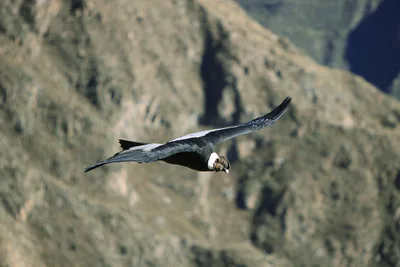 Andean condor
Ecological equivalents
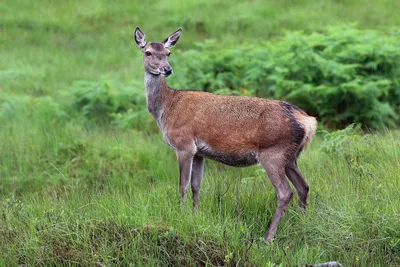
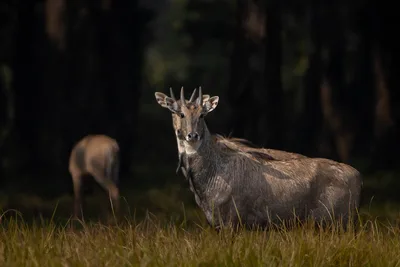
Related species on this site
Llama (same genus), Alpaca (same family), Bactrian Camel (same family), Dromedary (same family), Vicuña (same family), Addax (same order), and more.
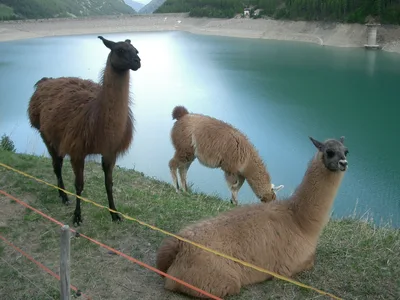
Mammals
Llama
Lama glama
The llama is a domesticated South American camelid used as a pack animal.
Living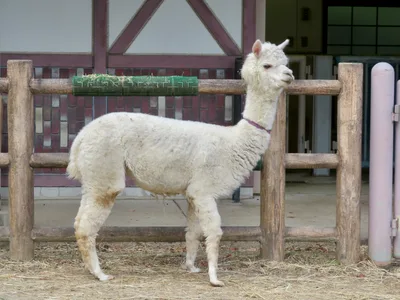
Mammals
Alpaca
Vicugna pacos
The alpaca is a domesticated Andean camelid kept for its fleece.
Living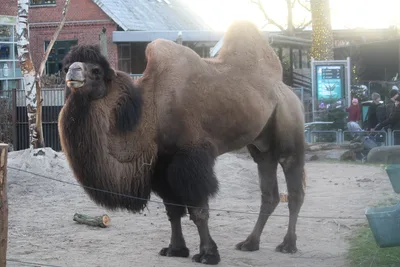
Mammals
Bactrian Camel
Camelus bactrianus
The domestic Bactrian camel is a two-humped camel associated with Central Asia.
Living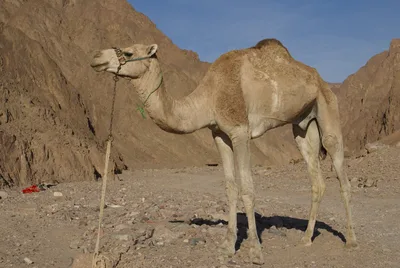
Mammals
Dromedary
Camelus dromedarius
The dromedary is the one-humped domestic camel.
Living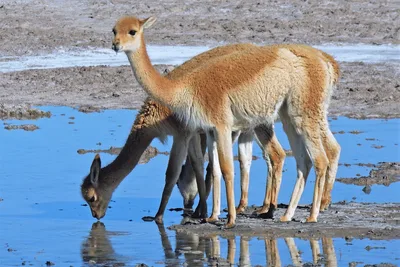 LC
Mammals
Vicuña
Vicugna vicugna
The vicuña is the smallest wild camelid and the ancestor of the alpaca, living on the high grassland of the central Andes.
Living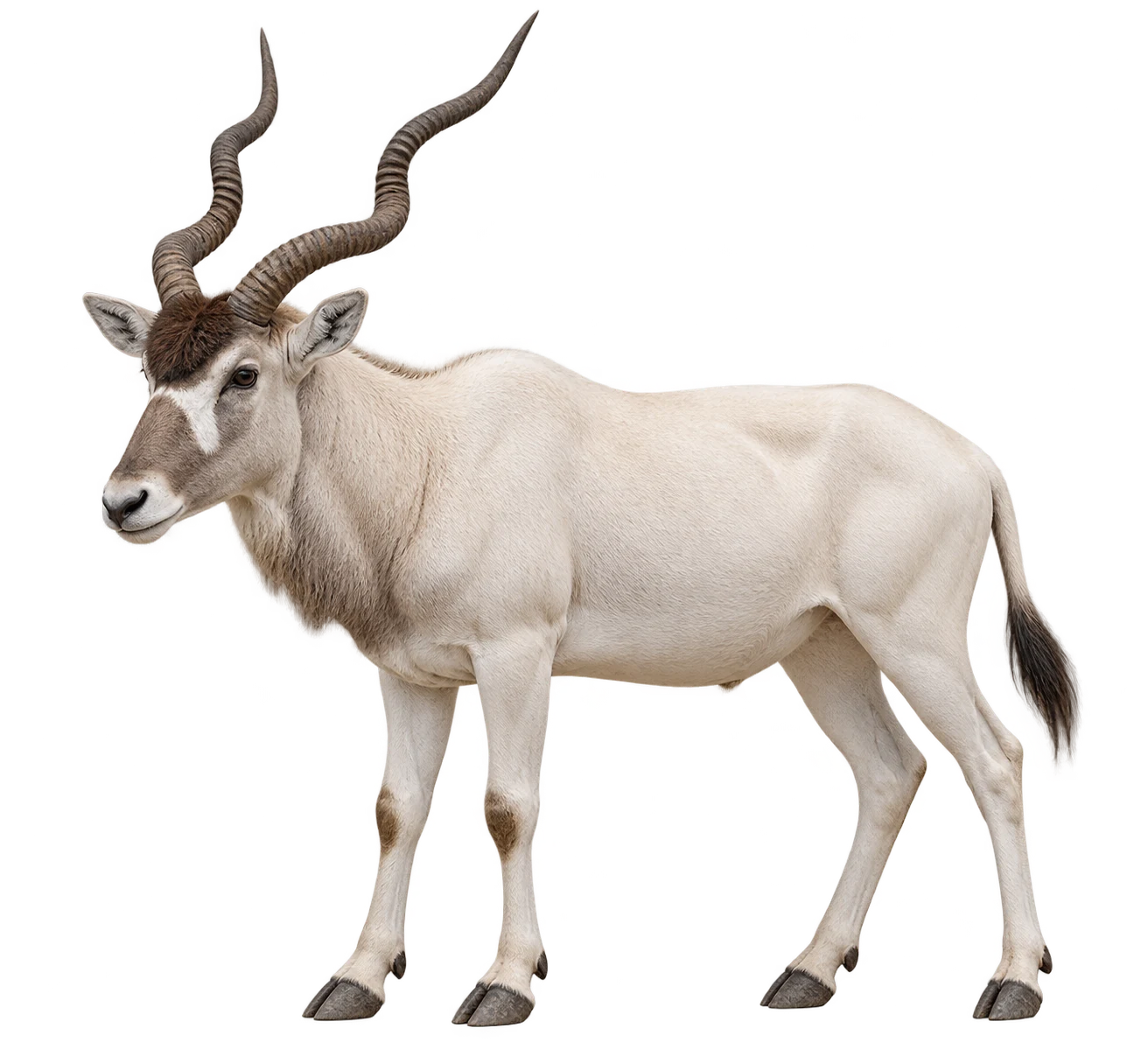
Mammals
Addax
Addax nasomaculatus
Classification and source reference
LivingAI illustration