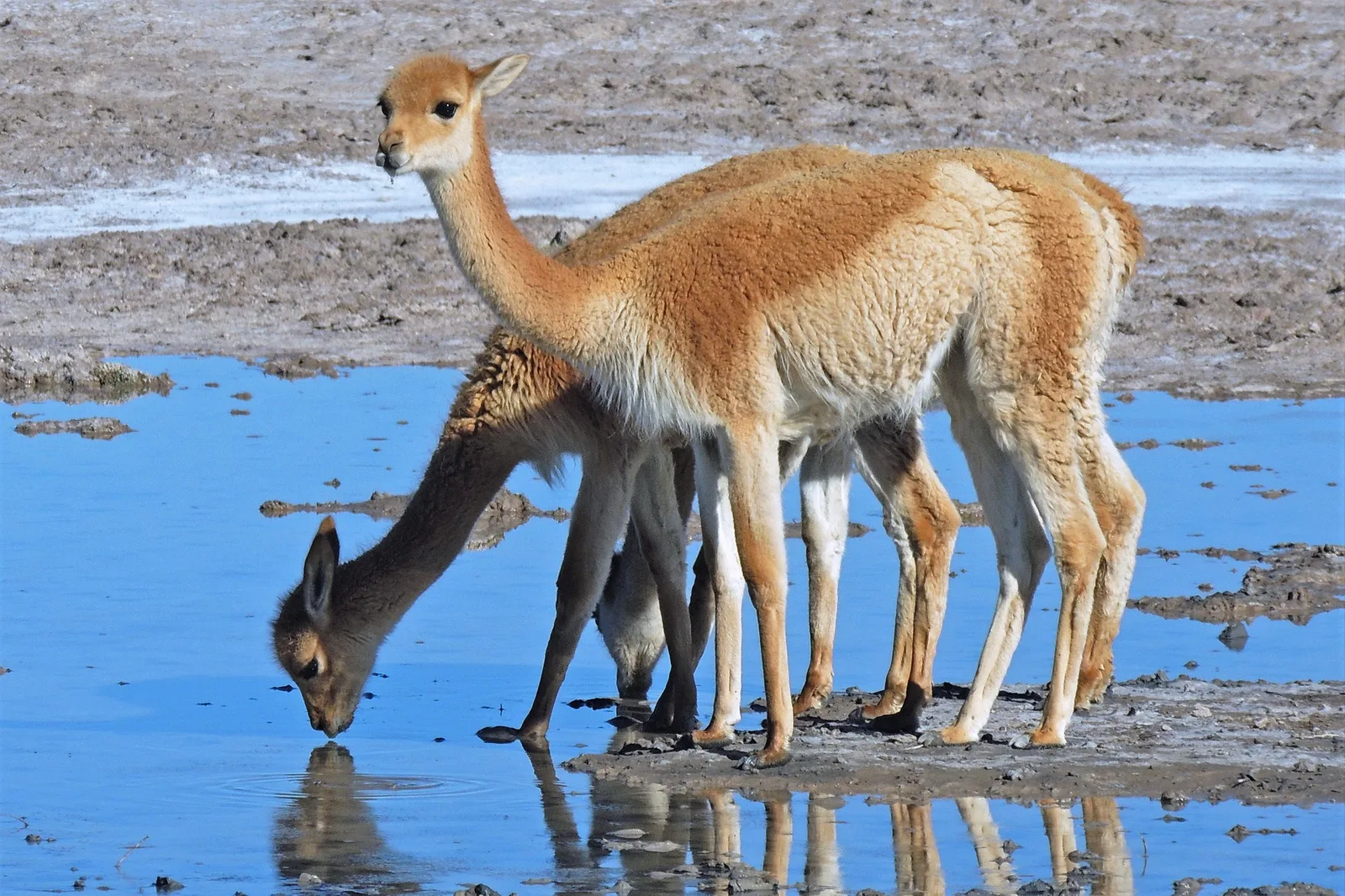
Vicuña
The wild camel of the high Andes with the finest wool
Vicugna vicugna
Also called Vicuna, Huari
Living individuals or members of this group exist today. This does not mean they are safe from extinction.
Meet the vicuña
The vicuña is the smallest wild camelid and the ancestor of the alpaca, living on the high grassland of the central Andes. Its fibre is the finest in common use, the Inca reserved it for royalty, and the species recovered from about 6,000 animals to about 350,000.
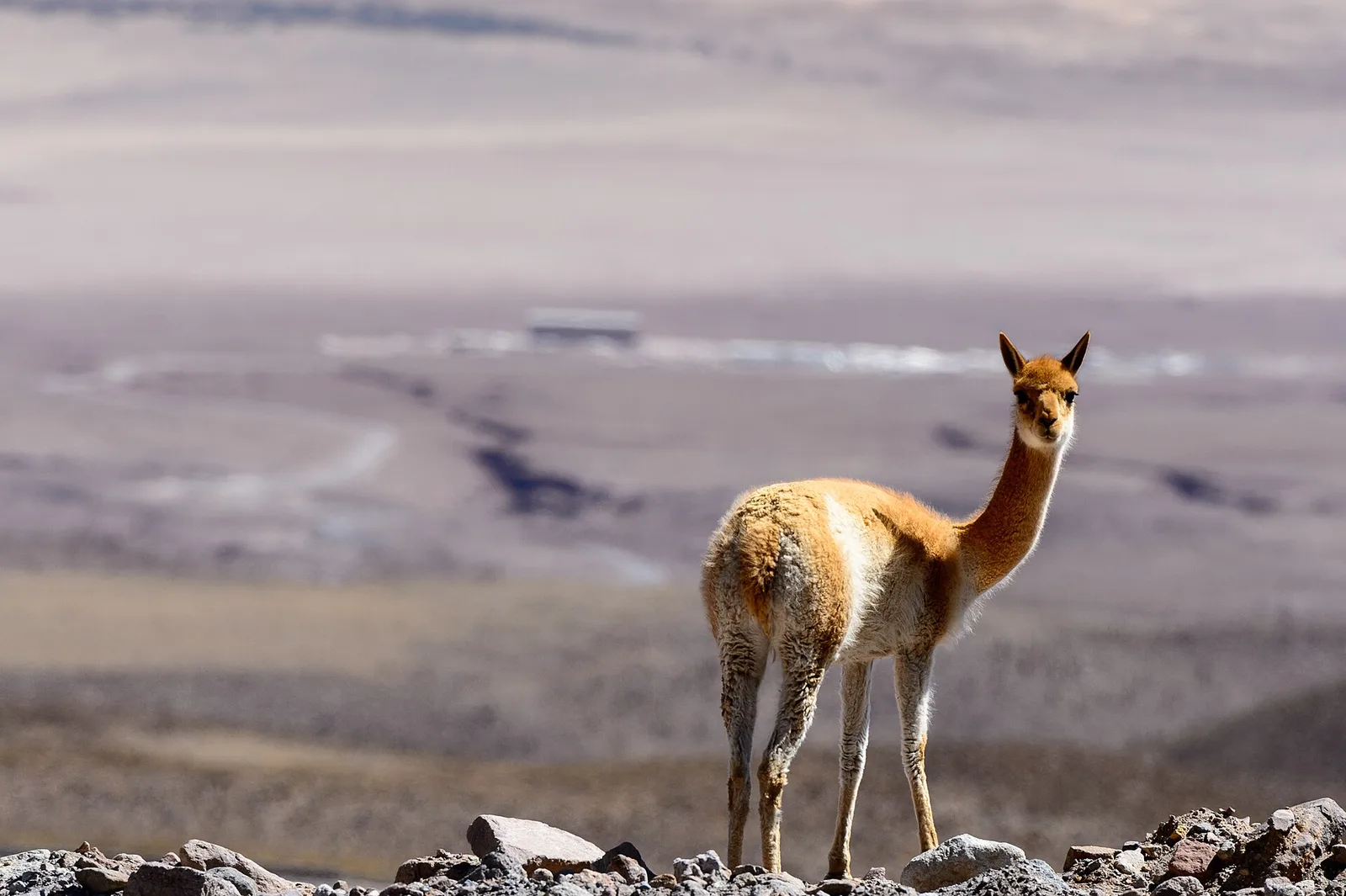
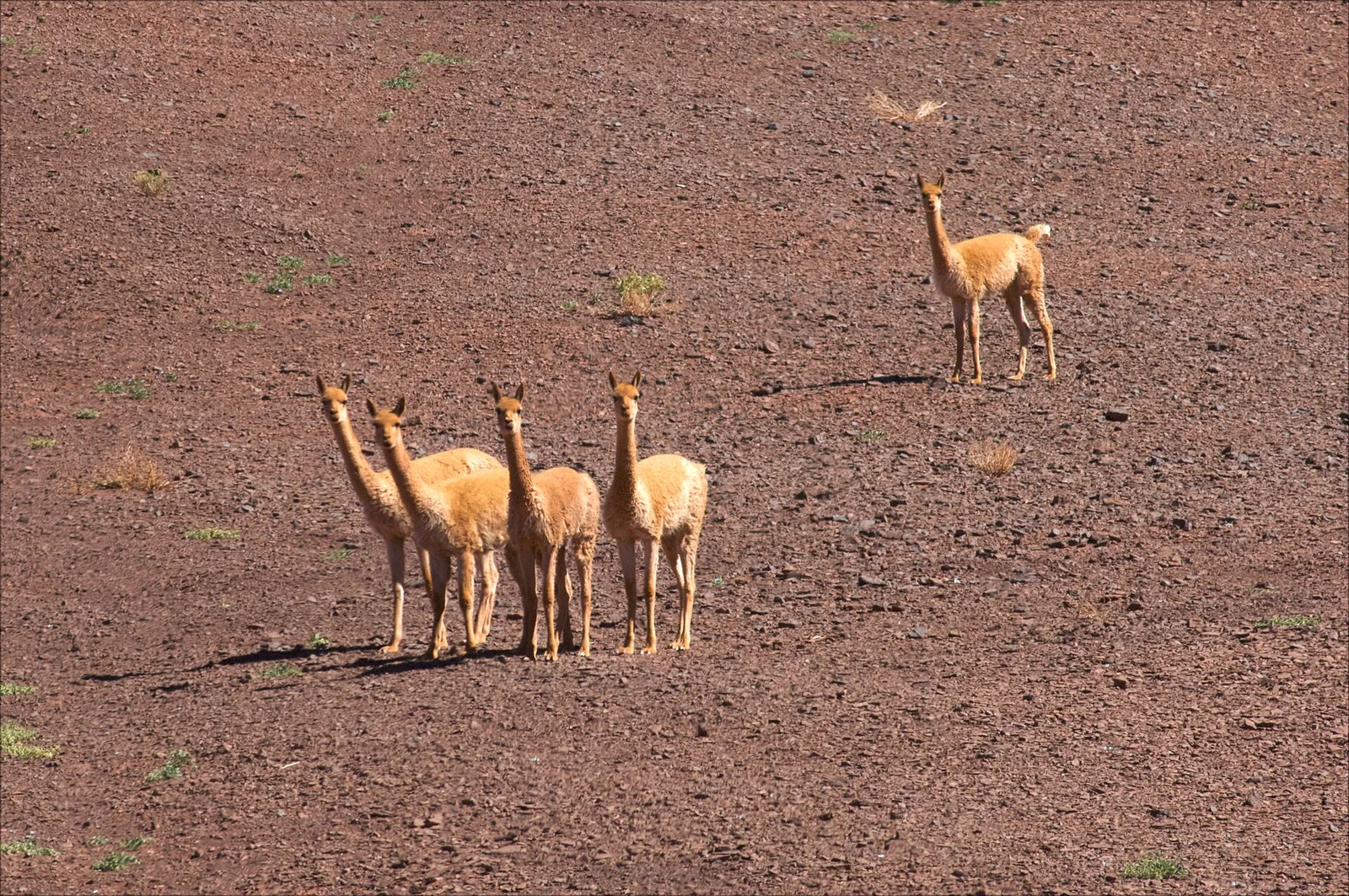
Images of the vicuña
Lifespan in the wild
15 to 20 years
Weight
40 to 60 kg
Length
1.45 to 1.6 m
Height
75 to 85 cm
Fact file
Vicuña
- Location
- Central Andes of Peru, Bolivia, Chile and Argentina
- Habitat
- Mountains, Grassland
- Diet
- Herbivore
- Prey / food
- Bunch grasses, panicgrass, saltgrass, shrubs
- Predators
- Puma, Andean fox, domestic dogs
- Lifestyle
- Diurnal; family herds on a defended territory
- Group name
- Herd
- Name of young
- Cria
- Gestation
- About 11 months
- Litter size
- 1 young
- Population
- About 350,000
- Biggest threat
- Poaching for wool and habitat loss
- Distinctive feature
- Long white bib on the chest and the finest wool of any animal
- Colour
- Tawny brown with a white chest and belly
- Skin type
- Fur
Size
Next to a person
Measurements
Size and speed
- Height
- 75 to 85 cm at the shoulder
- Length
- 1.45 to 1.6 m head and body
- Weight
- 40 to 60 kg
Typical adult ranges. Sources: Animal Diversity Web, Wikipedia.
Life cycle
Lifespan
- In the wild15 to 20 years
- In captivityUp to 31.6 years
- 031.6 years
The pale bar is the record. Sources: Animal Diversity Web, AnAge.
Appearance
Colour and coat
- Primary colours
- tawny brown
- Secondary colours
- whiteoff-white
- Skin type
- fur
- Male and female
- Slight. Males and females look alike, and no source gives a size difference.
Life cycle
Mating and family
- Mating system
- polygynous, a territorial male with a harem
- Social structure
- family herds of one male and 5 to 15 females, plus bachelor herds
- Breeding
- one young a year
Vicuñas mate between January and April on the male's territory. The female carries a single young for about 11 months and gives birth standing. The young nurses for up to ten months and stays with the mother for at least 8 months. At about a year it leaves for a bachelor herd or another family. Females breed from their second year, and a vicuña lives about 15 to 20 years.
Classification
Taxonomy
- Kingdom
- Animalia
- Phylum
- Chordata
- Class
- Mammalia
- Order
- Artiodactyla
- Family
- Camelidae
- Genus
- Vicugna
- Species
- Vicugna vicugna
Conservation
Red List status
- LC
- NT
- VU
- EN
- CR
- EW
- EX
Least Concern on the IUCN Red List
Range
Recorded in 5 countries
Habitat layer: tropical grassland, savanna and shrubland, temperate grassland, savanna and shrubland, montane grassland and shrubland.
Countries from 2,314 wild records on GBIF (iNaturalist research grade), filtered and checked by hand. Country shapes: Natural Earth. Habitat: RESOLVE Ecoregions 2017, CC BY 4.0. Basemap: Natural Earth.
Habitats
Three things to know
- 1
Its fibre is about 12 micrometres across, finer than cashmere.
- 2
Villagers round it up, shear it and release it, as the Inca did.
- 3
A family herd climbs the slopes each night to avoid pumas.
Did you know
Seven more facts
- 1
The alpaca descends mainly from the vicuña, not from the guanaco.
- 2
Every vicuña in a group leaves its dung in the same place.
- 3
A family herd climbs to higher ground each night to avoid pumas.
- 4
A kilogram of the fibre fetches over 300 dollars on the world market.
- 5
A vicuña gives birth standing up and does not lick its newborn.
- 6
Fossils show vicuñas once lived 3,500 kilometres south of their present range.
- 7
Peru's coat of arms has carried a vicuña since 1825.
Field notes
How it looks and acts
Field notes
Distinguishing features
- The smallest camelid, slender, with long legs and a long neck.
- Tawny brown back and a long white bib on the chest.
- A pale face, where the guanaco's is dark.
- Ears slightly longer than the guanaco's on a shorter head.
- Shoulder height of 75 to 85 centimetres.
Field notes
Unique adaptations
- Hollow, scaled fibres trap air and hold warmth through freezing nights.
- Ever-growing incisors crop short, tough grass without wearing out.
- A ruminant gut breaks down fibrous plateau plants.
- Large ears and sharp hearing catch a puma's approach.
- Like other camelids, its blood is thought to carry oxygen well in thin air.
Field notes
Interesting behaviours
- Grazes the plains by day and sleeps on the slopes at night.
- Licks limestone and drinks salty water for minerals.
- Uses a shared dung pile.
- The male chases rivals off his territory all year round.
- Flees a threat, but sometimes charges a condor or a dog.
Field notes
Temperament
- Timid and quick to flee.
- The territorial male is bold toward rivals and intruders.
- Mothers give little defence and may leave a calf briefly when alarmed.
Field notes
Communication
- A high alarm call of about 4 seconds from the family male.
- Trembling ears, flared nostrils and a flipping tail during mating.
- Shared dung piles probably act as scent marks.
Ecology
Ecological role
The vicuña is the main grazer of the high Andean plateau and the main prey of the puma there.
- It keeps the Andean grasses cropped, and they regrow quickly under its grazing.
- It is the chief food of pumas in its range, together with the guanaco.
- Its carcasses feed the Andean condor.
Stories
Myths and legends
- In Inca tradition, vicuña cloth belonged to royalty alone.
- In the Andean chaccu, a ceremony and the scissors dance ask the gods for leave to take the fleece.
- In Andean villages, a fertility rite still involves the vicuña.
- In Peruvian heraldry, the vicuña stands for the wealth of the animal kingdom.
People
Relationship with humans
People
Living alongside us
People have valued the vicuña for its wool since Inca times. Uncontrolled hunting nearly destroyed the species by the 1960s, and treaties, reserves and CITES rebuilt it. Communities now capture, shear and release the animals in a yearly chaccu and sell the fibre. Luxury firms buy most of it, and local communities receive only a small share of the value. The vicuña harms nobody, though it competes with livestock for grazing.
- Vicuñas do not physically harm people.
- They flee from a threat rather than fight.
- The only conflict is grazing competition with sheep and cattle.
People
Status, uses and products
- Domestication
- Wild
- As a pet
- Not suitable. The vicuña is a protected wild animal that needs thin, cold mountain air, a territory and a herd. International trade is controlled under CITES, and its domestic relative, the alpaca, fills the role of a kept camelid.
- Uses
- woolecotourism
- Products
- fibreyarncloth
The full account
About the vicuña
The vicuña is the smallest member of the camel family and the wild ancestor of the alpaca. It lives on the cold grass plains of the central Andes at 3,200 to 4,800 metres. Adults weigh 40 to 60 kilograms and stand 75 to 85 centimetres at the shoulder. The coat is tawny brown above with a long white bib on the chest and throat.
The vicuña grows the finest animal fibre in common use, about 12 micrometres across. The Inca reserved its cloth for royalty, and Andean villages still round the animals up, shear them and let them go. Unrestricted hunting cut the species to about 6,000 animals in the 1960s. Strict protection from 1969 onward brought it back to about 350,000, and the IUCN now lists it as Least Concern.
Vicuñas live in family groups of one male with a harem of females on a defended territory. The puma is their main predator, and they climb to higher slopes at night to avoid it. The species is the national animal of Peru and stands on the country's coat of arms.
Name and taxonomy
The scientific name is Vicugna vicugna, though some authors now place it in Lama as Lama vicugna. It belongs to the camel family, Camelidae, in the order Artiodactyla, the even-toed hoofed mammals. Two subspecies are recognised: the northern mensalis of Peru and Bolivia and the southern vicugna of Argentina and Chile. GBIF lists the names Peruvian vicuña and Argentine vicuña for the two, and the Aymara call the animal huari. The English spelling vicuna, without the tilde, is common in the wool trade.
Evolution and relatives
South America has four camelids: the wild vicuña and guanaco, and the domestic alpaca and llama. For a long time both domestic species were treated as descendants of the guanaco. DNA work published in 2001 showed that the alpaca descends mainly from the vicuña, which is why the alpaca is now Vicugna pacos. The llama remains the domestic form of the guanaco.
Today the vicuña keeps to the highest Andes, but fossils show a wider past. In the late Pleistocene and early Holocene it lived in lowland Patagonia, as much as 3,500 kilometres south of its present range. Those lowland fossils were named Lama gracilis, but genetic and skeletal comparison suggests they are the same species. Remains also reach Uruguay and the Strait of Magellan, alongside the guanaco.
Appearance
Wikipedia gives a head and body length of 1.45 to 1.60 metres and a shoulder height of 75 to 85 centimetres. Animal Diversity Web gives a weight of 40 to 60 kilograms, with an average near 45 kg. Wikipedia widens the weight range to 35 to 65 kg. The vicuña is smaller and more slender than the guanaco, with a slightly shorter head and longer ears. The neck and legs are long, and the face is pale where the guanaco's is dark.
The back and sides carry a woolly coat of tawny brown, and the belly is off-white. White hair grows unusually long over the chest and throat, and it hangs as a bib. Fibre on the neck and belly grows longer to guard against the cold. Unlike the alpaca and llama, which come in many colours, the vicuña shows very little variation.
The lower incisors never stop growing, and they carry enamel on one side only, like a rodent's. The guanaco has better-developed incisor roots, one of the few skeletal differences between the two. Each fibre is hollow and covered in tiny scales that lock together and trap air.
Habitat and range
The vicuña lives only in the central Andes of South America. It is native to Peru, Bolivia, northern Chile and northwestern Argentina. A small introduced population of about 2,000 animals has lived in central Ecuador since 1988. GBIF holds records from 12 countries, but that count includes zoos and stray records outside the range.
Its home is semi-arid grassland and plateau at 3,200 to 4,800 metres, and Animal Diversity Web gives 3,000 to 5,000. Only tough bunch grasses and Festuca grow there. The thin air lets the sun warm the day, but the nights fall to freezing. In the central Andes daytime temperatures average about 2 to 8 degrees Celsius. The thick, soft coat holds a layer of warm air against the skin.
Vicuñas graze the plains by day and move up to the slopes at night. They need to drink, since their food holds too little water, so they stay near streams and pools. Wikipedia gives a family territory of about 18 square kilometres, while an older field study found about 17 hectares per family. The second figure works out at about 3.4 hectares per animal, and territory size probably shifts with the food supply.
Diet and feeding
The vicuña is a herbivore and a generalist, and it eats more than half the plant species in its range. Grasses make up about 59 to 72% of the diet and shrubs about 16 to 19%. Two plants, a panicgrass and saltgrass, provide almost 50% of what it eats. Its main food is the low grass that grows in clumps close to the ground.
Like other camelids the vicuña chews the cud, and its gut handles tough, fibrous desert plants. It licks limestone rocks and drinks salty water for minerals. The ever-growing incisors crop grass close without wearing down. The grazed grasses regrow quickly, so heavy grazing does not lower their output.
Behaviour and social life
Vicuñas live in three kinds of group: family herds, bachelor herds and lone males. A family herd is one adult male, 5 to 15 females and their young. The male defends the territory all year, and he chases any intruder away. Young males join bachelor herds, and old males driven out of families live alone. Young females leave to find another family group, which limits inbreeding.
The animals are timid and easily alarmed, and their hearing is excellent. They are clean, and every member of a group leaves its dung in the same spot. A herd feeds on the plain by day and climbs to sleep at night, when pumas hunt. They keep to open meadows rather than canyons, where a puma can hide. When they run, their usual fast gait is the transverse gallop, which is common in large running mammals.
Communication and senses
The vicuña relies on sight and hearing, and its large ears show how much hearing matters to it. Its best-known call is the alarm, which the family male gives when he sees a threat. The call starts high and lasts about 4 seconds, and the male may repeat it. The rest of the herd moves off together, and the male follows at the rear. Every vicuña can give the alarm, but the male gives it most often.
During mating the male trembles his ears, flares his nostrils and flips his tail. Shared dung piles probably serve as scent marks that tell neighbours where a territory lies.
Reproduction and life cycle
Mating runs from January to April, with most activity in March and April. Some evidence suggests that vicuñas kept apart by sex will mate in any month. The female lies down, and the male straddles her and lies on her back. Copulation lasts 10 to 50 minutes. The resident male mates with the females of his territory, and he sometimes tries to herd females out of a neighbour's range.
Gestation lasts 330 to 350 days, about 11 months, with an average of 345 days. The female gives birth standing up to a single young, and she does not lick it. The young nurses for about ten months, and weaning falls between 6 and 10 months. The mother ends nursing by walking away, and she offers little defence if alarmed. The male's contribution is a safe territory where mothers and young can graze in peace.
Young become independent at 12 to 18 months and leave for bachelor or other family groups. Females mature at about 12 to 24 months, and males breed at closer to 3 years. Vicuñas live about 15 to 20 years, and the average is about 17. A record captive animal lived 31.6 years.
Predators and threats
The puma is the main predator. One study charged pumas with about 50% of calf deaths and 91% of adult deaths. The Andean fox, or culpeo, and domestic dogs also take vicuñas, and Andean condors scavenge the carcasses. A vicuña's first defence is to run, but it has been seen charging a condor or a dog. Birth weight decides much of a calf's chance of surviving its first year.
The biggest historical threat was hunting for wool, which came close to wiping the species out. Poaching continues today, along with habitat loss and competition with livestock for grass and water.
Population and conservation
The IUCN lists the vicuña as Least Concern, a status it reached in 2018. The global population is about 350,000 and rising. Peru holds the most, about 218,000 in a 2016 estimate, and Bolivia has the largest wild herds. Peru's count rose from 66,559 in 1994 to 118,678 in 2000 and 208,899 in 2012.
Hunting was unrestricted until 1964, and only about 6,000 animals were left in the 1960s. Peru set up the Pampa Galeras reserve in Ayacucho in 1965 and trained wardens to stop poachers. Bolivia and Peru signed a vicuña convention in La Paz on 16 August 1969, and Ecuador joined in 1976. A second treaty in Lima on 20 December 1979 allowed careful use once herds recovered, and Argentina joined in 1981. CITES trade rules took effect in 1975, and the species was declared endangered in 1974.
Numbers reached 125,000 across the four countries, and in 1993 the wool trade reopened under controls. In 2002 the United States moved most populations to threatened, but it still lists the Ecuador animals as endangered. The IUCN still backs active protection, education and recovery plans against poaching.
Relationship with humans
Vicuña wool is among the finest fibres in the world. It measures about 12 micrometres across, against 14 to 19 for cashmere and 8 to 12 for angora rabbit. The fibre goes into coats, suits, shawls, socks and blankets, and it sells for over 300 dollars a kilogram. Each animal gives only a small fleece, and it can be shorn only about every three years.
Communities such as Lucanas hold a chaccu each year: a round-up, a shearing and a release. The wool has become a cash crop for Andean villages, and the animals also draw tourists. In 2015 the luxury group LVMH claimed that its firm Loro Piana had saved the species. An Argentine government body estimated in 2022 that Andean communities receive about 3% of the value of the fibre chain.
Vicuñas do not harm people. They graze ranchland and compete with sheep and cattle for grass and water, which causes some conflict. Local opinion of the animal is mostly positive.
In culture and myth
The Inca prized vicuña wool above all others, and only royalty could wear it. Inca law protected the animals: they were driven into enclosures, shorn and set free rather than killed. That round-up, the chaccu, survives in Peru today. At Pampa Galeras it takes place on 24 June, when hundreds of people drive the herds into a fence with a long rope. An Inca-style ceremony and the scissors dance are held before the shearing, as a pledge to the gods for the fleece.
Andean villagers still hold a fertility rite with vicuñas. Peru made the vicuña its national animal. On the coat of arms, which dates from 25 February 1825, it represents the riches of the animal world. A cinchona tree stands for the plant world beside it, and a horn of plenty spilling coins stands for minerals.
A sentence with a dotted underline is inferred: it describes the group the animal belongs to, or is a reading of the sources, rather than a measured or reported fact about this species.
Questions
Vicuña questions, answered
How big is a vicuña?
An adult weighs 40 to 60 kilograms and stands 75 to 85 centimetres at the shoulder. The head and body measure 1.45 to 1.60 metres. It is the smallest camelid.
Why is vicuña wool so expensive?
The fibre is about 12 micrometres across, finer than cashmere. Each animal gives a small fleece, it must be caught from the wild, and it can be shorn only about every three years. The wool sells for over 300 dollars a kilogram.
Are vicuñas endangered?
No. The IUCN lists the vicuña as Least Concern. It fell to about 6,000 animals in the 1960s but now numbers about 350,000, and poaching remains a threat.
Where do vicuñas live?
On the high grassland of the central Andes in Peru, Bolivia, Chile and Argentina, at 3,200 to 4,800 metres. A small introduced population lives in Ecuador.
What is the difference between a vicuña and an alpaca?
The vicuña is wild, smaller and always tawny with a white chest. The alpaca is its domestic descendant, comes in many colours, and gives coarser wool.
Is a vicuña a llama?
No. Both are South American camelids, but the llama is the domestic form of the guanaco. The vicuña is a separate wild species and the ancestor of the alpaca.
What do vicuñas eat?
Mostly low bunch grasses, which make up about 59 to 72% of the diet, plus shrubs. They lick limestone and drink salty water for minerals, and they need fresh water daily.
What eats vicuñas?
The puma is the main predator, and it caused about 91% of adult deaths in one study. Andean foxes and domestic dogs also take them.
Do vicuñas live in herds?
Yes. A family herd has one male, 5 to 15 females and their young on a defended territory. Young males live in bachelor herds.
How long do vicuñas live?
About 15 to 20 years, with an average near 17. One captive animal reached 31.6 years.
How is vicuña wool collected?
In a chaccu, villagers drive the herd into a fence, shear each animal and release it. At Pampa Galeras this takes place each year on 24 June with a ceremony and the scissors dance.
How many young does a vicuña have?
One a year, after a pregnancy of about 11 months. The young is born standing and nurses for up to ten months.
Why is the vicuña on Peru's coat of arms?
It represents the riches of the animal world. A cinchona tree stands for plants and a horn of plenty for minerals, and the design dates from 1825.
Are vicuñas dangerous?
No. They do not harm people and run from any threat. Their only conflict with people is grazing competition with livestock.
Can you keep a vicuña as a pet?
No. It is a protected wild species under CITES and needs cold high-altitude grassland and a herd. The alpaca is the kept animal bred from it.
Food web
Prey and food
- bunch grasses
- panicgrass
- saltgrass
- shrubs
Food web
Predators
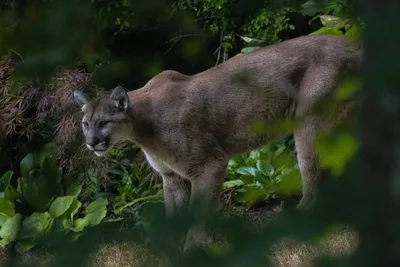 Cougar
- andean fox
- domestic dogs
Ecological equivalents
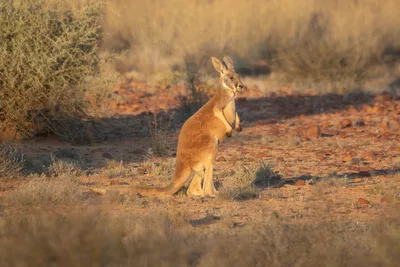
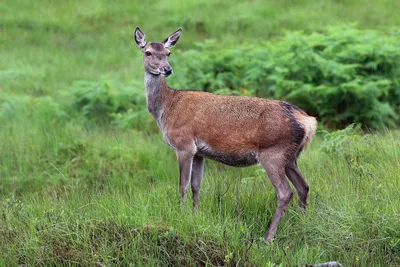
Related species on this site
Alpaca (same genus), Bactrian Camel (same family), Dromedary (same family), Guanaco (same family), Llama (same family), Addax (same order), and more.
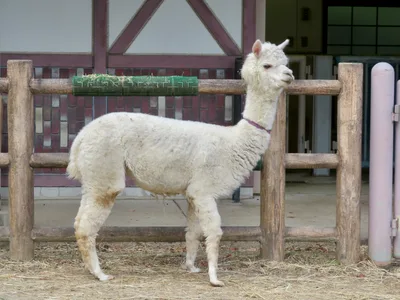
Mammals
Alpaca
Vicugna pacos
The alpaca is a domesticated Andean camelid kept for its fleece.
Living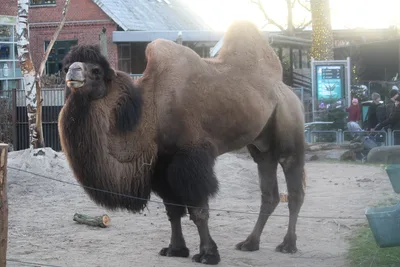
Mammals
Bactrian Camel
Camelus bactrianus
The domestic Bactrian camel is a two-humped camel associated with Central Asia.
Living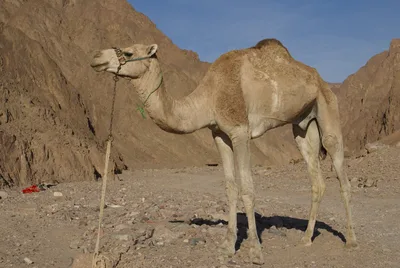
Mammals
Dromedary
Camelus dromedarius
The dromedary is the one-humped domestic camel.
Living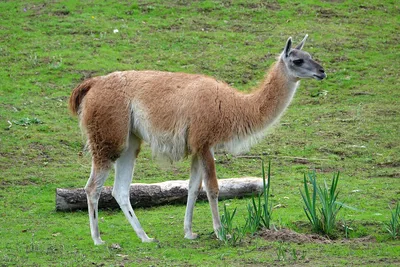 LC
Mammals
Guanaco
Lama guanicoe
The guanaco is the wild camelid of South America and the ancestor of the llama.
Living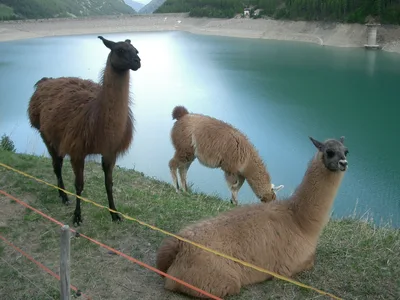
Mammals
Llama
Lama glama
The llama is a domesticated South American camelid used as a pack animal.
Living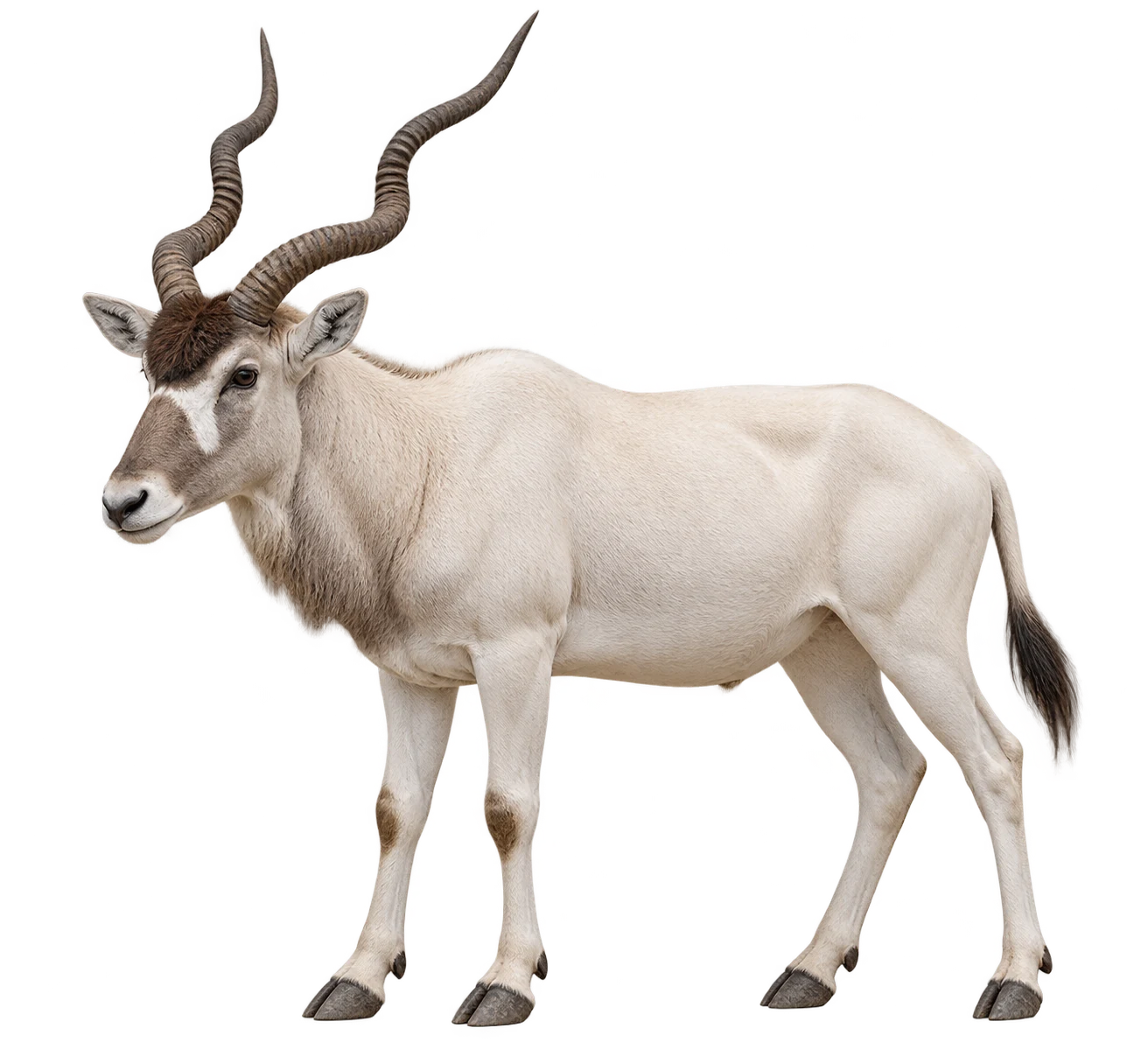
Mammals
Addax
Addax nasomaculatus
Classification and source reference
LivingAI illustration