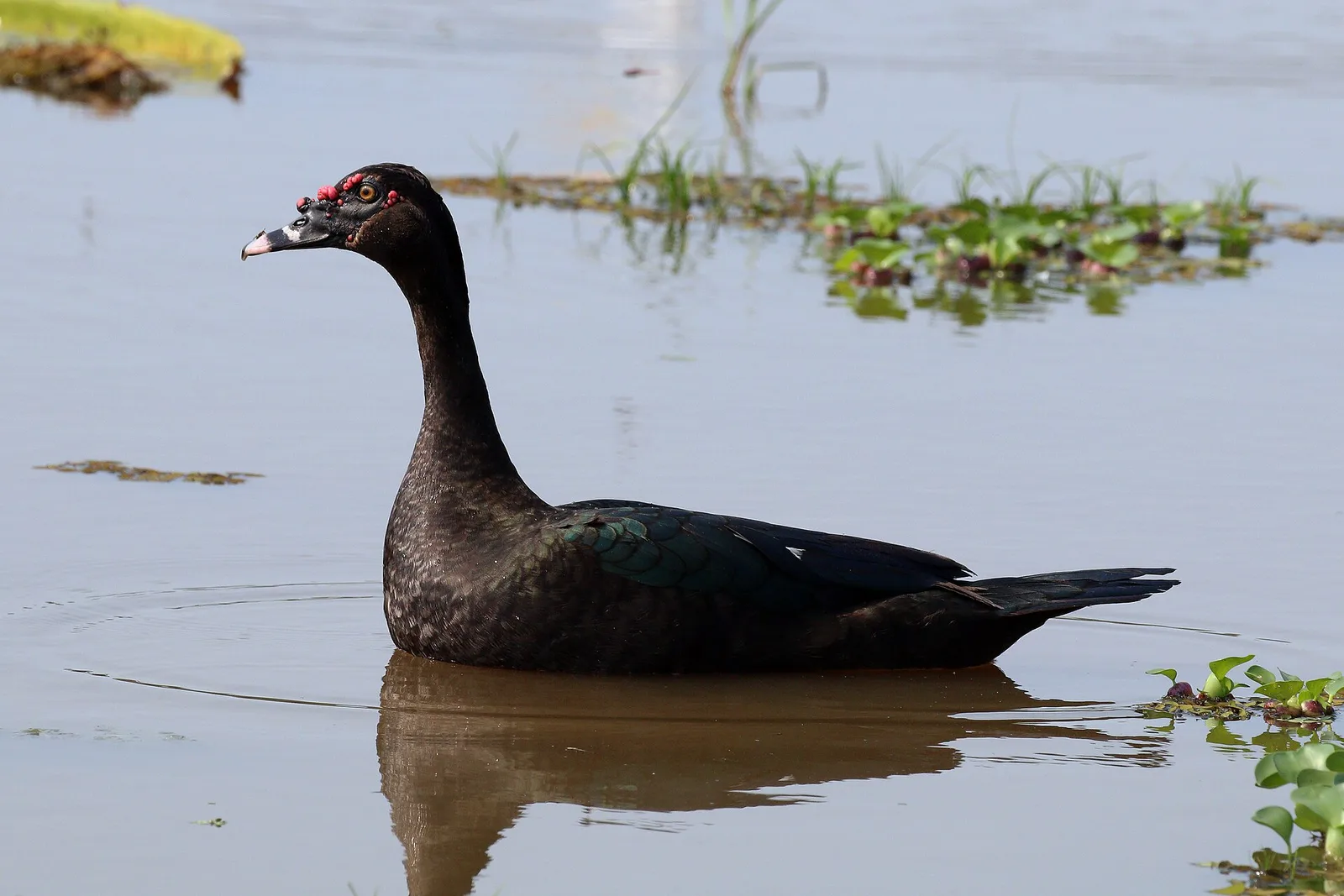
Muscovy duck
The tropical duck that nests up a tree
Cairina moschata
Also called Barbary duck, Pato criollo, Creole duck, Musky duck
Living individuals or members of this group exist today. This does not mean they are safe from extinction.
Meet the muscovy duck
The Muscovy duck is a large tree-perching duck of tropical America, black with white wing patches and a bare red face. People of the Americas domesticated it long before Columbus, and feral flocks now live on town water across four continents.
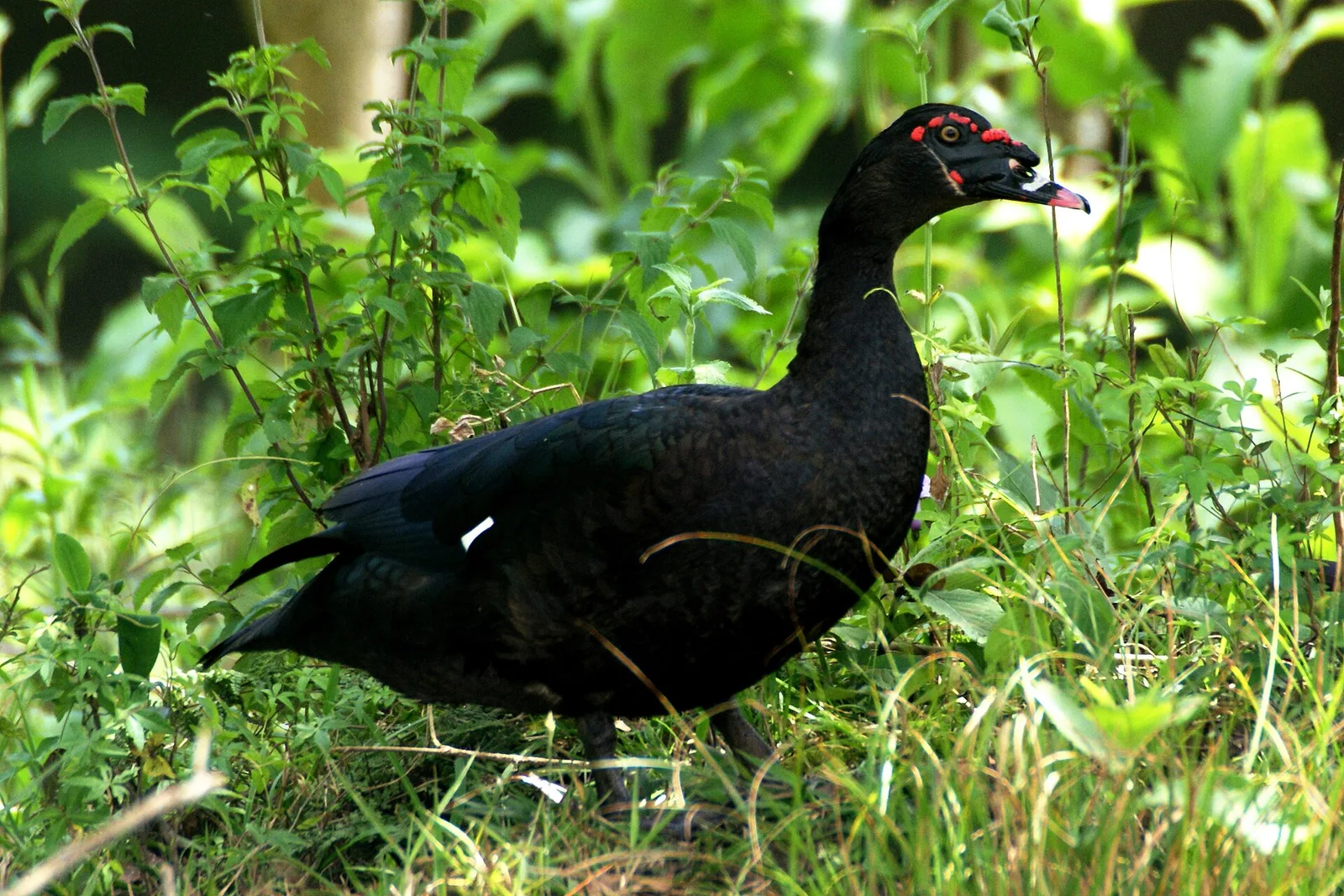
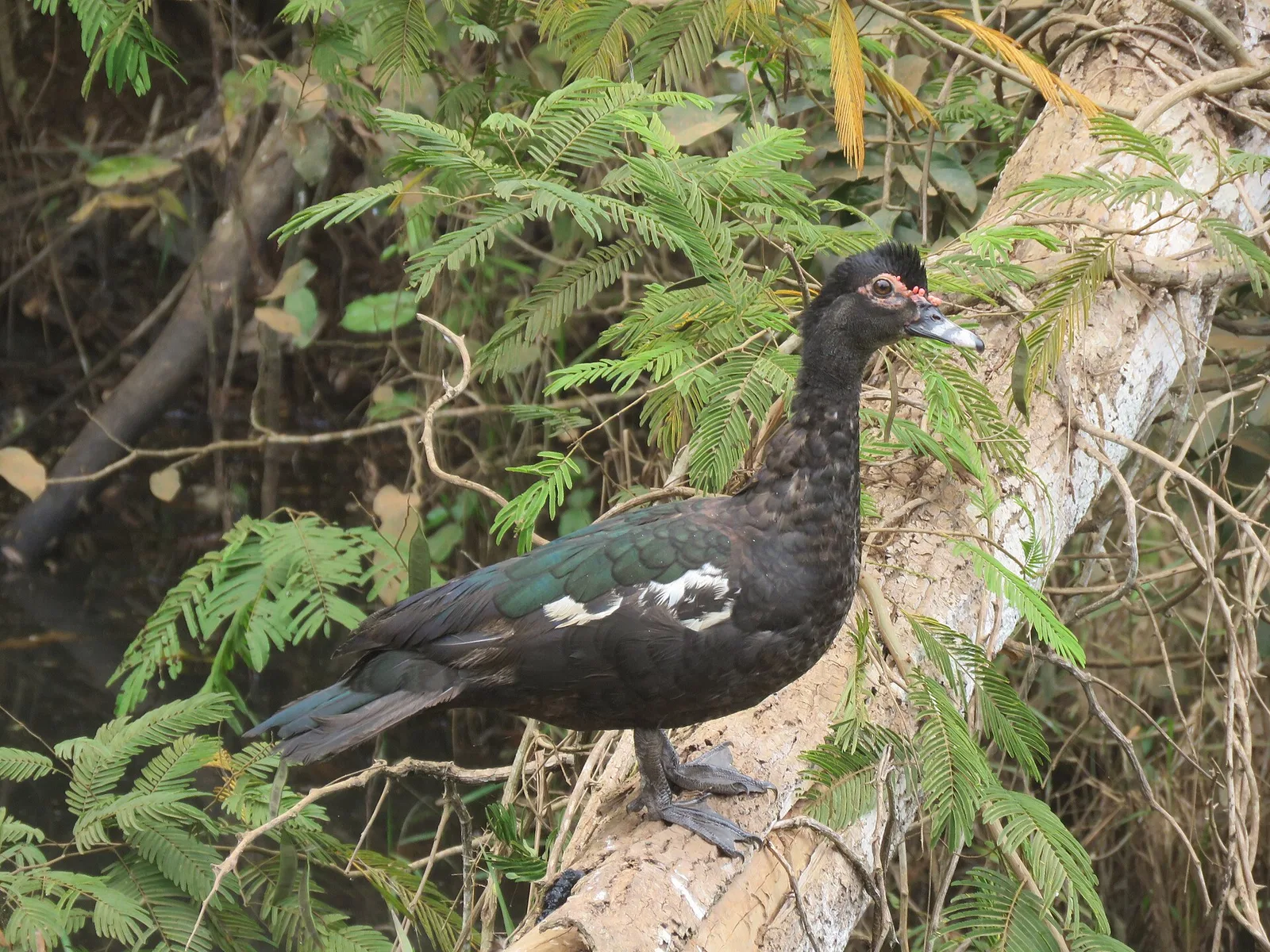
Images of the muscovy duck
Lifespan in the wild
7 to 8 years
Weight
2.7 to 6.8 kg
Length
66 to 84 cm
Wingspan
1.37 to 1.52 m
Fact file
Muscovy duck
- Location
- Texas and Mexico south to Argentina and Uruguay
- Habitat
- Wetlands, Temperate forest, Rivers and lakes, Towns and cities
- Diet
- Omnivore
- Prey / food
- Water plants, grasses, seeds, small fish, insects, millipedes, worms
- Predators
- Dogs and red foxes; ducklings are the usual target
- Lifestyle
- Active by day, non-migratory, roosts in trees
- Group name
- Flock
- Name of young
- Duckling
- Incubation
- Incubation 30 to 35 days
- Clutch size
- 8 to 15 white eggs
- Population
- Widespread; wild numbers falling, farm and feral birds common
- Biggest threat
- Hunting in the east of the range, and avian influenza
- Distinctive feature
- Bare red face with a black knob above the bill
- Colour
- Black with white wing patches, green and purple gloss
- Skin type
- Feathers
Size
Next to a person
Measurements
Size and speed
- Length
- 66 to 84 cm
- Length, male
- 76 to 84 cm
- Length, female
- 71 to 76 cm
- Wingspan
- 1.37 to 1.52 m
- Weight
- 2.7 to 6.8 kg the range covers both sexes and farm birds
- Weight, male
- 3 to 4 kg
- Weight, female
- About 1.25 kg
Typical adult ranges. Sources: Animal Diversity Web, Wikipedia.
Life cycle
Lifespan
- In the wild7 to 8 years
- In captivityUp to 9 years
- 09 years
The pale bar is the record. Source: Animal Diversity Web.
Appearance
Colour and coat
- Primary colours
- blackwhite
- Secondary colours
- greenpurplered
- Skin type
- feathers
- Male and female
- Strong. The male is about twice the weight of the female, with a larger red knob at the bill and a crest he can raise. The female has a feathered face and no knob.
Life cycle
Mating and family
- Mating system
- promiscuous, close to a lek
- Social structure
- loose flocks with territorial males
- Breeding
- two or three broods a year, from August to May
Pairs do not last, and a dominant male mates with the females that nest on his ground. The hen picks a tree hollow and lays 8 to 15 white eggs. She incubates them alone for about a month. The ducklings follow her for 10 to 12 weeks, and the drake often walks beside the brood. A female can breed at about 28 weeks of age.
Classification
Taxonomy
- Kingdom
- Animalia
- Phylum
- Chordata
- Class
- Aves
- Order
- Anseriformes
- Family
- Anatidae
- Genus
- Cairina
- Species
- Cairina moschata
Conservation
Red List status
- LC
- NT
- VU
- EN
- CR
- EW
- EX
Least Concern on the IUCN Red List
Range
Recorded in 15 countries
- Argentina
- Ashmore and Cartier Islands
- Brazil
- Colombia
- Costa Rica
- Germany
- Spain
- France
- United Kingdom
- Italy
- Mexico
- New Zealand
- Puerto Rico
- Portugal
- United States of America
Habitat layer: temperate broadleaf and mixed forest, temperate conifer forest, boreal forest and taiga, flooded grassland and savanna, mangrove.
Countries from 59,466 wild records on GBIF (iNaturalist research grade), filtered and checked by hand. Country shapes: Natural Earth. Habitat: RESOLVE Ecoregions 2017, CC BY 4.0. Basemap: Natural Earth.
Habitats
Three things to know
- 1
The name points at Moscow and the genus name points at Cairo, yet the duck comes from tropical America.
- 2
It hisses instead of quacking, and it nests in a tree hollow high above the ground.
- 3
Ducks kept in cow pens cut fly numbers by 80 to 90 percent.
Did you know
Seven more facts
- 1
The Muscovy duck hisses at a threat instead of quacking loudly.
- 2
Long claws let it grip a branch, so it can roost off the ground.
- 3
Farm birds can produce two or three broods between August and May.
- 4
The bird comes from the tropics, yet it copes with frost.
- 5
Scientists published a chromosome-level genome of the duck in 2026.
- 6
GBIF lists records from 190 countries, most of them farm or feral birds.
- 7
The dressed bird reaches the butcher's counter under the name Barbary duck.
Field notes
How it looks and acts
Field notes
Distinguishing features
- Bare red skin covers the face, with warty growths around the bill.
- A black or dark red knob sits at the base of the drake's bill.
- Each wing carries a large white patch that shows best in flight.
- The toes end in long claws, which is unusual for a duck.
- A male weighs about twice as much as a female.
- The male can raise a short crest on the back of his head.
Field notes
Unique adaptations
- Sharp claws grip bark, so the bird can perch and nest in a tree.
- The wide flat tail probably helps it balance as it lands on a branch.
- Sleeping on open water gives the flock an escape route at night.
- A diet of plants and small animals suits swamp, farm and town alike.
- The bare facial skin may help the duck shed heat in tropical air.
Field notes
Interesting behaviours
- Drakes hold territories and drive rivals away from them.
- A male wags his tail and lifts his crest to display.
- Males that lose a contest gather in bachelor groups.
- The hen leaves her eggs once a day to feed, drink and bathe.
- The drake walks with the ducklings and guards them for weeks.
Field notes
Temperament
- The duck is aggressive at close quarters, and males fight over food and mates.
- It bites when a person handles or corners it.
- Birds that people feed grow tame, and that probably explains the flocks on town lakes.
- Hens guard their ducklings and teach them to fend off an enemy.
Field notes
Communication
- The drake calls with a low breathy sound.
- The hen answers with a quiet trilling coo.
- Both sexes hiss at anything they treat as a threat.
- A raised crest tells another male to keep his distance.
- Head bobbing passes signals between birds at close range.
Ecology
Ecological role
The Muscovy duck moves plant and animal matter through tropical wetland, and it feeds much of what hunts there.
- Ducklings are probably an important food for predators of the wetland edge.
- Grazing and dabbling thin the water plants and the grass around the shallows.
- The duck eats insects, millipedes and worms in quantity.
- Seeds pass through the gut and may sprout where the bird settles.
Stories
Myths and legends
- In English tradition the bird was called the Guinea duck, though it never lived in Guinea.
- In Italian scholarship Aldrovandi called it the Libyan duck, and it has never lived in North Africa.
- In French kitchens it is canard de Barbarie, a name that also points at the wrong continent.
- In Muisca country, in what is now Colombia, people kept the duck, and one story derives its English name from them.
- In Russian the name is musk duck, so the language of Moscow makes no claim on the bird.
People
Relationship with humans
People
Living alongside us
Peoples of the Americas domesticated this duck before Columbus arrived. Farmers now keep it worldwide for meat, eggs and down. The mulard, a cross with the Pekin duck, is raised for meat and for foie gras. Feral flocks live on town water in Florida, Europe and Australia, and some councils treat them as a nuisance. Growers also put the ducks to work against flies, slugs and snails.
- A cornered bird hisses, bites and scratches with its long claws.
- Muscovy ducks carry avian influenza, and the H5N1 subtype can reach people.
- Feral flocks foul paths and water, which is a nuisance rather than a danger.
People
Status, uses and products
- Domestication
- Domestic
- As a pet
- Kept by some. The Muscovy duck is a common backyard bird. It needs space, shade and clean drinking water, and it does not need a pond. Drakes fight each other, and the claws mark skin and furniture, so no bird of this kind belongs indoors.
- Uses
- meateggsdownfoie graspest controlornamental birds
- Products
- meateggsdownfeathersfoie gras
The full account
About the muscovy duck
Cairina moschata, the Muscovy duck, is a big duck of tropical America that perches in trees. Wild birds live from the Lower Rio Grande Valley of Texas south to Argentina and Uruguay. Males grow to 76 to 84 centimetres long, and females stay near 71 to 76 cm. A female weighs about 1.25 kilograms, and a heavy farm drake can reach 6.8 kg. Bare red skin on the face and a black knob above the bill set it apart from other ducks.
Peoples of the Americas kept this duck long before Europeans reached the continent. Farmers now raise it for meat, eggs and down on every continent except Antarctica. The English name points at Moscow, though the bird has no link with Russia. Feral flocks live in Florida, New Zealand, Australia and parts of Europe. The IUCN lists the species as Least Concern, because the range is very wide. iNaturalist holds 98,650 observations of the species.
Name and taxonomy
Carl Linnaeus named the bird Anas moschata in 1758, in the tenth edition of Systema Naturae. His account ran to a few words about the naked, warty face. Later authors moved the species to the genus Cairina, so the name is now Cairina moschata. The genus name comes from Cairo, and the species name means musky. The scientific name therefore says the musky duck of Cairo, and the bird lives in neither place.
Muscovy is an old English name for the country around Moscow. The duck is not Russian, and no trader carried it there first. The early naturalists could not agree on where the bird came from. Many European languages call it the musk duck, such as the German Moschusente. The species is monotypic, and nobody recognises a subspecies.
Evolution and relatives
The Muscovy duck belongs to the Anatidae, the family of ducks, geese and swans. Older books placed it with the perching ducks, a grouping that later work broke up. Authors then moved it into the dabbling duck subfamily Anatinae. Gene sequences from cytochrome b and NADH dehydrogenase subunit 2 point elsewhere again. They place the duck near Aix, the genus of the wood ducks, in the subfamily Tadorninae.
The white-winged duck once shared the genus and now stands alone as Asarcornis scutulata. That leaves the Muscovy duck as the only living member of Cairina. A chromosome-level genome appeared in 2026, about 1.27 gigabases across 39 chromosomes. The study counted 16,901 genes that code for protein. Gene families tied to immunity had grown, which may explain the bird's hardiness.
Appearance
This is a heavy duck with a long body, a wide flat tail and long claws. Males measure 76 to 84 centimetres, and females measure 71 to 76 cm. A drake weighs about 3 to 4 kilograms, and a female about 1.25 kg. The wingspan runs from 137 to 152 cm and averages about 145 cm. Animal Diversity Web gives a mass range of 2.7 to 6.8 kg for farm and wild birds together.
Wild birds are mostly black, with a large white patch on each wing. The drake's back and wing feathers throw off a green and purple gloss. Bare red skin covers the face, and a dark knob sits above the bill. The bill is black with pale pink speckles, and the eyes are yellowish brown. The male carries a short crest on the nape and can raise it at will. Farm birds vary far more, and many are white, pied, buff, chocolate, lilac or blue.
Habitat and range
The wild bird lives in swamp forest and along slow rivers, lakes and streams. It feeds in the grassland and on the crop fields that sit beside the water. At night it roosts in trees, which few ducks do. The native range runs from Texas and Mexico to Argentina and Uruguay. The species does not migrate, and a bird may spend its life in one valley.
Feral birds now breed on town lakes, farm ponds and park water far outside that range. Populations live in Florida, Louisiana, Massachusetts and southern Canada. Others live in New Zealand, Australia and parts of central and eastern Europe. Small British flocks sit at Ely, Calstock, Lincoln and Buxton. GBIF holds occurrence records from 190 countries, and most of those birds are farmed or feral. The tropical bird copes with frost and does well at -12 degrees Celsius.
Diet and feeding
The Muscovy duck is an omnivore, and it takes much more than pond weed. It eats the roots, stems, leaves and seeds of water plants and grasses. It grazes on land and dabbles in the shallows for the rest. Animal food includes small fish, amphibians, reptiles and crustaceans. It also takes spiders, insects, millipedes, termites and worms.
Crops make up part of the diet where a field meets the water. Ducklings start on grain, grass, insects and almost any small moving animal. Their mother shows them what to eat within days of hatching. Adults will peck at ducklings that crowd the same food. Like other dabbling ducks, it feeds by day and rests at night.
Behaviour and social life
Muscovy ducks live in loose flocks with a clear rank order. Males hold territories and drive other males off them. A drake lifts his crest and wags his tail to state his rank. Fights break out over food, over ground and over females. Females quarrel with each other less often than males do.
Males that lose form small bachelor groups inside another bird's ground. The species is active by day and stays in one place all year. Birds often sleep on the water, which gives them a head start from a fox. Wild birds fly well and land in trees, gripping the bark with their claws. Farm birds are heavier and cover little ground in the air.
Communication and senses
This duck does not quack the way a mallard does. The drake makes a low breathy sound, and the hen a quiet trilling coo. Both sexes hiss at a threat, and the sound carries a plain warning. Soft quacking keeps a hen and her ducklings in touch. The calls are quiet, so they probably carry only a short way across the water.
Much of the talk is silent, and the birds signal with the body instead. A raised crest states dominance to a rival male. The crest also draws females, and they pick large males with large crests. Birds raise and lower their heads at one another when they meet. Like other ducks, it has sharp colour vision and a wide field of view.
Reproduction and life cycle
Pairs do not stay together, and the mating system looks like a lek. A few males father most of the ducklings, and many males never breed. Breeding runs from early August to early May in the native range. A hen can raise two or three broods within one year.
She nests in a tree hollow, often 3 to 18 metres above the ground. The nest is a cup of twigs, stems and mud. She lays 8 to 15 white eggs, and a typical clutch holds 8 to 10. Each egg is about 6.2 to 7.1 centimetres long. She sits on the eggs for 30 to 31 days, and some accounts stretch that to 35. She leaves the nest once a day, for 20 minutes to an hour and a half.
Hatching can take a whole day once the first shell cracks. Ducklings cannot hold their own heat, so they press against their mother at night. They follow her for about 10 to 12 weeks and then feed themselves. The drake often walks with the brood and guards it for several weeks. Females can breed at about 28 weeks of age and males at about 29 weeks. Wild birds live 7 to 8 years, and 9 years is a high figure in captivity.
Predators and threats
Ducklings are the easy target, and many die in their first weeks. Animal Diversity Web names dogs and red foxes as the known predators. Birds sleep on open water so they can swim clear of a night attack. When something disturbs them they alarm call, freeze or run. A hen defends her brood, and she may strike at a dog that comes too near.
Hunting is the main pressure on wild birds in the east of the range. The duck has become uncommon there for that reason. Avian influenza is the other killer, and the H5N1 subtype wipes out whole flocks. Clearing of swamp forest probably removes the tree holes a hen needs. Breeding with escaped farm birds may also weaken the wild stock.
Population and conservation
The IUCN lists the Muscovy duck as Least Concern. That listing rests on the very wide range rather than on a head count. Wild numbers appear to be falling even so. Farm and feral birds are common, and they probably hide that loss from most people.
iNaturalist records regional listings that are far stricter than the global one. Uruguay lists the duck as Endangered. Mexico places it on the official list of species at risk of extinction. French Guiana lists it as Near Threatened, and Argentina puts it in a threatened class. Nest boxes in Mexico have helped local numbers.
Relationship with humans
Peoples of the Americas had domesticated the duck by the time Columbus reached the Bahamas. Sailors carried a few birds home on the Santa Maria in the early 16th century. The bird now stands in farmyards across the world. It gives meat, eggs and down, and the dressed carcass sells as Barbary duck. Spanish speakers call the farm bird pato criollo.
Farmers cross a Muscovy drake with a Pekin hen to make the mulard. Mulards cannot breed, and France raised about 35 million of them a year by 2007. Ducks turned into a cow pen cut fly numbers by 80 to 90 percent. Growers also use them against snails, slugs, locusts and grasshoppers.
In the United States the bird counts as non-native outside three counties of southern Texas. Federal rules there allow the removal of feral birds, their eggs and their nests. Feral flocks foul paths and gardens, and some towns treat them as pests. A cornered duck will bite, and its claws can scratch a hand.
In culture and myth
The English name has puzzled writers for four hundred years. One story credits the Muscovy Company, which traded with Russia after 1550. That company dealt in Russian goods and not in American ones, so the story is weak. Another reading treats Muscovy as a word for anywhere far away. The turkey and the guineafowl carry the same kind of misleading name.
A third idea points to the Muisca people of what is now Colombia. They kept the duck, and their name may have shifted into Muscovy in European mouths. The Miskito people of Nicaragua and Honduras also relied on the bird at home. Ulisse Aldrovandi called it the Cairo duck, the Indian duck and the Libyan duck. Francis Willughby decided that all three names belonged to one bird. John Ray then tied the name to the strong musky smell instead.
A sentence with a dotted underline is inferred: it describes the group the animal belongs to, or is a reading of the sources, rather than a measured or reported fact about this species.
Questions
Muscovy duck questions, answered
How big is a Muscovy duck?
Males measure 76 to 84 centimetres long and females 71 to 76 cm. The wingspan runs from 137 to 152 cm. A drake weighs about 3 to 4 kilograms and a hen about 1.25 kg.
Why is it called a Muscovy duck when it comes from America?
Nobody is sure. The name may treat Muscovy as a word for a far-off place, or it may be a corruption of Muisca or Miskito. John Ray thought it recorded the musky smell of the bird.
Do Muscovy ducks quack?
No. The drake makes a low breathy sound and the hen a soft trill. Both sexes hiss when something threatens them.
Where do Muscovy ducks live?
Wild birds live in swamp forest and beside slow water from Texas and Mexico to Argentina and Uruguay. Feral flocks live in Florida, Europe, New Zealand and Australia.
What do Muscovy ducks eat?
They eat the roots, stems, leaves and seeds of water plants and grasses. They also take small fish, amphibians, reptiles, crustaceans, insects, millipedes and worms.
Do Muscovy ducks nest in trees?
Yes. The hen uses a hollow in a tree, often 3 to 18 metres above the ground. Long claws let her grip the bark.
How many eggs does a Muscovy duck lay?
A clutch holds 8 to 15 white eggs, and a typical one holds 8 to 10. The hen incubates them for 30 to 31 days.
How long do Muscovy ducks live?
Wild and farm birds usually live 7 to 8 years. Nine years is a high figure in captivity.
Are Muscovy ducks aggressive?
Males are. They hold territory and fight other males over food, ground and mates. A cornered bird of either sex will bite and scratch.
Can Muscovy ducks fly?
Wild birds fly well and land in trees. Farm birds are heavier and manage only short flights.
Are Muscovy ducks endangered?
Not globally. The IUCN treats the species as Least Concern because it is so widespread. Uruguay still lists it as Endangered, and Mexico calls it a species at risk.
What is a Barbary duck?
It is the same bird. Cooks and butchers use the name Barbary duck for the dressed carcass of Cairina moschata.
What is a mulard duck?
A mulard is the cross between a Muscovy drake and a Pekin hen. The birds cannot breed, and farms raise them for meat and for foie gras.
Are Muscovy ducks good pets?
They suit a large garden or a smallholding rather than a house. They need space, shade and clean water, and drakes fight each other.
Do Muscovy ducks control insects?
Yes. A flock let into a cow pen cuts fly numbers by 80 to 90 percent. Farms also set the birds on snails, slugs, locusts and grasshoppers.
Are Muscovy ducks native to the United States?
Only in three counties of southernmost Texas. Everywhere else in the country the law treats them as a non-native bird.
Food web
Prey and food
- water plants
- grasses
- seeds
- fish
- insects
- millipedes
- worms
Food web
Predators
- dogs
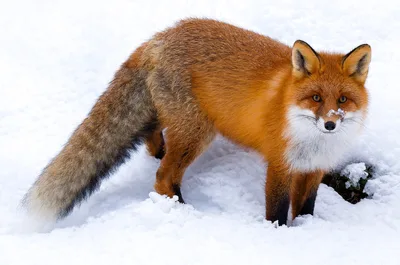 Red fox
- ducklings are the usual target
Ecological equivalents
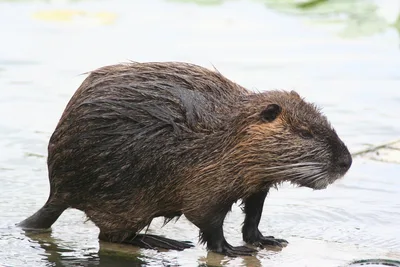
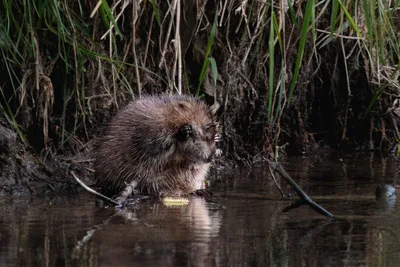
Related species on this site
Black swan (same family), Black-Bellied Whistling Duck (same family), Canada goose (same family), Canvasback (same family), Chinese Geese (same family), Common Goldeneye (same family), and more.
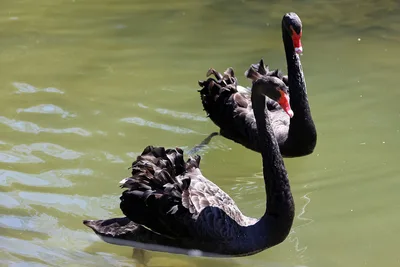 LC
Birds
Black swan
Cygnus atratus
The black swan is a large Australian waterbird with black plumage, white flight feathers and a bright red bill.
Living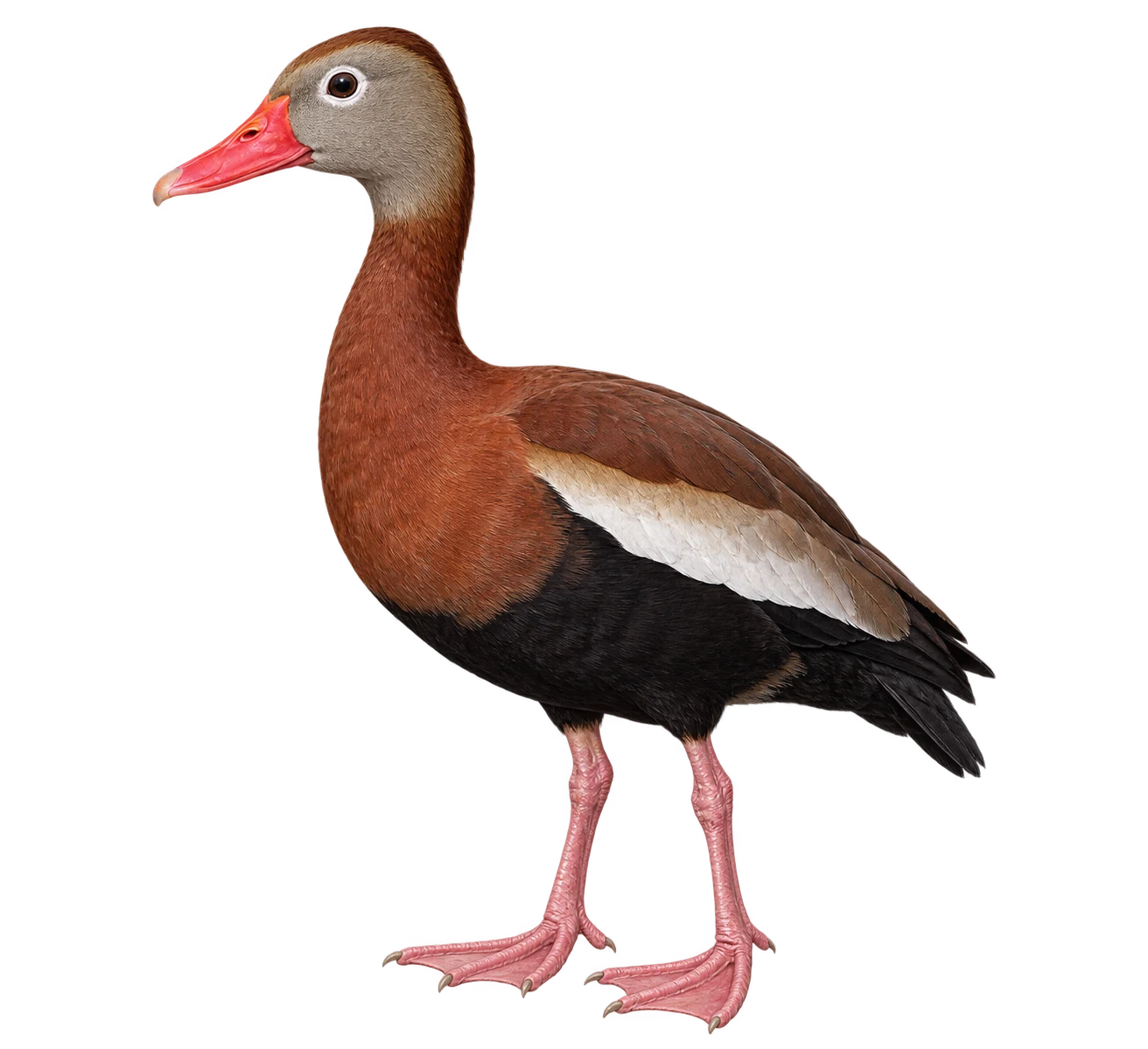
Birds
Black-Bellied Whistling Duck
Dendrocygna autumnalis
Classification and source reference
LivingAI illustration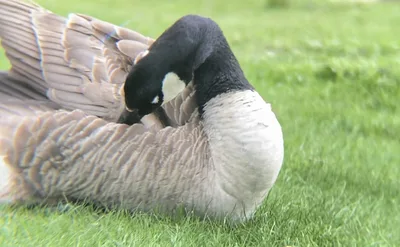 LC
Birds
Canada goose
Branta canadensis
The Canada goose is a large black-necked goose with a white chinstrap, native to North America and now settled on four continents.
Living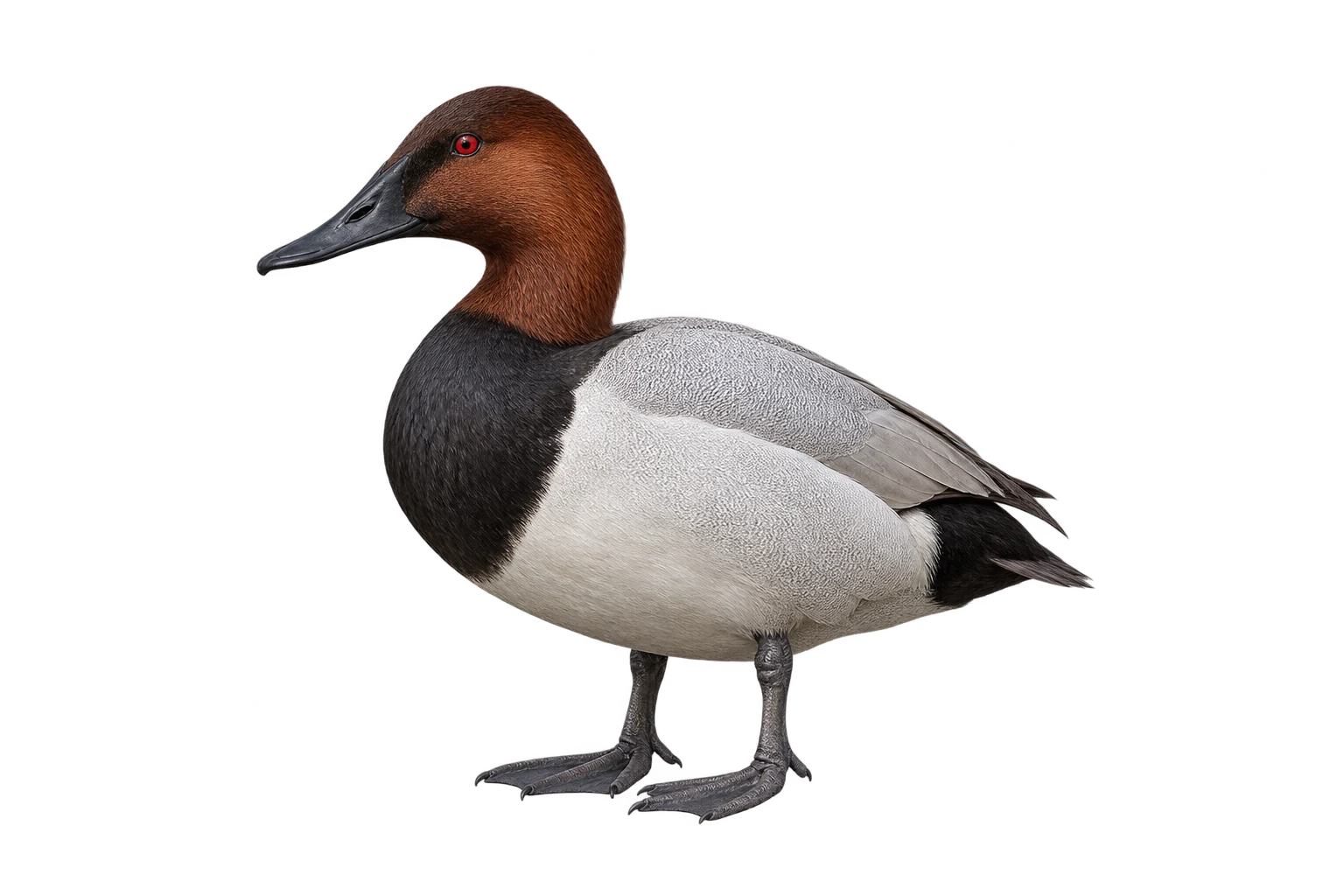
Birds
Canvasback
Aythya valisineria
Classification and source reference
LivingAI illustration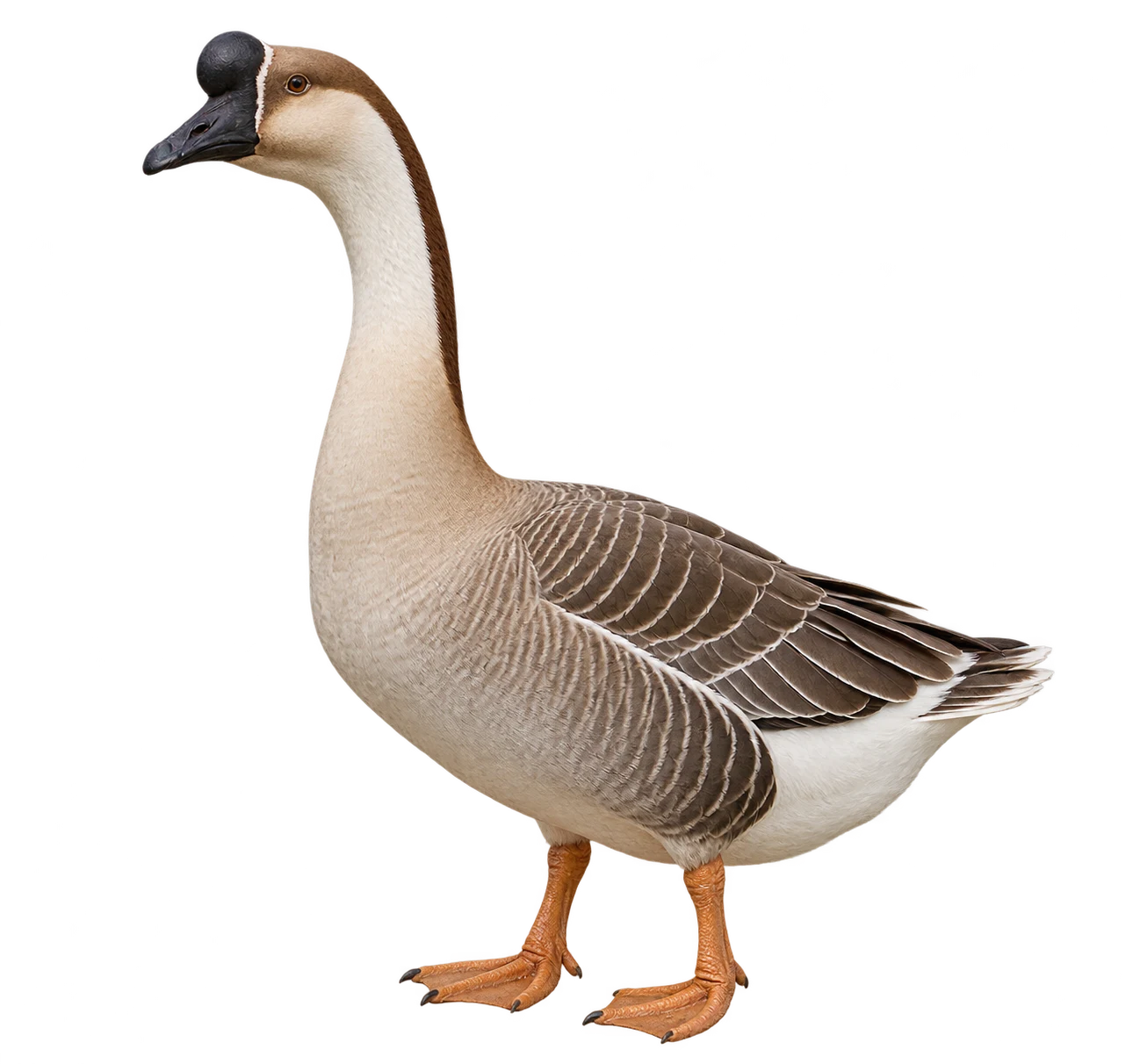
Birds
Chinese Geese
Anser cygnoides domesticus
Classification and source reference
LivingAI illustration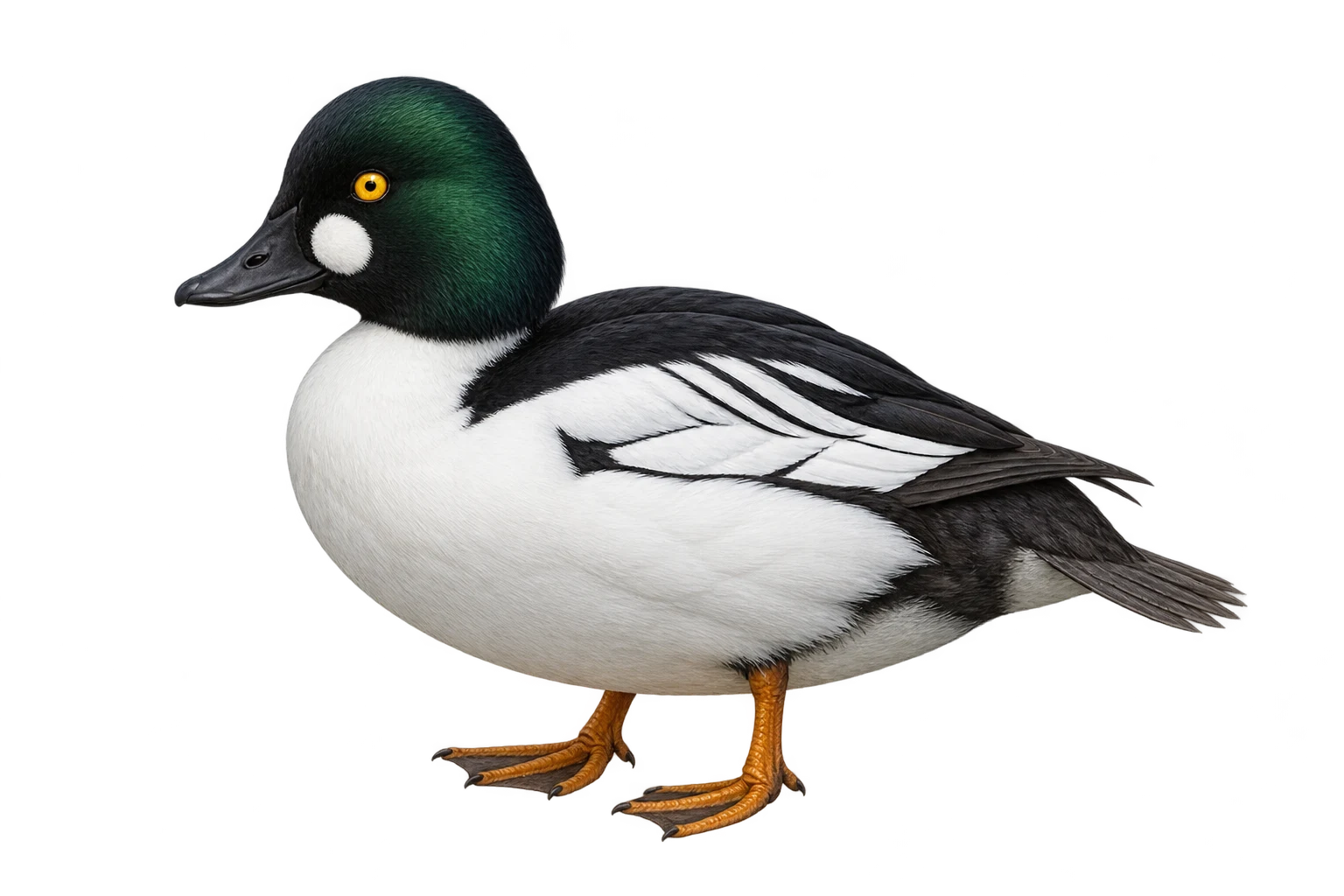
Birds
Common Goldeneye
Bucephala clangula
Classification and source reference
LivingAI illustration