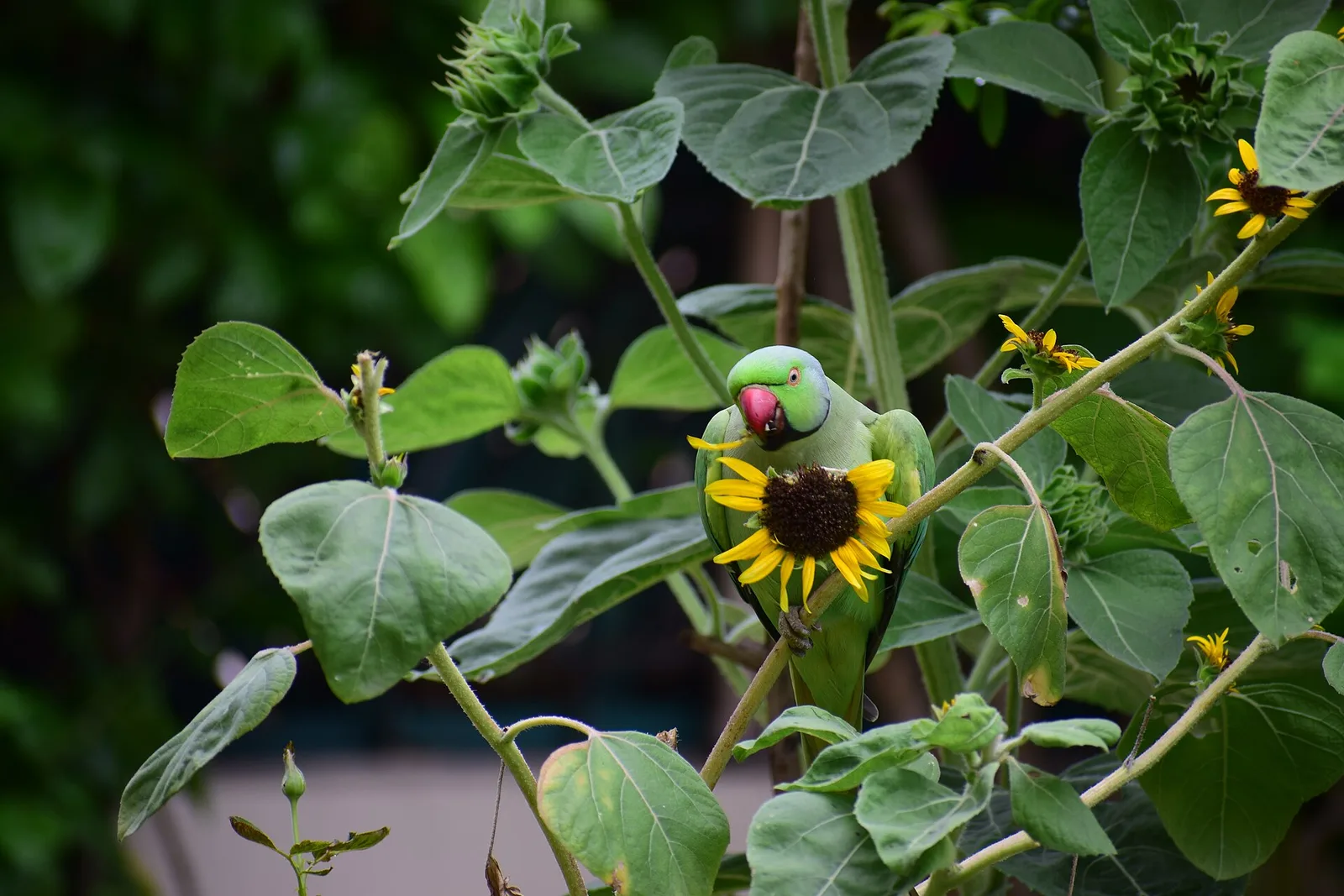
Rose-ringed parakeet
The green parrot that moved into northern cities
Psittacula krameri
Also called Ring-necked parakeet, Indian ringneck
Living individuals or members of this group exist today. This does not mean they are safe from extinction.
Meet the rose-ringed parakeet
The rose-ringed parakeet is a slim green parrot with a red bill and a very long tail. It is native to Africa and South Asia, and escaped pets have built noisy feral flocks in European cities.
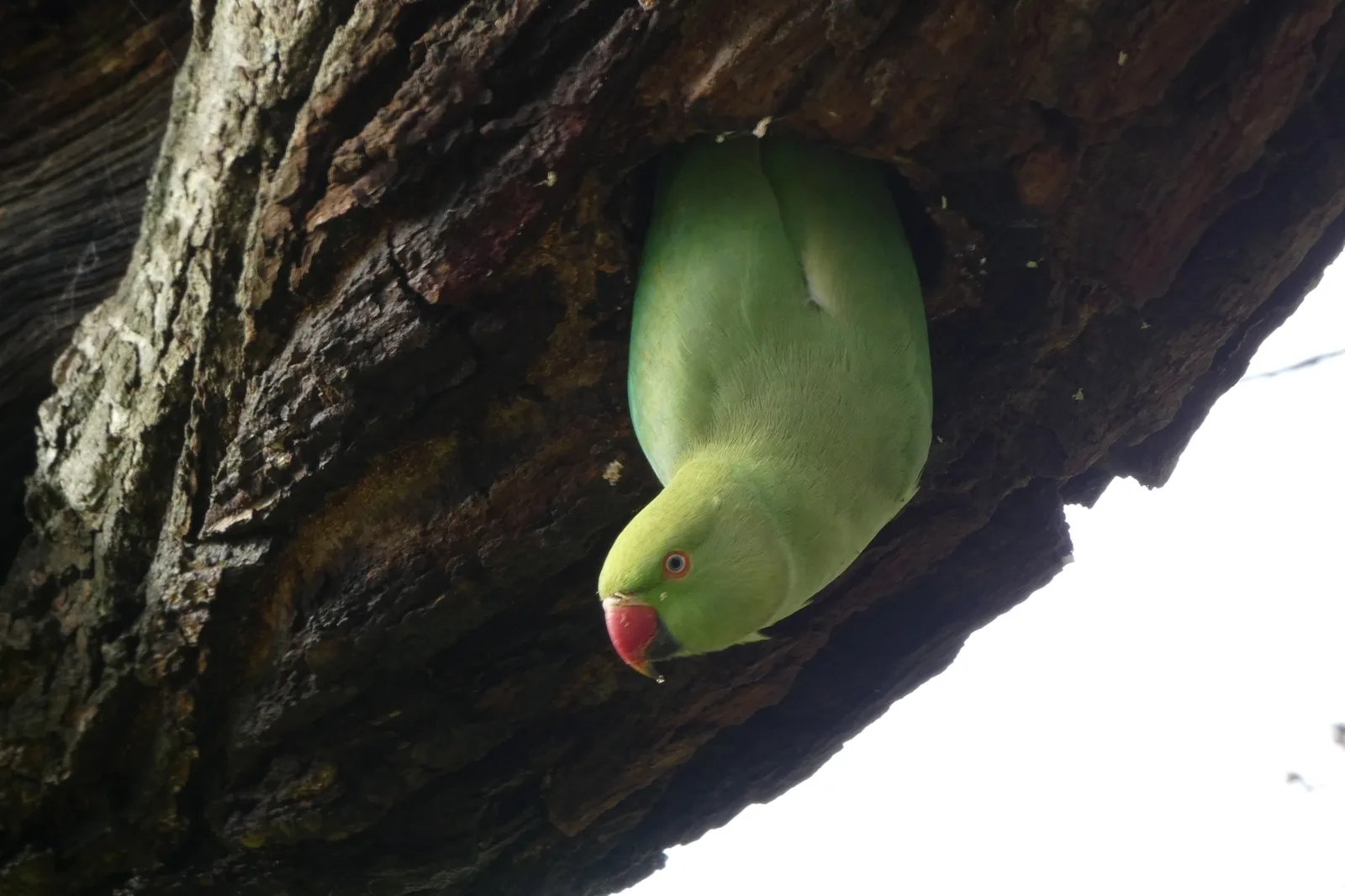
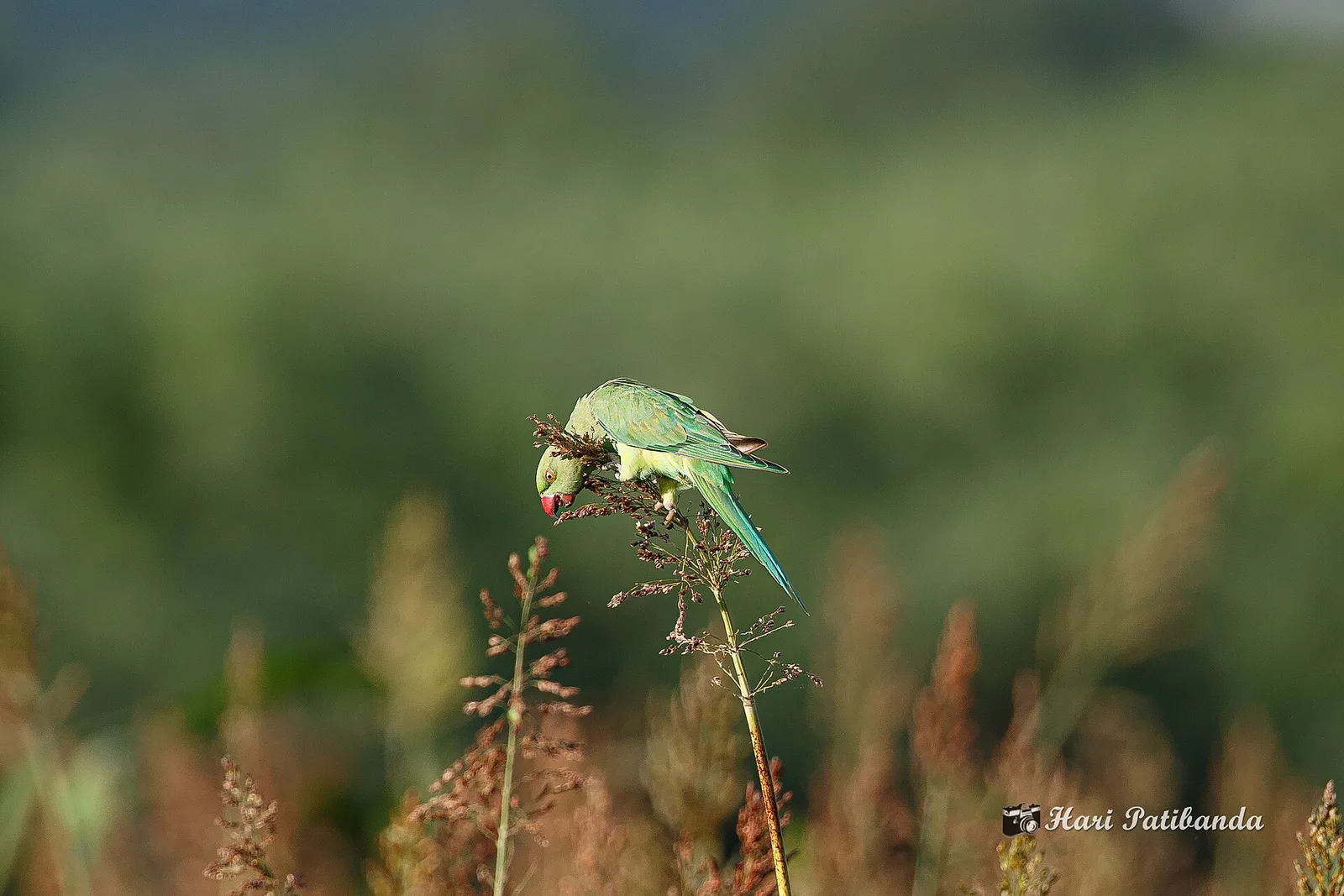
Images of the rose-ringed parakeet
Lifespan
Up to 34 years the wild figure is unknown
Weight
51 to 143 g
Length
37 to 43 cm
Fact file
Rose-ringed parakeet
- Location
- A belt across Africa and the Indian subcontinent, plus feral flocks worldwide
- Habitat
- Towns and cities, Temperate forest, Savanna, Grassland
- Diet
- Omnivore
- Prey / food
- Seeds, grains, fruit, buds, nectar, insects
- Predators
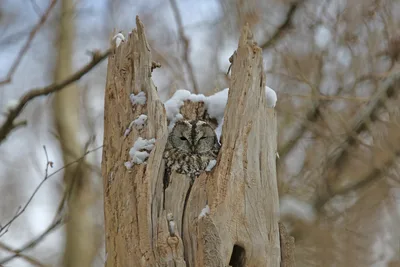
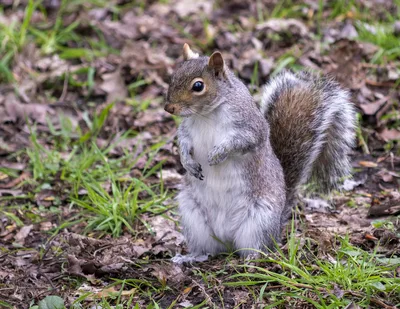
- Peregrine falcons, tawny owls, crows, snakes, grey squirrels
- Lifestyle
- Social, active by day, does not migrate
- Group name
- Flock
- Name of young
- Chick
- Incubation
- Incubation about three weeks
- Clutch size
- About four eggs, from 1 to 7
- Population
- 85,220 counted across 10 European countries in 2015
- Biggest threat
- Trapping for the pet trade and killing by farmers
- Distinctive feature
- The male's pink and black neck ring
- Colour
- Bright green with a red bill and a blue-tinged tail
- Skin type
- Feathers
Size
Next to a person
Measurements
Size and speed
- Length
- 37 to 43 cm the long tail makes up much of this
- Tail
- 16 to 29 cm
- Weight
- 51 to 143 g, up to 174 g African birds 51 to 93 grams, Asian birds 104 to 143 grams, rarely 174
Typical adult ranges. Source: Wikipedia.
Life cycle
Lifespan
- In captivityUp to 34 years the wild figure is unknown
- 034 years
The pale bar is the record. Source: AnAge.
Appearance
Colour and coat
- Primary colours
- green
- Secondary colours
- redpinkblue
- Skin type
- feathers
- Male and female
- Clear in adults. The male has a black chin stripe and a rose-pink ring on the hind neck, and a longer tail. Females and young birds show no ring or only a grey shadow of one.
Life cycle
Mating and family
- Mating system
- monogamous pairs for a single season
- Social structure
- flocks that share a roost all year
- Breeding
- one clutch a year, laid in late winter
Pairs form between September and December in northern India, and the female begins courtship. The birds claim a tree cavity that another species cut, often an old woodpecker hole. About four eggs are laid in February or March and hatch after roughly three weeks. Both parents feed the chicks, which leave the hole about seven weeks after hatching. The young stay with their parents for two years and can breed at three.
Classification
Taxonomy
- Kingdom
- Animalia
- Phylum
- Chordata
- Class
- Aves
- Order
- Psittaciformes
- Family
- Psittacidae
- Genus
- Psittacula
- Species
- Psittacula krameri
Conservation
Red List status
- LC
- NT
- VU
- EN
- CR
- EW
- EX
Least Concern on the IUCN Red List
Range
Recorded in 18 countries
- United Arab Emirates
- Belgium
- Germany
- Spain
- France
- United Kingdom
- Greece
- Israel
- India
- Italy
- Japan
- Sri Lanka
- Netherlands
- Portugal
- Singapore
- Turkey
- United States of America
- South Africa
Habitat layer: temperate broadleaf and mixed forest, temperate conifer forest, boreal forest and taiga, tropical grassland, savanna and shrubland, temperate grassland, savanna and shrubland.
Countries from 29,689 wild records on GBIF (iNaturalist research grade), filtered and checked by hand. Country shapes: Natural Earth. Habitat: RESOLVE Ecoregions 2017, CC BY 4.0. Basemap: Natural Earth.
Habitats
Three things to know
- 1
It breeds farther north than any other parrot on Earth.
- 2
A Europe-wide count in 2015 found 85,220 of them across 10 countries.
- 3
Both sexes can copy human speech, and their words come out unusually clearly.
Did you know
Seven more facts
- 1
The tail can be more than half the bird's total length.
- 2
Asian birds are bigger than African ones and stand cold better.
- 3
Aviary breeders have produced blue, grey, olive, white and yellow forms.
- 4
Newly fledged birds know just one call, and the rest come with age.
- 5
The Brussels flock traces back to a zoo owner who freed birds in 1974.
- 6
Israel gained its first pet parakeets in the 1960s and now counts the species among its commonest birds.
- 7
One captive parakeet reached the age of 34.
Field notes
How it looks and acts
Field notes
Distinguishing features
- The plumage is bright green over the whole body.
- The bill is red and strongly hooked.
- A long pointed tail trails behind the bird in flight.
- Adult males show a black chin stripe and a pink band on the hind neck.
- Females and young birds show no ring, or a faint grey one.
- The bird is 37 to 43 cm long, larger than most garden birds.
Field notes
Unique adaptations
- Like other parrots, it cracks hard seeds and grips branches with a hooked bill.
- Pointed wings give fast, direct flight between roost and feeding ground.
- Tolerance of cold lets Asian birds survive a northern European winter.
- Nesting in winter avoids competition for holes and the worst of the monsoon.
- A broad diet lets the bird live on farmland, in forest and in a city street.
Field notes
Interesting behaviours
- Flocks gather at a shared roost every evening, sometimes in the hundreds.
- Birds fly several kilometres to reach an orchard or a grain field.
- Pairs seize cavities cut by woodpeckers rather than digging their own.
- Parakeets attack bats, rats and squirrels that hold a wanted nest hole.
- Feral birds strip peanuts and seed from garden feeders.
Field notes
Temperament
- The bird is bold and noisy, and it appears to fear people little in a park.
- It is aggressive around a nest site and will fight larger animals for it.
- Hand-reared birds become tame and take readily to training.
- Wild flocks seem warier and keep their distance on the ground.
Field notes
Communication
- A rapid ringing kew-kew-kew is the everyday flight call.
- A deep rolling note means the bird feels threatened.
- A soft purr gathers the flock together.
- Chicks give a yakking call quite unlike the adult voice.
- Captive birds copy human words with unusual clarity.
Ecology
Ecological role
In its native range the parakeet moves seeds and raids crops, and outside it the bird competes hard for nest holes.
- It eats fruit and seed in bulk, and it probably spreads some seeds as it feeds.
- It takes over cavities and so reduces the supply for native birds and bats.
- It feeds birds of prey such as peregrines and hobbies in European cities.
- It damages cereal, fruit and pulse crops across its native range.
Stories
Myths and legends
- In London folklore, Jimi Hendrix freed a pair in Carnaby Street and started the whole population.
- In another London story, the birds escaped a film set at Isleworth Studios in 1951.
- In a third London story, the Great Storm of 1987 wrecked the aviaries that held them.
- In Roman tradition, a talking parakeet from India was probably a mark of wealth.
- In Greek tradition, the Asian form of this bird was among the first parrots kept in Europe.
People
Relationship with humans
People
Living alongside us
People have kept this parakeet as a pet for more than two thousand years. Greeks and Romans held the Asian and African forms, and the trade later reached every continent. Escaped pets founded the feral flocks that now live in European, American, Middle Eastern and Japanese cities. Farmers in India and Egypt treat the bird as a crop pest. City residents argue about whether the flocks are welcome.
- The parakeet does not attack people, though a cornered bird may bite hard.
- Parrots may carry psittacosis, a disease that passes to their keepers.
- The real harm falls on crops, native hole-nesting birds and bats.
People
Status, uses and products
- Domestication
- Wild
- As a pet
- Kept by some. The species is a long-standing cage bird and can live for 34 years, so it is a long commitment. It is loud, it needs daily company and space to fly, and it chews everything within reach. Never release one, because escaped birds start feral colonies.
- Uses
- pet tradebirdwatchingaviculture
- Products
- None recorded
The full account
About the rose-ringed parakeet
The rose-ringed parakeet is a slender green parrot with a scarlet bill and a trailing tail. Adults measure 37 to 43 centimetres from bill to tail tip. The tail alone accounts for 16 to 29 cm of that. Only the adult male wears the pink and black ring around the neck that gives the bird its name. The voice is a loud, ringing squawk that carries across a park.
The species is native to a belt across tropical Africa and to the Indian subcontinent. People took it everywhere as a cage bird, and escaped pets founded new colonies. Feral flocks now live in London, Brussels, Cologne, Paris, Rome, Tokyo and Tel Aviv. No other parrot breeds so far north. The IUCN lists the species as Least Concern, and the world population is growing.
Name and taxonomy
The scientific name of the rose-ringed parakeet is Psittacula krameri. Psittacula is a small form of the Latin word for parrot. The second part honours Wilhelm Heinrich Kramer, a German naturalist. English speakers also call it the ring-necked parakeet or the Indian ringneck. Four subspecies are recognised, two in Africa and two in Asia.
The subspecies look alike, but Asian birds are larger and heavier billed. The pattern of red and black on the bill is the easiest way to tell them apart. Genetic work published between 2004 and 2019 found the African and Asian birds are not each other's closest kin. The Asian birds sit nearer to the echo parakeet of Mauritius. That study proposed a new genus, Alexandrinus, and some bodies including the IUCN now use it.
Evolution and relatives
The bird belongs to the order Psittaciformes, which holds all the parrots. Its family is Psittaculidae, the Old World parrots of Africa, Asia and Australasia. The genus Psittacula probably spread across southern Asia and reached islands in the Indian Ocean. The echo parakeet of Mauritius is the nearest living relative of the Asian birds. The Alexandrine parakeet is a larger cousin, and the two hybridise where both live wild.
Like other parrots, the bird has a hooked bill and two toes pointing each way on a foot. Like other parrots, it uses the bill as a third limb when it climbs. Its long tail and pointed wings suit fast, direct flight over open country. The Asian populations survive cold better, which probably explains why feral birds trace back to them.
Appearance
The body is bright green, the bill is red, and the tail carries a blue wash. Total length runs from 37 to 43 cm, and the tail takes 16 to 29 cm of it. African birds weigh 51 to 93 grams and Asian birds weigh 104 to 143 g. A heavy Asian bird can reach 174 g. The folded wing measures 14 to 16 cm in African birds and 15 to 19 cm in Asian birds.
An adult male has a black chin stripe and a rose-pink band around the hind neck. Females and young birds show no ring, or only a faint grey shadow of one. Males also grow longer tails than females. Captive breeding has produced blue, turquoise, olive, grey, white and yellow birds. The blue form is common in aviaries and replaces every green feather with pale blue.
Habitat and range
In Africa the species lives in a narrow band across the continent, between about 4 and 17 degrees north. That band appears to match the wooded savanna south of the Sahara. In Asia it ranges from the Indus valley in Pakistan east to the Irrawaddy in Myanmar. It also lives in Sri Lanka and in the foothills of the Himalaya. The bird takes to woodland, farmland, gardens, parks and city streets.
Few parrots cope with disturbed ground as well, so logging and building have not hurt it. Escaped pets founded colonies across Europe, the United States, South Africa, the Middle East and Japan. Florida, California and Hawaii all hold settled populations. Cities give warmth, garden fruit and bird tables, which lets the bird pass a northern winter. Fewer frost days and larger cities may push the range farther still.
Diet and feeding
Seeds and grain make up the bulk of the food, about 80 percent by one account. The bird also takes buds, nectar, fruit, nuts, berries, vegetables and insects. As with other parrots, it holds an item in one foot and works it with the bill. Flocks fly several kilometres to reach a ripe orchard or a grain field. The damage they do there makes them a serious pest in India.
Indian birds eat cereal grain, and they switch to pigeon peas in winter. Egyptian birds take mulberries in spring and dates in summer, and they raid sunflower and maize fields. Feral birds in Europe visit gardens and empty bird feeders of peanuts and seed. A winter pea crop helps a female build the reserves she needs to lay.
Behaviour and social life
The parakeet is social all year and feeds, flies and sleeps in company. Flocks of several hundred birds gather at a communal roost each evening. One London winter held three separate roosts of about 6000 birds each. The same roost serves the flock through the year, though it thins in spring when females sit on eggs. The species is active by day and does not migrate.
Birds are bold around nest holes and drive out much larger animals. In a Seville park they took over the tree cavities of the greater noctule, Europe's largest bat. Cavities used by the bats fell by 81% over 14 years, and many bats were killed. Attacks on black rats, a red squirrel and a Leisler's bat are on record from Spain, France and Italy. The bird also shows a daily torpor, dropping its activity for part of the cycle.
Communication and senses
The usual call is a rapid, ringing kew-kew-kew that carries a long way. A deep rolling note signals alarm, and a soft purring note draws the flock together. Chicks start with a single yakking call and learn the adult calls as they grow. Adults use three distinct calls with each other. A flock in flight is typical of the species, and people usually hear it first.
Both sexes can copy human speech after listening to a speaker. Hand-reared birds become tame and learn words readily. Their speech is unusually clear next to that of other talking parrots. Sight leads the search for food, and the eye carries a well-built retina with rods and cones. Colour vision probably helps the bird judge ripe fruit.
Reproduction and life cycle
In north-west India pairs form between September and December. A pair holds together for one season and usually takes a new mate the next year. Courtship starts with the female, who nuzzles her mate over and over. Breeding in winter lets the birds claim holes before other species want them. It also keeps the chicks clear of the monsoon.
The parakeet is a secondary cavity nester and takes over holes that other birds cut. Old woodpecker holes are a favourite, including those of the great spotted and green woodpeckers. Nests measured in one study sat high in a trunk and ran 37.8 cm deep. A clutch holds about four eggs, and the range runs from 1 to 7. Eggs are laid in February and March and hatch after about three weeks.
Chicks hatch naked and helpless, and both parents feed them. The young leave the nest about seven weeks after hatching. Parents keep feeding and guarding them until the birds are two years old. Both sexes are ready to breed at three, when the male's neck ring appears. A captive bird lived for 34 years, and the wild figure is unknown.
Predators and threats
Crows, owls, snakes and grey squirrels raid the nest for eggs and chicks. In London the birds are hunted by peregrine falcons, Eurasian hobbies and tawny owls. The only defence on record is a soft purr that keeps the flock together. Safety mostly comes from numbers and from a deep hole, as in other cavity nesters.
In the native range, trapping for the pet trade removes many birds. Farmers kill parakeets that strip a crop, and both pressures have thinned some local populations. A parrot form of hepatitis B has been found in the species and kills some birds. A protozoan parasite spread by flies and cockroaches can also be fatal. None of these threats appears to affect the species as a whole.
Population and conservation
The IUCN lists the rose-ringed parakeet as Least Concern, and its numbers are rising. A count across Europe in 2015 found 85,220 birds in 10 countries. The Dutch feral population in the four largest cities was put at 20,000 in 2021. Brussels holds as many as 5,000 pairs, and Cologne held about 3,000 birds in 2014. The British Trust for Ornithology estimated about 12,000 breeding pairs in 2022.
London counts show how fast the rise was, from about 500 birds in 1983 to 32,000 by 2012. The species carries no special status under CITES or United States wildlife law. Conservation concern probably runs the other way, towards the native birds and bats it displaces. Some people have called for a cull in Britain, but conservation bodies do not recommend one. New Zealand treats stray birds as a serious risk to its own parrots.
Relationship with humans
The parakeet has been a cage bird for more than two thousand years. Ancient Greeks kept the Asian subspecies and ancient Romans kept the African one. Pliny the Elder described a bird of this kind in the first century. The pet trade likely carried the species to every continent that people settled. Escapes from that trade built every feral flock alive today.
Owners seem to value the bird for its colour, its long life and its clear speech. Like other parrots, it needs company, space to fly and something to chew each day. Farmers see it differently, because flocks strip grain, fruit and stored crops. City residents appear to split between people who feed the flocks and people who resent the noise. Parrots can also pass diseases such as psittacosis to their keepers.
In culture and myth
London tells four stories about where its parakeets came from, and none of them is proven. One says birds escaped a film set at Isleworth Studios during the making of a 1951 picture. A second story points to a violent storm in 1987 that wrecked aviaries. A third credits Jimi Hendrix, who is said to have freed two birds in Carnaby Street. One points to a pet shop in Sunbury that lost birds in 1970.
Ornithologists prefer a duller answer, that many small escapes before 1971 added up. Disease scares in 1929 and 1930 and again in the 1950s pushed owners to release birds. The Hendrix story probably survives because it beats a slow leak from aviaries.
Parrots run through human art, music, humour and religious writing over many centuries. They turn up in the fables credited to Aesop and in ancient Chinese writing. In Roman tradition a talking parakeet was probably a luxury, kept and priced like jewellery. In modern British tradition, the London parakeet seems to serve as a mascot of the city's parks.
A sentence with a dotted underline is inferred: it describes the group the animal belongs to, or is a reading of the sources, rather than a measured or reported fact about this species.
Questions
Rose-ringed parakeet questions, answered
What is a rose-ringed parakeet?
It is a medium-sized green parrot of Africa and South Asia. Adults are 37 to 43 cm long, and most of that is tail.
Why are there parakeets in London?
Escaped and released pets built the population over many decades. Ornithologists think small escapes before 1971 explain it, not a single dramatic event.
Did Jimi Hendrix release the London parakeets?
The story says he set two birds loose in Carnaby Street. There is no evidence for it, and experts treat it as folklore.
How can you tell a male from a female?
Only the adult male has the black chin stripe and pink neck ring. Females and immature birds lack it, or carry only a grey shadow.
What do rose-ringed parakeets eat?
Mostly seeds and grain, which make up about 80 percent of the diet. They also take fruit, buds, nectar, nuts and insects.
Are rose-ringed parakeets a problem for other wildlife?
They can be. In a Seville park they seized bat roosts and cut the bats' cavities by 81% over 14 years.
How long do rose-ringed parakeets live?
One captive bird reached 34 years. Nobody has measured the wild lifespan.
Where do rose-ringed parakeets nest?
In tree cavities cut by other birds, often old woodpecker holes. They do not excavate their own.
How many eggs do they lay?
About four, with a range from 1 to 7. Incubation takes roughly three weeks.
Can rose-ringed parakeets talk?
Yes. Both sexes copy human speech, and hand-reared birds speak more clearly than many other parrots.
How many parakeets live in Europe?
A Europe-wide count in 2015 found 85,220 birds across 10 countries. Numbers have grown since.
How do parakeets survive a northern winter?
The Asian birds that founded the feral flocks already cope with cold Himalayan foothills. Cities add warmth, garden fruit and bird feeders.
Are rose-ringed parakeets endangered?
No. The IUCN lists the species as Least Concern and its population is increasing.
Do rose-ringed parakeets make good pets?
They can, but they are loud, long-lived and demanding. Expect decades of daily care and a bird that chews everything.
What noise does a rose-ringed parakeet make?
A loud ringing kew-kew-kew, usually given in flight. It also purrs softly to gather the flock.
Do rose-ringed parakeets damage crops?
Yes, badly in parts of their native range. Flocks strip cereal, fruit and pulse fields in India and Egypt.
Food web
Prey and food
- seeds
- grains
- fruit
- buds
- nectar
- insects
Food web
Predators
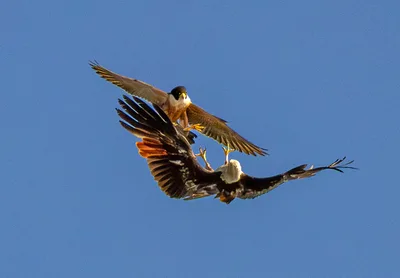 Peregrine falcon
 Tawny owl
 Eastern gray squirrel
Ecological equivalents
Related species on this site
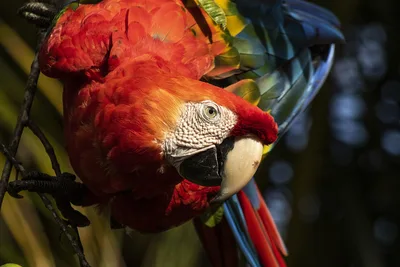
African Grey Parrot (same family), Amazon Parrot (same family), Budgerigar (same family), Carolina parakeet (same family), Cockatiel (same family), Conure (same family), and more.
Birds
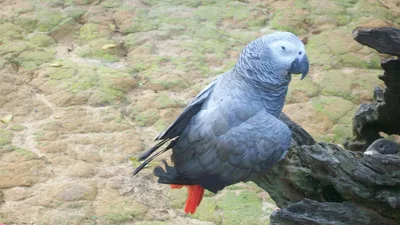
African Grey Parrot
Psittacus erithacus
Grey parrots are social African birds with grey feathers, a red tail and a strong curved bill.
Living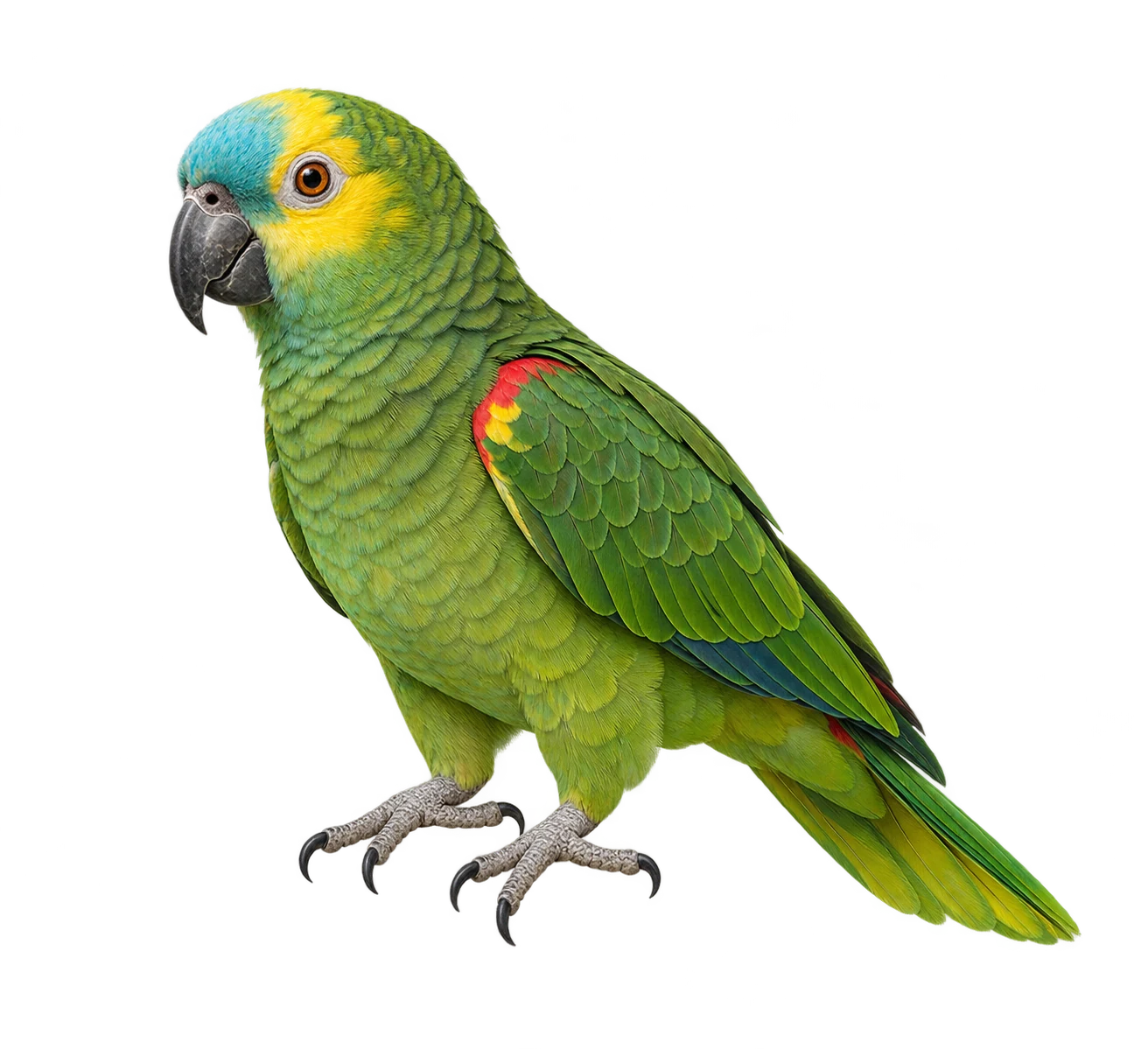
Birds
Amazon Parrot
Amazona
Classification and source reference
LivingAI illustration LC
Birds
Budgerigar
Melopsittacus undulatus
The budgerigar is a small green and yellow parrot from the dry interior of Australia.
Living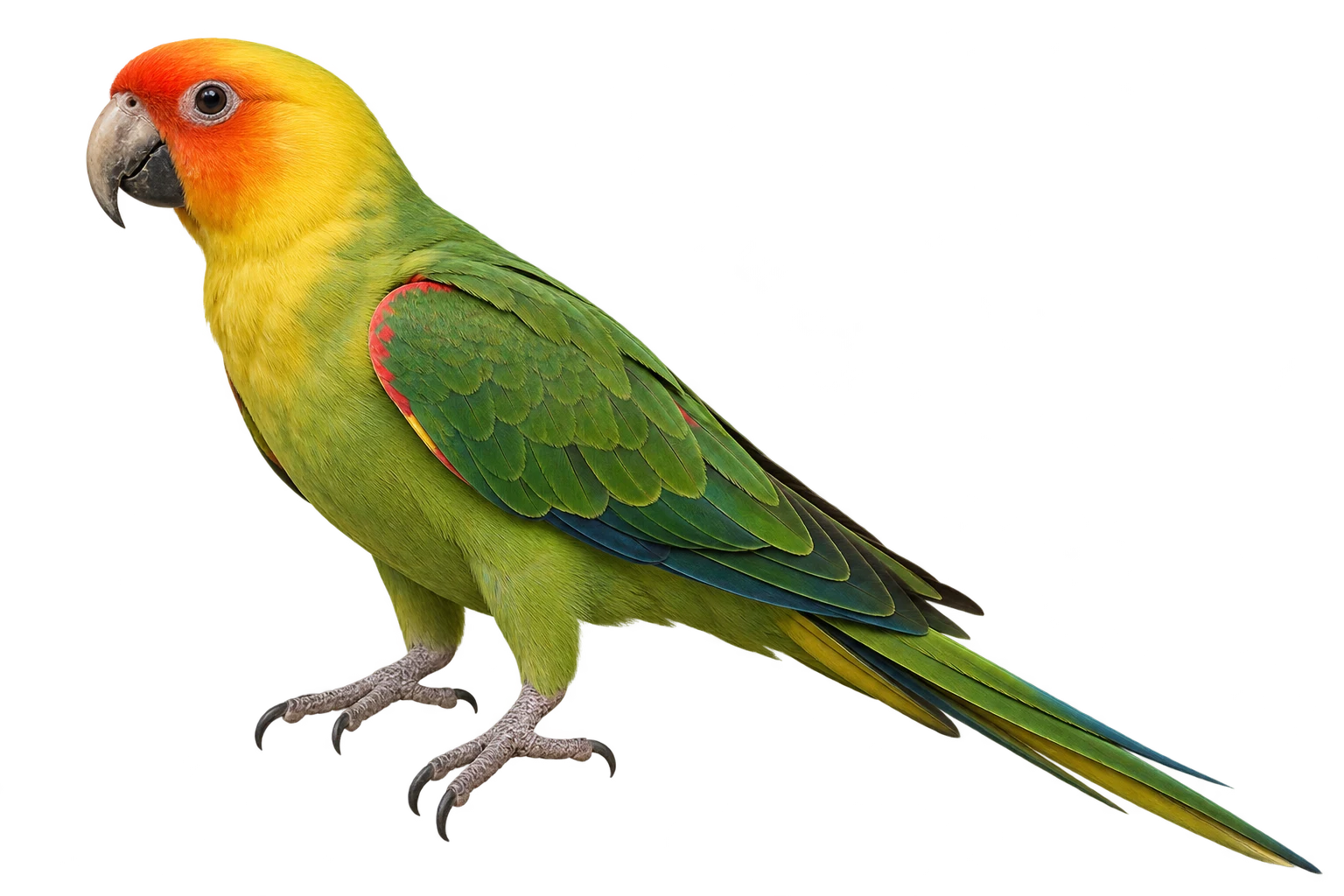 EX
Birds
Carolina parakeet
Conuropsis carolinensis
The Carolina parakeet was the only parrot native to the eastern United States.
ExtinctAI reconstruction LC
Birds
Cockatiel
Nymphicus hollandicus
The cockatiel is the smallest cockatoo, and it lives across the dry inland of Australia.
Living
Birds
Conure
Psittacidae
Classification and source reference
LivingAI illustration