Carolina parakeet
The only parrot the eastern woods ever had
Conuropsis carolinensis
Also called Carolina conure, Carolina parrot
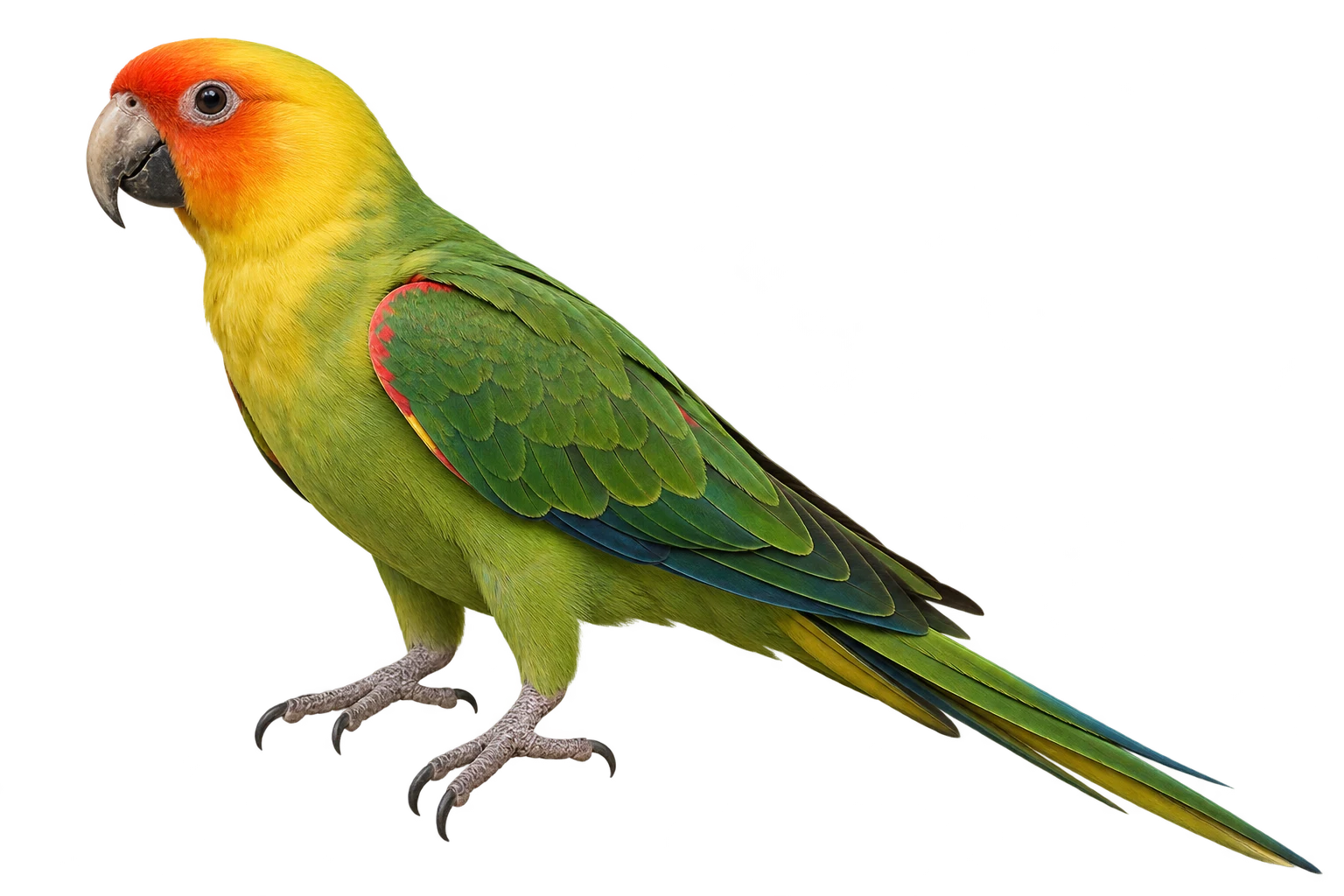
Meet the carolina parakeet
The Carolina parakeet was the only parrot native to the eastern United States. Flocks fed on seeds in river forests until shooting and logging wiped the species out by 1918.
Images of the carolina parakeet
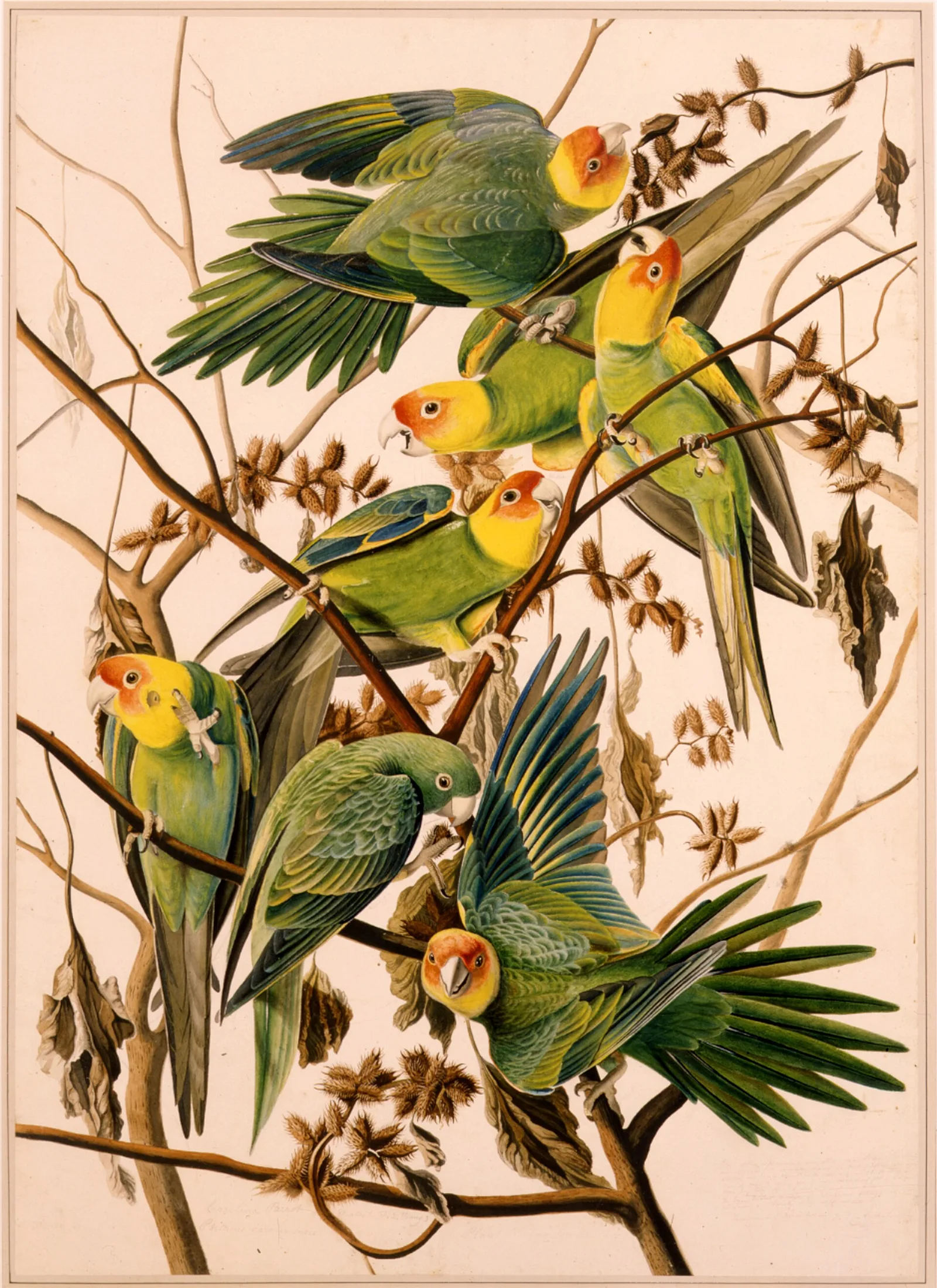
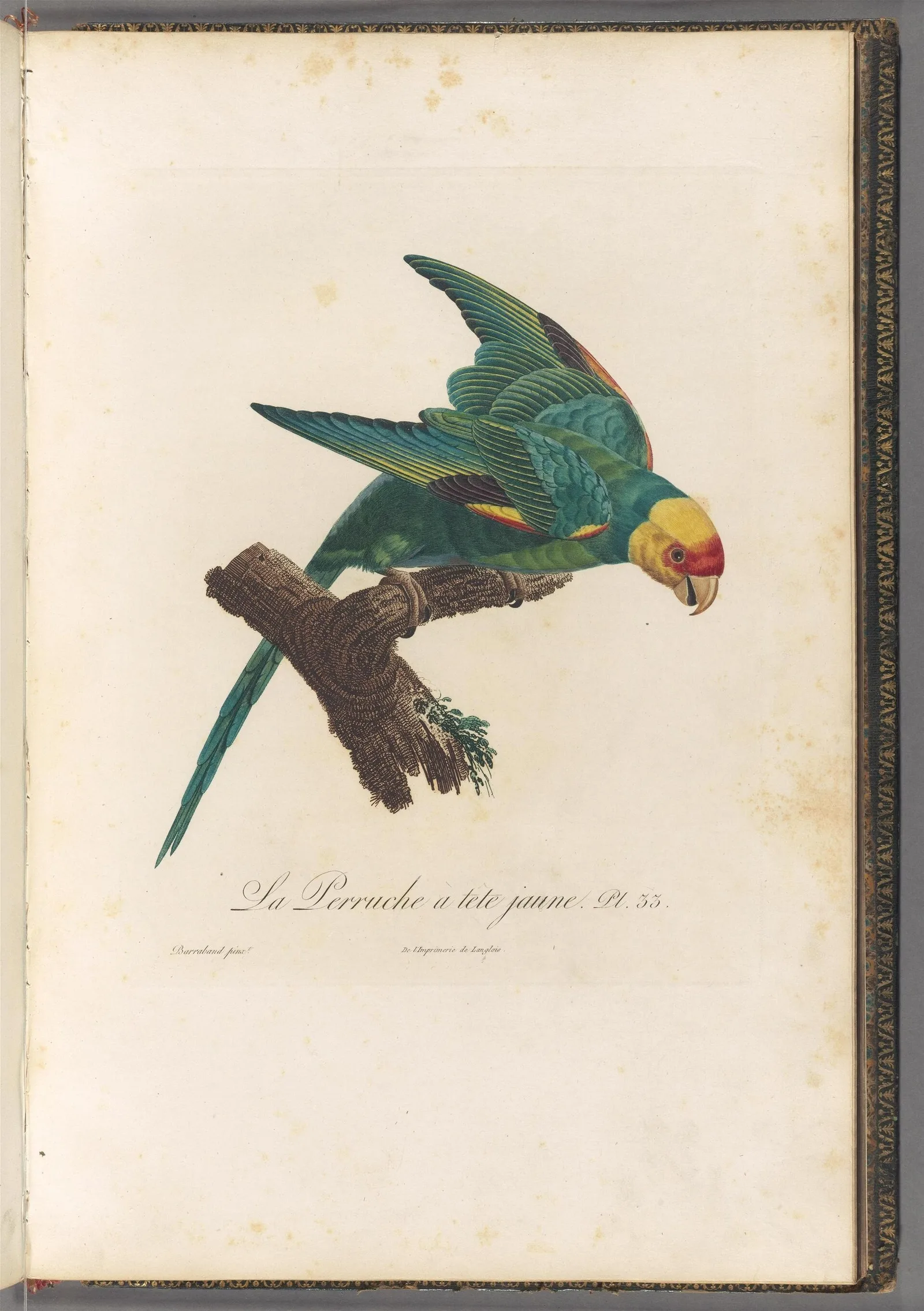
Lifespan
10 to 30 years one pair stayed at the Cincinnati Zoo for more than 35 years
Weight
About 100 g
Length
32 to 34 cm
Wingspan
53 to 58 cm
Fact file
Carolina parakeet
- Location
- Eastern United States, west to eastern Colorado
- Habitat
- Temperate forest, Wetlands, Rivers and lakes
- Diet
- Herbivore
- Predators
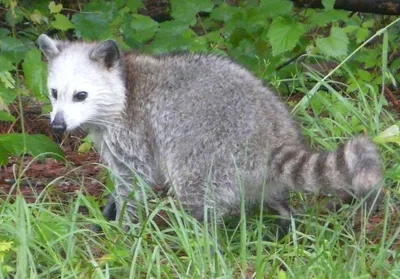
- Hawks, raccoons, skunks, squirrels and snakes, and people above all
- Lifestyle
- Social and active by day
- Group name
- Flock
- Name of young
- Chick
- Incubation
- Incubation about 23 days
- Clutch size
- 2 to 5 eggs
- Population
- Extinct, formerly tens of thousands to a few million
- Biggest threat
- Shooting and the loss of old hollow trees
- Distinctive feature
- A bright yellow head with an orange face
- Colour
- Green with a yellow head and an orange face
- Skin type
- Feathers
Size
Next to a person
Measurements
Size and speed
- Length
- 32 to 34 cm
- Wingspan
- 53 to 58 cm
- Weight
- About 100 g AnAge gives 100 grams for an adult, and Animal Diversity Web gives an average of 280 grams
Typical adult ranges. Sources: AnAge, Animal Diversity Web.
Life cycle
Lifespan
- In captivity10 to 30 years one pair stayed at the Cincinnati Zoo for more than 35 years
- 030 years
Source: Animal Diversity Web.
Appearance
Colour and coat
- Primary colours
- greenyellow
- Secondary colours
- orangebrown
- Skin type
- feathers
- Male and female
- Slight. Males and females wore the same colours, and males were a little larger. A young bird stayed plain green until about one year old.
Life cycle
Mating and family
- Mating system
- probably monogamous pairs, though several females shared some nests
- Social structure
- flocks of 100 to 1000 birds
- Breeding
- one clutch a year, in March and April
Carolina parakeets bred once a year, in March and April. A pair nested in a hollow tree, and several females sometimes laid in the same hole. The clutch held two to five white eggs, and incubation lasted 23 days. Chicks kept a grey down until about 39 to 40 days old. They wore full adult colour at about one year, and could breed at that age.
Classification
Taxonomy
- Kingdom
- Animalia
- Phylum
- Chordata
- Class
- Aves
- Order
- Psittaciformes
- Family
- Psittacidae
- Genus
- Conuropsis
- Species
- Conuropsis carolinensis
Conservation
Red List status
- LC
- NT
- VU
- EN
- CR
- EW
- EX
Extinct on the IUCN Red List
Range
Historical range: 1 country
This animal is extinct. The map shows historical records, not a current living population.
Habitat layer: temperate broadleaf and mixed forest, temperate conifer forest, boreal forest and taiga, flooded grassland and savanna, mangrove.
Countries from 0 wild records on GBIF (iNaturalist research grade), filtered and checked by hand. Country shapes: Natural Earth. Habitat: RESOLVE Ecoregions 2017, CC BY 4.0. Basemap: Natural Earth.
Habitats
Three things to know
- 1
The Carolina parakeet nested further north than any other parrot in the world.
- 2
Farmers found the flocks easy to kill, because the birds returned to their fallen companions.
- 3
The last known bird died in a cage at the Cincinnati Zoo in 1918.
Did you know
Seven more facts
- 1
No other parrot ever nested as far north as southern New York and Wisconsin.
- 2
Two subspecies existed, and the Louisiana bird was a duller, bluer green.
- 3
The nearest living relatives all live in South America, among them the sun conure.
- 4
The lineage arrived in North America about 5.5 million years ago.
- 5
Chicks kept their grey down until they were about 39 to 40 days old.
- 6
Flocks flew as far as 48 km from the trees they nested in.
- 7
The IUCN listed the species as extinct in 1920, and American ornithologists followed in 1939.
Field notes
How it looks and acts
Field notes
Distinguishing features
- A bright yellow head on a green body.
- An orange forehead and face that reached behind the eye.
- Yellow shoulders and a yellow edge along the wing.
- A pale flesh-coloured beak, ringed by bare white skin.
- A body 32 to 34 cm long, from the bill to the tail tip.
- Wings that spanned 53 to 58 cm.
Field notes
Unique adaptations
- Two toes forward and two back gave a firm grip on a branch.
- The hooked beak worked as a third limb for climbing.
- A tolerance for cocklebur poison probably opened a food that few other birds took.
- Hollow trunks gave shelter through cold northern winters.
- Loud flight calls held a large flock together above the forest.
Field notes
Interesting behaviours
- Feeding at dawn and again at sunset.
- Resting, roosting and sunbathing through the middle of the day.
- Preening and scratching one another in the roost tree.
- Bathing in water and lying down in ant nests.
- Circling above a fallen flockmate instead of fleeing.
Field notes
Temperament
- Highly social, and almost never seen alone.
- Noisy in flight and quiet at the roost.
- Bold around farms and orchards.
- Calm enough to live for decades in a cage.
Field notes
Communication
- Loud, repeated cries in flight.
- A low chatter while the flock fed.
- A shrill alarm call at the sight of a hawk.
- Quiet murmurs at the roost.
- Mutual preening between neighbours.
Ecology
Ecological role
The Carolina parakeet was the seed eater of the eastern floodplain forest, and it spread the plants it fed on.
- It carried cocklebur seeds through the forest and across farmland.
- It held down cocklebur numbers on grazing land, which helped livestock.
- It probably competed for hollow trunks with other hole-nesting animals.
- Its loss left the eastern United States with no native parrot at all.
Stories
Myths and legends
- In Powhatan tradition, the bird went by the name Maskowhinge.
- In Seminole tradition, its name puzzi la née meant head of yellow.
- In Chickasaw tradition, the bird was called kelinky.
- In Florida swamp lore, the parakeet lived on in sightings long after 1918.
- In modern American conservation writing, it appears as the twin of the passenger pigeon.
People
Relationship with humans
People
Living alongside us
People shot Carolina parakeets for their feathers and to save orchards and grain fields. Trappers took others for the cage trade. Loggers felled the old hollow trees the flocks nested in. The Cincinnati Zoo held the last known pair, Incas and Lady Jane, and they reared no young. Incas died in 1918, and no accepted record followed.
- The parakeet never threatened a person, and it fled from people at first.
- Its flesh may have been poisonous, because the birds fed on toxic cocklebur seeds.
- John James Audubon reported that cats died after eating the birds.
People
Status, uses and products
- Domestication
- Wild
- As a pet
- Not suitable. The species is extinct, so nobody can keep one. Cage birds did live for decades, but the parakeet was a flock animal and it was very loud. A single bird alone in a cage had a poor life.
- Uses
- pet tradefeathers for hatsmuseum specimens
- Products
- feathersskins
The full account
About the carolina parakeet
The Carolina parakeet was the only parrot that bred across the eastern United States. It was a small green bird with a bright yellow head and an orange face. Adults measured 32 to 34 centimetres from the bill to the tip of the tail. The wings spanned 53 to 58 cm. A bird weighed about 100 grams. Noisy flocks fed on seeds in the flooded forests of the Mississippi and Missouri basins.
Farmers shot the birds, because a flock could strip an orchard or a grain field. Hunters took others for the feather trade, and loggers felled the hollow trees the flocks nested in. The last wild bird was killed in Florida in 1904. The last bird in captivity, a male called Incas, died at the Cincinnati Zoo in 1918. The IUCN listed the species as extinct in 1920. American ornithologists accepted the loss in 1939.
Name and taxonomy
Carl Linnaeus named the bird Psittacus carolinensis in 1758. The name appeared in the tenth edition of his Systema Naturae. Tommaso Salvadori moved the species to a genus of its own, Conuropsis, in 1891. He did so in volume 20 of the Catalogue of the Birds in the British Museum. The genus name joined conure, an old term for a group of parrots, with a Greek ending that means likeness. The species name pointed at Carolina, an English colonial province.
Together the two words described a bird like a conure from Carolina. English speakers also used the names Carolina conure and Carolina parrot. Two subspecies were recognised. The eastern form lived on the Atlantic side of the Appalachian Mountains. The Louisiana form was a duller and bluer green, and it died out in the early 1910s. The mountain chain kept the two forms apart.
Evolution and relatives
Researchers read mitochondrial DNA from museum skins to find the bird's family. The work placed it beside South American parakeets of the genus Aratinga. The nearest living relatives are the sun conure, the golden-capped parakeet and the nanday parakeet. The jandaya parakeet carries the same yellow, orange and blue feathers, and is probably close as well. A whole genome, taken from a preserved bird, later sharpened the dates.
The lineage reached North America about 5.5 million years ago. That arrival came well before the Panama land bridge joined the two Americas, about 3.5 million years ago. Parrots had reached South America from Antarctica after Gondwana broke up, roughly 50 million years ago. A single fossil wing bone from Nebraska was named Conuropsis fratercula. It is about 16 million years old, and its owner was about three-quarters as big as the Carolina parakeet. Its place in the genus is not certain.
Appearance
The body was green, and the underparts were a paler green. The whole head was bright yellow. Orange feathers covered the forehead and the face, and ran back behind the eye. The shoulders were yellow, and that yellow followed the outer edge of the wing. The outer flight feathers carried yellow edges on an otherwise green wing. The thighs were green above and yellow near the foot.
Bare white skin ringed the eye, and the beak was a pale flesh colour. The legs and feet were light brown. Two toes pointed forward and two pointed back, as in every parrot. An adult measured 32 to 34 cm long and spanned 53 to 58 cm across the wings. A bird weighed about 100 g, though Animal Diversity Web gives a heavier average of 280 g. A young bird was plain green, with no yellow or orange on the head, wings or thighs.
Habitat and range
No other parrot in the world ranged as far north. Flocks lived from southern New York and Wisconsin south to the Gulf of Mexico. The range ran west into eastern Texas and eastern Colorado. All or part of at least 28 states lay inside it. The birds kept to old forest along rivers and to wooded swamps. Big hollow cypress and sycamore trees gave them roosts and nest holes.
The thickest numbers were in Florida. Early estimates put the range between 20,000 and 2.5 million square kilometres. Density estimates run from 0.5 to 2.0 birds per square kilometre. Those two figures give a total somewhere between tens of thousands and several million. Stray birds may have reached southern Ontario, where a few bones turned up at an archaeological site. People may also have carried those bones north for a ceremony.
Diet and feeding
The Carolina parakeet ate mostly seeds. Cypress, hackberry, beech, sycamore, elm, pine, maple and oak all fed the flocks. Thistles and sandspurs were taken as well. The favourite food was the cocklebur, Xanthium strumarium. Its seeds hold a poison that sickens horses, cattle and sheep. The parakeet appears to have eaten them without harm.
Flocks also ate apples, grapes and figs, often from orchards. They took flower buds, and now and then an insect. A flock could clear the fruit off one tree within minutes. The birds tore unripe fruit from the branch to reach the seeds inside. A feeding bird gripped its food in one foot and worked at it with the beak. Salt licks drew them, and they swallowed sand and salty earth.
Behaviour and social life
The Carolina parakeet lived in loud flocks and was rarely alone. Counts ran from 100 to 1000 birds, and 300 was a common figure. A flock travelled as far as 48 km from its nesting trees. The birds fed in the early morning and again at sunset. They spent the middle of the day resting, roosting or sunbathing.
They climbed through the branches with the beak as a third limb. They also walked and hopped along the boughs. Birds preened and scratched one another, which held the flock together. They bathed in water, and they lay in ant nests to let ants run through the feathers. The species probably stayed put all year, because observers saw flocks in northern states in cold winters.
One habit proved fatal. When a hunter shot a bird, the rest of the flock came back and circled the fallen one. A single gunner could then kill every bird in the flock.
Communication and senses
A flying bird screamed almost without pause. People heard a passing flock from a long way off. Roosting birds fell quiet and only murmured. A feeding flock kept up a low, steady chatter. A bird that spotted a hawk gave a shrill alarm call. The cries of an injured bird pulled its flockmates in.
Parrots see colour well, so the yellow and orange head probably carried a signal. Preening, posture and touch likely passed messages inside the flock. No recording of the voice exists, because the species died out before field recording began.
Reproduction and life cycle
Breeding ran from March to April, once a year. The nest sat in a hollow tree, often a cypress or a sycamore. A clutch held two to five round white eggs, and most accounts say two. An egg measured about 4.1 cm across. Incubation lasted 23 days. The female probably did most of the sitting.
Several females sometimes laid in the same hole. Observers reported as many as 30 birds at one nest. Both parents fed the chicks. Early writers called the adults careless feeders, and many broods failed. Chicks wore mouse-grey down until about 39 to 40 days old, when green wings and a green tail appeared. Full adult colour came at about one year, and a bird could breed at that age.
Captive birds lived 10 to 30 years. One pair stayed at the Cincinnati Zoo for more than 35 years. Nobody ever measured the life of a wild bird.
Predators and threats
Hawks probably took adults and fledglings, among them the Cooper's hawk. Raccoons, skunks, squirrels and snakes likely robbed the nests. People were the main killer. Hunters shot flocks for the feather trade and to save crops. Women's hats carried the green and yellow plumes.
Clearing of the eastern and southern forests took away the old trees. European honeybees were brought in for crop pollination, and they claimed hollow trunks. Trappers caught birds for the cage trade. The flocking habit turned one shot into many deaths. Some farmers argued that the parakeet paid its way by eating cockleburs.
Population and conservation
The IUCN lists the Carolina parakeet as Extinct. The range collapsed from east to west as settlers cleared the woods. John James Audubon wrote about the decline as early as 1832. After 1860 the bird was rarely reported outside Florida. The last record east of the Mississippi River, apart from Florida, came from Kentucky in 1878.
Strong flocks with young birds and breeding pairs were still noted in 1896. By 1904 almost none were left, and the speed of that end is still a puzzle. Enough nest holes remained, so felling alone does not explain it. The ornithologist Noel Snyder suggested that a poultry disease reached the last flocks. Genetic work on museum skins found no strong sign of bird viruses. The same work found no inbreeding, which suggests a fast collapse rather than a long decline.
About 720 skins and 16 skeletons sit in museums around the world. Usable DNA can still be read from them. Only 21 records of the species appear on iNaturalist, and all of them are specimens.
Relationship with humans
Sir George Peckham printed a report of parrots in Florida in 1583. Mark Catesby gave the first scientific account, with a painting. His two volumes on Carolina, Florida and the Bahama Islands appeared in London in 1731 and 1743. Farmers came to treat the bird as a pest of grain and fruit. Others kept parakeets as cage birds, and some birds lived for decades.
The Cincinnati Zoo bought a male called Incas, with 15 other birds, for 40 dollars in 1885. The zoo paired him with a female called Lady Jane. The two lived together for 32 years and reared nothing. The pair rolled their own eggs out of the nest. Incas died on 21 February 1918, and his skin was promised to the Smithsonian but never arrived.
In culture and myth
Native peoples of the south and east had their own names for the bird. Powhatan speakers called it Maskowhinge. Seminole speakers used pot pot chee, and also puzzi la née, which meant head of yellow. Chickasaw speakers said kelinky. John James Audubon reported that cats died after they ate the birds. Because the flocks fed on toxic cocklebur seeds, the flesh may have been poisonous.
As with the passenger pigeon, the parakeet now serves as a warning about American wildlife. The two birds died in the same zoo cage four years apart. Reports of green parrots in southern swamps carried on for years after 1918. Three parrots were filmed in the Okefenokee Swamp of Georgia in 1937. Experts studied the film and judged the birds to be escaped cage parrots. Ornithologists reported a flock on the Santee River in South Carolina in 1938, and most of their colleagues doubted it.
A sentence with a dotted underline is inferred: it describes the group the animal belongs to, or is a reading of the sources, rather than a measured or reported fact about this species.
Questions
Carolina parakeet questions, answered
Why did the Carolina parakeet go extinct?
People shot the flocks for feathers and to protect crops, and loggers cleared the old hollow trees. A poultry disease may have finished the last flocks. No single cause is proven.
When did the Carolina parakeet go extinct?
Hunters killed the last known wild bird in Florida in 1904. A male called Incas outlived it in the Cincinnati Zoo until 1918. The IUCN has treated the species as extinct since 1920.
What did the Carolina parakeet eat?
It ate seeds above all, from cypress, beech, elm, maple, oak and pine. It also ate thistles, apples, grapes, figs, flower buds and the odd insect. Its favourite food was the cocklebur.
Was the Carolina parakeet poisonous?
Possibly. Cats reportedly died after they ate a parakeet, an observation made by John James Audubon. The flocks ate cocklebur seeds, which poison livestock, so the flesh may have carried the toxin.
How big was the Carolina parakeet?
It measured 32 to 34 cm long and spanned 53 to 58 cm across the wings. A bird weighed about 100 grams.
Where did the Carolina parakeet live?
It lived in the eastern United States, from southern New York and Wisconsin to the Gulf of Mexico. The range reached west to eastern Colorado. It kept to old river forest and wooded swamp.
Who was Incas the parakeet?
Incas was the last known Carolina parakeet. He reached the Cincinnati Zoo in 1885 and died there on 21 February 1918. His skin was promised to the Smithsonian, but it never arrived.
Was the Carolina parakeet the only parrot in the United States?
It was the only parrot that bred right across the east. The thick-billed parrot lived in the southwest and no longer breeds there. The green parakeet is still present in Texas.
What is the closest living relative of the Carolina parakeet?
DNA points to South American parakeets of the genus Aratinga. The sun conure, the nanday parakeet and the golden-capped parakeet are the nearest living kin.
How long did a Carolina parakeet live?
Captive birds lived 10 to 30 years, and one pair stayed at the Cincinnati Zoo for more than 35 years. Nobody measured the life of a wild bird.
How many eggs did a Carolina parakeet lay?
A clutch held two to five round white eggs, and most accounts report two. Incubation lasted 23 days. Several females sometimes laid in the same hollow.
How big were Carolina parakeet flocks?
Flocks ran from 100 to 1000 birds, and a count of 300 was common. A flock ranged as far as 48 km from its nesting trees.
Did the Carolina parakeet migrate?
Probably not. Observers saw flocks in the northern states during cold winters, which argues against a move south. No study was ever made.
Are there any Carolina parakeet specimens left?
Museums hold about 720 skins and 16 skeletons. Researchers have taken usable DNA from them and sequenced a whole genome.
Could the Carolina parakeet be brought back?
A whole genome has been read from a preserved bird, which is the first step for any such plan. Nobody has produced a living bird, and the wild flocks and their forests are gone.
Why was the Carolina parakeet so easy to shoot?
The flock returned to a bird that fell and circled above it. That habit let one gunner kill every bird in the group.
Food web
Prey and food
Not recorded.
Food web
Predators
- hawks
 Raccoon
- skunks
- squirrels
- snakes
- people above all
Ecological equivalents
Related species on this site
African Grey Parrot (same family), Amazon Parrot (same family), Budgerigar (same family), Cockatiel (same family), Conure (same family), Corella (same family), and more.
Birds
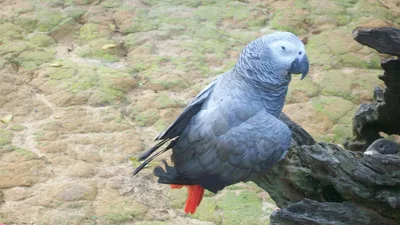
African Grey Parrot
Psittacus erithacus
Grey parrots are social African birds with grey feathers, a red tail and a strong curved bill.
Living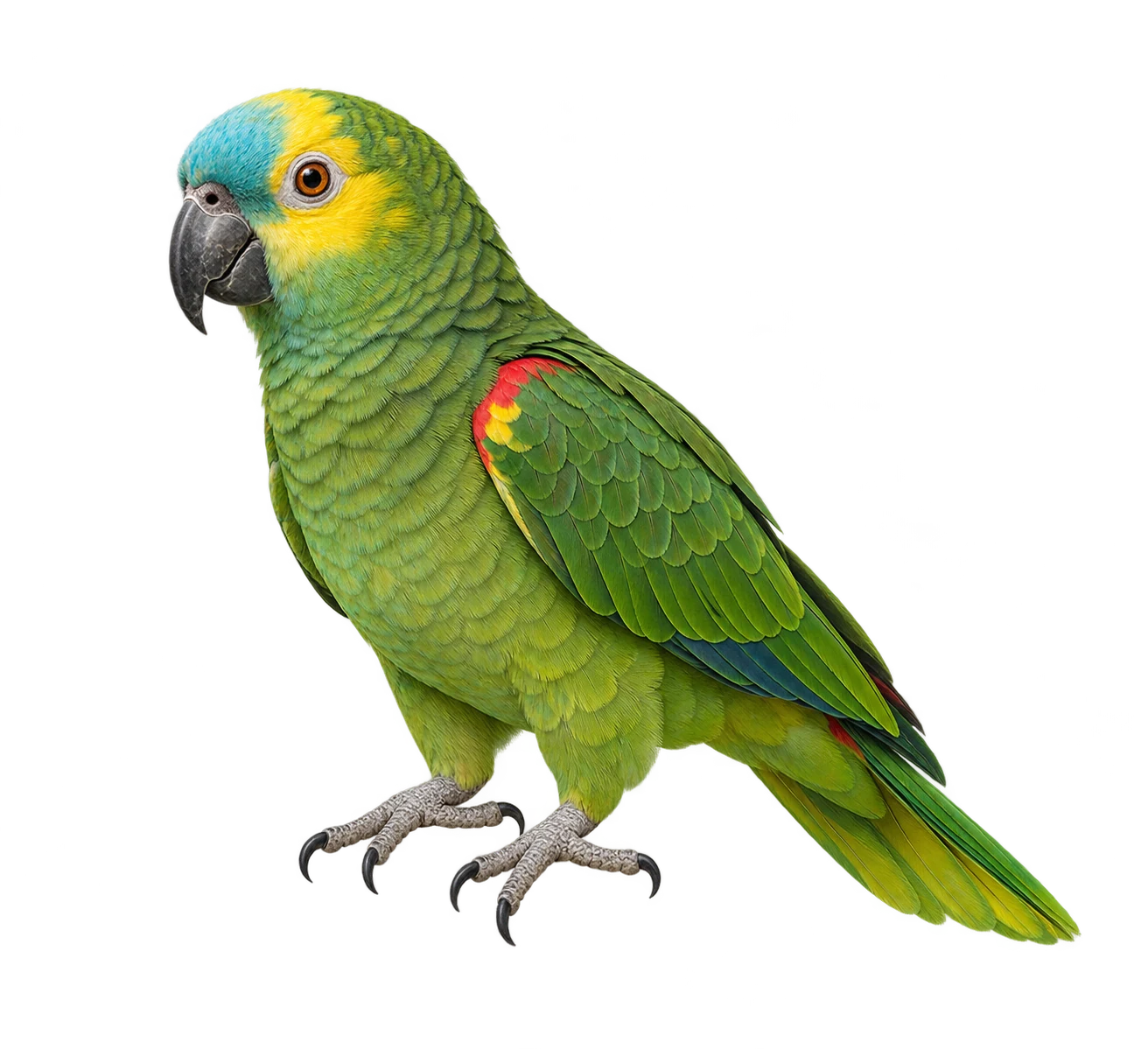
Birds
Amazon Parrot
Amazona
Classification and source reference
LivingAI illustration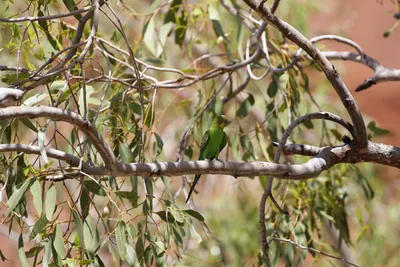 LC
Birds
Budgerigar
Melopsittacus undulatus
The budgerigar is a small green and yellow parrot from the dry interior of Australia.
Living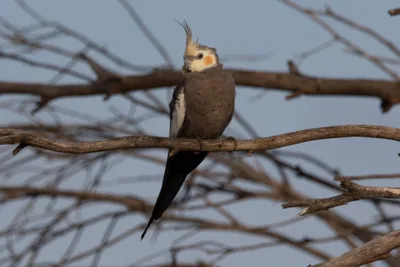 LC
Birds
Cockatiel
Nymphicus hollandicus
The cockatiel is the smallest cockatoo, and it lives across the dry inland of Australia.
Living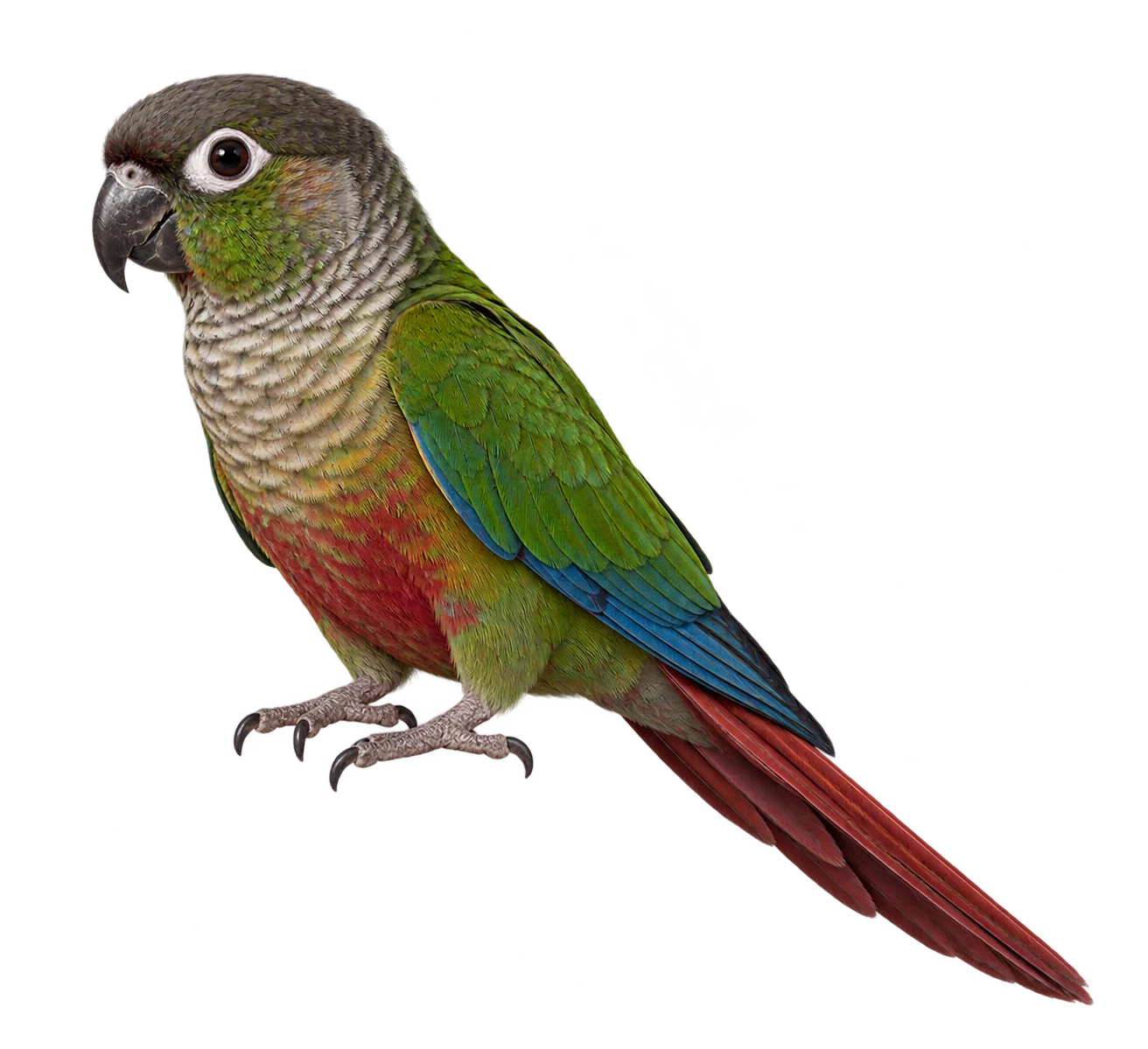
Birds
Conure
Psittacidae
Classification and source reference
LivingAI illustration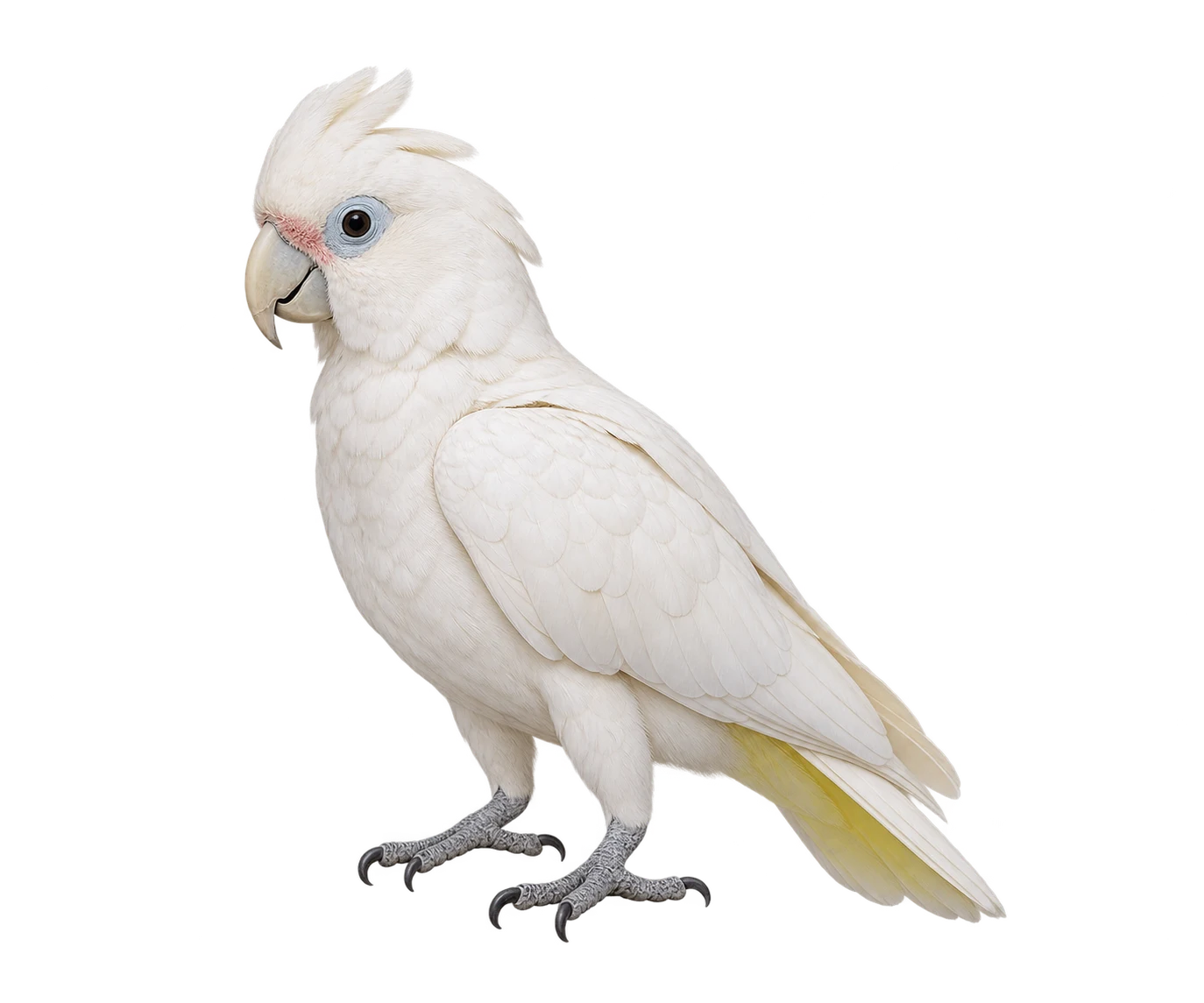
Birds
Corella
Cacatua sanguinea
Classification and source reference
LivingAI illustration