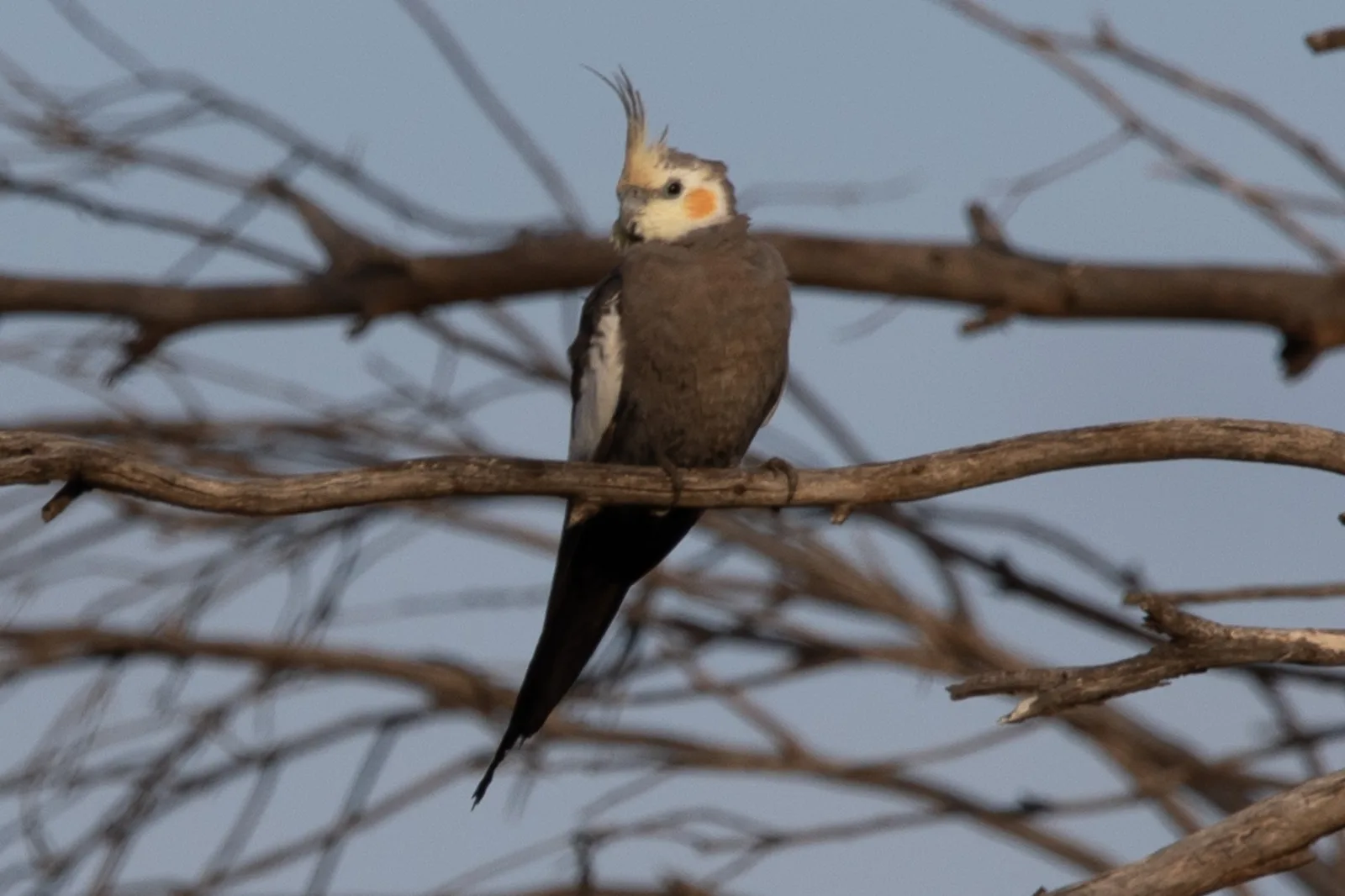
Cockatiel
The smallest cockatoo, and a crest that shows its mood
Nymphicus hollandicus
Also called Weero, Quarrion, Cockatoo parrot
Living individuals or members of this group exist today. This does not mean they are safe from extinction.
Meet the cockatiel
The cockatiel is the smallest cockatoo, and it lives across the dry inland of Australia. It feeds on seed taken from the ground and is one of the most widely kept pet parrots in the world.
Images of the cockatiel

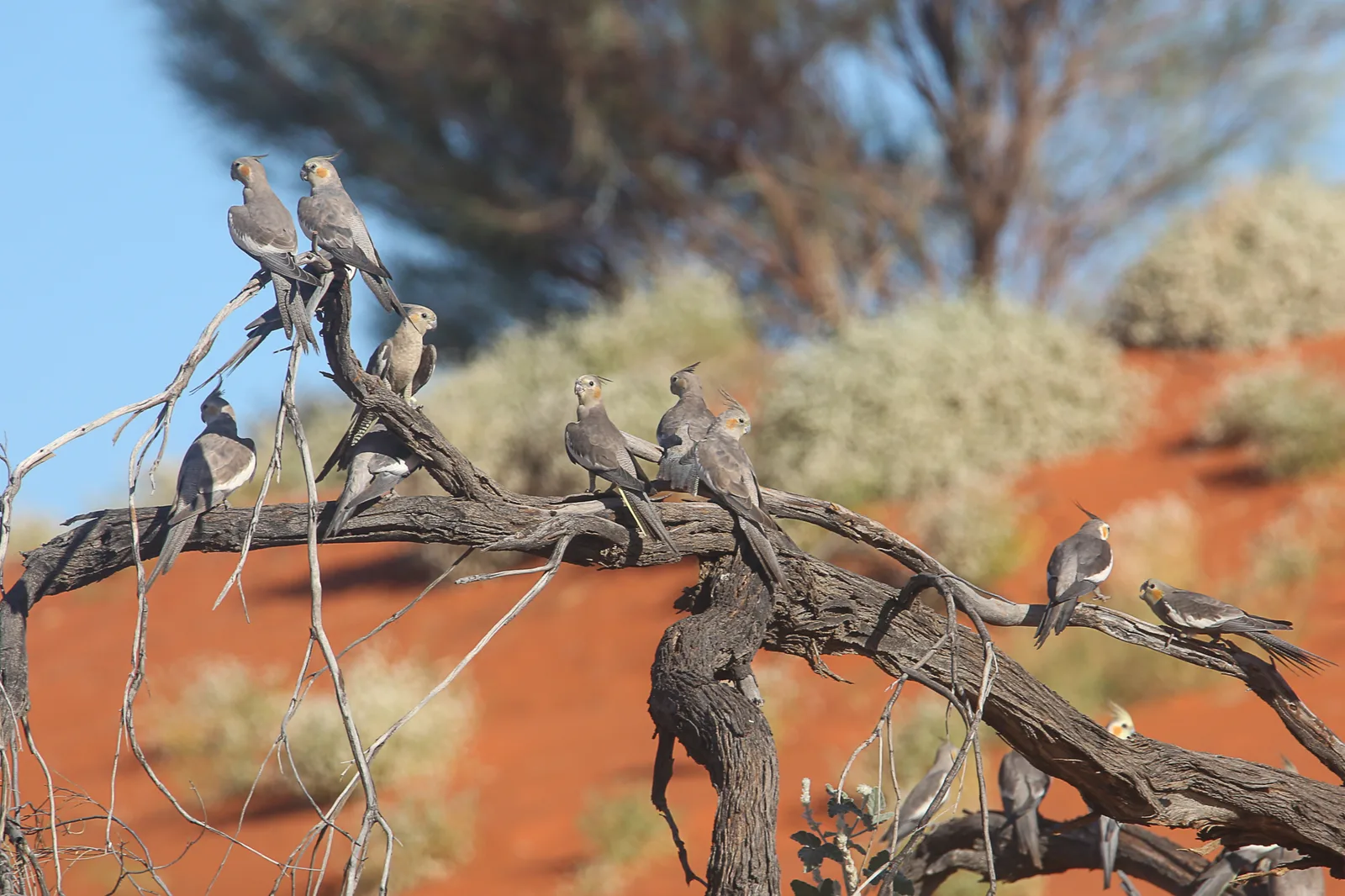
Lifespan in the wild
10 to 14 years
Weight
80 to 90 g
Length
30 to 33 cm
Wingspan
30 to 35 cm
Fact file
Cockatiel
- Location
- Inland Australia, always near fresh water
- Habitat
- Grassland, Temperate forest, Desert, Rivers and lakes
- Diet
- Herbivore
- Prey / food
- Seeds of grasses, acacia, sorghum, wheat and sunflower
- Predators
- Australian birds of prey
- Lifestyle
- Nomadic and social, and active by day
- Group name
- Flock
- Name of young
- Chick
- Incubation
- Incubation 17 to 23 days
- Clutch size
- 4 to 7 eggs
- Population
- Never counted, and common across inland Australia
- Biggest threat
- Shooting and pesticides on Australian crop fields
- Distinctive feature
- A tall crest and a round orange cheek patch
- Colour
- Grey, with a yellow face and orange cheeks
- Skin type
- Feathers
Size
Next to a person
Measurements
Size and speed
- Length
- 30 to 33 cm including the long tail, which is about half the total length
- Wingspan
- 30 to 35 cm, up to 40 cm
- Weight
- 80 to 90 g
Typical adult ranges. Sources: Wikipedia, Animal Diversity Web.
Life cycle
Lifespan
- In the wild10 to 14 years
- In captivity16 to 25, up to 36 years
- 036 years
The pale bar is the record. Sources: Animal Diversity Web, Wikipedia.
Appearance
Colour and coat
- Primary colours
- grey
- Secondary colours
- yelloworangewhite
- Skin type
- feathers
- Male and female
- Adults differ after the first moult, at six to nine months. The male gains a yellow face and a bright orange cheek. The female keeps a grey face and bars under the tail.
Life cycle
Mating and family
- Mating system
- monogamous pairs
- Social structure
- lifelong pairs inside nomadic flocks
- Breeding
- one brood a year, triggered by rain
A pair claims a hollow in a dead eucalypt near water. The hen produces a clutch of four to seven eggs over about two weeks. Both birds sit on the clutch for 17 to 23 days. Both then feed the chicks beak to beak. The young leave the hollow at about five weeks old.
Classification
Taxonomy
- Kingdom
- Animalia
- Phylum
- Chordata
- Class
- Aves
- Order
- Psittaciformes
- Family
- Psittacidae
- Genus
- Nymphicus
- Species
- Nymphicus hollandicus
Conservation
Red List status
- LC
- NT
- VU
- EN
- CR
- EW
- EX
Least Concern on the IUCN Red List
Range
Recorded in 15 countries
- Argentina
- Ashmore and Cartier Islands
- Belgium
- Brazil
- People's Republic of China
- Colombia
- Germany
- Spain
- France
- Italy
- Mexico
- New Zealand
- Portugal
- Thailand
- United States of America
Habitat layer: temperate broadleaf and mixed forest, temperate conifer forest, boreal forest and taiga, tropical grassland, savanna and shrubland, temperate grassland, savanna and shrubland, flooded grassland and savanna, desert and xeric shrubland.
Countries from 1,392 wild records on GBIF (iNaturalist research grade), filtered and checked by hand. Country shapes: Natural Earth. Habitat: RESOLVE Ecoregions 2017, CC BY 4.0. Basemap: Natural Earth.
Habitats
Three things to know
- 1
The cockatiel is the only bird in the genus Nymphicus.
- 2
Wild flocks in southern Australia travel one hundred to one thousand birds strong.
- 3
A pair shares the sitting, with the male by day and the female at night.
Did you know
Seven more facts
- 1
The tail makes up about half of a cockatiel's total length.
- 2
The bird can go a long time without drinking, because it makes water as it burns food.
- 3
Wild cockatiels breed after rain rather than on a fixed date.
- 4
An adult weighs only 80 to 90 grams.
- 5
Grey feathers hide the bird from hawks while it feeds on bare ground.
- 6
There are 22 established colour mutations in captivity.
- 7
A cockatiel has bred with a galah, and keepers call the hybrid a galatiel.
Field notes
How it looks and acts
Field notes
Distinguishing features
- A tall crest that moves with the bird's mood.
- A round orange patch over each ear.
- A long tail that tapers to a point.
- A white flash along the outer edge of each wing.
- A yellow face on the male and a grey face on the female.
- A dark grey bill with a curved, pointed upper half.
Field notes
Unique adaptations
- Grey plumage that hides the bird on open ground.
- Long toes that spread into a stable foot for walking.
- Fast flight, which is the main escape the bird has.
- Powder down that waterproofs the feathers.
- Preen oil that carries vitamin D precursors for sunlight to activate.
Field notes
Interesting behaviours
- Feeds on the ground in silence.
- Drinks in one or two quick sips, then looks up.
- Moves camp when the rain and the seed shift.
- Spreads the wings up and out at rest, to impress another bird.
- Shakes out a cloud of dust after a long preen.
Field notes
Temperament
- Timid, and quick to fly rather than fight.
- Highly social, and unsettled when left alone.
- Gentle in the hand, but able to bite hard if cornered.
- Loud when alarmed, and silent while feeding.
Field notes
Communication
- The angle of the crest shows whether the bird is calm, alert or angry.
- A shrill call carries far and warns the whole flock.
- The pitch of a cry tracks how serious the threat is.
- Males sing long, varied songs to attract a mate.
- Captive birds copy tunes, alarm clocks and telephones.
Ecology
Ecological role
The cockatiel is a seed eater of the dry inland, and a food supply for Australian raptors.
- It removes large quantities of grass and acacia seed.
- It scatters seed and husks as it eats, so it moves some plants about.
- It feeds the birds of prey that hunt over open ground.
- It carries gut parasites such as Giardia and Cryptosporidium.
Stories
Myths and legends
- In European naming tradition, the bird carries the name of a nymph, given by travellers who admired it.
- In Australian Aboriginal languages the names weero and quarrion belong to this bird.
- In Australian farming tradition the cockatiel is a crop raider before it is anything else.
- In the aviculture of the United States, colour forms carry names such as pied, lutino and pearl.
- In popular belief the cockatiel talks like a big parrot, but it copies tunes far better than words.
People
Relationship with humans
People
Living alongside us
Wild cockatiels raid grain fields in Australia, and farmers there treat them as a pest. Everywhere else the bird is a captive-bred pet. It is one of the most kept parrots in the world. Poor care sends many birds to a shelter within their first two years.
- The bird cannot hurt a person beyond a hard bite.
- Powder down triggers hay fever and lung disease in some keepers.
- A nesting bird may bite a hand that reaches into the box.
People
Status, uses and products
- Domestication
- Wild
- As a pet
- Kept by some. A cockatiel suits a keeper who can give it company, a varied diet, and about two hours out of the cage each day.
- Uses
- pet tradeaviculture showsresearch colonies
- Products
- None recorded
The full account
About the cockatiel
The cockatiel, Nymphicus hollandicus, is the smallest member of the cockatoo family. It lives across the dry inland of Australia, always within reach of water. A tall crest, a long pointed tail and an orange cheek patch make it easy to know. Adults measure 30 to 33 centimetres from bill to tail tip. A cockatiel weighs 80 to 90 grams.
Wild flocks wander after rain and seed. The birds feed on the ground, and they take seed from grasses, shrubs and trees. Away from Australia the cockatiel is a cage bird. It ranks among the five most popular pet birds in the world. The IUCN lists the species as Least Concern.
Name and taxonomy
J. F. Gmelin described the bird in 1788 as Psittacus novaehollandiae. Robert Kerr renamed it Psittacus hollandicus in 1792. Wagler moved it into a genus of its own, Nymphicus, in 1832. Early travellers thought the birds beautiful and named them after nymphs. The species name hollandicus preserves New Holland, the old European name for Australia. Australians also call the bird a weero or a quarrion.
The cockatiel is the only living species in its genus. Its place among the parrots stayed unsettled for a long time. Some authors once filed it with the broad-tailed parrots. Molecular work settled the question and placed it inside the cockatoo family. It now holds a subfamily of its own, the Nymphicinae. No other cockatoo carries a long tapering tail like this one.
Evolution and relatives
A protein study in 1984 showed the cockatiel is closer to cockatoos than to other parrots. Mitochondrial sequence data place it near the dark cockatoos. One nuclear gene suggests it stands far enough apart to keep a subfamily of its own. The bird carries every trait that defines the cockatoo family.
Those traits are an erectile crest, a gallbladder, powder down, and feathers over the sides of the bill. It also lacks the feather layer that makes blue and green in other parrots. The long tail is the odd feature, and it follows from a drop in body size. A cockatiel has bred successfully with a galah, which supports that placement. Keepers call the hybrids galatiels. The cockatiel therefore sits inside the cockatoos and yet a little apart from them.
Appearance
The wild plumage is grey, with a white flash along the outer edge of each wing. A round orange patch sits over each ear. The male has a yellow or white face, while the face of the female stays grey. The orange is bright on an adult male and muted on a female. Feathers in the cheek patch are shaped to protect the ear and to smooth the airflow. Chicks and young birds look like the female until the first moult. They show yellow bars under the tail and yellow spots on the flight feathers.
The tail is long, tapers to a point, and makes up about half the total length. It measures about 15 centimetres. The crest holds several dozen feathers and stands about 5 cm tall. The bill is dark grey and the legs are blackish grey. Both sexes have dark brown eyes. The wingspan runs 30 to 35 centimetres and reaches 40 cm at most.
Habitat and range
Cockatiels hold the Australian mainland and reach every mainland state and territory. The wettest corners in the southwest and the southeast hold none at all. They also avoid the deepest Western Australian deserts and Cape York Peninsula. Birds on Tasmania arrived there by accident. The species keeps to arid and semi-arid country, but never far from water.
Open woodland, lightly wooded grassland and the eucalypts along rivers all suit it. Partly cleared farmland works as well. Dense forest is avoided. Sometimes hundreds of birds gather around one waterhole.
The birds are nomadic and follow food and water. In the wetter north they move without a fixed pattern. In the south the weather is steadier, so flocks migrate on a schedule. Groups of one hundred to one thousand travel together there. Summer heat above 43 degrees Celsius and winter nights near 4.5 degrees are both normal. The bird appears in 90 countries on GBIF, because pet birds escape everywhere.
Diet and feeding
Cockatiels feed almost entirely on the ground. Dry seed is the main food, taken from grasses, shrubs and trees. Acacia seed is the favourite, and flocks are thickest where acacia grows. Wheat, sorghum and sunflower are eaten too, to the annoyance of farmers. Soft fruit and berries go down as well. The birds also pick small insects off the ground. Cockatiels sometimes take seed straight from a branch. A flock several thousand strong can strip a grain field.
The curved upper bill shucks a husk in a few seconds. The tongue turns the seed while the bill cuts it open. Long toes spread wide and make a stable foot for walking. A feeding flock stays silent. Birds drink fast at a pool, take a sip or two, then lift the head to look around. They make water inside the body as they burn food, so they can go a long time without drinking.
Behaviour and social life
Cockatiels are social all year round. They feed and travel in pairs, in parties of six to eight, or in flocks of several thousand. A pair forms early and stays together outside the breeding season. The birds are timid and take to the air at any threat. They have almost no other defence.
Preening fills much of the day. The bird spreads oil from the preen gland over its outer feathers to keep them dry. That oil carries vitamin D precursors, and sunlight turns them into the vitamin itself. The bird swallows the vitamin at the next preen, and it needs it to take up calcium. Powder down adds a second waterproof layer. A cockatiel that shakes itself after preening throws off a cloud of white dust. The bird works the oil into each outer feather with its bill.
Feathers pull in tight when the bird is frightened and puff out when it is content. They also hold body heat, which matters on a cold inland night. A cockatiel must keep its core above 38 degrees Celsius. A home range can stretch for several miles from the nest tree. Fast flight makes that easy.
Communication and senses
The crest carries the bird's mood. It stands straight up when the bird is startled or excited. It rests at a slant when the bird is calm. It lies flat against the head in anger, and flat again in flight to cut drag. A tired bird holds it halfway up, with the tip curled.
Calls are loud and shrill, and they carry a long way. A high chirp signals stress, and the pitch tracks how bad the trouble is. A lower cry means a small problem, while a higher one comes with flight. Males sing longer and more varied songs, above all in the breeding season. Captive cockatiels copy melodies, alarm clocks, telephones and birds outside the window. Some have learned to keep time with a person singing.
Reproduction and life cycle
Rain sets the breeding season going. Most nesting falls between August and December. Pairs stay together all year, so no time goes on finding a mate. A female signals readiness with muffled peeps and a raised tail. A male whistles a song, struts, holds his wings out and drums with his bill.
The pair nests in a large tree hollow, usually in a dead eucalypt. The hollow sits about one to two metres above the ground and close to fresh water. A cracked dry snag is preferred, because it drains after heavy rain. The male checks the cavity for danger before the female goes in. A pair often claims a whole tree.
The hen lays four to seven eggs, one every other day. Both birds incubate for 17 to 23 days. The male sits from early morning until late afternoon, and the female covers the night. Both parents feed the chicks by passing food beak to beak. The young leave the hollow at about five weeks. Males can breed at 13 months and females at 18 months, which is fast for a cockatoo.
Predators and threats
Australian birds of prey are the main danger. A raptor takes the bird from above while it feeds on the ground. Grey plumage hides a feeding cockatiel well, above all in shade. A flock relies on many eyes, and one shrill call sends the whole group up. Speed in the air is the real escape. A large group also spreads the watching between many pairs of eyes.
A cornered bird will bite, and the beak breaks skin easily. Nesting birds bite an intruder that reaches into the hollow. Bacteria and gut parasites cause losses as well. Giardia and Cryptosporidium bring weight loss, poor droppings and death. Queensland has had open seasons on the bird in the past. Pesticides are still used to keep flocks off crop fields.
Population and conservation
The IUCN lists the cockatiel as Least Concern. Nobody has counted the wild population. The range is very large and the birds are dense across the mainland. No threat has been identified for the species as a whole. Numbers probably rise and fall with the rain, because rain drives breeding. Naturalists have logged 6,297 records on iNaturalist.
Australian law protects the bird in general terms. The pet trade takes captive-bred birds rather than wild ones. There are 22 established colour mutations in aviculture worldwide. Eight of them exist only in Australia. Captive breeding probably keeps trade pressure off the wild flocks. One bird can carry several mutations at once, such as pearling on a lutino.
Relationship with humans
The cockatiel is among the most common pet birds anywhere. An estimated 4.8 million households in the United States keep one. In one survey of American bird keepers, 39 percent had a cockatiel. Only 3 percent kept any other kind of cockatoo. The bird is tame, quiet by parrot standards, and long-lived.
Care is harder than most buyers expect. A cockatiel needs company, a proper diet, toys, perches of different widths and daylight. It also needs about two hours out of the cage each day. Owners who miss this leave birds underfed and badly behaved. Many birds reach a shelter within about 1.5 years of purchase. The powder down brings on hay fever and lung trouble in some keepers.
In Australia the bird is also a crop pest. Flocks of several thousand raid sorghum, millet, wheat and sunflower fields. Research colonies keep cockatiels for work on nutrition and behaviour. One such colony in California has trained many students.
In culture and myth
The genus name records a European reaction rather than an Australian one. The travellers who first met the bird compared it to a nymph. Two Australian names, weero and quarrion, come from Aboriginal languages. The English name probably follows the cockatoo, which the bird resembles in miniature.
Breeders have turned the cockatiel into a show animal. The National Cockatiel Society runs regular shows and competitions. Selected birds sell for high prices. The pied mutation appeared in California in 1949. Lutino birds followed in 1958, and pearled birds in 1967. Colour names such as cinnamon, fallow, whiteface and platinum now fill breeders' catalogues. Australian breeders keep several forms that have never left the country.
A sentence with a dotted underline is inferred: it describes the group the animal belongs to, or is a reading of the sources, rather than a measured or reported fact about this species.
Questions
Cockatiel questions, answered
How long do cockatiels live?
Wild birds live 10 to 14 years. A pet can reach 25 years, and the record is 36.
How big is a cockatiel?
Body and tail together measure 30 to 33 centimetres. The wingspan is 30 to 35 cm.
What do cockatiels eat in the wild?
Mainly dry seed from grasses, shrubs and trees, with acacia the favourite. They also take fruit, berries and small insects.
Are cockatiels cockatoos?
Yes. The cockatiel is the smallest cockatoo, and it holds a subfamily of its own.
Can cockatiels talk?
They copy tunes and household sounds better than words. Males learn faster and have more varied calls.
Why does a cockatiel raise its crest?
The crest shows mood. It stands up when the bird is startled, and it lies flat when the bird is angry.
How can you tell a male cockatiel from a female?
After the first moult the male has a yellow face and a bright orange cheek. The female stays grey-faced and keeps the barring beneath her tail.
How many eggs do cockatiels lay?
Four to seven, laid one every other day. Both parents take turns on them.
How long do cockatiel eggs take to hatch?
The eggs hatch after 17 to 23 days. The male sits by day and the female sits at night.
Are cockatiels good pets?
They suit an owner who has time for them. They need company, a varied diet, and about two hours out of the cage a day.
Do cockatiels cause allergies?
They shed a fine powder from their feathers. It can bring on hay fever or bird fancier's lung in some people.
Where do cockatiels live in the wild?
Across the dry inland of mainland Australia, always near water. They are absent from Tasmania, Cape York and the wettest corners.
Are cockatiels endangered?
No. The IUCN lists them as Least Concern, and the wild population has never needed a count.
Do cockatiels migrate?
Southern flocks move on a seasonal schedule. Northern birds simply wander after rain and seed.
How fast do cockatiels mature?
Males can breed at 13 months and females at 18 months. No other cockatoo matures as fast.
Why do cockatiels bite?
Biting is a last resort. A cornered or nesting bird uses its beak, and it can pierce skin.
Food web
Prey and food
- seeds of grasses
- acacia
- sorghum
- wheat
- sunflower
Food web
Predators
- australian birds of prey
Ecological equivalents
Related species on this site
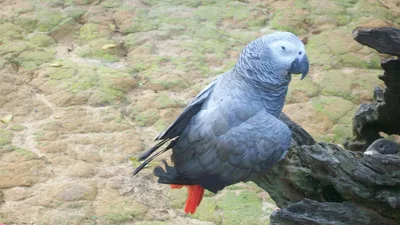
African Grey Parrot (same family), Amazon Parrot (same family), Budgerigar (same family), Carolina parakeet (same family), Conure (same family), Corella (same family), and more.
Birds
African Grey Parrot
Psittacus erithacus
Grey parrots are social African birds with grey feathers, a red tail and a strong curved bill.
Living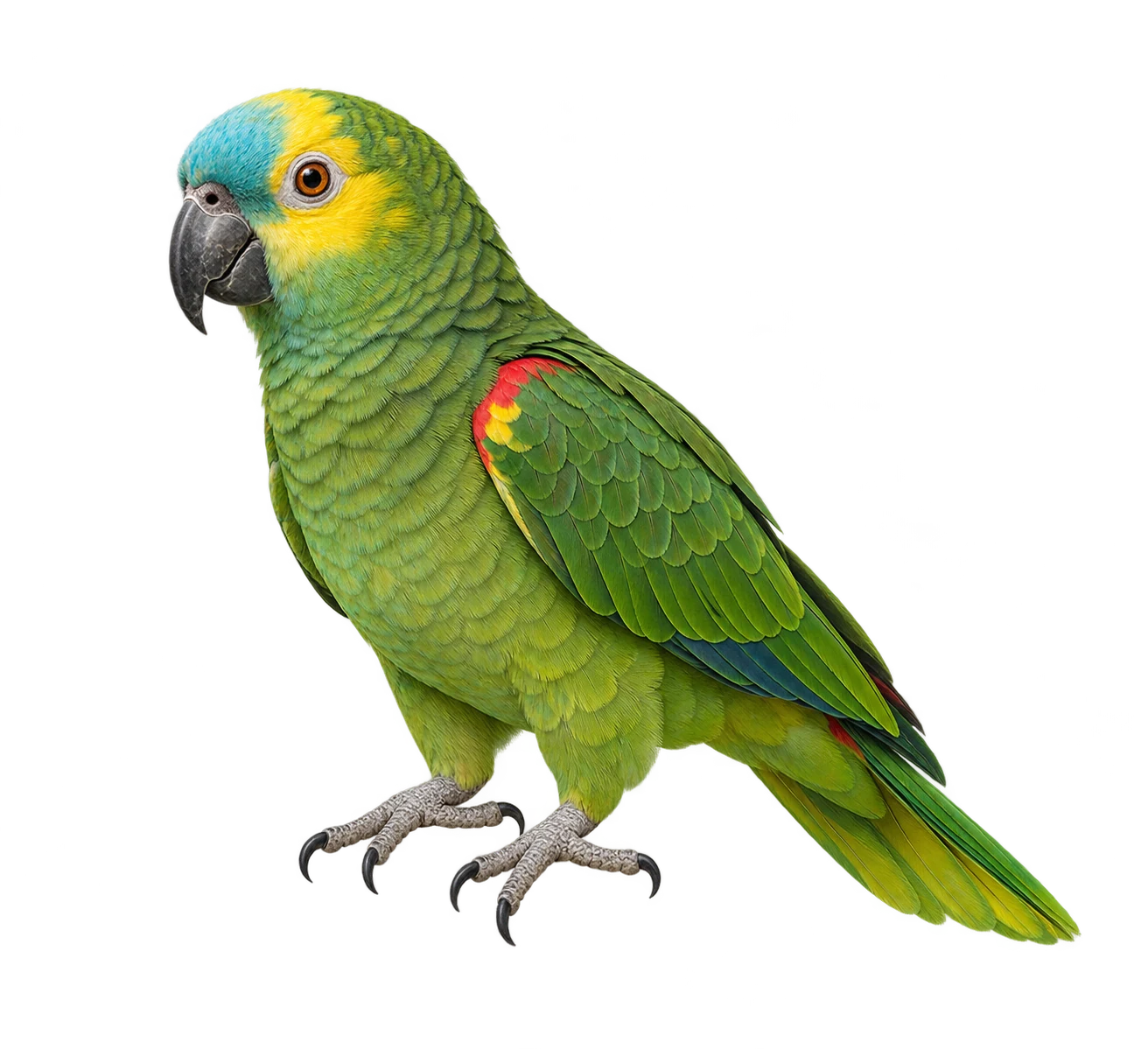
Birds
Amazon Parrot
Amazona
Classification and source reference
LivingAI illustration LC
Birds
Budgerigar
Melopsittacus undulatus
The budgerigar is a small green and yellow parrot from the dry interior of Australia.
Living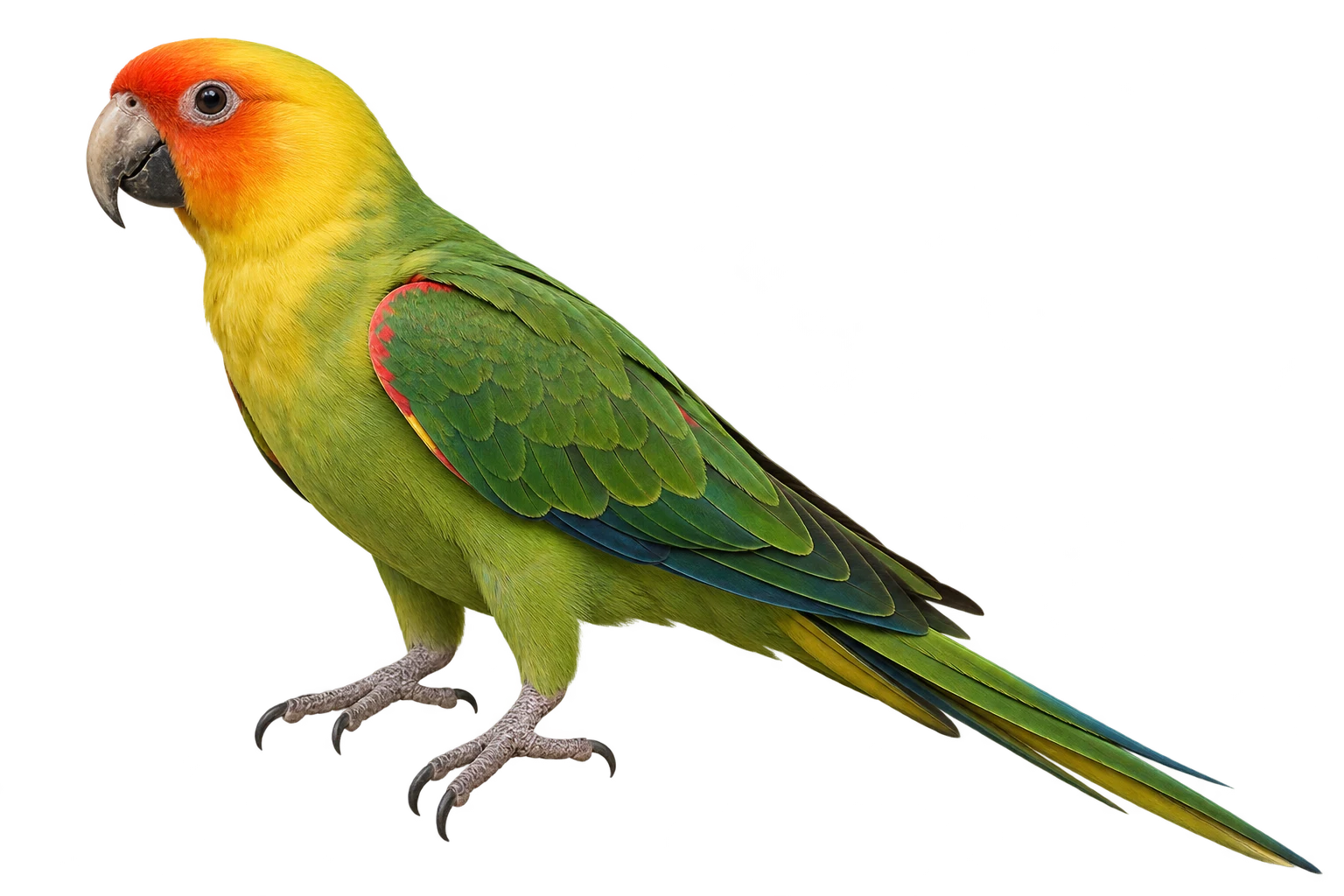 EX
Birds
Carolina parakeet
Conuropsis carolinensis
The Carolina parakeet was the only parrot native to the eastern United States.
ExtinctAI reconstruction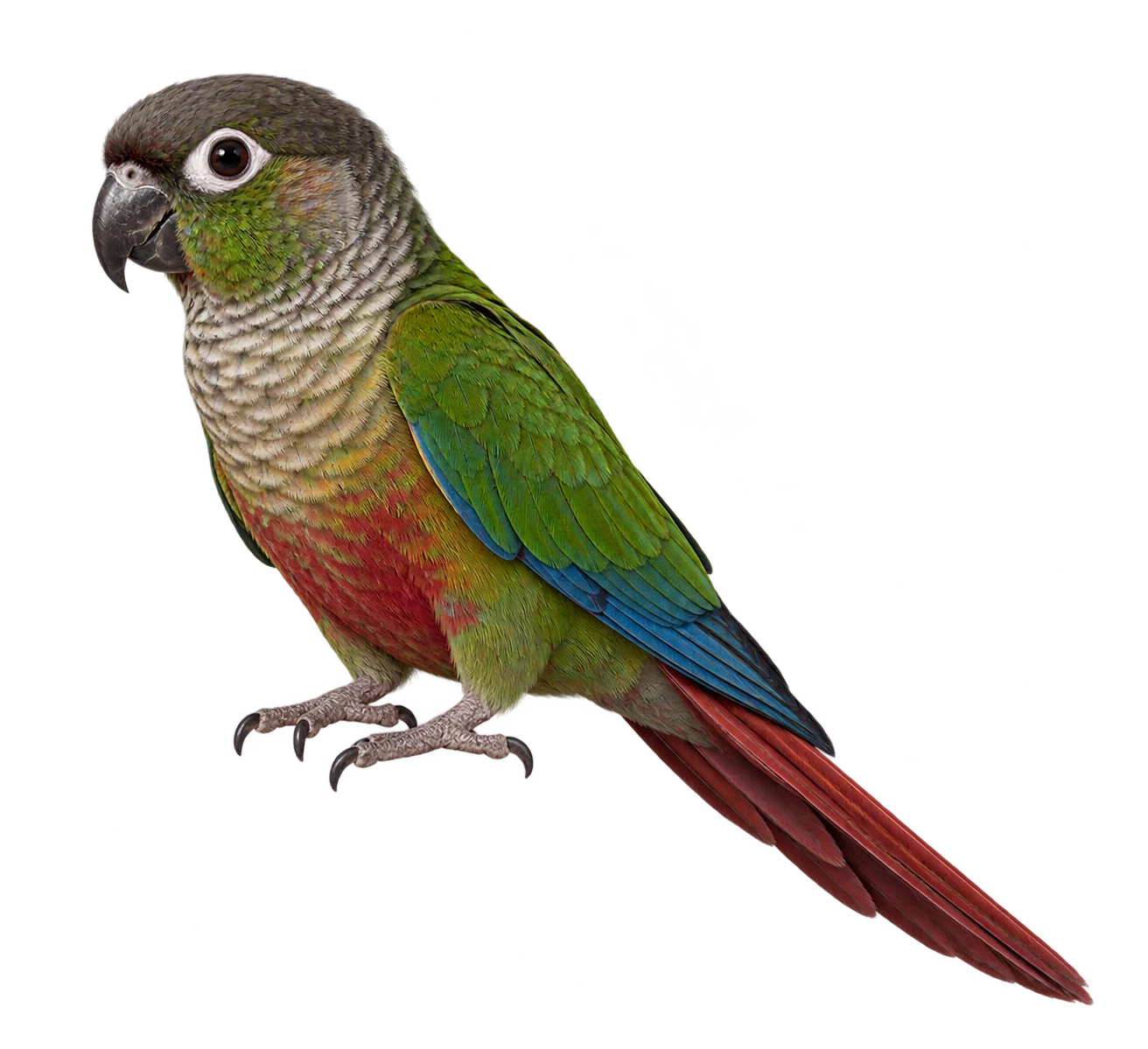
Birds
Conure
Psittacidae
Classification and source reference
LivingAI illustration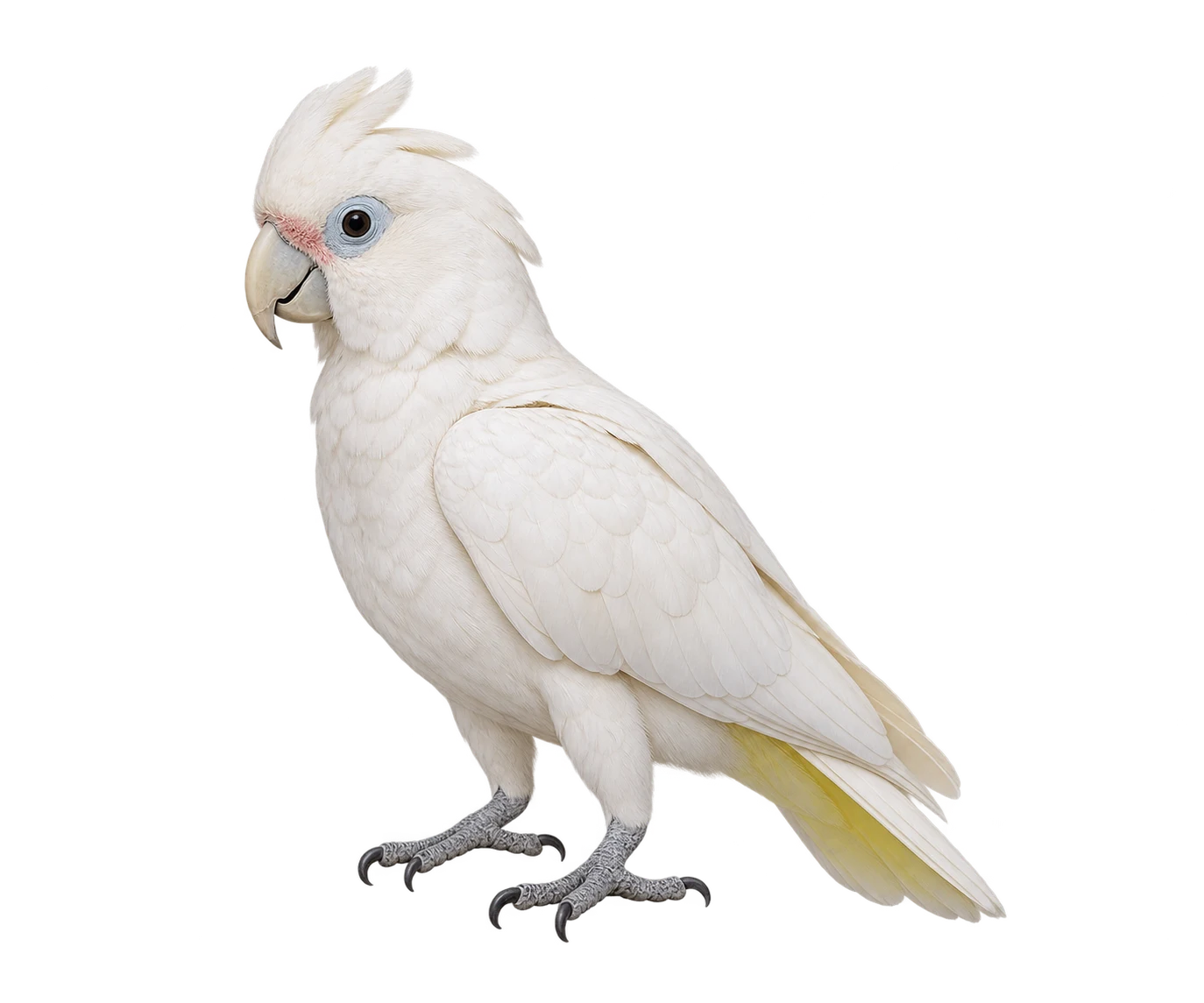
Birds
Corella
Cacatua sanguinea
Classification and source reference
LivingAI illustration