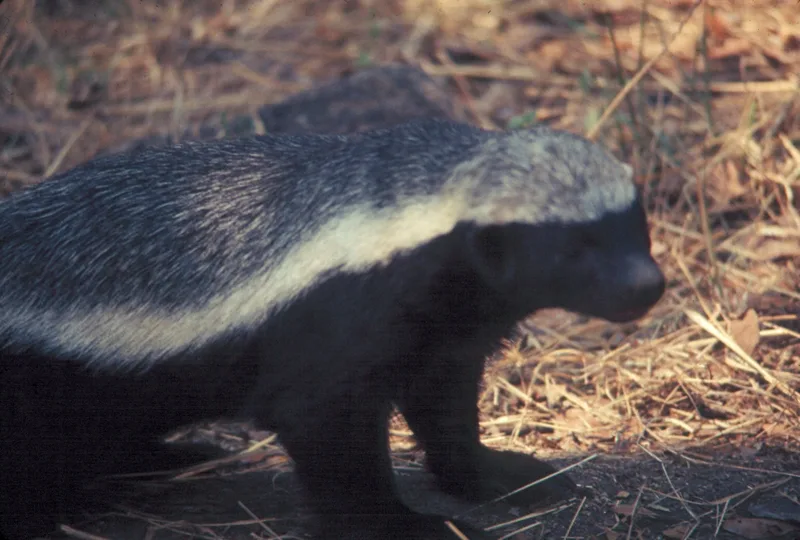
Honey badger
Small, loose-skinned and afraid of nothing
Mellivora capensis
Also called Ratel
Living individuals or members of this group exist today. This does not mean they are safe from extinction.
Meet the honey badger
The honey badger is a stocky, loose-skinned mustelid that roams Africa, Arabia and India. It digs out rodents, snakes, insects and honey, and it fights off animals many times its size.
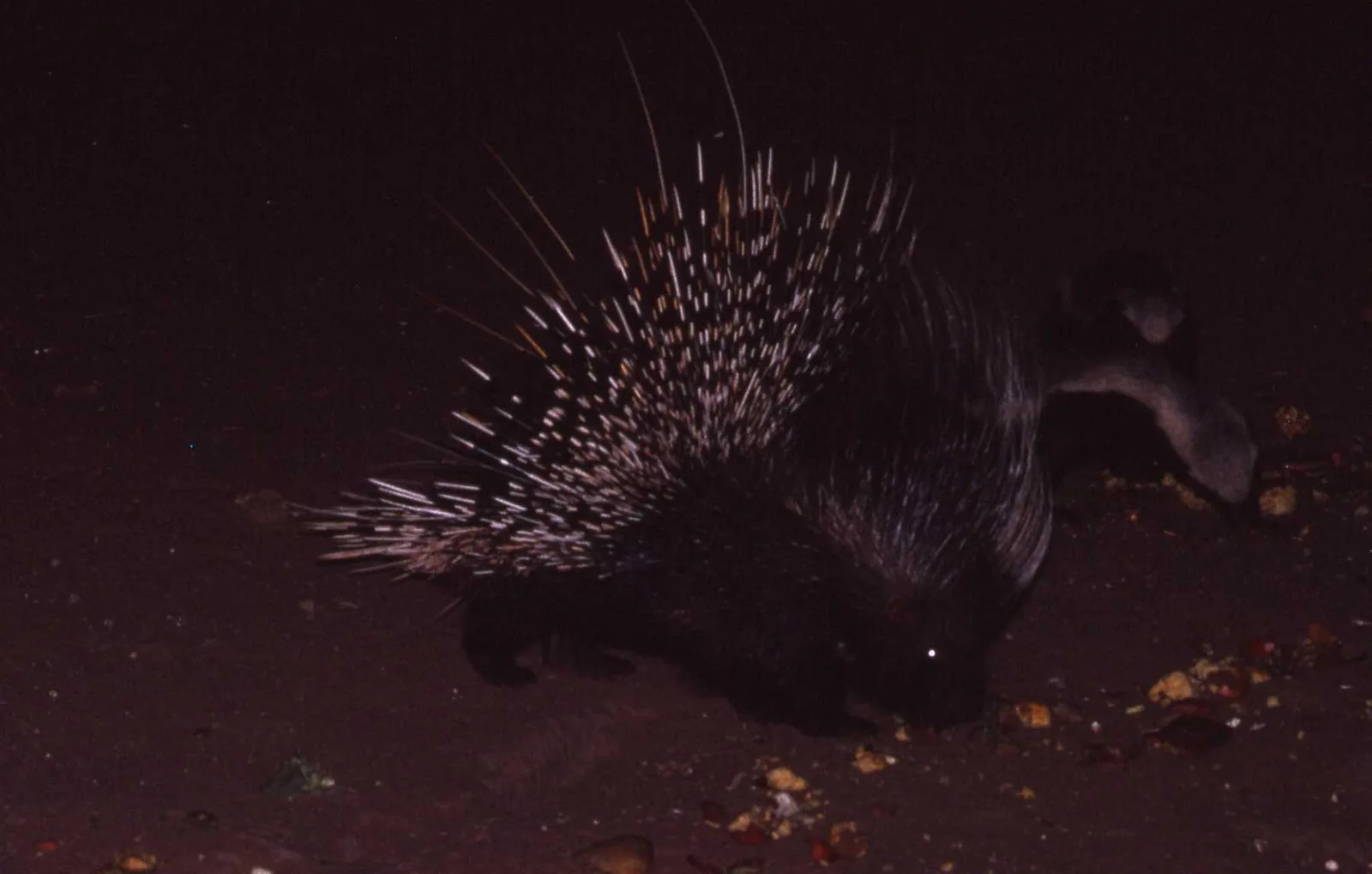
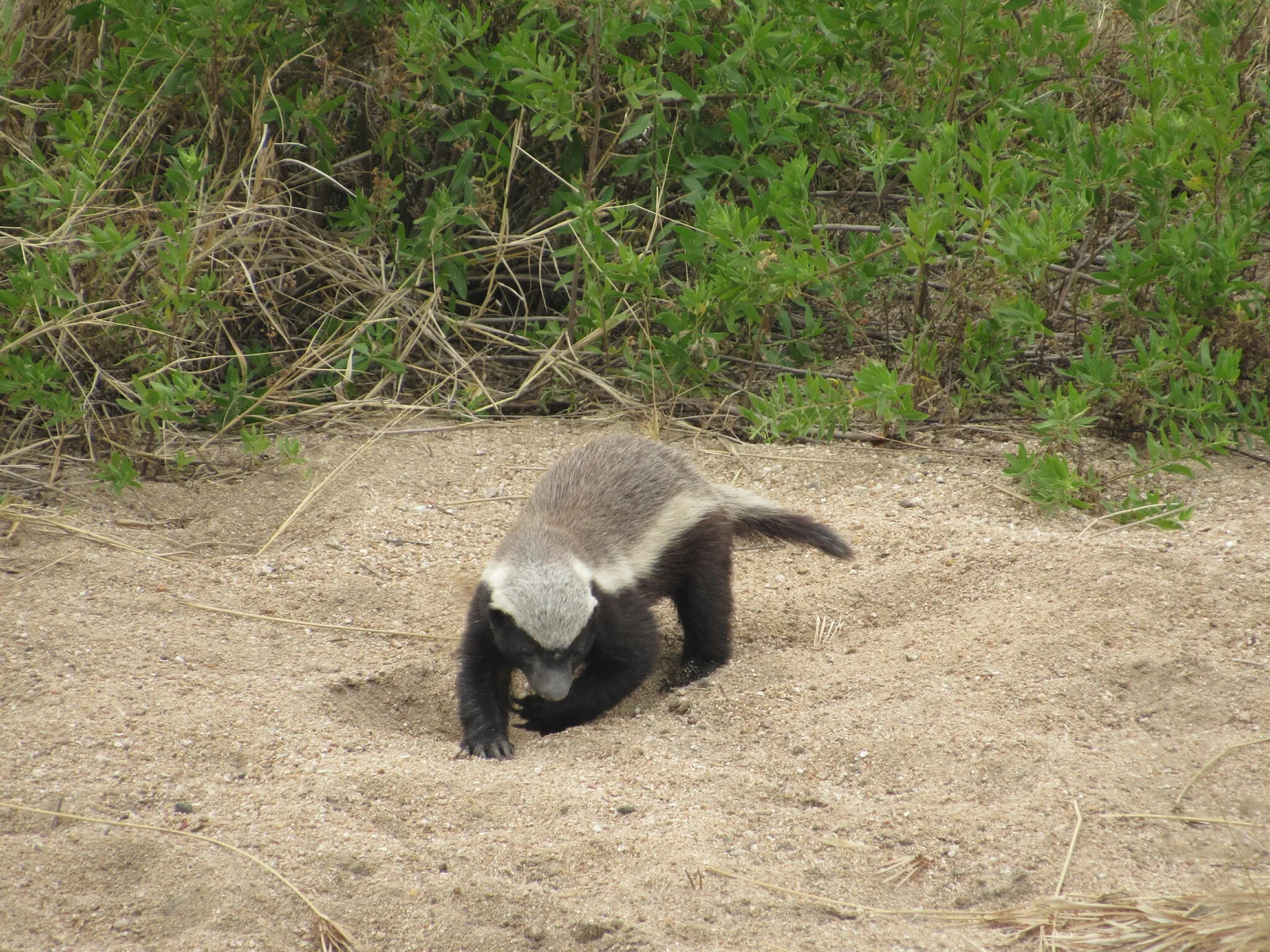
Images of the honey badger
Lifespan in the wild
7 to 8 years
Weight
5 to 16 kg
Length
55 to 77 cm
Height
23 to 28 cm
Fact file
Honey badger
- Location
- Sub-Saharan Africa, Morocco, Arabia, Iran, Turkmenistan, India
- Habitat
- Savanna, Desert, Temperate forest, Mountains
- Diet
- Carnivore
- Prey / food
- Rodents, snakes, lizards, geckos, scorpions, insects, frogs, tortoises, birds, eggs, honey
- Predators
- Lion, leopard, spotted hyena; rock python on occasion
- Lifestyle
- Solitary; nocturnal or diurnal by season
- Group name
- Solitary
- Name of young
- Cub
- Gestation
- 50 to 70 days
- Litter size
- 1 to 2 cubs, usually 1
- Population
- Uncommon everywhere and falling, but no global count exists
- Biggest threat
- Poisoning and trapping by beekeepers and farmers
- Distinctive feature
- White mantle over a black body and very loose, thick skin
- Colour
- Black below with a white or grey back
- Skin type
- Fur
Size
Next to a person
Measurements
Size and speed
- Height
- 23 to 28 cm at the shoulder
- Length
- 55 to 77 cm head and body; the tail adds 12 to 30 cm
- Tail
- 12 to 30 cm
- Weight
- 5 to 16 kg, up to 18 kg African females 5 to 10 kg, males 9 to 16 kg; three wild females from Iraq averaged 18 kg
- Weight, male
- 9 to 16 kg
- Weight, female
- 5 to 10 kg
Typical adult ranges. Source: Wikipedia.
Life cycle
Lifespan
- In the wild7 to 8 years
- In captivity24 to 26, up to 31.3 years the record of 31.3 years is from AnAge
- 031.3 years
The pale bar is the record. Source: Animal Diversity Web.
Appearance
Colour and coat
- Primary colours
- blackwhite
- Secondary colours
- grey
- Skin type
- fur
- Male and female
- Moderate. Males are about a third larger than females, weighing 9 to 16 kilograms against 5 to 10. Old males carry a scarred patch on the back. The coat pattern is the same in both sexes.
Life cycle
Mating and family
- Mating system
- promiscuous, with a loose male dominance hierarchy
- Social structure
- solitary; ranges overlap widely
- Breeding
- one cub every 14 to 24 months
Honey badgers mate in any month, most often from September to December in southern Africa. After 50 to 70 days the female bears one or two blind, hairless cubs in a burrow. She carries the cub between dens for three months and then leads it on foraging trips. The cub depends on her for 10 to 12 months and leaves at about 14 months. Wild animals live about 7 to 8 years, and captives reach 24 to 26.
Classification
Taxonomy
- Kingdom
- Animalia
- Phylum
- Chordata
- Class
- Mammalia
- Order
- Carnivora
- Family
- Mustelidae
- Genus
- Mellivora
- Species
- Mellivora capensis
Conservation
Red List status
- LC
- NT
- VU
- EN
- CR
- EW
- EX
Least Concern on the IUCN Red List
Range
Recorded in 15 countries
- Burkina Faso
- Benin
- Botswana
- Central African Republic
- Ivory Coast
- Kenya
- Namibia
- Niger
- Oman
- Senegal
- South Sudan
- Tanzania
- South Africa
- Zambia
- Zimbabwe
Habitat layer: temperate broadleaf and mixed forest, temperate conifer forest, boreal forest and taiga, tropical grassland, savanna and shrubland, montane grassland and shrubland, desert and xeric shrubland.
Countries from 897 wild records on GBIF (iNaturalist research grade), filtered and checked by hand. Country shapes: Natural Earth. Habitat: RESOLVE Ecoregions 2017, CC BY 4.0. Basemap: Natural Earth.
Habitats
Three things to know
- 1
The neck skin is 6 millimetres thick and so loose that a badger held by a lion can twist round and bite.
- 2
A male honey badger in the Kalahari roams a home range of about 541 square kilometres.
- 3
Honey badgers kill and eat black mambas and puff adders.
Did you know
Seven more facts
- 1
The genus name Mellivora means honey eater in Latin.
- 2
The subspecies cottoni of central Africa is entirely black, with no white mantle.
- 3
A dominant Kalahari male fathered only half of the cubs in his range.
- 4
A mother moves her cub to a new den about every three days.
- 5
Honey badgers of the subspecies signata grow an extra molar on the left side of the jaw only.
- 6
The species has an eversible anal pouch, a feature it shares with hyenas and mongooses.
- 7
Hollow trees are entered from the top.
Field notes
How it looks and acts
Field notes
Distinguishing features
- A white or grey mantle from the crown to the base of the tail over a black body.
- Very loose, thick skin, 6 millimetres deep on the neck.
- Long fore claws and short hind claws.
- A small, flat head with tiny eyes and ears reduced to ridges.
- A body of 55 to 77 centimetres on short legs, standing 23 to 28 cm at the shoulder.
Field notes
Unique adaptations
- Loose skin lets it twist round and bite an attacker that has hold of it.
- Thick skin turns bee stings, porcupine quills and most bites.
- Long fore claws dig prey out of burrows and open hard ground fast.
- Anal glands release a choking fluid that repels lions and hyenas.
- Tiny ears and eyes probably give a fighting animal less to injure.
Field notes
Interesting behaviours
- Walking a slow, winding route and sniffing every hole for rodents and reptiles.
- Charging with the head high, tail up and hair on end while rattling.
- Squatting to scent-mark at latrines and burrow mouths.
- Performing a dance of body rotations when two males meet at a burrow.
- Caching surplus food in a den.
Field notes
Temperament
- Fearless when cornered, and willing to charge lions, hyenas and buffalo.
- Persistent, tearing planks from henhouses and tunnelling under walls to reach poultry.
- Said to be easy to tame in captivity.
- Curious and quick to learn, using tools and teamwork to open enclosures.
Field notes
Communication
- A hoarse, grating call likened to a high-pitched bark.
- Loud grunts from males during mating.
- Whines and squeals from cubs in distress.
- Scent marks of urine, faeces and anal-gland fluid.
Ecology
Ecological role
The honey badger is a digging generalist that keeps rodent, reptile and insect numbers in check across half of Africa and Asia.
- It preys on rodents and insects and so limits some pest-borne diseases.
- Like other diggers, it leaves abandoned burrows that shelter other animals.
- Jackals follow it to steal what it digs up.
- It is a reservoir of rabies in Kenya and passes the disease among wildlife.
Stories
Myths and legends
- In Somali tradition, a bite from a honey badger makes a man infertile.
- In Indian tradition, the honey badger digs up and eats human corpses.
- In San tradition, the honey badger painted on rock stands for bravery.
- In several African traditions, the badger appears as a cunning and relentless fighter, and sometimes a trickster.
People
Relationship with humans
People
Living alongside us
People know the honey badger mostly as a thief of honey and poultry. Beekeepers and farmers trap and poison it, and control campaigns aimed at other predators kill it too. It is eaten as bushmeat and used in traditional medicine. A few are kept as pets or shown in zoos, where they are said to tame easily. Films and internet videos have made it a symbol of fearlessness.
- A honey badger seldom attacks a person, but it fights hard when cornered or provoked.
- A rabid badger bit a dog and several people in South Africa in 2021.
- It carries rabies in Kenya and can pass the disease on through bites.
People
Status, uses and products
- Domestication
- Wild
- As a pet
- Not suitable. Honey badgers tame more easily than their reputation suggests, but they dig, climb, open latches, release a foul scent when handled, and can carry rabies. A wild badger walks 10 to 27 kilometres a night, and no home can offer that.
- Uses
- bushmeattraditional medicinezoo exhibition
- Products
- skinorgans for medicine
The full account
About the honey badger
The honey badger, Mellivora capensis, is a stocky weasel relative also called the ratel. It lives across most of sub-Saharan Africa, through Arabia and Iran, and into India. It is the largest land mustelid in Africa, with a body of 55 to 77 centimetres and a weight of up to 16 kilograms. A broad white or grey mantle runs from the crown to the tail over a black face, belly and legs. Its skin is thick and so loose that a badger held by a predator can twist round and bite back.
The animal is solitary and roams a huge range in search of insects, rodents, snakes, eggs and honey. It digs its food out of the ground with long fore claws and can tunnel into hard soil in 10 minutes. Lions, hyenas and leopards kill a few, mostly old or weak animals, and the badger fights back against anything. The IUCN lists it as Least Concern, though beekeepers and farmers poison and trap it across much of its range. Films and internet videos have made it famous as the animal that fears nothing.
Name and taxonomy
Johann Christian Daniel von Schreber described the species in 1777 from a skin sent from the Cape of Good Hope. He called it Viverra capensis, and the species name still records that cape. Gottlieb Conrad Christian Storr proposed the genus Mellivora in 1780, and the name means honey eater in Latin. John Edward Gray set up a tribe for it in 1865. The common name ratel may come from a Dutch word for rattle, or from raat, the Dutch for honeycomb.
Mellivora holds one living species, the honey badger, and that species is the sole member of the subfamily Mellivorinae. Zoologists placed it with the true badgers in the 1860s, but it shares little with them. Its nearest living relatives are the martens and the wolverine, in the subfamily Guloninae. Naturalists once described 16 subspecies from differences in size and the whiteness of the back. Since 2005, 12 of them have counted as valid. One of these, cottoni of central Africa, is completely black.
Evolution and relatives
The species first appeared in Asia during the middle Pliocene. Fossil relatives date to the Late Miocene, about 7 million years ago. Mellivora benfieldi lived in South Africa and Italy, Promellivora in Pakistan and Howellictis in Chad. A more distant cousin, Eomellivora, spread into several species across both the Old and New Worlds. The giant, long-legged Ekorus of Kenya belonged to the same wider group. The skull looks like an enlarged version of the marbled polecat's skull, which suggests a shared ancestry.
Appearance
An adult stands 23 to 28 centimetres at the shoulder and measures 55 to 77 cm from nose to rump. The tail adds 12 to 30 cm and is covered in long hair. African males weigh 9 to 16 kilograms and females 5 to 10. Three wild females from Iraq averaged 18 kg, so the species can grow much larger where food is rich. Males run about a third larger than females, and old males carry a scarred patch on the back from bites.
The body is long and thick-set with a broad back and short, sturdy legs. The head is small and flat, the muzzle short, the eyes small, and the ears no more than ridges of skin. The skin on the neck is 6 millimetres thick, which protects the animal in fights with its own kind. The fore claws are remarkably long, while those on the hind feet are short. Winter fur on the lower back grows 40 to 50 millimetres long, coarse and bristly with little underfur. In summer the coat shrinks to 15 mm and the belly is half bare. The lower body and the sides of the head are pure black, and a white band covers the back from head to tail.
Habitat and range
The honey badger ranges across sub-Saharan Africa from the Western Cape to southern Morocco and Algeria. Outside Africa it lives in Arabia, Iran and western Asia as far as Turkmenistan, and across the Indian peninsula. It avoids the driest heart of the Sahara and the Mediterranean coast. GBIF holds occurrence records from 57 countries. It climbs from sea level to 2,600 metres in the High Atlas and 4,000 m in Ethiopia's Bale Mountains.
Few mammals tolerate such a spread of habitats. It lives in rainforest, thorn forest, open woodland, floodplain grassland, rocky hills, steppe and desert. Rainfall in its haunts ranges from under 100 millimetres a year to over 2,000. It needs somewhere to shelter: a burrow of its own, an old aardvark or warthog hole, a termite mound, a cave or a hollow tree. Its own burrows usually have one entrance, run 1 to 3 metres, and end in a bare nesting chamber. In the Kalahari a mother with a cub moves to a different den almost every night.
Diet and hunting
Apart from the wolverine, no member of the weasel family eats so wide a range of food. The badger digs out insects, scorpions, frogs, lizards, tortoises, rodents and snakes, and takes birds and their eggs. It also eats berries, roots and bulbs. It swallows every part of its prey, including skin, hair, feathers and bone, and pins the food with its forepaws. In the Kgalagadi Transfrontier Park, geckos and skinks made up 47.9% of prey species and gerbils and mice 39.7%. Most of the food by weight came from animals over 100 grams, such as cobras, young rock pythons and springhares. Prey ranged from 2 to 2,000 grams, and males and females caught prey of similar size despite their different bulk.
An adult male eats about 1.3 kilograms a day and a female about 0.9. Small mammals make up 80% of the diet from September to December, and large snakes 58% in the hot wet season. Honey badgers kill and eat black mambas, puff adders and Cape cobras. They tear open beehives for the larvae and the honey, and the smell of their anal pouch may calm the bees. The old story that a honeyguide bird leads the badger to hives has never been seen in the wild. Black-backed jackals steal food from foraging badgers, and a 2022 Kalahari study put the loss at 5% of intake.
Behaviour and social life
The honey badger is mostly solitary, though pairs sometimes hunt together in Africa. In the Serengeti it hunts by night in the dry season and by day, mostly at dawn and dusk, in the wet season. Indian studies at Sariska and Cauvery found it strongly nocturnal. It walks a slow, winding path, sniffing at every rodent hole and scent trail. A female covers about 10 kilometres a night and a male up to 27.
Home ranges are vast. In the southern Kalahari, adult males held an average of 541 square kilometres and females 126. Ranges overlap widely, and a dominant male's range may cover those of 13 females. Neither sex defends a territory, though females avoid each other. Males meeting at a burrow perform a stiff dance of body rotations, and the one that moves most wins. Both sexes mark with urine, faeces and anal-gland secretions while squatting.
The badger's fame rests on its refusal to back down. Cornered, it charges with head high, tail straight up, hair on end, and a loud rattling call. It can release a choking yellow fluid from its anal glands to drive off lions and hyenas. It attacks horses, cattle and buffalo that blunder into its burrow. Captive badgers have used tools and worked together to open gates, as a BBC film showed.
Communication and senses
The usual call is a hoarse, grating khrya-ya-ya-ya, like a high-pitched bark. Mating males grunt loudly, cubs whine, and a badger facing dogs screams like a bear cub. Scent carries most of the social messages. Squatting marks at latrines and burrow mouths tell neighbours who lives nearby. The eyes are small, and the animal finds its food mainly by smell and hearing. Sharp, pointed papillae on the tongue help it to break down tough food.
Reproduction and life cycle
There is no breeding season, and cubs arrive in any month. In southern Africa most matings fall between September and December, in the hot dry season. A female is in oestrus for about 14 days, and mating takes place inside a burrow. Dominant males are heavier and hold larger ranges, yet in one study the top male fathered only half of the cubs. Gestation lasts 50 to 70 days.
A litter holds one or two cubs, and in the Kalahari a mother usually raises one. The cub is born blind and hairless. One captive cub weighed 0.23 kilograms at two days old. Its eyes open after 33 days, its black-and-white coat forms by three months, and it reaches adult size at six months. The mother carries it to a new den about every three days for the first three months. She brings prey to the den from two to three months, and the cub follows her on foraging trips from about three months.
Only the mother raises the young, and she feeds it for 10 to 12 months. She teaches it to climb, dig and hunt, and it leaves her at about 14 months. In the Kgalagadi park 37% of cubs died, from predators, infanticide and starvation. Females can breed at 12 to 16 months, and males at two to three years. Because of the long care, a female breeds only once every 14 to 24 months. Wild badgers live about 7 to 8 years, while captives reach 24 to 26. Captive animals live far longer than wild ones, as is typical of mustelids.
Predators and threats
Lions, leopards and spotted hyenas take honey badgers, but mostly the old and the weak. The loose skin makes a young, fit badger hard to hold. In the Cape, rock pythons are a possible predator too. Bee stings, porcupine quills and bites seldom pierce the skin. A 2018 Serengeti study found that big predators had no effect on badger numbers. ADW notes that the black body and white mantle mimic a cheetah cub, which may make predators hesitate.
People are the real threat. Beekeepers and farmers poison, trap and shoot badgers that raid hives and kill poultry. Control campaigns against caracals kill badgers by accident. Whole populations are thought to have vanished from poisoning alone. The animal is also taken for bushmeat and for traditional medicine. Rabies passes to badgers from wild and domestic dogs.
Population and conservation
The IUCN listed the honey badger as Least Concern in 2016, because its range is enormous. Even so, it is nowhere common, and the population is falling. Its huge home ranges make it hard to count and hard to protect. Algeria, Morocco, Kazakhstan, Uzbekistan and Turkmenistan protect it by law. India lists it under Schedule I of the Wildlife Protection Act of 1972, its strictest category. Ghana and Botswana have placed it on CITES Appendix III. It survives in reserves such as Kruger in South Africa and Ustyurt in Kazakhstan.
Relationship with humans
Honey badgers and beekeepers have fought for centuries. According to ADW the badger causes 26% of the damage to commercial hives. It rips planks from henhouses and tunnels under stone walls, and it kills more than it eats. One raid left 17 Muscovy ducks and 36 chickens dead. Dogs cannot hunt it safely, because it twists inside its skin and bites the jaw that holds it.
The badger seldom attacks people unless provoked. A rabid animal at Kromdraai, South Africa, bit a dog and several people over two days in July 2021. In Kenya it is a major reservoir of rabies. Badgers are said to be easy to tame, and some captives stop using their scent glands. Zoos exhibit them, and a few people keep them as pets. In parts of Africa its organs and skin go into traditional medicine as symbols of courage. On the credit side, it eats rodents and insects and so limits pest-borne disease.
In culture and myth
In Somali tradition, a man bitten by a honey badger becomes infertile, so people keep well clear of it. In India, folk stories accuse the badger of digging up human corpses. In San tradition, rock paintings in the Kalahari show the badger as a mark of bravery. During the British occupation of Basra in 2007, rumours spread of man-eating badgers released by the troops, which the army denied.
Modern media crowned it the most fearless animal in the world and, for its size, the strongest animal in Africa. The comic book Randall's Guide to Nastyass Animals: Honey Badger Don't Care turned it into an internet joke. Bitcoin supporters adopted it as a mascot, likening the currency's resistance to control to the animal's toughness. Spirit-animal writers read it as a sign of persistence and defiance, though that reading seems to be recent.
A sentence with a dotted underline is inferred: it describes the group the animal belongs to, or is a reading of the sources, rather than a measured or reported fact about this species.
Questions
Honey badger questions, answered
Why is the honey badger so fearless?
Thick, loose skin turns most bites and stings, and lets the badger twist round to bite whatever holds it. Backed by a choking scent and a loud rattling charge, it can drive off lions and hyenas. It has little reason to run.
Is the honey badger immune to snake venom?
It kills and eats black mambas, puff adders and cobras, and web sources claim some resistance to venom. The sources this page draws on do not confirm immunity.
How big is a honey badger?
The head and body measure 55 to 77 centimetres, the tail adds 12 to 30, and it stands 23 to 28 cm at the shoulder. Males in Africa reach 9 to 16 kilograms, females only 5 to 10.
What do honey badgers eat?
Insects, scorpions, frogs, lizards, geckos, tortoises, rodents, snakes, birds and eggs, plus berries, roots and bulbs. They raid beehives for larvae and honey. A male eats about 1.3 kilograms a day.
Where do honey badgers live?
Across sub-Saharan Africa, in Morocco and Algeria, through Arabia and Iran to Turkmenistan, and across India. They occupy rainforest, woodland, grassland, rocky hills and desert, from sea level to 4,000 metres.
Do honey badgers really eat honey?
Yes, and the bee larvae in the comb as well. Honey seems to be a secondary food, and the badger digs most of its meals out of the ground.
Does a honeyguide bird lead the honey badger to hives?
The story is popular, but nobody has seen it happen in the wild. The honeyguide does lead people to hives.
Are honey badgers dangerous to humans?
Rarely. A badger attacks only when provoked or cornered. Rabid animals are the main risk, and one bit several people in South Africa in 2021.
How long do honey badgers live?
About 7 to 8 years in the wild, according to ADW. Captives live 24 to 26 years.
Are honey badgers endangered?
No. The IUCN lists them as Least Concern because of their vast range. They are uncommon everywhere, though, and numbers are falling under poisoning and trapping by beekeepers and farmers.
Is the honey badger a badger?
Not a close one. It belongs to the weasel family but sits in its own subfamily, Mellivorinae, nearer to the martens and the wolverine than to the true badgers.
How many cubs does a honey badger have?
One or two, and usually one in southern Africa. The cub stays with its mother for 12 to 16 months, so she breeds only once every 14 to 24 months.
Are honey badgers nocturnal?
It depends on the place and the season. Serengeti badgers hunt at night in the dry season and by day in the wet season. Indian badgers are strongly nocturnal.
How far does a honey badger travel?
Females travel about 10 kilometres in a night, males up to 27. Kalahari males hold home ranges averaging 541 square kilometres.
Can you keep a honey badger as a pet?
A few people do, and captives are said to tame easily. They dig, climb, open latches, release a foul scent and may carry rabies, so experts do not recommend it.
Food web
Prey and food
- rodents
- snakes
- lizards
- geckos
- scorpions
- insects
- frogs
- tortoises
- birds
- eggs
- honey
 Naked mole-rat
Food web
Predators
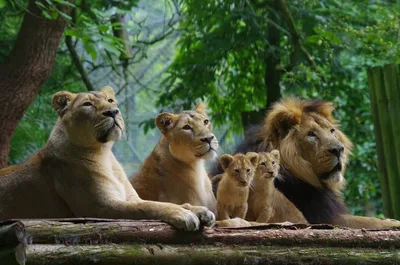 Lion
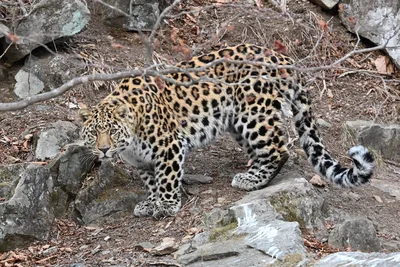 Leopard
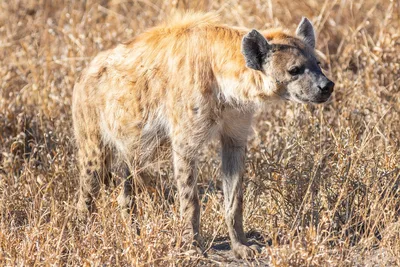 Spotted hyena
- rock python on occasion
Ecological equivalents
Related species on this site
American badger (same family), Angora Ferret (same family), Black-Footed Ferret (same family), Cinnamon Ferret (same family), European badger (same family), European pine marten (same family), and more.
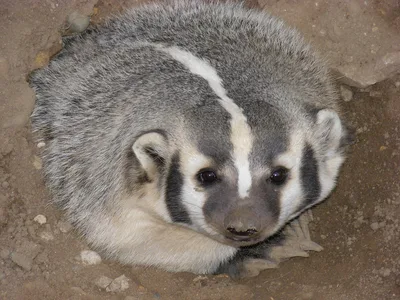 LC
Mammals
American badger
Taxidea taxus
The American badger is a flat, powerful digger of the North American grassland that tunnels after gophers and ground squirrels.
Living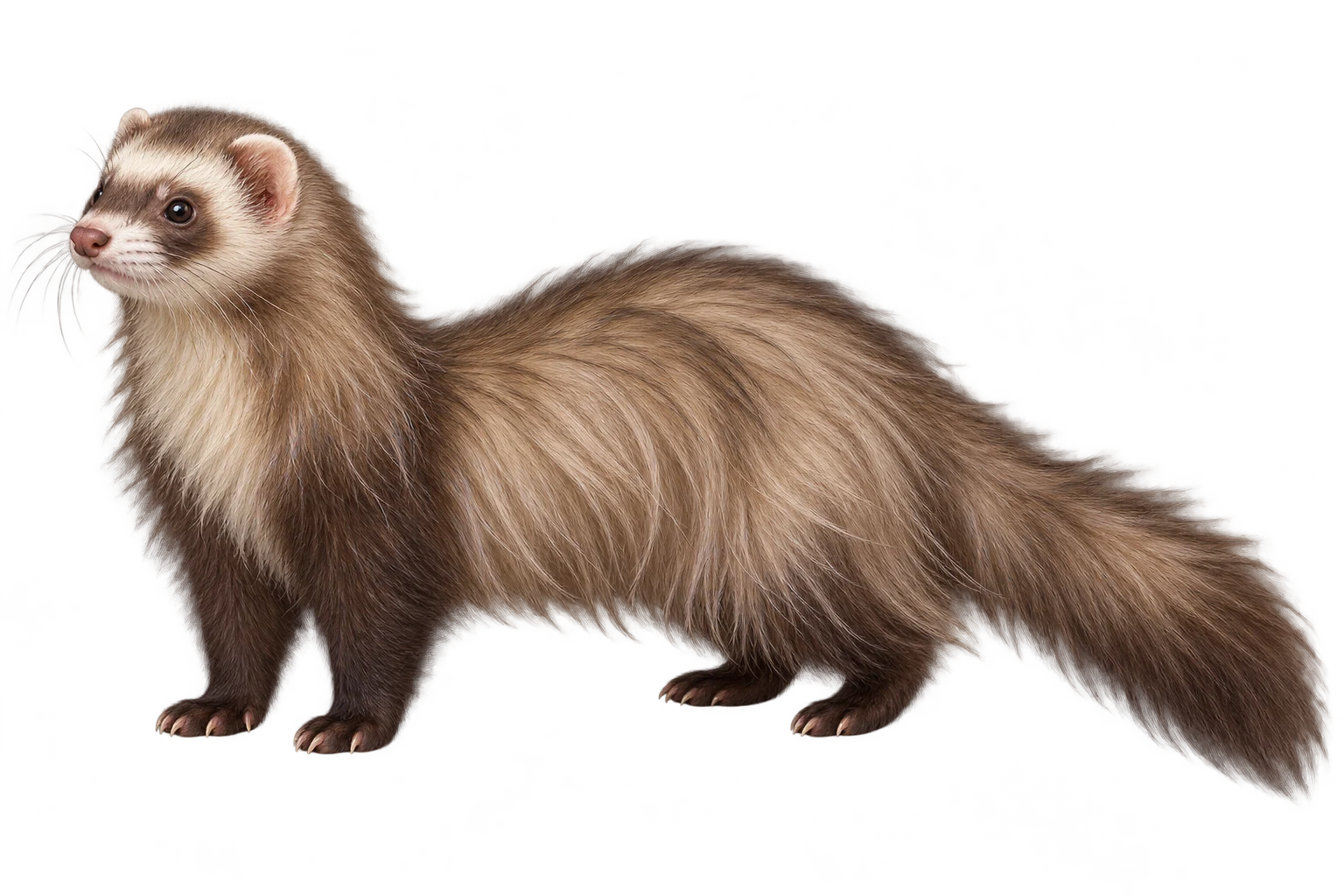
Mammals
Angora Ferret
Mustela putorius furo
Classification and source reference
LivingAI illustration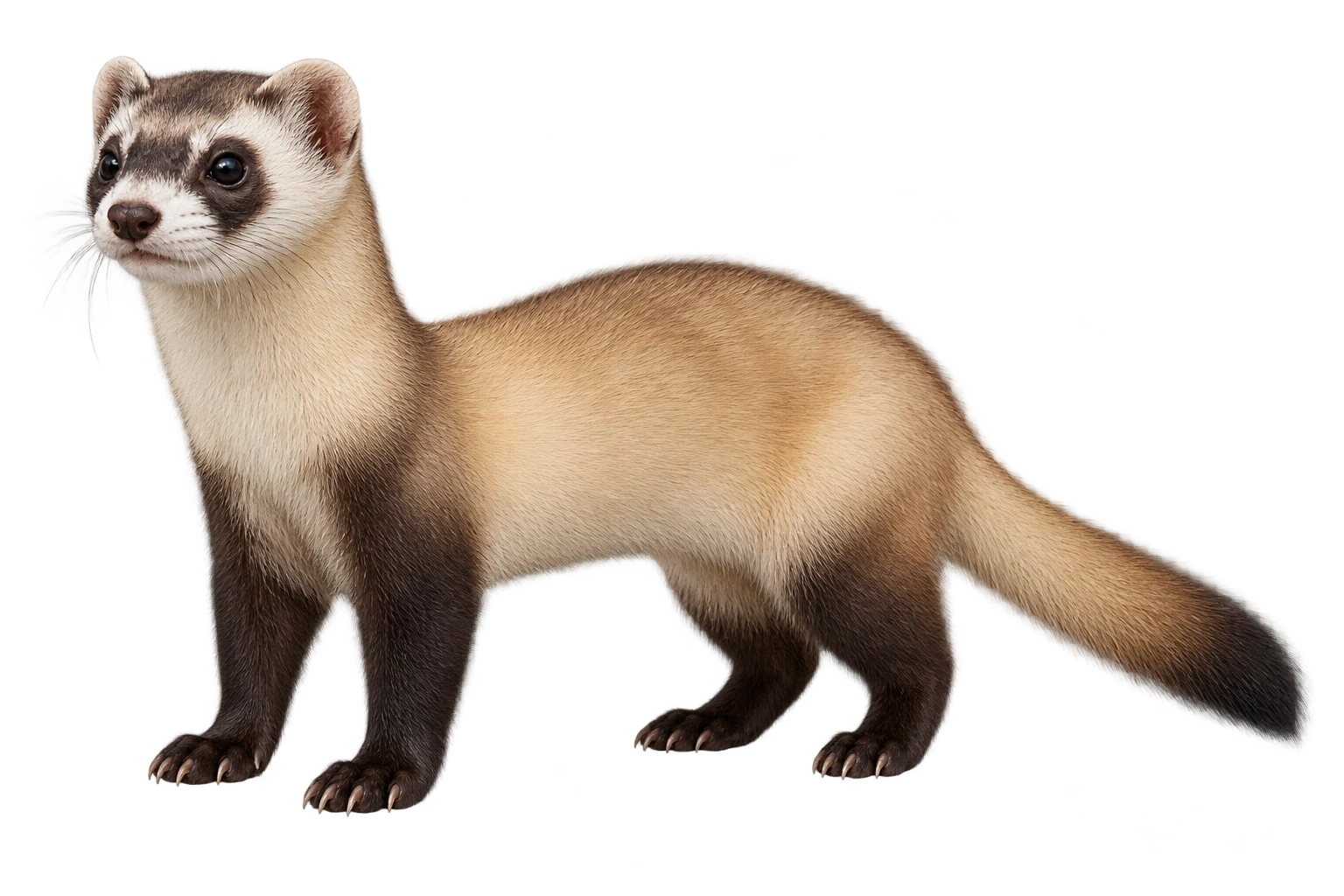
Mammals
Black-Footed Ferret
Mustela nigripes
Classification and source reference
LivingAI illustration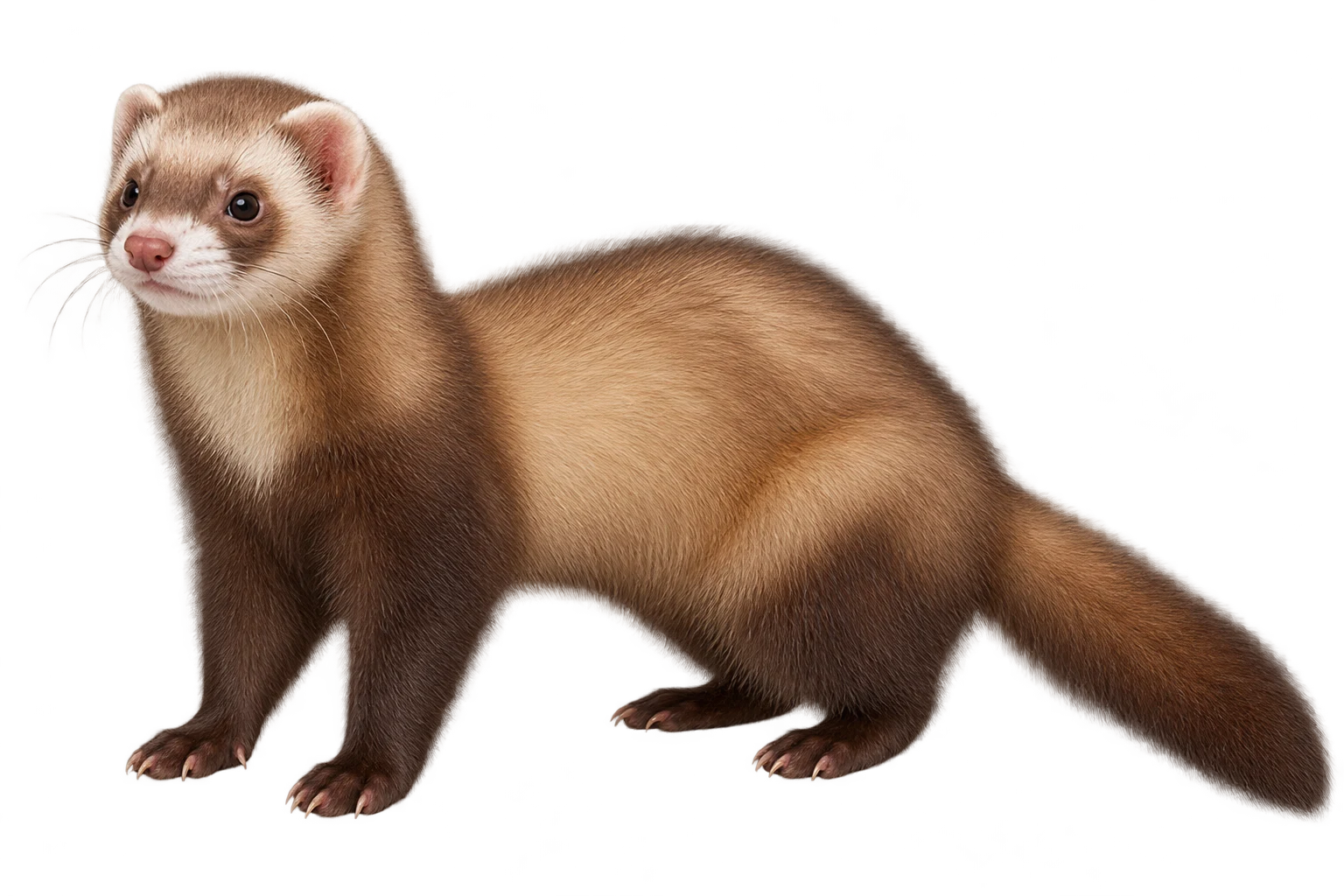
Mammals
Cinnamon Ferret
Mustela putorius furo
Classification and source reference
LivingAI illustration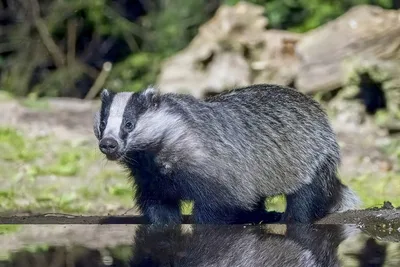 LC
Mammals
European badger
Meles meles
The European badger is a stocky, striped-faced mustelid that lives in family clans across Europe and western Asia.
Living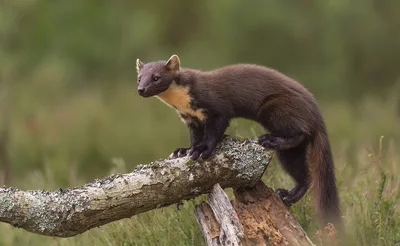 LC
Mammals
European pine marten
Martes martes
The European pine marten is a cat-sized mustelid with a brown coat and a cream bib.
Living